Hodges' Model: Welcome to the QUAD: well-being

Hodges' model is a conceptual framework to support reflection and critical thinking. Situated, the model can help integrate all disciplines (academic and professional). Amid news items, are posts that illustrate the scope and application of the model. A bibliography and A4 template are provided in the sidebar. Welcome to the QUAD ...

Showing posts with label well-being. Show all posts

Saturday, October 03, 2026

World Health Congress 2027 Prague - 20-22 August

Dear Friends,

The World Health Congress 2027 Prague is a global professional gathering focused on traditional, complementary, and integrative medicine (TCIM/CAM) and evidence-based medicine (EBM).

Under the motto “Health Knows No Boundaries – Let Us Seek a Common Path,” the congress provides a platform for professionals to come together, share knowledge and experience, engage in professional dialogue, and foster international cooperation in healthcare.

The previous congress attracted more than 1,000 participants from 50 countries worldwide and brought together prominent experts and organizations.

If you are considering actively participating in the 5th World Health Congress 2027 Prague, to be held from 20–22 August 2027, and are planning to submit an abstract for your presentation, please give some thought to the following four questions. They reflect the direction envisioned for the upcoming Congress. This direction will also be embodied in the Congress’s concluding document, the Prague Declaration.

  1. How can we build bridges between TCIM and EBM in healthcare?
  2. How does your contribution help advance TCIM?
  3. If you have participated in one of our previous congresses, what new perspectives does your presentation offer compared with your previous presentation?
  4. What is the future of TCIM, and what strategies would you propose for the way forward?

Abstract submissions are now open. You can submit your abstract here:

ABSTRACTS

Warm greetings from Prague,

Tomas Pfeiffer
President of the 5th World Health Congress 2027 Prague
Soukenicka 21, 110 00 Prague 1
Czech Republic
www.whc2027prague.com 

Director
Institute for TCIM/CAM 

e-mail: info AT itcim.org
www.itcim.org

n.b. I have had some problems accessing the site - 'new domain'.

Wednesday, September 30, 2026

cfp Special issue: Int. Journal of Social Robotics "Towards Ethical Deception in HRI"

Dear colleagues, 

We would like to invite you to submit your works at the special issue on "Towards Ethical Deception in HRI" in International Journal of Social Robotics whose submission deadline is 19 December 2026. 

The special issue explores the design and ethical implications of robot deception in human–robot interaction, emphasising autonomy, well-being, and the protection of vulnerable populations. 

Read below further information, and please do not hesitate to contact us if you have any questions. 

Kind regards,
Alessandra Rossi 

Alessandra Rossi, PhD 
Assistant Professor Fellow of the Higher Education Academy Department of Electrical Engineering and Information Technologies - D.I.E.T.I. 
University of Naples Federico II Via Claudio, 21, 80125 - Naples, Italy 

w-page: https://alessandrarossi.net 
e-mail address: alessandra.rossi @ unina.it 
e-mail address: a.rossi @ herts.ac.uk

This Topical Collection focuses on deception in human-robot interaction and its ethical implications. In particular, robot deception is a complex yet potentially beneficial strategy. Intentional behaviours such as white lies or deliberate errors can foster trust, reduce distress, and improve therapeutic or educational outcomes. Robots may strategically omit information to maintain psychological stability or simulate imperfections to appear more relatable. While deception in human–robot interaction remains ethically controversial, its applications can enhance empathy, engagement, and learning. Ultimately, the capacity for controlled, prosocial deception highlights the need to reconsider moral frameworks governing social robotics, emphasizing the potential for nuanced, emotionally adaptive interactions.

This collection aims at exploring a design-centred and ethical-centred development of robotic deceptive behaviours for a successful human-robot interaction that, at the same time, is ethically acceptable and respect the autonomy and well-being of population, specially vulnerable individuals such as older people, patients and children. This Topical Collection is open to a broad audience from academia and industry researching social robotics, robot ethics, cognitive science, psychology, and philosophy of technology. It aims to attract an interdisciplinary audience that includes academics, industry researchers, designers, and policy-makers interested in exploring the integration of deceptive techniques in designed-centred and ethics-centred HRI. By collecting works addressing disciplinary and methodological boundaries, this collection seeks to promote a shared understanding of how social robots might responsibly employ complex behavioural strategies in human-centred contexts, such as education, healthcare and service.

Submission guidelines

All papers must be prepared in accordance with the Submission Guidelines. Articles for this Topical Collection should be submitted via our submission system, Editorial Manager. During the submission process you will be asked whether you are submitting to a Collection, please select "Towards Ethical Deception in HRI" from the dropdown menu.

Submitted papers should present original, unpublished work, relevant to one of the topics of the Topical Collection. All papers will be evaluated on the basis of relevance, significance of contribution, technical quality, scholarship, and quality of presentation by at least two reviewers. It is the policy of the journal that no submission, or substantially overlapping submission, be published or be under review at another journal or conference at any time during the review process. Final decisions on all papers are made by the Editors-in-Chief.

My source: https://www.bcs-sgai.org/?section=server

Thursday, May 28, 2026

International Menstrual Hygiene Day 2026

Facts & figures about MH Day and menstrual health & hygiene

About Menstrual Hygiene Day (MH Day)

  • MH Day is celebrated annually on 28 May to symbolize the average length of the menstrual cycle (28) and duration of menstruation (5).
  • It was initiated by WASH United and was first celebrated in 2014. WASH United is an award-winning non-profit based in Berlin/Germany, founded in 2011, with a focus on menstrual health and hygiene (MHH). WASH United focuses on strengthening the global MHH ecosystem by offering free, easy-to-use solutions for awareness, advocacy, and education, and engages in strategic advocacy throughout the year.
  • The mission of the MH Day movement is to create a period-friendly world.

A period-friendly world is a world in which menstruation is accepted as a normal fact of life and is no longer stigmatised. It is a world in which everyone is educated about menstruation from an early age. In a period-friendly world, everyone has access to quality and affordable period products of their choice. Everyone has access to period-friendly toilets. And in a period-friendly world, menstrual health services are available to everyone. It is a world where no one is held back just because they menstruate. (MH Day mission)

  • The impact of MH Day 2025: reach of 971 million people, 25,026 pieces of media coverage, 198,132 social media contributions, more than 2,000 events, and 1,350 partner organizations.
 
About Menstrual Health and Hygiene (MHH)

Global perspective of menstruation

MHH-related challenges


1 of 3  April 2026                                         Continued ...                                       #PeriodFriendlyWorld 

Friday, April 10, 2026

'Healing grid' - the penultimate?

Healing grid by Ryota Kanai

Hodges' model is surely a clear winner 'healing grid'? Acting not only in healing, but in recovery, rehabilitation, reablement, palliative, illness and well-being too.

Quite a grid all-in-all (which also fascinate grandchildren).

My source: 

Previously: 'grids' : 'perception' : 'vision' : 'lines' : 'geometry'

#ArtemisSafeReturn #PrecisionGridManoeuvres

Saturday, March 21, 2026

'Health - Illness': Status - presence - absence - Being

A pre-charity shop revisit: 

'So long as we are healthy, we do not notice that we are healthy. Health is one of those phenomena that we do not perceive as anything special because they are a part of everyday life. We discover them by their absence. Only illness enables us to see health as health. That I am healthy, and in what way I am healthy, is something I experience when, and to the extent that, I am or was not healthy, or when I perceive (but this it is difficult to do) that, and to what extent, someone else is or was not healthy. Being healthy is not the only 'being' that escapes our gaze precisely by being, and that appears to us by its absence. One could say the same of being as such.' p.257.

von Weizsäcker, Carl Friedrich (1971 [1980 trans.]). Einheit der Natur [The Unity of Nature] New York: Farrar Straus Giroux.

If we are to demonstrate ('prove') that Hodges' model can be applied, is relevant in:

  • illness, disease, trauma (physical and mental);
  • health and well-being; 
  • human development, ageing, pregnancy;
  • social care; 
  • preventive medicine, health promotion, health education;
  • life sciences, bioengineering; 
  • public (community and mental) health;
  • self care;
  • spiritual health;
  • and global - planetary (political) health ...

Then these observations by Friedrich, allied with definitions of health, as per the WHO's Constitution:

'Health is a state of complete physical, mental and social well-being and not merely the absence of disease or infirmity.'
https://www.who.int/about/governance/constitution

The oft cited (when I was a student nurse) definition of nursing by Virginia Henderson:

“Assisting the individual, sick or well, in the performance of those activities contributing to health or its recovery (or to peaceful death) that an individual would perform unaided if he had the necessary strength, will or knowledge”.
https://libguides.twu.edu/c.php?g=270174&p=1803121

We need to 'see' beyond these sources, to take in the global situation. But, being situated this is something Hodges' model is ideally equipped to achieve.

Tuesday, February 17, 2026

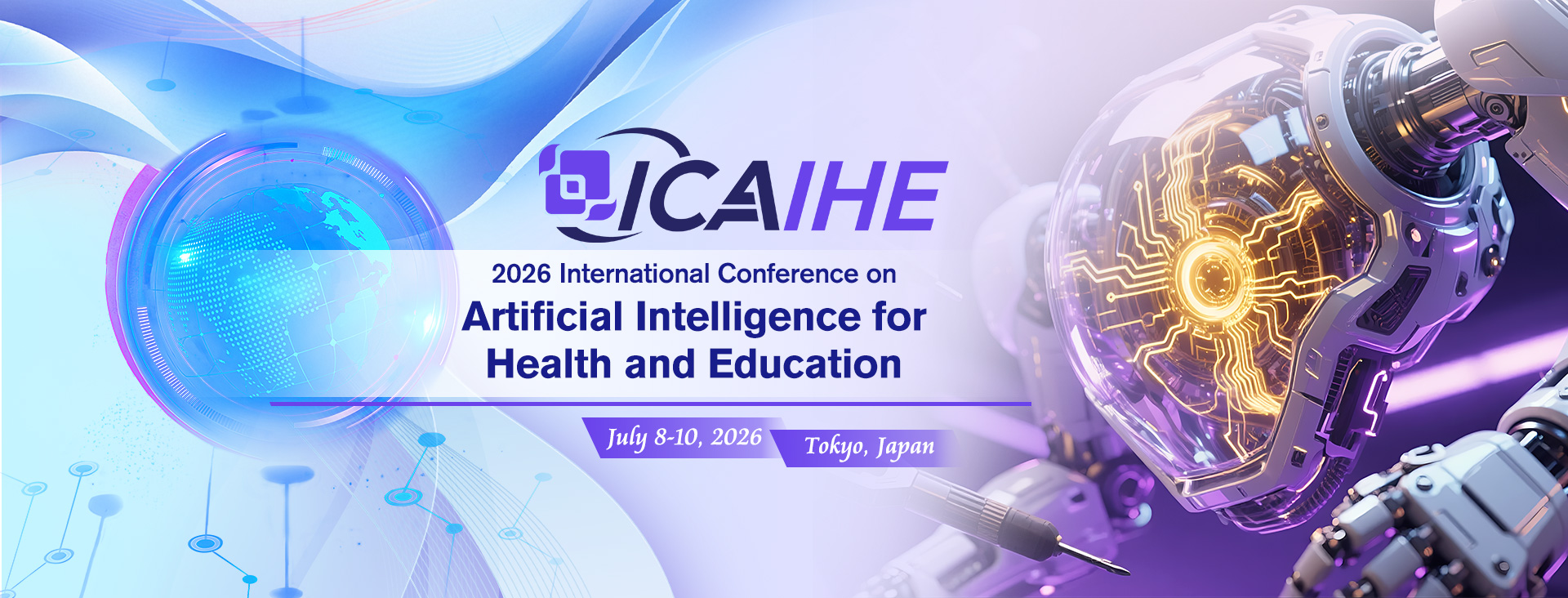
CFP - 2026 International Conference on Artificial Intelligence for Health and Education (ICAIHE2026)

July 8-10, 2026, Tokyo, Japan

Dear Colleagues,

We are writing to invite you to submit your papers for publication and presentation at 2026 International Conference on Artificial Intelligence for Health and Education (ICAIHE 2026) scheduled on July 8-10, 2026 in Tokyo, Japan.

https://icaihe.org

Also, we invite you to submit a workshop/special session proposal to participate in ICAIHE 2026.

The workshop/special session proposal submission deadline has been extended to: February 28, 2026.
The regular paper submission deadline is: March 1, 2026.

----------------------------------------

INTRODUCTION
---------------
With the spread of digital technology in healthcare and education, there is a growing interest in using artificial intelligence (AI) to promote human well-being in the extensive areas of health and learning. As more data becomes available from IoT, wearable devices, sensors, social media and many other online platforms, new possibilities emerge for understanding and revolutionizing digital health and learning.

ICAIHE 2026 focuses on AI-enhanced and data-driven approaches to health and education. It aims to leverage advanced AI technology to provide new opportunities in the healthcare and education sectors. This conference is committed to bringing together researchers to explore how these cutting-edge AI technologies can optimize personal health and learning environments, and to demonstrate how these emerging technologies can drive transformative practices that promote human well-being.

IMPORTANT DATES
---------------
Workshop/SS Proposal Due: February 28, 2026 (Extended)
Regular Paper Due: March 1, 2026

Workshop/SS Paper Due: March 8, 2026
Author Notification: May 1, 2026
Paper Registration Due: May 15, 2026
Camera-ready Submission Due: May 22, 2026

SCOPE AND TRACKS
---------------
Prospective authors are invited to submit papers on topics including, but not limited to:
Track 1: Emerging AI Technologies for Health and Education
  • Generative AI and LLM
  • Agentic AI and AI Agents
  • Explainable AI
  • Multimodal AI Models
  • Small Smart AI Models
  • Knowledge Graphs
  • Privacy Protection, Security, and Ethics in Emerging AI Applications
Track 2: AI-Enhanced Healthcare and Medical Services
  • AI-Enhanced Big Data Analytics in Healthcare and Medical Services
  • Multimodal Data Fusion in Digital Health
  • AI-Enhanced Biometric Analysis in Digital Health
  • Machine Learning and Deep Learning for Healthcare and Medical Services
  • AI-Enhanced Precision Healthcare
  • Metaverse and Digital Twin for Healthcare and Medical Services
  • Human-AI Interaction in Digital Health and Well-being Promotion
Track 3: AI-Enhanced Education and Learning
  • LLM-Enhanced Educational Content Generation
  • LLM-Enhanced Personalized Learning
  • LLM-Enhanced Automated Learning Feedback and Assessment
  • AI-Enhanced Collaborative Learning
  • AI-Enhanced Learning Analytics
  • AI-Enhanced VR/AR/Metaverse for Immersive Learning
  • AI Agents for Learning Management Systems
ICAIHE 2026 CALLS
---------------
Prospective authors are invited to submit original papers. Formats for the submissions are either
- Full Paper: 12-15 pages
- Short Paper: 6-11 pages
- Work-in-Progress Paper: 6-7 pages
SUBMISSIONS AND PUBLICATIONS
---------------
All accepted papers will be published in Springer CCIS series. Selected high quality papers will be recommended for possible publications on journal special issues.

For further details, please refer to https://icaihe.org/sub.html

Submission Link: https://cmt3.research.microsoft.com/ICAIHE2026
 
-------------
Hosted by
Waseda University, Japan 
 
My source: AI-SGES list - https://www.bcs-sgai.org/?section=server

Monday, December 15, 2025

Q. Is Hodges' model Person OR University-centered? [ 'Big Mind' iii? ]

To date, I have not written a paper on Brian Hodges' original purpose for his model in curriculum development, design, planning and evaluation. Geoff Mulgan's book and referenced sources provide support, if not evidence, for the increasing relevance of Hodges' model.

The center of Hodges' model, the nexus, can be variously occupied by an individual student, researcher; a group, or team, or even an institution. Why not a university?

Since 1987-88, when I applied Hodges' model in a case study, I've acquired a broad understanding of the 'POLITICAL' domain in terms of institutions and organisations. Even if that learning is now 'archived':

https://web.archive.org/web/20150414073721/http://www.p-jones.demon.co.uk/linksIV.htm

In 'Big Mind', Chapter 14, The University as Collective Intelligence (pp.174-180) refers to 'third-loop learning' and a document from Nesta:

Geoff Mulgan, Oscar Townsley, and Adam Price, "The Challenge-Driven University: How Real-Life Problems Can Fuel Learning", Nesta, accessed April 28, 2017.
accessed 15/12/2025: https://media.nesta.org.uk/documents/the_challenge-driven_university.pdf 

'This paper focuses on one important strand of change: the rise of what we call ‘challenge-driven’ university models. These models develop students by putting them up against difficult problems and challenges for which there are no established answers.  Instead students to draw on many disciplines to solve them; they have to work in teams; and they have to collaborate with organisations outside higher education.

These models aren’t a replacement for the classic core of university education - mastering a discipline.   But they provide an important complement to this core, and they may be better suited to preparing young people for the needs of the world. They also re-emphasise one of the founding principles of some ancient universities: a focus on questions rather than answers as the key to deep learning.'

Within the Nesta document, Mulgan et al. list educational institutions who have succeeded, and are trying to effect change (with much editing):

US

The approach was pioneered by McMaster University Medical School in the late 1960s where in response to changing demands on the profession, the curriculum was changed so that students learned collaboratively, working on real-life cases in small groups. ...

... examples like High Tech High in the US, use project-based learning, centred on real-life problems, as the core curriculum for students.

Olin College of Engineering has quickly gained a reputation for being one of the most innovative institutions in the US since it opened in 1997.

Last year, the Ash Center for Democratic Governance and Innovation at the Harvard Kennedy school founded the ‘Urban Innovation Field Lab’, a project aiming to improve social conditions in cities in Massachusetts.

Canada

In Canada, the University of Waterloo uses a model of co-operative education, where students’ time is split between study and assessed work experience.

Europe 

Aalto University in Finland was created out of a merger between Technology, Economics and Art Universities in Helsinki and now runs four interdisciplinary ‘factories’ - Design, Health, Media and Service, where teams of academics and students work with companies and communities to develop new products that respond to demand from the real economy. 

The Norwegian University of Science and Technology in Trondheim has a similar approach. As part of their courses, students are required to join a ‘village’ (i.e. area of interest) of around 30 members which address questions such as ‘Biofuels - a solution or a problem?’, ‘Sustainable, affordable housing for all’, and ‘Portable technology and well-being’.

At Maastricht University (the second youngest university in the Netherlands), all teaching uses a problem-based learning model, and this has become one of the main attractions of the university. 

Twelve to fifteen students discuss problems in group sessions, with one student appointed to lead the discussion. The students are given complex problems from everyday professional practice which they brainstorm and research both together and separately. ...

UK 

Imperial College London and the Royal College of Art (RCA) are two particularly innovative higher education institutions. For the last ten years, Imperial has been running the Energy Futures Lab - a cross-discipline, issue-based department aimed at tackling global energy challenges. It was established to bring together disparate fields of study that are relevant to energy including engineering, environmental sciences, computer science, business, policy and mathematics. ...

Imperial and the Royal College of Art also run a Double Masters in Innovation Design Engineering (IDE) which is well known for producing some of the best talent in the field. Their flagship international module ‘GoGlobal’ takes students abroad for three week cross cultural, collaborative projects with academics and industry partners. ... The University of Lincoln has challenge-driven education at the core of its teaching.

Globally? South?

... 

Over the years I've reached out to a great many private and public bodies. 

MEMO TO: New College of Humanities and London Interdisciplinary School

I note the NESTA document is a 'draft'. I'd be pleased to help update and complete this work. Keen to frame Hodges' model not just in the context of problems, but strengths, weaknesses, risks, opportunities and more. When your model emerges from health, you quickly learn when it comes to problems that versatility and adaptability are essential. Always ready to cross disciplines - insofar as I understand them, borders and boundaries as required.

Previously:

https://hodges-model.blogspot.com/2025/07/big-mind.html

https://hodges-model.blogspot.com/2025/12/ii-big-mind-book.html

Geoff Mulgan (2017) Big Mind: How Collective Intelligence Can Change Our World, Princeton University Press.

Friday, December 05, 2025

Conquering Today's Health Paradox with the Power of HEAL – An Expert Consensus Report plus Research Priorities and Policymaker Roadmap

A further post will follow with full PR, but the paper is now published:

Article type: Policy Brief
Journal: Frontiers in Public Health - Public Health Education and Promotion
Manuscript ID: 1695757
Received on date: 30 Aug 2025

Abstract

Background. Despite growing scientific evidence and health guidelines, the global health paradox persists, with rising lifestyle-related diseases and escalating healthcare costs exposing the inadequacy of current efforts.

Objective
. 3 multidisciplinary congresses were held to generate evidence-based conclusions to tackle the global health paradox.

Methods
. 58 experts from 62 entities participated in the international research and knowledge exchange panels. Experts reviewed the latest findings to develop practical strategies, key research and policy priorities, focusing on the “Healthy Eating & Active Living” (HEAL) approach.

Results
, Conclusions, and Relevance. The expert consortium endorsed a 33 evidence-based consensual-statement policy roadmap for addressing global health challenges, emphasizing the HEAL approach can significantly contribute to the “Prevention First” appeal and broad ethical, social, ecological, and economic advantages, and eventually policy change.


Wirnitzer KC, Motevalli M, Tanous DR, Drenowatz C, Moser M, Cramer H, Rosemann T, Wagner K-H, Michalsen A, Knechtle B, Fras Z, Ritskes-Hoitinga M, Marques A, Mis NF, Stanford FC, Schubert C, Goswami N, Leitzmann C, Fredriksen PM, Ruedl G, Wilflingseder D, Lima RA, Kessler C, Jeitler M, Khan NA, Joulaei H, Fatemi M, Knight A, Kratky KW, Palmer KK, Haditsch B, Jakse B, Kofler W, Pfeiffer T, Cordova-Pozo K, Tortella P, Straub S, Lynch H, Schätzer M, Krishnan A, Fathima A. S, Gatterer L, Kriwan F, Abhishek M, Nandgaonkar H, Nandgaonkar S, Adedara AO, Haro JM, Gericke C, Neumann G, Akhtar A, Rashidlamir A, Thangavelu M, Ngoumou GB, Perpék É, Klaper M, Bhattacharya B, Kirschner W, Bessems KMHH, Jones P, Peoples G, Bescos R, Duftner C, Seifert G (2025). Toward a roadmap for addressing today’s health dilemma–The 101-statement consensus report. Frontiers in Nutrition, Volume 12:1676080. doi:10.3389/fnut.2025.1676080.

 https://doi.org/10.3389/fnut.2025.1676080


Thursday, November 13, 2025

Saturday, June 14, 2025

Call for Papers: Compassionate Futures for Collective Well-Being

Despite an academic affiliation, without any (part-time) tutoring hours this past year, it may be difficult to avoid article processing fees (APCs). A shame as I believe that Hodges' model can address this call (below) in a somewhat novel manner. 
If anyone is interested in exploring a writing project framed around Hodges' model and employing a relational - diagrammatic approach please let me know.
The exercise would be greatly enhanced by:
  1. Engaging with one of more academics, adept in formal methods (maths, logic..?) and keen to apply their talents within the social sciences - humanities.
  2. And, exploring the possibility of working with early career researchers, including from developing nations, independent and 'late career'(!) scholars would also be very welcome.

Previously:

Jones, P. (2004) Viewpoint: Can informatics and holistic multidisciplinary care be harmonised? British Journal of Healthcare Computing & Information Management, 21, 6, 17-18.

Jones, P. (2004) The Four Care Domains: Situations Worthy of Research. Conference: Building & Bridging Community Networks: Knowledge, Innovation & Diversity through Communication, Brighton, UK.

Jones, P. (2008) Exploring Serres’ Atlas, Hodges’ Knowledge Domains and the Fusion of Informatics and Cultural Horizons, IN Kidd, T., Chen, I. (Eds.) Social Information Technology Connecting Society and Cultural Issues, Idea Group Publishing, Inc. Chap. 7, pp. 96-109.

Jones, P. (2009) Socio-Technical Structures, the Scope of Informatics and Hodges’ model, IN, Staudinger, R., Ostermann, H., Bettina Staudinger, B. (Eds.), Handbook of Research in Nursing Informatics and Socio-Technical Structures, Idea Group Publishing, Inc. Chap. 11, pp. 160-174.

Compassionate Futures for Collective Well-Being

Academic Editors: Karin Hannes (KU Leuven) and Natalia Martini (KU Leuven)

Deadline for Abstracts: 15 September 2025
Deadline for Articles: 30 January 2026

Social Inclusion, peer-reviewed journal indexed in the Social Sciences Citation Index (Web of Science; Impact Factor: 1.4) and Scopus (CiteScore: 3.5), welcomes new and exciting research papers for its upcoming issue "Compassionate Futures for Collective Well-Being," edited by Karin Hannes (KU Leuven) and Natalia Martini (KU Leuven).

In an increasingly unequal world, the concept of “compassionate futures” offers a new paradigm to address the pressing challenges of social inclusion. Compassionate futures recognize vulnerability, interdependency, and mutual responsibility as fundamental features of social relations, and emphasize care and empathy as fundamental principles in designing socio-cultural, economic, and political systems where the collective well-being of diverse actors, human and other-than-human, can flourish.

We encourage contributions that engage in an interdisciplinary dialogue among scholars, practitioners, and policymakers about what it means to create a caring society in the face of persistent inequalities. In addition, we welcome papers that demonstrate where and how humans take up the responsibility to conceptualize compassionate futures from a multi-species perspective, as well as those that focus on what hinders or supports the idea and the project of compassionate futures. We accept theoretical papers presenting frameworks on compassionate futures, prospective policy analyses, cases featuring the use of futures studies and co-creative approaches that promote compassion and care as central principles in re-imagining the future, and reflection papers focusing on global cooperation for fostering compassionate futures. Authors should connect to the general idea of how humans could or should relate to other agents with whom they share the planet or illustrate how the new narratives they developed support collective well-being.

Authors interested in submitting a paper to this issue are encouraged to read the full call for papers here:

https://www.cogitatiopress.com/socialinclusion/pages/view/nextissues#CompassionateFutures

Abstracts welcome until 15 September 2025.

Kindest regards,

Mariana
Mariana Pires
Social Inclusion
Cogitatio Press
1070-129 Lisbon 
Portugal
New issues (open access):
Public Participation Amidst Hostility: When the Uninvited Shape Matters of Collective Concern
https://www.cogitatiopress.com/socialinclusion/issue/view/419

Violence, Hate Speech, and Gender Bias: Challenges to an Inclusive Digital Environment
https://www.cogitatiopress.com/socialinclusion/issue/view/415

My source: https://www.jiscmail.ac.uk/cgi-bin/webadmin?A0=COMPLEXITY-PRIMARY-CARE

Sunday, May 25, 2025

RCN Congress iii 2025 - Accountability for patients in ambulances

The resolution (with a reading list) on Accountability for patients in ambulances

- drew attention to language once again (yes, well there's a truism: what do you expect!). This time highlighting how corridor care is now variegated. In addition, politically you can circumvent addressing an issue, by referring to 'never events', and 'zero tolerance' as we read:

'This agenda item addresses the urgent issue of accountability, for both registered nurses and the organisations they work for, when patients are cared for in ambulances waiting to access emergency departments.

The resolution comes at a time when, across all four countries, there are unprecedented ambulance handover delays with patients left in vehicles which are neither appropriately staffed nor resourced outside overwhelmed emergency departments. Despite the prolific nature of this practice, there is no clear guidance on accountability. Who is responsible for the care and safety of those patients - the ambulance service, the hospital, the emergency department, or the individual registered nurse providing care?

These delays accessing care and the lack of guidance on who is accountable for the waiting patients, compromises the ability of health care staff to provide good quality care and risks patient safety. It also exposes registered nurses and other health care professionals to professionally, ethically and legally ambiguous situations. It could also contribute to the crisis in nursing wellbeing, raising issues such as moral distress and professional, emotional and physical burnout. It may, therefore, also impact the already perilous recruitment and retention.'

Student nurses, paramedics ... please take note: There is a paper to be written on Hodges' model and the gaps we encounter in health and social care. For Brian Hodges this started with the theory-practice gap; one of four original stimuli for the creation of the model. 

As the idealised standards, quality and safety of care being delivered are surrendered; this gap stands out as the virtual keystone.

individual
|
INTERPERSONAL : SCIENCES
humanistic ------------------------------- mechanistic
SOCIOLOGY : POLITICAL
|
group
individual - PURPOSES
patient safety - distress
nurse wellbeing
emotional burnout
moral distress
personal ethics
individual responsibilities

procedure
delivered care - observation
mattress, trolley .. ambulance design
instrumentation, noise
time - duration
logistics - PROCESSES - handover
physical resources - beds

communities of PRACTICE
team working - coherence
team experience - students
THE DAMAGE - that is 'BOOK-PASSING'
The public's - carer's experience
(wither friends and family)

law - guidance - ambiguity
POLICY
professional accountability
risk management
organisational responsibility
workforce
recruitment & retention


Previously: 'RCN' : 'gap' : 'accountability' : 4Ps

Saturday, February 01, 2025

New citation for Hodges' model

It was a struggle obtaining a copy, as the paper is not open access, but more good news with Doyle & Jones (2013) being cited in:

Yasemin Güner, Bilge Delibalta, Melek Üçüncüoğlu, Sinan Paslı, Challenges encountered by emergency nurses in forensic case management: A qualitative study, Journal of Forensic and Legal Medicine, Volume 109, 2025, 102807, ISSN 1752-928X, https://doi.org/10.1016/j.jflm.2025.102807.(https://www.sciencedirect.com/science/article/pii/S1752928X25000083)

The above has been added to the blog's bibliography. 

The abstract reads:

Purpose/Aims: This study aimed to reveal the opinions of emergency room nurses regarding crime victims and the challenges they experience.
Design: This study was a qualitative descriptive study.
Methods: A convenience sampling method was used in the study. Data were collected through individual in-depth interviews using semi-structured questions lasting approximately 45 min. The interviews were audio recorded. In total, nine nurses individual interviews were held.
Results: The study was completed with nine nurses with approximately twelve years of experience in the emergency department. Four themes were identified: duties and responsibilities of nurses in crime victims management; maintaining well-being in challenging crime victims; education needs of emergency nurses for crime victims; and challenges experienced by nurses in crime victims management.
Conclusions: When contextualizing the findings of our study within forensic nursing theory, it becomes evident that nurses play a pivotal role in continuously informing, influencing, and advancing forensic nursing care to improve patient health, forensic evidence collection, and criminal justice outcomes. A key finding of our study was the impact of interaction with crime victims in the emergency department on nurses’ well-being. In this regard, implementing institution-supported education policies, establishing units dedicated to supporting wellbeing, and fostering a supportive organizational culture are essential measures to promote the resilience and effectiveness of nurses in this critical field.

I will read again, and reflect later in the month.

Friday, December 06, 2024

Int. Conference on Improving University Teaching 2025


Redefining Education:

Navigating Sustainability and Innovation in a VUCA World

In a world increasingly subject to volatility, uncertainty, complexity, and ambiguity (VUCA) the goal of sustainability is aspirational, yet elusive.  A UN report published in 2024 notes that “intensifying, interconnected challenges continue to endanger the realization” of the seventeen sustainable development goals identified by the UN Sustainability Conference twelve years ago in Rio de Janeiro.  This is especially true in education, which the report correctly terms “the bedrock of sustainable development.”   It notes the negative effects of the COVID epidemic, regional conflicts, climate shock, and economic turmoil and paints a picture of a planet struggling to make progress towards them. While the big picture may be less than perfect, there is still much cause for hope, as we strive towards a better future.

Against this backdrop, the International Conference on Improving University Teaching seeks to address the challenge of sustainability, equity, and innovation as they affect higher education. In particular, we are exploring how to prepare students for a “VUCA world” in which they will have to contend with multiple challenges, while at the same time ensuring their wellbeing—and that of all academic staff—in the present. By definition, a future subject to uncertainty and ambiguity will require flexibility and adaptability on the part of students. ..

Continued ...

Previously: IUT, VUCA

Friday, November 15, 2024

Podcast: Local green spaces and mental health

Dear CHAIN member,

We would like to draw your attention to the following NIHR alert. Please pass on as appropriate. Thank you.

NIHR

Local green spaces are linked with better mental health

Podcast: Local green spaces and mental health

In this podcast, Helen Saul, Editor in Chief of NIHR Evidence, and study author Sarah Rodgers, Professor of Health Informatics, University of  Liverpool, discuss the impact of local green spaces on people's mental health.

Researchers analysed data on more than 2 million people in Wales over 10 years to explore the impact of green spaces on mental health. They linked information about people’s mental health with information about the greenness of their home’s immediate surroundings and how close they lived to green or blue spaces (such as parks, lakes, and beaches). They found that people had a lower risk of anxiety and depression if:

· their home’s immediate surroundings (within 200-300 metres) were greener
· they could access green and blue spaces nearby.

The researchers say that local authorities could improve the mental health of their community by increasing the greenery in their towns and cities and improving access to green and blue spaces.

Read more at: https://evidence.nihr.ac.uk/alert/local-green-spaces-are-linked-with-better-mental-health/?source=chainmail

Regards,

Irina Johnston
CHAIN Administrative Assistant

(and my source.)

Previously: 

Wednesday, August 28, 2024

Call for Participation in NHS Survey

ARE YOU WORKING IN THE NHS? IF SO, HELP NEEDED URGENTLY! Please read this email. 

Glasgow Caledonian University is inviting NHS Staff across the UK to participate in this doctoral research survey to analyse the impact of responsible leadership on improving well-being and organisational trust among NHS Staff members. 


To be eligible, you must be an NHS staff member from any area of the UK in any job role. The survey collects no recognisable information and is wholly anonymised to protect participant privacy and confidentiality. It has received full ethical approval, will take around 10 minutes and will help provide an improved understanding of the area of well-being in the profession.


Please forward this survey link to everyone in your contacts working for NHS. This will help gain more responses, increasing the study's reach and validity. Your help is highly appreciated, and we thank you in advance.


Here's the link for the participant information sheet and survey: 

https://app.onlinesurveys.jisc.ac.uk/s/caledonian/impact-of-responsible-leadership-on-employee-well-being-and-org


Warm wishes
Umm E Habiba Tariq (Chief Investigator)


Umm E Habiba Tariq (she/her) | PhD Candidate, MSc, BBA (Hons)

Occasional Lecturer | Department of HRM | Glasgow School for Business and Society (GSBS)


Glasgow Caledonian University is a registered Scottish charity, number SC021474

My source: Nurse-Philosophy List.

Wednesday, July 31, 2024

WHO online survey on maternal well-being framework - ENG, FR and SPA translations available

 ------- ENGLISH ------

Dear colleague,

You are invited to participate in the development of the World Health Organization (WHO) maternal well-being framework through an online survey. 

This consultation is one step in a broader process led by the WHO Department of Maternal, Newborn, Child and Adolescent Health and Ageing (MCA) towards creating a comprehensive framework that supports maternal well-being across diverse environments and cultures. Based on the results of a scoping review of the literature and an expert consultation held in May 2023, a preliminary framework has been developed including a definition, domains and subdomains. WHO/MCA is now organizing multiple consultations which objectives are listed below. 

What is the purpose of the survey?

  • Ensure comprehensive coverage of all critical elements of the framework and identify potential gaps in the definition, domains and framework of maternal well-being.
  • Evaluate the framework’s applicability across various settings and cultures.
  • Foster collective agreement and consensus among key stakeholders.

Who can take part to this survey?

Any individual or organization who has interest in maternal health and well-being. This includes, but is not limited to:

  • Representatives of women's groups
  • Health workers (midwives, OBGYN, nurses, neonatal nurses, paediatricians, psychiatrists, psychologists, community health workers...)
  • Experts in human and sexual and reproductive rights, public health, health promotion, gender, mental health, economics, humanitarian, etc.
  • Academics and researchers 
  • Government organizations
  • National civil society organizations / NGOs
  • International agencies / UN agencies
  • Private sector

How to participate in this survey?

Please click on the following link: Survey Link

We expect this survey will not take longer than 15 minutes to complete. It is available in English. 

The survey will be open until 17 August 2024. 

We would be grateful for your response to this survey and your kind help in circulating to your colleagues and networks.

Please reach out to Justine Le Lez - lejus AT who.int with any further questions. 

Best regards,

On the behalf of the Department of Maternal, Newborn, Child and Adolescent Health and Ageing (WHO/MCA)


------- FRENCH / FRANCAIS ------


Bonjour,

Vous êtes invité·e à participer à l'élaboration du cadre conceptuel du bien-être maternel de l'Organisation mondiale de la santé (OMS). 

Cette enquête est une étape d'un processus plus large dirigé par le Département de la santé maternelle, néonatale, infantile et de l'adolescent et du vieillissement (MCA) de l'OMS, visant à créer un cadre conceptuel exhaustif soutenant le bien-être maternel dans divers environnements et cultures.

Sur la base des résultats d’une revue de la littérature et d’une consultation d’experts tenue en mai 2023, un cadre conceptuel préliminaire a été élaboré, comprenant une définition, des domaines et sous-domaines. L’OMS/MCA organise actuellement plusieurs consultations, dont les objectifs sont énumérés ci-dessous.

Quel est l’objectif de l’enquête ? 

  • Assurer une couverture exhaustive et identifier d'éventuelles lacunes dans le cadre actuellement proposé.
  • Évaluer l'applicabilité universelle et l'adaptation du cadre conceptuel à divers contextes et cultures.
  • Favoriser un consensus collectif afin que le cadre conceptuel reflète reflètent une large gamme de perspectives et d'idées

Qui peut participer à cette enquête ? 

Toute personne ou organisation intéressée par la santé maternelle et le bien-être. Cela inclut, sans s’y limiter :

  • Des représentants de groupes de femmes
  • Des professionnels de santé (sages-femmes, gynécologues-obstétriciens, infirmières, infirmières puéricultrices, pédiatres, psychiatres, psychologues, agents de santé communautaires…)
  • Des experts en droits humains, droits sexuels et reproductifs, santé publique, promotion de la santé, genre, santé mentale, économie, santé humanitaire, etc.
  • Des universitaires et chercheurs
  • Des organismes gouvernementaux
  • Des organisations nationales de la société civile / des ONG
  • Des agences internationales / agences des Nations unies
  • Le secteur privé

Comment participer à cette enquête ? 

Veuillez cliquer sur le lien suivant : Lien vers l’enquête

Nous estimons que cette enquête ne prendra pas plus de 15 minutes à compléter.  

L’enquête sera ouverte jusqu’au 25 août 2024.

Nous vous serions reconnaissants de bien vouloir y répondre et de la diffuser auprès de vos collègues et réseaux.

Pour toute question, n'hésitez pas à contacter Justine Le Lez.


Cordialement,

Au nom du Département de la santé maternelle, néonatale, infantile et des adolescents et du vieillissement (OMS/MCA)


------- SPANISH / ESPANOL -----

Está invitado a participar en la elaboración del marco conceptual del bienestar materno de la Organización Mundial de la Salud (OMS). 


Se le invita a participar en el desarrollo del marco de bienestar materno de la Organización Mundial de la Salud (OMS). Esta encuesta es un paso en un proceso más amplio liderado por el Departamento de Salud Materna, del Recién Nacido, del Niño, del Adolescente y del Envejecimiento (MCA) de la OMS hacia la creación de un marco integral que apoye el bienestar materno en diversos entornos y culturas.

Con base en los resultados de una revisión de la literatura y una consulta de expertos realizada en 2023, se ha desarrollado un marco preliminar que incluye una definición, dominios y subdominios del bienestar materno.  La OMS/MCA está organizando actualmente varias consultas, cuyos objetivos se enumeran a continuación. 


¿Cuál es el objetivo de la encuesta? 

· Garantizar una cobertura exhaustiva e identificar posibles brechas en el marco propuesto actualmente. 

· Evaluar la aplicabilidad universal y la adaptación del marco conceptual a diversos contextos y culturas. 

· Fomentar un acuerdo colectivo para que el marco conceptual refleje una amplia gama de perspectivas e conocimientos. 

¿Quién puede participar en esta encuesta? 


Cualquier persona u organización interesada en la salud materna y el bienestar. Esto incluye, sin limitarse a: 

·  Representantes de grupos de mujeres

· Profesionales de la salud: matronas (parteras profesionales/obstetras/obstetricias/comadronas), ginecólogos-obstetras, enfermeras, enfermeras pediátricas, pediatras, psiquiatras, psicólogos, agentes de salud comunitarios…

· Expertos en derechos humanos, derechos sexuales y reproductivos, salud pública, promoción de la salud, género, salud mental, economía, salud humanitaria, etc.

· Académicos e investigadores

· Organismos gubernamentales

· Organizaciones nacionales de la sociedad civil / ONGs

· Agencias internacionales / agencias de las Naciones Unidas

·  El sector privado

¿Cómo participar en esta encuesta?

 Por favor, haga clic en el siguiente enlace: enlace a la encuesta

Estimamos que esta encuesta no tomará más de 15 minutos para completar. 

La encuesta estará abierta hasta el 25 de agosto de 2024.


Le agradeceríamos que respondiera y difundiera la encuesta entre sus colegas y redes.

Para cualquier pregunta, no dude en ponerse en contacto con Justine Le Lez.


Atentamente, 

En nombre del Departamento de Salud Materna, Neonatal, Infantil y del Adolescente y del Envejecimiento (OMS/MCA)