Hodges' Model: Welcome to the QUAD: Search results for grid

Hodges' model is a conceptual framework to support reflection and critical thinking. Situated, the model can help integrate all disciplines (academic and professional). Amid news items, are posts that illustrate the scope and application of the model. A bibliography and A4 template are provided in the sidebar. Welcome to the QUAD ...

Showing posts sorted by relevance for query grid. Sort by date Show all posts

Saturday, February 28, 2015

A "science for safety": getting the formula - and the grid right

The grid holds great fascination for me.
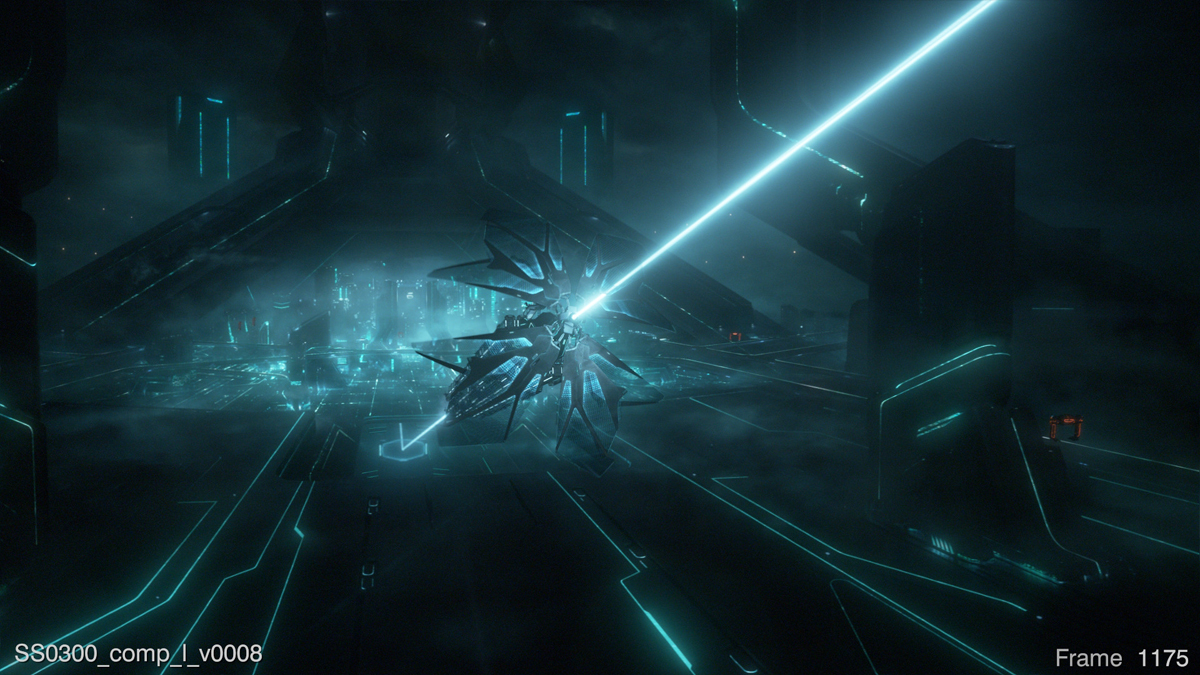
TRON LEGACY

It didn't start with The Grid in TRON, nor obviously TRON Legacy - even though the realisation is superb.

No, the first grid was in the cobbled back alley at my grandparent's house in St Helens. As a kid staying over in the summer I would take a spoon and the melting tar between the cobblestones was a syrupy invitation.

I must have got in trouble, as spoons were lost down the 'grid'.

In the here and now the "science for safety" report* bears further consideration:
If healthcare is to significantly reduce patient harm, a holistic perspective is necessary to capture the requirements and needs related to the culture, workflow, and technology associated with caring for patients. In this paper, we relate the problem to other industries and how these industries have addressed safety. We identify the current gaps in today’s healthcare approach and describe the actions that can be taken, and the change in mental models that must be made by the global healthcare community, to continuously improve patient safety. p.3 [my emphasis]

The Formula 1 season beckons. The cars tested to the max are still to be tested in anger. They will soon, be ready - on the starting grid.

The "science for safety"
also needs a starting grid.

A conceptual framework recognisable and relevant to all.


*Transforming Patient Safety: A Sector-Wide Systems Approach
Peter J Pronovost, Alan D Ravitz, Robert A Stoll, Susan B Kenned

https://www.imperial.ac.uk/media/imperial-college/institute-of-global-health-innovation/public/Patient-safety.pdf 

See also: How do you Balance and Elevate Holism and Patient Safety?

Image source:
https://www.artofvfx.com/tron-legacy-chris-harvey-superviseur-vfx-prime-focus/

Wednesday, September 07, 2016

Grid Design: The architecture of care? c/o Brinson (2007)

The context of Brinson's (2007) thesis is graphic design, but there are many insights, overlaps and references in a study that ...

"explores the logical integration of conceptual meaning into the grid structure" (p.61). 
 “All innovation and most design is the result of connections—the link between experience and action, between deductive logic and inductive insight, between the analysis of a problem and the verification of its solution”1 (p.2) 
“The important thing to remember is that while a grid can help to generate a sense of unity and continuity in a design, it is within itself creative. In the hands of unskilled designers, grids can become straightjackets that inhibit creative concepts.”4 (p.5)

 “Ostensibly, the best grids are based on a general evaluation of content and reflect the particular character and presentational requirements of that content.”78 (p.105)
individual
|
INTERPERSONAL : SCIENCES
humanistic -------------------------------------------  mechanistic
SOCIOLOGY : POLITICAL
|
group-population


While analysis is to the fore in the thesis there is less emphasis on synthesis amid talk of deconstruction. Hodges' model can (I believe) be used for conceptual analysis and synthesis. A tool to deconstruct, to identify the parts and integrate the whole. As a representational frame Hodges' model could also represent change through time.

Brinson, Valorie Michelle, "An evolution in grid structures: a study for conceptual grid structure design" (2007). Retrospective Theses and Dissertations. Paper 14805.

Wednesday, April 22, 2020

Munker illusion: Finding a palette for holistic, person-centred care

Hodges' model - Integrated Care?

It is as obvious as black and white.

Health, social care & education
are bound to be siloed.

Get over it!

What do you want: a rich picture?

Color Assimilation Grid Illusion


"Only the grid is colorful, the rest of the video is in grayscale, but the lower resolution of our color perception makes the color assimilate/blend into the grayscale cells within the human visual system."
https://www.patreon.com/posts/color-grid-28734535
 
"I've found that the grid works best."  Øyvind Kolås

individual
|
INTERPERSONAL : SCIENCES
humanistic ----------------------------------------------- mechanistic
SOCIOLOGY : POLITICAL
|
group - population


#carearchitecture #careresolution #integratedcare

See for original post:
https://www.patreon.com/posts/color-grid-28734535

My source: Massimo

Friday, April 10, 2026

'Healing grid' - the penultimate?

Healing grid by Ryota Kanai

Hodges' model is surely a clear winner 'healing grid'? Acting not only in healing, but in recovery, rehabilitation, reablement, palliative, illness and well-being too.

Quite a grid all-in-all (which also fascinate grandchildren).

My source: 

Previously: 'grids' : 'perception' : 'vision' : 'lines' : 'geometry'

#ArtemisSafeReturn #PrecisionGridManoeuvres

Thursday, February 08, 2018

Grid Corrections at a Crossroads


or Grid Care Corrections at a Crossroads?


GERCO DE RUIJTER

My source:
https://twitter.com/Rainmaker1973/status/961542009193402368

Wednesday, September 11, 2024

THE GRID by Eli Payne Mandel

individual
|
INTERPERSONAL : SCIENCES
humanistic ------------------------------- mechanistic
SOCIOLOGY : POLITICAL
|
group

[125]
'Therefore, a mathematician babbles when he refers to cutting a given line in two. The actual line that he shows to us on the abacus has length and width. But the line he has in mind is a stroke with length and no width. What is drawn on the abacus cannot be such a stroke, and he who goes about cutting it cuts not the line that is but the line that is not.'

(Sextus Empiricus, Against the Mathematicians 9.282)
(n.b. The above is printed upside-down on the page.)

Scatter the trace of the vessel from the ash. Pythagoras here is riddling about confusion and mental cloudiness, for if one wants to do philosophy one must pass over physical and sensible demonstration in favor of abstract argumentation. The ash is analogous to the dust on the abacus in which diagrams are delimited and proofs brought to an end. 

(Iamblichus, Exhortation to Philosophy 34)' p.55


'[1] In ancient Greek, an abacus is a sand table. 'The abacist draws lines and maybe moves pebbles around the lines. When done, she wipes the sand blank. 


[2] A board or slab for drawing, computation, games; a cutting board. Technical term, likely to be a loanword, but conjectured origin in Hebrew abãq "dust" remains unproven. --  Pierre Chantraine, Dictionnaire etymologique de la langue greque.' p.10.

'[122] The abacus computes and it erases. It tells a life. Then gambles it away. Achilles and Ajax sit down to play a game of dice. They have hung up their shields. They lean on their spears. They are tired. The Anatolian air is cold off the water. Attendants wrap them each in wool cloaks thick with eight-pointed stars. The stars wander along eddies and meanders. The only straight lines are servants of error. Their fingers are on the abacus, but Achilles and Ajax do not play, do not speak, lost in the maze of their cloaks.

[124] The first reference in Western literature to written language is in the Iliad. An unsuspecting  man in a story is carrying semata lygra / grapsas en pinaki ptukto thymophthora polla: baleful signs written on a folded tablet, utterly soul-  destroying. The words, which some scholars conjecture to be Linear B, spell out the man's death, and the reader murders  the unreading man. After the murder, Death Wipes the tablet  blank and folds it back again.' p.54.

'[3] Because dust blows away and only the slab remains, an abacus is also the part of a column in immediate contact with what it supports. If that structure no longer survives, the abacus upholds the edifice of the sky.' p.10.


THE GRID by Eli Payne Mandel, Carcanet Press. 2023.

https://www.elipmandel.com/

Previously on W2tQ (with overlap):

arts :: drama :: poetry :: literature :: narrative

Thursday, June 20, 2019

RCN Congress 2019 i

Last month I finally attended a Congress of The Royal College of Nurses. The time was my own: from the Sunday evening to the Thursday. I'm really grateful to the NW Branch for some financial support as I did stay over, even though it was on my doorstep being in Liverpool. I live between what is the city of my birth (L9, Longmoor Lane) and Manchester.

I knew beforehand that it was unlikely that my proposed item for discussion was unlikely to be accepted. This was immediately obvious when I read the final agenda. Even then there were additions as I could see the mechanics of Congress. There were many more important, timely, critical issues to discuss and debate. What stands out though is not just the funding support but the fact of being encouraged to write something, which wasn't wasted as I posted my item in February (a living draft - that may have a long tail). The human side was inevitably in evidence too: accessibility issues, misunderstandings, things said, things apologised for and vulnerable and minority groups acknowledged and championed. This isn't nursing navel-gazing either. From local experiences, to national there was also an international and global view. Students, the future: were very much in evidence and Congress learned - or more likely were reminded - that they can be disruptive, unpredictable, energetic and they have a voice.

As I watched, listened and learned, the organisation (that's the event itself...) is equally and variously: tried and tested, slick, flexible, responsive, progressive, accepting, friendly, caring!, strident, testing, emotional (yes, moving), celebratory, tiring, educational, inspiring, social and potentially a bit overwhelming ... As you may of gathered - the adage; "you get out of things what you put in" applies. As is often the case I did not do as intended and 'network'. Congress acknowledged the overwhelming/isolating sense in extolling people to reach out to the people around them. If nurses cannot do that then we are in trouble. I kept meeting the same people and it was a great support to have that connection and company. That said, the lack of places to sit at an evening social did not lend itself to getting know fellow members. Standing at a narrow bar eating a hot meal was helped by having to share the ergonomic challenges; an unfortunate but helpful ice-breaker. This was raised as an issue at Congress itself.

There was a political undercurrent with several references and overheard comments pertaining to the RCN's role in negotiating the last pay deal and last year's Extraordinary General Meeting. There is unfinished business here. Not just for the RCN, but the government too. This debacle undermines trust on so many levels, especially after the past decade as experienced by nurses on the 'shop floor'. If that is not painful enough, this matters because it is corrosive generally. While choice matters and yes, health care is an 'industry', the vast majority of us do not want to work in a 'shop'.* We know where to find all the concepts associated with politics in Hodges' model. But, as the social and intra- interpersonal (mental health) domains have atrophied, we must ask where is the NHS on the political grid? A grid that also impacts the whole NHS workforce, social care (don't ask!) and vitally the shaping of career choices for would-be future nurses.

Post ii to follow ...

* How times change? I smile ruefully of how over several decades nurse colleagues have rhetorically suggested that they may look for a job at M&S or John Lewis. What price the retail sector now..? Another post ...?

Wednesday, September 15, 2010

Drupal musings 15: modules and Drupalcon videos

Since picking up the health career model and publishing the model online in 1986 the term holistic bandwidth has emerged. The blog in 2006 and to date has seen other loosely defined terms:

care architecture
4-fold care
cogneography
holistic competency

Using Drupal 6 I've got to a position were I am getting to know core plus some contributed modules. One of the latter is webforms. It's bound to be help seeing what webforms can do in terms of one-way data submission, compared to using CCK - the content construction kit. In webforms the grid component holds great promise, but in creating a grid for music genres I notice there is no validation (which would be quite a trick!). Users should only be able to select one type of music they want to hear most of the time. The validation question is going to help force the issue of getting under the hood. All that reading revealed in previous posts is also needed to sort the theme too.

I remember first coming across the word instantiate. As I write, think about a h2cm glossary and experiment for real with Drupal 6 - I wonder whether the content types I create (in Drupal 7 especially) may help define some of the above and other terms?

Thursday, September 19, 2013

H2CM new website - A short-form project brief


In Dani Nordin’s Drupal for Designers, chapter 4 is includes a short-form project brief.

As I pack for Prague and another Drupalcon (my 6th!) and with PHPNW conference fast approaching it's time I re-visited my project brief:

1 Identify the Project Goals


According to Nordin a good list of project goals should be no more than about three bullet points.
  1. To provide a new archive for Brian Hodges’ lecture notes and make these accessible and multilingual
  2. To share / signpost papers to date and invite others to collaborate and share work
  3. To highlight why Hodges’ model matters
Then Dani moved to personas and here I'll extend the above goals.

2 Identify the Audience

I am looking for student nurses, that is under graduates and post grad, indeed life-long learners within the field of health and social care. In seeking students the natural progression of this is to connect if possible with lecturers and faculty. Nordin lists several ways to characterise the personas through common aspects:
  • Who they are
  • What will win them
  • What I need them to know
  • Content focus
So immediately I can broadly identify and develop two personas:

Learners

Who they are: Student nurses, social work students including medicine and other health and social care disciplines. They will be seeking evidence in theory and practice, with sources and resources to apply to assigned work. They will also be open to ideas and techniques that can help them to structure and recall their learning.
What will win them: Make it easy for them to see what is offered, find what they seek, Brian Hodges' lecture notes, provide feedback on learning if students are willing to register and invest their time. Provide a responsive contact form to answer questions promptly. Link the content to evidence if, or as soon as possible. Make content relevant by allowing users to contribute to website's development and direction.
What I need them to know: I want to convey to them an understanding of Hodges’ model its purposes, structure, content and how the model might be applied in theory and practice.
Content focus: Lecture notes text and video; Quiz; Test; Certificate; h2cm grid; Case study template; Presentations; FAQ; Registration; Contact form; Polls; Bibliography; Biographies; Timeline; Photos.

Lecturers

Who are they: Health and social care related faculty, teaching on nursing, social work, learning disability and other programmes. A diverse range of subjects and disciplines could be included from mental health, acute care, community and across the life course.
What will win them: Illustrate the ways h2cm can facilitate learning the aspects of (for example) nursing, not only reinforcing the key concepts of nursing (care) but why they care.
What I need them to know: Understanding how h2cm fits within their respective curriculum. Gaining awareness of how can the model can potentially stimulate and challenge their students and complement assignments. Why Hodges' model is relevant at this particular time.
Content focus: Brian Hodges' lecture notes; Outstanding questions; Research directions; Blog; Contact form; Registration; h2cm examples.

On the old website I possibly over-egged the pudding in terms of 'audiences'. There is an introductory page for -
  • students and lecturer; 
  • patients and carers;
  • the public (citizens);
  • and managers with policy makers.
Nordin has a persona for The Sharer. There are people for whom this is their forte. Here though I would try to include sharing tools that might be utilised by specific audiences. So for lecturers ways sharing might be Academia.edu, ResearchGate and LinkedIn. Likewise there are student (social media oriented) communities.The content of the old was fixed - by me. This needs to change, so polls and discussion may help define what the students / lecturers would like to see, hear ...

3 Focus on Information Architecture and Content Strategy

Nordin is describing a website re-design and so am I with some simplifications. Taking step 3 literally and from reading having an information architecture is very important to me. Its importance is not just in earning a scout badge, but it may need to vary slightly across the site. Nordin's step three seems to emphasize content. I'm wondering about headings, subtitles and other structural and aesthetic points. How might these work and hopefully cohere across the archive and rest of the site? It is also the case of separating (in my head) information architecture and styling.

As to content strategy I've played and doodled with this on several occasions. There's even an A, B, C, ... about it if you check above.

4 Identify New Features or Technologies You Want to Include

Responsive design is as Nordin also indicates a must have for me. In successive Drupalcon keynotes Dries Buytaert has stressed the rise of mobile devices. It would be a major gain to have the archive readable by mobile and tablet users.

Thus far I've not made full use of video, Skype and even audio for delivering content. At Drupalcon Prague there's a session media management and the Scald module. I'm hardly a radio or TV station but as people say DO consider those things that you are not skilled at, or naturally drawn to. Slides and presentations both existing and contributions (or links) would also be a key content feature.

If a community can emerge this might also be that as Nordin suggests users can share internally within the site using (unconsciously) specific structures within Drupal. The latest means of classifying and searching a site will also be essential. Seeking to share h2cm with the world I've scheduled some sessions on leveraging the multilingual capabilities of Drupal 8.

Accessibility is another essential feature.

5 Upgrade, or Start from Scratch

This, thankfully, is not an upgrade. To the list in #4 I could have added database - a dynamic website because this is the primary need, the enabler. With that though comes complexity and responsibility. Website management then demands data be protected, secure, backed up, and this involves migration and upgrades. So, starting from scratch - yes, but with an eye to upgrading.

The NW Drupal meetings in Manchester and Drupalcon Prague program bring the news of the many new tools and changes in Drupal 8:
  • Views in core;
  • New configurable fields e.g. entity reference, date, e-mail and others;
  • Multilingual changes;
  • Blocks & Layouts;
  • Responsive images and breakpoints.

    From Drupalcon Prague "Drupal 8 for Site Builders" session
In addition there is Symfony, the loss of some hooks, Twig a templating engine.

6 Figure Out Theming and CSS Issues

If .Net and Web Designer magazines inform us of two things it's the pace of change in tools and the range of tools. It's helpful then when those choices are reduced. This may be the case with CSS within Drupal and adopting a grid system, a point made by Todd Nienkerk (p.79).

There are some excellent themes and sub-themes within Drupal 7. Drupal 8 extends this potential. I posted previously about Omega.

To conclude:
I think there is an interesting project here, but thinking alone isn't going to get this done!
Monday, February 04, 2008

Occupational Health nursing and Hodges' model

In response to Pippa Crouch's enquiry posted here on New Year's Day I eventually sent some Q&A's to her (which I'll post here or through the site soon). Although Hodges' model seemed to fall in place for Pippa, there were some remaining questions about the HUMANISTIC - MECHANISTIC dimensions of the model in the OH context.

Since then (and post-submission/marking) Pippa has forwarded her completed assignment:

SUPERVISED PRACTICE OF OCCUPATIONAL HEALTH NURSING 1
- at 7,000+ words I've some reading to do.

Pippa has obviously explored the website; as her study includes a basic grid for Hodges' model to illustrate a CARE PROBLEMS OUTLINE. This MS Word template is available through the website homepage - resources (which reminds me I must check/update these too!).


Friday, August 26, 2011

Drupalcon London - Day 4 Thur. A Keynote heralds Wedding Bells & Fashion

The final keynote Designing the Sustainable Web was delivered by two guys gents Christopher Murphy and Nicklas Persson, they teach interactive design at the University of Ulster at Belfast.

The Web Standardistas covered design, fonts and resources both online and books. Like Tom Standages' presentation they talked history. I think I lapsed into an awake, but non-note taking mode; but on their site they provide resources. There's a full and good review on Ubelly. Given the way the web struggles to re-invent rip-the-paper with grids still preeminent in design the books mentioned inc. HTML5 for Web Designers, Responsive Web Design and Ordering Disorder. There's hours of reading and visual delight at http://www.thegridsystem.org/ and Subtraction.

Two things I did spot in the keynote; one a site design, it was quite minimal on the graphics side - apart from a black header with text logo - but using fonts + and as described information architecture to emphasize the content and indeed the overall semantics of the page (and site). I must catch the video again. The other was a slide drawing on newspaper design and proportions that makes me wonder about switching things around.

After the keynote it was another look for me at mobile and theming: Adaptive, Responsive, Mobile First and Drupal Theming for the Future with HTML5, CSS3 and Omega. This session included a surprise for a young lady - a marriage proposal. Congratulations! The Omega theme was a topic at BarCamp in Leeds and I've looked at it for the DJ site. There I've settled on Black Piano. Omega is definitely worth a revisit. Many visitors to the old site arrive c/o mobile devices (possibly as an example of poor design?). Mobile first! indeed.

The Organics Groups session commenced with the lift pitch and the 2nd Drupal fashion show. Organic groups and panels make a lot of sense for a Hodges' model site. The model is a grid, the domains are panels. The links pages are currently tables. So... (whatyawaiting4)! Somebody mentioned - their first Drupalcon - that with this being my 4th a lot of the session content should be familiar.

The documentation BoF did not quite go as planned over dinner time - at least for me. This is a vital project as support, help and documentation does matter in people voting with their feet. I think the project will get a real fillip as some higher level dependencies kick-in and the potential of DITA.

As I write this it's Friday the last day and the code sprint. I'm not coding, but helping review an issue associated with #drupalEdu. (So not coding but still learning and trying to help a little.) This tag covers Drupal training, mentoring, support and general education - K12, Higher Education...

It's been great here in London. Heading North soon. I'll see if I can add a photo or two over the w/e. Tomorrow I will unpack and check the PC which has arrived home apparently, now with working graphics cards? Also to sort hosting. Liverpool on Sunday: the Matthew St Festival. 

Wednesday, November 01, 2023

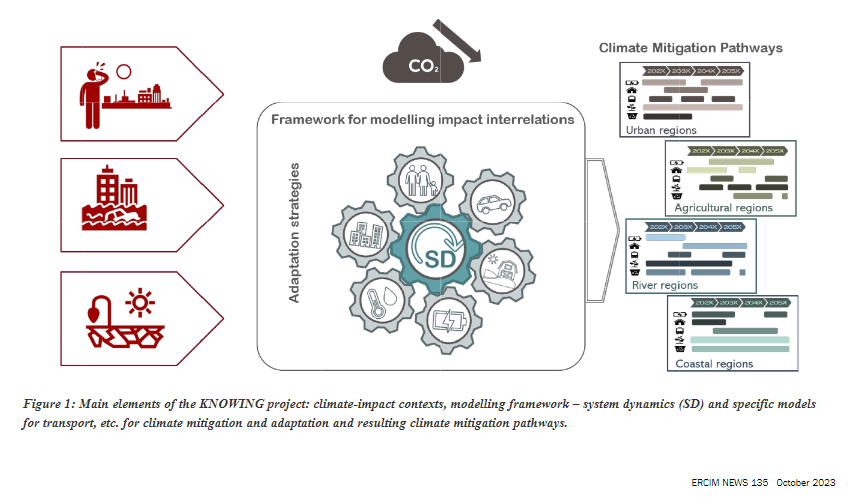
ERCIM News No. 135 Special Theme "Climate-Resilient Society"


Dear ERCIM News reader,

A new ERCIM News issue (135) is online with a special theme on Climate-Resilient Society! This special theme aims to put a spotlight on recent research, innovation and Implementation activities that could be taken up by the EU Mission on Adaptation to climate change, focusing on actionable knowledge, tools and solutions for planning, implementation, and progress monitoring. We encourage you to read the full issue to learn more about the latest advances in climate change adaptation research and practice. You can access the issue at the following link: https://ercim-news.ercim.eu/


This special theme was coordinated by our guest editors Athina Lykos (AIT Austrian Institute of Technology) and Sobah Abbas Peterson (NTNU).

Thank you for reading ERCIM News! Please share this issue with anyone who might find it interesting. You can also support us on Twitter (@ercim_news) and LinkedIn (https://www.linkedin.com/company/ercim). 
Let's keep the conversation going and share the latest updates together!

Next issue:
No. 136, January 2024
Special Theme: "Large Language Models". Submissions are welcome! See call for contributions.


Announcements in this issue:

Call for Proposals: Dagstuhl Seminars and Perspectives Workshops Schloss Dagstuhl – Leibniz-Zentrum für Informatik is accepting proposals for scientific seminars/workshops in all areas of computer science.

Social Robotics, Artificial Intelligence & Multimedia Winter School, Grenoble, France, 19-23 February 2024

ERCIM "Alain Bensoussan" Fellowship Programme - postdoctoral fellowships available at leading European research institutions. Simple application procedure. Next application deadline: 30 April 2024.

ERCIM News is published quarterly by ERCIM, the European Research Consortium for Informatics and Mathematics. With the printed and online edition, ERCIM News reaches more than 10000 readers.
All issues published to date are available online.


About ERCIM

ERCIM - the European Research Consortium for Informatics and Mathematics - aims to foster collaborative work within the European research community and to increase co-operation with European industry. Leading European research institutes are members of ERCIM. ERCIM is the European host of W3C.

Peter Kunz                      	
ERCIM Office
2004, Route des Lucioles
BP93
F-06902 Sophia Antipolis Cedex

Includes:
Clean air
20 Improving Urban Air Quality and Climate-resilience in Cities with Inclusive, Policy-relevant Citizen Science
by Pavel Kogut (21c Consultancy), Lieven Raes (Digital Flanders) and Susie McAleer (21c
Consultancy) 
Energy
21 LoCEL-H2 - Low-cost, Circular, Plug and Play, Off-grid Energy for Remote Locations including Hydrogen
by Athanasia-Maria Tompolidi (Consortium for Battery Innovation, CBI), Jonathan Wilson (Loughborough University) and Hassan A Khan (Lahore University of Management Sciences)
Transferable mitigation pathways
28 KNOWING How to Deal with Climate Change 
by Alexandra Millonig and Marianne Bügelmayer-Blaschek (AIT Austrian Institute of Technology) - with image:
Figure 1: Main elements of the KNOWING project: ... p.28.

Thursday, November 08, 2007

From Sinclair and [BBC] BASIC to PHP, AJAX, Javascript and Drupal?!

Starting the server and delving into Drupal I'm reading too:

Babin's - Beginning Ajax with PHP
Darie et al. - AJAX and PHP

The code in these and most books is available on-line and while this makes life easier, I've realised that the time spent in the 1980s typing code into the Sinclair ZX81 (with 16k RAM pack) and BBC microcomputer provided a great way to learn programming structures and syntax. Now, I don't have time for typing even though I'm no keyboard slouch (and yet - posture! posture!).

Another thing I've never faced up to the challenge represented by the PC in terms of programming and networks. Lots of reasons including family, day job, a static website, some publications and amongst the excuses is the arrival of OOP (object oriented programming). I found myself using C+ on my degree course (philosophy:computing) and worked through the assignments 'OK', but this was no springboard.

In the books you can feel short-changed as the code examples include repeated functions - browser checking, error handling and such like. So what to do? Well, re-use of code is a key principle of programming and so whether a case of typing or copy-paste re-use makes sense.

I've got some of the chapter exercises working including this AJAX grid, which I know is no great shakes. What I think will help push me forward is to flavour this with data related to Hodges' model. That's a problem too - having meaningful data.

Anyway, must go - to check if the three updates in the image to the left are actually in the database table. MySQL is another thing to get to grips with and I notice that the latest version of PHP can be used to write object oriented code - OOPs - no escape!

Wednesday, August 20, 2008

Hodges' model: Background - Foreground and the Space Between

If there is one thing that h2cm exemplifies it is distance.
It is after all a four-way signpost.
Seven-way (and more) if we include past, now and future
and wrap these in a spiritual domain.

The novice coming to study and explore the periplus (Cunliffe, 2001) that is health and social care (plus informatics), is presented with a daunting and yet exciting coastline.

The curriculum the new learner must navigate ('negotiate' literally via learning contracts) lies before them the challenge heightened by several vanishing points on several horizons.

Our senses are designed to quantify and our intellect to qualify this thing we call distance. Distance within conceptual spaces and the semantic web is all about semantics: the meaning of the terms we use in everyday and specialised languages.

If it is not a case of begging the question, consider the key concepts that comprise an explanation of h2cm.

Declare one concept, for example, ‘individual’ and we create a semantic singularity (in the sense of conceptual plurality not noun?). As soon as we add another concept, such as 'group' a conceptual space (the h2cm grid or matrix) is created.

The axes of h2cm are not passive.
They provide a spatial and cognitive scaffold.
Like gravity each concept is related to others by an all pervasive force.

The force here while not physical, it is universal in the sense that every concept is associated with the others by virtue of their similarity. Even if not physical in that arc of the diver sense, this similarity can be calculated and can be represented computationally within a computer program or virtual reality environment – the force potentially represented as feedback.

Gardenfors, P. (2000). Conceptual Spaces, MIT Press, London.
Cunliffe, B. (2001). The Extraordinary Voyage of Pytheas the Greek, Penguin.
semantic singularity? I thought of singularity in the astronomical sense at first, but found ...
Levy, P. (2008). Beyond Semantic Web SEMANTIC SPACE
http://www.ieml.org/IMG/pdf/Balisage2008-pierre-levy.pdf
http://www.springer.com/linguistics/semantics/book/978-0-7923-6569-3
http://linkinghub.elsevier.com/retrieve/pii/S0749596X05000720

Saturday, November 14, 2015

Student's intellectual and ethical development (Gyurko, 2011)

I need to trace out a theoretical basis for Hodges' model. The paper in this post provides a piece of the jig-saw. Hodges' model is a conceptual framework that can act as a starting grid for the ongoing intellectual, ethical and professional development of all students.

In a post to follow I have also found some insights to underpin the objective and subjective within Hodges' model...

individual
|
INTERPERSONAL : SCIENCES
humanistic --------------------------------------- mechanistic
SOCIOLOGY : POLITICAL
|
group
relativism

duality


multiplicity

commitment


Perry identifies themes or stages of experience, which cluster around nine positions that are classified into four broad categories: duality, multiplicity, relativism, and commitment (Billings et al., 1998). Duality views the world dichotomously as good–bad, right–wrong, or black–white. Those who make meaning from a dichotomous point of view do so with the belief that right answers exist for everything. With regard to learning, in this stage students simply seek the right answer. With multiplicity, students learn to honor “diverse views when the answers are not yet known” (Evans et al., 1998, p. 131). As students advance toward relativism, they begin to recognize that right and wrong and good and bad are not enough to deal with the situations of real life. In this stage, students learn how to look at specific situations in an abstract view and weigh information by problem solving (Evans et al., 1998). Finally, the movement to commitment occurs when “ethical development,” involving choices, decisions, and affirmations, is incorporated in one's lifestyle (Evans et al., 1998, p.133). (p.508)

Gyurko, C. (2011) A synthesis of Vroom's model with other social theories: An application to nursing education. Nurse Education Today, 31(5), 506-510. doi:10.1016/j.nedt.2010.08.010

Wednesday, November 02, 2022

Three Norths <----> Souths too...?

Map norths converge on Dorset village in historic first (BBC News)

Ordnance Survey said the historic triple alignment made landfall in Langton Matravers near Swanage on Wednesday

"A small village has made map reading history and become the first place where true, magnetic and grid north have met at a single point.

According to the Ordnance Survey (OS) the historic triple alignment made landfall in Langton Matravers, near Swanage in Dorset, on Wednesday.

It will stay converged for three and a half years as it travels through the UK.

OS spokesman Mark Greaves said it was not related to climate change.

Records held by the OS, Britain's national mapping service, date back to the 1930s but Mr Greaves said this was the 'first time ever in British mapping history' the three norths had aligned.

'Magnetic north has a habit of wandering around, but this is unusual, it's not been in this orientation for hundreds of years,' he added" 

Continued...

Map image: http://www.itraveluk.co.uk/maps/england/4876/dorset/langton-matravers.html 

Previously: 'compass' & 'SOUTH'

Monday, February 11, 2008

Box & Grid fonts plus Wicker People - blog banner.

As regular readers will be aware I've been after a decent banner for W2tQ.

I came across this site specialising in free fonts:

- and putting this resource together with a photo taken locally this is the result:


I do hope the Celtic influence does not scare anyone, but Hodges' model is a conceptual framework...

Monday, May 25, 2026

ii Book: 'Complexity in Health Care - A Paradigm Shift for Clinical Practice'

I didn't have time to finish reading Frankel et al. before WCCS26. This book has an index which was very useful, to efficiently check certain points. It is amazing the number of books without an index.

Chapter 1 is 'Guiding Principles' and links really well with the index. At two pages it is brief and yet also constitutes Part 1. 

Part II The Clinical Situation, continues an introductory thread. Chapter 2 The “Clinical Situation”: An Introduction to Its Structure and Complexity is what attracted me to the book. At five pages, there was more in this vein. I looked ahead and found that the chapters all seemed short. Checking the book's web page, 50 chapters in 270 pages, so just over 5 pages and well referenced too.

Initially, you might feel short-changed, of course, I didn't with a review copy. But don't worry. You are in patient- person-centred hands here. Sometimes content matters. The three authors work and are researchers in psychiatry. For me, the guiding principles and part II provide a handshake with the index. The person here then, is given a literary hug. Immediately, there is a link between the variables of care and the structure of a case (or caseness). 

'But importantly that "structure" is dynamic changing over time. We classify variables as "clinical" as they are brought into play for the purpose of treatment, i.e., the goal of healing.

The clinician is not just challenged to unravel this complicated situation but also to represent the patient accurately, including his or her "human" elements as represented by temperament and personal attitudes. What are the patient's essential needs. tolerances, preferences? Yet, there is even more to know about each patient. Does she have children? What is her financial status, her ethnicity? What are her attitudes about medical professionals. Does she believe in medicine, or even in science?

Beware! None of these factors are dispensable when trying to understand a patient. Just try to leave out a few and you are left with a gutted rendering of that person, not a living human being.' p.7. 

(and continued in fragmented form below ...)

individual
|
INTERPERSONAL : SCIENCES
humanistic ------------------------------- mechanistic
SOCIOLOGY : POLITICAL
|
group
'The result even when this level of detail, is available may still be an anemic version of the patient. 
 
Traditionally a medical patient is subjected to an extensive workup that includes a mental status examination, in addition to a detailed past and present history, ... 

... and an extensive "review of (organ) systems.

Now add the multiplicity of problems, psychiatric and systemic medical, from which the patient suffers. ...

Multiplicity may include systemic medical, psychiatric, social, financial, and lack of access to health providers.' p.7.


'From this description it seems logical that complex patients presenting with mixed medical-psychiatric disorders be managed with an ongoing collaborative approach delivered by a multispecialty team. Included may be a primary care physician, psychiatrist, and/or psychotherapists. One or more of the collaborating professionals may be a nurse practitioner and/or a physician's assistant.' p.7
I will return to the 'logical' in the final quoted paragraph above. The author's declare their intent from the outset, and by the literature-to-date they achieve this (may I please add? 'in spades!').
 
Over the years and as raised on W2tQ, several colleagues and contacts have asked "Where is the book on Hodges' model?" Not to sound weird, but this book asks that same question through some challenges to the usual 'medical' text. There are several lessons to take away here, even if only to keep a dream alive. While the physical size of a textbook, its practical appeal and stance makes it appear as something to pop in your top shirt/jacket pocket. A pocket guide: quite an impression just 10-20 pages in, and in this digital age.
 
As you would expect from mental health practitioners - psychiatrists - psychotherapists, interpersonal, subjective-objective and intersubjective factors are integral to how complexity is defined and measured. In Chapter 2, pp.11-12 there is mention and reference to the Value-Based Integrated Case Management Complexity Assessment Grid:
Specker, S., Andrew, R., Drexler, E., Koithan, E., Thurber, S., & Frankel, S. (2026). Development of the Self-Administered Health Complexity Screening Instrument. Professional case management, 31(2), 81–89. https://doi.org/10.1097/NCM.0000000000000845
I will check this instrument as I complete this review. As noted on April 9th this book was published in 2023, so I remain grateful to Daniela and colleagues at SpringerNature for the review copy (which also enjoyed WCCS!).

More to follow ...

Steven A. Frankel, Steven D. Thurber, James A. Bourgeois (2023) Complexity in Health Care: A Paradigm Shift for Clinical Practice. Cham. Switzerland: Springer. ISBN: 978303114948.