Hodges' Model: Welcome to the QUAD: Search results for lines

Hodges' model is a conceptual framework to support reflection and critical thinking. Situated, the model can help integrate all disciplines (academic and professional). Amid news items, are posts that illustrate the scope and application of the model. A bibliography and A4 template are provided in the sidebar. Welcome to the QUAD ...

Showing posts sorted by relevance for query lines. Sort by date Show all posts

Sunday, July 26, 2026

The Line(s)

Foresight, hindsight, sight itself and that illusory association with the line of time is a fascination for us all. No doubt, as a result of the hardwired analogue found in the lifeline and our ultimate fate. Hodges' model acknowledges all these lines; concrete and abstract. The work and health careers, an individual's education career (where accessible / permitted) now lifelong learning.

Abstract things seem tenuous, indistinct, maybe lost somewhere in theory. Concrete on the other hand, is physical, tangible. 

Hodges' model can cover paper with lines, two of them ideally. The model can then be applied in practice.

There is then an interplay between abstract and concrete; between which data, information and knowledge flows, uncertainty reduced. Scope and scale become clearer once assessment, planning, intervention and evaluation are concurrent.

This applies to all lines, if they are not destined to be covered in sand.

My source:  
End of The Line: how Saudi Arabia’s Neom dream unravelled, FTWeekend: 
https://ig.ft.com/saudi-neom-line/
 
See also: 'design' : 'architecture' : 'line'

Friday, March 20, 2015

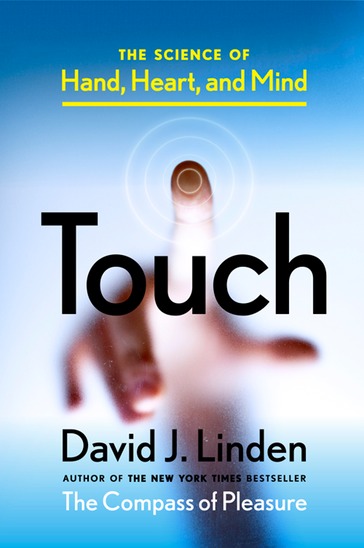
Book: "Touch" - Line of sight, light touch, looking for (care) assurance if not truth

Sometimes things become clearer
- resolved -
when they touch,
even if as lines they cross
and all is rendered more complex...

individual
INTERPERSONAL : SCIENCES
humanistic ------------------------------------------- mechanistic
SOCIOLOGY : POLITICAL
group

Learning of self and other
greetings, friendship, relationships, intimacy
the POLITICS of touch
power


See also:
Reading between the lines...

2011... looking ahead: Line of sight - Lines of insight

Image source:
http://davidlinden.org

Wednesday, December 02, 2020

Book review: "After Ethnos" i

A great believer in serendipity, this played a part in my discovering this book. From the FT Weekend's 'How to Spend It' I noticed the book and its cover in 'the aesthete' Anicka Yi (pp.17-18):
 
The best book I've read in the past year is After Ethnos by Tobias Rees. He's mapped out the evolutionary transformation of humans and I think it's an important book for the next stages of our species. p.17.
Looking up the book and the publisher's blurb - a request for a review copy was rewarded.

Two points, first I wondered about the meaning of  'ethnos'. A small word, it seemed to have instant gravitas. It does: being Greek for "a people" (p.1). The quote above does not mention 'anthropology' specifically, but this is very much the book's focus. Once delivered, and making a start I got a taste of what was to follow; and did wonder if I had bitten-off more than I could chew.
 
As a nurse, I thought I'm not an anthropologist, but as a member of humanity we are all in a sense anthropologists. Surely, it isn't a far stretch from 'people skills', social skills, interpersonal skills to anthropology? Perhaps, if you work in mental illness - health this connection, relatedness is accentuated? Anthropology is of course a specialist subject and the book has helped me 'place' it on the book shelf in relation to cultural studies. The view from Wigan Pier does not get you far, even if it has stretched to within 2.5 degrees of the equator and Amman, Jordan. Anthropology is fieldwork as well as a repository for theories.
 
Any qualms were quickly put aside. The book while anthropologically technical and philosophical is an easy read. The main text is 121 pages. So a couple of days and you are after ethnos too. I've still to read the notes as I passed-them-by, recording the numbers of several to look up later.

The project of the book on the DUP site includes:
In After Ethnos Tobias Rees endeavors to decouple anthropology from ethnography—and the human from society and culture—and explores the manifold possibilities of practicing a question-based rather than an answer-based anthropology that emanates from this decoupling. What emerges from Rees's provocations is a new understanding of anthropology as a philosophically and poetically inclined, fieldwork-based investigation of what it could mean to be human when the established concepts of the human on which anthropology has been built increasingly fail us.
There is much to savour here, at least in my reading. Rees refers to:

lines of thinking
lines of escape
lines of research
line of flight

A preoccupation for me is 'line(s) of sight' and insight. Much space is given to differentiating anthropology and ethnology. The role of curiosity (key for Rees) about the human and hence the difference between anthropology that is answer-based to one that is question-based.

 individual 
|
INTERPERSONAL : SCIENCES
humanistic ----------------------------------------------- mechanistic
SOCIOLOGY : POLITICAL
|
group
questions
answers
a people
the people


Clearly, the book is a challenge to classical, established, traditional views of  anthropology. What is taught, the curriculum and its future.

Rees seeks to disrupt, derail, depart and break free from what is current thinking, to seek escapes. I like reference to chaos, turbulence; the book is nonprogrammatic and all this without resort to a place at which to arrive.

In chapter 1 the sentence: Classical modern ethnology has come to an end.
 
prompted me - to substitute terms:

Classical and modern nursing (theory and practice?) has come to an end? p.8

Chapter 1 asks: what is anthropology? What is anthropology's job? What's it's domain? The book covers the history of anthropology, ethnology to facilitate a general reader's understanding.

More to follow ... 
 
and thank you to Duke University Press for the review copy.


After Ethnos - acknowledgements

Rees, Tobias. After Ethnos, (2018): Durham and London. Duke University Press.

Wednesday, September 11, 2024

THE GRID by Eli Payne Mandel

individual
|
INTERPERSONAL : SCIENCES
humanistic ------------------------------- mechanistic
SOCIOLOGY : POLITICAL
|
group

[125]
'Therefore, a mathematician babbles when he refers to cutting a given line in two. The actual line that he shows to us on the abacus has length and width. But the line he has in mind is a stroke with length and no width. What is drawn on the abacus cannot be such a stroke, and he who goes about cutting it cuts not the line that is but the line that is not.'

(Sextus Empiricus, Against the Mathematicians 9.282)
(n.b. The above is printed upside-down on the page.)

Scatter the trace of the vessel from the ash. Pythagoras here is riddling about confusion and mental cloudiness, for if one wants to do philosophy one must pass over physical and sensible demonstration in favor of abstract argumentation. The ash is analogous to the dust on the abacus in which diagrams are delimited and proofs brought to an end. 

(Iamblichus, Exhortation to Philosophy 34)' p.55


'[1] In ancient Greek, an abacus is a sand table. 'The abacist draws lines and maybe moves pebbles around the lines. When done, she wipes the sand blank. 


[2] A board or slab for drawing, computation, games; a cutting board. Technical term, likely to be a loanword, but conjectured origin in Hebrew abãq "dust" remains unproven. --  Pierre Chantraine, Dictionnaire etymologique de la langue greque.' p.10.

'[122] The abacus computes and it erases. It tells a life. Then gambles it away. Achilles and Ajax sit down to play a game of dice. They have hung up their shields. They lean on their spears. They are tired. The Anatolian air is cold off the water. Attendants wrap them each in wool cloaks thick with eight-pointed stars. The stars wander along eddies and meanders. The only straight lines are servants of error. Their fingers are on the abacus, but Achilles and Ajax do not play, do not speak, lost in the maze of their cloaks.

[124] The first reference in Western literature to written language is in the Iliad. An unsuspecting  man in a story is carrying semata lygra / grapsas en pinaki ptukto thymophthora polla: baleful signs written on a folded tablet, utterly soul-  destroying. The words, which some scholars conjecture to be Linear B, spell out the man's death, and the reader murders  the unreading man. After the murder, Death Wipes the tablet  blank and folds it back again.' p.54.

'[3] Because dust blows away and only the slab remains, an abacus is also the part of a column in immediate contact with what it supports. If that structure no longer survives, the abacus upholds the edifice of the sky.' p.10.


THE GRID by Eli Payne Mandel, Carcanet Press. 2023.

https://www.elipmandel.com/

Previously on W2tQ (with overlap):

arts :: drama :: poetry :: literature :: narrative

Wednesday, May 24, 2017

What does professionalism mean to me? #IND2017 (dnf: draft never finished)

Something along, within and across these lines...


INDIVIDUAL
|
INTERPERSONAL : SCIENCES
humanistic ----------------------------------------- mechanistic
SOCIOLOGY : POLITICAL
|
POPULATION

Being self-aware, reflective and
reflexive including aspects of your
role that either you don't especially
like, or you're just not 'good' at.
Recognise when to ask
for help, advice, supervision.
Anticipating needs.
Indicating pros and cons.
Keeping up-to-date.
*Have the courage to blow
that whistle if you must.
Communicate to the best of your
ability and learn constantly as human
nature dictates you must.
Look after yourself: if ill Be ill.
Take care
of your personal ethics and values,
don't be bullied into lowering them
and running with the crowd.
Nurse = Lifelong Learner
... then you will question your own competence.
As you strive to be someone else remember you can be yourself.
The things you take personally are those you open the door to. Learn from them.
Never forget your shield,
protect yourself and others in
what you disclose about
yourself and others.


Being compass-ionate requires

360 degree

vision, hearing ...
learning and forgetting...

Your keen are you?
So really observe.

Care about time,
your management of it as a resource
and the time frames of
past, now, future, hoped for and imagined.
Remember you need to understand information systems, data management in so far as it supports or places at risk the care you deliver and the safety of your patients.
If I use IT based media I bear in mind the scope of the platform.
Open to innovation:
but see the elephant as an elephant.

When the robots knock on your door being professional means you won't be in: "Moved On"

As you care, draw on learning
regards where you stand -
 you are a guest in someone's home,
As your feet are then grounded politically,
so too is touch and
negotiating personal spaces.
 Learn from others 
Expectations Expectations Expectations
Manage them in a way such that you do not make promises you can not keep.
Be committed to what you do.
Learn from your peers, especially for safety's sake, but also form your own opinion.
Talk this and work through with colleagues.
Not everyone will 'like' you; you in turn may not 'like' people. Working through this (without experiencing abuse) as your role demands is being professional.
By all means be a team player, but don't let the games that people play distract you from being professional.

Patient-Carer
Community Care
End of Life Care
 As you learn from others 
pay most attention to the lessons 
in Love as you will witness many. 

The trust and respect of others take time to earn,
but can be lost in an instant;
if you have 'it' use it to foster trust and self-respect in others.
You have to remember constantly
you are accountable here.
Remind yourself of codes of conduct the legal aspects of your role.
Know your lines -
especially when crossed | STANDARDS.
With your ID have your whistle ready*.
What you do and who you are is a privilege.
Know your scope of practice, but be ready to question it. If you do not the future will.
This domain is the most powerful and neglected to the professional nurse. As a professional what are YOU going to DO here?
The art of leadership is filled with wonder: at what together you can all achieve.
Take stock and ask in Year 1 what are the
legacy issues my seniors are wrestling with?
In years 10 20 30 40 ...
(robotics permitting) repeat and reflect.


... because, being professional means learning and unlearning when the lines are there for a purpose and when they need to be shifted, lifted or plain erased ...


Previous post c/o NMC

Thursday, January 06, 2011

2011... looking ahead: Line of sight - Lines of insight

LINE OF SIGHT:


LINES OF INSIGHT:

Fractal Drum


Image sources:

Wilkinson, F.J., Monkhouse, H. R. (1967). Maps and Diagrams; Their Compilation and Construction [Paperback], Methuen & Co Ltd. Intervisibility, Line of sight. p. 125 [scanned].
(Book purchased in Mevagissey, Cornwall, Hurley Books July 2010)

Fractal drum. Lines of INsight: http://classes.yale.edu/fractals/panorama/ManuFractals/FractalDrums/FractalDrums.html

Health and social care - listen!

Sunday, September 17, 2017

Lines, opposites and unity

"The point, then, is that lines join the opposites as well as distinguish them. And that precisely is the essence and function of all real lines and surfaces in nature. They explicitly mark off the opposites while at the same time time they implicitly unify them. For example, let's draw the line representing a concave figure, as follows: 
concave  )  (convex) 
But notice immediately that with the very same line I have also created a convex figure. This is what the Taoist sage Lao Tzu meant when he said that all opposites arise simultaneously and mutually." (p.25)

Wilber, K. (2001) No Boundary,  Eastern and Western Approaches to Personal Growth. Boston: Shambhala.

Monday, March 09, 2015

Ngrams: E-portfolios, nursing theory, models of nursing...: Do the lines run true?

For the latest module I'm looking at e-portfolios in nursing education and possibly wider afield. In the FT Weekend Life & Arts there is an extract -

Capitalism’s secret love affair with bureaucracy

- from David Graeber’s book: The Utopia of Rules: On Technology, Stupidity, and the Secret Joys of Bureaucracy published this week on March 12. It includes a graph from Google Books Ngram a word count through time of 'bureaucracy'. I'd read about Ngrams and tried them quite some time ago, but never used them. Now's my chance.

The graph below began with e-portfolio and eportfolio. I tried nursing e-portfolio... but these were not found. With conceptual framework the scale was disrupted. Adding models of nursing and nursing theory provided a frame that also nicely encompasses, at least in this rendering, conceptual space and threshold concepts.

At the risk of asking too much of the graph if not the source, we might be disappointed that models of nursing is not running concurrent with e-portfolio and reassured that nursing theory has waned but is 'still up there'. This is to forget though that the count for e-portfolio here is general not nursing specific.


Ngrams are another tool and a dynamic one no doubt, when the API is utilised, the data downloaded and words are re-examined over time. In answer to the title's question, I do not believe the lines do run true but this is about nursing and e-portfolios.

Sunday, January 20, 2008

The symbol '+'

Apart from a multitude of symbolic meanings the figure below also provides the structural foundation for Hodges' model and as symbols.com notes:
Cross from symbols.com

The cross with arms of equal length is an extremely old ideogram used in most cultures. It is also one of the basic gestalts in Western ideography (as opposed to the basic elements, which are derived entities). The cross is found in every part of the world, in prehistoric caves and engraved on rocks.
In my interview with Brian Hodges' over 10 years ago in May 1997, Brian provided an account for how he arrived at this structure (summarised below). As mentioned elsewhere on this blog, the website, symbols.com and other sources - the cross, or 2x2 matrix is a common device to explain and structure. The four elements, the four humours (or humors) yellow bile, black bile, phlegm and blood, the seasons; there are so many things that can be characterised in this way.

With '+' as a starting point for me to reflect on Hodges' model I see each line as an individual. This agent or subject could include patient (person) and health care worker; lecturer and student and many other examples.

The act of cros-sing, the intersection of the axes represents two human beings being in a situation.

Space and time brings people together:

and also forces us apart - physically and temporally.

Adding an arrow to one end of these axes creates the dynamic of communication.

The angular distance in the alignment of those arrows offers hope -
  • in our common humanity we are never in 180 degree opposition;
and yet acknowledges:
  • the isolation of the individual -
  • and the challenge.
The work that must done. Hence the primacy of communication skills and values; in order to bridge individual being, ti:me and space.

Perspective is helpful here as an extension:

While we may get close to another person, through relationships that entwine the lines - be they spun by professional obligations, friendship, family ties, or intimate sexual relationships - the two lines are always distinct: part of an elaborated knot.

Is it just the special ties that must forever seek to be one+


The best way to explain h2cm is to review the questions Brian Hodges originally posed.

To begin, who are the recipients of care? Well, first and foremost individuals of all ages, races and creed, but also groups of people, families, communities and populations. Then Hodges asked: what types of activities - tasks, duties, and treatments - do nurses carry out? They must always act professionally, but frequently according to strict rules and policies, their actions often dictated by specific treatments including drugs, investigations, and minor surgery. Nurses do many things by routine according to precise procedures, rather like the stereotypical matron with machine-like efficiency? If these actions are classed as mechanistic, they contrast with times when healthcare workers give of themselves to reassure, comfort, develop rapport and engage therapeutically.

This is opposite to mechanistic tasks and is described as humanistic; what the public usually think of as the caring nurse. In use this framework prompts the user to consider four major subject headings or care domains of knowledge. Namely, what knowledge is needed to care for individuals - groups and undertake humanistic - mechanistic activities? Through these questions Hodges’ derived the model axial structure.

Sunday, November 30, 2025

Interesting ... 'Incidence structure(s)'

Unsurprising, in studying 'Hodges' model, I've been aware of Wilfrid Hodges and model theory for many years.


Now, trying to look at (Brian) Hodges' model using maths, I've wondered about possible connections with Wilfred Hodges' work.

Dr W. Hodges was listed in searches on lines, axes, and structure:
'Algebraists and geometers like to classify structures by the laws which they obey. A typical law for incidence structures reads:

"For any two different lines L and M, there is exactly one point which lies on both L and M."'
My imagination may be getting the better of me, but there seems something profound in the intersection of the model's two axes and the care - knowledge domains that are created (proposed - adopted..)?

So, is Hodges' model a form of 'incidence structure', or does it contain several incidence structures? 

Hodges, W. (1985). Truth in a Structure. Proceedings of the Aristotelian Society, 86, 135–151. http://www.jstor.org/stable/4545041

Friday, March 12, 2010

More lines - scribed in SF

I've just finished and greatly enjoyed reading Greg Bear's EON which includes:

There are an infinite number of alternatives to the Way, each originating in an alternative world-line, yet reaching beyond that world-line. Until now, Way researchers have not known quite how the alternate Ways were stacked or arranged, or indeed whether they could even be considered real. Since the Way intersects a large number of alternative world-lines - perhaps all - could there be more than one Way?

The variety of emotions available to a reconfigured human mind, thinking thoughts impossible to its ancestors . . .

The emotion of -*-, describable only as something between sexual love and the joy of intellection - making love to a thought? Or &&, the true reverse of pain, not "pleasure" but a "warning" of healing, growth and change. Or (^+^), the most complex emotion yet discovered, felt by those who consciously endure the change between mind configurations, and experience the broad spectrum of possibilities inherent in thinking and being.
pp. 492-493. Gollancz, paperback, 1985.

According to the cover I note that Mr Bear is married to the daughter of Poul Anderson an author who also figures in my (dated!) SF collection. A favourite is Tau Zero which I also recently re-read and passed-on. As to the quotes above I will let them stand for themselves. ...

Thursday, December 18, 2025

Learn your lines and the hyperplane will follow i

Take an empty [rectangular] space (A4 paper in landscape)

Blank! Isn't it?

Take a line. Yes, call it that.

Divide the space vertically, and equally, in two. 

Do this again but horizontally.

You can call these lines, partitions if you wish?

Or, as per adopted convention here, axes.

Now, there are four empty spaces.

These spaces can be called quadrants, planes, or domains. The latter term usually adopted here.

Labels can be decided, and assigned to the axes and the resulting domains.

Given a purpose, in practice (initially) the 'empty' spaces have the ability to assign significance to what may be placed within them.

Such decisions are non-trivial, in the sense that context and situation determine what follows, influenced by objective and subjective considerations.

The domains can contain concepts, or keywords with decisions driven by categorical reasoning.

The content of the domains can also be viewed as classes and sub-classes.

ii to follow (with revision here?)

Wednesday, May 16, 2007

News exclusive: Mind mapper is visited by guardian angel of Hodges' model

On the web I found an interesting comment item from the Educational Guardian 2006 by Philip Beadle "Mind maps: rubbish in theory, but handy in practice". Being an educational piece Mr Beadle is concerned with mind mapping in the context of children, although that's quite an age range in reality. As the title suggests, the piece as a whole does not rubbish mind mapping completely, but the start got my goat.... You see I thought of the first impressions and assumptions that people may form coming to Hodges' cognitive x-roads. Do they turn back or cross the divide?

Beadle apparently mind mapped the article and asks the reader if they notice a rise in quantity. I don't know if it's a typo, but quality should be the factor here. He made several points:

  • Mind-mapping is easy
  • Send people to search for coloured pencils
  • Sharpen them - and again - and again
  • DO NOT use a felt pen
These instructions are c/o the books by Tony Buzan the mind mapping guru. Beadle declares them wrong - and continues:
  • Draw something in the middle (right dead bang, no less) of the paper
  • Stay away from the sides - radiant thinkers need space
  • Draw six multicoloured lines from the centre and a picture at the end of each
  • Lines should be curly - no room for rulers in this realm
  • Write key words in UPPER and lower case and voilà! A basic mind map is born
I realise you can read, but suffice to add that Beadle explains the claims that are made for mind mapping and the issue of 'bad science'.

Hodges' model has a problem here. It is not scientific - not evidence based. Not for the last time I'll say that the website and this blog are a (faltering?) call for research.

In many subjects the concepts of locus and control is important, in psychology and therapy for example. In mind mapping what determines that initial centre-stage drawing? True it could be person-centred, situated and problem centred.

As described above, though the space (page) in mind mapping is blanc*, virginal, neutral and crucially - unstructured.

Actually, there's some grief and annoyance in store for the mind mapper coming to Hodges' model.

There they are coloured pencils in hand, tongue protruding seeking airborne creative inspiration...

And then, it happens "Sh-t! Who the hell has graffitied on my page!"

Then suddenly, a voice booms out from overhead:
"Greetings, mild-mannered mind-mapper. Here is an announcement: the centre of this page has been rendered a no-go-zone. It is now a hyper-dimensional nexus, the point of fusion between four disciplines, five even (how could I forget). It is Complexity and Chaos. You can venture as near as you wish. Now please do not fret; I have it on good authority that aesthetically many things look better slightly off-centre."
The point I want to make - is the central importance of:
  • Hodges' axes and knowledge domains - just where is the 'map'?
  • How these influence the locus of control and association
  • The concepts are already 'on' the page implicitly
  • The user makes them explicit (in mind-mapping the space is aconceptual)
There are other critical dependencies:
  • The knowledge, skills, attitudes and aptitudes of the user (are they a novice or expert#?)
  • Whether they are novice or expert, Hodges' model provides a common conceptual substrate
  • Finally (though I could go on!) quality in health and social care - and without - is the real issue. There are times when silence is golden...
There are many visualization (with apologies to those with voluminous datasets to swing) and mind mapping tools out there, but with the semantic web and Web 2.0-3.0... then Hodges' model will come of age....

Ack: *Michel Serres; #Benner, et al..

Wednesday, January 28, 2026

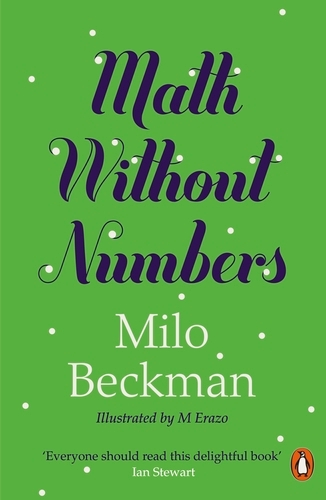
ii Math Without Numbers - final notes & obs

In Math Without Numbers the chapters and topics flow and slot in really well, even for novices. There is no index, the inclusion of which is a first-check usually. The book's appeal was its non-technical title and invitation reading the sleeve notes. The title throws up words and visuals, the latter, to repeat, are ably and simply furnished by M Erazo. Remaining notes to highlight (record here) include (and capture overthinking!):

Math Without Numbers

Reference to 'ideology space', 'conceptual space' and the role of visual analogies, idioms, and how 'the list of spaces to choose from is always the same.' ... pp.28 & 29. On page 30, 'When you say that gender is a spectrum rather than a binary, that's a topological claim: You're  saying gender space is one-dimensional (a line) rather than zero-dimensional (two separate points). 'Questions about which conceptual paradigm to use sometimes boil down to questions of dimensionality.' Discussion of an infinite continuum had me making an axis of Hodges' model warp, this way and that: concave-convex (p.59). Maps and correspondence is already well established, as per a new paper (abstract and thanks to follow 1st Feb):

S. Bettiol, P. Jones, H. A. Onyedikachi, and W. G. Kernohan, “Bridging Gaps in Oral Health Frameworks: Mapping With Hodges' Health Career - Care Domains - Model”, Journal of Public Health Dentistry (2026): 1–14, https://doi.org/10.1111/jphd.70034 

Interesting to read of general map facts, flowing substances inside a rigid container, and vector maps. A pencilled note to share:

'Because when you look at things in the abstract like this, dusting off the specifics of a situation to focus on underlying dynamics, you start to realize there are only so many different patterns and structures out there. These patterns and structures are called mathematical objects, and thinking about them is called math.' p.79

The chapter on (generalised) Algebra, forced me to reconsider the Socratic, guided discovery and arrival at the structure of Hodges' model. (lines & points : nodes & edges). For page 88, I noted 'generic' invites abstraction. Isomorphism is discussed. Again I tested this against Hodges' model. I've always found it helps to immerse oneself in a new vocabulary: so welcome (anew) - structures, fields, rings, groups, loops, graphs, lattices, orderings, semigroups, groupoids, monoids, magmas, modules . . . algebras, p.101. Some are named only, but on graphs raises questions ... p.103.

'How densely interconnected is it? How segregated into different cliques? Does it cut clean into two subgraphs, with no connections between them? Can it be drawn without any lines crossing? Are there any lone dots without any connections?' 

There's the matter of 'friend of a friend' who have broken out of the sociological domain. Other notes to self: Significance of concepts - patient-centred, service-centred? The distance between between (vertical, horizontal, diametric)? There are weighted graphs (p. 104) and acknowledgement of category theory (p.115). A chapter on modelling pp.161-175, and models p.164 & p.169 are just a selection of highlights on a marvellous tour.

A hidden puzzle in the book remains a mystery for me.

Milo Beckman (2021) Math Without Numbers. London, Penguin Books. Illustrated by M. Erazo.

Previously: 'math' : 'diagrams' 
Plus, now archived Science domain links: 
https://web.archive.org/web/20150414125339/http://www.p-jones.demon.co.uk/linksTwo.htm

Believe it or not, this 'diversion' does help my reading of Order and the Virtual. 

Sunday, March 15, 2026

viii Book: Bill Ross - 'Order and the Virtual'

 'The Philosophy and Science of Deleuzian Cosmology'

So much of what we experience is nuanced. What was conscious thought, becomes tacit knowledge and unconscious. Is that consciousness nullified as Ross writes on page 76? I wrote a note 'reflection as hesitation'; also prompted to think about intution (p.83) and our word uses in 'retardation' (which here is no problem at all - in physics and complex sciences/systems. Again the 'principle of least action' arises (p.82). With more physics and cosmology to follow, it helps a little that 'manifold' has landed begging to be understood across the contexts. Bill Ross notes how Delueze and Michel Serres used the game metaphor [Game analogy #1]. Again, lifting this to a scribble 'Health-Illness is quite a game'! This will be the subject of a post soon. In England at least the law and manifold on health (being productive) and illness has been utterly disrupted. The game-table has been kicked over, by those in society who still able? New spaces, and canvases are needed. Kantian thought and interpretations are added to Leibniz. A heady mix but clearly essential as Bill Ross's critique is developed. 
 
The book was a must-read, as in the contents: Complexity (with a presentation next month), cosmology, Serres, and Claude Shannon. In Game Analogy #2, "Communication is understood here to encompass much more than meaningful exchange; all phenomena 'communicate'". p.85. I couldn't agree more with with these 'games', this thought being 'situated within the purchase of information theory' (p.86). Bizarrely (or not), in the same year two papers:
Jones, P. (1996) Humans, Information, and Science, Journal of Advanced Nursing, 24(3),591-598.

Jones, P. (1996) An overarching theory of health communication? Health Informatics Journal,2,1,28-34. 
Ross explains the global view of Michel Serres when it comes to 'information'. This entranced me, and I only scratched the skin:
Jones, P. (2008) Exploring Serres’ Atlas, Hodges’ Knowledge Domains and the Fusion of Informatics and Cultural Horizons, IN Kidd, T., Chen, I. (Eds.) Social Information Technology Connecting Society and Cultural Issues, Idea Group Publishing, Inc. Chap. 7, pp. 96-109.
Here there's a pointer to the cosmology to follow - Ross is true to the title. I have let most of the Astronomy Yearbooks go, but retain a few. Not just for key birth-years, but articles that are well written and researched historical snapshots. Here, Bill Ross discusses the game of Cepheid variables and their significance in mapping the universe. Truly, fascinating. Weaver's three levels of salient action are listed. Threads are tied too, with conclusions offered. These rules are reappraised, physics ever present. In light of one of the above papers I should revisit Serres, and Leibniz; the search for 'overarching explanatory power' (p.91) is ongoing. This game draws on Serres invitation to imagine a diagram, a network of nodes, channels, and propositions. This tabular formulation and its relations for me, spans the history of economics (Quesnay's tableau), the current state of economics (human values), and next (mathematical?) steps for Hodges' model. So many questions here: surely node  can't be an axis? I felt like Hansel, picking up sweets, Cartesian lines, scalene forms, thresholds, coming across hoops to jump through through to terminal equilibri. As you walk the sound of the thalweg, downstream... where Bergson features once again.
 
Reading Ross, over several months coincided with several key themes gaining in personal coherence. Bayesian ideas as might be applied to Hodges' model, even if in a naïve way (c/o feedback on draft notes). The remainder of chapter 3 includes time (thought), percept (space), to close with Deleuze's Ideal Game. I looked up Cortázarian Hopscotch https://en.wikipedia.org/wiki/Hopscotch_(Cort%C3%A1zar_novel), as the preface is titled. Ross reflects on the Ideal Game (does it exist, for Deleuze, only in thought?), and the distinction between 'domestic' chance (Baysian) and radical contingency belonging to the clinamen. In response to 'physical action and and the thought being on the same continuum', don't ask (please!), but I scribbled: 'corridor care' - a dangerous game, far from ideal. Plus, bird's using quantum entanglement to navigate. 'Kant's chaotic manifold', I will also investigate for next month(?).
Chapter 4 'Order as Complexity' proved most relevant. Every page is touched by graphite.

Deleuze has a 'blind spot' (p.111), something that Hodges' model seeks to ameloirate. But then of course at the model's center (nexus - as noted) that decussation of the axes invites a darkness of its own. If Hodges' model assists forethought and foresight  While inviting complexity, this interdisciplinary palette can also facilitate trandiscipinary sense-making. 'Magnitudes of intensity' reminded me of logarithmic thresholds within our perceptual apparatus. This is like reading Serres. A flow of punctum, simultaneity, delay (again) but its contribution to causal series, and Aionic time. I was taken (frequently)  to plane, person, personhood, chronicity, scales, local to global to glocal.

There is a 'corner' amid those thousand plateaus. n.b. to self - 'triangulation always needs one other'. I cannot resolve the frameworks as yet, scientific - otherwise or otherwhere; but you can take flight from here. Physics takes it place as 'complexity begets complexity'. Bill Ross utilises well-recognized sources, Penrose, Kauffman, Kolmogorov and Bohm.

As with the frameworks internal and external complexity must be untangled 1-4 (p.124?). I can laugh now, did I really try to marry up Order  - Disorder :: Simple - Complex (complicated?) to the domains of Hodges' model? So often reading philosophy, you feel an imposter playing games with words, as in: 'different similarities' and 'similar differences' (p.125). But of course, this is serious scholarship. Especially, when it involves lines, a rough circle, segments and dimensions: disorder becomes different degrees of order. Page 126 delivers Deleuze in spades, Ross pulls his thoughts together. It is fitting for me that Ross closes chapter 4 with a nod to transdisciplinarity.
Chapter 5 deals with symmetry and disymmetry; indifference and difference; limits and non-locality. There is an argument to follow (p.133). With 'group theory' mentioned on p.131, I've a lot of things to 'look up' [topology too]. Despite appearances I recognise the lack of symmetry in Hodges' model. This is what the situation does (practice) and means (theory): 'There is no reason under the sun which can rely on perfect symmetry' (p.135).  Where do/can we locate 'spooky action at a distance' in Hodges' model (p.140)? 

The Higgs role! Who knew? 'the speed of light. It represents a retardation.' Thanks Bill Ross, fascinating pp. 135-174. Plus, axes too. Note to self: when we die do we 'simply' set sail on the Dirac Sea? Attending the Bill Ross Memorial Workshop – BSP Special Event 2025 last September:

https://hodges-model.blogspot.com/2025/09/bill-ross-memorial-workshop.html

the esteem .. and love .. that Bill Ross engendered in the people that knew him. The preface refers to chats in university cafes. How I wish. I wonder what Bill would have made of Hodges' model and the ongoing project here? Vitally, I get a distinct sense that he would have found time to listen ... 
'Bill Ross (1964 – 2022) had interests ranging widely across contemporary philosophy and culture, with a particular interest in the relations between science and philosophy. As managing editor, he was the driving force behind Clinamen Press, which in the early 2000s published new works by contemporary philosophers, and English translation of important works by continental philosophers such as Henri Bergson, Gaston Bachelard and Michel Serres. He completed his PhD in philosophy at Staffordshire University, where he taught on the MA in the Philosophy of Nature, Information, and Technology. Bill had a lifelong passion for the connections between science and philosophy, on which he had published several important articles. Bill was working on a monograph on the philosophy and science of Deleuzian cosmology, which was has been posthumously published by Edinburgh University Press. This event is to celebrate Bill’s book and his life, and to allow his friends, his colleagues, and anyone interested in his work or the topics and issues addressed by his work to continue the conversation that Bill’s work inspires.'
https://www.thebsp.org.uk/bill-ross-memorial-workshop-deleuzian-cosmologies/
 
Many thanks again to Edinburgh University Press for my copy - a keeper! Bill Ross RIP.
 
Bill Ross (2024) Order and the Virtual: The Philosophy and Science of Deleuzian Cosmology. Edinburgh: Edinburgh University Press.
https://edinburghuniversitypress.com/book-order-and-the-virtual.html

Friday, December 19, 2025

ii Learn your lines and the hyperplanes will follow

With these lines, partitions, axes and domains in mind, when a clinical practitioner is presented with a new person, whether as a patient, client, or carer ... they can, using Hodges' model (and other tools!) approach their assessment in an open and receptive manner.

This means that the information provided by the 'patient' can be readily fielded, captured whatever the context and situation.

As noted previously, my study of Hodges' model began in the late 1980s. Application in my work as a community mental health nurse, with an interest in informatics followed quite naturally(?). Primed as I was, for various reasons to carry this forward, I also carried a mathematical learning disability. At the risk of getting bogged down in my thought, use and approach to Hodges' model I need a challenge.

Mathematics is the challenge for me. It's fascinating how we have in-built 'calculators' that can help us catch a ball, and judge fairly well where to throw a ball for interception. There seems then to be an informal or naïve  mathematics, at work unconsciously. Does the same apply to Hodges' model? If so, how can I isolate, and identify it?

  • Is it represented somewhere, implicit in Hodges' model itself?
  • Is it (once again) to be found in the user of the model?
  • Is it (more likely, and obviously) a combination of these two?
  • Or, is it a product of the system, or a series of systems? 

I was reminded of what is a Sober toy, several years ago:

Is Hodges' model a selection machine?

All four original purposes of Hodges' model:

  1. Person-centred, integrated and holistic care;
  2. To bridge the theory - practice gap;
  3. To facilitate reflection and reflective practice;
  4. To support curriculum development;

- are concerned with conjunction and choice, selection. So is life itself through distinction, difference, and differentiation.

Hodges' model is a selection machine, that is both fhuman and machine driven.

A clinician may obtain the referral information through an email, a history of previous contacts can be retrieved from a clinical information system; the context and purpose supporting access to the information.   

A whole series of blog posts describe the role of Hodges' model to help assure parity of esteem across mental and physical health. What does this mean in practice?

For the practitioner, they take selected data from the referral, a history - if available, an initial telephone contact, a conversation with a colleague who remembers the person re-referred and starts to populate Hodges' model. What are the psychological concepts that arise? What are the physical?

If a referral in whatever form, or a database record can be viewed as a bag-of-words, then Hodges' model is a collection of care concepts. Four bags then. Sets or classes. An experienced user of Hodges' model may position care concepts that throws attention on the INDIVIDUAL↔GROUP axis. Lying between the INTRA- INTERPERSONAL and SCIENCES domains, this axis (like all the others) earns its keep. There is work to be done that is also of interest in machine learning:

'A support vector machine (SVM) is a supervised machine learning algorithm that classifies data by finding an optimal line or hyperplane that maximizes the distance between each class in an N-dimensional space.

SVMs were developed in the 1990s by Vladimir N. Vapnik and his colleagues, and they published this work in a paper titled "Support Vector Method for Function Approximation, Regression Estimation, and Signal Processing"1 in 1995.' 

https://www.ibm.com/think/topics/support-vector-machine

Strange to think that perhaps the VERTICAL axis and others in Hodges' model are not precisely S-N-E-W in their bearing? There may also be several vectors at work in fact?

Image: c/o https://www.ibm.com/think/topics/support-vector-machine

The word 'naïve' has been bubbling away for a good-many years. A close colleague Silvana Bettiol, Univ. of Tasmania kindly read my draft on Hodges' model as a mathematical object, and mentioned the introduction points to Bayes theorem even if informally. Even in those initial 'clinical' encounters (and social meetings, that attend to empathy, rapport and engagement...) complex judgements are being made, beliefs tested, from what is often partial and disparate sources of information.

Checking other leads led to Frequentist and Bayesian Approaches

'Statistical inference is a series of methods used to make decisions and draw conclusions based on available data. There are two primary approaches for inference: Frequentist and Bayesian. Each framework relies on a different philosophical perspective on probability and modeling, leading to different techniques and interpretations. Each has its own strengths and drawbacks, so understanding the distinctions between them is vital for researchers, data scientists, and statisticians who aim to choose the most suitable approach for their specific analysis.'
https://www.statology.org/comparing-frequentist-and-bayesian-approaches/

More reading required and threads to run.

Earlier this week I posted re. Cromer's book -

Cromer, A. (1997) Connected Knowledge: Science, Philosophy, and Education, Oxford: Oxford University Press

Before passing the book on, p.198, Chapter 8 notes, #4:

'"Understanding" is a commonly used English word which has no precise meaning. It's sometimes taken to mean the ability to apply knowledge to new situations. In this sense, it is a very high-level skill. Benchmarks for Science Literacy says, "Learning to solve problems in a variety of subject-matter contexts, if supplemented on occasion by explicit reflection on that experience, may result in the development of a generalized problem-solving ability that can be applied in new contexts' (American Association for the Advancement of Science, 1993)." The key word here is "may." 'We really don't know how to help students develop a generalized problem-solving ability, or whether there is such an ability apart from mere knowledge of many different problem-solving strategies. Whatever the case, since we do know how to teach students to solve specific, problems. this should be the primary focus of science education' p.198.

Ack. IBM.

Sunday, October 11, 2009

Book review: Curriculum Development In Nursing Education (2nd. Edition)

It is high time I reviewed a book on nursing so when I came across Curriculum Development In Nursing Education by Carroll L. Iwasiw, Dolly Goldenberg and Mary-Anne Andrusyszyn, I was really pleased to receive a review copy. While I am not a full-time academic I learned a little about curriculum development on the PG Cert. Ed. course. As for all qualified nurses I take the mentoring role seriously, enjoy it immensely and of course we are all life long learners. The other benefit comes from curriculum planning being one of the original purposes for Hodges' model.

https://www.jblearning.com/catalog/productdetails/9781284143584
To begin the book is a very comprehensive and yet accessible introduction to this subject. The language is clear and not technical, the print is also clear (and large - for an ageing readership!) the format is modern. The book is well referenced overall, leaving me with several leads to follow-up. Although grounded in and with case studies based on hypothetical North American institutions the scenarios, questions and critque are easy to appreciate and relate to, whether you are faculty, nurse (student), or other stakeholder. Iwasiw et al. stress how curriculum development (CD) is ongoing, recursive and the limitations of a 2-D representation of the process on paper. A model is provided on pages 6-10 and in figure 1.1 with many very useful definitions.

The politics of educational settings and their activities are clear as Iwasiw and colleagues explain the 'sales pitch' for CD and the importance of interpersonal skills and foresight. CD the authors make clear is a non-trivial pursuit. It should be ongoing all the time with established curricula under review. At first I was surprised about the lack of mention of project management, specialist consultants are referred to and Gantt charts and project plans are discussed subsequently. The book starts and ends with the nursing and faculty shortage (which seems ironic from here).

In chapter 3 leadership is covered and the need for formal preparation of staff to manage CD.  Faculty development for CD features in the majority of chapters. The case studies engaged me throughout. Chapter 4 leads on to the organizational context of CD, with helpful introductions to change theories and their application. So we have Kotter's 8-Stage process; the Transtheoretical Model of Behaviour Change. Talk of leadership and organizations inevitably leads to the adminstration and management of CD and types of committees. Not exactly page-turning content, but essential to planning, collaboration and ongoing success. CD is viewed as a golden opportunity for change, so decision making and critical reading is emphasized, with several methods of ideas generation outlined in a table (wither Hodges' model?). There is a 2 year Gantt chart, despite my initial reservations about 'project management'. (I am still surprised and must address my impression that academia is largely untainted by external project management and consultancy speak?). Page 80 sees an explanation for the book's cover.

There is a crucial point made in programs and courses taught and how these can act as an assett or a constraint:

Knowledge from the physical, biological and psychological sciences, as well as from the arts and humanities, contributes significantly to the nursing knowledge and well-rounded graduates p.106.
I have always been interested in this word 'infrastructure'. The complexity of education and CD is revealed as the author's explore human resources, physical resources, resources to support teaching and learning. These headings do not do justice to the content here which is dealt with economically, but effectively. Moving to external contextual factors and I can see how Hodges' model is ideally suited to helping to frame CD. The authors also cover demographics, culture, health and health care, professional standards and trends, technology and information and the environment. There is a summary of the social, political and economic conditions and their impact and influence on CD p.115-16.

The section on Approaches to data gathering for CD, seemed familar, reminding me of Management Information System books of old. Here the contrast is between data gathering for CD and data collection for research. Perhaps the distinction here is less important if we are equally open to quantitative and qualitative methods and triangulated approaches p.116-17. Tables 6.3 & 6.4 over four and a half pages run through data, data sources and data gathering methods for internal and external contextual factors. The initial definitions are supported by a further collection (p.136-7) curriculum concepts, professional abilities, curriculum possibilities, curriculum limitations, administration and curriculum nucleus. Data collection is one thing, but it is in subsequent analysis, interpretation and synthesis that value is found. In response five processes are introduced:
  1. Examining and integrating contextual data - identifying patterns and trends
  2. Inferring curricula conceptions and professional abilities
  3. Proposing curriculum possibilities
  4. Deducing curriculum limitations
  5. Identifying administration issues
Although not stated in the text, I enjoyed reading about the over-riding, over-arching ideas that nurses should learn and apply. The fundamental ideas that shape how nurses relate to their clients, how they think and behave. How are these ideas to permeate and be promoted through the curriculum? In confirming the curriculum nucleus (and another bread and butter point for Hodges' model) has anything important been missed p.148?

Educational establishments are of course living entities. Continuity is essential and is attended to here in the Popularfield case study p.150-169. If things get heavy in the book then currculum philosophy is the focus of chapter 8, and considers the role of different audiences of curriculum outcome statements. Program models (p.201-09) leads (inevitably) to models of nursing - listing Orem, Leininger, Watson. The nitty-gritty of teaching and learning is discussed in contemporary organisational structures and course sequence patterns p.211. Table 9.1 provides an interesting matrix of core curriculum concepts. The table headings include:

health promotion : empowering interpersonal relationships : caring : social justice

Deliberating curriculum delivery requires selection of delivery application, program model, and organizational strategy and course sequencing pattern - all discussed across chapters 9-10. I've been wondering about 'process' across the humanistic-mechanistic divide and there are some lines that set me to thinking:
Process-orientated courses further integrative learning, de-emphasize specific content and reduce reliance on the lecture method p.243.
Of particular interest to me is designing individual classes with table 10.5 providing example of instructional events and teacher activities. Gagne, et al., may be a primary source, but the date of 1992 troubles me. It is undoubtedly difficult to encompass the whole range of instructional events and activities in 2-3 pages, but future editions would benefit from a revision of the 'state of technology' in the book as a whole.

Chapter 11 throws CD into a public light in planning curriculum improvement and making curriculum plans public. Discussion includes division of criteria along structural and process lines. The former - adherence and duration; the latter - quality of delivery and program of differentiation. Contractual agreements are raised between health care and community agencies, legal areas of concern and insurance. The human side of CD cannot be ignored looking at the existing work force - skills - and demands and requirements of a new curriculum. The phasing of the change to a new curriculum from an old needs to be handled sensitively is an issue well made in the text. New students must not feel they are missing out and being experimented upon, while students on existing programs feel they are missing out on what is 'new and shiny'. As noted faculty development remains a constant throughout the book.

Chapter 12 is an excursion through planning curriculum evaluation taking in outcomes, human and physical resources, learning climate and policies. Skills and means in judging curriculum quality, reporting results, and reflecting on the process are explored with further definitions supplied. Utilization-focussed evaluation is described - in which the focus is on the intended use by the intended users. Program evaluation is broken down into internal and external forms (p.281) and as if to give credence to the adage "All work and no play makes Jack (and Jill) dull people"... the benefits of CD for faculty are explored.

Typologies of Curriculum Evaluation Models are presented, a generational view 1st-4th, again with resort to a table. The 4th generation - the post-late 1970s is described as holistic and inclusive. RCAR stands out Relevance-Congruence-Adequacy-Reasonableness and other examples. I thought about learning management systems here and was surprised that there is no tie-in, or mention in the index as a reporting resource. Planning evaluation of curriculum components also touched on philosophical aspects.

Chapter 13 on Flexible Delivery of Nursing Education Curricula is central to my interest and criticism of the book if there is one. Distance education and flexible delivery are differentiated. Guidance at a distance is stressed not technology (p.315). There may be be too much reliance on 2-way communications between tutor and student, and the important thing for me to remember here is the focus is on CD (academic responsibility, obligations, affirmation), not teaching methods, multimedia and instructional technology. That said, the problem of instructional technology models and their integration into curricula appears to be a key challenge: [ previous discussion on http://it.coe.uga.edu/itforum/ ] Tied to this as the authors state are the politics of schools of nursing who are obliged to follow the strategic plans of their institutions. There is reference here to an online critical care nursing course p.318. Plus integrating pedagogy and technology with Blackboard Learning System, Moodle, Desire2Learn and Knowledge Hub, so this book is far from a technology-software desert. Virtual reality is in the index.

Surprisingly or highlighting how enclosed (institutionalized) CD is, 'open source' is not considered. Too risky perhaps? Nevertheless, this is a surprising omission from the index (unless I have missed it in the text?). There are some marvellous open source projects in education, and surely some of these touch on curriculum development, especially in the developing world? Drupal the content management system (and many other open source tools) is increasingly being adopted. Libraries are deploying Drupal on the 'front desk'. The closing chapter 14 draws attention once again to the nursing and nursing faculty shortages and related politics. This really is an important message with global implications for the future of local training of nurses, job readiness, the refocus of existing nurse curricula, subsequent migration and standards within the profession. In summary:
  • I enjoyed reading CDiNE.
  • Learned a great deal about this important subject.
  • It is accessible and readable.
  • I have many leads - references to follow up.
  • The book is a comprehensive in its treatment of CD in nursing education.
  • The many definitions are informative.
  • The tables are a great signposting and summary resource.
  • The book encourages further reading and study - and actual engagement
    in the CD process.
If the book has a problem for me there is not enough on technology AND information - as a lever for change and source of metrics. My impression admittedly from one book is how untainted academia is by project management and an information (consultancy?) driven ethos. This is just an impression and I am biased as this blog demonstrates. I do believe that in discussing CD (p.195-99) that while the Web is clearly mentioned, more could be made of learning management systems. I would have thought that 'systems' to a organization of any sort, would be viewed across operational, tactical and operational levels. Where is the management dashboard here? If it is an issue of maturity this could be stated. I thought these may feature in a more integrated way, also being used as a data gathering resource. To the author's credit the book is nicely balanced as an introductory source.

Recent students have highlighted that they do not cite (unless the work is historical) references older than four years. The references here that relate to technology are for me quite dated and should be revisited and considered afresh. Recent literature suggests that the days of the university are numbered. Whether you take this seriously or not the position of instructional technology, the web, scholarship and future of academic publishing - the smoke under the door - should at least merit examination. Otherwise - from my external locale - this a very comprehensive, informed and accessible account of CD in nursing education that continues and must continue to build on previous editions. Meanwhile thanks to this good book - I must also re-visit Boyer's model of scholarship.

Acknowledgement: Thanks to Clare McMillan, Marketing Specialist and Jones & Bartlett International for the review copy.

Ref:
Carroll L. Iwasiw, Dolly Goldenberg abd Mary-Anne Andrusyszyn, (2009) Curriculum Development In Nursing Education (2nd edition), Jones and Bartlett Publishers.
(My) additional image:
Möbius Strip As Quotient Space
Saturday, January 09, 2016

Listening with Lines - Force lin-ear

individual
|
INTERPERSONAL : SCIENCES
humanistic ---------------------------------------  mechanistic
SOCIOLOGY : POLITICAL
|
group


"The line is a force whose activities are
comparable to those of all the
natural forces." 

Henry Van de Velde

Trzebiechklatka


Henry Van de Velde (Wikipedia)

Henry Van de Velde (.pl) (some broken links)
See - The nursing house Trzebiechów

Photo: Wikipedia "Trzebiechklatka" by No machine-readable author provided. Mohylek assumed (based on copyright claims). Licensed under Public Domain via Commons - https://commons.wikimedia.org/wiki/File:Trzebiechklatka.jpg#/media/File:Trzebiechklatka.jpg

Sunday, September 20, 2026

'Shattered' by Hanif Kureishi

Cathleen Schine, Ungovernable, Capricious Life, The New York Review of Books, April 10, 2025, Volume LXXII, Number 6, pp.15-16.

Shattered by Hanif Kureishi. Ecco, 328 pp., $28.00

'Shattered' c/o Penguin  

'Hanif Kureishi, the English playwright, screenwriter, and novelist, posted these words on his Substack in January 2023: 

  On Boxing Day, in Rome, after taking a comfortable walk to the Piazza del Popolo, followed by a stroll through the Villa Borghese, and then back to the apartment, I had a fall.

I had been following Kureishi's Substack for a while out of admiration, curiosity, and loyalty-though Id met him only once, briefly. His dispatches were warm and entertaining, often about the writer's life. But this one was shocking: 

   I cannot move my arms and legs. I cannot scratch my nose, make a phone call or feed myself. As you can imagine, this is both humiliating, degrading and a burden for others. 

According to his hospital report, his fall resulted in neck hyperextension and immediate tetraplegia. An MRI scan showed a severe stenosis of the vertebral canal with signs of spinal cord injury from c3 to C5. It was unclear, he said, whether he would be able to walk again "or whether I'll ever be able to hold a pen." He was speaking these words through Isabella, who was slowly typing them into her iPad.' p.15.

individual
|
INTERPERSONAL
: SCIENCES             
humanistic ------------------------------- mechanistic
SOCIOLOGY : POLITICAL   
|
group
shattered

SHATTERED

SHATTERED

shattered


'A hospital is the place from which modesty and dignity disappear, desert you, seemingly forever, as soon as you cross the threshold. Kureishi, a reliably sexy, unrestricted writer, presents the physical deterioration and indignities he undergoes with his usual wit. The sense of vulnerability is crushing, but it is also one of the characteristics Kureishi reveals about himself that makes him so likable here, and the writing so intimate. The tone is remarkable: even the self-pity has no self-pity. One way he achieves this is by sprinkling punch lines throughout:

I woke up and started to cry. When you cry you must wipe away your tears, which is something I'm unable to do. So my eyes filled with bitter salty water and I got into a panic and thought I might lose my eyesight along with everything else. Finally, a kind nurse came into my room and downed me with a good dose of Lorazepam, then she touched me on my cheek and said, "It's not so bad, at least you're not in a coma."' pp.15-16.

Tuesday, December 13, 2016

The Space of Origin - Foucault

individual
|
INTERPERSONAL : SCIENCES
humanistic -------------------------------------------  mechanistic
SOCIOLOGY : POLITICAL
|
group-population


"For us, the human body defines, by natural right, the space of origin and of distribution of disease: a space whose lines, volumes, surfaces, and routes are laid down, in accordance with a now familiar geometry, by the anatomical atlas. But this order of the solid, visible body is only one way—in all likelihood neither the first, nor the most fundamental—in which one spatializes disease. There have been, and will be, other distributions of illness. When will we be able to define the structures that determine, in the secret volume of the body, the course of allergic reactions? Has anyone ever drawn up the specific geometry of a virus diffusion in the thin layer of a segment of tissue? Is the law governing the spatialization of these phenomena to be found in a Euclidean anatomy? After all, one only has to remember that the old theory of sympathies spoke a vocabulary of correspondences, vicinities, and homologies, terms for which the perceived space of anatomy hardly offers a coherent lexicon. Every great thought in the field of pathology lays down a configuration for disease whose spatial requisites are not necessarily those of classical geometry." p.3.


"The exact superposition of the ‘body’ of the disease and the body of the sick man is no more than a historical, temporary datum." p.3.


Foucault, Michel (1973). The Birth of the Clinic. New York: Pantheon Books.