Hodges' Model: Welcome to the QUAD: infinity

Hodges' model is a conceptual framework to support reflection and critical thinking. Situated, the model can help integrate all disciplines (academic and professional). Amid news items, are posts that illustrate the scope and application of the model. A bibliography and A4 template are provided in the sidebar. Welcome to the QUAD ...

Showing posts with label infinity. Show all posts

Sunday, March 15, 2026

viii Book: Bill Ross - 'Order and the Virtual'

 'The Philosophy and Science of Deleuzian Cosmology'

So much of what we experience is nuanced. What was conscious thought, becomes tacit knowledge and unconscious. Is that consciousness nullified as Ross writes on page 76? I wrote a note 'reflection as hesitation'; also prompted to think about intution (p.83) and our word uses in 'retardation' (which here is no problem at all - in physics and complex sciences/systems. Again the 'principle of least action' arises (p.82). With more physics and cosmology to follow, it helps a little that 'manifold' has landed begging to be understood across the contexts. Bill Ross notes how Delueze and Michel Serres used the game metaphor [Game analogy #1]. Again, lifting this to a scribble 'Health-Illness is quite a game'! This will be the subject of a post soon. In England at least the law and manifold on health (being productive) and illness has been utterly disrupted. The game-table has been kicked over, by those in society who still able? New spaces, and canvases are needed. Kantian thought and interpretations are added to Leibniz. A heady mix but clearly essential as Bill Ross's critique is developed. 
 
The book was a must-read, as in the contents: Complexity (with a presentation next month), cosmology, Serres, and Claude Shannon. In Game Analogy #2, "Communication is understood here to encompass much more than meaningful exchange; all phenomena 'communicate'". p.85. I couldn't agree more with with these 'games', this thought being 'situated within the purchase of information theory' (p.86). Bizarrely (or not), in the same year two papers:
Jones, P. (1996) Humans, Information, and Science, Journal of Advanced Nursing, 24(3),591-598.

Jones, P. (1996) An overarching theory of health communication? Health Informatics Journal,2,1,28-34. 
Ross explains the global view of Michel Serres when it comes to 'information'. This entranced me, and I only scratched the skin:
Jones, P. (2008) Exploring Serres’ Atlas, Hodges’ Knowledge Domains and the Fusion of Informatics and Cultural Horizons, IN Kidd, T., Chen, I. (Eds.) Social Information Technology Connecting Society and Cultural Issues, Idea Group Publishing, Inc. Chap. 7, pp. 96-109.
Here there's a pointer to the cosmology to follow - Ross is true to the title. I have let most of the Astronomy Yearbooks go, but retain a few. Not just for key birth-years, but articles that are well written and researched historical snapshots. Here, Bill Ross discusses the game of Cepheid variables and their significance in mapping the universe. Truly, fascinating. Weaver's three levels of salient action are listed. Threads are tied too, with conclusions offered. These rules are reappraised, physics ever present. In light of one of the above papers I should revisit Serres, and Leibniz; the search for 'overarching explanatory power' (p.91) is ongoing. This game draws on Serres invitation to imagine a diagram, a network of nodes, channels, and propositions. This tabular formulation and its relations for me, spans the history of economics (Quesnay's tableau), the current state of economics (human values), and next (mathematical?) steps for Hodges' model. So many questions here: surely node  can't be an axis? I felt like Hansel, picking up sweets, Cartesian lines, scalene forms, thresholds, coming across hoops to jump through through to terminal equilibri. As you walk the sound of the thalweg, downstream... where Bergson features once again.
 
Reading Ross, over several months coincided with several key themes gaining in personal coherence. Bayesian ideas as might be applied to Hodges' model, even if in a naïve way (c/o feedback on draft notes). The remainder of chapter 3 includes time (thought), percept (space), to close with Deleuze's Ideal Game. I looked up Cortázarian Hopscotch https://en.wikipedia.org/wiki/Hopscotch_(Cort%C3%A1zar_novel), as the preface is titled. Ross reflects on the Ideal Game (does it exist, for Deleuze, only in thought?), and the distinction between 'domestic' chance (Baysian) and radical contingency belonging to the clinamen. In response to 'physical action and and the thought being on the same continuum', don't ask (please!), but I scribbled: 'corridor care' - a dangerous game, far from ideal. Plus, bird's using quantum entanglement to navigate. 'Kant's chaotic manifold', I will also investigate for next month(?).
Chapter 4 'Order as Complexity' proved most relevant. Every page is touched by graphite.

Deleuze has a 'blind spot' (p.111), something that Hodges' model seeks to ameloirate. But then of course at the model's center (nexus - as noted) that decussation of the axes invites a darkness of its own. If Hodges' model assists forethought and foresight  While inviting complexity, this interdisciplinary palette can also facilitate trandiscipinary sense-making. 'Magnitudes of intensity' reminded me of logarithmic thresholds within our perceptual apparatus. This is like reading Serres. A flow of punctum, simultaneity, delay (again) but its contribution to causal series, and Aionic time. I was taken (frequently)  to plane, person, personhood, chronicity, scales, local to global to glocal.

There is a 'corner' amid those thousand plateaus. n.b. to self - 'triangulation always needs one other'. I cannot resolve the frameworks as yet, scientific - otherwise or otherwhere; but you can take flight from here. Physics takes it place as 'complexity begets complexity'. Bill Ross utilises well-recognized sources, Penrose, Kauffman, Kolmogorov and Bohm.

As with the frameworks internal and external complexity must be untangled 1-4 (p.124?). I can laugh now, did I really try to marry up Order  - Disorder :: Simple - Complex (complicated?) to the domains of Hodges' model? So often reading philosophy, you feel an imposter playing games with words, as in: 'different similarities' and 'similar differences' (p.125). But of course, this is serious scholarship. Especially, when it involves lines, a rough circle, segments and dimensions: disorder becomes different degrees of order. Page 126 delivers Deleuze in spades, Ross pulls his thoughts together. It is fitting for me that Ross closes chapter 4 with a nod to transdisciplinarity.
Chapter 5 deals with symmetry and disymmetry; indifference and difference; limits and non-locality. There is an argument to follow (p.133). With 'group theory' mentioned on p.131, I've a lot of things to 'look up' [topology too]. Despite appearances I recognise the lack of symmetry in Hodges' model. This is what the situation does (practice) and means (theory): 'There is no reason under the sun which can rely on perfect symmetry' (p.135).  Where do/can we locate 'spooky action at a distance' in Hodges' model (p.140)? 

The Higgs role! Who knew? 'the speed of light. It represents a retardation.' Thanks Bill Ross, fascinating pp. 135-174. Plus, axes too. Note to self: when we die do we 'simply' set sail on the Dirac Sea? Attending the Bill Ross Memorial Workshop – BSP Special Event 2025 last September:

https://hodges-model.blogspot.com/2025/09/bill-ross-memorial-workshop.html

the esteem .. and love .. that Bill Ross engendered in the people that knew him. The preface refers to chats in university cafes. How I wish. I wonder what Bill would have made of Hodges' model and the ongoing project here? Vitally, I get a distinct sense that he would have found time to listen ... 
'Bill Ross (1964 – 2022) had interests ranging widely across contemporary philosophy and culture, with a particular interest in the relations between science and philosophy. As managing editor, he was the driving force behind Clinamen Press, which in the early 2000s published new works by contemporary philosophers, and English translation of important works by continental philosophers such as Henri Bergson, Gaston Bachelard and Michel Serres. He completed his PhD in philosophy at Staffordshire University, where he taught on the MA in the Philosophy of Nature, Information, and Technology. Bill had a lifelong passion for the connections between science and philosophy, on which he had published several important articles. Bill was working on a monograph on the philosophy and science of Deleuzian cosmology, which was has been posthumously published by Edinburgh University Press. This event is to celebrate Bill’s book and his life, and to allow his friends, his colleagues, and anyone interested in his work or the topics and issues addressed by his work to continue the conversation that Bill’s work inspires.'
https://www.thebsp.org.uk/bill-ross-memorial-workshop-deleuzian-cosmologies/
 
Many thanks again to Edinburgh University Press for my copy - a keeper! Bill Ross RIP.
 
Bill Ross (2024) Order and the Virtual: The Philosophy and Science of Deleuzian Cosmology. Edinburgh: Edinburgh University Press.
https://edinburghuniversitypress.com/book-order-and-the-virtual.html
Sunday, February 15, 2026

vii Book: Bill Ross - 'Order and the Virtual'

'The Philosophy and Science of Deleuzian Cosmology'

On the publisher's site, the content listing is limited to the chapter (section) titles (as shared in iii). 

There is also one review:

'In classical physics and its mechanical paradigm, events are stories about fundamental objects. In quantum physics, it is the objects that are the stories by which we understand physical systems in their most fundamental form--as histories of events. In Order and the Virtual, Bill Ross makes a compelling case that the event-ontological philosophies of Deleuze and Whitehead will become for the new physics what the philosophies of Newton and Locke were for the old.'

 Michael Epperson, Research Professor and Director, California State University, Sacramento
[ https://edinburghuniversitypress.com/book-order-and-the-virtual.html ] 

It is worth listing the content details in full:

Series Editor's Preface vii
Preface by Robin Durie and David Webb ix
Abbreviations xii

Chaos I
Chaos and Complexity Theory I
Nietzschean Chaos and the Superior Principle of Sufficient Reason 5
The Eternal Return and the Disparity of Forces 8
Ergodicity and Infinite Duration 10
Post-Classical Physics and the Question of Entropy 15

2. Entropy and the Complete Concept in Leibniz and Deleuze 24
Dissymmetry, Energy Gradients and the Ultimate Origination of Things 29
On the Ultimate Origination of Things 30
From Many Worlds to Chaosmos 34
The Calculating God 36
Mathematical Thought, the Problem and the Cosmos 38
The Compete Concept and Disjunctive Synthesis in Sufficient Reason 44
Physical Systems, Disparity and Disjunctive Synthesis 50
Chaosmos as Cosmology 56
Absolute Zero, Limits and the Infinite 60
Simple Order 68

3. Order 71
Mechanism and Vitalism, Order and Complexity 73
The Game Analogy #I: Leibniz and Kant 81
The Game Analogy #2: Claude Shannon and Michel Serres 83
Game #2.1: Claudo Shannon's 'A Mathematical Theory of Communication' 86
Game #2.2: Michel Serres The Birth of Physics 94
Game #3.0: Deleuze's Ideal Game 98

4. Order as Complexity 109
Complexity as Principle 122
Limits without Negation 127

5. Sufficient Reason as Dissymmetry and the Evolutionary Paradigm 131
Limits and Non-Locality 135
A Network Paradigm: Loop Quantum Gravity 150
A Holographic Paradigm: David Bohm's Implicate Order I54
Evolutionary Expansiveness 161

Conclusion 175
Notes 182
Bibliography 207
Index 217

I can see why my reading of OatV is not at the usual 21st century pace. 'Section 2. Entropy and the Complete Concept in Leibniz and Deleuze', pp.24-68, as already noted, is a real melange of ideas from several sources. As noted already, you have to unpick Deleuze, Simondon and Ross's guiding thought. your reading and purpose also matters however; an amazing gift of texts like this.

'CHAOSMOS AS COSMOLOGY

If energy gradients are the sufficient reason of all that appears for ther- modynamics, symmetry is to most intents and purposes the sufficient reason from which modern physics draws its rationale. Mathematical relations of symmetry have come to take the place of 'law` in classical physics: where there is symmetry, science identifies an underlying order, As we shall see, however the point of contention between Deleuze and the prevailing scientific consensus is by no means so black and white. and far from universally upheld among the scientific community. Once again, it is in the particularities of this tension that productive exchange may be found.' p.56.

Leibniz's 'individual' (and monads) differs from that in Hodges' model, but there is the question of time and scale (at both ends of the vertical axis in Hodges' model):
'Each individual is in contact with, expresses, all individuals in the world, but obscurely, again, as with Leibniz, through infinitely ramifying lines of divergence.' p.54.

'Each individual, then, remains necessarily the sum of all its predicates, but in the same sense as a singularity contains its own power of expressing innumerable contradictions; here is Deleuze's 'object = x', the concept which overcomes the idea of world understood merely as a circle of convergence.' p.55.

We often speak in terms of 'take-aways'. Ross provides a packed (yet nutritious!)  lunch and really useful snippets:

'Disjunction becomes a relation' (p.49).

Identity runs through section 2. Difficulties of orientation are noted. I wondered about a symbol for singularity, but I cannot find one(?). Ross, himself, describes as dense, Leibniz's essay on 'Origination'.

Is the nursing process, predicated up Aristotlean 'hylomorphism' (p.50)? To capture the (cognitive) orientation of an individual, do we locate the basis for the immanence of nursing, in problems that are potential, or actual?

Amongst, particle physics, absolute zero, a two-dimensional plane, and 'symmetry'; I found 'ill health'. At least, I did in a spontaneous pencilled note. And, nearby: 'Symmetry is Law'; (p.59)'.

There is grist-for-the-mill in producing new formulations for Hodges' model. Do 'non-commutative relationships, and vectorial transformations abound? (p.60)

Health and ill-health break symmetry (which Deleuze resists), and do so within and across all the domains of Hodges' model.

Ross quotes in Section 3 'Order', page 73 in Bergson's Creative Evolution (236): '[The mechanistic order] may be defined as geometry which is its extreme limit; more generally, it is that kind of order that is concerned, whenever a relation of necessary determination is found between causes and effects'. I could go on ... but scribbled 'cogeography/cogeographical'.

Many thanks to Edinburgh University Press for my review copy.

More to follow here ...

Bill Ross (2024) Order and the Virtual: The Philosophy and Science of Deleuzian Cosmology. Edinburgh: Edinburgh University Press.
https://edinburghuniversitypress.com/book-order-and-the-virtual.html

Wednesday, January 28, 2026

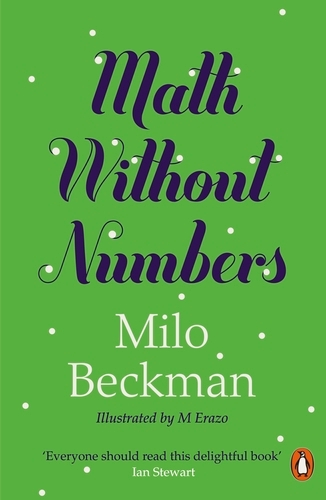
ii Math Without Numbers - final notes & obs

In Math Without Numbers the chapters and topics flow and slot in really well, even for novices. There is no index, the inclusion of which is a first-check usually. The book's appeal was its non-technical title and invitation reading the sleeve notes. The title throws up words and visuals, the latter, to repeat, are ably and simply furnished by M Erazo. Remaining notes to highlight (record here) include (and capture overthinking!):

Math Without Numbers

Reference to 'ideology space', 'conceptual space' and the role of visual analogies, idioms, and how 'the list of spaces to choose from is always the same.' ... pp.28 & 29. On page 30, 'When you say that gender is a spectrum rather than a binary, that's a topological claim: You're  saying gender space is one-dimensional (a line) rather than zero-dimensional (two separate points). 'Questions about which conceptual paradigm to use sometimes boil down to questions of dimensionality.' Discussion of an infinite continuum had me making an axis of Hodges' model warp, this way and that: concave-convex (p.59). Maps and correspondence is already well established, as per a new paper (abstract and thanks to follow 1st Feb):

S. Bettiol, P. Jones, H. A. Onyedikachi, and W. G. Kernohan, “Bridging Gaps in Oral Health Frameworks: Mapping With Hodges' Health Career - Care Domains - Model”, Journal of Public Health Dentistry (2026): 114, https://doi.org/10.1111/jphd.70034 

Interesting to read of general map facts, flowing substances inside a rigid container, and vector maps. A pencilled note to share:

'Because when you look at things in the abstract like this, dusting off the specifics of a situation to focus on underlying dynamics, you start to realize there are only so many different patterns and structures out there. These patterns and structures are called mathematical objects, and thinking about them is called math.' p.79

The chapter on (generalised) Algebra, forced me to reconsider the Socratic, guided discovery and arrival at the structure of Hodges' model. (lines & points : nodes & edges). For page 88, I noted 'generic' invites abstraction. Isomorphism is discussed. Again I tested this against Hodges' model. I've always found it helps to immerse oneself in a new vocabulary: so welcome (anew) - structures, fields, rings, groups, loops, graphs, lattices, orderings, semigroups, groupoids, monoids, magmas, modules . . . algebras, p.101. Some are named only, but on graphs raises questions ... p.103.

'How densely interconnected is it? How segregated into different cliques? Does it cut clean into two subgraphs, with no connections between them? Can it be drawn without any lines crossing? Are there any lone dots without any connections?' 

There's the matter of 'friend of a friend' who have broken out of the sociological domain. Other notes to self: Significance of concepts - patient-centred, service-centred? The distance between between (vertical, horizontal, diametric)? There are weighted graphs (p. 104) and acknowledgement of category theory (p.115). A chapter on modelling pp.161-175, and models p.164 & p.169 are just a selection of highlights on a marvellous tour.

A hidden puzzle in the book remains a mystery for me.

Milo Beckman (2021) Math Without Numbers. London, Penguin Books. Illustrated by M. Erazo.

Previously: 'math' : 'diagrams
Plus, now archived Science domain links: 
https://web.archive.org/web/20150414125339/http://www.p-jones.demon.co.uk/linksTwo.htm

Believe it or not, this 'diversion' does help my reading of Order and the Virtual

Sunday, January 25, 2026

'Maths Without Numbers' by Milo Beckman

'Before you go tell your loved ones that you read a book about math and learned that a square is a circle, keep in mind: Context matters. A square is a circle, in topology. A square is most certainly not a circle in art or architecture, or in everyday conversation, or even in geometry, and if you try to ride a bike with square tires you won't get far.' pp.7-8.

'Like a line:

(Illustration - pen drawing of a line, a 'C' and an almost closed circle.)

A line can be bent almost into a circle, but to finish the job we'd need to click the ends together--not allowed. No matter how you manipulate a line, you'll always have those two special points on either end, where the shape just stops. You can't get rid of end-points. You can move them around and stretch them apart, but the two end-points are an unchanging feature of the shape.

For a similar reason, a figure-eight is a different shape too. There aren't any end-points, but there's still a special point in the middle where the lines cross, where there are four arms reaching out instead of the usual two at any other point. Stretch and squeeze all you want, you can't get rid of a crossing-point either. p.9.

Math Without Numbers
'The circle (aka S-one) and the infinite line (named R-one) are the only manifolds in the first dimension. To avoid end-points, you either have to loop back around or just go on and on forever. And don't forget: Because all the shapes in topology are stretchy, this also covers any closed-loop shape and any goes-on-forever shape. It doesn't have to be literally a circle or a straight line.' p.16.

The third dimension, dough-type manifolds, is pretty well understood at this point, though it took a hundred years and a million-dollar prize to get there, and we still don't have a totally neat and clean classification like the lower dimension. In dimensions five and up, topologists use a set of techniques called "surgery theory" to operate on manifolds and construct new ones.

That just leaves dimension four.

I wish I could tell you what's going on in dimension four. I'm not sure there's anyone who really knows. It's a weird boundary case: too many dimensions to do visually, but not enough to use sophisticated surgery tools. There are entire textbooks dedicated to what little we know about four-manifolds, and I couldn't make sense of anything past the opening pages. A professional topologist once told me she'd wanted to work on four-manifolds as an undergraduate but was advised to steer clear.' pp.23-24.

"Like a line" ... Yes. Take two that cross. Then the universes open up. 

Milo Beckman (2021) Math Without Numbers. London, Penguin Books. Illustrated by M. Erazo.

Previously: 'surgery'

Saturday, October 17, 2020

Infinite space: Where do you 'read' the model?

individual
|
INTERPERSONAL : SCIENCES
humanistic ----------------------------------------------- mechanistic
SOCIOLOGY : POLITICAL
|
group - population
"The mind is king of infinite space, Hamlet said,

"A book is better to read in the spot of choice..."
... and no better spaceship has yet been found than a book."

"... 4.38 million books -

"But if one is banged up by lockdown, a book is a rope of knotted sheets."

- were bought in the first week of this month."

"Escape is not the same as escapism."

My source:

Editorial, Infinite shelf space, The Daily Telegraph, 8 October, 2020, p.15.

Saturday, November 17, 2012

The Bigger Picture - Hockney: Hodges' model 4 dynamic perspectives


In the decades to follow the patient, the carer, the health and social care professional must all be dynamic. All must be capable of movement - that is taking in several perspectives. As always composition is vital. So is choreography. As Hockney indicates the picture comprises both ordinary perspective and reverse perspective.


If static, found only for a moment: an assessment, plan, evaluation. A snapshot. Then moving a-gain.

Ever seeking the dynamic.
 
Acknowledgement: David Hockney


My source:
'The mass media has lost its perspective'.
David Hockney, The Financial Times, Page 11, October 27-28, 2012 

Image source:
http://www.tumblr.com/tagged/a-bigger-picture

Additional post:
http://hodges-model.blogspot.co.uk/2012/01/bigger-picture-david-hockney-ra.html
