Hodges' Model: Welcome to the QUAD: dignity

Hodges' model is a conceptual framework to support reflection and critical thinking. Situated, the model can help integrate all disciplines (academic and professional). Amid news items, are posts that illustrate the scope and application of the model. A bibliography and A4 template are provided in the sidebar. Welcome to the QUAD ...

Showing posts with label dignity. Show all posts

Friday, August 29, 2025

Winner of Wrecsam National Eisteddfod crown - 4th Aug.
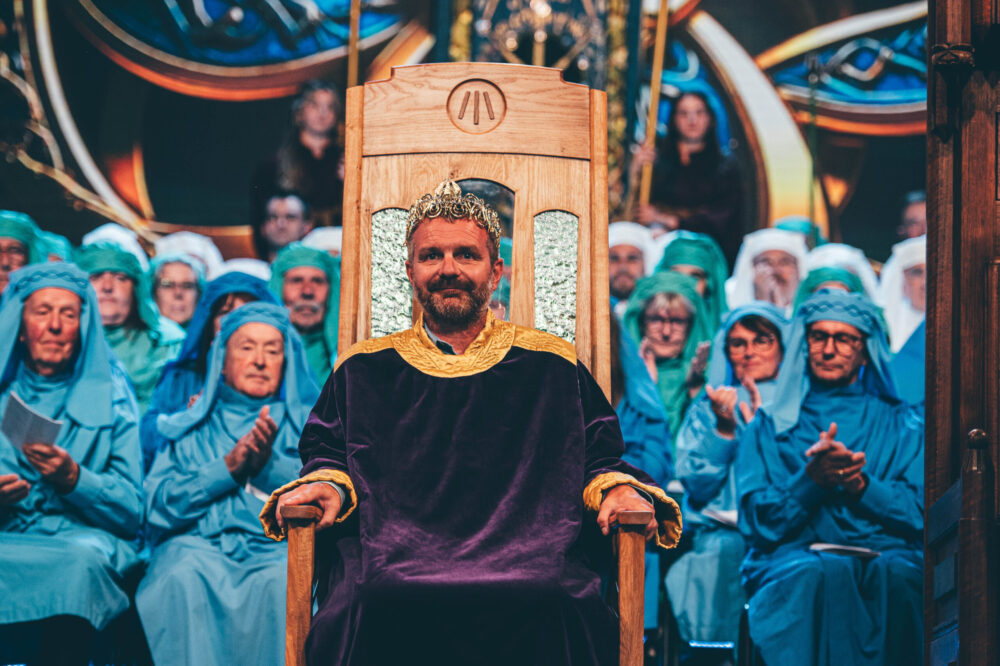
Crown winner Owain Rhys
Image: 
https://nation.cymru/culture/winner-of-wrecsam-national-eisteddfod-crown-announced/

Owain Rhys is the winner of the Wrecsam National Eisteddfod crown for his poems about living with a loved one who is suffering with dementia.

The crown – sponsored by Elin Haf Davies – and a cash prize of £750 was presented to Owain in north Wales on Monday (August 4) by Prydwen Elfed Owens.

The prize was awarded for a “pryddest” or collection of poems not in the traditional Welsh style cynghanedd, of no more than 250 lines, on the theme of “Adfeilion” or ruins.

The adjudicators were Ifor ap Glyn, Gwyneth Lewis and Siôn Aled.

The crown was designed and produced by Neil Rayment and Elan Rowlands.

The pair previously created the impressive crown for the Rhondda Cynon Taf Eisteddfod in 2024 – won by Gwynfor Dafydd for his series of poems on “Atgof” – or remembrance.

Head judge Ifor ap Glyn said: “Llif 2 opens with the simple couplet ‘When you forget / every day as you wake’ – and it discusses living with someone suffering from dementia, namely the poet’s mother.

“It’s a quiet and sensitive treatment of what must be done to help the mother continue to live with dignity as her memory deteriorates.

“The collection presents a tender picture of a difficult situation faced by so many families today, and we sense the depth of the poet’s feelings toward his mother and her former strength.”

Text: https://nation.cymru/culture/winner-of-wrecsam-national-eisteddfod-crown-announced/

See also: https://eisteddfod.wales

My Source: BBC Four Episode 1 - 15mins
https://www.bbc.co.uk/iplayer/episode/m002gwyq/eisteddfod-eisteddfod-2025-with-huw-stephens-episode-1

Monday, June 30, 2025

Assisted Dying Bill - UK

Individual
|
      INTERPERSONAL    :     SCIENCES               
HUMANISTIC  --------------------------------------  MECHANISTIC      
 SOCIOLOGY  :    POLITICAL 
|
Group


Choice by dying person of how they die

Anticipation of role of AI

Where does mental illness 'lie'?

Decision needs approval by two doctors

Change in relationship between:
INDIVIDUAL -
Prognosis of < 6 months

Terminal diagnosis

Anticipation of role of AI

Seek assistance to end their life

Decision needs approval by two doctors

What of patients who are comatose?^
Profound Societal Change

Quality of Life

Quality of Death

Impact of 'poor' death on others - friends and family

Vulnerabiity of certain groups

Lest we forget what happened to the nursing and care home sector during COVID*

and the STATE

UK - House of Lords

Oversight Panel: 
Legal figure e.g., King's Counsel; and a Psychiatrist

Doctors and care workers not compelled to take part in assisted dying

What about the psycho-POLITICS of anorexia, severe depression?


^Brian M. Rosenthal. They woke as doctors prepared to remove their organs. The New York Times International Edition, 11 June 2025, p.6. 
https://www.nytimes.com/2025/06/06/us/kentucky-organ-donations.html

Sunday, June 08, 2025

Why in the World do I have to walk this way?

individual
|
INTERPERSONAL : SCIENCES
humanistic ------------------------------- mechanistic
SOCIOLOGY : POLITICAL
|
group

my childhood - memories

my family, community, home, role models, friends from the neibourhood

Why?


Image: https://x.com/Lowkey0nline

Tuesday, February 11, 2025

Project: Partners against Stigma and Mortality in Epilepsy (PASME) Cameroon

Boyo Association for Rural Development (BARUDEV - Cameroon) has launched a project on epilepsy called Partners against Stigma and Mortality in Epilepsy (PASME).

We are calling for partnerships and support for our project on epilepsy which will focus on mental health and psychosocial support, treatment, knowledge and skills exchange,raising awareness, rights protection amongst patients affected and or bereaved by epilepsy, health care providers. Also reduce seizures and consequences particularly in children and adolescents living with epilepsy and HIV/AIDS. 
  • ADVOCACY AND AWARENESS. Promoting awareness and supporting initiatives that prevent epilepsy. Prioritize epilepsy at national and international levels, while lobbying and advocating support for partners and governments to prioritize epilepsy into their health programs and policies.
  • TREATMENT AND SUPPORT. Provide access to treatment and support initiatives that improve access to effective treatment including medications and their therapies. 
  • PROVIDE BEST-PRACTICE MODELS. Develop and share models for effective management of epilepsy in diverse settings including conflicts and disasters where people are forced to displace.
  • BUILD CAPACITIES THROUGH TRAINING. Advance training and information sharing for healthcare givers, CHWs and family care givers involved in epilepsy care. 
  • PROMOTE HUMAN RIGHTS AND DIGNITY. Advocate for the accessibility of services, protection of human rights and preservation of dignity for all with epilepsy including children and adolescents living with epilepsy and HIV/AIDS. 
  • EMPOWERMENT AND RIGHTS: Lobby and advocate for the rights of people with epilepsy through their associations and to enable them participate in decision making processes. 
  • RESEARCH AND COLLABORATION: Foster research through encouragement and support in epilepsy including causes, prevention, treatment and social impact. Strengthen their associations, develop and support them through mental health and psychosocial support projects and ensuring and protecting their well-being and their families.
BARUDEV is currently building a website (which I will add upon news - PJ).
Please contact me if you need further information

HIFA (my source) profile: Chiabi Bernard Ful is Director of Boyo Association for Rural Development (BARUDEV--Cameroon). This is a local NGO found in Boyo district of North Western Cameroon. Our activities are to empower women, protect the sexual and reproductive health for women and girls, and protect the rights of children. We have been training community health workers to follow up patients, pregnant women, sick children and refer them to the hospital.
barudev AT yahoo.co.uk

Monday, June 06, 2022

#HelloMyNameIs


INDIVIDUAL
|
 INTERPERSONAL    :     SCIENCES               
HUMANISTIC --------------------------------------  MECHANISTIC      
SOCIOLOGY  :   POLITICAL 
|
GROUP

Peter

Geography

Geo-Political

Jones

Türkiye


My source: numerous.https://twitter.com/imathematicians/status/1530724466073952261?s=20&t=eF1XRD9HbkSJ2XWWbIk2qQ

Friday, April 22, 2022

Ageing with Smartphones in Urban Brazil

UCL Press is delighted to announce the publication of a new open access book that may be of interest to list subscribers: Ageing with Smartphones in Urban Brazil, by Marília Duque.

Download it free: https://bit.ly/3MhgteU

*************************************************

Ageing with Smartphones in Urban Brazil

By Marília Duque

*************************************************

With people living longer all over the world, ageing has been framed as a socio-economic problem. In Brazil, older people are expected to remain healthy and autonomous while actively participating in society. Based on ethnographic research in São Paulo, Ageing with Smartphones in Urban Brazil shows how older people in a middle-class neighbourhood conciliate these expectations with the freedom and pleasures reserved for the Third Age. Work is what bonds this community together, providing a sense of dignity and citizenship.

Smartphones have become of great importance to the residents as they search for and engage in new forms of work and hobbies. Connected by a digital network, they work as content curators, sharing activities that fill their schedule. Managing multiple WhatsApp groups is a job in itself, as well as a source of solidarity and hope. Friendship groups help each to download new apps, search for medical information and guidance, and navigate the city. Together, they are reinventing themselves as volunteers, entrepreneurs and influencers, or they are finding a new interest that gives their later life a purpose. The smartphone, which enables the residents to share and discuss their busy lives, is also helping them, and us, to rethink the very representation of ageing.


Free download: https://bit.ly/3MhgteU

----------------------
uclpress.co.uk | @uclpress

My source: Alison Major 
 
VIRTUAL-METHODS list - www.jiscmail.ac.uk/VIRTUAL-METHODS
 
(It appears there is a series of related texts. PJ)

Friday, April 08, 2022

"Death and Dying in COVID Times: Necropolitics of ECMO"

c/o Radical Philosophy Hour


INDIVIDUAL
|
 INTERPERSONAL    :     SCIENCES               
HUMANISTIC --------------------------------------  MECHANISTIC      
SOCIOLOGY  :   POLITICAL 
|
GROUP

consciousness

conceptualization


'distance' from power?

vulnerability


"Abstract: The realities forged - and exacerbated by - the COVID19 pandemic have occasioned broader engagement with an otherwise esoteric means of life-support, Extracorporeal Membranous Oxygenation. Commonly known as “ECMO,” this technology functions as a simulated placenta, an exogenous system for oxygenating and circulating blood in gravely ill folks. ECMO is a so-called “heroic measure,” a last ditch and often futile intervention in the care of critically ill adults who are out of other options. ...

death
dignity


ACHILLE MBEMBE
NECRO-POLITICS


... In this talk, we attend to Mbembe’s necropolitics, determinations of who will live and who will die, that inhere in the healthcare rationing of ECMO. We contrast the necropolitical economies of healthcare across three distinct nursing milieux, the United States, the United Kingdom, and Germany. The analytics of necropolitics in ECMO leads us to a critique of the transhuman impulse to attenuate death in the context of neoliberal healthcare economies. We examine the possibilities afforded by new materialist perspectives on the liminality between living and dying in the work and enactment of nursing care. We conclude with a call to speculative ethics for healthcare, attending to current realities while cleaving to what else is possible, a reparatory intervention for the white, cisheteronormative, ableist, colonial, patriarchal structures that enclose terrains of possibility for healthcare and beyond."


Tuesday, February 07, 2017

Why we need a generic conceptual framework: "Universal person centered care"?

individual
|
INTERPERSONAL : SCIENCES
humanistic --------------------------------  mechanistic
SOCIOLOGY : POLITICAL
|
group-population

PERSON-CENTERED CARE

PERSON-CENTERED CARE

PERSON (FAMILY)-CENTERED CARE

Universal credit...?


My source: The Guardian via Natalie Bennett


Thursday, February 04, 2016

"Values in Advanced Directives" mapped to Hodges' model

Hechter, et al. (1999) consider values in respect of advanced directives and medical treatment. The authors discuss an old debate in social science that still divides objectivists and subjectivists. Below, with my emphasis the four designated values are mapped to Hodge' model:

individual
|
INTERPERSONAL : SCIENCES
humanistic ---------------------------------------  mechanistic
SOCIOLOGY : POLITICAL
|
group

(ii) self-concept values involving feelings of dignity, self-control, and/or physical capacity (designated as function);


(i) hedonic values about pain, aversive physical states, chances for recovery to some minimally satisfactory level, and so forth (designated hereafter as pain);


(iii) allocentric values referring to concerns with creating an emotional burden for family and/or loved ones (designated as burden)

(iv) financial considerations (designated as cost) (p.409). 


Since 1999 and considering the above I have added the following additions to reflect elements of change and a more generic view:


identity, self-expression (of needs), consistency in expressed wishes, intentionality, mood, alternative-adaptive forms of communication, time - active listening


distance, logistics (family, friends), what telecare might offer in terms of communication, evidence-based interventions, measures, assessment


independent advocacy, standards of social care, 'appropriate' placement for ongoing care, social - life history;

legislation - mental capacity, advocacy, evidence-based care - policy, pension, safeguarding;


While the focus of Hechter, et al. is specific these values also apply in a more generic sense. As students and lifelong learners engage with patients, carers and public they must learn to have due regard for the totality of values that might be encountered.


Hechter, M., Ranger-Moore, J., Jasso, G., & Horne, C. (1999). Do Values Matter? An Analysis of Advance Directives for Medical Treatment. European Sociological Review, 15(4), 405-430. 
 

Friday, June 01, 2012

Hodges' model in Murphy & Welford (2012) Agenda for the future: enhancing autonomy for older people in residential care. Int. J. of Older People Nursing

ABSTRACT: This is the concluding paper of a three paper publications. Paper 1 focused on specifically understanding what autonomy for older people in residential care means. Paper 2 discussed the various factors that either facilitate or hinder residents autonomy and directed readers to reflect upon their practice. This final paper outlines the findings from the action research phase of a study aimed at enhancing resident autonomy. It describes just one way in which residential care units can work on enhancing residents autonomy and enables the reader to reflect upon nursing practices, which with the right approach can be resident-centred.

Murphy and Welford write:

Hodges (1997) model is essentially concerned with the person (resident) in a social context. The notion of it derives from the intervention of the nurse being future orientated, increasing the health choices, health chances or health prospects of individuals or groups (including families) taking cognisance of the biography of the person or persons being helped. The person already has a biography that has been influenced by their physical and psychological make-up, the kinds of families and social networks they have experienced and the culture or geographical location in which they live. The nurse then is also influenced by personal factors of their individual physical or psychological origin and factors relating to their social world and the policies that govern their daily life. The nurse (assessor) must take cognisance of the attributes the person (resident) brings with them in their current presentation (problem) and how this affects their future choices both in terms of ability to make them and the range of choices available. Thus, this approach to care planning recognises the importance of negotiating care.  (online source - see doi link below)
I am not just very grateful to Murphy and Welford for their adopting Hodges' model in their study, but this supports my own use of the model in teaching staff about person-centred care and communication skills in residential and nursing care homes. The inclusion of a political domain and individual and group (populations) dimensions is a great asset in this context. Their conclusion also identifies the limitations of individually directed change, something that seems apparent from my own experience in nursing home liaison.
 
Murphy, K., Welford C. (2012) Agenda for the future: enhancing autonomy for older people in residential care. International Journal of Older People Nursing. 7, 75–80. doi: 10.1111/j.1748-3743.2012.00309.x

Saturday, April 07, 2012

Slides: Social Work Action Network SWAN Conference 31 March 2012

Here are the slides from the Social Work in Action - SWAN conference HOPE University in Liverpool 30-31 March 2012. The session was an introduction to the model. I've used the same template and some of the slides from Colombia last year adding a few new ones for this audience and to reflect the SWAN conference themes. The organizers have a copy of my slides which should appear on their site. The keynote session by Professor Danny Dorling from the University of Sheffield and the main speakers were also videoed and will be made available on the SWAN site.

It is a very difficult time for public services, the NHS and social care. This was a fascinating opportunity to witness the POLITICAL care domain as a 'living entity' not as some remote, abstract thing that other people engage in and appears on the news. This year and following ... the stakes are even higher in terms of possible cuts to follow.

Any questions, other opportunities to present Hodges' model please get in touch.

Wednesday, December 01, 2010

Rhinos, evidence based medicine and 'out-reach'

It would be be marvellous to be able to introduce h2cm to the nursing, health and social care communities in Asia, including China of course.

Working in health we are surely aware of the need to base what we do on evidence. Although nurses are not necessarily independent as the patient advocate. Advocacy is still an important part of the nursing role and one requiring specific advice in some instances.

Earlier this month a Guardian article related the ever more precarious position of the South African rhino and how claims about the curative properties of rhino horn as a medicine fuels poaching. The UK is nowhere near South Africa or China so what gives? What gives is the Planet, the tiger too and the biosphere in general. Apparently rhino horn is just compacted keratin and has no medicinal properties.

Nurses tend to be a green, ecologically minded group and the best source of change comes from within. It is never easy to change the beliefs of others, especially when your culture venerates its elders. Belief also remains a powerful factor in health. Despite this do nurses not have a duty to challenge beliefs that are wrong, to educate their communities even while taking tradition into account?

What price true literacy: spiritual, 3Rs, ICT, health, environmental and cultural ...?

There must be a way for nurses to unite on this - 
across cultures, borders, traditions, animal welfare standards,
digital barricades, politics, beliefs ...

As nurses there is always the question of dignity and respect and being non-judgemental and sensitive to cultural attitudes and practices that differ from our own. A 'truth' here is that you do not have to travel far for your own values and opinions to be challenged.

As we make a difference individually with patients and carers ... collectively can we extend our reach to other communities too? While there's still time - and we try not to bite our nails.
