Hodges' Model: Welcome to the QUAD: SDGs

Hodges' model is a conceptual framework to support reflection and critical thinking. Situated, the model can help integrate all disciplines (academic and professional). Amid news items, are posts that illustrate the scope and application of the model. A bibliography and A4 template are provided in the sidebar. Welcome to the QUAD ...

Showing posts with label SDGs. Show all posts

Thursday, January 01, 2026

NEW YEAR: Ongoing support for the 17 SDGs UN

Individual
|
     INTERPERSONAL    :     SCIENCES               
HUMANISTIC  --------------------------------------  MECHANISTIC      
 SOCIOLOGY  :    POLITICAL 
|
Group

security & peace

security & peace
security & peace


See also:
Jones P, Wirnitzer K. Hodges’ model: the Sustainable Development Goals and public health – universal health coverage demands a universal framework. BMJ Nutrition, Prevention & Health 2022;5: doi:10.1136/bmjnph-2021-000254 
https://nutrition.bmj.com/content/5/2/358
 

Source: https://x.com/UNDP/status/2006591346522599746?s=20

See also: 'SDGs' : 'security' : 'poverty' : 'nutrition' : 'water'

Sunday, April 27, 2025

Citation of Hodges' model: 'Sustainable Health Model: Increasing Universal Access to Health Services in Remote Areas'

News received of another citation to add to the bibliography. It's just a sentence, but always welcome.

Noting the journal's title, Hodges' model incorporates a person's, family's, population's health career which is invariably impacted by a cascade of life chances. H2cm can also be applied temporally, longitudinally; taking in the past, current situation and future.

Good to see researchers discovering Hodges' model and considering it in respect of global health and sustainability also. If your purpose is to identify gaps, seek to reduce them, critique and evaluate change then again Hodges' model with the bridges it affords is an effective resource.

It's disappointing to see the journal - JoWFMHN list only the first author of referenced work. I must look at open access in the future, and remain grateful to Dr Wirnitzer - co-author in the cited paper - for assistance with writing and final publication, whose work includes:

The NURMI-Study (NURMI – Nutrition and Running high Mileage)
https://www.nurmi-study.com/en

Science 2 School: Nachhaltig gesund – bewegt & veggie
https://www.science2.school/

Abstract

Access to healthcare services in remote areas remains a significant global challenge, with many populations experiencing disparities in healthcare availability, quality, and affordability. Sustainable health models that ensure universal access to health services are essential for improving public health outcomes in underserved areas. This study investigates the potential for sustainable health models to increase healthcare access in remote regions, focusing on the role of telemedicine, mobile health clinics, and community health workers. The research employs a mixed-methods approach, combining qualitative interviews with healthcare professionals and quantitative data on healthcare access and outcomes in remote communities. The findings indicate that telemedicine platforms have improved healthcare delivery by 40%, while mobile health clinics and trained community health workers have expanded service reach, particularly in geographically isolated areas. Furthermore, community-based health interventions have led to a 30% reduction in preventable diseases in these regions. The study concludes that integrating technology with community-based solutions offers a scalable and effective approach to achieving universal health access in remote areas. However, challenges such as technology infrastructure, resource allocation, and healthcare workforce training need to be addressed to ensure the sustainability of these models.

Ardenny Ardenny, Le Hoang Nam, Pham Anh Tu (2025). Sustainable Health Model: Increasing Universal Access to Health Services in Remote Areas. Journal of World Future Medicine, Health and Nursing. 3. DOI: 10.70177/health.v3i1.1907

Friday, March 28, 2025

Africa's Nutrition Movement: Seizing the Window with Primary Health Care

Africa's mission to eliminate malnutrition is more critical than ever. Bubbling down the high level commitments to strategic programmable goals will be critical at primary health care and community levels.

The continent has made significant progress in recent years, but the COVID-19 pandemic has highlighted the need for sustained efforts to address the complex issues surrounding malnutrition, particularly for women and children as we build traction to meet the sustainable development goals by 2030.

"The year 2025 will also be significant as it marks the end of the UN Decade of Action on Nutrition. N4G Paris will serve as a multi-stakeholder summit, advocating for ambitious financial and political commitments and fostering dialogue among diverse actors from around the world, including governments, international organizations, research institutions, civil society organizations, philanthropies, private sector entities, and more." - #N4G

Connecting dots is a a key imperative as we build Africa's nutrition movement. One of them is viewing nutrition from a programmable health systems lens. Have we given this enough traction ?

"The N4G conference presents a crucial opportunity for Africa to gain traction on its mission to eliminate malnutrition. The conference aims to mobilize ambitious financial and political commitments, foster dialogue among diverse stakeholders, and put nutrition at the center of the sustainable development agenda." - United Nations SDGs Professional Support Group for Africa

One of the key lessons from COVID-19 is the importance of strengthening health systems, particularly at the primary healthcare level. The pandemic has exposed weaknesses in many health systems, highlighting the need for increased investment in health care infrastructure, workforce, and services which will ultimately impact on nutrition delivery at the base of the health system.

The upcoming Africa Primary Health Care Forum , scheduled for Abuja on July 14-15, 2025, will provide a platform for stakeholders to discuss the importance of primary health care(PHC) in achieving universal health coverage (UHC) and health security, as well addressing malnutrition in PHC systems. The forum will also explore the role of digital health, digitised workforce, partnerships and financing in strengthening primary healthcare systems and improving general health outcomes.

More details continued at: https://www.phc.africa/

Friday, December 06, 2024

Int. Conference on Improving University Teaching 2025


Redefining Education:

Navigating Sustainability and Innovation in a VUCA World

In a world increasingly subject to volatility, uncertainty, complexity, and ambiguity (VUCA) the goal of sustainability is aspirational, yet elusive.  A UN report published in 2024 notes that “intensifying, interconnected challenges continue to endanger the realization” of the seventeen sustainable development goals identified by the UN Sustainability Conference twelve years ago in Rio de Janeiro.  This is especially true in education, which the report correctly terms “the bedrock of sustainable development.”   It notes the negative effects of the COVID epidemic, regional conflicts, climate shock, and economic turmoil and paints a picture of a planet struggling to make progress towards them. While the big picture may be less than perfect, there is still much cause for hope, as we strive towards a better future.

Against this backdrop, the International Conference on Improving University Teaching seeks to address the challenge of sustainability, equity, and innovation as they affect higher education. In particular, we are exploring how to prepare students for a “VUCA world” in which they will have to contend with multiple challenges, while at the same time ensuring their wellbeing—and that of all academic staff—in the present. By definition, a future subject to uncertainty and ambiguity will require flexibility and adaptability on the part of students. ..

Continued ...

Previously: IUT, VUCA

Saturday, October 19, 2024

Nobel Peace Prize 2024


'The Norwegian Nobel Committee has decided to award the Nobel Peace Prize for 2024 to the Japanese organisation Nihon Hidankyo. This grassroots movement of atomic bomb survivors from Hiroshima and Nagasaki, also known as Hibakusha, is receiving the Peace Prize for its efforts to achieve a world free of nuclear weapons and for demonstrating through witness testimony that nuclear weapons must never be used again.

In response to the atomic bomb attacks of August 1945, a global movement arose whose members have worked tirelessly to raise awareness about the catastrophic humanitarian consequences of using nuclear weapons. Gradually, a powerful international norm developed, stigmatising the use of nuclear weapons as morally unacceptable. This norm has become known as “the nuclear taboo”.

The testimony of the Hibakusha – the survivors of Hiroshima and Nagasaki – is unique in this larger context. ...'


Press release. NobelPrize.org. Nobel Prize Outreach AB 2024. Sat. 19 Oct 2024. <https://www.nobelprize.org/prizes/peace/2024/press-release/>


Previously: Nobel Prize :: peace

1989 SHADES OF GREY, Computer Aided Learning program, BBC Micro. Simulation of nuclear weapons, Based on Fanchi, J. Local effects of nuclear weapons, BYTE, Volume 11. Issue 13. Dec., pp. 143–155. Computer Aided Learning program, BBC Micro, published by Open Software Limited.
https://hodges-model.blogspot.com/2024/03/jones-publications-list.html

Monday, September 16, 2024

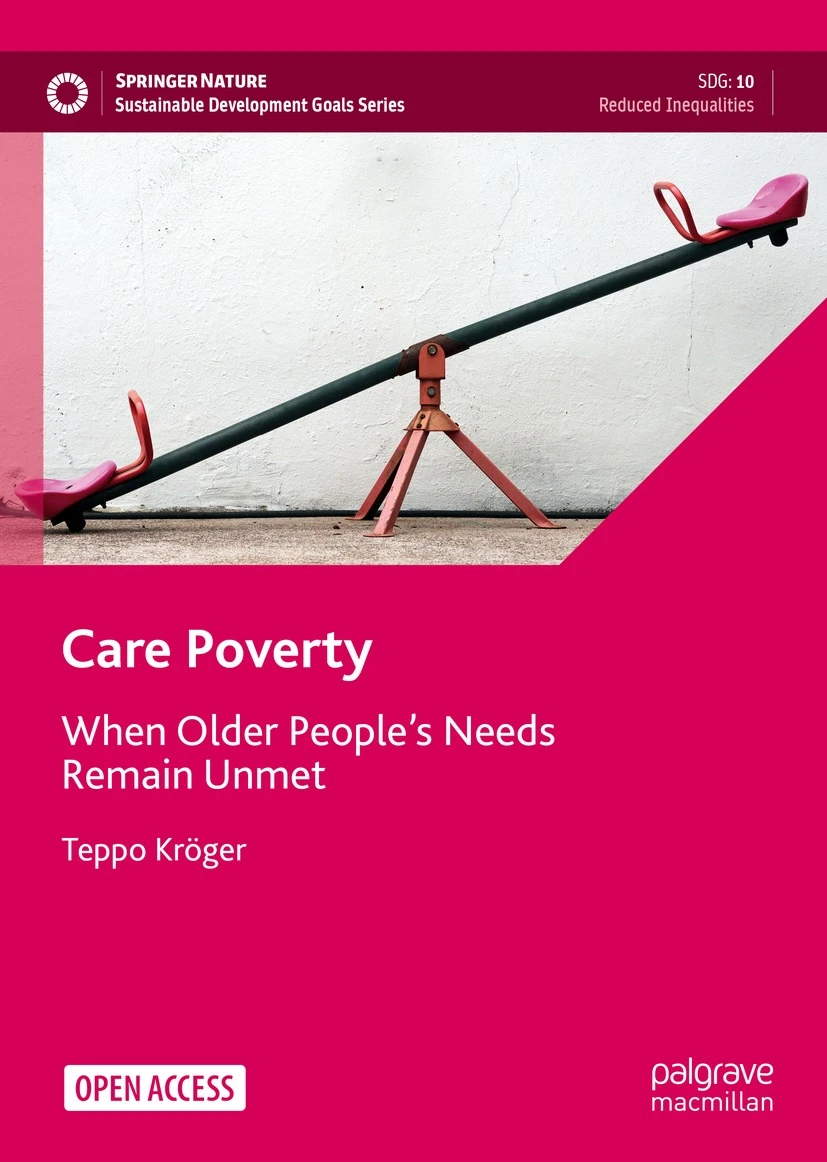
Book: Care Poverty - When Older People’s Needs Remain Unmet

CARE POVERTY
'This open access book turns the research attention of social policy scholars and long-term care researchers from comparative descriptions of care systems, focusing mostly on expenditures and volumes of long-term care services, to outcomes, and in particular to the question whether older people really receive the support that they need. Without knowledge about which needs and which social groups are currently inadequately covered, it is impossible to guide policy development.

The book puts forward a novel theoretical framework to guide future research work and public discussion on the issue of unmet long-term care needs, by broadening the current discussion so that inadequate care is seen in its societal and policy contexts, taking structural issues and policy designs into account. Kröger outlines three different domains of care poverty (personal care poverty, practical care poverty and socio-emotional care poverty) and differentiates between main methods how unmet needs are measured.' [my emphasis]

In psychiatry and psychiatric nursing, a person may be assessed to display poverty of thought, ideas or speech. As an exercise it may be useful to invert the rendering below in Hodges' model, and  consider Kröger's forms of poverty and possibly others that arise from your critique, reflections and life experience to date. Clearly, another book to add to the list!
 
individual
|
INTERPERSONAL : SCIENCES
humanistic ------------------------------- mechanistic
SOCIOLOGY : POLITICAL
|
group

CARE


CARE

CARE

POVERTY


Previously on W2tQ - (unmet) 'needs'

Kröger, T. (2022) Care Poverty - When Older People’s Needs Remain Unmet. Cham: Palgrave Macmillan. https://link.springer.com/book/10.1007/978-3-030-97243-1#about-this-book

Will check on a related title too.

Saturday, April 13, 2024

'Political sovereignty' by JFK


Individual
|
      INTERPERSONAL    :     SCIENCES               
HUMANISTIC  --------------------------------------  MECHANISTIC      
 SOCIOLOGY  :    POLITICAL 
|
Group


John F.


Kennedy


"Political sovereignty is but a mockery without the means of meeting poverty, illiteracy, and disease."


My source: 

Alan Capps, Alexandria, VA, US - FT Letters.
https://www.ft.com/content/de67db92-3e7b-45ee-b39e-0140d582306a 

Sunday, March 10, 2024

Publication list - Peter Jones

Previously, I used to maintain a publications list, one that runs from the year 'dot' (ego eh!). The bibliography in the blog's sidebar serves this purpose, also being (much) enriched by other papers that use/cite Hodges' model. 

I decided to revisit the exercise. Successful at interview late in 2019, for a part-time (variable hours) tutoring role, no teaching opportunities followed as COVID intervened.

Invited now to f/w an updated CV and covering letter, I realise that apart from several recent papers I did not include a 'comprehensive' list - as I'm sure is the custom in academe; no doubt listings with many more entries. Here's the list:

Publications by Peter Jones (#1-4 software; #37 website; #40 this blog)

  1. 1982 CAPA: COMPUTER AIDED PATIENT ASSESSMENT, Sinclair ZX81, advertised in Nursing Mirror (see below) provided on audio cassette tape.
  2. 1983 THE NURSING PROCESS – Computer Aided Learning program, BBC Micro, published by Open Software Limited (OSL)
  3. 1984 HAEM. Blood Groups Computer Aided Learning program, BBC Micro – (OSL). (see below)
  4. c.1989 SHADES OF GREY, Computer Aided Learning program, BBC Micro. Simulation of nuclear weapons, Based on Fanchi, J. Local effects of nuclear weapons, BYTE, Volume 11. Issue 13. Dec., pp. 143–155. Computer Aided Learning program, BBC Micro, published by Open Software Limited. (see below).
  5. Jones, P. (1986) Computing in Nursing NEWS. Computerised Patient Assessment. Nursing Times. 85: 5. Sep 3-9;82(36):63-5. PMID: 3532039 (Describes 'CAPA', a BBC microcomputer program for student nurses.)
  6. Jones P. 1988 Thunderbirds are Go? (Impact of technology in society, disasters, macro-engineering). Popular Computing Weekly.
  7. Jones, P. 1989 Modems are Cheap, it's the phone bills that hurt. Popular Computing Weekly.
  8. Jones, P. (1989) Computers in Nursing NEWS. Creating a Program. Nursing Times. Feb 1-7;85(5):66-8. PMID: 2648342 (Describes 'HAEM', a BBC microcomputer program for student nurses on blood and blood groups.)
  9. Jones, P. (1989) Information Technology is Good For You! (Effects of information technology) IT in Nursing, BCS-Nurs. Specialist Group. 1,1
  10. Jones, P. (1990) Creating a Community Mental Health IS (Creation of a community mental health resource centre - a multidisciplinary research project). IT in Nursing and Paper at BCS NSG Conference. 2,4
  11. Jones, P., Beckingham, D. (1991) The Ins and Outs of a small mental health Information System. Healthcare Computing 91 Conference Paper.
  12. Jones, P. (1992) Nursing: All in the mind and machine? (Models of nursing and computing). British Computer Society -Nursing Specialist Group Conference Paper
  13. Jones, P., Beckingham, D. (1992) Community Mental Health: IT in the Buffer Zone. Healthcare Computing 92 Conference (Poster).
  14. Jones, P. (1993) Computerised Models of Nursing. (Data types in nursing - opportunities and problems). Healthcare Computing 93 Conference Paper.
  15. Jones, P. (1993) Using a Semantic Network to Represent Nursing Terminology (project for B.A. (Joint Hons. Computing / Philosophy). Supervisor J Kirby - Medical Informatics Group. University of Manchester). BCS-NSG Conference Paper.
  16. Jones, P. (1993) Nursing: All in the mind (and machine?). IT in Nursing, 5,4.
  17. Jones, P. (1994) An Enthusiast's View of CAL. (Problems in production of CAL - Simulation effects of Nuclear Weapons - conversion of GWBASIC to BBC BASIC from BYTE - with original author's permission - J Fanchi). IT in Nursing. 6,2.
  18. Jones, P. (1994) IT with Records in Mind (Mental Health CPA and Record types - idealised, cognitive, CBR, Distributed), IT in Nursing. 6,4.
  19. Jones, P. (1996) Humans, Information, and Science, Journal of Advanced Nursing, 24(3),591-598.
  20. Jones, P. (1996) An overarching theory of health communication? Health Informatics Journal,2,1,28-34.
  21. Jones, P. (1996) Nursing Technology and Elephants - Part 1: Technology as a beast of burden. IT in Nursing. 8,1,4-6.
  22. Jones, P. (1996) Nursing Technology and Elephants - Part 2: Technology as a serpent. IT in Nursing. 8,2,5-7.
  23. Jones, P. (1996) Nursing Technology and Elephants - Part 3: Technology rope to save humanity and health care, IT in Nursing. 8,3,5-7.
  24. Jones, P. (1997) Providing Mental Health Care: Getting A Purchase On Information. IT in Nursing. 9,3.
  25. Jones, P. (1997) IT: The ubiquitous Research Tool (The use of IT in research - to access; transform; transcribe and disseminate information). IT in Nursing. 9,4.
  26. Jones, P. (1999) Visualization in Nursing: Workshop report, IT in Nursing, 11.1.
  27. Jones, P. (1999) It's time to master the latest tools and Hodges' Health Career Model, IT in Nursing, 11.2.
  28. Jones, P. (2004) Viewpoint: Can informatics and holistic multidisciplinary care be harmonised? British Journal of Healthcare Computing & Information Management, 21, 6, 17-18.
  29. Jones, P. (2004) The Four Care Domains: Situations Worthy of Research. Conference: Building & Bridging Community Networks: Knowledge, Innovation & Diversity through Communication, Brighton, UK.
  30. 2005. Bursary Award Poster: Introduction and Scope of H2CM. HC2005: Harrogate. With thanks to the BCS Health Informatics Forum and my manager(s).
  31. 2005. Mental health and geography: questions and issues for a mental health trust organised using Hodges' four care domains GEOMED 2005. Cambridge – Poster.
  32. Jones, P. (2008) Exploring Serres’ Atlas, Hodges’ Knowledge Domains and the Fusion of Informatics and Cultural Horizons, IN Kidd, T., Chen, I. (Eds.) Social Information Technology Connecting Society and Cultural Issues, Idea Group Publishing, Inc. Chap. 7, pp. 96-109.
  33. Jones, P. (2009) Socio-Technical Structures, the Scope of Informatics and Hodges’ model, IN, Staudinger, R., Ostermann, H., Bettina Staudinger, B. (Eds.), Handbook of Research in Nursing Informatics and Socio-Technical Structures, Idea Group Publishing, Inc. Chap. 11, pp. 160-174.
  34. Jones, P. (2012). Exploring several dimensions of local, global and glocal using the generic conceptual framework Hodges's model. The Journal Of Community Informatics. 8(3). Retrieved from https://openjournals.uwaterloo.ca/index.php/JoCI/article/view/3034
  35. Doyle, M., Jones, P. (2013). Hodges’ Health Career Model and its role and potential application in forensic mental health nursing. Journal of Psychiatric and Mental Health Nursing. 20, 7, 631-640. http://onlinelibrary.wiley.com/doi/10.1111/j.1365-2850.2012.01961.x/abstract
  36. Jones P. (2014) Using a conceptual framework to explore the dimensions of recovery and their relationship to service user choice and self-determination. International Journal of Person Centered Medicine. Vol 3, No 4, (2013) pp.305-311.
  37. 1998-2015 Website devoted to Hodges' model p-jones.demon.co.uk Now on web.archive.org:  https://web.archive.org/web/19990501185433/http://www.p-jones.demon.co.uk/index.htm
  38. Jones P. Exploring the relationship of threshold concepts and Hodges’ model of care from the individual to populations and global health. Rev Cuid. 2017; 8(3): 1697-720. http://dx.doi.org/10.15649/cuidarte.v8i3.464
  39. Jones P, Wirnitzer K. Hodges’ model: the Sustainable Development Goals and public health – universal health coverage demands a universal framework. BMJ Nutrition, Prevention & Health 2022;0:e000254. doi:10.1136/bmjnph-2021-000254
  40. 2006- Ongoing This blog - Welcome to the QUAD.

Thursday, December 07, 2023

Kathryn Jackson - Dow Jones Dealing Room 1994

 Individual
  |
     INTERPERSONAL    :     SCIENCES               
HUMANISTIC --------------------------------------  MECHANISTIC      
SOCIOLOGY  :   POLITICAL 
|
GROUP


Ack. Kathryn Jackson. Dow Jones Dealing Room (1994) 3-D collage

My source:
Jackson, K. another dimension, Artists & Illustrators, June 1998, 141, pp.22-23.

Friday, August 04, 2023

Recognition of Nursing's contribution to life quality of patients

"Maria Isabel Razquin, Director of the University where all the pre and post registration nursing education is undertaken and the medical staff trained, gave a key note speech. ... She spoke of the conceptual discipline in nursing, and of how the market economy was affecting health services. This theme was extended into world health information and the storage of data; the development of nursing informatics and how nursing practice should lead to validating and developing minimum datasets using an understandable language. She then alluded to NANDA and the 4 thesaurus' which holds medical and nursing terms that can be cross referenced with new information and knowledge. All the terms we commonly use in the UK were mentioned: multi-disciplinary, updated, accurate, efficient and research and knowledge based.

She went on to say that it has been difficult to quantify the life quality of a patient; it has been tried and it has failed, not showing the significance of nursing. Conceptualisation is a foundation for nursing and it was suggested it could be used with research, with the scientific focus and practical sources being the future body of knowledge. Nurses, she said, should have a clear identity of the care given in multidisciplinary teams, while combining facts and data with nurse training, recognised nursing disciplines and leaders of research would enable competence in complicated fields. Skilful and relevant collection of data, she concluded, would facilitate education and change management training for encompassing computerising with conceptualisation." p.19. 


Sampson, H.E. (2000). International Symposium of Nursing Diagnosis - Pamplona, Spain - May 2000. ITIN, British Computer Society, Nursing Specialist Group. Volume 12: Issue 3. Sept. 2000. pp.19-21. ISSN 0956-5159.

NANDA - https://nanda.org/

ITIN - Information Technology in Nursing

An 'updated' title(?):

"Recognition of Nursing's contribution to Sustain and Enhance the People's Life Chances."

Wednesday, May 24, 2023

A model insufficiency to realise Health for All - La santé pour tous


The Bio-Psycho-Social model is insufficient to realise -


Health for All - La santé pour tous

INDIVIDUAL
|
INTERPERSONAL    :     SCIENCES              
HUMANISTIC --------------------------------------  MECHANISTIC
SOCIOLOGY :   POLITICAL
|
GROUP

psycho-

bio-
social


In a time of physical, emotional, mental . . . pollution, the 'wrapper' is non-disposable:
the human SPIRIT that also sees and acts to achieve Planetary Health.


Previous posts: 'stamps'

Sunday, April 16, 2023

Artificial Intelligence and Data Science for Society and the Public Good: Technologies, Applications, and Governance

Dear CHAIN member,

CHAIN member Laura Brookes would like to draw your attention to the following free event.
Please pass on as appropriate. Thank you.

Artificial Intelligence and Data Science for Society and the Public Good:

Technologies, Applications, and Governance

2nd May 2023 - 3rd May 2023
Wivenhoe House Hotel

University of Essex, Park Road, Wivenhoe, Colchester, Essex, CO4 3SQ

Book your tickets now

Join us as we bring together the brightest minds in data science and AI to showcase the power of data in action for public good and business applications.

Two days of fascinating talks at the prestigious Wivenhoe House Hotel will include interactive workshops, case study presentations to share best practice and an opportunity to form new partnerships across academia, the public sector and industry for more high-impact projects moving forward.

This workshop aims to explore the development and deployment of AI and data science methods in government and the wider public sector, but also businesses and charities. This includes the use of such methods to support the development and implementation of policy and delivering improved services to citizens at the regional and national level, whilst we simultaneously tackle global challenges and the delivery of the sustainable development goals (SDGs).

This workshop is for those inspired to make a difference and for those ready to embrace the revolutionising potential of data science and AI to improve society for all. A cross/interdisciplinary workshop, this event is aimed at researchers, policymakers, practitioners and professionals already working in or interested in exploring this area.

Further information

Complimentary refreshments will be available on both workshop days including a networking lunch.

Guests are welcome to use the free onsite parking for the workshop. Delegates are also eligible for discounts on accommodation at the Wivenhoe House Hotel should they wish to stay overnight. To receive your discount code please contact me directly.

Further information about the event and full agenda can be found on Eventbrite:

https://AIandDataScienceforPublicGood.eventbrite.co.uk

We hope you can join us for this exciting workshop. Please feel free to contact if you wish to discuss any aspect further.

Equally, you are welcome to share this invitation with colleagues and those within your network. ‘

Laura Brookes

Outreach and Publicity Officer
ESRC Business and Local Government Data Research Centre
. . .

Regards,

Wendy Zhou
CHAIN Manager
[ I did attend, and spent the 1st May in Cambridge. PJ ].

Thursday, February 16, 2023

ISTAS23: Technology and Analytics for Global Development

Technology and Analytics for Global Development

13th – 15th September 2023

Swansea University, Swansea, Wales

The IEEE International Symposium on Technology and Society (ISTAS) is the flagship conference of the IEEE’s Society on Social Implications of Technology (SSIT). ISTAS is a multi-disciplinary and interdisciplinary forum for engineers, policy makers, entrepreneurs, philosophers, researchers, social scientists, and technologists to collaborate, exchange experiences, and discuss the social implications of technology.

The Sustainable Development Goals (SDGs) are global grand challenges that are inherently complex, multi-faceted and socially embedded (Corbett & Mellouli, 2017). The SDGs inevitably encounter tensions between their design and implementation, representing design-reality gaps (Pradhan et al., 2022; Heeks, 2020a; Dennehy et al., 2014). While optimism is relatively high about the role of technology and analytics in the context of global development (Smidt & Jokonya, 2022), significant learning remains about how best to use them as ‘platforms that mediate development’ (Heeks 2020b). Further, despite the efforts made by scholars to advance understanding about the role of technology and analytics for global development (e.g., Dwivedi et al., 2021; Khene & Masiero, 2022; Masiero & Arvidsson, 2021), a concerted effort within and between academic disciplines, policy-makers, practitioners, and the intended beneficiaries of the SDGs will help to discover and create better ways to achieve the SDGs.

ISTAS23 aims to bring together contributions from a variety of perspectives, disciplines, and communities for the advancement of knowledge regarding Technology and Analytics for Global Development. We invite participation from academics and practitioners who are engaged in current debates about the role and significance of technology and analytics, and who are interested in topics related to sustainability, ethics, equity, and social values for global development.

IEEE ISTAS 2023 is Technical Co-sponsored by IEEE Region 8, IEEE UK and Ireland Section, IEEE UK and Ireland SSIT Chapter and IEEE UK and Ireland Education Chapter.

ISTAS23 more details ...

My source: c/o Fabio Caraffini - Co-chair of Track 8 -

https://www.linkedin.com/in/fabio-caraffini/  and Twitter is https://twitter.com/facaraff

via www.jiscmail.ac.uk/AI-SGES, a mailing list hosted by www.jiscmail.ac.uk

Friday, February 03, 2023

Where is NURSING THEORY: integrated, holistic, and person-centered care ... ?

 INDIVIDUAL
|
 INTERPERSONAL    :     SCIENCES               
HUMANISTIC --------------------------------------  MECHANISTIC   
SOCIOLOGY  :   POLITICAL 
|
GROUP
"Be the difference!"


"Be the difference ...

to All others."


What is 'different' here?

Locally
Nationally
Internationally
Biosphere


#HealthTheory

Previously on W2tQ: 'Nightingale'

My source/prompt: c/o @Jasonforrestftw
https://twitter.com/Jasonforrestftw/status/1621224549848170499?s=20&t=KHJSqwCsE6r3Ch8lRoDioQ

Monday, December 12, 2022

Universal Health Coverage Day c/o CHIC mailing list


Dear Peter,

Today, we recognize Universal Health Coverage Day and join partners around the world to advocate for #HealthForAll. How will we get there? Professional community health workers (CHWs) who are salaried, skilled, supervised, and supplied.

We have a long way to go. Millions of CHWs - 70% women - are not paid, supported, or supplied. And now, new evidence from the Coalition and collaborators spotlights the severity of stock-outs experienced by CHWs on the frontlines of care: CHWs are out of stock-out nearly ⅓ of the time, and the problem is getting worse.

This #UHCDay, we hope you'll join our #SupplyCHWs campaign to highlight the unacceptable frequency at which CHWs in low- and middle-income countries experience stock-outs and call for solutions to address this widespread issue.
Join the Campaign
In Solidarity,
The Coalition


READ: The first ever global estimate of the extent of stock outs among CHWs
SHARE: One-page summary with everything you need to know
ACT: Share the findings on social media and tag decision-makers to take action

Curious about the Coalition's other work? Read our latest update here and sign up to stay in the loop!)


 INDIVIDUAL
|
 INTERPERSONAL    :     SCIENCES               
HUMANISTIC --------------------------------------  MECHANISTIC      
SOCIOLOGY  :   POLITICAL 
|
GROUP

My access to health care

Cognitive / Conceptual

My health literacy (and other literacies)

logistics, stock control, 'Just in Time'

Systematic Literature Review

'Coverage'?
Universal Health Coverage/Care

communities

paraprofessionals - lay individuals
Funding, Workforce planning

SDGs

Professional community health workers (CHWs) who are salaried, skilled, supervised, and supplied.

Olaniran, A., Briggs, J., Pradhan, A. et al. Stock-outs of essential medicines among community health workers (CHWs) in low- and middle-income countries (LMICs): a systematic literature review of the extent, reasons, and consequences. Hum Resour Health 20, 58 (2022).
https://doi.org/10.1186/s12960-022-00755-8
https://human-resources-health.biomedcentral.com/articles/10.1186/s12960-022-00755-8

Tuesday, December 06, 2022

BBC Reith Lectures 2022 - The Four Freedoms


 INDIVIDUAL
|

 INTERPERSONAL    :     SCIENCES               
HUMANISTIC --------------------------------------  MECHANISTIC      
SOCIOLOGY  :   POLITICAL 
|
GROUP

FEAR

WANT

WORSHIP


SPEECH


Are fear and worship interchangeable? 

Can I follow my faith / beliefs?

Many communities and groups live in fear.

Do the freedoms begin (and end!) with speech?

The ability to meet basic needs 'wants' - relies upon socioeconomic means; but basic needs are material in the first instance, through shelter, water, and food. All these depend upon security (locally, nationally, globally) as reflected in the Sustainable Development Goals (SDGs):

BBC Radio 4 The Reith Lectures


See also:
Jones P, Wirnitzer K. Hodges’ model: the Sustainable Development Goals and public health – universal health coverage demands a universal framework. BMJ Nutrition, Prevention & Health 2022;0:e000254. doi:10.1136/bmjnph-2021-000254

Tuesday, November 29, 2022

From: The Communication Initiative (The CI)

With many thanks to Kier and 'The CI' Community ...
 
Dear Peter Jones,

Warm greetings from The Communication Initiative (The CI) - https://www.comminit.com

Thanks so much for contacting us on November 25th to submit/share your work. I am writing to let you know that we have added a summary of "Hodges' Model: The Sustainable Development Goals and Public Health - Universal Health Coverage Demands a Universal Framework" to The CI website. Please do me the favour of reviewing the summary here - https://www.comminit.com/global/content/hodges-model-sustainable-development-goals-and-public-health-universal-health-coverage-d - and sending along any feedback you may have. I will be glad to make the necessary changes promptly.

For more information on our editorial objectives and the principles that guide our posting of information, please see: https://www.comminit.com/global/content/editorial-policy-ci-global

In the future, this summary may be featured in our e-newsletters, including The Drum Beat and Drum Beat Clicks. If you wish to subscribe to these mailings so you can see when your work is featured and read about other relevant programmes and resources, simply log into your registration page: https://www.comminit.com/global/content/peter-jones-hodges-model

We plan to spread the word about this summary via social media and would appreciate it if you might do the same.

Kind regards,
Kier

Kier Olsen DeVries, MA
Senior Editor, The Communication Initiative
Editor, The Drum Beat
kdevries AT comminit.com
https://www.comminit.com
Facebook: The Communication Initiative Network
https://www.facebook.com/The-Communication-Initiative-Network-344005148956579/
https://twitter.com/warrencomminit

PJ - The paper in question (is listed in the bibliography - please see the blog's sidebar):

Jones P, Wirnitzer K. Hodges’ model: the Sustainable Development Goals and public health – universal health coverage demands a universal framework. BMJ Nutrition, Prevention & Health 2022;0:e000254. doi:10.1136/bmjnph-2021-000254

Monday, November 28, 2022

Medical sociology ... "food for thought" c/o POHG

I replied to the message copied below by Alex Scott-Samuel on the Politics of Health Group Mail List. Following up with respondents, I have copied Alex's reply and others:

----- Forwarded message -----
From: Alex Scott-Samuel <alexscottsamuel AT gmail.com>
To: "pohg AT jiscmail.ac.uk" <pohg AT jiscmail.ac.uk>
Sent: Saturday, 26 November 2022 at 13:05:25 GMT
Subject: [POHG] Illich

Just came across this from 19 years ago: still offers food for thought
 
[The graphic file downloaded should be legible. PJ]
 

*************************************
Politics of Health Group Mail List Messages
*************************************

Visit the PoHG website for lots of interesting links and publications: http://www.pohg.org.uk/
PoHG on Facebook: https://www.facebook.com/282761111845400
Follow us on Twitter: @pohguk
You can subscribe to / unsubscribe from the PoHG mail list here: http://www.jiscmail.ac.uk/POHG

====================

On 26 Nov 2022, at 17:46, peter jones <h2cmng AT yahoo.co.uk> wrote:

Thanks Alex,

This is very useful - short but very sweet and as you say food for thought - especially in our (ongoing) consumptogenic age.

You've prompted a draft blog-post I will add an acknowledgement and link to POHG.

I've no evidence, that is reading, so what follows are thoughts ... musings ... but I keep wondering: what has happened to 'medical sociology'?

Is medical (health) sociology - history as a discipline?
Is there ongoing development - has the discipline morphed into others?
Is there a case to stress not only public health, but public MENTAL health? As I often do. Am I over-reacting?
In information technology there is talk of functionality being placed in wrappers. Has sociology been subsumed - it's there - but underneath - policy rhetoric (integrated, person-centred, holistic care)?

Who are the leading current figures - and recent equivalents of -

"Aaron Antonovsky (19 December 1923 – 7 July 1994) was an Israeli American sociologist and academic whose work concerned the relationship between stress, health and well-being (salutogenesis)."

Canguilhem
Virchow ...?


Should I take heart by the arrival of the SDGs, and the recognition of not only the social determinants of health, but political and commercial too and others..?

I keep writing regarding the potential and utility of Hodges' model:


Thanks again,

Peter
====

----- Forwarded message -----
From: Alex Scott-Samuel <alexscottsamuel AT gmail.com>
Cc: "pohg AT jiscmail.ac.uk" <pohg AT jiscmail.ac.uk>
Sent: Saturday, 26 November 2022 at 18:41:10 GMT
Subject: Re: [POHG] Illich - wither et al. ?

Interesting questions Peter. I sense that the answers are out there but not necessarily concentrated in this list. Although I retired from academic public health almost 7 years ago, I have no reason to think that what is now called the sociology of health and illness is not as strong as ever. The kind of places I would look are on the one hand journals such as Sociology of Health and Illness, Social Science & Medicine and Critical Public Health and on the other, popular outlets such as Laurie Taylor's Radio 4 programme Thinking Allowed. 

As far as I know the Medical Sociology Group of the British Sociological Association still exists and holds regular conferences. There has for many years been a Journal of Public Mental Health though it's a while since I've looked at it

Antonovsky's ideas were popular in the health promotion field as well as in academic social science. I remember that a number of people in the WHO Healthy Cities movement were interested in salutogenesis. I've not thought about it for many years but I was on a research group with Antonovsky in the mid 80s when he was developing his Sense of Coherence construct. I  I have to say that despite the attractiveness of problematising health rather than sickness, I never thought the sense of coherence was adequately or well theorised. I do recall seeing quite a few papers from people who rushed out to measure the coherence of people in various situations using the tool which Antonovsky produced. I don't know whether this kind of work continues nor whether it developed

All the best, Alex
=============

----- Forwarded message -----
From: Alderson, Priscilla <p.alderson AT ucl.ac.uk>
Sent: Saturday, 26 November 2022 at 18:55:08 GMT
Subject: Re: [POHG] Illich - wither et al. ?

Dear Peter,

My book Critical Realism for Health and Illness Research: A Practical Introduction (Policy Press 2021) reviews the main traditions in medical sociology and critically updates sociology research that is relevant to the COVID-19 pandemic and beyond. The medical sociologists are the largest subgroup among all UK sociologists.

best wishes
Priscilla

Priscilla Alderson PhD,  Professor Emerita,  

Social Research Institute, University College London,
18 Woburn Square, London WC1H ONR p.alderson AT ucl.ac.uk     

http://iris.ucl.ac.uk/iris/browse/profile?upi=DPALD60  


Alderson P. 2021 Critical Realism for Health and Illness Research. Policy Press. 

Winner of the IACR Cheryl Frank award 2022.

Children’s consent to heart surgery research website:  

https://www.ucl.ac.uk/ioe/departments-and-centres/centres/social-science-research-unit/consent-and-shared-decision-making-healthcare/heart-surgery

Alderson, P. and Morgan, J. 2022 Realist by inclination, childhood studies, dialectic and bodily concerns: an interview. Journal of Critical Realism, 10.1080/14767430.2022.2068261
Alderson P, Morrow V. 2020 The Ethics of Research with Children and Young People: A Practical Handbook. SAGE.

=============
 
----- Forwarded message -----
From: Eileen O'Keefe <e.okeefe57 AT gmail.com>
To: Alex Scott-samuel <alexscottsamuel AT gmail.com>;
Cc: Professor Lesley Doyal <l.doyal AT bristol.ac.uk>
Sent: Sunday, 27 November 2022 at 19:52:16 GMT
Subject: Lesley Doyal

Dear Peter and Alex
 
Lesley Doyal set the agenda simultaneously with Illich with her Political Economy of Health. She continues to lead the pack re socially produced global inequities in health, eg her Living with HIV and Dying with AID: diversity, inequality and human rights in the global pandemic. Routledge Global Health Series. 2013.

Cheers
Eileen O’Keefe
===========

<->

By way of background:

I've always been impressed (in awe of) and reassured by 'medical sociology', the pioneers (as above), as a discipline, and in terms of sociology's explanatory potential.

Another - not so much an 'explanation' but an avenue to explore, has long been the continuum of care (yes, just one initially?). This spans the need for compassion, empathy, rapport, allied with the importance of hands - in nursing, medicine, surgery ... their being steady, vision true with rapid, safe, reliable, effective judgement and decision-making. In short, the need for humanistic and mechanistic synergy. Finding, and taking up Hodges' model perhaps this can account for the idea of holistic bandwidth(?).

It is an exaggeration surely, but it feels like I made two simultaneous connections in first reading psychology and philosophy. These are mind - body, and the way that many in society are 'remote' from science (knowledge), for a variety of reasons. Sociology can help account for those reasons.

Seeing (literally) the potential of visualization (as posted on W2tQ and in papers) in the 1970s, in 1990s research programs were dedicated to facilitate the development and application of visualization in the humanities. Visualization should not just be the preserve of high energy physics, bio-science and proteomics ... (although the attraction to what is 'quantifiable' is understandable). This is the question that drives this effort (I think!).

So the 'humanities' still have a requirement in information systems, informatics and literacy terms, and Hodges' model can, I believe, offer a way forward.

The replies above are much appreciated and I will follow them up.