Hodges' Model: Welcome to the QUAD: design

Hodges' model is a conceptual framework to support reflection and critical thinking. Situated, the model can help integrate all disciplines (academic and professional). Amid news items, are posts that illustrate the scope and application of the model. A bibliography and A4 template are provided in the sidebar. Welcome to the QUAD ...

Showing posts with label design. Show all posts

Sunday, July 26, 2026

The Line(s)

Foresight, hindsight, sight itself and that illusory association with the line of time is a fascination for us all. No doubt, as a result of the hardwired analogue found in the lifeline and our ultimate fate. Hodges' model acknowledges all these lines; concrete and abstract. The work and health careers, an individual's education career (where accessible / permitted) now lifelong learning.

Abstract things seem tenuous, indistinct, maybe lost somewhere in theory. Concrete on the other hand, is physical, tangible. 

Hodges' model can cover paper with lines, two of them ideally. The model can then be applied in practice.

There is then an interplay between abstract and concrete; between which data, information and knowledge flows, uncertainty reduced. Scope and scale become clearer once assessment, planning, intervention and evaluation are concurrent.

This applies to all lines, if they are not destined to be covered in sand.

My source:  
End of The Line: how Saudi Arabia’s Neom dream unravelled, FTWeekend: 
https://ig.ft.com/saudi-neom-line/
 
See also: 'design' : 'architecture' : 'line'

Saturday, June 06, 2026

"step inside" TO "think outside"

  
individual
|
INTERPERSONAL
: SCIENCES             
humanistic ------------------------------- mechanistic
SOCIOLOGY : POLITICAL   
|
group


             c/o Somerset House, 6th June 2016.

Wednesday, May 13, 2026

WPA/IACAPAP Global Curriculum Survey

Dear Neil et al.,

Would it be possible to recirculate this invitation to complete this ~5minute survey.

We recevied a good response (~200 with 72% expressing interest to join future steps) from the last round but we could have had more representation from Oceana, the Carribean, the Mediteranean, Central Asia, Russia, and perhaps more from any areas as emphasized in line 3 below.

Thank you in advance for your consideration, David
---------------------------------------------------------------------

Dear Colleagues, Families, Relatives, Young Adults, Adults, and Friends!

Anyone affected or who knows someone who is affect by a mental health problem.

We need your help, especially from those living in remote urban or rural areas, or otherwise underserved regions anywhere in this wide world!

HELP US DESIGN A GLOBAL CHILD AND ADOLESCENT MENTAL HEALTH, PSYCHIATRY AND ALLIED PROFESSIONS TRAINING CURRICULUM FRAMEWORK IN SUPPORT OF LOCALLY INTEGRATED COMMUNITY AND FAMILY-CENTERED EDUCATION AND ACTION.

The International Association for Child and Adolescent Psychiatry and Allied Professions (IACAPAP)

and

The World Psychiatric Association (WPA) Child and Adolescent Section are developing the Global Child and Adolescent Psychiatry and Mental Health Training curriculum FRAMEWORK.

To complete a short DESIGN feedback and ENGAGEMENT survey (~5 Minutes)

Click or Copy and Paste the following URL: https://forms.cloud.microsoft/r/x4MyX0MkYt

Here is A SHORT INFORMATIONAL VIDEO: https://www.youtube.com/shorts/NdMRqb1LVVM


HIFA profile: David Cawthorpe is Adjunct Professor, Cumming School of Medicine, Department of Community Health Sciences; Adjunct Professor, Cumming School of Medicine, Department of Psychiatry | Child and Adolescent Psychiatry; and Child Health & Wellness Researcher, Alberta Children's Hospital Research Institute, Canada. 
https://profiles.ucalgary.ca/david-cawthorpe cawthordATucalgary.ca

My source: HIFA.

Sunday, April 19, 2026

c/o HIFA "Help Shape Global Guidance for Rural & Remote Health"

Guidance on Evidence-Based Healthcare Strategies 
to Serve Rural & Remote Communities

Rural and remote communities are not peripheral — they are central to the fabric of our societies.

Through the Communities of Practice for Remote and Rural Health, in collaboration with Rural Wonca, The National Center for Rural Health Professions, Rural Coordination Centre of British Columbia, and Rural Doctors Network, we have developed a draft Guidance on Evidence-Based Healthcare Strategies to Serve Rural and Remote Communities.

Now, we are inviting the wider TUFH Network to help strengthen it.

This draft Guidance: 

  • Brings a rural lens to global health systems 
  • Focuses on access as the defining challenge in rural health 
  • Addresses funding, workforce, infrastructure, culture, and equity 
  • Recognizes socioeconomic overlays and preventable disease burdens 
  • Highlights vulnerable groups, including Indigenous communities, women, the elderly, and people with Disabilities
  • Draws on global case studies from Canada, Australia, South Africa, Thailand, Ethiopia, and beyond
  • Proposes actionable, adaptable strategies grounded in evidence and expert consensus

Importantly, the paper intentionally shifts away from a deficit narrative toward one that recognizes rural strengths, resilience, and community-driven solutions.

We Need Your Input

We are seeking feedback that helps us ensure this Guidance is: 

  • Globally relevant across diverse rural contexts 
  • Practical and implementable 
  • Inclusive of LMIC realities 
  • Clear in its recommendations 
  • Strengthened by lived experience and frontline practice

Through the consultation survey, we are specifically inviting your reflections on: 

  • Clarity of definitions (e.g., rurality, generalist workforce, access)
  • Gaps in evidence or missing priority issues 
  • Feasibility of implementation strategies 
  • Cultural responsiveness and community engagement 
  • Additional case studies or models to include 
  • Areas needing further research or clarification

Your expertise — whether as a policymaker, academic, practitioner, community leader, or advocate — is essential.

We request your input in any of the following forms by April 30th.

Specific Feedback Forms (Deadline for Feedback is April 30th)

Access Draft Paper 📑<https://thenetworktufh.us9.list-manage.com/track/click?u=742357d7350b0bf9f9591c8ab&id=2d170bf5cf&e=95c553a647>

1. If you have any suggestions on specific content, additional references to cite existing or new information, or other updates, please fill out this form:

Guidance Document - Content Body – Fill out form 📝<https://thenetworktufh.us9.list-manage.com/track/click?u=742357d7350b0bf9f9591c8ab&id=ff3084197e&e=95c553a647>

2. If you have any specific information that can be used to include solutions and successes that could better reflect rural realities for each of the document sections, please fill out this form:

Guidance on evidence-based healthcare strategies to serve rural and remote communities. – Fill out form 📝<https://thenetworktufh.us9.list-manage.com/track/click?u=742357d7350b0bf9f9591c8ab&id=392220cca9&e=95c553a647>

3. If you have specific lessons from regions that can be included in the Guidance Document, please fill out this form:

Guidance Document - Lessons Learned from Different Regions – Fill out form 📝
<https://thenetworktufh.us9.list-manage.com/track/click?u=742357d7350b0bf9f9591c8ab&id=de2ab21951&e=95c553a647>

4. If you have specific evidence that can be used to describe the relative contribution of patient factors and access factors in rural disease, please fill out this form:

Evidence-based relative contribution of patient and access factors for rural disease – Fill out form 📝<https://thenetworktufh.us9.list-manage.com/track/click?u=742357d7350b0bf9f9591c8ab&id=3d8527953c&e=95c553a647> 

Communities of Practice

Why This Matters

Health disparities in rural and remote communities are rarely about incidence alone. They are about access, equity, and systems design.

This Guidance aims to support: 

  • Policymakers designing rural-responsive systems 
  • Health workforce planners 
  • Universities and training institutions 
  • Community health leaders 
  • Global partners advancing Universal Health Coverage

Join us at TUFH 2026 in Manila, Philippines
https://tufh2026.com/

We look forward to welcoming you for TUFH 2026! 

If you need assistance with registration or have any other questions, please contact -
secretariat AT thenetworktufh.org

Join The Network: Towards Unity For Health (TUFH): https://thenetworktufh.org/

You are receiving this e-mail from the Office of the Secretariat from The Network: Towards Unity For Health

Our mailing address is: The Network: Toward Unity for Health (TUFH) 970 Sproul Road Bryn Mawr, PA 19010

My source:  David Cawthorpe via HIFA -
HIFA profile: David Cawthorpe is Adjunct Assistant Professor at the University of Calgary, Canada. His professional interests include: Human Development, Developmental Psychopathology, and Delivery of low bandwidth medical education curriculum. cawthord AT ucalgary.ca

Wednesday, April 01, 2026

Information Design and Sense-Making c/o Dervin

'Information Design: Something New, Something Old

... I want in this chapter to challenge the central idea that information design is a new idea. Reducing the issues briefly to a polarity, it is useful to start by considering two ways to conceptualize information. One way, implicit in the above assumptions, is that information is something that describes an ordered reality and has some knowable, or at least idealized, isomorphic relationship to that reality (i.e., it represents in an identical way the form and content of reality). In short, information instructs us, this assumption says, about the nature of the world we live in: its history, its future, its functioning, our place in it, our possible
actions, and the potential consequences of those actions.' p.35.

[My emphasis.]

Brenda Dervin. Chaos, Order, and Sense-Making: A Proposed Theory for Information Design (chapter 3) In R. Jacobson (Ed.), Information Design (pp. 35-57). Cambridge, MA: The MIT Press

Previously: Information design: Tufte & Raskin 

Wednesday, March 11, 2026

Cooperative Design Visualization and Engineering - CDVE2026 Call for Papers

The 23rd International conference on Cooperative Design Visualization and Engineering (CDVE2026) will be held at the Leuphana University, Lunenburg, Germany on September 21-23, 2026 in their amazing architecture landmark main building. Please check the Youtube video:

https://www.youtube.com/watch?v=0YrWvqdu6_E.

Important dates:

Long paper (10 pages): April 10, 2026
Short papers (6 pages): April 20, 2026

Topics: The conference focus is "cooperative". Papers about cooperative design, cooperative visualization, cooperative engineering and all other cooperative applications are welcome. Papers about multiple users, locations, sensors, multimodal applications and integration are all within our focus. Topics also cover social networks, IoT, sensor networks, e-health care, e-education etc. Check our web page

www.cdve.org for more information.

Proceedings publication: by Springer Nature in their LNCS - Lecture Notes in Computer Science.

All accepted papers will be indexed individually by Conference Proceedings Citation Index (CPCI), part of Clarivate Analytics’ Web of Science, EI Engineering Index (Compendex and Inspec databases), ACM, Digital Library, DBLP, Google Scholar, IO-Port, MathSciNet, Scopus, Zentralblatt MATH etc. 

Selected papers will be considered in a couple SCI journal special issues.

In addition, according to the publisher, the CDVE conference proceedings books have very high number of access among the LNCS proceedings books which can definitely raise the impact of your paper.

The submission page: https://easychair.org/conferences/?conf=cdve2026

Contact of the conference: cdve2026 AT easychair.org

You are welcome to forward this call.
---------------------------------------------

The 23rd International Conference on Cooperative Design, Visualization and Engineering
Sept. 21-23, 2026, Lüneburg, Germany
www.cdve.org

Tuesday, March 10, 2026

Did Mr Hodges ever say "Welcome to my World?" (i)

The source for the post:

'Move Over LLMS! AI Legends Yann LeCun and Alex LeBrun
Debut AMI Labs' Bold Ambitions for World Models in Healthcare

- reminds me that Hodges' model provides a potential 'World Model'. Not just one world, but (seriously and non-trivially) several, in the form of the  ...

  • Nurse's
  • Student's*
  • Patient's
  • Carer's
  • Team Leader's / Managers
  • and yes the team's too - the sum total of all that effort. ...

 Hodges' model is applicable in assessment, planning, interventions, evaluation and review. The key of course, is as was as computers first arrived on wards and clinics: the human users of Hodges' model.

Of course, each comes with their own, hard won (see what I did there!) model, that needs extending by several intensive years of study. 

Situated and person-centred, Hodges' model can assist all its users, to 'incorporate the learned dynamics of the environment', however it presents: medicine anyone? What about surgical, psychiatry, paediatrics, orthopaedics, or gynaecology? You get my drift?


Wenninghoff, N., Schwammberger, M. (2026). Interpretable World Model Imaginations as Deep Reinforcement Learning Explanation. In: Guidotti, R., Schmid, U., Longo, L. (eds) Explainable Artificial Intelligence. xAI 2025. Communications in Computer and Information Science, vol 2578. Springer, Cham. https://doi.org/10.1007/978-3-032-08327-2_7  

 *And not necessarily a student nurse, but possibly medical, social work, psychology, probation, ... ai!

Mr Brian E. Hodges (RIP)

Sunday, February 22, 2026

BCS SPECIALIST GROUP ON ARTIFICIAL INTELLIGENCE: Virtual seminar 'Generative AI'

BCS SPECIALIST GROUP ON ARTIFICIAL INTELLIGENCE (SGAI)

The next in our series of free evening virtual seminars will be on Wednesday March 11th from 6 p.m. to 7.30 p.m. (UK time). The topic will be Generative AI.

Synopsis
Generative AI is rapidly reshaping the landscape of intelligent systems. This virtual seminar covers cutting-edge research and visionary perspectives on the design, deployment, and governance of generative models. It explores how generative models are enabling adaptive control, task planning, and embodied intelligence in dynamic environments. It also addresses GenAI robustness, interpretability, and alignment which are critical pillars for deploying generative systems in high-stakes domains.

The speakers will be Dr Mark Post (University of York) on 'Safety, Trust, and Perception of Generative AI: Is it deceiving us, or are we deceiving ourselves?' and Dr Erfu Yang (University of Strathclyde) on 'Generative AI in Robotics and Automation: Applications, Advancements and Challenges'.
The virtual seminar series is free and open to all. For further details and for the zoom link to use go to http://https://bcs-sgai.org/seminars/2026-03-11/.

Details of future SGAI events will be placed on the website at https://bcs-sgai.org as they become available. To register to be sent information about future SGAI events by email go to https://www.bcs-sgai.org/register/.

Max Bramer
Chair, BCS SGAI
----------------------------------------------------
Chair, British Computer Society Specialist Group on Artificial Intelligence
Emeritus Professor, School of Computing, University of Portsmouth, UK
http://www.maxbramer.org

My source: BCS-AI mail list.

Friday, February 13, 2026

{ Humanise } ARChITECTURE

INDIVIDUAL
|
    INTERPERSONAL    :     SCIENCES               
HUMANISTIC --------------------------------------  MECHANISTIC      
SOCIOLOGY  :   POLITICAL 
|
GROUP


ARChITECTURE


Humanise.org


My source: Francesca Specter, Which is the fairest of them all? House&Home, FTWeekend, 11-12 October, 2025. pp.1-2.  

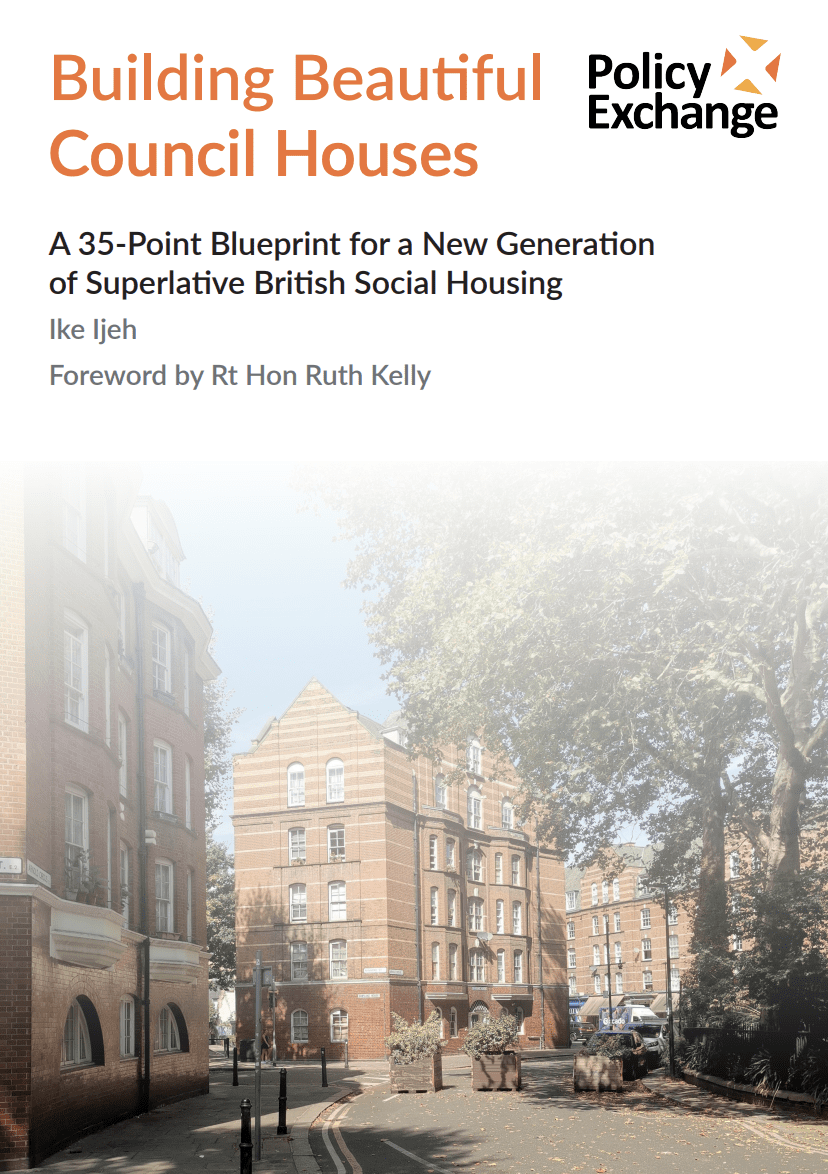
Spector refers to the Policy Exchange publication above, and other works:

McAdams P, Svobodova S, Newman T-J, Terry K, Mather G, Skelton AE, et al. (2025) The edge orientation entropy of natural scenes is associated with infant visual preferences and adult aesthetic judgements. PLoS ONE 20(2): e0316555. https://doi.org/10.1371/journal.pone.0316555

Valentine, C.; Wilkins, A.J.; Mitcheltree, H.; Penacchio, O.; Beckles, B.; Hosking, I. Visual Discomfort in the Built Environment: Leveraging Generative AI and Computational Analysis to Evaluate Predicted Visual Stress in Architectural Façades. Buildings 2025, 15, 2208.
https://doi.org/10.3390/buildings15132208

Calder, B. (2016). Raw Concrete: The Beauty of Brutalism. London: William Heinemann. 

Previously: 'housing' : 'homeless' : 'architecture'

Saturday, February 07, 2026

National Centre for Creative Health

Creative health is increasingly recognised as a driver of better care and better value in health and care systems. Integrating creative health into prevention, public and population health strategies, management of long-term conditions, treatment and recovery pathways contributes to:

  • Reduced incidence of preventable illness
  • Improved wellbeing of patients and service users
  • Reduced demand on services

Many Integrated Care Systems and providers already incorporate creative health in physical and mental healthcare, social care, and public health, delivering measurable social and economic value.

Find out more about implementing creative health in your service, organisation or system from [our resources the resources ... 

NCCH has worked in partnership with NHS England to develop a Creative Health Toolkit. The Toolkit support systems to work with the assets in their communities and to develop their own approach.

NCCH publishes a monthly creative health newsletter created for professionals working across health and care.

Source: Email and National Centre for Creative Health 

Friday, January 02, 2026

Nothing new under the Sun ...

 ... unless you're a 'health' service, or gathering dust on a shelf

January. Is the time of Janus: we look forward and back.

In April, this blog 'Hodges' model: Welcome to the QUAD - W2tQ' will be twenty years young. A blog post will follow with some metrics and statistics, although the 'analytics' that accompany many websites is not the main objective here. Preceding W2tQ and that first post, was the now archived website:

https://web.archive.org/web/20150316193042/http://www.p-jones.demon.co.uk/index.htm

Running from 1998-2015, the site's emergence ran as per:

Taught and applied Hodges' model on
 Community Psychiatric Nursing Certificate course 1987-1988.
Using the model in my practice and sharing with colleagues.
Gaining online access 1997.

Finding the Nursing Theory Development Site - NTDS 
(no longer available)
which was at https://www.ualberta.ca/en/index.html 
Meeting Brian Hodges at Manchester Met. University in May 1997.
Publishing the website in 1998.

Listed at the NTDS was a broad range of models of nursing and nursing theories. Brian's model, as anticipated was missing. I asked about Brian Hodges's model being added as a resource. Back then I thought, and still do, that Brian's work deserves recognition and more importantly, actually being used by practitioners and learners. It was a shame I thought, that such a person-centered and integrative model should be sat on a shelf (like other great ideas) gathering dust?

Still limping along in theme, functionality and accessibility, at least W2tQ has outlived the original website.

Academia and professional bodies across healthcare disciplines stress the need for research in practice. As a consequence, I've wondered about the pool of research questions that a healthcare, nursing, community nurse might have in mind? Ready and waiting, for those instances when specific funding materialises for a project. How many of these questions might feature as recurring characters? Once articulated, there for a new team member, are several starter-questions, a primer, to encourage exploration and critical thought. (Of course, a researcher needs to frame the question themselves; even if they do not 'own' them - public, patient engagement in research?).

With sustainability still on the political agenda (whatever the media suggests), is there a plan gathering dust, for the redesign, no less, of the National Health Service? Having squandered the demographic dividend of the 1950-1980s, how do we create concurrent health caring and preventive/educational services and systems?

Now, there is a project that Hodges' model could assist with! Better check the shelves (floppy disks!) and blow the dust-off real quick!

Wednesday, October 22, 2025

Single, dual aspect in architecture. What of care?

'The challenge of overheating in Britain is our buildings are built to retain heat in our temperate climate. Energy efficiency regulations for new dwellings now require high insulation and few drafts to reduce the need for heating in winter, but broadly make it harder to cool homes in summer. Residents of cities are particularly vulnerable to overheating due to urban heat island effects.

There are two ways buildings can be cooled – mechanical methods (primarily air conditioning) and passive cooling methods that use the design of the building to limit heat gain and retain cooler air inside the dwelling.

Passive cooling is much easier in dual-aspect dwellings with windows on multiple external facades, which as shown in Figure 1, are contrasted to single-aspect flats that face out on to only one external facade. Dual aspect allows breezes to blow through dwellings and easily exchange stuffy indoors air for cooler air from the outdoors. Even if outside temperatures are high, cross-ventilation or overnight air exchange and limits to solar gain (daylight indoors) can keep indoor environments cooler than the outdoors.'

https://www.centreforcities.org/reader/breaking-the-bottlenecks/overheating-and-dual-aspect/


individual
|
INTERPERSONAL : SCIENCES
humanistic -------------------------------------------  mechanistic
SOCIOLOGY : POLITICAL
|
group-population
In Hodges' model at least, we seem to have dual aspect covered. 

That's why we say the model is situated.


Image source: https://www.centreforcities.org/reader/breaking-the-bottlenecks/overheating-and-dual-aspect/

My source:  Plimmer, G., Pickard, J., Steinberg, J., London planning rules face tweak in bid to build more homes. FTWeekend. 18/19 October 2025, p.2.

Previously on W2tQ: 'architecture' : 'situated' : 'housing'

Wednesday, October 15, 2025

'New Thoughts on Conceptual Engineering' - Introduction to special issue

 Abstract

Conceptual engineering has emerged in recent times as a significant topic in current philosophical literature. The now vast list of references includes works on more general or conceptual issues, such as describing the nature of conceptual engineering, how we may respond to the different objections to it, how it is related to philosophical analysis or empirical philosophy, or toward which target conceptual engineering should be directed, among others. But research on the topic also includes applications of conceptual engineering to many different areas. This Introduction opens with a short overview of the state of the art on conceptual engineering, aiming to clarify the most important features associated with it. The Introduction moves on to introduce and discuss the eight articles collected here, whose topics range from the nature and the functionality of conceptual engineering to reconstructing the entire conceptual engineering practice. Taken as a whole, this special issue is meant to provide enlightening, informative, and thought-provoking views on the topic, its functions, targets, and challenges.

de Donato-Rodríguez, Xavier. 2025. “ Introduction to the Special Issue New Thoughts on Conceptual Engineering.” Metaphilosophy 56(3-4): 283–293. https://doi.org/10.1111/meta.70007

Thursday, July 10, 2025

ii 'Thinking outside the box ...' by Amber Javis

Second reply to a blog post by Amber Jarvis on The Mental Elf:

Thinking outside the box: alternatives to standard inpatient mental health care

Amber's post considers a study by:

Griffiths, J. L., Baldwin, H., Vasikaran, J., Jarvis, R., Pillutla, R., Saunders, K. R., … & Johnson, S. (2025). Alternative approaches to standard inpatient mental health care: development of a typology of service models. International Journal of Mental Health Systems, 19(1), 1-13: https://pubmed.ncbi.nlm.nih.gov/40247283/

Jarvis highlights concern within inpatient services of:
'use of coercive practices ... (Nyttingnes et al., 2018; Belayneh et al., 2024). These include physical restraint (physically holding a person), seclusion (holding a person in a locked room) and chemical restraint (the use of sedating medication to manage distress or behaviour, sometimes administered “as needed” rather than as part of any planned treatment). Poor relationships between staff and service users have also been noted, ...'
Reflecting since the previous post, I realise that I encountered efforts to prevent admission and treat in the community prior to going part-time. A short stay unit at a general hospital. Being a member of Intermediate Support for older adults; shifts ran 0800-2000 - early or late. Then working part-time, there were short-stay placements in the community that the recovery team would visit providing support.

Mental distress is distressing (a truism of course), both as lived experience (with or without self-awareness in-situ/crisis) and for others in the vicinity. Family, friends - who see a person they thought they knew, perhaps even thought they were a friend, a person who loved them; but now!? They present as distant, aggressive, subdued, agitated, unpredictable, inconsolable and possibly expressing thoughts of self-harm, threats to harm others, or totally bizarre, 'psychotic' ideas. This is not the person they thought they knew. For the person affected, familiars are strangers. A relational breakdown. We forget the severely mentally ill at our peril. A pervasive sense of helplessness is readily transferred: the reflex conclusion that help is needed - and fast.

To say we are creatures of habit, is to also acknowledge that change our environment results in a change in our behaviour. When relatives did arrive on the psychogeriatric ward I mentioned previously, they cried. Apologising for the environment, yes; efforts to reassure ensued and eventually family, friends were won over. They shouldn't have been. Unless we're in a game, play, or movie, who wants to find themselves in a Victorian era institution?

I've posted previously (or is it in draft?) on the importance of design in the design of care environments. It was a relative's visit to a care home, that resulted in a nursing home design business (Sunday Times). 
A person who is severely mentally ill needs service-centred care, not purely person-centred care. Person-centredness is key, but safety of self, and the public soon makes itself known. We also forget this at our peril. The problem is that control, and law literally take over. Plus, it's our place not yours. Loss of power the person struggling, ill, in crisis then follows. Amber continues:
'The concerns described above chime uncomfortably with modern mental health agendas of prioritising autonomy, compassion, trauma-informed and person-centred care. In light of these tensions, and the growing number of crisis alternatives – ranging from crisis cafes to intensive home treatment services – researchers  at the NIHR Policy Research Unit in Mental Health set out to map current alternatives to traditional inpatient care, both nationally and internationally. Griffiths and Baldwin’s findings raise important questions about how mental health services could evolve to better suit people’s needs, providing a valuable starting point for service planners considering developments in care.'
Hodges' model is ideal to help reflect and critique the relation-ship between 'a person' and 'the service'. I passed two gentlemen in London over the weekend. Clearly unkempt, standing but gesticulating, freely verbalising, incoherent on passing. Neither appeared intoxicated ( but I wasn't that close) or 'stoned'. That's the other question; passing-by what was I going to do? Does the 'community' care? On 'X' you encounter the extremes of debate. Anti-psychiatry, resort to and risks of dependence on medication - anti-depressants, anxiolytics; the damage from anti-psychotic drugs and atypical antipsychotics. The continuous debate about ECT. A dizzying stream of texts about mental health, over-diagnosis and wellbeing:


Medical prescribing has a partner. Social prescribing is well established, with organisations, events, publications and research emerging. People, have scoffed at the suggestion that gardening can help; or going for a run. Especially when you can't get out of bed. Chronic fatigue syndrome, long-COVID are seemingly monolithic in their resistance to change. A real challenge and so counter to the person's 'pre-morbid' personality and lifestyle.

For several years the state of mental health nursing as a specialty has been questioned. Is the mental health nursing curriculum being genericised? Enrollment of students nurses in learning disability has also dropped.

Medical prescribing has a partner. Social prescribing is well established, with organisations, events, publications and research emerging. People, have scoffed at the suggestion that gardening can help; or going for a run. Especially when they can't get out of bed. Chronic fatigue syndrome, long-COVID are seemingly monolithic in their resistance to change. A real challenge and so counter to the person's 'pre-morbid' personality and lifestyle. As a conceptual framework Hodges' model is ideal as a semantic net, to reflect and critique concepts that stretch and so disrupt (for a time) out norms. Concepts with a dual character. If social prescribing is one example, take crisis cafe mentioned by Jarvis above. If you think in physical - environmental terms where do you envisage a crisis occuring or playing out? What about a cafe? What is the ambience of these places?

I noticed a little visual game, an animation of characters running, jumping, climbing over an obstacle course. You focus on one figure and follow them for a time. This makes a difference, called distraction. In psychosocial intervention and managment of psychosis and anxiety audio - music, poetry, repetition has also bee used. The essence here must be when the intervention begins. Recognising relapse triggers, requires preparatory work. The Griffith reference is provided, but Jarvis begins to describe the results:
'Researchers identified 65 alternative service models to standard inpatient care. These were organised broadly organised according to the setting (e.g., community-based, hospital-based, or cross-setting) and the target population (e.g., adults versus children). Across these categories, ‘community-based alternatives’ were the most common category of alternative service models, followed by hospital-based and cross-setting approaches. We’ll explore each of these in more detail below.'
In post (i) and here I suppose I am advocating for mental health nursing as a distinct programme of study, practice and proven competence. For several years the state of mental health nursing as a specialty has been questioned. Is the mental health nursing curriculum being genericised? Enrollment of students nurses in learning disability has also dropped. 


There is a saying: 'You get what you pay for'. There is a sense that there are people who would like to ignore, deny, erase 'mental health'. After all, the truth really is that you can 'see' a broken leg. This isn't an issue if you can afford a private psychotherapist, or a psychoanalyst.

The elephant here (well, there always is one) is education and the literacies. For prevention: the ultimate change - this is where we must focus. But of course for the problem at hand - and mind it is too late.

(Post iii likely to follow.)

Individual
|
      INTERPERSONAL    :     SCIENCES               
HUMANISTIC  --------------------------------------  MECHANISTIC      
 SOCIOLOGY  :    POLITICAL 
|
Group
subjectivity         
mental state - crisis - mind
quality
objectivity
hand - physical state - crisis
quantity
Social prescribing
Cafe

Housing - crisis
Cost of living - crisis

See also: 'literacy' : 'prevention' : 'service' : 'severe' : 'change'


Tuesday, July 01, 2025

Exhibition: V&A Design and Disability - to 15th Feb 2026

There is a lot of informative, creative and surprising insights through this V&A exhibition website, and related (well executed web designs), by Conor Foran for example. 


Individual
|
      INTERPERSONAL    :     SCIENCES               
HUMANISTIC  --------------------------------------  MECHANISTIC      
 SOCIOLOGY  :    POLITICAL 
|

I will look to post again at the year's end and try to visit the V&A in September, or November.

Image: https://www.vam.ac.uk/exhibitions/design-and-disability

Ack. and thanks to Conor Foran & V&A.

See also: 'clinical' in -

My source:
Emily Cronin. 'You have to be your own inspiration', Life&Arts, FTWeekend, 7-8 June 2025, p.4.

Monday, June 23, 2025

Entry to the Theatre of Nursing & Space

I do understand that reading theatre related texts, joining a theatre group, my writing a play is still pi in the sky. It's the journey, that's all. In Hodges' model I've differentiated between structure and content. This is the center of the stage about which Hodges' model turns. In the guided discovery by which students and audiences can discover the model,  these are the bases to touch in turn.


Sir Alan's focus on construction in writing: is narrative, time, location, characters (p.12). The overall message for me is, the frequently uttered - less is more. I must take heed and listen. During Ayckbourn's career, he has encountered the full retinue of writers and directors young and 'experienced'. Reading this, it is nice to be both 'new old-er' -
'Then there is the new old playwright. Far more difficult to deal with. They have probably nursed this script for twenty-five years and they're damned if you're going to mess it up for them when they've waited so long. Especially someone your age who wasn't even born when their harrowing play about World War Two was still raging, dammit.' p.110. (My emphasis in bold.)
Thinking about 1959 and the start of Sir Alan's career, his reference to WWII, made me recall nursing assistant and student nurse studies and placements at Winwick Hospital in 1977. On the geriatric wards for entertainment it was WWI songs were often sung, or records played. Long players, indeed.

In health we are usually accustomed to stopping before the 'true' end, with the exception of palliative care, although even then the ending should be 'better' than what it would otherwise have been.

If I am nursing Hodges' model, I've been doing so ever since 1987-88. As Sir Alan also observes of writers, while passionate about the utility of the model - my project - not my model; I am filled with self-doubt. Is this an over-valued idea - in my hands (and mind!)?

In other reading - Stagecraft. The Complete Guide To Theatrical Practice, by Griffiths Trevor R. 1982, I came across the word 'proscenium'.

'Incidentally, when we came to stage [the play in question is 'Woman in Mind' PJ] the London proscenium version this was far more difficult to achieve. Proscenium theatres generally make scenic statements whether they want to or not; the round makes none unless called upon to do so.' p.32. 

There are many insights into sets, design, and the various pros and cons. In May and earlier this month, with three other cast members I performed a role 8-9mins in a Living Newspaper (40-50 mins in total). It was fascinating to watch the various aspects developing from the initial reading in January. With Hodges' model an idea, the question of set design is not straight forward. But as with over-valued ideas, I am probably over-thinking (as usual) making things more complicated than necessary.

One golden nugget of advice, is if you are the writer and write well, well you don't have to think the set design. That is a problem for someone else to solve. Hopefully you will be impressed by the interpretation and realisation (often in film credits) of your work.

That is, unless you're unlucky and find yourself on the receiving end of Obvious Rule No. 13:

Beware of competitive set designers, particularly those with a 'concept'.

The name Ayckbourn is synonomous with The Stephen Joseph Theatre, which is in the round:

'The Round provides a truly unique experience as the audience is seated all around the stage. Not only does the audience see the performance from every angle, it also brings the actor into the same space as the audience.'

"Let’s have the actors in the same room as the audience, let’s have four front rows, let’s get really excited about this acting business!"

Stephen Joseph, 1959 - https://sjt.uk.com/about-us

From the mid-1980s and 90s I used to visit Bolton's Octagon quite regularly. Performances were frequently in the round. Last month, Abigail's Party was too (the last night).

Whatever, the staging, set, I'd be interested to see the 'concept'. On directing:

'As regards interpretation. you may need to tread more warily. As I said earlier, many playwrights are not naturally theatre creatures - certainly they are rarely visual theatre creatures, I have seen them sit there and watch their play physically anfold with a look of total amazement. pordering sometimes on delight, sometimes on dismay. What was in their head has been made three-dimensional flesh.' p.111.

Space has been and remains fundamental to my thinking about Hodges' model. Even pushing the envelope to topology, this is well beyond my ken. But not other gifted researchers. Hodges' model provides inter- multi- transdisciplinary bridges: we need to Before the time of schools becoming fenced and patrolled sites, we used to play cricket, tennis and football. There was a large wall at front of a former school, great for tennis, but not return of serve. Now a projection shared in the round - so everyone sees the same thing (yes, another rule!) might hold potential. There's acknowledgement that technology moves on too (p.123). And room for comedy, Ayckbourn's starting point. 

'Designers, it has been said, even the best of them, sometimes get hold of the wrong end of the stick. ... Always get to look at drawings, ground plans and, most helpfully, scale models of what they intend.' p.120.

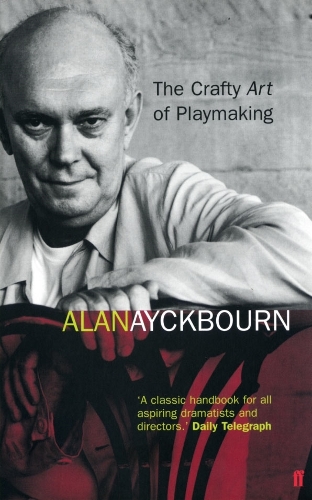
The Crafty Art of Playmaking by Alan Ayckbourn. Faber, 2004, softcover, ISBN 0571215106.

https://www.concordtheatricals.co.uk/s/45898/the-crafty-art-of-playmaking

Friday, June 20, 2025

Theatre in TI:ME

The Crafty Art of Playmaking
In health we're dealing with time in all its forms: cardinal; birth and death and all that happens in-between. Aka, 'life', illness, and palliative care. And, even if not recognised, chronological and pathological time, which policymakers should pay more attention to. The art of theatre, has its time (p.20): stage time, and real (theatre foyer) time. 

'At its most successful, theatre views things from a human standabout.' (p.9). 

I'd second that, especially allied with the notions (ideas!) of health career, and life chances

Since the publication of TCAoP in 2004 people seem to quite ready to dispense, disregard, downplay, demote the humanistic with the rise of AI and assisted dying for the terminally ill (of course).

Time recurs - as a frame. (p.25) with a touch of elective surgery. 'Think of your story as a piece of thread. Where you cut in is the point at which the lights come on in Act One. Where you cut out will be your final curtain. (There may be a knot or two in the middle to denote the intervals, too.)' p.25.

In the first post re. TCAoP I stressed the complexity, plethora of ideas that Hodges' model can create. Sir Alan provides a potential 'get of jail free card' (or as near as?) in his original rule no. 9. 

'If a play can be too simple, it can also be too complicated. If one element is particularly complicated, keep the rest of it simple.' (p.25).

Very useful advice! But achieving it when having and applying an idea is another matter.

What's this though? Step back to original rule no. 6:

'There is no hard and fast rule as to which constructional element comes first.' (p.20).

Butrint National Park Albania   

In the guided discovery exercise in students (audiences..) creating the model, there are two constructional elements, that also contribute to the one big idea.

It gets better! Original rule no. 14:

At least fifty per cent of your play is going to be visual. (p.33).

I must make sure I don't confuse concept/ual with visual/imagery.

More to follow.

The Crafty Art of Playmaking by Alan Ayckbourn. Faber, 2004, softcover, ISBN 0571215106.

https://www.concordtheatricals.co.uk/s/45898/the-crafty-art-of-playmaking

Tuesday, June 17, 2025

Theatre - which one?

The Crafty Art of Playmaking
Summer reading includes Ayckbourne's The Crafty Art of Playmaking published in 2004. Already half way through, writing has been covered, directing follows.

Looking at what I can learn in contrasting health and theatre, there is more than both laying claim to having a 'theatre'. Perhaps health got there first in a very primitive, existential, and fundamental sense. The 'theatre of war' covering battle, and the fight for food and survival. Even as civilisation emerged, on the battle field, triage was practised in a more deliberate way with skills that were built on emerging knowledge handed down orally - to become art.

So, no doubt there was a concurrency going on. Heroics in so many guises, shared around the fire. Plus, our individual dreams and nightmares that are framed collectively.

Ayckbourn offer pithy lessons learned over his career that began in 1959. There's an acting maxim:

'When playing a miser, stress his generosity.'

So can we restate the acting maxim as:

'When playing a patient, stress their strengths'?

Or. 'When playing a patient, stress their personhood'? . . .

If that is a challenge to the healthcare sector (even if unintended), then it is one that is actually long-standing. There are the three R's: rehabilitation, reablement and recovery.

Ayckbourn explains how the darker the subject the more a writer needs to find the light. And vice-versa. This suits me fine, and medicine is recognised as a great source of humour across several cultures.

The book lists a series of  'Obvious Rules' all numbered. 

Of No. 1: Born in Liverpool, I never would look down on comedy; and never as a poor cousin of drama.

After reading his obvious Rule No. 2, 'Never start a play without an idea'; I put my pants back on.

Do I have an idea? Oh my! Well Brian's at least.

In a way it's the other way around. The shout goes up - "Eratosthenes! Please pass me a sieve."

On having an idea, Ayckbourn writes: 'They assume, I think, that if they start the journey, maybe an idea will occur on the way. Perhaps a map of where they're going will blow in through the car window. In my experience this never happens.' p.6.

This is good advice, with the additional complication of having many maps, and yes, none: c/o Hodges' model. I need a theme, a situation and a thread. I'm writing a few ideas down. And helpfully Sir Alan advises not to throw ideas away. He describes, from experience how disparate things can come together.

Today (19th), I finished TCAoP here in Corfu. A great help for me, that is, the writing section pp.3-96; as I will try to explain in further posts. Sooner than expcted, I've started a book that will be a 'review'. 

A visit to Albania tomorrow - early start pick-up 0710.

The Crafty Art of Playmaking by Alan Ayckbourn. Faber, 2004, softcover, ISBN 0571215106.
https://www.concordtheatricals.co.uk/s/45898/the-crafty-art-of-playmaking

Monday, June 02, 2025

Online: Hodges' model in Safety presentation

Later this week I've an online presentation to deliver. The brief is to introduce Hodges' model and relate the model to the matter of safety - some thoughts ...

individual
|
INTERPERSONAL : SCIENCES
humanistic ------------------------------- mechanistic
SOCIOLOGY : POLITICAL
|
group
PATIENT safety

Task: Attention - Concentration
Rest - Sleep

psychological environment - safety

to ERR is human
HUMAN as weakest link

risk to SELF

Cognitive support - lists, names,
informational analysis of environment

Critical thinking
Situational awareness

Therapeutic - OBSERVATIONS
ethics- video surveillance
PATIENT - PROCESS safety
 - e.g. diagnosis, handover
physical safety: 1st law 1st aid.
SELF-harm : SELF-neglect
Assessments, Plan, Evaluation
environment:safety, construction, buildings
occupational/disciplinary safety
Comms - Information theory
 safety as security: lone working
signals - alarms, protocols

medical safety: medicines, devices
risk reduction - management

Human factors
Human- Computer/Tech/AI Interaction
Research - Records
Interfaces

Public Health Safety: Food, Pollution

risk to others
stereotypes - assumptions

risk from others - bullying

social media

teamwork: simulation

PRACTICE safety
Law - Health & Safety
Reporting - Statistics
Transparency
Mandatory Training / Learning
Whistleblowing
safety standards ISO
safety organisations

The Learning Organisation
Other sectors e.g. Aviation, Formula 1 ...
Risk of 'groupthink'

 Is it a risk to assume parity of estem in patient safety? What of 'a' patient's safety?

safety
https://hodges-model.blogspot.com/search?q=safety

Tuesday, April 01, 2025

c/o A.Word.A.Day: Hodges' model - Walk the (dual!) chalk line

A.Word.A.Day

with Anu Garg

'Having a tool is like having a superpower in your pocket. With the right gadget, you can do much more than what arms and legs alone allow -- build a magnificent pyramid, lift water from deep below, or even predict whether you’ll need an umbrella tomorrow.


And not all tools need wires, batteries, or instruction manuals. Sometimes, a simple device can save labor -- a lever, a pulley, a piece of string dusted with chalk -- can save hours of sweat and toil.'

chalk line