Hodges' Model: Welcome to the QUAD: Search results for service

Hodges' model is a conceptual framework to support reflection and critical thinking. Situated, the model can help integrate all disciplines (academic and professional). Amid news items, are posts that illustrate the scope and application of the model. A bibliography and A4 template are provided in the sidebar. Welcome to the QUAD ...

Showing posts sorted by relevance for query service. Sort by date Show all posts

Thursday, April 01, 2010

Launch of the National Care Service in England

Source: Department of Health, 30/03/2010

In the biggest change to the welfare state since the creation of the NHS, everyone who needs care when they are old or disabled will get it for free, Health Secretary Andy Burnham announced today as he launched the National Care Service in England.

The National Care Service will be based on a principle of shared social insurance and will be funded by contributions from everyone in a fair way. The National Care Service will ensure people get high quality care when they need it and it will give peace of mind that savings and homes will be protected from the expensive care costs that arise from serious long term conditions, such as Alzheimer’s or recovering from a stroke.

Andy Burnham said:

“Today we are launching a National Care Service that is fair for all, ending the cruel care lottery we have today. Like the NHS, everyone will contribute and everyone will get their care for free when they need it. This is the biggest change to the welfare state since 1948 and, like the NHS, it’s going to take time to build.

“The National Care Service will mean that people will be treated with dignity and respect, people will have control and choice over their care and they will be helped to stay in their homes for as long as possible. People who have to live in residential care will, from 2014, get their care for free after two years and there will be more help to pay the residential costs.

“We’re not replacing the millions of carers or families who look after each other. They are the underlying principle of the National Care Service and we will better support them.

“We’ve already laid strong foundations through reforms over the past few years. But, with an ever growing older population – there will be 1.7 million more people needing care in the next 20 years – we must radically overhaul the way care is paid for and provided.

“I feel very strongly that this is a responsibility we must all help to shoulder. And it’s clear from what we have heard from the thousands of people who have given us their opinions on this over the past twelve months, that people agree. That’s why we know that the fairest way to help everyone who is affected by a serious disease, illness or disability is for us all to pay into a system so we get free care when we need it.”
The cost of care is currently a cruel lottery. No one has any way of knowing how much care and support they may need in the future. A 65-year-old can expect to need care costing on average £30,000 during retirement. However, some people, for example people with severe dementia, could end up needing care costing as much as £200,000.

The National Care Service will put an end to this unfair system. It will be built on strong foundations of recent reforms and will overhaul the way care and support is paid for and provided. It cannot be built overnight and will be phased in three stages:

Stage One
• Build on the best of the current system through reforms that are already underway and deliver the Personal Care at Home Bill.

Stage Two
• From 2014 extend the coverage of free care so that people will receive free care if they need to stay in residential care for more than two years.
• Set up a commission to support consensus and advise the Government on the fairest and most sustainable way that people can make their contribution to a care system which is free when they need it.
• Set up a National Care Service Leadership Group of expert stakeholders who will advise Government on the implementation of the National Care Service, focussing on the systems and business processes that need to be put in place to make the National Care Service a reality.
• Introduce a National Care Service Bill to set the legal foundations of the National Care Service.
• Enshrine in law for the first time nationally consistent eligibility criteria for social care helping to remove the postcode lottery of care that exists now
• Push forward with the prevention agenda and continue the drive towards personal budgets so that by 2012 everyone who would benefit from a personal budget will have one.
• Ensure accurate, relevant and accessible information about what people are entitled to, how the assessment process works and how to access care services is provided to everyone.
• We want to improve the gateway for accessing social care and disability benefits to make simpler and easier for people.
• Introduce a quality framework including a body to drive up quality in social care.

Stage Three
• The introduction of a comprehensive National Care Service that is free when they need it for all adults with an eligible care need, funded by contributions.
Following the biggest ever consultation on care and support that saw over 68,000 members of the public, carers and representative organisations have their say, it is clear that people believe it is right that everyone should contribute to a care system that is free when people need it– similar to the NHS. However, the necessary consensus on how people should pay into such a system has not yet been reached. A National Care Service Commission, will therefore be established to advise Ministers on the fairest and most sustainable way for people to do so.

Care Services Minister Phil Hope said:
“We must find a fair way of funding the National Care Service. The stakes are very high. That’s why we must have a clear consensus. We are setting up a commission to tell us what would be a fair way for everyone to pay into this new system.

“Everyone will pay into it in a fair way and in return everyone will then have peace of mind that their savings and homes will be protected from high care costs. The whole of society will benefit and the National Care Service will support individuals and families for generations to come.”
The National Care Service will have six founding principles. It will:
  1. Be universal – supporting all adults with care and support needs within a framework of national entitlements.
  2. Be free at the point of use – based on need, rather than the ability to pay.
  3. Work in partnership – with all the different organisations and people who support individuals with care and support needs day-to-day.
  4. Ensure choice and control – treating everyone with respect and dignity, ,putting people in charge of their lives.
  5. Support family, carers and community life – recognising the vital contribution families, carers and communities play in enabling people to realise their potential.
  6. Be accessible – easy to understand, helping people make the right choices.

Contacts: Department for Health Email: NDS.DH at coi.gsi.gov.uk

Additional links:

DoH: 30 March 2010, The White Paper, Building a National Care Service

The Big Care Debate
Sunday, March 14, 2021

Paper: Models of care for patients with hypertension and diabetes in humanitarian crises: a systematic review

individual
|
INTERPERSONAL : SCIENCES
humanistic ----------------------------------------------- mechanistic
SOCIOLOGY : POLITICAL
|
group

"Implementing NCD care in humanitarian crises requires the development of a context-adapted approach or ‘model of care’. A model of care may be characterized as a conceptual and pragmatic framework that describes how services are delivered within a health system (Davidson et al., 2006; Agency for Clinical Innovation, 2013)."

Models of care

"We found that there was no single unifying model of care for HTN/DM care in humanitarian crises, and the variance in care models included in this review was highly dependent on context. In order to descriptively synthesize the diverse models presented in the included studies, we created a typology based on the type of crisis, region and integration with the health system, since these factors likely influenced model design"
 
patient’s expectations

hypertension and diabetes (HTN/DM)

Crisis type and Region
Natural: Hurricane, Flood, Earthquake

Palestine, Lebanon, Jordan,  China, Pakistan,  India, Philippines, Syria, Iraq, Turkey, Nepal

Camp, Non-Camp; Rural, Urban

Location of services - Location of people in need, transport, travel time, distance

Refugee population - Local population

forced displacement, disruption of treatment and support, interrupted health services, movement and attrition of health care workers (HCWs), insecurity, destruction of infrastructure,  breakdown in supply chains and data processes

"The domains of access — availability, affordability, accessibility, accommodation, and acceptability — were derived from previously described measures of coverage (Penchansky and Thomas, 1981; Hernández-Quevedo and Papnicolas, 2013; Levesque et al., 2013)."

Refugees and Host Communities

Humanitarian crises

"Responsiveness has been defined as the ability of health services meet a patient’s holistic needs; in this framework, it also encompassed a model of care’s ability to respond to changing patient needs in a volatile context (.Hernández-Quevedo and Papnicolas, 2013; Kruk et al., 2018). Integration described the linkage between different levels and sites of care, such as facility-based care and community-based support as well as coordination between providers and institutions, while continuity of care referred to uninterrupted care throughout the patient’s disease and life course."

Formal health system and community-based formal or informal systems

Non-governmental organisations


Crisis type and Region
Political: Conflict, Disaster

Affordability, income, worth of service

Accommodation

Person :: Service
centrednesss


"Availability was defined as the volume and type of existing services and whether this was adequate for the volume and needs of service users. Affordability constituted the patient’s capacity to use financial resources to obtain care balanced against their income and the perceived worth of the service. Accessibility addressed the match between the location of services vs the location of people in need, including transport, travel time, distance, and cost. The accommodation was defined as the organization of service delivery, such as opening times and ability of service users to accommodate to this. Acceptability was considered as the relationship between the services and the patient’s expectations of appropriate care."
(My emphasis)

NCD  - Non-communicable disease

My source: HIFA list

CITATION: Models of care for patients with hypertension and diabetes in humanitarian crises: a systematic review, Michael S Jaung, Ruth Willis, Piyu Sharma, Sigiriya Aebischer Perone, Signe Frederiksen, Claudia Truppa, Bayard Roberts, Pablo Perel, Karl Blanchet, Éimhín Ansbro
Health Policy and Planning, https://doi.org/10.1093/heapol/czab007

Monday, January 05, 2026

Primary & Secondary Health Care - How long...?

THE DAWSON REPORT

MINISTRY OF HEALTH.

CONSULTATIVE COUNCIL ON MEDICAL AND ALLIED SERVICES.

Presented to Parliament by Command of His Majesty. [... selected extracts]

3. The general availability of medical services can only be effected by new and extended organisation, distributed according to the needs of the community. This organisation is needed on grounds of efficiency and cost, and is necessary alike in the interest of the public and of the medical profession. Measures for dealing with health and disease become, with increasing knowledge, more complex, and, therefore, less within the power of the individual to provide, but rather require combined efforts. Such combined efforts to yield the best results must be located in the same institution. As complexity and cost of treatment increase, the number of people who can afford to pay for a full range of service diminishes. Moreover, enlightened public opinion is appreciating the fact that the home does not always offer the best hygienic conditions for dealing with serious illness, which requires special provision in order to give the patient a full chance of recovery.

4. In days gone by such conditions as appendicitis were treated with poultices and drugs in the patient’s home. Now they are treated by operation, which is more effective, but requires more equipment, a team of workers, and a larger expenditure. Such conditions as diseases of the lungs formerly received clinical examination and treatment by drugs. They now may require, in addition, the attention of the pathologist and the radiologist. This means greater efficiency, but more organisation and higher cost.

5. Preventive and curative medicine cannot be separated on any sound principle, and in any scheme of medical services must be brought together in close co-ordination. They must likewise be both brought within the sphere of the general practitioner, whose duties should embrace the work of communal as well as individual medicine. It appears that the present trend of the public health service towards the inclusion of certain special branches of curative work is tending to deprive both the medical student and the practitioner of the experience they need in these directions.

6. Any scheme of services must be available for all classes of the community, under conditions to be hereafter determined. In using the word “available,” we do not mean that the services are to be free; we exclude for the moment the question how they are to be paid for. Any scheme must further be such that it can grow and expand, and be adapted to varying local conditions. It must be capable of comprising all those medical services necessary to the health of the people.

7. The foregoing are some of the considerations which have guided us in drawing up the scheme outlined below.

The services maybe classified into-

Those which are Domiciliary as distinct from those which are Institutional.

Those which are Individual as distinct from those which are Communal.

1. We begin with the home, and the services, preventive and curative, which revolve round it, viz., those of the doctor, dentist, pharmacist, nurse, midwife, and health visitor. These we style domiciliary services, and they constitute the periphery of the scheme, the remainder of which is mainly institutional in character. A Health Centre is an institution wherein are brought together various medical services, preventive and curative, so as to form one organisation. Health Centres may be either Primary or Secondary, the former denoting a more simple, and the latter a more specialised service.

2. The domiciliary services of a given district would be based on a Primary Health Centre -an institution equipped for services of curative and preventive medicine to be conducted by the general practitioners of that district, in conjunction with an efficient nursing service and with the aid of visiting consultants and specialists. Primary Health Centres would vary in their size and complexity according to local needs, and as to their situation in town or country, but they would for the most part be staffed by the general practitioners of their district, the patients retaining the services of their own doctors.

3. A group of Primary Health Centres should in turn be based on a. Secondary Health Centre. Here cases of difficulty, or cases requiring special treatment, would be referred from Primary Centres, whether the latter were situated in the town itself or in the country round. The equipment of the Secondary Centres would be more extensive, and the medical personnel more specialised. Patients entering a Secondary Health Centre would pass from the hands of their own doctors under the care of the medical staff of that centre. Whereas a Primary Health Centre would be mainly staffed by general practitioners, a Secondary Health Centre would be mainly staffed by consultants and specialists. It would be a consultant service in function and would be carried out by specialists or by general practitioners acting in a consulting capacity.

4. Secondary Health Centres must of necessity be situated in towns, where alone an efficient consultant service and adequate equipment could be expected, and the necessary means of communication exist. The selection of these towns will need careful consideration, and full information will be required as to the extent of existing provision of hospital and allied facilities, and of its distribution in relation to population and means of public conveyance. In rural areas the natural currents of traffic and business and existing medical facilities will usually indicate the town or towns in which a Secondary Health Centre may best be placed. In this connection we would like to point out the importance of carrying out a “Hospital Survey” at an early date. The results of this survey would afford data for recognising the areas in which the existing provision is inadequate, and the degree of the inadequacy. The Secondary Health Centres would vary in size and elaboration according to circumstances.

5. Secondary Health Centres should in turn be brought into relation with a Teaching Hospital having a Medical School. This is desirable, first in the interest of the individual patient, that in difficult cases he may have the advantages of the highest skill available, and secondly in the interest of the medical men attached to the Primary and Secondary Centres, that they may have the opportunity to follow the later stages of an illness in which they have been concerned at the beginning, to make themselves acquainted with the treatment adopted, and to appreciate the needs of a patient after his return to his home. In those towns where Teaching Hospitals exist, Secondary Health Centres would sometimes be merged in them. 

Continued at: 

https://sochealth.co.uk/national-health-service/healthcare-generally/history-of-healthcare/interim-report-on-the-future-provision-of-medical-and-allied-services-1920-lord-dawson-of-penn/

LONDON PUBLISHED BY HIS MAJESTY'S STATIONERY OFFlCE

1920. Price 2s. Net. Cmd. 693

See also:
https://www.adph.org.uk/resources/175th-anniversary-timeline/ 

My emphasis.

Thursday, July 10, 2025

ii 'Thinking outside the box ...' by Amber Javis

Second reply to a blog post by Amber Jarvis on The Mental Elf:

Thinking outside the box: alternatives to standard inpatient mental health care

Amber's post considers a study by:

Griffiths, J. L., Baldwin, H., Vasikaran, J., Jarvis, R., Pillutla, R., Saunders, K. R., … & Johnson, S. (2025). Alternative approaches to standard inpatient mental health care: development of a typology of service models. International Journal of Mental Health Systems, 19(1), 1-13: https://pubmed.ncbi.nlm.nih.gov/40247283/

Jarvis highlights concern within inpatient services of:
'use of coercive practices ... (Nyttingnes et al., 2018; Belayneh et al., 2024). These include physical restraint (physically holding a person), seclusion (holding a person in a locked room) and chemical restraint (the use of sedating medication to manage distress or behaviour, sometimes administered “as needed” rather than as part of any planned treatment). Poor relationships between staff and service users have also been noted, ...'
Reflecting since the previous post, I realise that I encountered efforts to prevent admission and treat in the community prior to going part-time. A short stay unit at a general hospital. Being a member of Intermediate Support for older adults; shifts ran 0800-2000 - early or late. Then working part-time, there were short-stay placements in the community that the recovery team would visit providing support.

Mental distress is distressing (a truism of course), both as lived experience (with or without self-awareness in-situ/crisis) and for others in the vicinity. Family, friends - who see a person they thought they knew, perhaps even thought they were a friend, a person who loved them; but now!? They present as distant, aggressive, subdued, agitated, unpredictable, inconsolable and possibly expressing thoughts of self-harm, threats to harm others, or totally bizarre, 'psychotic' ideas. This is not the person they thought they knew. For the person affected, familiars are strangers. A relational breakdown. We forget the severely mentally ill at our peril. A pervasive sense of helplessness is readily transferred: the reflex conclusion that help is needed - and fast.

To say we are creatures of habit, is to also acknowledge that change our environment results in a change in our behaviour. When relatives did arrive on the psychogeriatric ward I mentioned previously, they cried. Apologising for the environment, yes; efforts to reassure ensued and eventually family, friends were won over. They shouldn't have been. Unless we're in a game, play, or movie, who wants to find themselves in a Victorian era institution?

I've posted previously (or is it in draft?) on the importance of design in the design of care environments. It was a relative's visit to a care home, that resulted in a nursing home design business (Sunday Times). 
A person who is severely mentally ill needs service-centred care, not purely person-centred care. Person-centredness is key, but safety of self, and the public soon makes itself known. We also forget this at our peril. The problem is that control, and law literally take over. Plus, it's our place not yours. Loss of power the person struggling, ill, in crisis then follows. Amber continues:
'The concerns described above chime uncomfortably with modern mental health agendas of prioritising autonomy, compassion, trauma-informed and person-centred care. In light of these tensions, and the growing number of crisis alternatives – ranging from crisis cafes to intensive home treatment services – researchers  at the NIHR Policy Research Unit in Mental Health set out to map current alternatives to traditional inpatient care, both nationally and internationally. Griffiths and Baldwin’s findings raise important questions about how mental health services could evolve to better suit people’s needs, providing a valuable starting point for service planners considering developments in care.'
Hodges' model is ideal to help reflect and critique the relation-ship between 'a person' and 'the service'. I passed two gentlemen in London over the weekend. Clearly unkempt, standing but gesticulating, freely verbalising, incoherent on passing. Neither appeared intoxicated ( but I wasn't that close) or 'stoned'. That's the other question; passing-by what was I going to do? Does the 'community' care? On 'X' you encounter the extremes of debate. Anti-psychiatry, resort to and risks of dependence on medication - anti-depressants, anxiolytics; the damage from anti-psychotic drugs and atypical antipsychotics. The continuous debate about ECT. A dizzying stream of texts about mental health, over-diagnosis and wellbeing:


Medical prescribing has a partner. Social prescribing is well established, with organisations, events, publications and research emerging. People, have scoffed at the suggestion that gardening can help; or going for a run. Especially when you can't get out of bed. Chronic fatigue syndrome, long-COVID are seemingly monolithic in their resistance to change. A real challenge and so counter to the person's 'pre-morbid' personality and lifestyle.

For several years the state of mental health nursing as a specialty has been questioned. Is the mental health nursing curriculum being genericised? Enrollment of students nurses in learning disability has also dropped.

Medical prescribing has a partner. Social prescribing is well established, with organisations, events, publications and research emerging. People, have scoffed at the suggestion that gardening can help; or going for a run. Especially when they can't get out of bed. Chronic fatigue syndrome, long-COVID are seemingly monolithic in their resistance to change. A real challenge and so counter to the person's 'pre-morbid' personality and lifestyle. As a conceptual framework Hodges' model is ideal as a semantic net, to reflect and critique concepts that stretch and so disrupt (for a time) out norms. Concepts with a dual character. If social prescribing is one example, take crisis cafe mentioned by Jarvis above. If you think in physical - environmental terms where do you envisage a crisis occuring or playing out? What about a cafe? What is the ambience of these places?

I noticed a little visual game, an animation of characters running, jumping, climbing over an obstacle course. You focus on one figure and follow them for a time. This makes a difference, called distraction. In psychosocial intervention and managment of psychosis and anxiety audio - music, poetry, repetition has also bee used. The essence here must be when the intervention begins. Recognising relapse triggers, requires preparatory work. The Griffith reference is provided, but Jarvis begins to describe the results:
'Researchers identified 65 alternative service models to standard inpatient care. These were organised broadly organised according to the setting (e.g., community-based, hospital-based, or cross-setting) and the target population (e.g., adults versus children). Across these categories, ‘community-based alternatives’ were the most common category of alternative service models, followed by hospital-based and cross-setting approaches. We’ll explore each of these in more detail below.'
In post (i) and here I suppose I am advocating for mental health nursing as a distinct programme of study, practice and proven competence. For several years the state of mental health nursing as a specialty has been questioned. Is the mental health nursing curriculum being genericised? Enrollment of students nurses in learning disability has also dropped. 


There is a saying: 'You get what you pay for'. There is a sense that there are people who would like to ignore, deny, erase 'mental health'. After all, the truth really is that you can 'see' a broken leg. This isn't an issue if you can afford a private psychotherapist, or a psychoanalyst.

The elephant here (well, there always is one) is education and the literacies. For prevention: the ultimate change - this is where we must focus. But of course for the problem at hand - and mind it is too late.

(Post iii likely to follow.)

Individual
|
      INTERPERSONAL    :     SCIENCES               
HUMANISTIC  --------------------------------------  MECHANISTIC      
 SOCIOLOGY  :    POLITICAL 
|
Group
subjectivity         
mental state - crisis - mind
quality
objectivity
hand - physical state - crisis
quantity
Social prescribing
Cafe

Housing - crisis
Cost of living - crisis

See also: 'literacy' : 'prevention' : 'service' : 'severe' : 'change'


Wednesday, April 04, 2018

Paper: IJIC - Building Competencies for Integrated Care: Defining the Landscape c/o Miller & Stein

individual
|
INTERPERSONAL : SCIENCES
humanistic ---------------- Integrated Care --------------- mechanistic
SOCIOLOGY : POLITICAL
|
group

"Transformation does not only involve gaining new knowledge and skills but a more fundamental* shift in our conceptual paradigms about our roles, responsibilities and relationships." [RRR]


Clinical integration (mental health) through person-centred care of someone's health and wellbeing

building blocks 1. Electronic health records,

Functional integration (data, information)

Uni-professional education
 
Clinical integration (physical health) through person-centred care of someone's health and wellbeing
through the active engagement of
service users as partners in care


 Act-ions - Practice

[RRR] social change

[ My obs.: Health literacy
- need for a generic framework -
for health education arbitration -
as there is a sociopolitical dispute]

Professional


through the active engagement of
service users as partners in care


2. Budgetary processes,
3. Governance structures

[RRR] political change (inc. policies, professional bodies...)


Organisational & Systemic integration


integration

Normative integration

*There's that word again...

Q. Reflect upon the following using the above model - not only the text but the model itself:

"To achieve the transformation required by integrated care, this means three things: we need to include the principles of integrated working into our formal education and training systems; we need to recognize that learning continues in our workplaces; and accept that we ourselves will be informal educators throughout our careers."

The following dimensions are listed in the editorial and above :
  • Dimension 1. Person-centred care (i.e. the improvement of someone’s health and wellbeing through the active engagement of service users as partners in care)
  • Dimension 2. Clinical integration (i.e. care services are coordinated and/or organised around the needs of service users)
  • Dimension 3. Professional integration (i.e. existence and promotion of partnerships between care professionals that enable them to work together)
  • Dimension 4. Organisational integration (i.e. the ability of different providers to come together to enable joined-up service delivery)
  • Dimension 5. Systemic integration (i.e. the ability of the care system in providing an enabling platform for integrated care, such as through the alignment of key systemic factors like financing and regulation)
  • Dimension 6. Functional integration (i.e. the capacity to communicate data and information effectively within an integrated care system)
  • Dimension 7. Normative integration (i.e. the extent to which different partners in care have developed a common frame of reference of vision, norms, and values on care integration)

Miller R, Stein KV. Building Competencies for Integrated Care: Defining the Landscape. International Journal of Integrated Care. 2018;17(6):6. DOI: http://doi.org/10.5334/ijic.3946
 

Saturday, July 04, 2009

Relationships matter: Society Guardian & The WSJ

Re. Charles Leadbeater's State of Loneliness, The Guardian, Society, 01.07.09

The cover of this weeks Society Guardian immediately caught my eye with its picture (I wonder which corner of which care domain this lady is sat in?):

The text initially passed me by; then yesterday I caught up, it seems the business model quest in one sector is having a domino effect with new models needed elsewhere including health and social care.

Leadbeater's piece reminded me of Lean thinking the improvement process with its drive to identify value, reduce waste and repetition. ... His text points out that:

More efficient services quickly move in and out of people's lives, but they don't really change how people live. That is one reason why we have not made deep inroads into the most deprived communities, the most troubled families, the most intractable social problems. Services manage and process people and problems, but only rarely allow people to change their lives. Service solutions are ill-suited to the emerging challenges of the rise of long-term health conditions, diseases linked to lifestyle and diet, ageing or climate change. You cannot deliver a solution to an epidemic of diabetes the way that DHL delivers a parcel.
So any model, method that is primarily process centered may find itself compromised - providing just one cylinder's worth of power in a four cylinder engine. In Hodges' model I have identified the 4Ps. PROCESS, PURPOSE, POLICY, and PURPOSE (to which we must now add PROBITY). It will be interesting to see how value is defined across service forms of engagement, intervention (including signposting) and the new set of outcome measures to follow whether local, national, service-reported or patient reported outcome measures. Leadbeater continues:
The key will be to redesign services to enable more mutual self-help, so that people can create and sustain their own solutions. The best way to do more with less is to enable people to do more for themselves and not need an expensive, professionalised public service. Enabling people to come together to find their own, local solutions should become one of the main goals of public services. Services do a better job when they leave behind stronger, supportive relationships for people to draw on and so not need a service.
So Jo(e) Public needs to reflect, compare, evaluate, learn, collaborate and make informed decisions in order to stay well amongst many other things. They need to be engaged holistically.

Where is the model for this...?
I believe I know.

The Wall Street Journal has something to add here The Doctor Will Text You Now and relating to my earlier posts on 'Beware Reflex Moves'. Relationships matter, but if nurses are out there assessing, assessing, assessing who is doing the education, dividend added therapy outcome focused?

If e-health is going to make a real contribution in augmenting and freeing high value care resources then this in turn depends on the value invested in relationships.
Louis Petrillo, 57, a psychologist in Westfield, N.J., says he regularly turns to his family’s doctor, Robert Eidus, for online advice about his frail 90-year-old mother, who finds office visits difficult. His son who is away at college also used an online visit when he had sinus problems. “I can get into his virtual office anytime,” says Dr. Petrillo. He feels the online care works well largely because Dr. Eidus knows his family members’ regular health complaints.
If older adults move home and need new primary care services, what are most probably(?) well established patient - doctor (patient - primary care team!) relationships are not just undermined they are undone! A person's sense of community is fractured. ...

Yes that image speaks volumes.

Image source: Guardian

Mathews, A.W., The Doctor Will Text You Now, JULY 1, 2009, The Wall Street Journal Interactive Edition

Friday, October 03, 2025

'National Care Service' - Casey Commission

'Casey Commission tasked with producing plan for ‘national care service’ by 2026

Government remit also asks independent commission to consider services for older people and disabled adults separately and to ensure recommendations stick to government spending settlement

By Mithran Samuel on May 2, 2025 in Adults, Social work leaders

The Casey Commission has been tasked with producing a plan next year for delivering a “national care service” over the course of a decade.

The 2026 report will be followed by a further report, due by 2028, setting out longer-term recommendations for the sector, according to the Department of Health and Social Care’s (DHSC) terms of reference for the commission, published today.

The Independent Commission into Adult Social Care, headed by crossbench peer and renowned government troubleshooter Baroness (Louise) Casey, started its work this week.

The plan to set up the commission sparked criticism from social care organisations, after it was announced in January, due to its three-year timeframe being seen as far too long to develop a plan for a sector under under severe immediate pressures and facing significant future challenges.' 
continued...
https://www.communitycare.co.uk/2025/05/02/casey-commission-tasked-with-producing-plan-for-national-care-service-by-2026/

The Casey Commission


... so many people ...

Individual
|
      INTERPERSONAL    :     SCIENCES               
HUMANISTIC  --------------------------------------  MECHANISTIC      
 SOCIOLOGY  :    POLITICAL 
|
Group


 ... watching this space.


My prompt: Letters to the Editor, The Sunday Times. 12th January 20025. p.22.

https://www.thetimes.com/comment/letters-to-editor/article/sunday-times-letters-labours-national-care-service-proposal-ghx22kzt2

Monday, December 02, 2019

iv RCGP’s 7th Health and Justice Summit ...

I've been working through notes, photographs and the summit programme hence the flip-flopping between days.

So, back to day one:

Megan Georgiou, Jem Jethwa and Dave Banks, Programme Manager for Royal College of Psychiatrists, Project Officer at Royal College of Psychiatrists and Lead Nurse for the Intensive Support Unit at HMP Durham and Tees, Esk and Wear Valleys NHS Foundation Trust
“Transforming the Care Programme Approach in Prisons”

The Care Programme Approach (CPA) has a history of being poorly implemented within a prison setting. The Quality Network for Prison Mental Health Services and Tees, Esk and Wear Foundation Trust have teamed up to review the process and develop new tools and guidance. The purpose of the workstream is to improve service delivery and patient care. The workshop will summarise the findings from the consultation event and present our work to date.

Late again and frustrated since as a former CPA Lead this subject is close to my heart. It is not a sacred cow, although the learning and values that it helps carry must be carried forward.

I got the immediate impression of a methodology being presented and sure enough we practised too:

Go M.A.D. Thinking ® Results Framework

Part of the approach includes the 10 possibility thinking areas as per the photo.


[There's an additional exercise that reveals the ability of Hodges' model to help prioritise, contextualise (or decontextualise) and assign the 10 areas.]

Dr Alex Acosta-Armas & Ms Sarah Hill, Consultant Forensic Psychiatrist & Service Manager for  North London Forensic Service presented “Forensic Learning Disability Pathways, from prison to the community: Less restrictive practices in secure care and the development of a specialist community forensic LD service”.
Pathways of care for people with learning disabilities, from prison with the establishment of assessment and detection services, followed by secure inpatient care, focussed on introducing less restrictive practice interventions. Development of a community forensic learning disability service aimed to facilitate transition into the community and to support community services.
Brian E Hodges who created Hodges' model was a Learning Disability Nurse and Tutor and designed the model with this population in mind.

I was not ideally placed for photos, but would encourage readers interested in Forensic Learning Disability Pathway to seek out the slides. There was a local history from 1997, improving quality, stating the case for a Community Forensic LD Team, eligibility criteria (referrals), progress since April 2019 and training delivered to date. This was informative relating autistic spectrum disorder, training for staff, assessment within prison and in-patient settings, attention deficit hyperactivity disorder,risk concerns - sexual offending, arson, stalking and FTAC - Fixated Threat Assessment Centres.

Whenever I see a slide, paper ... titled "New Model of care" my heart skips a beat. This model was CHOICES. I will try and obtain more information. 

Robert McEntree - Defining trauma
A workshop was presented by Michelle Osborne & Robert McEntree, Ward Manger & Staff Nurse for Arnold Lodge on “Trauma Informed Care in Forensic Health Care: Male Mental Illness”
How the admission ward of a Medium Secure Forensic Mental Health Unit in Leicester is introducing a framework for Trauma Informed Care.

There is frequent use of 'lenses' as a metaphor and this workshop was helpful as to me it presented 'trauma' as another lens, a potentially constructive metaphor upon an emotional - lived reality (with varying degrees of recall). Robert defined trauma with references and some texts:

The Polyvagal Theory, Stephen W. Porges:
https://www.stephenporges.com/books

The Body Bears The Burden, Robert Scaer:
https://www.routledge.com/The-Body-Bears-the-Burden-Trauma-Dissociation-and-Disease-3rd-Edition/Scaer/p/book/9780415641524

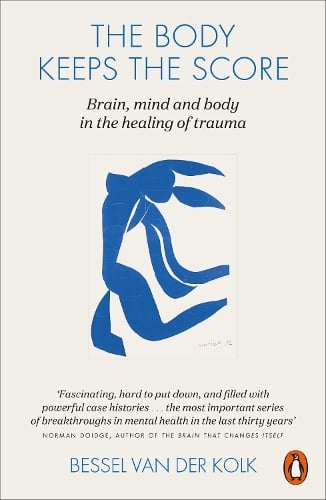
The Body Keeps the Score: Brain, Mind, and Body in the Healing of Trauma Book, Bessel van der Kolk:
https://www.penguin.co.uk/books/259/259420/the-body-keeps-the-score/9780141978611.html

Despite trauma's acuity (obviousness?) the slides were very informative:

What we talk about when we talk about "Trauma"
  • Pervasive
  • Impactful
  • Effects the most vulnerable in society
  • Self perpetuating
  • Negates potentially supportive relationships
Five core values of Trauma Informed Care and Environments

Safety  Trust  Collaboration  Choice  Empowerment

Barnett Brown, V., Harris, M., and Fallot, R. (2013) Moving toward Trauma-Informed Practice in Addiction Treatment: A Collaborative Model of Agency Assessment, Journal of Psychoactive Drugs, 45:5, 386-393, DOI: 10.1080/02791072.2013.844381

Fallot, R.D. and Harris, M. 2009. Creating Cultures of Trauma-Informed Care: A Self-Assessment and Planning Protocol, Washington, DC: Community Connections. [Google Scholar]

See also:
Becoming Trauma Informed:
https://www.mappingthemaze.org.uk/wp/wp-content/uploads/2017/08/Covington-Trauma-toolkit.pdf

In post iii I made (rather) a lot of 'transitions' and two major examples include veterans returning to civilian life and prisoners on release. The frequency of 'transition' was even raised at the summit. For example, if prisoners are recruited to a health programme and are then released that will be 'lost' so interventions are kept short for that reason. Alternately, reflecting cold reality there is acceptance in being able to re-enrol should someone arrive in custody once again.

Before closing remarks and thanks the summit's sessions ended with news of a transition:

Kate Morrissey, National Programme Manager - Mental Health, Implementation Lead for RECONNECT on:
 “RECONNECT – Care After Custody” 

When I referred to the obviousness of trauma above, of course so often to the observer psychic trauma is not obvious. Is this why transition to stability, coping, staying well, recovery is so hard won? Is this why in housing, welfare and benefits so often the lens cycles through what is 'seen' resulting in doubt, denial and neglect?

These four posts reflect the main sessions and workshops I opted to attend. The summit's focus also included Women in prison, Transgender pathways and Children’s services.

Many thanks to Convenzis and other organisers, sponsors and supporters:
Great values, learning and job.


Wednesday, April 08, 2009

(Legacy ...) UK NHS Connecting for Health: Services and Systems

It is surprising what you can find behind an interface 'tab'. In doing some homework around e-Health, I came across this listing of 'Systems and Services' on the Connecting for Health website. It is a great springboard for exploration. Although public sector ICT is frequently the subject of media ire this listing brings home the complexity, diversity and scope of the ground breaking work that has and is being done. Add to this listing the 'research and development' effort also being undertaken elsewhere and despite the current economic climate there are some things to smile about.

Connecting for Health NHS title

Alphabetical: A to IAlphabetical: J to Z
  • Addressing
  • Blood safety tracking pilot
  • Capability & Capacity
  • Choose and Book
  • Clinical Dashboards
  • Data Services
  • Demographics
  • Deployment support
  • Education, Training and Development (ETD)
  • Electronic Prescription Service (EPS)
  • ePrescribing
  • GP Support
  • Health and Social Care Integration Programme
  • HealthSpace
  • Implementation
  • Independent Sector Healthcare Programme
  • Information Governance (IG)
  • N3 - The National Network
  • NHS Care Records Service (NHS CRS)
  • NHS Gateway
  • NHSmail
  • NHS Number
  • NHS Strategic Tracing Service (NSTS)
  • Pathology Messaging
  • Picture Archiving and Communications System (PACS)
  • Professionalising Health Informatics (PHI)
  • Registration Authorities and Smartcards
  • Research Capability Programme
  • Spine
  • Secondary Uses Service (SUS)
  • Systems & Service Delivery

My source: Connecting for Health


Friday, July 11, 2025

'Thinking outside the box ...' iii by Amber Javis

Third response to a blog post by Amber Jarvis on The Mental Elf:

Thinking outside the box: alternatives to standard inpatient mental health care

Amber's post considers a study by:

Griffiths, J. L., Baldwin, H., Vasikaran, J., Jarvis, R., Pillutla, R., Saunders, K. R., … & Johnson, S. (2025). Alternative approaches to standard inpatient mental health care: development of a typology of service models. International Journal of Mental Health Systems, 19(1), 1-13: https://pubmed.ncbi.nlm.nih.gov/40247283/

A Community Psychiatric Nurse since 1985, on first contact patients were often upset initially at the prospect of a visit. Not the fact it was a nurse, but a psychiatric, 'mental' nurse. If the patient was OK about it, their family may have had qualms. Discretion was always exercised, essential in terms of maintaining confidentialty. Not infrequently, as a team we had a conflict of interest. A colleague already had a client a few doors down; or they lived around the corner. Socio-politically, there was never an issue back then with shop fronts, but homelessness has a long history of course. I've worked in intermediate support, visiting someone 2-3 times in a day. That continuity helps, in contrast to the experience of older adults in social care. It could be that the potential stigma elicited by intensive home care is now attenuated by:
  • The public's increased awareness mental health & illness;
  • The fragmentation of neighbourliness means people really aren't interested?
In the conclusion on Griffith's et al's study Amber notes:

'The authors’ classification of alternative service models could help planners and commissioners understand ‘the whole range of options’ when deciding which improvements to prioritise and invest in.

However, future studies should investigate the implementation challenges surrounding these alternative models – that is, what might make certain models easier or more difficult to introduce? Research investigating their effectiveness in practice is also required – are there particular models that are better suited to certain individuals, at particular times? As the authors put it: “what works best for whom, when and how”!'

The government in England has launched a trial regards people who are sick, and their work status:

'GP surgeries in England can offer advice to patients on getting back to work, including career coaching or exercise classes, as part of a pilot project to reduce the number of people who are signed off work sick.

The aim is to help people return to the workplace more quickly to reduce the length of time they need fit notes - better known as sick notes.

These are issued by health professionals if a patient is unwell or cannot work for more than seven days.

A total of £1.5m is being made available to 15 regions in England, and will be shared between GP practices in these areas to hire coaches or occupational therapists to support patients in their return to work.'

Hugh Pym, Health editor: https://www.bbc.co.uk/news/articles/cwyx880d1w8o 

Individual
|
      INTERPERSONAL    :     SCIENCES               
HUMANISTIC  --------------------------------------  MECHANISTIC      
 SOCIOLOGY  :    POLITICAL 
|
Group
Career coaching
Exercise classes
Counselling
Reduce time spent 'ill - sick - off-work'
Motivation - Mindset

FIT - SICK:
physically only of course!
Seven days
What can't I do?
What can I do?


Social Prescribing
Occupational Therapists
Physiotherapist
Support workers
Horticultural groups
Local history


FIT NOTES - SICK NOTES
£1.5m across 15 regions
Policy
Welfare budget
Behavioural Economics
Integrated Care & Social Policy


Given the rise of mental health related provblems in the population, some might argue that increased awareness of, and education about mental illnesses is part of the problem. But this isn't literacy then?

With the standing of the mental health nursing curriculum called into question, policymakers have some serious decisions to make. Social prescribers and care navigators are not the only people preoccupied with signposting. Griffith et al. write:

'Inpatient care is also costly; even though only 3% of people in England accessing mental health care in 2018/19 received inpatient mental health care, National Health Service (NHS) trusts in England still invest more in inpatient than community services [].'
Hodges' model: Axes & Domains

You can appreciate just how far away prevention and a health literate population truly are. Budgets will have to be re-directed. Now that is 'care-ordination'.

Griffith et al. and Amber's response, calls care that is simultaneous person-centred and service-centred. 

In Hodges' model it is as if the vertical axis, is turned and the 'individual' aligned with the humanistic (person-centred) and group - the mechanistic (service-centred) axis. This gives us self-care, individualised healthcare, personalised medicine through to population health.


Griffith does not venture into literacy and education (not their study's purpose, of course); but using Hodges' model, we can see two critical related issues. In addition to reducing the time a person is physically, and mentally indisposed, unwell, ill, sick ...
  1. We need to improve the lot of children excluded from school;
  2. Seriously address the determinants of health socio-politically.


Monday, August 04, 2025

Book: v 'Health and Health Care Inequities'

This final post for HHCI takes in -

Chapter 7: Searching for Socialism
Chapter 8: Mobilizing for Health Equity.

These themes are preceded at the close of chapter 6 with Arnel sharing some personal background, as an immigrant to Canada from a racialized background, who has worked in the health care industry (p.96). COVID also features again, its effects still resonate socio-politically.

It is an unfortunate conjunction - relationship as far as socialism, social justice, the green movement and social cohesion are concerned but Borras provides an invaluable service in linking the Capital-State alliance, which I have capitalised. It seems to be appropriate?

There is 'something' here (I think) in the 'identity' of governments, administrations - I will work through elsewhere.

Having added a note in post iv on expropriation, I see that 'precarity' is also included (p.98).

Chapter 7 gets to grips with 'Welfare Systems in Capitalism'. As before the details are Canadian, but with global reference to other welfare systems - liberal, conservative, and social democratic. If Marxism - Socialism was once feared for its seismic potential, I wondered if chapter 7 points to socialism being in a dormant state? Borras explains welfare state evolution and influences and employs metrics of trade union density, low-wage rates, poverty rates, and infant-mortality rates. On low-wages reference to the US as a capitalist powerhouse that does not provide a favourable environment for most workers, added to my thoughts about nursing globally and the US specifically: despite my parochial vantage point. Five tables aid international comparisons, with inconsistencies in data also highlighted. I couldn't help but feel the need to consider the impact of the wider-determinants of health. Now  undoubtedly, an emerging field. The discussion on infant mortality prompts thoughts of my daughter a mum-to-be amid health news in the UK. Plus, Labour's previous and renewed efforts in Sure Start; and the need stressed through Hodges' model to focus on ALL the literacies, including health.  

It sounds a contradiction but HHCI frequently had me thinking 'BIG picture' and detail. Reading 'US Empire' (p.110) made me wonder what descriptor might have been applied if written in June 2025? Social democracies are called to account. As a community nurse I am ready to support someone in making a change. But they must want and be the agent of that change. I can't support the individual in their drinking to excess - in the case of alcohol misuse/dependency. Social democracies and capitalism can operate as a conspiratorial dyad, limiting social and welfare progression. The lessons here are invaluable (pp.110-113). 

More could be made of the specific political impacts of technology. But clearly that would be another book. For example, no excuse, but BIG-TECH were clearly determined to start[-up] as they intended to go. They had a 'cleanroom' - clean-slate as far as unionisation was concerned. Governments permitted the same - paving the way, enabling and across continents. Ironic, the touchy-feely "We Care" with 'amazing offices', work cafés, dog areas, cycle paths, gardens, breakout spaces, and views. "Now, it is almost a religion: 'Give me a company until it is seven ...'. 

As socialism tries to overcome the past, and its associations; a political movement is needed. Somehow 'new socialism' sounds dated. There a call for openness in new ideas and ways to realise socialism. Over the past two decades work has changed, zero-hour contracts, part-time contracts, the rise of employment agencies and self-employed workers. It appears 'complex adaptive systems' can explain and help solve many problems, extending to human organisation and government. Yes. 'It is crucial to understand people's situations and value their experiences.' But how? And, how to 'encourage open conversations and learn from each other.' (p.114)? Neither 'citizen', or 'assemblies' are in the index, as with gambling and advertising. I may have missed one, or more in the text. You have a sense of a need for international organisation. Especially, with AI - artificial intelligence also in the wings.

The results of Erik Olin Wright's analysis of anti-capitalist movements does not sound convincing to me (pp.114-116), but then I'm a nurse. Perhaps economics itself needs to be looked at (again)? Is it an ongoing project - radical economics - that is? How does a new socio-political order 'account' for the existing distribution wealth? The paths toward health equity 1-6, make more sense. The political realism demonstrated, gives me reason to continue here. 

A brief section on electoral politics, brought me to short-termism. I have reached out to SIMPOL about this book and will share with the author.


[ Update 20/08/25: I've put the author Arnel in touch John Bunzl at SIMPOL. Short-termism remains an acute problems in our politics and policy. I've always worked clinically, so despite union and professional body membership, policy is something that has been done to my colleagues and I. There did seem some coherence with the National Service Frameworks. That may be illusory as they focussed on long-term conditions, but there was more:

Boardman J, Parsonage M. Government policy and the National Service Framework for Mental Health: modelling and costing services in England. Advances in Psychiatric Treatment. 2009;15(3):230-240. doi:10.1192/apt.bp.106.003095

They also had the attention of 'service user / carer specific organisations' -
https://mstrust.org.uk/a-z/national-service-frameworks-nsf

Last week, outside a large bookshop in Hay-on-Wye there were cabinets with books for sale at £1. With £5 worth under my arm, I was ready to go in to pay, and spotted 'Walk Don't Run' an absolute gem which I will post about soon. It links to the first post about Arnel's text and evidence. ].
Chapter 8: Mobilizing for Health Equity. Social justice: It seems the more it is spoken of (shouted even); the further it is to being delivered. We used to talk about minority and disenfranchised groups needing a 'voice'. Now social media amplifies the voice, that gets lost in the cacophony and chaos of information disorder. The 'essence of socialism' needs to quickly get to grips with capitalism as the need for 'labour' changes - is changing. We must listen to literature too: 'Some animals are more equal than others'. Class awareness and the role of unions is discussed. Education is critical. Perhaps we need more Philosophy in Pubs? People learn more effectively when they discover things, and arrive at conclusions for themselves. Use of guided discovery and Socratic dialogue have proved their worth repeatedly. This is why formative education is so important. Young people should be able to reflect and think critically. Within the education system the development of character and values too. That way: 'Workers must become political activists.' (p.126).

As a former health care worker there's a page (+) on engaging nurses in the fight for health equity. It is good to see I am probably right to assume the majority of nurses not 'politically active'. Hopefully, nurses and other formal carers reflect the local community and demographics. Although COVID revealed blatent structural realities. 

Individual
|
      INTERPERSONAL    :     SCIENCES               
HUMANISTIC  --------------------------------------  MECHANISTIC      
 SOCIOLOGY  :    POLITICAL 
|
Group

LIFE CHANCES
MY POTENTIAL
MENTAL HEALTH

PHYSICAL RESOURCES
PHYSICAL HEALTH

SOCIETY
SOCIAL RESOURCES
COMMUNITY

HEALTH ACTIVISM
ADVOCACY
POLICY CHANGE


On page 108 is '2SLGBTQIA+' below is a video that helps:


There are 'minimum demands' - Canada-centric of course. A look beyond policy change limitations and a short review of the need to establish a genuine socialist political party. This begs the question of how 'genuine' would be recognised. There may be a case study emerging in UK politics over the next four years? The bones are here in HHCI- no doubt about that.  More is needed, so it's encouraging there is no 'manifesto' in the index either.

Many thanks to Fernwood Publishing for my pb copy.

Arnel M. Borras. (2025) Health and Health Care Inequities - A Critical Political Economy Perspective. Fernwood Publishing.

See also - reference to Hodges' model:
Iris Lohja, Yves Demazeau, Christine Verdier. A multi-agent system approach to dynamic ridesharing for older people: State-of-the-art work and preliminary design. 18èmes Rencontres des Jeunes Chercheurs en Intelligence Artificielle, RJCIA’20, Jun 2020, Angers, France. pp.52-59. ⟨hal-02897446

Tuesday, May 18, 2021

Gatekeeping: Across the care domains

individual
|

INTERPERSONAL : SCIENCES
humanistic ----------------------------------------------- mechanistic
SOCIOLOGY : POLITICAL
|
group
Cognitive gate (access):
Mental state: Risk to Self/Others?
Literacy: My articulation of my needs
Understanding of Consultation/plan
Service name: acronyms

My understanding hence awareness of services, referral
Opt-in
Self-neglect

Physical gate (access):
Physical state 'emergency'?
Telephone call, reception

Obtain appointment
Phone/Video, Face-to-Face
Surgery, Clinic, Hospital, Home

Letter: 'x' days?
[ Triage
Assessment, Planning
Intervention
Evaluation ]

Individual: Collective: WAIT data?

Social-Cultural gate:
Cultural diversity/Accessibility
Service - Semiotics/Semantics/Signage

Family/Social commitments (access)
Sociology of Illness/Sick role
Carer role
Community/Local Understanding & Involvement?
Reporting, Info sharing

Political gate:

Service Provision/Use [by postcode?]
Referrer's knowledge ...
"Policy says..." ...
URGENT, routine, 1,5 days...
Service Pathways/Signage/Appearances

Work commitments (access)
Previously known?
[ MAIN GATE: Therapeutic Modality? ]
 
Open to suggestions...