Hodges' Model: Welcome to the QUAD: Search results for relation

Hodges' model is a conceptual framework to support reflection and critical thinking. Situated, the model can help integrate all disciplines (academic and professional). Amid news items, are posts that illustrate the scope and application of the model. A bibliography and A4 template are provided in the sidebar. Welcome to the QUAD ...

Showing posts sorted by relevance for query relation. Sort by date Show all posts

Thursday, December 11, 2025

Bourdieu: systems, axes, maps, practical logics

I have checked these quotes and am fairly sure they are accurate. The first, I feel, improves with re-reading, and presents a clearing at the end? 

The clearing could be a template, and as per the second it may be old; but retains its practical function.

'Intellectualism is inscribed in the fact of introducing into the object the intellectual relation to the object, of substituting the observer's relation to practice for the practical relation to practice. Anthropologists would be able to escape from all their metaphysical questioning about the ontological status or even the 'site' of culture only if they were to objectify their relation to the object, that of the outsider who has to procure a substitute for practical mastery in the form of an objectified model. Genealogies and other models are to the social orientation which makes possible the relation of immediate immanence to the familiar world, as a map, an abstract mode of all possible routes, is to the practical sense of space, a "system of axes linked unalterably to our bodies, which we carry about with us wherever we go", as Poincaré put it.' p.34.
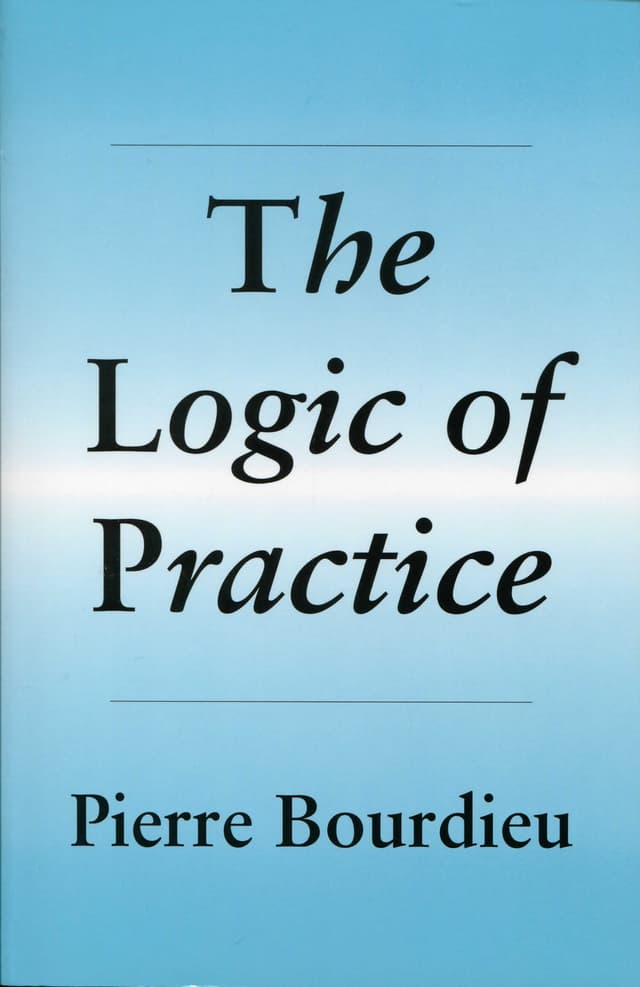
The Logic of Practice
'The logical [kinship] relations he constructs are to 'practical' relations - practical because continuously practised, kept up and cultivated - as the geometrical space of a map, a representation of all possible routes for all possible subjects, is to the network of pathways that are really maintained and used, 'beaten tracks' that are really practicable for a particular agent. The family tree, a spatial diagram that can be taken in at a glance, uno intuitu and scanned indifferently in any direction from any point, causes the complete network of kinship relations over several generations to exist in the mode of temporal existence which is that of theoretical objects, that is, tota simul, as a totality in simultaneity. It puts on the same footing official relationships, which, for lack of regular maintenance, tend to become what they are for the genealogist, that is, theoretical relationships, like abandoned roads on an old map; and practical relationships which really function because they fulfil practical functions.' p.35.


My source:
Bourdieu, P. (1990). The Logic of Practice. Stanford University Press. https://doi.org/10.1515/9781503621749 [and image source].

Bourdieu, Pierre, "The Logic of Practice (1990)" (1990). eTextbooks for Students. 875.
https://stars.library.ucf.edu/etextbooks/875

See also: https://hodges-model.blogspot.com/search?q=bourdieu

Friday, August 21, 2026

"Poetics of Relation" by Édouard Glissant

'The Slave Trade came through the cramped doorway of the slave ship, leaving a wake like that of crawling desert caravans. It might be drawn like this:

African countries to the East; the lands of America to the West. This creature is in the image of a fibril.

African languages became deterritorialized, thus contributing to creolization in the West. This is the most completely known confrontation between the powers of the written word and the impulses of orality. The only written thing on slave ships was the account book listing the exchange value of slaves. Within the ship's space the cry of those deported was stifled, as it would be in the realm of the Plantations. This confrontation still reverberates to this day.' p.5.
'Not just a specific knowledge, appetite, suffering, and delight of one particular people, not only that, but knowledge of the Whole, greater from having been at the abyss and freeing knowledge of Relation within the Whole.' p.8.

 
Édouard Glissant. (1990, 2025) The Open Boat. Poetics of Relation. Dublin: Penguin.

The above image runs within the text in the book.

My image source: https://annstreetgallery.org/Nolan-Oswald-Dennis

Friday, December 08, 2023

The Digital Collective (DC) a Symposium: Digitalisation, Subjectivities, and Care

Dear colleagues, 

We recognise that many people who wanted to join our symposium on Digitalisation, subjectivities, and care were unable to join in person. For this and other reasons we have moved our symposium to be fully online. Our intention is for the symposium to be accessible to all of our colleagues including those who are outside the NL. 

If this is you, we hope you will now consider submitting an abstract, and as such we have extended the deadline to 31 January 2024.

Decisions will be made by 14 February 2024.

Please find the amended call below.

CFP: Digitalisation, subjectivities, and care
7 March 2024, 9.30am – 6pm, online
Deadline abstract submission: 27 November

The Digital Collective (DC) at the University of Twente in the Netherlands is planning a symposium on digitalisation in care. More information below. Please consider submitting an abstract for a talk or poster presentation, deadline: 31 January 2024. 

Any questions to: dc-bms AT utwente.nl 

Introduction

Digitalisation is more than a technological phenomenon. It concerns an ever shifting relation between digital technologies and societal developments. Digital tools are increasingly common in care contexts, reshaping practices, institutions, relations, and social structures. Understanding digitalisation of care therefore requires a multidisciplinary approach to distinct yet related issues that cover the scale of technology innovation, societal impacts (benefits and drawbacks), as well as the pace of development and its ubiquitous nature. In this interdisciplinary symposium we will therefore explore the relation between digital tools and those who use them, willingly or otherwise. 

Topics of interest:

Possible topics related to digitalisation include, but are not limited to: 

  • Digital users and digital tools
  • Care institutions
  • Data development / use in digital care contexts
  • Epistemic injustice in digital care contexts 
  • Perspectives on ‘users’ of digital care content
  • Realities and subjectivities of ‘digital users’ 
  • (Multi-)methodological approaches to digital care
  • Care labour economies
  • Global justice perspectives on care
  • Human-technology relations
  • Health economics 
  • Health Technology Assessment of digital health technologies

The DC is a multidisciplinary platform and we welcome submissions from a broad range of disciplinary and interdisciplinary perspectives, including from outside academia.

Overview of the symposium:

Schedule and further information about the day to follow.

Submission deadlines:

  • Extended abstract submission: Wednesday, 31 January 2024
  • Notification of decisions: Wednesday, 14 February 2024

Please note:

  • Extended abstracts should be between 500 and 1000 words. 
  • Submissions should be sent by email to dc-bms AT utwente.nl 
  • Poster proposals should be sent to the same email, and clearly labelled as such. 
  • If you want your work to be considered for both a presentation and a poster, please make this clear in your submission. Abstracts not accepted for presentation may be invited to present a poster instead.
  • Each submission will receive at least two reviews. 

Additional information:

The Digital Collective (DC) is an interdisciplinary research platform on digitalisation at the University of Twente in the Netherlands. DC consists of social scientists and philosophers specialised in digitalisation and with domain expertise in health, higher education, artificial intelligence, and related technologies. 

After the symposium the DC intends to build a consortium with a view to developing collaborative work, including for a Horizon Europe funding proposal.


Event and venue information:


The event will be free for all participants. It will be fully online. Further details to follow.


Symposium organisers and programme Committee:

Please send questions to: dc-bms AT utwente.nl 

Dr Y. J. Erden

Associate Professor in Philosophy
University of Twente
AISB Vice Chair 

My source:

Philos-L "The Liverpool List" is run by the Department of Philosophy, University of Liverpool https://www.liverpool.ac.uk/philosophy/philos-l/ 

Follow the list on Twitter @PhilosL. Follow the Department of Philosophy @LiverpoolPhilos 

n.b. With the event now including provision for online presentations I am submitting an abstract.

Monday, July 29, 2019

The number of pages count (in a medical MOT)

Received in the post: an invitation.

For a medical MOT that would cost me £129 - which is a saving of £141.

I am informed that a competitor charges £564 for a "360" Health Assessment and £424 for an "Essential" Health Assessment.

Recently I spoke to someone who had major surgery and they remarked on the lack of assessment not on the medical side, but the social, especially in relation to discharge and the circumstances they would be returning to.

This example of apparent disinterest in a social assessment contrasts with practice in the past - several decades ago.

Apart from an awareness of  'silver clouds' and rose-tinted glasses what struck me was securing a sale by a manifest of paper:


The various blood tests that would be completed are detailed using medical terminology across four A4 pages. Depending on age there is a free respiratory screening too.

The following quotations (Alber, et al., 2017) state clearly the risks:
"There is a growing awareness among clinicians and health care scientists, that medical overuse comprises unnecessary health care lacking benefit for patients [3] or putting them at risk of harm outweighing a potential benefit [4]. Moreover, unnecessary medicine adds to rising health care expenditures [5] and a misallocation of scarce resources [6]. Asymptomatic individuals are at risk of being labelled as patients, causing anxiety and affecting their quality of life [7]." ...

"Moreover, in secondary prevention, risk factors are increasingly treated as diseases [8]. There is a tendency to screen asymptomatic populations at low risk and to label pre-diseases as manifest diseases [1]. Serum cholesterol levels are a good example of threshold lowering by shifting the boundary between health and disease [9]."


Over-treatment is also a problem in two critical and concurrent senses, as follows:

Developed health
systems

Need to transform to
health promoting, educational, preventive,
self-caring systems.
Developing health
systems

Need to prevent the inheritance of commodified health care and over-treatment.*


Alber et al. also provide a useful diagram preceded with more background:
"In primary care, the “quaternary prevention concept” [11] was introduced (see Fig. 1 ) in order to protect individuals from unnecessary investigations and treatment. Quaternary prevention is a “new term for an old concept: first, do not harm” [12]. It refers to actions “taken to identify [a] patient at risk of overmedicalisation [= in the sense of medical overuse, author’s note], to protect him from new medical invasion, and to suggest to him interventions, which are ethically acceptable” [13]."

Fig 1
The concept of quaternary prevention. Source: [11] Kuehlein T, Sghedoni D, Visentin G, Gérvas J, Jamoulle M. Quaternary prevention: a task of the general practitioner. PrimaryCare. 2010;10:350–4, and [12] Jamoulle M. Quaternary prevention, an answer of family doctors to overmedicalization. Int J Health Policy Manag. 2015;4:61–4

Without being dismissive of screening and its relation to health and well-being, I have removed myself from this particular mailing list.

At some point I must really apply Hodges' model to this discussion. The model is ideally suited to navigating and arguing this debate; from self-care, primary care, prevention, population and global health. I have posted previously about the damaging ideal of the comprehensive health record and the way that records seem oriented to assessment and risk reduction with outcomes and relapse prevention an after-thought. This defensiveness is critical for public safety, professionalism and accountability, but as a thread on twitter shows it can have a negative impact too.


*There is an additional confounding factor at work in developing nations, the incursion of digital technologies from outside.


Alber, K., Kuehlein, T., Schedlbauer, A., & Schaffer, S. (2017). Medical overuse and quaternary prevention in primary care - A qualitative study with general practitioners. BMC family practice, 18(1), 99. doi:10.1186/s12875-017-0667-4

Tsoi, G.W.W. (2014). Update On Prevention - An Introduction to Quaternary Prevention, Medical Bulletin 19, 11, NOVEMBER 2014.

Ack.
I am subscribed to a mail list that is an invaluable resource on the status of medicine and health care, with contributors including, Mohammad Zakaria Pezeshki, Juan Gérvas, Karenleigh A. Overmann, Gene Tsoi and others.

MOT: Ministry of Transport test

Thursday, February 27, 2025

(In-person) Seminar: Healthism, Neurodiversity, and Respectability Politics

Accustomed to posting news of many seminars and events that I cannot attend, this one does produce some frustration in that it is of marked interest but in-person. I am reaching out, seeking slides, and papers, and will follow-up, as for me, Professor Kukla's seminar really 'speaks' to Hodges' model. The relation conjoins the individual and collective, as it did originally for Brian Hodges in creating the eponymous model:


Hodges' model is invariably potentiated, as are all conceptual (idealised) models to encompass self-care, individual health care through to family, public and population health. As posted previously, the family(!) of -isms can be represented too:

https://hodges-model.blogspot.com/search?q=ism

Seminar Series in Analytic Philosophy 2024-25: Session 15

Healthism, Neurodiversity, and Respectability Politics

Quill Kukla (Georgetown University)

28 February 2025, 16:00 (Lisbon Time – WET)

Faculdade de Letras de Lisboa, Sala Mattos Romão [C201.J] (Departamento de Filosofia)


Abstract: “Healthism” is the pervasive ideology according to which each of us is responsible for valuing and protecting our own health and prioritizing health over other values, while society has the right to enforce, surveil, and reward healthy living. Neurodiversity and other forms of cognitive difference are generally understood through the lens of health: they are taken as diagnosable pathological conditions that should be treated or mitigated via medical interventions. Putting these two ideas together, neurodivergent people are supposed to try to be “healthy,” through pharmaceuticals, behavioral therapy, and the like, and society has an investment in making them be “healthy.” But neurodivergence is not a morbidity in a typical sense, so it is unclear what “health” means in this context. In practice, our societal standards for health for neurodivergent people are defined in terms of what avoids disrupting neurotypical expectations and systems or making neurotypical people uncomfortable. “Health,” for neurodivergent people, is in effect respectability—it is not defined in terms of their own needs or flourishing but in relation to the norms and needs of others. This can be seen from a close reading of diagnostic definitions and official medical “treatment” methods and goals. Trying to “treat” neurodivergent people by making them respectable citizens who are palatable within neurotypical productivity culture is usually likely to backfire; typically bad for their own well-being, and a social loss.


See also: 'recovery'

Jones P. (2014) Using a conceptual framework to explore the dimensions of recovery and their relationship to service user choice and self-determination. International Journal of Person Centered Medicine. Vol 3, No 4, (2013) pp.305-311.

Monday, July 24, 2023

Conference 2023: Religious Experience and the Phenomenology of Nature

Society for the Phenomenology of Religious Experience


The Theme of the Conference

Faced as we are with climate change, mass extinctions of species, global pandemics, there is probably no more pressing theme today than that of nature. It is, however, not at all clear what we mean by ‘nature’, and whether discourse about nature is even meaningful today. Many speak of the ‘death of nature’ while at another extreme we find the exhortation toward a ‘re-enchantment’ of [by] nature. What the conference aims to explore is the place of religious experience within this our current situation.

Nature philosophy, including environmental ethics, but also the revival in Schellingian themes and the rediscovery within Phenomenology of the question of nature (Merleau-Ponty, Heidegger, Husserl), questions any unidirectional subject/object relation to nature. Nature is that in which we find ourselves as human beings and despite our molding of our environments, according to such a view, the human engagement with the world itself embodies nature. The emphasis on embodiment shows not alone the limits of dualisms, but also the commonality of the human with the natural world in which we are and breathe. The inter-subjective experience of such being in nature and the inter-corporeal being with animals and plants around us is reflected in the sacramentality of religious observance from totemic rituals to the Christian Eucharist.

Inspired by the overcoming of dualisms of body and mind and nature and freedom deriving from the Phenomenology and Schelling, we can re-examine the religious sense of nature as containing sacredness. This religious sense can be understood metaphysically as an intuition of reality appearing as unapproachable. Phenomenologically, the question as to the source of this sense of the inapproachable and sacred can be understood in terms of feelings of awe (e.g., Otto). Not alone can nature be a source or locus of religious experience, but it may also be the case that religious affectivity gives us access to nature beyond the objectifying and instrumentalizing tendencies of Modernity. In this respect, we can think of the phenomenologies of life (Bergson, Tymieniecka, Henry), which explore modes of appearance of nature beyond the dualities of mechanism and vitalism. These accounts draw on – explicitly or implicitly – religious motifs such Christian notion of life as Christ, Vedantic life as Sat (Truth of Being, identical with self-consciousness and fullness), or Islamic God as truth or reality (al-Haqq), as well as other concepts across many traditions which are connecting life and nature. These motifs can be understood as compatible with the growing movement of panpsychism in the philosophy of mind (Strawson, Goff, Chalmers, Nagel) and the philosophy of life in biology (Varela, Maturana, Wilson).

Living through a pandemic it is important to hear [here?] attend to the core meaning of the word – pan demos, concerning all the people. Just as nature is everywhere, so any discourse about dwelling in nature (eco-logy) must be seen to concern the totality of human experience, in the sense of the full richness of its diversity. One manner in which such diverse experience can be understood is the way in which nature is experienced as a temporal phenomenon. This is clear already in the experience of the cyclicality of the seasons. It is also manifest in the current sense of ecological crisis which draws on a religious sensibility that has remained present in different guises through Modernity, namely the eschatological. In attempting to think nature with respect to religious experience, we are thinking within the intersection of temporal strands: mortal time, conscious time, cyclical, indefinite time, eternal, creative ‘time’. Understood eschatologically or messianically this relation is one in which ending is woven into the fabric of time: time as ending, transforming of past in the present and the opening up of a new future, time of forgiveness, repentance, grace and judgement (kairos)."

Attending online, presentation to follow and suffice to say I'm out of my comfort zone - which is good.

I inquired at first whether introducing Hodges' model might be of interest, as ever, related to the conference's themes. To help establish my context, for the event organisers I attached the paper: "Exploring Serres’ Atlas: Hodges’ Knowledge Domains and the Fusion of Informatics and Cultural Horizons". 

There was delay in my hearing more and acceptance being confirmed. I wish I could attend in-person, but am grateful for the opportunity - both to participate and be green. The paper's title is listed in the programme under: Anthropology and Informatics on the first day. Although the paper isn't the session, it fits well as a starting point. More to follow ...

Wednesday, January 06, 2016

Dualistic- thinking checks and balances [II]

Continuing from Thinking checks and balances [I] how can Hodges' model help us understand and provide ready access to three forms of thought: these being -

  1. Dualist
  2. Multiplistic
  3. and Relativistic thinking?
To recap, resort to dualist thinking might be a pathway to evidence for Hodges' model building the case for the model in education, healthcare theory, practice and policy making ... Taking each form of thinking in turn, dualist thinking in Hodges' model can be identified in six ways. Before discussing these, there are some general observations to make.

The axes provide an initial compass for differentiation.
The model is first situated (as per B.E. Hodges).
Situation precedes person but should not subvert the latter when the model is applied.
Upon arrival in any context it is what we draw in the sand.

The most obvious influence on thinking is in what the model gives to us through its structure - the two axes. Firstly, the individual - group axis can stand for the many variations of self and other: from patient - health care team; patient - family; citizen - civil society; person - friends (work colleagues); child - parents (or guardian - a status vested legally by others); clinical case - demographic (world) population. This might be considered a compound view, potentially incorporating scope and roles (as per the context).

Secondly, the individual aspect of the vertical axis also serves the reductive requirement of movement between many-one. Reductivism is a fundamental approach in scientific enquiry and quantitative research. There is in the above the reduction to the individual in the intra- interpersonal domain. Reductive descriptions and phenomena from the sciences can then be ascribed to the individual as per the conceptual content of the sciences domain.

The third factor is derived from the first and is evolutionary and developmental. It has a certain irony in also being a child's developmental milestone - the so-called 'terrible twos'. Whatever age an infant starts to assert their independence, establishing, coming to terms with their difference from the adult figures in their lives - this is a pivotal moment. As they set out to become them-selves, we can say that developmentally they, this nascent individual is drawn out of this particular axis. The axis is first of all then not dualist. The self is always a product of the group (even if the latter is absent). The individual, the self emerges from the other. This is an extended dynamic action, through our first 2-3 years. Self flows from otherness.

Illness, disease disruptions what should be the expected relation, crises whether of temperature or emotion places self-other in contention on a temporary or more permanent basis. The ‘health career’ in the full title of Hodges’ model is also pertinent, as this refers to life chances and the life course.

Perhaps, to borrow a term from genetics / chemistry the vertical axis represents a bivalent quality? The vertical axis has that telescopic property. The vertical axis is reflective the individual sees the group; the group sees the individual. Even as we contemplate the patient in person-centred care, what, who are we - the observers?

The fourth cognitive prompt utilises the model's horizontal axis which spans dualist thinking defined by the categories of humanistic and mechanistic. This can also be viewed as human - machine. This axis also gives an indication for the final, fourth type of dualistic thought. Since the 1960s this axis can also be described as the social - technical, or socio-technical (Baxter and Sommerville, 2011). The notion of machine logic then suggests objectivity and the contrast with subjective types of knowledge. This is a fundamental dualism that is debated by philosophers.

The fifth type a dualistic thinking could be described as replacing the axes above and inviting a free-for-all. Is this where creativity and innovation lie? Does this dualistic form open up conceptual probes and avenues to insight (association and relation)? There are a great many dualities, dichotomies, polarities that can (literally) be shot through the model. Through the centre, between adjacent care domains, within domains: consider, for example; demand-supply, mind-body, public sector-private sector-third sector and voluntary admission-sectioned.

Finally and sixth there is a translation, a progression from the axial duality to the epistemological background of the care domains. This can be constructed from the founding (root) disciplines of Hodges' model:
  • Psycho-Social
  • Psycho-Somatic
  • Physico-Political
  • Socio-Political
Superimposed on Hodges' model there is then another set of axes. This could be a means to explain Hodges' model. These trace out the domains of Hodges' model. Is this self-referential quality a coincidence or evidential towards making the case for Hodges' model? These axes act as either, or both a bridge and a brace. Since structure is all about geometry we can close at this point by noting that the strength of the triangle. In Hodges' model there are several diametrical dualities (oppositions), for example:

medicine - society*
individual - political involvement
a society's engagement in - the sciences
individual (demand) Political - health services (supply)
the individual who is mentally ill and the State, Mental Health Act legislation

As we see in this post in addressing dualities Hodges' model is concerned with DISCIP-LINES.


*Medicine and society represent a duality and an established discipline in medical sociology? Socio-technical is not a discipline in this sense and might provide a theoretical contrast - marker?

(The above and posts to follow are a work in progress and will form a larger - referenced - whole in terms of studies.)

Baxter, G. Sommerville, I. (2011) Socio-technical systems: From design methods to systems engineering. Interacting with Computers, 23 (1): 4-17 doi:10.1016/j.intcom.2010.07.003
http://iwc.oxfordjournals.org/content/23/1/4.full

Thursday, November 26, 2020

After Ethnos - acknowledgements

Book (review to follow) 
 
 individual 
|
INTERPERSONAL : SCIENCES
humanistic ----------------------------------------------- mechanistic
SOCIOLOGY : POLITICAL
|
group

"This much I learned: Every relation one has, offers a singular possibility to actualize one’s being — one no other relation can offer. The powerful implication of this observation is that it is through relations that one is in the world. No relations, no self. Acknowledgments, then, the maps of relations they are, are akin to a map of one’s history of being, of being in the world."


After Ethnos


My source: 

Rees, Tobias. After Ethnos, (2018): Durham and London. Duke University Press. Acknowledgement.


Monday, May 18, 2026

CfP: Nonsense in Language and Thought

CFP: Nonsense in Language and Thought

Guest editor: 
Krystian Bogucki (Polish Academy of Sciences)

Deadline for submissions: 
the 31st of July 2026 

Description:

Studia Semiotyczne (Semiotic Studies) invites submissions for a special issue of the journal. Papers should be written in English and prepared for blind review. 

An interest in nonsense was a hallmark of the early analytic philosophy. Bertrand Russell (1908) thought that a theory of nonsense could help us avoid some daunting paradoxes in logic. Ludwig Wittgenstein (1922, 1953) and Rudolf Carnap (1931) recognised nonsense as a fundamental concept for philosophical criticism. They claimed that much of philosophical discourse is defective in the most fundamental way: it is neither true nor false, it does not consist of thoughts and propositions ? it is nonsense. According to the early Wittgenstein, philosophers want to describe the nature of the world, thought, language and ethics, but they unwittingly fall into nonsense. The Tractatus was supposed to free us from this troublesome position by presenting a perspicuous notation. On the other hand, the later Wittgenstein claimed that we should compare deceptive philosophical images with our ordinary ways of thinking and speaking in order to avoid nonsense. Philosophical problems arise when language goes on holiday, so we must always remember the everyday use of concepts. For Carnap, propositions should be reducible to sense data and constructed according to the rules of logical syntax in order to be meaningful. 

Later, the topic of nonsense was discussed by Alfred Ayer, Gilbert Ryle, Willard V. O. Quine, Arthur Prior, Richard Routley and Georg H. von Wright, among others. Since the late 1970s, however, the interest in nonsense has faded. Only recently, some important works have been published. The first important stimulus came from foundational works on theories of nonsense (Cappelen 2012, 2013; Camp 2004; Glock 2015; Magidor 2009, 2013). The second source of the revival of interest in nonsense was Wittgenstein scholarship on the austere and substantial conceptions of nonsense (Conant 2001; Diamond 1995, 2005; Glock 2004; Hacker 2003; Moore 2003; Sullivan 2003). Some works also examined the relation of nonsense to other phenomena (Gotham 2017, Keller and Keller 2021, Shaw 2015, Sorensen 2003). 

The important questions to be addressed in the forthcoming volume are (to name but a few):

  • What are the sources of nonsense? 
  • Are some parts of philosophical and non-philosophical discourse nonsense?
  • What is the relation between nonsense and figurative speech?
  • Is it at all possible to be wrong whether our own thoughts are meaningful? 

We hope that the special issue of Studia Semiotyczne will further strengthen and deepen the scholarly interest in nonsense. 

Possible topics include, but are not limited to:

Theories of nonsense
Nonsense and logical syntax
Nonsense and category mistakes
Nonsense and figurative speech (e.g. metaphor, metonymy)

Nonsense and fiction
History of the concept of nonsense (in particular Wittgenstein's and the Vienna Circle's views on nonsense)
Nonsense and understanding
Nonsense and illusions of sense
Nonsense and quantification
Nonsense and linguistics
Nonsense and ineffability
Nonsense, knowledge-how and knowledge-that
Logics of nonsense

Nonsense and semantic paradoxes
How to diagnose philosophical nonsense?
Metaphilosophical and methodological issues concerning nonsense
In order to submit the paper one is kindly asked to submit the manuscript by sending it to:
krystian.bogucki AT ifispan.edu.pl and studiasemiotyczne AT pts.edu.pl 

All submitted papers will be double-blind peer-reviewed.

My source (and emphasis):
Philos-L "The Liverpool List" is run by the Department of Philosophy, University of Liverpool 
https://www.liverpool.ac.uk/philosophy/philos-l/

Saturday, August 21, 2021

"Mapping Beyond Cartography" - to Situated Cognitive Maps

"... the ‘spatial turn’ in the humanities has been partially overtaken by an ‘object turn’ in which relations between things are not primarily considered in spatial terms." pp. 53-54.


Individual
|

INTERPERSONAL : SCIENCES
humanistic ------------------------------------- mechanistic
SOCIOLOGY : POLITICAL
|
Group

"Tuters (2010), for example, calls for ‘post-locative practices’ that move beyond a ‘mannerist situationism’ to emphasize ‘situated’ rather than located media. This requires replacing ‘the concept of geographic location as the core concept of locativity, with the more relational notion of proximity, not only in relation to place but also in relation to matters-of-concern’ (2012: 275). This shift is advantageous in that it allows that locative media (or some successor form of it) might address relations and phenomena that are not fixed to terra firma, but it also suggests that space has become completely irrelevant, that geographic maps might, as Tuters suggests, be replaced by cognitive maps (2012: 274). p.63.


"... even in a world without the surefooted sense of grip that cartography once provided, I want to suggest that there are other ways by which to find some sense of orientation. In unfamiliar territory and without a map, the wayfarer draws on the tales of travellers who have gone before, surveys the shape of the landscape with an eye for landmarks, builds cairns where there are none, and eventually learns how to triangulate between them and make some kind of map –whether cognitive, sketched or plotted. In a situation in which the maps we increasingly inhabit subject us to a form of colonization, there seems no alternative but to ‘map or be mapped’." p.383.

"For Edward Tufte, computer-generated visualizations of data are simply the latest iteration of a brand of ‘cognitive arts’ that includes maps, alongside mathematical projects, scientific charts and diagrams, and even MRI scans (1990: 40)." P.173.

"Indeed, for Fredric Jameson, post-modernity’s ‘un-map-ability’ is its key defining characteristic: ‘this latest mutation in space—postmodern hyperspace—has finally succeeded in transcending the capacities of the individual human body to locate itself, to organize its immediate surroundings perceptually, and cognitively to map its position in a mappable external world (1991: 83). This crisis of representation in cartography calls for new kinds of maps; for Jameson, a form of ‘cognitive mapping’ that might allow the individual to locate themselves not just spatially, but economically, culturally and politically." p.82.

Daniel James Frodsham, April 2015. Mapping Beyond Cartography:The Experimental Maps of Artists Working with Locative Media. PhD thesis. University of Exeter. https://ore.exeter.ac.uk/repository/bitstream/handle/10871/19185/FrodshamD_TPC.pdf


Sunday, December 04, 2022

Time - for care to commute [an appendum]

"The whole thrust of nursing in the last decade [1981-91] has been directed towards seeing the patient as an integrated, individual human being rather than as a piece of malfunctioning anatomy. The patient is a person not 'the mastectomy in bed 3' or 'the man with the leg'. This means that any model of nursing must take into account the patient's psychological and social functioning as well as anatomy and physiology." p.53.
Ack. Walsh, M. (1991). Models in clinical nursing: The way forward. London: Bailliere Tindall.
[Book now bound for students.]

 INDIVIDUAL
|

 INTERPERSONAL    :     SCIENCES               
HUMANISTIC --------------------------------------  MECHANISTIC      
SOCIOLOGY  :   POLITICAL 
|
GROUP

psychology

anatomy, physiology

social


employment, studying ...
life chances / end of life choices


We need to consider concepts of care for a person, patient, and carer, not only in terms of their respective, or primary care domain [ e.g. leg, mastectomy; anatomy, physiology; sciences ] and associations with the academic disciplines; but in Hodges' model, focus upon the horizontal, vertical and diametric relation across and between care domains.

As described by Walsh, talk of  'the mastectomy in bed 3' or 'the man with the leg', is a dated trope; yet sadly it can signify the nature of staff (team) attitudes, the quality of care and experience of patients and their families. 
 
Technically, I see Hodges' model as a relational ontology. What this means basically, is that the model facilitates, encourages the user of the model to consider what they identify in a situation as objects (entities), events, concepts, relationships, data, and so on. An important assumption here is that what 'stands out' is what has salience (what the patient says - non-verbally too, what they mean, what they don't say?); that is, meaning and significance. 
 
Returning to Walsh's example: What does this event, diagnosis, prognosis (including anatomy and physiology) mean for this person as an individual? (If it means 'nothing' this may still - in a mental health context - be important.) What will it mean for the person's friends and family? What do the person it will mean to friends and family - significant other? What about their ability to work, and study? Can they resume their life plans and what of the person's life chances and those also affected? 
 
Crucially, there may not be a connection, a relation, across the care domains of Hodges' model. Asking the question is key, however; to go beyond what can be(come) task-based care. The ability of the model to assure and improve health care rests on this. The same applies for self-care too, with the model's support of reflection and critical thinking, essential to health and other forms of literacy.

Parity of esteem means we have to travel across the model. If we are 'collapse' the model's domains - four sets, into one that actually means something for the nurse, patient, manager, policy maker and researcher. This something, at least conceptually; is no less than person-centred, holistic and integrated care.

Q. Can care commute?

Saturday, December 31, 2022

CFP: History of the Philosophy of Pregnancy

Conference Venue:

Department of Philosophy, University of Dayton, Dayton, United States

Details

CFA: History of the Philosophy of Pregnancy

We invite authors to submit abstracts of approximately 500 words for a conference entitled “History of the Philosophy of Pregnancy,” hosted by the Philosophy Department of the University of Dayton, as part of its Richard R. Baker colloquia series (Dayton, OH, USA). The conference will be  held on October 6-7th, 2023. Please see below for details. 

Keynote Speaker 

Sara Brill (Fairfield University) 

Our conference is motivated by the dearth of historical scholarship on the philosophy of pregnancy. Historical scholarship on reproduction tends to focus on the conception and development of the embryo  -- 'generation' and 'embryology' -- treating the developing organism as an independent entity. As a consequence, pregnancy is written out of the causal story. The goal of this conference is to recover a history of the philosophy of pregnancy and bring the work and challenges of the pregnant individual into focus.

We encourage submissions pertaining to all historical periods and are interested in approaches to the topic from different philosophical schools and cultural perspectives.

Examples of potential topics include the following:

  • How was pregnancy conceptualized across cultures and time?
  • How did commitments to autochthony shape conceptions of pregnancy and public policy?
  • What were the political ramifications associated with conceptions of pregnancy, miscarriage, fertility, and infertility?
  • How did slavery and colonial practices impact conceptions of pregnancy and birth?
  • How did historical discussions of individuality and individuation take pregnancy into account in the context of discussions of generation?
  • How did the practices of midwifery or obstetrics inform philosophical discussions of reproduction?
  • How has pregnancy been understood in the history of biology?
  • How was the role of the placenta in reproduction understood?
  • How was pregnancy understood across species? What significance did this have for understandings of human and non-human animals?
  • What impacts were maternal agency or mental life thought to have on  pregnancy?
  • How did pregnancy relate to ensoulment and the formation of persons?
  • How was the female reproductive body conceived relative to the male reproductive body? Were female bodies treated as inferior versions of male bodies or unique for their reproductive capacities?
  • What is the historical relation of sex or gender to pregnancy? What is the relation of physiological to cultural understandings of pregnancy, or vice versa?
  • How has the discourse on pregnancy and fertility intersected with the discourse on ableism and disability?
  • Why is there little, if any, explicitly philosophical writing on pregnancy in the history of philosophy?
  • What kinds of methods may be employed for the recovery of a history of the philosophy of pregnancy?
  • What does the history of the philosophy of pregnancy suggest for contemporary philosophy of pregnancy?

Please submit abstracts of ~500 words to histphilpregnancy AT gmail.com by May 15, 2023. Please include your name, institutional affiliation (if any), and paper title in your email. Papers should be suitable for a 30 minute talk, with Q&A to follow. Acceptance decisions will be announced by July 1, 2023. Submissions from members of underrepresented groups in philosophy are especially encouraged. Subsidized accommodations are available on a limited basis. 

Please contact histphilpregnancy AT gmail.com with any questions.

Organized by Dr. Myrna Gabbe (University of Dayton), Maja Sidzińska (PhD candidate, University of Pennsylvania), and Evangelian Collings (PhD candidate, University of Pittsburgh)

Sponsored by Philosophy Department, University of Dayton

My source: (once again)
Philos-L "The Liverpool List" https://www.liverpool.ac.uk/philosophy/philos-l/
Twitter @PhilosL. Department of Philosophy @LiverpoolPhi

n.b. I'm not sure about the motivation for recent posts, but the children have lost two grandmothers in the past two months.

Thursday, February 20, 2025

Book review: #5 - Handbook on the Ethics of AI

If there is an overall theme to the book it is - rather inevitably -   anthropomorphism. Some argue it is consequential in nature due to the risks we are running. Sandry's chapter 10 Anthropomorphism and its Discontents begins by highlighting duality, dichotomies, and  oppositions that instantly come into effect in this emerging  theoretical, practical and policy field. If a term anthropomorphic can be 'loaded' this one carries extra baggage: history, religion, natural, aesthetic, philosophy, physical, existential. The dual issue of making a machine that looks human; versus, machines that could deceive humans (used remotely today and in situ in the future?) is considered. In our interacting with AI Tech, I found intention (and attention) of specific interest. Sandry seeks definitions, starting with dictionaries, the discussion is helpful across arts too. The reader is left well briefed and technically too: intrinsic and extrinsic forms, the role of the intentional stance, 3-factors. ...

Health is not a primary focus of the book. The index does not list health, medicine, nursing, at least not where they may be expected. The index is comprehensive but I wonder if it could be improved. Care is suggested through social robotics (p.147). Design figures again, anthropomorphically of course (p.147). Specific attention to ethics and Taking Care With Language are given (sections 6-7). I scribbled! again about care for tech - in the material, energy, and production 'costs' in an ecological sense. SUVs annoy me (sorry!) are they all necessary? On language, I thought back to McDermott D (1985) Artificial Intelligence Meets Natural Stupidity, In MIND DESIGN, Haugeland J (Ed), MIT Press, London, p.144-145:


Balance in subjectivity and objectivity of stances and resulting content / conclusions can be difficult to achieve and represent. The latter section prompts respond to frustration with the term anthropomorphism. I found myself in a couple's lounge, as a community mental health nurse, acutely aware of the role of proxies in dementia care; as Sandry described Paula Sweeney's 'fictional dualism' (8, 150). Hodges' model fits well here too, regards anxiety. To socialbots, I added carebots. There seems potential in sociomorphing.

As noted previously, reflection and relation-al points litter the text. In Jecker's chapter 11 A Relational Approach to Moral Standing for Robots and AI this is more explicit. Jecker refers to care of others - as animals too. In computer science and seeking to retain a socio-technical perspective, I've seen potential in capability and maturity frameworks. Section 2 provides some discussion of the former. One of the first words I looked up in the index was isomorphic. It wasn't listed but I found reference to it on page 157: '... a community of robots psychologically isomorphic to to human beings that share our psychology ...'. Maths is a focus here, even though I must try to utilise AI to aid my learning and understanding. This is - must be an outcome of reading HEoAI.

The section on (self-)counsciousness is engaging and not limited (again) to machine intelligence. Subjectivity arises again. I wrote a note re. the precautionary principle, my 'prompt' the ethical principle. A gift was dicovered in 3. A CONCEPTUAL REFLECTION and within 3.2 Relational Ethics, preceded by the potential of Kant, utilitarian and vurtue ethics. While not wishing to virtue signal I've long speculated on how other cultures could inform nursing theory and models of care. Jecker incorporates the African philosophy of ubuntu in relational ethics. Student's would enjoy this, especially as Jecker (Source: Author) provides tables laying out the ethical approaches and robot & AI capabilities. This can also encompass older adults and care contexts with social robots. Nussbaum's capabilities applied to human development is also adopted here - another useful reminder:

(And, once again I recall Nussbaum's talk on Aristotle.) In post #4 I wrote of the rubbish scene in the film A.I. Artificial Intelligence, but it's here (p.166) that I wrote the note. There is so much I'm skimming over - believe it not.

The conclusion in mentioning a hybrid future consisting of both humanistic and mechanistic agents appears to find an additional theoretical and practical ally in Hodges' model?


Chapter 12 by Navas is AI Ethics, Aesthetics, Art and Artistry visits the history and philosophy of this subject too, esp. from 1700s. With Žižek and Deleuze there is much prepatory reading for would-be undergrads - and general readers keen to have an awareness of contemporary issues. There is quite a triad here - disassembled - across several sections. I have quoted from the volume many times, but p.179 concerns empathy: 
'Empathy challenges the ongoing optimization of technology, because it takes time to exercise it. A person needs time to think about whatever issue, situation, thing, or person they may empathize with. In other words, empathy is essential for humans to understand and figure their relation to others and their surroundings. Empathy, if practiced reflexively, can lead to critical thinking. which may not lead to clear results but the activity may and often does end in "wasted" time if framed under the drive for efficiency, which is clearly something Al is designed to achieve. And lastly, empathy, because it has been foundational to art, is also part of art's long-term resistance against capitalism's exponential dependence on speed of production. At the core of AI ethics, then, we find speed of production and consumption coming in conflict with human existence itself. Humans are proving to be inefficient actors in the very system they built for their own benefit, which obsessively demands faster cultural activity from people, which (to be blunt) translates to an unapologetic and incessant desire for profit.' pp.179-180.
Section 6 on creativity AND speed is fascinating, especially as human-machine (brain) interfaces develop apace. Concerned as I am with what is a metacognitive tool, 8 Metacreativity formed the conclusion of chapter 12. The notes refer to generative coding which has come up in various webinars.

Silent Running: Film
Briefly, chapter 13 covers AI and the Environment. It is amazing (or not) how in a few sentences your mind can be changed? From "Really!" upon reading 'species culling', to this being explained in the crown-of-thorns starfish (hence COTSbot) and the toll on coral in Queensland. There are robots-for-ecology. I smiled returning to Silent Running's Dewey, Huey, and Louie becoming reality. Facinating point in: what is collective must be recognised in terms of causation. Appropriatly, PEAS is an acronym: probalistic weather event attribution studies are a reality in conjunction with remote sensing and tracking.

Drones are also developing apace, and applied robotics - tree-climbing. Less reassuring (adding to nature's precarity?) are artificial insects to undertake pollination; more positively reducing the impact of chemical and toxic spills. Simulation for training is well established in medicine and nursing; section 2.3 addresses this were PEAS form super-ensembles of data (I like that). PEAS can also have a role in determining an evidence-base and demonstrating it is hoped provenance for that evidence in the movement of populations, for example, climate refugees. In conflicts, human rights and justice, forensic architecture is of course well established: Forensic Architecture (Care Forensics?)

The summative nature in closing chapter 13 is a helpful approach which I will possibly try to duplicate.

Socio-technical approaches are found in chapter 14 Uses and Abuses of AI Ethics by Frank & Klincewicz. Understandably, boundaries play a large role, as you would expect in deliberating value and values, moral patients and agents. The Collingridge dilemma is discussed, regards putting in place controls for a technology while it is still in development, otherwise control may be lost (p.213). Diversity, a story of the moment - closes out this chapter. There is a 'nice' continuity across chapters to
15 The (Un)bearable Whiteness of AI Ethics by Syed Mustafa Ali et al. (the first note highlights the format is a dialogue). The (colonial) politics of north-SOUTH are duly noted and Africa (section 4). Section 8 points to technological (and health) colonialism. I take as a positive that the 'hyphen' also has a place (S.10).

The Savage Mind

Again related, as per the book's structured parts, chapter 16 Ethics beyond Ethics: AI, Power, and Colonialism by Kim prompts the reader to revisit the concepts of 'other', alterity even if 'understood'. I pencilled 'Savage Mind' here. Machines are posited as the colonial other. There will be a repeated argument as in response to humankind's going back to the moon (to stay) and on to Mars. We should sort Earth out first. So too for inclusion and the machines. What about the people who are excluded, disenfranchised and increasingly so? I wondered (previously) if (even) more could be made a transparency? Noting the word subaltern, it appears this has suddenly been attributed to Ukraine? On disability and ableism reminded also of radio history and 'Does He Take Sugar?'

The statement: 'Machines are perceived as distant - temporally, spatially, or socially - and different from human culture.' p.234. Is, so true.

INDIVIDUAL
|
      INTERPERSONAL    :     SCIENCES               
HUMANISTIC  --------------------------------------  MECHANISTIC      
 SOCIOLOGY  :    POLITICAL 
|
GROUP
cognitive - conceptual
'spaces'
distance:
time, space
human cultures
societies
difference


'Binary-opposition' and the need to think outside of this is acknowledged. And as if (perhaps) to stress both distance and proximity, I wrote 'mobius' in the margin (p.238). Hutchings (2015) sounds a valuable reference: 'Ethical Encounters - Encountering Ethics'. The books I've read contribute to evidence to revalidate my nurse registration. I realise I've sold-myself short in listing the book's titles. Although not discussed here the remaining chapters are excellent critical reading at a time when diversity, equality and inclusion policies are being rolled-back and undone. I will highlight these:

  • 17 Disabling AI: Biases and Values Embedded in Artificial Intelligence (quoted in 'Do you fit the description?')
  • 18 The AI Imaginary: AI, Ethics and Communication
  • 19 Feminist Ethics and AI: A Subfield of Feminist Philosophy of Technology
  • 20 Buddhism and the Ethics of Artificial Intelligence
  • 21 Queering the Ethics of AI

In chapter 16 'Ethics beyond Ethics...' just before the conclusion I will carry forward a sentence -
'Forming an identity requires that "I identify something or someone beyond me" - with one or more categories persons, non-human others, acts, ideals, values, or social systems' (p.243).
- and the points following, and end there.

Many thanks to David J. Gunkel (Editor), the many contributors, and Edward Elgar Publishing Ltd for my copy. I have greatly enjoyed and learned much from reading this book.

Handbook on the Ethics of Artificial Intelligence. David J. Gunkel (ed.). Cheltenham, UK: Edward Elgar Publishing Ltd. ISBN: 978 1 80392 671 1245
https://www.e-elgar.com/shop/gbp/handbook-on-the-ethics-of-artificial-intelligence-9781803926711.html


Images:
Silent Running 
https://cdna.artstation.com/p/assets/images/images/016/839/904/large/david-eagan-screenshot001.jpg?1553673214
The Savage Mind
https://en.wikipedia.org/wiki/File:The_Savage_Mind_(first_edition).jpg

Related previous posts: 'general + AI'

*That early streak of competitiveness was clearly educated out of me.
Sunday, February 15, 2026

vii Book: Bill Ross - 'Order and the Virtual'

'The Philosophy and Science of Deleuzian Cosmology'

On the publisher's site, the content listing is limited to the chapter (section) titles (as shared in iii). 

There is also one review:

'In classical physics and its mechanical paradigm, events are stories about fundamental objects. In quantum physics, it is the objects that are the stories by which we understand physical systems in their most fundamental form--as histories of events. In Order and the Virtual, Bill Ross makes a compelling case that the event-ontological philosophies of Deleuze and Whitehead will become for the new physics what the philosophies of Newton and Locke were for the old.'

– Michael Epperson, Research Professor and Director, California State University, Sacramento
[ https://edinburghuniversitypress.com/book-order-and-the-virtual.html ] 

It is worth listing the content details in full:

Series Editor's Preface vii
Preface by Robin Durie and David Webb ix
Abbreviations xii

Chaos I
Chaos and Complexity Theory I
Nietzschean Chaos and the Superior Principle of Sufficient Reason 5
The Eternal Return and the Disparity of Forces 8
Ergodicity and Infinite Duration 10
Post-Classical Physics and the Question of Entropy 15

2. Entropy and the Complete Concept in Leibniz and Deleuze 24
Dissymmetry, Energy Gradients and the Ultimate Origination of Things 29
On the Ultimate Origination of Things 30
From Many Worlds to Chaosmos 34
The Calculating God 36
Mathematical Thought, the Problem and the Cosmos 38
The Compete Concept and Disjunctive Synthesis in Sufficient Reason 44
Physical Systems, Disparity and Disjunctive Synthesis 50
Chaosmos as Cosmology 56
Absolute Zero, Limits and the Infinite 60
Simple Order 68

3. Order 71
Mechanism and Vitalism, Order and Complexity 73
The Game Analogy #I: Leibniz and Kant 81
The Game Analogy #2: Claude Shannon and Michel Serres 83
Game #2.1: Claudo Shannon's 'A Mathematical Theory of Communication' 86
Game #2.2: Michel Serres The Birth of Physics 94
Game #3.0: Deleuze's Ideal Game 98

4. Order as Complexity 109
Complexity as Principle 122
Limits without Negation 127

5. Sufficient Reason as Dissymmetry and the Evolutionary Paradigm 131
Limits and Non-Locality 135
A Network Paradigm: Loop Quantum Gravity 150
A Holographic Paradigm: David Bohm's Implicate Order I54
Evolutionary Expansiveness 161

Conclusion 175
Notes 182
Bibliography 207
Index 217

I can see why my reading of OatV is not at the usual 21st century pace. 'Section 2. Entropy and the Complete Concept in Leibniz and Deleuze', pp.24-68, as already noted, is a real melange of ideas from several sources. As noted already, you have to unpick Deleuze, Simondon and Ross's guiding thought. your reading and purpose also matters however; an amazing gift of texts like this.

'CHAOSMOS AS COSMOLOGY

If energy gradients are the sufficient reason of all that appears for ther- modynamics, symmetry is to most intents and purposes the sufficient reason from which modern physics draws its rationale. Mathematical relations of symmetry have come to take the place of 'law` in classical physics: where there is symmetry, science identifies an underlying order, As we shall see, however the point of contention between Deleuze and the prevailing scientific consensus is by no means so black and white. and far from universally upheld among the scientific community. Once again, it is in the particularities of this tension that productive exchange may be found.' p.56.

Leibniz's 'individual' (and monads) differs from that in Hodges' model, but there is the question of time and scale (at both ends of the vertical axis in Hodges' model):
'Each individual is in contact with, expresses, all individuals in the world, but obscurely, again, as with Leibniz, through infinitely ramifying lines of divergence.' p.54.

'Each individual, then, remains necessarily the sum of all its predicates, but in the same sense as a singularity contains its own power of expressing innumerable contradictions; here is Deleuze's 'object = x', the concept which overcomes the idea of world understood merely as a circle of convergence.' p.55.

We often speak in terms of 'take-aways'. Ross provides a packed (yet nutritious!)  lunch and really useful snippets:

'Disjunction becomes a relation' (p.49).

Identity runs through section 2. Difficulties of orientation are noted. I wondered about a symbol for singularity, but I cannot find one(?). Ross, himself, describes as dense, Leibniz's essay on 'Origination'.

Is the nursing process, predicated up Aristotlean 'hylomorphism' (p.50)? To capture the (cognitive) orientation of an individual, do we locate the basis for the immanence of nursing, in problems that are potential, or actual?

Amongst, particle physics, absolute zero, a two-dimensional plane, and 'symmetry'; I found 'ill health'. At least, I did in a spontaneous pencilled note. And, nearby: 'Symmetry is Law'; (p.59)'.

There is grist-for-the-mill in producing new formulations for Hodges' model. Do 'non-commutative relationships, and vectorial transformations abound? (p.60)

Health and ill-health break symmetry (which Deleuze resists), and do so within and across all the domains of Hodges' model.

Ross quotes in Section 3 'Order', page 73 in Bergson's Creative Evolution (236): '[The mechanistic order] may be defined as geometry which is its extreme limit; more generally, it is that kind of order that is concerned, whenever a relation of necessary determination is found between causes and effects'. I could go on ... but scribbled 'cogeography/cogeographical'.

Many thanks to Edinburgh University Press for my review copy.

More to follow here ...

Bill Ross (2024) Order and the Virtual: The Philosophy and Science of Deleuzian Cosmology. Edinburgh: Edinburgh University Press.
https://edinburghuniversitypress.com/book-order-and-the-virtual.html
