Hodges' Model: Welcome to the QUAD: users

Hodges' model is a conceptual framework to support reflection and critical thinking. Situated, the model can help integrate all disciplines (academic and professional). Amid news items, are posts that illustrate the scope and application of the model. A bibliography and A4 template are provided in the sidebar. Welcome to the QUAD ...

Showing posts with label users. Show all posts

Thursday, November 28, 2024

Invitation for User Evaluation of OntoChat

Dear W3C Semantic Web Community,^

(Sending the below on behalf of one of our PhD students-your help would be very much appreciated!) 

We are a research team at King's College London conducting a study on the user experience of OntoChat, a tool built on large language models and designed to assist ontology engineers in creating user stories for ontology development. If you are currently or have previously been involved in ontology engineering projects, performing tasks such as ontology development, refinement, alignment, extension, or evaluation, we invite you to participate in this study to help improve OntoChat's design.

Participation Details:
  • Duration: Approximately 35 - 40 minutes
  • Activities:
    • Use OntoChat to create an ontology user story relevant to your project while sharing your thoughts
    • Answer open-ended questions about your experience
    • Complete a brief questionnaire evaluating OntoChat's usefulness
We are flexible and can accommodate your availability within 19th November and 10th December 2024. If you are interested in participating in this study, please indicate your preferred time and agree to the user consent form by completing the registration form at:

https://forms.office.com/e/2wkmugH9v1

Your feedback is invaluable for refining OntoChat to better support ontology engineering processes. Please be assured that all personal data will be kept confidential and anonymised.

Thank you for considering this opportunity to contribute.

Kind regards,
Yihang Zhao
PhD Researcher, King's College London
Contact: yihang.zhao AT kcl.ac.uk

^Via semantic-web mail list.

Friday, December 08, 2023

The Digital Collective (DC) a Symposium: Digitalisation, Subjectivities, and Care

Dear colleagues, 

We recognise that many people who wanted to join our symposium on Digitalisation, subjectivities, and care were unable to join in person. For this and other reasons we have moved our symposium to be fully online. Our intention is for the symposium to be accessible to all of our colleagues including those who are outside the NL. 

If this is you, we hope you will now consider submitting an abstract, and as such we have extended the deadline to 31 January 2024.

Decisions will be made by 14 February 2024.

Please find the amended call below.

CFP: Digitalisation, subjectivities, and care
7 March 2024, 9.30am – 6pm, online
Deadline abstract submission: 27 November

The Digital Collective (DC) at the University of Twente in the Netherlands is planning a symposium on digitalisation in care. More information below. Please consider submitting an abstract for a talk or poster presentation, deadline: 31 January 2024. 

Any questions to: dc-bms AT utwente.nl 

Introduction

Digitalisation is more than a technological phenomenon. It concerns an ever shifting relation between digital technologies and societal developments. Digital tools are increasingly common in care contexts, reshaping practices, institutions, relations, and social structures. Understanding digitalisation of care therefore requires a multidisciplinary approach to distinct yet related issues that cover the scale of technology innovation, societal impacts (benefits and drawbacks), as well as the pace of development and its ubiquitous nature. In this interdisciplinary symposium we will therefore explore the relation between digital tools and those who use them, willingly or otherwise. 

Topics of interest:

Possible topics related to digitalisation include, but are not limited to: 

  • Digital users and digital tools
  • Care institutions
  • Data development / use in digital care contexts
  • Epistemic injustice in digital care contexts 
  • Perspectives on ‘users’ of digital care content
  • Realities and subjectivities of ‘digital users’ 
  • (Multi-)methodological approaches to digital care
  • Care labour economies
  • Global justice perspectives on care
  • Human-technology relations
  • Health economics 
  • Health Technology Assessment of digital health technologies

The DC is a multidisciplinary platform and we welcome submissions from a broad range of disciplinary and interdisciplinary perspectives, including from outside academia.

Overview of the symposium:

Schedule and further information about the day to follow.

Submission deadlines:

  • Extended abstract submission: Wednesday, 31 January 2024
  • Notification of decisions: Wednesday, 14 February 2024

Please note:

  • Extended abstracts should be between 500 and 1000 words. 
  • Submissions should be sent by email to dc-bms AT utwente.nl 
  • Poster proposals should be sent to the same email, and clearly labelled as such. 
  • If you want your work to be considered for both a presentation and a poster, please make this clear in your submission. Abstracts not accepted for presentation may be invited to present a poster instead.
  • Each submission will receive at least two reviews. 

Additional information:

The Digital Collective (DC) is an interdisciplinary research platform on digitalisation at the University of Twente in the Netherlands. DC consists of social scientists and philosophers specialised in digitalisation and with domain expertise in health, higher education, artificial intelligence, and related technologies. 

After the symposium the DC intends to build a consortium with a view to developing collaborative work, including for a Horizon Europe funding proposal.


Event and venue information:


The event will be free for all participants. It will be fully online. Further details to follow.


Symposium organisers and programme Committee:

Please send questions to: dc-bms AT utwente.nl 

Dr Y. J. Erden

Associate Professor in Philosophy
University of Twente
AISB Vice Chair 

My source:

Philos-L "The Liverpool List" is run by the Department of Philosophy, University of Liverpool https://www.liverpool.ac.uk/philosophy/philos-l/ 

Follow the list on Twitter @PhilosL. Follow the Department of Philosophy @LiverpoolPhilos 

n.b. With the event now including provision for online presentations I am submitting an abstract.

Wednesday, November 09, 2022

Books: Psychiatry and Technology - Phillips, ed. (2008)

Despite the necessity of new (inc. secondhand when possible) titles, the overall push is to reduce the shelf and box count. This means that:

Phillips, James (ed.) (2008). Philosophical Perspectives on Technology and Psychiatry. Oxford University Press.

- will soon have a new home. Before that another look to support the effort here:

"It hardly needs stating that treatment algorithms, the evidence-based approach, and treatment manuals are useful tools in psychiatric practice. What issue is then being addressed in referring to them as examples of technical reason? The issue is that they, and other examples of the technical approach, can at their worst turn psychiatric treatment (or medical treatment for that matter) into a mechanical procedure. The patient becomes an instance of a diagnostic category, and the treater becomes a generic treater. Follow the technicized approach too literally, and one schizophrenic becomes interchangeable with the next, and one psychiatrist with another. In this situation of the fungible patient and the fungible treater, the individuality of both is lost, and the need for individual judgement on the part of the psychiatrist is rendered obsolete." p.9. Introduction.

Hodges' Health Career - Care Domains - Model
Axes and Care (knowledge) Domains

"Qualified users [of technology] have a professional responsibility to be reflective users. They should be 'thinkers'. Reflective use means being able to step back and become more conscious of one's professional activity." p.46. Chapter 2 Examples from Psychiatry.


"A concern for objective truth is at the heart of the scientific enterprise. An unfortunate consequence of the rigid dichotomies associated with a scientistic epistemology is that objective truth is defined in opposition to subjective values. The result is the 'Either/Or' thinking characteristic of the 'science wars' where science is either reduced to a relativistic exercise of political power or characterized as a value-neutral exercise progressing in an inevitable fashion determined solely by the facts." p.120. Chapter 6 Rational Argumentation.

Saturday, September 03, 2022

Call for Papers: The Digital Movement in Nursing

Call for Papers: FOCUS The Digital Movement in Nursing

Focus Edition Guest Editor

Prof. Camille Cronin, Director of Research and Impact, School of Health and Social Care, University of Essex, UK

The Journal of Research in Nursing (JRN) is a leading peer-reviewed journal that underpins good research with current policy and aims to publish papers that will influence nursing practice and health- and social-care policy.

Over the last two years we have seen an unparalleled digital-technological response to the COVID-19 pandemic that has re-shaped the way health- and social-care functions, for better or worse. This change has been fast and relatively unevaluated, with little time or opportunity made available for the involvement of nurses, critical discussions or reflections. What did this do to the nursing world? JRN is commissioning this focussed edition to find out more.

We are seeking papers that showcase, describe, and highlight the impact of new digital technology and innovation on digital health related to nursing. These might include:

  • showing how nurses are leading the development of such technologies or digital solutions; or
  • how service users were involved in developing a digital resource using participatory practices; or
  • the impact these innovations have had on nurses, and patients and their families – e.g. on accessing health care, on delivering and evaluating care; or
  • what do we expect for the future and how do we enable the future health-care workforce to keep pace with such change?

Papers can be built around different research designs, case-studies, evaluations, or service improvement initiatives and may address any of these issues in relation to digital health:

  • improving the quality of health-care and health, access, and safety through digital health;
  • using digital health data to improve health- and social-care services;
  • improving recruitment, deployment and retention of health- or social-care workers using digital technology;
  • developing innovative technology and digital health strategies to improve care;
  • developing or using technology;
  • demonstrating initiatives that use technology to promote health and/or wellbeing; and
  • what, if any, are the consequences of the rapid insurgence of digital health technology?

As JRN’s mission is to contribute knowledge to nursing practice, research and local, national and international health and social policy, the contribution of the paper to, or implications for, both nursing practice and health and social-care policy must be made explicit.

Authors interested in contributing to this edition of JRN should submit by 1 JANUARY 2023.

More details ...

Monday, April 12, 2021

DrupalCon Summits: Higher Education & Healthcare

DrupalCon Attendee
DrupalCon North America 2021 started today and the programme includes  several summit events; two of particular interest next week:

Higher Education Summit

Using Drupal at a college or university? Attend this summit to connect with other Higher Education Drupal users, typically web developers, managers, communicators, graphic designers,  editors and the like. 

Learn from peer Drupal users and experts, working in a variety of contexts in the higher education sector, about the ever-changing Drupal and web landscape, including new trends and current best practices. 

Expect small group discussions, lightning talks, a keynote, and other formats allowing you to engage with your peers. 


The DrupalCon Higher Education Summit is informal, and focuses on best practices, case studies, and discussing solutions to the unique situations inherent to higher education.

Who should attend?

The DrupalCon Higher Education Summit is open to all higher education staff, volunteers, and service providers who are using, or considering using, Drupal as part of their technology stack. This summit is not intended for vendors to pitch new business. 

https://events.drupal.org/drupalcon2021/summit/higher-ed 


Plus:

Healthcare Summit

The healthcare space is now, more than ever, a critical area for all development communities. Digital communication and technologies offer the promise of improved access for patients, but building good solutions requires a solid foundation in accessibility, security and compliance.

Whether you are at a pharma working towards the next vaccine or therapy, a hospital network treating patients with AND without COVID, an insurance company making sure all patients have access to critical healthcare during this tough time, there is much for you to gain from this summit.

Join us for a day of facilitated peer-to-peer problem solving combined with industry leaders sharing their experience solving common challenges like building a digital roadmap for a healthcare system, vaccine distribution platforms, and building user-centered patient experiences.

Who should attend? 

Anyone interested in hearing how companies and the community are creating rich Digital Experiences in the Healthcare space and all levels of colleagues in the Pharma, Medical, Clinical, Hospital, Payers, Caregivers and Healthcare Professional space.

https://events.drupal.org/northamerica2021/summit/healthcare 


Saturday, November 14, 2020

A new citation of Hodges' model: "A multi-agent system approach to dynamic ridesharing for older people" 2020

Given the volume of new research published each year and even daily, I am always looking for validation of Hodges' model and my belief (and time ...) in the model's generic utility.

An email from ResearchGate this morning prompted a search, revealing the following conference paper by Iris Lohja, Yves Demazeau and Christine Verdier. 

This a very rewarding read for me as the paper states that Hodges' is situated, person-centred, socio-technical and combines the individual and group.

"Situation Theory is a theoretical approach, according to which a system is defined as the composition of situation-related concerns. To collect information about these concerns and to address the user preferences BP, we use the Hodges’ Health Career Model (H2CM) [15]. It is a model centred around the person, based on the situation,considering all contexts (or as many as possible), and allows for simple modelling. One of the main reasons why this model is adapted to our context is that it allows for individualism and holism at the same time. We use H2CM to structure knowledge or features of older people around two axes – the vertical axis of individual and group and the horizontal axis of humanistic and mechanistic – which create four knowledge domains – Interpersonal, Sciences, Sociology, and Political. The vertical axis indicates our primary focus on the older person as an individual and as a group. The horizontal axis separates features into humanistic – related to the social aspect of the older person/people – and mechanistic – related to the technical aspects concerning the older person/people. Figure 1 shows the H2CM model for the passenger population, where we can see some features identified and classified into the four knowledge domains.
Modelling the passenger population with H2CM in IMOPOP helps to identify and include in the system their preferences and constraints, thus addressing the user preferences BP. A UML representation of a passenger agent is shown in Figure 2.

Table 1 compares the approaches we have considered for the modelling of the agents, according to our main criteria." p.54

I will post again and if possible with Figure 1 and Table 1 from the paper. 

Figure 1 could be extended and Table 1 is a very useful approach by the authors, contrasting Hodges' model with other approaches.

"In this paper, we discussed about various MAS techniques for dealing with the first two blocking points. Viewing our multi-agent system as componential, we considered various models for modelling each of its components. We used the socio-technical Hodges’ Health Career Model, which originates from the social care domain but we still described as it is crucial for IMOPOP. It is used to model the older people as the agents in the system, addressing the user preferences blocking point. Given that we consider ridesharing as activity-based, we discussed about activities and proposed modelling the urgency and importance of these activities in the system. In the environment, we modelled agents’ points of interest and the main players in the ridesharing market." p.57.

MAS: multi-agent systems (the MAS described is called IMOPOP)

Iris Lohja, Yves Demazeau, Christine Verdier. A multi-agent system approach to dynamic ridesharing for older people: State-of-the-art work and preliminary design. 18èmes Rencontres des Jeunes Chercheurs en Intelligence Artificielle, RJCIA’20, Jun 2020, Angers, France. pp.52-59. ⟨hal-02897446⟩

 See also from Aug. 2020:


Friday, October 16, 2020

Persistent or Global navigation: Hodges' model

Interfaces are hardly novel these days, even our acknowledging them is a moot point. An interface that is effective will be transparent to the 'user' who is able to get on with the task, the process that is their purpose. For web design, medical devices and

There are many posts on 'interfaces' here on 'Welcome to the QUAD' from 2007 to 2020:

Hodges model: What is it? [2] It’s an interface... 

(Contrast this view, perhaps, with recent posts on Hodges' model as a matrix.)

VerbAtlas 1.0 - Semantic Role Labeling and beyond! c/o Roberto Navigli 

Don't Make Me Think (2006)
- and the tag 'interfaces' (59).
 
Hodges' model remains an interface to me.
 
The homepage for the website 1998-2015 presents Hodges' model - as the interface - to the user (visitor).

In revisiting (before it visits the charity shop) Steve Krug's Don't Make Me Think (2006) reference to persistent navigation or global navigation (p.62) reinforces the fact that humanity needs an interface for health and care. Two qualities that such an interface needs include:
  1. Persistence in being Cognitive (isn't everything?) but in the sense here of being simple and so ready-to-mind.
  2. Being Global as in Global Health, plus Universal Health Coverage, generic, applicable to all persons, contexts and situations.

Sunday, June 23, 2019

Q. "How can Technology Save the NHS?"


A. It can't - on its own.

Image: Sept 18 2018 The Times Tech Summit Supplement
https://the-dots.com/projects/google-cloud-tech-summit-cover-249662


"On 20th October 2008 50 members of the UK Faculty of Health Informatics attended a master class entitled: "10% Technology 90% Business change - Maximising the added value of new technology for the NHS."


"At the event itself, and afterwards using a post-event wiki, members tried to address the question of: What should be done to make, what is often called a "sociotechnical" or "user-centred" approach to the delivery of technology projects the norm in Health and Social Care?"


Ref.
UK Faculty of Health Informatics.(2008) 10% technology, 90% business change; maximising the added value of new technologies for the NHS. Discussion Paper, NHS, London.


A. Anyway, if by 'save' you really mean 'save' then pay and support the necessary staff first then consider the 'technology': socio-technically.

Sunday, May 20, 2018

Drupal - update: users, roles, content and permissions

I just thought I'd provide an update on the new site.

There's still nothing new on the hosting account. I managed to update on localhost from 8.5.0 to 8.5.3. As I went to the Manchester Drupal Sprint two weekends ago I had a couple of errors. Webform was proving awkward but that was probably me the way I tried to remove it in order to update. It appears there have been some problems, but switching on "Logging and errors" I had more errors that weekend and working through with advice and support at the Sprint things resolved!

Poking around has been really useful and thus far I've not had to start from scratch. Webform is updated but I realised previously I have only scratched the module's surface. Then there is Paragraphs! This is the challenge with Drupal and the range of modules available as explained at DrupalCon Nashville. I know, I know, I've picked up pen and paper and am fleshing out users, roles, content and permissions. This is a distraction. There has always been help available - that's the Drupal community. I've someone to chat with now and looking forward to updating Richard and help to get the new site live. Richard was at Szeged my first Drupalcon in 2008. I remember the advice of Chris, Dan and James back then and Phil, Nathan and others since: Just do it!

So I can't keep scribbling on paper - or here...


Sunday, March 20, 2016

Reading: Design of a Community-Engaged Health Informatics Platform with an Architecture of Participation

Abstract

Community-engaged health informatics (CEHI) applies information technology and participatory approaches to improve the health of communities. Our objective was to translate the concept of CEHI into a usable and replicable informatics platform that will facilitate community-engaged practice and research. The setting is a diverse urban neighborhood in New York City. The methods included community asset mapping, stakeholder interviews, logic modeling, analysis of affordances in open-source tools, elicitation of use cases and requirements, and a survey of early adopters. Based on synthesis of data collected, GetHealthyHeigths.org (GHH) was developed using opensource LAMP stack and Drupal content management software. Drupal’s organic groups module was used for novel participatory functionality, along with detailed user roles and permissions. Future work includes evaluation of GHH and its impact on agency and service networks. We plan to expand GHH with additional functionality to further support CEHI by combining informatics solutions with community engagement to improve health.

Get Healthy Heights (misspelt above)

Millery, M., Ramos, W., Lien, C., Aguirre, A. N., & Kukafka, R. (2015). Design of a Community-Engaged Health Informatics Platform with an Architecture of Participation. AMIA Annual Symposium Proceedings, 2015, 905–914.
http://www.ncbi.nlm.nih.gov/pmc/articles/PMC4765661/

Thanks to Michael Gurstein - ciresearchers AT vancouvercommunity.net


Friday, July 17, 2015

NHS HACK DAY 12 & 13 Sept, Manchester

Dear HANDI Member - you may be interested in the event below:-

NHS Hack Day - Manchester on 12th & 13th September 2015.

For those who aren't familiar with it, NHS Hack Day is a relaxed and free-form software development day, run as an unconference, and allowing participants to pitch their ideas and NHS problems to the audience of developers and Health IT specialists. After pitching, teams form organically and people start working on their solutions. On the Sunday, work continues, and then the work is presented to the judging panel. Prizes are awarded, but the main point of participation is the lessons learned, the community that has formed around NHS Hack Day, and the exhilaration of helping develop software over a weekend. ...

What would a CCIO get out of it?

When you see how well developers work when they get chance to work directly with users is inspiring. Realising how rarely they get this opportunity certainly suggests some reasons why NHS IT often falls short of where we would like it to be. Understanding the user need, pitched by a patient or relative, can be an important experience.

At NHS Hack Day we often get excellent representation of junior health professionals, patients, and developers from Health IT and non-Health IT backgrounds. Unfortunately, representation at NHSHD of the NHS IT 'establishment' - NHS Trusts, HSCIC, IT managers, and NHS IT technical staff etc, is less strong. I'm hoping that with the right leadership from CCIOs we can change this.

Sign up here (it's free) ...

Many thanks,
Jill Riley - HANDI Health

...

(I have my ticket.)

Wednesday, April 29, 2015

IxD&A Interaction Design and Architecture(s) Journal: TEL + 'Designing Self-Care For Everyday Life'


Special issue on:

The Design of TeL with Evidence and Users

- which includes:

Focus Section on 'Designing Self-Care For Everyday Life'

Ivo Maathuis, Valerie M Jones, Nelly Oudshoorn
Telecare and self-management: a guideline for anticipating future care in scenario-based design, pp. 142-159

Koen van Turnhout, Jasper Jeurens, Martin Verhey, Pascal Wientjes, René Bakker
The Healthy Elderly: Case Studies in Persuasive Design, pp. 160-172

Juan Jimenez Garcia, Natalia Romero, David Keyson, Paul Havinga, Reflective Healthcare Systems: micro-Cycle of Self-Reflection to empower users, pp. 173-190.


Thursday, February 26, 2015

H5P February release note (Drupal, TEL)

Here is an update on what H5P can offer. My interest lies in the Drupal module and this update includes news of:

experience API (from the Tin Can project)

Now you may store more and more data about what your user is doing with the H5Ps you create. How many attempts did she use? What scores did she get? How much time did she spend? All of this is available now, and more statements will be added - when did she stop the video? What did she answer when? What slides has she seen?

H5P triggers javascript events every time a xAPI statement is generated. ...

You may also use the xAPI to adapt to what the user does in the H5P. For instance you may display more content on a completed event with full score. H5P uses xAPI internally for the adaptivity, in the question set and in the presentation content types.
H5P February 2015 release note

Additional link:
IMS: Formative Assessments Gone Digital, by Ken Zimmerman
http://info.iu13.org/ims/formative_assessments_gone_digital

Tuesday, May 27, 2014

From: Slow is beautiful (Bloomstein, net, July 2014)


The quotes below are from a one page article in the July issue of net magazine. The message is that while efficiency in online experiences is critical especially in ecommerce and business there is still a place for 'slow' and content that asks questions (I hope so):

"Second thoughts undermine efficient ecommerce experiences. But if we only value efficiency, we ignore opportunities for learning and validation that characterise effective, less transactional experiences.

... (How several brands - "Foster Good Decisions")

DESIGN FOR QUESTIONS

These content types and design patterns aren't necessarily the fastest way for users to complete transactions. Instead, they help users engage with purchases with greater confidence, satisfaction and certainty. When content pushes us to weigh options and wrestle with difficult concepts, it pushes us to ask questions - and place greater weight on their answers."

It does not take a giant leap of imagination to consider this in health and social care contexts?

Margot Bloomstein, .net, July 2014, Issue 255, p. 42.

Saturday, March 01, 2014

Drupalcamp London 2014: The Government Digital Service, Drupal 8 Multilingual features, Twig

https://gds.blog.gov.uk/2014/02/23/flood-hack-developing-solutions/
Flood hack
DrupalCamp London today got underway with a keynote Delivering User-centred Digital Services by Mark O'Neill from the UK Government Digital Service.

Given the record of public and private sector led IT projects it was refreshing to hear of the GDS's approach being user-centred, the extension of 7 design principles and Mark's previous experience. It's clearly too late for the health care sector to coin and create the Needotron - GDS beat us to it.

Drupal 8 is looking formidable both in its potential and the (learning) stack it presents. Another great session to pick out was - A whole new world for multilingual sites in Drupal 8 by Gábor Hojtsy. The progress here is phenomenal and even though incomplete it is a major achievement and a credit to the Drupal community.

It's humbling as it reminds me to post some introductions to Hodges' model on W2tQ in several languages.

As to being user-centred, the Harmony Forum is a real tease. I know a forum will not moderate itself (is that the new Sorcerer's Apprentice?) and yet time is of the essence. Harmony is one for me to watch - so I'm signed up for the newsletter. Two sessions on Twig and Entities rounded up a busy few days.

This began on Thursday with Cutty Sark, the Royal Greenwich Observatory (learned much from their interactive designs) Turner and the Sea, The British Library - Beautiful Science (60-90 mins ample), and Ibsen's Ghosts at Trafalgar Studios.

I was also able to visit a university yesterday and meet a member of faculty who used Hodges' model many years ago. Here's hoping that some of the materials can be retrieved even though it seems unlikely. I hope to keep in touch with this nursing contact (and not just for the dinner!). I've met several other people here, the Drupal community is another great asset - and with thanks to the sponsors who make these events feasible for many of us.

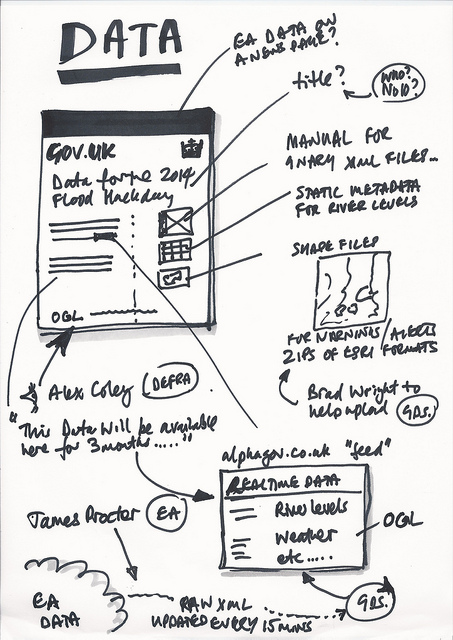
Output from Needotron


I'll end this post back with Mr O'Neill and the GDS.

I wonder to what extent healthcare figured in the flood deliberations?

It seems that an output from the Needotron may not be so far removed from h2cm?

Happy St David's Day too - in the closing minutes here!


Monday, February 24, 2014

Drupal in Education: Richer experiences with Drupal 7 and H5P (HTML5 Package)!

The H5P module is finally available for Drupal 7! Now you can download H5P and H5P content types empowering you to create great rich experiences for your users to enjoy. Content like interactive videos, presentations, drag and drop, fill in the blanks questions and more are available from h5p.org.

We have received many enthusiastic requests for an H5P D7 module and we are proud to present the newly released version. You can find it available on the H5P project page.

You create the content with your web-browser and the content will work just as great on smartphones and tablets, as on you desktop computer.

Below is a summary of the H5P content types that are currently available for Drupal 7 (and all other platforms we support).

Interactive video
Perhaps the most powerful tool in the H5P toolbox. Upload videos and animations, and make them interactive by adding quizzes, images and text along the way.

Presentation
Create a presentation slideshow with interactions along the way. Add text, images, video and various quiz tasks to your presentation.

Boardgame
A level based board game where the user must complete tasks in various levels to win. Depending on whether the user completes or fails, a video is shown at the end of each level. The game is fully customizable.

Flashcards
An image is displayed and the user has to insert a corresponding text by using the keyboard. The card turns to display the solution. Several cards can be added in a sequence.

Fill in the blanks
Create sentences and leave out words, adjectives, conjugations etc. for the user to complete by typing the missing text on the keyboard.

Question set
Your staple quiz question tool. Add a mix of multiple choice questions, fill in the blanks & drag and drop tasks.

Contact button
A simple widget that allows users of your website to get in touch with you using their preferred channel, such as email, Facebook or Twitter.

For those that are new to H5P, H5P is short for HTML5 Package, and is a simple way to create and share rich and interactive web content. H5P is modular and consists of several content types and applications, perfect for use in e-learning and advertising.

See all the content types in action on H5P.org

With H5P you can:

  • Export and import content types and applications between sites, e.g. from a Joomla site to a Drupal site.
  • Use existing content types and applications, and build on these to create your own content.
  • Create and edit rich web content directly in your browser. No technical skills are needed.
  • As a developer, build upon existing content types and applications, or create you own from scratch. Share your work with the rest of the world on the h5p.org!
Source: https://groups.drupal.org/node/409763

Looking forward this next weekend and London for DrupalCamp.

Saturday, February 22, 2014

Call for contributions: 'Interpreting the Information Age' new avenues for research and display

November 24 – 26 2014
Science Museum, London

In autumn 2014, the Science Museum will open a new permanent gallery, Information Age. The gallery will expose, examine and celebrate how information and communication technologies have transformed our lives over the last 200 years. To mark this launch, the Museum is hosting a three day conference which will discuss how the history and material culture of information can be made relevant for today’s audiences.

From the development of global telegraph and computer networks, the creation of constellations of satellites that silently orbit our earth, and the growth of radio, telephony and cellular networks; each technology can be understood through a network of people, practices, devices and infrastructure. Approaches which focus on overly technical histories, individual innovation or inevitable progress fail to acknowledge the role of users in the history of technologies and marginalise a majority of readers or visitors who are engaged by human stories and social history. By contrast, Information Age has taken a user-centric approach, not only in the stories and objects selected for display, but in the way the gallery has been designed and developed. Participation with a diverse range of audiences has been at the heart of the process, providing new avenues for research, fresh perspectives on our collections and original ways to interpret the information networks of which we are all part. We invite papers that include insights from researchers, academics, museum professionals, community partners and participants.

The conference structure is proposed to include:

Day 1: New avenues in the history of information and communication technologies

Day 2: Interpreting and displaying the history of information and communication technologies

Day 3: Reflections on the process and practicalities of participatory practice

We are especially interested in papers that address the following themes, but are happy to consider other proposals. Please contact the organisers for guidance. 

New avenues in the history of information and communication technologies

  • From devices to networks: taking a broader approach to the history of information and communication. How has historical analysis expanded our understanding of information networks as inherently social-cultural phenomena? How can museums move beyond displays of devices, to reveal how networks unite people, places and ideas?
  • User-driven innovation: technological change does not only occur at the moment of invention, but in the hands of users, who adapt and appropriate new technologies. What tools and techniques can we use to reveal previously hidden user stories?
  • Spaces and places of information: How are institutions celebrating the local and global stories in the history of information and communication technology? What partnerships are being formed to support this?

Interpreting and displaying the history of information and communication technologies

  • Collecting information: what are the challenges of collecting the material culture of information and communication? How can opening collecting processes to wider audiences enhance understanding, and what are the benefits for both researchers and the wider public?
  • Displaying information: innovative approaches to the history, present or future of information and communication technologies.
  • Preserving information: the challenges for museums, libraries and archives in preserving our increasingly digital lives.
  • Whose story? As institutions strive to tell the story of information and communication technologies from the perspective of users and co-producers, how can we ensure that we are representing a diverse range of voices? 

Reflections on the process and practicalities of participatory practice

  • Breaking down barriers: what approaches are being taken to ensure museum collections are accessible to wider audiences? What interpretation approaches can be adopted?
  • Collaborative interpretation and design: how are institutions and audiences working together in exhibition development? What are the benefits to the museum, participant and ultimately the gallery visitor? What are the perceived risks to the museum’s authority?
  • Ensuring legacy: how do museums capture the process of participatory practice in a meaningful way? What evaluation methodologies can be adopted? How can museums support partners and participants in the longer-term? 

How to contribute

To submit a proposal, please send a 250 abstract outlining the topic of your paper, along with a 100 word biography, to [ research AT sciencemuseum.ac.uk ] by Friday 28th March 2014.

We welcome proposals which could be delivered either as paper presentations or for consideration as panel discussions with other contributors, along with proposals for workshops which practically address the conference themes.

My source: HUMANIST list

Wednesday, October 10, 2012

Hello? University of Northumbria at Newcastle - and others ..

Although school terms and university semesters vary especially between the northern and southern hemispheres, I can often tell when a new academic year is upon us again. Not only that, but possibly a new cohort of nursing or other health care related students.

The signal is the visitors to the old website. The past week or so there's been a lot of traffic from University of Northumbria at Newcastle. Only the institution is listed, not individuals. And don't get excited about the numbers: we are talking 10s here not 100s and 1000s.

Those tens (still greatly appreciated!) could be even more significant if I could connect with someone. So if you are revisiting this blog and from UoN or any other institution please get in touch: h2cmng at yahoo.co.uk

I would really help to hear your views on:

What prompted your visit?
Who are you - what's your role, course and stage of learning?
How are you using the site and model (if at all) is it:

  • as part of an exercise merely identifying models of nursing, aspects of nursing theory...?
  • as part of a piece of (reflective) written work?
  • applying the model to a specific context, case study, nursing (or other) discipline?
  • as a critical nursing or informatics exercise?
  • as an initial exercise to help assure holistic care?
  • some other discipline and purpose perhaps?
What would you expect to find, what is missing?
What is useful and should be archived?
What sucks!
Is there something that you could add to a future site?
Do you have work on h2cm that I could highlight here on W2tQ?

There are many rich seams to dig here and if we can work together we might find some light.

There is someone at UoN I will approach if they are still there: quite possibly!

Friday, July 02, 2010

Drupal musings 6: Content types - Reflection!

Does anyone have any experience in using established models of reflection in:

  • education (nursing, public health, information technology)
  • practice
  • therapy
  • supervision
  • carer support
  • eHealth
  • ... ?
If so please get in touch [h2cmng at yahoo.co.uk].

In its initial downloaded state Drupal has two content types:

  1. story
  2. and page.
The option then is to use these which would be rather limiting. Add to these two by enabling other core modules. Drupal administrators can extend the core functionality by adding other modules which provide new content types.

You can also roll your own. A key content type for the new site is one that uses the health career model to facilitate - reflection - one of the original purposes for the model.

This also provides an opportunity to adopt a model of reflection that is itself supported by research. This may be Gibbs:
  • Stage 1: Description of the event
  • Stage 2: Feelings and Thoughts (Self awareness)
  • Stage 3: Evaluation
  • Stage 4: Analysis
  • Stage 5: Conclusion (Synthesis)
  • Stage 6: Action Plan
John's Model of Structured Reflection
  • Aesthetics – the art of what we do, our own experiences
  • Personal – self awareness
  • Ethics – moral knowledge
  • Empirics – scientific
  • with its Cue Questions
Smyth’s Framework for Reflection on Action
  • Activity
  • Inform (Analysis)
  • Confront (Self awareness)
  • Reconstruct (Evaluation and Synthesis)
There are many others. ...

Once the hedgehog-headlights glare has passed, this is going to be a really interesting project. There must be a way to link one (or more) of the above with each of h2cm's care (knowledge) domains. There must be a way to create a first version that can be extended and support other content types. The possibilities are really exciting - hence the glare (reflected of course!).

Tuesday, June 15, 2010

Drupal musings 4: Modules and the nursing masquerade

Periodically I go through the list of available modules for Drupal both the current version and that in development - at present that is versions 6 and 7.

Reading the descriptions and reflecting on a module's functionality it is surprising where they can take you. Some of the modules stand out, prompting thoughts of potential applications. This is not just a case of descriptions fulfilling their role. Some of them shout out just by virtue of their name.

'Organic groups' will change to 'Group' in Drupal 7. If there is one thing about groups in nursing they are organic - whether that's disciplinary groups, groups held by nurses. Groups are a basic part of the structure and content of Hodges' model, and so it may be well worth factoring in the Group module from the outset.

As I read about the Masquerade module:

The masquerade module is designed as a tool for site designers and site administrators. It allows a user with the right permissions to switch users. While masquerading, a field is set on the $user object, and a menu item appears allowing the user to switch back. Watchdog entries are made any time a user masquerades or stops masquerading.

I thought of the tribes and camps within nursing and health care in general. Have we moved on? Well OK, let's see how holistic, integrated, multidisciplinary nursing is these days: picture then the nurse in medicine, surgical, operating theatre acting as a mental health nurse, learning disability nurse and vice versa?

Can we spot the imposter? One suspects (surely) that given a technical case study, care scenario then the game would be up very quickly. As to basic nursing care situations, there might be an interesting party there?

Original image source: http://www.mchooksinc.com/catalog/index.php