Hodges' Model: Welcome to the QUAD: critical thinking

Hodges' model is a conceptual framework to support reflection and critical thinking. Situated, the model can help integrate all disciplines (academic and professional). Amid news items, are posts that illustrate the scope and application of the model. A bibliography and A4 template are provided in the sidebar. Welcome to the QUAD ...

Showing posts with label critical thinking. Show all posts

Saturday, October 10, 2026

Laws, Rules, Promises & Campaigns

They are not all represented on W2tQ, but many have been posted over the years. Campaigns launched in the aftermath of avoidable deaths within NHS delivered care. The initiatives seek to translate grief into positive affirmative action by making a difference to patient safety, the quality of professional care, policy and funding in some instances. At least drawing attention to the latter.

It is staggering that staff need to be 'reminded' of what should be professional, practice-based, and philosophical (personal - team, ethics and ethos, and values integral to nursing, and healthcare interaction that should be integral and ingrained. 

I thought "What's my motivation?" was a theatrical cliché?

Poppy's Promise is a commitment to making every healthcare experience more compassionate, respectful and person-centred. It supports staff to work in partnership with patients, families and carers, ensuring every voice is heard and every person feels valued.

Oliver's Campaign: The Oliver McGowan Mandatory Training on Learning Disability and Autism is named after Oliver McGowan, whose death shone a light on the need for health and social care staff to have better training. The Health and Care Act 2022 introduced a statutory requirement that CQC-registered providers must ensure their staff receive learning disability and autism training appropriate to their role.  

Jess’s Rule makes sure GPs take a ‘fresh eyes’ approach with patients, making them think again to diagnose and catch serious illnesses earlier. Jess’s Rule – Three Strikes and we Rethink - was launched in England on the 23rd September 2025 by Department of Health and NHS England and in The Isle of Man on the 31st March 2026 by Manx Care. It is endorsed by the Royal College of General Practitioners.

Martha’s Rule helps us notice early signs that someone may be deteriorating and gives you the right to request a rapid review if you’re worried that your or your loved one’s condition is getting worse. This may include a review by the Critical Care Team. Sometimes small changes happen before they show in tests. These can be early warning signs. Martha’s Rule makes sure we listen to concerns and act on them.

Nobody should be separated from the people they love and who care for them. John's Campaign works for the right of people with dementia (and other disabilities or individual needs) to be supported by their family carers — in hospitals, in care homes, and wherever care happens.

Dáithí's Law: Dáithí Mac Gabhann was born in October 2016 with a condition called Hypoplastic Left Heart Syndrome, which basically means that Dáithí was born with half a working heart with the left side not forming correctly in the womb. More information on HLHS can be found here. Dáithí has now been waiting for the gift of a new heart for over 7 years.

Activism is not restricted to patients, parents or guardians but key campaigns have followed through staff efforts:

A message from Kate about the campaign…
“Hello, my name is Dr Kate Granger MBE and I’m the wife of Chris and the co-founder of the #hellomynameis campaign”

⃟ 

The initial website for Hodges' model 1998-2015 and now archived, featured four pages of links to resources associated with the domain they represented. The SOCIOLOGY links included:

Patients, Carers & Self-Care

individual
|
INTERPERSONAL
: SCIENCES             
humanistic ------------------------------- mechanistic
SOCIOLOGY : POLITICAL   
|
group
Patient - Nurse ...


Patient - Nurse ...


Guardian - Parent

Family

Carer


Government

Funding

Policy makers


In Hodges' model, if neglect, accidents, untoward - serious - never incidents, what is complex, complicated, preventable signify anything; it is the collapse of a situation to the individual-group axis.

For the people involved they will simultaneously hear and feel a catastrophe.

Armed with Hodges' model, plus early insights into informatics, the oscillation between the person on your caseload, and not just beyond the spouse, partner and family but out to the political-zone of aggregation that is your caseload, the local and national population and statistical reports has always been fascinating.

Viewed theoretically, or practically the vertical axis of Hodges' model appears simple, and yet holds great power. A gift of abstraction and dramatic effect - for actor and audience alike. As an 'actor' we can see  our practice and its character humanistic - mechanistic played-out literally through the horizontal axis. Before we act, we can reflect upon the quality and humanity of our care. The audience, peers, families, managers, community, commissioners can also follow the 'narrative', (or lack of it!). Is there a paradox here in these virtual-digital times that the what is really material in care and caring is missing? We must hope the coroner does not need to attend [the play], being able to concentrate on other matters.

Previously: 'compassion' : 'communication' : 'safety' : 'listen' : 'motivation'

Friday, October 09, 2026

POISONING THE WELL AND SILENCING IN ARGUMENTATION: ONLINE WORKSHOP - Student Commentators Needed!

WE ARE LOOKING FOR STUDENT COMMENTATORS FOR THE ONLINE WORKSHOP ON POISONING THE WELL AND SILENCING IN ARGUMENTATION.

The expressions of interest from student commentators deadline is November 15th (the submission deadline for the associated 
Topoi issue is 15th February) PLEASE SEE BELOW FOR DETAILS!


What is this about?

Among the fallacies traditionally regarded as particularly dangerous, poisoning the well stands out. The literature describes poisoning the well as an argumentative move that consists in providing information about an interlocutor to diminish the credibility of what they have already said, or will say, thereby “poisoning” their ability to contribute - silencing them. Despite the fallacy’s importance, work on it and on silencing in argumentation is limited. 


The Poisoning the Well and Silencing in Argumentation Online Workshop (and the associated call for papers at Topoi) will contribute to filling this gap.


Student Commentators Needed!

We are now looking for student commentators! Student commentators will receive the paper they comment on two weeks before the workshop. Commentaries will be ten minutes long.


Look here (scroll down a little) to find the papers that will be presented at the workshop: 
Critical Thinking and Civic Engagement Lab
.


If you are interested in commenting, please contact Amalia Haro Marchal/Katharina Stevens under 
ahmarchal AT fcsh.unl.pt and katharina.stevens AT uleth.ca by November 15th!


Make sure to state your first, second and third choice for papers to comment on with a short explanation, we will assign based on interest and compatibility!


My source (and via KS): Philos-L "The Liverpool List" is run by the Department of Philosophy, University of Liverpool https://www.liverpool.ac.uk/philosophy/philos-l/ Messages to the list are archived at http://listserv.liv.ac.uk/archives/philos-l.html.

Wednesday, September 16, 2026

Philosophical Counselling Reading Group [and Hodges' model]

The discovery of a reading group on philosophical counselling (PC), through University of Liverpool, continues to prove helpful; to utilise professional experience, that included counselling, family therapy, cognitive therapy in psychoses, and practical experience as a mental health nurse (in-patient and community). There is overlap with Hodges' model, but it's fascinating and rewarding to listen and learn from practitioners of PC. As noted before, I was aware of PC through two popular philosophy magazines. This time around we read:

Ran Lahav, “Philosophical Counseling and Self-Transformation,” in Philosophy, Counseling, and Psychotherapy, eds. Elliot D. Cohen & S. Samuel Zinaich, Jr. (Newcastle upon Tyne: Cambridge Scholars Publishing, 2013), 82.

Abstract

This paper presents my approach to philosophical counseling, which is geared towards self-transformation, and is inspired by important thinkers throughout the history of Western philosophy whom I call transformational thinkers. I take from these thinkers the realization that our daily life is normally confined to rigid and superficial attitudes towards ourselves and our world. This is because individuals’ everyday attitudes are based on limited understandings of life, which form what I call the person’s perimeter, or perimetral worldview. The goal of philosophical counseling, as I see it, is to help counselees transcend their constricted perimetral worldview, or in the language of Plato – to realize that they are imprisoned in a “cave,” and then to step out of it towards a fuller reality. A case study is presented to illustrate the two main stages of the counseling process. 

I know there is the (biblical) phrase 'Seek and you will find'; but there is also the notion of seeing only what you seek, and missing other content - contexts. This is marked in beliefs and the development of delusional ideas. 

Of interest to me, Lahav discusses (as indicated above) a person’s perimeter, or perimetral worldview. 

We still hear how difficult it is for people to access help. I wondered (again) about referral pathways for PC? The nature of the person's problems that prompts them to seek help? Lahav acknowledges the complexity here. Speaking of 'prompt', of course now there is AI in the mix. Lahav points out how PC does not quite have the foundation and hence theoretical impetus (and rigour?) that Freud provided to psychoanalysis and psychotherapy. 

PC is, however, to some extent a broad field: '... philosophical practice has come to include several different formats in which it is practiced: one-time workshops for the general public, philosophical retreats, long-term self-reflection groups, the philosophical café, and of course philosophical counseling'. 

I wonder if philosophical counsellor's could have a role, post AI / agentic ai interventions. This could provide a step-down assurance, and be rolled into 'treatment / intervention programmes'. This could help retain the humanistic element of duty of care, underscore the person_al in care architectures/systems and provide a step-down - just in-case AI has missed, or upset something? The acknowledged strength of AI in not being subjective is balanced. Although evidence also points to misogynistic responses derived through what can be biased, and prejudiced learning sources: thus a reflection of 'society'.

In the introduction, more encouragement with reference to situated, a general map, and basic - fundamental aspects. There are (at least) two domains: 'the domain of philosophical discourse and the domain of everyday life and predicaments'. 

Hodges' model was created to facilitate the FIRST approach in PC, the Critical Thinking Approach, with an associated subtype of Problem-Solving Approach. 

It was also designed to help with the theory-practice gap. Lahav describes this in the how and what of philosophy and PC itself. I wondered to what extent if the approach of PC 'leave out the more important “what” of great philosophies.' then would a counselee be denied avenues to learning, as we may be drawn to specific philosophical schools of thought, and crucially reasoning?

The SECOND approach to PC is the Edification Approach. The author has adopted this second approach in practice.

Guess what? Yes, you've got it. Hodges' model can actually close a circle here. Or, more accurately help sustain the reflective, reflexive, recursive ... reasoning loop as needed. Another objective of Hodges' model is to produce reflective practitioners, critical thinkers and lifelong learners.

A take-away for me is the 'perimeter and the perimetral worldview'. A search for 'perimeter' here on W2tQ is null.^ I'm also wondering about transformation (in the title) and throughout the paper.

There may be an example here were a domain of Hodges' model can itself reflect the model, as in the Intra- Interpersonal domain below.

Lahav employs a case study to illustrate his thought and practice. The discussion really helped improve my reading and understanding of this.

individual
|
INTERPERSONAL
: SCIENCES             
humanistic ------------------------------- mechanistic
SOCIOLOGY : POLITICAL   
|
group

Psychology   | Philosophy(-isms)
________________________________
Psycho-Social|  Psychotherapies 

basic - fundamental

general map


case study

referral pathways

^'Peripheral' does feature in posts.

Tuesday, August 11, 2026

Philosophical Counselling - Reading group: Taylor 2002 'Central Value of Philosophical Counseling'

In addition to Kantian Desert (this p.m.) it is proving helpful to join a reading group on Philosophical Counselling. Being able to combine clinical and therapy experience* with philosophy is a welcome and rather overdue development. The reading for tomorrow (online for me I hope) is: 

Taylor J.S. (2002) The Central Value of Philosophical Counseling. International Journal of Philosophical Practice. 1 (2):1-9.

ABSTRACT: The title of this paper is deliberately ambiguous. It could refer either to the central value that philosophical counseling has for philosophy in general, or else it could refer to something (such as personal autonomy, or personal well-being) that philosophical counselors believe to be of value, and that they are able to help their clients pursue. In fact, this paper will be addressing both of these topics in order to demonstrate
the links that hold between them, and, in so doing, will attempt to further elucidate the nature of philosophical counseling itself.

Taylor (and related papers) also joins the dot (object?) that is Hodges' model, for example (with my emphasis):

'In this vein philosophical counseling is viewed as a Socratic drawing out of the knowledge that the client already possess, and that may be revealed through the careful questioning of a well-trained practitioner of the elenchic method.' pp.1-2.

I've long used guided discovery, by which the students (usually)/audience co-produce the model through a discussion.

'However, the difference between Socrates as a seeker after truth and the philosophical counselor as a professional who helps his or her client map out his or her own world-view in order to address particular problems that he or she is concerned with should not be overstated.' p.2.

'Furthermore—and perhaps most galling of all to philosophical counselors—academic philosophers often seem to view philosophical counseling as not being “real” philosophy at all, but more perhaps a species of social work, or an unsophisticated variant ofpsychotherapy.' p.4.

'Again, this information may be used by the counselor to help the client reflect more acutely upon her own views concerning the morality of abortion.' p.6.

'Given these two senses of “autonomy” it appears that the philosophical counselor is most concerned with enhancing autonomy in the second, Millian, sense of this concept. This is because philosophical counselors often try to aid persons in making decisions (or discoveries) about what it is that they really want to do, what their personal value-system or world-view really consists of.' p.11. 
(A contribution to person-centredness? Critical thinking is also noted by Taylor.)

 See also: https://www.igpp.org/english

 *Including, counselling, family, cognitive and behavioral therapies, plus psychosocial intervention.

Thursday, August 06, 2026

Writing - next project - parts 1 & 2 in search of titles

Currently, I'm pulling together what have become two drafts, that consider Hodges' model as a mathematical object. Part 1, put-down in the new year, and picked-up now; a good start as there is more than I thought. There's a cost of that, of course? Part 2 is a gathering of tatters. Well, it is an effort.

As I don't work in academia where connections may more readily follow, can I claim that Hodges' model also does work? That the model can help in finding potential collaborators and co-authors? Once the fundamentals are understood, and again - it's not rocket science - for some people thankfully, something clicks. It clicks absolutely where it is should.

The model can be quite addictive in a positive way, as one of many among the vast array of assessment, evaluation and other tools. It is complementary.

So, with much needed support to follow, including from previous publication (please see the bibliography in the sidebar), plus April's WCCS26 conference, I'm working away to share them in 12 days or so. Then the work really begins as I benefit from collegial input, new perspectives, views, critique and the reward of constructive debate, experience and knowledge of others. I hope the drafts reward the curiosity that's been displayed. It is still quite exciting. Hoping too that students and early career researchers might pick this up ...

Tuesday, August 04, 2026

Brief introduction to Hodges' model

Hodges’ model is a conceptual framework of universal value in theoretical work, practice, policy and care management. While this model is a product of the health-education sector, it is global in scope, taking in the current situation, history and future as complicated by scientific, socio-political, technology and climate change. Practice-based, Hodges’ model is a tool simple in form and yet powerful in terms of how it can help users frame the problems and opportunities of the 21st century. The model was originally taught in studies for the post-registration certificate of care of the mentally ill in the community and other courses. Student assessment included the completion of a case study (vignette), demonstrating competence in application of the model and its embedded (implicit) values.

Access to education, especially early years, is emphasised as foundational for personal and community growth and development. For individuals this can set the course for lifelong learning and an ability to contribute to society and the economy. Given this primary challenge, global institutions and policy makers point to the need for curricula that are relevant. In turn employers and industry leaders need a (global) workforce who are: 

  • reflective practitioners;
  • critical thinkers;
  • able to see the ‘big-picture’; and focus on detail and priorities when needed (risk and triage);
  • decompose a problem, but also integrate (care);
  • work as team-members;
  • and extend across several literacies.
These challenges are ongoing for education (being health literate, so as to address personal, social, health and economic education, and the sustainable development goals), and increasingly climate impacts.

Sunday, July 26, 2026

The Line(s)

Foresight, hindsight, sight itself and that illusory association with the line of time is a fascination for us all. No doubt, as a result of the hardwired analogue found in the lifeline and our ultimate fate. Hodges' model acknowledges all these lines; concrete and abstract. The work and health careers, an individual's education career (where accessible / permitted) now lifelong learning.

Abstract things seem tenuous, indistinct, maybe lost somewhere in theory. Concrete on the other hand, is physical, tangible. 

Hodges' model can cover paper with lines, two of them ideally. The model can then be applied in practice.

There is then an interplay between abstract and concrete; between which data, information and knowledge flows, uncertainty reduced. Scope and scale become clearer once assessment, planning, intervention and evaluation are concurrent.

This applies to all lines, if they are not destined to be covered in sand.

My source:  
End of The Line: how Saudi Arabia’s Neom dream unravelled, FTWeekend: 
https://ig.ft.com/saudi-neom-line/
 
See also: 'design' : 'architecture' : 'line'

Thursday, July 09, 2026

Leapspace? Why not ...?

Referred to a paper in an email: https://doi.org/10.1016/j.jclinepi.2026.112401.

- I noticed an invitation to try Leapspace. 

So I leapt (with much editing - for formatting here). ...


Copilot steps

Creating a plan to respond to your query

Performing search for foundational documents
Performing keyword search
Using data from Scopus
("Hodges' model" OR "Hodges model" OR "Hodges' health career model" OR "health career model" OR "care domains model") AND (nursing OR healthcare OR "health care" OR education) AND (domain* OR component* OR framework OR concept* OR definition*)

Performing natural language search
Using data from Scopus
What are the conceptual definitions, domains, and components of Hodges' model in nursing and healthcare education?

Performing keyword search
Using data from Full text
("Hodges' model" OR "Hodges model" OR "care domains") AND (diagram* OR figure* OR visual* OR schema) AND (teach* OR education OR curriculum OR learning) AND (critique OR adaptation* OR application*) AND (method* OR framework OR discussion)

Performing natural language search
Using data from Full text
How is Hodges' model represented, taught, and adapted in nursing or healthcare education, including diagrams and critiques?

Performing keyword search
Using data from Scopus
("Hodges' model" OR "Hodges model" OR "care domains framework") AND (application* OR use OR implementation OR practice) AND (critique* OR limitation* OR adaptation* OR evaluation*) AND (nursing OR healthcare OR "health care")

Performing natural language search
Using data from Scopus
What applications and critiques of Hodges' care domains framework have been reported in nursing and healthcare practice?

Done

Generated by LeapSpace, Thu Jul 09 2026

Hodges' health career - care domains - model

Hodges’ Health Career – Care Domains – Model is a generic, practice-based conceptual framework for health and social care that organizes thinking into four knowledge/care domains: science, political, sociology, and interpersonal. It is presented as broadly applicable across healthcare contexts and is used to structure reflection, critical thinking, and care planning. [1] [2] [3]

Core domains

Domain

What it covers

How it is used

Science

Cause and effect, evidence, costs, benefits, and trade-offs

Helps frame the “hard” evidence side of care and service decisions. [1]

Political

Policy, systems, and structural influences on care

Helps connect care to wider health and social policy contexts. [1] [4]

Sociology

Social context, culture, stigma, and relationships

Helps explain how social factors shape health and illness experiences. [1] [5]

Interpersonal

Therapeutic relationships, patient/carer engagement, and human interaction

Supports person-centred and relational practice. [1] [2] [6]

What the model is for

  • It is described as universal in structure and adaptable to many healthcare settings, including informatics, dementia/palliative care, forensic mental health, and oral health. [2] [3] [4] [7] [8]

  • It helps practitioners map concepts into domains, build a mind-map-like structure, and support reflective practice and critical thinking. [3] [9]

  • In forensic mental health nursing, it is proposed as a way to guide assessment, decision-making, and recovery-oriented practice. [2]

Bottom line

Hodges’ model is best understood as a four-domain lens for integrating clinical evidence, policy, social context, and relationships into one framework for care and reflection. Its main value is not in prescribing a single care process, but in helping users think more holistically and systematically about health problems and care systems. [1] [2] [3]

Confidence level: High — multiple sources consistently describe the model’s four domains, generic structure, and broad healthcare applications.

References

  1. Fox, Siobhán, FitzGerald, Carol, Harrison Dening, Karen, (...), Timmons, Suzanne (2017) Better palliative care for people with a dementia: summary of interdisciplinary workshop highlighting current gaps and recommendations for future research. BMC Palliative Care. https://doi.org/10.1186/s12904-017-0221-0

  2. Doyle, M., Jones, P. (2013) Hodges' Health Career Model and its role and potential application in forensic mental health nursing. Journal of Psychiatric and Mental Health Nursing. https://doi.org/10.1111/j.1365-2850.2012.01961.x

  3. Jones, P., Wirnitzer, K. (2022) Hodges' model: The Sustainable Development Goals and public health - Universal health coverage demands a universal framework. BMJ Nutrition, Prevention and Health. https://doi.org/10.1136/bmjnph-2021-000254

  4. Bettiol, S., Jones, P., Onyedikachi, H.A., Kernohan, W.G. (2026) Bridging Gaps in Oral Health Frameworks: Mapping With Hodges' Health Career - Care Domains - Model. Journal of Public Health Dentistry. https://doi.org/10.1111/jphd.70034

  5. Jones, P. (2008) Exploring serres' atlas, Hodges' knowledge domains and the fusion of informatics and cultural horizons. Social Information Technology: Connecting Society and Cultural Issues. https://doi.org/10.4018/978-1-59904-774-4.ch007

  6. Merritt, M.K., Procter, N. (2010) Conceptualising the functional role of mental health consultation-liaison nurse in multi-morbidity, using Peplau's nursing theory. Contemporary Nurse. https://doi.org/10.5172/conu.2010.34.2.158

  7. Jones, P. (2009) Socio-technical structures, 4Ps and hodges' model. Nursing and Clinical Informatics: Socio-Technical Approaches. https://doi.org/10.4018/978-1-60566-234-3.ch011

  8. Jones, P. (2011) Socio-technical structures, 4Ps and hodges' model. Clinical Technologies: Concepts, Methodologies, Tools and Applications. https://doi.org/10.4018/978-1-60960-561-2.ch215

  9. Jones, P. (2025) A Generic Model and Conceptual Framework to Prime Curiosity Across Health and Social Care Disciplines to Facilitate Lifelong Learning. Journal of Evaluation in Clinical Practice. https://doi.org/10.1111/jep.70252

Follow-up Suggestions 

What are the key components of Hodges' health career care domains model?

How does Hodges' model apply to interdisciplinary health care practices?

What are the implications of Hodges' health career care domains model for patient-centered care?

Monday, June 22, 2026

Maker-field: More than just a point* on a map

Ashton-in-Makerfield has been in the news of late. With Andy Burnham MP championing the communities of the north; local issues, socio-economic gaps, needs and everyday lived experience up North.

But Makerfield holds much more as a veritable rabbit-hole supporting lifelong learning, character development, reflective practice and critical thought:

 'maker' - 'field'

* - a political constituency.

Previously: 'map'

Saturday, June 06, 2026

"step inside" TO "think outside"

  
individual
|
INTERPERSONAL
: SCIENCES             
humanistic ------------------------------- mechanistic
SOCIOLOGY : POLITICAL   
|
group


             c/o Somerset House, 6th June 2016.

Saturday, October 18, 2025

Just imagine ... caseloads, payloads and careloads

Just imagine ... no, not like that - really imagine!

You are in a situation. Unsurprisingly, let's say it's in health, or social care. We find ourselves in a care or nursing home, on a ward, or in the individual's home, even if the patient does not currently recognise it as such.

The patient is mobile. That is, and isn't a problem.

Physically, apart from thoughts about a chest, or urine infection, yes they are mobile, but they're also confused - disoriented.

We are concerned about their safety. 

Noisy, increasingly agitated, they are making it clear they want to leave.

Their carer, family, or staff are trying to limit the patient / resident's access to the exits, be that the front, or back door, the spare room, their room, or main entrance. They are not in agreement about where they need to be. Persuasion and distraction aren't working either. They appear to lack the level of mental capacity required to decide for themselves what needs to happen.

It is one thing to have this assessment of the situation running through one's mind; but quite another to 'pick up' a care concept mentally and carry it over the care (knowledge) domains of Hodges' model.

Hodges' Health Career - Care Domains - Model
Try it for yourself ...

Have a think about the following care concepts: mobility, capacity, consent, confusion, mobility, liberty, a locked-door while spouse/partner goes shopping, and safeguarding? 

As we engage in critical thinking, these concepts have a literal payload. They carry varying degrees of informational value, salience that helps us prioritise, what else do we need to factor in, what help is needed, and when; how do we  decide what to do?

As a concept is evaluated against Hodges' model, it changes. It is as if it morphs subtely, or starkly as other concepts, by association, are brought into play.

This process is influenced in so many ways; our training to date, our prior experience, biases and cultural baggage we might also carry, who else is present (this is of course potentially both a positive and negative), past and current role-models, our (team's) preparedness - what to do if .., teamwork, access to leadership (who is 'duty'?), and our confidence in them (Oh no!). And, them in us.*

Vitally, there is the small matter of our understanding, attititude and response to the person in-front of us. 

The delivery of healthcare is often stressed as emotional labour. Whether we use Hodges' model or not, perhaps the labour, the physical and psychological work involved, is experienced through carrying and feeling the careload. A reason too for supervision.

*Do seek help - advice if needed.

Further reading [ please contact me if needed - h2cmng AT yahoo.co.uk ]:

Jones, P. (2025), A Generic Model and Conceptual Framework to Prime Curiosity Across Health and Social Care Disciplines to Facilitate Lifelong Learning. Journal of Evaluation in Clinical Practice, 31: e70252. https://doi.org/10.1111/jep.70252

Jones, P. (2025). A Conceptual Mapping Exercise of Deprivation of Liberty Safeguards in Residential & Community Care Using Hodges' Model and Threshold Concepts. Journal of Evaluation in Clinical Practice, 31: e70085. https://doi.org/10.1111/jep.70085

Thursday, October 09, 2025

The creation of Hodges' model: "All aboard!" 200 years

28th May 1997
When I interviewed (Mr.) Brian Hodges in Manchester on 28th May 1997, I learned he had created the model in 1983, mainly while commuting to Manchester Polytechnical College by train from (Totley) Sheffield, and back. 

I wish I could have been sat by him, to strike up a conversation. Although (among other points) I'm not sure how much he relied upon, or was chasing down the visual side of the model, with some skethces and drawings. So would I have noticed him thinking, drawing, crossing-out, and labelling? This I would have noticed, not that I have a habit of 'spying' and being nosey. Although nowadays, with the repeated announcements on the trains: ‘See it. Say it. Sorted’; perhaps I should?

In 1983 I was a general student nurse (SRN), and still over a decade away from becoming a community psychiatric nurse in 1985, and being (well) taught by Brian and colleagues in 1987.

I also enjoy a (reliable!) train journey, and used to read a lot travelling from the NW England through the London underground (Euston-Waterloo) to Plymoth, and later to Portsmouth in the 1970s. Happy days, then and today; with the railways reasserting their relevance. A quality shared with a certain little-big model I know.

Individual
|
      INTERPERSONAL    :     SCIENCES               
HUMANISTIC =========================  MECHANISTIC      
 SOCIOLOGY  :    POLITICAL 
|
Group

Rail 200

Nationalised - Private
Private - Nationalised
Charity - CIC


Saturday, October 04, 2025

Argumentation - Journal: Informal Logic

Early evening (UK) yesterday, I joined a further webinar on argumentation. Through the speaker, and discussion, I was led to a journal

INFORMAL LOGIC

It is in informal logic that I see a role for Hodges' model. The model's structure providing a universal foundation of knowledge domains to be applied in practice. The bonus of this journal, is its being open access, a search revealed the following paper:

Mark Weinstein. Towards a Research Agenda for Informal Logic and Critical Thinking. XII.3, Fall 1990.
https://ojs.uwindsor.ca/index.php/informal_logic/article/view/2609

'This paper recommends that the recent concern with informal logic and critical thinking be redirected from its general philosophical focus and towards a greater appreciation of the particulars of practice in the various domains of human understanding. The redirection recommended is prompted by the central role that critical thinking and informal logic can be seen to play in meaningful educational reform, especially at the undergraduate level.' 

'Critical thinking, similarly, should be redirected from concerns typical of philosophers and towards issues and approaches more representative of critical thinking both within and across the wide range of disciplines represented by the course of undergraduate studies.' p.121.

'The sense that there is an internal relationship between arguments, argumentation and domains of knowledge persists despite attempts to show relevant and useful notions of critical thinking that are generally available for instruction and neutral in respect of the disciplines. The resolution of the issues generated by these competing views, requires that reflective practitioners of the disciplines, students of the history of ideas, methodologists and specialists in teaching increasingly engage in the task of generating and organizing the data upon which an informed and adequate notion of critical thinking across the disciplines must be based.' p.125.

I believe that the structure of Hodges' model provides a basis for Weinstein's ordinary argumentation and stylized argumentation.

For me (at present) ordinary argumentation, is 'open' argumentation. That is, without differentiation in (using) Hodges' model. I might (well, I would) have Hodges' model in mind, but choose not to apply it. As per the paper, stylized argumentation is using Hodges' model and doing so in a multidisciplinary manner - within my discipline. 

The problem and challenge for nurses and other health professionals is the need, if:

  • person/patient-centred;
  • integrated;
  • and holistic - having regard for parity of esteem (mind - body)

- not to stray, extend the disciplinary scope, while working within one's professional scope.

In highly effective multidiscioplinary teams that touch on being transdisciplinary (hybrid?), can experienced team members have insight into the stylized argumentation of their colleagues?

Ack. ​Argumentation network of the AMERICAS - https://www.argnet.org/ethics-of-arg.html

Previously: 'critical thinking'

Tuesday, April 15, 2025

The 'animal' in Hodges' model ii

The two pairs of eyes in Hodges' model are provided through the model's two axes

HORIZONTALLY: the humanistic and mechanistic.

VERTICALLY: the individual and the group.

Hodges' model: Axes & Domains
Structure AND Content :: Fight OR Flight

Before delving into this though, let's revisit the model as a template.

Structure aside, Hodges' model acts as a conceptual blank sheet. Overall, the model is also an aide-mémoire. It can prompt us to 'where' we've been, where we need to go in our data gathering, assessment, planning, interventions, evaluations: personal history, family, work and leisure. In an interview how does the patient, client, carer, student ... negotiate the domains of Hodges' model? The model can guide us in what is said, what is omitted - for whatever reason, what is significant within all this; AI-assisted or not.

These two 'horizontal' eyes prompt us to attend to safety, your own, the patient / client and other people in the vicinity. In terms of responding to 'fight', obviously this does not mean you are looking for a fight, but of course you have to be able to defend yourself. Metaphorically, Hodges' model can represent the sword and shield. We are in a fight for justice to secure health services for individuals, families, and the population.

On the side - vision for flight, what is humanistic and mechanistic.

Then, in the vertical axis, there is vision for fighting, for the individual, and the group - population.

In this interplay of person and collective, I'm reminded of Odysseus and the shout "Nobody did it!" (with other sources). It never ceases to amaze, the frequency of this conclusion throughout local, national and global politics?

The individual nightmare of Cyclops; and collective nightmare of the Panopticon.

In mental health nursing you quickly learn about the anatomy^, physiology and psychology of anxiety. Not necessarily simultaneously, but the jig-saw is there to be completed, at least as far as you can as a 1st year student - whatever your health discipline. The pieces that matter (literal keys to action) are provided by the patient, client, carer. ...

In a way it is too late when people are referred to mental health services. Too late for prevention, but given the incoherence between:

  • health systems (as usually found & founded)
  • government policy -
    • state of nutrition - food
    • advertising of foods, beverages
    • life style choices
    • education - health literacy
      • individual
      • family
      • community
      • national (curricula)
  • NHS? National Health Illness/Disease Service
- this isn't a surprise.

Whatever an individual's sensory capacities and abilities we need to do better. With tools to facilitate situational awareness, and realise an individual's and community's potential to learn and prosper.

^Anatomy? How many of us take for granted our limbs are 'there': ready to react?

Previously: The 'animal' in Hodges' model i

Original source - prompt:
Doniger, Wendy. The Rise and Fall of Warhorses. The New York Review of Books. April 10, 2025. Volume LXXII, Number 6. pp.17-19.

Tuesday, April 01, 2025

c/o A.Word.A.Day: Hodges' model - Walk the (dual!) chalk line

A.Word.A.Day

with Anu Garg

'Having a tool is like having a superpower in your pocket. With the right gadget, you can do much more than what arms and legs alone allow -- build a magnificent pyramid, lift water from deep below, or even predict whether you’ll need an umbrella tomorrow.


And not all tools need wires, batteries, or instruction manuals. Sometimes, a simple device can save labor -- a lever, a pulley, a piece of string dusted with chalk -- can save hours of sweat and toil.'

chalk line


Saturday, January 11, 2025

Are you planning a health* study in 2025?

New Year - new project perhaps?

*nursing, mental health, theory, practice, management, workforce, medicine, allied health professions, social work, psychology, labs, diagnosis, palliative, end of life, diseases, public health, public MENTAL health, -isms, prevention, protection, education, learning disability, parity in care, informatics, information, literacIES, AI, arts, policy, leadership, migration, history, future, women, children, men, LGBTQ+, ethics, rights, health economics, social care, systems, services, climate change, refugees, conflict, law, leadership, resources, commerce, fraud, self-care, UN, WHO, UNESCO, regional, national, global, or planetary ..., ...

Is there a 'space' for Hodges' model in your study?

IF NOT, IMHO YOUR STUDY MAY BE INCOMPLETE!

Is this statement ...?

INDIVIDUAL
|
   INTERPERSONAL : SCIENCES              
humanistic ------------------------------- mechanistic
 SOCIOLOGY : POLITICAL   
|
GROUP

utter nonsense and arrogance

a psychological threat^

it's either a great joke, or a grand delusion

look - get real, we can't cover all the bases

calling attention to the high-degree of subjectivism in academia and health research

no, actually it is blatant evidence of bias and a lack of objectivity! Who is Hodges?

shamefully egotistical

our project does not need to consider:
reflection - reflective practice
critical thinking
holistic - integrated care: parity of esteem
person-centredness
the curricula (however 'expressed')

methods - methodology - philosophy

a sign we've found the true 'meta-' tool
(Yes, this is interesting!)

to the Nth degree!

a physical threat^

a fact - when critiqued using Hodges' model

limited apprehension of 'HEALTH'..

sheer ignorance

proof of an incomplete (grey) literature search

proof that 'not invented here' prevails

identification of relations and relationships is catered for, as are ...

safety, situational awareness, scoping, mapping, evaluation, analysis, synthesis, diagrams - graphical approaches, project mangement

potentially supporting inter- multi- transdisciplinarity

a sign that ('fashion') science, evidence have moved on: get over it!


a soul in search of a community of practice?

demonstrating much effort is falling on deaf ears?

time to listen, with all that's going in the world

Hodges, did you say? Sorry not here!

not commissioned/funded by a 'us'. 

what? No Doctorate? Go away: please!

who does that person think they are!

   fao project/research management group/committee?


^No threat is implied, on the contrary frustration ... If Hodges' model may be of use, please do get in touch. Thanks to all for your visits and best wishes with your respective projects, studies and careers.

Friday, December 20, 2024

New citations - Practice Without Theory: A Philosophical Inquiry into Contemporary Nursing in South Asia

It is always welcome news when I learn of a paper (Asmat, 2024) recognising and citing Hodges' model from the nursing and wider literature. In this case an educational journal, focussed upon health and social care:

Kainat Asmat (2024). Practice Without Theory: A Philosophical Inquiry into Contemporary Nursing in South Asia: Nursing Practice without Theory. International Journal of Practice-based Learning in Health and Social Care. 12. 125-131. 10.18552/ijpblhsc.v12i2.1068. 

I have quoted at length, but it is good to have a different 'excuse' (not just extending the tail of a relevant book, or paper). ... 

'Similarly, Hodges' Health Career Model exemplifies its use as a tool for reflection during clinical assessments, care planning, and decision-making processes (Doyle & Jones, 2013). The model encourages nurses to reflect on their practice through multiple lenses, ensuring a comprehensive understanding of patient needs and care strategies. The Interpersonal domain emphasizes the relational aspects of nursing, including communication and empathy. The Sociological domain highlights the impact of societal factors and social determinants on health. The Scientific domain focuses on evidence-based practice and the integration of scientific knowledge into care. Finally, the Political domain addresses the influence of healthcare policies and organizational structures on contemporary nursing practice. In contemporary nursing practice, a nurse might use Hodges’ model to provide holistic and personalized care by considering the patient's social background, the scientific basis of their care, interpersonal dynamics, and relevant political or policy-related factors. According to Jones (2017), using conceptual models like Hodges' can greatly enhance nurses' critical thinking, fostering a reflective and engaged nursing workforce.' p.126.

'Collectively, nursing theory remains a cornerstone of contemporary nursing practice, providing an essential framework that guides clinical decision-making, promotes critical thinking, and supports reflective practice. Peter Jones, in his seminal works, underscores the critical role of theoretical models in enhancing nursing practice. His insights provide compelling evidence for the continued relevance of theory in contemporary practice. In "Humans, Information, and Science", Jones (1996a), articulates the interrelationship between human factors, informational processes, and scientific principles in healthcare. He argues that nursing, as a discipline, uniquely integrates these elements to form a comprehensive approach to patient care. This integration is fundamental in moving beyond task-oriented care towards a practice that is reflective and evidence-based. Jones emphasizes that without a theoretical foundation, contemporary nursing practice risks becoming fragmented and superficial, lacking the depth required for truly effective patient care. Similarly, in "An Overarching Theory of Health Communication",  Jones (1996b) explores the necessity of robust communication theories in healthcare. He posits that effective communication is not merely a skill but a complex process grounded in theoretical understanding. This perspective is particularly relevant to nursing, where communication is pivotal in patient interactions, interdisciplinary collaboration, and health education. Jones’ work illustrates that theoretical frameworks in communication enhance nurses' ability to engage with patients and colleagues thoughtfully and effectively, fostering better health outcomes and professional practice. Jones’ analyses reinforce the argument that nursing theory is indispensable in contemporary practice. Likewise, McEwen and Wills (2021) also highlight that nursing theory is integral to the development of nursing as a discipline. They assert that without the theoretical underpinnings, nursing risks regressing to a technical occupation devoid of critical thinking and judgment that characterize nursing professional practice. Thus, the survival and progression of nursing as a distinct profession depend on the continued integration and application of theory in contemporary nursing practice.' p.127.

In addition, the short conclusion is supportive and encouraging for ongoing efforts. As with all discovered citations thus far, I'm not sure of how Kainat Asmat located the publications on Hodges' model? A literature search - no doubt, or perhaps the blog's sidebar listing? The selection made, fits the author's purpose. 

Over the years, I've tried to indicate the scope and scale that Hodges' model can 'reach'. Especially in self-care, family, local, global and planetary health. Now, c/o Asmat (2024), Hodges' model has a much valued connection with South Asia. The required scope of Hodges' model (its inter- and transdisciplinary potential^) is also conceptual, referred to previously as holistic bandwidth. Hence the model's relevance and potential in theory and practice.

Many thanks to Kainat Asmat and the journal's editorial team.*

I will read again and return to the paper in our New Year.

Listed in the bibliography:

Doyle, M., Jones, P. (2013). Hodges’ Health Career Model and its role and potential application in forensic mental health nursing. Journal of Psychiatric and Mental Health Nursing. 20, 7, 631-640.
http://onlinelibrary.wiley.com/doi/10.1111/j.1365-2850.2012.01961.x/abstract

Jones, P. (1996a) Humans, Information, and Science, Journal of Advanced Nursing, 24(3),591-598. https://onlinelibrary.wiley.com/doi/abs/10.1046/j.1365-2648.1996.23321.x

Jones, P. (1996b) An overarching theory of health communication? Health Informatics Journal,2,1,28-34.

Where I have now added this paper.

^Still on the agenda as a paper; as with 'revisiting' 1996a. Happy to support others in referencing, or writing more specifically about Hodges' model (a case study, mapping exercise?); especially student nurses, carers and personnel in social care and early career researchers. To which, I'd better add later career nurses, allied disciplines, nurses returning to practice (surely a UK and global policy focus?) and proof of reading (your choice of course on the paper, chapter, book...); and reflection for continuing professional development (CPD). If you're still unsure, it was a relief to put the 'pen' down, well writing is still a major challenge (and pain) here. 

*And, of course - Brian E. Hodges RIP - too.
https://hodges-model.blogspot.com/2023/08/brian-e-hodges-r-i-p.html

Monday, December 09, 2024

Baseball: One of the games people play ... Fisher (2001) ii

Returning to Fisher's excellent book I mentioned an analogy from basket ball in discussion about Richard Paul's definition of critical thinking and 'thinking about your thinking'.
'Critical thinking is that mode of thinking - about any subject, content or problem - in which the thinker improves the quality of his or her thinking by skilfully taking charge of the structures inherent in thinking and imposing intellectual standards upon them. (Paul, Fisher and Nosich,1993, p. 4).' pp.4-5.
Fisher's daughter aged eleven wanted to learn how to play basket ball and attended coaching sessions. At the first the raw recruits were divided into two teams and with simplified rules set to play. Initially, getting the ball and in a position to score: shoot.

After the chaos, the coach had them practice shooting after he demonstrated how they had been playing. He explained and pointed out the basics of technique and 'drew attention to how he held the ball, where he looked, how he stood and so on.' p.5. Acknowledging their efforts, they subsequently moved on to passing, then guarding, or marking - practising each skill. 

This is a great analogy and can be applied to health, social care, medicine, nursing and other novices. Hodges' model is the basket ball, tennis, squash court, football, hockey pitch. You might move to a position to obtain an advantageous point of view. In reflective, critical thinking terms, additional data to support or negate a line of thought.

The axes of Hodges' model, serve as a scaffold to help structure our 'game player', and possibly better co-ordinate a group or team's efforts. The domains of Hodges' model cover the knowledge or subject bases that will relate to any context. Hodges' model is situated. If there is need to consider spiritual matters - experiences, then a conceptual journey ... at least, as befits an individual's or group's beliefs and purpose can be made. So forms if intelligence (emotional, cultural, spiritual ...) can also be factored in, as necessary.
 
Are there relational, logical, even mathematical standards that can be applied (formally, in theory) to our thinking? Does 'subject, content or problem' equate with 'situated'? Another book to pass on.

Fisher, A. (2001) Critical Thinking: An Introduction. Cambridge University Press, Cambridge, England. PB. 


Post: ... 'anyone for tennis'.

Sunday, December 08, 2024

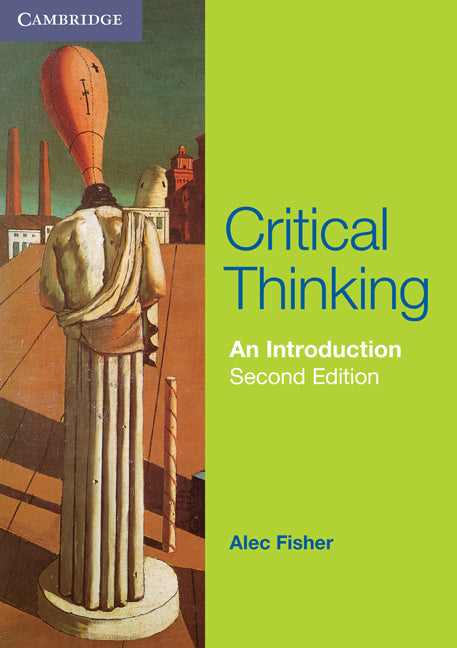
Critical thinking: several definitions

Critical Thinking 
2nd Ed. Cover


An original purpose of Hodges' model was to facilitate reflection, and so help to develop practitioners who were also competent reflective practitioners, and critical thinkers.

Continuing to clear books, I've arrived at:

Fisher, A. (2001) Critical Thinking: An Introduction. Cambridge University Press, Cambridge, England. PB. 

Now in a 2nd edition (2011), my copy has several definitions of 'critical thinking' quoted below, with my emphasis.

There is a pdf of this 1st edition online which may be useful. The reward of the book, however, is in the discussion about each definition and how more recent work has built upon Dewey's legacy.  There is also a baseball analogy, which I will return to soon, or append here. I have omitted a definition by Richard Paul, which is nonetheless important to me, as it draws on meta-cognitive qualities:
"1.1.1 John Dewey and 'reflective thinking' ...

In fact, people have been thinking about critical thinking and have been researching how to teach it for about a hundred years In a way, Socrates began this approach to learning over 2,000 years ago, but John Dewey, the American philosopher, psychologist and educator, is widely regarded as the 'father' of the modern critical thinking tradition. He called it 'reflective thinking' and defined it as: 
"Active, persistent, and careful consideration of a belief or supposed form of knowledge in the light of the grounds which support it and the further conclusions to which it tends. (Dewey, 1909, p. 9)."' p.2.
 'Glaser defined critical thinking as:
(1) an attitude of being disposed to consider in a thoughtful way problems and subjects that come within range of one's experience; (2) knowledge of the methods of logical enquiry and reasoning; and (3) some skill in applying those methods. Critical thinking calls for a persistent effort to examine any belief or supposed form of knowledge in the light of the evidence that supports it and the further conclusions to which it tends. (Glaser, 1941, p.5).' p.3.
1.1.3 Robert Ennis - a widely used definition ...
'Critical thinking is reasonable, reflective thinking that is focused on deciding what to believe or do. (Cf. Norris and Ennis, 1989).' p.4.
Notice the emphasis on being 'reasonable' and 'reflective', which picks up on earlier definitions, but notice also that Ennis speaks of 'deciding what to do', which was not explicitly mentioned earlier; so decision making is part of critical thinking in Ennis's conception. Unlike Dewey's definition, this definition needs no further explanation

A final definition of critical thinking 
One last definition is worth reviewing. Michael Scriven has recently argued that critical thinking is 'an academic competency akin to defines it thus: reading and writing' and is of similarly fundamental importance. He defines it thus:
'Critical thinking is skilled and active interpretation and evaluation of observations and communications, information and argumentation. (Fisher and Scriven, 1997, p. 21).' p.10."

Sunday, August 04, 2024

"No argument, we should teach critical thinking" by Julian Richer

Spring and summer reading includes Our Housing Disaster. Julian Richer's weekly column in the Sunday Times is very interesting; business yes, but socially oriented and positive in the values conveyed.

I'm 100 pages into The Systems View of Life, posts to follow, but before getting to OHD, I noticed another of Richer's columns:

#36 "No argument, we should teach critical thinking"

Sunday 14th July 2024

"... all the successful bosses I’ve ever worked with encourage an open flow of communications in all directions (internally — up, down, across — and with the outside world, too) with no taboos. They try to surround themselves with good people who can see the world independently, draw their own conclusions and have the confidence to express their ideas."

"It’s very difficult to craft a culture of critical thinking and open debate in a business unless it’s been taught at school, as our parents tend to be more stuck in their ways. Unfortunately, schools spend so much time on teaching and testing reading, and particularly writing, that they don’t have enough time to teach thinking and speaking. These require practice, too. And they are also very important life and business skills."
 

The discussion on Parallel Histories reminds me of philosophical talk, virtue-seeking is not enough. It needs to applied practically, if it is to make a difference.


"An added benefit is that kids who have learnt calm and reasoned debate will use this knowledge to help them in their adult life. Certainly, those going on to join the business world will be very pleased to have received these negotiating and people skills, both essential."

Hodges' model provides a structure for reflection, reflective practice, and critical thinking and inevitably light-weight can be carried as lifelong learning resource and tool.