Hodges' Model: Welcome to the QUAD: Search results for critical thinking

Hodges' model is a conceptual framework to support reflection and critical thinking. Situated, the model can help integrate all disciplines (academic and professional). Amid news items, are posts that illustrate the scope and application of the model. A bibliography and A4 template are provided in the sidebar. Welcome to the QUAD ...

Showing posts sorted by relevance for query critical thinking. Sort by date Show all posts

Sunday, December 08, 2024

Critical thinking: several definitions
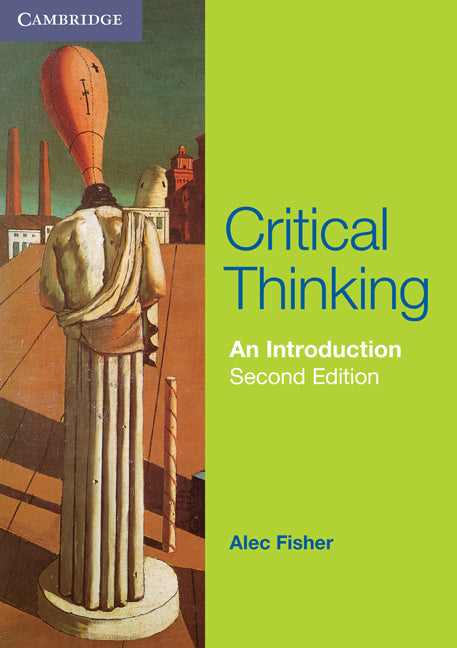
Critical Thinking 
2nd Ed. Cover


An original purpose of Hodges' model was to facilitate reflection, and so help to develop practitioners who were also competent reflective practitioners, and critical thinkers.

Continuing to clear books, I've arrived at:

Fisher, A. (2001) Critical Thinking: An Introduction. Cambridge University Press, Cambridge, England. PB. 

Now in a 2nd edition (2011), my copy has several definitions of 'critical thinking' quoted below, with my emphasis.

There is a pdf of this 1st edition online which may be useful. The reward of the book, however, is in the discussion about each definition and how more recent work has built upon Dewey's legacy.  There is also a baseball analogy, which I will return to soon, or append here. I have omitted a definition by Richard Paul, which is nonetheless important to me, as it draws on meta-cognitive qualities:
"1.1.1 John Dewey and 'reflective thinking' ...

In fact, people have been thinking about critical thinking and have been researching how to teach it for about a hundred years In a way, Socrates began this approach to learning over 2,000 years ago, but John Dewey, the American philosopher, psychologist and educator, is widely regarded as the 'father' of the modern critical thinking tradition. He called it 'reflective thinking' and defined it as: 
"Active, persistent, and careful consideration of a belief or supposed form of knowledge in the light of the grounds which support it and the further conclusions to which it tends. (Dewey, 1909, p. 9)."' p.2.
 'Glaser defined critical thinking as:
(1) an attitude of being disposed to consider in a thoughtful way problems and subjects that come within range of one's experience; (2) knowledge of the methods of logical enquiry and reasoning; and (3) some skill in applying those methods. Critical thinking calls for a persistent effort to examine any belief or supposed form of knowledge in the light of the evidence that supports it and the further conclusions to which it tends. (Glaser, 1941, p.5).' p.3.
1.1.3 Robert Ennis - a widely used definition ...
'Critical thinking is reasonable, reflective thinking that is focused on deciding what to believe or do. (Cf. Norris and Ennis, 1989).' p.4.
Notice the emphasis on being 'reasonable' and 'reflective', which picks up on earlier definitions, but notice also that Ennis speaks of 'deciding what to do', which was not explicitly mentioned earlier; so decision making is part of critical thinking in Ennis's conception. Unlike Dewey's definition, this definition needs no further explanation

A final definition of critical thinking 
One last definition is worth reviewing. Michael Scriven has recently argued that critical thinking is 'an academic competency akin to defines it thus: reading and writing' and is of similarly fundamental importance. He defines it thus:
'Critical thinking is skilled and active interpretation and evaluation of observations and communications, information and argumentation. (Fisher and Scriven, 1997, p. 21).' p.10."

Sunday, October 08, 2017

'Critical Thinking and Health in Music Education' 14 Nov 2017 Manchester

Raluca Matei posted this item to the Mental Health in Higher Education hub. The resonances with the purposes of Hodges' model are clear to me. With Raluca's permission I will map the themes of this event to Hodges' model in a further post. There is no primary link for the event itself, please see the contact details below:

Dear All,

My name is Raluca and I am an AHRC-funded PhD student in psychology and health promotion among musicians, at the Royal Northern College of Music (RNCM), in Manchester. Together with Keith Phillips, a fellow PhD student in music psychology, we are organising ‘Critical thinking and health and music education’, a one-day event to be held at RNCM, on 14 November 2017, with funding from the North West Consortium Doctoral Training Partnership (NWCDTP).

OK…but why do that at all? 

  • The physical and psychological demands of the training and practice that musicians must achieve to perform to a high standard on their instruments can produce deleterious effects on health and wellbeing, arising mostly from musculoskeletal, neurological and audiological causes. 
  • Although there is a need for more rigour in the empirical investigation of potential interventions to address musicians’ health and wellbeing, British conservatoires remain guided more by tradition than the available evidence. Their websites still endorse practices that are either not supported by research (despite their popularity among musicians) or are so poorly defined that they can hardly be researched and investigated. This retrograde outlook encourages a rather conservative and conformist attitude that is prevalent among musicians. 
  • An unfair emphasis on individuals to enact changes in lifestyle is continuously being pushed, while the larger cultural, social and environmental factors remain vastly unaltered and particularly resistant to change. 
  • We argue that the above are at least partially due to the lack of critical thinking training and health education among music students and their teachers. Introducing such training might not only increase their health literacy (i.e. the achievement of health-related knowledge and relevant set of skills), but also empower them individually and as a group to question the status quo and assertively demand for changes to be made accordingly, to their own benefit, rather than submissively adapt to cultural norms informed by the mere passage of time and the burden of tradition. 
  • Although such changes require considerable resources and never happen immediately, we argue that we need to start by asking questions. The literature suggests that critical thinking needs specific training and doesn’t necessarily happen by itself, especially given that one would need exceptional courage and to assume some risk to go against ingrained cultural norms. 
  • Given that the role of higher education is not solely to prepare students for existing jobs but also to turn them into informed citizens, critical thinking can help them to shape the world and to embody the change they want to see. In addition, efforts focused on changing policy and management practices might be more effective, realistic and beneficial for a larger number of people than solely attempting to change individuals. 
And what are you aiming for? 

  • To raise awareness of and debunk various myths that are being circulated in music education in relation to psychology and health
  • To discuss about the importance of critical thinking in education and what the available literature tells us about effective interventions aimed at training it
  • To discuss how we can, as researchers, bridge the gap between the evidence and the practical real world, as well as educational policies
  • To discuss the findings of the first paper on neuromyths among music teachers and how these might inform future practice 
  • To discuss potential ways in which the specific training of critical thinking could be incorporated into the pedagogical training of musicians
  • To address the link between critical thinking and health promotion in music education 
  • To discuss how the Socratic method might be used in training critical thinking 
  • To brainstorm ideas on how critical thinking and psychology might be incorporated as part of musicians’ formal training – examples will be provided from the latest research in the field 

How would I benefit from this?

Free access to an interdisciplinary, ground-breaking event on critical thinking in higher education
The chance to be innovative within your own field and even initiate new professional pathways
The opportunity to meet students, researchers and practitioners from your field of interest, as well as from related fields
The opportunity to have your ideas discussed within an exploratory round table discussion, given that we will allow plenty of room for this!

Our speakers include:

  • Prof. Reinhard Kopiez, Professor of Music Psychology, Hanover University of Music, Drama and Media
  • Prof. Jane Ogden, Professor of Health Psychology, University of Surrey

The event will incorporate a considerable amount of group discussion, in an attempt to dive into a rather innovative field and hopefully reach some meaningful conclusions and suggest a few solutions. 

Our event is highly interdisciplinary, and it is open to postgraduate students, researchers and specialists in:

  • Music (Performance and Education)
  • Psychology
  • Philosophy
  • Education sciences and policy
  • Medicine (with a focus on health education, health promotion and prevention, as well as public health)
  • Science journalism/Science communication 

Although attendance is free, places are limited and registration will be based on a brief expression of interest. We ask potential participants to explain the nature of their research, interests and/or background, and detail why this event is relevant to them in writing to us by Sunday, 15 October 2017

Finally, we will keep the format and content flexible and depending on the background and interests of attendees, the conversations we will be having can follow various pathways. 

Raluca Matei – ... 
Keith Phillips – ... 

Please do email one of us for further details. Additionally, If you could please forward this to any relevant postgraduate students, researchers and/or specialists, I would be immensely grateful! 

With many thanks and kind wishes,

Raluca

Raluca Matei MSc, BMus, MBPsS
AHRC-funded PhD student in psychology and health promotion 
Royal Northern College of Music, 
Manchester
...

I am looking f/w to attending. PJ 

Saturday, October 04, 2025

Argumentation - Journal: Informal Logic

Early evening (UK) yesterday, I joined a further webinar on argumentation. Through the speaker, and discussion, I was led to a journal

INFORMAL LOGIC

It is in informal logic that I see a role for Hodges' model. The model's structure providing a universal foundation of knowledge domains to be applied in practice. The bonus of this journal, is its being open access, a search revealed the following paper:

Mark Weinstein. Towards a Research Agenda for Informal Logic and Critical Thinking. XII.3, Fall 1990.
https://ojs.uwindsor.ca/index.php/informal_logic/article/view/2609

'This paper recommends that the recent concern with informal logic and critical thinking be redirected from its general philosophical focus and towards a greater appreciation of the particulars of practice in the various domains of human understanding. The redirection recommended is prompted by the central role that critical thinking and informal logic can be seen to play in meaningful educational reform, especially at the undergraduate level.' 

'Critical thinking, similarly, should be redirected from concerns typical of philosophers and towards issues and approaches more representative of critical thinking both within and across the wide range of disciplines represented by the course of undergraduate studies.' p.121.

'The sense that there is an internal relationship between arguments, argumentation and domains of knowledge persists despite attempts to show relevant and useful notions of critical thinking that are generally available for instruction and neutral in respect of the disciplines. The resolution of the issues generated by these competing views, requires that reflective practitioners of the disciplines, students of the history of ideas, methodologists and specialists in teaching increasingly engage in the task of generating and organizing the data upon which an informed and adequate notion of critical thinking across the disciplines must be based.' p.125.

I believe that the structure of Hodges' model provides a basis for Weinstein's ordinary argumentation and stylized argumentation.

For me (at present) ordinary argumentation, is 'open' argumentation. That is, without differentiation in (using) Hodges' model. I might (well, I would) have Hodges' model in mind, but choose not to apply it. As per the paper, stylized argumentation is using Hodges' model and doing so in a multidisciplinary manner - within my discipline. 

The problem and challenge for nurses and other health professionals is the need, if:

  • person/patient-centred;
  • integrated;
  • and holistic - having regard for parity of esteem (mind - body)

- not to stray, extend the disciplinary scope, while working within one's professional scope.

In highly effective multidiscioplinary teams that touch on being transdisciplinary (hybrid?), can experienced team members have insight into the stylized argumentation of their colleagues?

Ack. ​Argumentation network of the AMERICAS - https://www.argnet.org/ethics-of-arg.html

Previously: 'critical thinking'

Friday, November 28, 2014

Papers 2 study: The longitudinal effect of concept map teaching on critical thinking of nursing students

Lee, Weillie; Chiang, Chi-Hua; Liao, I-Chen; Lee, Mei-Li; Chen, Shiah-Lian; Liang, Tienli (2013) The longitudinal effect of concept map teaching on critical thinking of nursing students. Nurse Education Today, Vol.33(10), pp.1219-1223.

From the summary (with my emphasis):

... The intervention of concept map teaching was given at the second semester in the Medical–Surgical Nursing course. The results of the findings revealed student started with a mean critical thinking score of 41.32 and decreased at a rate of 0.42 over time, although not significant. After controlling for individual characteristics, the final model revealed that the experimental group gained a higher critical thinking score across time than the control group. The best predictive variables of initial status in critical thinking were without clinical experience and a higher pre-test score. The growth in critical thinking was predicted best by a lower pre-test score, and lower scores on surface approach and organized study. Our study suggested that concept map is a useful teaching strategy to enhance student critical thinking.

Monday, December 09, 2024

Baseball: One of the games people play ... Fisher (2001) ii

Returning to Fisher's excellent book I mentioned an analogy from basket ball in discussion about Richard Paul's definition of critical thinking and 'thinking about your thinking'.
'Critical thinking is that mode of thinking - about any subject, content or problem - in which the thinker improves the quality of his or her thinking by skilfully taking charge of the structures inherent in thinking and imposing intellectual standards upon them. (Paul, Fisher and Nosich,1993, p. 4).' pp.4-5.
Fisher's daughter aged eleven wanted to learn how to play basket ball and attended coaching sessions. At the first the raw recruits were divided into two teams and with simplified rules set to play. Initially, getting the ball and in a position to score: shoot.

After the chaos, the coach had them practice shooting after he demonstrated how they had been playing. He explained and pointed out the basics of technique and 'drew attention to how he held the ball, where he looked, how he stood and so on.' p.5. Acknowledging their efforts, they subsequently moved on to passing, then guarding, or marking - practising each skill. 

This is a great analogy and can be applied to health, social care, medicine, nursing and other novices. Hodges' model is the basket ball, tennis, squash court, football, hockey pitch. You might move to a position to obtain an advantageous point of view. In reflective, critical thinking terms, additional data to support or negate a line of thought.

The axes of Hodges' model, serve as a scaffold to help structure our 'game player', and possibly better co-ordinate a group or team's efforts. The domains of Hodges' model cover the knowledge or subject bases that will relate to any context. Hodges' model is situated. If there is need to consider spiritual matters - experiences, then a conceptual journey ... at least, as befits an individual's or group's beliefs and purpose can be made. So forms if intelligence (emotional, cultural, spiritual ...) can also be factored in, as necessary.
 
Are there relational, logical, even mathematical standards that can be applied (formally, in theory) to our thinking? Does 'subject, content or problem' equate with 'situated'? Another book to pass on.

Fisher, A. (2001) Critical Thinking: An Introduction. Cambridge University Press, Cambridge, England. PB. 


Post: ... 'anyone for tennis'.

Sunday, August 04, 2024

"No argument, we should teach critical thinking" by Julian Richer

Spring and summer reading includes Our Housing Disaster. Julian Richer's weekly column in the Sunday Times is very interesting; business yes, but socially oriented and positive in the values conveyed.

I'm 100 pages into The Systems View of Life, posts to follow, but before getting to OHD, I noticed another of Richer's columns:

#36 "No argument, we should teach critical thinking"

Sunday 14th July 2024

"... all the successful bosses I’ve ever worked with encourage an open flow of communications in all directions (internally — up, down, across — and with the outside world, too) with no taboos. They try to surround themselves with good people who can see the world independently, draw their own conclusions and have the confidence to express their ideas."

"It’s very difficult to craft a culture of critical thinking and open debate in a business unless it’s been taught at school, as our parents tend to be more stuck in their ways. Unfortunately, schools spend so much time on teaching and testing reading, and particularly writing, that they don’t have enough time to teach thinking and speaking. These require practice, too. And they are also very important life and business skills."
 

The discussion on Parallel Histories reminds me of philosophical talk, virtue-seeking is not enough. It needs to applied practically, if it is to make a difference.


"An added benefit is that kids who have learnt calm and reasoned debate will use this knowledge to help them in their adult life. Certainly, those going on to join the business world will be very pleased to have received these negotiating and people skills, both essential."

Hodges' model provides a structure for reflection, reflective practice, and critical thinking and inevitably light-weight can be carried as lifelong learning resource and tool.

Saturday, January 20, 2024

c/o Eliot Higgins: 'Moment of truth' or 'Movement to Critical Thinking'?

   moment

a : tendency or measure of tendency to produce motion especially about a point or axis

b : the product of quantity (such as a force) and the distance to a particular axis or point

https://www.merriam-webster.com/dictionary/moment


Here on W2tQ in posts applying Hodges' model I have tended to equate the subjective and the objective with the humanistic and mechanistic domains respectively. Of course, these mappings - conceptual placements are idealised. In reality there is a great deal of overlap. 

"Social media platforms such as X, once celebrated as democratising forces, are under even more scrutiny. The challenge isn't just rogue posts or unchecked algorithms. It reflects a deeper malaise, rooted in societal distrust, exacerbated by business models and perpetuated by reactive policies. The ramifications of disinformation spill on the streets with tangible, often devastating real-world consequences. 
These processes were already underway in 2014, when I founded the open-source investigative group Bellingcat." p.1. 
"The delicate balance between combating misinformation and ensuring digital freedoms remains elusive. ...

Addressing the root causes of disinformation requires a grassroots approach. Education stands at the forefront of this strategy. The idea is simple yet transformative: integrate open-source investigative and critical thinking into the curriculum. Equip the youth with the skills to navigate the labyrinthine digital realm, to question, analyse and verify before accepting or sharing information. ...

The potential of such a grassroots movement doesn't stop at school gates. Envision a world where universities become hubs of open source investigation, with national and international networks of students sharing methodologies, tools and insights. As these students move into their professional lives, they carry forward not just skills but a mindset - one that values critical thinking over blind acceptance." p.2.

Higgins, E. Moment of truth, Life&Arts, FT Weekend, 16-17 December 2023, pp.1-2.
 

 Individual
  |
    INTERPERSONAL    :     SCIENCES               
HUMANISTIC --------------------------------------  MECHANISTIC      
SOCIOLOGY  :   POLITICAL 
|
Group

mental well-being

critical thinking

education - learning

subjective
PSYCHO-

physical well-being

fact (checking)

digital media literacy

objective


social well-being

society

social impacts of info disorder


-POLITICAL
political well-being

policy - regulation

political impacts of info disorder


https://thestudentview.org/

https://citizenevidence.org/

Access to education to combat information disorder, through digital media literacy is essential. There are now many claimed forms of literacy, and informatics. Engaging students must not just rest with  universities and graduate level education; especially as the 'professions' are set to change and new ones arise.

Previous posts 'information disorder' , 'ignorance'.

Friday, January 17, 2020

Science and Critical Thinking: c/o New Scientist 2015*

individual
|
INTERPERSONAL : SCIENCES
humanistic ----------------------------------------------- mechanistic
SOCIOLOGY : POLITICAL
|
group - population
4. "That works for some, but all too often the reaction is: "I'll never need to use this once I've left school. That is being taken up by the Programme for International Student Assessment."

"critical thinking toolkits"

3. "... the desired combination of scientific literacy and critical thinking remains rare in public discourse. Perhaps that is because we hope that children will learn to evaluate claims rationally if we teach them science. ...

But mastery of the [scientific] facts alone is not enough for the internet age. Much of the copious online rhetoric is more viral than factual, so it is just as important that we know how to evaluate sources of information., and how to tell correlation from causation, and opinion from fact - in matters both obviously scientific and otherwise. "


1. "Here's a game to play next time you catch the news headlines. Count how many would dissolve away or be markedly different if the people writing them had evaluated the evidence more critically. Your count will probably be alarmingly high."

5. "But our societies still have a long way to go when it comes to reading between the headlines - or rewriting them."
2. "We have a long tradition of allowing civic affairs to be settled by persuasive rhetoric. That is inadequate for our modern society."

"a reflective citizen"

public understanding of
 terrorism, vaccination, climate change, chemical pollution ..


PISA is the OECD's Programme for International Student Assessment. PISA measures 15-year-olds’ ability to use their reading, mathematics and science knowledge and skills to meet real-life challenges.

My source:
Leader, Critical thinking, New Scientist, 12 December. 2015, 228: 3051. p.5.

*Yes, still also sorting magazines, papers, notes...
Blue (paper) bin repeatedly quite full.

Thursday, December 12, 2013

Critical Thinking - Gaining knowledge: Beginners + Experts = audience?

Clearing through books last month with several bound for the charity shops I came across Critical Thinking in Nursing: An Interactive Approach, by Rubenfeld & Sheffer, with the following table (p.30):


BEGINNERS EXPERTS
Ways of:

Gaining Knowledge Assigned readings and asking authoritiesMultiple written and verbal sources, and experience
Thinking DualisticRelativistic
Using rules Context freeSituation dependent
Looking at situations NarrowBroad

The table is not remarkable in its theme, but it is a useful prompt for Hodges' model and future studies. The concepts listed might help illustrate how Hodges' model can support learning. In addition to having an individual focus the model can consider any situation, hence the claim that the model is 'situated'. As stated previously person centeredness is not a given. It does not follow, nor is it achieved just because 'person centered' features several times in care philosophies and policies. The person must be put at the center of the model and then each of the domains considered together with the spiritual dimensions.

I'm also reading a nursing informatics book (posts and review to follow) that discusses casuistic ethics, that is case-based reasoning. While the utility of casuistry is debated in nursing, the need to consider the individual is always paramount. A prime example of the focus on the individual is the programme Inside the Ethics Committee on BBC Radio 4. Central to ethics are the frequent dilemmas that arise in health and social care, the difficult moral choices and dichotomies that must be faced. The model can be used in a context free way, that is considering rules in general; and also employed in specific contexts, such as a best interest meeting for a person recently moved into a residential care facility and distressed by the experience.

There are many dichotomies that can be identified in the basic model, and to a certain extent they reflect the dualistic thinking of the beginner as they build an understanding of particular fields of health care. As learners progress they integrate the concepts they encounter and are then able to associate these and relate them to prior learning, the current case and generate hypotheses that may also be predictive. Hodges’ model can frame and help represent student encounters be they narrow or broadening (recognising patterns). Gaining knowledge may need particular attention by the student (mentor and lecturer) in terms of the student's strategies for creating and protecting opportunities as a beginner and competent practitioner.

As a sign-off mentor I’ve become acutely aware – as required - of a learner’s level of skills and knowledge. What is their level of competence? What is their level of situational awareness? How are they progressing through their learning according to previous mentors and their own goals, learning objectives and evaluation? The concept of emotional intelligence is not new and still has the attention of researchers. Perhaps this could also inform questions for research into Hodges’ model as students elaborate their initial representations of nursing care, skills and knowledge through their course and ongoing as experts. Is emotional intelligence central to compassion in nursing? Encompassing all of these ‘ways’ in the table is reflection. This is not just for reflective practice but an ability to critique one's own practice and that of others.

The table is also helpful at this time considering future content and content types and the potential audience of a new website. The challenge is to emulate the table above in the way it reduces, simplifies very complex educational matters. Yesterday afternoon I was able to attend a very helpful two hour research clinic in Lancaster, following this I must (still) reduce the above questions and also recognise my own biases.

Rubenfeld & Sheffer (1994) Critical Thinking in Nursing: An Interactive Approach. 1st Edition, Lippincott Williams and Wilkins.

Friday, December 20, 2024

New citations - Practice Without Theory: A Philosophical Inquiry into Contemporary Nursing in South Asia

It is always welcome news when I learn of a paper (Asmat, 2024) recognising and citing Hodges' model from the nursing and wider literature. In this case an educational journal, focussed upon health and social care:

Kainat Asmat (2024). Practice Without Theory: A Philosophical Inquiry into Contemporary Nursing in South Asia: Nursing Practice without Theory. International Journal of Practice-based Learning in Health and Social Care. 12. 125-131. 10.18552/ijpblhsc.v12i2.1068. 

I have quoted at length, but it is good to have a different 'excuse' (not just extending the tail of a relevant book, or paper). ... 

'Similarly, Hodges' Health Career Model exemplifies its use as a tool for reflection during clinical assessments, care planning, and decision-making processes (Doyle & Jones, 2013). The model encourages nurses to reflect on their practice through multiple lenses, ensuring a comprehensive understanding of patient needs and care strategies. The Interpersonal domain emphasizes the relational aspects of nursing, including communication and empathy. The Sociological domain highlights the impact of societal factors and social determinants on health. The Scientific domain focuses on evidence-based practice and the integration of scientific knowledge into care. Finally, the Political domain addresses the influence of healthcare policies and organizational structures on contemporary nursing practice. In contemporary nursing practice, a nurse might use Hodges’ model to provide holistic and personalized care by considering the patient's social background, the scientific basis of their care, interpersonal dynamics, and relevant political or policy-related factors. According to Jones (2017), using conceptual models like Hodges' can greatly enhance nurses' critical thinking, fostering a reflective and engaged nursing workforce.' p.126.

'Collectively, nursing theory remains a cornerstone of contemporary nursing practice, providing an essential framework that guides clinical decision-making, promotes critical thinking, and supports reflective practice. Peter Jones, in his seminal works, underscores the critical role of theoretical models in enhancing nursing practice. His insights provide compelling evidence for the continued relevance of theory in contemporary practice. In "Humans, Information, and Science", Jones (1996a), articulates the interrelationship between human factors, informational processes, and scientific principles in healthcare. He argues that nursing, as a discipline, uniquely integrates these elements to form a comprehensive approach to patient care. This integration is fundamental in moving beyond task-oriented care towards a practice that is reflective and evidence-based. Jones emphasizes that without a theoretical foundation, contemporary nursing practice risks becoming fragmented and superficial, lacking the depth required for truly effective patient care. Similarly, in "An Overarching Theory of Health Communication",  Jones (1996b) explores the necessity of robust communication theories in healthcare. He posits that effective communication is not merely a skill but a complex process grounded in theoretical understanding. This perspective is particularly relevant to nursing, where communication is pivotal in patient interactions, interdisciplinary collaboration, and health education. Jones’ work illustrates that theoretical frameworks in communication enhance nurses' ability to engage with patients and colleagues thoughtfully and effectively, fostering better health outcomes and professional practice. Jones’ analyses reinforce the argument that nursing theory is indispensable in contemporary practice. Likewise, McEwen and Wills (2021) also highlight that nursing theory is integral to the development of nursing as a discipline. They assert that without the theoretical underpinnings, nursing risks regressing to a technical occupation devoid of critical thinking and judgment that characterize nursing professional practice. Thus, the survival and progression of nursing as a distinct profession depend on the continued integration and application of theory in contemporary nursing practice.' p.127.

In addition, the short conclusion is supportive and encouraging for ongoing efforts. As with all discovered citations thus far, I'm not sure of how Kainat Asmat located the publications on Hodges' model? A literature search - no doubt, or perhaps the blog's sidebar listing? The selection made, fits the author's purpose. 

Over the years, I've tried to indicate the scope and scale that Hodges' model can 'reach'. Especially in self-care, family, local, global and planetary health. Now, c/o Asmat (2024), Hodges' model has a much valued connection with South Asia. The required scope of Hodges' model (its inter- and transdisciplinary potential^) is also conceptual, referred to previously as holistic bandwidth. Hence the model's relevance and potential in theory and practice.

Many thanks to Kainat Asmat and the journal's editorial team.*

I will read again and return to the paper in our New Year.

Listed in the bibliography:

Doyle, M., Jones, P. (2013). Hodges’ Health Career Model and its role and potential application in forensic mental health nursing. Journal of Psychiatric and Mental Health Nursing. 20, 7, 631-640.
http://onlinelibrary.wiley.com/doi/10.1111/j.1365-2850.2012.01961.x/abstract

Jones, P. (1996a) Humans, Information, and Science, Journal of Advanced Nursing, 24(3),591-598. https://onlinelibrary.wiley.com/doi/abs/10.1046/j.1365-2648.1996.23321.x

Jones, P. (1996b) An overarching theory of health communication? Health Informatics Journal,2,1,28-34.

Where I have now added this paper.

^Still on the agenda as a paper; as with 'revisiting' 1996a. Happy to support others in referencing, or writing more specifically about Hodges' model (a case study, mapping exercise?); especially student nurses, carers and personnel in social care and early career researchers. To which, I'd better add later career nurses, allied disciplines, nurses returning to practice (surely a UK and global policy focus?) and proof of reading (your choice of course on the paper, chapter, book...); and reflection for continuing professional development (CPD). If you're still unsure, it was a relief to put the 'pen' down, well writing is still a major challenge (and pain) here. 

*And, of course - Brian E. Hodges RIP - too.
https://hodges-model.blogspot.com/2023/08/brian-e-hodges-r-i-p.html

Sunday, March 08, 2020

Book review: v Critical Mental Health Nursing: observations from the inside

Through January - March 2020 I've been checking the blog posts from the start in 2006, sorting the wheat from chaff. The task complete means that:

  • posts - basically not 'read'; 
  • what is this about (or, what was I thinking!)?
  • dated conference calls, courses, events, consultations, calls for papers;
  • broken links;
  • posts with  (way) too many links;
  • old links to domains that had been 'repurposed' or hijacked (drugs, dentistry, dating, games ...)
- have all been deleted.

I found a link to another non-existent blog-post and this draft post on a book review from early 2019.

This may be a waste of time. But it felt quite cathartic. Putting twitter down and not posting may also  help me focus attention on the things I really need to do.

<>

Following on from Part i, Part ii Part iii and Part iv.

Finally, I am teasing out points that highlight the role of Hodges' model.

Foucault had views that are seminal in the politics of mental health and society and views that perturb.


https://www.pccs-books.co.uk/products/critical-mental-health-nursing-observations-from-the-inside
Critical Mental Health Nursing
Marc Roberts in chapter 7 uses Foucault for the book's critical project of the 'history of the present'. To begin however there is the challenge of how to encapsulate critical, reflective thinking and our identity or 'self' in Foucault's work. Through other sources, Robert's notes that the


"conceptual considerations surrounding the distinctions between critical thinking and reflection" (p.125) which can "broadly be understood as a multifaceted cognitive and affective capability that requires a variety of intellectual skills and emotional attributes."

A role for creativity is acknowledged in

"the analysis and clarification of issues and areas of concern; the gathering and appraisal of evidence, research and theory; the questioning and challenging of assumptions, values and beliefs, and the synthesis and application of information to produce alternative and innovative ways of thinking and behaving." (p.126).

Thursday, July 09, 2026

Leapspace? Why not ...?

Referred to a paper in an email: https://doi.org/10.1016/j.jclinepi.2026.112401.

- I noticed an invitation to try Leapspace

So I leapt (with much editing - for formatting here). ...


Copilot steps

Creating a plan to respond to your query

Performing search for foundational documents
Performing keyword search
Using data from Scopus
("Hodges' model" OR "Hodges model" OR "Hodges' health career model" OR "health career model" OR "care domains model") AND (nursing OR healthcare OR "health care" OR education) AND (domain* OR component* OR framework OR concept* OR definition*)

Performing natural language search
Using data from Scopus
What are the conceptual definitions, domains, and components of Hodges' model in nursing and healthcare education?

Performing keyword search
Using data from Full text
("Hodges' model" OR "Hodges model" OR "care domains") AND (diagram* OR figure* OR visual* OR schema) AND (teach* OR education OR curriculum OR learning) AND (critique OR adaptation* OR application*) AND (method* OR framework OR discussion)

Performing natural language search
Using data from Full text
How is Hodges' model represented, taught, and adapted in nursing or healthcare education, including diagrams and critiques?

Performing keyword search
Using data from Scopus
("Hodges' model" OR "Hodges model" OR "care domains framework") AND (application* OR use OR implementation OR practice) AND (critique* OR limitation* OR adaptation* OR evaluation*) AND (nursing OR healthcare OR "health care")

Performing natural language search
Using data from Scopus
What applications and critiques of Hodges' care domains framework have been reported in nursing and healthcare practice?

Done

Generated by LeapSpace, Thu Jul 09 2026

Hodges' health career - care domains - model

Hodges’ Health Career – Care Domains – Model is a generic, practice-based conceptual framework for health and social care that organizes thinking into four knowledge/care domains: science, political, sociology, and interpersonal. It is presented as broadly applicable across healthcare contexts and is used to structure reflection, critical thinking, and care planning. [1] [2] [3]

Core domains

Domain

What it covers

How it is used

Science

Cause and effect, evidence, costs, benefits, and trade-offs

Helps frame the “hard” evidence side of care and service decisions. [1]

Political

Policy, systems, and structural influences on care

Helps connect care to wider health and social policy contexts. [1] [4]

Sociology

Social context, culture, stigma, and relationships

Helps explain how social factors shape health and illness experiences. [1] [5]

Interpersonal

Therapeutic relationships, patient/carer engagement, and human interaction

Supports person-centred and relational practice. [1] [2] [6]

What the model is for

  • It is described as universal in structure and adaptable to many healthcare settings, including informatics, dementia/palliative care, forensic mental health, and oral health. [2] [3] [4] [7] [8]

  • It helps practitioners map concepts into domains, build a mind-map-like structure, and support reflective practice and critical thinking. [3] [9]

  • In forensic mental health nursing, it is proposed as a way to guide assessment, decision-making, and recovery-oriented practice. [2]

Bottom line

Hodges’ model is best understood as a four-domain lens for integrating clinical evidence, policy, social context, and relationships into one framework for care and reflection. Its main value is not in prescribing a single care process, but in helping users think more holistically and systematically about health problems and care systems. [1] [2] [3]

Confidence level: High — multiple sources consistently describe the model’s four domains, generic structure, and broad healthcare applications.

References

  1. Fox, Siobhán, FitzGerald, Carol, Harrison Dening, Karen, (...), Timmons, Suzanne (2017) Better palliative care for people with a dementia: summary of interdisciplinary workshop highlighting current gaps and recommendations for future research. BMC Palliative Care. https://doi.org/10.1186/s12904-017-0221-0

  2. Doyle, M., Jones, P. (2013) Hodges' Health Career Model and its role and potential application in forensic mental health nursing. Journal of Psychiatric and Mental Health Nursing. https://doi.org/10.1111/j.1365-2850.2012.01961.x

  3. Jones, P., Wirnitzer, K. (2022) Hodges' model: The Sustainable Development Goals and public health - Universal health coverage demands a universal framework. BMJ Nutrition, Prevention and Health. https://doi.org/10.1136/bmjnph-2021-000254

  4. Bettiol, S., Jones, P., Onyedikachi, H.A., Kernohan, W.G. (2026) Bridging Gaps in Oral Health Frameworks: Mapping With Hodges' Health Career - Care Domains - Model. Journal of Public Health Dentistry. https://doi.org/10.1111/jphd.70034

  5. Jones, P. (2008) Exploring serres' atlas, Hodges' knowledge domains and the fusion of informatics and cultural horizons. Social Information Technology: Connecting Society and Cultural Issues. https://doi.org/10.4018/978-1-59904-774-4.ch007

  6. Merritt, M.K., Procter, N. (2010) Conceptualising the functional role of mental health consultation-liaison nurse in multi-morbidity, using Peplau's nursing theory. Contemporary Nurse. https://doi.org/10.5172/conu.2010.34.2.158

  7. Jones, P. (2009) Socio-technical structures, 4Ps and hodges' model. Nursing and Clinical Informatics: Socio-Technical Approaches. https://doi.org/10.4018/978-1-60566-234-3.ch011

  8. Jones, P. (2011) Socio-technical structures, 4Ps and hodges' model. Clinical Technologies: Concepts, Methodologies, Tools and Applications. https://doi.org/10.4018/978-1-60960-561-2.ch215

  9. Jones, P. (2025) A Generic Model and Conceptual Framework to Prime Curiosity Across Health and Social Care Disciplines to Facilitate Lifelong Learning. Journal of Evaluation in Clinical Practice. https://doi.org/10.1111/jep.70252

Follow-up Suggestions 

What are the key components of Hodges' health career care domains model?

How does Hodges' model apply to interdisciplinary health care practices?

What are the implications of Hodges' health career care domains model for patient-centered care?

Tuesday, February 05, 2019

Book review: iii Critical Mental Health Nursing: observations from the inside

Following on from Part i and Part ii.

Alec Grant's chapter 2 presents a 'critical meta-autoethnographic performance'. The chapter uses a dialogue approach, as with chapters 3,4 and 9. While not needed this does break up the prose format for the reader. For a 'nursing' book it is good that Grant puts the initial accent on the future and the classroom. There's a conversation with a Deputy Head on establishing debating societies (p.34), another highlights how skills in reflection, critical thinking and critique are never complete at undergraduate level, but applied through narrative inquiry and critical autoethnography at masters research level (p.40).

The first classroom 'chat' begins with a question: What is the student's "understanding of the following social psychological phenomena: confirmation bias, fundamental attribution error and actor-observer effect?" (p.30).

https://www.pccs-books.co.uk/products/critical-mental-health-nursing-observations-from-the-inside
Critical Mental Health Nursing
On fundamental attribution error, taking a couple of patients to Goodison Park and while the final score eludes me I can remember the change in the patient's behaviour while 'outside' away from the ward. Likewise, going to a nearby pub to 'find' a patient, his speech, disposition and humour were as liberated as his taste buds and that wasn't just the 'alcohol talking'. On the actor-observer effect, judgemental terms would often presage the arrival of; if not an admission, but a re-admission. Even then I would take cognizance of what was said, but also derive my own conclusion. I discuss 'attention seeking' and manipulative (p.31) and other pejorative terms with students. Also explained is our then Director of Nurse Education, who stated that "All behaviour is significant". Grant reflects on 'narrative entrapment' and how things are in community mh services, as surely that is better? The quality of referrals is raised. I've always thought that referrals, or more accurately, reasons for referral need to be qualified. That said, this has improved over the past 10-15 years, but there are still examples were the 'problem' and the level of information provided is missed / lacking.

Throughout the text, there is much for students to learn and reflect upon. Grant is Socratic in approach, creates discomfort and signposts how learners can become students for change and change agents. There are insights on 'ideology',  Žižek and efforts to find a position in the world that is 'ideologically neutral' (p.37). Even now, I continue to see h2cm as, if not, ideologically neutral [impossible], then it is 'ideology' stripped back to absolute basics; a fundamental stucuture that can represent and encompass a[ny] situation. That can include, as Grant notes, time, place, people, events, institutions, culture and professional groups.

Grant's critique of the Tidal model is brief (p.37), but the way to which the Tidal model is challenged within the average busy acute ward, can be extended if the health AND justice 'care' context is considered. While there are only two references to Hodges' model within health justice, I am sure there are potentially many more. Without change, Grant suggests that mhn is "condemned to be the constant administrative and social policing arm of institutional psychiatry." (p.37).

A section on reader - response theory takes us - in a sense - back to where we started. The final dialogue may be 'heavy' for some (me too?) on the neoliberal agenda and its impact upon education - professionally, institutionally, mental health nurse education and curricula. Universities as institutions for learning and learning institutions have been called into question (safe spaces, freedom of speech, value for money, quality...), as by Grant also:
"With regards to mental health nursing, a technical rational training, as opposed to education curricula, fails to adequately address the skilled, multi-contextual knowledge and skills needed by students to help them engage in the unruly and complex identities, relationships, and life and treatment environments of contemporary mental health service users (Grant, 2015c)." (pp.41-42).
"... we put forward the argument that such engagement requires an explicit, un-apologetic educational curriculum." (p.42).
 Grant calls for 'professional artistry' through the literature, which -
"... requires increasing levels of critically reflexive organisational and political awareness. This is because, in all of its aspects, mental health nursing practice is political, historically contingent and socially and environmentally contextual." (p.42).
Finally (here at least), Grant references Alvesson and Spicer's (2012) "functional stupidity theory of organisations"

(In the margin - my pencil notes: Is it really about who has the keys?)

The functional stupidity theory of organisations argues that such organisations have, "a cognitively- and affectively-informed unwillingness or inability to employ reflexivity, justification and substantive reasoning in work organisations." (p.43). Grant expands on each, but of substantive reasoning:
".. constitutes the act of engaging thinking as broadly as possible in relation to professional practice and related work problems." (p.43).
Mental health nurse education, according to Grant exhibits functional stupidity.  (p.44). Oh! I wince at the sound. Finger nails scraping all the way down the ivory of the tower.

As a critique of this and other reviews on W2tQ will no doubt show, my quotes are quite obviously  selective. Precarity has also become obvious over the past decade, as austerity has bitten and even now continues to 'chew'. Grant's references show his work in this area. As many people, academics and practitioners (across all professions including social work and the chapter's author) reach retirement, it will be interesting to see (to say the least) if precarity also applies to:
  • mhn
  • the mhn education system
  • the reasons and values that students bring to the profession
Paradoxically, will this loss of experience in academia, practitioner and management, bring the positive change that this book calls for?

Just two chapters and buy, buy...

More (still) to follow and apologies for the unconventional review...

Part i 

Part ii

Part iv


Bull, P., Gadsby, J., Williams, S. (Eds.) (2018) Critical Mental Health Nursing: observations from the inside, Monmouth: PCCS Books. ISBN 9781910919408


Saturday, January 26, 2019

"Bounded epistemology, language and context of disciplinary thought ..."

"Effective learning does not happen in a content vacuum. John McPeck (2000) and other critical thinking theorists argue that teaching general thinking skills and techniques is useless outside of a particular knowledge domain in which they can be grounded. Similarly, Bransford et al. (1999) argue that effective learning is both defined and bounded by the epistemology, language, and context of disciplinary thought. Each discipline or field of study contains a world view that provides unique ways of understanding and talking about knowledge. Students need opportunities to experience this discourse and the knowledge structures that undergird discipline thinking. They also need opportunities to reflect upon their own thinking; automacy is a useful and necessary skill for expert thinking, but automacy without reflective capacity greatly limits learners’ capacity to transfer their knowledge to unfamiliar contexts or to develop new knowledge structures." pp.48-49.

Anderson, T. (2008) Towards a Theory of Online Learning, (Chapter 2). In, The Theory and Practice of Online Learning, second edition, Edited by Terry Anderson. AU Press, pp.45-74.

Learning often challenges the values we hold. When we experience new roles and must attain and maintain professional standards we may need to inculcate (tread upon) what we already know. A degree of unlearning may be needed, entailing a suspension of content as new understanding, insight and awareness is demonstrated. In the health and social care context, Anderson helps us appreciate the level of complexity in the number of disciplinary domains that must be negotiated and integrated conceptually and the requirements for person-centredness. It might be argued that this is a contributing factor for effective lifelong learning? That is, having the ability from early in our educational careers that we are capable and willing to 'refresh the conceptual slate'?

[Even as I cling on to the four-five care or knowledge domains.]

[Thank you: Centre for TEL]
https://www.lancaster.ac.uk/educational-research/research/centre-for-technology-enhanced-learning/

Monday, October 09, 2017

Event: 'Critical Thinking and Health in Music Education' mapped to Hodges' model

individual
|
INTERPERSONAL : SCIENCES
humanistic --------------------------------------- mechanistic
SOCIOLOGY : POLITICAL
|
group

psycho-physical
health promotion
qualitative : quantitative
subjective : objective
psychology

reflection - CRITICAL THINKING (training)

psychological demands of training

health and well-being impacts -
stress, anxiety, depression...

pressure on individual to change lifestyle
neuromyths - beliefs

individual attitude, health literacy through related knowledge and skills
Socratic method

individual courage
assertiveness
music education

literature

evidence - research

musical instruments
physical human - player instrumental demands

practice, environment

health and well-being impacts - musculoskeletal, neurological, audiological...

rigour in empirical investigations

question formulation
culture - tradition (norms and myths)

expectations of peers and seniors

group discussion
socialisation
conservative - conformity

history, social change

'cohort courage'
high standards

professional attitudes

empowerment, self-advocacy

citizens - world view

policy and management practices
socio-political

Please see the original post for the - context and event details 14 Nov 2017

The context of music education and specifically what sounds like the socio-politics of education reminds of the healthcare. That is the socialisation of healthcare professionals. I can see this as a former student nurse and today with student nurses and many workplace conversations with doctors. The experiences and attitudes towards junior doctors and the hours they work stand out. Not all of course, but many juniors found the most vociferous defenders of the status quo were the Senior Consultants. This could be summed up as: "It was good enough for us....!"

I picked up a euphonium at school. Yes, her name was Denise and she was in the school brass band. I quickly put the instrument down, preferring the fields and woods after school. The heart strings still resonate though a great many decades later. Discovering the guitar since and Raluca Matei and her colleagues planned event I can appreciate the word 'interface' in a new way. This is learning not just the music, but that special interface between the musical instrumental and the would-be player.

There is also a sense that Hodges' model is an instrument and interface ...?

Thursday, December 14, 2023

Diagrams, Visualizations, Intuition and Critical Thinking QED

"The atom of Niels Bohr, a miniature solar system, had become a embarrassingly false image. ... Bohr himself had set the tone. In accepting the Nobel Prize for his atomic model, he said it was time to give up the hope of explanation in terms of analogies with everyday experience. 'We are therefore obliged to be modest in our demands and content ourselves with concepts that are formal in the sense that they do not provide a visual picture of the sort one is accustomed to require. . . .' This progress had not been altogether free of tension. 'The more I reflect on the physical portion of Schrödinger's theory, the more disgusting I find it,' was Heisenberg's 1926 comment to Pauli. 'Just imagine the rotating electron who charge is distributed over the entire space with axes in 4 or 5 dimensions. What Schrödinger writes on the visualizability of his theory . . . I consider trash.' As much as physicists valued the conceptualizing skill they called intuition, as much as they spoke of a difference between physical understanding and formal understanding, they had nevertheless learned to mistrust any picture of subatomic reality that resembled everyday experience. No more baseballs, artillery shells, or planetoids for the quantum theorists; no more idle wheels or wavy lines. Feynman's father had asked him, in the story he told many times: 'I understand that when an atom makes a transition from one state to another, it emits a particle of light called a photon. . . . Is the photon in the atom ahead of time? . . . Well, where does it come from, then? How does it come out?' No one had a mental image for this, the radiation of light, the interaction of matter with the electromagnetic field: the defining event of quantum electrodynamics." p.242.

 Individual
  |
     INTERPERSONAL    :     SCIENCES               
HUMANISTIC --------------------------------------  MECHANISTIC      
SOCIOLOGY  :   POLITICAL 
|
GROUP

reflection

critical thinking

intuition

physics

Bohr's atomic model

reflection


Gleick, J., (1992) GENIUS - Richard Feynman and modern physics, London: Little Brown and Company, p.242.
