Hodges' Model: Welcome to the QUAD: identity

Hodges' model is a conceptual framework to support reflection and critical thinking. Situated, the model can help integrate all disciplines (academic and professional). Amid news items, are posts that illustrate the scope and application of the model. A bibliography and A4 template are provided in the sidebar. Welcome to the QUAD ...

Showing posts with label identity. Show all posts

Saturday, October 24, 2026

ii Identity: Plain to see? A little thought experiment

individual
|
INTERPERSONAL
: SCIENCES             
HUMANISTIC ------------------------------------------------ MECHANISTIC
SOCIOLOGY : POLITICAL   
|
group


A little thought experiment - continued:

What's that!

 'A case of individual ineffability.'? 

Is this really ineffable? Are you saying - ironically - this is beyond language? 
That there's something sacred here?
Surely that's a stretch too far? 

I can see it is often complex, maybe difficult to explain too.

Well, the claim of ineffability is justified.
For some people, this touches upon the sacred and spiritual too.

How so? 

Well. Take the global population pyramid we inverted to span the sociological and political domains.
We're all in there. Even if you don't check that dynamic link, that pyramid is 'dynamic'. 
New births are being added, as the newly departed take their leave. 
So it's not just dynamic it's noisy too. 
Strictly speaking it's dancing: a constant shuffle.

Oh, dear! Save me, save us all!
What about the person we pulled out from the masses? 

Yes, one individual, but in truth as our focus, they occupy the interpersonal and sciences domains.
Have you ever used - painted with a palette knife? 

No, I can't say I have, probably not beyond my hands as a child.

Take that person as a single line - the palette knife's edge; then - move the knife, spread those colours across the two upper domains of Hodges' model. Let's say now that instead of a single person as a column, a data point, which we can hardly see; this 'spread' represents their lifespan. Not only that, but in there we also have their unique health career. Plus, arranged chronologically a record of life chances can also be charted.

And that's ineffable? 

True, there's no bright light. But, we can represent here the existential and religious debates and the point that some people get anxious, fearful of death and yet we were not anxious before we started life's inexorable shuffle? 

In these times of AI, it is important to acknowledge that what is ineffable in Hodges' model, is what we human beings can find, can experience in all the domains of  the model and the 'why' that surround it.

Ah, I see. Thanks.

 Previously: 'life chances' : 'health career'

Friday, October 23, 2026

Identity: Plain to see? A little thought experiment

individual
|
INTERPERSONAL
: SCIENCES             
HUMANISTIC ------------------------------------------------ MECHANISTIC
SOCIOLOGY : POLITICAL   
|
group


A little thought experiment:

Beneath the humanistic-mechanistic axis (within the sociological and political domains) superimpose an inverted global population pyramid - scaled to fit - of course. Make it dynamic if you wish.

Then imagine lifting just one individual out of the global population. As our subject, of whatever age, sex ... place them anywhere above the horizontal axis. Anywhere within the interpersonal or sciences domains. There they are: a single data unit. Selected at random, of course, their health status would vary accordingly.

Would we actually be able to see them here? One single vertical line, at this scale? 

A case of individual ineffability. Welcome to the ethical debate re. the individual and collective. And yet there they are? The focus of their own self-care and independence, famine, conflict ... or our care. Not just 'us', as a nurse, doctor, social worker, support worker ... but intermittently, the whole health and social care team.

From being lost in anonymity, literally a number in a chart, to having a name, several identities - with or without 'papers' - needs, background, character, personality, problems, relationships, strengths and humanity.

Hodges' model provides an incredible conceptual estate for us to utilise, if we choose to.

We can refer back instantly as context and population pyramids demand to parent, guardian, partner, family.

 Previously: 'population' : 'identity'

Saturday, September 26, 2026

15th Panhellenic Conference on Alzheimer’s Disease (P.I.C.A.D.)

15th Panhellenic Conference on Alzheimer’s Disease (P.I.C.A.D.) 
& 7th Mediterranean Conference on Neurodegenerative Diseases (Me.Co.N.D.)

24–28 February 2027 | KEDEA – Aristotle University of Thessaloniki
Thessaloniki, Greece

The Countdown Begins!

From 24 to 28 February 2027, Thessaloniki will host the 15th Panhellenic Conference on Alzheimer’s Disease (P.I.C.A.D.) and the 7th Mediterranean Conference on Neurodegenerative Diseases (Me.Co.N.D.), at the KE.D.E.A. (Aristotle University Research Dissemination Center) – Aristotle University of Thessaloniki (AUTH).

This important scientific meeting will bring together healthcare professionals, researchers, academics, and experts in the field of Alzheimer’s disease and neurodegenerative disorders, providing an opportunity to:

  • present the latest scientific findings and emerging data;
  • exchange knowledge, experience, and best practices;
  • discuss current developments and challenges in the field; and
  • foster new scientific collaborations and professional networks.

The Conference is jointly organised by the Panhellenic Institute of Neurodegenerative Diseases, the 1st Propedeutic Department of Internal Medicine of AHEPA University Hospital, Aristotle University of Thessaloniki, and the Panhellenic Federation of Alzheimer’s Disease and Related Disorders.

The Conference will be held in a hybrid format, offering participants the opportunity to attend either in person or online.

Secure Your Participation

We invite you to register and join us in Thessaloniki for this important scientific event.
REGISTER NOW

Would You Like to Present Your Work?
Submit your abstract and contribute to the scientific programme of the Conference. This is an excellent opportunity to present your research, share your findings with the scientific community, and engage with colleagues from Greece and the wider Mediterranean region.

SUBMIT YOUR ABSTRACT

Save the Important Dates
Please plan ahead and make sure to complete your registration and, if you wish to present your work, your abstract submission within the relevant deadlines.

Timely compliance with the Conference schedule is essential for the effective organisation of the event and will contribute to the smooth preparation of both speakers and participants.

IMPORTANT DATES
For registration deadlines, abstract submission, programme updates, and all other Conference information:

For detailed information, please visit the OFFICIAL CONFERENCE WEBSITE

We look forward to welcoming you to Thessaloniki, 24–28 February 2027, and to an engaging and productive scientific meeting.

The Organising Committee


n.b. I enjoyed taking part in 2025 virtually. Blog post to follow re. 'Propedeutic' above. PJ

Wednesday, September 23, 2026

'Compositionality' - Journal

'Compositionality is a diamond open-access journal for research using compositional ideas, most notably of a category-theoretic origin, in any discipline. Compositionality describes and quantifies how complex things can be assembled out of simpler parts. Topics may concern foundational structures, an organizing principle, or a powerful tool. Example areas include but are not limited to: mathematics, computation, logic, physics, chemistry, engineering, linguistics, and cognition.

Compositionality is free of cost for both readers and authors (diamond open access). You can find our editorial policies here. Our first issue was published, under ISSN 2631-4444, in December 2019.'

Continued ... 

Sunday, September 20, 2026

'Shattered' by Hanif Kureishi

Cathleen Schine, Ungovernable, Capricious Life, The New York Review of Books, April 10, 2025, Volume LXXII, Number 6, pp.15-16.

Shattered by Hanif Kureishi. Ecco, 328 pp., $28.00

'Shattered' c/o Penguin  

'Hanif Kureishi, the English playwright, screenwriter, and novelist, posted these words on his Substack in January 2023: 

  On Boxing Day, in Rome, after taking a comfortable walk to the Piazza del Popolo, followed by a stroll through the Villa Borghese, and then back to the apartment, I had a fall.

I had been following Kureishi's Substack for a while out of admiration, curiosity, and loyalty-though Id met him only once, briefly. His dispatches were warm and entertaining, often about the writer's life. But this one was shocking: 

   I cannot move my arms and legs. I cannot scratch my nose, make a phone call or feed myself. As you can imagine, this is both humiliating, degrading and a burden for others. 

According to his hospital report, his fall resulted in neck hyperextension and immediate tetraplegia. An MRI scan showed a severe stenosis of the vertebral canal with signs of spinal cord injury from c3 to C5. It was unclear, he said, whether he would be able to walk again "or whether I'll ever be able to hold a pen." He was speaking these words through Isabella, who was slowly typing them into her iPad.' p.15.

individual
|
INTERPERSONAL
: SCIENCES             
humanistic ------------------------------- mechanistic
SOCIOLOGY : POLITICAL   
|
group
shattered

SHATTERED

SHATTERED

shattered


'A hospital is the place from which modesty and dignity disappear, desert you, seemingly forever, as soon as you cross the threshold. Kureishi, a reliably sexy, unrestricted writer, presents the physical deterioration and indignities he undergoes with his usual wit. The sense of vulnerability is crushing, but it is also one of the characteristics Kureishi reveals about himself that makes him so likable here, and the writing so intimate. The tone is remarkable: even the self-pity has no self-pity. One way he achieves this is by sprinkling punch lines throughout:

I woke up and started to cry. When you cry you must wipe away your tears, which is something I'm unable to do. So my eyes filled with bitter salty water and I got into a panic and thought I might lose my eyesight along with everything else. Finally, a kind nurse came into my room and downed me with a good dose of Lorazepam, then she touched me on my cheek and said, "It's not so bad, at least you're not in a coma."' pp.15-16.

Tuesday, September 08, 2026

Climate and the Feeling of [Momentarily] Drier Feet: Australia-Tuvalu Falepili Union Treaty

As is oft the case, I recovered a newspaper cutting (or ripping) that made my feet feel drier, for several moments at any rate ...

Reading this really gave me a lift, given the ongoing state of world events then and now:

Australia-Tuvalu Falepili Union treaty

The Australia-Tuvalu Falepili Union treaty was signed on 9 November 2023 and entered into force on 28 August 2024.

As part of the Falepili Union treaty, Australia has:

  • recognised for the first time in a legally binding treaty, Tuvalu's continuing statehood and sovereignty, notwithstanding the impact of climate-change related sea-level rise
  • committed to assist Tuvalu in response to a major natural disaster, health pandemic or military aggression
  • created a special visa pathway to support mobility with dignity, which will enable citizens of Tuvalu to come to Australia to live, work and study.

There are also obligations under the Treaty to ensure Australian interests are protected and to facilitate the smooth operation of the migration pathway and increased security cooperation:

  • Tuvalu is obliged to ensure its immigration, passport, citizenship and border controls are robust and meet international standards for integrity and security
  • Tuvalu will mutually agree with Australia any partnership, arrangement or engagement with any other State or entity on security and defence-related matters in Tuvalu.

Continued ...

My source: Nic Fildes, Migration: Australia offers Tuvalu residents visa to escape climate change. FTWeekend, 11-12 November 2023, p.4.

Tuesday, August 18, 2026

Two one-day events in September: BCS SPECIALIST GROUP ON AI

BCS SPECIALIST GROUP ON ARTIFICIAL INTELLIGENCE (BCS-SGAI)
 
There are two one-day SGAI events arranged for September, both at the British Computer Society London office (near Moorgate underground station).
 
Trustworthiness and Safety in Generative AI - Friday September 11th 2026
 
Real AI 2026 - Friday September 25th 2026
 
There are online registration forms available from the event websites.
 
Trustworthiness and Safety in Generative AI - Friday September 11th 2026
Despite impressive breakthroughs in capabilities across text, vision, audio, and multimodal reasoning, current generative models remain prone to unpredictable failures and exhibit unresolved challenges in alignment, grounding, and robustness techniques, including hallucinations, instability under distribution shift, hidden internal representations, and limited theoretical understanding of how large‑scale models encode and propagate knowledge. This colloquium aims to create a forum for discussing cutting edge advances and emerging challenges in the trustworthiness and safety of generative AI.
 
The talks will include:

  • Beyond the Pixel: Trustworthy and Safe Generative AI for Medical Image Quality Transfer
  • Spoofing Deep Leakage Attacks in Federated Learning
  • Can We Trust the Voice on the Line? Robust Audio Deepfake Detection from Real-World Calls to the First “Hi”
  • The Scenic Route to Deception: Dark Patterns and Explainability Pitfalls in Conversational Navigation
  • Differential Adjusted Parity for Learning Fair Representations
  • Decision-theoretic uncertainty quantification in generative deep learning
  • Zero Trust Architectures for Secure Multi-Agent AI Systems: From Identity to Collaboration Integrity
Registration fee: £50 (plus VAT) for BCS and SGAI members and £90 (plus VAT) for others. This includes attendance at the event, lunch and refreshments.
Students and unwaged: £35 (plus VAT).  Group discounts are also available.
 
Real AI 2026 - Friday September 25th 2026
This event is aimed less at deep AI specialists and more at those who may be interested in understanding what AI can offer, and what it is doing right now. The event will feature talks from leading exponents and case studies outlining practical applications of AI from a wide range of application domains. Plenty of time has been allowed in the programme for discussion.
 
The talks will include:

  • Evolving the SDLC: Our Journey Towards Agentic Software Engineering
  • Robotics in the Age of AI: Adoption, Illusion and Direction of Travel
  • Is Judgement Uniquely Human?
  • Agent Trust and Coordination in Autonomous Multi-Agent Cyber Defence Systems
  • Agentic AI: The Good, the Bad, and the Ugly – Three Real-World Use Cases
Registration fee: £90 (plus VAT) for BCS and SGAI members and £110 (plus VAT) for others. This includes attendance at the event, lunch and refreshments.
Students and unwaged: £50 (plus VAT).  Group discounts are also available.
 
Max Bramer, Chair, BCS-SGAI 
bcs-sgai.org

[And my source.]

Sunday, August 02, 2026

Study invitation: Examining the Experiences of Black African Nurses in the UK Healthcare System

PARTICIPANT INFORMATION SHEET

Examining the Experiences of Black African Nurses in the UK Healthcare System

You are being invited to take part in a research project exploring the experiences of Black African nurses working in the UK healthcare system.

For the purpose of this study, Black African nurses refers to male and female nurses aged 18 years and above who migrated from an African country to the UK and have worked within the UK healthcare sector for at least one year. This includes nurses who arrived in the UK on a work visa and are currently working in the NHS, care homes, or private healthcare organisations. It does not include individuals who later changed their education or career pathway after settling in the UK. Please read the following information carefully to help you decide if you want to take part. 

What is the purpose of Study?

The purpose of this study is to better understand the experiences of Black African nurses who have migrated from African countries and are working within the UK healthcare system. Research and workforce reports suggest that internationally recruited and racially minoritised nurses may face unique professional and personal challenges, yet their lived experiences are often under-represented in research and policy discussions. This study aims to bring greater awareness to how race, culture, identity, and migration background may interact with workplace environments and organisational systems to shape nurses’ professional experiences and wellbeing. By giving participants the opportunity to share their perspectives in their own words, the research seeks to highlight areas where support, inclusion, and fair practice can be strengthened.

It is hoped that the findings will contribute to improved understanding, inform future policy and workplace practices, and support ongoing efforts toward equity, inclusion, and culturally appropriate support within the UK healthcare workforce.

What will happen if I decide to take part?

If you agree to take part in this study, you will be invited to an online interview using Microsoft Teams at a time that is convenient for you. Before the interview begins, you will have the opportunity to ask any questions about the study before confirming your consent to participate.

During the interview, you will be asked some brief background questions, such as your professional background and migration route. The interview will focus on your experiences of working as a Black African nurse in the UK healthcare system, including workplace experiences, identity, support, challenges, and sources of strength or resilience.

With your permission, the interview will be audio-recorded to ensure your views are captured accurately.

... ... ...

WHO CAN I CONTACT? [... and for the FULL DETAILS ]

This study has been reviewed and approved by the University of Edinburgh Research Ethics Board. 

If you have any questions or concerns about the study, you can contact the researcher:

Oluchi Mellor – O.D.Mellor@sms.ed.ac.uk

My source: Oluchi via RCN NWMG 

https://www.rcn.org.uk/northwest/Get-Involved/NW-Multicultural-Group

Sunday, July 12, 2026

Level Headed Questions about Identity

individual
|
INTERPERSONAL
: SCIENCES             
humanistic ------------------------------- mechanistic
SOCIOLOGY : POLITICAL   
|
group

Individual - Person
IDENTITY
 Personality
Character
Traits
 
Spiritual identity
 
Religious identity


brain in a vat 
thought experiment
  
SPIRIT level
 
 
'LEVEL HEAD'

Social identity (cohesion)

Collective & Cultural identity
 
Role & Family identity
 
Relational identity
Languages

media(-ted) identities

Local / Regional identity

National identity:
North-South :: West-East divide

Organisational / Inst. identity
Political
 
GLOBAL
NORTH:SOUTH 


The Legend of St Edmund and the Wolf

Source: 'The Bay Horse' local pub and Coffee House.

Previously: 'identity' : 'philosophy' : 'alcohol' : 'South' : 'language'

Friday, May 29, 2026

'Elegy' by Gabriel Goliath - Venice Biennale

“Elegy is wound and medicine when mourning itself is under threat”

- Christina Sharpe & Rinaldo Walcott


Elegy is a life-work of mourning. It is a cry, a lament, a tender refrain of remembrance, repair and black feminist love.

For over a decade now, Gabrielle Goliath has staged performances of Elegy across South Africa and the world, invoking the absent presence of women and LGBTIQ+ people lost to fatal acts of racial-sexual violence. In each performance, a group of seven women singers enact a ritual of mourning, collectively sustaining a single, haunting tone for the course of an hour. As one singer falters, another steps up to pick up the note, and so it continues, a cyclic threading of shared breath and voice.

Each performance of Elegy is accompanied by a eulogistic text, scripted by a family member or friend of the individual commemorated: for Sinoxolo, Koketso, Noluvo, Lerato, Kerabo, and more… Other performances address historical cases of violence against women and otherwise-feminised bodies in colonial and slaveocratic contexts. For these, speculative texts by collaborating scholars reach across generations, geographies and archival erasures, recalling these ‘past’ losses and accounting for a present of anti-black, anti-femme violence.

Refusing spectacle and the objectification of bodies deemed rapeable and killable, Elegy asserts conditions of hope and avowal: affirming black, brown, indigenous, femme, queer and trans lives as loveable and grieveable. It is a work of regard, of specificity and care. For those immersed in its sonic vigil, it offers a space for shared grief and radical refusal - for the urgent, ongoing life-work of mourning.

. . .

Source: Gabriel Goliath - https://www.gabriellegoliath.com/

May 5 - July 31, elegyinvenice.com
individual
|
INTERPERSONAL : SCIENCES
humanistic ------------------------------- mechanistic
SOCIOLOGY : POLITICAL
|
group


reflection


temporal


Collective grief


violence

My source: Nadia Beard. A musical act of mourning, Venice Biennale, FTWeekend. 2/3 May 2026, p.5.

Monday, April 06, 2026

What! Nursing reduced to objects! Do you realise what you're saying?

Wittgenstein to the rescue?

Revisting a theme, and while it is not new - as in use of objected oriented approaches in health informatics; as a nurse, to suggest there's a need to view the elements of care systems as a series of objects surely runs counter to nursing's theory, practice, professional standing and values.

Or, does Wittgenstein come to the rescue in his 'Tractatus Logico-Philosophicus'?

'2.01231 In order to know an object, I must know not its external but all its internal qualities'.

[My emphasis - and as ever high degree of selectivity.] 

In reading 'internal qualities' I can equate internal with a person; and qualities with subjectivism, what is inherently seen as humanistic, a set of characteristics, and properties. Can it be argued that in the context of healthcare and person-centredness we can also take 'internal' as potentially referring to what happens in the mind, an individual's mental life, for example? This can be applied physically too. To bodily properties, which ultimately are internal genetically, and influenced by - expressed in-part - by the external environment.

While I sort books, creating space, there is the small matter that Wittgenstein walked away from philosophy after the Tractatus was published. Then, realising he had not answered the questions concerning human language and reality, he returned to Cambridge and his studies, with Philosophical Investigations published after his death.

Does this invalidate the thoughts above?

Another post to follow drawing from the Tractatus. 

Previous posts:

Reflection: programming and caring II

Abstract [working] Hodges’ model as a mathematical object, a lens for social care and inclusion: category theory or category mistake?

Person to object: Surely you're joking* ...!

Tuesday, November 18, 2025

'Nurses and Nursing's Issues' ...

1975 .. plus ça change, plus c'est la même chose .. 2025
"The question I ask myself all the time is not can we close the gaps in practice and administration, but, more importantly, can we develop a nursing system, not the profession of nursing, but a nursing system which will weave together all practitioners with what-ever skills they bring to the system" Jessie Scott, p.1854. 

 
Nurses and Nursing's Issues. The American Journal of Nursing, Vol. 75, No. 10, 75th Anniversary Issue (Oct.,1975), pp. 1848-1859. Stable URL: https://www.jstor.org/stable/3423579

Now, in 2025 we can make an impression - not just on the nursing profession, but in how all the health professions work, learn and relate to each other and social care colleagues too.

https://en.wikipedia.org/wiki/Jessie_M._Scott

https://en.wiktionary.org/wiki/plus_%C3%A7a_change,_plus_c%27est_la_m%C3%AAme_chose

Monday, November 17, 2025

Leurs (2023) Data as Boundary Objects, Datafication as Boundary Work

individual
|
INTERPERSONAL : SCIENCES
humanistic -------------------------------------------  mechanistic
SOCIOLOGY : POLITICAL
|
group-population

PERSON
SUBJECT

person
[DATA] OBJECT

'Situating data'
inequality

'Conceptual Stepping Stones' -
Social (and Political) 
choreography?


SLAVERY
REGISTERS - PASSPORTS
RACISM
COLONIALISM
FEMINISM

Star .. feminist slogan
“the personal is political.”


Leurs, K. (2023). Data as Boundary Objects, Datafication as Boundary Work. In K. van Es & N. Verhoeff (Eds.), Situating Data: Inquiries in Algorithmic Culture (pp. 123–140). Amsterdam University Press.

https://www.researchgate.net/publication/376113967_6_Data_as_Boundary_Objects_Datafication_as_Boundary_Work

See also: https://en.wikipedia.org/wiki/The_personal_is_political

Situated: Does the 'work' that can be done by a concept vary by definition, according to the (care / knowledge) domain it is found / placed in? Does this is turn influence the 'objects' that are found in the act of crossing(s)?

Friday, October 17, 2025

Seeking postdoctoral researchers for ERC project IDENTITY ERROR

Dear Colleagues
Please help connect people in your network with this ERC-funded postdoc opportunity in our department.

"The project will combine computational modelling and group-based experiments to scale individual models of epistemic vulnerability (i.e., belief in misinformation/conspiracy theories) to a social level."

Many thanks,

Mike
________________________________

The ERC-funded IDENTITY ERROR project is hiring 2 Postdoctoral Researchers (hosted in the Psychology Department in UL). The project will combine computational modelling and group-based experiments to scale individual models of epistemic vulnerability (i.e., belief in misinformation/conspiracy theories) to a social level. There is a computational post that will require some knowledge of network analysis and/or agent-based modelling, and a social psychology post that will require experience conducting behavioral experiments. We are a supportive group of interdisciplinary researchers, and we do not expect either postdoc to have full knowledge of these methods. We only expect a willingness to learn and a curious attitude. Further details on each post can be found at the links below. The closing dates for applications are October 28th (computational postdoc) and November 3rd (psychology postdoc). 

Each post is estimated to last for 3 years. Contact paul.maher AT ul.ie for enquires.

Computational post: https://my.corehr.com/pls/esbsheulrecruit/erq_jobspec_version_4.jobspec?p_id=079248

Social Psychology post: https://my.corehr.com/pls/esbsheulrecruit/erq_jobspec_version_4.jobspec?p_id=079308
------------------------------

My source: Mike Quayle, Mike.Quayle AT UL.IE
https://www.jiscmail.ac.uk/cgi-bin/webadmin?A0=simsoc
SIMSOC Digest - 15 Oct 2025 to 16 Oct 2025 (#2025-169)

Monday, September 22, 2025

A paper of special note: 'The Relational Care Framework ...'

Doing a search on 'person-centered care' the following paper was listed. It is useful too in contrasting personhood, and selfhood in relation to dementia, through 'The Relational Care Framework'

Abstract

We argue that contemporary conceptualizations of “persons” have failed to achieve the moral goals of “person-centred care” (PCC, a model of dementia care developed by Tom Kitwood) and that they are detrimental to those receiving care, their families, and practitioners of care. We draw a distinction between personhood and selfhood, pointing out that continuity or maintenance of the latter is what is really at stake in dementia care. We then demonstrate how our conceptualization, which is one that privileges the lived experiences of people with dementia, and understands selfhood as formed relationally in connection with carers and the care environment, best captures Kitwood’s original idea. This conceptualization is also flexible enough to be applicable to the practice of caring for people at different stages of their dementia. Application of this conceptualization into PCC will best promote the well-being of people with dementia, while also encouraging respect and dignity in the care environment.


Matthew Tieu, Steve Matthews, The Relational Care Framework: Promoting Continuity or Maintenance of Selfhood in Person-Centered Care, The Journal of Medicine and Philosophy: A Forum for Bioethics and Philosophy of Medicine, Volume 49, Issue 1, February 2024, 85–101, https://doi.org/10.1093/jmp/jhad044


The authors may find Hodges' model of relevance.

See also: 'subject' : 'object' : 'relational' : 'objective' : 'subjective' : 'personhood' : 'self' : 'identity'

Saturday, August 16, 2025

Women, human rights after 4 years ...

. . . in Afghanistan


Individual
|
      INTERPERSONAL    :     SCIENCES               
HUMANISTIC  --------------------------------------  MECHANISTIC      
 SOCIOLOGY  :    POLITICAL 
|
Group

A woman
A girl

Personhood
Personal identity
Dehumanisation
Self-expression


objectification
defined


A girl
A women

Cultural life
Psycho-Social
Community life
- denied


Gender crimes against girls & women
Human Rights denial
Law?

National identity
Nationhood?

Previously: 'women' : 'girls' : 'boys' : 'gender'

Sunday, July 20, 2025

Infracare - Hodges' Health Career - Care Domains - Model

Trying to sort papers again, I'd saved the article by Floridi (below) the title having caught my attention.

If Hodges' model has a meta-function, there is also a role in the infrastructure of care.

There is an opportunity for me to do the proverbial '360' exercise, visit each of the care domains in turn and literally throw in the kitchen sink:

Individual
|
      INTERPERSONAL    :     SCIENCES               
HUMANISTIC  --------------------------------------  MECHANISTIC      
 SOCIOLOGY  :    POLITICAL 
|
Group

I see you! Who you are.

 person-centred  care 

IDENTITY (identities)

A model of care -

A theory of (health) communication

Information theoretic, information disorder 
 and relational studies


 person-centred care 

I see you! Who you are.

identity - (IDENTITIES)

- addressing Parity of Esteem in -

- Practice & Research

Information theoretic, information disorder 
 and relational studies

NHS and Social  Care

Community Care as a resource

Self care education and health promotion built in to education system

Value Social Capital
Law and Justice to
protect and secure Peoples & Populations

Policy - National & Global
that supports health and health promotion

Declared integrated care
care philosophy

Adopted generic model for self, national and global and planetary health


Infraethics, Luciano Floridi. January 2013. The Philosophers Magazine. DOI: 10.5840/tpm20136010

Tuesday, July 01, 2025

Exhibition: V&A Design and Disability - to 15th Feb 2026

There is a lot of informative, creative and surprising insights through this V&A exhibition website, and related (well executed web designs), by Conor Foran for example. 


Individual
|
      INTERPERSONAL    :     SCIENCES               
HUMANISTIC  --------------------------------------  MECHANISTIC      
 SOCIOLOGY  :    POLITICAL 
|

I will look to post again at the year's end and try to visit the V&A in September, or November.

Image: https://www.vam.ac.uk/exhibitions/design-and-disability

Ack. and thanks to Conor Foran & V&A.

See also: 'clinical' in -

My source:
Emily Cronin. 'You have to be your own inspiration', Life&Arts, FTWeekend, 7-8 June 2025, p.4.

Tuesday, June 03, 2025

Self, ego, life and death

The INDIVIDUAL - GROUP axis continues to fascinate:


individual
|
INTERPERSONAL : SCIENCES
humanistic ------------------------------- mechanistic
SOCIOLOGY : POLITICAL
|
group

SELF - IDENTITY - PERSONHOOD

ego superego id

mood - depression - mania

psychoactive substances

ego death - reset, reconstitition, re-birth?

NATURE

 personhood -
rivers, mountains, trees, land

medicine(s)

psychedelics

cultural identity, knowledge

social history, practices

corporate personhood

law 'person'


See also:

Pahnke, Walter N. “The Psychedelic Mystical Experience in the Human Encounter with Death.” The Harvard Theological Review 62, no. 1 (1969): 1–21. http://www.jstor.org/stable/1509131.

Adler, Nathan. “Ethics, Ethos, and Actualization: The Paradigm of the Antinomian Therapies.” Issues in Criminology 5, no. 1 (1970): 85–99. http://www.jstor.org/stable/42912546.

Blainey, Marc G. “Forbidden Therapies: Santo Daime, Ayahuasca, and the Prohibition of Entheogens in Western Society.” Journal of Religion and Health 54, no. 1 (2015): 287–302. http://www.jstor.org/stable/24485257.

Nail, Thomas. “How to Read the Nature of Things.” In Contemporary Encounters with Ancient Practice, edited by Abraham Jacob Greenstine, Ryan J. Johnson, and Dave Mesing, 1st ed., 299–321. Edinburgh University Press, 2025. http://www.jstor.org/stable/10.3366/jj.17381661.21.

Corporate personhood
https://en.wikipedia.org/wiki/Corporate_personhood

Saturday, May 10, 2025

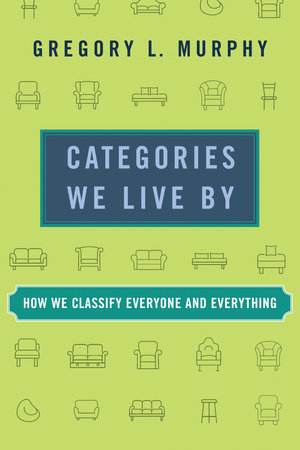
v Book review: 'Categories we live by'

Our lives and careers (hopefully) are full of bridges, some recognised, but not taken, others passed-by on our way (and unseen). Before I completed my training as a student mental health nurse beginning in 1977, I saw a critical bridge between the knowledge and skills on mental health nursing and general nursing. Crossing this bridge was essential (for me) to being a registered 'nurse'.

Chapter 6 on Psychodiagnostic Categories is a gift therefore. It's a gift because another bridge emerged in 1980-1981 with the Sinclair microcomputers and advent of 'home computing'. With a ZX81 there was going to be a need to navigate this space between the what is human and what is machine. Two categories that remain key concerns today.

The DSM (Diagnostic and Statistical Manual of Mental Disorders - published by the American Psychiatric Association [APA] ) is on the chapter's first page, plus the patient, researchers, psychiatrists and the conditions learned during their medical education, contrasted with individual psychiatrist's clinical encounters with patients. 

Very quickly (the next page p.86) Murphy identifies the 'circumstantial factors' that cause mental illness. This is very positive as acknowledging the determinants across health is key, however framed, e.g. social determinants, economic, educational we must take into account all of them. Otherwise our assessment must be considered as incomplete, or at least lacking?

The utility of Prof. Murphy's short book is in how prior to the case studies we see the problem of definitions. And how what is determined is often a matter of convenience. This is a non-trivial matter - especially in health, economics, sciences, politics, future and peace studies: you get the idea...

Of immediate relevance in the USA is the need for categories for insurance purposes. It is an industry. Yes, indeed: 'The truth is that psychiatric patients vary in every possible way', p.86. Computers of course are well-equipped to help us in the creation, revision and publication - access to categories; with classification, taxonomy, nomenclature ... also in the mix. I was reminded of WHO's history of classification (see below) which I point students and colleagues to.

The way DSM is applied is explained and the politics duly noted (especially in Chap. 7). Resort to 'miscellaneous' is described as a sign that 'the categories are not necessarily picking out 'natural kinds'. I remember in the 90s, our PICK database on a community mental health project had Murphy's 'X' not otherwise specified. I don't think I read the word 'caseness', but there is a lot 'inside'!? References are ongoing. I wondered if there could be more recent examples, but perhaps this is in turn symptomatic of categorisation tending to be the rear car? Fuzziness is discussed. Plus, the observation that 'a few psychiatric categories may be true natural kinds, like gold or rainbow trout.' p.89. 

'Change' is a mantra for all disciplines in the NHS and global healthcare. So pragmatic to see how revision and change in the DSM can be used by - dare I mention - anti-psychiatry advocates and clinicians as to what change represents to these respective interest groups? At a time when research is experiencing funding changes, Murphy contrasts how DSM was developed for the use of clinicians to identify people with similar profiles, but they were not developed to identify (research - Nat. Inst. for Mental Health) underlying causes. Raising the determinants once again, p.91.

It is obvious but as personnel and Brits may look at private medicine with coding purposed for insurance purposes; there is within the NHS (public-funded healthcare) and psychiatry (a single domain too) within and the need by patients for diagnosis, and the welfare system. Here in the UK the rise of mental health in young adults, autism and waiting lists for assessment for ADHD are a moot point.  

Through Hodges' model we some possibly fascinating bridges, that are much less-travelled these days? In many cultures, even if we do not need permission to be sick, it needs to be recognised socially - and so politically. Society needs to deal with individuals who are ill, infirm, disabled. It's interesting then to reflect on this issue and phenomena through the lens of anthropology and medical sociology. Murphy warns to of the dangers 'of thinking of something as being the category'. In medicine a new approach is needed, as Murphy also notes. A nice bridge to chapter 7 Categories and Power.
'The case studies discussed in the previous chapters remind us that categories can be political and social tools. An old department chair of mine had the saying, "She who sets the agenda controls the meeting." We might coin a new one, "Those who make the categories control the outcomes." If your psychodiagnostic categories are made by working therapists and physicians, they might facilitate treatment- -and also benefit those practitioners. If they are made by researchers, they might not be very useful for treatment at all. And if they are made by insurance companies, all bets are off.' p.95.
Trying to take my attempts to find theoretical underpinning (category 'trying to clever') I've a diagram scribbled here. Nearby, p.100, I picked up on 'the cost of losing information or distorting reality to some degree.' Murphy picks up on the ICD Int. Classification of Diseases here. Twitter is still twitter here - thumbs up for that! There is a useful example of the impact of categories in age, pregnancy and medical attention provided.

From Chapter 8, I picked out: Naming Nature: The Clash Between Instinct and Science, by Carol Kaesuk Yoon. W. W. Norton: 2009. 352 pp. £19.99/$27.95 9780393061970 | ISBN: 978-0-3930-6197-0; and checking, I remember the book's cover. Murphy's book overall highlights the convenience of our categories, the ongoing challenges and everyday conundrums they present though the remaining chapters on Species (8); Peanut Butter, Potato Chips, Almond Milk... (9); Racial Categories (10). These all contribute, still building a coherent picture, chapter 10 vital among them with a url provided (which may have changed):

https://anthropology-tutorials-nggs7.kinsta.page/adapt/adapt_4.htm


The one-drop rule (David, 1991) on p.126, is deeply troubling. Especially so given some examples of human reasoning even today. Medicine, by way of blood tests, features again. I smiled wryly reading how people from different countries have different rates of disease, e.g. 'heart disease in Scotland'. Instantly, and crackling - a deep-fried Mars bar popped into my mind. 

The things people do. You - really could read this book! 

Murphy, Gregory L. Categories we live by: how we classify everyone and everything. Cambridge, MA: The MIT Press, 2024.

Many thanks again to MIT Press for the review copy and Prof Murphy for a great read.

Previously: DSM : fuzzy : categories