Hodges' Model: Welcome to the QUAD: Search results for girls

Hodges' model is a conceptual framework to support reflection and critical thinking. Situated, the model can help integrate all disciplines (academic and professional). Amid news items, are posts that illustrate the scope and application of the model. A bibliography and A4 template are provided in the sidebar. Welcome to the QUAD ...

Showing posts sorted by relevance for query girls. Sort by date Show all posts

Saturday, August 15, 2026

Afghanistan: Help women and girls in Afghanistan today

Five years after the Taliban takeover in Afghanistan, the de facto authorities have issued more than 100 decrees affecting Afghan women and girls and stripping them of their rights, freedoms, and dignity.

No other country has dismantled the rights of half its population through law, policy, and practice to the same extent.

At the beginning of this year, the Taliban issued a decree effectively
 legalising domestic violence by allowing husbands to punish their wives.

And in May, another decree removed minimum age protections for marriage and made it harder for women to leave a spouse. This has increased the risk of forced and child marriage.

This is not just a loss of rights. It is the systematic 
erasure of women and girls from public life. 
Five years on from the Taliban takeover and the 
exclusion of women and girls is being normalised.

This unparalleled crisis of women’s and girls’ rights is at risk 
of being forgotten by the world.

individual
|
INTERPERSONAL
: SCIENCES             
humanistic ------------------------------- mechanistic
SOCIOLOGY : POLITICAL   
|
group


Self - esteem/wellbeing
Self-expression
Personhood
Mental health
Education - Thought
Life goals
Religion Meaning
Life - aspiration
Self-determination
Spiritual affirmation


Visibility
My VOICE
Daily routine -
Quotidian life
Life [this] One -
'Live it'
'Self-actualisation'
Life chances
Lived experience
Liminality - 
this is my journey ...


Gender apartheid
Relationships
Abuse - Domestic violence
Cultural beliefs
Quality of Life
Social
Religious beneficience
Ethics
'You see me'
'I see you.'
... our journey together.
We sisters are recognised 
by our brothers.

State sanctioned abuse
Scapegoating
Power - 
Absolutism
Denial of Human Rights
Crimes against Humanity
Law, Work
 Literal reading /
interpretation
'My State sees me?'
I am cherished by the society in which live. I can contribute. I can Be and give of myself [here].


Previously: 'Afghanistan' : 'women' : 'girls'

See also 8th Sept. The Last Free Women: A Daring Escape from Afghanistan and Coming of Age in America. Blumenstein & Kapp. Hardcover, 368 pages. Grand Central Publishing. ISBN: 9781538779002

Sunday, March 29, 2026

Children: FACE the past, future, your social media, Capitalism

INDIVIDUAL
|
    INTERPERSONAL    :     SCIENCES               
HUMANISTIC --------------------------------------  MECHANISTIC      
SOCIOLOGY  :   POLITICAL 
|
GROUP

MENTAL HEALTH and WELLBEING

LIFELONG LEARNING
 
KEY LITERACIES 

PSHE EDUCATION -
 Personal, Social, 
Health and Economic
The Face
'Apps such as TikTok and Instagram are filled with videos of young girls and teenagers advising their peers on elaborate skincare routines, especially through a popular line of content called "Get Ready with Me".

Parents have sounded the alarm over this trend, while recent medical literature has recognised the phenomenon of "cosmeticorexia", also called "dermorexia", defined as a culturally reinforced preoccupation or obsession with achieving "flawless" skin that can lead to "excessive, age-inappropriate or compulsive use of cosmetic products".'

'Italy is investigating a beauty retailer and make-up brand owned by French luxury group LVMH over claims their marketing has fuelled "cosmeticorexia", an unhealthy obsession with skincare among young girls.
The Italian Competition and Market Authority (AGCM) said yesterday it was probing Sephora and Benefit Cosmetics for suspected "unfair commercial practices" with the promotion of skincare products such as face masks, serums and anti-ageing creams to girls as young as 10 years old.
Those marketing campaigns were carried out mainly via social media, the  regulator said, leading young girls to "compulsively" buy such products.'


My sources: Amy Kazmin, LVMH's Sephora probed in Italy over fuelling young girls' skincare obsession, FTWeekend, 28-29 March 2026, p.1. FTWeekend and The Times. Reviews.

See also: Kazmin et al. Beauty industry scrutinised over age-inappropriate teen marketing. FTWeekend. 11-12 April, 2026, p.14. 

London visit February. Waterstones, Foyles, Hatchards & others.

Book image: https://www.amazon.ca/Face-Cultural-Fay-Bound-Alberti/dp/1538766531
 
Previously: 'health' : 'face' : 'child' : 'obsession' : 'social media'

Saturday, April 25, 2026

MAACAL: Statues Also Breathe

Catharsis Arts Foundation in collaboration with Obafemi-Awolowo University and 108 students, 2022

This exhibition presents a collaboration between Obafemi-Awolowo University, 108 students from all across Nigeria, and the families of the Chibok girls who were kidnapped by Boko Haram in 2014. 

Inspired by the iconic terracotta heads of Ife, it was initiated by artists Prune Nourry and Ade Bantu and seeks to raise awareness on the plight of the missing girls, and to highlight the diversity of Nigerian culture. . . .

On Thursday I visited MAACAL - Museum of African Contemporary Art Al Maaden, an art gallery  I first read about in FTWeekend Life&Arts, not long after first visiting Marrakech in 2023.

The main exhibit presents itself straight away after entering:

Statues Also Breathe, exhibition view, Art Twenty One, Lagos, Nigeria
 ©Dohdohndawa Photography/DDD Studios

A short but touching film in the gallery bears testimony to the fact many 'school girls' are still absent. Repetition is standard method in design. In today's manufactured world you might think what is so special about this? Until you are there physically, and walk through them. You see each one, a who: unique, an individual, a person taken away from where they belong.

As a white man from NW England, there was a moment when I realised: I was on the same continent where this had happened and is ongoing. Searching Youtube reveals other related videos concerning the exhibitions. It's strange watching them again as a check on their availability. A short video of an event to launch three new installations earlier this year is worth watching. Unfortunately, my phone failed until I got back to Marrakech, so I've no photos. I've three works in mind though.

I walked there, and back after trying to sort a taxi with a lovely couple from Germany and their son. Some taxis are limited to carry three persons. This is what arrived. The sun, even behind clouds that day, and flights taking off from the airport helped my sense of direction. The girls, seeking an education, did not have these means of navigation.

The garden at MAACAL was small but lovely. I hope to return one day, and well before then . . .

Saturday, August 16, 2025

Women, human rights after 4 years ...

. . . in Afghanistan


Individual
|
      INTERPERSONAL    :     SCIENCES               
HUMANISTIC  --------------------------------------  MECHANISTIC      
 SOCIOLOGY  :    POLITICAL 
|
Group

A woman
A girl

Personhood
Personal identity
Dehumanisation
Self-expression


objectification
defined


A girl
A women

Cultural life
Psycho-Social
Community life
- denied


Gender crimes against girls & women
Human Rights denial
Law?

National identity
Nationhood?

Previously: 'women' : 'girls' : 'boys' : 'gender'

Saturday, November 21, 2009

Nurses as modellers and informaticians: surely not!

Nursing is still trying to escape and evade the sexual 'Carry On' stereotypes that have plagued the profession in the popular imagination. For the majority of people talk of nursing and models more readily conjures up visions of catwalks than an academic pursuit.

You can still see and hear the response of bright-eyed girls and boys (aged 9-10...) to the age-old question: "What do you want to be when you grow up?" The answer: "I want to be a nurse and help people get better!" Even though youngsters are more sophisticated these days (the reference to girls and boys is not just me being politically correct), they are still most likely primarily motivated by humanistic leanings as opposed to wanting to pursue the necessary studies in the sciences.

Despite efforts worldwide practicing nurses do not all see themselves as data modellers enthralled by IcT. IT isn't usually why they came to nursing, although many mature students may have started their career in the IT sector. Chapter 1 of Programming the Semantic Web highlights how a basic table is a model (p.6-7). So of course gifted with natural language we are all data modellers. Hodges model then is the ubiquitous high-level data model - a two-by-two table and a whole lot more.

An invitation to mine data, gather information and deliver nuggets of knowledge.

Ref:
Programming the Semantic Web: Build Flexible Applications with Graph Data
By Toby Segaran, Colin Evans, Jamie Taylor
Publisher: O'Reilly Media
Released: July 2009

Monday, November 04, 2013

FGM: 66,000+1 'cultural sensitivity, political correctness', or +0 real action ?

HUMANistic -------- RIGHTS

context: eradicating female genital mutilation

INTERPERSONAL : SCIENCES
SOCIOLOGY : POLITICAL
individual

psychological effects ...

physical effects ...
socialisation into ...?
intergenerational practices
expectations
social change
education
norms
need for 'cultural sensitivity'
need for ACTION
http://www.dofeve.org/index.html
group - population

Additional links:

BBC News: Health professionals must screen for genital mutilation

Image: Daughters of Eve

The Guardian: Report calls for female genital mutilation to be treated as child abuse

Symposium: Zero Tolerance: Eradicating Female Genital Mutilation
A Public Policy Exchange Symposium 13 November 2013 - Public Policy Exchange
Overview
It has been estimated that over 20,000 girls under the age of 15 are at risk of FGM in the UK each year, and that 66,000 women in the UK are living with the consequences of FGM. More than 1,700 victims were referred to specialist clinics in the last two years, with at least 70 women and girls as young as 7 seeking treatment every month. FGM has been a criminal offence in Britain since 1985; however, there has not been a single prosecution to date. Furthermore, since 2003, it has been illegal to aid or participate in arranging FGM to be performed on another person inside or outside Britain.

Wednesday, March 24, 2010

Lovelace, women's IT and QUADratic equations

When you stop and think about it - really stop and think, the foresight of Charles Babbage was astonishing, even though he did not quite achieve his objectives. What is even more amazing then is the role that Ada Lovelace played in the development of computing and scientific computing.

This post is to celebrate Ada Lovelace Day. As per this post 12 months ago, I am and always will be celebrating Enid Mumford and her work on the need and importance of socio-technical insights when we attempt to apply IT in the work place*. Her work also exemplifies what women can and do contribute to IT.

In terms of the 3R's I am 'literate', but real maths evades me at least the level of ability I wish I had. Namely, the expertise to exercise some of puzzles in the social sciences.

BBC radio 4's Woman's Hour has regularly featured maths education for women and girls, bemoaning the maths abilities of the female population. Some maths has come to me through programming in BASIC, sorting, recursion, functions and using SPSS (DOS version!).

They should teach more programming in schools. Computing and maths are often equated (sorry!) and fittingly the BBC have also featured the genius of Ada Lovelace.

So all these things are connected: the pioneering insights of Ada Lovelace, the state of mathematics education for girls and how girl's are engaged in IcT today globally.

Additional links:

Gender IT: https://www.genderit.org/
Association for Progressive Communications: http://www.apc.org/
Alice innovative 3D programming environment

Image source:
http://www.bbc.co.uk/radio4/womanshour/01/2010_07_mon.shtml


* Jones, P. (2009) Socio-Technical Structures, the Scope of Informatics and Hodges’ model, IN, Staudinger, R., Ostermann, H., Bettina Staudinger, B. (Eds.), Handbook of Research in Nursing Informatics and Socio-Technical Structures, Idea Group Publishing, Inc.

Thursday, March 08, 2012

Thursday, May 28, 2026

International Menstrual Hygiene Day 2026

Facts & figures about MH Day and menstrual health & hygiene

About Menstrual Hygiene Day (MH Day)

  • MH Day is celebrated annually on 28 May to symbolize the average length of the menstrual cycle (28) and duration of menstruation (5).
  • It was initiated by WASH United and was first celebrated in 2014. WASH United is an award-winning non-profit based in Berlin/Germany, founded in 2011, with a focus on menstrual health and hygiene (MHH). WASH United focuses on strengthening the global MHH ecosystem by offering free, easy-to-use solutions for awareness, advocacy, and education, and engages in strategic advocacy throughout the year.
  • The mission of the MH Day movement is to create a period-friendly world.

A period-friendly world is a world in which menstruation is accepted as a normal fact of life and is no longer stigmatised. It is a world in which everyone is educated about menstruation from an early age. In a period-friendly world, everyone has access to quality and affordable period products of their choice. Everyone has access to period-friendly toilets. And in a period-friendly world, menstrual health services are available to everyone. It is a world where no one is held back just because they menstruate. (MH Day mission)

  • The impact of MH Day 2025: reach of 971 million people, 25,026 pieces of media coverage, 198,132 social media contributions, more than 2,000 events, and 1,350 partner organizations.
 
About Menstrual Health and Hygiene (MHH)

Global perspective of menstruation

MHH-related challenges


1 of 3  April 2026                                         Continued ...                                       #PeriodFriendlyWorld 

Friday, January 03, 2025

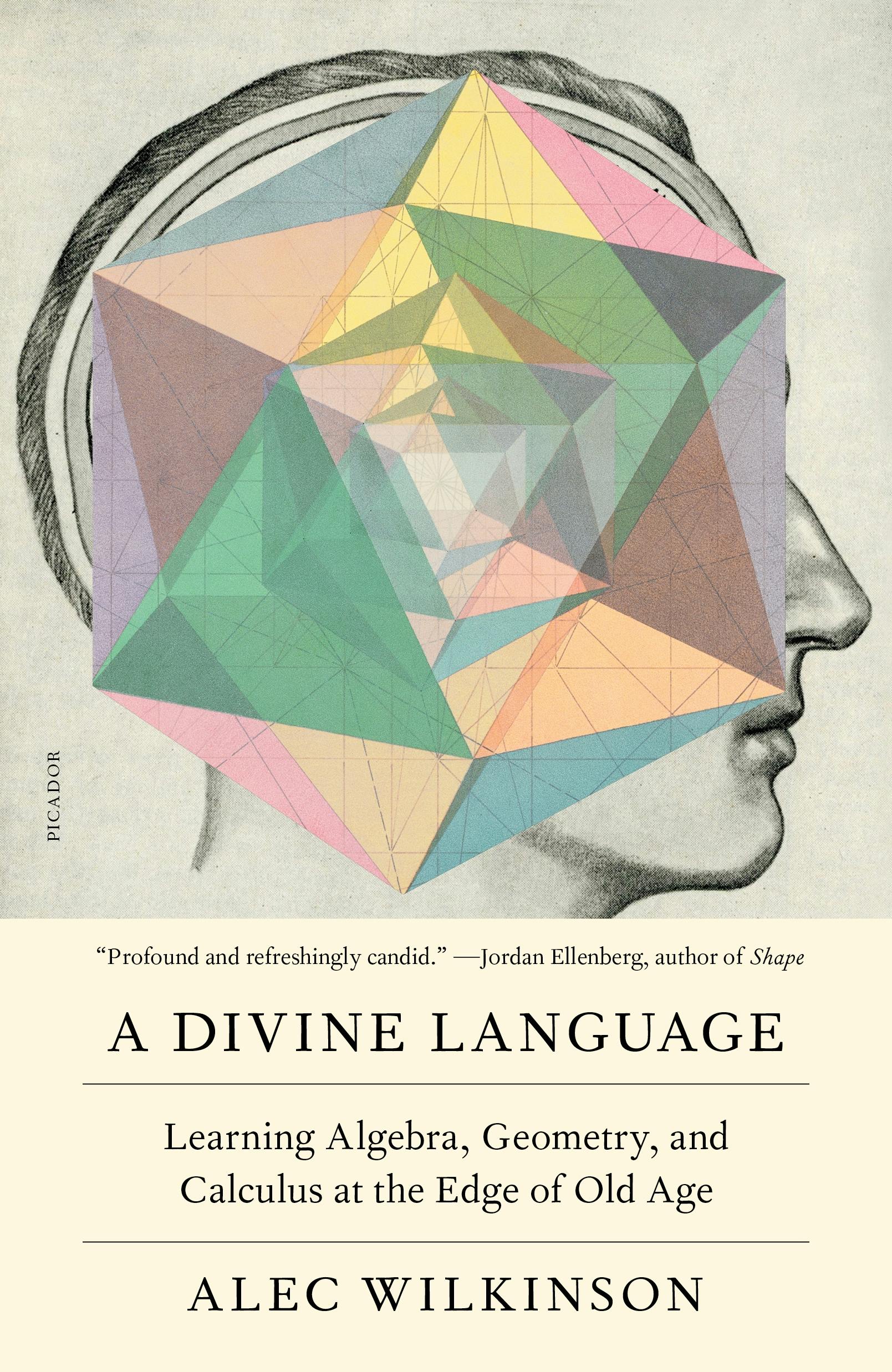
How 'divine' is the language of care?

'My impression was that algebra was less a subject than a practice into which one was inducted by the algebra priests after a series of mortifications. The letters and equations that the teacher drew on the board did not seem related to the numbers I had handled in other classrooms. For one thing, a problem in arithmetic was vertical, one number beneath another, and a problem in algebra, an equation, was horizontal. I felt as if in a permanent present, unable to see how the past and the future were joined. In Ulysses James Joyce writes that the present is the drain that the future goes down on its way to becoming the past.' p.12.
'The mathematician Alonzo Church, who taught Alan Turing, told another of his students, David Berlinski, "Any idiot can learn anything in mathematics. It requires only patience." I would sit with a pencil and paper trying to solve an algebra problem and sometimes go only so far before my mind would halt, because I had could used up what little I knew that might apply. It hadn't occurred to me to think of algebra as the bright boys and girls I had been among had thought of it, as a series of related procedures. They were constructing a map. I was collecting postcards from places where anxiety or incuriousness had kept me from leaving my hotel.' p.31.
(my emphasis)


Alec Wilkinson. (2022) A Divine Language. Learning Algebra, Geometry, and Calculus at the Edge of Old Age. New York: Farrar, Straus and Giroux. https://us.macmillan.com/books/9781250168580/adivinelanguage/

Previously: math :: logic

Friday, December 11, 2015

"The Revolving Boy" - and Girls 'one day soon'?

individual
|
INTERPERSONAL : SCIENCES
humanistic --------------------------------------- mechanistic
SOCIOLOGY : POLITICAL
|
group

"Derv soon discovers that he has an extraordinary sense of direction: he is also acutely uncomfortable unless he is able to "unwind" before going to bed each night the number of times he has turned during the day. Some of all this he understands when he learns how he had been born - weightless - in space. But it is not until a friendly teacher gains the family's confidence and takes him to a group of scientists that he begins to fathom the true explanation of his unique capabilities." (sleeve notes, 1967).

space medicine, birth in space,
 radiation sources,
DNA-RNA,
safety, low Earth orbit, high Earth orbit, weightlessness, microgravity, birth,
conception, speculation,
sex in space: apogee-perigee?
Why? Love?
Newton's Laws of Motion?
Einstein: Line of Sight?
"Where there's a will...."
 minerals, growth - development,
bones, diet, mobility,
space-Earth: 'Home'?
Species - Homo ?


Book cover: Friedberg, The Revolving Boy, 1967
human rights, unborn child,
guardianship,
non-nationality: Citizen of the World,
parenthood,
friendship
freedom
choice
Law:
Individual:Group
Earth challenges:
Space & Antarctica Treaties...
'top and tail' - Arctic


Additional links:

Sagan, C. (1973) Communication With Extraterrestrial Intelligence (Ceti). M.I.T. Press.

Vakoch, D.A. (ed.) (2011) Communication with Extraterrestrial Intelligence, New York: NY, State University of New York Press.

Ack. Thanks to my friend Paul Brown who told me about this book c.1973.

Saturday, January 09, 2021

Book review: "Leave No One Behind" i #LNOB

Leave No One Behind

This book is like a favourite CD or LP [that's vinyl ;-) ], every track - chapter - is an ace - no duds. I wanted to start this review with the final chapter, but I'll pick that up in due course (iv?).

The book is structured in three parts:

  1. People
  2. Problems
  3. Places

I don't read horror specifically, so it is not often a book scares me from the get-go; but this one did. 

Chapter 1 gets specific on the statistics of LNOB and sustainable development. The numbers make for grim reading and had me wondering how much sense I could make of the book overall from the albeit COVID tainted comfort of Wigan Pier. What stood out was the way the intro chapter set out the stall. Obviously, that's the purpose and while depressed at what was follow from the initial graphs, the structure and cogency provided its own impetus to read. The text is clear and very readable, the data, graphs, notes all have bite. While the SDGs are Sisyphean in nature, the intro is like a snowball that starts from the upper peaks and grows chapter by chapter in  meaning and significance.

Obviously, Agenda 2030 looms large, but if you think in first reading of poverty, or to be more specific ultra-poor, income, education, Africa, development and finance you know the agenda to follow then for this community mental health nurse there are insights aplenty.

Chapter 2 combines two central issues in gender equality (by 2030) with 'Women on the Move'. The book draws significance to decade long issues that now constitute a specific SDG - #5 in this case. The book is up-to-date - oozing contemporaneity with #MeToo and background on the cussedness of the root causes of gender inequality. There's common sense too in the need for 'adaptable solutions that are fit for the complexity of the problem'. On first reading about the progress of feminist movements, but more recently experiencing resistance in access to and being able to inhabit civil spaces, this is more 'scary' than a horror story. Reflecting on the 'other' challenges and climate change especially and the role that feminism can play, this retrograde motion could be the stuff of nightmares. The chapter and book, as I will explain, drew my attention to the fact that while I tweet and post here on feminist issues: I am no feminist. The notes provide references and pointers to specific books on feminism. From this book I can see I should read one.

Organizations, such as, BRAC, Camfed, CARE Int. and Oxfam with authors clearly experts from academia and such key players in the field. The balances are not just financial, but a community program on women and girls can potentially prompt a backlash if men and boys and not engaged. I can see further relevance of being able to traverse individual-group, as Matthews and Nunn debate the merits and limitations of individual-based and need for social-based interventions. Yes, I can see how individual-based interventions can be apolitical (and how an axis can invoke several thresholds). To a text on feminism, I must add formal reading on intersectionality too, as the analysis called upon here (box 2.2) to make sense of social and income-based factors. 

Several chapters raise the problem of scale, the lack of data, especially what is and can be measured. Without due care, false proxies can be used for measures and more simple interventions may be pursued because they are more easily quantified. This may be insufficient to fully understand the complexity of gender equality. The book is 'dynamic' throughout; with project and service-based action for the individual progressing then to movement-based at the social change level (CARE, 2017, p.31. Gender Equality Framework -- through Individual, Group, Communities to deliver Social Change).

Although in this first review-post I refer to feminism, the treatment in the book is balanced and also essential. I usually equate 'hope' with the intra- interpersonal domain. Of the many sources in this to follow-up, is evidence on the "science of hope" with Coates and MacMillan in chapter 3.

individual
|
INTERPERSONAL : SCIENCES
humanistic ----------------------------------------------- mechanistic
SOCIOLOGY : POLITICAL
|
group - population
hope

SCIENCE of HOPE


Homi Kharas, John W. McArthur and Izumi Ohno, (Eds.) 2020. Leave No One Behind: Time for Specifics on the Sustainable Development Goals, Washington D.C.: Brookings Institution Press.  


Saturday, November 25, 2023

South Sudan Medical Journal - November 2023 Gender-Based Violence

Dear reader,

Our November issue on gender-based violence (GBV) is online here. See details below; we thank the many people who contributed to this important topic.
 
Please share this issue with your colleagues and promote it through your social platforms.


For example: “The South Sudan Medical Journal’s November issue tackles gender-based violence @SSMedJournal #SouthSudan #SSOT” or retweet from @SSMedJournal
 

EDITORIAL


RESEARCH ARTICLES
  • Maternal socio-economic and neonatal medical characteristics associated with survival of preterm neonates in Torit State Hospital, South Sudan: a descriptive cross-sectional study Beatrice Doki, Pontius Bayo and Ronald Jada
  • Factors associated with maternal deaths in Bongor Provincial Hospital, Chad Gabkika Bray Madoué, Allarehene Noudjalbaye, Saleh Abdelsalam, Kainba Passoret, and Diguisna Kadam

FOCUS ON GENDER-BASED VIOLENCE
  • Gender-Based Violence: How South Sudan is fighting back Nyakomi Adwok
  • Clinical management of rape survivors Koma Akim
  • One Stop Centre for the survivors of sexual and gender-based violence at Juba Teaching Hospital Busiri Julius Korsuk
  • SSMJ talks to Data Gordon about Men4Women Ann Burgess and Data Gordon
  • Ask the GBV experts Koma Akim and Nyakomi Adwok
  • The reality of GBV: The story of a South Sudanese girl child in Kenya Nyajuok Tongyik
  • 16 Days of Activism Against GBV Rita Martin Lopidia  
  • Resources on gender-based violence/violence against women and girls related to South Sudan
  • GBV Educational/Training Resources

SHORT COMMUNICATIONS
  • Applications for postgraduate Training Gordon Memorial College Trust Fund (GMCTF)
  • Letter to the Editor
  • Obituary: Dr Bashir Aggrey Abbas Meseka 
  • Obituary: Dr Peter Lado Aggrey Jaden


FRONT AND BACK COVERS IMAGES: From Tales of Lala, No to GBV (Credit: Crown the Woman, South Sudan)
 
Our articles are listed by African Journals Online (AJOL) and the Directory of Open Access Journals (DOAJ) as well as being on our website. SSMJ is included in the EBSCO scientific research collection.

The SSMJ team
Email: southsudanmedicaljournal AT gmail.com
Website: http://www.southsudanmedicaljournal.com
Follow us on Twitter/X @SSMedJournal and our Facebook Group

Tuesday, February 11, 2025

Project: Partners against Stigma and Mortality in Epilepsy (PASME) Cameroon

Boyo Association for Rural Development (BARUDEV - Cameroon) has launched a project on epilepsy called Partners against Stigma and Mortality in Epilepsy (PASME).

We are calling for partnerships and support for our project on epilepsy which will focus on mental health and psychosocial support, treatment, knowledge and skills exchange,raising awareness, rights protection amongst patients affected and or bereaved by epilepsy, health care providers. Also reduce seizures and consequences particularly in children and adolescents living with epilepsy and HIV/AIDS. 
  • ADVOCACY AND AWARENESS. Promoting awareness and supporting initiatives that prevent epilepsy. Prioritize epilepsy at national and international levels, while lobbying and advocating support for partners and governments to prioritize epilepsy into their health programs and policies.
  • TREATMENT AND SUPPORT. Provide access to treatment and support initiatives that improve access to effective treatment including medications and their therapies. 
  • PROVIDE BEST-PRACTICE MODELS. Develop and share models for effective management of epilepsy in diverse settings including conflicts and disasters where people are forced to displace.
  • BUILD CAPACITIES THROUGH TRAINING. Advance training and information sharing for healthcare givers, CHWs and family care givers involved in epilepsy care. 
  • PROMOTE HUMAN RIGHTS AND DIGNITY. Advocate for the accessibility of services, protection of human rights and preservation of dignity for all with epilepsy including children and adolescents living with epilepsy and HIV/AIDS. 
  • EMPOWERMENT AND RIGHTS: Lobby and advocate for the rights of people with epilepsy through their associations and to enable them participate in decision making processes. 
  • RESEARCH AND COLLABORATION: Foster research through encouragement and support in epilepsy including causes, prevention, treatment and social impact. Strengthen their associations, develop and support them through mental health and psychosocial support projects and ensuring and protecting their well-being and their families.
BARUDEV is currently building a website (which I will add upon news - PJ).
Please contact me if you need further information

HIFA (my source) profile: Chiabi Bernard Ful is Director of Boyo Association for Rural Development (BARUDEV--Cameroon). This is a local NGO found in Boyo district of North Western Cameroon. Our activities are to empower women, protect the sexual and reproductive health for women and girls, and protect the rights of children. We have been training community health workers to follow up patients, pregnant women, sick children and refer them to the hospital.
barudev AT yahoo.co.uk

Tuesday, November 17, 2020

Interactive Radio Drama Training - Theatre for a Change - Online

From: Ryan Borcherding

Learn how to produce Interactive Radio Drama (IRD) for a wide range of gender, SRHR, SGBV and COVID-19 behaviour change and advocacy objectives.

IRD is a unique social and behaviour change communication tool from Theatre for a Change. It has been used in multiple countries since 2010 to improve the sexual and reproductive health and rights of marginalised and vulnerable women and girls, with documented results.

IRD enables audiences to call in to the radio station and replace the main character in the radio drama, to show what they could do differently to change the story for the better. It enables behaviour change and advocacy to happen on a large scale. In Malawi, we reach over 550,000 listeners through interactive broadcasts each week.

We are now offering online training in our IRD approach to enable other organisations to use IRD in their gender, SRHR, SGBV and COVID-19 behaviour change and advocacy work.

To view the full course outline, including eligibility requirements, please see www.tfacafrica.com/online-training

For more information, please contact Ryan Borcherding on ryan.borcherding AT tfacafrica.com

Ryan Borcherding

My source:

The Communication Initiative Network


Saturday, April 18, 2020

the What, When, Where, Why of online healthcare information exclusion

individual
|
INTERPERSONAL : SCIENCES
humanistic ----------------------------------------------- mechanistic
SOCIOLOGY : POLITICAL
|
group - population

Mental Health factors

Lack of confidence in device usage

Self-exclusion due to lack of motivation (sense of information overload, trust); or multiple illiteracies: 3Rs, health, IT, information.

Articulation of MY 
health information needs

Health literacy (and others) still 
emerging as a discipline

Lack of time to focus on 'my' health due to other constraints 
and social pressures: duties / work

Ethics: Primacy of message?
My health or forest logging, 
over-fishing, selling x,y,z ?
Physical health factors
 (mobility, senses, ableness ...
Inverse Care Law)

Geographic issues - 
terrain remoteness
 
Non-existent or 
poor broadband services

No access to energy supply

Quality and safety concerns

Need for more research 
- change studies, innovation.
Media modalities: paper->digital, speech (theatre?)->digital ...
Design, Usability
Grammatical/reading age checks

Individual's understanding 
of the benefits of
 online healthcare information.

No spare - individual - income 
for online services due to
 family welfare - food ...

Languages not available

Cultural factors, negative attitudes

Personal space in group settings
(privacy, concentration, engagement)

Articulation of MY 
family's health information needs
 
Availability of Community initiatives
shared access schemes?

Policies / Funding 
of telecoms infrastructure:
community - industry - gov 
collaboration & partnership*

'Market' conditions - governance

Being 'permitted' to have access, 
use of devices - girls/women.

Being voluntarily displaced
from local community by work (continuity)

Government control of access to services - 
political fire-walls ('noise'?)
Use of pay-walls

Incarceration

Loss/Dispossession:
Refugees - Disasters

Deliberate publication of
 fake-(health) news.
Gov & Corp. 
control of this and advertising.


Open to suggestions for any additions ...?


Prompt: HIFA message.

*See also previous post:
https://hodges-model.blogspot.com/2020/04/book-third-pillar.html

Saturday, May 10, 2014

Genetic disorder: belief's a-gender

individual
INTERPERSONAL : SCIENCES
humanistic ------------------------------------------- mechanistic
SOCIOLOGY : POLITICAL
group

Y
I tell you what you will believe and IF you can have an education!
X
Wither women in science and engineering?
X
Whose place is this?
'Who' is the community?
#BringOurGirlsBack
Y
Human Rights for Girls and Boys

Tuesday, September 16, 2008

Mental health survivors create evolving timeline of the UK survivor/user movement

From: Jill Anderson
To: MHHE AT JISCMAIL.AC.UK
Sent: Monday, 15 September, 2008 17:08:22
Subject: Survivor/User movement timeline

The survivors history group has created an evolving timeline of the UK survivor/user movement. It can be viewed online at:

http://studymore.org.uk/mpu.htm#Manchester2008

Will be an invaluable resource for teaching.

Best wishes,
Jill
----

Here is one entry of particular note for 1894:

A short story Passed is the first known published work of Charlotte Mew. The writer, walking in a poor area of London (Clerkenwell?), visits a church. She sees a gospel that the priest at the alter does not:

"Two girls holding each other's hands came in and stood in deep shadow behind the farthest rows of high-backed chairs by the door. The younger rolled her head from side to side; her shifting eyes and ceaseless imbecile grimaces chilled my blood. The other, who stood praying, turned suddenly (the place but for the flaring alter lights was dark) and kissed the dreadful creature by her side. I shuddered, and yet her face wore no look of loathing nor pity. The expression was a divine one of habitual love. She wiped the idiot's lips and stroked the shaking hands in hers, to quiet the sad hysterical caresses she would not check. It was a page of gospel which the old man with his back to it might never read. A sublime and ghastly scene."
The description may shock (See also 1916), but compare with Jayne Eyre in 1847 and the Care of Children Committee in 1946. The outstanding difference is the compassion.
The partner web resource of the survivors history timeline the - Mental Health History Timeline - is also well worth exploring.

Sunday, August 30, 2026

A Scope with the Big Picture in Mind

Coverage plans are ready for NASA’s Nancy Grace Roman Space Telescope prelaunch and launch activities. Roman is NASA’s next-generation observatory designed to explore some of the universe’s biggest mysteries, including dark energy. NASA and SpaceX are targeting Roman’s liftoff for no earlier than 7:26 a.m. EDT Sunday, Aug. 30, aboard a SpaceX Falcon Heavy rocket from Launch Complex 39A at the agency’s Kennedy Space Center in Florida. Launch coverage begins at 6:20 a.m. Live coverage of these events will stream through a variety of platforms. Learn where to watch online: 


individual
|
INTERPERSONAL
: SCIENCES             
humanistic ------------------------------- mechanistic
SOCIOLOGY : POLITICAL   
|
group
education for ALL
life chances

Nancy Grace

STEMM
Observation
Scale

ROMAN

Girls - Women in Science

Political investment in Science for Public and Planetary Good

See also:

Nancy Grace Roman

https://science.nasa.gov/mission/roman-space-telescope/

Previously: 'women' : 'astronomy' : 'big picture'

Monday, August 06, 2012

reVision Launch, 20th September 2012, Liverpool, UK

My source: MHHE list

Invitation to the Launch of reVision (formerly The Joint Forum)

We are a coalition of radical activists who believe in the social model of mental health.
We are seeking to be a voice for change by promoting and exploring knowledge and understandings of the social, economic and political causes of mental distress, and by proposing socially derived alternatives to medicalised approaches.

 Our vision is a society in which the social causes of mental distress are understood and treated with socially based solutions that improve individual lives and bring about wider social change.

We are launching our organisation on Thursday 20th on September 2012
At Liverpool John Moores University, Room 5.04, Avril Robarts, 79 Tithebarn Street,
Liverpool, L2 2ER from 1.00 to 4.00pm

We will be welcoming new members to the organisation at the launch, and are looking for people who seek radical alternatives to psychiatry and who have a critical, political understanding of the social causes of mental distress.

Our keynote speakers will be:

  • Helen Spandler, member of Asylum and contributer to Critical Psychiatry
  • Malcolm Kinney, Senior Lecturer in Mental Health Social Work: LJMU
  • Phil O’Hare, Senior Lecturer: School of Social Work: UCLAN
  • Naphtali Titus Chondol, mental health activist
  • Jackie Patiniotis, freelance researcher with a particular interest in women’s mental health and working to end violence against women and girls

Please email ... to confirm your attendance.