Hodges' Model: Welcome to the QUAD: Search results for big picture

Hodges' model is a conceptual framework to support reflection and critical thinking. Situated, the model can help integrate all disciplines (academic and professional). Amid news items, are posts that illustrate the scope and application of the model. A bibliography and A4 template are provided in the sidebar. Welcome to the QUAD ...

Showing posts sorted by relevance for query big picture. Sort by date Show all posts

Tuesday, July 06, 2010

Editorial JRN. Coalition in leadership: Politics - the big picture and the big game


In the Journal of Research in Nursing, Veronica Bishop's editorial -

Coalition in leadership.
Politics - the big picture and the big game

- explores the state of the body politic in nursing. Bishop's focus is research, but the implications extend beyond the UK, to nursing globally. The body is indeed immersed in politics, but it seems the feet are dry and there is no one at home.


Considering that The Politics of Nursing by Jane Salvage was published c. 1991 political maturity is long overdue?

While the sexual politics of nursing have been campaigned for in the nursing media and vigilance is needed, it seems that a political birth for nursing needs to be induced. There is a political mentality there, there has to be. The future is too challenging, too fraught, too close to be mollified by appeals of "Anything for an easy life (and death)!."

Bishop begins with a quote:

The very essence of leadership is that you have to have a vision. It’s got to be a vision you articulate clearly and forcefully on every occasion. You can’t blow an uncertain trumpet.
Theodore Hesburgh (1917–(2015))
If you are familiar with Hodges' model then you know what is coming. ... In quantitative (and qualitative) terms 25% of our deliberations using Hodges' model can be POLITICAL. This is not just the political dimensions of the patient, carer and the health and social care enterprise. The model includes the practitioner, but back to Bishop:
Having ‘power’ is a concept that sits uncomfortably with many nurses – it does not fit with the ideal of caring and many clinical nurses are quite open in their lack of regard for those in management, seeing them as power-seekers rather than power-movers. Clearly nurse leaders have in many cases failed to take their clinical colleagues with them in the drive to put nursing where it belongs, at the decision-making point that drives the agenda for health services, a point borne out by Stanley (2009).
How ironic that 'comfort' itself has been the subject of concept analysis and theorising in the nursing literature. If student nurses are exposed to the POLITICAL from the outset of their careers, then surely at the very least they will be more comfortable dealing with the guises and disguises of power?

Bishop refers to leadership and ownership and the two are frequently conjoined. The question of politics in nursing - in thought, practice, management and policy (research!) - makes me wonder ownership of what?

If the political domain is so frequently a vacant lot as far as nurses are concerned, then perhaps when we do put in an appearance we are not taken seriously. It really is a case of: what are you doing here?! As Bishop points out through -
Nurses are scientific. When they want to get to the core of a problem they always try to drill down. Yet politics are about the big picture. Nurses are agriculturalists in that they grow and nurture things but politicians are hunters – they’re always after the big game. It’s these kinds of differences nurses need to start to understand. (Cumberlege, 2007).
Nurses are there in the POLITICAL domain: they are constantly trying to complete the big picture.
... we were considering the best way for her [Baroness Cumberlege] to approach an interview the following day, and eventually, after we had viewed the uppermost issue of the day from every angle she said ‘Oh, nursing is so big!’. How right she was – there is hardly any aspect of life that it does not overlap or impinge on, so considering the big picture is a mammoth task! And again, she was right, we need leaders who have clarity and energy, and can cut through the detail and focus on the professional entity.
Yes, the big 'P'-icture is a mammoth task, hence the need to uncover, compose and frame it early. POLITICS is not just a matter of whistle blowing, industrial relations, policy, the system, us-and-them, banner headlines. ...

Politics is much more and crucial to research as Bishop attests. So, if our students do not reflect upon and articulate the politics of health: ill-health, well-being, equality and inequality, wealth and poverty ... then that professional entity will be a political ghost. A ghost playing a little game in an alien and alienating domain.

Veronica Bishop (2010) Coalition in leadership. Politics - the big picture and the big game, Journal of Research in Nursing; 15; 291.
DOI: 10.1177/1744987110374692

Thursday, September 03, 2009

Drupalcon Paris 2009 "big picture..." x 5 "holistic..." x 6

Today at Drupalcon my keyword count by the speakers of day 3 sessions I was privy to (assuming I was awake throughout) is something like:

"big picture" = 5
"holistic (+ or - thinking)" = 6

These were stressed repeatedly especially by keynote speaker Chris Heuer. Like last year in Hungary I have looked at the BOF (birds of a feather) board and wondered about sticking Hodges 'framework' up there. Why 'framework' and not 'model'? Well framework, product and service are amongst the other keywords at Drupalcons past, present and future no doubt.

Hodges' model is a framework to carry, represent and disseminate big pictures.

While it is very encouraging to me to hear these terms I get the impression this is window dressing. At the end of the day the 'big picture' is the paper around the fish and chips. Its value is quickly spent - especially in this most apparent recycled mode. Chris Heuer alluded to this in his very interesting talk.

There is more to see in the big picture than what seems to be there.


This is why Hodges' model is so readily passed over for its simplicity.

When we gather the constituent parts of the big picture they are invariably 'recycled materials'.

The converted can see the re-purposed value, the need to re-visit the frame and tinker with the contrast, horizon(s), sky and colour; but critically do those who really need to create, see and utilise the resource?

The thing about 'big pictures' is
they are not enoug
h in themselves,
it depends not only on how you fold them,
but on how hard you can throw them.


Image sources:

Fish and chips in paper: http://www.roadfood.com/Restaurants/SearchResults.aspx?st=photos&ob=RestaurantName&ps=1&s=XX
Paper plane: http://www.clker.com/clipart-4601.html

Friday, November 22, 2024

Ethics and the 'big picture'

'It has been my experience that many of the most successful and creative heads of major research labs around the country came to their place from other disciplines. For example, one prominent geneticist that I know has his Ph.D. in chemistry. He told me that coming to genetics from outside the discipline gave him an awareness of structures and values that were invisible to those laboring inside the established system. Much as one has critical insights into the ambience of a city or culture when one comes from outside as a foreigner, so also is there critical understanding of academic disciplines. Thus, one response to the add-on question is to reply that the material you are providing can make your students better scientists by giving them a more global, contextual perspective. A global, contextual perspective allows one to consider divergent research designs that approach a problem in many directions. This is sometimes called "big picture" thinking. Part of the big picture includes other scientific contexts. For example, biology is seen in the context of chemistry, and chemistry is seen in the context of physics. But it is more than that. It also includes values. Should I, as a scientist, pursue all questions with the same vigor? Are there some questions that should be avoided because of the social consequences of their results? Is the scientist compelled to think in terms of helping humankind or helping himself to a Nobel Prize in any way he can? All of these involve values and ethics. They are critical components to global big picture thinking. Such a perspective is a valuable tool for anyone seeking excellence in scientific research.' p.28.
Boylan, M., & Donahue, J. (2003). Ethics across the curriculum : a practice-based approach. Lexington Books. 

INDIVIDUAL
|
INTERPERSONAL : SCIENCES              
humanistic ------------------------------- mechanistic
SOCIOLOGY : POLITICAL   
|
GROUP

PERSONAL ETHICS
INDIVIDUAL INTEGRITY
MY EXPERIENCE
MY REFLECTIONS
INTERSUBJECTIVITY
PURPOSE
BELIEFS

CHARACTER EDUCATION
PROFESSIONAL EDUCATION

PROCESS
OBJECTIVITY
FACTS 
EMPIRICISM

'We define ethics as the process of reflection on the moral meaning of actions.' p.5.

'BIG PICTURE'
PROFESSIONAL EDUCATION


PRACTICE
COMMUNITY OF PRACTICE
ETHOS^ (Chap. 6)

'Ethics is not a discrete body of knowledge that one simply acquires for application and use in particular situations. It entails the ongoing appropriation of ideas of the good as they relate to the changig situations, contexts, and developments in individuals and groups lives. ^ Ethics reflects on actions the actions of individuals and groups.' p.5.


PROFESSIONAL BODIES
PROFESSIONAL STANDARDS
PROFESSIONAL & COMMERCIAL - ACCOUNTABILITY
PROFESSIONAL ETHICS
DUTY OF CARE
POLICY
LAW
JUSTICE

autonomy; nonmaleficence; beneficence; justice*


^Stackhouse, M. (1972) Ethics and the Urban Ethos: An Essay in Social Theory and Theological Construction, Boston: Beacon Press. (Chap. 6, Boylan & Donahue)

*Beauchamp, T. L., & Childress, J. F. (2013). Principles of biomedical ethics (7th ed.). Oxford University Press. (Chap. 6, Boylan & Donahue)

Monday, September 08, 2025

ii Editorial: Persistent Positive Change in Challenging Times ...

To Howden's editorial it's worth highlighting that Hodges' model is situated. So, whether the 'challenge' that is faced is individual, or collective Hodges' model can help to identify the issues, problems, strengths, opportunities, threats, where we are, where we would like to be and more. Surely, reflection, critical thinking is about confiming, or regaining our perspective, correcting our orientation or improving alignment and synchronisation with others? The time this entails, whether exercised on paper, or cognitively (yes, humans thinking is still an option) this is equivalent to a time-out even if momentary. This can be critical in clinical encounters, were emotions are raised, or there is risk of escalation.

So whether the challenge is personal, lived experience, bullying, finance, physical, or mental health, simulation (fidelity, testing), ethical ...; or collective (a team) - service and organisational change, major incident, policy, clinical or management supervision, whistleblowing, public / patient engagement, complaints and challenging relationships; Hodges' model is a tool (one of many) to call upon.

It could be the context causes you to focus on one or two care (knowledge) domains. Or, there is a need to step back in order to 'see' the big picture (integrated care, risk assessment, holistic care, psychosocial view ...) - the spiritual too.

While Hodges' model is simple, please consider this: there aren't many tools that can facilitate articulation and dissemination of the 'big picture' in a form that is (imho) readily transferable and translatable.

Howden, S. (2025). Editorial: Persistent Positive Change in Challenging Times. International Journal of Practice-based Learning in Health and Social Care, 13(1), ii-iii.

Friday, June 12, 2020

"Blind to the Big Picture" and Parity of Esteem

individual
|
INTERPERSONAL : SCIENCES
humanistic ----------------------------------------------- mechanistic
SOCIOLOGY : POLITICAL
|
group - population
Mirrored ...
An art gallery party for Christie's Contemporary during Frieze week 2008
Martin Parr/Magnum

The Decadent Society


My source:
Foroohar, R. (2020) Blind to the big picture. Life&Arts, Financial Times, 23-24 May, p.8.

Ross Douthat, The Decadent Society — has the west run out of ideas? Simon and Schuster

See also:

 - and on W2tQ:


Saturday, December 21, 2019

Review: iv Kinchin's Visualising Powerful Knowledge to Develop the Expert Student

It seems there is no escape from 'learning styles'. Just when you thought they are dated and defunct like a Whac-A-Mole up they pop.

Here on serialists and holist - 'big picture' learners (p.37). Kinchin writes:

"Like the deep-surface binary, the holist-serialist dichotomy covers a diversity of perspectives, details of which can be analysed using concept mapping. Concept maps provide an indicator of a student's learning approach for a given context. Raynor and Riding (1997:21) have speculated that:

"The idea that 'style awareness' may help reach reach the 'hard to reach', and perhaps contribute to reducing failure generally by enhancing the learning process, is an elusive but tantalising prospect which clearly merits further attention.' (p.37)
Kinchin cites research on the influence of existing knowledge on learning. How students may simultaneously hold misconceptions and more acceptable (professional) conceptions. Perhaps a way to resolve the learning styles 'debate' is to have tools that can potentially cater for all learning styles? The chapter heading 'Patterns of Learning' points to other requirements, especially in respect of personal learning journeys. As Kinchin discusses conceptual ecologies. This is a very appropriate description for what Hodges' model provides (p.38); and a gestalt (p.43). The domains encourage 'travel' and exploration, as the student formulates a "cycle of concepts" (within one, or around several domains) a means to help integrate a context or situation. The domains of Hodges' model act as placeholders for several concepts simultaneously, whether contentious or not (p.38) or as a source of  'troublesome knowledge'." (p.37).

I've been drawn to Dewey and pragmatism in educational thought, given the accent on a natural and active approach to learning. Chapter 4 moves to Presenting the Curriculum (subtitle: hiding the discipline from view). This surely speaks to the interdisciplinary, interprofessional nature of education in the 21st Century and even the increasing instances(?) when transdisciplinary approaches are needed? Hodges' model predates Project 2000 and the shift of UK nurse education to degree pathways. Mid 1980s the model was created to facilitate curriculum design and Kinchin sees concept maps as evidencing curriculum design and a means to communicate design, communication and implementation.

Four reasons for use of concept maps in relation to curriculum design - summarised here:

1. Concepts maps support 'big picture thinking'. ...
2. Concept maps are embedded in contructivist learning theory ...
3. Concept maps support collaborative planning ...
4. Concept maps reduce the 'cognitive load' placed on teachers* ... (p.54).

I like to the emphasis in this book on structure. The concept maps - learning patterns and curricula, knowledge and very well referenced. 'Cumulative learning' could refer to cramming, committing facts to memory for regurgitation, but it doesn't. It is about student's "understandings integrate and subsume with previous knowledge, or 'segmented learning' where new ideas or skills are accumulated alongside rather than build on past knowledge." (p.55).

Not quite the center of the book, but page 56 introduces a key concept (in Chapter 7) in semantic gravity.

*This came up a lot generally - students too - within educational technology in MRES studies at University of Lancaster.

to be continued...

Roland Tormey (2014) The centre cannot hold: untangling two different trajectories of the ‘approaches to learning’ framework, Teaching in Higher Education, 19:1, 1-12.
DOI: 10.1080/13562517.2013.827648

Novak, J.D. and Symington, D.J. (1982) Concept mapping for curriculum development. Victoria Institute for Educational Research Bulletin, 48: 3–11.

Kinchin, I., (2016) Visualising powerful knowledge to develop the expert student. Rotterdam: Sense Publishers.


See also:

Intro post

Review One

Two

Three

Five

Six

Thanks to Brill for my review copy.

Wednesday, September 08, 2010

Drupal(con) musings 14: design, UI, UX, thinking and care

In his funny and very engaging session 'Designing UI with Seven' at Drupalcon CPH Mark Boulton discussed four user experience (UX) principles and introduced us to ten user interface (UI) guidelines.

Mark highlighted the need for a mental model and the challenge within publishing of there being someone who has the big picture. Who knows exactly what is going on? The health career model provides a model and can provide a canvas to support the big picture.

What really caught my attention though was as soon as Mark asserted -
"Don't make people think." -

I immediately thought -
'Make people care instead'.

Well, I'm not sure if an interface can do what public (mental) health policy, government public funded education programmes and the concerted efforts of the health professions has largely failed to achieve. The users of e-health information systems do need the design of the system to be transparent to them. IT mustn't get in the way. Mark's point of course is the the user's should be free to focus on the problem the system is to help solve. In health this includes:
  • recording of a health (and social) care record;
  • secure information / file management and access;
  • information governance, reporting and archiving;
  • timely, ready access for those who need to know;
  • ability to manipulate the record to obtain knowledge: from data > from information;
  • to provide patient (carer as advocate) access and verification;
  • remote access with rugged devices.
  • ...
This does not mean that people are oblivious to design: far from it (iThis - iThat!). My point is that as we follow Mark and other design expert's advice then users should be able to focus on care design and the care outputs arising.

So in health we need interfaces and user experiences that DO encourage reflection, thought: thinking.

P.S. In another session (or magazine!?) on creating mobile versions of sites the advice included getting rid of the crap - the clutter, the >1000px width adornments. Rhetoric aside - my design thought would be not to include anything that could be described in this way whatever the media type (maybe I should lighten up!) ;-)

To follow: update on my Drupal efforts.

Sunday, August 30, 2026

A Scope with the Big Picture in Mind

Coverage plans are ready for NASA’s Nancy Grace Roman Space Telescope prelaunch and launch activities. Roman is NASA’s next-generation observatory designed to explore some of the universe’s biggest mysteries, including dark energy. NASA and SpaceX are targeting Roman’s liftoff for no earlier than 7:26 a.m. EDT Sunday, Aug. 30, aboard a SpaceX Falcon Heavy rocket from Launch Complex 39A at the agency’s Kennedy Space Center in Florida. Launch coverage begins at 6:20 a.m. Live coverage of these events will stream through a variety of platforms. Learn where to watch online: 


individual
|
INTERPERSONAL
: SCIENCES             
humanistic ------------------------------- mechanistic
SOCIOLOGY : POLITICAL   
|
group
education for ALL
life chances

Nancy Grace

STEMM
Observation
Scale

ROMAN

Girls - Women in Science

Political investment in Science for Public and Planetary Good

See also:

Nancy Grace Roman

https://science.nasa.gov/mission/roman-space-telescope/

Previously: 'women' : 'astronomy' : 'big picture'

Sunday, April 03, 2011

BIG ICT - BIG Society: The big society and HI professionalism

I have a question for you - is there any irony in the matter of a BIG ICT project that was in embryonic form a decade ago - and the emergence now of the UK government's BIG Society?

Well before the 2010 election NHS IcT policy makers recognised once again the importance and value of locally based IcT management and solutions. Over the past decade the NHS has achieved a national infrastructure at great cost. I always wondered about the extent to which a 'national solution' supports innovation and creativity. Having a market, local scope and flexibility, innovation and creativity depends on standards which we can now benefit from.

There is a very timely and interesting article in the BCS's Health Informatics - HI Now newsletter:

The big society and HI professionalism

Professor Stephen Kay and Dr Glyn Hayes discuss how the government’s Big Society programme might affect the state of UK health informatics and look at how BCS and UKCHIP promote professionalism in complementary ways.

Like the dichotomous axes of the health care domains model you wonder whether:

BIG - small : GLOBAL and local

- can co-exist?

Of course they do. In the socio-economic-political realm we now have 'Glocal' stressing the global times we live in - the constancy that is the bigger picture; and as noted above the NHS has re-discovered the mantra of 'Bsmall'.

My role like that of many colleagues is a mixed-bag. Nursing Home Liaison plus training staff in HoNOS and shortly STORM. I have numerous informatics related conversations with students and managers, but for the time being I've let my UK Chip registration lapse.

Having a professional body in occupations with ethical dimensions, safety, accountability and other essential qualities is vital. Amongst many definitions professionalism means important things are anchored; lifting that anchor and subsequent movement needs to be debated, justified and agreed.

Idealism will count for little though if health informatics professionals are tied to the back-office. A chorus that rang out in Trust Boards, project groups in the early-mid '00s was clinical engagement. We can learn a lot now from the background echoes of all that noise. If the reach - risk management of the more adventurous informatics individuals only sees them reach the middle-office; then change in the hyper-contextual-multidisciplinary-person-centered clinical front-office will be difficult and hard to visualize (whatever technology you throw at the problem).

It seems clinically in a great many areas that health informatics has done diddly-squat in terms of non-informatics personnel understanding data, information and knowledge and the relationships between. Little difference in reflecting the questions that clinician's would ask of their case load, wards and department. Yes, with mention of 'dashboards' staff may realise they are all in the same vehicle; but they may not know whether they are in a 2, 4, 8 or 16 wheeler. [A strange and scary phenomena this - when the staff DO know that one or more wheels are in the process of falling off.]

Furthermore, the destination may not be shared, or even identified. Yes, there are centers of excellence and award winners; but there are information deserts out there in the community, public mental health, the nursing homes. You have to ask where exactly are we bound?

Thursday, June 16, 2016

Threshold Concepts: Pre-conference Health and Social Care

Yesterday afternoon there was a video-linked workshop between Glasgow, Halifax, Nova Scotia - Dalhousie University and an interest group member in Plymouth. This was to try to further thinking on threshold concepts in healthcare and one of two pre-conference workshops at:

6TH BIENNIAL THRESHOLD CONCEPTS CONFERENCE


Our agenda:

Workshop: To disaggregate or not? The dilemma of complex threshold concepts
  • What do we mean by complex thresholds?
  • Is this particularly relevant to healthcare and if so how?
  • Can we identify some examples in health and social care?
  • What problems do complex thresholds bring for teachers, learners, the curriculum?
  • Is disaggregation helpful (and how) or unhelpful/reductionist/simplification?
  • Do we have any evidence or theories that can help us?
We did not cover all the points in depth, but in respect of the first point I could define 'complex thresholds' with recourse to Hodges' model. The paper I'm working on includes a table that alludes to this. I could take this question more literally in that draft.

Thinking about complexity and aggregation, by complex is this the same as compound? Compound suggests something that can be taken apart (it is composite), but complex involves the whole (domain-based?) situation / context?

The example I have in mind is learner's recognition, appreciation and understanding of:
  • mental capacity
  • best interest
  • deprivation of liberty
By learner's I am thinking of student nurses (plus other disciplines), healthcare assistants and future associate practitioners. In the era of lifelong learners, public engagement and patient involvement/engagement I have include others (despite the academic demands for specificity).

Philosophy Now 113
On the last question - Do we have any evidence or theories that can help us? - I still feel evidence can be found in Hodges' model. As ever: data, data, data!

Feelings are never enough (until they are all we are left with).

Discussion included the curriculum as the questions indicate, and again one of the original purposes for the model was in curriculum development. but in addition the position and role of the 'big picture'.

Issue 113 of Philosophy Now featured New Realism. I'm cherry picking from pragmatism, idealism and realism. New realism questions whether a unified picture (in philosophy) is available (p.7). While this is a damaging critique to Hodges' model, it might also be an opportunity.

Steinbauer, A. (2016). Interview: Markus Gabriel, Philosophy Now, Apr/May, 113; pp.6-10.


Friday, December 06, 2024

Int. Conference on Improving University Teaching 2025


Redefining Education:

Navigating Sustainability and Innovation in a VUCA World

In a world increasingly subject to volatility, uncertainty, complexity, and ambiguity (VUCA) the goal of sustainability is aspirational, yet elusive.  A UN report published in 2024 notes that “intensifying, interconnected challenges continue to endanger the realization” of the seventeen sustainable development goals identified by the UN Sustainability Conference twelve years ago in Rio de Janeiro.  This is especially true in education, which the report correctly terms “the bedrock of sustainable development.”   It notes the negative effects of the COVID epidemic, regional conflicts, climate shock, and economic turmoil and paints a picture of a planet struggling to make progress towards them. While the big picture may be less than perfect, there is still much cause for hope, as we strive towards a better future.

Against this backdrop, the International Conference on Improving University Teaching seeks to address the challenge of sustainability, equity, and innovation as they affect higher education. In particular, we are exploring how to prepare students for a “VUCA world” in which they will have to contend with multiple challenges, while at the same time ensuring their wellbeing—and that of all academic staff—in the present. By definition, a future subject to uncertainty and ambiguity will require flexibility and adaptability on the part of students. ..

Continued ...

Previously: IUT, VUCA

Friday, March 22, 2013

BBC Horizon II: Processes - step this way ... safely

Following the BBC TV Horizon programme last night "How to Avoid Mistakes in Surgery" I came across the following list concerned with processes:

Sequential steps. Where one step follows another.

Alternative steps. Where conditional logic specifies which of several paths should be traversed.

Iterative steps. Where a single step is repeated multiple times.

Composite steps. Where steps are nested within other steps.

Optional steps. Where any one of a set of steps may be traversed, depending on the results of a boolean operation.

Checklist. Where all of a number of steps must be traversed, but in any order. p.126.
The list is related to software development and manufacturing as per the reference source below. Within informatics and project management I've noticed and written here about the emphasis placed on processes. Process, process and yet more - in one form or other. As A&E doctor Kevin Fong revealed people can get lost in a process (intubation), especially experts within organisational hierarchies - complex teams in urgent circumstances. In information system projects the need for a socio-technical perspective is essential, and is synonymous with due consideration of human factors. Processes are an essential ingredient to understanding the world and there's a huge literature on events, co-ordination, timing, logistics, value ... but as the Horizon programme pointed out there's also a need for reflection, stepping back, taking in or trying to grasp the big picture. Maintaining situation awareness is vital to assure safety and as the program showed in a crisis hindsight makes a blind spot visible. This is why process is one of four P's in Hodges model (the others - purpose, practice and policy). Processes count, but they are only part of the bigger picture.

The steps above are intended for software developers, but the descriptions throw up some points when subject to a more literal - human - interpretation (which might be a problem?).

The 'alternative' steps: could that mean skipping one in turn as in 'alternate'?

And crucially for the checklist are there any risks associated with its being completed in any order?

There is a world of difference between programming methods and logic on the one hand; and human language and dialogue on the other.

Fayad, M.E., Johnson, R.E. Domain-Specific Application Frameworks: Frameworks Experience by Industry.

Thursday, November 19, 2009

Ageism: Four year old ideas and big pictures

Models of nursing are still alive and kicking on nurse education curricula. One day ;-) I will do that literature search and look at the numbers and dates of publication. It seems reasonable to assume that there are now fewer newborn and infant examples compared with the 70-90s. While internet time may be compressed there must be strange goings on in nursing academia if some students (apparently) only refer to sources within the past four years. The field is going to be very furrowed with so many wheels being brought to bear on theory and practice and then suddenly cast aside to rust (if mechanistic) or go rotten (if humanistic) or perhaps both (holistic). Wither a space for creativity and innovation that also supports sustainability, continuity, stability, integrity...? Are they mutually exclusive?

If there is an over-four-year-can't-go-there! rule then logic suggests that a newly realised evidence-based method or tool has a limited life span for some students. This constant, iterative, critique of theory and practice IS crucial, but in terms of doing those things that depend on nurses weaving between subject disciplines and other professions where is the big picture? How old are your stories: the ones that really count?

Monday, August 04, 2025

Book: v 'Health and Health Care Inequities'

This final post for HHCI takes in -

Chapter 7: Searching for Socialism
Chapter 8: Mobilizing for Health Equity.

These themes are preceded at the close of chapter 6 with Arnel sharing some personal background, as an immigrant to Canada from a racialized background, who has worked in the health care industry (p.96). COVID also features again, its effects still resonate socio-politically.

It is an unfortunate conjunction - relationship as far as socialism, social justice, the green movement and social cohesion are concerned but Borras provides an invaluable service in linking the Capital-State alliance, which I have capitalised. It seems to be appropriate?

There is 'something' here (I think) in the 'identity' of governments, administrations - I will work through elsewhere.

Having added a note in post iv on expropriation, I see that 'precarity' is also included (p.98).

Chapter 7 gets to grips with 'Welfare Systems in Capitalism'. As before the details are Canadian, but with global reference to other welfare systems - liberal, conservative, and social democratic. If Marxism - Socialism was once feared for its seismic potential, I wondered if chapter 7 points to socialism being in a dormant state? Borras explains welfare state evolution and influences and employs metrics of trade union density, low-wage rates, poverty rates, and infant-mortality rates. On low-wages reference to the US as a capitalist powerhouse that does not provide a favourable environment for most workers, added to my thoughts about nursing globally and the US specifically: despite my parochial vantage point. Five tables aid international comparisons, with inconsistencies in data also highlighted. I couldn't help but feel the need to consider the impact of the wider-determinants of health. Now  undoubtedly, an emerging field. The discussion on infant mortality prompts thoughts of my daughter a mum-to-be amid health news in the UK. Plus, Labour's previous and renewed efforts in Sure Start; and the need stressed through Hodges' model to focus on ALL the literacies, including health.  

It sounds a contradiction but HHCI frequently had me thinking 'BIG picture' and detail. Reading 'US Empire' (p.110) made me wonder what descriptor might have been applied if written in June 2025? Social democracies are called to account. As a community nurse I am ready to support someone in making a change. But they must want and be the agent of that change. I can't support the individual in their drinking to excess - in the case of alcohol misuse/dependency. Social democracies and capitalism can operate as a conspiratorial dyad, limiting social and welfare progression. The lessons here are invaluable (pp.110-113). 

More could be made of the specific political impacts of technology. But clearly that would be another book. For example, no excuse, but BIG-TECH were clearly determined to start[-up] as they intended to go. They had a 'cleanroom' - clean-slate as far as unionisation was concerned. Governments permitted the same - paving the way, enabling and across continents. Ironic, the touchy-feely "We Care" with 'amazing offices', work cafés, dog areas, cycle paths, gardens, breakout spaces, and views. "Now, it is almost a religion: 'Give me a company until it is seven ...'. 

As socialism tries to overcome the past, and its associations; a political movement is needed. Somehow 'new socialism' sounds dated. There a call for openness in new ideas and ways to realise socialism. Over the past two decades work has changed, zero-hour contracts, part-time contracts, the rise of employment agencies and self-employed workers. It appears 'complex adaptive systems' can explain and help solve many problems, extending to human organisation and government. Yes. 'It is crucial to understand people's situations and value their experiences.' But how? And, how to 'encourage open conversations and learn from each other.' (p.114)? Neither 'citizen', or 'assemblies' are in the index, as with gambling and advertising. I may have missed one, or more in the text. You have a sense of a need for international organisation. Especially, with AI - artificial intelligence also in the wings.

The results of Erik Olin Wright's analysis of anti-capitalist movements does not sound convincing to me (pp.114-116), but then I'm a nurse. Perhaps economics itself needs to be looked at (again)? Is it an ongoing project - radical economics - that is? How does a new socio-political order 'account' for the existing distribution wealth? The paths toward health equity 1-6, make more sense. The political realism demonstrated, gives me reason to continue here. 

A brief section on electoral politics, brought me to short-termism. I have reached out to SIMPOL about this book and will share with the author.


[ Update 20/08/25: I've put the author Arnel in touch John Bunzl at SIMPOL. Short-termism remains an acute problems in our politics and policy. I've always worked clinically, so despite union and professional body membership, policy is something that has been done to my colleagues and I. There did seem some coherence with the National Service Frameworks. That may be illusory as they focussed on long-term conditions, but there was more:

Boardman J, Parsonage M. Government policy and the National Service Framework for Mental Health: modelling and costing services in England. Advances in Psychiatric Treatment. 2009;15(3):230-240. doi:10.1192/apt.bp.106.003095

They also had the attention of 'service user / carer specific organisations' -
https://mstrust.org.uk/a-z/national-service-frameworks-nsf

Last week, outside a large bookshop in Hay-on-Wye there were cabinets with books for sale at £1. With £5 worth under my arm, I was ready to go in to pay, and spotted 'Walk Don't Run' an absolute gem which I will post about soon. It links to the first post about Arnel's text and evidence. ].
Chapter 8: Mobilizing for Health Equity. Social justice: It seems the more it is spoken of (shouted even); the further it is to being delivered. We used to talk about minority and disenfranchised groups needing a 'voice'. Now social media amplifies the voice, that gets lost in the cacophony and chaos of information disorder. The 'essence of socialism' needs to quickly get to grips with capitalism as the need for 'labour' changes - is changing. We must listen to literature too: 'Some animals are more equal than others'. Class awareness and the role of unions is discussed. Education is critical. Perhaps we need more Philosophy in Pubs? People learn more effectively when they discover things, and arrive at conclusions for themselves. Use of guided discovery and Socratic dialogue have proved their worth repeatedly. This is why formative education is so important. Young people should be able to reflect and think critically. Within the education system the development of character and values too. That way: 'Workers must become political activists.' (p.126).

As a former health care worker there's a page (+) on engaging nurses in the fight for health equity. It is good to see I am probably right to assume the majority of nurses not 'politically active'. Hopefully, nurses and other formal carers reflect the local community and demographics. Although COVID revealed blatent structural realities. 

Individual
|
      INTERPERSONAL    :     SCIENCES               
HUMANISTIC  --------------------------------------  MECHANISTIC      
 SOCIOLOGY  :    POLITICAL 
|
Group

LIFE CHANCES
MY POTENTIAL
MENTAL HEALTH

PHYSICAL RESOURCES
PHYSICAL HEALTH

SOCIETY
SOCIAL RESOURCES
COMMUNITY

HEALTH ACTIVISM
ADVOCACY
POLICY CHANGE


On page 108 is '2SLGBTQIA+' below is a video that helps:


There are 'minimum demands' - Canada-centric of course. A look beyond policy change limitations and a short review of the need to establish a genuine socialist political party. This begs the question of how 'genuine' would be recognised. There may be a case study emerging in UK politics over the next four years? The bones are here in HHCI- no doubt about that.  More is needed, so it's encouraging there is no 'manifesto' in the index either.

Many thanks to Fernwood Publishing for my pb copy.

Arnel M. Borras. (2025) Health and Health Care Inequities - A Critical Political Economy Perspective. Fernwood Publishing.

See also - reference to Hodges' model:
Iris Lohja, Yves Demazeau, Christine Verdier. A multi-agent system approach to dynamic ridesharing for older people: State-of-the-art work and preliminary design. 18èmes Rencontres des Jeunes Chercheurs en Intelligence Artificielle, RJCIA’20, Jun 2020, Angers, France. pp.52-59. ⟨hal-02897446⟩

Tuesday, December 06, 2011

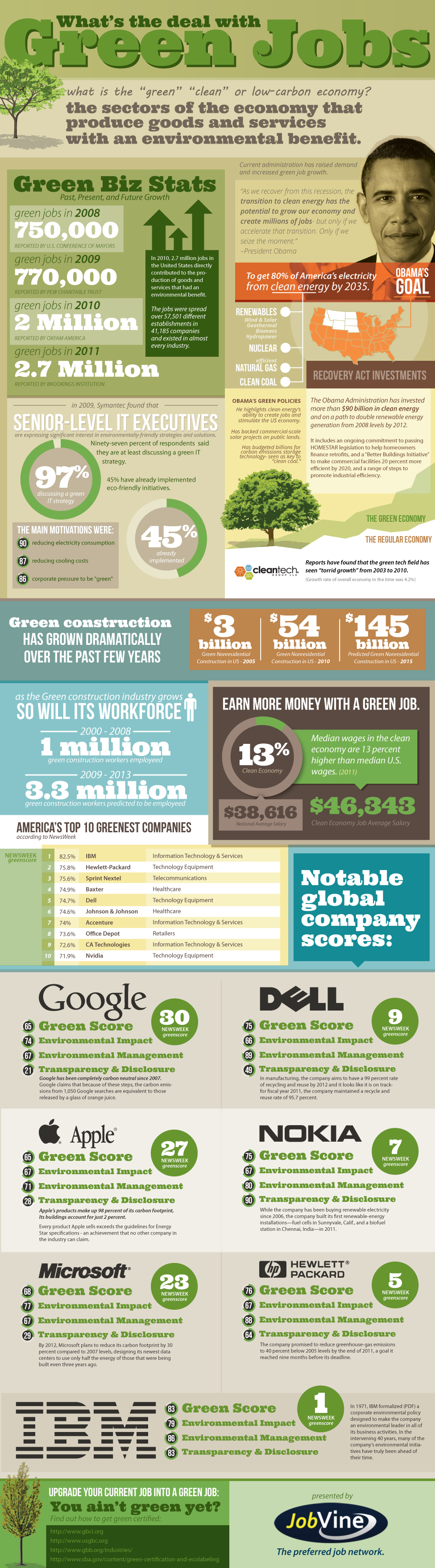
Green Collar Jobs: The Big Picture (Infographic)

I like big pictures :) especially those that point the way to a greener global future.

For text and my source please see:
...

Infographic by Jobvine Jobs

What is the deal with Green jobs

Tuesday, August 05, 2008

Big pictures: Hodges’ model and Future Studies

I came across a 1996 paper by Richard Slaughter - The Knowledge Base Of Futures Studies As An Evolving Process. The paper highlighted a problem faced by future studies which was (and still may be?) grappling with its knowledge base:

Why, then, is it necessary to have a knowledge base of futures studies (KBFS)? There are several reasons. First, as Norwegian futurist Kjell Dahle pointed out at the World Futures Studies Federation conference in Barcelona in September 1991, the lack of a common knowledge base greatly complicated the work of those preparing courses, planning research, teaching and developing FS projects. The field is well known for its breadth, geographical scope and range of disciplinary paradigms. Where, in all this diversity, should newcomers, particularly intending students, begin? …
As also cited on the h2cm website Slaughter notes the significance of Wilber’s quadrants as a key resource and approach -

I have referred to this work at some length because over several years Wilber’s developing account has reframed my own thinking about present and future options, both personal and collective. Such a framework integrates insights from a wide field and provides FS with powerful new understandings and tools which go beyond one-dimensional thinking (e.g. rationality, technique, forecasting) and a single privileged culture (Western culture). Here, then, is an emerging basis for big-picture thinking and action into the new millennium and beyond. Here too is where some of the most substantial developments in the KBFS are likely to occur.
[My emphasis.]
Health and social care is not only focused on the future -

It is concerned about the PAST, NOW and FUTURE

- BUT it is always future oriented.

So future studies community look over here – now (please!)

Source: Slaughter, Richard A. (1996). The Knowledge Base Of Futures Studies As An Evolving Process, Futures, 28, 9, 799-812.

Saturday, November 13, 2010

Comets, holistic care and peripheral vision


Comet Hartley 2 is still bright and yet throughout its visit by Earth quite diffuse, so I have yet to try to find it with my binoculars. To effectively use binoculars, a telescope (or even a microscope) and enjoy the astronomical delights (especially as Councils save money and switch off street lights) it helps to develop your peripheral vision.


Nursing, medicine and social care calls for its own kind of peripheral vision. Peripheral vision that nonetheless enables us to really see. It is ironic that in order to see the big picture that includes the person, that allows us to coherently assess, plan, deliver and evaluate person-centred care we must look off-center.


Comet image source: http://maineastro.com/2010/10/binocular-comet-now-high-in-the-sky/

Tuesday, August 04, 2026

Brief introduction to Hodges' model

Hodges’ model is a conceptual framework of universal value in theoretical work, practice, policy and care management. While this model is a product of the health-education sector, it is global in scope, taking in the current situation, history and future as complicated by scientific, socio-political, technology and climate change. Practice-based, Hodges’ model is a tool simple in form and yet powerful in terms of how it can help users frame the problems and opportunities of the 21st century. The model was originally taught in studies for the post-registration certificate of care of the mentally ill in the community and other courses. Student assessment included the completion of a case study (vignette), demonstrating competence in application of the model and its embedded (implicit) values.

Access to education, especially early years, is emphasised as foundational for personal and community growth and development. For individuals this can set the course for lifelong learning and an ability to contribute to society and the economy. Given this primary challenge, global institutions and policy makers point to the need for curricula that are relevant. In turn employers and industry leaders need a (global) workforce who are: 

  • reflective practitioners;
  • critical thinkers;
  • able to see the ‘big-picture’; and focus on detail and priorities when needed (risk and triage);
  • decompose a problem, but also integrate (care);
  • work as team-members;
  • and extend across several literacies.
These challenges are ongoing for education (being health literate, so as to address personal, social, health and economic education, and the sustainable development goals), and increasingly climate impacts.

Wednesday, January 20, 2021

Extraordinary People (2020)


the connor brothers

Extraordinary People, 2020

£120.00 

SOLD OUT

giclee print with silkscreen varnish 

41.5 x 29 cm unframed 

Edition of 300, signed and numbered 

Extraordinary People is an edition of 300 signed and numbered giclee prints measuring 41.5 cm x 29 cm and is sold unframed. All profits from the sale of this edition will be donated to the NHS Covid- 19 Urgent Appeal which supports NHS staff and volunteers caring for COVID-19 patients . The print is priced at £120 plus shipping and is available now. Due to the current pandemic we do not expect to be able to deliver this print until September 2020.

Like everyone else we are extremely grateful for the tireless work being done by our extraordinary NHS staff in near impossible circumstances. We owe them a collective debt we will never fully be able to repay. We'd like to offer our deepest thanks to each and every one of you.

giclee print with silkscreen varnish 

41.5 x 29 cm unframed 

Edition of 300, signed and numbered

http://www.theconnorbrothers.com/shop/extraordinary-people 

See also:

Pay "Nurse Kathy" ?

"Blind to the Big Picture" and Parity of Esteem 

My source:

The art world is back in business, MoneyWeek, 15 May 2020. Issue 999, p.35.

Monday, February 10, 2025

Book review: Handbook on the Ethics of AI #2

Well, I am sold. So, encouraging again to read 'reflect -ion' on the first page and throughout chapter 1:

'... why the very idea of AI gives rise to (or should give rise to) ethical reflection.' (p.21), and I'm sure the book as a whole.

Most readers may pass this by, but to me this matters. Ethics scholars however will see how important and conjoint reflection is to deliberation and argumentation of ethics. Especially, as noted in post #1 the five part division of the text Foundations and Context; Responsibilities; Rights; Politics and Power; and Thinking Otherwise. 

Tables break up and inform the text. I like the way for many tables the source is: Author's own elaboration.
Given the subject matter, yes, the authors have the literature but they are also formulating their chosen theme against the present, near future, socio-political scenarios and much more. So, reflection - this should be expected. With Hodges' model I'm often asked why are those concepts placed in that particular domain? Perhaps that is a question for general artificial intelligence? Subjectivity is a key challenge, and its effective communication.

If I say, chapter 1 is a great primer on What Is This Thing Called the Ethics of AI and What Calls for It? I'd sell the book short, the whole text fulfills this purpose. The definitions and responses to What is A.I. are very helpful, taking into account ancient to more recent history. I've a book in a box by David Chalmers (sorry Prof.) - one day - which helps here discussing intelligence and consciousness.

I'm primed to pick up on 'gaps' (Theory-Practice) and in human experience they are inevitably legion. The responsibility gap (and meaningfulness!) c/o Sven Nyholm is a place to return to, to debate why A.I. raises such a broad range of ethical issues. Patiency is never far away. Here, the patient is stark: in  moral agents and moral patients (p.20 and 89). This blog is littered with posts on Drupal, which to date I have never mastered. I remember sitting in DrupalCon presentations, in the midst very skilled professional coders. A member of the community stood at the podium recounting their lived experience of impostor syndrome. In November with a presentation of my own, I had my own encounter. Well into reading this book, it really did help. The conclusion of chapter 1 contrasts the frequent need for a big-picture overview and reflection on more specific issues. That's quite fitting for me.

I am biased in the encouraging kernels I find: as seek them I do. Yes, as chapter 2 AI Ethics before Frankenstein begins: 'there remains work to be done in charting the long-range conceptual development of  AI in the history of political thought.' (p.27, my emphasis). And much more I hope. Chapter 2 combines literature, myth and I enjoyed the discussion on techne, Prometheus, Hobbes, the interdisciplinary bridge of techno-politics and articulating the mechanistic in our lives. Focussed recently on thresholds and threshold concepts in revising two papers: Hunt writes, 'Frankenstein is a "threshold" text for "modern political science fiction" (p.31). 

This  resonated - especially 'for its prediction that the nascent Enlightenment-era sciences of chemistry, anatomy, and electricity could be used to artificially make a human being' (p.31). The exploration of bad education and bad governance through Shelley and social history is other-worldly in itself. Hunt's conclusion which includes 'Wollstonecraft was the pivotal figure in the process of refracting ideas of AI from Hobbes to Shelley, ...' left me wondering about the refactoring of code. 

Chapter 3, Smith's Faith, Tech, and Ethics of AI brings more reflect -ion with the bonus for me of Descartes. On faith, the human situation is also repeatedly stressed. Delving into creation too, this is detailed on forms of theology - Augustine, Bede, for example, and philosophy Bacon, Hume, Kant and their role in diminishing the influence of religious thought and epistemology (p.39). How long a push was that? Surely it is ongoing - in some quarters? Medieval thought is discussed, and I recall this broad period also being regarded as misunderstood [Medieval Philosophy - Bryan Magee & Anthony Kenny (1987)] . 

On a personal level, I've always placed belief in the intra- interpersonal domain of Hodges' model. In psychosis, depression, anxiety, phobias in short mental health, beliefs can be disrupted, and influenced of course when all is well. Religion I have framed at the individual and socio-political level. Clinically, it is the individual patient's beliefs, if they follow a particular religion that we also need to be cognizant of as health personnel. Machine, or human; object or being as Smith asks:

SELF / INDIVIDUAL  -  OBJECT / THING
|
      INTERPERSONAL    :     SCIENCES               
HUMANISTIC  --------------------------------------  MECHANISTIC      
 SOCIOLOGY  :    POLITICAL 
|
GROUP

the human -

the machine -


- can become machine

- can become human


socio-


-political

There is depth of discussion too: in AI and Power; a Christian response to AI ethics. This handbook is not just for quick reference. There is indeed redemption (p.43) to be found:

'It is easier to cover a blemish than examine why it resulted in the first place: genetics, diet, stress, or lack of self-care.'

I argue for Hodges' model as a tool to identify, (re)present, and relate the determinants of health: all of them. The points and paragraphs on theology, mind, body and self are well worth revisiting.

Johnson's chapter 4, What are Responsible AI researchers really arguing about? provides support for my ongoing belief in the value of sociotechnical theories and approaches, and another book on enactivism. Given the ethics of the global south (and technological/electronic colonialism) more could perhaps be made of LMIC, but the point is made in Table 4.1 (Examples of functionalist evaluations of AI models, p.52). Constructivism 2.2 is a rich seam for me. Table 4.2 touches on medical diagnosis and socio-technical. Johnson notes that in seeking answers to AI ethics problems, scientists see constructivist approaches and '.. constructivism as a metaethic, holding a rich space for more research into pluralistic AI-Alignment', (p.53). And, the potential for much more. This is suggested (for me) in reference to the need for a holistic view of AI model's genesis, and 'two sides of one coin' - dichotomy, polarity, oppositions, binary reductions ... ? 

Johnson's conclusion is an indirect thumbs up (cue Arnie style - of course) to Hodges' model as a project. Conceptual frameworks can indeed:
'... offer unique perspectives on the methods commonly employed and to understand and mitigate the risks and dangers of AI.' (p.62).
If ethics gets 'technical' then the book's full title is well-earned. Two case studies demonstrate functionalist and constructivist debates in responsible AI. I don't remember Capt. Kirk et al. stating to a malign alien 'intelligence' "The trophy doesn't fit in the suitcase because it's too large (small)," (p.58). The writer's put other solutions to the characters lips. Spock, however, would find the discussion here on 'Artificial General Intelligence, 4E Cognition and Enactivism' - "Fascinating!"

Much more to follow ...

Handbook on the Ethics of Artificial Intelligence. David J. Gunkel (ed.). Cheltenham, UK: Edward Elgar Publishing Ltd. ISBN: 978 1 80392 671 1245
https://www.e-elgar.com/shop/gbp/handbook-on-the-ethics-of-artificial-intelligence-9781803926711.html


Related previous posts: 'general + AI'