Hodges' Model: Welcome to the QUAD: Search results for advertising

Hodges' model is a conceptual framework to support reflection and critical thinking. Situated, the model can help integrate all disciplines (academic and professional). Amid news items, are posts that illustrate the scope and application of the model. A bibliography and A4 template are provided in the sidebar. Welcome to the QUAD ...

Showing posts sorted by relevance for query advertising. Sort by date Show all posts

Tuesday, July 25, 2017

Advertising: The air that we breathe; or don't?

individual
|
INTERPERSONAL : SCIENCES
humanistic --------------------------------------- mechanistic
SOCIOLOGY : POLITICAL
|
group

Mental Pollution
Adbusters

Unbranded Advertising

Unbranded advertising of prescription medicines to the public by pharmaceutical companies (Protocol) 

Health - Literacy?

Digital Ad# Fraud
False / Fake Ads


Hodges' model makes explicit the divide between the public and the public's understanding of science.

Consider here the increased noise in advertising channels since the millennium as the media multiply, in addition to false advertising the rise of fake ads. Fake ads for jobs, drugs, goods and a littering of click-bait. Contactless plastic that touches the deepest oceans. Consumerism has become post-truth as any sense of 'standards' are undermined on several fronts.

The overlaps and increased complexity then become apparent.

# 'information'?

n.b. If I recall the source for the paper I will add it here!

Saturday, August 25, 2007

São Paulo - A City Without Ads + BBC Paxman and secular sanity*

It's not often I get to bookshops and less often still that I buy anything. I did both recently - walking out with a copy of the latest Adbusters magazine. I've listed their website for quite a while [POLITICAL: activism] and must say as a consumer, community mental health nurse and would-be human ecologist there's a lot to read and think about....

Sustainability : Advertising : Well-being : Public Mental Health

Now, subscribed to their e-letter the Sao Paulo item proved a real revelation. A breathe of fresh... fresh... vision no less!

“The Clean City Law came from a necessity to combat pollution . . . pollution of water, sound, air, and the visual. We decided that we should start combating pollution with the most conspicuous sector – visual pollution.”
So, add to this the news at the end of 2006 or early this year of European cities starting to take light pollution seriously, to the extent of turning the lights off for a night and hey change really can happen.

If amid the advertising information overload what Adbusters refers to as mental pollution ('brain damage') there is a vacuum in terms of values, self-respect and social responsibility...; others will fill that void with what is most likely to be another form of pollution.

Jeremy Paxman, BBC presenter and media luminary was on the Beeb's radio 4 this a.m. highlighting the need for media with a conscious. His lecture at the Edinburgh TV festival made the news. He criticised the BBC and the media in general regards quality, public service and the pursuit of the bottom-line. An Adbusters article describes problems in the Canadian media. This appeal has been heard before: but I wonder if there's a realisation finally sinking home that in a 21st century society how do you achieve secular sanity? In the UK the spate of terrible gun-crime killings, youth gangs, the TV phoney phone-in scandals and the need for inspirational creativity in the media is really fuelling debate. If the media reporting is correct this past week then some elements of the media - music industry included - are into trafficking. From a very early age the public is subject to an info-toxic OD. Is this the real reason why in health care we need information prescriptions?

How can society change to become sustainable, while struggling to swim in this advertising torrent?

I've no universal panacea Mr Paxman for the rehab of the prison population, the feral kids on the streets and the quest for an agreement for quality standards and public service throughout the media; but if as you say you want to hear from people - well, amid your busy schedule take a look at this interpersonal-social resource.

Look upon it as one of the cognitive antidotes for our times.

Wednesday, October 04, 2023

Two abstracts for 2024 inc. Philosophy at Play Conference

This month, in addition to an abstract for:

MYTH, RITUAL AND PRACTICE FOR THE AGE OF ECOLOGICAL CATASTROPHE


- there is an invitation to submit a paper abstract for:


The sixth Philosophy at Play Conference will be hosted by the Faculty of Education at the Complutense University in Madrid on June 3-5, 2024


No one likes to waste time^, but whether or not these abstracts are accepted, the thought and effort will extend my thinking and application of Hodges' model. Beyond initial thoughts below, I need to check on the key issues in the philosophy of play:

INDIVIDUAL
|
     INTERPERSONAL    :     SCIENCES               
HUMANISTIC --------------------------------------  MECHANISTIC      
SOCIOLOGY  :   POLITICAL 
|
GROUP

play therapy (distraction ...)

being outdoors:
psychological impact of green
symbolic play
mental games - play

intellectual skill, creativity
imagination in play

individual play child - verbalisation

cognitive and character development - morality, personal ethics
'illness' norms - anhedonic
addictive quality of gaming
role of advertising

play theology - utopia

play senses, kinaesthetics, embodiment
accessibility
information at play: uncertainty, bluff, prediction - movement, strategy
functional play - toys/objects
activities - performance

space: arena, field, theatre

games / sport - physical contest
gaming as work / effort / energy
gaming as tech/software
simulation
gaming 'in' Virtual Reality
(tech's role in disrupting (idealised?) play?
Games/Gaming as rules/process

quantitative research - evidence

social inclusion/exclusion

sociology of play (and in arts)

socialisation

language: "= playing field"
role play :: fancy dress

socio-cultural dimensions - history
traditional play/games

social behaviour, status, participation

turn-taking, stigma (cheating)

sports etiqette, 'fair play'

team games (team building - work)

Serres - Myth, History
Harlequin - mischief
politics of play studies: oppression, marginalisation, erasure, vulnerable groups, exploitation*

'export' of games
hegenomy, hierarchies
software colonialism (Africa)**
debates: guns in play, weapons,
'shoot em up'
FROM: child's-play
TO: gamesmanship
whose rules, control of space?

governance & politics of play

economies of play
'A nation at play'

media - controls -
consumerism, advertising
gambling
THEOLOGY


*An example - previously:

^Since posting: I realise that 'neutrality' in play (studies) and the call here appears an important concept. Clinically, Hodges' model can literally reflect unconditional positive regard, as a template the model provides a 'blank slate'; as long as we are being authentic and not 'playing games'.

In terms of this conference, can Hodges' model act as a referee - by providing a neutral space? It would appear so, but this is quickly challenged - if not illusory.

That neutrality is lost in the blink of an eye - shattered even, by a twist, a step of a foot. A shift from the nexus, center of the model - the neutrality is comprised. All of a sudden the observer is forced to play. Or at least there is an invitation to contextualize; psychologically, physically, socially, politically or spiritually.

A game to play in itself?

**c/o Bytes for All mailing list:
"Software colonialism is killing Africa" - Neville Roy Singham  

BBC - Software Development in Africa

Sunday, July 22, 2007

Thanks BGS & CPNA-T: NCRS* Project secondment ends; back to clinical practice

I would like to publicly thank the British Geriatrics Society# and CPNA Trustees who have covered my travel costs to the SPT conference 2007. I could not have attended otherwise.

You may notice a lack of advertising on the website and blog. I've tried to focus on the message - but funds do matter. If an 'appropriate' organisation(s) would like to fill the vacant space here that could feature advertising to help sponsor future conference attendances please get in touch!

Come August 1st - I'm back in clinical harness (Community Mental Health Nurse Older Adults) after an almost three year secondment, which has been a great experience. The highlights? Well, that would include...

  • Working with new colleagues - Barbara, Jeremy, Tracey and Heather - good luck all! - and change consultants, learning the ropes and being let loose on the service.
  • Working on data quality, comms materials...
  • Explaining to clinicians what's coming down their way (locally and nationally), why it's needed and the challenges we still face.
  • Being able to comment on proposals for future system content, including aspects of the interface(s) which are often taken for granted, but are of course critical in so many ways: safety, usability...
  • Meeting other clinicians from other areas and organisations, notably Social Services and debating what's happening in their locality (have any dots been joined for you?).
  • Going on a 2nd secondment and gaining insight into information standards development and management - a real challenge and well worth the effort - I'm still tingly from that.
  • Acting as mentor for Chris our (former!) Trainee Public Health Analyst. All the best for September and Med. school Chris! Thrilled to pieces when I heard !
  • Although not directly related to my secondment the week long Ideas Factory in Bath last October definitely still has me tingling from the new Roman baths complex and at 0230 on the Friday trying to finish a research proposal. This was quite scary in some ways, I had nothing to lose, but for the academics you could see the stakes were very high. Another set of processes revealed, an opportunity to use and share Hodges' model.
  • One of the biggest things was being part of a National programme and seeing the amazing work that is going on amid enormous challenges and hurdles. The future of health and social care really is going to be different, it has to be: we have to make sure it is also better. Clinicians on the ground must never be an after thought. And there's the question of public engagement too.
As to my future - in-between the home visits, allocation meetings and case reviews each month I'll definitely be keeping in touch with things informational. I'm really grateful to my clinical and ICT managers for being able to pursue all the above and ongoing informatics threads...

Back in Nov 2004 I really needed a change and I felt the team needed a change too. I grabbed the opportunity, in denial about the piece of elastic that would eventually haul me back. Well it has and it isn't the prospect of the clinical work that brasses me off, it's walking into a building I first entered in 1989. Its days are numbered as a base and it's true I have been 'leaving' for at least a decade, but in that time I've been drafted onto other projects, constantly learning and I hope helping others to learn too.

Clinical work: no problem! You can't beat the buzz of knocking on a person's door in order to check what's happening and help them to help themselves whenever that's a goer. When you can't do that there's still a vital role to play. It's a sobering responsibility and when you see how and what people are struggling/coping with - well....

So, if you are reading this AND a student - undecided regards a career - do check out nursing (and other career pathways) and social care: you really can make a difference.

After all the above for me it's time for a proper change. I've started another book chapter on socio-technical structures and Hodges' model - now with a philosophy of technology bias. I'd really like to focus on learning and teaching with space reserved for clinical practice - cognitive/humanistic therapy.

I've mentioned Drupal, Ruby on W2tQ; but I've have no time to pursue and test ideas. I'm sure I could use these tools, if time, time...

Better still exercise the need to pass on this keystone, this baton to students - it is their race, their care that counts now.

I'm sure h2cm isn't just an over-valued idea.

There are vast and rich seams to mine here (without damaging the environment) and they run under ALL the subject disciplines.

Before that - IF it happens at all ;-) let's see what's happening for clinicians, as I pick up the phone and knock on doors once again.

Having knocked on two already, I have a feeling I'm going to need my infra-red glasses - more to follow....

Whatever you are about - keep smiling as you join your own dots...

*NCRS: NHS Care Record Service
# Conference brief on its way...

Saturday, February 10, 2024

HIFA Discussion: Alcohol Use Disorders (37) Do people understand the harms of alcohol? (9) How can they be better informed? (5)

Further to the post on 1st February 2024:

HIFA discussion on Alcohol Use Disorders, 5 Feb - 17 Mar 2024

- I have f/w some reflections (edited here). You may have your own experiences, skills, knowledge to contribute?

<>

As a teenager you were very aware of peer pressure (as a social expectation) to drink. Is it an acquired taste?

The media played a key role - advertising "Tetley Bitter-men", "Double Diamond - works wonders", Babycham, Advocaat, Martini Rosso .. and many of the popular TV series we consumed (pardon the pun).

Getting in the pub AND served was a right of passage - and a rather 'tame' one for a white, male.

In the family the harms and risks of alcohol were explained. 

Sometimes they were demonstrated at parties, weddings, the aunt, uncle - relative who was notorious for having too much.

Studying literature at school did have a role to play - although less directly.

Although on reflection when there were school assemblies I wonder if 'drink' (Church of England) was mentioned?
Interesting perhaps - the change in daily school routine.

I remember at a birthday party for a fellow class pupil at a social club, the birthday boy was sick all over the table - yes - had been drinking.

Tempered my attitude early on - c.15.

As a nursing asst. and student nurse you realised the other - dark - side. The key being the contradiction that alcohol represents:
  • Drink to relax, socialise, be friendly, enjoy yourself;
  • Impact of your health, risk of addiction, violence, (brewer's droop was an early lesson - tho not practically);
  • IF YOU develop a drink problem then you're on your own and so is your family (there are of course agencies in developed nations - but the funding disparity - as in, gambling, tobacco?).
In a 'local' - public house - pub it was known in 1970s for some regulars (invariably men) to down c.12 (more?) pints in a night - even after drinking hours: they were heavy goods vehicle drivers.

---------
I may have posted before - how in 1987-88 I completed a study of alcohol (intervention) teams, Preston, Salford, Blackburn here in NW England. The consultant psychiatrist made a key point about the (much debated even then) use of economic levers to help reduce alcohol consumption.

Scotland have just updated their intervention:

https://www.theguardian.com/society/2024/feb/08/scotland-raises-minimum-alcohol-prices-by-almost-one-third

As a student nurse - I was already aware of some of the inorganic molecules that have been found in space: the original primordial soup!

The chemical names still remind me of a chemical plant, such as the former ICI plant at Widnes / Runcorn, Cheshire, England, e.g.:

https://thumbs.dreamstime.com/b/heavy-industry-panorama-night-panoramic-view-chemical-plant-refinery-blue-sky-illumination-some-freight-85481422.jpg

This in-turn takes me to the miracle that is the liver - the biological chemical plant - with a potential powerful message in how 'alcohol' is broken down:

https://www.ncbi.nlm.nih.gov/pmc/articles/PMC6527027/

Sometimes insight into this can work wonders in terms of motivation for change - the facts - not trying to scare (waste of time)...?

Which brings me to the obvious 'contradiction' in caring for people with a primary / secondary problem with alcohol.

Having a liver function test.

If it's OK that *means* I can carry on!!

I have over the years developed what imho I consider to be potentially therapeutic relationships with patients affected by alcohol.

I say potentially as I, with supervision, have had to withdraw input and discharge them. Even if the client can't 'draw the line', you cannot support the patient in their damaging alcohol consumption and related behaviours. The offer of further support was offered, with signposts should there be a change of  mind.

Alcohol, tobacco - vapes, the 'mental pollution' that can be passed as legitimate 'advertising', fake news ... still calls for a generic model, a universal conceptual framework for personal and global health - across literacies and forms of informatics:

'alcohol'
https://hodges-model.blogspot.com/search?q=alcohol

Just to close I saw an item (I will try to find...) on the preponderance of 'smoking' in films 1940s - present day.

Still a problem now.

Of course: advocacy for health requires constant vigilance.

Tuesday, May 29, 2012

Reflections [I] Conceptual Spaces At Work: Lund University, Sweden, May 2012

I started writing up and reflecting on my notes while still in Lund on Saturday evening 26th May. As I passed the taxi rank returning to my B&B I knew Eurovision had started: Englebert sang out. It was quite novel to be in Sweden that night.

The conference was excellent.
Lund is a beautiful, friendly city and the weather was amazing.

I am so pleased I made this journey and would like to thank the organisers and sponsors for their work and support. The conference was free to attend, which greatly assisted me. Speakers were in the majority which added to the event's value for me (and the other participants). Some of the presentations included maths and logic, but as I was advised initially I could follow the gist of all the presentations and the details of many.

If you are a nurse, social worker, occupational therapist... and you read through these follow-up posts you may well wonder how is this relevant to healthcare? Well at the moment that is unclear, but I'm sure there is a connection. I'll share some tentative connections here and add some photographs over the next few weeks or so. As I review my scribbled notes I may have made some mistakes, missed out key points and references are still appearing, but here goes ...

The first session on Thursday was by Carita Paradis, who presented White aromas and subtle oak spices: From sensory experiences to language through conceptual spaces. Carita's focus was wine tasting with its four sensory modalities of VISION, SMELL, COLOR, and TASTE and a descriptors list for the properties of wines, such as sharp, soft, lemon and cherry. There is a corpus as the paper explains:
... the source of data used in this investigation is the American wine magazine, the Wine Advocate. The corpus contains 84,864 wine reviews published 1989 – 2006. The total number of words used is 8,332,666 and the number of different words is 46,000 (for more information about the corpus as such and an interactive information visualization (InfoViz) tool to be used to retrieve different kinds of information about the wines reviewed, both linguistic information and metadata, ... p.4.
In addition for both red and white wines there is an aroma wheel. It was helpful in the Q&A at the end to be reminded of the relative dominance of the senses. Questions had me recalling the emotional and reflexive response of disgust and how this is 'hardwired' - the limbic system and connected to other senses. The findings of a lower to higher directionality in modalities - touch through to sound and vision and the use of metaphors and the direction of these: soft light OK but not light softness was fascinating.

So, there are more reasons for a blog post than the four senses referred to by Carita. What descriptors are there for the four care domains (interpersonal, sciences, political and social)? How can they be discovered (or recovered)? Where is the corpus for nursing? Is there a secondary source? Is there a case for a different approach? Are there several in the form of nursing classification and terminology systems?

As to the other sense: I also wondered about the sound of money and advertising (of alcohol), generally more tightly controlled in Sweden as I understand, especially advertising aimed at children.

Carita Paradis & Mats Eeg-Olofsson, Describing sensory experience recontextualization through properties, objects and imagery in discourse, Lund University 

Wednesday, January 27, 2010

ERCIM News No. 80 Special Theme: "Digital Preservation"

Dear ERCIM News Reader,
ERCIM News No. 80 has just been published at http://ercim-news.ercim.eu/
Special Theme: "Digital Preservation"
- coordinated by Ingeborg Solvberg, Norwegian University of Science and Technology; and Andreas Rauber, Vienna Technical University
- featuring a keynote by Pat Manson, Head of Unit "Cultural Heritage & Technology Enhanced Learning"; European Commission Information Society and Media Directorate-General
Next issue: April 2010 - Special Theme:
"Computational Science/ Scientific Computing: Modelling and Simulation for Research and Industry"
(see call for articles)
Thank you for your interest in ERCIM News.
Feel free to forward this message to others who might be interested.

Best regards,
Peter Kunz

This issue includes:

  • The CARA Approach for Long-Term Preservation and Exploitation of Medical Images and Reports by Hanan Bouzid, et al..
  • Designing a Trusted Distributed Long-Term Archive for Health Records by Frej Drejhammar
  • Providing Web Accessibility for the Visually Impaired by Barbara Leporini, et al..
  • ICASE Project: New Challenges in Computer-Based Assessment by Thibaud Latour and Sandrine Sarre.


ERCIM News

is published quarterly by ERCIM, the European Research Consortium for Informatics and Mathematics.
The printed edition will reach about 10,000 readers.
This email alert reaches over 5,000 subscribers.


Advertising in ERCIM News
By advertising in the ERCIM News printed edition, your company or institution will be able to speak to a highly qualified audience: You can reach over 10,000 researchers, scientists and decision makers in the field of information and communication technologies.
For rates and conditions, see http://ercim-news.ercim.eu/advertise


About ERCIM
ERCIM - the European Research Consortium for Informatics and Mathematics - aims to foster collaborative work within the European research community and to increase co-operation with European industry. Leading research institutes from twenty European countries are members of ERCIM. ERCIM is the European host of W3C.
http://www.ercim.eu/

Wednesday, June 03, 2009

Heroes wanted to slay monster (or just thinking aloud?)

The four links pages devoted to the knowledge domains of Hodges model are I am told quite a remarkable collection for all that to me they are a bit of a monster. Apparently the links demonstrate that there may still be a role for human web-hunter-gatherers. Wikis and social media rely on provision of tools for links. The Twitter community is built primarily on links. H2cm's links are checked regularly, tools make the task much lighter, but ...

Most urls have long lives - a slight tweak and all is well. Some are clearly '404', while a few get taken over and become a cul-de-sac for questionable advertising. I even found one or two being used for promoting candidates in the US election. It would be great to have someone else involved a caretaker just for a category in order to:

  • identify broken links
  • sites no longer maintained or representative of the category
  • any key resources missing (this might include a site you are involved with)
[I do mean 'key' resources]

You do not need to be a subject matter expert or a student, but it would help especially for the following domains and categories:

SCIENCES: anatomy & phys, nursing theory, research, astronomy, health informatics...
INTRA-INTERPERSONAL: psychology, mental health, therapies, philosophy...
SOCIOLOGY: sociology, arts and culture, patients and carers, collaborative computing...
POLITICAL: health policy, standards, democracy, activism, community informatics, citizenry, development ...

To repay your time there are a couple of options:
  • You effectively adopt a listing and I can feature a link with a small graphic to your site at the top of the listing category.
  • At least once a year I would post on the blog an acknowledgment of partners - be they companies or individuals.
OK the above is not hyperbole, but with the current website and hosting arrangements I would have to rely on e-mail to do this with me having to maintain the links.

Enter Drupal....

Considering the future site for Hodges' model I could readily drop the links, but I do feel there is potential here on several levels:
  • educational
  • community building
  • commercial
- and I need to consider the options.

The links would be one way to involve and grow a community. Using Drupal to leverage this there is also the possibility of:
  • voting on the existing categories
  • suggestions for new categories
  • use of mega-menus
  • monitor link usage and reduce the listings
  • use some of Drupal's link modules (or create a new one?)
  • introduce the site and links to the semantic web - RDF
  • start the collection from scratch and have the community submit them
  • - emphasizing basic nursing and social care
The existing pages would also be re-written to utilise CSS and jQuery (as already mentioned on w2tq) it would make a world of difference to have the categories being collapsed upon the page opening. We'll see...

Friday, October 24, 2025

Come on Healthcare: catch up will you!

Within philosophy it is recognised that Immanuel Kant provided a means by which the rationalists and empricists can be reconciled. Some background:

In philosophy, rationalism is the epistemological view that "regards reason as the chief source and test of knowledge"[1] or "the position that reason has precedence over other ways of acquiring knowledge",[2] often in contrast to other possible sources of knowledge such as faith, tradition, or sensory experience. More formally, rationalism is defined as a methodology or a theory "in which the criterion of truth is not sensory but intellectual and deductive".[3]  https://en.wikipedia.org/wiki/Rationalism
In philosophy, empiricism is an epistemological view which holds that true knowledge or justification comes only or primarily from sensory experience and empirical evidence.[1] It is one of several competing views within epistemology, along with rationalism and skepticism. Empiricists argue that empiricism is a more reliable method of finding the truth than purely using logical reasoning, because humans have cognitive biases and limitations which lead to errors of judgement.[2] Empiricism emphasizes the central role of empirical evidence in the formation of ideas, rather than innate ideas or traditions.[3] Empiricists may argue that traditions (or customs) arise due to relations of previous sensory experiences.[4]

Historically, empiricism was associated with the "blank slate" concept (tabula rasa), according to which the human mind is "blank" at birth and develops its thoughts only through later experience.[5] https://en.wikipedia.org/wiki/Empiricism

If health and social care, must be evidence-based, then as far as Hodges' model is concerned we are then duty-bound to use the most readily available 'evidence' to us, including (while taking liberties?):

  • The structure of national health and social care organisations (NHS, DHSS ...)
  • Physical infrastructure
  • Human Resources Organisation
  • Unions and Labour relations
  • Texbooks, journal papers, conferences
  • Organisational structures from the regional to the local
  • Professional bodies and governance of licensing/registration
  • Curricula that students follow^
  • Models, frameworks, teaching and learning tools and methods
  • Data, statistics, information and reporting (national, international)
  • Research projects ongoing (whatever scale, methods, methodology)
  • Accounts from lived experience of patients, carers and public (^and students)
  • Policy
  • Funding
  • Law relating to Health and Social Care
  • Public (Mental) Health? Discuss
  • Media (Social) Control, Advertising
  • . . .

Hodges' model: Structure and Content


Using this evidence, we still see the Cartesian divide, the mind-body distinction writ large in health and social care. The continuing impact is evident in theory, practice, (hence) lived experience, policy and managment. Since its creation in the 1980s, Hodges' model mirrors (literally) this philosophical, epistemological and ontological legacy, thereby acknowledging the ancient history of medicine, and 'modern' development of healthcare and nursing. Through this device, Hodges' model can facilitate debate, critique, reflection, and critical thinking; to encourage progress in our thought, motivations, action and subsequent evaluation.


This explains the structure of Hodges' model and predicts the range (contextual signature) of content when the model is applied.

Evidence permitting of course!

See also: BBC The Great Philosophers:

Series 1: 4. Descartes

Series 1: 5. Spinoza and Leibniz

Series 1: 8. Kant

n.b. I video taped this marvellous series when first screened. When studying for my BA(Hons), audio taped, they also provided a great learning resource in the car. The programmes are on BBC 4 (UK) once again, but are readily accessible.

Saturday, September 19, 2009

Hodges model: indicative concepts in Substance Misuse Care

Hodges' model
in substance misuse services
psychological dependence
vulnerable individuals, education, risk, assessment, review, motivation to change, harm reduction, 
motivational interviewing, appreciative inquiry, life skills, education, advice, feedback
withdrawal, aggression, hallucinations, change,
drug use history, measures, care pathways, contract, rapport, empathy
substance profiles, abuse, signs
physical dependence, health status,
pregnancy, research methods, evidence, diagnosis, co-diagnosis, staff awareness, statistics, drug-treatments, triage, screening,
scientific advice, dissemination
models: stepped care, training,
forensic science - mental health,
classification, interventions, physical access, stepped care models
dependents, family, social network
social attitudes, vulnerable communities,
community projects, self-help, e.g. A.A., socio-economic depreviation,
systemic - family, group therapies
Advertising, housing, casual drug use, work, employment, benefit incentives, re-integration, inclusion,
community, neighbourhood policing,
drug culture, media
supply, cost of drugs - alcohol
health & social care policy,
service interfaces, statistics
Drugs strategy, funding, X-agency working, funding, GP contract, commissioning, "client contract-plans", National Treatment Agency, NICE, Home Office, legislation, crime, offending, re-hab. / specialist teams / treatment facilities, Government data, community prescribing, employers

Tuesday, November 12, 2024

Call for Papers “THE CULTURAL EXPLOSION OF AI: ...

Navigating the Intersection of Artificial Intelligence, Society, and Culture”


Artificial intelligence has burst into the cultural space with the speed of an explosion. As with any powerful explosion, its initial impact is a spectacular blinding flash, followed by a shock wave with real effects. Perhaps we are still at the very beginning, but often the intensity of the blinding flash is proportional to the real effect that follows, both in terms of sweeping away existing forms and as long-term cultural “radiation”.

According to Lotman, a cultural explosion is a period of transformation when rapid and large-scale changes occur in cultural systems, leading to a significant increase in the creation of new information. It is estimated that artificial intelligence produces as much cultural text in one year as humanity has produced throughout its millennia-long history until the advent of the digital age. More interestingly, this new textual production is entering its most productive phase with the invention of Transformer architecture, which is almost a literal algorithmic realization of Lotman's concept of translation — the main mechanism of semiotic metabolism in the Semiosphere.

Training Large Language Models (LLMs), which is the foundation of AI, suspiciously resembles the way Umberto Eco models culture in the structure of a rhizome, which computer scientists call a "neural network." His encyclopedic model is based precisely on what LLMs extract from huge arrays of existing text—the statistic constancy of sign usage. In a polemic with textual immanentists, Eco postulates as part of the reader's encyclopedic competence the ability to inferentially reproduce the possible contexts of sign usage that make up the text. For many, the “magic” of artificial intelligence in its current form lies in its understanding of our questions to it, achieved with the Attention Mechanism, which, as a principle of cooperation between author and reader, is quite literally described in "The Role of the Reader" (1994).

The hardest to find were a fruitful correspondences between generative semiotics and generative media like Chat GPT, as paradoxical as that may sound, but surely there are such correspondences, and they are likely to be discovered in the future. In any case, as a theory of meaning generation on the one hand and an endless machine for creating meaningful texts on the other, the cultural explosion of AI will not leave this breed of semioticians unemployed.
We welcome contributions on the following key topics, but not limited to them:

- Semiotic models of AI generated cultural content
- Semiotic analysis of AI texts generation
- Semiotic theory of generative media
- Socio-cultural consequences of AI's advent
- Transdisciplinary collaboration between semiotics and informatics
- AI in creative practices in the arts
- AI in creative practices in marketing and advertising
- AI in research and education
- Cultural-economic implications of AI
- AI in pop culture
- AI in videogames and XR

Send here your proposal for papers (200-300 words): DigitASC AT nbu.bg

Deadline for the abstracts : 31 January 2025;

Deadline for full papers: 15 June 2025;

Deadline for the final revised papers: 31 August 2025;

Publication: December 2025

Digital Age in Semiotics & Communication, a journal from the Southeast European Center for Semiotic Studies at the New Bulgarian University and founded by Prof. Kristian Bankov, explores the new forms of knowledge, social and linguistic interaction, and cultural phenomena generated by the advent of the Internet and information technologies.

A topic is chosen for each issue by the editorial board, but the topics will be always related to the issues of the digital environment. The working language of the journal is English. It uses double-blind review, meaning that both the reviewer’s and the author’s identities are concealed from each other throughout the review process.

Link to the archive of the first six issues: https://ojs.nbu.bg/index.php/DASC/issue/archive

For more information and submission of papers: DigitASC AT nbu.bg

My source:
--


Departamento de Filosofia, Comunicação e Informação
Faculdade de Letras da Universidade de Coimbra
3004-530 Coimbra, Portugal

E-mail: iestudosfilosoficos AT gmail.com
Sítio Web: http://www.uc.pt/fluc/ief
YouTube: https://youtube.com/@uidief
Academia: https://coimbra.academia.edu/ief

Monday, October 03, 2022

@LJMU @UniofGreenwich @UniNorthants et al. *

Re. new Climate Change degrees ...

What do your students and faculty need to know
to nurture that green knowledge domain,
and turn the other domains green?

INDIVIDUAL
|
 INTERPERSONAL    :     SCIENCES               
HUMANISTIC --------------------------------------  MECHANISTIC      
SOCIOLOGY  :   POLITICAL 
|
GROUP
MENTAL HEALTH
CONNECTION
ATTITUDE
BELIEFS - SPIRITUAL
ADVERTISING (mental pollution)?
[meta-] ETHICS
ECOCIDE
ACTIVISM
EDUCATION - LIFELONG LEARNING
LITERACY - INFORMATICS SKILLS
...

BIOSPHERE
POLLUTION
EXPOSURE - EXPOSOME
THERMAL REGULATION
WATER CYCLE ... AGRICULTURE
GEOPHYSICS, GEOGRAPHY
MEGA-ENGINEERING
PHYSICAL HEALTH
URBAN - RURAL
METRICS, MONITORING
...

SOCIAL HISTORY
SOCIAL MEMORY, ARTS
QUALITY OF LIFE
WAYS OF LIFE - Communities (Nations!)
SOCIAL DETERMINANTS OF HEALTH
SOCIAL JUSTICE
'home-land' -
DISPLACEMENT - RESETTLEMENT
SOCIAL COHERENCE
SUSTAINABLE DEVELOPMENT GOALS
...
POLICY, LAW
PROTECT FUTURE PEOPLES
COP X, UN, UNESCO ...
REGULATION
TRANSFORMATION OF ECONOMICS
- CIRCULAR ECONOMICS
SUSTAINABILITY
COMMERCIAL DETERMINANTS OF HEALTH
FORCED MIGRATION
POLITICAL CHANGE (LONG-TERM)
...

What do they need to believe,
envision and be able to do,
to help transform the World?

My source: Nicola Woolcock, Universities offer first climate change degrees, The Times, March 23, 2021,p.16.

*Hope it is going well, and while we really need it to - this is, of course, a responsibility for us all.

Sunday, September 22, 2024

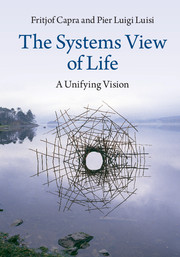
Book: [iii] 'The Systems View of Life - A Unifying Vision'

The Systems View of Life -
A Unifying Vision


Part 2 addresses the title - the rise of systems thinking.

The part - whole distinction is not only the root of the reductionism - holism and analysis - synthesis debates, but you feel clever knowing what mereology means ;-). This book is jargon free, even while being detailed and technical when necessary. Terms are defined when needed.

You see (possibly?) the power of advertising given the prominence of vitality in marketing. Meanwhile, vitalism a key to life seems to be an unknown, ever present but in the shadows, until our attention is drawn to it (health: life-death). Capra and Luisi explore mechanism and vitalism, and in turn organismic biology. Whether dealing with science, economics, biology..., I like the way the authors draw in the initial thinkers, the pioneers: whose lives, work and influence often spanned the 19th and 20th centuries. 

The proof of my opening statement in post (i) can be found on page 66:

'Systems thinking is "contextual," which is the opposite of analytical thinking. Analysis means taking something apart in order to understand it; systems thinking means putting it into the context of a larger whole.' p.66.

Ever user(s)-determined (context-based), Hodges' model can readily identify, relate, incorporate the - linear, non-linear, serial, parallel, simple, complex, poor, rich, narrow, broad, static, dynamic, person, service and so on. Also on page 66, Ehrenfrels (1859-1932) is an example, the first to use the term gestalt to denote an 'irreducible perceptual pattern'. There are many potentials within Hodges' model, one of which is that of gestalt. Yes, in healthcare we need to see the whole. We need to see the person, but also see the person in their social, political and spiritual contexts ('determinants)'. Now the global context is critical.

Chapter 4 charts the new physics atomic phenomena, mysticism, uncertainty, probability, causality, space, time, energy, and E=mc2. As per the book's subtitle, the search for a unifying theory in physics is noted, and ongoing. Box 4.1 briefly outlines the characteristics of systems thinking; including parts-whole, from objects to relationships and measuring to mapping. Within box 4.1, figure 4.1 reminds me of a Voronoi tessellation.^ From chapter 5 can I claim that Hodges' model is tektological - contributing to the science of structures? One day perhaps this Russian contribution to systems thinking can be looked at anew? Chapter 5 continues to reveal classical systems theories, general systems, cybernetics, feedback - in social systems too, and homeostasis - self-regulation. It's less than a page spanning 92-93,  but 'information theory' is duly noted, closing with cybernetics in the brain, and the emergence of self-organization. Shannon showed that even when there is noise in a communication channel, signals can be transmitted (coding). Is this why training and competence in interpersonal skills and self-awareness are so important, to help health professionals to attend, actively listen, and observe?*

An old T-shirt 'Art Matrix'


Chapter 6 on complexity theory, inevitably describes mathematical ideas providing equations. Unsurprisingly chapter 6 has figures galore. When I unpack the boxes and crates, I must sit down with The Beauty of Fractals ... (p.124!) and check the graphic capabilities of the latest software and hardware. The 'The Systems View of Life' definitely stimulates further enquiry. The baker transformation anyone (Box 6.2, p.107)? Exploration of non-linear dynamics, and abstract spaces also helpful in studies of relations and maths. This completes part II.


Many thanks again to CUP for the pb copy, much easier on the eyes. While this copy is new, I do make extensive use of secondhand books.

Fritjof Capra and Pier Luigi Luisi (2014) The Systems View of Life - A Unifying Vision. Cambridge: Cambridge University Press.

https://www.cambridge.org/gb/universitypress/subjects/life-sciences/genomics-bioinformatics-and-systems-biology/systems-view-life-unifying-vision?format=HB&isbn=9781107011366

^See: https://blogs.helsinki.fi/fcai-sig-lsc/files/2022/04/Peter-Gardenfors.pdf and 'conceptual spaces'

*Jones, P. (1996) Humans, Information, and Science, Journal of Advanced Nursing, 24(3),591-598.

Jones, P. (1996) An overarching theory of health communication? Health Informatics Journal,2,1,28-34.

Tuesday, October 31, 2017

HIT: Health Information Technology? Wanna bet...?

individual
|
INTERPERSONAL : SCIENCES
humanistic --------------------------------------- mechanistic
SOCIOLOGY : POLITICAL
|
group

HIT on Vulnerable individuals


What do these words mean to you -
'Fixed'
'Odds'
'Betting'
'Terminals' ?

'Cognitive access'
Children
Gambling advertising in football


FIXED ODDS BETTING TERMINALS

Stakes £50 or £30 or £20 or £2

£300 per minute

Physical access

HIT - the button yet again...

"... not a single fixed odds betting terminal
among the 35,000 or so in Britain which
has ever had a losing week" Guardian
HIT on Relationships and Families

Breakdown

Loss of Social Capital:

Crime

Job-loss

'Civil Society'

"A Government gets the 
citizenry it legislates for"?


12-Week Public consultation

HIT to the gambling industry
60,000 jobs

Staff training & awareness

£1.8 billion market

HIT on Tax £700 million

Tracey Crouch MP Gambling Minister 


Source: Various

Friday, April 20, 2018

Digital health interventions: How might we measure “meaningful engagement”?


I admit I am struggling to stop blogging, even as the pull of Drupal and a new site will (must) win-out. The above tweet prompts these thoughts ...

A key point from Kathleen Ryan's blog post reads:

"The design process* needs to be reflective..."

I wholeheartedly agree - it is the way that we reflect to achieve a socio-technical synergy that counts. Even with the socio-technical bases covered there are other factors too:

individual
|
INTERPERSONAL : SCIENCES
humanistic ----------------------------------- mechanistic
SOCIOLOGY : POLITICAL
|
group
Person-related issues
(e.g. their beliefs, cognitions and values).

What 'x' means to me.
"... attention, interest and how the person feels and thinks about the intervention (where more attention / affect / enjoyment = more engagement)."

Patient (Person?) Activation measures?

Yes - 'person-centredness' is 'up-here' according to the axes of the model, BUT we must take into account the social and political milieu of the individual concerned.

*design purposes
subjective
diseases
Technology-related issues

"No matter how well-crafted and evidence-based the intervention, active ingredients proven to effect health behaviour change simply cannot work if the technological components that house them are not accessed by participants. As such, lack of adequate engagement with DHIs poses a barrier to evaluating the effectiveness of these interventions."
*design process
Law of Attrition
Usage metrics:
statistics, logs, frequency, totals

e-health and m-health
objective
prevention & treatment of -
'lifestyle diseases'

social incentives
socialisation
'health seeking behaviour'
Health literacy

 "human contacts can allow for “supportive accountability” via remotely delivered prompts, social support and encouragement."

*design practices

National use of 'Patient activation'?
(Forms of profiling)
Incentives - health policy
Nudge - behaviour change?
Health insurance/credits

HEALTH meaning within? SYSTEMS
 paternalistic--'degrees of freedom'?--autonomy
ADVERTISING
'The Market'

*design policy


Perhaps, future measures need to simultaneously combine analysis AND synthesis - the subjective AND objective... a job for AI ..?

Thanks to Kathleen Ryan
https://twitter.com/kathleen_ryan33

Ack. This week learned of 'Patient activation' attending a Best Practice Meeting.

 *The 4Ps within Hodges' model. 

What is meant by 'universal' design?

Yes, there is an ironic element to this post and recent others in respect of 'meaningful engagement' and 'the meaning of evidence'? Do people recognise 'evidence'?

Thursday, August 29, 2024

Records Management Journal - Editor Opportunity

 All

After nine years in post, I am stepping away as a Co-Editor of the Records Management Journal. My colleague Sarah Demb has also recently completed her term. A double issue on recordkeeping and the law is about to land and we have a strong series of articles for next year. We are therefore advertising the opportunity for someone to take forward this important Journal which contributes in research and practice, and does publish content globally. The role of Editor provides a first hand opportunity to lead and network in this field, positioning special themed issues and ground breaking research. The work is supported by its strong Editorial Board.

The full advertisement is at:

I am very happy to answer any further enquiries.

Kind regards

Elizabeth
Dr Elizabeth Lomas, FRSA, FIRMS, FHEA, FRHisS
Associate Professor in Information Governance
G43, Foster Court
Department of Information Studies
University College London
Gower Street
London WC1E 6BT U.K.

Email: e.lomas AT ucl.ac.uk

My source: RECORDS-MANAGEMENT-UK list.

Saturday, October 26, 2024

NOT 'Nanny State': Protection & assurance of the quality of nutrition

The Government needs a plan to fix our broken food system and turn the tide on the public health emergency

24 October 2024

The House of Lords Food, Diet and Obesity Committee demands that the Government should develop a comprehensive, integrated long-term new strategy to fix our food system, underpinned by a new legislative framework. This is the key conclusion of the Committee’s report, ‘Recipe for health: a plan to fix our broken food system’.

Chair's comments

Baroness Walmsley, Chair of the Food, Diet and Obesity Committee, said:

“Food should be a pleasure and contribute to our health and wellbeing, but it is making too many people ill. Something must be going wrong if almost two in five children are leaving primary school with overweight or obesity and so many people are finding it hard to feed healthy food to their families. That is why we took a root and branch look at the food system and analysed what had gone wrong over the past few decades.

“Over the last 30 years successive governments have failed to reduce obesity rates, despite hundreds of policy initiatives. This failure is largely due to policies that focused on personal choice and responsibility out of misguided fears of the ‘nanny state’. Both the Government and the food industry must take responsibility for what has gone wrong and take urgent steps to put it right.

“We hope, given the recent comments from the Prime Minister, Lord Darzi and the Secretary of State for Health, that there is now an appetite to shift towards prevention of ill health. We urge the Government to look favourably on our plan to fix our broken food system and accept that not only is it cost-effective, but that it would lead to a lot less human misery.”

[My emphasis] 

About time! Real action please.

DO NOT DILUTE TO TASTE!

individual
|
INTERPERSONAL : SCIENCES
humanistic ------------------------------- mechanistic
SOCIOLOGY : POLITICAL
|
group
Personal responsibility
Educational determinants
Health literacy
My choices
Role model
Internal - Extrinsic motivation
The life chances I am afforded
impact my 'health career'.

Environmental/Physical determinants 
Ultra Processed Foods
Smoking
Food & Nutrition
Impacts of Obesity
Child development
Nutritional value of foods


Social determinants
public (mental) health
information
Family economics
Social values
Sustainable Living

Political determinants
'Nanny State' (political rhetoric)
Lobbying - (Food) Industry
Business ethics
Food poverty
Advertising regulation
Cost to Government, NHS, Society
Security

Spiritual determinants: Values of society, governments, citizens, business . . .

Previously:

Jones P, Wirnitzer K. Hodges’ model: the Sustainable Development Goals and public health – universal health coverage demands a universal framework. BMJ Nutrition, Prevention & Health 2022;5: https://nutrition.bmj.com/content/5/2/358

'nutrition' on W2tQ

https://x.com/search?q=%40h2cm%20%27nanny%20state%27&src=typed_query&f=live

Gambling?

Friday, December 07, 2007

Thermo, Long Way Down, Aether and Atlantis

Here's a video on a forthcoming new Adobe development tool - 'Thermo'.

Thanks Ewan and Charley - great TV.

Another journal - Aether : The Journal of Media Geography -

Aether offers a forum that examines the geography of media, including cinema, television, the Internet, music, art, advertising, newspapers and magazines, video and animation. It is our goal to provide a space for contributions to current issues surrounding these media, beginning with constructions of space & place, cultural landscapes, society, and identity.
Atlantis takes flight tomorrow (fingers x'd). For a different media mix try NASA EDGE.

In the Northern hemisphere whether you're walking the dog or E.T. is walking you, keep your eyes open for the Shuttle and ISS. In the Southern hemisphere too with those mid-summer nights - enjoy!

Monday, June 20, 2011

Article 10 of the European Convention on Human Rights: receive and impart information and ideas

Article 10 of the European Convention on Human Rights provides the right to freedom of expression, subject to certain restrictions that are "in accordance with law" and "necessary in a democratic society". This right includes the freedom to hold opinions, and to receive and impart information and ideas.

Article 10 – Freedom of expression 1. Everyone has the right to freedom of expression. This right shall include freedom to hold opinions and to receive and impart information and ideas without interference by public authority and regardless of frontiers. This article shall not prevent States from requiring the licensing of broadcasting, television or cinema enterprises.
2. The exercise of these freedoms, since it carries with it duties and responsibilities, may be subject to such formalities, conditions, restrictions or penalties as are prescribed by law and are necessary in a democratic society, in the interests of national security, territorial integrity or public safety, for the prevention of disorder or crime, for the protection of health or morals, for the protection of the reputation or rights of others, for preventing the disclosure of information received in confidence, or for maintaining the authority and impartiality of the judiciary.

Well there is clearly one -

purpose


Political

- in blogging. Many small voices can make a difference.

It is sobering to realise the responsibility; the responsibility that pertains not only when we receive, but also impart information and ideas. Hodges' model can be concerned with both.

Care is needed when ideas have political weight and a health impact; even though when in the guise of public (mental) health such information and ideas apparently lack inertia. You have to wonder about striking the balance. Forget physics - it's the masses that suffer here.

physic(s)
sick society

For how many decades have the health professions given the government(s) advice on alcohol?

For how long has the negative influence of advertising on children been questioned?

Always the balance.
So hard to find - like Political balls.

My source (and emphasis): Wikipedia
http://en.wikipedia.org/wiki/Article_10_of_the_European_Convention_on_Human_Rights

Tuesday, July 29, 2025

Book: iii 'Health and Health Care Inequities'


This book, or similar should be read by 3rd year student nurses and other healthcare learners. I wondered if, for students, a brief glossary might be useful. But key terms are explained and clearly, with typologies numbered and expanded when needed. There seems an aversion in nursing academia to avoid the acutely 'political'. Even though of course in psychiatry, the need for considersation of human rights, consent, capacity, law, personal and public safety, risk is inevitable. Should we only learn of the politics of our role on a post-registration/license course of learning? As mentioned in post i, Borras duly notes the asymmetric impact COVID. The disproportinate deaths of frontline healthcare workers from ethnic minority groups (UK). A sign of the impact, is reflected in COVID recurring through the text.

The device of using axes, e.g. Class-Gender-Health (p.11) rightly draws in commentary on nutrition, pay gaps - heterosexual white men, terms of employment, and design and occupational health for woman. Gender politics is also reflected in the text. The relational dimensions of this discussion also stands out. The Class-Race-Health axis (had me return to the question of parity, but beyond the mental - physical divide. 

These axes employed by Borras seemingly traverse a path and are extensible (across pages). Briefly, in Hodges' model the domains and axes act as stepping stones: 

We can ‘walk’ the model:

Humanistic INTERPERSONAL Individual SCIENCES Mechanistic: adding - Humanistic SOCIOLOGY Group POLITICAL Mechanistic 

A global perspective is matained, even though the focus is Canadian health, government, policy and policy. The press have often highlighted the global nature of the housing crisis. Canada is not immune; as discussed in chapter 2. For what is in many nations a 'housing disaster', Borras covers the history too. Reflecting on: 
'Around the world, neoliberal programs have resulted in over a billion people living in slums (Davis 2017, 23). In wealthier countries, there was rampant privatization of social housing units.' p.25. 
- you feel like a nodding dog toy. Where is the leadership, the strategy and integrity to provide housing for all? Arnel also stresses the link between mental health status and housing. The SDGs place emphasis on security (yes, at the level of what is happening in Ukraine, Gaza, South Sudan...), then housing follows. And with climate refugees to follow ...! I have seen gentrification, and listened to an account in 2007 as Manchester started to experience high-rise growth. I used to try to walk to community visits with students when possible. Observational skills come in many forms, safety still depends upon them. With no place to call home, safety and security is a stark issue for people. A foundation for health, wellbeing and ironically productivity. The rise of foodbanks is also damning. 

Gambling is not indexed, but there appears a denial in the UK government, with other nations 'folding' to the influence of lobbying and corporate influence reducing or removing restrictions in gambling and crucially: advertising. What's the denial you say? Yes, well governments seem to be in denial that there are vulnerable groups in their respective populations. It is laudable that they bestow upon the citizenry the freedom of choice, but that can spell trouble.

If Canada - Ontario has its housing scandal:
'Housing insecurity and homelessness occur because the state and its goencies support real estate and banking corporations that continuously increase housing prices. This setup is a huge problem because these enti- ties focus on generating profit and capital accumulation. The Greenbelt Scandal in Ontario revealed how the government made decisions that served the interests of big companies instead of the public (McGrath 2023; Office of the Auditor General of Ontario 2023). This scandal is an example of neoliberalism and a corrupt style of governance (Moscrop 2023). We need to stop using neoliberal strategies and focus on socialized housing.' p.27.

So does the UK: Grenfell Tower Inquiry No doubt, other nations have their tragic examples. It seems 'international Standards', quality, integrity can never be taken for quality. They too are precarious, vulnerable. Borras's work in chapter 2 on housing security, and differenciation of core housing need is laudable, informative and welcome. Re-reading Arnel's point: 'There is no doubt that housing insecurity affects health'. p.28. His book as a whole makes the point that of course more evidence will always be needed. In healthcare for decades the basics of public health have been identified, studied, established, placed in models and frameworks. Yet we find we are found wanting (UK - Awaab's Law) dragged back to the first steps; and despite the urgent issues we now face.

"Universal health care" is not exactly new:

The Canadian Association of Social Workers. (1961). The Social Worker, Volume 29, Numbers 1 to 2. 29(1to2), 1to78. The Canadian Association of Social Workers. The Social Worker - Le travailleur social. Canadian Association of Social Workers. https://jstor.org/stable/community.39672572.

Borras is correct to write of 'The Continuing Private War against Universal Health Care' (p.36). Looking at NGRAM it appears the private sector has been winning in recent decades. Working previously as a community mental health nurse for older adults, chapter 3 explores Canada's health care systems. Table 3.1 compares the ownership of long-term care homes in figures. The discussion deals with the quality of care and variation. Policy intentions, plans, research and what follows in practice is also debated. Is there any comfort  in learning that Canada is not alone in being skilled at kicking-can-down-the-road. To be fair many developed nations face the same demographic cliff (whichever way you it!), just one of the urgent issues noted above. The contribution of informal carers is also highlighted.

Here in the UK the commissioner - provider split and models of care at the finance level are a maze: amazing in their bureaucracy. Borras does a marvellous job, in providing enough detail without weighing the narrative flow, and losing the reader. The close of chapter 3 offers hope that Hodges' model will continue to be found:
'Therefore, shifting away from neoliberalism toward a new societal system where health care is seen as a fundamental human need and a universal right, not a profit-driven commodity, is crucial. This alternative system requires a new societal framework built on solidarity, fairness, and humanity, prioritizing health over financial and personal gain.' p.50.
See also: Post i : Post ii : Post iv : Post v (to follow)

Arnel M. Borras. (2025) Health and Health Care Inequities - A Critical Political Economy Perspective. Fernwood Publishing.

In addition:

Messing, K., & de Grosbois, S. (2001). Women Workers Confront One-Eyed Science: Building Alliances to Improve Women’s Occupational Health. Women & Health, 33(1–2), 125–141. https://doi.org/10.1300/J013v33n01_08  (Borras - pp.11-12).

https://nhsrho.org/news/tender-maternal-and-neonatal-image-library/