Hodges' Model: Welcome to the QUAD: socialism

Hodges' model is a conceptual framework to support reflection and critical thinking. Situated, the model can help integrate all disciplines (academic and professional). Amid news items, are posts that illustrate the scope and application of the model. A bibliography and A4 template are provided in the sidebar. Welcome to the QUAD ...

Showing posts with label socialism. Show all posts

Wednesday, July 30, 2025

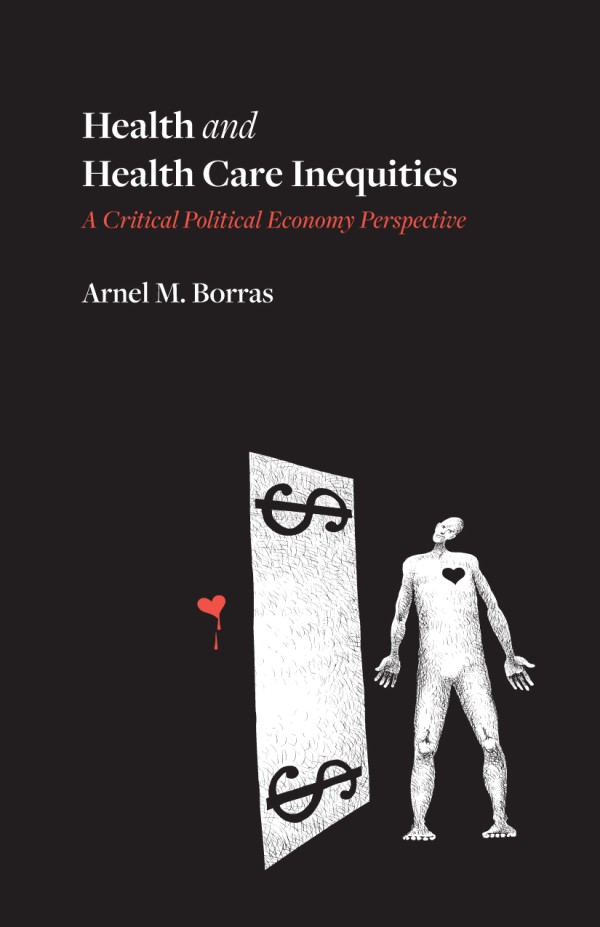
Book: 'Health and Health Care Inequities' iv

Fittingly, chapter 4 brings us to Political Power and Policy Advocacy. In Hodges' model you can both have your cake; and gratefully receive the cake you're given. This is the health in politics and the health in politics (as, for example, revealed in the health status of political leaders).


As a framework structure, the axes of Hodges' model initially give rise to four symmetric domains (spaces). There is an invitation to begin where you choose. Chapter four reveals some truths, as the 'nexus' - center of the model is mobile (unlike many citizens!) as the 2x2 rendition below suggests, if not illustrates. Borras takes us through health politics, political participation and representation, unequal power and politics, and policy change approaches with illustrative cases.

In an institution (like the NHS), bureaucracy, aka an organisation, the workforce are often acutely aware of policy and procedure. It is like the Force. It permeates everything - the meetings - and yet is remote. Borras seek to shed light on unequal resources and policy influence. Again Borras's literature informed discussion and argument, includes some historical gems, such as Lasswell (1958).

Individual
|
      INTERPERSONAL    :     SCIENCES               
HUMANISTIC  --------------------------------------  MECHANISTIC      
 SOCIOLOGY  :    POLITICAL 
|
Group


Political Power and
Policy Advocacy


In chapter 5 on evidence and ideas, discussion of Katherine Smith's 'under 'Six Travelling Ideas' is an excellent resource, with several references including:

Smith, Katherine E (2013) Institutional filters : the translation and re-circulation of ideas about health inequalities within policy. Policy and Politics, 41 (1). pp. 81-100. ISSN 0305-5736 (https://doi.org/10.1332/030557312X655413).

I love the image of ideas as and on a journey, some successful, others fractured, weak, re-contextualised, even non-journeys (falling - 'dead from the press'I suppose?). At least the journey of Hodges' model is ongoing. A baton for our times. As I wrote in post i, chapter 5 tackles 'evidence' (there's a post or two). It does so in relation to information, ideology, and interests:

If you've read many posts on W2tQ, you may see: I've a chip on my shoulder. Evidence for the safety, benefits, theoretical underpinning ... of Hodges' model is still to be realised. To the satisfaction, that is: of course to the powers that be. Speaking of which: the axial (for me) subtitles arise again in chapter 6; capitalism-imperialism-colonialism-racism nexus (p.87).

To demonstrate the utility of Hodges' model, this is significant.

Please feel free to search for these terms - capitalism-imperialism-colonialism-racism in the search bar above.

I've been interested in drama since playing the part of Francis Nurse in Miller's The Crucible. It took some 50 years to go from armchair to treading the boards again. I played Ken, supported by his wife, trying to run a post office, amid a chaotic and injurious IT system. An 8-9 minute sketch which was part of a Living Newspaper. Interested in writing - as previous posts may reveal, I also keep trying get to the theatre. With the themes of chapter 6, Liberation was thought provoking.

Mind-Body, Private-Public, Socialist-Conservative, Borras adds the global health North-South schism. A prompt for suggesting a brief glossary is expropriation and exploitation^ (p.88). Four stages of capitalism too. This chapter - A critical political economy approach is essential reading for me (and you!?) - a path to a critical care economy (self-care to planetary health).

^There is a note #3 about these on page 99.

See also: Post i : Post ii : Post iii : Post v (to follow)

Merelman, R. M. (1981). Harold D. Lasswell’s Political World: Weak Tea for Hard Times. British Journal of Political Science, 11(4), 471–497. http://www.jstor.org/stable/193766

Arnel M. Borras. (2025) Health and Health Care Inequities - A Critical Political Economy Perspective. Fernwood Publishing.

Liberation image: The Agency
https://theagency.co.uk/news/cast-announced-for-ntombizodwa-nyonis-liberation-at-royal-exchange/

Tuesday, July 29, 2025

Book: iii 'Health and Health Care Inequities'


This book, or similar should be read by 3rd year student nurses and other healthcare learners. I wondered if, for students, a brief glossary might be useful. But key terms are explained and clearly, with typologies numbered and expanded when needed. There seems an aversion in nursing academia to avoid the acutely 'political'. Even though of course in psychiatry, the need for considersation of human rights, consent, capacity, law, personal and public safety, risk is inevitable. Should we only learn of the politics of our role on a post-registration/license course of learning? As mentioned in post i, Borras duly notes the asymmetric impact COVID. The disproportinate deaths of frontline healthcare workers from ethnic minority groups (UK). A sign of the impact, is reflected in COVID recurring through the text.

The device of using axes, e.g. Class-Gender-Health (p.11) rightly draws in commentary on nutrition, pay gaps - heterosexual white men, terms of employment, and design and occupational health for woman. Gender politics is also reflected in the text. The relational dimensions of this discussion also stands out. The Class-Race-Health axis (had me return to the question of parity, but beyond the mental - physical divide. 

These axes employed by Borras seemingly traverse a path and are extensible (across pages). Briefly, in Hodges' model the domains and axes act as stepping stones: 

We can ‘walk’ the model:

Humanistic INTERPERSONAL Individual SCIENCES Mechanistic: adding - Humanistic SOCIOLOGY Group POLITICAL Mechanistic 

A global perspective is matained, even though the focus is Canadian health, government, policy and policy. The press have often highlighted the global nature of the housing crisis. Canada is not immune; as discussed in chapter 2. For what is in many nations a 'housing disaster', Borras covers the history too. Reflecting on: 
'Around the world, neoliberal programs have resulted in over a billion people living in slums (Davis 2017, 23). In wealthier countries, there was rampant privatization of social housing units.' p.25. 
- you feel like a nodding dog toy. Where is the leadership, the strategy and integrity to provide housing for all? Arnel also stresses the link between mental health status and housing. The SDGs place emphasis on security (yes, at the level of what is happening in Ukraine, Gaza, South Sudan...), then housing follows. And with climate refugees to follow ...! I have seen gentrification, and listened to an account in 2007 as Manchester started to experience high-rise growth. I used to try to walk to community visits with students when possible. Observational skills come in many forms, safety still depends upon them. With no place to call home, safety and security is a stark issue for people. A foundation for health, wellbeing and ironically productivity. The rise of foodbanks is also damning. 

Gambling is not indexed, but there appears a denial in the UK government, with other nations 'folding' to the influence of lobbying and corporate influence reducing or removing restrictions in gambling and crucially: advertising. What's the denial you say? Yes, well governments seem to be in denial that there are vulnerable groups in their respective populations. It is laudable that they bestow upon the citizenry the freedom of choice, but that can spell trouble.

If Canada - Ontario has its housing scandal:
'Housing insecurity and homelessness occur because the state and its goencies support real estate and banking corporations that continuously increase housing prices. This setup is a huge problem because these enti- ties focus on generating profit and capital accumulation. The Greenbelt Scandal in Ontario revealed how the government made decisions that served the interests of big companies instead of the public (McGrath 2023; Office of the Auditor General of Ontario 2023). This scandal is an example of neoliberalism and a corrupt style of governance (Moscrop 2023). We need to stop using neoliberal strategies and focus on socialized housing.' p.27.

So does the UK: Grenfell Tower Inquiry No doubt, other nations have their tragic examples. It seems 'international Standards', quality, integrity can never be taken for quality. They too are precarious, vulnerable. Borras's work in chapter 2 on housing security, and differenciation of core housing need is laudable, informative and welcome. Re-reading Arnel's point: 'There is no doubt that housing insecurity affects health'. p.28. His book as a whole makes the point that of course more evidence will always be needed. In healthcare for decades the basics of public health have been identified, studied, established, placed in models and frameworks. Yet we find we are found wanting (UK - Awaab's Law) dragged back to the first steps; and despite the urgent issues we now face.

"Universal health care" is not exactly new:

The Canadian Association of Social Workers. (1961). The Social Worker, Volume 29, Numbers 1 to 2. 29(1to2), 1to78. The Canadian Association of Social Workers. The Social Worker - Le travailleur social. Canadian Association of Social Workers. https://jstor.org/stable/community.39672572.

Borras is correct to write of 'The Continuing Private War against Universal Health Care' (p.36). Looking at NGRAM it appears the private sector has been winning in recent decades. Working previously as a community mental health nurse for older adults, chapter 3 explores Canada's health care systems. Table 3.1 compares the ownership of long-term care homes in figures. The discussion deals with the quality of care and variation. Policy intentions, plans, research and what follows in practice is also debated. Is there any comfort  in learning that Canada is not alone in being skilled at kicking-can-down-the-road. To be fair many developed nations face the same demographic cliff (whichever way you it!), just one of the urgent issues noted above. The contribution of informal carers is also highlighted.

Here in the UK the commissioner - provider split and models of care at the finance level are a maze: amazing in their bureaucracy. Borras does a marvellous job, in providing enough detail without weighing the narrative flow, and losing the reader. The close of chapter 3 offers hope that Hodges' model will continue to be found:
'Therefore, shifting away from neoliberalism toward a new societal system where health care is seen as a fundamental human need and a universal right, not a profit-driven commodity, is crucial. This alternative system requires a new societal framework built on solidarity, fairness, and humanity, prioritizing health over financial and personal gain.' p.50.
See also: Post i : Post ii : Post iv : Post v (to follow)

Arnel M. Borras. (2025) Health and Health Care Inequities - A Critical Political Economy Perspective. Fernwood Publishing.

In addition:

Messing, K., & de Grosbois, S. (2001). Women Workers Confront One-Eyed Science: Building Alliances to Improve Women’s Occupational Health. Women & Health, 33(1–2), 125–141. https://doi.org/10.1300/J013v33n01_08  (Borras - pp.11-12).

https://nhsrho.org/news/tender-maternal-and-neonatal-image-library/

Monday, July 28, 2025

Book: ii 'Health and Health Care Inequities'


In the introduction to Health and Health Care Inequities - A Critical Political Economy Perspective, Borras concludes:
'This book aims to spark thoughutful conversation and collaboration by moving away from capitalism to improve society and health. Health is not just about nursing and medicine; it is integrally connected to economic, political, cultural, and institutional systems. Moreover, it encompasses philosophy and ethics. Capitalism's focus on individualism and competition harms people and the environment,making it all but impossible to achieve health equity. We must work together to envision and create a new world that ensures fairer and better health for all.' p.3.
This sets the tone for a short 163 page book, with a page of acknowledgements, (said) introduction pp.1-3, reference listing pp.136-153; 10 page index, and eight chapters:

Chapter 1: Social Determinants of Health Inequities
Chapter 2: Neoliberalism and Canada’s Housing Policies
Chapter 3: Neoliberalism and Canada’s Health Care System
Chapter 4: Political Power and Policy Advocacy
Chapter 5: The Role of Evidence and Ideas
Chapter 6: A Critical Political Economy Approach
Chapter 7: Searching for Socialism
Chapter 8: Mobilizing for Health Equity
Chapter 1 on 'Social Determinants' provides the first of many political points to underscore the effort with Hodges' model here. If income and poverty come second the preceding paragraphs on wages reveal the socialist stance stand of the author, and the acknowledged networks. Throughout the book the relational nature of determinants, inequality, inequity, protected characteristics, socio-economics and political struggle is raised. In the discussion on wages the importance of education is described in cross-cultural and gender-based terms. The book possibly turns on the sentence:
'To effectively address poverty, we need to unite those who are in poverty with individuals who have more economic stability but are still ulnerable within our capitalist system. These individuals are at risk of falling into poverty if they lose their jobs due to workplace closures or privatization. It is essential to acknowledge that certain groups experience higher poverty rates, but we should see them not as victims but as protagonists and capable workers facing unique but connected challenges.' p.7.
For the people who follow the news, the majority of 'us' are (even if only roughly) aware of the distribution of wealth across national and the global population: the injustice. The erosion and lack of union representation within many workforces, especially 'Big-tech'. The way utility enterprises have provided dividends for shareholders at the expense of ongoing investment in infrastructure, the quality of service provided to the public and even public safety. COVID (p.7), crystalised 'difference' for us all. I came to now substitute collective for 'group' in Hodges' model. Suddenly all those individuals, many working in health, were collectively vulnerable:

Individual
|
      INTERPERSONAL    :     SCIENCES               
HUMANISTIC  --------------------------------------  MECHANISTIC      
 SOCIOLOGY  :    POLITICAL 
|
Group
PSYCHOLOGICALLY
EXISTENTIALLY
BELIEFS
SCIENCE
PHYSICALLY
data, information, knowledge
SOCIALLY
CULTURALLY
SOCIAL MEDIA
wisdom, leadership, truth
LAW - POLICY
FREEDOM - CHOICE

Throughout the text, I like the concise coherence Borras demonstrates in the steps from wages, income and poverty to investigate the state of health inequities. Once again (from i) the context is Canada, but the lessons are for all - as globalisation should/must demand?  There is public health history too. As expected Canada's First Nation, Indigenous, and Nunavut populations are frequently referenced regards exclusion and disparity in health services access and provision. Under health inequities, after infant mortality and life expectancy there is a convention(?) adopted of several axes being identified. The first (p.9) is the class-health axis, then class-gender-health and others. No surprise I found the relational and organisational aspects of these 'constructs' very helpful. As I try to think of Hodges' model as a mathematical object I realise (through oft impromtu conversations^) that we don't have two 'axes' in Hodges' model. Still musing on this; and more to follow ...

Arnel M. Borras. (2025) Health and Health Care Inequities - A Critical Political Economy Perspective. Fernwood Publishing.

^A pure maths lecturer, Gower St Waterstones, London.

See also: Post i : Post iii : Post iv : Post v (to follow)

Wednesday, July 23, 2025

Book: 'Health and Health Care Inequities' i

I didn't attend online the book launch for Health and Health Care Inequities. It appeared to be in the early hours for the UK. Making good progress on a week's break last month, upon return, a presentation and some writing proved a distraction. I've picked it up again, a task that was smooth and straightforward such is the style and writing. H&HCI is - as expected - academic. The statistics, politics and government publications come thick and fast. But they literally do count here.

Borras and the Fernwood are based in Canada. The focus of Borras's thesis is then Canadian politics, economics, society, social and cultural challenges, poverty, exclusion, global standing, statistics and reporting (and more) are all relevant globally. Especially as COVID, climate change, and the current state (or stasis?) of global health provision attests. The book is unashamably Marxist, but not heavy with it. If that makes sense. I was drawn to the publisher too. Well: critical books for critical thinkers; how could I resist!
The influence of Marx and Marxism on the 20th century is profound and full of contradictions. There's the history, and its lessons of Marxism as a political ideology and the geopolitical exemplars that have given Marxism a 'bad' name. To the extent that 'socialism' is also tainted. What other term can be applied that captures 'Marxism', Marxist thought and its relevance today? And that is, relevance in terms of health, health care and social care inequities? 'Struggle' seems utterly inadequate amid current news?

Amidst the history of various revolutions, some arguably on-going, fizzled out, on life support ...? it is, it seems, capitalism that goes marching on. To keep time, the metronome is the tick of central processing unit, and now the graphics 'pu' and tensor; for we live in the 'information age'. I've been keeping notes, but will begin with some reading today, which is an excellent point to 'healthcare professionals', obsessed as we are, with evidence.
'I often go back to Carol Weiss. Years ago, she said three things that go into the decision making ... information, ideology, and interest. And then she went on to say, don't for one moment think that information can trump either ideology or interest. So if you look at the whole climate debate right now, it's actually an ideological debate, The right-wing, the Republicans, some Conservatives here, their rejection of the evidence has nothing to do with the evidence. It's really an ideology ... our group thinks this way, and we are aligned with the fossil fuel industry because they're rich and powerful. Our whole system is based on cheap energy. And so we have to keep going kind of thing. And bugger the evidence.

And that second one, which is actually very closely related to that, is interest. By interest, she meant power and wealth and stakeholders. So, who gets the policy they want? The people who have the money and power to influence it. So, the fossil fuel industry is very powerful ... And so, no matter what the evidence is, they have a financial interest in not having any controls upon them having the minimum of controls. And so, that will triumph usually. So, you put together ideology and interest, and it will almost always overcome evidence or information.' p.78.
More to follow and a return here is essential.

Weiss, C.H. (1983). Ideology, Interests, and Information. In: Callahan, D., Jennings, B. (eds) Ethics, The Social Sciences, and Policy Analysis. The Hastings Center Series in Ethics. Springer, Boston, MA. https://doi.org/10.1007/978-1-4684-7015-4_9

Arnel M. Borras. (2025) Health and Health Care Inequities - A Critical Political Economy Perspective. Fernwood Publishing.

See also: Post ii : Post iii : Post iv : Post v (to follow)

Thursday, May 22, 2025

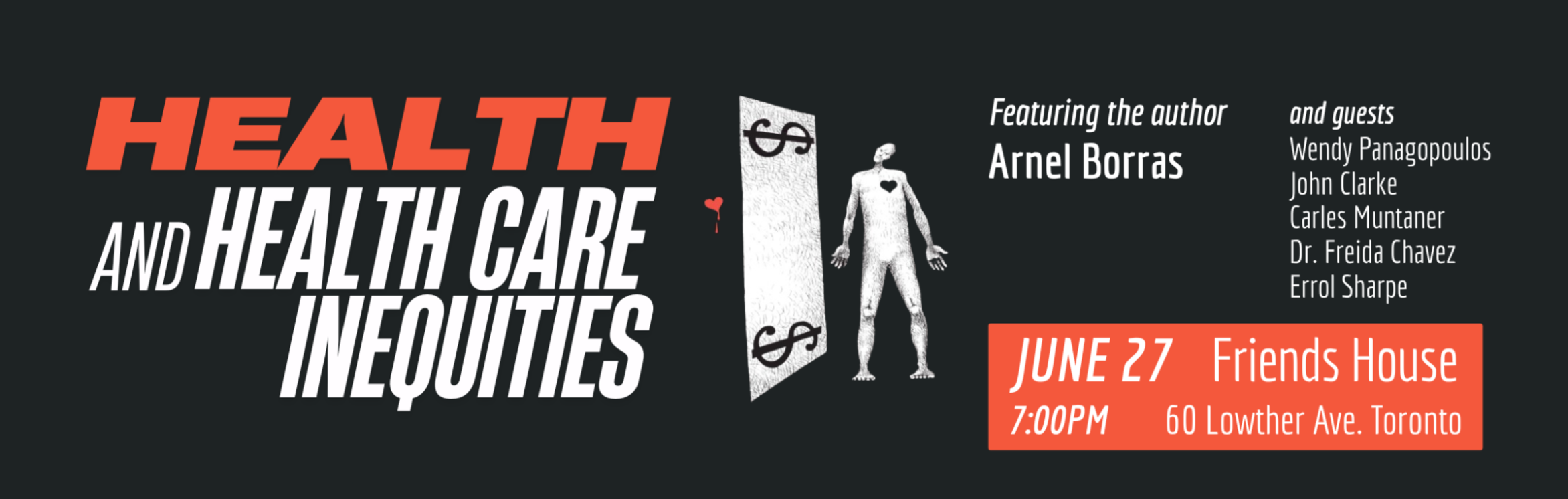
Invitation: Health and Health Care Inequities – Book Launch (June 27)

Hi everyone,

You are warmly invited to the Toronto launch of Health and Health Care Inequities, taking place on Friday, June 27, 2025, from 7:00 to 9:00 PM EDT.

This event is free and open to the public, with both in-person and online attendance options.

👉 Please register in advance:

Select tickets – Health and Health Care Inequities - Toronto Book Launch – Friends House

The launch is co-hosted by the Leo Panitch School with the support of Fernwood Publishing.

Featuring the author Arnel Borras and guests:

  • Wendy Panagopoulos
  • John Clarke
  • Carles Muntaner
  • Dr. Freida Chavez
  • Errol Sharpe

We hope to see you there!

Warm regards,
Arnel

Arnel Borras
*****************

My source: Politics of Health Group Mail List Messages

Visit the PoHG website for lots of interesting links and publications: http://www.pohg.org.uk/

Follow us on Twitter: @pohguk

You can subscribe to / unsubscribe from the PoHG mail list here: http://www.jiscmail.ac.uk/POHG

Sunday, May 04, 2025

NHS & Politics: You don't have to do 'The Hokey Cokey'

c/o Lunch with the FT - Amanda Pritchard
Life&Arts :: FTWeekend


individual
|
INTERPERSONAL : SCIENCES
humanistic ------------------------------- mechanistic
SOCIOLOGY : POLITICAL
|
group
'Another question that she says will become increasingly pressing is what "the core business" of the health service should be at a time when parts of the state and voluntary sectors have been squeezed, leaving the NHS to pick up the slack. GPs tell her that between one in four and one in five of their patients come to them for help with non-health problems.

A colleague in a mental health service recently told her it employs a housing team to support patients who couldn't otherwise be discharged from hospital. "You wouldn't say the core business of the health service is as a housing provider, but that's where we've ended up."'

She adds: "Think about how long it takes to train a doctor - you can't change your mind every five minutes. . . Think about what it requires to put new [digital] systems in place. It's not buying the tech - that's the easy bit. It's the implementation . . . and some consistency of leadership is really helpful."

'The NHS contributes between 10 and 
20 per cent to people's health, she says - a figure I find startlingly low. "The rest is what we would recognise as the wider [social] determinants, including housing, and meaningful employment, but also smoking, diet, alcohol and lack of exercise. "I know there's an anxiety sometimes about being too nanny stateish about this . . But it is going to take really bold action to set the conditions for people to then live healthier lives."'


'The abolition of NHS England marks the end of an attempt to take the politics out of the health service by placing its day-to-day running in the hands of an arm's-length body. But Pritchard suggests that if this was the intent, it was probably never realistic. "It's too important to the country [and] we spend too much public money for ... the politics not to be part of it."'


My source:
Sarah Neville, Lunch with the FT Amanda Pritchard, Life&Arts, FTWeekend, 26-27 April, 2025, p.3.

Previously: 'Nye' : 'SOCIO-technical' : 'housing'

Saturday, November 09, 2024

Nye | Full Show | Free (until 11th Nov) | National Theatre @home

Further to a post earlier this year regarding a play - 

Dramatherapy iii - A Specification for Care: Nye

- the play Nye is available to watch for free UNTIL 11th NOV 

on the National Theatre's YouTube channel (with Michael Sheen as Nye Bevan)

https://youtu.be/hpN--d5bXSY?si=yHiiXn1ZhN2_NDnP


My source: Politics of Health Group Mail List Messages

Visit the PoHG website for lots of interesting links and publications: http://www.pohg.org.uk/

Visit PoHG on Facebook: https://www.facebook.com/282761111845400

Follow us on Twitter: @pohguk

I walked by the NT this afternoon on the way to Bankside Gallery.

Thursday, December 15, 2022

Spark! Strike! c/o - Ack Lemn Sissay


 INDIVIDUAL
|
 INTERPERSONAL    :     SCIENCES               
HUMANISTIC --------------------------------------  MECHANISTIC      
SOCIOLOGY  :   POLITICAL 
|
GROUP


"Long before the Bryant and May Factory was opened in Fairfield Road, Bow in East London, Charles Dickens wrote, in 1852, about the risks of phossy jawin matchmaking factories. Yet, when the factory was opened in 1861, they proceeded to use the dangerous white phosphorus that caused the disease."

https://www.matchgirls1888.org/the-story-of-the-strike

Spark Catchers by Lemn Sissay

"...

The greatest threat to their lives was
The sulferuous spite filled spit of diablo
The molten madness of a spark

They became spark catchers and on the word “strike”
a parched arched woman would dive
With hand outstretched to catch the light.

And Land like a crouching tiger with fist high
Holding the malevolent flare tight
‘til it became an ash dot in the palm. Strike.


..."