Hodges' Model: Welcome to the QUAD: Search results for housing

Hodges' model is a conceptual framework to support reflection and critical thinking. Situated, the model can help integrate all disciplines (academic and professional). Amid news items, are posts that illustrate the scope and application of the model. A bibliography and A4 template are provided in the sidebar. Welcome to the QUAD ...

Showing posts sorted by relevance for query housing. Sort by date Show all posts

Tuesday, December 03, 2024

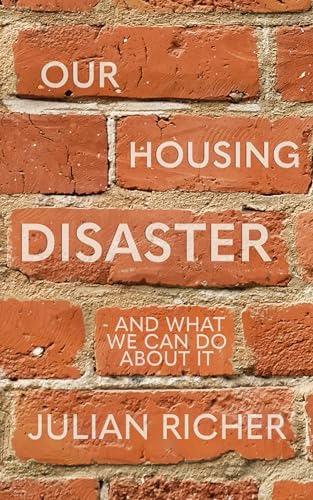
'Our Housing Disaster'

Our Housing Disaster

I must finish the spring and summer's reading as pictured, with another two books in the wings. While the smallest text Our Housing Disaster is cheap to buy, an important read and insightful.

Politically, in the UK and many other nations, housing and its opposite -  homelessness, and the supply and cost of housing are ongoing issues.

Julian Richer's book is low cost £4.99 post free with a promo-code; even as I obtained a free copy, learning of the book in Business section of The Sunday Times. 


Our Housing Disaster gets off to a flying start:

'Falling or stagnant house prices are seen as national 'ill' that we must recover from but, in fact, fast-rising house prices and interest rates have proved to be the real ill, destroying the dream of a property-owning democracy that was supposed to benefit all.

Britain's housing policy, such as it is, has failed on its own terms.' p.9.

I remember when Grand Designs appeared on our TVs. Especially the episode with the wood-frame eco-house by Ben Law. This seemed sustainable and time-limited too. Julian Richer really nails the housing problem without delay. Unfortunately, the audience appeal of TV programmes like Grand Designs, Location, ... seem to me symptomatic of the issue Richer raises above. I used to think that the 'middle class' were shooting themselves in the foot; as house prices rose and rose. There was a collapse at one point with the trap of negative equity that my family almost got caught in (had we bought a new home). Richer corrects this view, with a national perspective across ten chapters and 180 pages.

 If the link between health and housing needs to amplified Richer ably achieves this, and quickly:

'Poor housing is harming the nation's health. The housing ombudsman, Richard Blakeway, whose office deals with complaints from social housing tenants about disrepair and mould and damp in their homes, problems recognised now to be a threat to health, has found the situation to be so bad that he has called for a Royal Commission to look at the links between housing, health, and welfare. Too often, the various agencies in housing, health and social care tend not to link up, or even know what the others are doing. which can end up making people's housing situation worse. Someone who has been homeless or who has mental health needs, for example, can require a lot of support once they are housed so that they can pay the rent and maintain the tenancy. If they just get housed and then left to cope on their own, they can struggle, lose the tenancy, become homeless and whole cycle starts again, with all that waste of money and damage to lives.' p.16.
'In addition to the 8m, there must be millions more who are not in crisis, but who have a blight on their future: typically, young, working people, perhaps with children, who are living in private rented accommodation, with a roof over their heads but always worrying they might be evicted. The insecurity and uncertainty that they experience is not good for them or their children. Just as job insecurity makes it hard for people to build a career, housing insecurity makes it hard for people to establish a life.' p.19.
The statistics flow thick and fast but as readable as they are focussed they weave an effective narrative referring to the history of just how we got to this point. The text make stark the dire crisis and need for action and an urgent government response. 

More to follow.

Wednesday, December 04, 2024

'Our Housing Disaster' ii

'Our Housing Disaster'
Image: Goodreads

Late to reading about economics, apart from the 'quality press' and an 'O' level in social history (which has actually been really useful in my nursing career), this book can ground and crystallize 'housing' as heard and viewed in the news.

I've a love for hi-fi that I share with Julian Richer, but my wealth lies elsewhere and is decidedly non-monetary. Reading his column in The Sunday Times, I'm impressed with Mr Richer's insight and the extent of his philanthropy. The book notes several initiatives and collaborations, e.g. TaxWatch -https://www.taxwatchuk.org/

On the news you hear of 'intervention' in the market - usually equity or bonds. You - the government - can intervene, or let the market, a market by implication, look after itself. Markets find their own equilibrium, shift to stability ultimately; and this despite economic crises, billion-busting scandals and political parties totally screwing-up.

So, it appears governments have allowed the housing market, to make its own moves.

It's back to the future, the 18th century of laissez-faire: the market has spoken, and its a utter mess.

The book's contents are well structured and delivered in full.
Introduction
1 Disaster? What Housing Disaster?
2 A Housing Crisis That Harms
3 Where Did Housing Go Wrong?
4 The Rise of Renting
5 The Shrinking of Social Housing
6 Underregulated and Oversubscribed
7 Land and Planning: The Price of Permission
8 Making Better Use of Buildings and Land
9 Building a Solution
10 Time for Action - My Housing Manifesto
Conclusion

OHD covers the population as a whole, but 'health' is very well represented in terms of personnel and the impacts of lack of housing and poor quality, unregulated housing: 

'Inability to afford housing is one of the grievances feeding into strikes by public sector workers - even better-paid ones. A survey by the British Medical Association (BMA) in December 2022 found that nearly half (45.3%) of junior doctors had struggled to afford their rent or mortgage in the past year. To earn more, some were taking on extra shifts and the BMA said this added to its concerns around junior doctor exhaustion and burnout. 

The consequences reach out to the public at large, as housing problems hit staff recruitment in health services, education and so on. The NHS visibly cant cope: basic structures are crumbling.' p.25.
We can imagine the anxiety and depression this might provoke. Even for people you might think (assume) would be ordinarily resilient. These are clearly extraordinary times. An email - RCN Magazine - today supports the same conclusion:


The relationship between health and housing is not limited to chapter 2. In chapter 2 though damp and mould (yes a specific case), unsanitary conditions the loss of environment health officers and skilled personnel, reminded me of decades ago an article in HSJ, or in that 'quality press' about the community health councils - CHCs having their teeth extracted. Public (MENTAL) health has taken a stunning fall and desperately needs to be put back together.

More to follow...

Tuesday, July 29, 2025

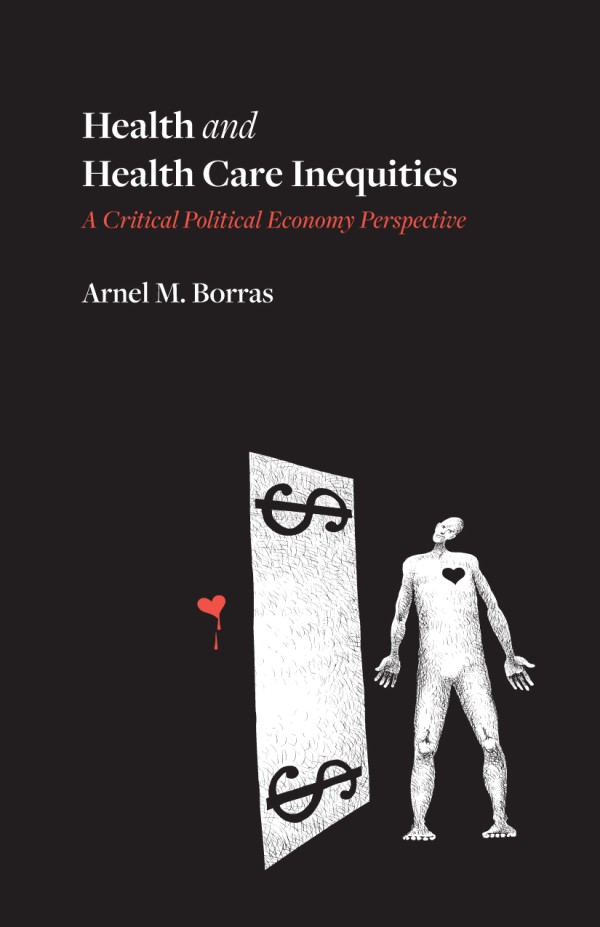
Book: iii 'Health and Health Care Inequities'


This book, or similar should be read by 3rd year student nurses and other healthcare learners. I wondered if, for students, a brief glossary might be useful. But key terms are explained and clearly, with typologies numbered and expanded when needed. There seems an aversion in nursing academia to avoid the acutely 'political'. Even though of course in psychiatry, the need for considersation of human rights, consent, capacity, law, personal and public safety, risk is inevitable. Should we only learn of the politics of our role on a post-registration/license course of learning? As mentioned in post i, Borras duly notes the asymmetric impact COVID. The disproportinate deaths of frontline healthcare workers from ethnic minority groups (UK). A sign of the impact, is reflected in COVID recurring through the text.

The device of using axes, e.g. Class-Gender-Health (p.11) rightly draws in commentary on nutrition, pay gaps - heterosexual white men, terms of employment, and design and occupational health for woman. Gender politics is also reflected in the text. The relational dimensions of this discussion also stands out. The Class-Race-Health axis (had me return to the question of parity, but beyond the mental - physical divide. 

These axes employed by Borras seemingly traverse a path and are extensible (across pages). Briefly, in Hodges' model the domains and axes act as stepping stones: 

We can ‘walk’ the model:

Humanistic INTERPERSONAL Individual SCIENCES Mechanistic: adding - Humanistic SOCIOLOGY Group POLITICAL Mechanistic 

A global perspective is matained, even though the focus is Canadian health, government, policy and policy. The press have often highlighted the global nature of the housing crisis. Canada is not immune; as discussed in chapter 2. For what is in many nations a 'housing disaster', Borras covers the history too. Reflecting on: 
'Around the world, neoliberal programs have resulted in over a billion people living in slums (Davis 2017, 23). In wealthier countries, there was rampant privatization of social housing units.' p.25. 
- you feel like a nodding dog toy. Where is the leadership, the strategy and integrity to provide housing for all? Arnel also stresses the link between mental health status and housing. The SDGs place emphasis on security (yes, at the level of what is happening in Ukraine, Gaza, South Sudan...), then housing follows. And with climate refugees to follow ...! I have seen gentrification, and listened to an account in 2007 as Manchester started to experience high-rise growth. I used to try to walk to community visits with students when possible. Observational skills come in many forms, safety still depends upon them. With no place to call home, safety and security is a stark issue for people. A foundation for health, wellbeing and ironically productivity. The rise of foodbanks is also damning. 

Gambling is not indexed, but there appears a denial in the UK government, with other nations 'folding' to the influence of lobbying and corporate influence reducing or removing restrictions in gambling and crucially: advertising. What's the denial you say? Yes, well governments seem to be in denial that there are vulnerable groups in their respective populations. It is laudable that they bestow upon the citizenry the freedom of choice, but that can spell trouble.

If Canada - Ontario has its housing scandal:
'Housing insecurity and homelessness occur because the state and its goencies support real estate and banking corporations that continuously increase housing prices. This setup is a huge problem because these enti- ties focus on generating profit and capital accumulation. The Greenbelt Scandal in Ontario revealed how the government made decisions that served the interests of big companies instead of the public (McGrath 2023; Office of the Auditor General of Ontario 2023). This scandal is an example of neoliberalism and a corrupt style of governance (Moscrop 2023). We need to stop using neoliberal strategies and focus on socialized housing.' p.27.

So does the UK: Grenfell Tower Inquiry No doubt, other nations have their tragic examples. It seems 'international Standards', quality, integrity can never be taken for quality. They too are precarious, vulnerable. Borras's work in chapter 2 on housing security, and differenciation of core housing need is laudable, informative and welcome. Re-reading Arnel's point: 'There is no doubt that housing insecurity affects health'. p.28. His book as a whole makes the point that of course more evidence will always be needed. In healthcare for decades the basics of public health have been identified, studied, established, placed in models and frameworks. Yet we find we are found wanting (UK - Awaab's Law) dragged back to the first steps; and despite the urgent issues we now face.

"Universal health care" is not exactly new:

The Canadian Association of Social Workers. (1961). The Social Worker, Volume 29, Numbers 1 to 2. 29(1to2), 1to78. The Canadian Association of Social Workers. The Social Worker - Le travailleur social. Canadian Association of Social Workers. https://jstor.org/stable/community.39672572.

Borras is correct to write of 'The Continuing Private War against Universal Health Care' (p.36). Looking at NGRAM it appears the private sector has been winning in recent decades. Working previously as a community mental health nurse for older adults, chapter 3 explores Canada's health care systems. Table 3.1 compares the ownership of long-term care homes in figures. The discussion deals with the quality of care and variation. Policy intentions, plans, research and what follows in practice is also debated. Is there any comfort  in learning that Canada is not alone in being skilled at kicking-can-down-the-road. To be fair many developed nations face the same demographic cliff (whichever way you it!), just one of the urgent issues noted above. The contribution of informal carers is also highlighted.

Here in the UK the commissioner - provider split and models of care at the finance level are a maze: amazing in their bureaucracy. Borras does a marvellous job, in providing enough detail without weighing the narrative flow, and losing the reader. The close of chapter 3 offers hope that Hodges' model will continue to be found:
'Therefore, shifting away from neoliberalism toward a new societal system where health care is seen as a fundamental human need and a universal right, not a profit-driven commodity, is crucial. This alternative system requires a new societal framework built on solidarity, fairness, and humanity, prioritizing health over financial and personal gain.' p.50.
See also: Post i : Post ii : Post iv : Post v (to follow)

Arnel M. Borras. (2025) Health and Health Care Inequities - A Critical Political Economy Perspective. Fernwood Publishing.

In addition:

Messing, K., & de Grosbois, S. (2001). Women Workers Confront One-Eyed Science: Building Alliances to Improve Women’s Occupational Health. Women & Health, 33(1–2), 125–141. https://doi.org/10.1300/J013v33n01_08  (Borras - pp.11-12).

https://nhsrho.org/news/tender-maternal-and-neonatal-image-library/

Thursday, December 05, 2024

iii 'Our Housing Disaster'

'Our Housing Disaster'
Image: Goodreads

Here on W2tQ many posts have referred to 'common sense' over the years. Apparently, there is no such thing - which may be another blog post).

https://www.psychologytoday.com/gb/blog/too-many-goals/202005/theres-no-such-thing-common-sense

In 'Our Housing Disaster' Julian Richer is simultaneously analytic in identifying problems and potential solutions, logical and to me commonsensical. There is a need for debate and decisions at a political level. Residents, must also be involved, have a say. Chapter 10 lists shorter-term actions and longer-term. 

The history of this disaster is tackled in chapter 3. Chapter 4 links very well explaining the rise of renting. If there was ever to be another edition - which the book and issue well-deserve; it would be good to a nod to evidence-based housing policy? This is suggested, as is integrating the many threads of housing; work, transport, infrastructure, shops, water and services. I've posted here about the number of All-Party Parliamentary Groups and talk of joined-up government. Housing is anything but joined-up. You could argue all MPs and Lords should read this book. 

Overall, the book is well produced, the text very readable, large size and well laid out. The 'references' for each chapter are in the form of links. Needless to say, I have only tried a few. The book seems smaller - narrower than a standard paperback, so may have fewer words / line. For posts i & ii, I extracted text from photos, which is a challenge without stressing the book's spine (as I've written before no doubt, I'm squeamish when it comes to books).

In the UK, the Right to Buy and Help to Buy, have long been a feature of housing policy. Of Help To Buy, it has 'cost taxpayers £29 billion in cash terms by 2023' (p.45) and has additional consequences. Milton Keynes is the 'right-to-buy-to-let' capital of England (2017, p.48). Surely, it is time to move on -  and quickly. The history of how we got here is fascinating, like a slow car-crash with critical events that accelerated the inevitable. Taxpayers and citizens all: we have missed out. There is mention of preventing corruption (but yes, more effort on money-laundering and tax evasion please!). The need for buildings inspection, standards of construction and materials and responding to the climate crisis and high energy costs are also stressed.

Richer's stance is tempered, and sets an effective tone. He is not preaching, even as he points to land owned by the Church of England. I remember the NHS selling estate, and yet there is more. While the book is not long, an index would help. I like the final summarising and concluding sentences for each chapter. Physically, they are bound to be there obviously, but there's a welcome sensible thread to these imho. With an index, perhaps I could check back to look up 'productivity, reduced', a problem that has plagued the UK economy. To what extent does housing contribute to this now; since the 1960s? The King's Fund and many other organisations and commentators advocate daily for social care. While it is acknowledged, social care is not one of the government's 5 key 'missions', and now (5th Dec.) there are milestones. Richer refers to the problem of bed-blocking in the NHS, and the need for suitable future housing so older adults can continue to 'live' in their homes.

So often in health we are taught, and learn to assess, plan, intervene, and evaluate a person-centred set of needs, a patient's needs, and a carer's needs. It is welcome to see a collective - population-based focus on needs. The book delivers on the title. So there are no details of nations (or cities) that have a  much better housing system and controls. Over the years it's been interesting and encouraging to read about Vienna in the FT. Below I have mapped/associated selected concepts to the care / knowledge domains of Hodges' model:

INDIVIDUAL
|
INTERPERSONAL : SCIENCES              
humanistic ------------------------------- mechanistic
SOCIOLOGY : POLITICAL   
|
GROUP
psychological security
mental health
'my' home, my space
identity
peace of mind when costs met
facilitate well-being
memories
LAND - the 'hope' value
sense of continuity / permanence
children being safe making friends
access to 'GREEN' spaces
my life course - personal history
Cognitive assurance: my area -
family & friends / pets /school / work -
attachment

LAND - UK geography
physical shelter
physical health (NO damp, mould, noise...)
House building targets/programmes
my space/room
having an address - identity
displacement
public/environment health
eviction
house building - infrastructure
land - costs
transport links
bed-blocking in hospitals
Climate Change

place to make a home
raise a family
belonging
sense of community
friends & neighbours
 anti-social behaviour by tenants
social care - older adults
social care disabled
access to work, schools
resources to service a community
lack of spare capacity to support people & families in need/crisis

the economy: interest/mortgage rates
indebtedness - poverty
housing POLICY :: COSTS
national housing & land assets
inspection and building standards
forms of tenure: private, rented, housing assoc.
LAW - housing & land legislation
housing rights
migration, refugees
independent advocacy / NGOs
compulsory purchase


Thank you Mr Richer for an excellent read and synopsis. I do hope the government listens! My daughter's partner works in estate agency, so I know where my copy is heading: a new home!


Wednesday, November 28, 2018

WHO Housing and health guidelines

"Recommendations to promote healthy housing for a sustainable and equitable future"

The quality of housing has major implications for people’s health. Housing in cities is of particular concern, with the world’s urban population predicted to double by 2050 and, with it, the demand for housing. In both developed and developing countries, improving housing conditions and reducing health risks in the home is thus critically important.

Improved housing conditions can save lives, reduce disease, increase quality of life, reduce poverty, help mitigate climate change and contribute to the achievement of a number of Sustainable Development Goals, including those addressing health (SDG 3) and sustainable cities (SDG 11). Housing is therefore a major entry point for intersectoral public health programmes and primary prevention. [Foreward, p.xii]


individual
|
INTERPERSONAL : SCIENCES
humanistic ------------ SDG 3 HEALTH----------- mechanistic
SOCIOLOGY : POLITICAL
|
group
Mental Health
Peace of Mind
Sense of Well-Being
Confidence
Identity


"Functional impairments are often operationalized in terms of whether a person can accomplish activities of daily living (ADL) or instrumental activities of daily living (IADL). IADL refers to basic tasks of everyday life such as bathing, dressing, transferring, toileting, continence and feeding. -

SDG 11 Sustainable cities
Housing - Dwellings
Indoors - Pollution - Outdoors
benzo[a]pyrene
carbon monoxide, particulate matter, ...
Indoor heat :: Indoor cold
Injury hazards, structure
Research
Weatherization
Heat - Temperature - Cold
Insulation
Space, Noise, Fuel, Energy, Light
Accessible home environments for people with functional impairments

ADL refers to a range of activities that are required for independent living in the community, such as preparing meals, housekeeping, taking medication, shopping, managing one’s own finances, travelling and using the telephone." p.69.

HOME -
 belonging, security and privacy

Household Crowding - health
Community
Water access
WASH water, sanitation and hygiene
Social interactions


local, regional, national government
Ministries of Health
Housing regulations
Standards
Policy
Funding - Cost Effectiveness
Reduce poverty
Impact of housing on:
morbidity
staying well, relapse risk
hospital admissions
recidivism  ...


Friday, October 11, 2013

Recent Advances in Research on Housing Transitions and the Life Course - a one-day symposium

Meeting of the Royal Statistical Society Social Statistics section.
DATE: Tuesday 10 December 2013
TIME: 10am-5pm (followed by a drinks reception)
LOCATION: Royal Statistical Society, 12 Errol Street, London EC1Y 8LX

We are pleased to announce a one-day symposium on recent developments in research on housing transitions through the life course.  The event will feature presentations from leading international demographers, geographers and economists on different aspects of housing careers. Topics include:

  • the interrelationship between housing and fertility: childbearing patterns by housing conditions and housing changes after the birth of a child
  • wage, employment and house-price effects on migration
  • intergenerational transmission of home ownership and neighbourhood poverty
  • residential mobility, neighbourhood poverty dynamics and neighbourhood choice among families
The symposium is sponsored by the ESRC-funded project “Interrelationships between housing transitions and fertility” (see http://www.bristol.ac.uk/cmm/research/housing for further details). 

SPEAKERS:
William A.V. Clark (University of California, Los Angeles) Clara Mulder (University of Groningen), Heather Joshi (Institute of Education) Hill Kulu (University of Liverpool) David Manley (University of Bristol) Birgitta Rabe (University of Essex) Elizabeth Washbrook (University of Bristol)

A programme and abstracts are at http://www.bristol.ac.uk/cmm/research/housing/symposium/index.html

REGISTRATION AND QUERIES: All are welcome and attendance is free.  Refreshments will be provided, including lunch and a drinks reception.  However, advance registration is essential.  Please complete the online registration form at ... to reserve your place.


[ I mentioned to the organisers about the ongoing transitions I have posted about before; that of older adults moving house (home) often in response to a bereavement to be nearer other family members. This is not the symposium's focus, but remains a question in terms of the potential impact on the individuals concerned and health and social services. pj ]

Saturday, December 22, 2012

KT-EQUAL events: inc. Food and Nutrition in Later Life; Meeting the Needs of People Living with Dementia and their Carers ...

Dear KT-EQUAL supporters,
(Several other posts relating to SPARC and KT-EQUAL have been deleted, this has been retained for personal archive purposes. I learned a lot in attending some events organised under the auspices of this research programme, which stemmed from the IDEAS Factory in 2006.)

Hello. Here's an update about some of our activities and other news that may be of interest to you.

-----------------------------------------
Upcoming events programme
You are warmly invited to join our upcoming events:

------------------------------------------
Food and Nutrition in Later Life
------------------------------------------
When:    8 January 2013
Time:     9.30am - 16.15pm
Where:   University of Reading

The day features talks from experts, as well as an interactive "hands-on" showcase.  The event should be informative and fun, and provide an opportunity to meet and network with others who have personal or professional interests in food and nutrition for older people. The programme has been designed to appeal to a wide audience, including older adults, practitioners from health and social care, academic researchers, industry and charities.

Free to attend with lunch and refreshments included.

For further details and to book: ...

------------------------------------------
Thinking outside the box - meeting the needs of people living with dementia and their carers
------------------------------------------
When:    24 January 2013
Time:     9.00am - 16.45pm
Where:   The Forum, St James Parade, Bath, BA1 1UG

Dementia is a major challenge facing our health and social services over the next 20 years.  This has now been recognised by the government and significant resources are being directed towards early diagnosis, new treatments and management of people with dementia.

This funding will only be effective if we can develop news ways of supporting and managing people with dementia and there carers.  This will require a multidisciplinary team approach to problem solving and service delivery.  Health and Social Care Practitioners are familiar with the concept of multidisciplinary team working but often lack insights into dynamics of group working. We need to ensure that the interventions are effective and consider outcome measures that are appropriate for a long term neurodegenerative condition that are appropriate for patients and carers.

This event aims:

- to help researchers, health and social care professionals to think differently about meeting the needs of people who are living with dementia
- to consider the range of outcome measures that might be used to assess the benefit of an intervention
- to make researchers aware of the challenges and opportunities of multidisciplinary working
- to inform new researchers of the needs of people with dementia
- to trigger ideas for new research and provide a forum where participants can develop potential proposals

Please note that this event has limited places to ensure that representatives from several disciplines have the opportunity to participate.

Free to attend with lunch and refreshments included.

For further details and to register interest: ...

------------------------------------------
Design for Living in Later Life
------------------------------------------
When:    31 January 2013
Time:     10.00am - 16.30pm
Where:   The Open University, Milton Keynes

This event brings together the latest research ideas and developments about creating lifetime environments for people of all ages.

Free to attend with lunch and refreshments included.

For further details and to book: ...
------------------------------------------
Keeping safe and maintaining independence: older people and sight loss
------------------------------------------
When:    7 February 2013
Time:     9.30am - 15.45pm
Where:   Weetwood Hall Conference Centre and Hotel, Otley Road, Leeds, LS16 5PS

This workshop event is concerned with sight loss in later life and how we can enable people to live a quality life despite the difficulties that arise from diminished vision.

This event aims to raise awareness of sight loss and its impact and to increase knowledge and understanding of how to support people with sight loss. The programme will showcase new developments in research and practice that have the potential to inform practitioners.

Free to attend with lunch and refreshments included.

For further details and to book: ...
------------------------------------------
New posts on the KT-EQUAL blog which may be of interest to you:

Housing LIN newsletter – Housing with Care Matters, December 2012

This reflects back on some of the successes the Housing Learning and Improvement Network (LIN) had in 2012, including the recent 2nd annual conference attended by over 300 people.

The conference also saw Norman Lamb, Minister for Care and Support Services, announce an additional £40m in this financial year for Disabled Facilities Grants. Details of this and a number of other recent policy and funding announcements to do with housing, care and support are featured in this end of year newsletter along with information on new learning resources from the Housing LIN, important new publications such as HAPPI2, calls for information, and details of Housing LIN forthcoming regional meetings and events.

New dementia website launched: dementiakt.ca

The Canadian Dementia Knowledge Translation Network (CDKTN) and the National Core for Neuroethics are pleased to announce the launch of the online Dementia Knowledge Translation (KT) Learning Centre. This website is targeted towards new and established dementia researchers engaged in KT.

------------------------------------------

Invitation to take part in a study

I am sending some details passed onto us by one of our members, based at TRL:

We are currently undertaking a European study regarding older road users and what different countries do about supporting mobility. The aim of our project is to investigate travel patterns and road safety amongst older road users across Europe, see how they are changing and look at what work is being undertaken to support improving mobility. As part of this we are looking to undertake interviews with possible major players as to what they are doing. Would anyone be interested in taking part in a telephone interview with one of our researchers on this topic?

If you are interested please contact Jenny Stannard, Principal Project Manager and Road Risk Consultant.
email: ...

------------------------------------------

Recent Highlights

A new BBC film highlights the work of our i-design team in Cambridge: how do older people use technology? http://www.bbc.co.uk/news/technology-20664470

Falling off the Bandwagon: Sustaining digital engagement by older people - a series of consultation events have recently been undertaken exploring potential solutions to the challenges faced by older IT users. A major consultation event took place at St Georges House, Windsor focusing on solutions and how to implement them.  http://www.stgeorgeshouse.org/consultations/social-and-ethical-consultations/recent-consultations/

We were delighted that The Princess Royal presented a keynote address at our recent 'Showcase world class occupational therapy research to meet the needs of an ageing population' event. This event took place at the College of Occupational Therapists where The Princess Royal is Patron. It was a unique opportunity to bring together leading experts to discuss ways of meeting the challenges of an ageing population.
------------------------------------------

I hope that this is helpful. It's been a pleasure to meet with some of you over the course of this year - look forward to further developments in 2013. If you have any queries and or comments/suggestions please do not hesitate to contact me.

As this eventful year draws to a close, we would like to thank you for all your continued support and extend seasons greetings.  All the very best for 2013.

Bangar
--------
S Bangar
KT-EQUAL Research Co-ordinator
School of Health and Related Research (ScHARR)
University of Sheffield
Regent Court, 30 Regent Street
Sheffield  S1 4DA

Friday, February 04, 2022

Paper: c/o Rabiah-Mohammed et al. - Syrian Refugees’ Experiences of Housing Stability during the COVID-19 Pandemic


 Self - Individual - Person
|

 INTERPERSONAL    :     SCIENCES               
HUMANISTIC ----------------------------------  MECHANISTIC
SOCIOLOGY  :   POLITICAL 
|
Community - Group -  GLOBAL REFUGEES 

COVID-19 impact
'Just'
mental health, stress, trauma, vulnerability
lived experience
stability
identity
PERSON-HOOD
PSYCHE- PSYCHIATRY
Spiritual - Beliefs - Hope - Sanctuary

QUALITATIVE

COVID-19 impact
housing stock: space/rooms/access
stability
'just' [ in time ] -
repeated displacement
place, space, time, events, control
systems
GEO
-
Online 'life' education
diet, food, cost
QUANTITATIVE
SUBJECTIVE
COVID-19 impact
family size
'Just'
(new) culture, language, customs
Critical Social Theory
social inequities, race, status, class...
shared realities, narratives, interpretative
discrimination, stigma, social isolation
social justice, stability
community, neighbourhoods
family support, safety
belonging

SOCIO-
OBJECTIVE
COVID-19 impact
'Just'
policy
housing markets
government-assisted refugees
power - [no] choice [beyond my control]
Syrian refugees - forced migration
housing instability
low-income, affordability
employment
STATE-HOOD
'Re-settlement' - across this model?
precarity
-ECONOMIC


Fawziah Rabiah-Mohammed et al. (2022) Syrian Refugees’ Experiences of the Pandemic in Canada: Barriers to Integration and Just Solutions. Studies in Social Justice, 16,1, pp.9-32.


My source:
https://twitter.com/westernuNursing/status/1487161839922331651

Sunday, December 10, 2023

Tower blocks: Challenge young and older - Courtesy the Artist © Stephen Willats (Revisited)

LIVING WITH PRACTICAL REALITIES, 1978

"Stephen Willats aimed to explore the realities of living in a British tower block. The work centres on Mrs Moran, an elderly woman who lived at Skeffington Court in Hayes, West London. Willats photographed and interviewed Mrs Moran over the course of six months. The text in the work is based on these interviews. In his composition, Willats highlights the physical, social and economic constraints that she faced. Each panel also features a question. These invite the viewer to participate directly in Mrs Moran’s lived experiences."

Gallery label, September 2023


Tower blocks are an integral, defining structure in urban and city life. Governance, effective policy, accountability, high standards, public safety and duty of care must not be an after-thought. 

 Individual
  |
     INTERPERSONAL    :     SCIENCES               
HUMANISTIC --------------------------------------  MECHANISTIC      
SOCIOLOGY  :   POLITICAL 
|
GROUP
© Stephen Willats
© Stephen Willats
© Stephen Willats

Grenfell Tower Inquiry

Housing policy
Housing provision
Housing market

'Mobility'

Ownership

Private, rented
Housing Assoc. ...

Tower Blocks

Life chances -
'Health career'


My source: notebook, as with -

https://hodges-model.blogspot.com/2023/08/rational-concepts-dilworth-1977.html

Plus, a previous post:
https://hodges-model.blogspot.com/2014/03/living-with-practical-realities-1978.html

5th March at Tate Liverpool, the exhibition: "Keywords. Art, Society and Culture in 1980s Britain" from 28 Feb 2014 to 11 May 2014.

See also (listed in the bibliography):
Iris Lohja, Yves Demazeau, Christine Verdier. A multi-agent system approach to dynamic ridesharing for older people: State-of-the-art work and preliminary design. 18èmes Rencontres des Jeunes Chercheurs en Intelligence Artificielle, RJCIA’20, Jun 2020, Angers, France. pp.52-59. ⟨hal-02897446

Friday, December 04, 2009

Sheltered housing, care domains, ADLs, telecare and wardens

Shelter is a basic human need, one rendered acute when people are forced to flee their homeland. On a rather different level in the UK there is currently quite a debate about sheltered housing and the withdrawal of live-in wardens. This 'debate' has even progressed to judicial review.

I've visited many clients when the warden has appeared at the window or door to check that things are aok? Such has been the time keeping and client's faith in their clock that on occasion it could have been Kant walking by. It is often helpful to invest some time and get to know the warden, too see what they know not just about 'care of older adults', but about their residents many of whom become friends. We need to remember what a difference an individual can make in these situations. The clue is in the title 'sheltered housing' which in Hodges' model spans the interpersonal and sociology care domains. I've illustrated this below:

Suddenly, the advent of telecare, video and mobile comms and resulting benefits raise the possibility of service 'duplication' at a time when cost savings are sought in social care. Alternately, we might ask if some overlaps in service provision are good insurance? For the people in sheltered housing and their relatives what did sheltered mean to them when they first viewed the facility, what does it mean now? As is the case with day care centre managers, the more dynamic wardens really do make a difference to these communities of individuals. As Peter Sellers showed us sometimes for a gardener - or a warden - just Being There is reassurance enough.

Hodges' model can be used as a reflective device for this real-world bricks and mortar example of a clash between the humanistic and mechanistic care domains.

Additional link: International Human Rights Day 2009

Original dwelling image from: http://www.cherokeemedicineman.com/dwelling.html

Film image source IMDb

Wednesday, March 29, 2023

'Health' is a Many-Splendoured Thing c/o BBC Radio 4

BBC Radio 4 - Money Box Live: Rental Health Special


 INDIVIDUAL
|

 INTERPERSONAL    :     SCIENCES               
HUMANISTIC --------------------------------------  MECHANISTIC      
SOCIOLOGY  :   POLITICAL 
|
GROUP
Mental health, Well-being
Quality of Life
Lived experience
Anxiety, Stress, Distress
Debt fear
Individual vulnerability

Life in Cities
Built environment - Urbanisation
Human Geographies
(Social) Housing
Air Pollution, Repair, Damp, Mould, Noise
Access to Green S pac es

Land-
Social Housing
Community - Family, Social cohesion
Social inclusion - Social justice
Group - Population vulnerability
Socio-Economic - Determinants of Health
Social poverty
'Living' Wage
Good/Bad Tenants/Landlords?
-Lords

"Felicity Hannah and Winifred Robinson take questions on the legal rights of renters with experts Jasmine Basran from the housing and homelessness charity Crisis and Tessa Shepperson founder of the The Landlord Law Services she advises landlords of their legal rights and responsibilities.

The number of people renting across England, Wales and Scotland has more than doubled in the last decade.

The picture in Northern Ireland is similar with the numbers of people renting is up by nearly 2 thirds in the last 20 years."


See also: Rental Health

Read in FT Weekend - hopefully the link will work for you:
Lessons from Vienna: a housing success story 100 years in the making

Previous posts: 'Homeless'

Friday, July 12, 2019

Ekistics - Special Issue: Indonesia and the New Habitat: Urban and Environmental Challenges

Ekistics, one of the world's oldest scholarly journals for human habitat research and practice, was developed by C.A Doxiadis with the goal of creating liveable cities and thriving urban environments. The journal has provided an interdisciplinary forum for the scientific study of human settlements since the 1950s. It has recently been revived into an online version as Ekistics and the New Habitat. The journal is planning a series of special issues for various regions of human habitation around the world. In this call, we seek papers on the topic of Indonesia and the New Habitat: Urban and Environmental Challenges.

Cities in developing countries have become more urbanized and create complex urban problems and challenges. UN-Habitat introduces sustainable urbanization as concentration for future human settlements which is in line with the changes of the world scale. As a developing country as well as most populous nations in the world, Indonesia also experienced human settlements challenges particularly in the area of urban planning, basic infrastructure, housing and slums as well as the urban policies. However, the government of the Republic of Indonesia has shown its commitment to be part of the Habitat Agenda by actively involved and implementing the six themes of the Agenda.

This Special Issue seeks papers from academics, researchers, practitioners as well as observers which posit and analyses the problems of the cities and the new habitats in Indonesia in relation to planning and implementation of the six topics of UN-Habitat:

  1. Urban Demographics
  2. Land and Urban planning
  3. Environment and Urbanization
  4. Governance and Institutional
  5. Urban Economics
  6. Housing and Basic Services
Particular attention will be given to perspective that explores future agendas regarding sustainable urbanization and environmental challenges.

In this regard, the following topics are recommended to take into consideration:
  • Any aspect of the United Nations New Urban Agenda, in Habitat III, including reference to the Sustainable Development Goals.
  • Critiques on the local, regional and global policy of habitat development, design and planning, and urban transformation
  • Issues of architecture, urban design, spatial planning, housing, conservation, sustainability, livability, environmental planning and regeneration through a cross-disciplinary and/or global perspective.
We invite proposals engaged in the mentioned framework of topics above in the form of firstly, a short 250-word proposal/abstract by 1st Oct 2019. On-topic proposals integrating the above themes will receive an invitation to submit a full de-identified paper in Word.doc(x) file format for double-blind peer review.

Scholarly articles/reviews (full papers, double-blind review): typically, with title, authors, institutional affiliations, abstract, keywords, body text (5000-7000 words), and APA 6th References at the end of the article. Body text typically includes:
  • an introduction to a problem or topic outlining the need for the research,
  • relevant prior papers from Ekistics and other sources
  • the methodological or conceptual framework and methods
  • the summary of key results, findings, or reflective insights
  • a critical concluding discussion.
Scholarly extended Abstracts/Essays (1000-1500 words), Critical reflections of Practice (500-1000 words or so) and Book reviews (300-500 words) are also welcome: review priority will be given to full research papers with the criteria mentioned above. Please submit via the orange [SUBMIT PAPER HERE] button in this email.

Please note: there is a further concurrent call:

Saudi Vision 2030 - Habitats for Sustainable Development


Contact: Assist. Prof. Dr Yenny Rahmayati
Email: yrahmayati AT psu.edu.sa

individual - self
|
INTERPERSONAL : SCIENCES
humanistic ----------------------------------------------- mechanistic
SOCIOLOGY : POLITICAL
|
group- population

EKISTICS


[ Smart 

Urban Demographics
Land and Urban planning
Environment and Urbanization


 Cities]

Housing and Basic Services

history ...
Ekistics 1957
Governance and Institutional
Urban Economics


'City'? Reflect on the city and cities as a structure and as content.


c/o Associate Prof. Kurt Seeman, Editor in Chief & Assist. Prof. Dr Yenny Rahmayati
(and my source)

See also:

Habitat 3

Ekistic Journal: Health and Mental Health

'ekistics' defined. 

[ an addition ] 

Sunday, April 09, 2017

Anti-Dwelling Box (or Boxes?)

individual
|
INTERPERSONAL : SCIENCES
humanistic --------------------------------------- mechanistic
SOCIOLOGY : POLITICAL
|
group

HOUSING


HOUSING

HOUSING
Anti-Dwelling Box (1972) by Kiko Mozuna


"There are postmodernist houses and sci-fi houses - I particularly like Kiko Mozuna's bright yellow Anti-Dwelling Box (1972), in which nests of boxes sit inside each other like a surreal puzzle." p.13.

The Japanese House: Architecture and Life after 1945: Barbican, March 23-June 25 2017.

My source:
Heathcote, E. (2017) The home reinvented, FT Weekend, House&Home, 18-19 March, pp.12-13.

Photo c/o: http://erinwilliamsondesign.com/design-crisis/the-antidwelling-box

Sunday, May 04, 2025

NHS & Politics: You don't have to do 'The Hokey Cokey'

c/o Lunch with the FT - Amanda Pritchard
Life&Arts :: FTWeekend


individual
|
INTERPERSONAL : SCIENCES
humanistic ------------------------------- mechanistic
SOCIOLOGY : POLITICAL
|
group
'Another question that she says will become increasingly pressing is what "the core business" of the health service should be at a time when parts of the state and voluntary sectors have been squeezed, leaving the NHS to pick up the slack. GPs tell her that between one in four and one in five of their patients come to them for help with non-health problems.

A colleague in a mental health service recently told her it employs a housing team to support patients who couldn't otherwise be discharged from hospital. "You wouldn't say the core business of the health service is as a housing provider, but that's where we've ended up."'

She adds: "Think about how long it takes to train a doctor - you can't change your mind every five minutes. . . Think about what it requires to put new [digital] systems in place. It's not buying the tech - that's the easy bit. It's the implementation . . . and some consistency of leadership is really helpful."

'The NHS contributes between 10 and 
20 per cent to people's health, she says - a figure I find startlingly low. "The rest is what we would recognise as the wider [social] determinants, including housing, and meaningful employment, but also smoking, diet, alcohol and lack of exercise. "I know there's an anxiety sometimes about being too nanny stateish about this . . But it is going to take really bold action to set the conditions for people to then live healthier lives."'


'The abolition of NHS England marks the end of an attempt to take the politics out of the health service by placing its day-to-day running in the hands of an arm's-length body. But Pritchard suggests that if this was the intent, it was probably never realistic. "It's too important to the country [and] we spend too much public money for ... the politics not to be part of it."'


My source:
Sarah Neville, Lunch with the FT Amanda Pritchard, Life&Arts, FTWeekend, 26-27 April, 2025, p.3.

Previously: 'Nye' : 'SOCIO-technical' : 'housing'

Tuesday, January 30, 2024

"Maslow's hierarchy of needs hides housing horror" c/o Gary Backler in FTWeekend

"John Burn-Murdoch sets out graphically the intergenerational horror story of housing in Britain since 1980 (Opinion, January 13). ...
Abraham Maslow, the American psychologist, placed the need for "shelter" at the very bottom of his famous hierarchy of needs. 
We used to know this. I have a photo of my newly married parents' first rentbook for the council house into which they moved in 1953. It is clear on the cover that after the "accountant to the council", the next most responsible officer is the "medical officer of health". ...
Individual
   |
      INTERPERSONAL    :     SCIENCES               
HUMANISTIC  --------------------------------------  MECHANISTIC      
 SOCIOLOGY  :   POLITICAL 
|
Group

mental health

emotional needs

physical health

shelter/physical security

social needs - belonging

social care

society
Rentbook for council house in 1953 © Gary Backler


Backler, Gary, Maslow's hierarchy of needs hides housing horror, Letters. FT Weekend, 20-21 January 2024, p.8.
Ack. Financial Times. https://www.ft.com/content/3b8719f6-d8e9-4997-b9b5-7dd7ba96fc08

Previously: Maslow.

Friday, July 31, 2015

Workshop & CfP: The post-Fordist Care Regime

A workshop series organised by the Centre for Philosophy and Political Economy (CPPE), School of Management, University of Leicester, UK
Workshop 1: The Business of Care

Keynote Speaker: Silke Roth (Southampton)

Convened by Vanessa Beck, Steve Brown and Fabian Frenzel

CPPE, School of Management, University of Leicester, UK

Date: 10th December 2015

Certain transformations in our political economic landscape can be distilled according to regimes of care. Fordist care was provided primarily by female ‘free labour’ within the family context, while the state played a large role through institutions like schools, pensions, prisons and hospitals. By contrast the private sector role was rather limited although, of course regimes are uneven and varied across different countries and social sectors. The post-Fordist regime of care was triggered, in part, by a rebellion against the invisible and unvalued nature of female ‘free labour’ in the care domain, for example in housework or child care. Demands for more autonomous, neither market nor state based forms of care were made and realised in new social and urban movements that pursued attempts to create new forms of social reproduction and care in communes, housing co-ops or self organised childcare. Despite the progressive impetus of many of these initiatives, it is possible to see, with hindsight, how demands for autonomous care were subsumed within the general move away from state provision and towards privatisation as well as individualisation of care responsibility. In the post-Fordist regime the provision of care is increasingly organised around the needs of capitalist valorisation. This drive towards privatisation is ostensibly about efficiency and budgetary restraint, the underlying motives, however, may well be more diffuse, pointing to the opening of new sources of surplus value capture for a growing sector of market oriented care provision.

Yet as the State outsources care jobs (in prisons, health, schools, etc), the organisation of markets has taken on specific characteristics. This includes the internationalisation of the care regime with transnational businesses of care, a transnational labour force and the expanding mobilities of care receivers. A further aspect is the increasing financialisation of care, which includes the creation of ever-new financial vehicles, from Private-Public Partnerships to social impact bonds that aim at ensuring efficiency in the care sector but often do the exact opposite. Both nationally and internationally we witness the renewed mobilisation of ‘free labour’. Unlike in the Fordist regime of care, this now aims at volunteers across age and gender groups and framings such as the ‘big society’ and 'international volunteering'. Beside this unremunerated work we see increasingly precarious conditions of labour in the care sector, often migrant labour, on zero hour contracts and minimum wages. The precise composition of this labour market is another area of interest. What novel forms of organisation are emerging in response to our present regime of care? And what resistance is emerging?

Finally, although price is often taken to be the primary concern of post-Fordist care provision, the quality of care cannot be ignored, though it is difficult to measure. Beyond a private industry of care provision we also find a new ‘industry of measurement’ that claims to assess the value and quality of privately administered care. The organisation of these new organisational patterns and industries of care are the subject of this workshop.

We invite papers that interrogate the shift to a post-Fordist care regime. We are interested in a variety of scales, from local to global in which this shift becomes visible and invite contributions from across care sectors broadly defined, from health (including mental health) to housework, from medicine to (social) housing, from education to welfare. We are interested in analyses of businesses of care, including care evaluation and financialisation, in investigations of the labour of care, national and international, waged, ‘free’ and precarious and the struggles of this labour. Finally we are also interested in receivers of care and their responses to the post-Fordist care regime.

Organisation:
The broad scope of the call is intended to allow for a comprehensive investigation of the post-Fordist care regime. Some of the threads of this workshop will be picked up in two following workshops that chart ‘Alternatives of Care’ and the ‘Cosmologies of Care’, to be announced separately in due course.

Please submit abstracts of up to 750 words to describe your paper. Invited papers will be presented in Pecha Kucha style. Presentations consist of 20 slides that have to be presented in 20 seconds each. (Follow this link to find more information on Pecha Kucha). The organisation of the day aims to encourage shared discussion and the format of Pecha Kucha allows for succinct presentations. Papers will be commented on by our invited keynote Silke Roth as well as the three workshop convenors. We also invite all speakers to submit outline papers (of about 2000 words) to be shared among participants prior of the workshop.

Dates:Please submit abstracts to ff48 AT le.ac.uk by the 30th September 2015. We will respond by mid October 2015. Presenters should submit an outline paper (of max. 2000 words) by the 1st December 2015 to circulate among participants of the workshop.

We also plan to facilitate a publication of full papers from the event.

The workshop is free of charge, and refreshments and lunch will be provided during the day. A limited number of travel bursaries is available. They will be targeted at presenting PhD students and researchers without access to institutional funding in the first instance. Please indicate if you would like to be considered for a travel bursary as you submit your abstract.

---------------------
Dr Fabian Frenzel
Lecturer in Organisation
PRME Officer
School of Management
University of Leicester
LE1 7RH
UK

My source:
Dr Vanessa Beck via ESA-ALL AT JISCMAIL.AC.UK (some extra text also emboldened as relate to Hodges' model).

Thursday, September 25, 2014

1 in 3 will be older adults by 2025 in Japan

In June Dr Mayumi Hayashi described Japan's vision of 'total care' for its older population in HSJ. The article that prompts this post follows another with lessons for England.

Referring to a "2025 vision" this forward thinking has its roots in established systems of healthcare set up in 1961 and social care established in 2000 (p.25).

Care integration is not new as a fundamental issue in health and social care. It is for me a career legacy issue. As a student nurse it was discussed and debated, closely allied with multidisciplinary and holistic (joined up physical and mental health) care. Even now 37 years later it will drive many arguments and policy deliberations in the run up to the next election here.

Many nations are faced with stark demographics. As the population ages and works its way through wooden blocks, Rubik cubes, it is the population pyramid that takes on increasing significance.


Dr Hayashi lists the need for inclusion, integration and continuation of four components that are essential to the realisation of this vision:
  • maximising the integration of healthcare and social care;
  • promoting policies for prevention and outreach together with safeguarding;
  • embedding supported living programmes and dementia friendly community initiatives; and
  • addressing “late life specific” housing needs.
I have mapped these to Hodges' model below:

individual
INTERPERSONAL : SCIENCES
humanistic ------------------------------------------- mechanistic
SOCIOLOGY : POLITICAL
group
embedding supported living programmes and dementia friendly community initiatives integration of health and social care
"late life specific" housing needs
(integration of health and social care)
promoting policies for prevention and outreach, together with safeguarding


It becomes clear to see in Japan, China and other nations how telecare and smart homes have a role to play. Getting the basics of integrated care resolved firstly is the prerequisite whatever the culture.

Where achieved the integration of health and social care can act as a diagonal brace as it straddles two care domains. Perhaps the model also reflects the ongoing challenges of parity in esteem in mental health care and physical care; and the funding ambiguity for people living with dementia as opposed to other medical conditions?

In January 2014 the FT Weekend magazine also featured an article on ageing in Japan.

Hayashi, M. (2014) Japan's vision of a 'total care' future looks bright, Health Service Journal, 124, 6404, 25-27. 

FT magazine cover image:
https://www.facebook.com/financialtimes/photos/a.10150157857040750.297340.8860325749/10152119294570750/?type=1