Hodges' Model: Welcome to the QUAD: justice

Hodges' model is a conceptual framework to support reflection and critical thinking. Situated, the model can help integrate all disciplines (academic and professional). Amid news items, are posts that illustrate the scope and application of the model. A bibliography and A4 template are provided in the sidebar. Welcome to the QUAD ...

Showing posts with label justice. Show all posts

Wednesday, October 21, 2026

Aberfan - 60 years

As for many children (one hopes) my future education, motivation and aspirations were framed by my parents. Pivotal was my father, and having the opportunity. Growing up in mid-Wales he had been surrounded by mines and quarries. My grandfather had worked in a slate mine, walking there and back to the village and home. 

There was a real fear that I'd end up down working down the mine. Value judgements, courage and community aside, my father witnessed some of the realities of pit/quarry life. So for me, and a brother and sister who followed, it was school, school, school (perhaps you can tell?).

There were many reminders: records of Welsh choirs; films such as How Green Was My Valley. In my early teens this theme was there in English classes, as we read and discussed D.H. Lawrence's, Sons and Lovers. Living near Wigan, we in turn were surrounded by mines, many already closed. Golborne colliery was an exception. There was an accident there in 1979 after we had left school. 

Perhaps also it was a sign of a future career pathway, as I noticed the impact of the Aberfan disaster now 60 sixty years ago on my father. I was a similar age to the children who lost their lives. In the news this week it is remarkable, salutary and shaming the similarity with more recent major incidents with loss of life, here in the UK. The lack of regard for accountability, and social justice.

Monday, August 31, 2026

Reflection: Turn it over ...

individual
|
INTERPERSONAL
: SCIENCES             
humanistic ------------------------------- mechanistic
SOCIOLOGY : POLITICAL   
|
group
In your mind


in your hands

with-in your community


in your (cold) warm collective heart, wealth, or technology?


Previously: 'wealth' : 'poverty' : 'justice'

Friday, June 26, 2026

World Justice Report: a Plan for Equality and Prosperity Within Planetary Boundaries

Box 1: Combining Global Equality and Planetary Habitability

The Global Justice Report describes desirable future scenarios combining two key goals: socioeconomic equality (including full equality between countries, full gender equality in labour hours and pay, sharp compression of within country income and wealth scales, combined with fair access to education, health and political voice), and planetary habitability (aligning global resource use within ecological boundaries, including a limitation of global temperature rise below 2°C). 

To avoid climate catastrophes, we show that sufficiency is required: a structural transformation of the economy involving shorter working hours, a lower material footprint, a shift from material-intensive sectors toward relatively immaterial sectors such as education and health, and major changes in food systems and land use. Rapid decarbonization of energy systems is also necessary, as is the sharp compression of income and wealth inequality. This compression is both a social justice objective and a condition for financing necessary climate investment and human capital expenditure and for sustaining political support from bottom- and middle-income classes in both the North and the South. 

Box 2: Material and Monetary Accounting for Democratic Debate

Economy and ecology cannot be debated apart: every economic activity has a material footprint, every ecological policy shapes incomes and wealth. To make these links visible, the Global Justice Report uses multidimensional social progress indicators. We set quantitative targets for global socioeconomic justice by combining two complementary languages: material accounting (work hours, sectoral shares, education and health, energy systems, GHG emissions, land use, forest cover, temperature levels) and monetary accounting (income and wealth scales between and within countries, progressive tax rates). The report draws on two centuries of historical data on global inequality and resource use, and on the recent literature on social progress, climate and colonial reparations. 

The Global Justice Report proposes a quantitatively and institutionally grounded step toward global justice. It does not seek to close the debate: it offers a transparent basis on which citizens, unions, parliaments, and international bodies can debate, contest, and decide the course of the coming decades.

...

Chancel, L., Dietrich, J., Mohren, C., Moshrif, R., Odersky, M., Piketty, T., Somanchi, A., et al. (2026), The Global Justice Report: A Plan for Equality & Prosperity Within Planetary Boundaries, World Inequality Lab (gjp.wid.world).

individual
|
INTERPERSONAL
: SCIENCES             
humanistic ------------------------------- mechanistic
SOCIOLOGY : POLITICAL   
|
group 


SOCIAL JUSTICE


Previously: 'wealth' : 'poverty' : 'social justice'

 My source: BBC Radio 4 World at One.


Tuesday, April 14, 2026

The 8th International Conference on Law Enforcement & Public Health

Vulnerability, policing and public health

6 - 9 September 2026
University of Leeds, UK

About the Conference

The Global Law Enforcement and Public Health Association (GLEPHA) and the ESRC Vulnerability & Policing Futures Research Centre will jointly host the 8th International Law Enforcement and Public Health Conference, LEPH2026 in Leeds, West Yorkshire, UK from 6-9 September 2026.

Following highly successful conferences in North America, Africa and Europe, the 2026 global event in Leeds presents a unique opportunity to spotlight global research and world-leading practice across law enforcement and public health. The 2026 overarching theme will be vulnerability, policing and public health.

The conference will be open to law enforcement and public health agencies, national and local governments, relevant research bodies, academic institutes, policy makers as well as the commercial sector and other partner organisations. Bringing these diverse communities and perspectives together, the conference presents an ideal space for sharing and learning about new approaches, instigating and developing real change in practice, based on the best available evidence internationally.

Full details - conference website ...

My source: Culling followers on Twitter '0 posts', last post years ago ...X may have been accepted legally as a signature, but it might denote injury, illness, or illiteracy. Twitter diehards really are in a 'graveyard'. And yet, amidst the tombstones, I found a POLITICAL care domain gem in @LEPH2026, which led me to @GLEPHAssoc. I will follow when allowed.

Previously: 'law' : 'vulnerability' : 'public health'

Monday, March 16, 2026

Kantian Justice: A Desert-sensitive Responsibility-enhancing Theory

On Nov 3rd & 4th last year, I was able to attend a launch event in Liverpool, UK - which I intended to post:

KantianDESERT* is designed to formulate a new model of distributive justice in response to growing economic disparities globally, by offering a distinctive position within dominant egalitarianisms in current political theory/philosophy. Through several original contributions, the project builds an innovative case for a theory sensitive to individual just deserts.

This 5-year, €2 million Advanced Research Project, selected by the European Research Council and funded by the UK Research and Innovation, is led by Professor Sorin Baiasu (Liverpool). With this conference, the project will be officially launched.

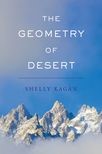
The launch has been followed  by a reading group working through (now chapter 4) of Shelly Kagan's -

Chapter 3 on Desert Graphs - seemed somehow familar, at least in the structures first presented:

Abstract

This chapter is concerned with desert graphs, which help clarify and demonstrate the complexity of the topic of desert. The first section includes graphs that explain the fault forfeits first view and its two extensions. It then studies varying slopes, graphs that depict the desert line of two different individuals, and rotation. The next section discusses the concept of peak, which represents the exact level of suffering or happiness a person actually deserves. It also includes a comparison of the eastern and western slopes of one and two individuals, as well as a section on the Sym Mountain. This chapter also introduces the mountain as the characteristic shape of an individual desert line.

Kagan, Shelly, The Geometry of Desert (New York, 2012; online edn, Oxford Academic, 24 Jan. 2013), https://doi.org/10.1093/acprof:oso/9780199895595.001.0001, accessed 16 Mar. 2026. 

The main launch programme is copied below for reference:

Day 1

9.00-9.15: Coffee/tea. Welcome addresses from Professor Peter Buse (Liverpool, Dean of the School of the Arts) and Professor Michael Hauskeller (Liverpool, Head of the Philosophy Department)

9:15-10:15 Introduction; about the project. Sorin Baiasu (Liverpool): Kantian Justice: A Desert-sensitive Responsibility-enhancing Theory; Tom Bunyard (Liverpool): 'Is Desert a Viable Concept?'; Tom Whyman (Liverpool): 'Food Justice and Desert'

10.20-11.20: Sebastian Orlander (Independent): ‘Kant, Freedom, Desert and Practical Faith’
...
11.30-12.30: Tommaso Mauri (Perugia): ‘Desert and Inequality in Kant: A Theologico-Political Approach’
...
1.15-2.15: Elisabeth Widmer (LSE): ‘What’s the point of Kantian Inequality?’
2.20-3.20: Huub Brouwer (Tillburg): ‘Defending Asymmetries of Desert’
...
3.30-4.30: Tom Mulligan (Georgetown): ‘Who deserves what AI produces?

4.35-5.20: Roundtable

7.00: conference dinner ...

Day 2

9:30-9.45: Welcome; coffee

9.45-10.45: Seniye Tilev (Kadir Has University): ‘Kant on Well-Being and Virtue: A Framework for Desert Without Consequentialism’

10.50-11.50: Krishna Pathak (Delhi): ‘Institutional Desert, Injustice, and Adaptive Preference for Suicide: A Kantian Perspective’
...
12:10-1.10: Jochen Bojanowski (Illionois): ‘Luck Egalitarianism and the Limits of Desert’
...
2.10-3.10: Gabriel Maruchi (Campinas): ‘Denotational Revisionism Cannot Escape Basic Desert’

3.15-4.15: Marius Baumann (LMU): ‘Desert, Responsibility and Skepticism’
..
4.30-5.15: Roundtable & close

Commentators: Tom Whyman (Liverpool), Sorin Baiasu (Liverpool), Bertjan Wolthuis (VU Amsterdam), Christian Españo (University of the Philippines Diliman), Sung-Yeop Jo (LMU), Tom Bunyard (Liverpool), Robin Eliath Joy (Calicut), Beşir Özgür Nayır (Boğaziçi).

https://www.liverpool.ac.uk/philosophy/research/research-projects/kantian-justice/

My source: *Philos-L https://www.liverpool.ac.uk/philosophy/philos-l/ 

Monday, March 02, 2026

Thoughts re. 2026 Lancaster Philosophy of Psychiatry Work in Progress Workshop

After posting on the 19th February about the 2026 Lancaster Philosophy of Psychiatry Work in Progress Workshop last Thursday, 1100 through to 1530 on Friday - was well worth attending. I am also grateful for the opportunity to present Hodges' model, share current challenges and questions. Running through the programme what helped here:

While seemingly open in title the first presentation with Hane Maung, was (as with all) specific, but related to aspects of psychiatry and philosophy applicable here; classification, what is a 'disease'?, concepts, Millikan also appears in a reference: https://philpapers.org/go.pl?aid=MAUTDO-6.

As 2nd speaker, there were several questions after my presentation. Fourteen slides went to time: 20 minutes with 10 for Q&A. I'm not the best judge, but I believe I answered them. As my 'subject' is always the same in Hodges' model, I do make an effort to try (at least) to say something new. Listening, I soon realised this is an established Lancaster-grounded group, and welcoming too. If there is ever another opportunity, something new would definitely have to follow.

I can see scope for this in Matthew Williams's - The failure of the harm-minimisation argument for BID Surgery and the necessity of therapeutic justification. 'BIDS' is 'Body integrity dysphoria surgery' a challenging and ethics-bound situation, that while still rare, has made the news for (as ever) the wrong reasons. The relations to be considered cross all the domains and dimensions of health, care and more.

It is possible to become complacent regards our conceptual currency. Without taking care, we grow to take them for granted. I'm grateful to Clive Duddy for a refresh were autonomy is concerned.

'Difference' is a recurring trope in healthcare, informatics and other fields. George Turner's 'difference denied' and subsequent discussions was extra insightful therefore, addressing ongoing (legacy?) issues for service users, carers, patient and public involvement and engagement (PIE).

Presenting, 'Different ways of medical knowing in Walzer's different spheres of justice?', Dieneke Hubbeling drew my attention to Walzer's book: Spheres Of Justice: A Defense Of Pluralism And Equality. In addition capacity and capacities (to achieve an outcome), plus difference (again), especially when it comes to knowledge and knowing. I remember thinking about rather than putting the person at the centre of Hodges' model, place 'equality' and reflect upon that.

I note that we overlap with a journal too, and another topic - overtreatment - that was something of an elephant in the room (perhaps?): a further theme to follow - https://openaccess.sgul.ac.uk/id/eprint/113806/1/jep.13632.pdf

Ali Walker's Forget Fictionalism: Psychiatric Disorders are Quasi-Real,with a topological - cartographic themed slide perked me up later afternoon. The subject of Borderline Personality Disorder also reminded me of the extent of change in adult community mental health services, in practice through 1985-1995 and that encountered in 2019. Much to digest here. A 3 minute video of Ali's thesis BPD Disorder - Trauma is available from last year: https://www.youtube.com/watch?v=5tMSyt71hvs

I will review/add more details here, or a new post.

Sunday, March 01, 2026

Definition: Individual and Group Counselling

INDIVIDUAL
|
    INTERPERSONAL    :     SCIENCES               
HUMANISTIC --------------------------------------  MECHANISTIC      
SOCIOLOGY  :   POLITICAL 
|
GROUP
"Counsellor"


"Counsellor of state"


My source: Robert Wright, Starmer eyes succession law change for Andrew, FTWeekend, 21-22 February, 2026, p.2.

Previously: 'counselling' : 'therapy'

Tuesday, February 24, 2026

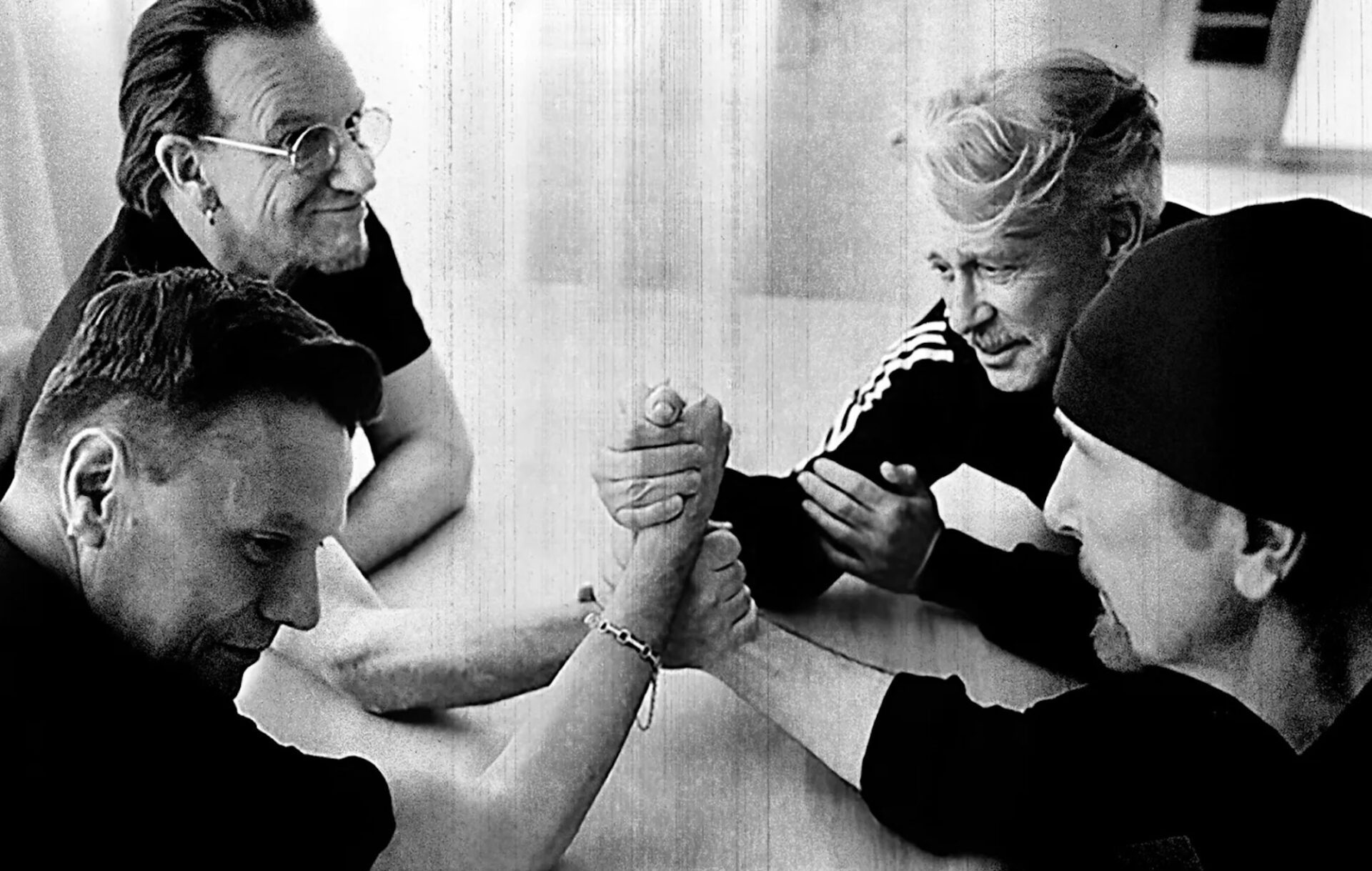
c/o RollingStone UK - "U2 surprise-drop politically charged ‘Days of Ash’ EP with six new songs"

The collection delves into ICE, Israel, the West Bank, Ukraine, Iran — and features a guest vocal by Ed Sheeran

U2 (RollingStone UK - Picture: Anton Corbijn) 

By Andy Greene

'U2 have emerged from a long hiatus with a surprise six-song EP, Days of Ash, available now, in which they address political flashpoints around the world, including ICE raids in the US, the Iranian uprisings, the war in Ukraine, and Israeli settlements in the West Bank.

The six songs — ‘American Obituary’, ‘The Tears of Things’, ‘Song of the Future’, ‘Wildpeace’, ‘One Life at a Time’ and ‘Yours Eternally’ (featuring Ed Sheeran and Taras Topolia) — are all on streaming platforms. They’ve also created lyric videos for each one.' 

Continued ...


Previously: conflict : war : hope : peace

Thursday, February 19, 2026

2026 Lancaster Philosophy of Psychiatry Work in Progress Workshop

I am looking forward to, and preparing for this event next week:

====================================================

Thursday 26 February 2026, 11:00am to Friday 27 February 2026, 3:30pm

Venue: Storey Lecture Theatre, Lancaster , LA1 1TH
Open to: Postgraduates, Staff

Event Details:
 
Sponsored by the British Society for the Philosophy of Science.
This workshop provides an informal forum where PhD students, and more experienced researchers, can present and discuss short works in progress. All paper slots are taken for 2026. 
Please email r.v.cooper AT lancaster.ac.uk if you'd like to attend.
THURSDAY 26th  FEB

10.45-11 Welcome
11-11.30 Hane Maung - Philosophy in Healthcare Practice: A Case Study.
11.30-12 Peter Jones - Hodges' model: A work-ALWAYS-in-progress and this is why...
12-12.30 Matthew Williams - The failure of the harm-minimisation argument for BID Surgery and the necessity of therapeutic justification
12.30-1 Clive Duddy – Autonomy in mental health care
1-2 LUNCH
2-2.30 George Turner - Difference denied.
2.30-3 Dieneke Hubbeling - Different ways of medical knowing in Walzer's different spheres of justice?
3-3.30 Ali Walker - Forget Fictionalism: Psychiatric Disorders are Quasi-Real
3.30-4 Ewa Grzeszczak - Philosophy of psychiatry and the methodology of social ontology.
4-4.30 Break
4.30-5 Alessandra Civani - What kind of concept is ‘incongruence’?
5-5.30 Anna Golova - Self-illness ambiguity without a self-illness distinction.
5.30-6 Break
6-7 Prof Miriam Solomon – Royal Institute of Philosophy talk ‘Stigma as an actant in the history of psychiatry’

FRIDAY 27th Feb
11-11.30 Sam Fellowes - Modelling psychiatric diagnoses when self-diagnosing - how does this work?
11.30-12 Giulia Russo - Epistemic and political role of experience
12-12.30 Frank Denning - Using Stebbing’s Directional Analysis to Evaluate ‘Mentalizing’.
12.30-1 Gloria Ayob - Flourishing as mental health
1-2 LUNCH
2-2.30 Richard Hassall - Hermeneutical Injustice and Damaged Intellectual Self-Trust in Psychiatric Service Users.
2.30-3 Lara Calabrese - Exploring epistemic injustice in dementia care: a scoping review and a qualitative study
3-3.30 Jacob Barlow - Epistemic borders: experts, communities, communication

<>

Saturday, January 03, 2026

Universal Basic [Income and Capital] c/o N. Berggruen

Individual
|
     INTERPERSONAL    :     SCIENCES               
HUMANISTIC  --------------------------------------  MECHANISTIC      
 SOCIOLOGY  :    POLITICAL 
|
Group
AI ..

Pope Leo XIV - 'Distributional justice'
Pope Leo XIII "Rerum Novarum" 1891?^
 
 *Ethics - see below.

Baby bond schemes -
Australia Superannuation programme
USA MAGA accounts
Proposed European Sovereignty Fund?
UK?

Globally? "We're in this together, remember"


UNIVERSAL BASIC INCOME
UNIVERSAL BASIC CAPITAL 
 
PREDISTRIBUTION not
REDISTRIBUTION

^History: Impact of the industrial revolution
 

.. ECONOMY

  Diminishing value of labour
 Global wealth inequality
 US: top 10% own 93% of all equities
Europe: .. nearly 60% of all wealth.
Bottom 50% owns just 5%
 

*The ecological and ethical impacts from the energy demands of AI still need to be addressed. Financial 'rewards' for the masses, must not become the 'cake' - the bribe for the public to enter into a conspiratorial dyad with technology. PJ

Source: N. Berggruen, Universal basic capital would create a fair AI economy, Opinion, FTWeekend, 1-2 November. 2025, p.13. https://berggruen.org/eu

https://www.ft.com/content/9b93e02a-c693-4070-9094-a2f532dfa929

See also: 'economics' : 'poverty' : 'AI' : 'inequality' : 'universal'

Saturday, December 20, 2025

A time for reflection S-N solstice :: equinox

Analemma image: Anthony Ayiomamitis

Ever since we first took note of the passing Seasons, and what is left of them today, we have marvelled and come to recognise the extremes of the calendar in the sky.

For humanity in the North and the South. 

The emergence of culture, societies, and civilization has been  dependent upon the calendar - whether recorded in customs and rites, giant blocks of stone, papyrus, or binary code.

As the solstice fast approaches - Sunday, 21 December 2025 15:03-4 - and the Sun touches its lowest, southernmost point, I think of (former) family and friends 'way down' south, and the distance between the hemispheres, represented in the analemma. Of course then there is the solstitial experience of humanity in the south as the sun crests the highest point in their sky.

It must be amazing to see the nightsky from the far south(?). 

How might we explain this culturally, with the benefit of foresight? This apparent celestial 'opposition' of Earth's path around the Sun, is reflected N-S in who bears the impact of climate change and the need attend to planetary health.

But, then look at the equinox, the north and south are seemingly united? 

Is there a baton passed in March and September?

Perhaps, this can be a celebration of global health, for both hemispheres. With a simultaneous 'nod' to planetary health and the search for social and climate justice.
 

What Complex Threads We Weave

Friday, December 12, 2025

Sociology: Open access resources and course materials - BUP

As an introduction to our publishing in Sociology -

 https://bristoluniversitypressdigital.com/subject/SOC-Taster-Collection 
 
- we curated a collection of free and open access books and chapters that we think will contribute to your reading lists. Our growing list has a global outlook featuring high-quality research across emerging and established areas in the field, such as migration, gender, education, ageing, science and technology, death and culture, activism and organizing, race and ethnicity, decolonization, public sociology and children and families.

Highlights from the collection include:
Please feel free to share this collection with your network and your students. Chapters that are not perpetually open access will be free to download until end of March 2026

Our aim is to ensure that the vital work of our authors reaches the lecturers, researchers and policymakers who can use it to drive meaningful, real-world change.

You can request access to our full Sociology Collection
https://bristoluniversitypressdigital.com/subject/SOC-Collection?utm_source=listserv&utm_medium=email&utm_campaign=Sociology-2026 - via your institution’s library. 

We offer tiered pricing on our collections tailored to smaller organisations and their libraries. For more details, institutions can contact our team at bup-digital AT bristol.ac.uk.

Publish with us: If you are writing in this field, consider publishing your work with an ethical university press. To discuss your publishing projects, please contact our editor emily.ross AT bristol.ac.uk.

Looking forward to hearing your thoughts and please don’t hesitate to reach out if you have any questions.

Kind regards,
Bahar Celik Muller - Senior Marketing Executive
Bahar Muller - Senior Marketing Executive

New books

Liberation and Corruption: Why Freedom Movements Fail

Reckoning: Creating Positive Change Through Radical Empathy

Mind the Inclusion Gap: How Allies Can Bridge the Divide Between Talking Diversity and Taking Action

White Privilege: The myth of a post-racial society

 
My source: https://www.jiscmail.ac.uk/cgi-bin/webadmin?A0=EUROPEAN-SOCIOLOGIST

Wednesday, November 05, 2025

Book: Algorithmic Rule

ALGORITHMIC RULE
'The future is here and it is not simply digital; it is algorithmic. Algorithms now shape not only what we see and hear through the media, but also how public administrations function and how work is managed. Decisions about health, employment and even children’s education are increasingly outsourced to automated systems. This book explores the algorithmic present, and what can sometimes be described as algocracy – rule by algorithms. To navigate this new reality, we must ask not only technological but also democratic questions. This book is a guide to doing just that.
What national algorithmic scandals have already unfolded, and what lessons can be drawn from them? How is the future of work being reshaped, as employers rely on algorithmic management tools powered by constant workplace surveillance? Should artificial intelligence be allowed to make decisions in the public sector? Where can we find examples of local governments working for inclusion and transparency through open-source programming? How are institutions handling the massive and sensitive data flows that structure daily life? And what does it mean for democracy if the only face of the state becomes a ubiquitous chatbot?' 


Continued:

https://feps-europe.eu/publication/algorithmic-rule/ 


individual
|
INTERPERSONAL : SCIENCES
humanistic -------------------------------------------  mechanistic
SOCIOLOGY : POLITICAL
|
group-population


ALGORITHMIC


RULE


Friday, October 10, 2025

The 2025 peace laureate

The 2025 peace laureate

'The Norwegian Nobel Committee has decided to award the Nobel Peace Prize for 2025 to Maria Corina Machado “for her tireless work promoting democratic rights for the people of Venezuela and for her struggle to achieve a just and peaceful transition from dictatorship to democracy.”

In the past year, Ms Machado has been forced to live in hiding. Despite serious threats against her life she has remained in the country, a choice that has inspired millions of people. She has brought her country’s opposition together. She has never wavered in resisting the militarisation of Venezuelan society. She has been steadfast in her support for a peaceful transition to democracy.'
Individual
|
      INTERPERSONAL    :     SCIENCES               
HUMANISTIC =========================  MECHANISTIC      
 SOCIOLOGY  :    POLITICAL 
|

Friday, September 05, 2025

Submit your pitch for Black History Month 2025

London Arts and Health
and The Culture Health and Wellbeing Alliance


To celebrate Black History Month this year, London Arts and Health and The Culture Health and Wellbeing Alliance will commission six artists to explore and showcase their creative practices. This initiative is rooted in the belief that the arts can be a powerful force for health, climate justice, and cultural empowerment.

More details ...

Monday, July 14, 2025

Reflective equilibrium and equipoise

I can't believe, or don't want to, that it's nearly 15 years since I posted - 

h2cm and clinical equipoise in 2010. 

The post didn't try to be 'technical', but perhaps demonstrates the journey here.

In a post to follow, in London 4-7th July I came across a book by Edouard Machery and upon return up north, found a paper which refers to reflective equilibrium. This, one again technical or not, is a purpose of Hodges' model.

Machery, Edouard, Philosophy Within Its Proper Bounds (Oxford, 2017; online edn, Oxford Academic, 24 Aug. 2017), https://doi.org/10.1093/oso/9780198807520.001.0001, accessed 24 June 2025.

Reflective equilibrium has an entry in the The Stanford Encyclopedia of Philosophy:

'If you believe that conduct in some case is right or wrong, you have a moral judgment or intuition. Perhaps you have many such judgments about different cases. You might, nevertheless, consider that judgments alone do not justify the moral views they express. You and your moral interlocutors might be concerned that “what we actually accept is fraught with idiosyncrasy and vulnerable to vagaries of history and personality” (Elgin 1996: 108) or displays “irregularities and distortions” (Rawls 1971: 48).

John Rawls proposed to address these concerns through the method of reflective equilibrium.We first ensure that our judgments are considered, being made in circumstances appropriate for moral deliberation. We are then to consider general principles that might accommodate our set of considered judgments—and more than that, explain and extend them. On the standard wide reflective equilibrium, we are to consider

all possible descriptions to which one might plausibly conform one’s judgments together with all relevant philosophical arguments for them. (Rawls 1971: 49)

This requires that we reflect on a wide range of principles, arguments, and theories. Equilibrium is reached where principles and judgments have been revised such that they agree with each other. In short, the method of reflective equilibrium is the mutual adjustment of principles and judgments in the light of relevant argument and theory.'

The encyclopaedia entry is informative for studies here. I will revisit clinical equipoise in the near future; and bring in the idea of 'holistic bandwidth'.

Knight, Carl, "Reflective Equilibrium", The Stanford Encyclopedia of Philosophy (Spring 2025 Edition), Edward N. Zalta & Uri Nodelman (eds.), URL = <https://plato.stanford.edu/archives/spr2025/entries/reflective-equilibrium/>.

Rawls, John, 1971, A Theory of Justice, Cambridge, MA: Belknap Press of Harvard University Press.

Tuesday, July 01, 2025

Exhibition: V&A Design and Disability - to 15th Feb 2026

There is a lot of informative, creative and surprising insights through this V&A exhibition website, and related (well executed web designs), by Conor Foran for example. 


Individual
|
      INTERPERSONAL    :     SCIENCES               
HUMANISTIC  --------------------------------------  MECHANISTIC      
 SOCIOLOGY  :    POLITICAL 
|

I will look to post again at the year's end and try to visit the V&A in September, or November.

Image: https://www.vam.ac.uk/exhibitions/design-and-disability

Ack. and thanks to Conor Foran & V&A.

See also: 'clinical' in -

My source:
Emily Cronin. 'You have to be your own inspiration', Life&Arts, FTWeekend, 7-8 June 2025, p.4.

Sunday, June 29, 2025

Truth & Democracy: '300 grammes' - The Daphne Foundation

I remember seeing a documentary, hearing on the radio and reading in the FT about the murder of Daphne Caruana Galizia, who was a journalist in Malta. I was shocked that this could happen in Malta. The British, naval - colonial connections, its being in Europe and the EU. The lesson being of course, that we must take nothing for granted and exercise constant vigilence to protect law and justice. 

'Courage' is often described as a personal and professional quality for nurses.

For journalists as the news  reveals each and every day - it is the first.

Individual
|
      INTERPERSONAL    :     SCIENCES               
HUMANISTIC  --------------------------------------  MECHANISTIC      
 SOCIOLOGY  :    POLITICAL 
|
Group

'The bomb was packed into a steel container, placed beneath my mother's car seat, and detonated remotely just down the road from our home in Bidnija. It contained around 300 grammes of military-grade explosive. I didn't know the weight until this trial. But I already knew what it destroyed.'

Caruana Galizia

daughter

sister
wife
mother
grandmother
friend
neighbour
colleague
citizen ...
'There was something else I didn't know before this trial. The two medics who conducted my mother's autopsy said they found her heart was, incredibly, "intact" - and that it weighed 300 grammes. The same weight used to kill her was the weight of what endured.'


Paul Caruana Galizia. Opinion: Corruption - What Malta owes my murdered mother, FTWeekend. 14-15 June 2025, p.10.

https://www.ft.com/content/3f5012a6-a358-48a9-a72f-9d2ae530878b


Acknowledgement and thanks to Paul Caruna Galizia.

Friday, June 13, 2025

IP? No! Not 'intellectual property' the other one . . .

'Interested Persons'

- also vested in data, information, knowledge, 
who knew how, what, why, when, where ...

individual
|
INTERPERSONAL : SCIENCES
humanistic ------------------------------- mechanistic
SOCIOLOGY : POLITICAL
|
group
identity - witness - involvement
recall - memory

Knowledge - Answers

The (sudden) power of situation, circumstances,
 time and place.

Events

Society
Team - Teamwork

Social Justice

Interested Persons

Coroner's Court


My source:

Marriage, M. In Search Of Lost Time, FT Magazine. FT Weekend, 22 February 2025, pp.21-27.

Monday, June 09, 2025

🗣️Solving or Resolving Palestinian Human Rights Issues: Relationship "Normalization" | Mohamed ‘Arafa


🗣️ Solving or Resolving Palestinian Human Rights Issues: Relationship "Normalization" | Mohamed ‘Arafa

This session will be the first in the series of conferences “Jurisprudential Dialogues on Human Rights”, which is designed to promote exchanges on topical issues involving human rights and the role of the courts of justice.


The aim of this session is to reflect on the violations of the human rights of the Palestinian people — an enduring state of affairs that transcends political or religious lines of judgement. Over the decades, the Israeli-Palestinian conflict has been marking the international landscape, sparking divisions, human misery, and far-reaching geopolitical consequences.


This session will be led by Professor Mohamed ‘Arafa, Professor of Law at the University of Alexandria and Adjunct Professor of Law & the Clarke Initiative Visiting Scholar at Cornell Law School. Joining in will be Professor Rita Ribeiro, from the Institute of Social Sciences at the University of Minho, and Zaina Awartani, PhD researcher at the School of Law of the University of Minho and the School of Researchers of the Research Centre for Justice and Governance (JusGov). The event will be chaired by Sergio Ruiz Díaz Arce, Doctoral Integrated Researcher at JusGov.


📍June 13th, 2025 | 4.00 p.m. Online


Scientific Commission

Sergio Ruiz Díaz Arce

Joaquim Freitas da Rocha

Robert Junqueira


Organisation

JusGov (JusLab – DH)

School of Law of the University of Minho


Support

FCT - Foundation for Science and Technology


Yours respectfully,

Robert Junqueira

Executive Coordinator | Research and Scientific Careers Bureau


Research Centre for Justice and Governance

School of Law of the University of Minho

Gualtar Campus
4710-057 Braga - Portugal


T: (+351) 253 60 18 75

E: martinsjunqueira AT direito.uminho.pt