Hodges' Model: Welcome to the QUAD: psychotherapy

Hodges' model is a conceptual framework to support reflection and critical thinking. Situated, the model can help integrate all disciplines (academic and professional). Amid news items, are posts that illustrate the scope and application of the model. A bibliography and A4 template are provided in the sidebar. Welcome to the QUAD ...

Showing posts with label psychotherapy. Show all posts

Thursday, May 07, 2026

Interviews, playwriting, and clinical encounters: pause for breath - Roger Lewin

It can be surprising how you know something. Something that should be obvious to you. It's your 'Bread and Butter' as the saying goes. And yet for a variety of reasons, you persist in not seeing it, or you frame it in a way that ultimately reveals a bias, influence, and may even mask several aspects of truth. It might be the influence of work over four decades plus. Sitting down, or frequently finally getting out for a walk after several weeks of nudging, in a one-to-one therapeutic context. Or, ever since secondary school, that distant performed encounter with the Crucible. And, more recently as 'Ken', a Post Office subpostmaster and his wife (a brief 10-12 mins), and over the years a desire to write dialogue.

Reviews of Roger Lewin's Complexity, vary in their conclusions about the book's quality. No surprise there, but reading the book it was a revelation to see the method: a series of interviews and the resulting dialogues. 

'In this revision of his book originally published in 1992, Roger Lewin explains what the science of complexity is all about through interviews with some of its most important practitioners (and critics) organized around some of the central ideas. As such this is both a fine introduction to the subject and an interesting read. Lewin includes 16 pages of photos of the scientists he interviewed captioned with a significant quote from each. He has added an afterword on the application of complexity science to business, and an appendix about John Holland, whom he dubs, "Mr. Emergence."

"Everything works toward an ecology" is an old dictum of mine. I have the sense that I came up with that myself, but I probably read it somewhere years ago. At any rate, what is being said here is that complex systems work toward a state of equilibrium near a transition phase, near "the edge of chaos." This equilibrium can be an ecology (Darwin's "tangled web"); indeed it can be the entire planet, as in the concept of Gaia in which "the Earth's biological and physical systems are tightly coupled in a giant homeostatic system" (quoting Stuart Kauffman on page 109).'

Source: https://www.goodreads.com/en/book/show/384547.Complexity

There's nothing profound in this post, and yet this melange of interviews, playwriting, and clinical encounters gives me pause for breath.

Previously: 'Our broken sticks' c/o Roger Lewin "Complexity: life at the edge of chaos"

Wednesday, December 10, 2025

Problem solving, case formulation and policy formulation

On W2tQ this year, and possibly in a previous paper, or conference presentation, I've stated that the nursing process is basically a problem solving algorithm. Nothing profound there of course. 

'Problem solving' is a developmental threshold and an evolutionary skill obvious in humans, with learning passed on across generations. Evidence of problem solving in animals and nature is becoming increasingly apparent; with examples over recent decades of problems solved not witnessed before.

In healthcare, and psychotherapy more specifically, we shift to case formulation. Again a step-wise process to arise at a sufficiently complete rationale for therapy. Ideally, this extends beyond the individual. As an parent, grandparent, guardian, teacher, supervisor ... teaches a child so therapy is an opportunity for learning and, it must be added, unlearning.

Returning to (and passing on):

Hague, R., & Harrop, M. (2007). Comparative Government and Politics (7th ed.). New York, NY: Palgrave Macmillan.

Chapter 18 (pp.377-395) concerns 'Public Policy'. Clearly, here there is a shift from the individual to the collective, population and citizenry. The chapter's second page on 'Initiation and Formulation' quickly provides a flowchart 'Figure 18.1 Stages of the policy process'. Box 18.1 informs readers about 'Rational and incremental models and policy-making' (p.380):
'The key contrast between the two models is this. The rational model views policy formulation as emerging from a systematic search for the most efficient means of achieving defined goals. By contrast, the incremental model sees policy as emerging from a compromise between actors who have goals which are ill-defined or even contradictory. Where the rational model seeks the best policy in theory, an incremental framework seeks out a practical policy acceptable to all the interests involved.' p.380.
The book highlights Simon (1983) as a source for the rational or synoptic model:
 
Simon H.A. (1983) Reason in human affairs. Oxford: Basil Blackwell.

Plus, for the incremental model:

Lindblom, C.E. 1979. Still muddling, not yet through. Public Administration Review 39: 517–526.

If needed, online, you will find accounts and diagrams on problem solving, the nursing process, case formulation and policy formulation. That's quite a family is it not? 

While not referred to as explicitly today, the nursing process (now routinized) should address parity and integrate care across mental and physical health. The individual (person, patient) should be assessed and care planned with their social and community context taken into account. Collaboration in care should help assure that this is indeed the case. The nursing process in the sociological domain acknowledges the role of parents, guardians, and families as informal carers. The social care sector can also be represented and further the objectives of a more open and integrated care community as per the local situation. While not added to the sciences domain; case formulation should also factor in the physical and political. 

Politically, are all instances of problem solving, and formulation recognised for their importance and influence on outcomes and effectiveness, economy, efficiency (another 'box' p.357), plus efficacy? Are services politically afforded the resources, as defined across the domains of Hodges' model required to deliver, improve and change (achieve sustainability, educational, preventive)? 

The elephant here of course are the determinantS. Ultimately, all these forms of problem solving should be at 'home' in the political domain, but they are rarely there. It is not just the practitioner who can make the difference - be the difference.

Enough of l-implementation

Policy needs to be fit for 21st century purposes, and not hollowed-out but allowed out - beyond the legislative walls where it can make a real difference.

individual
|
INTERPERSONAL : SCIENCES
humanistic -------------------------------------------  mechanistic
SOCIOLOGY : POLITICAL
|
group-population

Nursing process

Case 
formulation

Nursing process

Nursing process

Case 
formulation


Policy
formulation


Monday, October 13, 2025

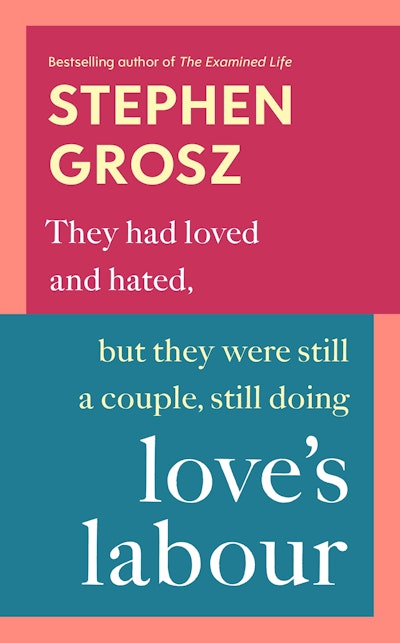
Book: Love's Labour by Stephen Grosz

They had loved and hated,
but they were still a couple, 
still doing love's labour ...

Luminous and necessary stories from the psychoanalyst's consulting room; on desire, heartbreak and learning how to love.

When it comes to love why do we find things so difficult? Drawing on over forty years of candid and surprising conversations with his patients, Stephen Grosz asks, what gets in the way of our falling in love? And what must we do to stay there? Penguin UK.
<>
'Ravi, a maths lecturer, is tormented by his wife Sonal's supposed infidelity, but won't look at the CCTV - even though that might reveal her to be innocent. This chapter has a sting in its tail when 19 years later Grosz is contacted by Sonal. She is dying of cancer and Ravi is cruelly neglecting her. Grosz feels that he missed a vital clue all those years ago, concerning Ravi's ingratitude and envy.

This moment of "failure" on Grosz's part forms an aspect of this small book's power. It shows that the psychoanalyst is not a machine, and the process is fallible. But it is also a testament to human complexity. When he hasn't understood the patient sufficiently, Grosz brings the case to his supervisor, and we, the reader, are witness to their exchange.' Life&Arts, FTWeekend.
Individual
|
      INTERPERSONAL    :     SCIENCES               
HUMANISTIC =========================  MECHANISTIC      
 SOCIOLOGY  :    POLITICAL 
|
My source: Kathy O'Shaughnessy. The hard work of seeing ourselves. Books, Life&Arts, FTWeekend, 27-28 September 2025, p.11.


Iamge: https://cdn2.penguin.com.au/covers/400/9780701188979.jpg

Tuesday, September 16, 2025

Chatbot therapists c/o The Sunday Times

It wasn't that long along ago, I tweeted about the prospect of our clinical information systems 'listening' and autotranscribing one-to-one clinical contacts and even formal psychotherapy sessions. How time flies!


Individual
|
      INTERPERSONAL    :     SCIENCES               
HUMANISTIC  --------------------------------------  MECHANISTIC      
 SOCIOLOGY  :    POLITICAL 
|
Group

AI therapy chatbots

'Conventional' 
Counselling / Psychotherapies

Mental health - illness

Issue of: 'Titles'
I can call myself ...
therapist, nurse ...


(New) Evidence-based

Workflow:
intake, assesses needs,
booking into care,
offers CBT based on guidelines.

Uses a person's details,
asks questions to identify
the likely problem ...

clinical
Empathy: Human - Machine

Public safety

DEMAND <-> supply

Access to Therapy: Untreated?

Other AI solutions -

validation

Regulatory approval


unvalidated 'solutions'

risk of a huge industry setback


My source: Danny Fortson, Chatbot therapists are here. But who's keeping them in line? The Sunday Times, August 17, 2025, p.4.

The online article is behind a paywall, but there is a related podcast (with advertising):


See also: 'AI' : 'ethics' : 'expert system, language'

Monday, November 18, 2024

The mask ...

'I will speak from my experience with Balinese masks, but I have to go back one step before that. One of the first, knockout exercises that you can do with actors, which is used in lots of theatre schools where they use masks, is putting a plain, blank, white mask on someone. The moment you take someone's face away in that way, it's the most electrifying impression: suddenly to find oneself knowing that that thing one lives with, and which one knows is transmitting something all the time, is no longer there. It's the most extraordinary sense of liberation.

This is one of those great exercises that whoever does it for the first time counts as a great moment: suddenly to find oneself immediately for a certain time liberated from one's own subjectivity. And the awakening of a body awareness is immediately there with it, irresistibly; so that if you want to make an actor aware of his body, instead of explaining it to him and saying, "You have a body and you need to be aware of it," just put bit of white paper on his face and say, "Now look around." He can't fail to be instantly aware of everything he normally forgets, because all the attention has been released from this great magnet up top.' p.219
self
|
INTERPERSONAL : SCIENCES              
humanistic ------------------------------- mechanistic
SOCIOLOGY : POLITICAL   
|
other


Brook, P. (1989). The Shifting Point. London, UK: Methuen. pb.

Secondhand from Reid's, Mount Pleasant, Liverpool, this book was already 'musty'. On October 18th it got 'wet' in a downpour from Sorrento to Capri and back. It smelt even more historic afterwards. It still provided great reading though! I noticed in a new pb edition the images were not included.  https://reidofliverpool.co.uk/

Friday, October 11, 2024

Spontaneity - have we lost something?

. . . asking for a friend … of course . . . 

Creative therapy
'Moreno states that in the evolution of man, spontaneıty  appeared 'before libido, memory and intelligence .. .. In effect it is generally discouraged and thwarted by our cultural  mechanisms. Many of the problems of the psyche and social difficulties suffered by humanity are attributable to an insufficient development of spontaneity. For this reason the art of teaching people to use their spontaneity is the most beneficial thing to be learned in any of our educational institutions.' He also pointed out that anxiety indicates a loss of spontaneity.
A 'cultural conserve' (Moreno) is the end product of a cultural endeavour, the fixed conserve or preserve of culture  the contents of all the libraries, the teaching in all the schools, the knowledge acquired by a child in the home or at school, what is given by radio, television, the theatre, the  cinema, books, lectures - all the 'conserves' of the past creativity of others offered to the intellect.' p.142.


Jennings, S. (1983) Creative therapy. Banbury: Kemble Press edition. (Image: c/o Amazon)

#ChildDevelopment #Attention #Cognition #Play #Adolescence #Curiosity #Innovation #Life #Serendipity #Literacy #Media #DigitalTechnology

Monday, April 15, 2024

Dramatherapy ii - from Sociometry, Sociogram to Sociatry

Individual
|
      INTERPERSONAL    :     SCIENCES               
HUMANISTIC  --------------------------------------  MECHANISTIC      
 SOCIOLOGY  :    POLITICAL 
|
Group

A personal journey


"... Moreno soon began to seek ways of measuring the form and structure of relationships in groups. The techniques of sociometry which he invented have since been widely and successfully adopted by his successors, becoming an accepted field of social research in their own right. At its simplest, this approach relies on asking of the social grouping under investigation to indicate their relationship to each other so that, for example, a pattern of dominance (vertical structure) or affinity (horizontal structure) can be discerned. These measures may be committed to paper in diagram form (a sociogram) or expressed by the individuals arranging themselves in positions symbolising their relationships (an action sociogram)". p.106.


"More complicated interconnections and patterns can be demonstrated and the group asked to explore alternatives in order to recognise sources of conflict and misunderstanding and to modify them. Moreno foresaw a new discipline for which he coined the name 'sociatry' in which the social organisation rather than the individual is the object of the healer's endeavours, a truly 'group' psychotherapy". p.106.


Anticipating future theory-practice policy and education change.

Could the reduction in the options for student mental health nursing placements be compensated in-part by addressing the concurrent change in the range of therapeutic (modalities) interventions available?


Davies, M.H. Dramatherapy and Psychodrama, Chap. 5. pp.104-123. In Jennings, S. (Ed.), (1987) Dramatherapy. Theory and Practice for Teachers and Clinicians. Routledge, London. p.106.

Previously: theatre , space , diagram

Sunday, April 14, 2024

Dramatherapy i - thresholds, liminality and wounded healers

Individual
|
      INTERPERSONAL    :     SCIENCES               
HUMANISTIC  --------------------------------------  MECHANISTIC      
 SOCIOLOGY  :    POLITICAL 
|
Group

A personal journey

The 'wounded healer' - Halifax (1982)

".. it is the experience of our own wounding that will enable us to engage with our clients in a healing process". p.15.

"Therefore we can begin to understand that rather than the drama being the chaos, the drama is both the container of the chaos and the means of exploring it. Accompanying our groups through such dangerous territory may seem too frightening for the dramatherapist to contemplate, let alone the client". p.15.

"The attributes of liminality or of liminal personae (threshold people) are necessarily ambiguous, since this condition and these people elude or slip through the network of classifications that normally locate places and position in cultural space. Liminal entities are neither here nor there: they are betwixt and between the positions assigned and arrayed by law, custom, convention and ceremonial. As such their ambiguous and indeterminate attributes are expressed by a rich variety of symbols in the many societies that ritualise social and cultural transitions. This liminality is likened frequently to - death, being in the womb, to invisibility, to darkness, to bisexuality, to the wilderness and to an eclipse of the sun or the moon". p.14.

"The 'illness/treatment' model has by its nature to emphasise what the patient cannot do rather than what he might be able to do; to emphasise that what requires to be done is carried out by others rather than what the patient might do for him/herself". p.262.


Power as exercised (degrees of freedom?) through the therapeutic turn: the history of therapies; social, industrial, occupational, physical, drama, psychotherapy et al. ...


Turner, V. (1969) The Ritual Process. Structure and Anti-Structure. Routledge, London. cited in Jennings, S. (1987) Dramatherapy and Groups, Chap. 1. pp.1-18. In Jennings, S. (Ed.), (1987) Dramatherapy. Theory and Practice for Teachers and Clinicians. Routledge, London. p.14.

Mitchell, R. (1987) Dramatherapy in In-patient Psychiatric Settings, Chap. 12. pp.257-276. In Jennings, S. (Ed.), (1987) Dramatherapy. Theory and Practice for Teachers and Clinicians. Routledge, London. p.14.

In theoretical terms, Mitchell also describes the creative model, the learning model and the therapeutic model (p.265).

Halifax, J. (1982) Shaman: the wounded healer. Thames and Hudson, London [England].

Previously: theatre , threshold , liminal

Wednesday, January 17, 2024

Book review iv. General Psychotherapy: Principles and Common Theoretical Aspects - Rediscovering Humanity

   General Psychotherapy

My late teens - early twenties coincided with the emergence of chaos, fractals and yes - emergent phenomena. Consequently, I had to refer back to Chapter 3, as Hartmann-Kottek writes:

"If we imagine a fractal that encompasses all categories similarly to a quantum in this regard, all cells, organs, particularly the human brain, the entire person, groups of people, races, nature and the earth would also be in field and structure at the same time. This does not appear to be an abnormal notion. Several experiences with field phenomena of the relationship level would consequently gain their natural allocation.

Indeed, we are familiar with notions that cross categories with regard to states of matter: Water as ice, snowflakes, liquid, vapour, mist and clouds are normal aspects of daily life."p.215.

This resonates at present with reading on categories, seeking theory and to what extent can mathematics and logic be applied to Hodges' model and more importantly, to the humanities? There is some toing-and-froing in the book, but for me having read the book - it works. If a student asked me what is a good subject to study at high school. It would be Social and Economic History, especially if you are thinking of pursuing mental health nursing, psychiatry, or psychology. General nursing too, I would add, acknowledging the need for holistic and integrated theory, practice and management. 

Chapter 7: is a regular rollercoaster in terms of history and cultures:

The Spirit of the Times and Cultural Epochs as Reference Systems Along with Their Transformation of the Ideal Level of Human Development – A Historical Journey Into the Past to Learn for the Future

In healthcare we need to constantly ask (it's called mandatory training) about the protected characteristics, the various literacies, including emotional, spiritual, cultural; and all the determinants of health. And we need to be cognizant of all of them: individual, environmental, commercial, educational, social, and educational (hence why 'categories' are salient).

The discussion of non-European cultures are particularly rewarding - Africa, Australia, Polynesia, Ancient far East, Native Americas, Egypt, Yoruba and others. Page 437 brings Martial arts, where synergy between mind, body and spirit is central. Reflecting culture and the association between health, well-being, the human condition and pastoral care chapter 7 covers the main religions and relationships between several. The influence of aesthetics in certain cultures is also introduced. The book is a springboard for further reading. Section 7.1.2 on an Integrative, Holistic Stance as a Countermovement provides the names and dates of  more than fifteen personalities: Alexius Meinong (1853-1920) ... Wilhelm Witte (1915-1985). Through the history described, it is interesting to reflect on the significance of the holding of knowledge and power imbued through its use. The end of chapter is an effort to take stock of social development - a non-trivial task given the dynamic world we try to exist within. 

 I found I was rolling together chapters 6,7 and 8 even as they hold-their-own in content and placement. As a community mental health nurse I still reflect upon:

  • There is no overarching theory of health communication.
  • Gatekeeping is alive and well.
  • The current often vociferous 'debate' between psychiatrists, psychologists, patients/clients, carers and nurses too.
Chapter 8 returns to the integration of psychotherapy with the politics of research, or how the exercise of power within psychotherapy research has resulted in crises. I wished I'd paid more attention, but I do recall at some events, conferences instances of animosity between different therapeutic camps. Hartmann-Kottek does not labour the final chapter. There are positive messages here too. A page and a half overview informs us that globally there is research attending to the knowledge and not the interests of particular therapeutic organisations and associations. Statistics, evidence, fake science are discussed, the history in psychotherapy and how this frames the future. When I started reading the book behavioural science was in the news for the wrong reasons. 

Chapter 8 reminds me of the proverb 'Reap what you sow'. Now across health and social care how many gates and gate-keepers are there? Outside of 'emergency' triage: how many are legitimate, needed? How as the original role - processes changed? In England there is ongoing debate about IAPT - Improving Access to Psychological Therapies. Fascinating and troubling the apparent increase in diagnosis of autism and attention deficit hyperactivity disorder (ADHD). Still many questions to be asked, especially on access to therapy within  the auspices of universal health coverage.

Here on the blog and in my application of Hodges' model, it may seem that the POLITICAL domain is the constant elephant. The thing to be climbed over, circumvented, accepted for all its ills (no pun intended). Politics, the political is a tool. It is, in Hodges' model, an essential domain in terms of care delivery and knowledge. The idea of that "Competitive constellations happen." (p.465) is of course a reality. In championing and studying Hodges' model this is well recognised. Chapter 8 is a mélange of socio-political concepts which briefly reveal what must be better resolved not just in psychotherapy, but health and social care: all the determinants.

Hodges' model = a natural home for contextual research?

 "At long last, 'contextual research' (Wampold et al.) has put an end to the belief solely in standardised and manualised treatment programmes." p.345.

While the above gives me great encouragement - a note in book: "Generalising partial perspectives only ever lead to impasse." (p.458) reminds me to take nothing for granted.

Chapter 8 places an emphasis on balance.

Hartmann-Kottek uses the term '(r)evolutionary' in chapter 8. This is fitting as the chapter begins with history - with or without the Dodo. Perhaps quantum descriptions can be found by (necessarily) and paradoxically increasing the theory-practice gap. Taking 'theory' even further away from the noise, complexity of practice. We often consider theory, as an opportunity to be idealist. How often (in the past?) have nurses found the nursing theory - model they are trying to apply ungainly as the day-to-night pressures of care delivery make themselves known? Perhaps ironically by venturing further into theory new vistas will appear, with timely and much needed perspectives given the demands of health in the 21st Century.

 'I' - 'Individual' 'SELF' 'Patient' 'Client'
  |
    INTERPERSONAL    :     SCIENCES               
HUMANISTIC --------------------------------------  MECHANISTIC      
SOCIOLOGY  :   POLITICAL 
|
dyad / couple  family  GROUP community population
PSYCHO -
PSYCHO -

... experience-related, 
mind and 

- TECHNICS^
- MECHANICS^

confrontational connections in the
physiological patterns ... (p.480).


foundational collective context i

dyad, triad, couples, families,
small and large groups

foundational collective context ii

gates, gate-keepers, gate-keeping
access, accessibility


Many thanks to Prof. Hartmann-Kottek and Springer for the review copy. I will add the related posts below soon.

An enjoyable, informative read and a great contribution to my CPD. There are many more points to highlight and I may do so in the future.

Hartmann-Kottek, L. (2022). General Psychotherapy, Principles and Common Theoretical Aspects - Rediscovering Humanity. Springer. https://doi.org/10.1007/978-3-030-87466-7.

^Used in the text.

Thursday, November 16, 2023

Book review iii. General Psychotherapy: Principles and Common Theoretical Aspects - Rediscovering Humanity

   General Psychotherapy

In chapter 3 neurophysiological development is explored and epigenetic influences (3.2). For a decade or so I've highlighted to students the need for them to be aware of 'omics' which will clearly impact their future careers and subsequent learning. This is detailed also outlining limbic development, through to cognitive-linguistic functioning; and not just learning but forgetting. It is easy to take the self for granted, but here is a description of a self in formation, the neocortex, imagination and role of the pineal gland. Biological radiation of living beings (there is a error in the heading I believe*) is fascinating for reasons already acknowledged. Then it is as if time begins and psychological development can begin (life chances permitting). From the author's practice two cycles are illustrated - growth and transformation drawing on Gestalt thought and all referenced. 

Ever since reading on Goethe's part-whole thought I've been aware of mereology. Chapter 3 also examines intrapsychic and social space in respect of part-whole relationships. I'm continuing this journey so it helpful to find the distinction here also.

"According to the resonance principle, identification with key partial aspects can very quickly lead to an unresolved, formative core conflict. In an individual setting, empty chairs or symbolic locations may serve as backdrops for projection. Distance, posture and line of vision are highly relevant in this regard. In a group setting, forms of constellation work with representatives may be more helpful." p.155.
The book's philosophical content is well realised, fused with history and the development of psychology and neurosciences. Plato's cave is explained and related to tabula rasa: the blank slate (3.6.3). I feel I'm in Plato's cave in trying to look at Hodges' model as a mathematical object. There is encouragement too in Hartmann-Kottek identifying the role of blank slate. Hodges' model is also about forgetting, unconditional positive regard hence a blank slate. Chapter 3 concentrates on approaches to explain our development and personality, quantum-theoretic, Far-Eastern traditions, and Western working towards how we achieve coherence as an integral individual, building and relying on inner and external social and interpersonal resources (Fig. 3.4: Tower of consciousness. p.212.). Energy a key in this part of the book, is summarised in a further figure on background dimensions - combining two-axes of Whole-Parts and Space-time - Spaces of possibilities (p.222).

Chapter 4 is a welcome discussion of systems, interspaces, self, communication again through a cultural lens. Chapter 5 would benefit all healthcare students - an understanding of health and illness. While not tackled here - how we integrate and simultaneously address both requirements in service delivery is the challenge of 21st Century health provision? This is higher level from the outset: Attempts at Classification (5.1). While a  traditional book, reading had an immersive feel for me (with many posts on W2tQ): Diagnostic tools, 2-sided understanding of health and illness, the diagnostic, therapeutic (always kept in sight) reversal of symptoms, fields of tension and resources at various stages of development.

For readers looking for actual therapies, chapter 6 is the practical center of the text. The current state of psychotherapy is likened to the blind people trying to find an elephant in the dark. 'Many paths' in a subtitle is welcome, almost suggesting there is scope for all approaches and perhaps they can meet 'somewhere'? Motivations and politicisation aside, the variety of psychotherapeutic are indeed a treasure. They are listed, comprehensively as far as I can see, including many new to me. They are further sub-divided and considered: clusters through time, behavioural, then considered as per depth and effect levels, verbal - non-verbal, emotions, breathing and meditation, variations in consciousness. 

I've considered blind-spots before and highlight Hodges' model as having a role in situational awareness - hence safety and care assurance. Hartmann-Kottek remains grounded in how blind-spots can affect therapists and patients - individually and in alliances. The therapeutic relationship, transference and countertransference are emphasised once again. Compassion too - as part of a credible relationship - with selective authenticity. Technical points are raised too, the use of counterpart in Gestalt therapy. Some 40 pages of chapter 6 are very practical, with exercises and examples of conversations between patient and therapist to illustrate specific approaches and situations. This is far from a specific therapy manual but there is this quality to the content.

 
 'I' - 'Individual' 'SELF' 'Patient' 'Client'
  |
    INTERPERSONAL    :     SCIENCES               
HUMANISTIC --------------------------------------  MECHANISTIC      
SOCIOLOGY  :   POLITICAL 
|
dyad / couple  family  GROUP community population
psycho-


symbolic
personal meaning
emotion
lived experience
emotional distance

-somatic


*Living near Manchester in NW England, the city's symbol is a bee (industry..). It appears in the text that 'Being' has become 'Beeing' in some instances - so an extra homely feel here.

Many thanks to Prof. Hartmann-Kottek and Springer for the review copy.

One more post to follow.

Hartmann-Kottek, L. (2022). General Psychotherapy, Principles and Common Theoretical Aspects - Rediscovering Humanity. Springer. https://doi.org/10.1007/978-3-030-87466-7

Empty chair image:
https://www.mentalhelp.net/blogs/gestalt-therapy-the-empty-chair-technique/

Monday, November 13, 2023

Empathy - Relating, Knowing, Objects, Patterns ...

INDIVIDUAL
|
     INTERPERSONAL    :     SCIENCES               
HUMANISTIC --------------------------------------  MECHANISTIC      
SOCIOLOGY  :   POLITICAL 
|
GROUP

"Logos is our capacity to separate ourselves from the surrounding world, making it into objects in order to recognize it objectively, reflect about it. Any fully developed human relationship needs both principles, the relating and the knowing. Knowing in this sense means the possibility of discriminating between the common ground and the difference of I and Thou. Without knowing, there is fusion or identity but not relationship between a separate I and a separate Thou." p.64.


"Recently a woman training to be an analyst came for supervision and brought with her for the first time a tape of an analytic session she had had with a woman patient of hers. To our amazement, in listening to this tape, we both had at certain times quite some difficulty in distinguishing her own voice from the voice of the patient. This happened mostly when the patient was talking very softly and obviously fighting to overcome feelings of shame. The candidate felt rather shocked at first and asked me whether she might have identified with the patient in an unhealthy way. I heard her interventions on the tape as being genuinely in tune to the atmosphere and situation of the patient at those moments, so I told her that to my mind she was responding in an empathetic way to her patient. It was apparent that the patient needed this kind of response, for later in the tape one could hear that the patient became more confident in exploring her feelings. I think the candidate reacted to the needs of her patient with a concordant countertransference reaction." p.38.


Jacoby, M. (1984) The Analytic Encounter: Transference and Human Relationship. Toronto: INNER CITY BOOKS.

In this text and other reading I can see a possible means as to how the concept of identity can be used between the Individual - Group (other).

To follow soon:

Book review iii. General Psychotherapy: Principles and Common Theoretical Aspects - Rediscovering Humanity

Thursday, November 02, 2023

Book review ii. General Psychotherapy: Principles and Common Theoretical Aspects - Rediscovering Humanity

General Psychotherapy

Chapter 1 confirmed many points for me regarding psychotherapy, especially given the general treatment here. Hartmann-Kottek asks questions of psychotherapy as a science. Hence, the demarcation of science is also raised. The history of psychotherapy spans the 19th century to current day, with references to prehistory. Wundt is a reminder of my introduction to psychology (aged 14-15). 

Physics also features, with quantum theory noted on p.5. and throughout the book. Significant for me, reference to energy, took me back to nursing theory and the work of Prof. Martha Rogers. I've struggled with this in the past. Not just personally, Unitary Beings, is this a 1960s - 1970s thing(?), but what it meant to other students and qualified nurses, in the UK at least? Another factor as I tried to find 'space' - validation for Hodges' model (despite an assumed BEST BEFORE date) there was the perception of those outside nurse academia who questioned the very notion of nursing theory (Raskin, 2001). Pardon the digression, but in the text the scales and potential significance at which the quantum is 'present' are surprising and helpfully amplify the need for an open-mind.

The author highlights recognition in recent decades of quantum phenomena - descriptions in neurophysiological at the molecular - cellular level, meditation, energy, resonance, states of consciousness and unconscious. You will find E=mc2 here too.

The question of the disparate disciplines, schools and their often warring, fractured state is not dodged. The reality of, and accounting for the the multiplicity of approaches to therapy is debated and celebrated. I like the thought of how as a student / learner the first psychotherapy we are exposed to as a clinician (usually?) is imprinted. This experience influences (understandably) how we respond to subsequent psychotherapeutic modalities. I've followed discussion on 'X' regards efforts in academia to work towards a way to integrate psychotherapy, at least improving co-habiting, but as cited by Wampold et al. (2018) p.336:
"In the thousands of (RCT) studies conducted, we are still yet to find a specific treatment for a particular disorder, which was, on average, clinically and systematically superior to any other psychotherapy." p.7.
The aim in this paper was to "find a suitable coordination system that incorporates variety." p.7.

From this and my focus on Hodges' model my motivation to read this book may be obvious:
  • A mapping exercise of core communication concepts to Hodges' model
       (the common framework?)
  • psychology 
  • psychotherapy
  • interprofessional?
Hartmann-Kottek writes:
"Even if the school of psychotherapy were to succeed in establishing a common framework, a certain amount of variation with regard to approach would nevertheless be required. I am referring to the entire field of play between body-therapeutic interventions, scenic realisations, artistic expressions and more restrained verbal interactions. This is the result of the diversity of our human state." p.33.
The politics of psychotherapy recur with exploration of interdisciplinary common factors. A book that takes a neutral stance is highlighted in one of several 'tips'. Interspersed within the text, readers will find other related asides 'important', 'note', and 'cave'. Each chapter (bar conclusion) has a bibliography. For me the references are comprehensive. There are figures too, not many (a listing would help) but they reflect the book's goals. As already suggested there is philosophical and ethical debate. How is science defined in this context and using current tools. Objectivity - Subjectivity are a constant too; while Buber et al. took me back to RN mental health (RMN) and lecture days (CPN Cert.). This is not just a reverie but vital at a time when several lecturers in mental health nursing, are concerned that the mental health nursing curriculum is being genericised.

I like reference to interspaces and constellations - again throughout. While not a psychotherapy, the brief section 1.8.3 Abandoned Aspects of Therapy, made me recall Token Economies, conceived as a therapy.

Chapter 2 discusses good and bad therapists (invariably, wherever people go the apple barrel follows), looking in depth at the therapeutic relationship, and as a common factor. Given the attention devoted to self-care at present^, it is fitting that given that people attracted to train as psychotherapists have experienced stress themselves (2.2.1); should be aware of their own self-care and mental hygiene (2.2.4). Behavioural and client-centered therapies provide focus, with gestalt therapy working towards sections on the 'special therapeutic relationship' and agape. To what extent do you need to be open to holistic orientation, in order to negotiate holistically embedded confrontation (2.4.5)?

More to follow.

Many thanks again to Prof. Hartmann-Kottek and Springer for the review copy.

Hartmann-Kottek, L. (2022). General Psychotherapy, Principles and Common Theoretical Aspects - Rediscovering Humanity. Springer. https://doi.org/10.1007/978-3-030-87466-7

Raskin, Jef. "Humbug: Nursing Theory". Archived from the original on July 10, 2001. Retrieved December 14, 2015. (Wikipedia).

^Not a complaint, welcome in terms of the vertical axis of Hodges' model.

Friday, October 20, 2023

Book review i. General Psychotherapy: Principles and Common Theoretical Aspects - Rediscovering Humanity

   General Psychotherapy

Predictably, the title of this book caught my attention.

I did do some homework before requesting a review copy, but it was still a surprise that this book by Prof. Dr. med., Dipl. Psych. Lotte Hartmann-Kottek is not edited. It is a comprehensive tome at 491 pages. As a mental health nurse with experience of cognitive, behavioural and family therapy, I am not an expert, but Prof. Hartmann-Kottek's experience in psychotherapy, the history, theoretical development, clinical application, theoretical underpinnings (including physics) and political machinations are well demonstrated.

A disappointment for me is the lack of an index. This seems a major omission, and yet a comprehensive index here, might itself be difficult to navigate. There are some errors in word-use, repetition but they do not detract from the book and reading experience overall. The book is apparently translated from German. The book is expensive, but students may have access through their institutions and special schemes(?).

The book's subtitle: Principles and Common Theoretical Aspects - Rediscovering Humanity is delivered. The title General Psychotherapy - attracted me for several reasons:

'General' - the (seeming) opposition of generalist-specialist is relevant to the theory and application of Hodges' model.

'Psychotherapy' - I was interested to see how Prof. Hartmann-Kottek dealt with the disparate schools of psychotherapy, given some awareness of the politics and efforts to integrate and reconcile therapeutic approaches, philosophies, and legacies. 

Consequently, the chapters address multiplicity, systems, efficacy, commonalities and interspaces. If a book should benefit its reader, rewarding time/cost then this text has contributed to my continuing professional development. Discussion of systems, individual, whole, humanistic, interdisciplinarity, integration, the therapeutic relationship, transcripts and therapy scenarios provides ongoing stimulus for my efforts with Hodges' model.
"The increasing joint adoption of methods and methodological aspects through the partitioned barriers of the otherwise politic(al)ly competing schools in recent decades has, of course, been met with mixed reception, especially when the adoption was coupled with contemporary political and social repression.

However, it may be precisely this difficult topic of the mutually uncoordinated, intellectual adoption and incorporation of vicinity aspects on a macro scale that may indicate that the time has come for an integrative reconciliation or fusion of the essence of psychotherapeutic approaches. As perhaps needs no mention, this path will require an extensive field of play." p.viii. Preface.


'I' - 'Individual' 'SELF' 'Patient' 'Client'
|
     INTERPERSONAL    :     SCIENCES               
HUMANISTIC --------------------------------------  MECHANISTIC      
SOCIOLOGY  :   POLITICAL 
|
dyad / couple  family  GROUP community population

psychological systems
MIND psycho-
identity
psycho-therapy / therapies
subjectivism
cognitive  access

physical systems
-somatic BODY
identity?
evidence
objectivism
physical access

social systems
culture
history
community of practice
social access

political systems
power
professionalism
health systems/services funding
political access

Many thanks to Prof. Hartmann-Kottek and Springer for the review copy.

More to follow.

Hartmann-Kottek, L. (2022). General Psychotherapy, Principles and Common Theoretical Aspects - Rediscovering Humanity. Springer. https://doi.org/10.1007/978-3-030-87466-7

Saturday, May 14, 2022

New book: "Talking with a Map"

- A Cognitive Analytic Approach
to Everyday Conversational Awareness

 INDIVIDUAL
|

   INTERPERSONAL    :     SCIENCES               
HUMANISTIC --------------------------------------  MECHANISTIC      
SOCIOLOGY  :   POLITICAL 
|
GROUP

MENTAL MAPS

PSYCHO-THERAPIES


MAPS

PHYSICAL-THERAPIES


META-COGNITION


Fingers-crossed please! 

I've contacted Pavilion Publishing and Media Ltd with a review copy request of this new book - available for pre-order:

"Talking with a Map takes cutting-edge techniques for structuring and navigating conversations out of the therapy room and into everyday life, describing a versatile method that anyone can use to develop better skills, interactions and relationships."

Working with two co-authors three papers will hopefully (yes - cross them again) be complete soon. Then I can resurrect the piece on case formulation, diagrams and Hodges' model. 

If anyone is interested please get in touch:

peter.jones AT h2cm.info

Previously on W2tQ:

map :: therapy

Thursday, January 09, 2020

Paper: "Obtaining Consensus in Psychotherapy: What Holds Us Back?" c/o Goldfried

In respect to Goldfried's paper and the disciplines of psychology, psychiatry and psychotherapy; please also consider research as it applies to all, across the domains of Hodges' model. Hence, to include: objective, subjective, methods, methodology, quantitative, qualitative, communication, meaning, integration, data, information, policy, autonomy, accessibility (to therapy) and agency. As per the review of Kinchin - to be completed next post, it is the links/relationships to be made and understood between these concepts that are fundamental.

"There are at least three problematic issues that seem to contribute to the difficulty we have in obtaining a consensus within the field of psychotherapy: The first involves our long-standing practice of solely working within theoretical orientations or eclectic combinations of orientations. More-over, not agreeing with those having other frameworks on how to bring about therapeutic change results in the prolif-eration of schools of therapy (Goldfried, 1980). The second issue involves the longstanding gap between research and practice, where many therapists may fail to see the relevance to their day-to-day clinical practice and also where many researchers do not make systematic use of clinical observations as a means of guiding their research (Gold-fried, 1982). The third issue is our tendency to neglect past contributions to the field (Goldfried, 2000). We do not build on our previous body of knowledge but rather rediscover what we already know or—even worse—ignore past work and replace it with something new. What follows is a description of how these three issues prevent psychotherapy from achieving a consensus, after which there will be a consideration of some possible steps that might be taken in working toward a resolution of these issues." p.484.
INDIVIDUAL
|
INTERPERSONAL : SCIENCES
HUMANISTIC ---------------------------------------------- MECHANISTIC
SOCIOLOGY : POLITICAL
|
GROUP - POPULATION

Psychotherapy (Schools)
Waves? 3rd Wave of CBT?

Patient (as Self, Client, Person)
Therapist (as Self, Person)

Clinical Psychology
Occupational Psychology et al...

Psychological problems
person-centeredness

meta-cognition, reflection ... (see list, p.488)

(my) PURPOSE
Theoretical orientation(s)
empirical, experiential

Biological Psychiatry

'medical model'

 clinical training
(ref to 'the' manual, protocol)

THERAPY :: RESEARCH

PROCESS
Therapeutic alliance
 COMMUNICATION
Therapeutic change
Other (as patient, subject)

History
(benefiting from lessons learned)

Social change, expectations

"the sociology of science" p.486

PRACTICE
Curricula
(as political entities)
supervision, governance,
professionalism

funding

access to therapy

selection criteria
(for therapy, gate keeping
[self-assessment as exclusion?],
studies)

POLICY


Goldfried, M.R. Obtaining consensus in psychotherapy: What holds us back? Am Psychol. 2019 May-Jun;74(4):484-496. doi: 10.1037/amp0000365

Jones, P. (1996) An overarching theory of health communication? Health Informatics Journal,2,1,28-34.

Tuesday, August 01, 2017

Thought, Formulation, Thresholds and Coherence

individual
|
INTERPERSONAL : SCIENCES
humanistic --------------------------------------- mechanistic
SOCIOLOGY : POLITICAL
|
group
"The paradigms that guide our clinical thinking are necessary. They afford us, at a minimum, the comfort (and the benefits) of being in error, rather than thrashing about in confusion. And .... they provide us with the necessary consistency, coherence and vision. ...."
 (Dumont, 1993, p. 203)
Dumont:
"All that is visible must grow beyond itself, and extend into the realm of the invisible."
TRON

Or:
"All that is invisible must grow beyond itself, and extend into the realm of the visible."


Dumont, F. (1993). Inferential heuristics in clinical problem formulation: Selective review of their strengths and weaknesses. Professional Psychology: Research and Practice, 24, 196–205.

Dumont is cited in:
Vertue, F., & Haig, B. (2008). An abductive perspective on clinical reasoning and case formulation. Journal of Clinical Psychology, 64(9), 1046-68.

Saturday, July 29, 2017

No Body... No Mind...

Hodges' model: an open conceptual space for the naive beginner and expert alike...

individual
|
INTERPERSONAL : SCIENCES
humanistic --------------------------------------- mechanistic
SOCIOLOGY : POLITICAL
|
group
NO BODY...!?NO MIND...!?


"I also find it helpful to be both expert and naive. Following Shunryu Suzuki’s saying, “in the beginner’s mind there are many possibilities; in the expert’s mind there are few,” I find it helpful to approach each client with an attitude of “we don’t really know anything about this, let’s explore it together.” On the other hand, clients expect (and have a right to expect) some level of expertise and the fact as clinicians is we do have a body of knowledge which is valuable. By being both “expert and naive,” simultaneously teacher and student, we can model a kind of being-with-a-problem, which is most paradoxical but most essential: I (and you) are both healthy and ill, distressed and just fine." p.23.
Rosenbaum, R., & Shahar, Golan. (2012). Thoughts on Mrs. T: No Body, No Mind. Journal of Psychotherapy Integration, 22(1), 19-26.

Tuesday, April 18, 2017

FROM: the couch TO: the courtroom | c/o BBC Radio 4

INDIVIDUAL
|
INTERPERSONAL : SCIENCES
humanistic --------------------------------------- mechanistic 
 subjective --------------------------------------- objective
SOCIOLOGY : POLITICAL
|
Inc. community - GROUP - the State  


Pain

Individual   Vulnerability

Psychological Trauma - Shock

Therapy    Recovery     Closure

motivation? - Catharsis - outcome?

Psychoanalysts uncover truth

Hidden Psychical Material

Emotion  PTSD

Forensic Psychiatry - Experts

PURPOSES

Pain

Events - Time

True - Memories - False

Accounts - Re-Living

Rationality   Logic

(Objective) Truth

Analytic processes

Physical Trauma - Shock

PROCESS
From: War  Psychological  To: Domestic
Trauma 

'trauma' as a human and medical idea

Reparation
(psychological AND legal)?

Public expectations

Community

Public Values

PRACTICE

Magistrates uncover truth

Law  Courts  Justice

Adversarial System

Closure - Compensation

Victims of crime

Psychiatric Reports

Unconscious

Responsibility

POLICY


From the Couch to the Courtroom BBC Radio 4: 17 April 2017
Helena Kennedy QC asks if our legal system is becoming too influenced by the culture of psychotherapy.

The potential of Hodges' model as a generic conceptual framework has always been demonstrable through the distinction between the individual and the State. In this Radio 4 programme it is well worth also considering the diametric (potential) opposition of the person and their mental health (and therefore their physical state) as in applying the law in all aspects of healthcare and human welfare.

There are two references in the bibliography (sidebar) on the role of Hodges' model in forensic contexts.