Hodges' Model: Welcome to the QUAD: transdisciplinary

Hodges' model is a conceptual framework to support reflection and critical thinking. Situated, the model can help integrate all disciplines (academic and professional). Amid news items, are posts that illustrate the scope and application of the model. A bibliography and A4 template are provided in the sidebar. Welcome to the QUAD ...

Showing posts with label transdisciplinary. Show all posts

Thursday, August 13, 2026

Call for Papers: Bioethics and Philosophical Health - JECP

Submission Deadline: Thursday, 31 December 2026

Contemporary bioethics has developed sophisticated tools for ethical decision-making. Yet it often operates within assumptions that reduce life to physiological viability. Ethical questions are frequently treated as matters of procedure and consent. Meanwhile, patients and clinicians face questions that exceed these frameworks. What makes a life worth living? How does illness disrupt or reveal meaning? What forms of care support not just survival but existential coherence? These questions call for a deeper engagement between bioethics and the philosophy of existence.

Despite growing interest in person-centred care, conceptual tools for clinical evaluation remain limited. Frameworks for assessing philosophical sense-making and existential orientation are underdeveloped. The Philosophical Health perspective addresses this gap by going beyond physical and psychological health. It asks how we cultivate meaningful lives through bodily experience, self-understanding, relational belonging, engagement with possibility, purposeful action, and philosophical reflection. The concept draws on the ancient tradition of bios philosophikos. It proposes that healthcare should attend not only to pathology but to the philosophical dimensions of human existence.

This special issue creates space for exploring how philosophical health can deepen bioethical inquiry as an embodied ethics of the good life. It challenges reductive assumptions and fosters practices that support purpose and meaning in lives, even when disrupted by health challenges. We welcome transdisciplinary contributions from philosophers, bioethicists, clinicians, medical humanists, and social scientists. Topics include how philosophical frameworks enrich clinical practice, how healthcare shapes existential experience, how the 4E cognitive approach may inform bioethical theory, and how dialogical methodologies can be integrated into institutional contexts. The issue aims to rediscover bioethics as a genuinely philosophical and existential enterprise, that is as bios ethikos.

Topics of interest for this call for papers include but are not restricted to:

  • Philosophical frameworks for enriching or transforming bioethical practice and clinical evaluation;
  • Philosophical dimensions of clinical encounters: embodiment, selfhood, temporality, and meaning-making;
  • Critiques of the reduction of ethical deliberation to procedure, regulation, or risk management;
  • How healthcare practices shape or constrain the philosophical dimensions of human existence;
  • The 4E cognitive approach (embodied, extended, enactive, embedded) applied to bioethical theory and practice;
  • Integration of philosophical inquiry and dialogical methods into clinical or institutional contexts;
  • Empirical and conceptual engagement with the Philosophical Health methodology, including SMILE_PH;
  • Cross-cultural and planetary perspectives on philosophical health and the good life;
  • Methodological innovations in clinical philosophy, philosophical counselling, and reflective practice.
More details here: https://onlinelibrary.wiley.com/page/journal/13652753/call-for-papers/si-2026-000772


_______

Dr Luis de Miranda
Associate Professor (Docent) in Bioethics, Uppsala University
Marie Skłodowska-Curie Fellow, Turku Institute for Advanced Studies
Associated Researcher, Centre for Research Ethics and Bioethics,
Department of Public Health and Caring Sciences, Uppsala University
https://www.luisdemiranda.com/

My source: Philos-L "The Liverpool List" is run by the Department of Philosophy, University of Liverpool https://www.liverpool.ac.uk/philosophy/philos-l/ Messages to the list are archived at http://listserv.liv.ac.uk/archives/philos-l.html. Follow the list on Twitter @PhilosL. Follow the Department of Philosophy @LiverpoolPhilos

Friday, June 05, 2026

Call for Abstracts: Land Use for Net Zero Hub Early Career Conference

Dear colleagues,


We are pleased to open the call for abstracts for the Land Use for Net Zero Hub Early Career Conference, which will be held on 7 September (1:00–6:00 pm) at the James Hutton Institute in Aberdeen, ahead of the LUNZ consortium meeting (8–10 September). The call for abstracts will close on 12 June 2026.


The conference theme is: “Future Careers at the Science–Policy Interface: Exploring Opportunities and Challenges in LUNZ.”


We aim to bring together early career researchers and practitioners from LUNZ Hub and LUNZ Research, as well as other early career groups interested in the conference themes, to network, share work, and discuss careers at the science–policy interface.


We welcome abstracts for poster and oral presentations within the following themes. Submissions can include works in progress and unpublished research, as we aim to stimulate open dialogue, feedback, and learning. We also encourage contributions from partners beyond academia. The format of the day will be shaped by the level of interest across these topics:


  • Transdisciplinary collaboration across sectors and knowledge systems
  • Science communication and knowledge impact
  • Modelling and evidence for land use change
  • Integrating people, place, and nature in Net Zero transitions
  • Just transitions and community resilience
  • Community-based research in academia and policy


Please complete the following form to submit your abstract: https://docs.google.com/forms/d/e/1FAIpQLSeOzhkowu0NdM3YlQz-XEIovSB3805zX5LTT4Fm7FzBPq3f7Q/viewform?usp=header


Once we have received and reviewed abstracts, we will open up registration to presenters and the wider community.


If you are interested in helping with the organisation of the conference at an early stage, we would be very happy to hear from you—please get in touch.


We look forward to your participation.


Best regards,

LUNZ Early Career Board

https://lunzhub.com/get-involved/early-careers-board/


Anita Lazurko (she/her)

Senior Transdisciplinary Scientist

Biodiversity and Land Use

--------------------------------

My source: At 'Ecologies of Care':

Henrike (Kika) Neuhaus
Pronouns: she/her, they/them
Post-doctoral Research Fellow in Anthropology and Art

Livelihoods and Institutions Department
Natural Resources Institute
University of Greenwich 

Monday, December 15, 2025

Q. Is Hodges' model Person OR University-centered? [ 'Big Mind' iii? ]

To date, I have not written a paper on Brian Hodges' original purpose for his model in curriculum development, design, planning and evaluation. Geoff Mulgan's book and referenced sources provide support, if not evidence, for the increasing relevance of Hodges' model.

The center of Hodges' model, the nexus, can be variously occupied by an individual student, researcher; a group, or team, or even an institution. Why not a university?

Since 1987-88, when I applied Hodges' model in a case study, I've acquired a broad understanding of the 'POLITICAL' domain in terms of institutions and organisations. Even if that learning is now 'archived':

https://web.archive.org/web/20150414073721/http://www.p-jones.demon.co.uk/linksIV.htm

In 'Big Mind', Chapter 14, The University as Collective Intelligence (pp.174-180) refers to 'third-loop learning' and a document from Nesta:

Geoff Mulgan, Oscar Townsley, and Adam Price, "The Challenge-Driven University: How Real-Life Problems Can Fuel Learning", Nesta, accessed April 28, 2017.
accessed 15/12/2025: https://media.nesta.org.uk/documents/the_challenge-driven_university.pdf 

'This paper focuses on one important strand of change: the rise of what we call ‘challenge-driven’ university models. These models develop students by putting them up against difficult problems and challenges for which there are no established answers.  Instead students to draw on many disciplines to solve them; they have to work in teams; and they have to collaborate with organisations outside higher education.

These models aren’t a replacement for the classic core of university education - mastering a discipline.   But they provide an important complement to this core, and they may be better suited to preparing young people for the needs of the world. They also re-emphasise one of the founding principles of some ancient universities: a focus on questions rather than answers as the key to deep learning.'

Within the Nesta document, Mulgan et al. list educational institutions who have succeeded, and are trying to effect change (with much editing):

US

The approach was pioneered by McMaster University Medical School in the late 1960s where in response to changing demands on the profession, the curriculum was changed so that students learned collaboratively, working on real-life cases in small groups. ...

... examples like High Tech High in the US, use project-based learning, centred on real-life problems, as the core curriculum for students.

Olin College of Engineering has quickly gained a reputation for being one of the most innovative institutions in the US since it opened in 1997.

Last year, the Ash Center for Democratic Governance and Innovation at the Harvard Kennedy school founded the ‘Urban Innovation Field Lab’, a project aiming to improve social conditions in cities in Massachusetts.

Canada

In Canada, the University of Waterloo uses a model of co-operative education, where students’ time is split between study and assessed work experience.

Europe 

Aalto University in Finland was created out of a merger between Technology, Economics and Art Universities in Helsinki and now runs four interdisciplinary ‘factories’ - Design, Health, Media and Service, where teams of academics and students work with companies and communities to develop new products that respond to demand from the real economy. 

The Norwegian University of Science and Technology in Trondheim has a similar approach. As part of their courses, students are required to join a ‘village’ (i.e. area of interest) of around 30 members which address questions such as ‘Biofuels - a solution or a problem?’, ‘Sustainable, affordable housing for all’, and ‘Portable technology and well-being’.

At Maastricht University (the second youngest university in the Netherlands), all teaching uses a problem-based learning model, and this has become one of the main attractions of the university. 

Twelve to fifteen students discuss problems in group sessions, with one student appointed to lead the discussion. The students are given complex problems from everyday professional practice which they brainstorm and research both together and separately. ...

UK 

Imperial College London and the Royal College of Art (RCA) are two particularly innovative higher education institutions. For the last ten years, Imperial has been running the Energy Futures Lab - a cross-discipline, issue-based department aimed at tackling global energy challenges. It was established to bring together disparate fields of study that are relevant to energy including engineering, environmental sciences, computer science, business, policy and mathematics. ...

Imperial and the Royal College of Art also run a Double Masters in Innovation Design Engineering (IDE) which is well known for producing some of the best talent in the field. Their flagship international module ‘GoGlobal’ takes students abroad for three week cross cultural, collaborative projects with academics and industry partners. ... The University of Lincoln has challenge-driven education at the core of its teaching.

Globally? South?

... 

Over the years I've reached out to a great many private and public bodies. 

MEMO TO: New College of Humanities and London Interdisciplinary School

I note the NESTA document is a 'draft'. I'd be pleased to help update and complete this work. Keen to frame Hodges' model not just in the context of problems, but strengths, weaknesses, risks, opportunities and more. When your model emerges from health, you quickly learn when it comes to problems that versatility and adaptability are essential. Always ready to cross disciplines - insofar as I understand them, borders and boundaries as required.

Previously:

https://hodges-model.blogspot.com/2025/07/big-mind.html

https://hodges-model.blogspot.com/2025/12/ii-big-mind-book.html

Geoff Mulgan (2017) Big Mind: How Collective Intelligence Can Change Our World, Princeton University Press.

Saturday, December 13, 2025

WCCS26: Abstract 'Presenting a Universal and Simple Conceptual Workbench to Situate and Encompass Complexity'

ABSTRACT

Background

In health and social care there is, as yet, no universally recognised model, or framework applied and taught across all academia, fields of practice, professional disciplines and apprenticeships. At a time when ‘truth’ is challenged by information disorder, AI, and curricula are overload, this is both a stark and hidden problem. Medicine was quick to embrace complexity as an additional scientific tool. Complexity extends our understanding of epidemiology, demographic trends, the birth of modern bio-genomics, pharmacokinetics, public health, workflows, patient safety and more. The medical and bio-medical models are subject to critique, especially in psychiatry in terms of their conceptual scope and holistic bandwidth. Consider for example, the representation of patient and public engagement, human rights, climate change, poverty, refugees and natural disasters? The field of psychiatry extended these models to the bio-psycho-social model.

Methods

Despite this ‘progress-ion’, profound legacy issues remain: 
  • The dualities of INDIVIDUAL-GROUP and HUMANISTIC-MECHANISTIC
  • Sustainable services and systems, change to emphasize prevention and education (not just cure)
  • A lack of parity of esteem between mental illness and physical illness
  • A complicated relationship between psychiatry and psychology
The 21st century demands we also factor in economics, technology, social media - especially AI, education and literacies, geopolitics, security and more. This paper argues that we need a bio-psycho-socio-political model stat! This paper introduces and demonstrate the generic conceptual framework known as Hodges’ model.

To date, Hodges’ model has been explained and studied by guided discovery through lectures, workshops, posters, show and tell, and discussion groups; plus descriptive means of case study, and in practice patient care assessments and case formulation. Journal papers include conceptual analysis and synthesis, concept mapping of issues, e.g. nutrition and the sustainable development goals, plus oral health and policy frameworks (in-process). This paper ‘workbench’ encourages and facilitates reflective practice and critical thinking on an individual and collective basis. The derivation of the structure and content of Hodges’ model through guided discovery will be shared.

Results & Discussion

The background to Hodges’ model and its creation is introduced. In health care delivery, evidence-based interventions are of course paramount to patient, and public safety. Work to ‘see’ Hodges’ model as a mathematical object has begun. Help and collaboration is welcome; especially with supervisors of early career researchers and scholars in LMICs. Examples of complexity will be mapped to the knowledge (care) domains of Hodges’ model, which can itself be embedded within the spiritual. This paper responds directly to WCCS26’s main theme; and the need to listen to the lessons of history and isolate, weigh, refine and seek to preserve the often hard-won values that sustain humanity, humanistic care and qualities at a time when these are under assault, e.g. assisted dying – a right to die, or a duty? A small but growing bibliography, a template, plus illustrations of Hodges’ model are provided. Background on Hodges’ model can be found in the blog ‘Welcome to the QUAD’ - https://hodges-model.blogspot.com

Keywords: Healthcare, Nursing, Hodges’ model, Humanities, Global health

Topic: Complexity in Health and Medicine

🔷

News of acceptance was received on 29th November: brilliant! The deadline for submission of full-papers is 25th December. Try as I might, I can't meet this date. 

Helpfully, a presentation based on abstract alone is acceptable. I am hoping to network and learn too. The draft notes on Hodges'model as a mathematical object (6k words) are helpful in framing thoughts about the presentation and a future paper as a writing project. All in, a marvellous end to 2025 and prospect for 2026.

Monday, December 01, 2025

Abstract accepted: 6th World Conference on Complex Systems - WCCS 2026

April, 20-22, 2026

Mohammed VI Polytechnic University, Ben Guerir-Marrakech, Morocco

About Us

Building on the success of previous editions, we are delighted to announce WCCS26, organized by the Chair of Complexities ∞ Humanities - UM6P and the Moroccan Society of Interdisciplinary Studies, with technical sponsorship from IEEE. This conference remains a premier international platform where researchers and Ph.D. students come together to share cutting-edge research, address emerging challenges, and explore new frontiers in complex systems and interdisciplinary science.

WCCS26 fosters collaboration and debate on the most advanced methodologies and approaches for understanding, modeling, simulating, predicting, and mastering societal, ecological, biological, and engineered complex systems. By bringing together experts from diverse disciplines, the conference bridges theory and real-world applications, driving scientific progress and innovation.

Join us for a stimulating exchange of ideas at WCCS26!

WCCS26 Theme :

Navigating Contemporary Complexity:
Transdisciplinary Approaches to Economic, Social,
Political, and Environmental Challenges

Conference Topics (But not limited to...) :

  • Foundations and Approaches to Complex Systems
  • Social and Economic Complexity
  • Complexity in the Anthropocene
  • Biological Complexity: From Cells to Societies
  • Complexity in Health and Medicine
  • Philosophical Dimensions of Complexity
  • Complex Systems With Artificial Intelligence
  • Complexity in Emerging Technologies
  • Grand Challenges in Complexity Science

Continued at: https://wccs-conference.org/wccs26/#call

See also: 'complexity'

n.b. I am attending (unsponsored) as an independent scholar and researcher; and by abstract alone.

Sunday, February 02, 2025

Social Capital - related to Hodges' model: c/o Andy Haldane FT

'The world is more diverse and interwoven than ever before - economically, culturally, ethnically, generationally. This is largely the result of the postwar explosion in cross-border flows of:'
ME
|
      INTERPERSONAL    :     SCIENCES               
HUMANISTIC  --------------------------------------  MECHANISTIC      
 SOCIOLOGY  :    POLITICAL 
|
WE

INFORMATION*

GOODS

PEOPLE

MONEY

 *Here I am treating information as analog - attached to meaning and sense-making, human reasoning - thought; information is of course also digital and an economy in itself.

'There is no ecosystem on the planet that is not enriched by increased diversity. The complexity of rainforests and oceans explains their abundance. In social systems, the cross-pollination of ideas, cultures and practices in diverse communities has been a driver of innovation and dynamism for millennia.
Yet this is a double-edged sword. A rainforest or an ocean are vulnerable to antagonistic arrivals such as humans seeking timber or fish. If cultures clash rather than cohere, diverse communities exhibit similar fragility.
Every complex system faces this balancing act, but it can be improved by strengthening ties and trust - what Harvard political scientist Robert Putnam calls social capital. The depletion of social capital over the past half-century, documented by Putnam, has tilted the scales decisively towards fragility. Today's open, connected economies are nested in brittle, disconnected societies. Neither can flourish like this.
One policy response is to reverse economic course, tightening restrictions on cross-border flows of people, goods, technologies and information. While economists (like me) tell us that doing so would diminish economic dynamism, given these policies address the insecurities felt by many at source, it is no surprise they are gaining support - especially on immigration and trade.' 

ME
|
      INTERPERSONAL    :     SCIENCES               
HUMANISTIC  --------------------------------------  MECHANISTIC      
 SOCIOLOGY  :    POLITICAL 
|
Group

My - sense of security
My - trust

 (AFTER) -
FORETHOUGHT


... Rainforest : Ocean
Wetlands : Kelp forests ...^

Maps of Social Capital1

Spatial planning


Social capital
Social mobility
Sociable housing2
Social cohesion

Social -

Policy
Curricula
Governance, Citizen Trust
Nat. Strategy for social connection3

Capitalism

'An Office of the President or Prime Minister, charged with lacing social cohesion through policy, should be hard-wired into the machinery of governments.'

(Here, here!).

1. Raj Chetty - Social Capital Atlas: https://www.socialcapital.org/
2. Richard Sennett
3. Chris Murphy

^Sometimes perhaps the map is the territory? Discuss.

With thanks to:
Andy Haldane, How to get from the me to the we society. Opinion: FT Weekend, 14/15 December 2024, p.12.

Upswing image: 
https://www.allenandunwin.com/browse/book/Robert-D.-Putnam-and-Shaylyn-Romney-Garrett-Upswing-9781800750371

Thursday, January 02, 2025

"Hi! I'm new to Hodges' model - and this blog - what's it about?"

INDIVIDUAL
|
   INTERPERSONAL : SCIENCES              
humanistic ------------------------------- mechanistic
 SOCIOLOGY : POLITICAL   
|
GROUP

The model was created in the early - mid 1980's with four purposes in mind - to facilitate:

1. reflection & develop reflective practitioners;
2. person-centred, integrated (holistic) care;
3. help bridge the theory-practice gap;
4. curriculum design, planning and development.

This was prompted by the change in the UK to university-based nurse education, which was to commence in (Project) 2000.

Learning and applying Hodges' model in 1987-88, and creating a website 1998-2015, I am clearly invested in Hodges' model and biased, questions and debate are welcome.

Created by Brian E.

Hodges' model is a generic framework - 
a conceptual framework.

This model is situated, as 'generic' suggests
which means of course it is universal.

If you've a problem, scenario forthcoming project, or one that is nearing completion Hodges' model can assist in reflection and critical thinking to plan, scope, or evaluate as per your purpose.

This blog has posts about papers, events that interest me (PJ), plus many posts using this two-by-two table approach that suggests how the model can be applied in a variety of contexts.

This blog also has a bibliography
and template in the sidebar.

Hodges^

As noted previously (and last month!), it is marvellous to hear news of a paper citing Hodges' model. If you are planning a piece of writing, research and believe that Hodges' model may be of help please get in touch.

If you don't and can see merit in Hodges' model asit is presented, that is fine also. In fact, although I mention collaboration unique - untainted perspectives are probably much needed. Learning of a citation after publication is great news and encouragement.

This could and should be an amazing community:
Welcome to the QUAD

Thank you for your visit and interest.
Any questions pleased to try to help:
h2cmng AT yahoo.co.uk

As a nurse who trained in learning disability, Brian Hodges was acutely aware of the political in health care, the role of the institutions and the aspiration of community-based and person-centred care.

Yes, you can use the model. It is open source. 
All we* ask is that you cite and credit the source.

With the 'politics of health' much in mind there are many papers to write on the model that includes: reflection; person-centredness; integration of care; self care TO planetary health FROM ?; Inter- multi- transdisciplinary in Hodges' model; A model of healthcare viewed mathematically: Surely you're joking Mr Hodges?

This blog started in 2006, the template is dated, comments are disabled. A new site - repository is needed.

*In Brian's memory too : Brian E. Hodges (1942-2022) RIP^

Tuesday, November 12, 2024

Call for Papers “THE CULTURAL EXPLOSION OF AI: ...

Navigating the Intersection of Artificial Intelligence, Society, and Culture”


Artificial intelligence has burst into the cultural space with the speed of an explosion. As with any powerful explosion, its initial impact is a spectacular blinding flash, followed by a shock wave with real effects. Perhaps we are still at the very beginning, but often the intensity of the blinding flash is proportional to the real effect that follows, both in terms of sweeping away existing forms and as long-term cultural “radiation”.

According to Lotman, a cultural explosion is a period of transformation when rapid and large-scale changes occur in cultural systems, leading to a significant increase in the creation of new information. It is estimated that artificial intelligence produces as much cultural text in one year as humanity has produced throughout its millennia-long history until the advent of the digital age. More interestingly, this new textual production is entering its most productive phase with the invention of Transformer architecture, which is almost a literal algorithmic realization of Lotman's concept of translation — the main mechanism of semiotic metabolism in the Semiosphere.

Training Large Language Models (LLMs), which is the foundation of AI, suspiciously resembles the way Umberto Eco models culture in the structure of a rhizome, which computer scientists call a "neural network." His encyclopedic model is based precisely on what LLMs extract from huge arrays of existing text—the statistic constancy of sign usage. In a polemic with textual immanentists, Eco postulates as part of the reader's encyclopedic competence the ability to inferentially reproduce the possible contexts of sign usage that make up the text. For many, the “magic” of artificial intelligence in its current form lies in its understanding of our questions to it, achieved with the Attention Mechanism, which, as a principle of cooperation between author and reader, is quite literally described in "The Role of the Reader" (1994).

The hardest to find were a fruitful correspondences between generative semiotics and generative media like Chat GPT, as paradoxical as that may sound, but surely there are such correspondences, and they are likely to be discovered in the future. In any case, as a theory of meaning generation on the one hand and an endless machine for creating meaningful texts on the other, the cultural explosion of AI will not leave this breed of semioticians unemployed.
We welcome contributions on the following key topics, but not limited to them:

- Semiotic models of AI generated cultural content
- Semiotic analysis of AI texts generation
- Semiotic theory of generative media
- Socio-cultural consequences of AI's advent
- Transdisciplinary collaboration between semiotics and informatics
- AI in creative practices in the arts
- AI in creative practices in marketing and advertising
- AI in research and education
- Cultural-economic implications of AI
- AI in pop culture
- AI in videogames and XR

Send here your proposal for papers (200-300 words): DigitASC AT nbu.bg

Deadline for the abstracts : 31 January 2025;

Deadline for full papers: 15 June 2025;

Deadline for the final revised papers: 31 August 2025;

Publication: December 2025

Digital Age in Semiotics & Communication, a journal from the Southeast European Center for Semiotic Studies at the New Bulgarian University and founded by Prof. Kristian Bankov, explores the new forms of knowledge, social and linguistic interaction, and cultural phenomena generated by the advent of the Internet and information technologies.

A topic is chosen for each issue by the editorial board, but the topics will be always related to the issues of the digital environment. The working language of the journal is English. It uses double-blind review, meaning that both the reviewer’s and the author’s identities are concealed from each other throughout the review process.

Link to the archive of the first six issues: https://ojs.nbu.bg/index.php/DASC/issue/archive

For more information and submission of papers: DigitASC AT nbu.bg

My source:
--


Departamento de Filosofia, Comunicação e Informação
Faculdade de Letras da Universidade de Coimbra
3004-530 Coimbra, Portugal

E-mail: iestudosfilosoficos AT gmail.com
Sítio Web: http://www.uc.pt/fluc/ief
YouTube: https://youtube.com/@uidief
Academia: https://coimbra.academia.edu/ief

Tuesday, May 21, 2024

'Holistic pluralism'

Individual
|
      INTERPERSONAL    :     SCIENCES               
HUMANISTIC  --------------------------------------  MECHANISTIC      
 SOCIOLOGY  :    POLITICAL 
|
Group
Rational choice theory

Natural sciences

theoretical & methodological pluralism

functionalism


Social sciences - Humanities


policy


from Abstract:

"The theoretical and methodological pluralism that we suggest here, holistic pluralism, is one way to overcome incommensurability between the natural and the social sciences while avoiding functionalism, technological and environmental determinism, and over-reliance on rational choice theory." 

from Introduction:

"The fact that sustainability science is “dealing with interconnected problems” (Kauffman and Arico 2014:413) requires that researchers in the field take a comprehensive, integrated, and participatory approach to science and reality (Sala et al. 2013). This explicit ambition to integrate knowledge—across scales, sectors, and substance domains, and across the nature-society, science-society, and knowledge-action divides—implies that sustainability science must inherently live up to (at least) three things. It must build on several foundational disciplines and have the capacity for interdisciplinarity; it must embrace theoretical and methodological pluralism and have the capacity for reflexivity (Isgren et al. 2017); and it must integrate knowledge generated from engaging with different disciplines, theories, methods, and contexts, and thus aspire to transdisciplinarity. Rather than merging or unifying the actual disciplines or their theories and methods into integrated frameworks, we argue that pluralism is the best way forward for dealing with sustainability challenges, such as biodiversity loss, climate change, land use change, water scarcity, and ill health. In this article, we use ontological, epistemological, and theoretical reasoning to support our argument. The critical ambition is to provide the rationale for a new approach that has the potential to capture the best available knowledge on social and natural dimensions of sustainability; we call it social fields and natural systems. The problem-solving ambition is to describe the approach and illustrate it in two empirical examples. If successful, this will show how holistic pluralism is one possible way of integrating knowledge across the social and natural science divide."
Figure 2 Olsson, L., & Jerneck, A. (2018).

It may be useful to consider figure 2, using the domains of Hodges' model?

Note how in Hodges' model, as 'political ecology' seeks to interrogate the relationship between society and nature (the environment, the sciences): we see a diametric relation. Inevitably then, the political ecologist must also negotiate, interpret, seek the policy evidence from within; perhaps an output, a creation of citizens?

Olsson, L., & Jerneck, A. (2018). Social fields and natural systems: integrating knowledge about society and nature. Ecology and Society, 23(3). https://www.jstor.org/stable/26799148

Thursday, April 11, 2024

Peter Higgs - Boson and Field

"Higgs theorised that particles would acquire mass by interacting with a new type of field. That field had a very special excitation of its own, another particle called the Higgs boson. The Higgs field solved a huge question in theoretical particle physics, and the Higgs boson was a tantalising target that experimentalists could hunt for in order to tie theory to reality.


“If you remove everything from the vacuum, all matter or quantum fluctuations, all electromagnetic stuff, all gravity, you will be left with the Higgs field,” says Frank Close at the University of Oxford. “And we need that just like a goldfish needs water. It stabilises empty space.”

Working independently from Higgs, Belgian physicists Francois Englert and Robert Brout reached the same conclusion, also in 1964."
On BBC Radio 4 11th April 1500 UT, Frank Close extended the goldfish analogy: "as if some clever goldfish have proved that they are immersed in something because they have found a molecule of H2O."

BBC Inside Science

The following is from a previous post:

UK Higher Education Research Excellence Framework - Disciplines
https://hodges-model.blogspot.com/2023/07/ref-uk-higher-ed-h2cm.html


INDIVIDUAL
|
     INTERPERSONAL    :     SCIENCES               
HUMANISTIC --------------------------------------  MECHANISTIC      
SOCIOLOGY  :   POLITICAL 
|
GROUP

Psychology, Psychiatry and Neuroscience

Archaeology

Theology and Religious Studies

Philosophy

[Mathematics & Logic]

^Communication 
as Intra- Interpersonal (Skills) Neurodiversity
hence an individual's
sense-making

Clinical Medicine (Neuroscience)
Public Health, Health Services and Primary Care
Allied Health Professions, Dentistry, Nursing and Pharmacy
Biological sciences 
Agriculture, Food and Veterinary Sciences

Earth Systems and Environmental Sciences
Chemistry
Physics
Mathematical Sciences
Computer Science and Informatics
Engineering
Architecture, Built Environment and Planning
Geography and Environmental Studies
Archaeology
Area Studies
Sport and Exercise Sciences, 
Archaeology
Social Work and Social Policy
Sociology
Anthropology and Development Studies
area studies
Education
Modern Languages and Linguistics
English Language and Literature
History
Classics
Communication^, Cultural and Media Studies, Library and Information Management
Art and Design: History, Practice and Theory
Music, Drama, Dance, Performing Arts, Film and Screen Studies
Leisure and Tourism


Archaeology

Economics and Econometrics

Business and Management Studies

Law

area studies

Politics and International Studies

34 subject-based Units of Assessment (UOAs)


1st April 2030 From Person to Planet:

First Call for the First Transdisciplinary Health 
and Social Care Conference -
Everyone is Invited!


Open to all health and social care professions and disciplines:

https://en.wikipedia.org/wiki/List_of_healthcare_occupations

A celebration of the Hodges' field.😉

RIP Peter Higgs

Wednesday, February 14, 2024

Distance: Shoulders and ships that pass ...

James Lovelock, 2005 (cropped).jpg
Lovelock in 2005: Wikipedia

Over the past 10-20 years I've become more aware of the distance from scholars and people whose work is relevant to Hodges' model. Distance in the sense of their concomitant 'celebrity', hence the issue of how to make contact; and the stage of their career and my discovery of their relevance. Three people come to mind ... 

I've long admired the work of James Lovelock, and when writing on ecological themes in -

Jones, P. (2008) Exploring Serres’ Atlas, Hodges’ Knowledge Domains and the Fusion of Informatics and Cultural Horizons, IN Kidd, T., Chen, I. (Eds.) Social Information Technology Connecting Society and Cultural Issues, Idea Group Publishing, Inc. Chap. 7, pp.96-109.
- I wondered about trying to contact Dr Lovelock. As the majority of people are aware his thought and books, especially the Gaia hypothesis with Lynn Margulis caught the public's imagination from first publication and through the 1970s. Was there a Horizon TV programme? James Lovelock's influence was not just in ecology, but also earth (planetary) sciences through work for NASA. In early 2021 I thought I would reach out, through his most recent book and publisher/agent. I passed a message, which was forwarded but I never heard anything more.

As a nurse - with experience in older adult community mental health, I was acutely aware that this senior gentleman - in every sense of the word - may not want to be mithered by a scouser*, now living near Wigan Pier. I stressed not wanting to disturb the Dr. I also thought, given Dr Lovelock being of independent mind - a maverick, he might on the contrary love to be disturbed. 

Sadly, I was too late, hearing the news of Dr Lovelock's death in 2022. Of course, I was seeking validation (and still am) for the project here. I can't help thinking though, that Dr Lovelock really would have 'got' Hodges' model.

James Lovelock: BBC Radio 4 The Life Scientific

<>

Philosophy has long been an interest B.A.(Joint Hons.) Comp./Phil.. In a way you have no choice as a nurse, especially trained in mental health and general nursing: the theory and practice invariably touch reality, consciousness, perception, subjectivity, objectivity, knowledge, being, perception, data, information, time and so on.

Once acquainted with Hodges' model, scale is the dimension that asserts itself. I wrote about this and referenced Mario Bunge in about 1998, on the old, now archived website:

https://web.archive.org/web/20100329050839/http://www.p-jones.demon.co.uk/infintro.htm

Scale is a constant and multicontextual focus, but interest was piqued once again as I try to look at Hodges' model mathematically (yes, who am I trying to kid!) - as an object and relationally. I was reminded of Prof. Bunge's work noting a paper that included 'isomorphic-ism':

Bunge, M. (1969). Corrections to “Foundations of Physics”: Correct and Incorrect. Synthese, 19(3/4), 443–452. http://www.jstor.org/stable/20114653

https://link.springer.com/article/10.1007/s10838-021-09553-7

Mahner, M. Mario Bunge (1919–2020): Conjoining Philosophy of Science and Scientific Philosophy. J Gen Philos Sci 52, 3–23 (2021). https://doi.org/10.1007/s10838-021-09553-7

There may be a brief email exchange with Prof. Bunge, a request for a paper or two. Any emails are now stored (CD-ROM and portable drive) in a Turnpike folder, an old email client. Last year I was disappointed again, to learn of Dr Bunge's passing in 2020. His focus on science, philosophy, and systems - hard / soft is also very informative.

<>

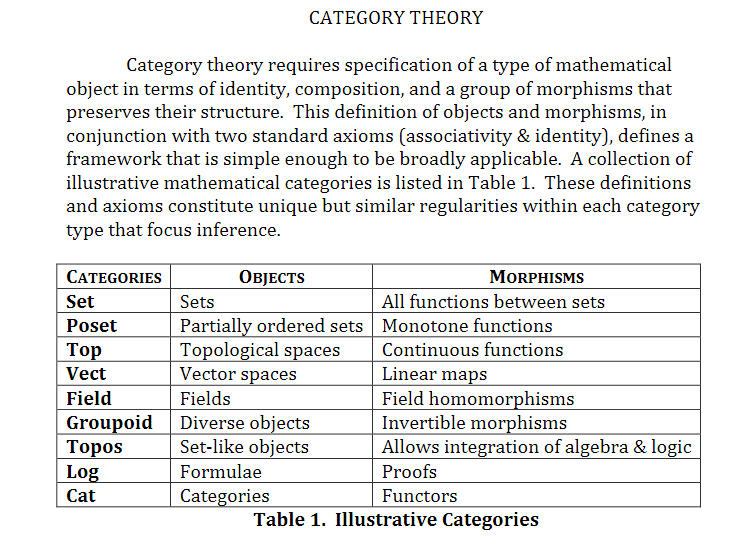
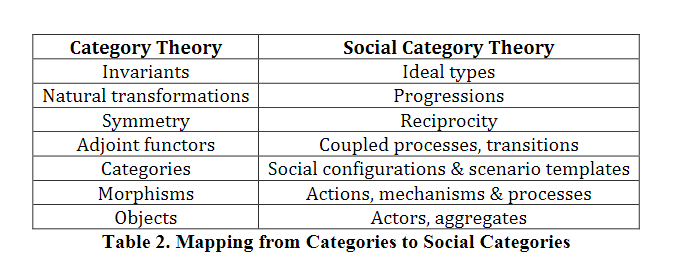
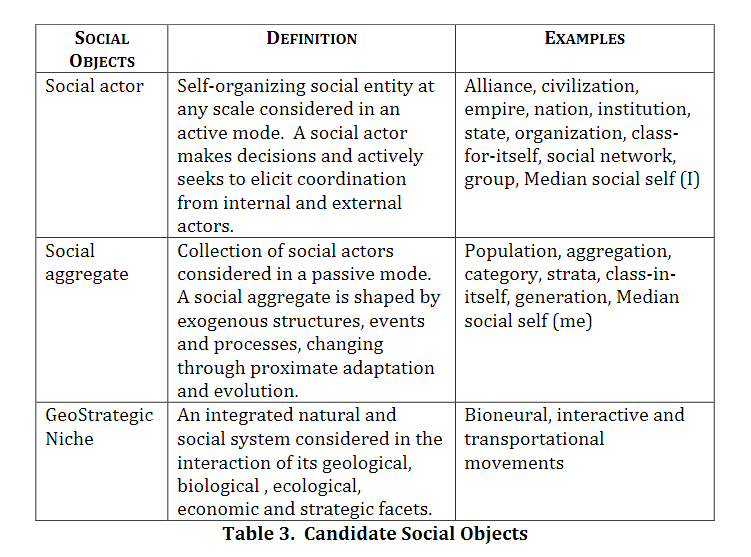
More recently, I came across the fascinating work of David Sallach, one paper (a conference from 2012) includes:


Sallach, D.L. Categorical Social Science: Theory, Methodology and Design. September 2012
Conference: Fourth World Congress on Social Simulation. Taipei, Taiwan.
https://www2.econ.iastate.edu/tesfatsi/Sallach2012CategoricalSoSci4.WCSS-SS.pdf

Plus, developed further in table 2:

If time permits as an exercise, please consider Sallach's table 3 below. It may be interesting to map this to the domains of Hodges' model(?) [template]:
:

If you can see the potential utility of Hodges' model, you may also appreciate why Sallach's paper  resonates. Having emailed Dr Sallach, without reply, I did some checking. More sad news followed.

I, and no doubt many people will continue to discover and appreciate the legacy left behind by the above and many other pioneers. 

<>

I must acknowledge - Enid Mumford - whose work on socio-technical systems continues to inform my study and application of Hodges' model. This includes recognition of the many x-disciplinary bridges (or, barricades?) that can be found within Hodges' model. 

Clearly, much reading still to do.
<>

Returning to Hodges' model as a mathematical object, the 'distance' above is suddenly interstellar (and yes, sudden, as in faster than light!). I'm following videos, papers, and specific work-streams by  universities (I won't mention presently...) seeking to apply category theory to the social sciences. This suggests, at least, I'm not (completely!) wasting my time. If you have thoughts yourself on Hodges' model, the journey from Sallach's tables 1 - 2 not just 3, I'd be delighted to hear from you. 

There is another approach I will share this (N) spring. This author - researcher I have been able to contact.

*Scouser - https://en.wikipedia.org/wiki/Scouse
(Re. Liverpool - further post to follow).

James Lovelock image:  Bruno Comby, CC BY-SA 1.0, via Wikimedia Commons.