Hodges' Model: Welcome to the QUAD: Search results for problems

Hodges' model is a conceptual framework to support reflection and critical thinking. Situated, the model can help integrate all disciplines (academic and professional). Amid news items, are posts that illustrate the scope and application of the model. A bibliography and A4 template are provided in the sidebar. Welcome to the QUAD ...

Showing posts sorted by relevance for query problems. Sort by date Show all posts

Monday, December 15, 2025

Q. Is Hodges' model Person OR University-centered? [ 'Big Mind' iii? ]

To date, I have not written a paper on Brian Hodges' original purpose for his model in curriculum development, design, planning and evaluation. Geoff Mulgan's book and referenced sources provide support, if not evidence, for the increasing relevance of Hodges' model.

The center of Hodges' model, the nexus, can be variously occupied by an individual student, researcher; a group, or team, or even an institution. Why not a university?

Since 1987-88, when I applied Hodges' model in a case study, I've acquired a broad understanding of the 'POLITICAL' domain in terms of institutions and organisations. Even if that learning is now 'archived':

https://web.archive.org/web/20150414073721/http://www.p-jones.demon.co.uk/linksIV.htm

In 'Big Mind', Chapter 14, The University as Collective Intelligence (pp.174-180) refers to 'third-loop learning' and a document from Nesta:

Geoff Mulgan, Oscar Townsley, and Adam Price, "The Challenge-Driven University: How Real-Life Problems Can Fuel Learning", Nesta, accessed April 28, 2017.
accessed 15/12/2025: https://media.nesta.org.uk/documents/the_challenge-driven_university.pdf 

'This paper focuses on one important strand of change: the rise of what we call ‘challenge-driven’ university models. These models develop students by putting them up against difficult problems and challenges for which there are no established answers.  Instead students to draw on many disciplines to solve them; they have to work in teams; and they have to collaborate with organisations outside higher education.

These models aren’t a replacement for the classic core of university education - mastering a discipline.   But they provide an important complement to this core, and they may be better suited to preparing young people for the needs of the world. They also re-emphasise one of the founding principles of some ancient universities: a focus on questions rather than answers as the key to deep learning.'

Within the Nesta document, Mulgan et al. list educational institutions who have succeeded, and are trying to effect change (with much editing):

US

The approach was pioneered by McMaster University Medical School in the late 1960s where in response to changing demands on the profession, the curriculum was changed so that students learned collaboratively, working on real-life cases in small groups. ...

... examples like High Tech High in the US, use project-based learning, centred on real-life problems, as the core curriculum for students.

Olin College of Engineering has quickly gained a reputation for being one of the most innovative institutions in the US since it opened in 1997.

Last year, the Ash Center for Democratic Governance and Innovation at the Harvard Kennedy school founded the ‘Urban Innovation Field Lab’, a project aiming to improve social conditions in cities in Massachusetts.

Canada

In Canada, the University of Waterloo uses a model of co-operative education, where students’ time is split between study and assessed work experience.

Europe 

Aalto University in Finland was created out of a merger between Technology, Economics and Art Universities in Helsinki and now runs four interdisciplinary ‘factories’ - Design, Health, Media and Service, where teams of academics and students work with companies and communities to develop new products that respond to demand from the real economy. 

The Norwegian University of Science and Technology in Trondheim has a similar approach. As part of their courses, students are required to join a ‘village’ (i.e. area of interest) of around 30 members which address questions such as ‘Biofuels - a solution or a problem?’, ‘Sustainable, affordable housing for all’, and ‘Portable technology and well-being’.

At Maastricht University (the second youngest university in the Netherlands), all teaching uses a problem-based learning model, and this has become one of the main attractions of the university. 

Twelve to fifteen students discuss problems in group sessions, with one student appointed to lead the discussion. The students are given complex problems from everyday professional practice which they brainstorm and research both together and separately. ...

UK 

Imperial College London and the Royal College of Art (RCA) are two particularly innovative higher education institutions. For the last ten years, Imperial has been running the Energy Futures Lab - a cross-discipline, issue-based department aimed at tackling global energy challenges. It was established to bring together disparate fields of study that are relevant to energy including engineering, environmental sciences, computer science, business, policy and mathematics. ...

Imperial and the Royal College of Art also run a Double Masters in Innovation Design Engineering (IDE) which is well known for producing some of the best talent in the field. Their flagship international module ‘GoGlobal’ takes students abroad for three week cross cultural, collaborative projects with academics and industry partners. ... The University of Lincoln has challenge-driven education at the core of its teaching.

Globally? South?

... 

Over the years I've reached out to a great many private and public bodies. 

MEMO TO: New College of Humanities and London Interdisciplinary School

I note the NESTA document is a 'draft'. I'd be pleased to help update and complete this work. Keen to frame Hodges' model not just in the context of problems, but strengths, weaknesses, risks, opportunities and more. When your model emerges from health, you quickly learn when it comes to problems that versatility and adaptability are essential. Always ready to cross disciplines - insofar as I understand them, borders and boundaries as required.

Previously:

https://hodges-model.blogspot.com/2025/07/big-mind.html

https://hodges-model.blogspot.com/2025/12/ii-big-mind-book.html

Geoff Mulgan (2017) Big Mind: How Collective Intelligence Can Change Our World, Princeton University Press.

Wednesday, July 01, 2026

Tricotyledons, systems and social problems

'If scientists and engineers are to be able to attack social problems with the same validity and effectiveness with which physical problems have been attacked, then a much more sophisticated and rigorous system design methodology is needed.

Such methodology, called the tricotyledon theory of system design, has been developed as a synthesis of: empirical and speculative approaches to system design [2], the methodology of operations research [10], classical optimization techniques [18], results in specialized branches of mathematical system theory [1,4,6,7], and the constructs of general mathematical system theory [12,13,14].

Experimental applications of the tricotyledon theory of system design to several problems in widely differing contexts [3,4,8,9,16,17] indicate that the methodology holds great promise for validity and effectiveness in attacking any large-scale, complex, man/machine system design problem with precision and rigor. There are no theoretical limitations (such as differentiability, linearity, finiteness, or discreteness) for the problems that can be attacked within the tricotyledon theory of system design.

In this short abstract the theory is only described in terms of set and system theoretic concepts as presented in Reference [12), [13], or [14]; no exploitation of the theory, either theoretical or practical is attempted here.' ..' p.224-225.

'The task of defining a large-scale, complex, man/machine system design problem P=(S,T,α,β,γ,D) often requires an interdisciplinary team in practice. An interdisciplinary team requires, in turn, that the above definitions be translated into non-mathematical methodology. This has been done in Reference [15].' p.229.
15. Wymore, A.W., Systems Engineering Methodology for Interdisciplinary Teams, unpublished manuscript. (Another loss?)


Wymore, A.W. (1975) The Tricotyledon Theory of  System Design. In. Category Theory Applied to Computation and Control: Proceedings of the First International Symposium, San Francisco, February 25-26, 1974 (Lecture Notes in Computer Science, 25) by E.G. Manes (Editor).

See also: 

https://en.wikipedia.org/wiki/A._Wayne_Wymore

http://sysengr.engr.arizona.edu/wymore/bookreview.html 

https://lockywolf.wordpress.com/2019/02/16/a-mathematical-theory-of-systems-engineering-the-elements-by-a-wayne-wymore/ 

style="font-family: helvetica; font-size: small;"

Friday, June 21, 2019

The Art & Science of Health: [conceptual scraps iii]

In clinical administration and informatics the question of 'ownership of information' is one of what I've described as legacy problems. Here's a stab at a definition:

A legacy problem is characterised by being:

An aspiration that presents as a problem due to its scale, complexity, and the fact that they are passed-on from one generation of professionals to another. As such legacy problems are common across disciplinary and professional groups. They are embedded within professional education, teaching, learning, practice, management and are expressed in successive  policy developments and within public and media discourse. In scale legacy problems are inherited by new learners and governments.
This is admittedly a broad brush treatment - and a work in progress (I focus upon and list the characteristics). Here, I'm not concerned with the whys and wherefores, or the minutiae. (Perhaps this post is a result of not burn-out(!?) but professional and organisational exposure otherwise known as experience?)

Clinically then legacy problems include:
  • integrated care;
- across physical, mental health and social care
- between disciplines (location, co-working - teams)
- as experienced by the patient, carer (as proxy)
- financially
  • holistic care;
  • person centred care;
  • reflective practice;
  • critical thinking;
To these we can add:
  • the electronic health record
    • and as mentioned above 'ownership' of the record (as a whole and the data within).
The question is - are the above being miscategorised? Are they problems or features of healthcare that no matter how much you might wish you cannot dodge them?

Records are critical to the definitions of being a professional and professionalism - public safety, care planning and delivery, accountability, responsibility, research... Perhaps though the existence and consequent longevity of the above are bound to give rise to their analogues and not just their solution, but how they are framed?

Comprehensive record anyone and is that a computer before me...?

What are your thoughts - h2cmng@yahoo.co.uk I'd be pleased to hear from you. Can you add to the list?

To be continued ... [ and there's the legacy conundrum that is the National Health Service? ]

See also:

Daniel Bayley: The problem with Patient Online and the NHS App
Related posts i & ii:

The Art & Science of Health: [conceptual scraps i]

The Art & Science of Health: [conceptual scraps ii]

Friday, March 25, 2022

"How Universities Have Betrayed Reason and Humanity—And What's to Be Done About It" c/o Nicholas Maxwell

In order to make progress towards a good, civilized world – one in which there is peace, democracy, justice, individual liberty, and sustainable prosperity, for everyone – we need to learn how to do it. That in turn requires that our institutions of learning, our universities, are rationally designed and devoted to the job. They are not. For a century or so, they have pursued knowledge and technological know-how, and have not engaged in public education about how to solve those problems of living, local and global, that we need to solve to make progress towards a better world. The pursuit of knowledge and technological know-how dissociated from a more fundamental concern to help solve problems of living has actually made possible the genesis of many of our global problems: the climate and ecological crises, the lethal character of modern war, the menace of nuclear weapons, pollution of earth, sea and air, population growth, the degradation of democracy as a result of social media and the internet. In giving priority to the pursuit of knowledge and technology, as at present, universities betray reason and humanity. We urgently need a revolution in our universities so that the basic task becomes to help humanity resolve conflicts and problems of living in increasingly cooperatively rational ways – the pursuit of knowledge being important but secondary. 

See From Knowledge to Wisdom: https://philpapers.org/rec/MAXFKT-3

See also “How Universities Have Betrayed Reason and Humanity—And What's to Be Done About It”, Frontiers, https://www.frontiersin.org/articles/10.3389/frsus.2021.631631/full

Best wishes

Nicholas Maxwell

Science and Technology Studies, University College London 

Website: www.ucl.ac.uk/from-knowledge-to-wisdom

Publications online: http://philpapers.org/profile/17092http://discovery.ucl.ac.uk/view/people/ANMAX22.date.html

My source: 

Philos-L "The Liverpool List" https://www.liverpool.ac.uk/philosophy/philos-l/


Wednesday, May 23, 2012

PJ's project [iii]: Hodges' model An aide mémoire, or candidate Gärdenforsian conceptual space?

If you have a 'project' then chances are at some point you're going to commit it to paper as a text or Gantt chart...

Last November I posted an outline and some reflections about a project that I suppose has been a career in the making. This blog is part of the 'output': a channel that is open.

I am writing this in Lund, Sweden. The people, weather, the lilac and other scents on the breeze are a real joy. I'm here to attend the Conceptual Spaces at Work conference which starts tomorrow.

Part of the rationale for attending is to see if I've found a tree worthy of stressing my vocal cords over. If you compare the copy below with November then some changes should be apparent. For example, I wasn't aware of CSML back then. This conference is not so much about trying to fill in gaps, but finding them. Here is the latest listing:

Abstract
    Preface
    Introduction
    1.1 Health and Social Care
    1.2 Recurring Issues in Health and Social Care
    2 Education
     Introduction
    2.1 Education in the 21st Century
    2.2 Recurring Issues in Education
    3 Nursing, Nursing Theory and Hodges' model
    Introduction
    3.1 Sciences, Medicine and Nursing Disciplines
    3.2 Scope of Nursing Practice
    3.3 The case for models of care: Simplification, speech, writing
    3.4 Nursing Process
    3.5 Data Initialisation In Nursing
    3.6 Nursing Theory : All In The Mind?
    3.7 Hodges' Health Career - Care Domains - Model
    3.8 Problems With Models - Critique
    3.9 Problems with Hodges' health career – care domains – model
    4 Information
    Introduction
    4.1 Information, energy, records
    4.2 Clinical Classification and Coding
    5 Cognitive Science, Learning and Literacy, Computation
    Introduction
    5.1 Cognitive and Learning styles
    5.2 Models, Contexts, Situations, the Project and (Darwinian) Justification
    5.3 Forms of Literacy, Requirements and Socio-Technical Perspectives
    5.4 Computation and Computer Graphics
    5.5 Visual Software
    5.6 Software Development, data, models, applications
    5.7 Data Abstraction and Databases
    5.8 Object Oriented Programming
    5.9 Coding and Classification, Ontologies, RDF, Semantic Web
    6 Gardenfors' Conceptual Spaces
    Introduction
    6.1 Representation, Explanation and Construction
    6.2 Background on key research methods
    6.3 Gärdenfors conceptual spaces - selected definitions
    7 Hodges' model as a Conceptual Space
    Introduction
    7.1 Indicative Literature Review
    7.2 H2CM, Data, Data, Data, (Data!) and research methods
    7.3 Hodges’ model as a Conceptual Space
    7.4 Quality dimensions – discrete vs continuous and confluent
    8 Sandbox: Drupal, Ruby, CSML and SVG
    Introduction
    8.1 Scalable Vector Graphics (SVG): Web Graphics
    8.2 Conceptual Space Markup Language (CSML)
    8.3 Drupal: Open source content management system
    8.4 Ruby
    8.5 Domains and Domain Specific Languages
    9 Closing Discussion: Values
    Introduction
    Figures
    Tables
    Acknowledgements

I would love to attend SVG Open - The Graphical Web in September, but I have to cut the cloth as a dad, boyfriend, and full-time nurse... This year, ten days unpaid leave will help me pursue this work. It's not that I can necessarily afford to sacrifice salary like this, but at present it suits the NHS and me.

As to the text there will be lots more changes to follow no doubt. Chapter 4 has latent emergent properties - I hope. One struggle is 'chapters' 1 & 2, which provide a background to healthcare and education; and the closing discussion. In C1 for example, the issues include person-centered care, multidisciplinary care, records, information. ... In a way they are also themes, it's finding the right descriptor. Actually, as I write perhaps this issues-themes thing is related to there being issues that are problems that have a solution if only we can find it?

It's a big ask, but C8 and reference to the sandbox says it all. Whether it is a case of issues, themes, or problems in nursing, health and social care it is values that count. I'm hoping there's a circle there that can be closed. Then the project really becomes a baton: and I can help pass it on ...

More to follow over the next few days.

Many thanks also to Rikard for the welcome at Hobykrok B&B and the loan of a power adapter!

Friday, October 22, 2010

Care origin(s) and open access #OAW2010

The most striking and ubiquitous presence in the health career model is its basic diagrammatic form. The image at left provides some mathematical additions and there at the center is the origin.

In this respect the model (literally) draws our attention to the identification of the care problems, constraints, strengths, solutions that affect the individual with whom we are engaged. We are immediately aware that there is inevitably more than one aspect to consider.

To save repetition I am only going to refer to problems. So, the model's form highlights that there is no single origin of problems, but many. At some time a problem, for example physical, may become the priority. Then the SCIENCES domain is critical. Deprivation of liberty concerns may split the priority creating tension across the INTER-intraPERSONAL and POLITICAL domains.

As priorities are dealt with there needs to be a return to the -

origin.

The question is asked: in which care domains do the problems lie? We call this re-assessment and evaluation.

In Open Access Week the health care model is also 'open access'. Not just in terms of being a free, accessible resource available to all, but being discipline agnostic, neutral and applicable across cultures and ethnic groups. The model is also open in terms of mindset. The users of h2cm provide that and as they do open* and origin-al care unique to the individual has a chance to follow.

*Open care? Mmm...


Image source: origin - http://en.wikipedia.org/wiki/File:Coordinate_with_Origin.svg

Monday, March 24, 2008

Soft thinking: Care Ideals & Real World Constraints

It would be marvellous to be able to practice comprehensive care in terms of assessment, planning, intervention and evaluation (apie). In reality of course the world at large conspires to upset the best laid plans. Let's call them constraints it sounds better.

Away from the theory there are so many constraints in practice that maybe they should be reflected in software applications or e-learning on Hodges' model? Now if you are looking for rocket science then please read no further, since what follows does not even qualify as a plastic bottle rocket project.

Let's imagine we are creating a data entry form for Hodges' model. Users of the form can specify a care domain and enter a care problem. The first constraint and a true reflection of the real care world is that the number of problems 'allowed' is limited; it might be 3 per domain, or something like this:

intra-INTERPERSONAL = 3
SCIENCES = 5
SOCIOLOGY = 3
POLITICAL = 4

So there's an essay for you: What would your total be? What if the fifteen possible problems can be allocated with the further constraint that a domain cannot exceed five in total? Does there need to be a minimum of at least one problem in a domain? What year is it? Are 'problems' a bit old hat? What about the individual's strengths?

If on completion (whenever that may be) the patient (plus carer...) has defined a set proportion of the problems, then there is one measure of holistic care. A further holistic measure could be the number of ticks for those four stages of care - apie. It does not take much when painting with care constraints and numbers to find complexity. And this does not even touch the surface.

Saturday, December 06, 2025

The critical pathway leads to ...?

I missed the most salient information on this book's cover - at least for me. My copy is secondhand, but I picked the copy up recalling Dr Walsh's many publications on models of nursing.

The critical pathway for me is plural. It would include, the CPN(Cert.) course when I first encountered Hodges' model in 1987-8. Plus the fact that the pathway is not unidirectional, with some backward steps and reviews, but is multifold. Running the axes of Hodges' model to - pre-op, surgery, post-op, rehab ... we can add the whole corpus of nursing, social, self, and global health care.

The cover is of course illustrative, intended to support the title and suggest an explicit critical pathway. Apart from possibly pointing to collaboration "Mr Jones ... Let us discuss your critical pathway!" what has changed? Since the book's publication in 1997, we need health care services and systems to be sustainable. We are bit late here. Mr Jones is already a 'patient', bedecked in dressing gown and slippers.


This critical pathway needs to be replaced by one informed and oriented towards Mr Jones as self-caring citizen. This is of course easier said than done in policy terms. While governments globally and institutions stress the need for health literacy, informed life style choices, self-care, health promotion and prevention how much progress is being made? Nutrition remains a profound issue.*

The environmental challenges of climate change, pollution and waste disposal are seemingly contested even as the effects and cost of non-action are increasingly obvious.

The policy of 'care in the community' even while incomplete in the community, has provided me with a stimulating, challenging and rewarding career 1985 ... In the 21st century though, we have to ask of the assessment of mobility to follow and effort of the up-hill walk to 'home' begs the critical pathway that is now Planetary Health.

<>

Several points from Walsh (1997):
'Introducing a model to a clinical area is not an easy task to be undertaken lightly, as it involves fundamental changes in the way staff think and work. Luker (1988) has suggested that each nurse carries around their own informal model of nursing which guides their practice. It is probable that a formal model will be significantly different, although these differences can be minimized by full consultation and involvement with staff to ensure that the model chosen reflects their views of nursing as far as possible.' p.36.
Hodges' model can be 'carried around'. In truth it not strictly a model of nursing. Its scope extends beyond nursing and yet the model can incorporate thought about the patient, nurse, environment and what health, illness, recovery and self-care entail. Hodges' model is meta-cognitive and meta-conceptual, and (very) capable of mapping the terrain (p.26) of nursing from these and other perspectives. A nurse's 'views of nursing' will be dictated by the situation presented to them. Hodges' model can be retrospective, prospective and operate in the here-and-now: situated.
'There is a further point, however, that follows on from Luker's observation for expert nurses have an internalized model of care which is unique to them, it is possible that they may have internalized some practices which are outdated, taken for granted or inappropriate (Paley, 1996) but which are never made explicit as their care is not based upon a commonly understood model of nursing. This notion of every nurse having their own model therefore can lead to the situation where outdated rituals can be propagated under the guise of expert practice. Having a series of explicit models whose aims and ideas are common knowledge, shared by all, opens up care to critical scrutiny in a way that is not possible if each nurse has their own private internal model.' p.37.

Hodges' model can be used with other models, conceptual frameworks and systems across disiplines. Hodges' model is not intended to be prescriptive or prospective. It can be utilised for learning and unlearning. As a registered General Nurse who studied in the 1980s this does not mean I would be competent and safe to practice now. Continuing professional development, mandatory training and revalidation of nursing registration are all geared to support professional practice that has currency, validity, and is safe.

If nursing ever needed a commonly understood model ...?

'It will be apparent from the previous sections that use of a model will lead nursing into some new and unfamiliar territory that will involve seeing the patient in a more holistic fashion'. p.63.

'The nurse may find that models start to identify environmental problems whose solutions lie beyond the boundaries of nursing at present. This is particularly true of the community nurse.' p.63.
Walsh's concern here is the immediate community, but we can recognise the prescience of environmental problems here. Plus the need for the POLITICAL domain in Hodges' model:
'On a larger scale still, perhaps some patient's problems have their origins in political decisions made by national govemment or perhaps it is the factory down the road producing unacceptable levels of pollution. If nursing models make us recognize the political and environmental causes of some patient problems, there should ee no logical reason why nursing should not go forward into theee arenas as a legitimate part of nursing intervention.' p.63.
'There are senior NHS managers and health academics in so-called 'policy thínk tanks' who simply do not recognize the value of nursing and see only a collection of simpie tasks which anybody with an NVQ level 2 can perform. Nursing therefore has to demonstrate its worth; it has to evaluate what it is doing for patients.
Here it is important to remember that the care given may be very different from what is written down. Consequently, how a nurse evaluates care mentally may be very different from how this care is recorded in nursing process documentation. ...' p.64.
Hodges' model can (imho) have a role in argumentation for the quality and scope of healthcare, for nursing as a profession, evaluating and assuring nursing's values in the constant that are the demands of complexity and change. The (several) determinants of health are the other constant.

Mike Walsh (1997) Models and Critical Pathways in Clinical Nursing. London: Bailliere Tindall.

Luker K. (1988) Do Models Work? Nursing Times, 84 (5), 27-29.

Paley, J. (1996), Intuition and expertise: comments on the Benner debate. Journal of Advanced Nursing, 23: 665-671. https://doi.org/10.1111/j.1365-2648.1996.tb00035.x

*Jones P, Wirnitzer K. Hodges’ model: the Sustainable Development Goals and public health – universal health coverage demands a universal framework. BMJ Nutrition, Prevention & Health 2022;5: doi:10.1136/bmjnph-2021-000254

Wirnitzer KC, Motevalli M, Tanous DR, Drenowatz C, Moser M, Cramer H, Rosemann T, Wagner K-H, Michalsen A, Knechtle B, Fras Z, Ritskes-Hoitinga M, Marques A, Mis NF, Stanford FC, Schubert C, Goswami N, Leitzmann C, Fredriksen PM, Ruedl G, Wilflingseder D, Lima RA, Kessler C, Jeitler M, Khan NA, Joulaei H, Fatemi M, Knight A, Kratky KW, Palmer KK, Haditsch B, Jakse B, Kofler W, Pfeiffer T, Cordova-Pozo K, Tortella P, Straub S, Lynch H, Schätzer M, Krishnan A, Fathima A. S, Gatterer L, Kriwan F, Abhishek M, Nandgaonkar H, Nandgaonkar S, Adedara AO, Haro JM, Gericke C, Neumann G, Akhtar A, Rashidlamir A, Thangavelu M, Ngoumou GB, Perpék É, Klaper M, Bhattacharya B, Kirschner W, Bessems KMHH, Jones P, Peoples G, Bescos R, Duftner C, Seifert G (2025). Toward a roadmap for addressing today's health dilemma–The 101-statement consensus report., 
Frontiers in Nutrition, Volume 12:1676080. doi: 10.3389/fnut.2025.1676080. https://doi.org/10.3389/fnut.2025.1676080

Sunday, May 05, 2019

Innovations: From Myths To Reality (Revisiting - Berkun, 2007)


Even though Brexit may have normalised hoarding, temporarily(?) at an economic level, I've been sorting some books to 'go' because of  'new' arrivals. Here then are some further reflections on Hodges' model as an innovation in response to Scott Berkun's 2007 title. As you can see there are many overlaps between Berkun's myths of innovation, which in the book are each given a chapter:

Myth #1: The Myth of the Epiphany

The creation of Hodges' model by Brian Hodges in the mid-1980s might be likened to an epiphany of sorts. I didn't ask that particular question when we met in 1998. It was however, more accurately a solution to the forthcoming challenge of Project 2000 and the revolution in the nurse education from schools of nursing to university based, undergraduate courses of study.


This educational, theory and practice-based focus is evident in the four purposes for the model's creation:
  1. Person-centred - holistic care;
  2. To bridge the theory - practice gap;
  3. To facilitate reflection and reflective practice;
  4. To support curriculum development.
If we are talking 'myths' too, how many of these issues were at the model's creation in the mid-1980s what we would term legacy issues now?

Myth #2: We Understand the History of Innovation

If the rise of ideas and the existence of 'fads' suggests that innovations wax and wane - falling out of fashion then - yes. There is a history. I'm assuming that the emphasis on models and theory development in nursing is past its 'golden age'? Whether we understand innovation in the healthcare, medicine, nursing, other disciplines is another question; especially socio-technically. I will return to this at #4.

Myth #3: There is a Method For Innovation

In healthcare there is a method: it is, the method (and methodology of) research that provides evidence for practice and hopefully policy.

(There's brainstorming too of course - for which h2cm is the gift.)

Myth #4: People Love New Ideas

New starters and students in many lines of work are usually made aware of their potential and status (wanted or not) as 'change agents'. Student nurses should be torch-bearers of new ideas that are evidence-based. Whatever our age as lifelong learners we should always be open to new ideas, especially with the advantages that experience brings to the work and testbench of ideas. Constructive criticism should help - by definition - to construct.

So often though, there is marked resistance to ideas whatever 'age' they are. The ongoing mantras are "We've always done it this way!"; or "This is quicker! Tried and tested!" ...

For the past decade (at least) the UK economy has been plagued by a productivity crunch. This is also affecting health care. Myths 1-4 can also be considered under the heading of 'progress'. How much do we understand 'progress'? An examination must reveal productivity and innovation as fundamental elements.

Myth #5: The Lone Inventor

As I may have mentioned before when we were taught Hodges' model (1987-1988 Manchester Polytechnical College - MMU) as students and informed that we must apply h2cm in a marked case study/assignment there were some mutterings. Students often contribute to the development and testing of countless theories and models.

Brian did not publish much on the model beyond a book chapter. In this sense there is a lone inventor and a lone champion drawing an immense number of additional sources (here since 2006 for example).

Myth #6: Good Ideas Are Hard to Find

Ideas are not hard to find. For Hodges' model this is quite ironic. Ironic because, of course, the model provides a net to help 'capture' not just good ideas - but a brainstorm full of them.

There's something even more important though:

Hodges' model can help us find ideas not as 'good' or 'bad' in the first instance, but to test the ideas across contexts to see how an idea might perform. Only then is an idea 'good' and suitable for purpose (see #9).

Myth #7: Your Boss Knows More About Innovation Than You

The defences of ritualised practice and accepted (ideas) practice are well established ...
  • Not invented here!
  • Not created - owned by me!
  • Who is Hodges?
Social media constantly espouses on 'true' leadership and how power is exercised and distributed (if at all), but for many leaders power is a factor and the pedigree of the ideas and strategies that are deployed is a political football.

Myth #8: The Best Ideas Win

The videotape recording standards is a regular lesson here. The best ideas often do not win.

Sometimes building something is not enough ... or is it?

Whatever the 'truth' here - I still believe there is a great resource in this model.

Is h2cm a compound instrument?
Is h2cm an implicit holistic theory?
Is h2cm a series of conceptual spaces?
Is h2cm all of these ... ?

I also believe the challenge of individual and population health has a long-tail as a legacy problem.

Whether h2cm 'wins' or not - its relevance for the problems and solutions of the 21st and 22nd centuries grows each day ...

Myth #9: Problems and Solutions

Management and organisational gurus often extol the virtue of 360 degree vision. Hodges' model can encourage this as there are several dimensions and dichotomies 'embedded' within. Of particular note in myth 9 is objective versus subjective qualities - and what counts as good or bad (to follow).

A key in healthcare is that 'the' problem is not ours.

It is 'ours' - if factors impose upon clinical decision making are a distraction 
- such as economics.

Identifying what the problem is - requires that we validate and integrate several sources of information: the referrer, the person - patient/client with the problem and what can be observed and investigated.

In healthcare again there is a need for co-production and Hodges' model can play a role in this. Sometimes the 'solution' may not be what is expected when a patient's choices are taken into account.  Hodges' model can work to the patient's strengths and the situation. The model can be used explicitly or implicitly to help assure the working out of the problems and the solution. A by-product of this is that we are prompted in consequence to ask questions and act on an individual's health and other literacies. What becomes evident given the challenges of productivity, demographics, public engagement is a gap in our understanding were co-production is concerned.

Myth #10: Innovation is Always Good

Berkun highlights how some innovations are not always good. H2cm may be challenging in terms of fears of 'runaway' reflection or navel-gazing. Could h2cm lend itself to a mechanistic response to problems. Is that a robot I can hear?

Could h2cm be a gift to those who wish to deskill the health and social workforce?

From models of care and theories of nursing to checklist A, B, C & D?

Use of the model on paper is one thing, but what of e-based forms of application? How can we assure accessibility to the model? Can we make an e-reflective workbench a reality for our students?

As noted in #9 the need for research to innovate in co-production, collaborative, person-centred care within developed and developing health care systems remains marked.

Scott Berkun (2007) The Myths of Innovation, CA: O'Reilly.

Thursday, February 28, 2008

Holistic Bandwidth [II] 16, 180, breadth, depth and thoughts initial

If we were able to put the care record into an appropriate text analysis program is there a measure of the conceptual span - the holistic bandwidth of care - somewhere in there? Could there be a disciplinary or task-based mesh, a tag cloud that could be superimposed on Hodges' model to represent care as holistic bandwidth?

Very early on in the web site's history a page was added on the multicontextual nature of health (and social care). This contexts page like the others has not been properly researched, which I recognise is a risk for readers in terms of 'evidence based sources' and a risk for me since of course the Web is a rather public arena to air initial thoughts.

Since the site and this blog are a call for research in this area, I'm sure a search would reveal a literature, but without recourse to said literature I'm not sure how explicitly - my incomplete - notion of holistic bandwidth has been studied in care contexts. On the context page I included several basic diagrams to indicate how Hodges' model might be used as a 'measure'. This page plus the others need revising with a bin (icon) close to hand, in the meantime how can we measure holistic bandwidth?

We could add the problems identified in each care domains, e.g.:

INTRA-interPERSONAL = 3
POLITICAL = 2
SOCIOLOGY = 5
SCIENCES = 6
= 16

Continuing in a fit of numerics we could throw in some multiplication - 3*2*5*6 = 180 ?
'180' is much more impressive than a paltry '16'.

What next...? Could the domain scores be weighted in some way? Is it valid to assign a primary domain? And while we are at it where does self-care fall (intra-interpersonal surely)? Wither the literary heavyweights of severity, chronicity, strengths, recovery and well-being. ...? Oops - how could I forget - dependency measures are nothing new; but the literature bearers are not the issue.

If we still frequently fail to deliver holistic care, then what is holistic bandwidth (actually measuring)? Is it -

  • The scope of care [in one or all of - assessment, planning, intervention, evaluation, outcome]?
  • Simplicity [breadth]?
  • Complexity [breadth and depth]?
  • (Rapid) care integration [time, connectedness]?
  • Concordance: clinical problems + patient (carer) problems + outcome set?
  • ....?

Saturday, July 22, 2017

The harmony of opposites: to relativize the continuous / discontinuous dualism by Michel Lussault

"If we accept a somewhat schematic presentation, we can estimate that the modern Western knowledge system has been deployed on the basis of opposition couples conceived as expressing unquestionable dualities. These couples organized thought, all its activities, under all its regimes including the knowledge of expertise and the knowledge of common sense, and they constituted a kind of cognitive dogmatics; That is to say, they made it possible to define the very relevance of the problems that could be posed. From these dualities, and for a long time from these dualities alone, it has been permitted and legitimate to pose a number of social, political and cultural problems and then to find ways of solving these problems. In view of our integration into the cultural space of the modern West, we all know and experience the prevalence of these antagonistic duos which have structured the thought and continue, albeit in a somewhat more discreet way, -tender." *
Google translation French to English from:

LUSSAULT, Michel. L’harmonie des contraires : pour relativiser le dualisme continu/discontinu In: Continu et discontinu dans l’espace géographique [online]. Tours: Presses universitaires François-Rabelais, 2008 (generated 22 July 2017). Available on the Internet: <http://books.openedition.org/pufr/2398>. ISBN: 9782869063198. DOI: 10.4000/books.pufr.2398.

Original:
"On peut estimer, si l’on accepte une présentation un peu schématique, que le système de connaissance moderne occidental s’est déployé à partir du fondement constitué par des couples d’opposition conçus comme exprimant des dualités incontestables. Ces couples ont organisé la pensée, toutes ses activités, sous tous ses régimes y compris les savoirs d’expertise et les savoirs du sens commun, et ils ont constitué une sorte de dogmatique cognitive ; c’est-à-dire qu’ils ont permis de définir la pertinence même des problèmes qui pouvaient être posés. À partir de ces dualités, et pendant longtemps de ces dualités seulement, il a été autorisé et légitime de poser un certain nombre de problèmes sociaux, politiques, culturels et de trouver ensuite des modes de résolution de ces problèmes. Nous connaissons et éprouvons tous encore, compte tenu de notre insertion dans l’espace culturel de l’Occident moderne, la prégnance de ces duos antagonistes qui ont structuré la pensée et continuent, fût-ce de façon un peu plus discrète, de la sous-tendre."
* sous-tendre - 'to underlie it'?


Saturday, April 26, 2025

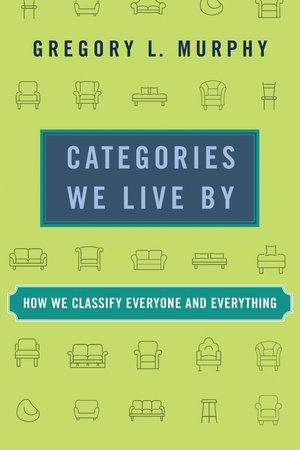
'Categories are destiny' Freud p.6. of 'Categories we live by'


Reading and enjoying for review:

Murphy, Gregory L. Categories we live by: how we classify everyone and everything. Cambridge, MA: The MIT Press, 2024.

Let's start at the beginning -
'Nowadays we are suspicious of categories, especially categories of people. Gender, ethnic, racial, and class categories are seen as a source of discrimination and inequity. If we saw each person as a unique individual, perhaps we wouldn't have all the problems caused by racism, sexism, and all the other -isms that afflict society.
In spite of these problems, I will argue that we cannot get rid of categories in general. They simplify and distract us from individual identities, which can be bad, yet if we didn't have them, we would find it impossible to navigate the world and deal with its incredible diversity.' p.7.


Reading what follows also from the book's introduction, I thought about public sector funded (socialist)  healthcare and the private provision:

'So, my sweater and my hair might both be brown, so we can say that they are both in the category of brown things. They are equivalent in the sense that I call both of them "brown." However, the category of brown things is not very interesting. When you know that something is in that category, you know exactly one thing about it-its color. There's nothing else to be known. Maybe the brown thing is alive or maybe it's inanimate; maybe its microscopic or maybe it's as big as a planet; maybe it moos or maybe it sings oI maybe it is silent. The category doesn't tell you any of those things These single-criterion categories are kind of degenerate. Yes, items that share the criterion (brownness, being three inches long, taking at least half an hour, or whatever) are equivalent, but only in the one property that defines the category. Indeed, you can define trivial categories that only have one ridiculous feature in common, like things that you have touched in the last forty-nine seconds, or objects that are exactly fifteen miles from Cincinnati. Those are not categories that people form, because they are not useful.' p.11.
There is much ongoing debate about parts of the UK's NHS being 'sold-off' - taken-over by private companies with consequences for the quality of care, e.g. cataract services:

https://www.theguardian.com/society/article/2024/jul/10/eye-doctors-say-private-cataract-operations-have-hurt-the-nhs?CMP=share_btn_url

Having worked for the NHS - now NHS Professionals since 1977, the current problems faced by the service and experienced by some patients, carers, friends and family members is upsetting.

Murphy's observation contrasting the utility of categories at the individual and collective level is a great opener. Especially for the basic structure of Hodges' model and the vertical axis.

I've written previously(?) how I think that it is true, throughout my career even as a ward manager (there were some exceptions!) and community MH nurse, I/we have been cocooned from having to be concerned about the budget. When you stop and think about it, how do the 'things' in the category of economics impinge on the biomedical, biopsychosocial model? The ward was a mechanism; it kind-of run itself, which for change agents (those who use the word transformation a lot) is an ongoing issue. The two categories that matter - even as they are global - are illness and prevention. The NHS puts supertankers to shame, in its inability to pivot - turn.

At the end of the day (and night - 24/7/365!) though healthcare must be paid for.

Murphy's explanation about degenerate categories is fascinating too (and this is just the intro!). It sees me (in danger of making a category mistake) as I think about singletons, and 'degenerate' as applies in mathematics, and the debate of finance. The tension of seeing the individual as a unique being, in order to be person-centred, but the service, the system would place them in all in the category of 'payer'.

Viewed across the funding divide, is the other inevitably viewed as degenerate? On page 80 now. More to follow. I'm still kicking all this around; while the government kicks the 'can' of social care down the road.

Many thanks to MIT Press for the review copy.

Saturday, July 04, 2009

Relationships matter: Society Guardian & The WSJ

Re. Charles Leadbeater's State of Loneliness, The Guardian, Society, 01.07.09

The cover of this weeks Society Guardian immediately caught my eye with its picture (I wonder which corner of which care domain this lady is sat in?):

The text initially passed me by; then yesterday I caught up, it seems the business model quest in one sector is having a domino effect with new models needed elsewhere including health and social care.

Leadbeater's piece reminded me of Lean thinking the improvement process with its drive to identify value, reduce waste and repetition. ... His text points out that:

More efficient services quickly move in and out of people's lives, but they don't really change how people live. That is one reason why we have not made deep inroads into the most deprived communities, the most troubled families, the most intractable social problems. Services manage and process people and problems, but only rarely allow people to change their lives. Service solutions are ill-suited to the emerging challenges of the rise of long-term health conditions, diseases linked to lifestyle and diet, ageing or climate change. You cannot deliver a solution to an epidemic of diabetes the way that DHL delivers a parcel.
So any model, method that is primarily process centered may find itself compromised - providing just one cylinder's worth of power in a four cylinder engine. In Hodges' model I have identified the 4Ps. PROCESS, PURPOSE, POLICY, and PURPOSE (to which we must now add PROBITY). It will be interesting to see how value is defined across service forms of engagement, intervention (including signposting) and the new set of outcome measures to follow whether local, national, service-reported or patient reported outcome measures. Leadbeater continues:
The key will be to redesign services to enable more mutual self-help, so that people can create and sustain their own solutions. The best way to do more with less is to enable people to do more for themselves and not need an expensive, professionalised public service. Enabling people to come together to find their own, local solutions should become one of the main goals of public services. Services do a better job when they leave behind stronger, supportive relationships for people to draw on and so not need a service.
So Jo(e) Public needs to reflect, compare, evaluate, learn, collaborate and make informed decisions in order to stay well amongst many other things. They need to be engaged holistically.

Where is the model for this...?
I believe I know.

The Wall Street Journal has something to add here The Doctor Will Text You Now and relating to my earlier posts on 'Beware Reflex Moves'. Relationships matter, but if nurses are out there assessing, assessing, assessing who is doing the education, dividend added therapy outcome focused?

If e-health is going to make a real contribution in augmenting and freeing high value care resources then this in turn depends on the value invested in relationships.
Louis Petrillo, 57, a psychologist in Westfield, N.J., says he regularly turns to his family’s doctor, Robert Eidus, for online advice about his frail 90-year-old mother, who finds office visits difficult. His son who is away at college also used an online visit when he had sinus problems. “I can get into his virtual office anytime,” says Dr. Petrillo. He feels the online care works well largely because Dr. Eidus knows his family members’ regular health complaints.
If older adults move home and need new primary care services, what are most probably(?) well established patient - doctor (patient - primary care team!) relationships are not just undermined they are undone! A person's sense of community is fractured. ...

Yes that image speaks volumes.

Image source: Guardian

Mathews, A.W., The Doctor Will Text You Now, JULY 1, 2009, The Wall Street Journal Interactive Edition

Monday, July 11, 2022

Book review - "Human Landscapes: Contributions to a pragmatist anthropology"

'After Ethnos', a previous book review was an enjoyable challenge. As a nurse, you are, to a certain extent several disciplines all rolled into one, sociologist, psychologist, diplomat, anthropologist ... but After Ethnos and now Dreon's 'Human Landscapes' bring their own demands.

If it was experiment that attracted me to Tobias Rees's book, Dreon's title works on two levels.

Hodges' model anticipates different 'landscapes'. The model also provides a lesson in pragmatism (another post) with pragmatism identified as a method to research Hodges' model.

On health care education programmes, how often do we write of human nature, cognition, or cognitive processes, qualitative and quantitative, subjective and objective? How quickly do we present ourselves, and the readers of assignments with dichotomies, dualities, and polarities?

Just 40 pages in they are here in expected and welcome abundance. I clearly have some reading to do [ that's why it's a review! :-) ] and from reading, much to critique in my differentiation between phenomena and as concepts presented here on W2tQ.

"... the conceptual framework for my approach to human nature is represented by cultural naturalism— that is, a nonreductive form of naturalism that assumes culture to be continuous with nature, rooted in the very organic and environmental conditions of human life, and yet irreducible to the mere association of preexisting resources." p.23

Human landscapes

"Nonetheless, even if we wish to focus on a theoretical analysis of the concept, the idea of human nature seems to display a tangle of problems, punctuated by distinctions that could be useful when treated as functional and connected to specific contexts, but which are actually turned into dogmatic oppositions. One first form of dualism concerns the opposition between the innate and the acquired, between the allegedly innate equipment existing on the genetic or neural level and the properties and ways of behaving this is assumed to give rise to. To give but one example, based on Chomsky’s influential hypothesis, the idea of a neural program for producing grammar encoded in our genes has been assumed to be an efficient (and sometimes sufficient) cause for specific linguistic practices. From this point of view, nurture, culture, and institutions seem to be something completely different from nature, since they supervene on an already fixed material substratum as an adjunct." pp.17-18.

"Taking this or that snapshot of a human could be a useful intellectual expedient in specific circumstances, but “[b]iologically all growth is modification and all organs have to be treated and understood as developments out of something else and as pointing forward to still something else” (Dewey 1985b, 32–33)." pp.19-20.

"I believe that the conceptual opposition between subjective and objective qualities is like a net with too wide a mesh, unable to catch the complexity of our interactions with the world. The problem, I would argue, is that this opposition often involves the idea that qualitative experience is a private, purely first-person experience, consequently posing problems of public access." pp.33-34.

"The section 2 will focus on the Pragmatists’ conception of experience as something broader and richer than cognition—because, in turn, cognition is understood as a specific phase within experience, responding to the needs and problems emerging from qualitative experience and ultimately returning to it. In this approach, perception through the senses and pure sense data are reframed within the context of inquiry, as features that are pointed out, discriminated, and isolated from a more holistic field of experience according to an
idea, namely, the anticipation of the possible consequences of an action or a certain assumption." pp.37-38.

Not sure why, but at one point, reading prompted consideration of: 'lived experience' and the role of peer support workers?

Starting the book, Dreon is (naturally) laying out the scope and structure of the book. Not just a preface but first chapter, and it looks like - the second. As I get more accustomed to Dreon's style (I'm a nurse remember) there are valuable lessons in laying out arguments, with more reward to follow I trust. I have a sense of a wall, not an impenetrable one, but one that is well argued - the blocks shifting into place - even if I cannot grasp their true significance to specialists in this field.

More to follow.

Dreon R. (2022) Human landscapes. Contributions to a pragmatist anthropology. Suny Press, Albany.

Many thanks to Roberta and Suny Press for my copy (confession to follow).

Wednesday, April 17, 2024

Policy Dialogue - Water, Conflict and Peace in the Middle East: online

Dear colleagues,

I am delighted to invite you to the next Policy Dialogues from the JHU-UPF Public Policy Center:

Water, Conflict and Peace in the Middle East
Thursday 25th April, 6pm CEST
Online via Zoom (registration required)
Language: English

The Middle East is a region of both severe water problems, and acute political instability. But what is the relationship between these two things? This Policy Dialogue will provide an opportunity to reflect on this question and its implications. It will overview the region’s water problems, and consider how these problems are – or are not – contributing to conflict. It will also examine, conversely, how war and violence are affecting patterns of water resource degradation and water insecurities, and will reflect on opportunities for water-related peace-building, including on how water for peace initiatives might best be pursued.

We are delighted to invite Natasha Carmi (Water Peace Programme Manager at the Geneva Water Hub) and Jan Selby (Professor of International Politics and Climate Change at the University of Leeds, UK) to share their expertise during this session.

We invite you to join us and explore the complexities of this extremely important issue. You can register here. Please also share this invitation within your networks.

Best regards,
Aeve

Aeve Ribbons
she/her

Educational Projects Manager of JHU-UPF Public Policy Center (UPF-BSM)
Managing Editor of the International Journal of Social Determinants of Health and Health Services (IJSDOHS)

My working days are Monday-Thursday / Mis días laborables son de lunes a jueves.

Website: http://www.upf.edu/jhu-ppc/

Twitter: https://twitter.com/pubpolcenter


My source:

Politics of Health Group Mail List Messages

Visit the PoHG website for lots of interesting links and publications: http://www.pohg.org.uk/

Visit PoHG on Facebook: https://www.facebook.com/282761111845400

Follow us on Twitter: @pohguk

Monday, March 11, 2024

HIFA Discussion: Alcohol Use Disorders - Drink Aware and Change

Dear HIFA colleagues,

I would like to invite you to retweet the following that I have just sent on our X/Twitter account:

"Pls RT: I just took the DrinkAware test as if I drank 3 pints a day (well over the recommended limit). The result was "Great news! You are at lower risk of alcohol-related problems". We invite others to check. Thx NPW https://www.drinkaware.co.uk/tools/drinking-check#/ "

You can see the tweet and retweet here: https://twitter.com/hifa_org/status/1762399130154885617

We are unsure why the test - which is taken by 900 people every day - is providing such misinformation.

DrinkAware is funded by the alcohol industry.

Thank you for your help to publicise this issue.

Best wishes, Neil

HIFA profile: Neil Pakenham-Walsh is coordinator of HIFA (Healthcare Information For All), a global health community that brings all stakeholders together around the shared goal of universal access to reliable healthcare information. HIFA has 20,000 members in 180 countries, interacting in four languages and representing all parts of the global evidence ecosystem. HIFA is administered by Global Healthcare Information Network, a UK-based nonprofit in official relations with the World Health Organization. Email: neil AT hifa.org


To which I replied:

RT'd as requested.. 

Reply from twitter ... 


McCambridge J, Kypri K, Miller P, Hawkins B, Hastings G. Be aware of Drinkaware. Addiction. 2014 Apr;109(4):519-24. doi: 10.1111/add.12356. Epub 2013 Oct 28. PMID: 24164565; PMCID: PMC3992896.

UPDATE 10th March

Dear HIFA colleagues,

Further to our discussions on HIFA, in the past week DrinkAware HAS CHANGED THEIR ADVICE to people who drink 42 units per week (3X the recommended maximum). Questions remain about how many people were misled by previous advice, whether that advice was deliberate, and whether WHO's AUDIT test (currently used as the basis for the DrinkAware test) should continue to be used by anyone as an unsupervised self-evaluation tool.

BACKGROUND On 22 February 2024 I reported on HIFA an apparent problem with DrinkAware, the UK's largest alcohol charity, funded by the alcohol industry. https://www.hifa.org/dgroups-rss/alcohol-use-disorders-79-role-alcohol-industry-10-alcohol-industry-and-misinformation

I took their Drinking Check. I posed as a man who drinks 42 units per week (3X the recommended maximum) and DrinkAware told me: "Great news! You are at lower risk of alcohol-related problems. This means you are at lower risk of serious diseases such as stroke, heart and liver disease, and seven types of cancer and may already be noticing the benefits of lower risk drinking such as deeper sleep, more energy and brighter moods."

There was no advice to reduce my consumption.

This test was repeated by other HIFA members in subsequent days, with the same results.

On 4 March 2024 we reported our findings to the World Health Organization.

CHANGE IN ADVICE Today, 10 March 2024, I took the test again. As before I posed as a man who drinks 42 units per week. This time I got a different result:

"You are on the right track. You are at lower risk of alcohol-related problems... To keep your health risks low, the UK Chief Medical Officers advice is to drink no more than 14 units a week. If you are regularly drinking above 14 units per week there are tips and advice below about how to cut down."

INTERPRETATION Prior to 4 March 2024, DrinkAware was encouraging many heavy drinkers (up to 42 units per week) to continue drinking as they are.

DrinkAware claims that its Drinking Check tool was used by 250,991 people in 2021, so it appears that potentially tens or even hundreds of thousands of people drinking 14-42 units per week may have been misinformed.

At some point between 4 March and 9 March, Drinkaware changed their Drinking Check tool so that heavy drinkers (up to 42 units per week) are now advised to cut down.

SHOULD WHO's AUDIT TEST BE USED AS AN UNSUPERVISED SELF-EVALUATION TOOL?

Previous messages on HIFA have suggested that AUDIT should only be used as a clinical tool by health professionals, and not as an unsupervised self-evaluation tool. WHO's AUDIT manual notes: 'Care must be taken to tell patients why questions about alcohol use are being asked and to provide information they need to make appropriate responses. A decision must be made whether to administer the AUDIT orally or as a written, self-report questionnaire.' https://iris.who.int/bitstream/handle/10665/67205/WHO_MSD_MSB_01.6a-eng.pdf

NEXT STEPS

How many people were misled by previous advice, was that advice deliberate, and should WHO's AUDIT test (currently used as the basis for the DrinkAware test) continue to be made available as an unsupervised self-evaluation tool?

I invite HIFA members to suggest next steps. Are you a health journalist (or do you know a health journalist) who might be interested to look into this in more depth? Please pass this on and/or contact me: neil@hifa.org

Meanwhile I shall report this new finding to WHO.

I look forward to your comments and suggestions: hifa AT hifaforums.org

Best wishes, Neil

Finally ...

Dear HIFA colleagues,

We now enter our 6th and final week of the deep-dive into Alcohol Use Disorders, where I invite you to reflect on what has been discussed so far (and what has not been discussed). In your view, what is the key learning in relation to the 5 questions we have explored:

1. Do people understand the health, socio-economic and environmental harms of alcohol? What matters to them? How can they be better informed? How to reduce stigma? 2. Do health workers have adequate knowledge to prevent and manage alcohol use disorders among their patients? What matters to them? How can they be better informed? 3. What is the role of the alcohol industry? What can be done to address misinformation from the alcohol industry? 4. Do public health professionals and policymakers have adequate knowledge to prevent and treat alcohol use disorders in their country? What are current national policies and what more can be done to fully implement those policies? 5. How can we define and measure alcohol use disorders?

To help with this, I have prepared a full compilation of our discussion so far (205 pages):

https://www.hifa.org/sites/default/files/publications_pdf/Alcohol_Use_Disorders_Compilation2.pdf

I shall now work on an edited version (selected text organised under subheadings for each of the 5 questions and for other topics) and will get this to you asap.

Many thanks, Neil

Saturday, August 30, 2025

Revisiting "patient career"

Almost a decade ago I posted:

Medical Sociology: The Importance of 1894....2015 patient career - health career

- which was prompted by:

McKinlay, J.B. (1971) The concept “patient career” as a heuristic device for making medical sociology relevant to medical students. Social Science and Medicine, 5(5), 441-460.
https://pubmed.ncbi.nlm.nih.gov/5160599/

McKinlay's abstract reads:
Abstract

Increasingly it is being suggested that the behavioural sciences can contribute to medical education and should be incorporated into the medical curriculum. Evidence for the development of this view in Great Britain can be found in the recommendations of the recent Royal Commission on Medical Education and the submissions of various bodies to it. Given that the behavioural sciences in general and medical sociology in particular, can contribute in a positive way to the medical curriculum this paper attempts to: (a) draw together and crystallize some of the major problems inherent in past attempts to organize and include the behavioural sciences in the medical curriculum; (b) devise some criteria for determining the behavioural science content of the medical curriculum; (c) outline and discuss one possible course in medical sociology utilizing, as an organizing framework, the concept “patient career”.
Brian Hodges created his eponymous model with curriculum planning, design and development as a key purpose. In the early-mid 1980s nursing was looking forward to becoming a degree, undergraduate course of study.

McKinlay's use of 'patient career' (and others) can obviously be associated with the impact of life chances upon a person's health career. 

Individual
|
      INTERPERSONAL    :     SCIENCES               
HUMANISTIC  --------------------------------------  MECHANISTIC      
 SOCIOLOGY  :    POLITICAL 
|
Group


'While discussing the relationship between the medical and social sciences, and the role of the social scientist in teaching and research in medicine, Butler groups the range of medical topics which have been studied sociologically into four main categories [l4]. These are,

the sociology of illness,
the sociology of health,
the sociology of medical care
and the sociology of healing.' p.443.^


McKinlay sees these categories as too comprehensive. Although within the SOCIOLOGICAL domain of Hodges' model this is a 'start'? McKinlay proceeds to identify specific difficulties presented to educators, which include (in summary and with my emphasis):
'(a) The failure to identify needs, specify objectives and devise criteria
(b) The failure to distinguish between perspectives

'Very generally, the behavioural sciences can be said to be conccrned with the description and explanation of the health and illness behaviour of groups and social categories, whilst medicine (especially clinical medicine) aims at the understanding and successful treatment of individual patient cases. By working exclusively on the basis of (or failing to take account of) these separate perspectives, meaningful dialogue between behavioural scientists and medical students has been made extremely difficult.'

(c) The failure to distinguish the audience
(d) The failure to take account of temporal location
(e) The failure to provide a conceptual framework

Most courses in the behavioural sciences either offered or proposed, to a greater or lesser extent, tend to ressemble a sort of shopping list. For example, the courses offered by Badgley, Martin et al., and those proposed by the Society for Social Medicine and the Royal Commission all reflect this "'shopping list" charactcristic. After working down the list it is assumed that students will have the technical goods required. It is, of course, difficult for students undertaking these "shopping list" courses to reflect on where they have been, appraise their current position, or consider where they may be going.
Two further general problems seem to be inherent in many of the attempts to systematize the field of medical sociology, and to some extent are associated with some of the problems already outlined. 
(f) The problem of trying to cover too much [Which lists 18 topics for 2nd year students.]
 (g) The problem of omitting important areas' pp.443-445.
McKinlay then, is similarly preoccupied with the curriculum (for medical students):
'This section is concerned primarily with devising criteria which, given the finite amount of teaching time available, will offer some guidance in determining what aspects or areas of medical sociology should be given priority for teaching in the medical curriculum.' p.445.
This work from the 1970s surely invites reflection upon the meaning of 'progress'? 

^My formatting.

More to follow...?

Monday, July 08, 2019

Inaugural Scottish Threshold Concepts Conference: TCs in Action [ii]

After Prof. Land's keynote and the previous post on 'work-as-X' I can see the value of the academically agnostic - neutrality of Hodges' model in terms of the spaces it affords. It can be used to reflect as a safe space or problematic, troublesome or unsafe. As an example, consider the task of reflecting upon the current state of residential and nursing home care?

individual - self
|
INTERPERSONAL : SCIENCES
humanistic ----------------------------------------------- mechanistic
SOCIOLOGY : POLITICAL
|
group- population


Next reflect upon residents and sexuality within these care environments. This could be from any perspective, or even work through several: resident, a new care worker, other team members, staff nurse, home manager, family member, GP, or inspector. ...


#UoDthresholdconcepts2019
Prof. Land raised the matter of extreme vulnerability and experience of Syrian refugees. Individual and Population are forced through a threshold that is catastrophic: that of identity. The scale of this event is being stressed as an urgent issue that must be accorded attention in parallel with physical relief

Perhaps, it is not just individuals who must encounter and pass through a threshold in their learning, their liminal journey. The problems we face demands that disciplines must find the disciplinary bridges that will enable them to solve the interdisciplinary and even transdisciplinary problems we face.

Geopsychiatry is a key bridge here. Research has determined that trauma can be intergenerationally transmitted. Governments, aid organisations and policy makers must take this into account and not just respond with physical relief. Unfortunately, the imbalance that is a lack of parity of esteem in general physical and mental health has its global-scale analogue in humanitarian crises and conflicts, especially those that displace populations.

Prof. Land referred to eduChaos and this is where 'lived experience' is found: not just in 'real time'.

#UoDthresholdconcepts2019

Uncertainty, kept repeating itself Prof. Land describing the work of Ilgen et al. (2018) and the need in (and through) education to find comfort with uncertainty. The challenge of this is acute in medicine and mental health care as Ilgen's work highlights. The previous post's nod to box-ticking and elsewhere the quest that is the 'comprehensive record' stresses at point of initial encounter - the initial assessment, perhaps to the detriment of an outcome oriented approach?

The question posed of "how professionals can manage the uncertainty arising from complex, ill-defined problems with conflicting assumptions, evidence and opinion" [another slide] is not just concept-bound as I tend propose. The terrain of Hodges' model can be used to map wells of uncertainty that help make the more certain, concrete data - information stand out. It helped me to see the situatedness of this discourse repeated. The definitions of 'uncertainty' and 'certainty' attributed to Ilgen et al. (2018) are a helpful adjunct to information science based sources.

In subsequent parallel sessions I switched rooms in  trying follow what was most relevant. First was,
'Where have all the empathetic professionals gone? An exploration of empathy as a threshold concept for the helping professions'. This provided a multidisciplinary insight into social work education, with overlaps that included safeguarding and child protection. Jayne Lewis's format had us engaged, well me clearly as I've no notes or photos. The talk of empathy made me recall twitter and student nurses remarks on their placements (accepting too that 'No news is good news') and student-mentor-placement relationships. If the practice/placement environment is stressed/contested for a variety of reasons, to what extent does this influence empathy role models, student experience and study of TCs? Do researchers need to record the emotional and political 'temperature' as a baseline measure?


#UoDthresholdconcepts2019


Next, on the programme; TCs, medical students and population health learning. From an acute angle (I was late arriving) Hothersall explained a study with a small sample, and yet findings that (as ever) call for more study, with implications for teaching in the lecture theatre, as a whole, in practice and relevance for me.

I'm sure there are many threshold concepts in public health and public mental health (to ensure inclusion). Even if specialty posts in public health are filled 2013-2016 (and amid recruitment pressures) I wonder if there is an issue for students (generally) in the perception of  'public health' and their respective discipline? Is there something in the old debate of pure - applied disciplines? Do medical and other students feel they must focus attention on the 'hard' learning rather than the 'soft' fuzzy concepts that public health encompasses? What has been the impact of the most recent series of re-organisations?


 #UoDthresholdconcepts2019

Of course, given the big themes identified, for me, the first lecture 101 should include a conceptual framework that can readily incorporate the (socio-)technical, (psycho- socio-) political, conceptual and much more.


The presenter also informed us that a paper is in press: 'The Clinical Teacher'. These findings of concepts that were troublesome for students appears to support my '101' role for Hodges' model - but then I would say that ...


Tierney's Exploring threshold concepts in the scholarship of teaching and learning was a rich source on a model of scholarship (Trigwell, et al. 2000) with tables also drawing on Perkins (1999, 2006) that I must try to follow-up as with Visual Art as navigation of affective thresholds: implications for the classroom.


The afternoon keynote discussed The dual development of professional identity as physicians and mentors, with Profs Hokstad and Kvernenes. Using a narrative reading (Reismann, 2008) the content and findings to me call for simultaneous duality in identity, the medical and the non-medical (practitioner - interaction with the patient and their family), clinician and mentor.

Being struck by the thought (on science, knowledge, holism - whole / part distinctions) of Goethe in the past it was a marvellous to attend Jonathan Code's session; Mind the Gap - Ontological discontinuity as threshold concept. I imagined Hodges' model and several leaves in various stages of growth.

It creates an overhead for conference organisers, but video recordings would be a great help. I think there is one more short post on this conference.


Ilgen, J.S., Eva, K.W., de Bruin, A., Cook, D.A., Regehr, G. (2018). Comfort with uncertainty: reframing our conceptions of how clinicians navigate complex clinical situations.
Adv Health Sci Educ Theory Pract. Nov 2. doi: 10.1007/s10459-018-9859-5.


See also:
Inaugural Scottish Threshold Concepts Conference: TCs in Action [i]