Hodges' Model: Welcome to the QUAD: threshold concepts

Hodges' model is a conceptual framework to support reflection and critical thinking. Situated, the model can help integrate all disciplines (academic and professional). Amid news items, are posts that illustrate the scope and application of the model. A bibliography and A4 template are provided in the sidebar. Welcome to the QUAD ...

Showing posts with label threshold concepts. Show all posts

Monday, February 23, 2026

Millikan's Unicepts and Unitrackers

An underpinning theory of Hodges' model must help us make sense of what is happening within the care domains, between the domains, and possibly say something about what may be significant relation[s]-ships that are diametric. Arriving at threshold concepts I wondered in Hodges' model about there being compound threshold concepts. Consider, when 2-3 thresholds are (b)reached in one (the sciences) domain? Contrast this then, with 4-5 thresholds across care domains? There may also be care concepts applicable that are for example, person-centred: that is, patient, carer, 'management', or policy defined? These concepts while not threshold related per se, are nonetheless relevant.

I came across the work of Ruth G Millikan in London, several years ago as I followed 'epistemology' around the shop. It is time to pick this up and earlier work:

Millikan, Ruth Garrett. “Biosemantics.” The Journal of Philosophy 86, no. 6 (1989): 281–97. https://doi.org/10.2307/2027123

https://www.researchgate.net/publication/235734046_Biosemantics 
INTRODUCTION TO PART I

0.4 Unicepts and Unitrackers

'Neither the clusters in the world nor their properties are found at the sensory surfaces. The properties characterize distal objects and events. They are manifested in diverse and irregular ways through signs impinging on the sensory surfaces, energy patterns that are contingent on shifting intervening circumstances.' ...

'A unitracker is a mechanism or faculty for same-tracking something, for recognizing when incoming information concerns it, then linking and storing this information together as information about one and the same thing. Only then can it can be brought to bear together on inference and action. The link connecting stored information about the same thing together is a "unicept." The information is recognized, paradigmatically,by the initiation or strengthening of an intentional attitude of credence, which we tentatively model as a temporary or enduring connection between the unicept and unicepts for other things.'

'Both unicepts and unitrackers are particulars. You and I do not have any of the same unicepts or unitrackers. What we have in common is unicepts and unitrackers for many of the same things.' ...

'Unitrackers are same-trackers used for collecting knowledge about their targets.' pp.7-8.

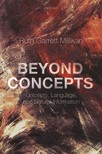
Millikan, Ruth Garrett, Beyond Concepts: Unicepts, Language, and Natural Information (Oxford, 2017; online edn, Oxford Academic, 19 Oct. 2017), https://doi.org/10.1093/oso/9780198717195.001.0001, accessed 16 Feb. 2026.

Friday, August 22, 2025

Paper - (finally!) "A generic model and conceptual framework to prime curiosity across health and social care ..."

 It has been over a decade but at last the second* paper has been published in Journal of Evaluation in Clinical Practice:

Jones, P. (2025), A Generic Model and Conceptual Framework to Prime Curiosity Across Health and Social Care Disciplines to Facilitate Lifelong Learning. Journal of Evaluation in Clinical Practice, 31: e70252. https://doi.org/10.1111/jep.70252

ABSTRACT 

Rationale: The Corona virus pandemic highlighted the importance in continuity of the physical and emotional labour across all care sectors. Synergy between healthcare in hospitals, and community services must be allied with social care; and be central to integrated and efficient policy and service delivery. Services were found wanting in the pandemic and in recurring winter crises. The politics of funding for care delivered in rest and nursing homes remains contested, awaiting long‐promised governmental action. The workforce is recognised as dedicated, skilled, compassionate and yet under‐valued and under‐paid; managers face ongoing recruitment challenges, with a national shortage of staff, and high turnover of personnel. A National Care Service is awaited in England and Wales. 

Aims and Objectives: This study explores the ongoing care crisis, using the educational lens of threshold concepts, projected, analysed and synthesised of a generic conceptual framework, known as Hodges' model. Readers will understand Hodges' model and threshold concepts being equipped to explain both. 

Methods: The study is descriptive and uses a conceptual mapping approach supported by discussion and literature. Additional resources and avenues for ongoing study are also provided. 

Conclusion: In conclusion, Hodges' model is a pragmatic, practice‐based tool, that can support and sustain curiosity for workforce learning and development. 

Acknowledgements I would like to thank Messrs Mark Bird and Matthew Graham and the journal's reviewers for comments on drafts of this study; and acknowledge the effort of Dr Michael T. Flanagan in creating the informative threshold concepts resource (referred to above). 


https://onlinelibrary.wiley.com/share/author/IRPNBR2KHJNYJK8XUAW6?target=10.1111/jep.70252

*This paper was originally the first of a two-part work. Feedback from reviewers suggested the papers be standalone. United now, in one journal.

Many thanks to the reviewers, editor, editorial and publications team at JECP.

This paper has been added to bibliography in the blog's sidebar.

Friday, August 01, 2025

Paper: "A generic model and conceptual framework to prime curiosity across health and social care disciplines to facilitate lifelong learning"

 What seems a long time ago now (a decade!) I started writing a paper on:

  • Threshold concepts
  • Deprivation of Liberty Safeguards (DoLS)
  • and Hodges' model

This ended up as a two part work, which after review ended up as two separate papers:

One appeared in April:

Jones, P. (2025). A Conceptual Mapping Exercise of Deprivation of Liberty Safeguards in Residential & Community Care Using Hodges' Model and Threshold Concepts. Journal of Evaluation in Clinical Practice, 31: e70085. https://doi.org/10.1111/jep.70085

The other should be published soon - same journal. I appreciate the editor's patience and team's support:

"A generic model and conceptual framework to prime curiosity across health and social care disciplines to facilitate lifelong learning"

Unfortunately, I've no funds to pay for open access. I will bear this in mind, as I resurrect another project - with two versions of 13,000 and 6,000 words. This is on (and began during) COVID-19, society, information and technology.

Monday, April 21, 2025

Biblio - addition: Conceptual Mapping Exercise of DoLS in Residential & Community Care Using Hodges' Model and Threshold Concepts


After a great many years of on-off effort, radical revisions - from one to two papers - part 1 and part 2; and then finally two standalone papers, I received news this morning from ORCID and Wiley of online publication.

News of the second paper (part 1 - to me) is still to follow.

Many thanks to the individuals who read earlier drafts, the editor and team of JECP.

It is a real delight to add an item to the blog's bibliography in the sidebar.

Apologies in advance, the paper is not open access, I cannot personally cover the fees. Happy to assist with an earlier draft.


Once again, if you can add to the bibliography, or are interested in using Hodges' model please let me know. Or as several researchers have done: 'Just get on with it!'. Learning post-publication of a citation for Hodges' model, is a welcome surprise too.


Jones, P. (2025), A Conceptual Mapping Exercise of Deprivation of Liberty Safeguards in Residential & Community Care Using Hodges' Model and Threshold Concepts. Journal of Evaluation in Clinical Practice, 31: e70085. https://doi.org/10.1111/jep.70085

Wednesday, March 19, 2025

News on two papers: Deprivation of Liberty Safeguards & Threshold Concepts

 - plus of course Hodges' model


While I could find out (here on W2tQ!?), I can't remember exactly when I started a writing project about threshold concepts, deprivation of liberty safeguards in the context of residential care and nursing homes. It was at least 2013, and may date back to 2011. Well, whenever it was: what a palaver! 

One paper, rejected, the advice was to split the work and create two. The two papers were then also rejected. My writing is always off-piste as it were, on-off too; and then ironically COVID-19 may have helped too? Afterwards, I started to pick it up again - the same title but parts 1 & 2. I never heard from one journal, so quickly moved on. Each time, the work improved thanks to two reviewers and their feedback. All the time my thought about Hodges' model has itself changed: I like to think progressed. With further revision, I finally had two standalone papers.


The important thing is the news received this week: Re. ...
'"A Conceptual Mapping Exercise of Deprivation of Liberty Safeguards in Residential & Community Care using Hodges’ Model and Threshold Concepts". I am pleased to be able to tell you that has been accepted for publication in Journal of Evaluation in Clinical Practice.'
A further paper (part 1 originally) same journal, to be referenced in the above, needs some minor revisions.

I am worried about another paper, with a similar history, that I can now turn my attention to (this itself speaks volumes!). I can see I need to alter the emphasis, balance of Hodges' model, diagrams, psychological therapies and case formulation. A co-author would help, but of course everyone's busy.

So if you're writing and struggling: do keep going!

Saturday, March 09, 2024

10th Biennial Threshold Concepts Conference: July 2-4, 2025

Save the date!

As a scholar who is active in Threshold Concepts, you may be interested to know that the biennial conference on Threshold Concepts will be held at the University of British Columbia in Vancouver, BC, Canada on July 2-4, 2025. More information on the call for proposals and conference logistics will be available in the late spring. But for now, follow us on X (formerly Twitter) @ThresholdConcep and join our Linkedin group (Threshold Concepts Conference 2025) to get the most up to date information.

Conference Invitation

Dear Colleagues,

As you may know, the biennial conference on Threshold Concepts will be held at the University of British Columbia in Vancouver, BC, Canada on July 2-4, 2025. As a scholar who has been active with Threshold Concepts in the last few years, we hope that you will consider submitting a proposal and attending the conference. The call for proposals will be open October 15 – December 20, 2024. 

Please check out the conference information on our website (https://thresholdconcepts.home.blog/) and reach out if you have any questions.

All the best,

Julie
Email: julie.rattray AT durham.ac.uk
Prof. Julie Rattray
Professor of Higher Education and Director of EDI at School of Education
Chair of Durham Disabled Staff Network
Durham University
Confluence Building
Stockton Road
Durham
DH1 3LE


Monday, October 02, 2023

Citation of Hodges' model IN "Application of the Threshold Concept Framework in Nursing: An Integrative Review"

This morning ResearchGate informed me of a further citation for Hodges' model:

Kistler KB, Tyndall DE. Application of the Threshold Concept Framework in Nursing: An Integrative Review. Nurse Educ. 2022 Mar-Apr 01;47(2):91-95. doi: 10.1097/NNE.0000000000001041. PMID: 34033613.
I have requested a copy and added Kistler and Tyndall to the bibliography listing in the blog's sidebar.

Here, I am still sitting on the two-part draft paper on threshold concepts, liberty protection safeguards, residential forms of care and Hodges' model.

Last week, during a break I received news of acceptance for another online conference. Details to follow, as I complete two abstracts this month.

Saturday, December 17, 2022

Domain walls ...

"A domain wall is a type of topological soliton that occurs whenever a discrete symmetry is spontaneously broken. Domain walls are also sometimes called kinks in analogy with closely related kink solution of the sine-Gordon model or models with polynomial potentials.[1][2][3] Unstable domain walls can also appear if spontaneously broken discrete symmetry is approximate and there is a false vacuum.

A domain (hyper volume) is extended in three spatial dimensions and one time dimension. A domain wall is the boundary between two neighboring domains. Thus a domain wall is extended in two spatial dimensions and one time dimension.

Important examples are:

  • Domain wall (magnetism), an interface separating magnetic domains
  • Domain wall (optics), for domain walls in optics
  • Domain wall (string theory), a theoretical 2-dimensional singularity."

    https://en.wikipedia.org/wiki/Domain_wall


 INDIVIDUAL
|
 INTERPERSONAL    :     SCIENCES               
HUMANISTIC --------------------------------------  MECHANISTIC      
SOCIOLOGY  :   POLITICAL 
|
GROUP

conceptual spaces

threshold concepts

[#h2cm as] relational ontology

magnetism

optics

string theory

a space to tell stories of
and compare walls
seek openings
so many spaces of / to welcome

these walls:
are they necessary?
whose needs do they meet?
we know walls listen and talk too
who do they protect?
who do the respect?


Among the domain walls
are those that bring us together,
those that bring us - 'I' into being,
and yes, those that [try to] take us apart.


Inspiration:
Leslie Rosenberg, THE COSMOS IS MOSTLY MADE OF SOMETHING WE CANNOT SEE, Scientific American, January 2018, Volume 318, Number 1. pp.48-53.

Axioms, Domain Walls, and the Early Universe, P. Sikivie in Physical Review Letters, Volume 48. No. 17, pp.1156-1159; April 26, 1982.

Thursday, December 01, 2022

Threshold Concepts 2023: "Roads Less Travelled"

Call for Papers 2023

Date 4-6th July 2023

Location: Charles Sturt University, Port Macquarie Campus, NSW, Australia (google map link)

Theme: Threshold Concepts: Roads Less Travelled

The 2023 Threshold Concepts Biannual International Conference is a special one. It marks twenty years since the original 2003 Threshold Concepts paper by Eric Meyer and Ray Land. In the intervening time, Threshold Concepts have become an accessible way of conceptualising learning, and the barriers to mastery that learners encounter. We are taking inspiration from Julie Timmerman’s (2023) provocative question, “Do thresholds always propel us outward, forward, and towards an identified threshold, or might they reveal alternative and unanticipated landscapes for transformation?” 

We propose an exploration of movement “outward, forward, and towards” threshold concepts, and the journeys we undertake as learners and researchers. These pathways may be known or unknown, familiar or alien, hidden or exposed. We have identified a number of subthemes, which you may interpret according to your context.

  • Inter(tidal)disciplinary Zones
  • Learning Spaces and Places 
  • Cultures of Engagement and Connectivity
  • UnOthering 
  • Liminality 

We invite you to submit proposals under one of the subthemes and we look forward to seeing you in Port Macquarie in July 2023 to celebrate twenty years of Threshold Concepts. #9BiTCC2023

.... https://thresholdconcepts.home.blog/

Friday, September 30, 2022

Update on draft papers ii

The draft paper on cardiovascular nursing, first episode psychosis, research methods and Hodges' model is just about finalised; at 4700 words, 4 figures (one illustration of the model, plus three 2x2 tables) and 42 references.

One of the oldest drafts is c. 2013; in mitigation I completed an MRES in-between. This is on case formulations, diagrams and Hodges' model and is quite near completion. Although now of course the references and literature need to be re-examined. There's a new rationale to pick this up - and it connects with work below.

Another effort morphed into two papers, following an initial inquiry with a journal (lost in the email archive). The focus is Threshold concepts, Liberty Protection Safeguards - a change from DoLS, the care context is nursing homes and the residential sector applying Hodges' model.

This draft has served a purpose, forming the basis of a presentation to the virtual Threshold Concepts Conference last year. News will follow soon regards next year:

9th Biennial Threshold Concepts Conference (I really miss the Specialist Group on TCs in Health, but also appreciate the time such a commitment takes.)

Last summer, seduced by reference to 'advanced studies' (and a call that presented a broad door, sufficient to get h2cm through) I responded to a call on technology, and society. Liaising with the editor, we added - COVID-19 and Hodges' model. Before I knew it, I'd amassed more than 12,000 words in six weeks. The comments even when far from final draft, were poor. No encouragement at all. Contact was lost, blanked in fact: the paper slept. 

Months later, picking it up again, I can see why. It was poor.

I've taken some -ve critique previously. Welcome it in fact: so the Earth-bound vacuum was rude.

When working on the Michel Serres paper:

Jones, P. (2008) Exploring Serres’ Atlas, Hodges’ Knowledge Domains and the Fusion of Informatics and Cultural Horizons, IN Kidd, T., Chen, I. (Eds.) Social Information Technology Connecting Society and Cultural Issues, Idea Group Publishing, Inc. Chap. 7, pp. 96-109.

- some rather negative feedback proved the spur to the final work - that I think (and been told) is coherent, engages and 'delivers'(?).

This will be the result again, but the chain reaction has to be tempered and channeled.
Clear the desk - clear the desk! I am my own worst enemy...!

The latest paper, and its being co-authored has proved an enormous help, in time management, discipline and focus (despite COVID intervening):

Jones P, Wirnitzer K. Hodges’ model: the Sustainable Development Goals and public health – universal health coverage demands a universal framework. BMJ Nutrition, Prevention & Health 2022;0:e000254. doi:10.1136/bmjnph-2021-000254

Out of the technology, society text, a structured work - maybe two - will materialise.

Swiss army knife
 

After wittering on about legacy problems in nursing, and health care for quite a while, I've wondered about an original purpose Hodges' model - that of curriculum design, planning, development. As ever, it is just one tool in the toolkit, but regards nursing curricula, mental health nursing, the general Vs specialist distinction Hodges' model can be the ubiquitous Swiss army knife:

Boyer's model, Hodges' model, scholarship, future website and Drupal


Noting and replying to threads on twitter, Hodges' model can help articulate the arguments for the future of mental health nursing as a distinct pathway of study, discipline, and profession.*

So if you're struggling to complete a paper, keep going!

That mention, back in 2009 of a 'future website' is embarrassing though.

*A post re. the BBC Panorama TV expose will follow in the future.

Thursday, September 01, 2022

Update on draft papers ;-)

Please excuse the intended irony, as need for an - 'update' could refer to far more than papers.*

Across the life of W2tQ (since April 2006...) there are many posts about papers by other people, papers planned and less frequently work published. 

A paper that started in 2017 has finally been accepted and we (not the Royal variety - which is a critical joy) await the proof. 

I'm really grateful to my co-author who stayed the course on what has been an utter roller-coaster and with COVID too. I look forward to sharing details and hence news of their ongoing research elsewhere - in Europe.

Another paper conceived in March has progressed more rapidly. With the initial draft well received, I'm addressing some revisions from editors, which are straightforward. 

I still need to 'see' these two birds in my hands, to believe: it will be worth it (I think?) to add these to the bibliography, as:

  • SDGs are fundamental in global health and reveal the scope and relevance of h2cm;
  • nutrition is critical in public (mental) health, policy and sustainability;
  • there is more to follow from the 'mapping' that is exercised on W2tQ [2x2 HTML tables thus far], in these, and other papers;
  • the psychoses constitute a severe mental health condition that can also illustrate the impact on individuals, friends, family and society;
  • in health (and social) care we must address parity of esteem in and across theory, practice, management, policy, and research;
  • how do (research) methods figure in Hodges' model (a mapping approach);
  • what does a similar mapping of cardiovascular medicine and nursing reveal?

These bibliographical additions may help researchers in health, social care, and other fields find the model. While it is disappointing to find out about papers that reference h2cm 'after the writing' this still counts. It is a reference, not a collaboration! This is very welcome and a key purpose of the blog, and presence - @h2cm - on twitter. 

It would be validating, so 'me' [massaging ego] but it would also be contradictory. 

Hodges' model is simple, isn't it? 

In its basic form, blank and template - it presents virgin territory for the user(s) to overlay with their map according to context.

I'll post again about three remaining drafts papers, one dates back to 2012 (I was full-time then) and one that is in two parts. I've learnt a lot (again) with the two 'nearbies' and will post and list details when able. 

If I can help you, your project - I'd be pleased to do so.

*a website for example!

See also: the blog's bibliography in the sidebar, plus -

'New' citation: "Pratique en milieu de psychiatrie légale: proposition d’un modèle interdisciplinaire."

Tuesday, August 16, 2022

Liminal spaces I & II c/o Nan Mulder

 INDIVIDUAL
|
 INTERPERSONAL    :     SCIENCES               
HUMANISTIC --------------------------------------  MECHANISTIC      
SOCIOLOGY  :   POLITICAL 
|
GROUP
'A Liminal Space II'
21×48 cm mezzotint 2022
'A Liminal Space I'
21.5×48 cm mezzotint 2022


Learning, starting a course of study at whatever stage in life is often likened to a 'journey'. The term liminality is applied to this experience, with its spiritual and transformative connotations, an education rite-of-passage; also specifically in reference to threshold concepts:

https://www.ee.ucl.ac.uk/~mflanaga/popupLiminality.html

Images with thanks to Nan Mulder:

https://www.nanmulder.com/

See also: 'periplus'.

My source: Printmaking Today Summer 2022, 31:122, p.7.
https://www.cellopress.co.uk/page/printmaking-today

(Thanks also to Cello Press - looking f/w to 2023 issues.) 
 

Wednesday, January 05, 2022

PHI MAGAZINE (Φ) - Liminal Issue [ii]


Individual
|

INTERPERSONAL : SCIENCES
humanistic ------------------------------------------ mechanistic
SOCIOLOGY : POLITICAL
|
Group

mental disorientation
study - philosophy - ideas
liminal - liminality
ethical practice
creativity reflection
threshold concepts
uncertainty - meaning - ambiguity


physical disorientation
time, place, 'person'
process
theory
transition - threshold - doorway
media


art - arts
practice
socialisation (orientation)
rites of passage
status
meanings

-isms
political orientation
power - boundaries
professionalism
posture?
status


Previously on W2tQ:

'threshold concepts' 

Q. Do we, must we, always 'stand' when presented with a 'threshold'? Discuss ...


Saturday, July 03, 2021

Two papers and a Conference

However much I try to multitask the result is illusory. Writing projects are many and the status of most is stalled*. Even those 'active' such as the SDG paper that combines Hodges' model, public health, specifically nutrition is on a sister journal and still awaiting word from the reviewers and editorial team. Where the paper remains active for me is that since last summer I've had the assistance of a co-author. This really does make a difference.

 Another paper I've posted about is the two-part draft [4400 Words / 46 Refs :: 4700 Words / 37 Refs] on:

  • Threshold Concepts
  • Hodges' model 
  • Liberty Protection Safeguarding (Deprivation of Liberty Safeguarding - DoLS)
  • Residential Care and Nursing Homes

Before the renewed focus on the SDG effort, the TC paper benefited from feedback (which will be acknowledged). Putting it down (yet again), it seemed a much more complete draft. Now, as the themes suggest, post-Covid, another revision-pass is merited. In compensation, as I find with Hodges' model and  each new year, the two-part paper's focus is even more relevant.

Next week I will once again share Hodges' model with a community of practice. Postponed from July 2020:

TC2020: 8TH BIENNIAL THRESHOLD CONCEPTS CONFERENCE, 2021

I wish I had data to back up and support the paper. I have routinely used Hodges' model implicitly in this care context as a community mental health nurse. Once again the work is descriptive. Before COVID struck, I was planning to address this and will as soon as possible. Now, I've sixteen slides to complete.

*Don't mention the website!


Thursday, April 01, 2021

8th Biennial Conference, 2021: Threshold Concepts in the Moment

Dear Colleagues,

I hope you're all well in these on-going strange times. You may have seen this elsewhere so apologies for duplication.

I'm very pleased to announce that we have now re-opened the submissions for the Bi(tri)ennial Threshold Concepts conference originally scheduled for July 2020 at UCL, and now running online between 7-9 July 2021. If you didn't get a chance to submit originally, now is your chance...

The submission window closes on April 12th at 6pm (UK time).

Some other details:

  • We will very shortly be opening up registration for everyone and I will post further details about that (hopefully in a few days). The full fee will be £30, with a lower-/un-/precariously waged option of £10.

  • You will need to create an EasyChair account to submit.

  • We intend to run a single-session continuous conference with plenty of breaks (as long as we can arrange the schedule according to people's timezones!).

  • It will take place between 7th and 9th July (UK time) but the precise timing will be determined by the final submissions.

  • We will make every endeavour to have people present during their normal working hours.

The blog for the conference has more information and the call for papers is both there and on EasyChair.

Have a lovely weekend, when it gets here

Jason Davies (on behalf of the steering group)

Wednesday, November 04, 2020

Lockdown ii :: Writing, Reading, Drupal...

As we start Lockdown 2 in the UK - England, plus the long nights to follow it's an opportunity to weigh up plans, projects and progress here.

I've nearly finished my review and posts on "The Power of the 2x2 Matrix":

Q. What is Hodges' model? A. It is NOT a 2x2 matrix

Next up - to read and review-  are two books:

Leave No One Behind: Time for Specifics on the Sustainable Development Goals, Homi Kharas, John W. McArthur and Izumi Ohno, Brookings Institution Press.
Leave No One Behind

Last weekend on behalf of my co-author I (re-)submitted a paper on public health, Hodges' model and the sustainable development goals SDGs.

It does pain me that the publisher kindly sent a review copy in the spring, but sadly it's not in the reference list. That subtitle is tantalizing. I will get to this after picking up "After Ethnos":
 

After Ethnos

To be clear, I'm a nurse not* an ethnographer or anthropologist, but this research approach featured large in studies at Lancaster University 2014-2016. 
 
 
A further rationale for reading this book is to maintain insight into research methods and methodologies.
 
Returning to the writing front, just before I found a co-author for the SDG draft, I'd worked on the two-part Threshold Concepts draft dealing with Deprivation of Liberty (now, Liberty Protection Safeguarding) c/o feedback from Mark Bird.
 
This is next up, especially hoping that the Threshold Concepts can proceed next July at UCL, London.
 
The other paper is a 'legacy' item which started in 2013 (yes, I know!). Mentioned here on W2tQ no doubt on diagrams, case formulations and h2cm. There is a paper here, he says? It is quite advanced in terms of words and references.
 
In addition to the legacy issues:
  • person-centred care;
  • integrated care;
  • holistic care;

the standout personal legacy - is this blog and the lack of a website. Soon I'll put twitter down and blog less to try (again) to focus on Drupal and related tools.
 
*I would like to think that successful nursing interventions (that really 'make a difference') calls for an  ethnographic and anthropological orientation.

Friday, January 10, 2020

Review: vi Kinchin's Visualising Powerful Knowledge to Develop the Expert Student

I have had a look at CMAP Tools over the years. My not actually using this software is an omission I must admit.. This year I will give CMAP a concerted try (and a review)?

My notes at the end of chapter 5 include: from bedside manner to fireside with regard to well-being. I think this was prompted by the conclusion students developing expertise (knowledge structures) not just as part of the curriculum, but motivation to extend their knowledge to "integrate characteristics of their future profession within their current studies" (p.84). My thought points to an increasing challenge to the 'professions' that governing bodies must be acutely mindful of, but also sustains and expands the space for non-professional experts - hence the 'fireside'. In mental health were lived experience continues to be pathologised and governments look to economise (professional rates of pay) this really brings home the future agenda.

Chapter 6 "Embedding Wider Theory" begins with a timeline from the 1960s that identifies key steps in theories, software conferences and journals (p.87).

By default Hodges' model can help transcend differences in terminology and make the links and overlap between the theories of Ausubel (in Psychology) and Bernstein (sociology, p.89). Diagrams being used to depict their respective work and support a more holistic view (my wording). Threshold Concepts are introduced (pp.89-92) and the discussion that follows of semantic gravity is a great insight (pp.93-100) together with the idea of punctuated learning. Perhaps the latter is also assisted by having a conceptual Swiss army knife ready-to-hand for when a burst (a step) of learning is initiated? There are many quotes here that I might return to later in the year.

As a student previously and mentor feedback is central and chapter 7 builds on chapter 6 and continues a call for change in feedback on learning AND teaching. 'Recipience' is stressed with its own section (pp.111-12); students may bemoan a lack of feedback but when provided do they engage with it? The book is rich throughout including this chapter and chapter 8 (final). As already noted an index would help, but I'm still bound to consider the related titles.

These posts have been text heavy, but for illustration purposes, the pièce de résistance is figure 44 on page 124:


Figure 44, page 124

I wonder if there is a common model that can act as a generic structure for readers and students disciplinary AND experiential knowledge structures?


Roland Tormey (2014) The centre cannot hold: untangling two different trajectories of the ‘approaches to learning’ framework, Teaching in Higher Education, 19:1, 1-12.
DOI: 10.1080/13562517.2013.827648

Novak, J.D. and Symington, D.J. (1982) Concept mapping for curriculum development. Victoria Institute for Educational Research Bulletin, 48: 3–11.

Kinchin, I., (2016) Visualising powerful knowledge to develop the expert student. Rotterdam: Sense Publishers.


Many thanks to Brill for the review copy:

https://brill.com/view/title/37823

BRILL  | Plantijnstraat 2 | 2321 JC Leiden | The Netherlands
BRILL  | P.O. Box 9000 | 2300 PA Leiden | The Netherlands


See also:

Intro post

Review One

Two

Three

Four

Five

Friday, December 06, 2019

TC2020: 8th Biennial Threshold Concepts Conference 2020

Bentham House, University College London
London, UK, July 8-10, 2020
After almost two decades of research on threshold concepts that stemmed from Meyer and Land’s seminal publication in 2003 it is time to reflect and take stock. As an idea it has generated significant interest and has become a world-wide phenomenon that has captured the interest of researchers and practitioners across the globe.

The promise it offers as a lens to consider curriculum design, approaches  to pedagogy and a way of reimagining learners has already had significant impact  as the Flanagan website attests… But its full potential remains as yet unrealised. Is it time for an honest appraisal of where we are and where we want to go? If we want to continue to develop the ideas then we need to ask ourselves some potentially troublesome questions:
  • Has threshold concepts become synonymous with learner difficulty?
  • Have we become entrenched in a slavish adoption of the framework? Or do we apply the framework too loosely?
  • How do we avoid thresholds becoming seen as a panacea that can explain all learner difficulty?
In considering these and other questions the conference offers an opportunity to reflect on the achievements thus far and encourages us to consider where we think work in the area needs to go next. There will never be a single solution to support all learners master the same threshold but an awareness of threshold concepts and their associated complexities allows us to become more informed practitioners.

Conference Sub-themes

  • Disciplinary retrospectives: transforming the disciplines;
  • Practice based thresholds: embedding thresholds within professional practices;
  • Liminality: knock knock knocking on transformation’s door;
  • Thresholds and curriculum design: new horizons;
  • Troublesome not tricky: not all that challenges is a threshold;
  • Avoiding swampy ground: acknowledging the pitfalls and planning for the future.

Submission Guidelines

We are inviting the following submissions:
  • Full paper: 20 minutes presentation, 10 minutes Q&A (max 300 word submission);
  • Lightning Talk: 5 minutes presentation, grouped questions (max 150 word submission);
  • Roundtable: 1 or 2 to lead a discussion, perhaps outlining a planned project or exploring an interdisciplinary collaboration (max 300 word submission).
The deadline for submissions is 6pm GMT 16 December (was originally end of Friday 6th December) 2019.

Conference sub-themes

  • Disciplinary retrospectives: transforming the disciplines;
  • Practice based thresholds: embedding thresholds within professional practices;
  • Liminality: knock knock knocking on transformation’s door;
  • Thresholds and curriculum design: new horizons;
  • Troublesome not tricky: not all that challenges is a threshold;
  • Avoiding swampy ground: acknowledging the pitfalls and planning for the future.

Organising Committee

  • Jason Davies (UCL)
  • Julie Rattray (Durham)
  • Anne Tierney (Heriot-Watt)
  • Susannah McGowan (Georgetown, USA)
  • Abel Nyamapfene (UCL)
  • Elia Gironacci (Warwick)
See also:
https://www.jiscmail.ac.uk/cgi-bin/webadmin?A0=TCS

Thursday, December 05, 2019

Review: i Kinchin's Visualising Powerful Knowledge to Develop the Expert Student

If there are sources to help understand Hodges' model and even contribute and provide evidence for a 'theory' then this book is one to add to the shelf.

Consequently this is the first of several posts (and other book reviews?):

Kinchin's Visualising Powerful Knowledge to Develop the Expert Student and related books
As mentioned Kinchin's book was brought to my attention through the Threshold Concepts forum. More on this to follow. Kinchin begins by noting how academics who teach at universities are there because they are subject experts. This is not just their knowing a lot, but the way this knowledge is organised (structured) and understood. This facilitates their engagement in the field to help extend knowledge further and the discipline they teach. Kinchin cites Goldsmith et al. (1991):
"To be knowledgeable in some area is to understand the interrelationships among the important concepts in that domain." p.4.
There is an immediate opportunity here, to note that Hodges' model in providing four domains is encouraging and facilitating the identification, association, understanding (meanings) across the model's domains that for novices simultaneously increases their vocabulary.

Kinchin's book seeks to address what is often a marked gap, between academics as subject matter experts and their ability to teach or present the content of 'what they know'. While teachers (and nurse mentors) are preoccupied with a student's competence, this book also considers the competence of teachers to teach. Kinchin reports how a great deal of teaching appears designed to keep students as 'perpetual novices'. I had an image here of Benner's theory pushing from one side; while teaching custom & practice (Powerpoint, linear, chains - of theory) pushes from the other. Why are students being taught, why are they learning? Reference to tell-memorise-test-forget in order to pass exams, seems the end-game, the outcome that student are now (potentially) paying for.

At this point in writing the review, I come across an omission. There is no index, but what appears a comprehensive list of references is provided. I found what I was looking for quickly enough - reference to 'bulimic learning' on p.7. Students gorge on information only to regurgitate it for exam purposes. This means it is undigested, not learned and integrated into the student's existing knowledge base and other concurrent learning. While science is applied in terms of evidence through research, teachers often seem reluctant to apply the very same principles.
"One of the problems in moving from 'traditional' teaching models towards 'effective' models is perhaps the lack of accessible tools with which to support the change from the non-learning of inert knowledge to the meaningful learning of powerful knowledge." p.7
Teachers and teaching provoke many adages, especially in health education; the 'differences' between those who practice, those who teach and those dedicated to research who eschew teaching preferring research. As the references suggest, Kinchin cites the literature, in this case the 'politics of reluctance'. Ideally all should apply, teaching, teachers, research and researchers married and allied together. There is a tendency (as ever) to stereotype and dichotomise. Some teach because they are lousy researchers; when it should be the case that teachers teach the way they research (p.10).

Chapter 1 is "The Framework - Linking Key Ideas" central is the approach and resource provided by Novak and Symlington in 1982 using the concept map. With a small library of papers and books, Novak is in there, Tony Buzan's mind-mapping approach - which is different and other sources. From the start, examples of a concept map framework are provided pp. 3,4,6 ... While very critical of 'traditional' teaching, Kinchin is sympathetic to the reality many teachers face and empathetic of teaching as the poor cousin. There are teachers aspiring to be 'active' teachers and effect change.

to be continued...

Novak, J.D. and Symington, D.J. (1982) Concept mapping for curriculum development. Victoria Institute for Educational Research Bulletin, 48: 3–11.

Kinchin, I., (2016) Visualising powerful knowledge to develop the expert student. Rotterdam: Sense Publishers.

See also:

Intro post

Review Two

Three

Four

Five

Six

Thanks to Brill for my review copy.

Sunday, November 17, 2019

Patient-centred + Treatment = Self Care Week

This week 18-24th November is Self Care Week

http://www.scie.eu/scwe/


Hodges' model might tend to have us equate 'self care' with the humanistic half of the model. As Self Care Week begins I could not help but suggest on twitter that what self care means to me is 4-fold care (or 5-fold taking in the spiritual also).

Then, continuing to read Kinchin more on threshold concepts, care and caring:
"In the case of 'caring' within the clinical sciences (e.g. Clouder, 2005), the concept may link the salient points of the personal perspective (patient-centred discourse) with the biomedical (treatment) discourse (Figure 32).

Here 'care' is seen to occupy the space that links caring as a therapeutic intervention (to the left) and caring as the nurse-patient interpersonal relationship (to the right), as described by Morse et al. (1990). This positioning enables the carer and the patient to be active partners in linking the chains of clinical practice with the networks of understanding that relate to the patient's wider needs. The key factor within this model is the 'care' that includes consultation with the patient and carer that allows them to relate the two halves of the model - something that is required for learner agency (Kinchin & Wilkinson, 2016)." p.90.

The halves referred to in Figure 32 are those within Hodges' model, merely switched left-right. I will add a photograph soon.

Self care must encompass ALL of Hodges' model.


INDIVIDUAL
|
INTER-PERSONAL : SCIENCES
HUMANISTIC -------------------------------------------------- MECHANISTIC
SOCIOLOGY : POLITICAL
|
GROUP

The patient (questions)
Capacity, Motivation, Ability -
Knowledge and Skills to Self Care

Medical science
Clinical medicine

Carers


Consultation
Choices, Engagement


Clouder, L. (2005) Caring as a ‘threshold concept’: transforming students in higher education into health(care) professionals, Teaching in Higher Education, 10:4,505-517,DOI: 10.1080/13562510500239141

Kinchin, I. M., & Wilkinson, I. (2016) A single-case study of carer agency. Journal of Nursing Education and Practice, 6, 34–45.

Morse, J.M., Solberg, S.M., Neander, W.L., Bottorff, J.L., Johnson, J.L. (1990) Concepts of caring and caring as a concept. Advances in Nursing Science. Sep;13(1):1-14.

Kinchin, I.M. (2016) Visualising Powerful Knowledge to Develop the Expert Student: A Knowledge Structures Perspective on Teaching and Learning at University, Rotterdam: Sense Publishing. p.90.
