Hodges' Model: Welcome to the QUAD: meaning

Hodges' model is a conceptual framework to support reflection and critical thinking. Situated, the model can help integrate all disciplines (academic and professional). Amid news items, are posts that illustrate the scope and application of the model. A bibliography and A4 template are provided in the sidebar. Welcome to the QUAD ...

Showing posts with label meaning. Show all posts

Friday, September 04, 2026

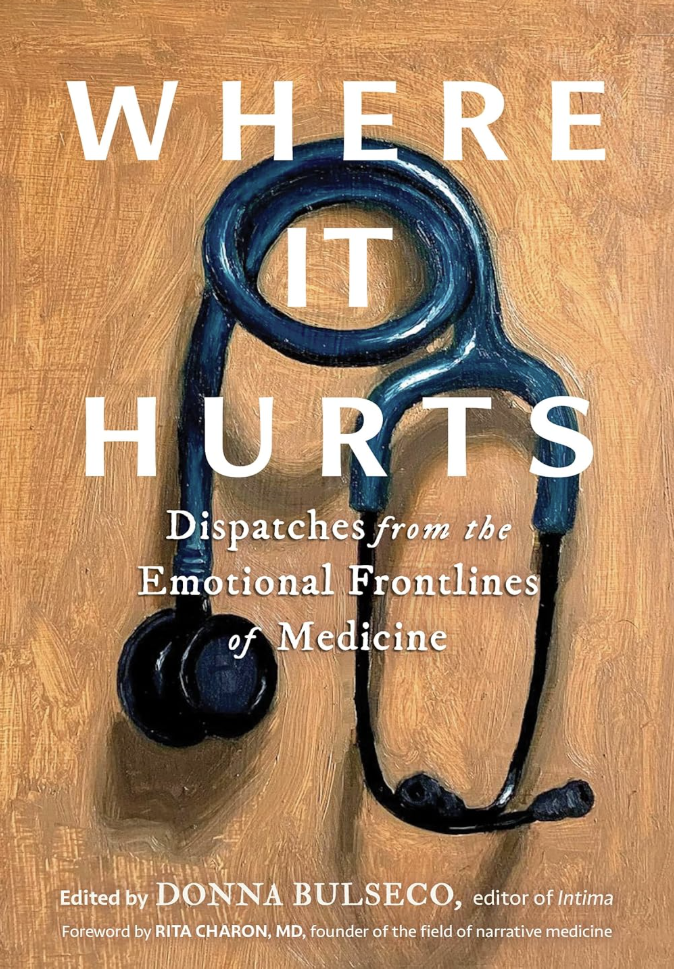
Call for Submissions: Fall-Winter 2026 Intima Journal of Narrative Medicine


OUR CALL FOR SUBMISSIONS  FOR OUR FALL-WINTER 2026
JOURNAL IS OPEN. SUBMIT YOUR WORK TODAY.


Intima: A Journal of Narrative Medicine
is a literary journal dedicated to promoting the theory and practice of narrative medicine, an interdisciplinary field that enhances healthcare through the effective communication, empathy and understanding between clinicians, caregivers and patients. Our name Intima has a specific resonance in the field: For us, narrative involves the intimate interface between people, who yield and gain from the experience of stories involving the clinical encounter.

 The word itself has an anatomical reality: intima is  the thin layer lining a blood vessel, speeding blood to the heart and brain, an apt analogy for the kind of narratives we publish that speak to the emotions and the intellect, the feelings and facts that engage the senses in stories with meaning and impact..


individual
|
INTERPERSONAL
: SCIENCES             
humanistic ------------------------------- mechanistic
SOCIOLOGY : POLITICAL   
|
group


©The Art of Anatomy by Khalil Harbie.
Intima, Fall 2013


Art - https://www.theintima.org/missionandvison also reminded of Escher and Byte Magazine.

My source: Intima list

Previously: 'creativity' : 'crossroads' : 'narrative'

Monday, August 17, 2026

'Becoming family with place' - Wooltorton et al. (2020)

The second R&E piece 'spoke' immediately of distance, peoples - their societies, culture, heritage and communities, plus place and connection to land, landscape, water, fauna, flora and sky.

individual
|
INTERPERSONAL
: SCIENCES             
humanistic ------------------------------- mechanistic
SOCIOLOGY : POLITICAL   
|
group


Spirit

Sense of Belonging


PLACE


PEOPLE

family

Place and Planet 
are lost here.
Look at what 'country'
 means and does here.


Wooltorton, Sandra, Collard, Len, Horwitz, Pierre, Poelina, Anne & Palmer, David. (2020). Sharing a place-based indigenous methodology and learnings. Environmental Education Research. 26. 1-18. 10.1080/13504622.2020.1773407. 
https://www.tandfonline.com/doi/full/10.1080/13504622.2020.1773407.

My source: Wooltorton et al. (2020) 'Becoming family with place'. Resurgence & Ecology,  Issue 322. 2020. pp.34-35.

See also:

Jones, P. (2008) Exploring Serres’ Atlas, Hodges’ Knowledge Domains and the Fusion of Informatics and Cultural Horizons, IN Kidd, T., Chen, I. (Eds.) Social Information Technology Connecting Society and Cultural Issues, Idea Group Publishing, Inc. Chap. 7, pp. 96-109.

Hayward, B.A. (2020), Mental health nursing in bushfire‐affected communities: An autoethnographic insight. Int J Mental Health Nurs. doi:10.1111/inm.12765 

Previously: 'Australia' : 'Indigenous' : 'South' : 'landscape'

Saturday, July 18, 2026

Hodges' conceptual framework: A model for Narrative Medicine ...

Abstract

The effective practice of medicine requires narrative competence, that is, the ability to acknowledge, absorb, interpret, and act on the stories and plights of others. Medicine practiced with narrative competence, called narrative medicine, is proposed as a model for humane and effective medical practice. Adopting methods such as close reading of literature and reflective writing allows narrative medicine to examine and illuminate 4 of medicine's central narrative situations: physician and patient, physician and self, physician and colleagues, and physicians and society. With narrative competence, physicians can reach and join their patients in illness, recognize their own personal journeys through medicine, acknowledge kinship with and duties toward other health care professionals, and inaugurate consequential discourse with the public about health care. By bridging the divides that separate physicians from patients, themselves, colleagues, and society, narrative medicine offers fresh opportunities for respectful, empathic, and nourishing medical care. ...


Charon R. Narrative Medicine: A Model for Empathy, Reflection, Profession, and Trust. JAMA. 2001;286(15):1897–1902. doi:10.1001/jama.286.15.1897 

With my emphasis.

#Identity #Group #Individual #Collective #Mind #Body #TheOdysseyHasBegun

Saturday, May 23, 2026

The alchemy of terminology, symbols, and signs ...

Or, 'What is a nurse doing … in a chemistry class?' [Ack. See Estrada]

In reading, I was reminded that chemistry adopted mathematical symbols for its own use. Not only that, but as a core science (with physics and biology, emerging from natural philosophy) there is a historical development from the time of alchemy:

Please see (with a graphical abstract):

C.Wentrup, The Transition from Alchemical to Modern Chemical Symbolism: from Bergman and Guiton de Morveau to Hassenfratz and Adet, Higgins, Richter, Dalton, and Berzelius. ChemPlusChem. 2024, 89, e202400033. https://doi.org/10.1002/cplu.202400033

This journey matters today as the use of symbols, in mathematics or other fields can be a barrier to learning and hence personal and disciplinary progress:

Ollie Hunter. Lost in translation: Demystify scientific symbolic language to help your chemistry students overcome any potential learning barriers. Royal Society of Chemistry, 23 May 2022.

As acknowledged many times, it is easy to take a word, or concept from one discipline and 'fit' it to - or in another. Or is it? Estrada concludes:

“The complexities of modern science and modern society have created a need for scientific generalists, for men trained in many fields of science.” This is a paradigm of science in the XXI century, where the advent of such fields like the study of complex systems requires multidisciplinary approaches. But the previous phrase was not written in the XXI century. It is the starting sentence in The education of a scientific generalist” published in Science in 1949 (Bode et al. 1949).' p.161. 

'Mathematics has been defined as the science of patterns. Thus, mathematicians search for “numerical patterns, patterns of shape, patterns of motion, patterns of behavior, voting patterns in a population, patterns of repeating chance events, and so on” (Byers 2010). Once a pattern is identified either in chemistry or in mathematics, the researcher can proceed to the clarification of the systematic rule which is behind that pattern. This is evident in the analogy used here between code-breaking and structure elucidation. This attachment to patterns makes both chemists and mathematicians very prone to the use of pictures. An organic chemist hardly can say anything about the chemical reactivity (or any physical or chemical property) of a molecule from its exact quantum-mechanical Hamiltonian. However, she will construct a complete narrative about the physical and chemical properties of a molecular structure drawn in a piece of paper, even if such a molecule is completely imagined. The power of pictures in mathematics is discussed in the book Mathematics and the Unexpected by Ivar Ekeland (1990) where its value is recognized as fundamental in the early stages of the development of mathematical ideas. This also introduces a very important analogy among chemists and mathematicians. Namely, that they use a proper language in their respective fields. While physicists use the mathematical language in their investigations, chemists use the sophisticated language of chemical formulas and specific symbols to represent charges, rearrangements, partial equilibria, etc. These “invented” languages mainly appear only in Chemistry and in Mathematics, making them unique intellectual activities.' p.162.

With thanks to the author, Ernesto Estrada IFISC for additional thoughts and insights:

Estrada, E. What is a mathematician doing…in a chemistry class?. Found Chem 26, 141–166 (2024). https://doi.org/10.1007/s10698-023-09497-4

Sunday, May 17, 2026

Wittgenstein's - Tractatus

Apparently, Wittgenstein walked away from philosophy after publication of the Tractatus. He thought he had solved the problems of philosophy, logic and reality.

In trying to ‘see’ Hodges’ model, in mathematical terms, there may be lessons in Wittegenstein’s approach, both in content and style. Of course, as a non-mathematician, I probably should leave well-alone; and stick to nursing. But that is the problem: from 1987-88 there is a need for a different perspective, even if this is a personal challenge. As with many ‘reviews’ here, we can look at Wittengenstein’s work, reflect upon it, and consider how it relates to the purposes, structures and content of Hodges’ model.

The Tractatus’s first line then, offers a warm welcome.

‘The world is everything that is the case.’ [I]

Making the decision to become a nurse and enrolling as a student makes you an educational and workforce demographic case.

Once a student in the university lecture theatre, you hopefully whether consciously, or not are exposed to the theory – practice gap; as you yearn to be on your first placement. Now it you who is seeking ‘cases’. As we live, and statistics roll and tally, the question of caseness (and categories) is key, one that is carried around even if not always active, recognised as such.

As noted in the previous post, we can for Hodges’ model (and other models, frameworks it must be said) think of ‘case’ as a, or the situation. 

A mathematical approach to Hodges’ model involves looking at things, concepts, people as objects. This includes patients and carers. In terms of a project worthy of pursuing in nursing and other disciplines involved in healthcare, this mathematization presents a non-trivial challenge. A fully-deserved response would be: 'What have you done to the aptitude for care and caring attitude? You've cancelled - subtracted it!' Humour aside:

'In order to know an object, I must know not its external but all its internal qualities.' [2.01231] 

Is this equivalent to us getting to know our patient / client and their socio-political context? 

‘The way in which objects hang together in the atomic fact is the structure of the atomic fact.’ [2.032] 

It is a help that Wittgenstein points to structure (crumbs of understanding are welcome here, as incremental steps). In formulating Hodges’ model we first identify the axes. It is the axes that then provide a space, four domains in total, to frame the objects that we decide; or, as the situation dictates, what concepts are placed in the domains of Hodges' model.

There is a successive series that follows, combining place, space and logic: ‘The proposition determines a place in logical space: the existence of this logical place is guaranteed by the existence of the constituent parts alone, by the existence of the significant proposition.’ [3.4]

‘The propositional sign and the logical coordinates : that is the logical place.’ [3.41]

‘The geometrical and the logical place agree in that each is the possibility of an existence.’ [3.411]

‘Although a proposition may only determine one place in logical space, the whole logical space must already be given by it.
(Otherwise denial, the logical sum, the logical product. etc., would always introduce new elements -in co-ordination.) 
(The logical scaffolding round the picture determines the logical space. The proposition reaches through the whole logical space.)' [3.42]

While Wittgenstein came to view ‘the picture theory of meaning’ as incorrect, as a conceptual framework and diagrammatic resource Hodges’ model is closely tied to this form of representation.

Of course, the logic at work here, is far from mathematical, but there is surely a logic.

'Formal concepts cannot, like proper concepts, be presented by a function.' [4.126]

'There is therefore really a sense in which in philosophy we can talk of a non-psychological I.
The I occurs in philosophy through the fact that the "world is my world'".
The philosophical I is not the man, not the human body or the human soul of which psychology treats, but the metaphysical subject, the limit - not a part of the world.' [5.641] 

'Although the spots in our picture are geometrical figures, geometry can obviously say nothing about their actual form and position. But the network is purely geometrical, and all its properties can be given a priori.

Laws, like the law of causation, etc., treat of the network and not of what the network describes.' [6.35]

There is much more in this work, and much that remains a challenge. Many commentators have written and said in interviews that the Tractatus rewards re-reading and some sentences stay with you for life (The Great Philosophers BBC TV). 

I'm still seeking mine.

https://www.gutenberg.org/files/5740/5740-pdf.pdf

Friday, April 10, 2026

'Healing grid' - the penultimate?

Healing grid by Ryota Kanai

Hodges' model is surely a clear winner 'healing grid'? Acting not only in healing, but in recovery, rehabilitation, reablement, palliative, illness and well-being too.

Quite a grid all-in-all (which also fascinate grandchildren).

My source: 

Previously: 'grids' : 'perception' : 'vision' : 'lines' : 'geometry'

#ArtemisSafeReturn #PrecisionGridManoeuvres

Tuesday, January 27, 2026

c/o Intima 'Reflect on the World' . . .

CARE/of Intima:

REFLECT ON THE WORLD WITH US EVERY FRIDAY AT NOON.

No pressure, but we want to remind you that every Friday, around noon EST, we post a Crossroads blog—a short reflection that contributors from our current issue do on something from our archives.

Think of “Friday at noon” as a blip in your busy life where you take time to yourself to reflect on our small part of the universe. Pause and spend 5 minutes reading one each Friday — it’s the equivalent of a deep-breathing exercise, a short yoga stretch, a tiny palate cleanser of lemon sorbet between the complex courses served up to us every day, or a moment stolen between patients or in a waiting room when you step out of your routine. Read the titles of recent ones below, then go and read a few. If you like what you read, set up a reminder alert.

◇

INDIVIDUAL
|
    INTERPERSONAL    :     SCIENCES               
HUMANISTIC --------------------------------------  MECHANISTIC      
SOCIOLOGY  :   POLITICAL 
|
GROUP


My source: Intima (and image) - mail list.

See also: 'reflect' : 'crossroads'

Saturday, January 24, 2026

Affordances


Affordance

An affordance is a perceptual pattern with survival significance. Affordances are relational, rather than objective or subjective properties. As Gibson, who coined the term, observes, 'An important fact about the affordances of the environment is that they are in a sense objective, real, and physical, unlike values and meanings, which are often supposed to be subjective, phenomenal and mental. But, actually, an affordance is neither an objective property nor a subjective property; or it is both if you like. An affordance cuts across the dichotomy of subjective-objective and helps us to understand its inadequacy' (Gibson 1979, 129). 
[Proust, Glossary, p.309.]


INDIVIDUAL
|
 INTERPERSONAL    :     SCIENCES               
HUMANISTIC --------------------------------------  MECHANISTIC      
SOCIOLOGY  :   POLITICAL 
|
GROUP

subjective

objective


Re. 'Survival significance' ...

Does this make affordances relevant in clinical education, and education more generally?

What of assisted dying in theory, policy, law and practice?

Are there any implications for the models employed by artificial intelligence - LLMs, neurosymbolic reasoning / AI (wave x)?

Source: Joëlle Proust (2013). The Philosophy of Metacognition: Mental Agency and Self-Awareness.  Oxford: Oxford University Press, Oxford. ISBN: 978-0-19-960216-2

Précis of The Philosophy of Metacognition:
https://joelleproust.org/wp-content/uploads/2012/09/pdf15.pdf 


See also: 'subject' : 'object' : 'affordance' : 'interface'

Sunday, November 02, 2025

The poetry of presence c/o Kenner's 'Mechanic Muse'

'... Eliot's poetry responds to yet another of the new century's pervasive experiences, that of being talked to by people we cannot see. This happens whenever we pick up a telephone, a thing we do so many times a day we quite overlook the strangeness of what lappens next. A character in The Cocktail Party remarks that you can't tell the truth on the telephone, meaning probably that you lose three quarters of your communicative power when you cannot be seen and your breathing body is absent, and you must fabricate mere semantic sequences. Your words are only a fraction of what you say, and the telephone throws you back on nothing but words. It is in Sweeney Agonistes, the play that gives the telephone bell a wholly metrical speaking part, that we hear the famous phrase, "I gotta use words vhen I talk to you."
    When the phone rings in that play - 
    Ting a ling ling 
    Ting a ling ling

Dusty snatches it up and says,

Hello Hello are you there?' 


Kenner, H. (1987) The Mechanic Muse, Oxford: OUP. pp.34-35.

Sunday, October 19, 2025

Space, Leadership, Choice, Politics II - Do Ho Soh

individual
|
INTERPERSONAL : SCIENCES
humanistic -------------------------------------------  mechanistic
SOCIOLOGY : POLITICAL
|
group-population


Who do we put on a pedestal?


Do Ho Suh's Public Figures features an empty pedestal held up by many small figures. Donny Bajohr


Do Ho Suh - Lehmann Maupin

Image: Smithsonian - Take a Closer Look at a Surprising New Sculpture That Rethinks Who We Put on a Pedestal

My source: Andy St. Louis, Sculptural approach to far-fetched ideas, Arts, Life&Arts, FTWeekend, 31 August/1 September 2024, p.12.


"There is another!" Karma (2003) by Do Ho Suh

Wednesday, October 15, 2025

'New Thoughts on Conceptual Engineering' - Introduction to special issue

 Abstract

Conceptual engineering has emerged in recent times as a significant topic in current philosophical literature. The now vast list of references includes works on more general or conceptual issues, such as describing the nature of conceptual engineering, how we may respond to the different objections to it, how it is related to philosophical analysis or empirical philosophy, or toward which target conceptual engineering should be directed, among others. But research on the topic also includes applications of conceptual engineering to many different areas. This Introduction opens with a short overview of the state of the art on conceptual engineering, aiming to clarify the most important features associated with it. The Introduction moves on to introduce and discuss the eight articles collected here, whose topics range from the nature and the functionality of conceptual engineering to reconstructing the entire conceptual engineering practice. Taken as a whole, this special issue is meant to provide enlightening, informative, and thought-provoking views on the topic, its functions, targets, and challenges.

de Donato-Rodríguez, Xavier. 2025. “ Introduction to the Special Issue New Thoughts on Conceptual Engineering.” Metaphilosophy 56(3-4): 283–293. https://doi.org/10.1111/meta.70007

Tuesday, September 30, 2025

Rachel Jones: Gated Canyons

As mentioned, with three co-authors, we're writing a paper on dental health, and policy frameworks viewed through the (quadratic?) lens of Hodges' model. The exhibition - 'Rachel Jones: Gated Canyons' ends on October 19 (with my next London visit 6-8 November*), so I won't be able to visit now. It's not as if there are key ideas to be found there that will now be missed, but it does sound and look interesting: and - who knows?

Individual
|
      INTERPERSONAL    :     SCIENCES               
HUMANISTIC  --------------------------------------  MECHANISTIC      
 SOCIOLOGY  :    POLITICAL 
|
Group


On the paper, we are now revising so fingers x'd. This exhibition has toured, so I will of course 'watch the spaces'.

My source: Durrant, N. first night. A tasty body of work. The Times. August 1 2025. p.10.

Saturday, July 19, 2025

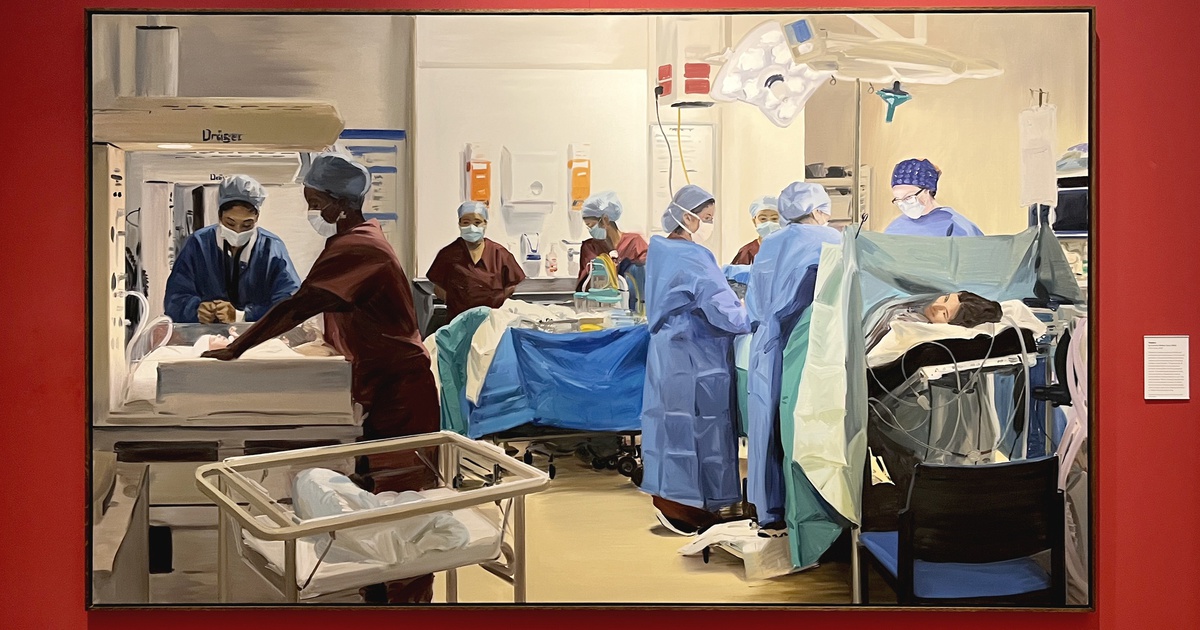
'Theatre' by Caroline Walker

Individual
|
      INTERPERSONAL    :     SCIENCES               
HUMANISTIC  --------------------------------------  MECHANISTIC      
 SOCIOLOGY  :    POLITICAL 
|


Image source: 
https://www.inglebygallery.com/news/7465-caroline-walker-the-scottish-national-portrait-gallery-theatre/

line of sight (seeing is believing) : 'care' : 'community' : 'theatre'

My source:
Harriet Baker, PAINT, FEED & PLAY, FT Weekend, Magazine. July 12 2025.  #1,133, pp.46-52.
https://www.ft.com/content/6e50181b-689e-4cd5-b084-37b311446e94

Great read too. The exhibition moves to Pallant House Gallery, Chichester from November 22nd.

Thursday, July 17, 2025

Ryle's 'logical geography'

I like the way Ryle apparently analogised philosophy to cartography.*

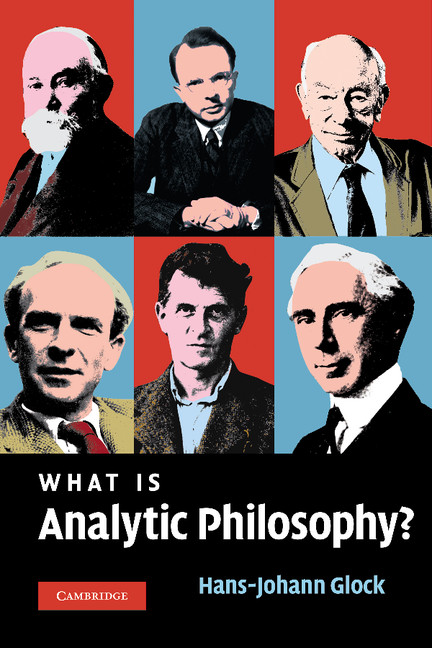
'Similarly, Ryle advocated that philosophy should chart the 'logical geography' of our concepts. In The Concept of Mind he argued that the Cartesian dualism of mind and body results from 'category-mistakes': it treats mental concepts which signify behavioural dispositions as if they referred to processes that are just like physical ones, only more ethereal. Ryle rejected Wittgenstein's therapeutic image according to which 'the philosopher treats a question like a disease' (1953: §255). Yet he accepted that philosophy is a meta-discipline which does not 'talk sense with concepts' but tries to 'talk sense about concepts' (1949: 9-10). The paradox of analysis disappears since the task is not to provide novel information about a realm extrinsic to us. According to Wittgenstein, philosophy reminds us of rules that we have mastered in practice but which mislead us in the course of philosophical reflections. According to Ryle, it takes us from the knowledge how to use words to an explicit knowledge that they are used according to certain rules. Either way, analysis is not a trivial pursuit, because the explanation of philosophically interesting concepts is complex and rich, especially when it places these concepts in their diverse contexts (everyday, scientific, philosophical).' p.43.
Hans-Johann Glock. 2008. What is analytic philosophy? Chapter 2. Historical survey. pp.21-60. CUP. Pb. 
https://www.cambridge.org/us/universitypress/subjects/philosophy/philosophy-general-interest/what-analytic-philosophy

* 'Ryle analogises philosophy to cartography. Competent speakers of a language, Ryle believes, are to a philosopher what ordinary villagers are to a mapmaker: the ordinary villager has a competent grasp of his village, and is familiar with its inhabitants and geography. But when asked to interpret a map of that knowledge, the villager will have difficulty until he is able to translate his practical knowledge into universal cartographic terms. The villager thinks of the village in personal and practical terms, while the mapmaker thinks of the village in neutral, public, cartographic terms.[20]: 440–2 '. https://en.wikipedia.org/wiki/Gilbert_Ryle

I've wondered about 'cogeography' - combining cognition and geography, even care cartography. There is also of course psycho-politics, geo-psychiatry and psycho-geography ...

Hopefully a more current text would be more diverse.^

Thursday, June 12, 2025

Rain, Library, and a Poem on a Neon Line

'It is raining in the library,
and leaking between theory and practice.'

Rain by Faroese poet and novelist Carl Jóhan Jensen


My source: BBC Radio 4 The Verb. Poetry and performance with Ian McMillan.

8th June 2025. 1710-1750. https://www.bbc.co.uk/sounds/play/m002d88g

Previously: 'theory' : 'practice' : 'library' : 'poetry'

Friday, May 16, 2025

Theatre - the best way to learn ...

Pardon me, while I stay local - in Liverpool . . . 

I've always been interested in drama since school days (aged 13-14) and playing Francis Nurse in Arthur Miller's Crucible. Recent reading (inc. Theatre of the Absurd, The Shifting Point), see 'drama' - with more to follow) encouraged me to find out more. As a community mental health nurse on a visit, I've sometimes thought of this script being written as we engage with each other. Framed within  interpersonal skills and the society 'outside', there's a sense in which a screenplay is also writ large. 

The fact of whether the session is therapeutic, progressive, person-centred, structured, ethical, purposeful, has tea and custard creams ... is the drama of course.

In a way the creators of formal psychotherapies are playwrights - directors:

After all, they keep producing 'original' therapy manuals, don't they?


In the new year I noticed a community message about a theatre group Valley Theatre Group, planning a 'Living Newspaper' for a drama festival that took place last month. There is another performance next month in Liverpool, as per the edited message below:

People have been asking what’s going on and when for our Hope Street performances June 6-8th. So here’s the details.

W
e start each evening with the play about a 1930s Socialist Theatre group, “Unity”. (Cast: Peter Merrill, Ted Grant, Steve Donegan, Meggan Pye, Day Sheehan and Donna Lauder)

Then, on Friday 6 June, in the second half, we have our first Living Newspaper. This is the one that has most of the sketches submitted by outside writers and developed at the workshops. Then on Saturday 7th, second half, we have the Leverhulme group (The one that won the award at the festival) with their Living Newspaper. Finally, on Sunday 8th, in the second half, we have the last of the Living Newspapers, the one with slightly longer pieces like Scouse Man. This final one also has an original sketch from a 1930s Living Newspaper, the Munich Pact.

Tickets are on sale at the Hope Street Theatre website (link below) and from Ticket Quarter. Please come along and try to get other people along as well.  It'll be a good night's theatre! 

Thanks for all your support. The WTM team

Ticket link:  www.hopestreettheatre.com

Phone: 0344 561 0622

Saturday, May 10, 2025

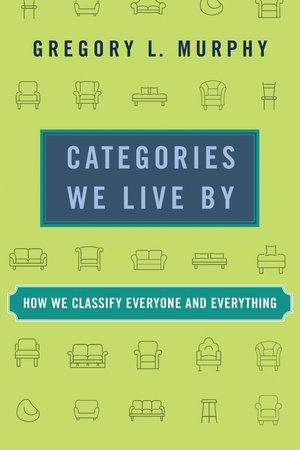
v Book review: 'Categories we live by'

Our lives and careers (hopefully) are full of bridges, some recognised, but not taken, others passed-by on our way (and unseen). Before I completed my training as a student mental health nurse beginning in 1977, I saw a critical bridge between the knowledge and skills on mental health nursing and general nursing. Crossing this bridge was essential (for me) to being a registered 'nurse'.

Chapter 6 on Psychodiagnostic Categories is a gift therefore. It's a gift because another bridge emerged in 1980-1981 with the Sinclair microcomputers and advent of 'home computing'. With a ZX81 there was going to be a need to navigate this space between the what is human and what is machine. Two categories that remain key concerns today.

The DSM (Diagnostic and Statistical Manual of Mental Disorders - published by the American Psychiatric Association [APA] ) is on the chapter's first page, plus the patient, researchers, psychiatrists and the conditions learned during their medical education, contrasted with individual psychiatrist's clinical encounters with patients. 

Very quickly (the next page p.86) Murphy identifies the 'circumstantial factors' that cause mental illness. This is very positive as acknowledging the determinants across health is key, however framed, e.g. social determinants, economic, educational we must take into account all of them. Otherwise our assessment must be considered as incomplete, or at least lacking?

The utility of Prof. Murphy's short book is in how prior to the case studies we see the problem of definitions. And how what is determined is often a matter of convenience. This is a non-trivial matter - especially in health, economics, sciences, politics, future and peace studies: you get the idea...

Of immediate relevance in the USA is the need for categories for insurance purposes. It is an industry. Yes, indeed: 'The truth is that psychiatric patients vary in every possible way', p.86. Computers of course are well-equipped to help us in the creation, revision and publication - access to categories; with classification, taxonomy, nomenclature ... also in the mix. I was reminded of WHO's history of classification (see below) which I point students and colleagues to.

The way DSM is applied is explained and the politics duly noted (especially in Chap. 7). Resort to 'miscellaneous' is described as a sign that 'the categories are not necessarily picking out 'natural kinds'. I remember in the 90s, our PICK database on a community mental health project had Murphy's 'X' not otherwise specified. I don't think I read the word 'caseness', but there is a lot 'inside'!? References are ongoing. I wondered if there could be more recent examples, but perhaps this is in turn symptomatic of categorisation tending to be the rear car? Fuzziness is discussed. Plus, the observation that 'a few psychiatric categories may be true natural kinds, like gold or rainbow trout.' p.89. 

'Change' is a mantra for all disciplines in the NHS and global healthcare. So pragmatic to see how revision and change in the DSM can be used by - dare I mention - anti-psychiatry advocates and clinicians as to what change represents to these respective interest groups? At a time when research is experiencing funding changes, Murphy contrasts how DSM was developed for the use of clinicians to identify people with similar profiles, but they were not developed to identify (research - Nat. Inst. for Mental Health) underlying causes. Raising the determinants once again, p.91.

It is obvious but as personnel and Brits may look at private medicine with coding purposed for insurance purposes; there is within the NHS (public-funded healthcare) and psychiatry (a single domain too) within and the need by patients for diagnosis, and the welfare system. Here in the UK the rise of mental health in young adults, autism and waiting lists for assessment for ADHD are a moot point.  

Through Hodges' model we some possibly fascinating bridges, that are much less-travelled these days? In many cultures, even if we do not need permission to be sick, it needs to be recognised socially - and so politically. Society needs to deal with individuals who are ill, infirm, disabled. It's interesting then to reflect on this issue and phenomena through the lens of anthropology and medical sociology. Murphy warns to of the dangers 'of thinking of something as being the category'. In medicine a new approach is needed, as Murphy also notes. A nice bridge to chapter 7 Categories and Power.
'The case studies discussed in the previous chapters remind us that categories can be political and social tools. An old department chair of mine had the saying, "She who sets the agenda controls the meeting." We might coin a new one, "Those who make the categories control the outcomes." If your psychodiagnostic categories are made by working therapists and physicians, they might facilitate treatment- -and also benefit those practitioners. If they are made by researchers, they might not be very useful for treatment at all. And if they are made by insurance companies, all bets are off.' p.95.
Trying to take my attempts to find theoretical underpinning (category 'trying to clever') I've a diagram scribbled here. Nearby, p.100, I picked up on 'the cost of losing information or distorting reality to some degree.' Murphy picks up on the ICD Int. Classification of Diseases here. Twitter is still twitter here - thumbs up for that! There is a useful example of the impact of categories in age, pregnancy and medical attention provided.

From Chapter 8, I picked out: Naming Nature: The Clash Between Instinct and Science, by Carol Kaesuk Yoon. W. W. Norton: 2009. 352 pp. £19.99/$27.95 9780393061970 | ISBN: 978-0-3930-6197-0; and checking, I remember the book's cover. Murphy's book overall highlights the convenience of our categories, the ongoing challenges and everyday conundrums they present though the remaining chapters on Species (8); Peanut Butter, Potato Chips, Almond Milk... (9); Racial Categories (10). These all contribute, still building a coherent picture, chapter 10 vital among them with a url provided (which may have changed):

https://anthropology-tutorials-nggs7.kinsta.page/adapt/adapt_4.htm


The one-drop rule (David, 1991) on p.126, is deeply troubling. Especially so given some examples of human reasoning even today. Medicine, by way of blood tests, features again. I smiled wryly reading how people from different countries have different rates of disease, e.g. 'heart disease in Scotland'. Instantly, and crackling - a deep-fried Mars bar popped into my mind. 

The things people do. You - really could read this book! 

Murphy, Gregory L. Categories we live by: how we classify everyone and everything. Cambridge, MA: The MIT Press, 2024.

Many thanks again to MIT Press for the review copy and Prof Murphy for a great read.

Previously: DSM : fuzzy : categories

Tuesday, May 06, 2025

Book review iv: 'Categories we live by'

The introduction to part ii 'Case Studies' is quite prescient: 'Categories have consequences'. p.75.

Certainly timely in the UK as Prof. Murphy returns to gender and birth sex his first example at the book's start. 

Coincidental or not, categories do change. As we try to understand them it is vital we don't mess them up. Consequences follow for people who are subjected to the categorisation. People use them for stability, predictability, so change can be fraught for all. Personal and group identities can all be affected, and (recently) provisions in how 'spaces' are allocated and regulated - controlled.

At infant - junior school I remember the lack of awareness, understanding and empathy for peers affected by epilepsy, stigma was a thing then that wandered the classroom and playground. Through my career I've heard many clients recount experiences pointing to stigma and exclusion.

Of the case studies Murphy writes:
'Each chapter is a more-or-less self-contained case study (including other similar examples), except that chapter 7 is a more general meditation on how determining categories is used in the exercise of power. Some of the case studies get into the weeds, and if you find yourself not that interested in how species are defined, for example, you can skip ahead to the next chapter without losing much. Following part II will be a conclusion, which attempts to summarize some of the lessons learned from all these examples.' p.77.
Murphy's style is accessible, and the case studies are informative. The author is also accessible and responsive I must add. I prefer and need a physical copy of books to reduce screen time, but e-books have their uses. I'm sure I read a short sentence in the case studies that essentially contrasted the individual and collective in sociology. Can I find that word? No luck thus far. I may be mistaken but appreciate Prof. Murphy's reply and thoughts.

There's another 'news' coincidence on p.80 (Chapter 5 'Legal Categories'): are Santa Claus costumes 'clothing' and so subject to tariffs (also referenced)? Every person worldwide, has no doubt pondered on their marked grade in a test or exam - and 'where' this places them?
'In her review of a book about rules, Rivka Galchen (2022) admits to feeling a bit of despair in the end: "Rules that leave a ruler, Or a judge, in charge of interpreting them feel at once humanized and corruptible. Rules that allow no exception seem free of human frailty but alien, and unable to admit properly of complexity." It is very easy to point at what went wrong with an overly strict rule or with a judge who seems biased, but less easy to devise a system of categories that avoids every problem.' p.83.
I often frame the conjunction of the mechanistic axis and the group in Hodges' model in terms of what do need, or get when you have large groups of people? The political domain, including law and disorder is critical of course. Is 'utopia' the perfect system by definition? I like the way even prior to reference to Galchen, Murphy states how 'the precise borders between categories can be essentially arbitrary, and there is no way to avoid that arbitrariness if you insist on dividing things into categories.'. p.83. 

If this book was a BASIC computer program, the first command for Chapter 6 Psychodiagnostic Categories. might well be a 'GOTO' statement: Chapter 7 Categories and Power.

More to follow and nearly there - sadly.

Previously: identity : space : categories

Murphy, Gregory L. Categories we live by: how we classify everyone and everything. Cambridge, MA: The MIT Press, 2024.

Many thanks to MIT Press for the review copy - and the dose of serendipity:

Saturday, April 26, 2025

'Categories are destiny' Freud p.6. of 'Categories we live by'


Reading and enjoying for review:

Murphy, Gregory L. Categories we live by: how we classify everyone and everything. Cambridge, MA: The MIT Press, 2024.

Let's start at the beginning -
'Nowadays we are suspicious of categories, especially categories of people. Gender, ethnic, racial, and class categories are seen as a source of discrimination and inequity. If we saw each person as a unique individual, perhaps we wouldn't have all the problems caused by racism, sexism, and all the other -isms that afflict society.
In spite of these problems, I will argue that we cannot get rid of categories in general. They simplify and distract us from individual identities, which can be bad, yet if we didn't have them, we would find it impossible to navigate the world and deal with its incredible diversity.' p.7.


Reading what follows also from the book's introduction, I thought about public sector funded (socialist)  healthcare and the private provision:

'So, my sweater and my hair might both be brown, so we can say that they are both in the category of brown things. They are equivalent in the sense that I call both of them "brown." However, the category of brown things is not very interesting. When you know that something is in that category, you know exactly one thing about it-its color. There's nothing else to be known. Maybe the brown thing is alive or maybe it's inanimate; maybe its microscopic or maybe it's as big as a planet; maybe it moos or maybe it sings oI maybe it is silent. The category doesn't tell you any of those things These single-criterion categories are kind of degenerate. Yes, items that share the criterion (brownness, being three inches long, taking at least half an hour, or whatever) are equivalent, but only in the one property that defines the category. Indeed, you can define trivial categories that only have one ridiculous feature in common, like things that you have touched in the last forty-nine seconds, or objects that are exactly fifteen miles from Cincinnati. Those are not categories that people form, because they are not useful.' p.11.
There is much ongoing debate about parts of the UK's NHS being 'sold-off' - taken-over by private companies with consequences for the quality of care, e.g. cataract services:

https://www.theguardian.com/society/article/2024/jul/10/eye-doctors-say-private-cataract-operations-have-hurt-the-nhs?CMP=share_btn_url

Having worked for the NHS - now NHS Professionals since 1977, the current problems faced by the service and experienced by some patients, carers, friends and family members is upsetting.

Murphy's observation contrasting the utility of categories at the individual and collective level is a great opener. Especially for the basic structure of Hodges' model and the vertical axis.

I've written previously(?) how I think that it is true, throughout my career even as a ward manager (there were some exceptions!) and community MH nurse, I/we have been cocooned from having to be concerned about the budget. When you stop and think about it, how do the 'things' in the category of economics impinge on the biomedical, biopsychosocial model? The ward was a mechanism; it kind-of run itself, which for change agents (those who use the word transformation a lot) is an ongoing issue. The two categories that matter - even as they are global - are illness and prevention. The NHS puts supertankers to shame, in its inability to pivot - turn.

At the end of the day (and night - 24/7/365!) though healthcare must be paid for.

Murphy's explanation about degenerate categories is fascinating too (and this is just the intro!). It sees me (in danger of making a category mistake) as I think about singletons, and 'degenerate' as applies in mathematics, and the debate of finance. The tension of seeing the individual as a unique being, in order to be person-centred, but the service, the system would place them in all in the category of 'payer'.

Viewed across the funding divide, is the other inevitably viewed as degenerate? On page 80 now. More to follow. I'm still kicking all this around; while the government kicks the 'can' of social care down the road.

Many thanks to MIT Press for the review copy.