Hodges' Model: Welcome to the QUAD: Search results for subject

Hodges' model is a conceptual framework to support reflection and critical thinking. Situated, the model can help integrate all disciplines (academic and professional). Amid news items, are posts that illustrate the scope and application of the model. A bibliography and A4 template are provided in the sidebar. Welcome to the QUAD ...

Showing posts sorted by relevance for query subject. Sort by date Show all posts

Wednesday, April 28, 2010

Presentation: King's College London 17 May Mental Health SIG


Can you join us at the Higher Education Academy Health Sciences & Practice Subject Centre - Mental Health SIG in London
17th May 1000 - 1600?


I am really looking forward to presenting at the Mental Health Special Interest Group next month. It looks a great prospect as I have an hour on the programme. The draft title does not really represent what I intend, paradoxically I will re-introduce Hodges' model and explain why the model is so relevant in theory and practice.

I will outline my presentation here in a future post and the programme overall. For my sins I am now also a sign-off nursing mentor, so being able to network is another great plus. More to follow ....

Here are some details about the SIG from their website:

Welcome

To date, there has been no UK wide, cross disciplinary special interest group providing a regular opportunity for educators to meet face to face - with a view to exploring common issues and challenges, sharing resources and influencing policy and practice in the field of mental health. Arguably, this has hampered educators’ capacity to shape and respond to new developments.
In February 2005 the ‘Common Ground’ event organised by the Mental Health in Higher Education project in partnership with the Health Sciences and Practice subject centre met to identify key issues facing mental health educators in nursing and the Allied Health Professions. Subsequently, the special interest group has broadened out to encompass all colleagues with an interest in sharing approaches and engaging in debate about educational practice and the implications of policy developments for learning and teaching about mental health.

Who is the Mental Health SIG for?

Anyone involved in higher education with an interest in mental health.
We are keen to bring together people from across all disciplines and perspectives (including lecturers, practice educators and user educators and carers with involvement in education) – those who are mental health specialists and those for whom mental health may be one aspect of a broader subject area.
Health Sciences and Practice Subject Centre
Room: 1.17 Franklin Wilkins Building (1st floor)
Franklin-Wilkins buildings,
King's College London,
150 Stamford Street,
London SE1 9NH

Tuesday, November 26, 2024

The naïve approach ii - Seeking / Avoiding a Catastrophe

In addition to Dodson's book I borrowed:

Zeeman, E.C. (1977) Catastrophe Theory-Selected Papers 1972–1977, Reading, MA: Addison-Wesley.

From the mid-1970s I remember catastrophe theory rather bursting on to the science scene. Articles in New Scientist (in a box somewhere?), Scientific American plus a BBC TV episode of Horizon (seeking details - originally aired July 28, 1975, 60 minutes 'Happy Catastrophe')*, that highlighted potential for new insights into the behaviour inside prisons. and other applications in the social sciences.

The CONTENTS reads:
GENERAL INTRODUCTORY PAPERS 

1. Catastrophe theory : Draft for a Scientific American article 1
2. Levels of structure in catastrophe theory 65

 BIOLOGICAL SCIENCES 80

3. Differential equations for the heartbeat and nerve impulse 81 
4. Primary and secondary waves in developmental biology 141 
5. A clock and wavefront model for the control of repeated structures during animal morphogenesis (with J.Cooke) 235
6. Gastrulation and formation of somites in amphibia and birds (Addendum by R. Bellairs.) 257 
7. Dialogue between a Biologist and a Mathematician 267 
8. Brain modelling 287 
9. Duffing's equation in brain modelling 293

 SOCIAL SCIENCES 302

10. Some models in the social sciences (with C.A.Isnard) 303 
11. On the unstable behaviour of stock exchanges 361 
12. Conflicting judgements caused by stress 373 
13. A model for institutional disturbances (with C.S.Hall, P.J.Harrison, G.H.Marriage, P.H.Shapland) 387
14. Prison disturbances 403 

PHYSICAL SCIENCES 408 

15. A catastrophe machine 409
16. Euler buckling 417 
17. Stability of ships 441

MATHEMATICS 496

18. The classification of elementary catastrophes of codimension <= 5 (with D.J.A.Trotman) 497
19. The umbilic bracelet and the double-cusp catastrophe 563 

DISCUSSION 604

20. Research ancient and modern 605 
21. Catastrophe theory : its present state and future perspectives (with R.Thom) 615
22. Afterthought 651 
As an area of contention the subject of catastrophe theory (CT) possibly presents(?) a dual-cusp of contention. Firstly, CT brought with it controversy within academia and mathematics. The book was reviewed by T. W. Barrett, Department of Physiology and Biophysics, University of Tennessee Center for the Health Sciences, Memphis, TN 38163: 
'Catastrophe theory (CT), as a new field in mathematics with many possible ramifications for both the physical and biological sciences, has recently been the subject of much controversy (see [1]-[5]). This controversy, in this reviewer's opinion, has served a valuable purpose insofar as it has stimulated the theory's proponents to refine and delineate their concepts more clearly. Catastrophe theory was developed by the Field prize winner, Rene Thom; but much work has been accomplished by E. C. Zeeman and his group, especially with respect to applications.' pp.609-610. IEEE TRANSACTIONS ON SYSTEMS, MAN, AND CYBERNETICS, VOL. SMC-9, NO. 9, SEPTEMBER 1979. https://ieeexplore.ieee.org/stamp/stamp.jsp?arnumber=4310286 
Stephen Smale also reviewed Zeeman's book; BULLETIN OF THE AMERICAN MATHEMATICAL SOCIETY Volume 84, Number 6, November 1978. 1360-1368. 
https://www.ams.org/journals/bull/1978-84-06/S0002-9904-1978-14580-7/S0002-9904-1978-14580-7.pdf
'To write a review in this environment has a very personal side for me. On one hand my own work on dynamical systems is closely connected to the origins of CT. I have had a long and close personal and professional relationship with both Thorn and Zeeman. More than 20 years ago I was discussing singularities of maps, transversality, and immersions with René Thom. Thom tried to interest me in an early draft of chapters of his book Structural stability and morphogenesis in 1966.

On the other hand I have remained skeptical and aloof from CT, perhaps due to my conservatism in science. While my colleagues and students were showing enthusiasm for CT, I gave critical lectures, one at the University of Chicago in 1974, one at the Aspen Institute of Physics in 1975. More recently I have been quoted negatively in the "Science" and New York Times references above. This is the first time I have written on the subject, and I should warn the reader of this negative bias, far from shared by many of my fellow mathematicians.' p.1360.

Some defenders of CT may accuse me of discussing very special examples not characteristic of the literature of the subject. I feel that the problem of lack of justification discussed above, is also found in Zeeman's other models. Furthermore Thorn's models are even less specific and less developed. On the other hand, Thorn's work in CT covers many subjects; in this connection Zeeman writes in his Scientific American article, April 1976, p. 65: "The method has the potential for describing the evolution of form in all aspects of nature, and hence it embodies a theory of great generality."' p.1366.
The book's introductory papers are somewhat confusing in content, as drawn to 'SOCIAL SCIENCES' it is the introductory section (and Part Two) that includes  'Anorexia nervosa', Example 9 pp.33-52. 

This is the second 'cusp' as the assessment, diagnosis, intervention, outcomes, skilled staff, access to specialised mental health services remains contentious to this day. As a charge nurse on a female acute admission mental health ward in the early 1980s, eating disorders have always presented a 'clinical' challenge. Often within a staff group and for individual staff members too.

Twitter/X is hardly an objective record but it appears today, that people and families affected by eating disorder continue to advocate for appropriate service provision, treatment and recognition. Recognition that can also develop evidence-based interventions. As discussed by Dr. Agnes Ayton, consultant psychiatrist and others in the video below:


A related paper:

Ibrahim, A., Ryan, S., Viljoen, D. et al. Integrated enhanced cognitive behavioural (I-CBTE) therapy significantly improves effectiveness of inpatient treatment of anorexia nervosa in real life settings. J Eat Disord 10, 98 (2022). https://doi.org/10.1186/s40337-022-00620-y [ My source: @AgnesAyton ]

The Zeeman chapter on anorexia nervosa is interesting graphically and conceptually ...

Page 42. Figure 20. The effect of the butterfly factor, d>0.
(Sorry for the image quality)

- but is of course 'from another time' and is clearly not person-centred. Eating disorders affect many people in the UK and are a cause of trauma, distress, disrupted life-chances and mortality. Referring to Hodges' model, such graphics, reinforce the idea that 'solutions' are to be found in the mechanistic and quantitative domains of the sciences and politics (choice, power, services, safety..). Here, maths and theories (seemingly) provide an explanation for people who are ill, and need treatment. As a teenager for most of the 1970s, Hodges' model was not yet a reality. As I have found since 1987-8 looking at the POLITICAL care/knowledge domain, the model's relevance has increased since the start of my nursing career in 1977. Consider for example, the politics of:
  • the global phenomena of famine
  • - whether or not associated with economic crisis, drought, other natural disaster, or conflict, political crisis
  • ultra-processed foods
  • obesity pandemic
  • weight loss drugs
  • appetite stimulants
  • appetite suppressants
  • eating disorder (anorexia and bulimia) across care sectors - primary, secondary, specialist
    • community / in-patient care
    • person-centred care
    • user involvement in service design
  • the availability of treatment modalities - psychotherapy (as in the video)
  • the impact on family relationships and peer group (estranged - loss of friends)
  • diagnostic blurring - psychosis, borderline personality disorder - the rise of 'anti-psychiatry'
Here then is the purpose of this post, what potential is there to look at nutrition from a situated individual and collective (global) perspective? This could be focussed on nutrition, or eating disorder; or alternately take a collective stance to encompass the global food supply and the industry. Discovering the diffeomorphism, I wonder if there are others, and their respective properties and character? 

INDIVIDUAL
|
INTERPERSONAL : SCIENCES              
humanistic ------------------------------- mechanistic
SOCIOLOGY : POLITICAL   
|
GROUP
COGNITIVE THERAPY
EMPATHY&RAPPORT
LISTENING - MUTUAL ENGAGEMENT
MENTAL HEALTH
DIAGNOSIS
TRAINED / SKILLED STAFF
EVIDENCE-BASED INTERVENTIONS*
MOTIVATION
MOOD
MULTIMORBIDITY

RESEARCH
EATING
DIET
NUTRITION
NUTRITIONAL VALUE
WEIGHT
BMI
IN-PATIENT UNIT
place of safety


PUBLIC HEALTH
SOCIETY
FAMILY
CARERS


Developed nations
are collectively and increasingly
'eating disordered'
and exporting this 'lifestyle'.


Before I return the book, I will revisit the discussion section.

See also:
Jones P, Wirnitzer K. Hodges’ model: the Sustainable Development Goals and public health – universal health coverage demands a universal framework. BMJ Nutrition, Prevention & Health 2022;5:doi: 10.1136/bmjnph-2021-000254

*I could not find on BBC website. I have contacted the Open University. I did find - 'In this Horizon episode, Rene Thom's mathematical discovery of the catastrophe theory is investigated.' at  https://thetvdb.com/series/horizon/episodes/1385431

Thursday, January 05, 2023

Call for Papers: The Science of Trust Initiative -


Building and Restoring Trust in Science and Health Information across Patient, Community and Population Settings

 
Message(s) to HIFA alerting to, and response to a Call for Papers:
 
----- Forwarded message -----
From: Neil Pakenham-Walsh <neil.pakenham-walsh@ghi-net.org>
To: HIFA - Healthcare Information For All <hifa@hifaforums.org>
Sent: Friday, 16 December 2022 at 12:11:19 GMT
Subject: [hifa] Call for papers: Building and restoring trust in science and health information across patient, community and population Settings

I am forwarding this from our colleagues at Infodemic Management News, WHO.

Opportunities for action Call for papers: Building and restoring trust in science and health information across patient, community and population Settings

The Journal of Communication in Healthcare: Strategies, Media, and Engagement in Global Health seeks to solicit diverse perspectives and build a robust evidence base for a special issue on trust and misinformation as part of the journal’s Science of Trust Initiative. This special issue will explore topics across different health communication areas aimed at addressing issues fuelled by misinformation such as mistrust, social discrimination, and pervasive stigma. There is specific interest in submissions related to the science of trust that focus on interdisciplinary collaborations to promote social, policy, and/or behavioral change, address key root causes of health inequities, and can help forge the path forward for building and fostering trust. A good opportunity to showcase your latest achievements or research in infodemic management!

To read the call for papers and submit, it’s here. The deadline is 26 February 2022.

Dr Neil Pakenham-Walsh, HIFA Coordinator Healthcare Information For All Global Healthcare Information Network Working in Official Relations with the World Health Organization 20,000 members, 400 supporting organisations, 180 countries, 6 forums, 4 languages www.hifa.org neil AT hifa.org


----- Forwarded message -----
From: Neil Pakenham-Walsh <neil.pakenham-walsh@ghi-net.org>
To: HIFA - Healthcare Information For All <hifa@hifaforums.org>
Sent: Friday, 30 December 2022 at 10:06:18 GMT
Subject: [hifa] Call for papers: Building and restoring trust in science and health information across patient, community and population settings (4)

Dear Najeeb, Meena and all,

Najeeb: "I think this is a golden opportunity for HIFA to publish an article (possibly written by a number of key people in HIFA) and provide a leading statement that emphasizes the role of communication (good quality information) in healthcare for all." https://www.hifa.org/dgroups-rss/call-papers-building-and-restoring-trust-science-and-health-information-across-patient

Meena: "Very nice idea Najeeb and happy to be part of this project." https://www.hifa.org/dgroups-rss/call-papers-building-and-restoring-trust-science-and-health-information-3-hifa-paper

Yes indeed, the call for papers is specifically about 'Building and restoring trust in science and health information'. HIFA is uniquely positioned to explore this issue through dynamic multidisciplinary discussion.

My initial thought is that this could be done within the framework of our current collaboration with WHO and specifically the consultation we are planning for 2023: 'To identify best practices, opportunities and challenges from relevant health related stakeholders, towards pursuing universal access to reliable healthcare information'. https://www.hifa.org/projects/hifa-who-collaboration-plan Lack of trust is a huge challenge and it requires engagement from all stakeholders.

I would like to invite HIFA members and supporting organisations to comment and suggest next steps.

Best wishes, Neil

Dr Neil Pakenham-Walsh


----- Forwarded message -----
From: Najeeb Al-Shorbaji, Jordan <shorbajin@gmail.com>
To: HIFA - Healthcare Information For All <hifa@hifaforums.org>
Sent: Saturday, 31 December 2022 at 22:12:50 GMT
Subject: [hifa] Call for papers: Building and restoring trust in science and health information across patient, community and population settings (5) HIFA-WHO Collaboration

Dear Neil and all members of HIFA family

Happy New Year. The suggestion to invite comments from HIFA members is a logical one and fully supported. HIFA current collaboration with WHO should really be highlighted in this piece especially that WHO and HIFA have both a mission to make high quality information available and accessible by the world. Good quality, timely and accurate health information provided to people is the best prevention, protection and leads to good treatment of diseases. Hopefully this will make heath goals much more attainable. Lets go for it friends.

With kind regards.

Najeeb Al-Shorbaji, PhD, IAHSI

... Website: www.shorbaji.net Director, Knowledge, Ethics and Research WHO/HQ (Retired) e-Marefa Advisor President, Jordan Library and Information Association President, eHealth Development Association, Jordan President, Middle East and North Africa Association of Health Informatics IMIA Vice-President for MEDINFO 2023 Visiting Professor, Ain Shams University, Egypt Member of the International Academy of Pubic Health Scientific Council ORCID ID 0000-0003-3843-8430

----- Forwarded message -----
From: Peter Jones, UK <hifa@hifaforums.org>
To: HIFA - Healthcare Information For All <hifa@hifaforums.org>
Sent: Sunday, 1 January 2023 at 15:45:42 GMT
Subject: [hifa] Call for papers: Building and restoring trust in science and health information across patient, community and population settings (6) Hodges' model and information disorder

As highlighted before on HIFA over many years, Hodges' model can inform such a call for papers and project.

In several ways, including but not limited to - critique and representation of data, information, knowledge, wisdom (literacies - across all academic and professional disciplines):

Jones, P. (1996) Humans, Information, and Science, Journal of Advanced Nursing, 24(3),591-598.
Jones, P. (1996) An overarching theory of health communication? Health Informatics Journal,2,1,28-34.

Additional citation: IRMS Bulletin - November 2022
https://hodges-model.blogspot.com/2022/12/irms-230-h2cm-literacies.htm

"I am indebted to Peter Jones, who shared Hodges’ Health Career Model with the 2022 IRMS conference in Glasgow. Although originally used in a healthcare setting, this simple, two-axis intellectual model can be readily used to analyse any complex interaction between the individual and their environment – in this case, information literacies.

The diagram shows a number of distinct yet overlapping literacies that were potentially in play in our problem example, although there are likely to be many more – even emotional literacy played a part, with the frustrations of the young people in question causing them to dismiss potential solutions before they had been tried or even considered. Likewise, socio-political and socio-economic literacies may have been a factor – if you are unaware that something exists in the world due to blind-spots in your own cultural background then you cannot even begin to look for it."

Jon Fryer, "Information Literacies - Learning, to thrive in a digital age". IRMS Bulletin, Issue 230, November 2022. cc c (A membership journal)

During the summer and the "Communicating health research" thread on HIFA, I thought about 'information disorder' and the infodemic:

https://rm.coe.int/information-disorder-toward-an-interdisciplinary-framework-for-researc/168076277c [*see note below] I recalled this quote too - amid 'information overload'.

“Where is the wisdom we have lost in knowledge? Where is the knowledge we have lost in information?” ― T.S. Eliot, The Rock

As the evidence-base 'accumulates' there may be a questions about the life-cycle of research?

From implementation science to deimplementation: Patey et al. Implementation Science (2018) 13:134 https://doi.org/10.1186/s13012-018-0826-6

As an 'ecosystem' is it imperative that one (or more) part of 'data, information KNOWLEDGE wisdom' must wither on the academic (vine) database - reduced citation hence salience?

The aims and scope of a paper may also encompass the public's understanding of science. Frameworks and models of care/selfcare are needed that can simultaneously:

"... differentiate between science writing for the public and writing across communities of scientific practice. Described by its editors as an interdisciplinary journal, they argue it is a ‘transdisciplinary journal’"

from -Baram-Tsabari, Ayelet, Orli Wolfson, Roy Yosef, Noam Chapnik, Adi Brill, and Elad Segev. Jargon Use in Public Understanding of Science Papers over Three Decades. Public Understanding of Science, 29(6) (August 2020): 644–54. https://doi.org/10.1177/0963662520940501.

Hodges' model being situated can be used in contexts that are inter- multi- transdisciplinary and interprofessional (education).

If I can assist I'd be pleased to proof read, critique drafts, provide a figure / table using Hodges' model to illustrate the conceptual scope and associations of the work.

I may have also referred to agnotology - the study of ignorance, this should (must?) be a concurrent factor in research of literacy. If anyone has time to please read and comment on a near complete draft paper on: COVID-19, technology, society, Hodges' model, fake news misinformation dis- mal- also I'd be very grateful.

[ Since this message was posted to HIFA, I greatly appreciate an offer to read the draft, which should be complete mid-end of February ]

Happy New Year to all - wherever celebrated.

Peter Jones
Community Mental Health Nurse and Researcher
Warrington Recovery Team, NW England
http://twitter.com/h2cm

The call for papers link again:
https://think.taylorandfrancis.com/special_issues/science-trust-initiative/?utm_source=TFO&utm_medium=cms&utm_campaign=JPG15743

[*Note from HIFA moderator (NPW): Many thanks Peter, this publication looks interesting. The first paragraph of the executive summary sets the scene: 'This report is an attempt to comprehensively examine information disorder and its related challenges, such as filter bubbles and echo chambers. While the historical impact of rumours and fabricated content have been well documented, we argue that contemporary social technology means that we are witnessing something new: information pollution at a global scale; a complex web of motivations for creating, disseminating and consuming these ‘polluted’ messages; a myriad of content types and techniques for amplifying content; innumerable platforms hosting and reproducing this content; and breakneck speeds of communication between trusted peers.' I have invited the authors to join us.]

Monday, November 28, 2022

Medical sociology ... "food for thought" c/o POHG

I replied to the message copied below by Alex Scott-Samuel on the Politics of Health Group Mail List. Following up with respondents, I have copied Alex's reply and others:

----- Forwarded message -----
From: Alex Scott-Samuel <alexscottsamuel AT gmail.com>
To: "pohg AT jiscmail.ac.uk" <pohg AT jiscmail.ac.uk>
Sent: Saturday, 26 November 2022 at 13:05:25 GMT
Subject: [POHG] Illich

Just came across this from 19 years ago: still offers food for thought
 
[The graphic file downloaded should be legible. PJ]
 

*************************************
Politics of Health Group Mail List Messages
*************************************

Visit the PoHG website for lots of interesting links and publications: http://www.pohg.org.uk/
PoHG on Facebook: https://www.facebook.com/282761111845400
Follow us on Twitter: @pohguk
You can subscribe to / unsubscribe from the PoHG mail list here: http://www.jiscmail.ac.uk/POHG

====================

On 26 Nov 2022, at 17:46, peter jones <h2cmng AT yahoo.co.uk> wrote:

Thanks Alex,

This is very useful - short but very sweet and as you say food for thought - especially in our (ongoing) consumptogenic age.

You've prompted a draft blog-post I will add an acknowledgement and link to POHG.

I've no evidence, that is reading, so what follows are thoughts ... musings ... but I keep wondering: what has happened to 'medical sociology'?

Is medical (health) sociology - history as a discipline?
Is there ongoing development - has the discipline morphed into others?
Is there a case to stress not only public health, but public MENTAL health? As I often do. Am I over-reacting?
In information technology there is talk of functionality being placed in wrappers. Has sociology been subsumed - it's there - but underneath - policy rhetoric (integrated, person-centred, holistic care)?

Who are the leading current figures - and recent equivalents of -

"Aaron Antonovsky (19 December 1923 – 7 July 1994) was an Israeli American sociologist and academic whose work concerned the relationship between stress, health and well-being (salutogenesis)."

Canguilhem
Virchow ...?


Should I take heart by the arrival of the SDGs, and the recognition of not only the social determinants of health, but political and commercial too and others..?

I keep writing regarding the potential and utility of Hodges' model:


Thanks again,

Peter
====

----- Forwarded message -----
From: Alex Scott-Samuel <alexscottsamuel AT gmail.com>
Cc: "pohg AT jiscmail.ac.uk" <pohg AT jiscmail.ac.uk>
Sent: Saturday, 26 November 2022 at 18:41:10 GMT
Subject: Re: [POHG] Illich - wither et al. ?

Interesting questions Peter. I sense that the answers are out there but not necessarily concentrated in this list. Although I retired from academic public health almost 7 years ago, I have no reason to think that what is now called the sociology of health and illness is not as strong as ever. The kind of places I would look are on the one hand journals such as Sociology of Health and Illness, Social Science & Medicine and Critical Public Health and on the other, popular outlets such as Laurie Taylor's Radio 4 programme Thinking Allowed. 

As far as I know the Medical Sociology Group of the British Sociological Association still exists and holds regular conferences. There has for many years been a Journal of Public Mental Health though it's a while since I've looked at it

Antonovsky's ideas were popular in the health promotion field as well as in academic social science. I remember that a number of people in the WHO Healthy Cities movement were interested in salutogenesis. I've not thought about it for many years but I was on a research group with Antonovsky in the mid 80s when he was developing his Sense of Coherence construct. I  I have to say that despite the attractiveness of problematising health rather than sickness, I never thought the sense of coherence was adequately or well theorised. I do recall seeing quite a few papers from people who rushed out to measure the coherence of people in various situations using the tool which Antonovsky produced. I don't know whether this kind of work continues nor whether it developed

All the best, Alex
=============

----- Forwarded message -----
From: Alderson, Priscilla <p.alderson AT ucl.ac.uk>
Sent: Saturday, 26 November 2022 at 18:55:08 GMT
Subject: Re: [POHG] Illich - wither et al. ?

Dear Peter,

My book Critical Realism for Health and Illness Research: A Practical Introduction (Policy Press 2021) reviews the main traditions in medical sociology and critically updates sociology research that is relevant to the COVID-19 pandemic and beyond. The medical sociologists are the largest subgroup among all UK sociologists.

best wishes
Priscilla

Priscilla Alderson PhD,  Professor Emerita,  

Social Research Institute, University College London,
18 Woburn Square, London WC1H ONR p.alderson AT ucl.ac.uk     

http://iris.ucl.ac.uk/iris/browse/profile?upi=DPALD60  


Alderson P. 2021 Critical Realism for Health and Illness Research. Policy Press. 

Winner of the IACR Cheryl Frank award 2022.

Children’s consent to heart surgery research website:  

https://www.ucl.ac.uk/ioe/departments-and-centres/centres/social-science-research-unit/consent-and-shared-decision-making-healthcare/heart-surgery

Alderson, P. and Morgan, J. 2022 Realist by inclination, childhood studies, dialectic and bodily concerns: an interview. Journal of Critical Realism, 10.1080/14767430.2022.2068261
Alderson P, Morrow V. 2020 The Ethics of Research with Children and Young People: A Practical Handbook. SAGE.

=============
 
----- Forwarded message -----
From: Eileen O'Keefe <e.okeefe57 AT gmail.com>
To: Alex Scott-samuel <alexscottsamuel AT gmail.com>;
Cc: Professor Lesley Doyal <l.doyal AT bristol.ac.uk>
Sent: Sunday, 27 November 2022 at 19:52:16 GMT
Subject: Lesley Doyal

Dear Peter and Alex
 
Lesley Doyal set the agenda simultaneously with Illich with her Political Economy of Health. She continues to lead the pack re socially produced global inequities in health, eg her Living with HIV and Dying with AID: diversity, inequality and human rights in the global pandemic. Routledge Global Health Series. 2013.

Cheers
Eileen O’Keefe
===========

<->

By way of background:

I've always been impressed (in awe of) and reassured by 'medical sociology', the pioneers (as above), as a discipline, and in terms of sociology's explanatory potential.

Another - not so much an 'explanation' but an avenue to explore, has long been the continuum of care (yes, just one initially?). This spans the need for compassion, empathy, rapport, allied with the importance of hands - in nursing, medicine, surgery ... their being steady, vision true with rapid, safe, reliable, effective judgement and decision-making. In short, the need for humanistic and mechanistic synergy. Finding, and taking up Hodges' model perhaps this can account for the idea of holistic bandwidth(?).

It is an exaggeration surely, but it feels like I made two simultaneous connections in first reading psychology and philosophy. These are mind - body, and the way that many in society are 'remote' from science (knowledge), for a variety of reasons. Sociology can help account for those reasons.

Seeing (literally) the potential of visualization (as posted on W2tQ and in papers) in the 1970s, in 1990s research programs were dedicated to facilitate the development and application of visualization in the humanities. Visualization should not just be the preserve of high energy physics, bio-science and proteomics ... (although the attraction to what is 'quantifiable' is understandable). This is the question that drives this effort (I think!).

So the 'humanities' still have a requirement in information systems, informatics and literacy terms, and Hodges' model can, I believe, offer a way forward.

The replies above are much appreciated and I will follow them up.


Tuesday, January 01, 2008

Happy New Year + enquiry: Occupational Health and Hodges' model

Whether the 1st of January is with you or yet to arrive as I post this I would like to wish you a very happy and peaceful New Year.

I've received an enquiry from Pippa Crouch copied below - a great start to 2008.

There's another post to follow today on University of Toronto's Health and Human Rights Conference later this month and WorldCOMP'08. In the meantime....

Pippa: I'd be very pleased to help you. If you've some specific questions about the HUMANISTIC-MECHANISTIC dimensions in the OH context ask away and I'll try to answer them. Once your study is sorted we can move on from there. (I have a graphic template for an A3 poster - used in 2005 - I can share with you.... If your OH contacts/Univ. would like me to link to the conference let me know.) Thanks for your interest and the insights/references below, really enjoyed reading it.

Sent: Saturday, 29 December, 2007 7:27:12 PM
Subject: thank you - OH and Hodges' model
Hello

Just wanted to say a quick thank you for your web site.

I am writing a paper for my Occupational Health degree and have to apply a model. As it stands there are no models specific to OH which are of any use. They are either theoretical or 'amended' from traditional nursing.

I stumbled across your website and thought I would give the career model a paragraph or two, but have become completely converted and will now be using it as the model on which to base my critical incident.

After spending weeks shifting through all the dross that apparently is supposed to make our lives as nurses easier, it is nice to finally find a model that I can actually use in practice. I will (after submission of course) be posting the link on our University website.

Many thanks

Pippa Crouch (convertee)
===================

Date: Sat, 29 Dec 2007 21:56:11 +0000
Subject: Re: OH and Hodges' model
Hello Pippa

Thanks so much for your message - a real fillip with the start of a new year beckoning.

I'm really pleased to hear that the model is useful. As you may be finding the model will grow with you as you learn and encounter new OH and other experiences.

If you have any queries get in touch and let me know how you get along. I'd be delighted to provide some feedback on your study. If you wish and would like to provide a little background about yourself, such as where you are studying and practising I would very much like to post your message on the blog?

As you have noticed on the blog one of the ideas for the new site is an open source book that people can contribute to. A contribution on OH would be a great idea. If you are already published or would like to try I'd be delighted for us to knock some ideas around regards the possibility of collaborating. (Maybe other OH practitioners will get in touch and provide assistance and opportunities?) Your studies are the priority at present of course.

Any way all the best with your studies and for the new year holiday.

Peter
====

Sent: Monday, 31 December, 2007 7:56:31 PM
Subject: RE: OH and Hodges' model
Hey Peter

Please feel free to publish any of my emails on the blog.

As you know now, my name is Pippa Crouch and I'm an OH nurse advisor at East Grinstead Hospital. I'm fairly new to OH, but I have a sound background in oncology and A&E. I have recently experienced a very steep learning curve from spending two years as a practice nurse in OH to becoming an OH nurse advisor virtually overnight. Couple that with now running my own department for a small NHS trust (of around 1000 employees), this transition has been alarming to say the least!

I suppose what I have found the hardest is the ethical position that being an OH nurse puts you in. You are still the patient's advocate, but you have a wider responsibility to the employer and community as a whole. This I suppose is what part 3 of the register prepares you for.

I have never been pro models and usually I think they are a waste of time and energy. Nursing is an instinct; if you are unable to talk to patient’s and decipher their needs then you are in the wrong profession.

That said, whilst looking back on my nursing career, there is a distinct basis from which the questioning occurs, whilst in oncology there was Orem's self care model in the background and A&E - a very loose base of Roper, Tierney and Logan.

I suppose why I am struggling now is because there is no universal model for OH. Wright (1990) likened OH nursing to a building with fours pillars from which to distribute the weight equally. Each pillar is a simile for practice, education, research and management and each has to be equal else the building will fall.

Adisesh (2003) designed the OH Paradigm which incorporates how work can enhance health giving it a more balanced view as opposed to always causing detrimental effects.

In OH there are many models, yet there does not appear to be a universally accepted model to date. This presumably is due to the diversity and ambiguity of the OH role. Alston (1990) devised the Hanassari model which has allowed OHNs to reflect on their role, yet there is little indication that it has actually been applied in practice (McBain, 2006; Chang, 1994).

When I started my role, I found myself suddenly expected to be able to take patient histories and identify needs. I relied heavily on my experience in A&E for this, what I wanted was a model and an assessment tool that was actually applicable to the working environment.

I stumbled across Hodges' model purely by chance and at first gave it little thought. Then lying in bed that night I began to see how all the pieces fitted together. I realised how I could use my A&E assessment tool but take it further and how to use it as a health promotion tool as well. If I am honest then I am only learning the basics of it at present but feel it will grow with me and I can tailor it to my needs.

The only area I feel I would like more guidance is the humanistic to mechanistic section. I lack some clarity and was hoping you could offer some help?

To be honest I doubt I will be able to attend (2 very small children..), but I have been asked to write something for the OH review. I am thinking that with your guidance I may be able to use the HC model for it? I have been approached by the University to present a poster at this year’s OH conference.

Let me know what you think, and please feel free to edit any of this for the blog.

Wishing you all a happy New Year.

Pippa

Adisesh, A. (2003). Occupational Health Practice. In Snashall D, Patel D (eds) ABC of Occupational and Environmental Medicine. London, BMJ Publishing.
Alston, R. (1990). 'A critical examination of roles and attitudes of occupational health nurses, their relationship with safety personnel and managers and implications for education and training initiatives'. MA Thesis. Thames Polytechnic, London.
Chang, P-J. (1994). 'Factors Influencing Occupational Health Nursing Practice'. A two-part PhD thesis. Kings College London, University of London.
Hodges, B. (1997). Hodges' Health Career Model http://www.p-jones.demon.co.uk/hcm.htm (Accessed online 29/12/07 Online: 1998-2015).
Wright, S.G. (1990). Building and Using a Model for Nursing 2nd edition, Edward Arnold, UK.


Thursday, March 16, 2023

Abstract [working] Hodges’ model as a mathematical object, a lens for social care and inclusion: category theory or category mistake?

There's a clearer idea now - an abstract - something to aim for in July:

Call for Papers - Community Development and Preventative Care With Older People:
New Values and Approaches

Not yet fully fledged, but then Spring [N] still beckons ...

Hodges’ model as a mathematical object, a lens for social care and inclusion:
category theory or category mistake?

Abstract

The health and social care sectors include disciplines that inevitably fall under the combined aegis of the sciences and humanities. This paper examines social inclusion across Snow’s ‘Two Cultures’. The method is interdisciplinary and descriptive utilising a generic conceptual framework known as Hodges’ model. Rather than Hodges’ model acting as a model of, and for care, here the model is used to investigate how social care can be better conceptualised. While mathematics is a mandated competency in healthcare, the subject, as for the general population, is one preferably left at school. The question posed is: What happens when Hodges’ model is treated as a mathematical object? A challenge for reader and author alike, the purpose is to seek new insights into social inclusion, value, values and development through a relational and dialectic strategy with diagrammatic support, also signposting future avenues of study.

Given ongoing demographic pressures for many nations, is there an additional danger of two intergenerational cultures? Is prevention enough; and can we improve understanding of what can be termed ‘legacy issues’ in health and social care? Can we simultaneously reduce the focus to Simmel’s ‘dyad’, and yet open new avenues for discourse and description? Can we expose the epistemological and ontological dimensions of social inclusion and the life (and death) experience of older adults? Inclusion and exclusion are implicit parameters within the model, its original purposes being person-centredness and recognition of health as political. References and resources, in the form of a template and bibliography are provided.

<>

Still much more to do ... heaven knows what the result will be - and do? Even as I keep the call 'in mind', it may not 'fit' the intended journal at all. Non-predatory, and no article processing charges is essential. Brevity, conciseness ... the order of the day. I can't even hide behind "A little knowledge is a ...": I know nothing - but I'm sure there is some-thing here and in #h2cm.

If anyone is interested in writing something quite different and challenging, then please get in touch. There may (realistically imho) be two-three papers here?

From the call:

"As Rapoport highlighted in the 1960s, however, translating the unified view of prevention associated with public health into social welfare is inherently problematic. This remains the case. Preventative social care and support necessarily operate in complex and dynamic systems, generally where knowledge of causation and the consequences are unclear, and an imaginative application of care needs and contexts is required.

Though current policy direction across many countries suggests opportunities for re-imagining how prevention may be best conceptualised, numerous studies have highlighted that there remains considerable confusion and disparity in how this plays out in practice."

I have held on to the following article from Computing, March 19th 1987 and still learning from Durham and colleagues' journalism:

 "Sometimes a highly abstract, unifying mathematical theory underlies a whole set of scientific or engineering subjects. ...

Category theory is one such subject. Sometimes described as an algebra of algebras, it plays a unifying role in discrete mathematics. Discrete mathematics is a general heading for all the mathematical subjects which deal with jumpy, lumpy entities. Most of the mathematics used in the theory of digital computing is of this kind.

Another unifying subject, homology theory or differential topology, is less well known to computer scientists ... Homology theory is a unifying theory in continuous mathematics, which is the name given to everything that deals with smooth and stretchy entities.

Durham, T. (1987) Over the Horizon.
Working out the algebra of algebras, Computing, 19 March. pp.28-29.

[According to Bowden,] 'category theory and homology theory are fairly close things. The big difference is that homology theory includes information about the topology of the space that it describes.

Category theory is just about information. Homology theory is about information and structure, the structure of something.'

Space itself is not something we usually think of as possessing structure. But space does impose limitations on the kinds of behaviour that can be exhibited by things like electric fields and currents, or electromagnetic waves." p.28.


Durham, T. (1987) Over the Horizon. Working out the algebra of algebras, Computing, 19 March. pp.28-29. (Sorry no issue / volume nos.).


See also:

Call for Papers (i) Community Development and Preventative Care With Older People: New Values and Approaches

Call for Papers (ii) Community Development and Preventative Care With Older People: New Values and Approaches

Monday, December 09, 2024

Baseball: One of the games people play ... Fisher (2001) ii

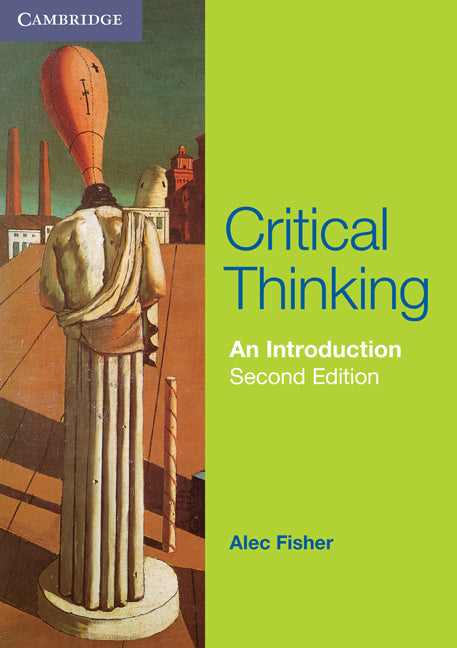
Critical Thinking 
2nd Ed. Cover

Returning to Fisher's excellent book I mentioned an analogy from basket ball in discussion about Richard Paul's definition of critical thinking and 'thinking about your thinking'.
'Critical thinking is that mode of thinking - about any subject, content or problem - in which the thinker improves the quality of his or her thinking by skilfully taking charge of the structures inherent in thinking and imposing intellectual standards upon them. (Paul, Fisher and Nosich,1993, p. 4).' pp.4-5.
Fisher's daughter aged eleven wanted to learn how to play basket ball and attended coaching sessions. At the first the raw recruits were divided into two teams and with simplified rules set to play. Initially, getting the ball and in a position to score: shoot.

After the chaos, the coach had them practice shooting after he demonstrated how they had been playing. He explained and pointed out the basics of technique and 'drew attention to how he held the ball, where he looked, how he stood and so on.' p.5. Acknowledging their efforts, they subsequently moved on to passing, then guarding, or marking - practising each skill. 

This is a great analogy and can be applied to health, social care, medicine, nursing and other novices. Hodges' model is the basket ball, tennis, squash court, football, hockey pitch. You might move to a position to obtain an advantageous point of view. In reflective, critical thinking terms, additional data to support or negate a line of thought.

The axes of Hodges' model, serve as a scaffold to help structure our 'game player', and possibly better co-ordinate a group or team's efforts. The domains of Hodges' model cover the knowledge or subject bases that will relate to any context. Hodges' model is situated. If there is need to consider spiritual matters - experiences, then a conceptual journey ... at least, as befits an individual's or group's beliefs and purpose can be made. So forms if intelligence (emotional, cultural, spiritual ...) can also be factored in, as necessary.
 
Are there relational, logical, even mathematical standards that can be applied (formally, in theory) to our thinking? Does 'subject, content or problem' equate with 'situated'? Another book to pass on.

Fisher, A. (2001) Critical Thinking: An Introduction. Cambridge University Press, Cambridge, England. PB. 


Post: ... 'anyone for tennis'.

Saturday, February 12, 2022

"Personalized learning has a number of levels ..." c/o MIT Technology Review

MIT Technology Review
"... There's a difference between adaptive learning and personalized learning," says Chris Dede, a professor at Harvard University in the Technology, Innovation, and Education Program. Squirrel is doing adaptive learning, which is about "understanding exactly what students know and don't know."But it pays no attention to what they want to know or how they learn best. Personalized learning takes their interests and and needs into account to "orchestrate the motivation and time for each student so they are able to make progress."

Jutta Treviranus, a professor at the Ontario College of Art and Design University who pioneered personalized learning to improve inclusivity in education, breaks it down into further. "Personalized learning has a number of levels," she says: she calls them pace, path, and destination.

If the pace of learning is personalized, students with different abilities are allowed different amounts of time to learn the same material. If the path is personalized, students might be given different motivations to reach the same objectives ("Here's why statistics is relevant to your love of baseball") and offered the material in different formats (e.g., video versus text). If the destination is personalized, students can choose, for instance, whether to learn with a vocational school or university in mind.
"We need students to understand their own learning. We need them to determine what they want to learn, and we need them to learn to learn," Treviranus says. "Squirrel AI doesn't address those things at all. It only make it more efficient to bring all of the students to the same standardized place." pp.27-28.


  Self - LEARNER - Person
|
 INTERPERSONAL    :     SCIENCES               
HUMANITIES - ARTS ----------------------------------  SCIENCES
SOCIOLOGY  :   POLITICAL 
|
Community - Group - Population


path

destination


purpose


pace

destination

path

process

pace

destination

path

practice

pace

destination

path

policy


In the first instance Treviranus's three P's are located in what I feel are the most pertinent domains in bold and underlined. 'Path' is placed in the intra- interpersonal domain because as explained the learning must have meaning, sufficient to motivate the student. This might be global, sharing this domain with 'destination' as an overall goal (personal ambition - aspiration). As ever, having my cake and eating it ... what is the rationale for the secondary... occurrences? Let's take 'destination', first, in the sciences and political domains this may relate to a student's particular interest in a subject, or course of study to enter a profession at a specific university. In the sociology domain, what are the other influences on choice for the student's 'destination'? 

Individual choice is a great gift but only when it can be exercised, can it stand chance of being realised. In the group context, socially and politically is the 'path' and 'destination' (truly) open? The skills of teachers and mentors are key to the secondary execution of 'path'. Knowledge of the subject, technology, and as described the student allied with the latest educational research are essential. A teacher in a subject may prove an inspiration for a student: helping to generate an educational fusion.

'Pace' was placed in the sciences domain, to denote process, sequence, time; a curriculum delivered. In an exam there is no greater enemy than lack of time, but without the facts, knowledge, and insight to answer a question, time can make a mockery of us. Our 'pace' can also be noticed by our peers, which can be positive or negative socially and personally. 'Pace', is invariably political, as the calendar flicks whether by an analogue or digital turn. Outcomes and reports ultimately count.

The 4P's which I associate with each of the model's domains are italicised at the bottom of each domain.

Karen Hao, Born in China, taught by AI. MIT Technology Review - Allow me to introduce my selves, The Youth Issue. Volume 123, Issue 1. Jan/Feb 2020. pp.24-29.

It is interesting to reflect on the State's intervention in 2021 into tutoring and EdTech companies in China since this issue was published.

Monday, November 16, 2009

Dementia, Drugs, Nursing by Degr[EE]s and Care Transitions

Of all the policy issues that government faces the care of an ageing population is irresistible in demanding attention. This one will keep tapping MPs, policy makers and families ... on the shoulder. It will constantly cycle through the government's gamut of official papers. In the UK this past week people suffering with dementia and the prescribing of anti-psychotic medication and deaths arising from the same has been highlighted and not for the first time.

Whilst my spare time web attention is also given to nursing IT and socio-technical matters, as an NHS community mental health nurse these vulnerable individuals are the primary focus of my work and that of my colleagues. There are three strands to the current role - in brief:

  • Nursing home liaison - dedicated to specific homes;
  • assessment, intervention and subsequent review;
  • working with social services integration project duty desk.
Drugs are of course a day-to-night constant for all nurses, with the addition of debate across all the knowledge domains of Hodges' model - that is interpersonal, sciences, sociology and political domains of knowledge. We have witnessed this in the scientific evidence of substance misuse and the government misuse of drugs advisory group 'difficulties' and now this issue which is professionally closer to home: right on the doorstep in fact.

'Home' is the operative word as many of the people concerned reside in residential care and nursing home facilities. Let's scratch the surface of what we already know:
  • These people can be very confused, vulnerable, they may be agitated and not easily reassured and placated without repeated skilled intervention.
  • Facilities are subject to inspection and care standards.
  • Many do not have an advocate in the sense of a family member who visits at least weekly and will challenge and question care and prescribing.
  • Older people may already be on several drugs (polypharmacology) due to other chronic health problems.
  • There is still a disconnect (holistic gap!) between the interdependence between mental - physical health problems.
  • These facilities are that individual's home - they continue to live and hence age there.
  • Homes get attached to their residents; in the best homes they (and their relatives and friends) become part of a greatly extended family.
  • For confused people there is a potential community (albeit a closed one) that people can participate in or choose to stay in their room. This space, the freedom of movement it affords - toing-and-froing - should itself be subject to history taking and ongoing assessment.
  • The quality of this community depends on the core staff and additional skills seen as essential by the organisation and care standards, e.g. activities coordinators, residents committees that also engage family, friends.
  • NVQs and mandatory training in the sector is making a positive difference.
  • There remains a high level of staff turnover.
  • Some homes are dual-registered catering for nursing care with another floor for dementia care (does a 1st or 2nd floor provide secure access to a garden in the summer?).
  • Homes rely greatly on the specialist services of local community mental health service, also given the placement of people in homes 'out of area' this involvement may be more remote and subject to varying degrees of engagement and hence quality.
  • Homes are businesses and the movement of clients incurs changes in income.
  • The quality and standards of architecture and design for residential accommodation has seen great strides in the past decade.
The bottom line (no pun intended) is the need for macro-management in terms of multidisciplinary team input; that is, primary care, modern matron, mental health and micro-management in terms of personalised care with regular review of physical and mental well-being and medication.

As government's of all persuasion utter the mantra of education! education! education! - this must be heard in the residential and nursing home care sector. The good news is that standards, competencies and the quality of care in the sector are improving; but to education we must add environment! environment! environment! As someone who appreciates aesthetics in design we should all be aware of the seductive properties of newly designed and furnished nursing homes (new carpets plus brand new flat screen LCD TVs does not automatically mean multi-dimensional care).

The counterpoint to this are the long stay, geriatric wards of old (c. 1977-1984) and the reaction of family friends when they first walked through the (three) doors.

They were distraught.

In time they came to appreciate the efforts of the staff and the importance of the knowledge, skills and attitude of the ward team. They could understand and see what staff were trying to achieve regards individualised care. Many responded to the open invitation to be part of the team, to get involved. Yes, the environment was far from 'right' (it was terrible), but it's the people on all sides of the care equation that count. It is the same today, but if the care environment is no longer appropriate then people should be moved to a place were their care needs can be met without recourse to anti-psychotic medication. That is why initial and ongoing person-centred assessment is very important.

It is very difficult to predict future needs and yet trying to anticipate them is the primary nursing challenge. If life is a book, then the turning of the page that ends one chapter and starts a-new is a non-trivial transition. That said and make no mistake, it is not for dramatic effect that we describe the behaviour of some individuals as challenging. Drugs are a tool and like all tools it is how they are used in assuring the highest standards of care, retaining personal dignity and maximising whatever quality of life an individual can achieve. Accounting for care interventions including medication is critical. If due diligence cannot be effectively applied in the financial sector then perhaps there is scope for due diligence in the care of older adults*?

*Some clients are under 65 years of age.

Wednesday, January 01, 2014

Book review: "Nursing Informatics and the Foundation of Knowledge" (long book - long review)

Happy New Year to everyone!

Last spring I requested a book for review and received three c/o and with thanks to Jones & Bartlett Learning Nursing. Finally, I've picked up the second - and about time it seems - as on this first day of 2014 the publishers are planning the 3rd edition. This book provided a break from virtual matters being a door-stop of a book; 538 pages, excluding abbreviations, glossary and index. In addition to this physical rendering the publishers emphasize an online presence for this and other books. Inside the cover there is a card with an access code to unlock the companion website for online resources for readers, students and lecturers. The account setup is straightforward and there are additional student exercises beyond those in the book.

Informatics is by definition a challenge for authors and publishers. Even though published in 2011 - 2012 time is at work. From the outset then the team involved in this text are to be congratulated on what is a monumental task in scale and time.

The foundation of knowledge in the title refers to the adopted conceptual framework - the foundation of knowledge model, which is illustrated at the start of the book's sections and especially section I on the building blocks of nursing informatics.

The foundation of knowledge model was itself quite a hook for me.
The model includes bits, bytes, data and information and from this arise:
  • knowledge acquisition
  • knowledge processing
  • knowledge generation
  • and knowledge dissemination
- with all of these influenced by and influencing feedback (there is an illustration in the sample chapter). The model describes people as information systems. Although the diagram presents a structure for the model, and it fits this informatics context very well and provides a link throughout the book it is not convincing in terms of subjects, agents, and knowledge disciplines. Admittedly the foundation of knowledge model is high level like Hodges’ model. Similarly, it is not prescriptive in terms of how events, phenomena are characterised. Data, information, knowledge and wisdom are however, the most fuzzy of concepts and subject to ongoing philosophical debate. I'll reflect a little more on this later. As already noted the model works here and I see online that a couple of students (and no doubt a great many more) have utilised the model in e-portfolios.

Each chapter has a listing of key terms, which are highlighted in the text. There are reflective questions at the end of each chapters. Chapters are concise, well referenced across various media and are all accessible and evident of a great editorship. There are a couple of longer treatments of certain and well chosen topics. Within chapters there are brief diversions in boxes on a related theme, for example in chapter 3, box 3.2 on ‘storage capacities’. I’d almost forgotten about EPROM and RAM, even though I used to purchase computer programs on EPROMS and ROMS in the 90s. Although abbreviations still abound, these abbreviations have become rather transparent now - and may say more about the generational scope of the authors - including this one? If these are going to be included then where is ‘GPU’, ‘SSD’ …? This is a difficult balance to strike, but mention of these struck me as antiquated and date the text. ('GPU' is hardly new - 1998 c/o Nvidia)

With two major companies referred to early on, open source is explained on page 43 and in the examples of software programs that are listed. The book is courageous in several respects introducing the model, listing software and specific technology examples, some of which can be brief in terms of market longevity. The emergence of the cloud is discussed and provides a current flavour, as with usability (‘UX’). Although the authors are clearly leaders and advocates for nursing informatics and the technologic, the enthusiasm is tempered.

The limits and complexity of AI artificial intelligence are raised in addition to the revolutionary progress. Chapter 4 on cognitive informatics I found personally fascinating, as it reassures me about my interest in the potential of combining conceptual spaces, threshold concepts with Hodges’ model. As a result I previously posted items from the book about cognitive informatics and another relating Beauchamp and Childress’s four principles of health care ethics to Hodges’ model.

Chapter 5 continues the consideration of the limits and challenges posed by technology in exploring the theoretical approaches to health care ethics. The standards for e-health ethics will now be tested with the fate of the .health domain (deliberated online at HIFA2015 to follow...). I wonder if this debate will figure in the 3rd edition? Clearly there are implications for the governance of such a domain. As the chapter points out many ethical e-health standards are voluntary.

As an individual and a reviewer of book with international scope and a discipline with international global aspirations you are acutely aware of your parochial situation. When I look at the UK (Northwest England!) and nursing informatics it seems, with some exceptions to have failed to make a mark in nursing. Yes, colleagues and I use an electronic health record, but there is so much more that could be provided in terms of purposes, functionality and reports. The majority of student nurses I speak to do not seem to be primed let alone tutored for the wider informatics world they will enter as practitioners. So much more that could be done with mobile technology, caseload management tools, research tools. Perhaps this is why as I read of - the use of decision support systems and expert systems (p.77) – I thought “Get real!”. How accessible are such tools to the majority of nurses? Speaking from Wigan Pier at least, if it is 'nursing informatics' you seek then you must be westward bound. It appears there is quite a difference in the esteem of nursing informatics in the USA and UK? - and my review reflects this. Jocularity aside there are two serious points here.

1. The book is clearly USA centric, but it really is relevant to readers elsewhere (I thought there might be a problem registering on the website, but there was no .
2. The other point concerns activism.

When there is an opportunity should we advocate for nursing? Is there scope for this within a nursing informatics text? Even in ‘developed’ nations we should take nothing for granted be that the UK - rickets, TB, sexually transmitted diseases in older adults, obesity; or the United States with the potential impact of climate change and health inequality (MacKenzie, 2013, America's hidden epidemic of tropical diseases). The complexity of nursing and health is also apparent while reading that informatics can serve to check compliance with antibiotic regimes, you simultaneously reflect on the need to reduce the general prescribing of antibiotics and the correct administration and management when they are utilized.

My interest in and exposure to informatics and the humanistic-mechanistic axis within Hodges’ model brought me to the socio-technical literature. Even though socio-technical aspects of nursing and nursing informatics abound implicitly in the book (chapter 6, page 100 and elsewhere – chapter 16) ‘sociotechnical’ or ‘socio-technical’ does not have a place in the index. Although they rarely come across it – hence my thoughts above – I explain something of classification and coding to the student nurses who visit our team. Chapter 7 is a very informative contribution on this subject by one of several international contributors (all listed at the book’s start). How can nursing informatics make an impact if nursing students are not aware of the existence of nursing terminologies and approaches – enumerative and ontological - to the same? Nurses should be aware of the international standards associated with their profession - nursing terminologies included. Chapter 8 on nursing roles, competencies and skills prompted me to wonder about other forms of informatics and to what extent there can (should) be dialogue between these other disciplines?

In, Information and Knowledge needs of nurses in the 21st century (chapter 9), as an individual practitioner you are always situated (p.531) in a local nursing experience. I think this is where the model needs to be extended to facilitate the incorporation of local, global and glocal perspectives. Surely informatic's role as the latest technical means to communicate across a diaspora and it seems create a reverse diaspora through online communities and virtual worlds is worthy of a political stance? Global initiatives such as Health Information for All 2015 (what year is it next and still so much to do...) and other groups (maternal and infant care) need nursing's support and this extended information-informatics awareness (wisdom!) might also pay local and national dividends?

Chapter 10 is lengthy as befits legislative matters which nevertheless maintain the readable tone, clearly there is an ongoing evaluation by systems suppliers and users on the potential of the Cloud (Chapter 17). Chapter 11 was a nice surprise and the impact of which I have already referred to in e-portfolios. Individuals act as their own portal – p.187. This is a subject that (I hope) will occupy me for the next couple of years. The use of e-media by nurses for reflective commentary using web publishing tools is addressed very well. Having just ordered a second hand copy of Etienne Wenger’s book on communities of practice I find this discussed here:
In the future it is hoped that the use of communities of practice in nursing will grow beyond knowledge sharing and promote more knowledge discovery and sense making. p.189.
I’m not sure if e-portfolios have affected the EU populace with the rapidity and extent expected (by 2010), but there is a series of ongoing conferences dedicated to the cause. In the 1990s and early 2000s you could not miss the emphasis on benefits realization. If this concept has had its day what exactly happened? (There is no longer a need to prove the worth, potential of the computer at the bedside, nurses station.) We should still focus on outcomes as noted in several  chapters.

The sections also take on a practical – application focus across administration and nursing functions. Open source is further examined p.212. If SQL is mentioned would it help to acknowledge the development of noSQL approaches? Memory and processing power (for indexing) are less of a constraint on systems now. There is another challenge presented to editors: is 2004 really a ‘recent’ study? ‘Recent’ and its synonyms ‘currently’ need to be checked throughout the book and revised accordingly. The same applies to references to demographics and changes in nursing numbers (p.320-321). The trends in the numbers are established and remain, but perhaps there are more up-to-date sources? Throughout the book there are also case studies and pointers to research that provide practical and personal insights to the subject at hand.

While the context is nursing and informatics I think the discussion on ‘health literacy’ requires a critical review. It seems that health literacy may be being construed as synonymous with health technology literacy, computer and information literacy which are also noted in the text. There is admittedly a great deal of overlap.

‘Health literacy’ needs to be considered before a specific health problem arises – it is too late then. Health literacy does not mean, should not be equated with the deployment and use of e-tech applied to people with diabetes, coronary heart disease. Is this specific health education aimed at self-care, relapse prevention, staying well? Is health literacy concerned with positive health?

I’m sure the authors – editors are only too aware of this but this understanding of the wider context of ‘health literacy’ as a field of research and practice is not conveyed at present. I also don't necessarily see a wiki as a search tool, yes you can search a wiki but it is a type of repository and as such the effectiveness of a search must depend on the contributions made and the preceding searches. Perhaps a dedicated wiki could become a form e-grey literature?

A highpoint for this reviewer was to read: Learning is a multispatial function, … (p.406). It certainly is. The discussion on creating learning resources is an excellent introduction, especially on using the electronic health record as the learning resource.

In considering the future chapter 29 does not explicitly utilize the framework of knowledge. This may provide an opportunity to extend the framework to more readily integrate bio-psychosocial-political and spiritual perspectives through time. The framework of knowledge within informatics is a great resource. As mentioned this drew my interest to the book, in 1996 I sought to relate informatics concepts to nursing and mental health (redundancy, entropy.... see bibliography). Whatever the differences between the USA and UK nursing informatics the framework might benefit from a way to integrate context, specific concepts and practices, self-care, interprofessional education and wisdom.

This is a great book, one that is also courageous in its scope and execution. The third edition will be very well worth not just purchasing, but applying. Thanks again to Jones & Bartlett Learning for this copy.

MacKenzie, D. (2013). America's hidden epidemic of tropical diseases, New Scientist. 11 December 2013, 2947.
http://www.newscientist.com/article/mg22029473.200-americas-hidden-epidemic-of-tropical-diseases.html?full=true
 
McGonigle, D., Mastrian, K.G. (2012) Nursing Informatics and the Foundation of Knowledge, Second Edition. Jones & Bartlett Learning, Burlington, MA.

Friday, February 27, 2009

A techno-spiritual world with agnostic needs

Whatever our own personal beliefs
we live in spiritual times.

Agnosticism
is a frequent and ongoing subject of debate in
the philosophy of religion, science and ideas.

It also features - duly tempered for purpose -
in other fields notably technology.

In the early days of IT and ICT those buying information systems grew tired and wary of being locked-in to particular platforms, with consequent dependency upon vendors. This also put the technology to the fore, with the risk of relegating business requirements to 'out of hours'. While many business relationships did undoubtedly prosper, the market soon recognized the need for standards and the need for technology to be agnostic, increasing freedom and choice in the marketplace.

Among the retinue of central tenets in medicine, health, social care and nursing is the need for unconditional positive regard and a non-judgemental approach. So caring is most definitely not without beliefs and values. In the same way that vendors to companies and academia want to be free and determine their requirements around their business and needs, so too there is a perceived need for the health care 'industry' to be agnostic. Re-framing a bullet list in a 'lost' post elsewhere: ''Increase knowledge innovation and manage technology change' agnostic in a health context becomes:
  1. As per the need for evidence-based x, y, z... fully research your status, direction and tools not only before you adopt them, but also while you’re using them*;
  2. Don’t get emotionally attached to a particular assessment, planning, intervention (therapy) or evaluation toolset;
  3. Continuously research (horizon scan* - look over the fence) at other research possibilities and alternatives;
  4. And as Lucas McDonnell make clear: Don’t build yourself into a corner*.
*Of course, that last point is hypercritical - since there are at least four corners!

This is where Hodges' model comes into play, (not quite with underpants on the outside, but certainly with utility belt firmly in-situ).

Hodges' model - as a model to support and integrate care - is agnostic in the following ways:

DISCIPLINE: unless its origins prejudices its case, Hodges' model can be applied by any and all disciplines. This is crucial in times when multidisciplinary and even transdisciplinary team work is needed.
THERAPEUTICS: whether physical, social or biopsychosocial - Hodges' model is agnostic regards particular therapy interventions. It is not married to gene therapy, cognitive therapy, primary nursing, family therapy, gestalt therapy.
PHILOSOPHY: 'care- nursing- ward- philosophy' is probably a much misused term, but once again Hodges model is philosophically neutral - unless it is deemed that its generality - pantological aspirations - is itself a philosophical stance?
SUBJECT: in being person-centered the model is agnostic in respect of the individual using the model or who happens to be the focus of the model. This is quite critical at present with the engagement of patients in education, self-care and individual budgets in cases of long-term medical conditions.
AUTHORITY: Although disciplines with their professional legacies and politics can and do (justifiably) lay claim to authority and legitimacy Hodges' model can negotiate this divide.
SOCIO-TECHNICAL: this form of agnosticism for Hodges' model is not given the credence it should be afforded. Being context sensitive and situated the model can perform a definitional volte face appealing to a socially or technically oriented user-base, or both.
CULTURAL: Finally, it is essential that our tools are not 'tainted' from the perspective of a particular community or ethnic group. Apart from the structure of the model with its historical (mythic) iconographic associations, the model is open and not directly allied to any specific ethnic group, set of cultural or religious beliefs. Ideologically AND practically then the model provides a neutral ground upon which values and beliefs can be shared.

Additional links:

Becoming a Technology Agnostic, by davidleeking (My primary source through twitter)

Technology-agnostic approach to Service Oriented Architecture: back to the essence of SOA?