Hodges' Model: Welcome to the QUAD: workforce

Hodges' model is a conceptual framework to support reflection and critical thinking. Situated, the model can help integrate all disciplines (academic and professional). Amid news items, are posts that illustrate the scope and application of the model. A bibliography and A4 template are provided in the sidebar. Welcome to the QUAD ...

Showing posts with label workforce. Show all posts

Monday, July 13, 2026

2nd International Conference on Health Medical Systems and Services (HMSS 2026)

Dear Colleague,

🚨 Last Chance to Submit – Deadline: August 05, 2026

Are you shaping the future of smart, secure healthcare? Join global pioneers at the

The 2nd International Conference on

Health Medical Systems and Services (HMSS 2026)

📍 When & Where? 17–20 November 2026 | Barcelona, Spain

🌐 Explore More: https://hmss-conference.org

📝 Submission Portal: https://hmss-conference.org/authors.php

💡 From AI to cybersecurity, health and medical informatics, and digital health breakthroughs—HMSS 2026 is where innovation meets real-world impact.

🎓 IEEE-indexed (https://conferences.ieee.org/conferences_events/conferences/conferencedetails/71742)

🚀 Submit your paper today and take part in redefining healthcare technology!
📧 Questions? Reach us at: info AT hmss-conference.org

Warm regards,
HMSS 2026 Organizing Committee


My source: SOCIOTECH List at JISCMAIL.AC.UK

Friday, June 06, 2025

RCN Foundation: Investigating Learning Disability Nurses’ Perceptions of Registration with the Nursing Midwifery Council -

and wider Impact on RNLD Nursing Students
and People living with an Intellectual Disability

From twitter: Dr Lorraine Henshaw RN PD. https://x.com/lor_henshaw

'Are you a Learning Disability Nurse who is no longer registered with the NMC? Would you be happy to discuss your experiences with us for our important research into the RNLD role. See contact details below for further info. Please also share with your networks !' 


'This study ‘Investigating Learning Disability Nurses’ Perceptions of Registration with the Nursing Midwifery Council and wider Impact on RNLD Nursing Students and People living with an Intellectual Disability’ Study Aim and Objectives 1.To investigate RNLD perceptions of registration with the NMC and their thoughts about the impact on RN:D nurses on people living with an intellectual disability and thoughts regarding the future of RNLD nurses a)Obj 1- to ascertain where LD nurses are working and in what capacity/role. b)Obj 2- To explore the impact of this work on their identity as a RNLD 2.To investigate student RNLD nurses’ experiences of practice placements and perception of the role of RNLD nurses a)Obj- to understand the impact of the reduction of RNLD registered nurses (with the NMC) on the future workforce 3.To examine the impact that RNLDs have on people living with an intellectual disability and their families/carers. a)Obj- To explore the perceptions of service users and carers of the value of the RNLD.'


Site: https://salford-repository.worktribe.com/project/3385884/rcn-foundation-investigating-learning-disability-nurses-perceptions-of-registration-with-the-nursing-midwifery-council-and-wider-impact-on-rnld-nursing-students-and-people-living-with-an-intellectual-disability

Sunday, June 01, 2025

RCN Congress 2025 iv - AI & quality improvement

Discussion: Artificial intelligence in nurse education &
Discussion: The role of nursing staff in quality improvement


We'll cover two agenda items in this post. First, resistance is futile in the apparent rise and ubiquity of artificial intelligence.

Discussion: Artificial intelligence in nurse education

Here is, another thing 'we need to get right'. Without checking, I'm sure I posted/tweeted about 'essay factories'. Now Generative AI has put the automated generation of academic essays on steroids. If a student is not motivated to learn, enthusiastic about their seemingly chosen course of study and the professional reward to be earned, then we are in trouble. Public and patient safety are at risk. AI, is however is here to stay - change and help us prosper(?). AI and GenAI are tools, just another step forward, an advance on finger tips, palms, stick, chalk, pencil, and pen. The brief for the discussion includes, with specific points emboldened:

'... Additionally, AI-driven simulations and virtual reality scenarios can provide hands-on experience in a controlled environment, enabling students to practice and refine their skills with greater confidence. 

Creating an engaging and supportive learning environment is key to helping nursing students embrace AI. HEIs can introduce AI concepts early in the curriculum and provide ongoing training and resources. Encouraging collaboration and open discussions about the benefits and challenges of AI can further enhance students' confidence in using these tools.

By taking these steps, nursing education can seamlessly integrate AI, ensuring future nurses are equipped to excel in an evolving health care landscape.

To effectively integrate AI into nursing education, RCN Wales, for example, advocates for higher education institutions (HEIs) to equip students with the skills to continually enhance their digital and biotechnological literacy, ensuring they meet their programme outcomes.

HEIs can incorporate regular assessments and feedback mechanisms to monitor a student’s progress and determine where AI tools add the most value.' . . .

Computer-aided learning has matured greatly since the 1980s and 1990s. AI and GenAI mark the seeming leap in progress over the past two years, with governments, professional bodies and society having to adjust and quickly. We need to watch how simulation, and virtual reality and other approaches to learning are applied, to assure the quality, safety and learning experience provided to students. There appears to be a risk in mental health nursing curricula being 'diminished'. Interpersonal skills are critical in psychiatric and psychological care. This might afford the advocates of technically-laden solutions to side-step the nuances of face-to-face human interaction. Amid the pursuit of what is mechanistic, let us value the humanistic also.

The biotechnical, is one a several literacies to keep sight of. AI, is of course bound up in bio-political concerns, that are still emerging. The 'health care landscape' is plural too: consider the patient's home, a ward, out-patient department, e-consultation, e-learning intervention, brief psychotherapy, occupational health, carceral care, and field hospital, veterans, migrant - refugee health and the homeless.

There's more, and references and a reading list are also provided on the above link.

'Quality improvement is about making a difference to patients by improving safety, effectiveness, and experience of care.

All nursing staff should have the abilities and support to become involved in addressing health care pressures, utilising their expertise in the profession as leaders, not only in care delivery, but also within the system. However, the work of nursing staff to deliver quality improvement is often limited to opportunities that are dependent on staffing, seniority and availability. 

Nurses’ willingness to attend training is often superseded by patient demand making attendance impossible. Other health care colleagues undertake work on research and service improvement alongside their role and as a requirement for their revalidation, this is not the case for nursing staff who don’t get these opportunities.

Consider the benefits of the nursing workforce undertaking quality improvement, conducting local research, reorganising working environments, translating or updating patient materials, trialling novel approaches to care or addressing health inequalities. These skills would not only improve the quality of care we provide but also prepare the nurse to influence and change systems throughout their career.

This is relevant UK-wide. Scotland's 2030 vision for nurses, states an intention to equip nurses with quality improvement tools and support, but only nurses in non-hands-on roles. NHS Wales offers quality improvement training through e-learning  via the ESR to health care professionals, in Wales. In Northern Ireland training is available, but only for Band 7 and above.'

What is the role of all nurses to get involved in quality improvement?'


There is a point with IT security that if it was 100% assured with all the prospective log-ins of an average user, would we ever get any 'real' work done? Does the same apply to research? I have heard this as an argument in practice; and a response to a drive for quality improvement too. Data takes time to collect, especially to answer new questions. Such arguments were also fielded when models of nursing were spoke of with eye-rolls and sighs of experience. Quality improvement is a fight, opportunities and resources can be found, especially if a culture of research is nurtured and sustained. What questions does a ward, unit, team have currently? What queries might new starters, newly qualified, students, and placement candidates provoke? If my reference to fighting seems strong; the fight is for time. The raw truth is in the NHS that quality improvement, research and supervision (in its various forms) are in competition, in the absence of coherent integration.

In bold above, the discussion includes:

'trialling novel approaches to care or addressing health inequalities'.

I wonder what that springs to mind? More seriously, we need be aware of what happens to 'quality'; in whatever educational form it is encountered and experienced. 

individual
|
INTERPERSONAL : SCIENCES
humanistic ------------------------------- mechanistic
SOCIOLOGY : POLITICAL
|
group

interpersonal skills

informal / formal education
QUALITY
lifelong learning

biotechnical

landscape

quality improvement - clinical supervision?
inequity

social preparedness for AI/GenAI


management supervision?


Monday, May 12, 2025

'International Nurse's Day' 2025 #2 - c/o ICN & WHO

State of the World’s Nursing Report 2025


State of the World’s Nursing
Report 2025

'As the world’s nurses celebrate International Nurses Day (IND), ICN issues a rallying cry to governments around the globe for urgent nursing support, following the launch of the second World Health Organization (WHO) State of the World’s Nursing (SOWN) report.

The SOWN report is a vital assessment of the global nursing workforce in the aftermath of the COVID-19 pandemic and underscores the urgent need for bold investments in nursing to address shortages, strengthen health systems, and promote global resilience and economic stability.

The SOWN report reflects ICN’s IND 2025 report, Caring for nurses strengthens economies, and related Survey of National Nurses' Association (NNA) Presidents, reinforcing the central role of nurses in achieving global health, including Universal Health Coverage (UHC), and calling for immediate action to address long-standing challenges. The SOWN data presents a mixed picture. It highlights progress in areas such as advanced practice and nursing leadership, but indicates gravely concerning continued workforce shortages, inadequate compensation and working conditions, poor mental health support, inequities in the distribution and employment of nurses, and failures to fully enable nurses as practitioners and health care leaders.'

Continued ...

Caring for nurses strengthens economies


Caring for nurses
strengthens economies


'As we face growing health care challenges, from ageing populations and rising chronic diseases to climate-related emergencies and deepening global inequalities, the need for a strong, sustainable nursing workforce has never been greater. We cannot meet these challenges without sufficient nurses who are themselves well-cared for and supported. ICN’s International Nurses Day report reveals the severity of our current nursing shortage and well-being crisis – and the path forward. ICN’s “Caring for Nurses Agenda” provides a comprehensive roadmap for creating environments where nurses, patients, and entire health care systems can flourish.'

'International Nurse's Day' 2025 - c/o The RCN


'Today is International Nurses’ Day – a day to highlight and celebrate the incredible skill, dedication and impact of nursing.


Nursing staff like you bring so much to those you care for each day. You are there for people during their best and worst moments. You change lives every day, despite our profession facing considerable challenges.


Nursing is highly skilled and rooted in excellence. That’s why patients place their trust in you when they’re at their most vulnerable.


We see the resilience and strength it takes to do this complex, safety-critical work. So today – and every day – we say thank you.'

Text c/o The RCN and video:


Also with RCN Congress starting today ...

Saturday, March 29, 2025

Disability and the rise of 'mental health', or something else?


individual
|
INTERPERSONAL : SCIENCES
humanistic ------------------------------- mechanistic
SOCIOLOGY : POLITICAL
|
group
mental DISABILITY

physical DISABILITY

social DISABILITY
The Times 28 March 2025, p.1.

POLITICAL disability^


Chris Smyth, One in four Britons claim they have a disability, The Times, 28 March 2025, p.1.

https://www.thetimes.com/profile/chris-smyth

See also - (not reliable however):

Google Ngrams: mental illness, mental health, well being, mindfulness, 1800-2022

https://books.google.com/ngrams/graph?content=mental+illness,+mental+health,+well+being,+mindfulness&year_start=1800&year_end=2022&corpus=en&smoothing=3

^The Government are deploying AI to figure out:

  • how to raise an army, air force, navy, space and cyber force?
  • how to fight a war?
  • how to sustain a workforce, to support an ageing population.
An improbable response:

Robots, drones, tech-enhanced machines with AI.

Wednesday, March 05, 2025

Woman-Centred Care in Action: Midwives at the Forefront of Gender Equality

Dear women’s health champions and allies,

We are writing to invite you to the following two events:

In honour of International Women’s Day, join ICM and fellow advocates as we kick-off the second phase of the PUSH Campaign with a panel discussion and reception:

08 March 2025 from 6-9 pm

Manhattan, New York | (Upon registration, location sent for in-person participants and live-stream link for virtual participants)

Join panellists Tlaleng Mofokeng (UN Special Rapporteur for the Right to Health), Maliha Khan (Women Deliver), Helena Grant (New York Midwives), Meggy Katigbak (ARROW), who will discuss why woman-centred care is everyone's business, and why midwives matter now, more than ever. RSVP using this link by Thursday, 06 March 2025. Please see the attached flyer for additional details.

In honour of the 69th session of the Commission on the Status of Women, the Permanent Mission of Croatia and the International Confederation of Midwives’ PUSH Campaign are proud to present a photo exhibit titled

Woman-Centred Care in Action: Midwives at the Forefront of Gender Equality

UN Building, Corridor 1B

10-21 March 2025

We invite you to visit the exhibit and reflect on its powerful message: there is no gender equality without woman-centred care or midwives. The relationship between midwives and women has ripple effects on gender equality, health, economics, and rights.

Attached is the flyer with additional information.

We appreciate your kind dissemination among your networks, delegations, and interested colleagues.

Many thanks and best regards,

Merette Khalil (she/her)
PUSH Campaign Lead

PUSH Campaign: PUSH for Midwives (pushcampaign.org)

International Confederation of Midwives (ICM)

The global voice of midwives • The Hague • The Netherlands

Email: m.khalil AT internationalmidwives.org

Website: www.internationalmidwives.org

Thursday, January 30, 2025

Save Cardiff University School of Nursing - Sign the Petition

Cardiff University have announced that the School of Nursing is set to close with cuts to staffing because of a funding shortfall. 

We condemn this action and urge the university to find another solution that does not involve closing the School of Nursing. 

This awful decision will have a direct impact on the number of nurses available to work in health boards across the country . At a time where there is a significant number of nursing vacancies within the NHS this action will undermine an already depleted workforce. 

With well over a 1,000 students within the department, Cardiff University School of Nursing contributes a very important number of nurses which are employed within the NHS each year. 

The school of nursing is ranked 1st in Wales and is an centre of excellence. It is a dynamic, innovative and forward looking school. They are recognised for their excellence in learning, teaching and research. They pride themselves on pursuing research of the highest quality, and are one of the leading healthcare departments in the UK.

As well as this, the staff  work incredibly hard, have invaluable diverse expertise and put their hearts and souls into making the school a vibrant and welcoming place. The nursing department is full of warm, intelligent, passionate people with a wealth of knowledge, who are at danger of losing their livelihoods. We stand in solidarity with the university staff affected by this decision. 

Please sign this petition in the hope that Cardiff University reconsider its decision to close the School of Nursing. 

https://t.co/HU5Cyn8j8p

QR code also available.

Previous posts: 

Nursing, history and (future) travels

Wales

It would be marvellous to be able to deliver a lecture on Hodges' model to new nursing course entrants. Vital though to secure the future of all.

Sunday, January 05, 2025

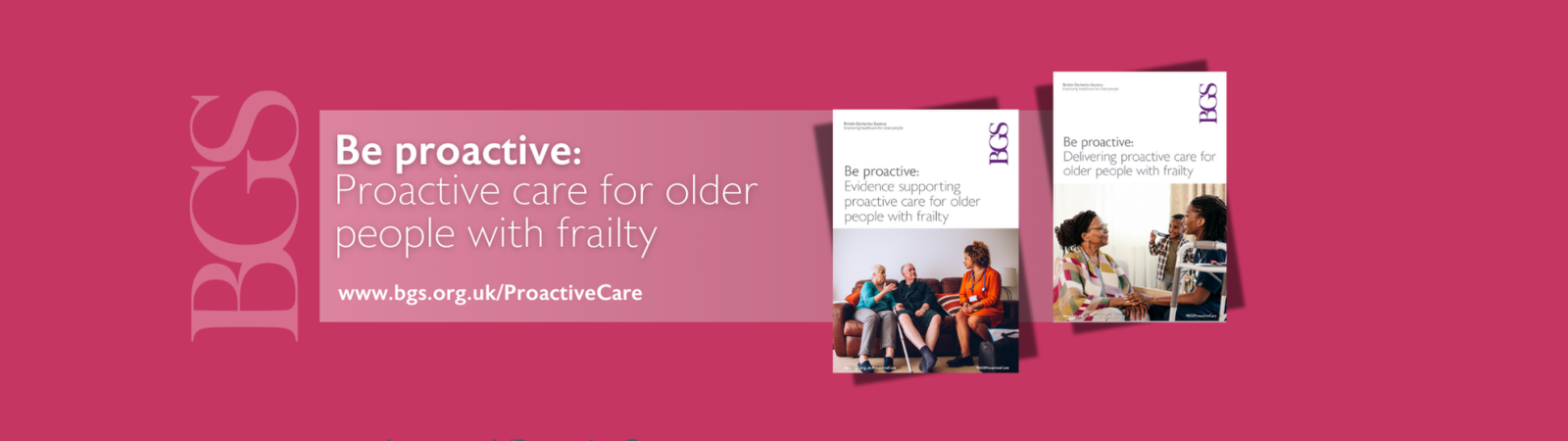
Be proactive: Evidence supporting proactive care for older people with frailty


'These BGS publications outline evidence and delivery recommendations for proactive care and support for older adults with moderate to severe frailty. 

We set out how to deliver proactive care against core components and key enablers, with recommendations for success of a proactive care service. Building on NHS England's proactive care guidance, Proactive care: providing care and support for people living at home with moderate or severe frailty, we also outline key recommendations for the successful implementation of proactive care services across the UK. 

We hope that users will be able to use all three documents when designing proactive care services, with the NHS England guidance document acting as key framework and starting point, BGS’s Be proactive: Evidence supporting proactive care for older people with frailty as a business case, and Be proactive: Delivering proactive care for older people with frailty  as a roadmap for implementing the NHS England framework and delivering services. ...'

https://www.bgs.org.uk/ProactiveCare


[All best Charlie (on your Christening Day), Casper and Jamie]. #hope #love #future #action #HealthCareer #LifeChances

Friday, October 25, 2024

RCN: Are you an internationally educated RCN Member?

Please tell us about your experience so we can campaign for change on issues you care about the most!

We are keen to hear from *all* members, including HCAs and students, so please share this with your networks.

https://surveys.rcn.org.uk/s/IEQ1BS/

This survey closes at 11:59pm on 3 November 2024.

Thank you

Wednesday, August 28, 2024

Call for Participation in NHS Survey

ARE YOU WORKING IN THE NHS? IF SO, HELP NEEDED URGENTLY! Please read this email. 

Glasgow Caledonian University is inviting NHS Staff across the UK to participate in this doctoral research survey to analyse the impact of responsible leadership on improving well-being and organisational trust among NHS Staff members. 


To be eligible, you must be an NHS staff member from any area of the UK in any job role. The survey collects no recognisable information and is wholly anonymised to protect participant privacy and confidentiality. It has received full ethical approval, will take around 10 minutes and will help provide an improved understanding of the area of well-being in the profession.


Please forward this survey link to everyone in your contacts working for NHS. This will help gain more responses, increasing the study's reach and validity. Your help is highly appreciated, and we thank you in advance.


Here's the link for the participant information sheet and survey: 

https://app.onlinesurveys.jisc.ac.uk/s/caledonian/impact-of-responsible-leadership-on-employee-well-being-and-org


Warm wishes
Umm E Habiba Tariq (Chief Investigator)


Umm E Habiba Tariq (she/her) | PhD Candidate, MSc, BBA (Hons)

Occasional Lecturer | Department of HRM | Glasgow School for Business and Society (GSBS)


Glasgow Caledonian University is a registered Scottish charity, number SC021474

My source: Nurse-Philosophy List.

Thursday, July 18, 2024

A Workforce Strategy for Adult Social Care in England

"For the first time ever, the adult social care sector has come together, led by Skills for Care, to develop the Workforce Strategy it needs. Adult social care needs a workforce strategy to ensure we have enough of the right people with the right skills to provide the best possible care and support for the people who draw on it. 
Development of this vital Strategy has been truly collaborative and it could not have been developed without the expertise, time and commitment of many stakeholders."
Individual
|
      INTERPERSONAL    :     SCIENCES                   
HUMANISTIC  --------------------------------------  MECHANISTIC      
 SOCIOLOGY  :    POLITICAL 
|
Group
Job satisfaction

Personalisation - Belongings

Motivation

Attitudes, Opportunities, Incentives

Access to Training


Activities, Reablement

Arts, Dance, Music

Dental and other services

Systems view - Demographics

Collaboration / Liaison


Social Care: At home & residential care

Job status

Local community, schools

Funding of Social Care

Integrated & Person-centred Care

Workforce strategy

Pay - terms and conditions

Government policy

Workforce recruitment & retention:

National - International


Source: Email - Skills for Care and BBC Radio 4 Today.

Tuesday, April 23, 2024

Call for participation in a Doctoral Research Study

ARE YOU WORKING IN THE NHS? IF SO, HELP NEEDED URGENTLY

Please read this email. 

Glasgow Caledonian University is inviting NHS Staff across the UK to participate in this doctoral research survey to analyse the impact of responsible leadership on improving well-being and organisational trust among NHS Staff members. 


To be eligible, you must be an NHS staff member from any area of the UK in any job role. The survey collects no recognisable information and is wholly anonymised to protect participant privacy and confidentiality. It has received full ethical approval, will take around 10 minutes and will help provide an improved understanding of the area of well-being in the profession.


Please forward this survey link to everyone in your contacts working for NHS. This will help gain more responses, increasing the study's reach and validity. Your help is highly appreciated, and we thank you in advance.


Here's the link for the participant information sheet and survey: 

https://app.onlinesurveys.jisc.ac.uk/s/caledonian/impact-of-responsible-leadership-on-employee-well-being-and-org


Warm wishes

Ummey Tariq (Chief Investigator)


Umm E Habiba Tariq (she/her) | PhD Candidate, MSc, BBA (Hons)

Occasional Lecturer | Department of HRM | Glasgow School for Business and Society (GSBS)

Glasgow Caledonian University is a registered Scottish charity, number SC021474


My source: NURSE-PHILOSOPHY list
https://www.jiscmail.ac.uk/cgi-bin/webadmin?A0=NURSE-PHILOSOPHY

Tuesday, January 23, 2024

"Registered Nurse RN": What is in a Title?

or, Here is Saturday's Multidisciplinary Team selection;
Registered Nurses on the subs bench;
On the Roll, or Roll with the Times?

While never a union/professional body (formal) representative, I have as a nursing assistant then student nurse been aware of the 'political' in health. Once again perhaps another way in which I was primed to the reality of staff as a key (the) resource and hence the centrality of the workforce. Abbreviations are ever present and I remember RAWP - Resource Allocation Working Party; which also drew attention to geography and scale. Unfortunately, the vitality of the workforce has suffered with workforce planning inconsistently exercised.

Once again, I also recall a presentation by Derek Hoy on the need for information systems (data - information - knowledge . . .) through nurse informatics to help make nursing visible. It seems this is still an issue, for example:
Lyu, XC., Huang, SS., Ye, XM. et al. What influences newly graduated registered nurses’ intention to leave the nursing profession? An integrative review. BMC Nurs 23, 57 (2024). https://doi.org/10.1186/s12912-023-01685-z

Leamy, M., Sims, S., Levenson, R. et al. Intentional rounding: a realist evaluation using case studies in acute and care of older people hospital wards. BMC Health Serv Res 23, 1341 (2023). https://doi.org/10.1186/s12913-023-10358-1

Stadnicka, S.K., Zarzycka, D. Perception of the professional self-image by nurses and midwives. Psychometric adaptation of the Belimage questionnaire. BMC Nurs 22, 412 (2023). https://doi.org/10.1186/s12912-023-01564-7

 
Last month on a trip to Hay-on-Wye I picked up some back-issues of London Review of Books. Needless to say, in light of space and the clearing exercise I was very selective. The pearl of an essay cited below prompted me to wonder on the silence, quietness, lack of noise - invisibility even - of certain wards where registered nurses are present: or not? How and what data is captured and interpreted for reporting purposes and how meaning is gleaned and by whom? Making a difference in terms of patient safety and the quality of care:

LRB 45:18
"Call​ it the Jaap Stam conundrum. The story is told in Rory Smith’s entertaining book about the use of data in football, Expected Goals. Stam was a very talented but ageing central defender who had for three years been crucial to the success of Alex Ferguson’s Manchester United. Stam got into Ferguson’s bad books, and Ferguson decided to get rid of him, backed by data showing that Stam was now making fewer tackles. Stam was sold to Lazio for £16.5 million. Simon Kuper, co-author of Soccernomics (2009), about the use of numbers in football, wrote that this might have been the first deal in football based partly on data. It was, as Ferguson later admitted, a ‘bad decision’. Stam went on to have several productive years at the top of Italian football. The mistake was based on the fact that the data were Delphic. The question Man U wanted to have answered was ‘Should we keep Stam?’ Instead, the oracle answered the question ‘How many tackles is Stam making?’ But, as Smith writes,
'the best defenders do not need to make many tackles. The tackle itself is an act of last resort; great defenders intervene long before anything so tawdry is required. That Stam was making fewer tackles was not a sign that he was getting worse; if anything, it may have been a sign that his anticipation and his positioning and his reading of the game were all improving.'
Football, like Mao’s China, has discovered that getting hold of the data is one thing, interpretation of the data is another. The terms ‘data’ and ‘analytics’ are used interchangeably in sport, Smith points out, but in fact the gathering of data, fuelled by surging interest from sports teams and professional gamblers, has tended significantly to outpace the intelligent analytic use of that data."
("Delphic. It answers the question you ask, but it doesn’t tell you what to do.")

John Lanchester. Get a rabbit. Vol. 45 No. 18 · 21 September 2023.
https://www.lrb.co.uk/the-paper/v45/n18/john-lanchester/get-a-rabbit 

See also:

Gorsky M, Millward G. Resource Allocation for Equity in the British National Health Service, 1948-89: An Advocacy Coalition Analysis of the RAWP. J Health Polit Policy Law. 2018 Feb 1;43(1):69-108. doi: 10.1215/03616878-4249814. PMID: 28972019; PMCID: PMC6312698.

RAWP
https://www.kcl.ac.uk/sspp/assets/icbh-witness/rawp.pdf

Saturday, October 21, 2023

National Survey of the Mental Health Nurses aims to understand reasons behind record vacancies


Researchers from the University of Southampton working with the National Institute for Health and Care Research (NIHR) are launching a national survey of the mental health nursing workforce.

Led by Professor Jane Ball (Professor of nursing workforce policy), it is the first to explore the work lives and wellbeing of registered nurses providing mental healthcare in the UK.

More details: 


The survey is open to nurses on the NMC register providing mental healthcare to any patient group, in any setting, and for any health and social care provider. It is completely anonymous and will take 15-20mins to complete. https://tinyurl.com/MHNurses


Sunday, June 11, 2023

Reflections: "Reimagining the nursing workload: Finding time to close the workforce gap"

Redesigning care models through intentional delegation and
potential tech enablement can free up nurses’ time.

I learned of this study through twitter (see below) and ongoing awareness of the work, contribution and debate regards management consultants over the years. The research study was conducted in USA and I have no work experience there. As stated many times on W2tQ: my context is UK-based and public sector - NHS. I have been seconded in the past to a project which engaged management consultancy companies, the work involving IT and communications. The latter was focussed upon (much needed) IT engagement and being 'on message'. 

If employed long enough in the UK public health sector, you will come across consultancy employees eventually (whoever is in government too). Through news, media, consultants (friendly, with wide experience, eager to engage and deliver) will be introduced to the team, on placement for several weeks to collect data through a series of meetings, and conduct a presentation about impending change. The management consultancy sector  often have a bad press, with ongoing critique and debate regards their role, across the Atlantic and globally. More on that to follow.
McKinsey: LinkedIn


A brief introduction to the study follows:
"We conducted a survey of 310 registered nurses across the United States from February 8 to March 22, 2023. Our goal was to understand nurses’ perception of time spent throughout the course of a shift and to identify existing and desired resources to help nurses provide high-quality care. Our sample focused on nurses in roles that predominantly provide direct patient care in the intensive-care unit, step-down, general medical surgical, or emergency department settings. Insights were weighted by length of shift (the minimum shift time included was six hours)." p.2.
To begin, I like 'reimaging' in the title. Healthcare should always be about imagination, envisioning, and action - on an individual and collective basis. Organisational reimaging is also what management consultancy is predicated upon. 'Care model' here, appears to refer to the care environment (and experience?) as found. Gap, also in the title is another positive. Gaps must be seen, to see how we might close, bridge and span them.
 
Over several decades a preoccupation with 'process' has been apparent: the nursing process and processes as events and sequential series in project management. But what is this? No 'process' but one instance of processes. While this was encouraging, as presented, emphasis is placed on activities and tech - both of which can engender reductive and task-based perspectives. Allied with tech, improved delegation is the stated aim of the study. 'What do you expect?' - might be the rejoinder. As per the twitter replies the study conforms to type, brief and 'message':
"Achieving this may require health systems to invest heavily in technology, change management, and workflow redesign.

Realizing these changes will require bold departures from healthcare organizations’ current state of processes. It will be critical for hospitals to bring both discipline and creativity to redesigning care delivery in order to effectively scale change and see meaningful time savings. Close collaboration beyond nursing is also paramount to ensure alignment across the care team and hospital functions including administration, IT, informatics, facilities, and operations." p.8.
Technology is often described as the catalyst, but the impact (and risks - safety?) are often missed - a case of 'wag the dog'?
 
There is a global shortfall in the nursing workforce. National governments take a local perspective tempered (we hope) with international agreements on overseas recruitment. From the shortage in the USA listed (below), to the potential time saving equivalence is a significant outcome:
"When we translate the net amount of time freed up to the projected amount of nursing time needed, we estimate the potential to close the workforce gap by up to 300,000 nurses." p.2.
I am a technology enthusiast outside of work, but a technology realist at work (I do enthuse with students and enjoy hearing their views and experiences - personally, at university, on placement). I've used two electronic health record systems in mental health over the past four years. It is usable, but - as ever - could be improved. Thoughts re. tech are currently clouded by the UK use of telecoms and IT as the access point for primary care. Unfortunately this acts as a 'gate'. More tech is not necessarily better. Can it be argued that the pace of technical change (hardware and software - cloud, devices, decision support ...) is so fast that it is constantly contested? New systems need to be re-evaluated for patient benefits, improvements in care, safety, fit for purpose and other desiderata. Many consultants and advisors point to the existence of disciplinary and (hence) knowledge silos. What is key, is how IT can disrupt existing practice through these silos, especially in the form of AI. 

To return to the study(!), it is primarily in-patient hence hospital based. Perhaps hospitals are the biggest silos of all? These management studies flow, forming a series, a work-stream that includes:

How ‘Care at Home’ ecosystems can reshape patient care
Virtual hospitals could offer respite to overwhelmed health systems
Nursing in 2023: How hospitals are confronting shortages
 
These are cross-referenced online, but what price integrated care - and person-centred care at home?

Prof Alison Leary's tweet highlights research that has demonstrated the improved patient outcomes when care is delivered by Registered Nurses. The importance of training, registration and need to study the 'work' of nurses and their workload is not new:

Robb, I. H. (1903). The Quality of Thoroughness in Nurses’ Work. The American Journal of Nursing, 4(3), 168–177. https://doi.org/10.2307/3401722
Plus, 

"One of the new applications for decision analysis derives from the realization that if physicians are to become effective advocates for quality health care delivery under the incentives engendered by the newer cost-containment strategies, a common language is required to permit communication between physicians, regulators, policy makers and patients relative to what comprises effective care and why physicians do what they do." Preface, v. (my emphasis)
Knoebel, S.B. (1986). Perspectives on Clinical Decision-Making. New York: Futura Publishing Co., Inc., Mt. Kisco.

Whether 'physician', 'doctor' is cited as the user - an electronic health record should cohere across disciplines including nurses - the multi-disciplinary team; even as disciplinary system use may have its own signature (subsets). We are still seeking a language. For me this remains SOCIO-technical.

Innovations are mentioned in the study, but the specifics are not stated in explicit nursing terms, but related to the role of technology, electronic health records (yes, a care record is critical), building on existing tools and reducing implementation risk. Sadly, the informational environment (body politic?) appears to place constraints on the nursing 'care models' referred to here.

On delegation, the following makes a lot of sense: "While nurses report wanting to spend more time overall on direct patient care, there are specific tasks that could be delegated both vertically and horizontally to ensure that the work nurses perform is at the top of their license and promotes professional satisfaction." p.5. (my emphasis)

INDIVIDUAL
|

INTERPERSONAL    :     SCIENCES               
HUMANISTIC --------------------------------------  MECHANISTIC      
SOCIOLOGY  :   POLITICAL 
|
GROUP
Nurses thinking of leaving - reasons include: "not feeling valued by their organization and not having a manageable workload." with additional settings inc. home care and long-term care facilities.

This is a common expressed wish by nurses: "spend more time with their patients" but how often is it qualified psycho-socially?

310 subjects - nurses

".. estimates still suggest a potential shortage of 200,000 to 450,000 nurses in the United States, with acute-care settings likely to be most affected."

Settings include: intensive-care unit, step-down, general medical surgical, or emergency department.


Direct patient care - relationship building, empathy and rapport?


effectiveness,
efficiency and equity*

The politics of health systems and health service delivery globally.


In the 1990s organisational hierarchies were flattened, middle management roles were reduced. Technology played its part, but there are many other factors:

https://www.nber.org/system/files/working_papers/w9633/w9633.pdf

At a time when applied AI is increasing, nursing is open to innovation, but synergy and assurance of high quality, safe, person-centred care is essential. 

Socially we also need to preserve forms of work that have a role in well-being and community health - care of older people. Hierarchies and the services they 'deliver' will be flattened further and rationalised - if as nurses we are sufficiently passive. Consider the thoughts of Prof. Acemoglu, Economist, MIT:
"He [Acemoglu] imagines a day when teachers could use AI to create individual lesson plans for every student, or nurses might be able to take on much greater roles in, for example, diagnosing disease. 'Why is it that nurses cannot prescribe medications? Why must everything go through this very hierarchical approach where you have to call a doctor [to do that]?' As it is today, the people who spend the most time with patients - nurses, not doctors - are those who are paid and valued the least." p.3.
Foroohar, R. 'When mistakes involve powerful technologies, you're going to have trouble', Lunch with the FT: Daron Acemoglu, FT Weekend, Life&Arts, 20-21 May, 2023, p.3.

There is most likely a 'corporate' signature common to these reports as there will be to the posts here (2006 ... ). For nursing's sake - vested in the sustainable development goals, the determinants of health, and climate change - we need to preserve 'models of / for care' defined, applied and refined by nurses, the profession and professionalism, registration and holistic bandwidth.

See also:

Moisoglou, I., Galanis, P., Meimeti, E., Dreliozi, A., Kolovos, P. and Prezerakos, P. (2019), "Nursing staff and patients’ length of stay", International Journal of Health Care Quality Assurance, Vol. 32 No. 6, pp. 1004-1012. https://doi.org/10.1108/IJHCQA-09-2018-0215 (I have accessed the abstract only).

Kim, J., Lee, J.Y., Lee, E. Risk factors for newly acquired pressure ulcer and the impact of nurse staffing on pressure ulcer incidence. J. Nurs Manag. 2022 Jul;30(5):O1-O9. doi: 10.1111/jonm.12928. Epub 2020 Feb 25. PMID: 31811735; PMCID: PMC9545092.

[ Thanks to Phil Wilson: https://twitter.com/ph_wilson1/status/1667869284305977346?s=20 ].


*Apply the 3Es across the domains of Hodges' model.

Reimagining the nursing workload: Finding time to close the workforce gap
https://www.mckinsey.com/industries/healthcare/our-insights/reimagining-the-nursing-workload-finding-time-to-close-the-workforce-gap
 

Thursday, April 13, 2023

STUDY: Bailed out and burned out? The financial impact of COVID-19 on UK care homes for older people and their workforce

 Via CHPI:

This research is the product of a collaboration between Warwick Business School, University College London and the CHPI, funded by the Economic and Social Research Council. 

The two year study examined  the financial impacts of the pandemic on UK care homes for older people  and their staff. It is based on an analysis of hundreds of company accounts, interviews with care home staff and a survey of over 600 care home workers.


Key findings

  1. Without £2 billion of government support, and care workers working longer and harder, the sector would almost certainly have collapsed financially during the first year of the pandemic. That emergency funding helped to stabilise care homes early in the pandemic. Some even increased payments to investors: a quarter of companies increased dividends, by 11%.  
  2. Since the peak of the pandemic, the care home sector has faced a financial crisis due to the removal of government financial support despite continuing COVID outbreaks, workforce shortages and inflation.  
  3. Government support focused on keeping care homes financially viable, with only a small proportion devoted directly to supporting staff who were working in extreme circumstances. As many as 4 in 10 care home staff reported financial problems related to working in care during the pandemic. 
  4. The financial impacts on staff varied by ownership type and size. Staff experiences were more positive in not-for-profits and smaller organisations on a range of measures. 
  5. Staff valued in-person support from colleagues, managers, and external professionals 

Recommendations

  1. Improved contingency planning for the financial impacts of future pandemics and their consequences for staffing, including creating a standby emergency social care workforce.  
  2. Sustained government support for care homes coping with the lasting impacts of pandemics. 
  3. Public funding for care, including emergency support during pandemics, should take account of evidence showing varying outcomes by ownership type and should seek to promote forms of provision that offer both good care and good jobs.  
  4. Government and employers should improve pay and conditions for care staff, in general and especially during pandemics (including recognition payments, enhanced sick pay and overtime rates).  
  5. Government should work with employers topromote a better understanding of how care staff experience their working lives, for example through an annual national workforce survey and to ensure adequate personal, professional, and clinical support is accessible to social care staff, particularly during a pandemic.

Fotaki, M., Horton, A., Rowland, D., Ozdemir Kaya, D. & Gain, A. (2023) Bailed out and burned out? The financial impact of COVID-19 on UK care homes for older people and their workforce. Coventry: Warwick Business School.

Listen also ... BBC Radio 4 Today 0652.50 
https://www.bbc.co.uk/sounds/play/m001kx5m