Hodges' Model: Welcome to the QUAD: Search results for Wales

Hodges' model is a conceptual framework to support reflection and critical thinking. Situated, the model can help integrate all disciplines (academic and professional). Amid news items, are posts that illustrate the scope and application of the model. A bibliography and A4 template are provided in the sidebar. Welcome to the QUAD ...

Showing posts sorted by relevance for query Wales. Sort by date Show all posts

Sunday, August 16, 2026

Well-being of Future Generations (Wales) Act 2015

I do remember reading about the Well-being of Future Generations (Wales) Act 2015 in Resurgence & Ecology, Russell Warfield, Acting for the future. Issue 322. 2020. pp.20-24 [with another gem to follow]. Belatedly, here it is:

The Well-being of Future Generations Act

There are 7 connected well-being goals for Wales. They are:

  • A prosperous Wales
  • A resilient Wales
  • A healthier Wales
  • A more equal Wales
  • A Wales of more cohesive communities
  • A Wales of vibrant culture and thriving Welsh language
  • A globally responsible Wales

 ...

This is about ensuring that future generations have at least the same quality of life as we do now. The act provides for better decision-making by ensuring that public bodies:

  • take account of the long term
  • help to prevent problems occurring or getting worse
  • take an integrated approach
  • take a collaborative approach, and
  • consider and involve people of all ages and diversity.

Text source, video below with a 10th Anniversary video also:
 https://www.gov.wales/well-being-of-future-generations-wales


I wonder what tools they use to help the integration?

Monday, October 21, 2024

Call for focus group participants: the records of adopted and care-experienced people -

– additional retention guidance for
record-keepers and care professionals

Could you help update retention guidance for record-keepers and care professionals by joining a focus group in November?

Care-experienced and adopted people, archivists & records managers and social workers are invited to participate in an online focus group to shape updated and detailed improvements in retaining care-experienced and adopted people’s records in England and Wales. This has been identified as a critical need by many recent reports including IICSA.

We recently published Guidance on the Records of Adopted and Care-Experienced People (Feb 2024) which sets out best practice, to improve consistency across England and Wales. We are a participative and inclusionary project led by members of the Chief Archivists in Local Government Group (CALGG), independent consultants and academics and professionals working in the records management, data protection and access to records fields, in the charitable and local government sectors. Some of our project members are adopted or care-experienced people.

Focus groups will take place on

Weds 13 Nov 11am-12.30

Mon 18 Nov 2-3.30pm

Thurs 28 Nov 2-3.30pm.

We will meet on Zoom: you will be able to join in your web browser, no zoom account or desktop app/licence is required.

Further information

The Guidance is aimed at people responsible for creating, managing, and providing access to care and adoption records. It includes the viewpoints of care-experienced people and adopted people to give practitioners a greater understanding of their experiences, needs and the challenges they face. The Guidance highlights that all organisations should have an up-to-date policy covering all records relating to children, young people and their families, together with procedures and plans to implement the policy including up-to-date retention schedules. Retention schedules recommend how long to keep different types of records. Each record type should have a retention period based on best practice, legislation, business need or a combination of these. Schedules also include how and when the retention period is triggered, and what should happen at the end of the period: typically either confidential destruction, or being kept permanently.

A retention period of [at] least 125 years from date of birth for case files and preferably 150 years as exemplary practice is recommended in the Guidance. However it also recommends the permanent preservation of these records with an option for people to opt out in the case of their own records.

These recommendations are made because many care-experienced or adopted people reconstruct their personal histories by turning to the records created about them by social workers and care providers. Thousands of requests to view records for this purpose are made each year in England and Wales. The records – a “paper self” - have significant impacts on a care-experienced person throughout their life. However, accessing records is often difficult, both practically and emotionally, and can be traumatic and dehumanizing. Records have been kept inconsistently across the public, private, and voluntary care sectors, affecting outcomes for individuals. Across England and Wales the records of adopted and care-experienced people who are formally classified as ‘looked-after people’ should be kept for 100 and 75 years respectively, but there are no permanent preservation protections for records in law. Moreover, some care-experienced people are omitted from the requirement for records to be retained. In addition, there are now many records sitting in digital systems which do not have a proper data migration/preservation strategy.

My Source: To view the list archives go to: https://www.jiscmail.ac.uk/cgi-bin/webadmin?A0=RECORDS-MANAGEMENT-UK 

Sunday, December 16, 2007

GP launches YouTube health films

Bob Pyke posted the following today:
--------------
I wrote about this about a year ago and they recently updated it, but it is still pretty cool.
http://www.builthsurgery.co.uk/

A GPs' surgery in mid Wales has launched a series of health education films on YouTube, better known as a website featuring home videos.

Advice about flu vaccination and cervical screening are two of the topics covered by Builth and Llanwrtyd Medical Practice in Powys.

Doctors said they wanted to help educate their 7,700 patients and a wider global audience.

Last year, the surgery launched a series of podcasts to advise patients.

YouTube allows users to upload their home videos and other clips online.

Dr Richard Walters, who helped to develop the practice's project, said surgeries normally printed leaflets to advise patients, but added that things were changing.

He told the Western Mail newspaper: "There are a lot of things that we do in a GP practice that have to be conveyed to patients, some of which are not easy to demonstrate within the surgery.

"Sometimes getting patients to watch a quick video on the computer screen is a lot easier."

He added: "We are a practice in rural mid Wales, shops in Hereford and Aberystwyth are an hour away, Cardiff an hour-and-a-half, so although broadband access is not ideal, people tend to use the internet for all sorts of things."

The practice, which covers more than 500 square miles (1,295 sq kms), hopes its advice online will avoid unnecessary travelling to a see a doctor. The videos include tips about asthma inhalers, smear testing, blood sugar testing and the winter flu vaccine, and are made by two practice nurses.

New topics are planned to be added every month. As well as being available on YouTube, the videos are posted on the practice's own website and can be downloaded onto an MP3 player. The surgery is no stranger to using modern technology to get across its health messages to patients. Last year, it launched podcasts demonstrating, among other topics, how to use an asthma inhaler properly.

Story from BBC NEWS:
http://news.bbc.co.uk/1/hi/wales/mid/6234141.stm

Thursday, March 29, 2007

Rag dolls and empty bottles

Grief is a frightening character.

A thief who can steal you away and get away with it....
Why?

Because grief cannot be denied. We must leave that small window ajar, the spare key under the mat, best wear your collar loose for when you're grabbed by the scruff of the neck...

Sometimes he finds you 'in' when you wish he hadn't.

Like when you're driving on the motorway and the windscreen wipers don't work somehow. He strikes and turns the sensible into a non-sensible rag doll.

Spring last year I found myself with a choice - head North for home from the Midlands or head back in time. The time traveller with a penchant for the past won out.

I headed West past Telford then Shrewsbury into and across mid-Wales. The weather was strange. There was lightening, but no thunder as I crossed the border and headed into Wales.

Rain then sunshine. Through Welshpool, stopping in Aberdovey through Tywyn, I worked my way around the coast then inland towards Cadre Idris and Llanegryn.

Another Home.

It's no wonder time has mythic status. In the village I imagined, the house standing there, the worn step. The many passing feet, tiny hands growing day by day.

There was the former hotel, the school and old chapel. I could hear voices from yesteryear. And remembered my grandfather's steel stomach from working in the slate quarry. True grit. True work.

Heading NE I came to Bird's Rock.

I made my way to the top.

Walking and running alone.


The valley there stretched out before me was like so many in Wales, green, beautiful and timeless.


I could trace out my journey, along the Dysynni valley and see the bay in the far distance, sunlit and misty.

I stood reflected, remembered and rejoiced.

Savouring some deep breathes and that space, I noticed the strong breeze cutting across the Rock and my face. If my mouth was open I found I had become an open yet empty bottle. A special bottle - one of those human ones - full of raw emotion thinking about a lost other.

I've no idea where it came from but I'm still there


My lips moved but I did not speak.

The wind spoke my words for me.

"It's ok son I'm right here and always will be...."

Sunday, June 01, 2025

RCN Congress 2025 iv - AI & quality improvement

Discussion: Artificial intelligence in nurse education &
Discussion: The role of nursing staff in quality improvement


We'll cover two agenda items in this post. First, resistance is futile in the apparent rise and ubiquity of artificial intelligence.

Discussion: Artificial intelligence in nurse education

Here is, another thing 'we need to get right'. Without checking, I'm sure I posted/tweeted about 'essay factories'. Now Generative AI has put the automated generation of academic essays on steroids. If a student is not motivated to learn, enthusiastic about their seemingly chosen course of study and the professional reward to be earned, then we are in trouble. Public and patient safety are at risk. AI, is however is here to stay - change and help us prosper(?). AI and GenAI are tools, just another step forward, an advance on finger tips, palms, stick, chalk, pencil, and pen. The brief for the discussion includes, with specific points emboldened:

'... Additionally, AI-driven simulations and virtual reality scenarios can provide hands-on experience in a controlled environment, enabling students to practice and refine their skills with greater confidence. 

Creating an engaging and supportive learning environment is key to helping nursing students embrace AI. HEIs can introduce AI concepts early in the curriculum and provide ongoing training and resources. Encouraging collaboration and open discussions about the benefits and challenges of AI can further enhance students' confidence in using these tools.

By taking these steps, nursing education can seamlessly integrate AI, ensuring future nurses are equipped to excel in an evolving health care landscape.

To effectively integrate AI into nursing education, RCN Wales, for example, advocates for higher education institutions (HEIs) to equip students with the skills to continually enhance their digital and biotechnological literacy, ensuring they meet their programme outcomes.

HEIs can incorporate regular assessments and feedback mechanisms to monitor a student’s progress and determine where AI tools add the most value.' . . .

Computer-aided learning has matured greatly since the 1980s and 1990s. AI and GenAI mark the seeming leap in progress over the past two years, with governments, professional bodies and society having to adjust and quickly. We need to watch how simulation, and virtual reality and other approaches to learning are applied, to assure the quality, safety and learning experience provided to students. There appears to be a risk in mental health nursing curricula being 'diminished'. Interpersonal skills are critical in psychiatric and psychological care. This might afford the advocates of technically-laden solutions to side-step the nuances of face-to-face human interaction. Amid the pursuit of what is mechanistic, let us value the humanistic also.

The biotechnical, is one a several literacies to keep sight of. AI, is of course bound up in bio-political concerns, that are still emerging. The 'health care landscape' is plural too: consider the patient's home, a ward, out-patient department, e-consultation, e-learning intervention, brief psychotherapy, occupational health, carceral care, and field hospital, veterans, migrant - refugee health and the homeless.

There's more, and references and a reading list are also provided on the above link.

'Quality improvement is about making a difference to patients by improving safety, effectiveness, and experience of care.

All nursing staff should have the abilities and support to become involved in addressing health care pressures, utilising their expertise in the profession as leaders, not only in care delivery, but also within the system. However, the work of nursing staff to deliver quality improvement is often limited to opportunities that are dependent on staffing, seniority and availability. 

Nurses’ willingness to attend training is often superseded by patient demand making attendance impossible. Other health care colleagues undertake work on research and service improvement alongside their role and as a requirement for their revalidation, this is not the case for nursing staff who don’t get these opportunities.

Consider the benefits of the nursing workforce undertaking quality improvement, conducting local research, reorganising working environments, translating or updating patient materials, trialling novel approaches to care or addressing health inequalities. These skills would not only improve the quality of care we provide but also prepare the nurse to influence and change systems throughout their career.

This is relevant UK-wide. Scotland's 2030 vision for nurses, states an intention to equip nurses with quality improvement tools and support, but only nurses in non-hands-on roles. NHS Wales offers quality improvement training through e-learning  via the ESR to health care professionals, in Wales. In Northern Ireland training is available, but only for Band 7 and above.'

What is the role of all nurses to get involved in quality improvement?'


There is a point with IT security that if it was 100% assured with all the prospective log-ins of an average user, would we ever get any 'real' work done? Does the same apply to research? I have heard this as an argument in practice; and a response to a drive for quality improvement too. Data takes time to collect, especially to answer new questions. Such arguments were also fielded when models of nursing were spoke of with eye-rolls and sighs of experience. Quality improvement is a fight, opportunities and resources can be found, especially if a culture of research is nurtured and sustained. What questions does a ward, unit, team have currently? What queries might new starters, newly qualified, students, and placement candidates provoke? If my reference to fighting seems strong; the fight is for time. The raw truth is in the NHS that quality improvement, research and supervision (in its various forms) are in competition, in the absence of coherent integration.

In bold above, the discussion includes:

'trialling novel approaches to care or addressing health inequalities'.

I wonder what that springs to mind? More seriously, we need be aware of what happens to 'quality'; in whatever educational form it is encountered and experienced. 

individual
|
INTERPERSONAL : SCIENCES
humanistic ------------------------------- mechanistic
SOCIOLOGY : POLITICAL
|
group

interpersonal skills

informal / formal education
QUALITY
lifelong learning

biotechnical

landscape

quality improvement - clinical supervision?
inequity

social preparedness for AI/GenAI


management supervision?


Friday, August 29, 2025

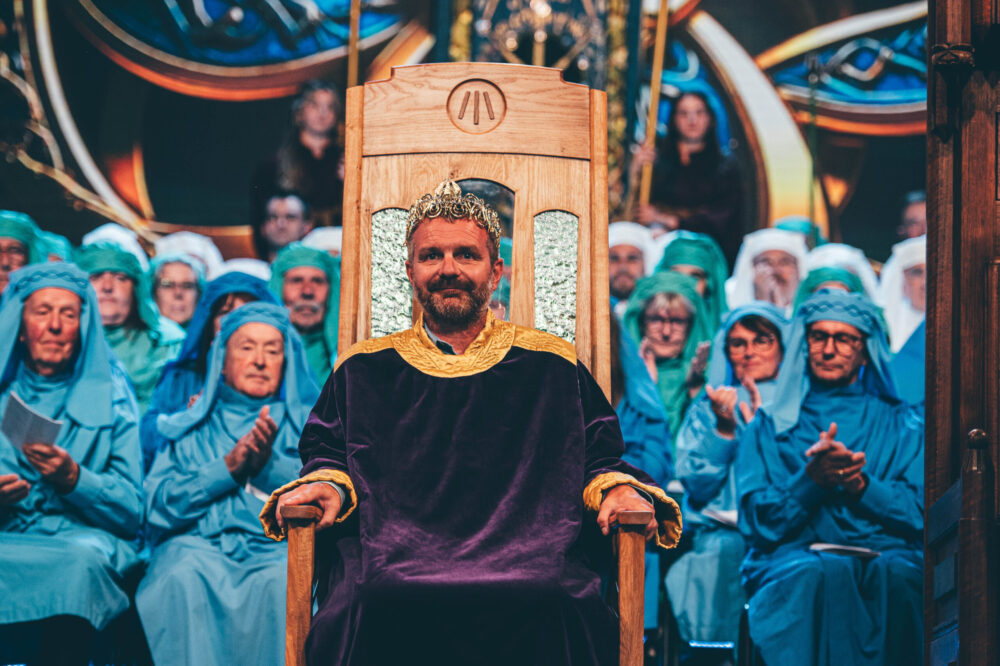
Winner of Wrecsam National Eisteddfod crown - 4th Aug.

Crown winner Owain Rhys
Image: 
https://nation.cymru/culture/winner-of-wrecsam-national-eisteddfod-crown-announced/

Owain Rhys is the winner of the Wrecsam National Eisteddfod crown for his poems about living with a loved one who is suffering with dementia.

The crown – sponsored by Elin Haf Davies – and a cash prize of £750 was presented to Owain in north Wales on Monday (August 4) by Prydwen Elfed Owens.

The prize was awarded for a “pryddest” or collection of poems not in the traditional Welsh style cynghanedd, of no more than 250 lines, on the theme of “Adfeilion” or ruins.

The adjudicators were Ifor ap Glyn, Gwyneth Lewis and Siôn Aled.

The crown was designed and produced by Neil Rayment and Elan Rowlands.

The pair previously created the impressive crown for the Rhondda Cynon Taf Eisteddfod in 2024 – won by Gwynfor Dafydd for his series of poems on “Atgof” – or remembrance.

Head judge Ifor ap Glyn said: “Llif 2 opens with the simple couplet ‘When you forget / every day as you wake’ – and it discusses living with someone suffering from dementia, namely the poet’s mother.

“It’s a quiet and sensitive treatment of what must be done to help the mother continue to live with dignity as her memory deteriorates.

“The collection presents a tender picture of a difficult situation faced by so many families today, and we sense the depth of the poet’s feelings toward his mother and her former strength.”

Text: https://nation.cymru/culture/winner-of-wrecsam-national-eisteddfod-crown-announced/

See also: https://eisteddfod.wales

My Source: BBC Four Episode 1 - 15mins
https://www.bbc.co.uk/iplayer/episode/m002gwyq/eisteddfod-eisteddfod-2025-with-huw-stephens-episode-1

Friday, February 24, 2023

Call for Papers (i) Community Development and Preventative Care With Older People: New Values and Approaches

Editors: Fiona Verity, Frances Barker, Mark Llewellyn, Simon Read, and Jonathan Richards

Deadline for Abstracts: 15 March 2023
Deadline for Articles: 31 July 2023
Publication of the Issue: January/March 2024

Social Inclusion, peer-reviewed journal indexed in the Social Sciences Citation Index (Web of Science; Impact Factor: 1.543) and Scopus (CiteScore: 2.5), welcomes new and exciting research papers for its upcoming issue "Community Development and Preventative Care With Older People: New Values and Approaches," edited by Fiona Verity (Swansea University), Frances Barker (Solva Care), Mark Llewellyn (University of South Wales), Simon Read (Swansea University), and Jonathan Richards (University of South Wales).


The subject of this thematic issue is a prevention agenda in social care for older people, with a focus on community development values and approaches. Though current policy direction across many countries suggests opportunities for re-imagining how prevention may be best conceptualised, numerous studies have highlighted that there remains considerable confusion and disparity in how this plays out in practice. 

Prevention in social care can be implemented from mixed starting points, i.e., economic objectives, social justice objectives, and look different in practice. Included within this broad agenda are community development approaches and service delivery models driven by the needs of older people in their communities/localities, and collectively focused on common concerns and solutions.

This thematic issue will canvass questions such as:

  • What can be learnt from social care preventative practices with older people that use community development approaches?
  • How might older people be part of a reimagination of a preventative agenda in social care?
  • What can social enterprises and cooperatives contribute to advancing a prevention agenda in social care?
  • What might the marketisation of service delivery systems (e.g., individualised/direct payments) mean for community development solutions and approaches?
  • How can prevention in social care be better conceptualised?
  • What has been learnt from the impact of the COVID-19 pandemic on older populations to inform a prevention agenda in social care?

Authors interested in submitting a paper for this issue are encouraged to read the full call for papers:
https://www.cogitatiopress.com/socialinclusion/pages/view/nextissues#PreventativeCare

Abstracts welcome by 15 March 2023.

Kindest regards,
Mariana

Mariana Pires Social Inclusion Cogitatio Press 1070-129 Lisbon Portugal New issues (open access): Vol 11, No 1 (2023): Disability and Social Inclusion: Lessons From the Pandemic
https://www.cogitatiopress.com/socialinclusion/issue/view/332 Vol 10, No 4 (2022): Networks and Contested Identities in the Refugee Journey
https://www.cogitatiopress.com/socialinclusion/issue/view/331

My source:
EUROPEAN-SOCIOLOGIST list

Post ii: https://hodges-model.blogspot.com/2023/02/h2cm-relational-ontology.html

Thursday, January 30, 2025

Save Cardiff University School of Nursing - Sign the Petition

Cardiff University have announced that the School of Nursing is set to close with cuts to staffing because of a funding shortfall. 

We condemn this action and urge the university to find another solution that does not involve closing the School of Nursing. 

This awful decision will have a direct impact on the number of nurses available to work in health boards across the country . At a time where there is a significant number of nursing vacancies within the NHS this action will undermine an already depleted workforce. 

With well over a 1,000 students within the department, Cardiff University School of Nursing contributes a very important number of nurses which are employed within the NHS each year. 

The school of nursing is ranked 1st in Wales and is an centre of excellence. It is a dynamic, innovative and forward looking school. They are recognised for their excellence in learning, teaching and research. They pride themselves on pursuing research of the highest quality, and are one of the leading healthcare departments in the UK.

As well as this, the staff  work incredibly hard, have invaluable diverse expertise and put their hearts and souls into making the school a vibrant and welcoming place. The nursing department is full of warm, intelligent, passionate people with a wealth of knowledge, who are at danger of losing their livelihoods. We stand in solidarity with the university staff affected by this decision. 

Please sign this petition in the hope that Cardiff University reconsider its decision to close the School of Nursing. 

https://t.co/HU5Cyn8j8p

QR code also available.

Previous posts: 

Nursing, history and (future) travels

Wales

It would be marvellous to be able to deliver a lecture on Hodges' model to new nursing course entrants. Vital though to secure the future of all.

Tuesday, July 19, 2011

Nursing, history and (future) travels

From: Stu Young c/o Facebook, Royal College of Nursing Students, 3:28pm Jul 19

Dear All,

Please look up the "Mary Seacole Memorial Statue Appeal" page on facebook it has moved to a new page, please support this cause for a nurse often forgotten by history.

Mary Seacole Memorial Statue Appeal

Mary Seacole born in Jamaica in 1805, died in London 14th May 1881: Jamaican / Scottish nurse, doctres.

<->

PJ: The other week I took my mother and aunt to Tywyn, Wales to trace family history and meet some friends. On the way back we stopped in Bala. I had heard of another nurse and a bookshop reminded me: Elizabeth Cadwaladr - with a movement for another memorial.

The lady in the shop explained the way to Betsy Cadwaladyr's home. That's a walk for the next trip.


UK Centre for the History of Nursing and Midwifery (disbanded 2018)

RCN: History of Nursing Society community

Thursday, September 04, 2025

Parity of Esteem: It's all smoke and mirrors ...

Having just visited the National Gallery and an exhibition on Millet:

https://www.nationalgallery.org.uk/exhibitions/millet-life-on-the-land

Dr Sanil Rege on twitter provided:


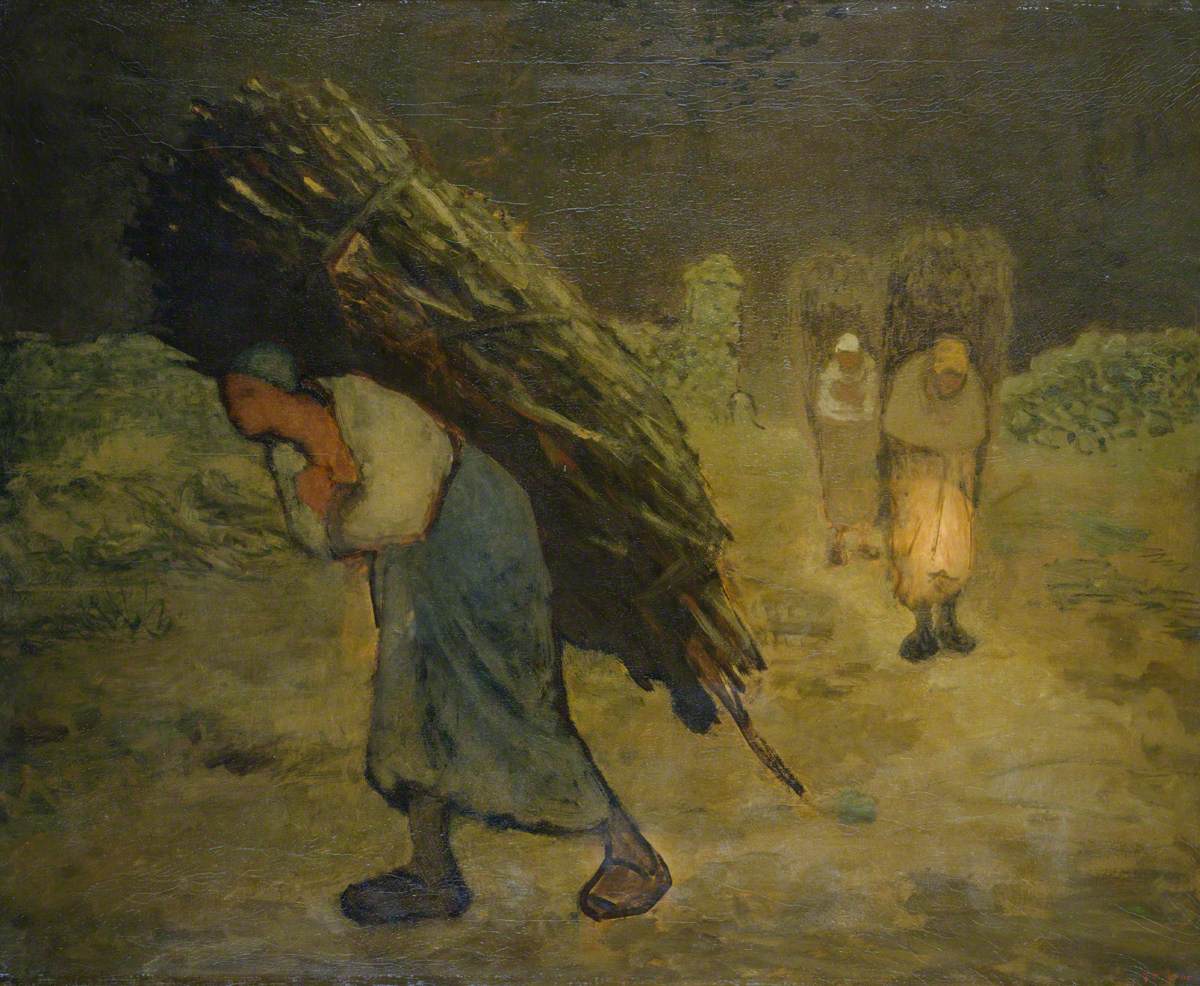
Seeing, and reading (again?) about 'The Faggot Gatherers' I couldn't help but see socio-economic history enacted:

'Two women are taking a short rest from gathering tree branches for sale as firewood. The older woman’s hunched back and clawed hands betray a lifetime of physical toil. The setting is the forest of Fontainebleau, south of Paris, close to the village of Barbizon. Millet was an exponent of Realism, a movement that rejected historical art and idealisation in favour of a truthful view of contemporary reality.'

Text: https://www.nationalgalleries.org/art-and-artists/232271
Winter, The Faggot Gatherers Jean-François Millet (1814–1875) National Museum Cardiff

The National Gallery's accompanying text reads:

'Three women are on their way home trom the forest of Fontainebleau. One of its entrances, the Porte aux Vaches, is visible at the back right. The staggering scale of their loads threatens to overwhelm them in their stumble homewards. The scene evokes Millet's 1851 letter to his biographer Alfred Sensier, in which he described how seeing 'a poor figure laden with a faggot reminded him of the constant fatigue of people's lives.
While the painting is unfinished, the elemental figures are typical of Millet's vork. The extreme simplification of their forms results in austere silhouettes.'

Mental illness has always been a facet of humanity, evidence of trephination from prehistoric times and across cultures and geographies bears testimony to the mind - body divide. Life was brutish physically too. What chance did the weakest stand? If, that is a broken bone: you could be left behind? But perhaps we underestimate the knowledge and experience of our ancient ancestors. Knowledge gained and passed orally, culturally, even before written history. Perhaps too, we struggle to understand how early humanity expressed itself beyond the big-stick of nature and the struggle for survival as the hominids that led to 'us' were winnowed down?

Even as recent as the 19th century life was hard. As the notes above attest, Millet's work seeks to record the sheer physicality of labour, even as the industrial age emerged. The advent of the industrial revolution brought its own pressures and privations, as pastoral life is replaced with change work at home (spinning cotton) to urban and factory growth. 

Severe mental illness would have been institutionalised in poor houses, religious and charitable organisations. Parity of esteem is grounded, to some extent in the questions: "What happened to you?", or "How are you feeling today?" In Millet's work the physical cost and strain stands out. While in the L'Angelus there is debate about prayer, or grief. What is visible usually speaks first, and stands for itself. This is why self-awareness, reflection, critical thinking, observational and interpersonal skills are important; and why mental health nursing calls for specific knowledge and skills. And, in psychiatry too, even when the same is contested.

Image source: Oil on carvas Lent by Amgueddfa Cymry - Museum Wales. Bequeathed by Gwendoline Davies in 1952.

Tuesday, December 10, 2024

Webinar: 11 December - Universal Health Coverage (UHC) Day 2024

"The UHC Compass and Social Participation:
empowering patient organisations to hold governments
 accountable for universal health coverage"

Register for the UHC Compass launch!

To mark Universal Health Coverage (UHC) Day 2024, IAPO will officially launch the UHC Compass at an exciting webinar titled "The UHC Compass and Social Participation: empowering patient organisations to hold governments accountable for universal health coverage" on 11 December 2024, from 11:30 to 13:00 GMT via Zoom.

The webinar will be conducted in English with simultaneous interpretation into Spanish.

Panellists include:
  • Dani Mothci – International Alliance of Patients’ Organizations (IAPO) 
  • Dr Pamela Cipriano – UHC2030 & International Council of Nurses
  • Lara Brearley – Special Programme on Primary Health Care Universal Health Coverage - Life Course, World Health Organization
  • Dumiso Gatsha – Success Capital NGO & Civil Society Engagement Mechanism for UHC2030 (CSEM)
  • Nicola Bedlington – Global Patient Think Tank & Millwater Partners
  • Smitha Sadasivan – Global Patient Think Tank, Inclusive Health Policy, Disability Rights India Foundation & CSEM 
  • Paul Mendoza – Psoriasis Philippines and Psoriasis Asia Pacific & IAPO
The UHC Compass is a dynamic tool created by patients for patients, empowering local leaders and communities to advance universal health coverage (UHC). In the context of the World Health Assembly resolution on social participation and UHC Day 2024, this session will explore how the Compass can serve as a tool to hold governments accountable for investing in UHC.

Co-created by the Global Patient Think Tank (GPTT), a diverse group amplifying the patient voice in the UHC movement, the Compass is proudly hosted by IAPO. Our mission is to ensure this resource reaches and benefits our global network of patient organisations.

Join us to discover how the UHC Compass can help make UHC a reality for everyone!

Learn more & register [https://www.iapo.org.uk/node/15686] Share https://iapo.cmail19.com/t/d-fb-sfiudt-iuqjytrli-o/ Tweet https://iapo.cmail19.com/t/d-tw-sfiudt-iuqjytrli-b/ Share [https://iapo.cmail19.com/t/d-li-sfiudt-iuqjytrli-h/]

[http://www.iapo.org.uk]

The International Alliance of Patients’ Organizations is registered in England and Wales as charity no.1155577 and company limited by guarantee no.08495711.

Registered office: Hounslow House, 7 Bath Road, Hounslow TW3 3EB, UK.

It is also the IAPO's 25th Anniversary.
More details at:

https://www.iapo.org.uk/node/15687

I will post again in the New Year.

My source: HIFA

Previously: compass : UHC : patients

Saturday, March 24, 2012

Alcohol: Messages in bottles, domains and anagrams

The perennial health news item that is alcohol has bubbled and overflowed this week. In 1987-88 I visited several nearby alcohol services in Blackburn, Preston and Salford with a questionnaire to compare and contrast with Chorley which at the time had no dedicated alcohol services. There was Alcoholics Anonymous AA and Al-Anon, but nothing specific through health beyond community psychiatric nurses. The project was for the CPN(Cert.).

Back then I remember a Consultant Psychiatrist saying that the level of alcohol consumption is directly related to cost. The literature I read also drew attention to historical comparisons. I think it was Alcohol Concern who supported this view and called for urgent action. Of course all that was some 24 years ago. Incredible that there is some movement in 2012. In 2007 the taxi driver from Elounda to Heraklion airport described the movement and horizontal stasis that adorns the pavements (and spills onto the roads) of Malia as we zipped by. The Brits do have a problem. A Consultant physician highlighted this from a hospital ward on BBC Radio 4 news today.

Don't get me wrong: I like an occasional drink but my enjoyment of alcohol has been tempered over the years by several experiences:
  • An early party aged 15 (and at a church social club) preloading was already in vogue. No sooner were a group of us sat at a table than someone threw up on the table. It was alcohol.
  • Biology and human biology lessons helped instil the impacts of alcohol.
  • Having to say 'goodbye' to clients with a drink problem, duly referred by their GP. I cannot support them in their drinking after several attempts to effect change.
  • Appreciating the link between drink and risk behaviours.
  • Working with people whose 'ill-health career' has seen them having to live with, but not themselves recognise Korsakoff's syndrome.
  • Seeing people over three decades who cannot be supported in the community with their family, relatively young for residential care, but given a lack of specialised facilities - there they frequently are.
Hopefully the policy turn will have a positive impact extending beyond news headlines:

Minimum alcohol price planned for England and Wales
http://www.bbc.co.uk/news/uk-17482035

Alcohol pricing: politics under the influence 
http://www.guardian.co.uk/commentisfree/2012/mar/23/alcohol-pricing-politics-under-influence?newsfeed=true

With the prospect of an alcohol and a new NHS information strategy in England you hope that some dots can be joined. Here are a few:

INTERPERSONAL : SCIENCES
SOCIOLOGY : POLITICAL
Motivation    Psychological effects
Attitudes to risk         Predisposition
Personality     Education    Vulnerability
Data     Evidence      Public health
Physical effects    Dual diagnosis
Research       Violence - statistics
Social contradictons and attitudes - 'image'
Upbringing       Cultural attitudes
 Marketing          Media
Cost per unit      Services        Funding  
Cost to health budget      Reporting
Policy   Lobbying   Taxes   Commissioning


Beer label c/o http://www.beerlabelizer.com/

'Real Stout' = 'Sale Tutor'

Thursday, January 13, 2022

One person's castle...

Individual
|

INTERPERSONAL : SCIENCES
humanistic ------------------------------------------ mechanistic
SOCIOLOGY : POLITICAL
|
Group
Michael Allen, a former soldier, spent three years building a mountain fort after developing PTSD
TOM WREN/SWNS @TomWrenPhoto
doing
activity
place
reablement

sense making
relationships
roles
belonging


The former homeless veteran who built a castle on a Welsh hill and welcomes thousands of visitors

https://www.walesonline.co.uk/news/wales-news/former-homeless-veteran-who-built-22551325

My source:

Parker, C. One man’s castle helps in the fight for mental health. The Times, 6 January 2022, p.13.

Photos: https://www.thetimes.co.uk/article/one-mans-castle-helps-in-the-fight-for-mental-health-pj7jmhs97

@TomWrenPhoto https://www.tomwrenphoto.com/


Thursday, February 16, 2023

ISTAS23: Technology and Analytics for Global Development

Technology and Analytics for Global Development

13th – 15th September 2023

Swansea University, Swansea, Wales

The IEEE International Symposium on Technology and Society (ISTAS) is the flagship conference of the IEEE’s Society on Social Implications of Technology (SSIT). ISTAS is a multi-disciplinary and interdisciplinary forum for engineers, policy makers, entrepreneurs, philosophers, researchers, social scientists, and technologists to collaborate, exchange experiences, and discuss the social implications of technology.

The Sustainable Development Goals (SDGs) are global grand challenges that are inherently complex, multi-faceted and socially embedded (Corbett & Mellouli, 2017). The SDGs inevitably encounter tensions between their design and implementation, representing design-reality gaps (Pradhan et al., 2022; Heeks, 2020a; Dennehy et al., 2014). While optimism is relatively high about the role of technology and analytics in the context of global development (Smidt & Jokonya, 2022), significant learning remains about how best to use them as ‘platforms that mediate development’ (Heeks 2020b). Further, despite the efforts made by scholars to advance understanding about the role of technology and analytics for global development (e.g., Dwivedi et al., 2021; Khene & Masiero, 2022; Masiero & Arvidsson, 2021), a concerted effort within and between academic disciplines, policy-makers, practitioners, and the intended beneficiaries of the SDGs will help to discover and create better ways to achieve the SDGs.

ISTAS23 aims to bring together contributions from a variety of perspectives, disciplines, and communities for the advancement of knowledge regarding Technology and Analytics for Global Development. We invite participation from academics and practitioners who are engaged in current debates about the role and significance of technology and analytics, and who are interested in topics related to sustainability, ethics, equity, and social values for global development.

IEEE ISTAS 2023 is Technical Co-sponsored by IEEE Region 8, IEEE UK and Ireland Section, IEEE UK and Ireland SSIT Chapter and IEEE UK and Ireland Education Chapter.

ISTAS23 more details ...

My source: c/o Fabio Caraffini - Co-chair of Track 8 -

https://www.linkedin.com/in/fabio-caraffini/  and Twitter is https://twitter.com/facaraff

via www.jiscmail.ac.uk/AI-SGES, a mailing list hosted by www.jiscmail.ac.uk

Thursday, July 06, 2017

Money and Mental Health [i] Impact of Mass Unemployment Events (MUEs)


This post was prompted by an infographic on twitter and an associated report that includes the infographics:

Davies AR, Homolova L, Grey C, Bellis MA (2017). Mass Unemployment Events (MUEs) – Prevention and Response from a Public Health Perspective. Public Health Wales, Cardiff ISBN 978-1-910768-42-6.

The report is very interesting, not just in it demonstrating the conceptual scope and application of Hodges' model, but in the real-world examples of people who have experienced this socioeconomic phenomena which impacts so heavily on the individual, spouses (partners) and communities. In addition the research is global across countries and industries. It is sobering to reflect also on the dynamic that is the workforce. Paradoxically, at present UK employment is at a high:


"The employment rate (the proportion of people aged from 16 to 64 who were in work) was 74.8%, the joint highest since comparable records began in 1971." (ONS June 2017).
The report does not mention the 'gig economy', but the rise of 'zero hours' a feature of the new economy is found on page 48. With demographers, forward thinking policy makers and media seers predicting the future of work as the robots not only find their feet, but walk, run and jump - you wonder where we are headed. Children will need to be educated in such a way that they are prepared to retrain, possibly several times in their working lives. Other avenues to ease the human pain are a basic universal income, and a reduced working week. You do wonder if another hidden and subtle MUE is underway? It is not so much massive, as yet, but it is happening in not so slow - slow motion ...?

What follows is drawn from section 4.


individual
|
INTERPERSONAL : SCIENCES
humanistic ----------------------------------------- mechanistic
SOCIOLOGY : POLITICAL
|
group - population


Effect on mental health and well-being

loss of self-esteem, increased stress,
anxiety, changes to perceived control,
shame and loss of status, withdrawal
experiencing a grieving process

insomnia, depression, self-harm,
attempted and completed suicide

loneliness

financial strain

 Effect on pre-existing poor health behaviours - 


helplessness, hopelessness

loss of individual and collective* identity


physical health

reduced freedom from disability

back-pain

mortality
reduced life expectancy

stroke, myocardial infarction
weight gain
relapse to smoking ... again


- such as, increased alcohol consumption, tobacco smoking, illegal and prescription drug misuse, and being overweight

"job for life"
hidden morbidity
spousal mental health

reduced household income

change in family dynamics

emasculation

increased conflict and domestic violence, increased unplanned pregnancy, and reduced infant growth - child educational attainment

Community impact: loss of cohesion and identity*

the already unemployed

social inequalities


women seeking community mental health support as their (male) partners will not seek help

having to work away from home

intergenerational impact

culture of worklessness, unemployability

"job for life of a family"


hidden unemployed

accumulation of debt

jobs offered not local

labour market
competition

housing market - affordability
commuting costs

reliance on food banks

 increased expenditure on antidepressants 
and related drugs

financial hardship

increased hospitalisation, out-patient attendance

Community impact: labour market and economy

Loss of industries
youth move away - 

no workers for new initiatives/industries

loss to local economy of MUE

reliance on welfare benefits


A future post will conduct a similar treatment of a publication by The Money and Mental Health Policy Institute.

Sunday, September 29, 2019

Scenic Sports ... in Hodges' model

individual
|
INTERPERSONAL : SCIENCES
humanistic ----------------------------------------------- mechanistic
SOCIOLOGY : POLITICAL
|
group - population


Rugby World Cup, photo, Foxsports.com.au, Getty Images
https://www.foxsports.com.au/rugby/rugby-world-cup/wales-unchanged-while-wallabies-swing-the-axe-for-world-cup-blockbuster/news-story/d43fef9a9311da0cd344a888773faab0

My source:
Luyken, J., Environmental exhibition in Austria attracts far-Right ire, The Daily Telegraph, 28 September 2019, p.18.

Friday, November 15, 2024

Podcast: Local green spaces and mental health

Dear CHAIN member,

We would like to draw your attention to the following NIHR alert. Please pass on as appropriate. Thank you.

NIHR

Local green spaces are linked with better mental health

Podcast: Local green spaces and mental health

In this podcast, Helen Saul, Editor in Chief of NIHR Evidence, and study author Sarah Rodgers, Professor of Health Informatics, University of  Liverpool, discuss the impact of local green spaces on people's mental health.

Researchers analysed data on more than 2 million people in Wales over 10 years to explore the impact of green spaces on mental health. They linked information about people’s mental health with information about the greenness of their home’s immediate surroundings and how close they lived to green or blue spaces (such as parks, lakes, and beaches). They found that people had a lower risk of anxiety and depression if:

· their home’s immediate surroundings (within 200-300 metres) were greener
· they could access green and blue spaces nearby.

The researchers say that local authorities could improve the mental health of their community by increasing the greenery in their towns and cities and improving access to green and blue spaces.

Read more at: https://evidence.nihr.ac.uk/alert/local-green-spaces-are-linked-with-better-mental-health/?source=chainmail

Regards,

Irina Johnston
CHAIN Administrative Assistant

(and my source.)

Previously: 

Tuesday, February 26, 2013

Finding space in Hay-on-Wye: Complexity & healthcare - book

This time last week I was in Hay-on-Wye the book town on the border of England and Wales. February is still pretty cold, a good excuse to really browse.

complexity and healthcare - book cover
Amongst some great finds were three books on complexity in primary care and medicine.

I am sure that the way complexity can be woven within Hodges' model are manifold. On page 4 of Sweeney & Griffiths: 
'Using the idea of multidimensional phase space can help us understand categories of disease without clear boundaries. Instead of thinking of a person's illness as a walled off and separate pigeon hole, it can be useful to think of it as a point within a multidimensional illness space'

Kieran Sweeney, Frances Griffiths (eds). (2002) Complexity and healthcare: an introduction. Radcliffe Medical Press Ltd.

Monday, April 25, 2022

Conveying the Message: Channel, Noise, Redundancy, Information ...

INDIVIDUAL
|
 INTERPERSONAL    :     SCIENCES               
HUMANISTIC --------------------------------------  MECHANISTIC      
SOCIOLOGY  :   POLITICAL 
|
GROUP


The day the world changed

Episode 1 of 8

"Ukrainian writer Andrey Kurkov reflects on the tumultuous events of the last few days and his family's flight from their home in Kyiv.

Written and read by Andrey Kurkov
Translated by Elizabeth Sharp
Produced by Emma Harding

Production co-ordinator Eleri McAuliffe
Technical producer Catherine Robinson

A BBC Cymru Wales production for BBC Radio 4"


Stamp image: https://www.ebay.co.uk/usr/vtgsellerua?_trksid=p2047675.m3561.l2559


Tuesday, August 16, 2016

"Making legal advice a clinical department" Dept of Clinical Law

individual
|
INTERPERSONAL : SCIENCES
humanistic -------------------------------------------  mechanistic
SOCIOLOGY : POLITICAL
|
group-population


Definitions: Child in England and Wales
< 18 years of age


"Changing views in society have pushed...

"Making legal advice a clinical department

'child' : 'adult'
mental capacity, deprivation of liberty,
candidness and forethought,
end of life decisions,
treating physical illness in the mental ill,
consent, confidentiality and treatment refusals (p.20)


... legal considerations of patient rights to 
the front of clinician's agendas"


Wheeler, R., & Marsh, M. (2016). Making legal advice a clinical department. Health Service Journal, April 13, 126: 6482, 20-21.