Hodges' Model: Welcome to the QUAD: family

Hodges' model is a conceptual framework to support reflection and critical thinking. Situated, the model can help integrate all disciplines (academic and professional). Amid news items, are posts that illustrate the scope and application of the model. A bibliography and A4 template are provided in the sidebar. Welcome to the QUAD ...

Showing posts with label family. Show all posts

Saturday, May 02, 2026

Martha's Rule revisited ...

Last year in May, I posted about Martha's Rule. A year on, there is an update:

Evidence suggests Martha’s Rule is saving lives

'To support learning and assess the impact the programme is having, we regularly collect data from sites where Martha’s Rule is in place.

Early evidence suggests Martha’s Rule is saving lives and helping thousands of patients benefit from changes to their care.

Data from September 2024 to February 2026 shows 12,301 Martha’s Rule calls were made, with the highest proportion of calls (72%) made via the family/carer escalation process. 4,047 Martha’s Rule escalation calls (33%) related to acute deterioration.

Of those, 2,310 calls required changes in treatment. This includes 524 calls which resulted in transfers of care to high dependency or intensive care units, enhanced levels of care, tertiary centres or referral/transfer to specialists or a specialist ward. Other changes in treatment (1,786) did not require transfer of a patient from a ward in-patient setting. This includes the introduction of a new medication such as an antibiotic to treat infection, investigations including scans and procedural interventions including going to theatre.'

Source:
https://www.england.nhs.uk/patient-safety/marthas-rule/#implementingmarthasrule


individual
|
INTERPERSONAL : SCIENCES
humanistic ------------------------------- mechanistic
SOCIOLOGY : POLITICAL
|
group

"Not herself ..."
 
Listening 

Martha

1,700 NHS staff

Taking action


escalation
Mills

parents, guardians, friends & family
 
Familly input -
Multidisciplinary Team
 
Teamwork


Martha's Rule


My prompt:
Koronka, P. '1,700 NHS staff use Martha's Rule to raise the alarm'. The Times, 1 May, 2026, p.6.

Previously: 'intuition' : 'observation' : 'listen' : 'communication' (Never as an afterthought.)

Saturday, April 11, 2026

'Sociological Theory in Transition' (always ..?)

Conclusion: Sociology as a Skin Trade

In other writings (O'Neill, 1972, 1985) I have set out a rival conception of the embodied subject who suffers the hopes and defeats of what I have called 'sociology as a skin trade'. At the same time I began to renovate the imagery of society as a body-politic, to differentiate the levels of the bio-body, the productive body and the libidinal body as sites where human beings pursue the relevant knowledge and values of health, work and happiness. Each level of discourse requires he formulation of relevant technical knowledge (medicine, political economy, sociology and psychoanalysis) and each level has its own emancipatory discourse about health creativity and self-expression. Because each of these discursive interests is likely to be articulated by professional social scientists and therapists, it is necessary to require the institutionalization of mechanisms of political and ethical accountability to laypersons' common-sense knowledge and values regarding their bodies, their families, their work and their souls. Medical and sociological nemesis is not the result of a therapeutic conspiracy against society. It belongs to the radical technological a priori of Western knowledge whose ambition is fundamentally bio-technological. The sin of Adam and Eve was the best humankind could manage at the time. In today's laboratory Adam and Eve can be bypassed and life can be set in motion according to the best genetic formulas. Huge legal, ethical and sociological problems are simultaneously generated. And thus we step into a new 'crisis of opportunity` for which very few social scientists are prepared - whether by training or morals.' p.35.
INDIVIDUAL
|
     INTERPERSONAL    :     SCIENCES               
HUMANISTIC --------------------------------------  MECHANISTIC      
SOCIOLOGY  :   POLITICAL 
|
GROUP
psychoanalysis

body as a machine
bio-technological

body-
bio-

sociology

-politic

bio-politics of the population


'In concrete terms, starting in the seventeenth century, this power over life evolved in two basic forms ... One of these poles - the first to be formed, it seems - centered on the body as a machine: its disciplining, the optimisation of its capabilities, the extortion of its forces, the parallel increase of its usefulness and docility, its integration into systems of efficient and economic controls, all this was ensured by the procedures of power that characterised the disciplines: an anatomo-politics of the human body.
The second, formed somewhat later, focussed on the species body, the body imbued with the mechanics of life and serving as the basis of the biological processes: propagation, births and mortality, the level of health, life expectancy and longevity, with all the conditions that can cause them to vary. Their supervision was effected through an entire series of interventions and regulatory controls: a bio-politics of the  population. (Foucault, 1980a, p. 139; altered for my emphasis)' p.24.
'Bio-power regulates bodies individually, as in the clinical model. and collectively, as on the model of social medicine. The two strategies are combined to produce the most complete system of discipline ever known in the history of power. Disciplinary power works in hospitals. schools, prisons, armies, factories and bureaucracies. It is compatible with shifting vocabularies of rights, reform and welfare. It is intimate and collective; it is obeyed not because of its power over death but because of its power over life. It is this shift in emphasis that is the source of the expansion of bio-power whose corresponding apparatus we may call the therapeutic state.' p.25.
 
O’Neill, J. Sociological Nemesis: Parsons and Foucault on the Therapeutic Disciplines, Chapter 1 (pp.21-35). In. Wardell, M.L. and Turner, S. (Eds.). (1986) Sociological Theory in Transition. London: Allen & Unwin, Inc. https://digitalcommons.usf.edu/phi_facpub/86

Previously: 'sociology' : 'power' : 'body'

Friday, March 06, 2026

The land speaks through Bears & Peoples: Together

Figure 2

ABSTRACT

Landscape genetic analyses of wildlife populations can exclude variation in a broad suite of potential spatiotemporal correlates, including consideration of how such variation might have similarly influenced people over time. Grizzly bear (Ursus arctos) populations in what is now known as coastal British Columbia, Canada, provide an opportunity to examine the possible effects of a complex set of landscape and human influences on genetic structure. In this collaboration among the Nuxalk, Haíɫzaqv, Kitasoo/Xai’xais, Gitga’at, and Wuikinuxv First Nations and conservation scientists, we characterized patterns of genetic differentiation in the grizzly bear, a species of high cultural value, by genotyping 22 microsatellite loci from noninvasively collected hair samples over a 23,500 km² area. We identified three well-differentiated groups. Resistance surfaces, which incorporated past and present human use, settlement, and landscape resistant features, could not explain this pattern of genetic variation. Notably, however, we detected spatial alignment between Indigenous language families and grizzly bear genetic groups. Grizzly bears sampled within an area represented by a given language family were significantly similar to those sampled within that language family (P = 0.001) and significantly divergent to those sampled outside the language family (P = 0.001). This spatial co-occurrence suggests that grizzly bear and human groups have been shaped by the landscape in similar ways, creating a convergence of grizzly bear genetic and human linguistic diversity. Additionally, grizzly bear management units designated by the provincial government currently divide an otherwise continuous group and exclude recently colonized island populations that are genetically continuous with adjacent mainland groups. This work provides not only insight into how ecological and geographic conditions can similarly shape the distribution of people and wildlife but also new genetic evidence to support renewed, locally led management of grizzly bears into the future.

INDIVIDUAL
|
    INTERPERSONAL    :     SCIENCES               
HUMANISTIC --------------------------------------  MECHANISTIC      
SOCIOLOGY  :   POLITICAL 
|
GROUP
'This work is dedicated to the late Nuaqawa (Evelyn Windsor), who taught us that people learned their language and way of life from the bears.'

Geographic distance

Spatial overlap

Grizzly bear (Ursus arctos)

Population genetic structure

Landscape genetics


Biocultural diversity

Indigenous language families

Human linguistic diversity

Awareness - Respect


 [What price the future? pj]


Henson, L. H., N. Balkenhol, R. Gustas, M. Adams, J. Walkus, W. G. Housty, A. V. Stronen, J. Moody, C. Service, D. Reece, B. M. vonHoldt, I. McKechnie, B. F. Koop, and C. T. Darimont. 2021. Convergent geographic patterns between grizzly bear population genetic structure and Indigenous language groups in coastal British Columbia, Canada. Ecology and Society 26(3):7.
https://doi.org/10.5751/ES-12443-260307

My source:
Roman Goergen. Grizzly spoken here! Resurgence & Ecologist, July/August2023: 339: pp.10-11.

See also: https://iaac-aeic.gc.ca/050/documents/p21799/85674E.pdf

Previously: 'landscape' : 'ecology'

Wednesday, December 03, 2025

Anti-Science countermeasures ...

'We are pleased to announce the winners for the 2025 Nature Awards for Standing Up For Science - The John Maddox Prize.

We are proud to announce that our Maddox Prize winner is Virginia Burkett, United States Geological Survey. Judges were impressed by her persistence, as a government adviser and an expert in coastal systems, in the face of opposition.' ...

https://www.nature.com/immersive/maddoxprize/winners/index.html


Virginia Burkett's five 'tips for resisting the anti-science lurch'

individual
|
INTERPERSONAL : SCIENCES
humanistic -------------------------------------------  mechanistic
SOCIOLOGY : POLITICAL
|
group-population

2. KEEP RECEIPTS (your memory)
know your institution's
scientific integrity policy

2. Never compromise
on scientific integrity
3. Find allies
5. Be prepared for setbacks,
e.g. relying on family and religious faith.

keep receipts (your defence)
4. KNOW YOUR INSTITUTION'S 
SCIENTIFIC INTEGRITY POLICY


My source:

Anjana Ahuja, Tips for resisting the anti-science lurch, Opinion, Research. Financial Times, Wednesday 5 November, 2025, p.20.

Friday, August 29, 2025

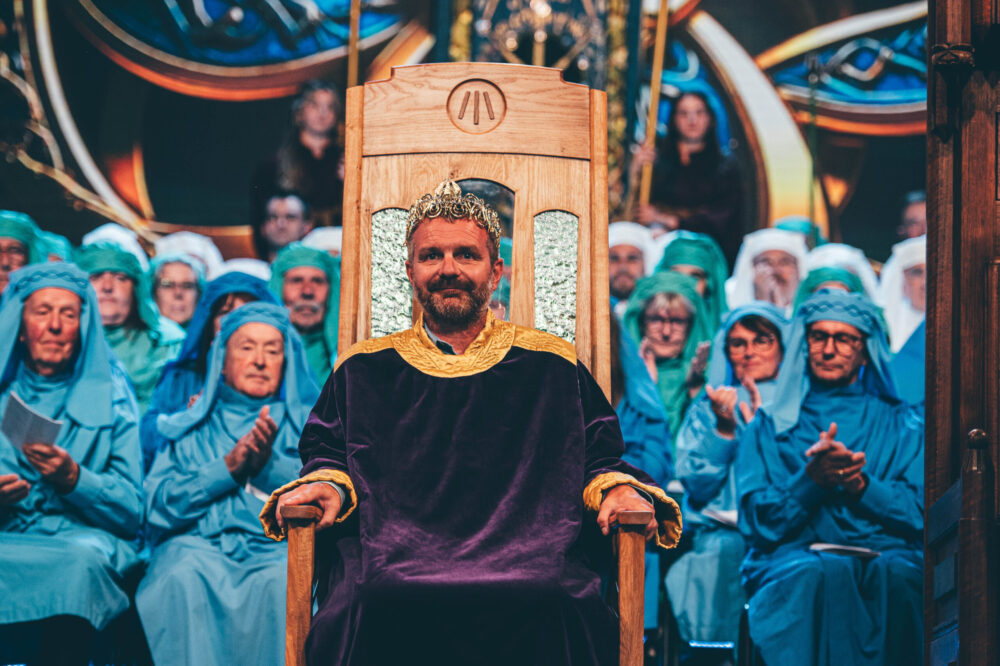
Winner of Wrecsam National Eisteddfod crown - 4th Aug.

Crown winner Owain Rhys
Image: 
https://nation.cymru/culture/winner-of-wrecsam-national-eisteddfod-crown-announced/

Owain Rhys is the winner of the Wrecsam National Eisteddfod crown for his poems about living with a loved one who is suffering with dementia.

The crown – sponsored by Elin Haf Davies – and a cash prize of £750 was presented to Owain in north Wales on Monday (August 4) by Prydwen Elfed Owens.

The prize was awarded for a “pryddest” or collection of poems not in the traditional Welsh style cynghanedd, of no more than 250 lines, on the theme of “Adfeilion” or ruins.

The adjudicators were Ifor ap Glyn, Gwyneth Lewis and Siôn Aled.

The crown was designed and produced by Neil Rayment and Elan Rowlands.

The pair previously created the impressive crown for the Rhondda Cynon Taf Eisteddfod in 2024 – won by Gwynfor Dafydd for his series of poems on “Atgof” – or remembrance.

Head judge Ifor ap Glyn said: “Llif 2 opens with the simple couplet ‘When you forget / every day as you wake’ – and it discusses living with someone suffering from dementia, namely the poet’s mother.

“It’s a quiet and sensitive treatment of what must be done to help the mother continue to live with dignity as her memory deteriorates.

“The collection presents a tender picture of a difficult situation faced by so many families today, and we sense the depth of the poet’s feelings toward his mother and her former strength.”

Text: https://nation.cymru/culture/winner-of-wrecsam-national-eisteddfod-crown-announced/

See also: https://eisteddfod.wales

My Source: BBC Four Episode 1 - 15mins
https://www.bbc.co.uk/iplayer/episode/m002gwyq/eisteddfod-eisteddfod-2025-with-huw-stephens-episode-1

Wednesday, August 13, 2025

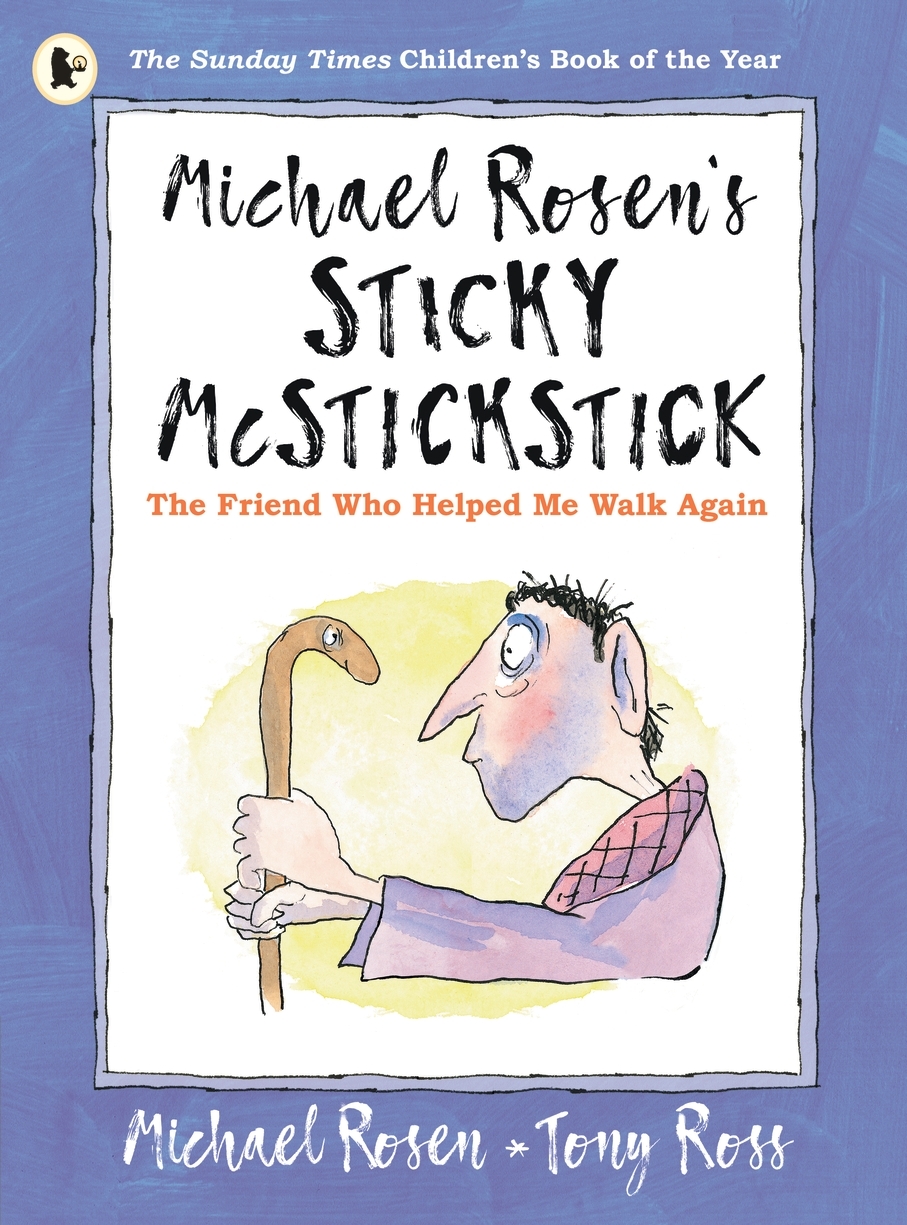
Jackanory: Parity of Esteem 'read' c/o Mr Rosen

Individual
|
      INTERPERSONAL    :     SCIENCES               
HUMANISTIC  --------------------------------------  MECHANISTIC      
 SOCIOLOGY  :    POLITICAL 
|


My source: 
Shop window of The Addyman Annexe - bookshop, Castle St, Hay-on-Wye, 12th August 2025.

Images: 
'STICKY McSTICKSTICK' - https://www.walker.co.uk/
Illustration - https://www.walker.co.uk/author/tony-ross/

Illustration - https://www.walker.co.uk/author/quentin-blake/

Previously: 'parity'

Friday, July 25, 2025

Good luck Suns & Daughters . . .

Individual
|
      INTERPERSONAL    :     SCIENCES               
HUMANISTIC  --------------------------------------  MECHANISTIC      
 SOCIOLOGY  :    POLITICAL 
|
Group

'The sun may be on its lonesome now - its closest neighbour is 4.2 light years away - but that wasn't always the case. Once upon a time it had close family. After their birth in the same cloud of dust and gas that formed our solar system, these solar siblings scattered hundreds of light years apart in the MilkyWay. In May, astronomers reported the first one: a star called HD 162826.

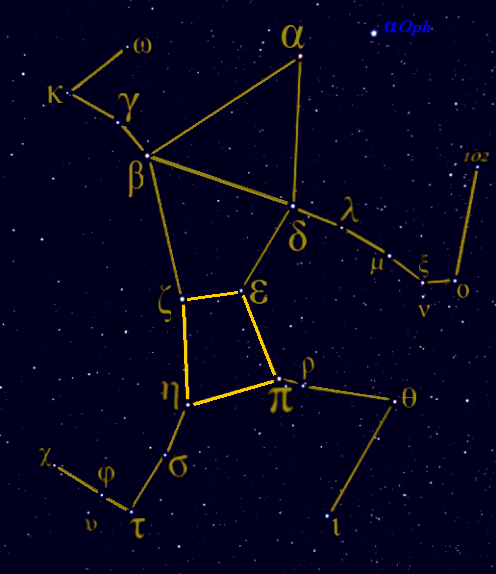
"It looks like the sun, but a little-bit bluer," says Ivan Ramirez at the University of Texas at Austin, who led the study. It's also warmer than the sun and 15 per cent more massive. The star is about 110 light years away, and you can see it with the aid of a pair of binoculars in the left arm of the constellation Hercules.'

Hercules Historical View

'To find its family ties, Ramirez's team combed through galactic archaeology studies, which model the motions of the Milky Way. These predictions laid out where sibling stars would be now if they had formed in the same place as the sun. Though they spread out in different directions, their positions still give away their birthplace, Ramirez says.

He narrowed down the search area to 30 stars, and then looked at them closely to find a family resemblance. Only HD 162826 had a similar chemical make-up to the sun. A separate team led by Eric Mamajek at the University of Rochester in New York also studied the star and found it is the same age
as the sun, as would be expected for two stars born together. Even more tantalising, HD 162826 is already in a catalogue of stars that might harbour planets.'

Science
funding


Rebecca Boyle. Strangest star. New Scientist. 20 September 2014: 223, 2987, pp.38-41.

Image: Sadalsuud, CC BY-SA 3.0, via Wikimedia Commons.

Friday, May 30, 2025

Martha's mum, dad, guardian ...

Hayward, E. Parents really do know when
their child is sick, The Times,
30 May 2025, p.1.

The previous post highlighted the fact that while practice (and theory) based upon research finding that are 'evidence-based' and scientifically rigorous are a 'gold standard; there are other means by which knowledge is obtained. Cultures, often have systems to transfer knowledge - that which matters to the society, even if is not written in the conventional meaning of the term.

Intution is another source, and within social groups can be a powerful spur to action, and help seeking. This is demonstrated regularly in the knowledge that a parent, or guardian has about what is the normal presentation for a child in their care. 

In the UK Martha's Rule is being tested in NHS hospitals. It is encouraging then to hear and read news of a study in Australia (so in combination a 'multicenter' effort?).


Mills, E., Lin, P., Asghari-Jafarabadi, M., West, A., & Craig, S. (n.d.). Association between caregiver concern for clinical deterioration and critical illness in children presenting to hospital: A prospective cohort study. The Lancet Child & Adolescent Health. https://doi.org/10.1016/S2352-4642(25)00098-7


individual
|
INTERPERSONAL : SCIENCES
humanistic ------------------------------- mechanistic
SOCIOLOGY : POLITICAL
|
group

"Not herself ..."

Martha

"Not well"

Martha
Mills

parents, guardians, friends & family


Martha's Rule*


Hayward, E. Parents really know when their child is sick, The Times, 30 May 2025, p.1.

*Under test in the UK.

Previously: 'intuition'

Wednesday, May 07, 2025

Conference: Safety and Quality in Mental Health: Improvement - Led Care c/o RSM

'This event will explore successful strategies for enhancing patient safety and driving quality improvement in mental health services.

This timely event addresses the critical issues highlighted by recent high-profile incidents in mental health care. Keynote speakers, including Adrian James, the National Clinical Director of Mental Health, and Shubulade Smith, President of the Royal College of Psychiatrists, will share their experiences of leading organisations through challenging situations. Jonathan Warren, co-author of the Edenfield report, will also provide unique insights.

Key Themes:

  • Supporting staff through traumatic incidents
  • Amplifying patient and family voices
  • Service redesign for safer care
  • Innovative use of data for improved outcomes
  • Learning from significant events to prevent recurrence
  • Balancing human rights with public protection ...'
at: Royal Society of Medicine, 
1 Wimpole St, 
Marylebone, 
London, 
W1G 0AE, United Kingdom

Wednesday, April 09, 2025

All Day All Night - c/o Christine Sun Kim

Source: https://whitney.org/media/61514


individual
|
INTERPERSONAL : SCIENCES
humanistic ------------------------------- mechanistic
SOCIOLOGY : POLITICAL
|
group
'synaesthetic sphere'

DEAFNESS


SOCIETY

parents signing
friends signing?

ghosting

SOCIO-


ghosting

accessibility
inclusion


-POLITICAL

Ack. Christine Sun Kim - https://christinesunkim.com/

Liverpoool Biennial 2025 - Christine Sun Kim (Look forward to this - may post again.)

My source: Budick, A. The sound of Deaf rage, Life&Arts, FT Weekend. 1-2 March 2025, p.16.

Tuesday, December 24, 2024

Young Carers Choir - 'Love is Enough'

'Young carers face many challenges throughout the year and Christmas can be an especially tough time.

When their friends are having fun, young carers’ responsibilities don’t stop. That’s why we’re delighted Sir Ed Davey and the Bath Philharmonia’s Young Carers Choir have come together to record for a wonderful Christmas song – Love is Enough. 

The song, in support of young carers through Carers Trust and the Bath Philharmonia, has been written by young carers and shines a light on their lives.' 

continued ... 

Wednesday, November 20, 2024

Hello? Is anyone there? 'The Homeless Mind'

individuality
|
INTERPERSONAL : SCIENCES              
humanistic ------------------------------- mechanistic
SOCIOLOGY : POLITICAL   
|
group

'Put differently, the componentiality of the cognitive style pertaining to technological production extends to identity. Again, a specific kind of double consciousness develops. In this case the dichotomy is between concrete identity and anonymous identity. The individual now becomes capable of experiencing himself in a double way: as a unique individual rich in concrete qualities and as an anonymous functionary. This dichotomization in the subjective experience of identity makes it possible for the individual to establish subjective distance vis-à-vis certain features of this identity.9 

For example, the individual will now experience that portion of his identity that contains his anonymization as a 'worker' as being 'less real' than his identity as a private person or family man. Since each portion of identity relates to specific roles, it now becomes possible for the individual to perform some of these roles 'tongue in cheek'. The componentiality of identity, as the componentiality of social relations, makes possible an 'engineering' practice. This time what is involved is the 'engineering' of one's own self. Those aspects of identity that a defined as 'more real' must be protected against threats coming from the 'less real' components of identity.' p.37-38.


Helpful reference to ideas of multi-relational synchronization and institutional vectors and how our mind's became homeless.

Also encouraging, even though 'historic', discussion on life plans and life planning.

'A basic presupposition is that life careers are not firmly fixed but are at least relatively open. Put simply the individual is faced with a number of alternative careers, especially in his " younger years, and therefore must make decisions about these available options. It is possible for the individual to imagine, himself as having different biographies. This possibility has both positive and negative consequences for the emotional economy of the individual. Positively, it may give him a feeling of frees dom to shape at least certain parts of his life. Negatively, it increases the likelihood of frustration regarding specific careers One is, after all, less likely to resign oneself to a particular situation if one believes that other situations are, in principle, possible.' p.67.
'Implicit in this scale of probabilities is a general 'sociology', on whatever level of theoretical sophistication. The individual has a `map of society' within which he can locate and project himself in terms of both past biographical recollection and future projects. The individual's life is perceived as a trajectory across this 'map'. There is also a large body of factual knowledge, most of which is 'weighted' in terms of the individual's life plans. Thus if a particular career appears to the individual as a realistically plausible project, he will have more factual knowledge about it than about a career in which he can participate only in pragmatically irrelevant fantasy. In other words, a good deal of background knowledge is related to 'anticipatory socialization'. p.68.
'However vaguely this may be defined, there is the underlying concept of life plan, both for the individuals and for the a family unit. This life plan is the totalization of all the relevant timetables, their grand sum and their integrative meaning In modern society, such life planning has become a value in itself. Its absence is commonly an occasion for reproach. The family unit thus operates as a life-planning workshop.' p.69.

'There is a general expectation of justice. It is expected that everyone in the relevant category - as, for example, those en-titled by law to a passport - will receive equal treatment. It is, of course, understood that certain persons may be excluded from this relevant category - for example, resident aliens or convicted criminals. It is also understood that the bureaucratic procedures may codify certain preferences, for example, in favour of diplomats or other people travelling on urgent government business. Once the categorial system has been established, however, the presumption of equality holds within each category. In the most general way, bureaucracy is expected to conform to the Roman principle suum cuique. An implication of this is that there will be no favouritism or any other intrusion of personal bias in the bureaucrat's handling of each client's case. The bureaucrat is expected to handle every case sine ira et studio. In other words, there is the general expectation that bureaucracy will operate impersonally and with 'affective neutrality'.2 These considerations bring us to an important point: unlike anything discussed in the preceding chapter, the cognitive style of bureaucracy contains a moral quality, not just as a limiting factor (after all, there are also moral assumptions about technological production - for example, that no one will be killed in the course of it), but as an intrinsic part of its own structure of consciousness. The source for this moral element is probably to be sought in the primary social location of bureaucracy in the political sphere.' pp.52-53.


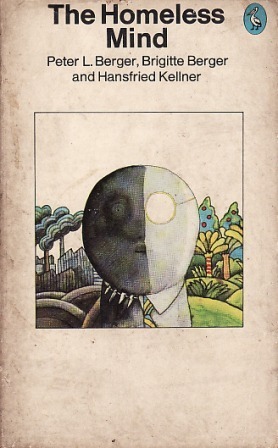
Berger, P. L., Berger, B., & Kellner, H. (1973). The homeless mind: Modernization and consciousness. Penguin. 

Cover image: https://www.goodreads.com/book/show/3368465-the-homeless-mind

9 This is an amplification, by way of phenomenological description, of what Erving Goffman has called 'role distance'.

2 This term was coined by Talcott Parsons.

See also: 'homeless'

Sunday, May 19, 2024

health - Human - LIFE: Career

As highlighted previously, the full title of Hodges' model was originally The Health Career Model.


Reference to 'career' in there, caused many visitors to the first website, and presumably readers of Brian's book chapter:

Hodges, B.E. (1989) The Health Career Model, IN, Hinchcliffe, S.M. (et al.) 1989 Nursing Practice and Health Care, 1st Edition only, London, Edward Arnold.

- to assume the model concerned professional careers, jobs, and employment.

For this reason after some discussion 'care domains' was added:

Hodges' Health Career - Care Domains - Model

A bit ungainly, but it is important that 'health career' was retained. After 5-10 years since first encountering and applying the model in a case study (1987-88), a key appeal of the model for me was its seeming increase in relevance. This may be a function of familiarity, preoccupation, (growing) obsession but the book below by Goldschmidt is confirmation for me.

Goldschmidt describes the 'Career and the Life Cycle' identifying several stages:
  • Infantile preadaptation
  • Training
  • Career launching
  • Career establishment
  • Career maintenance (pp.113-114).
The first, infantile preadaptation appears associate strongly with the idea of life chances. 

Goldschmidt begins: 
"Career is a lifetime process. The word process here is important. If the English language did not render it too awkward, it would be preferable to make a verb out of it: careering. The major phases in the process relate to the physiological changes as the individual moves from infancy toward his ultimate death." p.113.
"The pursuit of career is not merely a social phenomenon in the sense that the values and purposes are socially derived and hence attainment is reflexive of community attitudes, but because career performance always involves two highly social orientations: collaboration and identification. It is a social performance. No person achieves satisfaction going it alone; he must collaborate with diverse others, usually socially structured groups - family or household, clan, age-mates, work associates, or whatever." p.117.
We need to understand that life chances are often determined before life.


   Individual - Self         
|
      INTERPERSONAL    :     SCIENCES                   
HUMANISTIC  --------------------------------------  MECHANISTIC      
 SOCIOLOGY  :    POLITICAL 
|
   Dyad - Group - Culture - Population 
Identity

Work, roles, activity
 for all.

"The activities of the motivated individual can be conceptualized as his or her career. By career I mean that trajectory through life which each person undergoes, the activities he or she engages in to satisfy physical needs and wants and the even more important social needs and wants. The career, then, is activated in the service of both the physical being and the symbolic self."p.107.


The HUMAN CAREER

Policy
Politics

The health career and human career
of future generations
and all life.

Artificial Intelligence -
Future 'careers'?


Today, the health career entails consideration of the life cycle of all life as we not only contemplate planetary health, but seek to assure the biosphere.


Goldschmidt, W. (1990). The human career: The self in the symbolic world. Oxford: Basil Blackwell.

Book cover: https://biblio.co.nz/walter-goldschmidt/author/99497


Saturday, March 23, 2024

Identity: Self and Social

Hodges' model

Forms of Identity - The search for the self

"Beckett's first play, Eleutheria (written in French shortly after the war, but so far unpublished and unperformed), is also concerned with a young man's efforts to cut himself loose from his family and social obligations. Eleutheria is in three acts. The stage is divided in the middle. ..."
Individual
|
      INTERPERSONAL    :     SCIENCES               
HUMANISTIC  --------------------------------------  MECHANISTIC      
 SOCIOLOGY  :    POLITICAL 
|
Group


"On the right the hero lies in his bed, apathetic and passive."


"On the left his family and friends discuss his case without ever directly addressing him."


"Gradually the action shifts from left to right, and eventually the hero summons up the energy to free himself from his chackles and cut himself loose from society." p.35.

Esslin, Martin. Chapter 1 Samuel Beckett, The search for the self. The Theatre of the Absurd. London: Pelican, 1982. (3rd Ed.). p.35.

Note: "Does he take sugar?"
https://www.theguardian.com/society/2012/mar/19/berit-stueland-obituary

Wednesday, March 13, 2024

UK Higher Education Survey of Carers

From: Marie Moreau <marie_moreau AT HOTMAIL.COM>
Subject: UK HE survey of carers

Dear Colleagues

I am sharing this final call as we will be closing our survey of carers in UK HE at the end of the month.

Many thanks to those of you who have replied.

To be eligible, you need to be employed by a UK-based university and to be a carer (broadly understood, including as a parent, for a friend, a relative etc.). Here’s the link:

https://angliaruskin.onlinesurveys.ac.uk/national-carers-survey-uk

The outcomes will help us to better understand the experiences of carers in higher education and to provide recommendations to the sector.

We have received ethical approval for this project and are happy to address any question.

Warm wishes

Marie-Pierre Moreau
ARU, Cambridge, UK


My source (with some editing):
This message was issued to members of www.jiscmail.ac.uk/FREEDOM-OF-INFORMATION, a mailing list hosted by www.jiscmail.ac.uk, terms & conditions are available at https://www.jiscmail.ac.uk/policyandsecurity/

Friday, September 08, 2023

All That She Carried: The Journey of Ashley's Sack, a Black Family Keepsake - Book

INDIVIDUAL
|
     INTERPERSONAL    :     SCIENCES               
HUMANISTIC --------------------------------------  MECHANISTIC      
SOCIOLOGY  :   POLITICAL 
|
GROUP


Shameran81, CC BY-SA 4.0 <https://creativecommons.org/licenses/by-sa/4.0>, via Wikimedia Commons

"My great grandmother Rose
mother of Ashley gave her this sack when
she was sold at age 9 in South Carolina
it held a tattered dress 3 handfulls of 
pecans a braid of Roses hair. Told her 
It be filled with my Love always
she never saw her again
Ashley is my grandmother
Ruth Middleton
1921"


Miles, T. (2023) All That She Carried: The Journey of Ashley's Sack, a Black Family Keepsake. London: Profile Books.
https://profilebooks.com/work/all-that-she-carried/


Scholes, L. (2023) Stitches in time, FT Weekend, Life&Arts, Books, 5-6 August, p.8.

Friday, September 01, 2023

Brian E. Hodges (1942-2022) RIP Creator of Hodges' Health Career Model

The end of 2022 and start of 2023 brought loss, reflection and change in terms of family, friends and educational ties. My children said goodbye to their grandmothers in the space of two months. 

Brian E. Hodges c/o Family.
Then I was contacted by Brian Hodges’s daughter Sarah, with the news her father had died. November through to January saw me attend three consecutive funerals. I’m grateful I was able to visit Sheffield and say goodbye to Brian and meet his extended family.

Yes, it has taken a while to post this. For six months I have been sorting, clearing, rationalising books, papers with a house-sale now imminent, liaising with Brian's family too. 

It is fitting to share this sad news now and celebrate lives well-lived, cast in the promise of a new academic year. I think Brian would have liked this - the potential, and prospects for students in the semesters to follow, lecturers wrestling with how best to communicate and engage their students.

I first met Brian in 1987 when he was a Senior Lecturer at Manchester Polytechnic - which is now Manchester Metropolitan University. Brian taught on the ENB 911 Care of the Mentally Ill in the Community Certificate course. On the course Brian explained his eponymous model. This was more than a decade before Project 2000 made nursing an undergraduate programme. Brian created the model as a response to this. Brian’s qualification in Learning Disability Nursing is key to the inclusion of individual, group (carers) and the POLITICAL domain.

The model contributed to our assessment on the course, which required we complete a case study applying the model to a client/patient on a placement which was conducted with another service. Seconded from Chorley my placement experience was at Bolton. I still have my case study and a set of Brian’s original lecture notes.

Straight away I knew there was something special about Brian’s model. I suspect I’d been primed after watching Tony Buzan’s TV programmes in the 1970s, ‘Use Your Head’ and related books on mind-mapping. By the time I joined the Internet-age it was 1997. I’d written some microcomputer programs on the ZX81 and BBC Micro ‘B’: Nursing Process, Computer Aided Patient Assessment; HAEM; and Shades of Grey. Several were published by Open Software Library (no longer operating).

An ongoing interest developed in nursing theory and models of care, from reading about the nursing process. An early thought about creating a computer program about Hodges’ model crystallised in March 1997 when I came across the Nursing Development Site. This was hosted by the University of Alberta, Canada. Seeing that Hodges’ model was not listed, I contacted the site’s administrator. The response was: “Why don’t you create something and let us know.” Brian was very patient and offered his thoughts via email exchanges (saved, but in Turnpike format). In 1998 I finally got in touch with Alberta and they added a link.

The notes below are from the resulting website (1998-2015 now archived). The product of an interview with Brian at Manchester Polytechnic and my interpretation of model:
“Brian thought up HCM on the then British Rail train service, commuting between Sheffield and Manchester in 1983. He was stimulated by the need to impose structure on a curriculum for a BSc Nursing Studies course. Having defined the model in 1983 a scheduled teacher was unable to take a class, providing an opportunity for Brian to share the model and his thoughts with students. Despite this impromptu start, within a short time academic colleagues recognized the value of HCM in curriculum design and development, in addition to clinical practice.
 
A problem for practitioners has always been ensuring a comprehensive assessment has been made. The HCM facilitates that process, as an aide-mémoire, especially critical when faced with child care / abuse assessment and care evaluations. HCM was adopted as a tool for use by students on courses. Not surprisingly a key area of application is Health Visiting. Other nursing fields includes the use of case studies in post-basic education - Community Psychiatry Nursing Certificate; community and mental handicap - now learning disabilities.
 
Key phases in development
 
The main development work following initial conception, was up to 1987. Due to illness in 1990 Brian has been unable to engage in in-depth development work with the HCM. Hence Brian's bemused surprise at my contacting him. Despite this there are many educators, clinicians and no doubt health care managers who having been exposed to HCM carry it, like myself, as part of their mental toolkit. So if you have taught or used HCM in the past, or (even better) use it currently Brian and I would be delighted to hear from you. Given the duration of courses at Manchester then of course many colleagues in other parts of the north west of England have heard of HCM, used the HCM, or possess a college set of notes on HCM. Do you?” . . .

<> 

Sarah and family have kindly forwarded the eulogy which includes:
“Dad was born on 30th January 1942 to Vera and Gilbert Hodges, he was the eldest of three with a sister, Rita and younger brother Philip. He grew up in Kingswood, a suburb of Bristol and attended the local Grammar school. He loved being a Scout and was a member of the YMCA.

When he left school, he went to work for Boots the Chemist, telling us often about his’ behind the counter’ days. However, a conversation with a colleague led him to rethink his career and he applied to train as a nurse at a hospital for patients with learning difficulties. Being a male nurse in the 1960’s was quite ground-breaking, and so typical of Dad who was always pushing boundaries and taking the ‘road less travelled’.

Dad realised that he enjoyed teaching the students and became determined to raise the profile of nursing those with learning difficulties. This led to him to taking a year’s teacher training at Bolton College and with his new qualification he was determined to make an impact on nursing. In 1972 this lead to the move to Sheffield to set up a nurse training course at Sheffield Polytechnic and Middlewood hospital. He loved this job and the impact he could have on training nurses, alongside this he embarked on an Open University Degree and also developed the Hodges Health career model for nursing, which facilitated integrated care, person centredness, reflective practice and helped to bridge the theory and practice gap. He was very proud of this work, and it remains in use.
 
Alongside his work interests Dad decided that he would learn to sail, and not only how to sail, but also how to build a boat. The boat started life in the hallway of the house in Meadow Grove Road, and whilst it amused me and Sarah, there must have been a moment where Mum asked him to move it somewhere more suitable. He successfully built the boat and taught us all how to sail.
Back to his work life he was offered a job as a lecturer at Manchester University and later became Head of Nursing Studies there. He loved his job and invested a lot of time in encouraging his students with his indomitable wit and zest for life. Always wanting to learn more, he also studied for an MSc in Health Education, which meant he travelled to London and loved to tell us about his walks around Chelsea.

Life changed dramatically in 1990 when aged only 48 Dad had a severe stroke which led to a left side paralysis; and a medical assessment that he would not walk again. His sheer determination meant that he did in fact walk, although never regained use of his left arm, which made a lot of day to day tasks very difficult. He had no hesitation about asking strangers to help on his trips to London in his electric wheelchair.

Although Dad returned to work a year after the stroke, he found he could no longer do the job the way he wanted to and took early retirement. Being Dad, he did not stop working and continued to do some teaching, and travelled to other education centres as an external examiner. He also took up a number of volunteering activities which could make use of his skills. He became really involved in health care improvement through service user input and ultimately Chair of Shop Mobility in Sheffield.

One volunteering opportunity led to many and he took up a number of positions in both Sheffield and London. He loved to travel to London on his own on the train, where after his meetings, he would meet Sarah for dinner. He always said ‘focus on what you can do’ so that is what he did. After the stroke he learned to swim again and joined his grandchildren in the pool at Centre-parcs, and played badminton on one of his much loved family holidays.

He did not let the stroke stop him travelling at all and visited France, Florida, Barbados and even St Petersburg in his wheelchair. He also loved trips to Chatsworth for ice cream.

He loved listening to jazz music and rock, had learned to paint and draw. He loved the theatre and bird watching and was an avid reader. In fact, he was interested in everything, knew so much on any topic you could choose, and always more up to date than those around him, often much younger, on all the latest thinking or technology.

His philosophy of life meant that even after the catastrophic event of the stroke, it did not mean an end to living and he found other opportunities which he grasped enthusiastically.

So many people were amazed and inspired by Dad for what he achieved. He was one of life’s cheerleaders always encouraging and supporting others to fulfil their ambitions and this is what we will take with us. When we are not sure in our lives going forward we know we will think ‘What would Brian / Dad / Grandad say’. He had many sayings which we will remember and whenever anyone was facing difficulties or challenges, he would say ‘You will be alright’, and we will be alright because he has have taught us to be so.

Above all he will be remembered for his sense of humour, his huge sense of purpose and service to others and for the determination to live life to the full and never be stopped by anything or anyone. He was so proud of his family and all they have achieved. He was an inspiration and encouragement to everyone he met.

This is the final page of Dad’s life, but it is not the end. Everyone who’s life Dad touched, and all the people present here today carries a little bit of him with them, his humour, his smile, his sayings, his tenacity. So, he will live on with all of us, it is a fond farewell and not a goodbye.”
<> 

Train ticket 28/05/97 (also from 1st website)
Since the Community Psychiatric Nursing (Cert.) course in the 1980s and our initial interview 28th May 1997, Brian and I met on about ten occasions. As noted above, Brian enjoyed rail travel and in the interview I had this image of a train with thought bubbles - Brian's reflections with the model taking shape.

Image from 1st archived site
Brian’s passing and his family's observations prompted recollection of a trip to London in 1996; to an IEE Colloquium on Thinking with Diagrams (Digest No: 1996/010).

https://ieeexplore.ieee.org/xpl/conhome/5214/proceeding

I’m sure Brian met me there, demonstrating his independence, motivation and enthusiasm. I need to check but I’m fairly sure, even imagining he said he was meeting Sarah afterwards? My father accompanied me, we stayed with an aunt who lived near London Bridge back then. Happy memories for me too.

Brian knew of several sites across the UK, that used or took an interest in Hodges’ model. When the website went live in 1998, I’d hoped people with notes, insights, examples of application, pros and cons would come forward. Sadly this did not happen except for a few instances.

I’m so pleased to have met Brian and being able to carry his model forward. Even semi-retired, I rejoice in the freedom I have as a practitioner. As I believe Brian came up against many academic barriers in trying to validate, publicise and disseminate the model. There was no expressed cynicism in this however, but political realism about how the world – academia works. A lesson I know very well in trying to publish work.

I keep fretting about not completing the ‘new’ website, but perhaps I’m following Brian’s advice after all: “focus on what you can do”. Despite its limitations the blog is helping to spread awareness of Hodges’ model; learning each year of new publications citing the model. Hodges’ model isn’t just another 2x2 matrix—business/management consultancy style thinking tool.

The key is the model’s full title:

Hodges' Health Career - Care Domains - Model

‘Health career’ refers to ‘life chances’ and this was central to Brian’s values of person-centredness, advocacy, and ‘seeing’ the political in health, social care and his own educational development and health career. 

The work remains to take Hodges’ model forward, to pass on this ‘+’ shaped baton. I will reflect further, especially as I was initially determined to ensure that Hodges' model was not just left on the shelf. For me, Brian’s legacy is the increasing relevance of his eponymous model since its creation. Consider since the late 1980s developments in human rights, consent, mental capacity, safeguarding, protection of liberty, mental health act, prison health. Brian's model readily encompasses the person and the State - nationally and globally, access and provision to health services, primary care, sustainable development goals, the determinants of health. How do we switch from illness-directed to preventive, health educational services?

In addition, Hodges' model can conceptually represent all these - across time as a series of frames. Brian's model remains a gift to his students and today's learners; including, patients, carers, mental health and general nurses, district nurses, learning disability and health visitors. As suggested here - Brian's effort and work has proved a great gift to me (as friends, family and many student nurses on placement, mentored, signed-off will attest). Brian's model is not a be all and end all, he knew this. It is one of many tools, models and theories, but it can and must also help future generations: from self care, health care, to global health and planetary care.

Thank you Brian. RIP.