Hodges' Model: Welcome to the QUAD: archaeology

Hodges' model is a conceptual framework to support reflection and critical thinking. Situated, the model can help integrate all disciplines (academic and professional). Amid news items, are posts that illustrate the scope and application of the model. A bibliography and A4 template are provided in the sidebar. Welcome to the QUAD ...

Showing posts with label archaeology. Show all posts

Friday, July 25, 2025

Good luck Suns & Daughters . . .

Individual
|
      INTERPERSONAL    :     SCIENCES               
HUMANISTIC  --------------------------------------  MECHANISTIC      
 SOCIOLOGY  :    POLITICAL 
|
Group

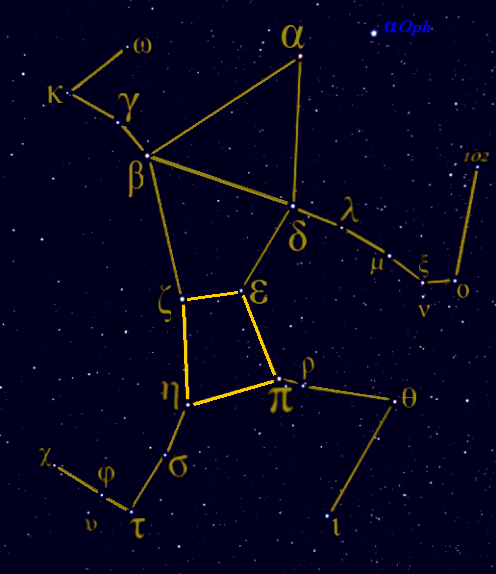
'The sun may be on its lonesome now - its closest neighbour is 4.2 light years away - but that wasn't always the case. Once upon a time it had close family. After their birth in the same cloud of dust and gas that formed our solar system, these solar siblings scattered hundreds of light years apart in the MilkyWay. In May, astronomers reported the first one: a star called HD 162826.

"It looks like the sun, but a little-bit bluer," says Ivan Ramirez at the University of Texas at Austin, who led the study. It's also warmer than the sun and 15 per cent more massive. The star is about 110 light years away, and you can see it with the aid of a pair of binoculars in the left arm of the constellation Hercules.'

Hercules Historical View

'To find its family ties, Ramirez's team combed through galactic archaeology studies, which model the motions of the Milky Way. These predictions laid out where sibling stars would be now if they had formed in the same place as the sun. Though they spread out in different directions, their positions still give away their birthplace, Ramirez says.

He narrowed down the search area to 30 stars, and then looked at them closely to find a family resemblance. Only HD 162826 had a similar chemical make-up to the sun. A separate team led by Eric Mamajek at the University of Rochester in New York also studied the star and found it is the same age
as the sun, as would be expected for two stars born together. Even more tantalising, HD 162826 is already in a catalogue of stars that might harbour planets.'

Science
funding


Rebecca Boyle. Strangest star. New Scientist. 20 September 2014: 223, 2987, pp.38-41.

Image: Sadalsuud, CC BY-SA 3.0, via Wikimedia Commons.

Tuesday, February 14, 2023

Mathemacy and Mathematical archaeology c/o Ole Skovsmose

(Ack. quoted at length and hopefully justified?)

"Mathemacy

The notion of “literacy” has been developed by Paulo
Freire to mean much more than just being able to read
and write. Literacy also includes competence in interpreting
social life. The notion of mathemacy can be developed
in a similar way to mean more that an ability to
calculate.

In order to do this, it is important to pay attention to
the notion of reflection. When a calculation, based on a
mathematical task, is carried out, it is possible to reflect
on the actual result. Such a reflection has mathematical
concepts and algorithms as its objects. A question guiding
such a mathematics-oriented reflection can be: Are the
calculations made correctly?

When setting up a mathematical model, in order to
solve a non-mathematical problem, we face many difficulties.
Thus, any modelling process presupposes that
certain simplifications are established. This means paying
attention to certain aspects of “reality” and neglecting
others. This is, for instance, what takes place when a
population model is used for the purpose of forecasting.
Reflections referring to a modelling process are of a different
kind than mathematics-oriented reflections. While
this kind of reflection has mathematics calculations as its
object, a model-oriented reflection has the relationship between
mathematics and an extra-mathematical reality as
its object. A question guiding a model-oriented reflection
can be: Is the output of the modelling process reliable?
Model-oriented reflections are carried out with an interest
in improving the model, i.e. with a technological interest.
Such reflections concern the validity of the model." p.199.


 INDIVIDUAL
|
 INTERPERSONAL    :     SCIENCES               
HUMANISTIC --------------------------------------  MECHANISTIC   
SOCIOLOGY  :   POLITICAL 
|
GROUP

reflection

"Be the difference!" ...

Said, one number to another - hopefully!

reflection

"Mathematical archaeology
Social structuration, at macro or at micro level, often takes place with reference to mathematics. Such an interplay
between knowledge and power is referred to by the thesis of the formatting power of mathematics. As mathematics is basically an “invisible” part of social structuration, we need strong analytical tools to capture the role of mathematics.
This leads to the notion of mathematical archaeology." p.199.

"A reflection guided by such questions can be called a context-oriented reflection. “Context” is here understood as a political, social or cultural context." p.199.


Hodges' Health Career - Care Domains - Model

'health career' - 'life chances'

"lifeworld-oriented reflection"p.200.


Skovsmose, O. Linking mathematics education and democracy: Citizenship, mathematical archaeology, mathemacy and deliberative interaction. Zentralblatt füur Didaktik der Mathematik 30, 195–203 (1998). https://doi.org/10.1007/s11858-998-0010-6

 #HealthTheory

Sunday, October 30, 2022

An observational record and learning from 30,000 years ago

"A fascinating example is the shoulder blade of an ox unearthed in the 1980s (Figure 1) by archaeologists investigating a stone age encampment in the south of France. Carbon dating showed this to be approximately 30,000 years old. The bone was marked with inscriptions that the archaeologist couldn't decipher. It was clear they were neither a tally, nor a pattern, nor any recognisable form of writing. Late one night one of the archaeologists noticed the moon, and something in its shape caught his curiosity.

Aurignacian Lunar Calendar / diagram, drawing after Marshack, A. 1970; Notation dans les Gravures du Paléolithique Supérieur, Bordeaux, Delmas / Don’s Maps
Figure 1 my source: https://sservi.nasa.gov/articles/oldest-lunar-calendars/

Then it struck him. Here, on this fragment of bone, was a lunar calendar complete with 72 observations ... something like 1,600 generations ago. One of our common ancestors (statistically, all of us can claim a relationship to this thoughtful person) 30,000 years ago had the intellectual curiosity to watch the moon, night after night, and then transcribe these movements, at scale, onto the stone age equivalent of the back of an envelope, as he (or she) attempted to "think it through". What makes us human is our ability to think, learn and adapt to our changing environment. The story of the stone age learner gets even better when you imagine a small community of people (adults, adolescents, children on their laps) sitting around a campfire every night working out the meaning of the lunar phases together." pp.72-73.

Abbott, J. & Ryan, T. (2000). Chapter 4, How mass education eclipsed apprenticeship, The Unfinished Revolution: Learning, Human Behavior, Community, and Political Paradox, Stafford, UK: Network Educational Press. (The figure in the book does not include the bone.)

Previously: 'diagrams' , 'archaeology'

[I am also still trying to clear papers and books, as some posts will suggest.]

Monday, March 21, 2022

Hybrid therapy (Early) c/o Fernández-Navarro, Camarós, and Garate

... Family and Art Therapy?
 

Abstract

"This paper presents rock art as a collective action in which different strata of society took part, including children and subadults. Until recent decades archaeology of childhood has not been in the main focus of the archaeological research, much less the participation of those children in the artistic activity. The present study approaches the palaeodemography of artists in the decorated caves through the paleolithic rock art itself. The approximate age of these individuals has been calculated through the biometric analysis of hand stencils in the caves of Fuente del Salín, Castillo, La Garma, Maltravieso and Fuente del Trucho, using 3D photogrammetric models as reference. The results have been compared with a modern reference population in order to assign the Palaeolithic hands to certain age groups. It has been demonstrated the presence of hand stencil motifs belongs to infants, children and juveniles, revealing this stratum's importance in the artistic activity."
 
INDIVIDUAL
|
 INTERPERSONAL    :     SCIENCES               
HUMANISTIC --------------------------------------  MECHANISTIC      
SOCIOLOGY  :   POLITICAL 
|
GROUP

[Fig. 4. ] Study measurement system and current sample measurement 1. Hand Length; 2. Hand Width; 3. Thumb Length; 4. Thumb Width; 5. Index finger Length; 6. Index finger Width; 7. Middle finger Length; 8. Miggle finger; 9. Ring finger Length; 10. Ring finger Width; 11. Little finger Length; 12. Little finger.

"Children may have had a hand in a quarter of prehistoric art"


Fernández-Navarro, V., Camarós, E., & Garate, D. (2022). Visualizing childhood in Upper Palaeolithic societies: Experimental and archaeological approach to artists’ age estimation through cave art hand stencils. Journal of Archaeological Science, 140, 105574. https://doi.org/10.1016/j.jas.2022.105574

My source:

Badcock, James. "Children may have had a hand in a quarter of prehistoric art". The Daily Telegraph. 12 March 2022, p.15.


Tuesday, December 17, 2019

Fortress of the Mind :: Fortress of Slavery

From 16 May – 5 July 2020
 Gallery 1957 
Accra, Ghana 
will present

The Past is Never Dead”

 a solo exhibition by Langlands & Bell that explore 
the architecture of the ‘Slave Forts’ built on the coast 
of Ghana by European slave traders following the construction
of Elmina Castle by the Portuguese in 1482.
Langlands are working with local artisans to produce
 many of the art works for the exhibition.


INDIVIDUAL
|
INTER-PERSONAL : SCIENCES
HUMANISTIC -------------------------------------------------- MECHANISTIC
SOCIOLOGY : POLITICAL
|
GROUP


My source:
Christopher Turner (in Accra), 'The dungeons are decorated with wreaths left by slaves' descendants', Letters. Apollo, November 2019. Vol CXC No. 680. pp.33-34.

Sunday, March 10, 2019

'Surgical Procedure' by Hilary Paynter


Social History - Sterile Field


individual
|
INTERPERSONAL : SCIENCES
humanistic ----------------------------------------------- mechanistic
SOCIOLOGY : POLITICAL
|
group


sterile
field


Surgical Procedure by Hilary Paynter


"Road works to widen the airport road near  
Sumburgh Head uncovered a large and 
complex archeological site that had previously
been considered fairly insignificant." p.160-161.
Full Circle (2010)


With thanks to Hilary Paynter for permission and original tif file.
And to the Print Symposium events in Wrexham.

Saturday, October 27, 2007

Long Man of Wilmington

Long Man of Wilmington


Although Brian Hodges created the model in the 1980s the key elements have been around a long time!


Thanks to the Culture Show BBC2 27 Oct 2007