Hodges' Model: Welcome to the QUAD: Search results for archaeology

Hodges' model is a conceptual framework to support reflection and critical thinking. Situated, the model can help integrate all disciplines (academic and professional). Amid news items, are posts that illustrate the scope and application of the model. A bibliography and A4 template are provided in the sidebar. Welcome to the QUAD ...

Showing posts sorted by relevance for query archaeology. Sort by date Show all posts

Sunday, July 16, 2023

UK Higher Education Research Excellence Framework - Disciplines

The Research Excellence Framework (REF) is a national assessment of the quality of UK higher education research in all disciplines.

34 subject-based Units of Assessment (UOAs)


INDIVIDUAL
|
     INTERPERSONAL    :     SCIENCES               
HUMANISTIC --------------------------------------  MECHANISTIC      
SOCIOLOGY  :   POLITICAL 
|
GROUP

Psychology, Psychiatry and Neuroscience

Archaeology

Theology and Religious Studies

Philosophy

[Mathematics & Logic]

^Communication 
as Intra- Interpersonal (Skills) Neurodiversity
hence an individual's
sense-making

Clinical Medicine (Neuroscience)
Public Health, Health Services and Primary Care
Allied Health Professions, Dentistry, Nursing and Pharmacy
Biological sciences 
Agriculture, Food and Veterinary Sciences

Earth Systems and Environmental Sciences
Chemistry
Physics
Mathematical Sciences
Computer Science and Informatics
Engineering
Architecture, Built Environment and Planning
Geography and Environmental Studies
Archaeology
Area Studies
Sport and Exercise Sciences, 
Archaeology
Social Work and Social Policy
Sociology
Anthropology and Development Studies
area studies
Education
Modern Languages and Linguistics
English Language and Literature
History
Classics
Communication^, Cultural and Media Studies, Library and Information Management
Art and Design: History, Practice and Theory
Music, Drama, Dance, Performing Arts, Film and Screen Studies
Leisure and Tourism


Archaeology

Economics and Econometrics

Business and Management Studies

Law

area studies

Politics and International Studies


As ever, you see the idealised nature of conceptual (and other) models. I have repeated archaeology, and area studies, added mathematics and logic to the intra- interpersonal (our reasoning, imaginative ability) which increasingly is being challenged and debated as computer-based proofs 'take-over'. I'm not sure where future studies might sit (or pace anxiously!)?

The REF was mentioned at the Improving University Teaching Conference [IUT] in the past week. I'd been meaning to look at the scope of the framework which is often raised across the media, hence this post. IUT, was well worth the effort of a presentation and attending. A global event spanning Australia-Asia, Europe, and North America - one to follow in the future.

Tuesday, February 14, 2023

Mathemacy and Mathematical archaeology c/o Ole Skovsmose

(Ack. quoted at length and hopefully justified?)

"Mathemacy

The notion of “literacy” has been developed by Paulo
Freire to mean much more than just being able to read
and write. Literacy also includes competence in interpreting
social life. The notion of mathemacy can be developed
in a similar way to mean more that an ability to
calculate.

In order to do this, it is important to pay attention to
the notion of reflection. When a calculation, based on a
mathematical task, is carried out, it is possible to reflect
on the actual result. Such a reflection has mathematical
concepts and algorithms as its objects. A question guiding
such a mathematics-oriented reflection can be: Are the
calculations made correctly?

When setting up a mathematical model, in order to
solve a non-mathematical problem, we face many difficulties.
Thus, any modelling process presupposes that
certain simplifications are established. This means paying
attention to certain aspects of “reality” and neglecting
others. This is, for instance, what takes place when a
population model is used for the purpose of forecasting.
Reflections referring to a modelling process are of a different
kind than mathematics-oriented reflections. While
this kind of reflection has mathematics calculations as its
object, a model-oriented reflection has the relationship between
mathematics and an extra-mathematical reality as
its object. A question guiding a model-oriented reflection
can be: Is the output of the modelling process reliable?
Model-oriented reflections are carried out with an interest
in improving the model, i.e. with a technological interest.
Such reflections concern the validity of the model." p.199.


 INDIVIDUAL
|
 INTERPERSONAL    :     SCIENCES               
HUMANISTIC --------------------------------------  MECHANISTIC   
SOCIOLOGY  :   POLITICAL 
|
GROUP

reflection

"Be the difference!" ...

Said, one number to another - hopefully!

reflection

"Mathematical archaeology
Social structuration, at macro or at micro level, often takes place with reference to mathematics. Such an interplay
between knowledge and power is referred to by the thesis of the formatting power of mathematics. As mathematics is basically an “invisible” part of social structuration, we need strong analytical tools to capture the role of mathematics.
This leads to the notion of mathematical archaeology." p.199.

"A reflection guided by such questions can be called a context-oriented reflection. “Context” is here understood as a political, social or cultural context." p.199.


Hodges' Health Career - Care Domains - Model

'health career' - 'life chances'

"lifeworld-oriented reflection"p.200.


Skovsmose, O. Linking mathematics education and democracy: Citizenship, mathematical archaeology, mathemacy and deliberative interaction. Zentralblatt füur Didaktik der Mathematik 30, 195–203 (1998). https://doi.org/10.1007/s11858-998-0010-6

 #HealthTheory

Thursday, April 11, 2024

Peter Higgs - Boson and Field

"Higgs theorised that particles would acquire mass by interacting with a new type of field. That field had a very special excitation of its own, another particle called the Higgs boson. The Higgs field solved a huge question in theoretical particle physics, and the Higgs boson was a tantalising target that experimentalists could hunt for in order to tie theory to reality.


“If you remove everything from the vacuum, all matter or quantum fluctuations, all electromagnetic stuff, all gravity, you will be left with the Higgs field,” says Frank Close at the University of Oxford. “And we need that just like a goldfish needs water. It stabilises empty space.”

Working independently from Higgs, Belgian physicists Francois Englert and Robert Brout reached the same conclusion, also in 1964."
On BBC Radio 4 11th April 1500 UT, Frank Close extended the goldfish analogy: "as if some clever goldfish have proved that they are immersed in something because they have found a molecule of H2O."

BBC Inside Science

The following is from a previous post:

UK Higher Education Research Excellence Framework - Disciplines
https://hodges-model.blogspot.com/2023/07/ref-uk-higher-ed-h2cm.html


INDIVIDUAL
|
     INTERPERSONAL    :     SCIENCES               
HUMANISTIC --------------------------------------  MECHANISTIC      
SOCIOLOGY  :   POLITICAL 
|
GROUP

Psychology, Psychiatry and Neuroscience

Archaeology

Theology and Religious Studies

Philosophy

[Mathematics & Logic]

^Communication 
as Intra- Interpersonal (Skills) Neurodiversity
hence an individual's
sense-making

Clinical Medicine (Neuroscience)
Public Health, Health Services and Primary Care
Allied Health Professions, Dentistry, Nursing and Pharmacy
Biological sciences 
Agriculture, Food and Veterinary Sciences

Earth Systems and Environmental Sciences
Chemistry
Physics
Mathematical Sciences
Computer Science and Informatics
Engineering
Architecture, Built Environment and Planning
Geography and Environmental Studies
Archaeology
Area Studies
Sport and Exercise Sciences, 
Archaeology
Social Work and Social Policy
Sociology
Anthropology and Development Studies
area studies
Education
Modern Languages and Linguistics
English Language and Literature
History
Classics
Communication^, Cultural and Media Studies, Library and Information Management
Art and Design: History, Practice and Theory
Music, Drama, Dance, Performing Arts, Film and Screen Studies
Leisure and Tourism


Archaeology

Economics and Econometrics

Business and Management Studies

Law

area studies

Politics and International Studies

34 subject-based Units of Assessment (UOAs)


1st April 2030 From Person to Planet:

First Call for the First Transdisciplinary Health 
and Social Care Conference -
Everyone is Invited!


Open to all health and social care professions and disciplines:

https://en.wikipedia.org/wiki/List_of_healthcare_occupations

A celebration of the Hodges' field.😉

RIP Peter Higgs

Sunday, October 30, 2022

An observational record and learning from 30,000 years ago

"A fascinating example is the shoulder blade of an ox unearthed in the 1980s (Figure 1) by archaeologists investigating a stone age encampment in the south of France. Carbon dating showed this to be approximately 30,000 years old. The bone was marked with inscriptions that the archaeologist couldn't decipher. It was clear they were neither a tally, nor a pattern, nor any recognisable form of writing. Late one night one of the archaeologists noticed the moon, and something in its shape caught his curiosity.

Aurignacian Lunar Calendar / diagram, drawing after Marshack, A. 1970; Notation dans les Gravures du Paléolithique Supérieur, Bordeaux, Delmas / Don’s Maps
Figure 1 my source: https://sservi.nasa.gov/articles/oldest-lunar-calendars/

Then it struck him. Here, on this fragment of bone, was a lunar calendar complete with 72 observations ... something like 1,600 generations ago. One of our common ancestors (statistically, all of us can claim a relationship to this thoughtful person) 30,000 years ago had the intellectual curiosity to watch the moon, night after night, and then transcribe these movements, at scale, onto the stone age equivalent of the back of an envelope, as he (or she) attempted to "think it through". What makes us human is our ability to think, learn and adapt to our changing environment. The story of the stone age learner gets even better when you imagine a small community of people (adults, adolescents, children on their laps) sitting around a campfire every night working out the meaning of the lunar phases together." pp.72-73.

Abbott, J. & Ryan, T. (2000). Chapter 4, How mass education eclipsed apprenticeship, The Unfinished Revolution: Learning, Human Behavior, Community, and Political Paradox, Stafford, UK: Network Educational Press. (The figure in the book does not include the bone.)

Previously: 'diagrams' , 'archaeology'

[I am also still trying to clear papers and books, as some posts will suggest.]

Wednesday, January 11, 2012

Report - Integrated care for patients and populations: Improving outcomes by working together

I've posted on integrated care previously on W2tQ. The core recommendations of this New Year  report on integrated care are:

  • government policy should be founded on a clear, ambitious and measurable goal to improve the experience of patients and service users and to be delivered by a defined date
  • patients with complex needs should be guaranteed an entitlement to an agreed care plan, a named case manager responsible for co-ordinating care, and access to telehealth and telecare and a personal health budget where appropriate
  • change must be implemented at scale and pace; this will require work across large populations, significant reform and flexibility to take forward different approaches.
Publication prompted Time to integrate words with action by Chris Ham and Jennifer Dixon (HSJ 5 January pp. 16-17 - and my source for this news). The report and mention of measures of integrated care that include patient experience provoked further reflection.

Integration in health and social care should be considered critically over the past 25 years and more (but that's a thesis). Evolution in policy matters, but there is a deep archaeology that illustrates the policy aspiration - practice gap the reports priorities seek to address. A comment in response on the King's Fund's site notes the need for (strategies, methods and) a framework. While no magic wand there is a framework that can at least unify disciplines, public and policy makers. And act as a bridge between words and actions.

Integration needs a shared and agreed origin.
(A point* around which disintegration turns)

Although brief (20 pages) the report is an excellent source for references (3 pages) that includes:

Kodner D, Spreeuwenberg C (2002). ‘Integrated Care: Meaning, logic, applications, and implications – a discussion paper’. International Journal of Integrated Care, vol 2,
Available at: www.ijic.org/index.php/ijic/article/view/67 (accessed 13 December 2011).

Kodner D (2009). ‘All together now: a conceptual exploration of integrated care’. Healthcare Quarterly, vol 13(Sp), pp 6–15.

Leutz W (2005). ‘Reflections on integrating medical and social care: five laws revisited. Journal of Integrated Care, vol 14, no 5, pp 3–12.

As we try to integrate words and actions we need to remember:

how we dice and slice influences the scope of integration.

We'll explore this more soon.
*Points?

Nick Goodwin, Judith Smith, Alisha Davies, Claire Perry, Rebecca Rosen, Anna Dixon, Jennifer Dixon, Chris Ham Integrated care for patients and populations: Improving outcomes by working together. Report to the Department of Health and NHS Future Forum from The King’s Fund and Nuffield Trust

Monday, March 21, 2022

Hybrid therapy (Early) c/o Fernández-Navarro, Camarós, and Garate

... Family and Art Therapy?
 

Abstract

"This paper presents rock art as a collective action in which different strata of society took part, including children and subadults. Until recent decades archaeology of childhood has not been in the main focus of the archaeological research, much less the participation of those children in the artistic activity. The present study approaches the palaeodemography of artists in the decorated caves through the paleolithic rock art itself. The approximate age of these individuals has been calculated through the biometric analysis of hand stencils in the caves of Fuente del Salín, Castillo, La Garma, Maltravieso and Fuente del Trucho, using 3D photogrammetric models as reference. The results have been compared with a modern reference population in order to assign the Palaeolithic hands to certain age groups. It has been demonstrated the presence of hand stencil motifs belongs to infants, children and juveniles, revealing this stratum's importance in the artistic activity."
 
INDIVIDUAL
|
 INTERPERSONAL    :     SCIENCES               
HUMANISTIC --------------------------------------  MECHANISTIC      
SOCIOLOGY  :   POLITICAL 
|
GROUP

[Fig. 4. ] Study measurement system and current sample measurement 1. Hand Length; 2. Hand Width; 3. Thumb Length; 4. Thumb Width; 5. Index finger Length; 6. Index finger Width; 7. Middle finger Length; 8. Miggle finger; 9. Ring finger Length; 10. Ring finger Width; 11. Little finger Length; 12. Little finger.

"Children may have had a hand in a quarter of prehistoric art"


Fernández-Navarro, V., Camarós, E., & Garate, D. (2022). Visualizing childhood in Upper Palaeolithic societies: Experimental and archaeological approach to artists’ age estimation through cave art hand stencils. Journal of Archaeological Science, 140, 105574. https://doi.org/10.1016/j.jas.2022.105574

My source:

Badcock, James. "Children may have had a hand in a quarter of prehistoric art". The Daily Telegraph. 12 March 2022, p.15.


Thursday, April 30, 2026

ii WCCS26: World Conference on Complex Systems 20-22nd April

Day 1

Plenary Talk: Reda Benkirane - Lost in Complexity: Welcome to the Real World

A first slide considered Abraham Maslow's book The Psychology of Science and his thought on the "law of the instrument". Maslow's hierarchy of needs is a key primer for new students to many disciplines, including nursing, and psychology. The purpose of Benikrane's focus on instruments concerns the emergence of civilisation and roles of agriculture, and war in the rise of community at several scales from village, to cities, states and nations. In terms of flow the slides highlighted the next speaker Peter Turchin's END TIMES, and two books by Johann Chapoutot, LES IRRESPONSABLES, and FREE TO OBEY.

In response to the slide with Einstein's -

"We cannot solve our problems with the same thinking we used when we created them":

- may I please class 'health - care' as a world? The thought that the medical, bio-medical, and bio-psycho-social encourages, sees enacted, and sustained a : is this fit for the problems of the 21st century. I like the slide's heading 'Beyond Complexity'. Such is the pace of change, which is labelled 'progress' that each one of us wakes up momentarily stupified and lost in complexity.

Keynote Speaker: Peter Turchin - The Great Holocene
Transformation: What Complexity Science Tells Us About The Evolution of Complex Societies

Turchin's keynote reminded me of Jared Diamond's book Guns, Germs and Steel. Reading GGS I realised there is more to 'axes' than I thought, especially from the individual to collective scales. It appears that whichever label - academia, research or education - you would like to apply, they all need a conceptual framework. Just as, individually, we all need a model of self, others and the world. This was a marvellous journey, through millennia of humanities' evolution, social, and political development, all realised through complexity. While attractors are to the fore, architecture and archaeology are regular distractors for me. Reading Holocene then had me hooked. 

A fellow delegate and speaker I dined with a few times encouraged me to read 'END TIMES'. I will seek it out later this year, (the next Hay-on-Wye visit?). Turchin is seeking to account for how human societies have reached their current state of organisation. The role of self-protection, seeking food, shelter, co-operation are all factors, with the emergence of religions, and agriculture. Several theories to date were covered [including, cultural multilevel selection, see Wilson et al. (2023)], plus a major project on cultural evolution: The Seshat: Global History Databank. For all the current loss and misery, conflict has paid a major role in cultural and political development. The prefix 'macro' features here. There was a social scale (people): FROM 10s - in foraging bands through TO 100,000,000s large nation-states. Mention of levels of scale, took me back to the work of Mario Bunge. The application of the Hertzsprung-Russell 'main sequence' (H-R) diagram is a great idea. I think Olaf Stapleton, author of Star Maker would have approved. 

This itself, for me, is reason enough to read Turchin. There is evolutionary biochemistry too, which is required in terms of a systems account. Is there a reflection of a main sequence construct between the SOCIOLOGICAL and SCIENCES domain of Hodges' model? 

 It is incredible the way new findings are regularly pushing even further the dates of human milestones stepping-stones. Perhaps we should always view progress in this way, and enjoy the 'moment'. There is still the puzzle of ultrasociality, and how to explain it? Turchin is seeking a mathematical history, with a journal Cliodynamics. There is another SF reference here, in Asimov's psychohistory in the Foundation books, but with less emphasis upon maths. This is encouraging for Hodges' model, and the inevitable transdisciplinary approach these questions demand.

More to follow ...

D.S. Wilson, G. Madhavan, M.J. Gelfand, S.C. Hayes, P.W.B. Atkins, & R.R. Colwell, Multilevel cultural evolution: From new theory to practical applications, Proc. Natl. Acad. Sci. U.S.A. 120 (16) e2218222120, https://doi.org/10.1073/pnas.2218222120 (2023).

Wednesday, July 25, 2012

Olympic Torches, History and Nostalgia for the Light


I never got to see the Olympic torch procession,  although I crossed its path on a couple of occasions.

This for me has much significance    +

In Euxton, Lancashire and more recently I found myself ahead of the relay in Oxford.


I saw a torch at the Disability Awareness Day in Warrington.


A prized possession: a keepsake of a lifetime.


Image source: http://www.warringtonguardian.co.uk/news/9825966.Disability_Awareness_Day_marks_21st_event_with_Olympic_glow/


Over the weekend I went to see the film - Nostalgia for the Light. A documentary that is simultaneously challenging, troubling, poetic and beautiful. A journey through history in its multiple forms; astronomy, and archaeology - ancient and modern. The setting is the Atacama desert. The astronomers using various telescopes explore celestial bodies, taking advantage of the elevation and transparency of the sky. The extremely low humidity that also supports such observations also preserves human bodies. Not just those thousands of years old, but human bodies from more recent times. Those of Chile's "disappeared" those who have been found and those still lost to their families.

Skeletons abounded. Ancient mummies, more recent explorers and miners. I noticed how these skeletons can give up their secrets from belongings, clothing, identified by relatives.

How telescopes themselves are skeletized in their design to save weight, cost. Today the affluent can purchase a skeletized watch - to make a statement. Mechanism. To mark their personal history. History.

What legacy? What cost? 

Around the world : dictatorship.

The search of the few for the many against the sun and the turn of stars.
Light seeking light, seeking peace and a final release.

Friday, July 25, 2025

Good luck Suns & Daughters . . .

Individual
|
      INTERPERSONAL    :     SCIENCES               
HUMANISTIC  --------------------------------------  MECHANISTIC      
 SOCIOLOGY  :    POLITICAL 
|
Group

'The sun may be on its lonesome now - its closest neighbour is 4.2 light years away - but that wasn't always the case. Once upon a time it had close family. After their birth in the same cloud of dust and gas that formed our solar system, these solar siblings scattered hundreds of light years apart in the MilkyWay. In May, astronomers reported the first one: a star called HD 162826.

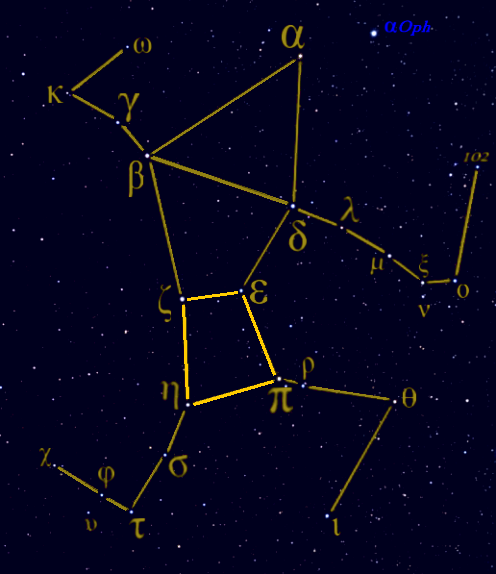
"It looks like the sun, but a little-bit bluer," says Ivan Ramirez at the University of Texas at Austin, who led the study. It's also warmer than the sun and 15 per cent more massive. The star is about 110 light years away, and you can see it with the aid of a pair of binoculars in the left arm of the constellation Hercules.'

Hercules Historical View

'To find its family ties, Ramirez's team combed through galactic archaeology studies, which model the motions of the Milky Way. These predictions laid out where sibling stars would be now if they had formed in the same place as the sun. Though they spread out in different directions, their positions still give away their birthplace, Ramirez says.

He narrowed down the search area to 30 stars, and then looked at them closely to find a family resemblance. Only HD 162826 had a similar chemical make-up to the sun. A separate team led by Eric Mamajek at the University of Rochester in New York also studied the star and found it is the same age
as the sun, as would be expected for two stars born together. Even more tantalising, HD 162826 is already in a catalogue of stars that might harbour planets.'

Science
funding


Rebecca Boyle. Strangest star. New Scientist. 20 September 2014: 223, 2987, pp.38-41.

Image: Sadalsuud, CC BY-SA 3.0, via Wikimedia Commons.