Hodges' Model: Welcome to the QUAD: agriculture

Hodges' model is a conceptual framework to support reflection and critical thinking. Situated, the model can help integrate all disciplines (academic and professional). Amid news items, are posts that illustrate the scope and application of the model. A bibliography and A4 template are provided in the sidebar. Welcome to the QUAD ...

Showing posts with label agriculture. Show all posts

Saturday, July 25, 2026

vi WCCS26: World Conference on Complex Systems 20-22nd April

April and WCCS26 seems an age ago, but the motivational impetus provided by this experience has been ongoing.

Luis Comolli - Best Paper Award 
for Emergence in Designed Agroecosystems:
Collective Dynamics in a Perennial Multi-Species 
Agroforestry Network

At the closing ceremony there was an award for the best paper which was awarded to Luis Comolli for:

Emergence in Designed Agroecosystems: 
Collective Dynamics in a Perennial Multi-Species Agroforestry Network

Sat by Luis, I offered to take his photo to which he agreed - so better late than never! And: Well done Luis!

My presentation on the 21st April was part of:

Parallel Session 2
Track 1 - Agent-Based and Social Complexity
Session chair: Helena Knyazeva

    ▪ Peter Jones
Presenting a Universal and Simple Conceptual Workbench to Situate and Encompass Complexity

    ▪ Nisrine Jarmoune and Bouchra Lebzar
The Ontology of Behavior: Formalizing the Institutional Project as a Complex System
    
    ▪ Lionel Scotto d’Apollonia, Florian Charvolin, Lise Verlaet, Deborah Nourrit, Dominique Deveaux, Elisabeth Sénégas and Nourdine Bara
Participatory Action Research with and for Society: The Case of “Oasis of Fraternity”

▪ Harvey Spencer Sánchez-Restrepo, Jorge Louçã, Martha Belén Carmona-Soto and Sofialeticia Morales-Garza
Topological Patterns of Academic Success: Insights from Complex Network Analysis

To be clear there was a great deal in all the sessions (see below!). I noticed in Nisrine Jarmoune's presentation, however, more specific conceptual overlap in terms of the individual, collective - groups, behaviour and institutions, with reference to ontology and philosophy. Several mathematical concepts also arose and since April online discussion has proved very interesting. In the near future I hope to report on how ideas develop and may be taken further, both for Nisrine's PhD studies and my work on Hodges' model.

We are considering, especially with the options to participate available -

https://www.measuringbehavior.org/
'The next Measuring Behavior conference will take place from 28 to 30 April, 2027, in Düsseldorf, Germany. Düsseldorf is in a region with a high concentration of behavioral research across a variety of fields both in universities and industry. It is easy to reach by international trains and flights. It is a city combining innovative modern architecture with a historic city centre. The conference will take place in the Clayton Hotel, which is in the Little Tokyo region of Düsseldorf, with its distinctive Japanese flavor. We will be hosted by the Heinrich Heine Medical University and the location is within easy walking distance of the central station.'
https://www.measuringbehavior.org/call-for-symposia-mb2027-2/

Going back to the Monday, the closing Keynote Speaker: Abdelmajid Ibenrissoul 

Public Decision-Making and Complexity: What Rationality for Evaluation?

- provided fascinating insights and economic history:

Abdelmajid Ibenrissoul - Public Decision-Making and Complexity: What Rationality for Evaluation?

There remains much to follow up, seek understanding and see how this relates to Hodges' model.

More details to follow.

I have noticed the main website for WCCS appears to be unavailable? I will check.

Thursday, April 30, 2026

ii WCCS26: World Conference on Complex Systems 20-22nd April

Day 1

Plenary Talk: Reda Benkirane - Lost in Complexity: Welcome to the Real World

A first slide considered Abraham Maslow's book The Psychology of Science and his thought on the "law of the instrument". Maslow's hierarchy of needs is a key primer for new students to many disciplines, including nursing, and psychology. The purpose of Benikrane's focus on instruments concerns the emergence of civilisation and roles of agriculture, and war in the rise of community at several scales from village, to cities, states and nations. In terms of flow the slides highlighted the next speaker Peter Turchin's END TIMES, and two books by Johann Chapoutot, LES IRRESPONSABLES, and FREE TO OBEY.

In response to the slide with Einstein's -

"We cannot solve our problems with the same thinking we used when we created them":

- may I please class 'health - care' as a world? The thought that the medical, bio-medical, and bio-psycho-social encourages, sees enacted, and sustained a : is this fit for the problems of the 21st century. I like the slide's heading 'Beyond Complexity'. Such is the pace of change, which is labelled 'progress' that each one of us wakes up momentarily stupified and lost in complexity.

Keynote Speaker: Peter Turchin - The Great Holocene
Transformation: What Complexity Science Tells Us About The Evolution of Complex Societies

Turchin's keynote reminded me of Jared Diamond's book Guns, Germs and Steel. Reading GGS I realised there is more to 'axes' than I thought, especially from the individual to collective scales. It appears that whichever label - academia, research or education - you would like to apply, they all need a conceptual framework. Just as, individually, we all need a model of self, others and the world. This was a marvellous journey, through millennia of humanities' evolution, social, and political development, all realised through complexity. While attractors are to the fore, architecture and archaeology are regular distractors for me. Reading Holocene then had me hooked. 

A fellow delegate and speaker I dined with a few times encouraged me to read 'END TIMES'. I will seek it out later this year, (the next Hay-on-Wye visit?). Turchin is seeking to account for how human societies have reached their current state of organisation. The role of self-protection, seeking food, shelter, co-operation are all factors, with the emergence of religions, and agriculture. Several theories to date were covered [including, cultural multilevel selection, see Wilson et al. (2023)], plus a major project on cultural evolution: The Seshat: Global History Databank. For all the current loss and misery, conflict has paid a major role in cultural and political development. The prefix 'macro' features here. There was a social scale (people): FROM 10s - in foraging bands through TO 100,000,000s large nation-states. Mention of levels of scale, took me back to the work of Mario Bunge. The application of the Hertzsprung-Russell 'main sequence' (H-R) diagram is a great idea. I think Olaf Stapleton, author of Star Maker would have approved. 

This itself, for me, is reason enough to read Turchin. There is evolutionary biochemistry too, which is required in terms of a systems account. Is there a reflection of a main sequence construct between the SOCIOLOGICAL and SCIENCES domain of Hodges' model? 

 It is incredible the way new findings are regularly pushing even further the dates of human milestones stepping-stones. Perhaps we should always view progress in this way, and enjoy the 'moment'. There is still the puzzle of ultrasociality, and how to explain it? Turchin is seeking a mathematical history, with a journal Cliodynamics. There is another SF reference here, in Asimov's psychohistory in the Foundation books, but with less emphasis upon maths. This is encouraging for Hodges' model, and the inevitable transdisciplinary approach these questions demand.

More to follow ...

D.S. Wilson, G. Madhavan, M.J. Gelfand, S.C. Hayes, P.W.B. Atkins, & R.R. Colwell, Multilevel cultural evolution: From new theory to practical applications, Proc. Natl. Acad. Sci. U.S.A. 120 (16) e2218222120, https://doi.org/10.1073/pnas.2218222120 (2023).

Sunday, October 12, 2025

Paper: The spatiotemporal distribution of human pathogens in ancient Eurasia

 Abstract

Infectious diseases have had devastating effects on human populations throughout history, but important questions about their origins and past dynamics remain1. To create an archaeogenetic-based spatiotemporal map of human pathogens, we screened shotgun-sequencing data from 1,313 ancient humans covering 37,000 years of Eurasian history. We demonstrate the widespread presence of ancient bacterial, viral and parasite DNA, identifying 5,486 individual hits against 492 species from 136 genera. Among those hits, 3,384 involve known human pathogens2, many of which had not previously been identified in ancient human remains. Grouping the ancient microbial species according to their likely reservoir and type of transmission, we find that most groups are identified throughout the entire sampling period. Zoonotic pathogens are only detected from around 6,500 years ago, peaking roughly 5,000 years ago, coinciding with the widespread domestication of livestock3. Our findings provide direct evidence that this lifestyle change resulted in an increased infectious disease burden. They also indicate that the spread of these pathogens increased substantially during subsequent millennia, coinciding with the pastoralist migrations from the Eurasian Steppe4,5.

Sikora, M., Canteri, E., Fernandez-Guerra, A. et al. The spatiotemporal distribution of human pathogens in ancient Eurasia. Nature 643, 1011–1019 (2025). https://doi.org/10.1038/s41586-025-09192-8

My source: Carl Zimmer. What has ailed us over time, The New York Times International Edition, July 30th 2025. p.12.

Friday, September 26, 2025

Book: Atlas of Finance

Individual
|
      INTERPERSONAL    :     SCIENCES               
HUMANISTIC  --------------------------------------  MECHANISTIC      
 SOCIOLOGY  :    POLITICAL 
|


Dariusz Wójcik, James Cheshire, Oliver Uberti. (2024). Atlas of Finance: Mapping the Global Story of Money. Yale University Press. https://atlasoffinance.com/

Previously: 'atlas' : 'finance' : 'visualization'

My source:Guthrie, J. Tresure maps. Life& Arts. FT Weekend. 26/27 October 2024. p.12.

Friday, November 01, 2024

ERCIM News No. 139 Special Theme: "Software Security"

Dear ERCIM News reader,

A new ERCIM News issue (Number 139) is online with a special theme on Software Security. The articles in this special theme offer a comprehensive panorama of the current European research activities in software security and protection. They showcase a diverse range of research projects, highlighting the ongoing advancements and key developments of the field..

You can access the issue at https://ercim-news.ercim.eu/

This special theme was coordinated by our guest editors Sebastian Schrittwieser (University of Vienna) and Michele Ianni (University of Calabria).

Thank you for reading ERCIM News!

Please share this issue with anyone who might find it interesting. You can also support us on X (https://x.com/ercim_news) and LinkedIn. Let's keep the conversation going and share the latest updates together!

Next issue:

No. 140, January 2025
Special Theme: " Large-Scale Scientific Computing". Submissions are welcome! See call for contributions.

Announcements in this issue: Call for Proposals: Dagstuhl Seminars and Perspectives Workshops - Schloss Dagstuhl – Leibniz-Zentrum für Informatik is accepting proposals for scientific seminars/workshops in all areas of computer science.

Call for Papers: ACM Digital Threats: Research and Practice

ERCIM News is published quarterly by ERCIM, the European Research Consortium for Informatics and Mathematics. With the printed and online edition, ERCIM News reaches more than 10000 readers.
All issues published to date are available online.

About ERCIM

ERCIM - the European Research Consortium for Informatics and Mathematics - aims to foster collaborative work within the European research community and to increase cooperation with European industry. Leading European research institutes are members of ERCIM. ERCIM is the European host of W3C.

Peter Kunz                      	
ERCIM Office
+33 (0)7 68 16 50 47

2004, Route des Lucioles
BP93
F-06902 Sophia Antipolis Cedex

@ercim_news 

Tuesday, July 16, 2024

Honouring 'Wheatfield: a Confrontation' by Agnes Denes

"In the summer of 1982, two acres of wheat were planted and harvested by artist Agnes Denes, two blocks from Wall Street and the World Trade Center and facing the Statue of Liberty.

Planting and harvesting a field of wheat on land worth $4.5 billion created a powerful paradox. Wheatfield was a symbol, a universal concept; it represented food, energy, commerce, world trade, and economics. It referred to mismanagement, waste, world hunger and ecological concerns. It called attention to our misplaced priorities.

The harvested grain traveled to twenty-eight cities around the world in an exhibition called “The International Art Show for the End of World Hunger”, organized by the Minnesota Museum of Art (1987-90). The seeds were carried away by people who planted them in many parts of the globe." twistedsifter

Individual
|
         INTERPERSONAL    :     SCIENCES                   
HUMANISTIC  --------------------------------------  MECHANISTIC      
 SOCIOLOGY  :    POLITICAL 
|

http://agnesdenesstudio.com/

'Honouring Wheatfield: a Confrontation' - ArtBasel from June 10:
https://www.artbasel.com/stories/ecology-pioneer-american-artist-agnes-denes-basel-messeplatz-wheat-field-climate-change-awareness

Images: 

In 1982, An Artist Harvested Two Acres of Wheat on Land Worth $4.5 Billion by TwistedSifter

https://twistedsifter.com/2018/03/new-york-city-wheat-field-by-agnes-denes/

Roux, C. Reaping what you sow, Collecting, FTWeekend, 8-9 June 2024, p.4.
https://www.ft.com/content/346ad7e8-9ddf-4802-9658-053d1c5758a8

Monday, June 27, 2022

Book: "A Blue New Deal"

INDIVIDUAL
|
 INTERPERSONAL    :     SCIENCES               
HUMANISTIC --------------------------------------  MECHANISTIC      
SOCIOLOGY  :   POLITICAL 
|
GROUP


A BLUE ...

"A Blue New Deal"


... NEW DEAL


Source: Book in the news. Money Week, 29 April 2022. Issue 1101, p.39.

Saturday, June 04, 2022

Online resources - Operational Research (OR) for Developing Countries

- responsibility, creativity, optimization (by IFORS)

The aim of the IFORS (International Federation of Operational Research Societies) Developing Countries Online Resources page is to offer the OR worker all publicly-available materials on the topic of OR for Development. It also aims to provide a venue for people who are working in the area to share their completed or in-process work, learn from others, and stimulate comments and discussions on the work. Regarding IFORS Developing Countries OR resources website, its regular updates - and your possible submission of "free" (not copyright protected) material, you might occasionally visit

http://ifors.org/developing_countries/index.php?title=Main_Page

With this open resources page we aim to make research and application results better accessible to the many friends in the Developing Countries (DCs). We would be glad about interest.

Contributions from art and science, communication and education sectors are warmly welcome by our community which has very little access to emerging documents on arts and sciences, research, design and development. Particularly, the disciplines and areas MRI and Physics could serve the DCs very well.

The International Federation of Operational Research Societies (IFORS; http://ifors.org/) is an almost 60-year old organization which is currently composed of 51 national societies. Regional Groups of IFORS are: ALIO (The Latin American Ibero Association on Operations Research), APORS (The Association of Asian-Pacific Operational Research Societies), EURO (The Association of European Operational Research Societies), NORAM (The Association of North American Operations Research Societies). IFORS conferences are taking place every three years. On successfully celebrated IFORS 2021, Seoul, South Korea, August 22-27, 2021, please refer to http://www.ifors2020.kr/.

Thank you very much for your attention.

With kind regards,
best wishes,
Gerhard-Wilhelm Weber

PS: Feedback is welcome via    

gerhard.weber AT put.poznan.pl


My source: AI-SGES list

Thursday, August 05, 2021

The view from Wigan Pier* ...

or, Greetings from WN4.

Camilla Cavendish's focus in the weekend FT is health, social care and related policy. In a recent opinion piece on junk food she writes:

"Which is more Orwellian, I wonder: adding 1p to a bag of crisps, or letting companies go on turning us all into junk food addicts, while the cost of treating diet-related diseases soars? Long before we were engulfed in a torrent of junk, George Orwell wrote in The Road to Wigan Pier: 'The peculiar evil is this, that the less money you have, the less inclined you feel to spend it on wholesome food.' Now, processing techniques have made unhealthy food cheaper than many healthy alternatives."
Several months ago, reading a book review: Doom looped, by Douglas Alexander on Niall Ferguson's Doom: The Politics of Catastrophe, (Life&Arts, 1-2 May, 2021, p.9) the conclusion closes:

"The inherent unpredictability of what lies in wait for us all around the next corner means that, notwithstanding Ferguson's brilliance and breadth of scholarship, this immensely readable book is a better lens than it is a compass."
From the local and national to the international and beyond - we must encompass  planetary health.  Even on a rainy day, the view from Wigan Pier is clear: Hodges' model can provide a compass and a lens.

Cavendish, C. (2021) It is time to stem the tide of junk that reaches British plates, A tax on sugar and salt in food would be a global first and is more necessary than ever. Opinion, FTWeekend, 17-18 July, p.12.

'lens' on W2tQ 

'compass' 

'corner(s)' [ How many corners are there in Hodges' model? How many when you add 'the spiritual'? ]

'line-of-sight'

*You can have your pie and eat it! ;-)

Monday, May 31, 2021

Africa :: New Africa ii Nutrition

individual
|
 
 INTERPERSONAL : SCIENCES
humanistic ----------------------------------------------- mechanistic
SOCIOLOGY : POLITICAL
|
group


"... the construction of the Armando Emilio Guebuza Bridge across the Zambezi resulted in a big fall in maize prices over a wide swath of Mozambique as it enabled farmers in the north of the country to move maize to the main centres of demand in the south."
 
single N-S road
 
Evidence that high levels of CO2 in the atmosphere actually depress the nutrient content of key crops. p.22

CLIMATE , COVID
 
food
Smallholders

security

CONFLICT

African Continental Free Trade Area

southern markets

"Past food security initiatives have even contributed to the problem by focusing too much on the production and distribution of staple foods, ... and too little on fruit, vegetables and pulses. As a result, vitamin A, iron and iodine deficiencies have all become more common." p.22. 


Menace of the three 'Cs', NEW AFRICAN, April/May 2021,607, p.20-21.

Small gains in malnutrition battle, NEW AFRICAN, April/May 2021,607, p.22.


Friday, May 28, 2021

Africa :: New Africa[n]

individual
|
INTERPERSONAL : SCIENCES
humanistic ----------------------------------------------- mechanistic
SOCIOLOGY : POLITICAL
|
group


To be completed.

Africa, Encyclopædia Britannica, Inc.

Thursday, January 21, 2021

Book review: iii "Leave No One Behind" #LNOB

Arriving at chapter 4 "No Smallholder Farmer Left Behind" by Jane Nelson,I was acutely aware of the news from India in the (N) autumn. Smallholders and family farmers protested about newly enacted farm laws. The government claimed the changes would protect the farmers from bullying middlemen, while the farmers were afraid of price instability and the rise of corporations*. Even in today's news I note this issue is ongoing. Very quickly any romantic notions of smallholder farmers are challenged reading this book and must be set aside. How can being a farmer (and agricultural laborers) equate with being among the world's poorest and most vulnerable and yet they number an estimated 500 million? There are 200 million smallholders producing food as part of formal supply chains and yet they are in extreme poverty and were circumstances are improved, there is a risk of relapse. 

Leave No One Behind
The talk of public-private partnerships, even if 'new' is disconcerting. This is the 21st C. though as  'inclusive business models' are defined. I was (slightly) shocked at the proximity of businesses and corporations, what choices do 'small-players' have? This is the value of the book, correcting parochial notions from Wigan Pier.

With an eye on the Green agenda though, and reading of the role for technology it still unsettles me thinking about bio-genetics, digital colonialisation when reading of the role of digital technology. With low and high Earth orbits filling up, there should be improved broadband access in remote locations, but I do wonder about choice. This is were the authors and organisations will no doubt push an advocacy role (p.68).

  As I mention orbits and digital technology, mapping is key and to smallholder farmers too:

It is good to hear of development work that is also climate-smart. Leapfrogging is a important idea in the book (to follow) but I hope that as mobile technology has jumped the communications infrastructure of some developed nations that small-holders here can also leapfrog. The book's footnotes do not leapfrog, they are fairly constant and a very rich thread of learning and sources. A key and literal platform for leapfrog is big data and AI (p.70) [ https://www.brookings.edu/research/using-big-data-and-artificial-intelligence-to-accelerate-global-development/ ]. Hopefully, this blog demonstrates my enthusiasm and interest in STEM, again with these influences I can't help recalling my review of Friel's LITTLE-big book on climate change and the people's health in which attention to the nutritional value of food is stressed. When Nelson asks of the poorest farmers "What are they eating?" (p.76) yes, you do have to ask. 

Give me a page of text and certain words standout a kilometer. 'Holistic' is one. So, holistic investment in infrastructure is needed (p.77) and a holistic approach to on- and off-farm interventions. The expertise, experience and political awareness of the development community is evident here in accounts of measures and evaluation. Rurbanomics (p.77) concerns the linkages between rural and urban economies and in policy terms there could be specific mention of the rural phenomena of 'empty villages' (in the EU too?) and the need to better manage the movement of people from rural to urban environments.

The chapter organisation is almost logical moving to refugees and migrants [Chap. 5]. I've posted before on geopsychiatry and it will be interesting to see in coming years if non-refoulement (p.79) routinely enters the news lexicon. At this time, how the majority of us wish we could travel, and p.82 had me wondering about ancient history before 'countries': no nations. Discussion of the definition and its limitations of 'refugee' 1951 is very informative, especially as it relates to the SDGs, which includes migrants. You can see how much crossover there is (and must be - sustainable determinants of health ...) between the SDGs and hence the need for all governments to address this in policy and law. 

Working in healthcare and c/o Brexit and the COVID crisis you are aware of the global nursing and social care workforce.  This is described here in terms of training (p.96) To state the obvious, politically, refugees and migration remain a charged matter. Quite rightly the gains from international refugee and migration flows have a section of their own. Since the 1990s you become ever more aware of remittances sent abroad (and until recently the cost of the same). Talk of seasonal work has an analogue in the seasonal routes that people at great risk whatever their reasons, make from Africa and Asia. I've mapped some content from chapter 5 to Hodges' model:

INDIVIDUAL
|
INTERPERSONAL : SCIENCES
humanistic ----------------------------------------------- mechanistic
SOCIOLOGY : POLITICAL
|
GROUP - COMMUNITY - POPULATION
mental health
post-traumatic stress
knowledge diffusion

access to shelter, water,
health care and sanitation
rural - urban
border regions
cities
social media
social attitudes in receiving nations
sexual and gender-based violence
formal labor market access
informal camp employment?
remittance flows
'mechanism design theory' p.93
land registration
having an 'address'

I learned of What3Words quite a while ago** and the addition of 'having an address' in the POLITICAL domain is an addition. I knew an article in May (FT Magazine, 16-17 May 2020, pp.32-35.) would come in handy:

"Where the streets have no name" by Deirdre Mask - The Address Book. 

An illustration by Andy Robert Davies says it all:

Mask's book points out the obvious that if you are Stateless you are address-less too. The health - political implications here are serious and this problem is not restricted to 'developing' nations. So much is tied to this: track and trace, having a bank account, being able to vote all can depend on this specific information. Without an address, a default - whether acknowledged or not - of 'data missing' in census data gathering follows. For many nations the 'census year' has been disrupted by the pandemic. 

Referring back to migrants, refugees and the recent politicization and nationalistic rhetoric, reading made me wonder about government's ability to envision the positive potential of migration flows and refugees. The statistics are revealing in the impressions provided by social media and news reporting. The problem for (some) policy makers and resident populations given the bias and misinformation of reporting seems to me, extracting individual and family narratives from the collective.

The reader is very well served with the index, if needed, while reading and my writing here. Unless I've missed it, there is a missing reference to 'tax' on page 312, which we'll reach next time. It is an important one.

Homi Kharas, John W. McArthur and Izumi Ohno, (Eds.) 2020. Leave No One Behind: Time for Specifics on the Sustainable Development Goals, Washington D.C.: Brookings Institution Press.  

*https://www.aljazeera.com/economy/2020/12/1/why-are-thousands-of-indian-farmers-protesting

**https://hodges-model.blogspot.com/2016/04/what3words-mapping-globe-hodges-model.html

Thursday, May 07, 2020

Antimicrobial Resistance - an AMR TOOLBOX

Dear All,

AMR (antimicrobial resistance) is an increasing threat to global public health worldwide that requires cross-sectional and cross-disciplinary action. It is present in every country and is spurred by several human made factors including over- and/or inadequate use of antibiotics, poor hygiene and infection prevention control, excessive usage of antibiotics outside the health care sector e.g. in life stock production. And there are reasonable assumptions that the current COVID-19 pandemic might fuel AMR in the hospital.

The AMR TOOLBOX (www.amrbox.org) is a comprehensive knowledge repository designed to provide its users with practical, up-to-date information on antimicrobial resistance. It collates documents, guidelines, posters, training tools as well as information sources for various disciplines and backgrounds including among others health care sector, veterinary and agriculture sector, but also the general public. Thereby, it contributes to the fight against AMR by providing high quality information for all stakeholders involved.

The AMR TOOLBOX is part of MEDBOX http://www.medbox.org and was jointly created by Apotheker Helfen e.V. and the MEDBOX team.

We hope you find this new toolbox useful! If you have any feedback regarding the content, please feel free to contact us under info AT medbox.org.

Best regards,

the MEDBOX team & Andreas Wiegand Apotheker helfen e.V.


Sieglinde Mauder
Project Manager MEDBOX
Karin Geffert
Project Assistant MEDBOX
www.medbox.org


HIFA profile: Sieglinde Mauder is Librarian at the Medical Mission Institute, Würzburg, Germany. She collects and distributes resources on HIV/AIDS, tropical diseases, humanitarian aid, health service management, e-learning for partners in developing countries.

sieglinde.mauder AT medmissio.de


My source: HIFA

Wednesday, September 11, 2019

The LONG Now - in Research

individual
|
INTERPERSONAL : SCIENCES
humanistic ----------------------------------------------- mechanistic
SOCIOLOGY : POLITICAL
|
group - population


*I have placed Broadbalk here as agriculture was a key driver for social and community development.

See also:
https://www.nationalgeographic.com/news/2013/7/130719-tar-pitch-longest-running-experiments-science/

Good genes are nice, but joy is better, The Harvard Gazette.
https://news.harvard.edu/gazette/story/2017/04/over-nearly-80-years-harvard-study-has-been-showing-how-to-live-a-healthy-and-happy-life/

World's largest evidence review: Nutritional supplements for mental health
https://www.eurekalert.org/pub_releases/2019-09/nhri-wle090619.php

The Long Now Foundation
http://longnow.org/clock/


My source:
Whipple, T. (2019) News, Bacteria study has just 495 years to go, The Times, February 2, p.37.

Wednesday, April 18, 2018

ERCIM News No. 113 Special theme "Smart Farming"

Dear ERCIM News Reader,

ERCIM News No. 113 has just been published at https://ercim-news.ercim.eu/

The Special Theme "Smart Farming" was coordinated by the guest editors:

Mirco Boschetti (IREA-CNR) and Erwin Schoitsch (AIT)

https://ercim-news.ercim.eu/en113/special
The research & society section of this issue features the topic "Research Evaluation", edited in cooperation with Informatics Europe by the guest editors Hélène Kirchner (Inria) and Fabrizio Sebastiani (ISTI-CNR).

The section "Research and Innovation" reports on news about research activities and innovative developments from European research institutes.

This issue is also available for download in pdf and ePUB.


Thank you for your interest in ERCIM News. Feel free to forward this message to others who might be interested.

Next issue:
No. 114  July 2018
 Special Theme: "Human-Robot Interaction

Peter Kunz            
ERCIM Office
https://www.ercim.eu

Thursday, April 06, 2017

ERCIM News No. 109 Special theme: "Autonomous Vehicles"

Dear ERCIM News Reader,

ERCIM News 109
ERCIM News No. 109 has just been published at https://ercim-news.ercim.eu/

This issue features:

- A Special Theme "Autonomous Vehicles" coordinated by the guest editors Erwin Schoitsch (AIT) and Fawzi Nashashibi (Inria).

- A section "Research and Society" on Virtual Research Environment, guest editors: Keith G. Jeffery and Pierre Guisset (ERCIM)

This issue is also available for download in pdf and ePUB

Thank you for your interest in ERCIM News. Feel free to forward this message to others who might be interested.

Next issue: No. 110, July 2017 - Special Theme: "Blockchain Engineering"

Best regards,
Peter Kunz
ERCIM News editor in chief

Thursday, September 08, 2016

Gateways: International Journal of Community Research and Engagement

Dear Readers,

Gateways: International Journal of Community Research and Engagement is delighted to announce the publication of its latest issue at https://epress.lib.uts.edu.au/journals/index.php/ijcre. We invite you to review the Table of Contents here and then visit our website to review articles and items of interest.

Thanks for the continuing interest in our work,

Margaret Malone
Managing Editor, Gateways
Margaret.Malone AT uts.edu.au

Gateways: International Journal of Community Research and Engagement
Vol 9, No 1 (2016)
Table of Contents
https://epress.lib.uts.edu.au/journals/index.php/ijcre/issue/view/397

Research articles (Refereed)

The journey and destination need to be intentional: Perceptions of success in community-academic research partnerships (1–21)
Robin Lindquist-Grantz, Lisa M Vaughn

Two steps forward, one step back: Achievements and limitations of university-community partnerships in addressing neighbourhood socioeconomic disadvantage (22–40)
Deborah Warr, Richard Williams

Caught up in power: Exploring discursive frictions in community research (41–57)
Cindy Hanson, Adeyemi Ogunade

Supporting communities of practice: A reflection on the benefits and challenges facing communities of practice for research and engagement in nursing (58–73)
Maretha De Waal, Oumiki Khumisi

'Culture' as HIV prevention: Indigenous youth speak up! (74–88)
Ciann Wilson, Vanessa Oliver, Sarah Flicker, Native Youth Sexual Health Network, Tracey Prentice, Randy Jackson, June Larkin, Jean-Paul Restoule, Claudia Mitchell

Engaging youth in post-disaster research: Lessons learned from a creative methods approach (89–112)
Lori Peek, Jennifer Tobin-Gurley, Robin S Cox, Leila Scannell, Sarah Fletcher, Cheryl Heykoop

Impact of international humanitarian service-learning on emerging adult social competence: A mixed-methods evaluation (113–131)
Paul Schvaneveldt, Todd Spencer

Practice-based articles (Non-refereed)

Unusual conversations: A reflection on the mechanics of internationally engaged public scholarship (132–144)
Jonathan Damiani

Fundamental researcher attributes: Reflections on ways to facilitate participation in Community Psychology doctoral dissertation research (145–158)
Renato M Liboro, Robb Travers

Innovating for skills enhancement in agricultural sciences in Africa: The centrality of field attachment programs (159–171)
Anthony Egeru, Paul Nampala, Henry Massa-Makuma, Moses Osiru, Adipala Ekwamu

Mobilizing Minds: Integrated knowledge translation and youth engagement in the development of mental health information resources (172–185)
Christine A Garinger, Kristin A Reynolds, John R Walker, Emma Firsten-Kaufman, Alicia S Raimundo, Pauline C Fogarty, Mark W Leonhart, Mobilizing Minds Research Group
________________________________________________________________________
Paul Ashton, Marilyn Krogh, Margaret Malone, Phil Nyden and Pauline O'Loughlin
Editorial Committee Gateways

My source c/o Margaret Malone via LIVINGKNOWLEDGE-L AT LISTS.UCC.IE

Tuesday, August 05, 2014

Trade winds and time: The Clock of the South

S
INTERPERSONAL : SCIENCES
E --------------------------------------- W
SOCIOLOGY : POLITICAL
N
G7
G8
 ..


Alt


trade-winds
Socio-
(political)

Clock of the South
individual
INTERPERSONAL : SCIENCES
humanistic ------------------------------------------- mechanistic
SOCIOLOGY : POLITICAL
group

C/o BBC: Bolivian Congress clock changed to turn anti-clockwise

The clock displayed on the Bolivian Congress building, located in the city of La Paz, has been re-set to run in reverse.

Its hands turn left and the numbers have been inverted to go from one to twelve to the left.

It's the latest measure taken by the government of President Evo Morales to promote the indigenous identity of the Andean country. ...
http://www.bbc.co.uk/news/world-latin-america-28040065


updated 26 August 2014
BBC Radio 4 20:00: Whatever Happened to Global Governance?
http://www.bbc.co.uk/programmes/b04f9rdr

Original image source:
http://bubblear.com/wp-content/uploads/2014/06/clock1-1110x400.jpg

Saturday, November 30, 2013

The Resurgence of - Soul Soil Society - in h2cm

On my travels into Manchester for Drupal NW and other monthly meetings I sometimes have time to call at the Cornerhouse (now HOME. It's an independent cinema and visual arts venue. The shop is open until about 7pm and amongst many interesting publications I discovered Resurgence which is now Resurgence & ECOLOGIST. It is a great read - as per its banner - on the environment, activism, social justice, arts and ethical living. The great read lies not just in the content, but the fact that it challenges your way of life.

The welcome in the latest issue Nov/Dec 2013 by Satish Kumar the editor-in-chief includes mention of two books, one by Satish Kumar himself: Soul Soil Society.

As technology races ahead and governments chase economic growth through capitalist-based socio-economic systems what stands out is the failure of political systems to keep up.

The question is not how soil is created through a natural process that takes time and is itself a vital variable in a complex ecosystem. The question is how hard can we push soil?

What are the global effects of giant excavators that can move mountains, cut swathes of tarmac through rain forests? What is the natural value of soil, of land for individual farmers against synthetic fertilisers, genetically modified seed, land grabs ...? Why do we call the rainforests - rainforests#? The impacts are local, global and glocal as this issue of Resurgence and others highlights.

Below I've transposed the book's title on to Hodges' model:

INTERPERSONAL : SCIENCES
SOCIOLOGY : POLITICAL

individual
Soul


Soil

Society


What is missing?
group - population

# See also: PHYSICS & THE RAINFOREST, Peter Bunyard, pp.12-14.

Additional book:
Jonathon Porritt, The World We Made

Monday, July 08, 2013

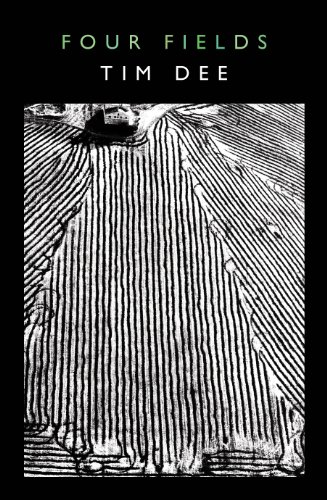
Four Fields

On my wish list:

In his first book since the acclaimed The Running Sky Tim Dee tells the story of four green fields. Four fields spread around the world: their grasses, their hedges, their birds, their skies, and their natural and human histories. Four real fields - walkable, mappable, man-made, mowable and knowable, but also secretive, mysterious, wild, contested and changing. Four fields - the oldest and simplest and truest measure of what a man needs in life - looked at, thought about, worked in, lived with, written.

Dee's four fields, which he has known for more than twenty years, are the fen field at the bottom of his Cambridgeshire garden, a field in southern Zambia, a prairie field in Little Bighorn, Montana, USA, and a grass meadow in the exclusion zone at Chernobyl, Ukraine. Meditating on these four fields, Dee makes us look anew at where we live and how. He argues that we must attend to what we have made of the wild, to look at and think about the way we have messed things up but also to notice how we have kept going alongside nature, to listen to the conversation we have had with grass and fields.

Four Fields is a profound, lyrical book by one of Britain's very best writers about nature.

Source image and text: Amazon