Hodges' Model: Welcome to the QUAD: experiment

Hodges' model is a conceptual framework to support reflection and critical thinking. Situated, the model can help integrate all disciplines (academic and professional). Amid news items, are posts that illustrate the scope and application of the model. A bibliography and A4 template are provided in the sidebar. Welcome to the QUAD ...

Showing posts with label experiment. Show all posts

Tuesday, May 26, 2026

By Helen Frankenthaler - 'A Green thought in a Green Shade'

individual
|
INTERPERSONAL : SCIENCES
humanistic ------------------------------- mechanistic
SOCIOLOGY : POLITICAL
|
group
 
Helen Frankenthaler: A Green Thought in a Green Shade, 1981
119 × 156 1/2 in. (302.3 × 397.5 cm). Acrylic on canvas


© 2026 Helen Frankenthaler Foundation, Inc. / Artists Rights Society (ARS), New York

Image used with kind permission of The Helen Frankenthaler Foundation - and with thanks.
My source: Phoebe Evans. Opening Shot, FT.com/HTSI FTWeekend. 23rd April, 2026, p.13.
 
Gagosian. Helen Frankenthaler: The Moment and the Distance
April 30–July 2, 2026 West 21st Street, New York 
 

Friday, October 17, 2025

Seeking postdoctoral researchers for ERC project IDENTITY ERROR

Dear Colleagues
Please help connect people in your network with this ERC-funded postdoc opportunity in our department.

"The project will combine computational modelling and group-based experiments to scale individual models of epistemic vulnerability (i.e., belief in misinformation/conspiracy theories) to a social level."

Many thanks,

Mike
________________________________

The ERC-funded IDENTITY ERROR project is hiring 2 Postdoctoral Researchers (hosted in the Psychology Department in UL). The project will combine computational modelling and group-based experiments to scale individual models of epistemic vulnerability (i.e., belief in misinformation/conspiracy theories) to a social level. There is a computational post that will require some knowledge of network analysis and/or agent-based modelling, and a social psychology post that will require experience conducting behavioral experiments. We are a supportive group of interdisciplinary researchers, and we do not expect either postdoc to have full knowledge of these methods. We only expect a willingness to learn and a curious attitude. Further details on each post can be found at the links below. The closing dates for applications are October 28th (computational postdoc) and November 3rd (psychology postdoc). 

Each post is estimated to last for 3 years. Contact paul.maher AT ul.ie for enquires.

Computational post: https://my.corehr.com/pls/esbsheulrecruit/erq_jobspec_version_4.jobspec?p_id=079248

Social Psychology post: https://my.corehr.com/pls/esbsheulrecruit/erq_jobspec_version_4.jobspec?p_id=079308
------------------------------

My source: Mike Quayle, Mike.Quayle AT UL.IE
https://www.jiscmail.ac.uk/cgi-bin/webadmin?A0=simsoc
SIMSOC Digest - 15 Oct 2025 to 16 Oct 2025 (#2025-169)

Monday, September 29, 2025

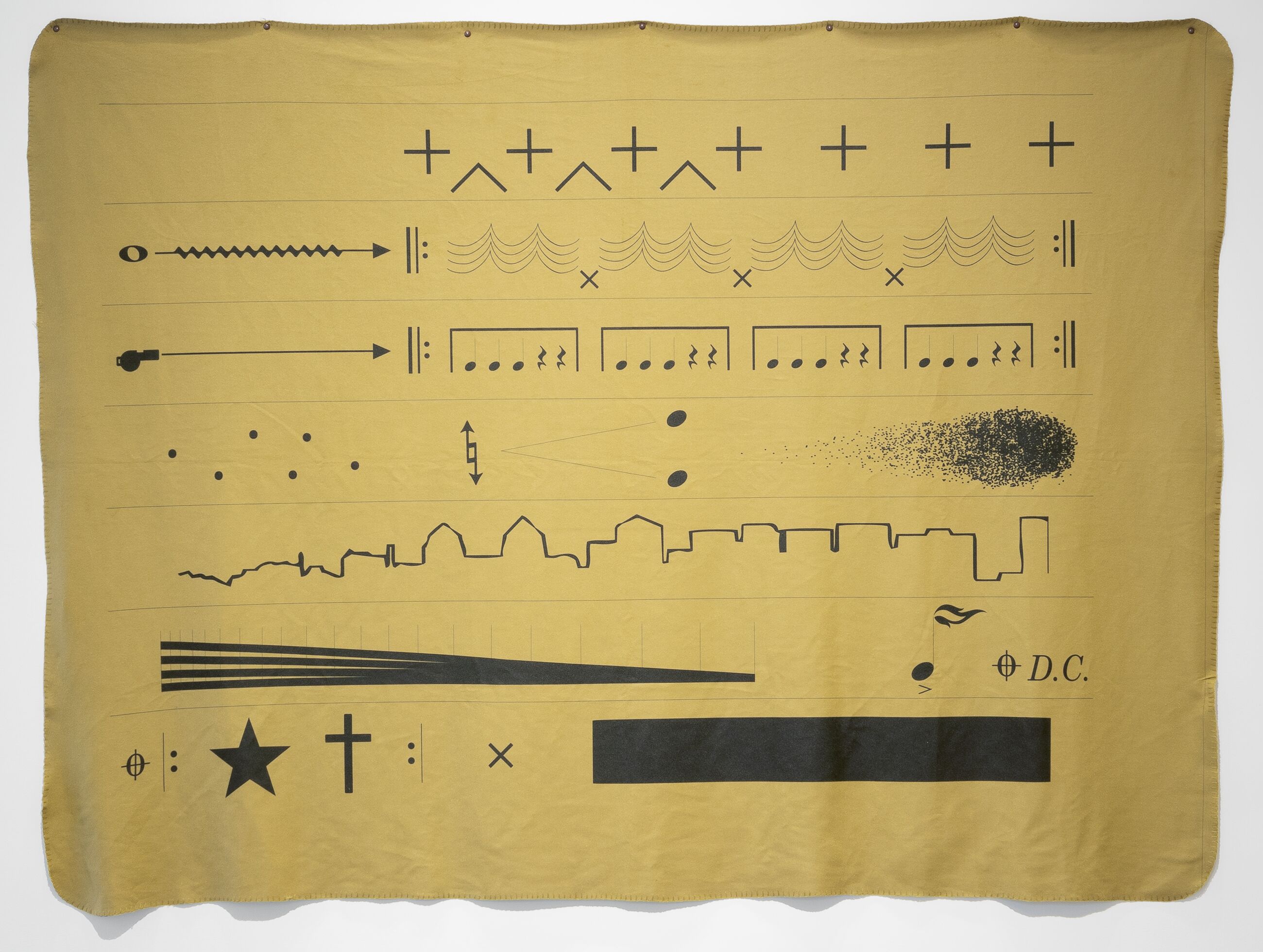
Raven Chacon - graphical musical scores

Individual
|
      INTERPERSONAL    :     SCIENCES               
HUMANISTIC  --------------------------------------  MECHANISTIC      
 SOCIOLOGY  :    POLITICAL 
|
Group
'The artist and composer Raven Chacon, 46, who grew up in Albuquerque and now divides his time between the city and upstate New York, used to explore these lava fields as a youngster, ingesting psychoactive plants such as jimson weed and searching for petroglyphs on the sides of rocks. Some - spirals, zigzags and dotted lines, for example - have found their way into the graphic musical scores for which he is now known. When I visited him in Albuquerque, he drove me out to see them.'
Raven Chacon, American Ledger No. 1 (Army Blanket), 2020. Graphic score


My source: Griffin, J. Sound of a different music. Life&Arts. FT Weekend. 24/25 February 2024. p.17.

Image: ECHOES OF A PLACE - Raven Chacon on transforming land, memory and political resistance into sound: https://www.hauserwirth.com/ursula/echoes-of-a-place-raven-chacon/

See also: RAVEN CHACON - https://spiderwebsinthesky.com/

https://en.wikipedia.org/wiki/Raven_Chacon

Previously: 'music'

Saturday, November 05, 2022

Lab rats ... Experiment ongoing ... c/o BBC Radio 4


 INDIVIDUAL
|
 INTERPERSONAL    :     SCIENCES               
HUMANISTIC --------------------------------------  MECHANISTIC      
SOCIOLOGY  :   POLITICAL 
|
GROUP

define: pacific

psychological resource (fight)

lab rats, guinea pigs

'piece of kit', equipment

"out of sight (a hemisphere away!)"

welfare & wellbeing

Armed Forces Covenant

Group - who is left?

informed consent

the State: Test veterans

What did you say 'pacific' means?


British Nuclear Test Veterans Association BNTVA

Tuesday, April 05, 2022

Holism, evidence, theory and justification ...

or, measuring the temperature of our concepts ...

 
INDIVIDUAL
|
 INTERPERSONAL    :     SCIENCES               
HUMANISTIC --------------------------------------  MECHANISTIC      
SOCIOLOGY  :   POLITICAL 
|
GROUP

... "Quine bases his “confirmation holism” upon observations of Pierre Duhem (1914 [1954]), who drew attention to the myriad ways in which theories are supported by evidence, and the fact that an hypothesis is not (dis)confirmed merely by some specific experiment considered in isolation from an immense amount of surrounding theory. ...


... Thus, a thermometer will be a good indication of ambient temperature only if it’s made of the right materials, calibrated appropriately, and there aren’t any other forces at work that might disturb the measurement—and, of course, only if the background laws of physics and other beliefs that have informed the design of the measurement are sufficiently correct. A failure of the thermometer to measure the temperature could be due to a failure of any of these other conditions, which is, of course, why experimenters spend so much time and money constructing experiments to “control” for them. Moreover, with a small change in our theories or background beliefs, or just in our understanding of the conditions for measurement, we might change the tests on which we rely, but often without changing the meaning of the sentences whose truth we might be trying to establish (which, as Putnam 1965 [1975] pointed out, is precisely what practicing scientists regularly do)." ...


3.4 Verification and Confirmation Holism, In -

Rey, Georges, "The Analytic/Synthetic Distinction", The Stanford Encyclopedia of Philosophy (Summer 2022 Edition), Edward N. Zalta (ed.), forthcoming URL = <https://plato.stanford.edu/archives/sum2022/entries/analytic-synthetic/>. 


Sunday, December 22, 2019

Book: "Good Economics for Hard Times"

INDIVIDUAL
|
INTER-PERSONAL : SCIENCES
HUMANISTIC -------------------------------------------------- MECHANISTIC
SOCIOLOGY : POLITICAL
|
GROUP


Hodges' model provides interdisciplinary and even transdisciplinary bridges across often disparate fields of knowledge and specialties (epistemologies). In this instance consider SOCIO-economics, the consumerism of supply and demand. The influence of this in the economics of health care and the environment. The impact of relentless growth when values are knotted with value and commodified.

Even the book's cover points to the preoccupation of economics with mechanics (process!?). The view of economies as machines, which this book and the work of the authors and others now seeks to challenge and change.


Abhijit V. Banerjee, Esther Duflo (2019) Good Economics for Hard Times, Better Answers to Our Biggest Problems, Allen Lane, ISBN: 9780241306895

My source:
Ed Conway. Fighting the fake news with hard evidence, The Times, Saturday Review. December 14, 2019, p.16.

Wednesday, September 11, 2019

The LONG Now - in Research

individual
|
INTERPERSONAL : SCIENCES
humanistic ----------------------------------------------- mechanistic
SOCIOLOGY : POLITICAL
|
group - population


*I have placed Broadbalk here as agriculture was a key driver for social and community development.

See also:
https://www.nationalgeographic.com/news/2013/7/130719-tar-pitch-longest-running-experiments-science/

Good genes are nice, but joy is better, The Harvard Gazette.
https://news.harvard.edu/gazette/story/2017/04/over-nearly-80-years-harvard-study-has-been-showing-how-to-live-a-healthy-and-happy-life/

World's largest evidence review: Nutritional supplements for mental health
https://www.eurekalert.org/pub_releases/2019-09/nhri-wle090619.php

The Long Now Foundation
http://longnow.org/clock/


My source:
Whipple, T. (2019) News, Bacteria study has just 495 years to go, The Times, February 2, p.37.

Friday, March 09, 2018

Book Review: An introduction to Health Research Methods [i]

An introduction to Health Research Methods
For this review, the preface says it all in the purpose of this book as a: "necessary foundation for meaningful improvements in clinical and public health practice." From an outcomes based view, to the research process itself the book is organised through five - very recognisable - steps:
  1. The Research Question 5-43
  2. Study approaches 35-100
  3. Study design and data collection 101-211
  4. Analysis 213-271
  5. Dissemination 273-345
I have included the page numbers across the steps to give you an idea of the weighting. The text cuts across the various methods, disciplines and credentials of the researcher.

If you are looking for whitespace this book is not for you. As a result though this adds of course to value-for-money. As evidence of packing-it-in the publishers have packed the pages, which for a research book is welcome. The execution while dense with ink on the page, is well delivered in presentation. The font is large, clear, distinct and readable. The adopted format is established very quickly. The first paragraph refers to a figure which is also on the first page. Figures are used to good effect throughout the book, shaded tones not colour.

As per the steps outlined above, two structures to help formulate a general research topic and question are described Exposure, Disease, Population [EPD] and PICOT. Mental health represented here encouraged my reading early on. Literature is also explored, the process of reviewing and systematic revires and meta-analysis in chapters 3 & 22.

With so much research being conducted the matter of originality and gaps in the literature are included. Figure 3-1 provides useful "Ideas for new studies" p.18, the issue of gaps also earns a figure of its own. Chapter 4 quite rightly brought pangs of guilt here dealing with "Focusing the research question" - primary (new data), secondary (existing data), tertiary (review and synthesize the literature). I have struggled to finalise a goal and set specific objectives. This did give me something to ponder upon which I will save for the end.

Each chapter begins with a pithy sentence of advice. Some chapters are very short, e.g. chapters 5 and 6 but this is justified and not suggestive of a need for an alternative structure. Step 2 signifies the arrival at more technical content; time frames, population selection, case definitions, cohort studies, cross sectional surveys, case control studies - with odds rations. This is all framed in accord with the introductory theme. Even an introductory book cannot avoid maths and Jacobsen deploys the figures to very good effect, for example Incidence in figure 11-5. Chapter 12 may be less heavy on the maths but it is a vocabulary expander for the uninitiated in research, as figure illuminate random control trial approaches, randomization efficacy, numbers needed..., flows of participants and screening a diagnostic test results (positives and negatives). The author's picking out Qualitative Research - Chapter 13 gave me hope for Hodges' model which can readily differentiate between quant and qual. And yes, brainstorming and mapping are mentioned at the start of the book.

TO BE CONTINUED...

Saturday, August 12, 2017

Book: A Mind at Play

individual
|
INTERPERSONAL : SCIENCES
humanistic --------------------------------------- mechanistic
SOCIOLOGY : POLITICAL
|
group

I still have a collection of articles on information and information theory saved from old magazines, such as, PC World, Practical Computing, PC Magazine (British), PCW and Byte. I've some specific books too that might form a collection of sorts, once they gathered together and sorted. Maths helps, but you don't need a high level of math ability to grasp the basics. It is a fascinating field and now with quantum computing, AI ... the future isn't just beckoning we're caught in its tenacious gravity field - especially as we get older!

I still have the aspiration to write a follow-up to the paper below, combining information, health and complexity. Meanwhile this book looks good summer reading...

Jones, P. (1996) Humans, Information, and Science, Journal of Advanced Nursing, 24(3),591-598.


Image: Simon and Schuster = A Mind at Play

Saturday, December 31, 2016

Inner model

individual
|
INTERPERSONAL : SCIENCES
humanistic -------------------------------------------  mechanistic
SOCIOLOGY : POLITICAL
|
group-population


'I beseech you to take interest in these sacred domains so expressively called laboratories. Ask that there be more and that they be adorned for these are the temples of the future, wealth and well-being. It is here that humanity will grow, strengthen and improve. Here, humanity will learn to read progress and individual harmony in the works of nature, while humanity's own works are all too often those of barbarism, fanaticism and destruction.'
Louis Pasteur (1822-1895)


Do we need more 'laboratories' in 2017?
Can we produce the researchers and other staff to fill the labs?
What labs should be prioritised?
What progress have we made in integrating knowledge since the time of Pasteur?
Does it matter?
How evidence-based is evidence-based?
Are laboratories more about analysis and hence reduction than synthesis?
Where are the social sciences exactly?

Happy New Year!

Tuesday, March 29, 2016

Empirical(?) - Connection

individual
|
INTERPERSONAL : SCIENCES
humanistic ---------------------------------------  mechanistic
SOCIOLOGY : POLITICAL
|
group


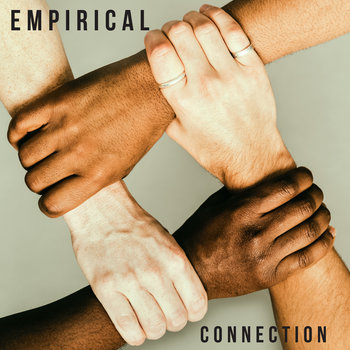
Empirical by Connection


Connection by Empirical


Image source and link:
https://cuneiformrecords.bandcamp.com/album/connection

My source: Hobart, M. (2016) Critics' choice, FT Weekend, 12-13 March. p.18.


Friday, November 28, 2014

Papers 2 study: The longitudinal effect of concept map teaching on critical thinking of nursing students

Lee, Weillie; Chiang, Chi-Hua; Liao, I-Chen; Lee, Mei-Li; Chen, Shiah-Lian; Liang, Tienli (2013) The longitudinal effect of concept map teaching on critical thinking of nursing students. Nurse Education Today, Vol.33(10), pp.1219-1223.

From the summary (with my emphasis):

... The intervention of concept map teaching was given at the second semester in the Medical–Surgical Nursing course. The results of the findings revealed student started with a mean critical thinking score of 41.32 and decreased at a rate of 0.42 over time, although not significant. After controlling for individual characteristics, the final model revealed that the experimental group gained a higher critical thinking score across time than the control group. The best predictive variables of initial status in critical thinking were without clinical experience and a higher pre-test score. The growth in critical thinking was predicted best by a lower pre-test score, and lower scores on surface approach and organized study. Our study suggested that concept map is a useful teaching strategy to enhance student critical thinking.