Hodges' Model: Welcome to the QUAD: refugees

Hodges' model is a conceptual framework to support reflection and critical thinking. Situated, the model can help integrate all disciplines (academic and professional). Amid news items, are posts that illustrate the scope and application of the model. A bibliography and A4 template are provided in the sidebar. Welcome to the QUAD ...

Showing posts with label refugees. Show all posts

Friday, June 05, 2026

'Moved to Care' amid the Boxes - RCN

A Balikbayan Box for Nursing: artists and writers in residence

'Our new Arts Council National Lottery funded project takes the Filipino custom of the Balikbayan Box as its central theme, inspired by Romalyn Ante's poem Notes Inside a Balikbayan Box. The Balikbayan Box is a long-standing Filipino cultural practice through which we are exploring the spirit of nursing across borders and boundaries. 

Visit our exhibition to explore the installation ‘Inside Home’ by Haleema Aziz and meet our writers in residence – Romalyn Ante, Jennifer Wong and Christie Watson – to explore the art of nursing with a difference.

Our writers will each be running a writing workshop for a different audience to help them engage with the exhibition themes, and develop their own writing skills: refugees, schoolchildren and young adults.

Writing residencies run in the RCN Library and Museum (20 Cavendish Square) from April – June 2026. Find our what our writers have been working on at this public celebration of art and migration panel event in July.

Our writers will be based in the Moved to Care exhibition space in the England Library from 11am-4pm during their residency week. Anybody can drop in and chat to them between 3-4pm, or if you're a member you can book a free half-hour 121 slot. Discuss your own writing, ask questions about publication or the role of art and creativity in nursing with our writers in residence.'

Previously: 'box' : 'creativity' 

My source RCN Congress 2026
Monday, March 31, 2025

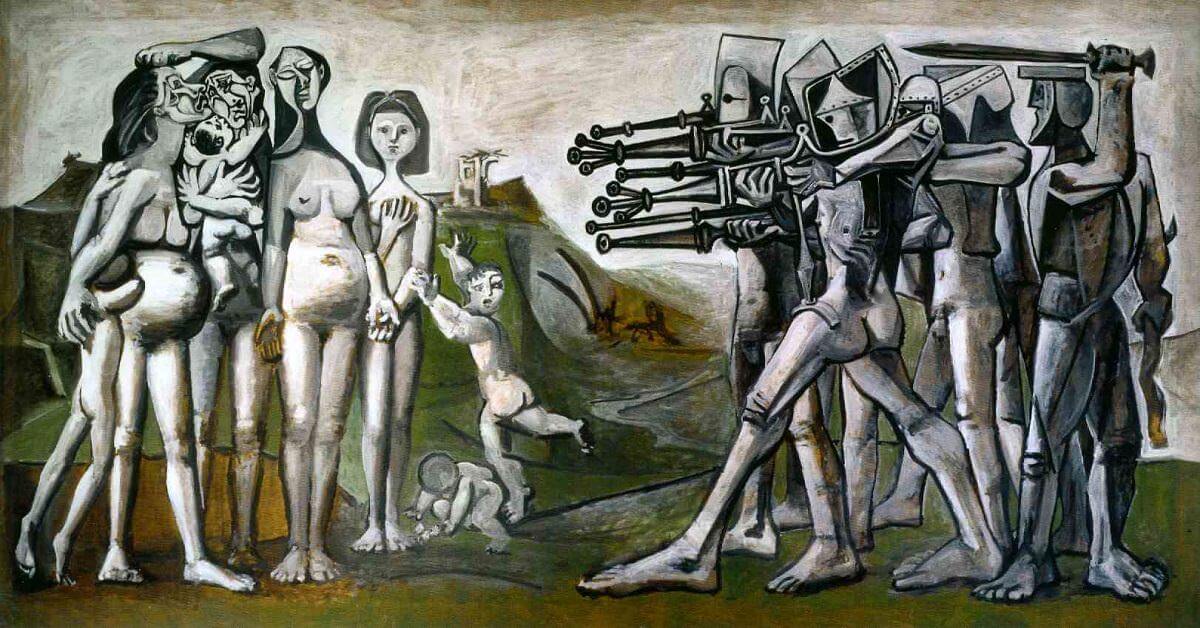
c/o Picasso - 'Massacre in Korea' (1951)

Art is a lie that makes us realize the truth.

                                 - Pablo Picasso

individual
|
INTERPERSONAL : SCIENCES
humanistic ------------------------------- mechanistic
SOCIOLOGY : POLITICAL
|
group


HUMANISTIC - mind


body - MECHANISTIC

"The 'beat' goes on"!?
'Massacre in Korea' (1951)

My source:
Vivienne Chow, How Picasso became a prize for Asia's new collectors, Collecting, FTWeekend. 22-23 March 2025, p.3.

See also: 
https://www.mplus.org.hk/en/exhibitions/ (15 March - 13 July 2025)

https://www.pablopicasso.org/massacre-in-korea.jsp

Tuesday, January 14, 2025

Book list: Global health c/o Madhu Pai, MD, PhD

Way back in 2023 on twitter c/o Madhu Pai, MD, PhD, I learned of a listing of books on global health:

The list is updated quarterly -

https://microbiologycommunity.nature.com/posts/41300-if-you-had-to-read-one-book-on-global-health 

Here are four titles - and of course now the list is even richer!

Individual
|
     INTERPERSONAL    :     SCIENCES               
HUMANISTIC --------------------------------------  MECHANISTIC      
SOCIOLOGY  :   POLITICAL 
|
Group

Unheard

METRICS

ONE by ONE by ONE

The Psychosis of Whiteness

Book images:

https://www.hachette.co.uk/titles/rageshri-dhairyawan/unheard/9781398718708/

https://www.dukeupress.edu/metrics

https://www.harpercollins.com/products/one-by-one-by-one-aaron-berkowitz?variant=32280902205474
(If you search harpercollins you will find the book.)

https://www.penguin.co.uk/books/316675/the-psychosis-of-whiteness-by-andrews-kehinde/9780141992389

My source - with thanks:
https://x.com/h2cm/status/1716119076513173573?s=20

Twitter? Yes, I know; don't we all?

Wednesday, November 13, 2024

Simplifying universal health coverage to achieve political action

'The narrative on universal health coverage should be centred around four core elements: universality, equity, adequate financing, and preparedness in public health emergencies, write Katri Bertram and Justin Koonin'.
Bertram K, Koonin J. Simplifying the universal health coverage narrative can help to achieve political action BMJ 2024; 387 :q2441 doi:10.1136/bmj.q2441

A RESPONSE* 

Can this be true? Why, this is absolutely marvellous! I?
Yes! Me. 

I do count! I'm seen, heard and included in the health care system and can have a voice in the service's development (1.). 

Not only that, but everyone in my - our community - has access - too (2.) ...

client - person - individual - self - patient - citizen
|
INTERPERSONAL : SCIENCES              
humanistic ------------------------------- mechanistic
SOCIOLOGY : POLITICAL   
|
couple - family - group - community - village/town - city
1. UNIVERSALITY

4. PREPAREDNESS


2. EQUITY

3. ADEQUATE FINANCING

... Now that health and social care are properly funded, they've finally done it! They've taken the key step to include education. This is crucial, critical to preventing poor health. Whenever possible we want people to self-care. The mother of all us has always whispered of the safety net. Now she shouts and rages. We all must listen to the stories of old.  Children should be brought up to be health and media... literate and recognise for them as an individual, the merit, the joy of health and well-being.

At last - the power's-that-be are addressing policy. Not just policy on paper, but implementing it, to assure the quality and cost of food, baby-formula, the air and water (3.).

What does this mean?^ It means health budgets can be better managed. Being prepared does not mean we reach immediately for the technical solution, write the prescription (for antibiotics). No. Being prepared means wising-up too. Together, we are ready to face each other, and right across the world: S-N and E-W. Now we can look to the future, climate change and Gaia: as ONE (4-5).


^O’Connell T, Rasanathan K, Chopra M. What does universal health coverage mean? Lancet 2014;383:277-9. doi:10.1016/S0140-6736(13)60955-1 pmid:23953765

(Cited by Bertram & Koonin)

5. Spiritual.

*A response, that is both too simple and too complex. Discuss.

Friday, February 03, 2023

Where is NURSING THEORY: integrated, holistic, and person-centered care ... ?

 INDIVIDUAL
|
 INTERPERSONAL    :     SCIENCES               
HUMANISTIC --------------------------------------  MECHANISTIC   
SOCIOLOGY  :   POLITICAL 
|
GROUP
"Be the difference!"


"Be the difference ...

to All others."


What is 'different' here?

Locally
Nationally
Internationally
Biosphere


#HealthTheory

Previously on W2tQ: 'Nightingale'

My source/prompt: c/o @Jasonforrestftw
https://twitter.com/Jasonforrestftw/status/1621224549848170499?s=20&t=KHJSqwCsE6r3Ch8lRoDioQ

Saturday, April 23, 2022

The 1st International Workshop On Ontologies for the Disaster Domain

We invite submissions to the First Workshop On Ontologies for the Disaster Domain – WOODD -

to be held as a part of The Joint Ontology Workshops (JOWO) 2022 at Jönköping University, Jönköping, Sweden, from August 15 to 19, 2022.

Image via paper from
International Journal of Geo-Information
(Paper - Implementation of FAIR Principles for Ontologies
in the Disaster Domain:
A Systematic Literature Review)


The workshop aims to bring together knowledge modeling engineers, domain ontology experts, developers of disaster knowledge graphs to discuss different techniques and rationale for constructing various ontologies in the disaster domain. This will potentially also set the stage for opening the floor for discussion about limitations of existing research, missing pieces, and overall address a key question

“
Do we need a domain ontology or a reference ontology for the hazard domain”?

Topics

1) Ontologies that focus on modeling different aspects of the domain (e.g. phases of disaster management life cycle, observational data, spatial-temporal views, such as point, area, or trajectory phenomenon)

2) Ontologies that model causal chains (e.g. for compounding disasters and disaster impacts)

3) Construction and annotation of domain taxonomies or vocabularies using machine learning and other artificial intelligence technologies

4) Ontology integration and ontology alignment in the hazard-disaster domain

5) Ontology modularity in the hazard-disaster domain

6) Ontologies and disaster domain knowledge graphs

Submissions are particularly welcome that address aspects of this theme, but submissions outside of the theme, but maintain the core idea of the workshop are also welcome.

Submissions

We encourage three types of contributions:

1) Full research paper: Submitted papers must not exceed 14 pages excluding the bibliography. Please, note that the minimum length is 10 pages.
Short paper: Submitted papers must not exceed 6 pages excluding the bibliography. Please, note that the minimum length is 5 pages (including the bibliography).

2) Extended abstracts (presentation only) should be 2-4 pages long including the bibliography. Please, note that extended abstracts will not be included in the CEUR proceedings.

Submissions should be made via Easychair at https://easychair.org/conferences/?conf=jowo2022.

For more guidelines about submissions please refer to the workshop website at 
https://shirlysteph.github.io/woodd-jowo22/

Important Dates

Papers submissions: June 7th, 2022
Papers notifications: July 15th, 2022
Camera-ready version submissions:  August 5th, 2022
JOWO: August 15-19th

Chairs


– Shirly Stephen, University of California, Santa Barbara, USA  
– Rui Zhu, University of California, Santa Barbara, USA
– Cogan Shimizu, Kansas State University, USA

My source: Cogan Shimizu via semantic-web AT w3.org

Sunday, March 27, 2022

Call for Chapters - Book on Digital Literacy

 Dear "HIFAers",

I hope my message finds you well and safe!

A new IFLA book on Digital Literacy will be published by DeGruyter-Saur in the IFLA Publication Series. Some of you might be interested in the following call for chapters (deadline for proposals: March 31):

https://www.ifla.org/news/call-for-chapters-book-on-digital-literacy/

Call for Chapters - Book on Digital Literacy 

Title: Libraries Empowering Society through Digital Literacy 

Editors: Dr Prudence Dalrymple, Ms Heather Todd, Dr Luisa Marquardt, Mr ...

www.ifla.org
Best regards.
Luisa Marquardt
---
Dr. Luisa Marquardt
Cattedra di Bibliografia e Biblioteconomia
*Dipartimento di Scienze della Formazione (via Principe Amedeo, 182/a)*
*Dipartimento di Studi Umanistici (via Ostiense, 234/236)*
Università degli Studi "Roma Tre"
sito web

HIFA profile (and my source): Luisa Marquardt teaches Library and Information Science. She is interested in literacy of different types (e.g., Media and Information, Health, Visual etc.) and the educational role of libraries in equipping their patrons with the multiple literacies needed in our challenging (and challenged), ever-changing and high-demanding societies. luisa.marquardt AT uniroma3.it

Wednesday, March 09, 2022

Flee Memory Box Europa

INDIVIDUAL
|
 INTERPERSONAL    :     SCIENCES               
HUMANISTIC -----------------------------------  MECHANISTIC    
SOCIOLOGY  :   POLITICAL 
|
GROUP

Einav, D. The human face of war and migration, Life&Arts, FTWeekend, 5-6 February 2022, p.15.


Friday, February 04, 2022

Paper: c/o Rabiah-Mohammed et al. - Syrian Refugees’ Experiences of Housing Stability during the COVID-19 Pandemic


 Self - Individual - Person
|

 INTERPERSONAL    :     SCIENCES               
HUMANISTIC ----------------------------------  MECHANISTIC
SOCIOLOGY  :   POLITICAL 
|
Community - Group -  GLOBAL REFUGEES 

COVID-19 impact
'Just'
mental health, stress, trauma, vulnerability
lived experience
stability
identity
PERSON-HOOD
PSYCHE- PSYCHIATRY
Spiritual - Beliefs - Hope - Sanctuary

QUALITATIVE

COVID-19 impact
housing stock: space/rooms/access
stability
'just' [ in time ] -
repeated displacement
place, space, time, events, control
systems
GEO
-
Online 'life' education
diet, food, cost
QUANTITATIVE
SUBJECTIVE
COVID-19 impact
family size
'Just'
(new) culture, language, customs
Critical Social Theory
social inequities, race, status, class...
shared realities, narratives, interpretative
discrimination, stigma, social isolation
social justice, stability
community, neighbourhoods
family support, safety
belonging

SOCIO-
OBJECTIVE
COVID-19 impact
'Just'
policy
housing markets
government-assisted refugees
power - [no] choice [beyond my control]
Syrian refugees - forced migration
housing instability
low-income, affordability
employment
STATE-HOOD
'Re-settlement' - across this model?
precarity
-ECONOMIC


Fawziah Rabiah-Mohammed et al. (2022) Syrian Refugees’ Experiences of the Pandemic in Canada: Barriers to Integration and Just Solutions. Studies in Social Justice, 16,1, pp.9-32.


My source:
https://twitter.com/westernuNursing/status/1487161839922331651

Monday, June 21, 2021

History: Ancient and Modern

individual
|
INTERPERSONAL : SCIENCES
humanistic ----------------------------------------------- mechanistic
SOCIOLOGY : POLITICAL
|
group


HISTORY


Artist:

Ian Hamilton Finlay

(British, 1925–2006)
Title:

For the temples of the Greek our homesickness lasts forever (collab. w/Michael Harvey)

Image: https://emuseum.aberdeencity.gov.uk/objects/118193/for-the-temples-of-the-greeks-our-homesickness-lasts-foreve

Lubbock, T. The conflict of ancient and modern, The Tuesday Review, The Independent, 26 March 2002. p.10.


Sunday, June 13, 2021

Undocumented

individual
|
 
 INTERPERSONAL : SCIENCES
humanistic ----------------------------------------------- mechanistic
SOCIOLOGY : POLITICAL
|

My source:

Pig, C. WARNING: Art Is Dangerous, Profile, Carlos Barberena De La Rocha, PrintMaking Today, Summer 2021, 30: 118. pp.14-16.

https://www.cellopress.co.uk/page/printmaking-today

Image:

https://www.bandoleropress.com/propaganda/category/printmaking


Friday, May 14, 2021

Book: iv "Foundations of Global Health & Human Rights"

When I (really) was a student nurse, advocacy was an important facet of patient care. Not surprising in a Victorian asylum (Winwick Hospital). Institutional care was literally, the order of the day and night. New initiatives (individualised care) included personal clothing, not what could be found on the shelves of the linen room (and watch for the cockroaches too); but knowing the patients to the extent of exercising  the tailor's eye of knowing what would fit.

This was twenty years before the UK Human Rights Act 1998, and the focus too upon consent and mental capacity. In the 1990s - 2000s nurses  as advocates was questioned. Now while clearly not a return, there is a need for mental health nurses and future practitioners in particular to reassess this role, in partnership with patients and team members with lived experience. 

What about the book? Yes! Well, a reason for nurses to advocate, is to ensure patients and communities are aware of  their rights. So accustomed to the demand - supply equation and the politics of the healthcare market, we miss the deeper historical development of the 'rights holder' and 'duty bearer' (Figure 2.1, p.49).

individual
|

INTERPERSONAL : SCIENCES
humanistic ----------------------------------------------- mechanistic
SOCIOLOGY : POLITICAL
|
group

Rights holder
(Awareness, Access to Information, Literacies)

Demand of Rights
(Data)

Actions to Realize Rights
(Social Justice?)

Duty bearer
(Policy, Reporting, Accountability)


One more to follow... I think ...

Foundations of Global Health & Human Rights. (2020) Lawrence O. Gostin and Benjamin Mason Meier (Eds.), Oxford: OUP. ISBN: 9780197528303.
 

Monday, May 10, 2021

Book: iii "Foundations of Global Health & Human Rights"

When you've several books to get to, a steady stream of figures and tables can help give the illusion of a speed-read. There could be many such breaks in this book, but what there are are focused, informative and fit the COVID situation in being prime for take-away purposes. It is here that the educational, learning and teaching utility of the book is found, and in the references.

Reading this book I thought about the way healthcare is situated and how care-of global politics health is local, national, international and glocal. The global health workforce are joined in the books they read. Then they apply their learning in their respective corners of the world, seeking to put the patient, the person, the public at the center. As such Section 1 is essential reading for all health and social care professionals:

Introduction: Global Health & Human Rights

Lawrence O. Gostin & Benjamin Mason Meier
I. The Human Rights Movement: International Norms and Principles 

Chapter 1. The Birth and Development of Human Rights for Health
Benjamin Mason Meier, Thérèse Murphy & Lawrence O. Gostin

Chapter 2. Global Health Law: Legal Foundations for Social Justice in Public Health
Lawrence O. Gostin, Matiangai V. S. Sirleaf & Eric A. Friedman

Chapter 3. The Right to Health and Health-Related Human Rights
John Tobin & Damon Barrett

Chapter 4. The Rights-Based Approach to Health
Flavia Bustreo & Curtis F.J. Doebbler

individual
|

INTERPERSONAL : SCIENCES
humanistic ----------------------------------------------- mechanistic
SOCIOLOGY : POLITICAL
|
group


"Given the integral link between global health and human rights, global health law necessarily works in synergy with human rights. Accordingly, global health law includes not only the scope of law for global health, but also a normative perspective, with global health law seeking to enable all people to realize the right to health (Magnusson, et al. 2017). This normative perspective is not uncommon in law: environmental law is concerned with protecting the environment, trade law is concerned with a free and fair system of trade, and human rights law is concerned with protecting and promoting rights. The particular force of global health law's normative perspective comes in how it is not confirmed to laws directly related to health, but rather has significant implications for a wide range of laws in other legal regimes, requiring a focus on health in all policies." p.59.

Chapter 3. The Right to Health and Health-Related Human Rights
John Tobin & Damon Barrett

 
More to follow...

Foundations of Global Health & Human Rights. (2020) Lawrence O. Gostin and Benjamin Mason Meier (Eds.), Oxford: OUP. ISBN: 9780197528303.
 

Thursday, April 29, 2021

Book: ii "Foundations of Global Health & Human Rights"

Well I've finished it! Yes it is an empowering read. Even though still 'fresh' published in 2020 clearly events race ahead:

  • COVID-19 continued to assert its life-suspending and life-ending presence, which even now is ongoing;
  • Global (geo-)politics continues its unpredictable dynamic across all continents;
  • The oceans, atmosphere - biosphere no less, also await the outcomes of COP26 this year.

As the book closes with a critique of populism I think the volume is deserving of a revised edition - when the time comes. Until then, there is a great deal here. I looked back on the chapter on Global Health Law: Legal Foundations for Social Justice in Public Health. The UK news today made me wonder for everyone: what is social justice? From the BBC: [ https://www.bbc.co.uk/news/uk-politics-56924131 ]

"New laws that could leave flat owners facing bills for fire safety measures are "indefensible," say Grenfell Tower survivors and bereaved relatives.

The Fire Safety Bill is aimed at making homes safer following the 2017 blaze, in which 72 people died."

 Far from the global context I know, but the last chapter prompted the connection:

"The UN Guiding Principles on Business and Human Rights have sought to incorporate state protections against abuse by business, establish a "Protect, Respect and Remedy" framework for corporate obligations, and facilitate accountability through greater access to effective remedies for those who are harmed." p.452.
I am guilty, as surely the vast majority of us are, of referring to 'human rights' without having much depth of knowledge. One book a legal professional and crusader does not make. But this text helps. There is an irony in the passage of time since publication, as you the reader have some extra pieces of the jig-saw to fit in. There really is hope!

The Afterword resonates loudly as if written yesterday. Calling for those involved in the struggle to self-care and tend to their resilience and the welfare of their fellow practitioners. The first lesson of first aid remains salutary and critical.
More to follow...

Foundations of Global Health & Human Rights. (2020) Lawrence O. Gostin and Benjamin Mason Meier (Eds.), Oxford: OUP. ISBN: 9780197528303.

Tuesday, April 13, 2021

Book: "Foundations of Global Health & Human Rights" i

Foundations of Global Health & Human Rights

This book would have been a timely and great read back in 1998 when my online career began. Of course, back then the global health and human rights environment we know today was incomplete; even as core challenges and barriers were a known and frustrating presence. In nursing theory, practice and management there was much policy and politics to also run its course. As policy and law continue to play out over the past two decades, the relevance of Hodges' model is also continually affirmed.

"Foundations .." is a dense read, but it is meant to be. There are two clues, one is on the cover especially if your work is in health, in a developed nation, but you have no experience of working in humanitarian crisis situations. Thankfully, or not, that is the case for the vast majority of us, but this text could persuade many to get involved. Many who might think of nursing, medicine, public health and other more obvious clinical pathways may realise there is another way

The other clue is how each chapter has a series of questions to check your reading and attention. I could not answer them all but I will hide behind the excuse that in providing the foundations I am busy laying bricks, timber, whatever materials are to hand. The book was published last year and COVID-19 is ongoing and recognised as a global event, but its full impact is not yet apparent. Whether this could justify a revised edition I'm not sure. There is much to add, but the same can be said of so many books now.

Nonetheless the book delivers, organised in four sections:

I. The Human Rights Movement: International Norms and Principles
II. Bringing Rights Home: Tools for Human Rights Implementation and Accountability
III. Contemporary Applications: Healthy People, Healthy Populations
IV. New Challenges: Human Rights to Advance Public Health in a Globalizing Era

From OUP, the quality [pb] is high as expected, with clear type and an appealing, if conventional layout. The book is pretty heavy, 254x178mm and over more than 467 pages. In the car the steering wheel is a welcome support (wanting the book placed higher).

A foreword by Dr Tedros Adhanom Ghebreyesus [@DrTedros] Director-General of the World Health Organization acknowledges the arrival of COVID and WHO's role as a catalyst in the global response. Dr Tedros concludes:

"'Health is a human right' must be more than just a slogan - it must be embedded in international law, national legislation, and health policies, a commitment to protecting and promoting the right to health for all people, in all countries, through global solidarity." p.xiv
individual
|
INTERPERSONAL : SCIENCES
humanistic ----------------------------------------------- mechanistic
SOCIOLOGY : POLITICAL
|
group
QUALITY, SUBJECTIVE
OBJECTIVE, QUANTITY
 "Health is a human right" "Health is a human right"

From the introduction and throughout the explanation of history is very welcome. The book readily qualifies as a foundational teaching text. The preface's intent to provide a holistic perspective on the field, is well achieved. There is a developmental pathway in the sections and chapters with references back to what was covered previously. This is helpful and in my reading drew attention to what still must be resolved.

More to follow ...

Foundations of Global Health & Human Rights. (2020) Lawrence O. Gostin and Benjamin Mason Meier (Eds.), Oxford: OUP. ISBN: 9780197528303.


Tuesday, March 23, 2021

TEDxNHS #1 – Why teaching a man how to fish won’t solve food poverty

individual
|
INTERPERSONAL : SCIENCES
humanistic ----------------------------------------------- mechanistic
SOCIOLOGY : POLITICAL
|
group


Friedrich
1845
Engels

 “social murder ...


... meeting too early a death."

My source:

https://www.tedxnhs.com/tedxnhs-unlocked/

Sunday, March 14, 2021

Paper: Models of care for patients with hypertension and diabetes in humanitarian crises: a systematic review

individual
|
INTERPERSONAL : SCIENCES
humanistic ----------------------------------------------- mechanistic
SOCIOLOGY : POLITICAL
|
group

"Implementing NCD care in humanitarian crises requires the development of a context-adapted approach or ‘model of care’. A model of care may be characterized as a conceptual and pragmatic framework that describes how services are delivered within a health system (Davidson et al., 2006; Agency for Clinical Innovation, 2013)."

Models of care

"We found that there was no single unifying model of care for HTN/DM care in humanitarian crises, and the variance in care models included in this review was highly dependent on context. In order to descriptively synthesize the diverse models presented in the included studies, we created a typology based on the type of crisis, region and integration with the health system, since these factors likely influenced model design"
 
patient’s expectations

hypertension and diabetes (HTN/DM)

Crisis type and Region
Natural: Hurricane, Flood, Earthquake

Palestine, Lebanon, Jordan,  China, Pakistan,  India, Philippines, Syria, Iraq, Turkey, Nepal

Camp, Non-Camp; Rural, Urban

Location of services - Location of people in need, transport, travel time, distance

Refugee population - Local population

forced displacement, disruption of treatment and support, interrupted health services, movement and attrition of health care workers (HCWs), insecurity, destruction of infrastructure,  breakdown in supply chains and data processes

"The domains of access — availability, affordability, accessibility, accommodation, and acceptability — were derived from previously described measures of coverage (Penchansky and Thomas, 1981; Hernández-Quevedo and Papnicolas, 2013; Levesque et al., 2013)."

Refugees and Host Communities

Humanitarian crises

"Responsiveness has been defined as the ability of health services meet a patient’s holistic needs; in this framework, it also encompassed a model of care’s ability to respond to changing patient needs in a volatile context (.Hernández-Quevedo and Papnicolas, 2013; Kruk et al., 2018). Integration described the linkage between different levels and sites of care, such as facility-based care and community-based support as well as coordination between providers and institutions, while continuity of care referred to uninterrupted care throughout the patient’s disease and life course."

Formal health system and community-based formal or informal systems

Non-governmental organisations


Crisis type and Region
Political: Conflict, Disaster

Affordability, income, worth of service

Accommodation

Person :: Service
centrednesss


"Availability was defined as the volume and type of existing services and whether this was adequate for the volume and needs of service users. Affordability constituted the patient’s capacity to use financial resources to obtain care balanced against their income and the perceived worth of the service. Accessibility addressed the match between the location of services vs the location of people in need, including transport, travel time, distance, and cost. The accommodation was defined as the organization of service delivery, such as opening times and ability of service users to accommodate to this. Acceptability was considered as the relationship between the services and the patient’s expectations of appropriate care."
(My emphasis)

NCD  - Non-communicable disease

My source: HIFA list

CITATION: Models of care for patients with hypertension and diabetes in humanitarian crises: a systematic review, Michael S Jaung, Ruth Willis, Piyu Sharma, Sigiriya Aebischer Perone, Signe Frederiksen, Claudia Truppa, Bayard Roberts, Pablo Perel, Karl Blanchet, Éimhín Ansbro
Health Policy and Planning, https://doi.org/10.1093/heapol/czab007

Sunday, July 26, 2020

Book: Refuge in a Moving World [open access]

Tracing refugee and migrant journeys across disciplines


individual
|
INTERPERSONAL : SCIENCES
humanistic ----------------------------------------------- mechanistic
SOCIOLOGY : POLITICAL
|
group - population


Refuge in a Moving World Tracing refugee and migrant journeys across disciplines
Refuge in a Moving World
Tracing refugee and migrant journeys across disciplines

My source:
https://twitter.com/HealthSyria/status/1286761841373466626?s=20

Thursday, July 02, 2020

Book: The Ungrateful Refugee

individual
|
INTERPERSONAL : SCIENCES
humanistic ----------------------------------------------- mechanistic
SOCIOLOGY : POLITICAL
|
group - population
listen to me


"Why do we 
listen to refugees
in one way ...
The Ungrateful Refugee


... and 
Harvard Business School 
students in another?"

listen to us


"Anyone with a boss knows the basics: lock eyes, shake hands firmly, under-promise, over-deliver, repeat. At HBS, we picked up other ways to affect the need-potential calculus: when pitching something, dismantle scepticism by arguing against yourself. If a narrative lacks complexity, put it into an intellectually satisfying framework. And so on.
The most important signal is this: you don't need them - they need you. Your value lies in the vastness of your potential, walk into every room potential first." p.24.

My source:
Nayeri, D. (2020) How to be believed, FT Weekend, Magazine, 7-8 March, pp.24-27.

Tuesday, January 22, 2019

Paper: Geopolitical factors and mental health I [mapped to h2cm]

" ... we propose that mental health must be seen as a key strategic goal of foreign policy and be used as a measure of success of the foreign aid to ensure that individual people with mental illness are guaranteed a role and support in the civil society and their needs – clinical or social – do not get swept under the carpet. To this end, we examine some key statistics and to address the mental health needs of those worst placed, we propose an index – the Compassion, Action, Pragmatism and Evidence (CAPE) Vulnerability Index – that identifies the most vulnerable communities so that international aid may be more appropriately targeted, possibly ‘ring fenced’ making mental health a strategic building block of foreign policy." p.779.

individual
|
INTERPERSONAL : SCIENCES
humanistic ----------------------------------------------- mechanistic
SOCIOLOGY : POLITICAL
|
group

wither mental health in relief,
shorter life compared with general population, 
poverty including


 As a child
As an adult


Vicious cycle 1:
Disaster experiences - mental health
Traumatic Stress Disorder**

Natural & man-made disasters,
health crises, e.g. Ebola,
Conflict, War
Climate warming
Humanitarian intervention:
Emphasis on
physical survival and physical health
Statistics: globally

Proposed index:
the Compassion, Action, Pragmatism and Evidence (CAPE) Vulnerability Index – that identifies the most vulnerable communities

Vicious cycle 1:
[**Intergenerational transmission of stress and trauma - Epigenetics, social memory]
 Social upheaval, migration and
displacement


mental illnesses assoc with
social failures such as
poor parenting, school failure,
domestic violence and toxic stress,
impacted prospects on earning a living,
stigma
social exclusion

Social Determinants of Health
Displacement refugees, poverty,
women, children,
 trafficking, rape

Foreign Policy
Relief: mental illness =
denial of - human rights, vote,
marriage, inheritance, make a will

Vicious cycle 2:
corruption - inequality
sequestration of assets
crime, law & order
Disaster ('declaration')

Mental health problems cost the world some
US$2.5 trillion per year
 (US$16.1 trillion by 2030)
Foreign aid & assistance
Foreign policy

Populism


Persaud, A. et al. (2018) Geopolitical factors and mental health I. International Journal of Social Psychiatry, 64(8) 778–785. DOI: 10.1177/0020764018808548
https://journals.sagepub.com/doi/abs/10.1177/0020764018808548?journalCode=ispa&

n.b. I have added epigenetics and the intergenerational transmission of stress and trauma.