Hodges' Model: Welcome to the QUAD: death

Hodges' model is a conceptual framework to support reflection and critical thinking. Situated, the model can help integrate all disciplines (academic and professional). Amid news items, are posts that illustrate the scope and application of the model. A bibliography and A4 template are provided in the sidebar. Welcome to the QUAD ...

Showing posts with label death. Show all posts

Monday, July 06, 2026

Ebola and Mental Health, CDC Response to Ebola in West Africa in 2014-2015: Weds 15 July

Dear Peter, we are thrilled to invite you to our upcoming Webinar: 

Ebola and Mental Health, CDC Response to Ebola in West Africa in 2014-2015 on Wednesday, 15 July at 13:00-14:00 (CEST) 

Register here 

What can the Ebola response in West Africa teach us about mental health, trust, and outbreak preparedness today? We warmly invite you to our upcoming webinar “Ebola and Mental Health: Lessons from the CDC Response in West Africa, 2014–2015on July 15, 13:00–14:00 CEST

Drawing on the 2014–2015 Ebola outbreak in West Africa and its rapid escalation, this webinar will explore why mental health and psychosocial support must be considered an essential part of outbreak response. The session will connect past lessons to current challenges, including the ongoing Ebola outbreak caused by Bundibugyo virus in the Democratic Republic of the Congo and Uganda. We are delighted to welcome Dr. Anna Grigoryan as our keynote speaker. Based on her personal experience and deployment to Sierra Leone in 2015 as part of the CDC Ebola Response Mission, Dr. Grigoryan will share reflections on key response activities, communication challenges, and the intersection of Ebola response and mental health. The webinar will highlight why coordinated, international, and rapidly scaled-up responses are essential to reduce illness, deaths, fear, and psychosocial distress during outbreaks. 

Agenda 
13:00–13:30 Keynote by Dr. Anna Grigoryan 
13:30–13:50 Q&A session 
13:50–14:00 Wrap-up 

About the speaker 

Dr. Anna Grigoryan is a physician–scientist with over 20 years of international experience leading complex public health projects, fostering innovation, and building strategic partnerships. She spearheaded the WHO–CDC Collaborating Center for Global Public Health Informatics, serving as its first Program Manager. During her tenure at the U.S. Centers for Disease Control and Prevention (CDC), she contributed directly to emergency responses to major crises, including the Haiti and China earthquakes, the avian influenza outbreak, and the Fukushima nuclear accident.

In 2015, Dr. Grigoryan supported the Sierra Leone Ministry of Health during the Ebola epidemic as part of the CDC Ebola Response Mission. In her more recent role at the UN/IAEA, she managed a portfolio of projects focused on laboratory strengthening, cancer control, and emergency preparedness, supporting Member States across Africa. She has also mentored emerging leaders and promoted cultures of accountability and inclusion during periods of organizational transition.This webinar is intended for public health and mental health professionals, as well as everyone interested in Ebola response, outbreak control, pandemic preparedness, and mental health and psychosocial support.

Please note: 
The webinar will be recorded. If you do not wish to appear in the recording, you are welcome to keep your camera turned off.

We look forward to your participation and to an engaging discussion on the role of mental health in outbreak response.

Please register even if you cannot attend and we will let you know when the video of the webinar is available. 

For any questions, feel free to contact the Hub Management Team at info AT globalhealthhub.de

Warm regards,
Katrin 
------
Katrin Würfel, Global Health Hub Germany

Previously: 'ebola' : 'Africa' : 'epidemic'

Friday, June 19, 2026

'Curiosity': child safety and safeguarding c/o BBC News

'Teacher who killed his adopted son given whole life prison sentence

14:30 18 June

That concludes our live coverage of the sentencing hearing.

To recap what happened at Preston Crown Court earlier: A teacher who sexually abused and murdered the 13-month-old baby boy he adopted with his partner has been told he will spend the rest of his life in prison.

Preston Davey died in July 2023 at the hands of Jamie Varley, 37, who subjected the child to physical, sexual and emotional abuse during the final four months of his life.

Varley, from Blackpool, told police Preston had accidentally drowned in a bath, but a post-mortem examination discovered the child had suffered 40 injuries.'

Continued ...

individual
|
INTERPERSONAL
: SCIENCES             
humanistic ------------------------------- mechanistic
SOCIOLOGY : POLITICAL   
|
group
 
curiosity


PROFESSIONAL
CURIOSITY


Source (Various): BBC Live News https://www.bbc.co.uk/news/live/c4gyrewq8xkt

 Previously: 'curiosity' : 'risk'

Thursday, June 11, 2026

NHS Corridor Care – Urgent and Emergency Care Daily Situation Reports

If politicians & policymakers regularly 'walked'
 all the corridors of Hodges' model -
 they would see the false economy 
of their combined incremental works.

Incremental? Yes, in first being a 'temporary measure', then having a deleterious impact as the duration per patient and number of patients on corridors increased.

Now to the situation when the standard of care is unsafe, sub-standard, and denigrates the NHS as a social institution.

The fact of insufficient beds and its effect on care (pathways) and patient (and family) experiences severely affects staff morale, as they recognise subtle abuse, a precursor to structural and attitudinal changes that foster, encourage and establish institutionalised harm.

Staff also realise that they risk being de-skilled, 're-educated' -
becoming less compassionate ... (a 'lesser Nurse') as corridor care 
and its consequences are normalised.

Ignoring demographic trends and without an alternative concerted 
preventive/health education and health promoting plan, this is the result 
of the health and social care funding and policy
of successive governments, enacted by NHS management.

NHS England: Corridor Care – Urgent and Emergency Care Daily Situation Reports
https://www.england.nhs.uk/statistics/statistical-work-areas/corridor-care-urgent-and-emergency-care-daily-situation-reports/

Thursday, March 19, 2026

'Loud' noises and silences - Martin Luther King

INDIVIDUAL
|
    INTERPERSONAL    :     SCIENCES               
HUMANISTIC --------------------------------------  MECHANISTIC      
SOCIOLOGY  :   POLITICAL 
|
GROUP


... We are confronted with the fierce urgency of now. In this unfolding conundrum of life and history, there is such a thing as being too late. Procrastination is still the thief of time. Life often leaves us standing bare, naked, and dejected with a lost opportunity. ... We may cry out desperately for time to pause in her passage, but time is adamant to every plea and rushes on. Over the bleached bones and jumbled residues of numerous civilizations are written the words, "Too late." There is an invisible book of life that faithfully records our vigilance or our neglect. Omar Khayyam is right: "The moving finger writes, and having writ moves on."
    -DR. MARTIN LUTHER KING, J.,
    Beyond Vietnam - A Time to Break Silence


Sunday, February 01, 2026

'First came the landscape' c/o Eden project & Resurgence & Ecologist

Ingela Ihrman - First Came the Landscape

Beech wood

'First Came the Landscape is a giant stick skeleton made from the trunk, limbs and branches of a single beech tree that was blown down during Storm Eunice in 2022. . . .'

https://www.edenproject.com/visit/things-to-do/first-came-the-landscape

INDIVIDUAL
|
    INTERPERSONAL    :     SCIENCES               
HUMANISTIC --------------------------------------  MECHANISTIC      
SOCIOLOGY  :   POLITICAL 
|
GROUP


My source: Anna Souter & Ingela Ihrman. 'First came the landscape'. Resurgence & Ecologist, May/June 2023. 338: pp.44-46. 

See also: https://www.edenproject.com/visit/things-to-do/first-came-the-landscape

Previously: 'landscape' : 'ecology'

Sunday, November 16, 2025

'Realization' in Training and Simulation

'Some time in the late 1800s, the body of a young woman was pulled from the River Seine. Lacking any signs of struggle or foul play, her death was ruled a suicide. She was displayed on a slab of marble in the window of the Paris morgue - standard procedure for corpses awaiting identification. At the time, the morgue was a popular, albeit gruesome, attraction which drew more daily visitors than the Louvre. ... Apparently, the forensic scientist assigned to the drowned girl's cadaver became so captivated by her that he paid a moulder to make a plaster cast of her face.' p.16.
individual
|
INTERPERSONAL : SCIENCES
humanistic -------------------------------------------  mechanistic
SOCIOLOGY : POLITICAL
|
group-population


'The face is important. The face: pleasant, delicate features, all languid curves, a relaxed, even blissful expression. Her long, matted eyelashes stuck, as if still wet, to plump cheeks. Her mouth curved into an enigmatic smile. The face, gone unclaimed, triggered an intense, cultish frenzy across Europe. She was dubbed the L'Inconnue de la Seine (the Unknown Woman of the Seine). 
...

The advent of mechanical reproduction allowed the mask to be copied and sold on a massive scale. ... Widely replicated in plaster, wax and then plastic, L'Inconnue's dead face was used as a model for artists at the Ecole des Beaux-Arts, and apprentices at beautician training schools.' p.16.


'You may have seen her face yourself. In fact, odds are you've kissed it - indeed, 300 million people have. In 1955, tasked with the job of creating a life-size doll for teaching mouth-to-mouth resuscitation, Norwegian toymaker Åsmund Lærdal thought back to a death mask he'd noticed years ago, hung in his wife's family home. Lærdal wanted the face to be inviting, not dead-looking. It had to be female, of course, the kind of face men undergoing CPR training would be inclined to kiss. L`Inconnue was, perhaps, the obvious choice for Resuscì Anne, the doll that is still used in schools and swimming pools across the UK and US. Lærdal's website nods to the mask's origins, writing that "the face of death became the face of life".' p.16.


Ack. Sarah Haque, https://www.sarahhaque.co.uk/ 

The strange allure of L'Inconnue de la Seine, FT Magazine, 1,149, November 1, 2025. p.16-17. https://www.ft.com/content/64c930ac-b2b7-4314-b915-eb93c87a451f

See also: Wikipedia - L'Inconnue de la Seine

Saturday, September 06, 2025

Scholarship in Arnold Wesker's 'The Friends'

... n'just t'lethee know that's, scholrship up int North ...

'MANFRED. Our trouble, Crispin, us lot, the once-upon-a-time bright lads from up north, is that we've no scholarship. Bits and pieces of information, a charming earthiness intelligence and cheek, but-not scholarship. Look at these books here. (He picks up a pile and throws them round him.) Renan, Taine, Kirkegaarde, Wittgenstein, Spengler, Plato, Jung, Homer, Vico, Adorno, Lukacs, Heine, Bloch-you've not heard of half of them, have you? And half of them, two-thirds, I'll never read. Do you know, new knowledge disrupts me. Because there's no solid rock of learning in this thin, undernourished brain of mine, so each fresh discovery of a fact or an idea doesn't replace, it undermines the last; it's got no measurement by which to judge itself, no perspective by which to evaluate its truth or its worth; it can take no proper place in that lovely long view of history scalloped out by bloody scholarship, because each new concern renders the last one unimportant. No bloody scholarship, us. And when I sometimes get a feeling that two people in love or one man afraid of death might be a supreme consideration, along comes this man with his 'we are moving into phases of creative disorder' and his 'everywhere the lines are blurred' and I've no defence. He sounds so right, I think, and besides-he's got scholarship. What's 'silly loving' and 'banal dying' in all that? Evil? You want me to confess to the knowledge of evil? I confess it. I say it-evil! So? And what  shall I do with that bit of knowledge?' p.18.

 WESKER, Arnold. The Friends. London: Jonathan Cape, (1970). Hardcover. First edition.

Thursday, September 04, 2025

Parity of Esteem: It's all smoke and mirrors ...

Having just visited the National Gallery and an exhibition on Millet:

https://www.nationalgallery.org.uk/exhibitions/millet-life-on-the-land

Dr Sanil Rege on twitter provided:


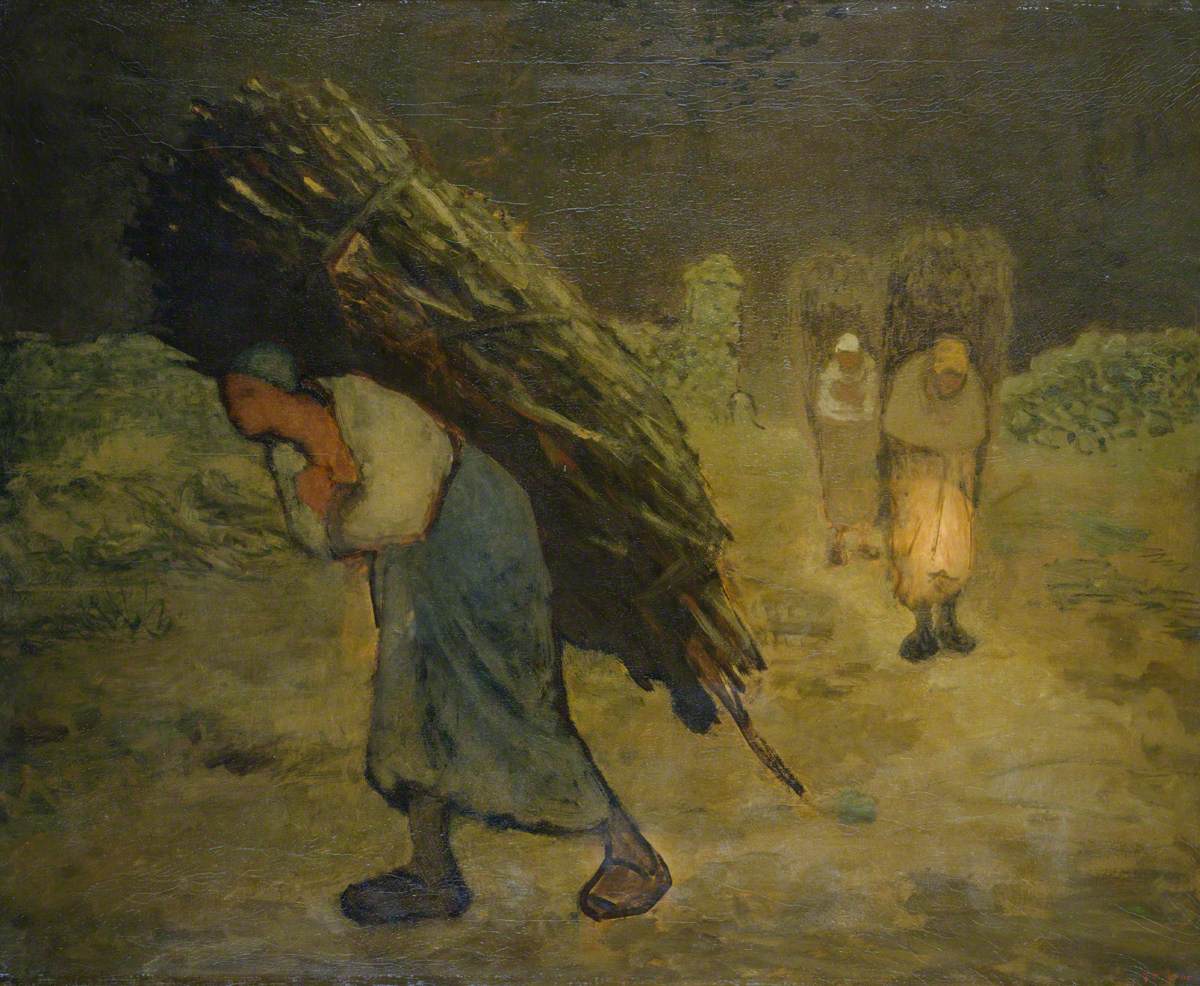
Seeing, and reading (again?) about 'The Faggot Gatherers' I couldn't help but see socio-economic history enacted:

'Two women are taking a short rest from gathering tree branches for sale as firewood. The older woman’s hunched back and clawed hands betray a lifetime of physical toil. The setting is the forest of Fontainebleau, south of Paris, close to the village of Barbizon. Millet was an exponent of Realism, a movement that rejected historical art and idealisation in favour of a truthful view of contemporary reality.'

Text: https://www.nationalgalleries.org/art-and-artists/232271
Winter, The Faggot Gatherers Jean-François Millet (1814–1875) National Museum Cardiff

The National Gallery's accompanying text reads:

'Three women are on their way home trom the forest of Fontainebleau. One of its entrances, the Porte aux Vaches, is visible at the back right. The staggering scale of their loads threatens to overwhelm them in their stumble homewards. The scene evokes Millet's 1851 letter to his biographer Alfred Sensier, in which he described how seeing 'a poor figure laden with a faggot reminded him of the constant fatigue of people's lives.
While the painting is unfinished, the elemental figures are typical of Millet's vork. The extreme simplification of their forms results in austere silhouettes.'

Mental illness has always been a facet of humanity, evidence of trephination from prehistoric times and across cultures and geographies bears testimony to the mind - body divide. Life was brutish physically too. What chance did the weakest stand? If, that is a broken bone: you could be left behind? But perhaps we underestimate the knowledge and experience of our ancient ancestors. Knowledge gained and passed orally, culturally, even before written history. Perhaps too, we struggle to understand how early humanity expressed itself beyond the big-stick of nature and the struggle for survival as the hominids that led to 'us' were winnowed down?

Even as recent as the 19th century life was hard. As the notes above attest, Millet's work seeks to record the sheer physicality of labour, even as the industrial age emerged. The advent of the industrial revolution brought its own pressures and privations, as pastoral life is replaced with change work at home (spinning cotton) to urban and factory growth. 

Severe mental illness would have been institutionalised in poor houses, religious and charitable organisations. Parity of esteem is grounded, to some extent in the questions: "What happened to you?", or "How are you feeling today?" In Millet's work the physical cost and strain stands out. While in the L'Angelus there is debate about prayer, or grief. What is visible usually speaks first, and stands for itself. This is why self-awareness, reflection, critical thinking, observational and interpersonal skills are important; and why mental health nursing calls for specific knowledge and skills. And, in psychiatry too, even when the same is contested.

Image source: Oil on carvas Lent by Amgueddfa Cymry - Museum Wales. Bequeathed by Gwendoline Davies in 1952.

Thursday, August 28, 2025

Lessons NOT learned: Bhopal, Brumadinho, Fundão, Kafue River ...?

Individual
|
      INTERPERSONAL    :     SCIENCES               
HUMANISTIC  --------------------------------------  MECHANISTIC      
 SOCIOLOGY  :    POLITICAL 
|
Group


Kafue River -
( clearly - not a 'person', nor the Rio Doce )

Signs of Life
Signs of Government, Law & Accountability


Tuesday, August 26, 2025

BBC Radio 'File on Four' - DASH to Instrumentalise

Of course, I'd like to see Hodges' model applied to many purposes.

As probably posted at some point, the thought of Hodges' model being instrumentalised goes back a long way. To the time of microcomputers in fact and 'CAPA' which stood for 'Computer-Aided Patient Assessment':

Jones, P. (1986) Computing in Nursing NEWS. Computerised Patient Assessment. Nursing Times. 85: 5. Sep 3-9;82(36):63-5. PMID: 3532039

[Describes 'CAPA', a BBC BASIC microcomputer program for student nurses.]

Even before discovering Hodges' model in the late 1980s, I was sensitive about being seen to mechanise nursing and care delivery. Nursing was still preoccupied with the nursing process and individualised care. The last thing I would want is to be seen as supporting the processing of patients. The person, their social context and identity becoming lost. It was a long-term and ongoing co-author who drew my attention to Hodges' model as an instrument. Which I've considered for each and across the care domains. CAPA was simplistic, even beyond the programming language employed. A dependency score from 1-5 was allocated (it's a long time ago!) to each of the activities of daily living for a patient:

Roper, N., Logan, W., & Tierney, A. J. (2000). The Roper-Logan-Tierney model of nursing: Based on activities of living. Churchill Livingstone.

In healthcare we are trained and become accustomed to the use of many assessment tools, checklists; this includes mental health nursing and specific therapies. Emphasis, is rightly placed upon the safety, validity and hence testing of tools. Some are 'broad brushes'. Others are specific - outcomes, anger, a carer's knowledge, conviction of belief, mood, impulsivity and many more. Drift away from the original goal and purpose and problems can (predictably) ensue. Training will and must be updated, but do all assessment tools have a 'Use By' date? Hopefully there is ongoing development, version control and sustained trials and testing of the instruments themselves.


'File on Four' BBC Radio 4 this evening concerns DASH, which stands for "Domestic Abuse, Stalking and ‘Honour’- based abuse".

Wednesday, August 13, 2025

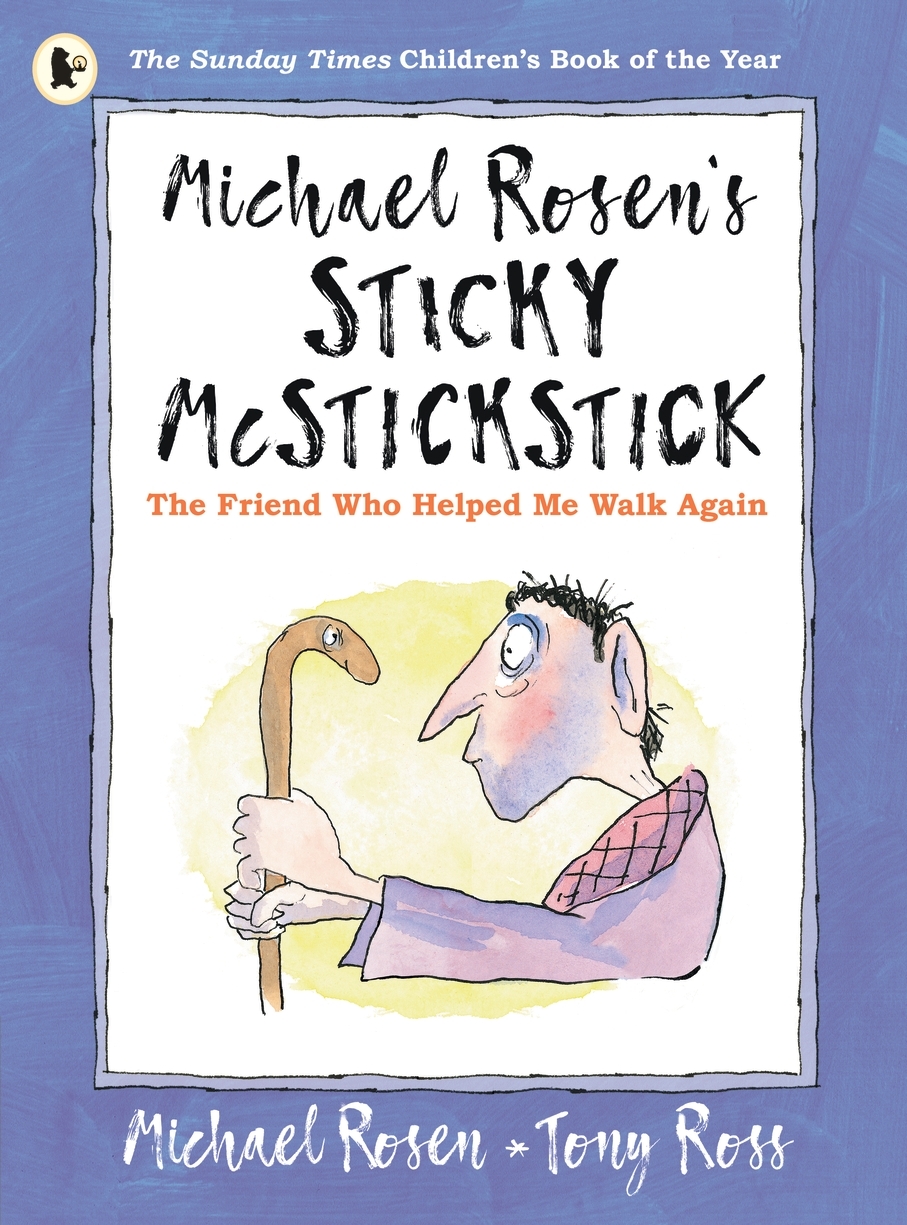
Jackanory: Parity of Esteem 'read' c/o Mr Rosen

Individual
|
      INTERPERSONAL    :     SCIENCES               
HUMANISTIC  --------------------------------------  MECHANISTIC      
 SOCIOLOGY  :    POLITICAL 
|


My source: 
Shop window of The Addyman Annexe - bookshop, Castle St, Hay-on-Wye, 12th August 2025.

Images: 
'STICKY McSTICKSTICK' - https://www.walker.co.uk/
Illustration - https://www.walker.co.uk/author/tony-ross/

Illustration - https://www.walker.co.uk/author/quentin-blake/

Previously: 'parity'

Wednesday, August 06, 2025

'The Bells of Nagasaki' by Takashi Nagai

Individual
|
      INTERPERSONAL    :     SCIENCES               
HUMANISTIC  --------------------------------------  MECHANISTIC      
 SOCIOLOGY  :    POLITICAL 
|


Takashi Nagai, William Johnston (Translator), Richard Lloyd Parry (Introducer). The Bells of Nagasaki. London: Penguin.
https://www.penguin.co.uk/books/469083/the-bells-of-nagasaki-by-nagai-takashi/9781529952605

My source:
Olivia Ward-Jackson. What one man saw in the ruins of Nagasaki, Review, The Daily Telegraph. 26 July 2025. pp.6-7.

See also:


Jones, P. (1994) An Enthusiast's View of CAL. (Problems in production of CAL - Simulation effects of Nuclear Weapons - conversion of GWBASIC to BBC BASIC from BYTE - with original author's permission - J Fanchi). IT in Nursing. 6,2.

Monday, June 30, 2025

Assisted Dying Bill - UK

Individual
|
      INTERPERSONAL    :     SCIENCES               
HUMANISTIC  --------------------------------------  MECHANISTIC      
 SOCIOLOGY  :    POLITICAL 
|
Group


Choice by dying person of how they die

Anticipation of role of AI

Where does mental illness 'lie'?

Decision needs approval by two doctors

Change in relationship between:
INDIVIDUAL -
Prognosis of < 6 months

Terminal diagnosis

Anticipation of role of AI

Seek assistance to end their life

Decision needs approval by two doctors

What of patients who are comatose?^
Profound Societal Change

Quality of Life

Quality of Death

Impact of 'poor' death on others - friends and family

Vulnerabiity of certain groups

Lest we forget what happened to the nursing and care home sector during COVID*

and the STATE

UK - House of Lords

Oversight Panel: 
Legal figure e.g., King's Counsel; and a Psychiatrist

Doctors and care workers not compelled to take part in assisted dying

What about the psycho-POLITICS of anorexia, severe depression?


^Brian M. Rosenthal. They woke as doctors prepared to remove their organs. The New York Times International Edition, 11 June 2025, p.6. 
https://www.nytimes.com/2025/06/06/us/kentucky-organ-donations.html

Friday, June 20, 2025

Theatre in TI:ME

The Crafty Art of Playmaking
In health we're dealing with time in all its forms: cardinal; birth and death and all that happens in-between. Aka, 'life', illness, and palliative care. And, even if not recognised, chronological and pathological time, which policymakers should pay more attention to. The art of theatre, has its time (p.20): stage time, and real (theatre foyer) time. 

'At its most successful, theatre views things from a human standabout.' (p.9). 

I'd second that, especially allied with the notions (ideas!) of health career, and life chances

Since the publication of TCAoP in 2004 people seem to quite ready to dispense, disregard, downplay, demote the humanistic with the rise of AI and assisted dying for the terminally ill (of course).

Time recurs - as a frame. (p.25) with a touch of elective surgery. 'Think of your story as a piece of thread. Where you cut in is the point at which the lights come on in Act One. Where you cut out will be your final curtain. (There may be a knot or two in the middle to denote the intervals, too.)' p.25.

In the first post re. TCAoP I stressed the complexity, plethora of ideas that Hodges' model can create. Sir Alan provides a potential 'get of jail free card' (or as near as?) in his original rule no. 9. 

'If a play can be too simple, it can also be too complicated. If one element is particularly complicated, keep the rest of it simple.' (p.25).

Very useful advice! But achieving it when having and applying an idea is another matter.

What's this though? Step back to original rule no. 6:

'There is no hard and fast rule as to which constructional element comes first.' (p.20).

Butrint National Park Albania   

In the guided discovery exercise in students (audiences..) creating the model, there are two constructional elements, that also contribute to the one big idea.

It gets better! Original rule no. 14:

At least fifty per cent of your play is going to be visual. (p.33).

I must make sure I don't confuse concept/ual with visual/imagery.

More to follow.

The Crafty Art of Playmaking by Alan Ayckbourn. Faber, 2004, softcover, ISBN 0571215106.

https://www.concordtheatricals.co.uk/s/45898/the-crafty-art-of-playmaking

Friday, June 13, 2025

IP? No! Not 'intellectual property' the other one . . .

'Interested Persons'

- also vested in data, information, knowledge, 
who knew how, what, why, when, where ...

individual
|
INTERPERSONAL : SCIENCES
humanistic ------------------------------- mechanistic
SOCIOLOGY : POLITICAL
|
group
identity - witness - involvement
recall - memory

Knowledge - Answers

The (sudden) power of situation, circumstances,
 time and place.

Events

Society
Team - Teamwork

Social Justice

Interested Persons

Coroner's Court


My source:

Marriage, M. In Search Of Lost Time, FT Magazine. FT Weekend, 22 February 2025, pp.21-27.

Tuesday, June 03, 2025

Self, ego, life and death

The INDIVIDUAL - GROUP axis continues to fascinate:


individual
|
INTERPERSONAL : SCIENCES
humanistic ------------------------------- mechanistic
SOCIOLOGY : POLITICAL
|
group

SELF - IDENTITY - PERSONHOOD

ego superego id

mood - depression - mania

psychoactive substances

ego death - reset, reconstitition, re-birth?

NATURE

 personhood -
rivers, mountains, trees, land

medicine(s)

psychedelics

cultural identity, knowledge

social history, practices

corporate personhood

law 'person'


See also:

Pahnke, Walter N. “The Psychedelic Mystical Experience in the Human Encounter with Death.” The Harvard Theological Review 62, no. 1 (1969): 1–21. http://www.jstor.org/stable/1509131.

Adler, Nathan. “Ethics, Ethos, and Actualization: The Paradigm of the Antinomian Therapies.” Issues in Criminology 5, no. 1 (1970): 85–99. http://www.jstor.org/stable/42912546.

Blainey, Marc G. “Forbidden Therapies: Santo Daime, Ayahuasca, and the Prohibition of Entheogens in Western Society.” Journal of Religion and Health 54, no. 1 (2015): 287–302. http://www.jstor.org/stable/24485257.

Nail, Thomas. “How to Read the Nature of Things.” In Contemporary Encounters with Ancient Practice, edited by Abraham Jacob Greenstine, Ryan J. Johnson, and Dave Mesing, 1st ed., 299–321. Edinburgh University Press, 2025. http://www.jstor.org/stable/10.3366/jj.17381661.21.

Corporate personhood
https://en.wikipedia.org/wiki/Corporate_personhood

Monday, December 02, 2024

'Un Caso Clinico' BUZZATI (I906-I972)

Reading The Theatre of the Absurd earlier this year was a very enjoyable and disconcerting experience. In acknowledgement: I have quoted from the book at length below. I do so to better convey the context, and in the hope other people may similarly obtain and enjoy this classic theatrical text.

Reading, I was reminded of starting my career as a nursing assistant and student nurse, and the 'lock-up' wards: male and female. Listening now to the current Reith Lectures I will post regards: 

Gwen Adshead - Four Questions about Violence

https://www.bbc.co.uk/sounds/play/m0025cmg

As a community mental health nurse in community mental health teams and nursing home liaison, residents on the ground floor (of two or three floors - with 'general') 'knew' there were very poorly people on the top floor. In summer, windows open, they could often be heard shouting and in the night. Inside, for staff, family members, friends became advocates expressing concern for a lack of access to fresh air and sunshine. Something, of course, we can all benefit from. For some residents there was an in-house understanding of NOT wanting to be moved 'upstairs'. At times I gather, if a resident 'played up' such re-location (displacement) was used as a threat: a cue for education.^

DINO BUZZATI (I906-I972)
'In Les Bátisseurs d'Empire the flight from death takes the form of trying to escape upwards. The same image appears in the opposite direction in a remarkable play by Dino Buzzati, the eminent Italian novelist and journalist on the staff of the Corriere della Sera in Milan. This play, first performed by the Piccolo Teatro, Milan, in 1953, and in Paris in an adaptation by Camus in 1955, is Un Caso Clinico. In two parts (thirteen scenes), it shows the death of a middle-aged businessman, Giovanni Corte. Busy, overworked, tyrannized but pampered as the family's breadwinner, whose health must be preserved, he is disturbed by hallucinations of a female voice calling him from the distance and by the spectre of a woman that seems to haunt his house. He is persuaded to consult a famous specialist, and goes to see him at his ultra-modern hospital. Before he knows what has happened, he is an inmate of the hospital, about to be operated on. Everybody reassures him - this hospital is organized in the most efficient modern manner; the people who are not really ill, or merely under observation, are on the top floor, the seventh. Those who are slightly less well are on the sixth; those who are ill, but not really badly, are on the fifth; and so on downwards in a descending order to the first floor, which is the antechamber of death.

In a terrifying sequence of scenes, Buzzati shows his hero's descent. At first he is moved to the sixth floor, merely to make room for someone who needs his private ward more than does. Further down, he still hopes that he is merely going down to be near some specialized medical facilities he needs, and before he has fully realized what has happened, he is so far down that there is no hope of escape. He is buried among the outcasts who have already been given up, the lowest class of human beings - the dying. Corte's mother comes to take him home, but it is too late.

Un Caso Clinico is a remarkable and highly original work, a modern miracle play in the tradition of Everyman. It dramatizes the death of a rich man - his delusion that somehow he is in a special class, exempt from the ravages of illness; his gradual loss of contact with reality; and, above all, the imperceptible manner of his descent and its sudden revelation to him. And in the hospital, with its rigid stratification, Buzzati has found a terrifying image of society itself - an impersonal organization that hustles the individual on his way to death, caring for him, providing services, but at the same time distant, rule-ridden, incomprehensible, and cruel.' 
Esslin, Martin. Parallels and Proselytes, The Theatre of the Absurd. London: Pelican, 1982. (3rd Ed.).pp.277-279.

The Bewitched Bourgeois
^Rest assured, there were and are excellent centers of care too.


Update: 11th January 2025: c/o John Self. Meet the forgotten maestro of the ultra-short story. Saturday Review, The Times, p.15.
'One of his most widely published stories, Seven Floors, is set in a hospital where they put the "mildest cases" on the seventh floor, and so on in increasing order of sickness down to the first floor, which is occupied by those who are "beyond hope"'.

Lawrence Venuti. (2025) The Bewitched Bourgeois, New York: NYRB Classics ISBN: 9781681378671.

Cover image: NYRB.

Tuesday, September 10, 2024

Suicide Postvention in the Workplace - new SOM resource

https://www.som.org.uk/suicide-postvention-workplace-new-som-resource

Posted by Ann Caluori | Mon, 09/09/2024 - 08:52

The term 'suicide postvention' refers to the actions taken by an organisation to provide effective support in a sensitive manner after a death by suicide. It aims to promote recovery and prevent further adverse outcomes.

This new SOM resource, authored by Professor Gail Kinman and Professor Neil Greenberg, provides evidence-informed guidance and recommendations for organisations to respond to the death by suicide of a colleague, or the unexpected death of a colleague from other causes. The guidance draws on high-quality sources from research and practice and was developed through consultation with experts from various fields. It aims to help organisations navigate the complexities and sensitivities involved in such tragic events, ensuring they provide the support required to maintain a healthy and compassionate workplace.

The resource should be useful for occupational health practitioners, wellbeing leads, HR professionals, managers, and policy makers. It addresses several important issues in the aftermath of a workplace death by suicide, such as immediate response approaches, communication protocols, support mechanisms for affected individuals, and long-term considerations for fostering a supportive work environment.

Download the guidance here.

This resource has been launched ahead of World Suicide Prevention Day 2024.

My source: TwiX @somceo

See also: 
World Suicide Prevention Day 2024 #WorldSuicidePreventionDay

Thursday, July 25, 2024

World Drowning Prevention Day 25th July 2024

Every year, an estimated 236,000 people drown, making drowning a major public health problem worldwide. Drowning is one of the leading causes of death globally for children and young people aged 1-24 years. Drowning is the 3rd leading cause of unintentional injury death, accounting for 7% of all injury-related deaths.

The global burden of death from drowning is felt in all economies and regions, however:
  • low- and middle-income countries account for over 90% of unintentional drowning deaths; 
  • over half of the world's drowning occurs in the WHO Western Pacific Region and WHO South-East Asia Region; 
  • drowning death rates are highest in the WHO Western Pacific Region, and are 27-32 times higher than those seen in the United Kingdom or Germany, respectively.

World Drowning Prevention Day

World Drowning Prevention Day, declared in April 2021 by General Assembly resolution A/RES/75/273 <https://undocs.org/en/A/RES/75/273>, is held annually on 25 July. This global advocacy event serves as an opportunity to highlight the tragic and profound impact of drowning on families and communities and to offer life-saving solutions to prevent it.


Find more information in the following link: 
https://www.un.org/en/observances/drowning-prevention-day 

In your country, are there any initiatives to prevent drowning?

Here are some of the measures shared at the United Nations web site.
  • installing barriers controlling access to water;
  • providing safe places away from water such as crèches for pre-school children with capable childcare;
  • teaching swimming, water safety and safe rescue skills;
  • training bystanders in safe rescue and resuscitation;
  • setting and enforcing safe boating, shipping and ferry regulations;
  • improving flood risk management.

My source (with video added above and Hodges' model below):

Jackeline. HIFA-Spanish Moderator

HIFA profile: Jackeline Alger, MD, PhD, is a parasitologist associated to the Department of Clinical Laboratory of the University Hospital; Executive Director of the Antonio Vidal Institute for Infectious Diseases and Parasitology; Tegucigalpa, Honduras. HIFA Country Representative of the Year for the years 2015 and 2018. Email jackelinealger AT gmail.com

The bullet points above mapped to Hodges' model, with additions (italics).

individual
|
INTERPERSONAL : SCIENCES
humanistic ------------------------------- mechanistic
SOCIOLOGY : POLITICAL
|
group

teaching swimming, water safety and safe rescue skills
training bystanders in safe rescue and resuscitation
awareness of risk situations
confidence to learn to swim

installing barriers controlling access to water
providing safe places away from water such as crèches for pre-school children with capable childcare
improving flood risk management


teaching swimming, water safety and safe rescue skills
training bystanders in safe rescue and resuscitation

family and community impacts

SOCIO-
funding - prioritisation
setting and enforcing safe boating, shipping and ferry regulations

improving flood risk management
facilities for safe & effective teaching

-ECONOMIC   LMICs

Previously 2022

Friday, April 26, 2024

Buses, Eddie Stobart, Lego and Laughing Boy

Individual
|
   INTERPERSONAL   :     SCIENCES               
HUMANISTIC  --------------------------------------  MECHANISTIC      
 SOCIOLOGY  :    POLITICAL 
|
Group

person - personality
personal duty of care
emotional care
experience

buses - Eddie Stobart - Lego
space - time
1-day Physical care  Another day
the sound of laughter


Source: Twi/X + image: