Hodges' Model: Welcome to the QUAD: biosphere

Hodges' model is a conceptual framework to support reflection and critical thinking. Situated, the model can help integrate all disciplines (academic and professional). Amid news items, are posts that illustrate the scope and application of the model. A bibliography and A4 template are provided in the sidebar. Welcome to the QUAD ...

Showing posts with label biosphere. Show all posts

Thursday, May 21, 2026

June 4-5 'Ecologies of Care' - London, UK

With more to follow from RCN Congress, this morning I received the agenda for next month's conference 'Ecologies of Care'. I am speaking, first session on the Thursday, which is a good to know and see the broad range of presentations. 

The focus on attention, is helpful for a possible further event in October. In the meantime, the Call for Papers began:

Chancellor’s Hall, Senate House London

June 4 & 5, 2026

Keynote lecture by Professor Yves Citton

How do increasing demands on our attention influence what we know, and how we act, in response to climate change? Despite a strong scientific consensus that climate change is ongoing and anthropogenic, political and legal action remains fragmented. Ecologies of Care asks to what extent the environmental crisis is a crisis of attention. Speaking to the dynamics of the attention economy, Yves Citton notes that “the new scarcity is no longer to be situated on the side of material goods to be produced, but on the attention necessary to consume them.” The word ‘attention’ is etymologically linked to the notion of care, or that which one attends to. This relationship (of subject and object) is fundamentally collective, insofar as collective attentional regimes influence what each one of us pays attention to on a daily basis, and how we navigate the barrage of informational flows from popular media.

Terms such as "the Anthropocene" and "planetary boundaries" function both as scientific descriptors and attempts to provoke action commensurate to the urgency that scientists believe their research demonstrates. The recent decision not to formalize the Anthropocene as an official geological unit, for example, highlights growing unease concerning intensifying media attention directed at scientific expertise. Under conditions of increasing disparity between what we know, and how we act, in response to climate change, the role of scientific expertise plays an increasingly normative, and not only informative, function. Scientific expertise attempts to direct what we attend to, and consequently, how (or if) we care. This is a collective practice of narrating and internalizing mythologies, whereby informational flows draw attention to some thing that needs to be cared for: Earth, the planetary, capital, or each other.

Continued ...

 c/o Law and the Environmental Humanities Network

n.b. With little time, I'm not going to transfer the pdf text, but may add here.

Saturday, November 08, 2025

COP30: Seeking change shopping in the far North & SOUTH

individual
|
INTERPERSONAL : SCIENCES
humanistic -------------------------------------------  mechanistic
SOCIOLOGY : POLITICAL
|
group-population


'John Kørner (born 1967, Danish): Understanding the Impact of Architecture, 12, 2020

Lithograph

Kørner pursues his artistic practice through various media, including painting, printmaking, ceramics, installations, sculpture, videos and theatre work. Throughout his career he has tackled contemporary global issues such as migration, war, and systems of production and consumption. He refers to these as 'Problems' that form an ongoing process of enquiry in his work. In his series of paintings and prints Understanding the Impact of Architecture (begun in 2014) he explores the way architecture influences, impacts and interacts with people and their environment. This print from the series addresses blind consumerism and its effect on the fragile Nordic landscape. It was made at Edition Copenhagen which along with Borch Editions is the other major print workshop in Denmark.

Acquisition supported by AKO Foundation, 2023,7056.2'

Text and my source: British Museum Room 90

Nordic noir
works on paper from Edvard Munch to Mamma Andersson


Exhibition
 / 09 October 2025 – 22 March 2026

See previously: 'care architecture' : 'architecture'

Wednesday, August 06, 2025

'The Bells of Nagasaki' by Takashi Nagai

Individual
|
      INTERPERSONAL    :     SCIENCES               
HUMANISTIC  --------------------------------------  MECHANISTIC      
 SOCIOLOGY  :    POLITICAL 
|


Takashi Nagai, William Johnston (Translator), Richard Lloyd Parry (Introducer). The Bells of Nagasaki. London: Penguin.
https://www.penguin.co.uk/books/469083/the-bells-of-nagasaki-by-nagai-takashi/9781529952605

My source:
Olivia Ward-Jackson. What one man saw in the ruins of Nagasaki, Review, The Daily Telegraph. 26 July 2025. pp.6-7.

See also:


Jones, P. (1994) An Enthusiast's View of CAL. (Problems in production of CAL - Simulation effects of Nuclear Weapons - conversion of GWBASIC to BBC BASIC from BYTE - with original author's permission - J Fanchi). IT in Nursing. 6,2.

Wednesday, September 18, 2024

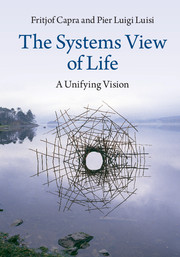
Book: 'The Systems View of Life - A Unifying Vision' [i]

The Systems View of Life -
A Unifying Vision
Published in 2014; I needed this book in the early 1990s, as did we all.

As a review request I'm grateful to CUP for forwarding a copy - that is much easier on the eyes than a screen. This book deserves a much longer-tail.

Reading Resurgence for many years, joining The Ecology Party before they turned Green, and aware of systems, cybernetics this book has brought a great deal together. It has helped me in further thought and formulation about Hodges' model: A system of systems? 

Since 2014 clearly much has changed, I will highlight points where a new edition would be welcome. Although CUP and the authors could find themselves frenetic, such we hope is the pace of change now - or from now on, especially pre-COP29?

Come on petro-states it's time to really deliver.

Even in paperback this book is a reassuring handful, running to 452 pages, excluding the bibliography and index. Part 1 reinforced the encouraging signs in the introduction:
'The basic tension is one between the parts and the whole. The emphasis on the parts has been called mechanistic, reductionist, or atomistic; the emphasis on the whole, holistic, organismic, or ecological. In twentieth-century science, the holistic perspective has become known as "systemic" and the way of thinking it implies as "systems thinking,'' as we have mentioned.

In biology, the tension between mechanism and holism has been a recurring theme throughout its history. At the dawn of Western philosophy and science, the Pythagoreans distinguished "number," or pattern, from substance, or matter, viewing it as something which limits matter and gives it shape. The argument was: do you ask what it is made of - earth, fire, water, etc. - or do you ask what its pattern is?' p.4.
  • Preface
  • Acknowledgements
  • Introduction: paradigms in science and society
  • Part I. The Mechanistic World View:
    • 1. The Newtonian world-machine
    • 2. The mechanistic view of life
    • 3. Mechanistic social thought
  • Part II. The Rise of Systems Thinking:
    • 4. From the parts to the whole
    • 5. Classical systems theories
    • 6. Complexity theory
  • Part III. A New Conception of Life:
    • 7. What is life?
    • 8. Order and complexity in the living world
    • 9. Darwin and biological evolution
    • 10. The quest for the origin of life on Earth
    • 11. The human adventure
    • 12. Mind and consciousness
    • 13. Science and spirituality
    • 14. Life, mind, and society
    • 15. The systems view of health
  • Part IV. Sustaining the Web of Life:
    • 16. The ecological dimension of life
    • 17. Connecting the dots: systems thinking and the state of the world
    • 18. Systemic solutions
  • Bibliography
  • Index
This is an excellent primer for students of biology - human biology, including eager learners in secondary school - there is technical discussion that can serve as initial exposure to new terminology, extending vocabulary. The scope of the book however covers all academic subjects, chemistry, physics, anthropology, sociology, general studies, economics and of course ecology, environmental studies.

The book is clearly well-designed and presented. Readable generally and when dealing with technical concepts. Each chapter benefits from illustrations and use of boxes, with short guest essays introduced throughout. There is less reliance on tables. Each chapter is well referenced, and towards the end chapters 17-18 urls are provided. Obviously, the references and urls are dated now; a matter we will return to. Despite the passing decade, the quality of the book still shines through.

I just noticed the cover is attributed to Andy Goldsworthy 1988, Derwent Water, Cumbria and remember out with the family, coming across Goldsworthy's work in Grizedale forest.

I will share news of my reading over several posts and many other connections.

Many thanks to CUP for the hard copy - which has been an informative companion - over the past 4-6 weeks.

Fritjof Capra and Pier Luigi Luisi (2014) The Systems View of Life - A Unifying Vision. Cambridge: Cambridge University Press.

https://www.cambridge.org/gb/universitypress/subjects/life-sciences/genomics-bioinformatics-and-systems-biology/systems-view-life-unifying-vision?format=HB&isbn=9781107011366

Tuesday, November 14, 2023

'Humanistic geography' - goes full circle

INDIVIDUAL
|
     INTERPERSONAL    :     SCIENCES               
HUMANISTIC --------------------------------------  MECHANISTIC      
SOCIOLOGY  :   POLITICAL 
|
GROUP

"Alongside Euclidean geometry non-Euclidean geometries were invented. Alongside the old Aristotelian logic and the law of the excluded middle, new forms of logic with, for example, multiple values were developed. This type of work, far from remaining purely speculative, proved indispensable to the progress of physical theories. Consequently epistemological research was no longer seen as fundamentally inductive. It was no longer content to follow the movement of science: it undertook to precede science by indicating which tools should be used to make the best progress. This was the atmosphere which characterised neo-positivism: some concern was already apparent, therefore, but epistemology was still only partially critical. Its role was still more prescriptive." p.227.


"Tuan states that 'humanistic geography' is 'not an earth science' and that with its purpose as the better understanding of man and his condition, humanistic geography properly belongs to the humanities. (Tuan, 1976, 266). For Tuan humanistic geography is 'event-centred'; it is the study of articulated geographical ideas such as 'place', 'territory', 'crowding', 'privacy' and religion and it is particularly concerned with describing the quality of the emotion experienced in specific settings, e.g. the study of place as a centre of meaning for an individual rather than place as described by its geographical coordinates." pp.116-7.


Now we need to think of 'biospheric geography' within which humanity plays a pivotal and critical part.

https://science.nasa.gov/resource/the-story-behind-apollo-8s-famous-earthrise-photo/

https://www.nasa.gov/news-release/nasa-administrator-honors-life-of-apollo-astronaut-frank-borman/

Rose, C., Wilhelm Dilthey's Philosophy of Historical Understanding: a Neglected Heritage of Contemporary Humanistic Geography, p.99-131; Claval, P., Epistemology and the History of Geographical Thought, p.227-239. In. Stoddart, D.R., editor (1981) Geography, Ideology & Social Concern. Oxford: Basil Blackwell Publisher Ltd.

More books - gone; btw I'm not finding a post in each one - honest!

Tuesday, November 07, 2023

Navigating Climate Anxiety - Resurgence & Ecologist magazine

INDIVIDUAL
|
     INTERPERSONAL    :     SCIENCES               
HUMANISTIC --------------------------------------  MECHANISTIC      
SOCIOLOGY  :   POLITICAL 
|
GROUP

  Navigating Climate Anxiety - Resurgence & Ecologist magazine Issue 341 • November/December 2023.

'Change' as an urgent need and source of pressure.
Our individual mindset's need to change - is this the (apt) snowball to change our collective (cultural) mindset?

If the spiritual domain which encompasses Hodges' model was truly at 'one' then no change would be needed 'there'? Discuss.

Even as I clear books, journals, papers ... I have bought a copy.

 See also previously: 'holism', 'navigation'.

Saturday, September 23, 2023

MYTH, RITUAL AND PRACTICE FOR THE AGE OF ECOLOGICAL CATASTROPHE

Fabrice Monteiro, a garbage spirit, from his series
The Prophecy (2017)

The European Forum for the Study of Religion and the Environment

- is pleased to announce its
seventh international conference

Friday May 17 to Sunday May 19, 2024

Universität Potsdam, Potsdam, Germany

MYTH, RITUAL AND PRACTICE
FOR THE AGE OF ECOLOGICAL CATASTROPHE
 
Click here for the Call for Papers and Conference Description:

https://www.religion-environment.com/conference/open-call-for-papers

Proposals will be accepted until 31 October, 2023

This conference will explore the many questions that arise from the apparent continuing philosophical-scientific indigestibility of mythology, ritual and practice. What does or would gaia-logical mythology, ritual or practice look like? Are they, could they be more pedagogically effective with non-experts than analysis and critique? Is the solution to ecological alienation the same as the age-old solutions to spiritual alienation? Is ecological alienation parallel to the emic/etic divide in ethnography? Is “practice” the way “in”? Is “belief”? Does gaiaism demand rituals and practices? Are contemporary scholarly analyses (Haraway, Latour, Stengers, Mary-Jane Rubenstein’s pantheologies, Sloterdijk, etc.) today’s form of ecological myth? Is myth, with its associations with the archaic (despite the work of Cassirer, Barthes and others), a fitting genre for today? (Many traditional myths are hardly gaian.) Must gaian myth, rituals or practices be atheological (i.e., is theology, as some argue, inherently not deep-ecological)? Does subtractive theology (à la Badiou) better lend itself to legitimate gaian mythology? Do ecotheologies written out of specific continuing pre-modern cultural-religious traditions that are not entirely or comfortably gaian satisfactorily bridge the spaces between emic and etic genres/approaches and satisfy calls for new gaia-ologies? Is there a meaningful difference between the myths of “major religions” and “indigenous” cultures? How do or might “old” and “new” cultural material relate to one another? Must scholars-scientists, environmentalists or artists use only material from “their own” heritages in producing gaia-ologies? Are there bases for and modes of considering or evaluating the skill or usefulness of gaia-ologies, gaian myths, rituals or practices? How have religious or spiritual environmentalists created gaian myths, rituals or practices? How might they? What artists, artistic works or modalities or works of popular culture stand as noteworthy examples?

Conference Chair: Jonathan Schorsch jschorsch AT uni-potsdam.de

We will be most grateful if you could circulate this through your networks.

Kind regards,
Jonathan Schorsch
-- 
Professur, Jüdische Religions- und Geistesgeschichte
Institut für Jüdische Theologie
Universität Potsdam
  jschorsch AT uni-potsdam.de
  +49 (0)331 977 1744

Founder and Director
Jewish Activism Summer School
  www.jassberlin.org

Founder and Director
The Green Sabbath Project
  www.greensabbathproject.net


My source:

Philos-L "The Liverpool List". Department of Philosophy, University of Liverpool https://www.liverpool.ac.uk/philosophy/philos-l/
https://www.facebook.com/PhilosL/
@PhilosL @LiverpoolPhilos

Image: c/o https://www.fabricemonteiro.com/

I am planning to submit an abstract, to develop further ideas encountered and contributed at SOPHERE.

Monday, August 28, 2023

Mary Mattingly - "Life of Objects" 2013


INDIVIDUAL
|
     INTERPERSONAL    :     SCIENCES               
HUMANISTIC --------------------------------------  MECHANISTIC      
SOCIOLOGY  :   POLITICAL 
|
GROUP


Mary Mattingly - "Life  of Objects" 2013


"Mary Mattingly's work Life of Objects (2013) is part sculpture, part performance piece. It forces the viewer to feel the weight of an irregular sphere of the artist's collected and nearly discarded possessions. The visceral experience of seeing this trash boulder pinning the artist to the floor communicates the harms of overconsumption perhaps more strongly than familiar reminders to reduce, reuse,and recycle." p.278. 
With thanks to: Mary Mattingly - Artist


My source:
Chianese, R.L. Sculpting Science, American Scientist, Sept-Oct 2022: 110;5. pp. 276-281.

Monday, May 22, 2023

Book: "Blue Machine"

How the Ocean Shapes Our World

INDIVIDUAL
|
INTERPERSONAL    :     SCIENCES              
HUMANISTIC --------------------------------------  MECHANISTIC
SOCIOLOGY :   POLITICAL
|
GROUP


Blue Machine


Czerski, H. (2023). Blue Machine. How the Ocean Shapes Our World. London: Penguin. Retrieved May 22, 2023, from https://www.penguin.co.uk/books/441190/blue-machine-by-czerski-helen/9781911709107


Astronomy Picture of the Day

Monday, October 17, 2022

REGULATORS, WAKE UP!

"The IPCC have declared a climate
change code red for humanity."


INDIVIDUAL
|
 INTERPERSONAL    :     SCIENCES               
HUMANISTIC --------------------------------------  MECHANISTIC      
SOCIOLOGY  :   POLITICAL 
|
GROUP


Science Based
Targets initiative (SBTi)


"Corporate climate action has potential, but it's currently voluntary... and failing."


"The very people giving the seal of approval
to business climate climate action - like the
Science Based Targets initiative (SBTi) -
are allowing companies to write their own
questionable rules, without checking whether
those rules are even being followed."

My source:

FTWeekend, 24-25 September 2022, p.11. 

See also:

Friday, May 06, 2022

22nd UKSS International Conference


20th & 21st June 2022
at Lancaster University

Joined-up Thinking  for a Disconnected World

In every age, there is a turning point, a new way of seeing and asserting the coherence of the world.  J. Bronowski

About this event

As we emerge from the Covid pandemic, it is abundantly clear that we, the human race, share the same ecological systems and have the same survival instincts. However, we treat things in a piecemeal fashion in our day-to-day existence and conveniently forget that all our lives are entwined. We, the human race generating waste and creating pollution, cannot blame anyone else. Never has thought in a joined-up way been more critical. It is appropriate this year that the conference is hosted at the University of Lancaster that, under Peter Checkland, has done so much to stimulate Systems Thinking and Practice. To this end, the conference committee agreed that the theme should focus upon the value of systems thinking and practice and encourage contributions from across the spectrum of human concerns where the notion of holism is at its core.

 
Planning to attend ... See you there?
 
Previously:
https://hodges-model.blogspot.com/search?q=UKSS

Friday, April 15, 2022

May 10th Lecture: "Planetary Law for the Anthropocene"

Dear followers of H-net Environment,

Planetar denken
the Panel on Planetary Thinking of the Justus Liebig University Giessen, Germany, cordially invites you to join our kick-off event of our Planetary Lecture Series which may be of interest to many of you:

On May 10th, at 6:15 CET, Prof. Dr. Dr. Louis Kotzé (North-West University, South-Africa), will be giving a lecture on "Planetary Law for the Anthropocene" . Prof. Kotzé currently holds a fellowship at the Institute for Advanced Sustainability Studies in Potsdam, Germany, and is a Senior Professorial Fellow in Earth System Law at the University of Lincoln, UK. Prof. Dr. Thilo Marauhn (Chair of Public and International Law, JLU) will open the discussion with a response. The lecture will take place in a hybrid format, allowing you both digital and analog participation.

Feel free to spread the word to interested colleagues and friends. You can register at panel AT planet.uni-giessen.de or join us spontaneously in our BigBlueButton Conference Room.

Warm regards,

Liza Bauer

(on behalf of the Panel on Planetary Thinking).


Thursday, March 17, 2022

Spheres of influence and integration

Ack:

International Open Seminar on Semiotics

a Tribute to John Deely on the Fifth Anniversary of His Passing

 
INDIVIDUAL
|
 INTERPERSONAL    :     SCIENCES               
HUMANISTIC --------------------------------------  MECHANISTIC      
SOCIOLOGY  :   POLITICAL 
|
GROUP


BIOSPHERE


SEMIOSPHERE


My source via Philos-L "The Liverpool List":

⚘A Holistic Approach to Semiotics: Juri Lotman ☀ Marek Tamm


Universe of the Mind
A Semiotic Theory of Culture
Yuri M. Lotman
Introduction by Umberto Eco

 
I actually had hold of a copy of this book in Hay-on-Wye last month, but back-on-the-shelf it had to go. Must now buy a copy. The title and the introduction by Eco caught my eye initially. Lotman's thought and its fluidity - individual-collective; whole-part ... has much to offer in studying Hodges' model. 
 
 
[Next visit to Hay-on-Wye as advised, I will email in advance, so if needed books ( just one or two ;-) ] can be brought from the warehouse to Green Ink.]

Book image: Indiana University Press

Tuesday, November 16, 2021

ONE coat: MANY hopes ...

Individual
|

INTERPERSONAL : SCIENCES
humanistic ------------------------------------------ mechanistic
SOCIOLOGY : POLITICAL
|


My source: FTWeekend, 13-14 November 2021, p.8.

Thanks to the illustrator Lucinda Rogers.

Image source: https://twitter.com/LucindaDraws/status/1459617226319880204?s=20

Monday, August 09, 2021

The vast majority of the global population ...

(epigenetics!) conception - infant - PERSON - child - adult - elder
|

INTERPERSONAL : SCIENCES
humanistic ------------------------------------- mechanistic  
SOCIOLOGY : POLITICAL
|
families - communities - GROUP - nations - international - planetary

Changing by the artist Alisa Singer
"As we witness our planet transforming around us we watch, listen, measure … respond."

anxiety
mood
distress


water crops land
atmosphere weather oceans
extreme heat

... already know
it is -
"CODE RED"
for humanity


COP 26
Political leadership


My source: Various today. https://www.ipcc.ch/

Art: https://www.alisasingerart.com/galleries

Saturday, April 10, 2021

An atmospheric inversion

individual
|
INTERPERSONAL : SCIENCES
humanistic ----------------------------------------------- mechanistic
SOCIOLOGY : POLITICAL
|
group


.. a t m o s p h e r e ..
........................
methane and carbon dioxide
at record levels

We need to take care

 .. a t m o s p h e r e ..
.......................
nitrous oxide

You need to take care


Prompt:

World Week in Review, Methane and carbon dioxide in atmosphere rise to record levels, FT Weekend, 10-11 April, 2021, p.4.


Wednesday, March 24, 2021

Hodges' model: Not just rectilinear, but bubbles too ...

individual
|
INTERPERSONAL : SCIENCES
humanistic ----------------------------------------------- mechanistic
SOCIOLOGY : POLITICAL
|
group

"To the holistic absorption by the One – upon which the success of so many religions and philosophies was premised for centuries – Sloterdijk opposes the proposition of a dyadic theory of intimacy. This is a distinction between an acute appearance of unity, experienced from a cosmic position of being fully contained inside a whole, and an ontological insistence that this position is itself contingent on a constitutive relationality. It is not possible to attain an overview, an outside bird’s-eye view of spheres (Neither Sun Nor Death, p263). By contrast, ... 


"Sloterdijk’s anthropological theory of shared, auto-poetic space, carries ontogenetic force. This is, by example, expressed in the discussion of the relationship between birth and thought, or between the birth of a child and that of a world.35 Sloterdijk dedicates the bulk of Bubbles to birth, providing a detailed discussion of intrauterine dwelling, including the sensory presence of liquids, soft bodies, the early experience of spatial boundaries, fluidal communion in the medium of blood, the constitution of an intimate acoustic bipolar sphere and, above all, cohabitation with the placenta, conceived as primal, anonymous companion. Intrauterine space is approached as the most vivid illustration of the spherological principle according to which coexistence precedes essence. At once enclosed and porous, poetic and connected, intrauterine space is the production of a dense and connected ‘two’: ‘What we call ‘mother and child’ in the abbreviated terms of subject-object language are, in their mode of being, only ever poles of a dynamic in-between’ (Bubbles, p320)." p.47.


By contrast, ... the relational ontology of spheres aims to rehabilitate the relation at the expense of the essential, and the situation at the expense of components (p151). Against any form of substantialism, a relational ontology emphasises the centrality of being-with [Mitsein] in relationships of mother and child, mesmerist and subject, therapist and patient, foetus and placenta, and so forth." p.47.


https://muse.jhu.edu/issue/39847

My source:

Duclos, V. (2019) Falling into Things: 
Peter Sloterdijk, Ontological Anthropology in the Monstrous. 
New Formations, 95, Spaces and Stories, pp. 37-53.

Saturday, March 06, 2021

The Great Green Wall

individual
|
INTERPERSONAL : SCIENCES
humanistic ----------------------------------------------- mechanistic
SOCIOLOGY : POLITICAL
|
group


The Great Green Wall


"Africa's history with the west is littered with examples of plunder masquerading as benevolence, and science is no exception. Doctors and researchers who came to help during Ebola flew out with more than 269,000 blood samples from patients in Guinea, Sierra Leone and Liberia. That has meant that researchers in those countries cannot access samples that in many cases they had collected.    'All those superpowers, all those parachute researchers ... they pretended as if they want to help, but the real agenda was to control samples, so they can do all kinds of research on them'".


https://www.greatgreenwall.org/

Munshi, N. (2021) Lunch with the FT Christian Happi: With pathogens, we need to play offence. FT Weekend, Life&Arts, 20-21 February, p.3. (A rewarding read.)

Image source: https://africaresearchonline.wordpress.com/2013/05/21/the-great-green-wall/


Wednesday, January 20, 2021

Spaceship Earth

PERSON
|
INTERPERSONAL : SCIENCES
humanistic ----------------------------------------------- mechanistic
SOCIOLOGY : POLITICAL
|
BIOSPHERE: ALL LIFE

Azuma Makoto  Photo source: https://www.pinterest.co.uk/pin/374643262755074853/


Azuma Makoto

Photo source:
https://www.pinterest.co.uk/pin/374643262755074853/

My source:
Quick, H. Forces of NATURE, FT Weekend, September 8 2020.