Hodges' Model: Welcome to the QUAD: Search results for holism

Hodges' model is a conceptual framework to support reflection and critical thinking. Situated, the model can help integrate all disciplines (academic and professional). Amid news items, are posts that illustrate the scope and application of the model. A bibliography and A4 template are provided in the sidebar. Welcome to the QUAD ...

Showing posts sorted by relevance for query holism. Sort by date Show all posts

Saturday, March 24, 2007

Holistic care No. 2: Definitions - pushing the envelope checking the corners?

Last month I posted about holistic care; where was I up to? Yes, of course definitions...

I came across this article that includes reference to Jan Smuts (1926) who is generally attributed with coining the term holism. The article also highlights that holism is often associated with alternative medicine. I'd like to suggest here that holism extends far beyond any specific school of medicine or new ageist theme. A conclusion reached from contemplating the state of the World and using Hodges' model. So let's consider holism as a feature, characteristic or principle of care theory, practice and policy. What follows may well apply generally.

To begin, if health and social care (plus pastoral) is to be person-centred and situated then agency (who) must be a central factor in defining holism - holistic care. Then I would add the concept of information followed closely by knowledge. Stepping back slightly 'holistic' in h2cm denotes openness, inclusiveness and comprehensiveness.

AGENCY: In Hodges' model I think there are four aspects to agency:

  1. The person who is the 'patient';
  2. The health / social care agent;
  3. Others associated with the patient (family/friends as carers);
  4. The population at large (local, national through global).
The definition of the health care agent can be described as idealised or actualised; implicit or explicit; indirect or direct(?)

EnvelopePlease pardon the verbiage here both that last sentence and the volume. I'm still trying to figure this out. If you hadn't noticed I'm scribbling all this on an envelope. Any assistance or suggestions gratefully received.

A definition needs to account for the way it [holistic care] is used in day-to-day language, across various settings and contexts. To explain a bit more: imagine there is a community service with a multidisciplinary team that is 'holistic' in that it includes all professional (qualified and unqualified) disciplines, and voluntary practitioners of care. In combination this holistic service bring with them a range of knowledge and skills that is comprehensive. There are distinct pools of specialisation, with the inevitable overlap of some skills - otherwise how could people co-work? So on paper this team could - idealistically - be said to be 'holistic'.

If, however, all of these agencies were to be involved in a single case, then another definition of 'holistic care' emerges. This highlights the importance of context on working definitions derived from the service (agent) side, in contrast to definitions from the patient (subject) perspective and policy (Government). If you need some indication for the level at which Hodges' model operates look no further. At this level the patient and informal (family) carers are also agents, supporting the notion of self care.

It could well be that the whole team are legitimately required to respond to a referral, but if not this would constitute a huge waste of resources. The actualised sense of holistic care is expressed in policy - interventions must be commensurate with need. We cannot divorce health care from governance and economics. In fact there may be a case of abuse to answer for. You really can have too much of a good thing.

Point #4 above may seem to stretch the concept of agency too far. Problems first launched in the 19th century are coming home to roost. There is (currently) nowhere to run or fly. The inclusion of local through global sense of agency is a MUST. Patient care is de rigueur, self care is a major challenge*, both are insufficient in terms of achieving holistic care:

Staff: "Always observe discretely and check the welfare and safety of the quiet, withdrawn patients in your care."

Student: "Who's that sat in the corner?"

Staff: "Where? You mean the lady sat in the other corner don't you?"

Student: "Hold on .. why - she's in all four corners, in fact she's everywhere..."

Staff: "Oh, yes that's right her name's Mrs Green and actually she's not so quiet these days. It's all very sad. We're trying to include her in things."

Student: "What's the problem?"

Staff: "Some very complicated and damaging relationship problems, gross personal assaults of the worst kind that we can't discuss here, but the lawyers are talking about crimes against humanity.... All her children are threatened. Goodness is that the time! Is it time for your break? Perhaps you could go try and speak to her. Better still maybe just listen..."


INFORMATION: If agency is primarily centred on the left side of h2cm namely the humanistic axis with the INTERPERSONAL & SOCIOLOGAL domains - then this needs to be counterbalanced if the model is to mean something. ICT (information and communication technology) IS an essential factor.

Digital KnotFor our purposes though we need to fracture this union and separate out information, communication and technology (Intensely Confusing Terminology?).

If we untie the digital knot, then we can better reflect upon the sociotechnical dimensions of holistic care.

KNOWLEDGE: This brings us to the next definition that can be built on conceptual and prepositional foundations. A definition of holistic care relating to knowledge can (surprise-surprise) also utilise Hodges' model.

I've to pull-the-plug somewhere - sorry info and know are very brief. Thanks for stopping by awhile, safe travels until we meet again at this crossroads.

I hope you'll be back and that these reflections are helpful?

More to follow: Holistic care No. 3: Location

holism: Smuts, J.C. (1926) Holism and evolution. New York: Macmillan.

*The real challenge is avoiding the need for self-care!

Tuesday, April 05, 2022

Holism, evidence, theory and justification ...

or, measuring the temperature of our concepts ...

 
INDIVIDUAL
|
 INTERPERSONAL    :     SCIENCES               
HUMANISTIC --------------------------------------  MECHANISTIC      
SOCIOLOGY  :   POLITICAL 
|
GROUP

... "Quine bases his “confirmation holism” upon observations of Pierre Duhem (1914 [1954]), who drew attention to the myriad ways in which theories are supported by evidence, and the fact that an hypothesis is not (dis)confirmed merely by some specific experiment considered in isolation from an immense amount of surrounding theory. ...


... Thus, a thermometer will be a good indication of ambient temperature only if it’s made of the right materials, calibrated appropriately, and there aren’t any other forces at work that might disturb the measurement—and, of course, only if the background laws of physics and other beliefs that have informed the design of the measurement are sufficiently correct. A failure of the thermometer to measure the temperature could be due to a failure of any of these other conditions, which is, of course, why experimenters spend so much time and money constructing experiments to “control” for them. Moreover, with a small change in our theories or background beliefs, or just in our understanding of the conditions for measurement, we might change the tests on which we rely, but often without changing the meaning of the sentences whose truth we might be trying to establish (which, as Putnam 1965 [1975] pointed out, is precisely what practicing scientists regularly do)." ...


3.4 Verification and Confirmation Holism, In -

Rey, Georges, "The Analytic/Synthetic Distinction", The Stanford Encyclopedia of Philosophy (Summer 2022 Edition), Edward N. Zalta (ed.), forthcoming URL = <https://plato.stanford.edu/archives/sum2022/entries/analytic-synthetic/>. 


Thursday, August 31, 2023

The need for Holism 2.0 ... (c/o Porter, 1997)

 or 4.0?

"Disease became conceptualized after 1900 as a social no less than a biological phenomenon, to be understood statistically, sociologically, psychologically - even politically. Medicine's gaze had to incorporate wider questions of income, lifestyle, diet, habit, employment education and family structure - in short, the entire psycho-social economy. Only thus could medicine meet the challenges of mass society, supplanting outmoded clinical practice and transcending the shortsightedness of a laboratory medicine preoccupied with minute investigation of lesions but indifferent as to how they got there. It was only radicals and prophets who appealed to a new holism - understanding the whole person in the whole society; respected figures with the temple of medical science, including Kurt Goldstein (1878-1965) and René Dubos (1901-82), author of Mirage of Health (1959), were emphatic that the mechanical model of the body and the sticking plaster formula would at best palliate disease (too little, too late) but never produce true health." p.634.


Roy Porter, The greatest benefit to mankind: a medical history of humanity from antiquity to the present, London, HarperCollins, 1997.

INDIVIDUAL
|
     INTERPERSONAL    :     SCIENCES               
HUMANISTIC --------------------------------------  MECHANISTIC      
SOCIOLOGY  :   POLITICAL 
|
GROUP


"The psychiatrization of everything occurred first in the United States. It was a trend deliciously mocked in some of Stephen Sondheim's lyrics to West Side Story (1956), in which the crazy mixed-up New Yorkers taunt the police officer on the warpath:

Officer Krupke, you're really square;
This boy don't need a judge, he needs an analyst's care!
It's just his neurosis that oughta be curbed,
He's psychologic'ly disturbed.
We're disturbed, we're disturbed, we're the most disturbed,
Like we're psychologic'ly disturbed. " p.519.

Socio-Economic Determinants of Health
Social Justice
History
Culture

Police
'the Law'
Mental Health Act
Political determinants of Health


Image - frontispiece in Porter's book "Renaissance anatomical illustrations often followed artistic conventions (situating the skeleton in a lifelike pose in a landscape) and played wittily on the tensions between life and death. The contemplating of the skull prefigures Hamlet's later meditation. Line drawing, Valverde de Hambusco, Historia Historia de la composicion del cuerpo humano, Roma, 1556."

Image source:
https://www.royalacademy.org.uk/art-artists/work-of-art/lateral-view-of-male-skeleton

Wednesday, June 27, 2007

Naive holism, Hodges' model and a lesson from NeuroLinguistic Programming

The pen is mightier than the sword.

Words are indeed very powerful, which means we should be careful how we use them.

In the mid 1980s when artificial intelligence (AI) had a temperature well above normal limits, personal studies brought me to the words that represent commands in expert system and artificial intelligence applications. The question - how might language influence our expectations of such programs? In what was a major personal project at the time (which never saw the light of day - but whose effects may be evident in the main website and this blog?) I discovered and referenced work on problems discussed by McDermott (1985).

This included the choice of mnemonics used in AI programs, with McDermott comparing the mnemonics in two systems - Planner and Conniver.

True: things have moved on - but history, history....

Planner : Conniver
GOAL : FETCH & TRY-NEXT
CONSEQUENT : IF-NEEDED
ANTECEDENT : IF-ADDED
THEOREM : METHOD
ASSERT : ADD

Upon executing 'GOAL' or 'THEOREM' into a computer 'you can just feel the power at your fingertips. It is, of course, an illusion.'

'If a researcher tries to write an "understanding" program, it isn't because he has thought of a better way of implementing this well understood task, but because he thinks he can come closer to writing the first implementation.' Ibid.

Legally, today the world is very different and yet without care extreme enthusiasm and the market may blur our vision and (rather ironically) dull our reason; McDermott observes that:

'If he calls the main loop of this program "UNDERSTAND" he is (until proven incorrect) merely begging the question.' Ibid. p.144.

I believe there is a similar lesson in terms of 'holistic care'.
As the track is swept and the starting blocks are put in place for decision making in the clinical forum - what sense are the users to make of the language used? Will eagerness to engage ("wow!") the user community cause a false start and what might the impact be?

Words are like sub-atomic particles: strange, ordered, chaotic, true, honest, noisy, quixotic.

Repeat some over and over and they become nonsensical.

Repeat yet other words over and over at the behest of those who know and they
conjoin, concatenate
to become belief-bearing,
an energetic property with a sharp edge that can turn the tide of history
(departmentally, locally, nationally and globally).

Here are (just) two reasons why holistic care has proved so elusive:
  1. It is easy to add 'holistic' into care and ward/service philosophies and policies.
  2. Actually measuring holistic care is not straightforward, but the measures should be specified as the word is first used - enacted. (If the service in question has someone working in a professional practice development role this might well fall to them.)
The usual outcome is what we might call 'naive holism'. The word is there in policy (for all inspectors to see). There are concerted and authentic efforts to step beyond the physical and the interpersonal domains, but there is still much to do. As for the social and political - maybe tomorrow.

If such a thing is possible an evaluation of 'holistic bandwidth' would of course need to be done at upon completion of a care episode. Maybe there is a test...?

While physicists struggle on with it - perhaps String theory can assist us? More to follow....

McDermott D (1985) Artificial Intelligence Meets Natural Stupidity, In MIND DESIGN, Haugeland J (Ed), MIT Press, London, p.144-145.
(I hope the quote is correct - old notes - and no time to check, but you have the gist).

Thursday, February 18, 2021

Hodges' model - the pros ...

Having posted the cons, here are the pros with part of the initial twitter thread once again:

If it is not too confusing, by another - Peter Jones @innov8tor3

A further query followed:

The short answer is clearly that Hodges' model isn't the generic conceptual framework, it follows that is not global either. The reasons why are many and I've posted about several over the years, indirectly and more recently in a more direct manner:

My Moon Mission? "The Stack"

Hodges' model and trial by vampires ... 

Continuing the post on 'cons' here are the 'pros' outlined again along the INDIVIDUAL - GROUP axis (some re-ordering may be needed). To state from the outset that research on Hodges' model is limited, but there is hope for a basic resource for all:

INDIVIDUAL
|
INTERPERSONAL : SCIENCES
HUMANISTIC----------------------------------------------- MECHANISTIC
SOCIOLOGY : POLITICAL
|
GROUP - COMMUNITY - POPULATION

h2cm complements mind-mapping 1. -
a cognitive tool: the model has individual utility -
formulating the -
h2cm provides learners with a scaffold -
h2cm can help integrate, understand forms of (health, reflective) literacy/informatics -
overvalued? h2cm can encompass value & values -
seek pilot study res care / student well-being -
ownership: use 'health career model'? -
reflection and critical thinking still vital -
generation of ideas/associations IS the idea -
situation/context bounds model use and scope of inferences -
h2cm can be used for lifelong learning -
h2cm's application changes with user's vocabulary -
Peter's ready to pass this 'baton' -
Yes, Nurse 1st -
- h2cm is easy to explain, best via workshop
- there is a small bibliography [sidebar]
- - 2020 two new independent papers (2. below)
- research question is ongoing
[ dhyb 3.]
- there are ideas/theories h2cm can draw upon
- invented here: NW could celebrate
- literature still reflects on reflection
- student nurses do 'hear of' models & theory
- h2cm: as simple/complicated as needed?
- - measure of holism, integration ...?
- - can encompass all 'spaces'
- h2cm remains a response to legacy issues
- - person-centred care
- - holistic care/ ['holistic bandwidth']
- - integrated care
- 'exposure' to Drupal ongoing - learning+
- - Drupal distributions also an option?
- 'Peter' is in 'Persistence' (Go Perseverance!)*
h2cm can assist in 1-1 collaboration -
care planning - -
case formulation - -
and small group work - -
re. ownership: more 'cost of adoption' not high -
there is interest -
Yes, time to stop blogging/tweeting -
we need a tool to bridge lifespan, healthspan, health career, career span -
many dialogues remain contested, patiency, recovery: try this 'space?' -
h2cm can help represent the 'hidden' value of labour
social, relationships, psychological -
- Safety via Assurance role?
- - Spans Quality::Quantity of Care
- sense of ownership - make it 'yours'
- COVID-19 reveals need & role for h2cm
- the model is CC [power to your elbow?]
- funding for research would be a bonus
- - partnership / studies always welcome
- carry the model f/w to 'LeaveNoOneBehind'
- - address SDGs at 'home' too
- h2cm can also outline the scope of a discipline
- an original purpose was in curriculum design
- h2cm useful in evaluation/regulation
- still seeking benefits: [yes] policy instrument?
- reflection/r. practice stressed for nurse re-validation

Further additions / revisions may follow and to the cons post.

To expand on Drupal: the question of its appropriateness to build a new website/platform is not an omission. Drupal 9.0 - 10.0... appear to make the update process and overall experience for non-developers much more user-friendly. I'm looking f/w to a virtual DrupalCon North America in April.

A co-authored paper is on its third journal transfer. Then to address the two-part draft well advanced, related to a conference in July.

1. 

https://hodges-model.blogspot.com/search?q=mind-mapping

2.

Hayward, B.A. (2020), Mental health nursing in bushfire‐affected communities: An autoethnographic insight. Int J Mental Health Nurs. doi:10.1111/inm.12765

Iris Lohja, Yves Demazeau, Christine Verdier. A multi-agent system approach to dynamic ridesharing for older people: State-of-the-art work and preliminary design. 18èmes Rencontres des Jeunes Chercheurs en Intelligence Artificielle, RJCIA’20, Jun 2020, Angers, France. pp.52-59. ⟨hal-02897446⟩ 

3. Don't hold your breath!

*... and yes, at times my head hurts. 

+ ... I think and yes to be demonstrated. If not, I do have a 'requirement' and there may be value in that..?


Saturday, June 19, 2010

Care ecology

Webster’s dictionary defines ecology as:

".. the totality or pattern of relations between organisms and their environment."
In health and social care there are several environments:
  • cognitive
  • social
  • physical
  • political
  • [and spiritual]
In this sense then Hodges' model provides a much needed care ecology:

An ecology not only for* care (disposition?)

- but an ecology to* care (direction?).

That is as something to protect given its inherent inclusiveness, balance and holism - an ecology within which we can also check on the health of our values.

In being focused on life - as an ecology - the model can also encompass the end of life.


*Michael Serres writes on the role of prepositions:

Conner, S. (2008) Wherever: The Ecstasies of Michel Serres, Accessed 19 June 2010.

Michael Serres: messengers - a Blog

Wednesday, September 18, 2024

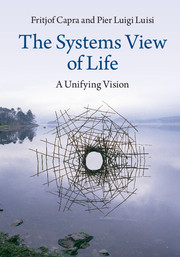
Book: 'The Systems View of Life - A Unifying Vision' [i]

The Systems View of Life -
A Unifying Vision
Published in 2014; I needed this book in the early 1990s, as did we all.

As a review request I'm grateful to CUP for forwarding a copy - that is much easier on the eyes than a screen. This book deserves a much longer-tail.

Reading Resurgence for many years, joining The Ecology Party before they turned Green, and aware of systems, cybernetics this book has brought a great deal together. It has helped me in further thought and formulation about Hodges' model: A system of systems? 

Since 2014 clearly much has changed, I will highlight points where a new edition would be welcome. Although CUP and the authors could find themselves frenetic, such we hope is the pace of change now - or from now on, especially pre-COP29?

Come on petro-states it's time to really deliver.

Even in paperback this book is a reassuring handful, running to 452 pages, excluding the bibliography and index. Part 1 reinforced the encouraging signs in the introduction:
'The basic tension is one between the parts and the whole. The emphasis on the parts has been called mechanistic, reductionist, or atomistic; the emphasis on the whole, holistic, organismic, or ecological. In twentieth-century science, the holistic perspective has become known as "systemic" and the way of thinking it implies as "systems thinking,'' as we have mentioned.

In biology, the tension between mechanism and holism has been a recurring theme throughout its history. At the dawn of Western philosophy and science, the Pythagoreans distinguished "number," or pattern, from substance, or matter, viewing it as something which limits matter and gives it shape. The argument was: do you ask what it is made of - earth, fire, water, etc. - or do you ask what its pattern is?' p.4.
  • Preface
  • Acknowledgements
  • Introduction: paradigms in science and society
  • Part I. The Mechanistic World View:
    • 1. The Newtonian world-machine
    • 2. The mechanistic view of life
    • 3. Mechanistic social thought
  • Part II. The Rise of Systems Thinking:
    • 4. From the parts to the whole
    • 5. Classical systems theories
    • 6. Complexity theory
  • Part III. A New Conception of Life:
    • 7. What is life?
    • 8. Order and complexity in the living world
    • 9. Darwin and biological evolution
    • 10. The quest for the origin of life on Earth
    • 11. The human adventure
    • 12. Mind and consciousness
    • 13. Science and spirituality
    • 14. Life, mind, and society
    • 15. The systems view of health
  • Part IV. Sustaining the Web of Life:
    • 16. The ecological dimension of life
    • 17. Connecting the dots: systems thinking and the state of the world
    • 18. Systemic solutions
  • Bibliography
  • Index
This is an excellent primer for students of biology - human biology, including eager learners in secondary school - there is technical discussion that can serve as initial exposure to new terminology, extending vocabulary. The scope of the book however covers all academic subjects, chemistry, physics, anthropology, sociology, general studies, economics and of course ecology, environmental studies.

The book is clearly well-designed and presented. Readable generally and when dealing with technical concepts. Each chapter benefits from illustrations and use of boxes, with short guest essays introduced throughout. There is less reliance on tables. Each chapter is well referenced, and towards the end chapters 17-18 urls are provided. Obviously, the references and urls are dated now; a matter we will return to. Despite the passing decade, the quality of the book still shines through.

I just noticed the cover is attributed to Andy Goldsworthy 1988, Derwent Water, Cumbria and remember out with the family, coming across Goldsworthy's work in Grizedale forest.

I will share news of my reading over several posts and many other connections.

Many thanks to CUP for the hard copy - which has been an informative companion - over the past 4-6 weeks.

Fritjof Capra and Pier Luigi Luisi (2014) The Systems View of Life - A Unifying Vision. Cambridge: Cambridge University Press.

https://www.cambridge.org/gb/universitypress/subjects/life-sciences/genomics-bioinformatics-and-systems-biology/systems-view-life-unifying-vision?format=HB&isbn=9781107011366

Wednesday, November 13, 2013

Held in equal esteem: Physical health and Mental health

As a mental health nurse you are familiar with concept of ‘esteem’. Self-esteem is central within assessments of clients, central to all care workers as safe and effective practitioners; and self esteem tests carers in those people for whom their condition means self-esteem is something attributed by proxy.

I noticed just recently use of the term esteem applied to the disparity between physical health and mental health. The two upper-most domains in Hodges' model (interpersonal and sciences) draw attention to the historical duality of mind and body. To integrate the two means acknowledging differences and this is acute in terms of finance, research and treatment plus many other measures.

The limitations of my emphasis in a series of previous posts on holism, holistic care, holistic approaches become apparent as long as the political domain is not addressed. You can be as holistic as you like, identifying, processing and integrating the full remit of health care concepts relevant in a case. If esteem is not achieved then the benefits of being holistic must be severely damaged. They may even be considered futile politically (speaking - just a whisper)?

Through the links below this post demonstrates that esteem is stirring in the political, policy and legislative domain and is being addressed, even if a solution will not arrive overnight.

My original sources: New Scientist, the HSJ and BBC.

Nick Craddock (2013) Opinion: Where's our Higgs? New Scientist, 27 April, 2914; pp.30-31.
Psychiatry needs the star quality of physics to help recruit top academics and fight the scourge of mental illness - this opinion piece concludes:

So, in 2013, psychiatry has powerful scientific tools and a developing narrative that already points to strong theoretical bases. Yet, in the UK research into mental illness is stalled at around 5 per cent of the annual medical research budget, and the picture is similar in other rich countries. That will have to change – and governments and funders are starting to see this. The door is open: all that is needed is for more of the best to come in and find out just how hot psychiatry really is.

‘Esteem gap’ between mental and physical health remains
10 October, 2013 | By Alastair McLellan
The government knows the challenges the facing mental health sector, but without radical solutions the goal of treating mental and physical health service users on an equal footing seems as far away as ever.
http://www.hsj.co.uk/opinion/leader/esteem-gap-between-mental-and-physical-health-remains/5064120.article

Debate on 10 October: Parity of Esteem for Mental and Physical Health - Lords Library Note
http://www.parliament.uk/briefing-papers/lln-2013-024/debate-on-10-october-parity-of-esteem-for-mental-and-physical-health

Lords debate – Parliament TV:
http://www.parliamentlive.tv/Main/Player.aspx?meetingId=13879&st=11:51:20

Royal College of Psychiatrists: OP88. Whole-person Care: from rhetoric to reality (Achieving parity between mental and physical health)
https://core.ac.uk/download/pdf/34719468.pdf

Sunday, September 22, 2024

Book: [iii] 'The Systems View of Life - A Unifying Vision'

The Systems View of Life -
A Unifying Vision


Part 2 addresses the title - the rise of systems thinking.

The part - whole distinction is not only the root of the reductionism - holism and analysis - synthesis debates, but you feel clever knowing what mereology means ;-). This book is jargon free, even while being detailed and technical when necessary. Terms are defined when needed.

You see (possibly?) the power of advertising given the prominence of vitality in marketing. Meanwhile, vitalism a key to life seems to be an unknown, ever present but in the shadows, until our attention is drawn to it (health: life-death). Capra and Luisi explore mechanism and vitalism, and in turn organismic biology. Whether dealing with science, economics, biology..., I like the way the authors draw in the initial thinkers, the pioneers: whose lives, work and influence often spanned the 19th and 20th centuries. 

The proof of my opening statement in post (i) can be found on page 66:

'Systems thinking is "contextual," which is the opposite of analytical thinking. Analysis means taking something apart in order to understand it; systems thinking means putting it into the context of a larger whole.' p.66.

Ever user(s)-determined (context-based), Hodges' model can readily identify, relate, incorporate the - linear, non-linear, serial, parallel, simple, complex, poor, rich, narrow, broad, static, dynamic, person, service and so on. Also on page 66, Ehrenfrels (1859-1932) is an example, the first to use the term gestalt to denote an 'irreducible perceptual pattern'. There are many potentials within Hodges' model, one of which is that of gestalt. Yes, in healthcare we need to see the whole. We need to see the person, but also see the person in their social, political and spiritual contexts ('determinants)'. Now the global context is critical.

Chapter 4 charts the new physics atomic phenomena, mysticism, uncertainty, probability, causality, space, time, energy, and E=mc2. As per the book's subtitle, the search for a unifying theory in physics is noted, and ongoing. Box 4.1 briefly outlines the characteristics of systems thinking; including parts-whole, from objects to relationships and measuring to mapping. Within box 4.1, figure 4.1 reminds me of a Voronoi tessellation.^ From chapter 5 can I claim that Hodges' model is tektological - contributing to the science of structures? One day perhaps this Russian contribution to systems thinking can be looked at anew? Chapter 5 continues to reveal classical systems theories, general systems, cybernetics, feedback - in social systems too, and homeostasis - self-regulation. It's less than a page spanning 92-93,  but 'information theory' is duly noted, closing with cybernetics in the brain, and the emergence of self-organization. Shannon showed that even when there is noise in a communication channel, signals can be transmitted (coding). Is this why training and competence in interpersonal skills and self-awareness are so important, to help health professionals to attend, actively listen, and observe?*

An old T-shirt 'Art Matrix'


Chapter 6 on complexity theory, inevitably describes mathematical ideas providing equations. Unsurprisingly chapter 6 has figures galore. When I unpack the boxes and crates, I must sit down with The Beauty of Fractals ... (p.124!) and check the graphic capabilities of the latest software and hardware. The 'The Systems View of Life' definitely stimulates further enquiry. The baker transformation anyone (Box 6.2, p.107)? Exploration of non-linear dynamics, and abstract spaces also helpful in studies of relations and maths. This completes part II.


Many thanks again to CUP for the pb copy, much easier on the eyes. While this copy is new, I do make extensive use of secondhand books.

Fritjof Capra and Pier Luigi Luisi (2014) The Systems View of Life - A Unifying Vision. Cambridge: Cambridge University Press.

https://www.cambridge.org/gb/universitypress/subjects/life-sciences/genomics-bioinformatics-and-systems-biology/systems-view-life-unifying-vision?format=HB&isbn=9781107011366

^See: https://blogs.helsinki.fi/fcai-sig-lsc/files/2022/04/Peter-Gardenfors.pdf and 'conceptual spaces'

*Jones, P. (1996) Humans, Information, and Science, Journal of Advanced Nursing, 24(3),591-598.

Jones, P. (1996) An overarching theory of health communication? Health Informatics Journal,2,1,28-34.

Friday, February 19, 2021

Editorial: ".. Situating ‘illness narratives’ in recovery and mental health treatment"

"Models that put patients’ narratives at the core could perform as a connecting mechanism that provides a process to take account of ‘personalisation’, which is likely to create a better fit with individual context, structure and the complex diverse realities of recovery-oriented practice and routinely provided interventions." p.1.
 

Khan, N., & Tracy, D. (2021). The challenges and necessity of situating ‘illness narratives’ in recovery and mental health treatment. BJPsych Bulletin, 1-6. doi:10.1192/bjb.2021.4
 
INDIVIDUAL
|
INTERPERSONAL : SCIENCES
HUMANISTIC----------------------------------------------- MECHANISTIC
SOCIOLOGY : POLITICAL
|
GROUP - COMMUNITY - POPULATION
 co-concepts: 'recovery' & ‘illness narratives’-
 ‘Person-directed’ -
Define 'recovery' psychologically (my understanding of this?) -
Acceptability of terms 'service user', 'patient'... -
Patient autonomy* -
CHIME framework:
Connectedness, Hope - -
Identity, Meaning values - -
Symptom reduction & individual recovery? -
Measuring Recovery -
reflection and critical thinking -
personal individual storylines -
'Access' to information -
personal narratives & construction of meaning -
‘narratives on social reality’ -
'Lived experience' Peer Support -
Advanced planning: IF  THEN ... for me ... -
‘palliative psychiatric care’ -
- co-concepts 'recovery' & ‘illness narratives'
- 'Professionally directed’ treatment
- Define ''recovery' clinically (my understanding  of this?)
- Conceptual Framework: CHIME
- -
Connectedness, Hope – optimism, Identity, Meaning – purpose, and Empowerment.
- Symptom reduction & individual recovery?
- pathology, clinicians as ‘chemotherapists' Px pad
- Measuring Recovery
- Mental Health (Min) Dataset (decades) Data?
- h2cm: as simple/complicated as needed?
- - a measure of holism, integration ...recovery?
- - can conceptually encompass all 'spaces'
- h2cm remains a response to legacy issues
- - person-centred care
- - holistic care/ ['holistic bandwidth']
- - integrated care
- COVID-19 a corollary in ‘long-COVID’?
- 'Biology' coercive and  impersonal
Practitioner Socialisation - (learned paternalism?)
CHIME framework:
Connectedness, Hope, Meaning - values
‘Person-directed’
Patient/Carer experience of CPA collaboration -
care planning - -
case formulation - -
and small group work - -
Meaningful illness narratives are a gift exchange:
providing meaning, emotive steadiness - -
narration & collective experience - -
Anthropological models of Recovery -
'Illness behaviour' -
pre-existing underlying relationship between the person and their illness - -
healthspan, health career, career span -
dialogues remain contested: patiency, recovery -
‘authentic alliances’ -
- 'Professionally directed’ treatment
- 'Recovery' spans Quality and Quantity
- Professionals ‘mainstream’ recovery concepts to their advantage?
- Recovery-orientated practice guidelines for service provision include:
--personal recovery
--recovery-oriented services
--provider competencies
- *Patient autonomy: can it be 'exercised' here?
- CHIME framework:
- - Empowerment, Identity (am I seen/heard here?)
- Care Programme Approach as Policy c.1991...
- - Assessment, Care plan, Review, Care Coord.
- - Role in Personalisation & Recovery?
- ‘Illness management’ 'Illness problems'
- ‘corporate’ recovery/criticism


My source: Twitter

'Recovery' on W2tQ:

https://hodges-model.blogspot.com/search?q=recovery

Jones (2014) Using a conceptual framework to explore the dimensions of recovery and their relationship to service user choice and self-determination. Int J. of Person Centered Med. 3,4,305-311.

Tuesday, July 24, 2007

Naive holism II - Hodges' model and String theory

Where were we? Oh yes, maybe string theory can help...?

Health is complex, labyrinthine and while there is no Minotaur to slay (?) we must constantly mine* for information. If we venture forth then best to take some string for reassurance:

  • Fully navigate the labyrinth (use technology if you must - audit trails count);
  • Find your way out and then you can report your deeds to the wider world.
The maze entrance is revealed when the pin is 'stuck' onto the referral source map. Post or ZIP code: "use it for geographies sake." You want to get out don't you?

Then start laying the thread - REASON-4-REFERRAL

weight loss, fatigue, tremor: SCIENCES domain
low mood, anxiety, agitation: INTERPERSONAL domain
carer under stress: SOCIOLOGY domain - and so on.

Check the health policies hurriedly scrawled on the walls (you may well find the Garden of Policy Delights#, but otherwise make do with the graffiti). Are you truly client-centred or service-centred?

What do you mean you don't know?

OK, well check the string. What sort of pattern have you made?

It's a right mess... Chaotic, even! Yes - mm... well that's OK. It actually looks like you are client centred to me. Just remember to backtrack, check and fill those string-less voids if need bee.

What's that? You are worried because you're tying yourself in knots!

Look don't panic! On the contrary - rejoice! It's what makes health care the magical job it is...

You see 'cc' also stands for 'cat's cradle' as well as 'client-centred' and 'complex care'!

Cats Cradle Gutenburg PressIf you never move out of the sciences domain (highly unlikely!) then in string theory that is a closed loop. The care is prescribed - not much room for creativity there - pretty vacuous in fact. Nature abhors a vacuum though, so attend to the care needs within the closed loop with due diligence and utmost priority. Otherwise the vibrations of this critical loop may become universal and the loop resemble a noose.

Prior to evaporating a closed loop can do a lot of damage.

If on the other hand your care winds its way across the care domains, back and forth, play the lace-maker - the artisan you are.

If you become tired, struggling in poor light: keep laying the thread - help may be at hand.

Whether it is a professional or volunteer who takes the lead, apart from those critical exceptions in the SCIENCES and POLITICAL domains, the string must be open at the ends from the start.

The dialogue always begins with an explanation, a rationale.

As soon as the closed loops are cut, the way is open to fully communicate, to comprehensively explore care possibilities.

Patient and carer can then take the other end, indeed if/when able they lead the way!

(Of course, just don't let it become a tug-of-war).

At the end reel the string in and measure (count the knots too).

Whether or not you met the Minotaur - there is the evidence, the outcome of your holistic reach.


Hodges' Health Career - Care Domains - Model

- sufficient to reach and engage the whole community.


Images: Thanks to medeba.com (skipping) & (fractal)
Paul Bourke

#Ack. William Latham 1990s CD-ROM
Garden of Earthly Delights.
* From the last post: There are vast and rich seams to mine here (without damaging the environment) and they run under ALL the subject disciplines....
This particular mine is also renewable.

Wednesday, May 30, 2012

Reflections [II] Conceptual Spaces At Work: Lund University, Sweden, May 2012

[See also Reflections I CSaW2012]

Among many things Dessalles - From Conceptual Spaces to Predicates - told us that meaning is essentially two-fold: analogue and symbolic.

An evocative summary was provided:

(Topo)logical thinking = Conceptual spaces + Contrast

Concepts do not exist as permanent structures.
Predicates are ephemeral.
Questions included: Is there a contrast logic?

You can find Dessalles online and there is a specific book Why We Talk (2007) (some of the chapters look particularly interesting - information).

Also to investigate are there being no locality principle and the danger of holism, and a point about structural matching as part of problems with traditional approaches to meaning that involve interfaces and relationship structures (pardon the ramble - the paper has not appeared yet).

Geuder's Manner Modification and the Representation of Event Concepts found me tweeting - see below. A biomotion demo was tied to the theme emphasizing perceptual cues, manner and meaning.

Off at a tangent the title had me musing on the importance of 'manner modification' in nursing. Sometimes fleetness of attitudinal, objective and emotional foot is needed to deal with a care situation. Tangent aside, there are clearly some serious considerations around health care processes, these are the bread and butter of healthcare records and information systems.

I've just copied my tweets (clinical examples arose in several sessions):

Gardenfors & Warglien ref new paper?* subspaces corres to a division into domains - event concepts

Manner modification eg. "slowly". (Manner central in health nursing) +mention of forgetting + absentmindedness denotes? PTSD?

A representation of a stage structure is needed - further e.g. "carefully" He cleaned the wound... filled by context (as ever)
Geuder still, now on emotional state predicates - "sadly" Three possible ways to proceed - close now

* The following may be the new paper:
Peter Gärdenfors and Massimo Warglien Using Conceptual Spaces to Model Actions and Events. J of Semantics first published online April 17, 2012 doi:10.1093/jos/ffs007


Wednesday, July 30, 2014

Tuesday, September 15, 2009

Sour grapes and 'holistic' academic publishing

Having been a student on several occasions, an independent scholar and online for the past decade (I was a late arrival) something is really getting on my pips.

When I see an Editorial entitled -

Theoretical Frameworks 
and Concept Development

in an established publication -


That states - 
There is a commitment within holistic nursing to explore and refine terminology and frameworks that will enhance the care of patients and provide understanding about the healing process. To accomplish this directive, manuscripts will be published that provide an in-depth analysis of existing, alternatives, or extensions of concepts, frameworks, or theories associated with holism and holistic health and nursing. Holistic nursing involves a complex view of the individual, family, and environment that is constantly being challenged by new and emerging paradigms and information that furthers the ability to understand humans as multidimensional and pandimensional beings.
I do wish someone else would recognize the
holistic value inherent in Hodges' model.
That value is not there by default it has to be found, learned and earned, but there are few frameworks that can simultaneously encompass holistic nursing, healing, touch, global health, informatics disciplines, the green agenda and human ecology. ....

So come on just a whisper - who Dares...?
 
Ref:
Diane Wind Wardell, Editorial, Theoretical Frameworks and Concept Development, Journal of Holistic Nursing, American Holistic Nurses Association, Volume 27, Number 3, September 2009 158.


Additional links:
How many interfaces are there? 
http://hodges-model.blogspot.com/2007/04/hodges-model-how-many-interfaces-are.html

Hodges model: What is it? [2] It’s an interface...

http://hodges-model.blogspot.com/2007/01/hodges-model-what-is-it-2-its-interface.html

Lonely model seeks ...
http://hodges-model.blogspot.com/2007/12/lonely-model-seeks.html

Tuesday, March 09, 2021

Hodges' model: What is the Question? (ii)

individual
|
INTERPERSONAL : SCIENCES
humanistic ----------------------------------------------- mechanistic
SOCIOLOGY : POLITICAL
|
group
What is the basis for meta-cognitive and meta-conceptual claims for Hodges' model?

Does Hodges' model have a role in secondary education and if so, what is it?

If Hodges' model facilitates reflection and is reflexive how is this achieved and demonstrated?

Is Hodges' model a meta-semantic framework and if so, is this what provides genericity?

What is the foundation of the axes in Hodges' model and what characteristics can be described?
Is Hodges' model safe? "Cold, Warm, Hot, Hotter!" nearer to 'navel gazing' than 'reflective practice'?

Are 'concepts' sufficient to explain the structure of Hodges' model, and account for its claimed role(s) in assessment, planning, evaluation and assurance?

Is Hodges' model a constant: as the contemporary model?

Are 'individual', 'group', 'humanistic', and 'mechanistic' sufficient as conceptual anchors
; and if so are they sufficient to give rise to the two continua that then invoke four knowledge (care) domains?
Can Hodges' model simultaneously preserve, protect and assure 'patiency' whilst also facilitating self-care?

What forms of literacy are encountered by users of Hodges' model and are they accessible to the public, patients and carers?

Hodges' model: Show me the praxis.

What does Hodges' model say about holism (and consequently reductivism) and why should anyone listen?

Is there such a thing as a generic 'model of care' in a multidisciplinary world?

Is there a 'logic' to the seemingly diametric opposition of 'power' as exercised here and the two individual domains in Hodges' model?

If claims for Hodges' model of universality, genericity and global scope are 'true' is this also a risk for healthcare professions and specialisation, as it supports the 'universal worker' and automated processes?


Saturday, February 17, 2007

Holistic Care No. 1

If you’ve checked the main website and some of the references you’ll have noticed the recurring theme of ‘holism’ and the assumed lack of progress in achieving “holistic care”. It has been talked about for decades, but how would we know even if holistic care was delivered into our midst? We need to know where to look and how to recognise holistic care. In which direction do we look – primary care, secondary care, or social care, or maybe all of these? The word 'achieved' also suggests measurement of some sort. So three points then:

  1. Definition – to recognise
  2. Criteria – to define and measure
  3. Location – to seek
Over several posts we’ll explore these points and see where we end up....

Thursday, February 20, 2025

Book review: #5 - Handbook on the Ethics of AI

If there is an overall theme to the book it is - rather inevitably -   anthropomorphism. Some argue it is consequential in nature due to the risks we are running. Sandry's chapter 10 Anthropomorphism and its Discontents begins by highlighting duality, dichotomies, and  oppositions that instantly come into effect in this emerging  theoretical, practical and policy field. If a term anthropomorphic can be 'loaded' this one carries extra baggage: history, religion, natural, aesthetic, philosophy, physical, existential. The dual issue of making a machine that looks human; versus, machines that could deceive humans (used remotely today and in situ in the future?) is considered. In our interacting with AI Tech, I found intention (and attention) of specific interest. Sandry seeks definitions, starting with dictionaries, the discussion is helpful across arts too. The reader is left well briefed and technically too: intrinsic and extrinsic forms, the role of the intentional stance, 3-factors. ...

Health is not a primary focus of the book. The index does not list health, medicine, nursing, at least not where they may be expected. The index is comprehensive but I wonder if it could be improved. Care is suggested through social robotics (p.147). Design figures again, anthropomorphically of course (p.147). Specific attention to ethics and Taking Care With Language are given (sections 6-7). I scribbled! again about care for tech - in the material, energy, and production 'costs' in an ecological sense. SUVs annoy me (sorry!) are they all necessary? On language, I thought back to McDermott D (1985) Artificial Intelligence Meets Natural Stupidity, In MIND DESIGN, Haugeland J (Ed), MIT Press, London, p.144-145:


Balance in subjectivity and objectivity of stances and resulting content / conclusions can be difficult to achieve and represent. The latter section prompts respond to frustration with the term anthropomorphism. I found myself in a couple's lounge, as a community mental health nurse, acutely aware of the role of proxies in dementia care; as Sandry described Paula Sweeney's 'fictional dualism' (8, 150). Hodges' model fits well here too, regards anxiety. To socialbots, I added carebots. There seems potential in sociomorphing.

As noted previously, reflection and relation-al points litter the text. In Jecker's chapter 11 A Relational Approach to Moral Standing for Robots and AI this is more explicit. Jecker refers to care of others - as animals too. In computer science and seeking to retain a socio-technical perspective, I've seen potential in capability and maturity frameworks. Section 2 provides some discussion of the former. One of the first words I looked up in the index was isomorphic. It wasn't listed but I found reference to it on page 157: '... a community of robots psychologically isomorphic to to human beings that share our psychology ...'. Maths is a focus here, even though I must try to utilise AI to aid my learning and understanding. This is - must be an outcome of reading HEoAI.

The section on (self-)counsciousness is engaging and not limited (again) to machine intelligence. Subjectivity arises again. I wrote a note re. the precautionary principle, my 'prompt' the ethical principle. A gift was dicovered in 3. A CONCEPTUAL REFLECTION and within 3.2 Relational Ethics, preceded by the potential of Kant, utilitarian and vurtue ethics. While not wishing to virtue signal I've long speculated on how other cultures could inform nursing theory and models of care. Jecker incorporates the African philosophy of ubuntu in relational ethics. Student's would enjoy this, especially as Jecker (Source: Author) provides tables laying out the ethical approaches and robot & AI capabilities. This can also encompass older adults and care contexts with social robots. Nussbaum's capabilities applied to human development is also adopted here - another useful reminder:

(And, once again I recall Nussbaum's talk on Aristotle.) In post #4 I wrote of the rubbish scene in the film A.I. Artificial Intelligence, but it's here (p.166) that I wrote the note. There is so much I'm skimming over - believe it not.

The conclusion in mentioning a hybrid future consisting of both humanistic and mechanistic agents appears to find an additional theoretical and practical ally in Hodges' model?


Chapter 12 by Navas is AI Ethics, Aesthetics, Art and Artistry visits the history and philosophy of this subject too, esp. from 1700s. With Žižek and Deleuze there is much prepatory reading for would-be undergrads - and general readers keen to have an awareness of contemporary issues. There is quite a triad here - disassembled - across several sections. I have quoted from the volume many times, but p.179 concerns empathy: 
'Empathy challenges the ongoing optimization of technology, because it takes time to exercise it. A person needs time to think about whatever issue, situation, thing, or person they may empathize with. In other words, empathy is essential for humans to understand and figure their relation to others and their surroundings. Empathy, if practiced reflexively, can lead to critical thinking. which may not lead to clear results but the activity may and often does end in "wasted" time if framed under the drive for efficiency, which is clearly something Al is designed to achieve. And lastly, empathy, because it has been foundational to art, is also part of art's long-term resistance against capitalism's exponential dependence on speed of production. At the core of AI ethics, then, we find speed of production and consumption coming in conflict with human existence itself. Humans are proving to be inefficient actors in the very system they built for their own benefit, which obsessively demands faster cultural activity from people, which (to be blunt) translates to an unapologetic and incessant desire for profit.' pp.179-180.
Section 6 on creativity AND speed is fascinating, especially as human-machine (brain) interfaces develop apace. Concerned as I am with what is a metacognitive tool, 8 Metacreativity formed the conclusion of chapter 12. The notes refer to generative coding which has come up in various webinars.

Silent Running: Film
Briefly, chapter 13 covers AI and the Environment. It is amazing (or not) how in a few sentences your mind can be changed? From "Really!" upon reading 'species culling', to this being explained in the crown-of-thorns starfish (hence COTSbot) and the toll on coral in Queensland. There are robots-for-ecology. I smiled returning to Silent Running's Dewey, Huey, and Louie becoming reality. Facinating point in: what is collective must be recognised in terms of causation. Appropriatly, PEAS is an acronym: probalistic weather event attribution studies are a reality in conjunction with remote sensing and tracking.

Drones are also developing apace, and applied robotics - tree-climbing. Less reassuring (adding to nature's precarity?) are artificial insects to undertake pollination; more positively reducing the impact of chemical and toxic spills. Simulation for training is well established in medicine and nursing; section 2.3 addresses this were PEAS form super-ensembles of data (I like that). PEAS can also have a role in determining an evidence-base and demonstrating it is hoped provenance for that evidence in the movement of populations, for example, climate refugees. In conflicts, human rights and justice, forensic architecture is of course well established: Forensic Architecture (Care Forensics?)

The summative nature in closing chapter 13 is a helpful approach which I will possibly try to duplicate.

Socio-technical approaches are found in chapter 14 Uses and Abuses of AI Ethics by Frank & Klincewicz. Understandably, boundaries play a large role, as you would expect in deliberating value and values, moral patients and agents. The Collingridge dilemma is discussed, regards putting in place controls for a technology while it is still in development, otherwise control may be lost (p.213). Diversity, a story of the moment - closes out this chapter. There is a 'nice' continuity across chapters to
15 The (Un)bearable Whiteness of AI Ethics by Syed Mustafa Ali et al. (the first note highlights the format is a dialogue). The (colonial) politics of north-SOUTH are duly noted and Africa (section 4). Section 8 points to technological (and health) colonialism. I take as a positive that the 'hyphen' also has a place (S.10).

The Savage Mind

Again related, as per the book's structured parts, chapter 16 Ethics beyond Ethics: AI, Power, and Colonialism by Kim prompts the reader to revisit the concepts of 'other', alterity even if 'understood'. I pencilled 'Savage Mind' here. Machines are posited as the colonial other. There will be a repeated argument as in response to humankind's going back to the moon (to stay) and on to Mars. We should sort Earth out first. So too for inclusion and the machines. What about the people who are excluded, disenfranchised and increasingly so? I wondered (previously) if (even) more could be made a transparency? Noting the word subaltern, it appears this has suddenly been attributed to Ukraine? On disability and ableism reminded also of radio history and 'Does He Take Sugar?'

The statement: 'Machines are perceived as distant - temporally, spatially, or socially - and different from human culture.' p.234. Is, so true.

INDIVIDUAL
|
      INTERPERSONAL    :     SCIENCES               
HUMANISTIC  --------------------------------------  MECHANISTIC      
 SOCIOLOGY  :    POLITICAL 
|
GROUP
cognitive - conceptual
'spaces'
distance:
time, space
human cultures
societies
difference


'Binary-opposition' and the need to think outside of this is acknowledged. And as if (perhaps) to stress both distance and proximity, I wrote 'mobius' in the margin (p.238). Hutchings (2015) sounds a valuable reference: 'Ethical Encounters - Encountering Ethics'. The books I've read contribute to evidence to revalidate my nurse registration. I realise I've sold-myself short in listing the book's titles. Although not discussed here the remaining chapters are excellent critical reading at a time when diversity, equality and inclusion policies are being rolled-back and undone. I will highlight these:

  • 17 Disabling AI: Biases and Values Embedded in Artificial Intelligence (quoted in 'Do you fit the description?')
  • 18 The AI Imaginary: AI, Ethics and Communication
  • 19 Feminist Ethics and AI: A Subfield of Feminist Philosophy of Technology
  • 20 Buddhism and the Ethics of Artificial Intelligence
  • 21 Queering the Ethics of AI

In chapter 16 'Ethics beyond Ethics...' just before the conclusion I will carry forward a sentence -
'Forming an identity requires that "I identify something or someone beyond me" - with one or more categories persons, non-human others, acts, ideals, values, or social systems' (p.243).
- and the points following, and end there.

Many thanks to David J. Gunkel (Editor), the many contributors, and Edward Elgar Publishing Ltd for my copy. I have greatly enjoyed and learned much from reading this book.

Handbook on the Ethics of Artificial Intelligence. David J. Gunkel (ed.). Cheltenham, UK: Edward Elgar Publishing Ltd. ISBN: 978 1 80392 671 1245
https://www.e-elgar.com/shop/gbp/handbook-on-the-ethics-of-artificial-intelligence-9781803926711.html


Images:
Silent Running 
https://cdna.artstation.com/p/assets/images/images/016/839/904/large/david-eagan-screenshot001.jpg?1553673214
The Savage Mind
https://en.wikipedia.org/wiki/File:The_Savage_Mind_(first_edition).jpg

Related previous posts: 'general + AI'

*That early streak of competitiveness was clearly educated out of me.

Wednesday, September 14, 2011

After'math' II of... The Difference that Makes a Difference

Continuing in the vein of challenging and stimulating ....

It seems there are several people attributed with the saying "the map is not the territory". The debate around maps and territories came up in discussion and is frequently raised on psychology and therapy discussion lists. At DTMD I referred to h2cm as a cognitive periplus, which I came across in Cunliffe's book The Voyages of Pytheas. Basically, ancient mariners would draw a map, a periplus of the coastlines for navigation and an outline of land masses. During the meeting I came to equate the basic features on the coast as data; buildings or smoke as information; and the conclusions derived as knowledge. Whether to proceed inland well, that is about pioneering, courage and wisdom.

A challenge comes with the DTMD talk of information theories. The DTMD workshop was promoted as a forum to discuss and expand our collective understanding of what we mean by information in our different disciplines.

What would an information theory based on the knowledge domains look like? Given the presence of the SCIENCES domain then the mathematical and logic-based theories are already determined for us, are the specific information theories and models that relate to the physicality, the entropic journey of the body? What information theories can we identify for the other domains:

  • INTRA-INTERPERSONAL?
  • SOCIAL?
  • POLITICAL?
  • and the spiritual, unknown?
If we categorised the 25 info theories listed by Paolo Rocchi in his session how might they be distributed across the h2cm domains?

Here is part of the listing c/o Prof. Rocchi and with many thanks:
  • The statistical theory of information by Shannon (1949);
  • The algorithmic theory of information by Solomonoff, Kolmogorov (1965), and Chaitin (1977);
  • The economic theory of information by Marschak (1971);
  • The living system information theory by Miller (1978);
  • The autopoietic theory of information by Maturana, Varela (1980);
  • The biological information theory by Jablonka (2002);
  • The cybernetic information theory by Nauta jr. (1970);
  • The dynamic theory of information by Chernavsky (1990);
  • The fisherian theory of information by Fisher (1950);
  • The general information theory by Klir (1991);
  • The general theory of information by Burgin (2009). ...

What is the result? What criteria determines the final domain 'home'? On what basis can we differentiate such theories - quantitatively and qualitatively? As noted at DTMD where are the family resemblances? Perhaps they can be found within the care domains:

Sciences - inclusion of a mathematical - logical underpinning (There be equations in the hold!)?
Social - reference to social and family networks without explicit recourse to mathematics? The use of psycho-social concepts?
Interpersonal - reductionist-wholist rendering that incorporates perception, individual information processing? What can be drawn from the latest research in anxiety and psychoses for example? Is it appropriate to wonder if ontological* approaches have anything to offer?
Political - Theories that cover economics and also explain power relations, decision making, and choice for example? 

Even though when we see / read the word 'unified' you tread carefully, Hodges' model ultimately presupposes a unified view. Recall again the DTMD2011 challenge:

to discuss and expand our collective understanding of what we mean by information in our different disciplines.

So the purpose here on W2tQ and through h2cm is to focus on all the domains simultaneously; at least when information in the context of health is our concern. As I mentioned in my presentation, there are clear exceptions in emergency and crisis situations. Then 'holism' is suspended. Information (re)sources, selection, analysis, synthesis and salience are focussed; specialised individual, team and organisational memory are brought into play with varying degrees of technology in support. The second-by-second, minute-by-minute demand for data, information and knowledge increases, its longevity in terms of significance may decrease, replaced by updated values by turn until 'stability' is restored: by human effort or nature.

To be sustainable (applicable, creditable, relevant ...) for me a unified theory of (health) information must span situations such as the emergency and all the h2cm domains and care contexts. Now that is a challenge!

*What would it mean to create four ontologies that could be merged together?