Hodges' Model: Welcome to the QUAD: care cartography

Hodges' model is a conceptual framework to support reflection and critical thinking. Situated, the model can help integrate all disciplines (academic and professional). Amid news items, are posts that illustrate the scope and application of the model. A bibliography and A4 template are provided in the sidebar. Welcome to the QUAD ...

Showing posts with label care cartography. Show all posts

Thursday, July 17, 2025

Ryle's 'logical geography'

I like the way Ryle apparently analogised philosophy to cartography.*

'Similarly, Ryle advocated that philosophy should chart the 'logical geography' of our concepts. In The Concept of Mind he argued that the Cartesian dualism of mind and body results from 'category-mistakes': it treats mental concepts which signify behavioural dispositions as if they referred to processes that are just like physical ones, only more ethereal. Ryle rejected Wittgenstein's therapeutic image according to which 'the philosopher treats a question like a disease' (1953: §255). Yet he accepted that philosophy is a meta-discipline which does not 'talk sense with concepts' but tries to 'talk sense about concepts' (1949: 9-10). The paradox of analysis disappears since the task is not to provide novel information about a realm extrinsic to us. According to Wittgenstein, philosophy reminds us of rules that we have mastered in practice but which mislead us in the course of philosophical reflections. According to Ryle, it takes us from the knowledge how to use words to an explicit knowledge that they are used according to certain rules. Either way, analysis is not a trivial pursuit, because the explanation of philosophically interesting concepts is complex and rich, especially when it places these concepts in their diverse contexts (everyday, scientific, philosophical).' p.43.
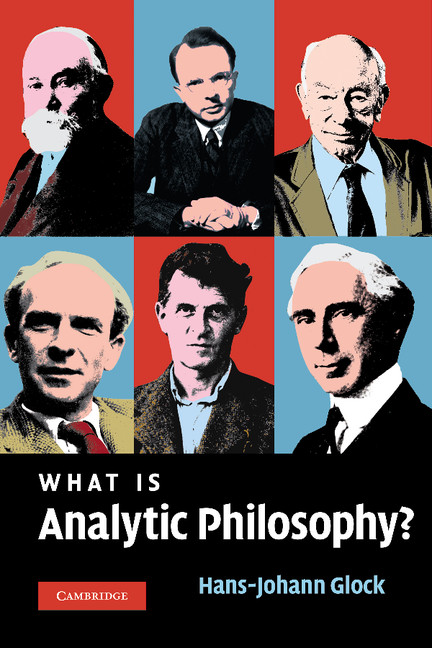
Hans-Johann Glock. 2008. What is analytic philosophy? Chapter 2. Historical survey. pp.21-60. CUP. Pb. 
https://www.cambridge.org/us/universitypress/subjects/philosophy/philosophy-general-interest/what-analytic-philosophy

* 'Ryle analogises philosophy to cartography. Competent speakers of a language, Ryle believes, are to a philosopher what ordinary villagers are to a mapmaker: the ordinary villager has a competent grasp of his village, and is familiar with its inhabitants and geography. But when asked to interpret a map of that knowledge, the villager will have difficulty until he is able to translate his practical knowledge into universal cartographic terms. The villager thinks of the village in personal and practical terms, while the mapmaker thinks of the village in neutral, public, cartographic terms.[20]: 440–2 '. https://en.wikipedia.org/wiki/Gilbert_Ryle

I've wondered about 'cogeography' - combining cognition and geography, even care cartography. There is also of course psycho-politics, geo-psychiatry and psycho-geography ...

Hopefully a more current text would be more diverse.^

Wednesday, February 22, 2023

"In all flat maps (and I am one)" - Donne

'Discordia concors' - 'Concordia discors' ... plus ... 'Site map'*

"Drawing both on the medieval Mappae mundi and the Ptolemaic tradition revived in the Renaissance, the recurrent cartographic motif in John Donne’s poetry well reflects the preoccupations of a revolutionary period in the history of Western cartography. Yet, for all its cosmic magnitude, Donne’s poems, both holy and secular, are turned, not so much towards an exploration of the world as towards an exploration of the Self as the ultimate object of reflection." [Abstract].


Ladan Niayesh, All flat maps, and I am one”: Cartographic References in the Poems of John DonneÉtudes Épistémè [Online], 10 | 2006, Online since 01 October 2006, connection on 22 February 2023. URL: http://journals.openedition.org/episteme/955; DOI: https://doi.org/10.4000/episteme.955

 INDIVIDUAL
|
 INTERPERSONAL    :     SCIENCES               
HUMANISTIC --------------------------------------  MECHANISTIC   
SOCIOLOGY  :   POLITICAL 
|
GROUP

"Let us take as a first example one of the last poems written by Donne, "Hymn to God my God, in my Sickness", composed either during one of the poet’s serious illnesses in 1623 or alternatively shortly before his death in 1631 ..."


"... Here the poet compares himself, as he lies on his sick-bed, or possibly his death bed, to a flat geographical map studied by his physicians who are compared to cartographers: "my physicians by their love are grown / Cosmographers, and I their map, who lie / Flat on this bed" (ll. 6-8), and later "In all flat maps (and I am one)" (ll. 14)."

The global
Psycho-Social-Geo-Political
legacies and future?


"Yet for all its symbolic Noachid and Christian background, Donne’s cartographic imagery has room for the latest scientific contributions. Newly discovered territories are directly named here: "is the Pacific Sea my home?" (l. 16), "Anyan, and Magellan, and Gibraltar" (l. 18). And if this metaphorical map is a flat one — "In all flat maps (and I am one)" — it is solely for the sake of commodity, as this flat shape actually stands for an acknowledged and accepted spherical reality: "west and east / In all flat maps (...) are one" (ll. 13-14)."


*I found some irony in 'site map' being the final map on the journal's webpage.

Sources:
 
London July 2022 Foyles, Waterstones and other bookshops:
Super-Infinite: The Transformations of John Donne (Hardback)
https://www.faber.co.uk/product/9780571345915-super-infinite/

BBC Radio 4 Super-Infinite by Katherine Rundell [Episode 3]

Previously on W2tQ: 'maps'

Wednesday, February 20, 2019

The Compass Rose in Care


*"A compass rose
is a diagram of
directions that is located
on every map or globe."


individual
|
INTERPERSONAL : SCIENCES
humanistic ----------------------------------------------- mechanistic
SOCIOLOGY : POLITICAL
|
group


The Health Career rose
is a diagram,
a conceptual map of care 
that can be located within every 
care plan and health record?


*Source: https://slideplayer.com/slide/5847408/


Wednesday, April 24, 2013

2013 Year of Piri Reis & Navigating the world of nursing care - in Jordan

The conference in Jordan is over it has been an intense and excellent two days, with a free day tomorrow. It has been a brilliant opportunity to share and learn not just about nursing, but travel, culture and some of the people that make up the global nursing community.

I am truly grateful to the Jordanian Nursing Council for accepting my abstract. The welcome and hospitality has been truly amazing.

In the flight magazine on the way here there was an article about Piri Reis, which reminded me of Paul Cunliffe's book about Pytheas.

From the UNESCO website:

The United Nations Educational, Scientific and Cultural Organization (UNESCO) has agreed to declare 2013 the year of Piri Reis on the occasion of the 500th anniversary of a map he drew up that included seven continents, reported the Anatolia news agency. 
“This map marks a significant event in the history of the country and has enabled its collective knowledge to be transmitted through generations. As a rare world map from the 15th and 16th centuries, Piri Reis World Map is an invaluable piece of the world's documentary heritage as it provides insight on the history of its time. It is therefore part of the Memory of the World and should be made better known,” stated UNESCO.

The world-renowned Ottoman captain and cartographer Reis is best known for world maps and charts collected in his “Kitab-ı Bahriye” (Book of Navigation).
Source: http://www.todayszaman.com/newsDetail_getNewsById.action?newsId=294065

Source: http://en.wikipedia.org/wiki/Piri_Reis_map


I have written before about Hodges' model as a map -

a cognitive periplus 

- for navigation through the complex world(s) of health and social care.

Would a new mariner take to the sea without a clear sky, a compass, map, or satnav? What then of our students?


Additional link: Please see the entry for Iran -

http://www.unesco.org/new/en/unesco/events/prizes-and-celebrations/celebrations/anniversaries-celebrated-by-member-states/2013/

Thursday, January 06, 2011

2011... looking ahead: Line of sight - Lines of insight

LINE OF SIGHT:


LINES OF INSIGHT:

Fractal Drum


Image sources:

Wilkinson, F.J., Monkhouse, H. R. (1967). Maps and Diagrams; Their Compilation and Construction [Paperback], Methuen & Co Ltd. Intervisibility, Line of sight. p. 125 [scanned].
(Book purchased in Mevagissey, Cornwall, Hurley Books July 2010)

Fractal drum. Lines of INsight: http://classes.yale.edu/fractals/panorama/ManuFractals/FractalDrums/FractalDrums.html

Health and social care - listen!

Wednesday, September 15, 2010

Drupal musings 15: modules and Drupalcon videos

Since picking up the health career model and publishing the model online in 1986 the term holistic bandwidth has emerged. The blog in 2006 and to date has seen other loosely defined terms:

care architecture
4-fold care
cogneography
holistic competency

Using Drupal 6 I've got to a position were I am getting to know core plus some contributed modules. One of the latter is webforms. It's bound to be help seeing what webforms can do in terms of one-way data submission, compared to using CCK - the content construction kit. In webforms the grid component holds great promise, but in creating a grid for music genres I notice there is no validation (which would be quite a trick!). Users should only be able to select one type of music they want to hear most of the time. The validation question is going to help force the issue of getting under the hood. All that reading revealed in previous posts is also needed to sort the theme too.

I remember first coming across the word instantiate. As I write, think about a h2cm glossary and experiment for real with Drupal 6 - I wonder whether the content types I create (in Drupal 7 especially) may help define some of the above and other terms?

Wednesday, September 08, 2010

Drupal(con) musings 14: design, UI, UX, thinking and care

In his funny and very engaging session 'Designing UI with Seven' at Drupalcon CPH Mark Boulton discussed four user experience (UX) principles and introduced us to ten user interface (UI) guidelines.

Mark highlighted the need for a mental model and the challenge within publishing of there being someone who has the big picture. Who knows exactly what is going on? The health career model provides a model and can provide a canvas to support the big picture.

What really caught my attention though was as soon as Mark asserted -
"Don't make people think." -

I immediately thought -
'Make people care instead'.

Well, I'm not sure if an interface can do what public (mental) health policy, government public funded education programmes and the concerted efforts of the health professions has largely failed to achieve. The users of e-health information systems do need the design of the system to be transparent to them. IT mustn't get in the way. Mark's point of course is the the user's should be free to focus on the problem the system is to help solve. In health this includes:
  • recording of a health (and social) care record;
  • secure information / file management and access;
  • information governance, reporting and archiving;
  • timely, ready access for those who need to know;
  • ability to manipulate the record to obtain knowledge: from data > from information;
  • to provide patient (carer as advocate) access and verification;
  • remote access with rugged devices.
  • ...
This does not mean that people are oblivious to design: far from it (iThis - iThat!). My point is that as we follow Mark and other design expert's advice then users should be able to focus on care design and the care outputs arising.

So in health we need interfaces and user experiences that DO encourage reflection, thought: thinking.

P.S. In another session (or magazine!?) on creating mobile versions of sites the advice included getting rid of the crap - the clutter, the >1000px width adornments. Rhetoric aside - my design thought would be not to include anything that could be described in this way whatever the media type (maybe I should lighten up!) ;-)

To follow: update on my Drupal efforts.

Saturday, June 19, 2010

Care ecology

Webster’s dictionary defines ecology as:

".. the totality or pattern of relations between organisms and their environment."
In health and social care there are several environments:
  • cognitive
  • social
  • physical
  • political
  • [and spiritual]
In this sense then Hodges' model provides a much needed care ecology:

An ecology not only for* care (disposition?)

- but an ecology to* care (direction?).

That is as something to protect given its inherent inclusiveness, balance and holism - an ecology within which we can also check on the health of our values.

In being focused on life - as an ecology - the model can also encompass the end of life.


*Michael Serres writes on the role of prepositions:

Conner, S. (2008) Wherever: The Ecstasies of Michel Serres, Accessed 19 June 2010.

Michael Serres: messengers - a Blog

Sunday, May 16, 2010

Nursing: Art and Science ... Fra Angelico to Leonardo

I arrived in London at noon in preparation for the Higher Education Academy mental health SIG meeting tomorrow at King's College, which includes a presentation on the health career model.

The afternoon was spent at The British Museum exhibition Fra Angelico to Leonardo: Italian Renaissance drawings

Early in the life of W2tQ visits to the Tate in London and Liverpool prompted a blog post or two.

Visiting this stunning exhibition even before I fastened and feasted on the first drawing, the subtitled walls announced the various exhibition themes and for me instantly suggested links to health care:

Drawing the father of our three arts -
architecture, sculpture and painting

Georgio Vasari. Lives of the Artists, 1568.

sculpture equates to medicine-surgery
painting to nursing
our care models provide the architecture and palette*

We all draw (model) individually in thought and reflection, these are then shared in our various collaborations and engagements, media forms and records.

Do we need a 21st century renaissance
in the study and appreciation of models of care?


*Red, Green, Blue, (Black & White)

There are a few more prospective posts arising from this museum visit - time - will draw them out.

Friday, May 14, 2010

Health, social care and personal map making

Vermeeer painting


There have been two series running on BBC 4 in the UK over recent months and currently with a cartographic and historical focus:

see - The Beauty of Maps

This Vermeer - The Art of Painting - was featured in one programme and reveals the power and status of maps as Wikipedia also explains.

It is natural to see the health career model as a map, but this map is not just the preserve of the wealthy. Hodges' model can be used universally by all - a common framework.


Use of the term map and its synonyms is in turn common in medicine in many forms:

The map of medicine
The Malaria Atlas Project (MAP)
HealthMap

The above sites reveal how maps, charts and atlases relate the individual, geography and health.

In addition to its geographic connotation projection also has a psychological meaning. Hodges' model provides a substrate on which to project personalised, national and global health.

An individual; a people; a nation: for each a journey .... and for each a map ....

Image source:
http://en.wikipedia.org/wiki/The_Art_of_Painting_%28Vermeer%29


Saturday, January 16, 2010

Compass-ion and care cartography

Are you a -

Care surveyor?
Care commissioner?
Care architect?
Care assessor?
Care appraiser?
Care philosopher?
Care manager?
Care publicist?
Care gatekeeper?
Care journalist? Care mentor? Care ecologist? Care informatician?
Care provider?
Care student?
Care planner?
Care archivist?
Care governor?
Care wright?
Care cartographer?
or is that - Care mapper?
....

or just a -

CAREr?

What c+mpass do you use to navigate the CARE -

curriculum
reflections
dialogues, records, policy, IT systems,
access
outcomes ...
?

Friday, October 19, 2007

Ruby and Expressions of Care

What is in a health-clinical-social-nursing information system?

REQUIREMENTS SPECIFICATIONS PROCESSES CODE LOGIC FUNCTIONS RULES ARRAYS DATA STRUCTURES INFORMATION KNOWLEDGE MENUS FIELDS ... ... ...

Caring professionals like to reflect.

When they look into the screen what do they see?

How expressive can a programming language be?

Ruby - could you help to teach a philosophy of care?
