Hodges' Model: Welcome to the QUAD: words

Hodges' model is a conceptual framework to support reflection and critical thinking. Situated, the model can help integrate all disciplines (academic and professional). Amid news items, are posts that illustrate the scope and application of the model. A bibliography and A4 template are provided in the sidebar. Welcome to the QUAD ...

Showing posts with label words. Show all posts

Sunday, May 24, 2026

Glossaries - calques, standards and what is, or can be canonical?

Post Marrakech and WCCS26 I'm still contemplating on matters 'complex' and 'complexity', across complex systems and complex care. We humans (and this one in-particular) have a penchant for compunding complexity, adding complications. Our languages are a case in point. 

As the conference demonstrated mathematical is central to the discovery of chaotic and complex systems. Maths itself preempted the discovery of the Lorenz System, and the Mandelbrot Set.

Efforts to look at Hodges' model mathematically has resulted in a small draft comparative glossary (4-5 terms). In addition to the history of chemistry and its adaptation of mathematical symbols, I soon came across complex numbers, complex dynamics, complex mathematics (don't worry I know my limits). But, symplectic geometry! What is that?

Apparently, 'The term "symplectic" is a calque of "complex" introduced by Hermann Weyl in 1939.'
(https://en.wikipedia.org/wiki/Symplectic).

So, over decades of ward meetings, reviews, care plans it was symplectic patients, symplectic care and situations all the time? Where am I heading with this? Probably nowhere in particular. There's still the risk of a meeting c/o gravity with the floor. I've been fascinated with the way words such as design and architecture are conjoined and added to things that do not qualify, at least from the purists perspective. This is joy of languages, they change constantly. 

Familiar with 'standard' in the clinical and informatics sense; 'canonical (form)' has come up within maths. It occurs in health too:

Graham, M., Winter, A. K., Ferrari, M., Grenfell, B., Moss, W. J., Azman, A. S., Metcalf, C. J. E., & Lessler, J. (2019). Measles and the canonical path to elimination. Science, 364(6440), 584–587. https://www.jstor.org/stable/26649426 

Sepehri, A. (2015). A Critique of Grossman’s Canonical Model of Health Capital. International Journal of Health Services, 45(4), 762–778. http://www.jstor.org/stable/45140527
Lee, H.-S., Paik, M. C., & Lee, J. H. (2009). Estimating a Multivariate Familial Correlation Using Joint Models for Canonical Correlations: Application to Memory Score Analysis from Familial Hispanic Alzheimer’s Disease Study. Biometrics, 65(2), 463–469. http://www.jstor.org/stable/25502307 
Voit, E. O. (2000). Canonical Modeling: Review of Concepts with Emphasis on Environmental Health. Environmental Health Perspectives, 108, 895–909. https://doi.org/10.2307/3454323 
 
Goddu, A. (1985). The Effect of Canonical Prohibitions on the Faculty of Medicine at the University of Paris in the Middle Ages. Medizinhistorisches Journal, 20(4), 342–362. http://www.jstor.org/stable/25803849
 In drawing up a glossary, and starting with a blank sheet (that is not Hodges' model) this is all worth consideration. Could Hodges' model find a place as a canonical form - even clinically?

Wednesday, March 04, 2026

The invention of language

7 After the Fall
'Adam's one task in the Garden had been to invent language, to give each creature and thing its name. In that state of innocence, his tongue had gone straight to the quick of the world. His words had not been merely appended to the things he saw, they had revealed their essences, had literally brought them to life. A thing and its name were interchangeable. After the fall, this was no longer true. Names became detached from things, words devolved into a collection of arbitrary signs; language had been severed fom God. The story of the Garden, therefore, records not only the fall of man, but the fall of language.' 

    Paul Auster

In, Robert C. Stalnaker (2008) Our Knowledge of the Internal World. Oxford, GB: Oxford University Press. hb. p.132.

Auster, P. (1985) The New York Trilogy (New York: Penguin Books). p.52.

Thursday, February 12, 2026

Just saying i

INDIVIDUAL
|
    INTERPERSONAL    :     SCIENCES               
HUMANISTIC --------------------------------------  MECHANISTIC      
SOCIOLOGY  :   POLITICAL 
|
GROUP

Imaginary

numbers


Social

care?


Sunday, November 02, 2025

The poetry of presence c/o Kenner's 'Mechanic Muse'

'... Eliot's poetry responds to yet another of the new century's pervasive experiences, that of being talked to by people we cannot see. This happens whenever we pick up a telephone, a thing we do so many times a day we quite overlook the strangeness of what lappens next. A character in The Cocktail Party remarks that you can't tell the truth on the telephone, meaning probably that you lose three quarters of your communicative power when you cannot be seen and your breathing body is absent, and you must fabricate mere semantic sequences. Your words are only a fraction of what you say, and the telephone throws you back on nothing but words. It is in Sweeney Agonistes, the play that gives the telephone bell a wholly metrical speaking part, that we hear the famous phrase, "I gotta use words vhen I talk to you."
    When the phone rings in that play - 
    Ting a ling ling 
    Ting a ling ling

Dusty snatches it up and says,

Hello Hello are you there?' 


Kenner, H. (1987) The Mechanic Muse, Oxford: OUP. pp.34-35.

Thursday, July 17, 2025

Ryle's 'logical geography'

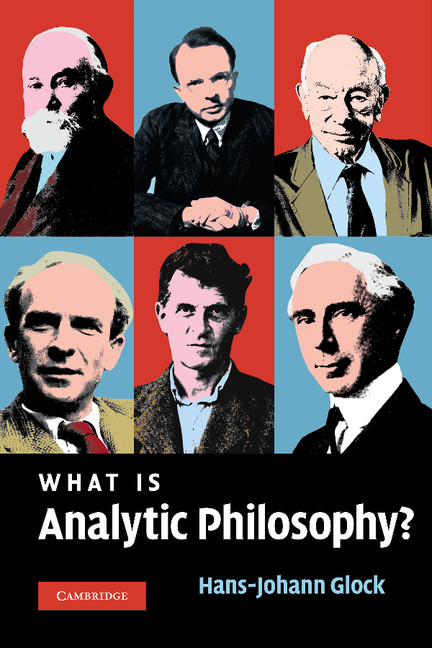
I like the way Ryle apparently analogised philosophy to cartography.*

'Similarly, Ryle advocated that philosophy should chart the 'logical geography' of our concepts. In The Concept of Mind he argued that the Cartesian dualism of mind and body results from 'category-mistakes': it treats mental concepts which signify behavioural dispositions as if they referred to processes that are just like physical ones, only more ethereal. Ryle rejected Wittgenstein's therapeutic image according to which 'the philosopher treats a question like a disease' (1953: §255). Yet he accepted that philosophy is a meta-discipline which does not 'talk sense with concepts' but tries to 'talk sense about concepts' (1949: 9-10). The paradox of analysis disappears since the task is not to provide novel information about a realm extrinsic to us. According to Wittgenstein, philosophy reminds us of rules that we have mastered in practice but which mislead us in the course of philosophical reflections. According to Ryle, it takes us from the knowledge how to use words to an explicit knowledge that they are used according to certain rules. Either way, analysis is not a trivial pursuit, because the explanation of philosophically interesting concepts is complex and rich, especially when it places these concepts in their diverse contexts (everyday, scientific, philosophical).' p.43.
Hans-Johann Glock. 2008. What is analytic philosophy? Chapter 2. Historical survey. pp.21-60. CUP. Pb. 
https://www.cambridge.org/us/universitypress/subjects/philosophy/philosophy-general-interest/what-analytic-philosophy

* 'Ryle analogises philosophy to cartography. Competent speakers of a language, Ryle believes, are to a philosopher what ordinary villagers are to a mapmaker: the ordinary villager has a competent grasp of his village, and is familiar with its inhabitants and geography. But when asked to interpret a map of that knowledge, the villager will have difficulty until he is able to translate his practical knowledge into universal cartographic terms. The villager thinks of the village in personal and practical terms, while the mapmaker thinks of the village in neutral, public, cartographic terms.[20]: 440–2 '. https://en.wikipedia.org/wiki/Gilbert_Ryle

I've wondered about 'cogeography' - combining cognition and geography, even care cartography. There is also of course psycho-politics, geo-psychiatry and psycho-geography ...

Hopefully a more current text would be more diverse.^

Thursday, June 26, 2025

You say Hodges' model is a map. What's the scale?

"That's another thing we've learned from your Nation," said Mein Herr, "map-making. But we've carried it much further than you. What do you consider the largest map that would be really useful?"

"About six inches to the mile."

""Only six inches!"exclaimed Mein Herr. "We very soon got to six yards to the mile. Then we tried a hundred yards to the mile. And then came the grandest idea of all! We actually made a map of the country, on the scale of a mile to the mile!"

"Have you used it much?" I enquired.

"It has never been spread out, yet," said Mein Herr: "the farmers objected: they said it would cover the whole country, and shut out the sunlight! So we now use the country itself, as its own map, and I assure you it does nearly as well."
        Lewis Carroll - The Complete Illustrated Works. Gramercy Books, New York (1982). Page 727.


My source
Text: https://people.duke.edu/~ng46/topics/lewis-carroll.htm

Plus a letter in FTWeekend: by Prof. R.T. Harrison. 'Country as its own map served as well' https://www.ft.com/content/2ad8ea16-d27d-11e1-abe7-00144feabdc0 1 Sept. 2012.

Tuesday, April 01, 2025

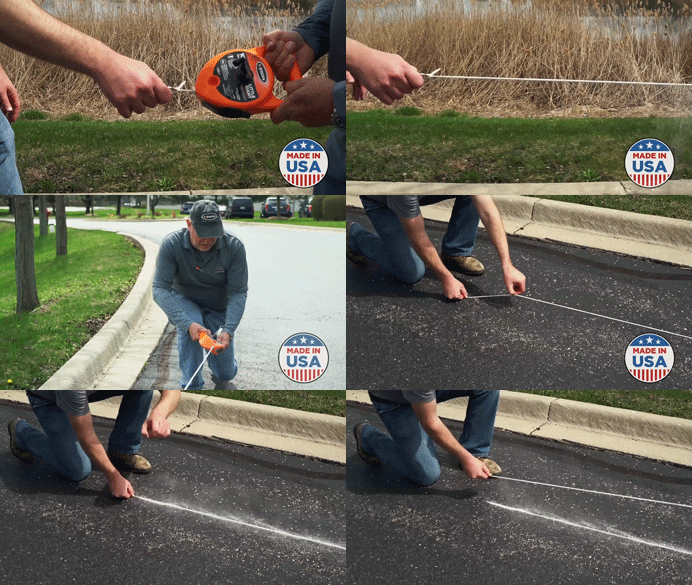
c/o A.Word.A.Day: Hodges' model - Walk the (dual!) chalk line

A.Word.A.Day

with Anu Garg

'Having a tool is like having a superpower in your pocket. With the right gadget, you can do much more than what arms and legs alone allow -- build a magnificent pyramid, lift water from deep below, or even predict whether you’ll need an umbrella tomorrow.


And not all tools need wires, batteries, or instruction manuals. Sometimes, a simple device can save labor -- a lever, a pulley, a piece of string dusted with chalk -- can save hours of sweat and toil.'

chalk line


Tuesday, August 27, 2024

(ii) Hodges' model? Ah! You mean the naïve conceptual framework that ...

... thinks it's a theory!

Apparently, the support of computers, through computer proof assistants, to help test and generate proofs in mathematics is creating confusion for mathematicians. 

"When you see “2 + 2 = 4”, what does “=” mean? It turns out that’s a complicated question, because mathematicians can’t agree on the definition of what makes two things equal. ... 

It was the late 19th century when things began to change, with the development of set theory, which provides the logical foundations for most modern mathematics.

To understand why, take the sets {1, 2, 3} and {a, b, c}. Clearly, the elements of each set are different, so the sets aren't equal. But there are also ways of mapping between the two sets, by identifying each letter with a number. Mathematicians call this an isomorphism. In this case, there are multiple isomorphisms because you have a choice of which number to assign to each letter, but in many cases, there is only one clear choice, called the canonical isomorphism. ...

Because a canonical isomorphism of two sets is the only possible way to link them, many mathematicians now take this to mean they are equal, even though it isn't technically the same concept of equality that most of us are used to."


Does this create an 'opening' for others? Others, whose commute also falls between the cold-logic of the hard sciences, and the fuzzy fields of the humanities? Others who may find the threshold as daunting, as it is (truly!?) tantalising.

Alex Wilkins, Confusion over what 'equals’ means. New Scientist, 262: 3495: 15 June 2024. pp.10-11.

Many thanks to Alex Wilkins for a pdf copy.

Sunday, August 25, 2024

Hodges' model? Ah! You mean the naïve conceptual framework that ...

... thinks it's a theory! (i)

Yes, I suppose it is naïve, now you mention it. It's naïve in a number of ways:

  1. The assumed state of students - new learners; although of course, in healthcare and other professions for many years mature students - far from naïve - can make up a notable proportion;
  2. When a patient assessment begins, especially upon initial (and first) referral, the data gathering, our knowledge should then be assumed to be naïve.
  3. The quest for a theoretical underpinning of Hodges' model, may display naïve associations between concepts that are misplaced, misunderstood and wholly inappropriate.
Worth noting in #1, that policy-makers and recruitment specialist hope to increase the number of mature entrants, given demographic pressures.

If you consider the way nursing as a profession has received 'nursing theory', or in a similar vein, consider the status of nursing theory, and models of care in nurse (and healthcare) curricula today, then the approach is pragmatically naïve? From the 1970's -

Vinner, S. (1976). The Naive Concept of Definition in Mathematics. Educational Studies in Mathematics, 7(4), 413–429. http://www.jstor.org/stable/3481947

Vinner writes:

"As a matter of fact, all of us start to deal with definitions at a very young age when we start to leam our mother tongue. At this stage, various types of definition occur and the subject is too complicated to be dealt with here. After several years, especially at school, one type of definition becomes dominant; the lexical definition. In a lexical definition, the meaning of a certain word (or words) is explained by means of other words (we shall deal here only with the case in which the word and its definition are at the same language). This type of definition generally occurs in mono-lingual dictionaries." p.425.

"The sentence: 'A rectangle is a quadrangle that has four right angles' does not have in it any underlying assumptions about the role of definition in mathematics. It can be interpreted in any of the following three ways:
  1. We (math teachers and math students) hereby agree that instead of saying, "a quadrangle that has four right angles" we will say: "a rectangle" (The formalistic approach).
  2. In the mathematical community the meaning of the word rectangle is a quadrangle that has four right angles (The lexical approach from the expert's point of view).
  3. The object denoted by the word 'rectangle' is a quadrangle that has four right angles (The lexical approach from the naive standpoint). 
Thus, not adding anything to definitions like the above we let the student choose his own interpretation out of the three mentioned (or even possibly more) interpretations. We claim that in most cases the student's choice will be the third one." pp.427-428.

Does the diaeresis here point to forms of parity of esteem, oppositions, polarities, dichotomy?

Friday, May 10, 2024

Towards isomorphisms in Hodges' model

"The concept that best captures the process of homogenization is isomorphism. In Hawley's (1968) description, isomorphism is a constraining process that forces one unit in a population to resemble other units that face the same set of environmental conditions. At the population level, such an approach suggests that organizational characteristics are modified in the direction of increasing comparability with environmental characteristics; the number of organizations in a population is a function of environmental carrying capacity; and the diversity of organizational forms is isomorphic to environmental diversity." p.149.

"We identify three mechanisms through which institutional isomorphic change occurs, each with its own antecedents: 1) coercive isomorphism that stems from political influence and the problem of legitimacy; 2) mimetic isomorphism resulting from standard responses to uncertainty; and 3) normative isomorphism, associated with professionalization. This typology is an analytic one: the types are not always empirically distinct." p.150.

DiMaggio, P. J., & Powell, W. W. (1983). The Iron Cage Revisited: Institutional Isomorphism and Collective Rationality in Organizational Fields. American Sociological Review, 48(2), 147–160. https://doi.org/10.2307/2095101

"Some of them went further, using approaches based in political economy, world systems theory, and theories of neocolonialism and underdevelopment to show that economic imperatives on a global scale were a major force in shaping education worldwide. Others interpreted such change through an institutional lens, arguing that the convergence toward accepted models of modernity has resulted in a process of educational isomorphism within and across countries." p.1.

Carnoy, M., & Rhoten, D. (2002). What Does Globalization Mean for Educational Change? A Comparative Approach. Comparative Education Review, 46(1), 1–9. https://doi.org/10.1086/324053

"The movement is inspired by Rudolf Virchow (1821-1902), who coined the term zoonosis, arguing that there should be no dividing lines between animal and human medicine. This position has been gathering momentum in the last fifteen years. The One Health Initiative is a rather daring interdisciplinary alliance that unites physicians, osteopaths, veterinarians, dentists, nurses, and other scientific-health and environmentally related disciplines, on the basis of a simple hypothesis, which is the isomorphism of structures between humans and animals in immunology, bacteriology, and vaccine developments. This means that humans are both exposed and vulnerable to new diseases, like bird flu and other epidemics, which they share with animal species." p.16.

Rosi Braidotti. (2015). Yes, There Is No Crisis. Working Towards the Posthumanities. DiGeSt. Journal of Diversity and Gender Studies, 2(1–2), 9–20. https://doi.org/10.11116/jdivegendstud.2.1-2.0009

"The chapter begins by developing the logic of strategic voting in a single- member district system, thus won by whichever party or candidate gets the most votes (first past the post, or FPTP). This represents the simplest and easiest case for the logic of strategic voting, and similarities (and sometimes theoretical isomorphism) exist between strategic voting— sometimes called instrumental voting (or voting as an investment)— and expected- utility maximization." p.3.

Aldrich, J. H., Blais, A., & Stephenson, L. B. (2018). Strategic Voting and Political Institutions. In J. H. Aldrich, A. Blais, & L. B. Stephenson (Eds.), The Many Faces of Strategic Voting: Tactical Behavior in Electoral Systems Around the World (pp. 1–27). University of Michigan Press. http://www.jstor.org/stable/j.ctvh4zhzr.4 

"Let us take a closer look at this important topic: what might be termed the isomorphism between the realm of care and the realm of perception/oikeiôsis-allotriôsis." p.57.

Joaquim Braga & Mário Santiago de Carvalho (eds.) (2021). Philosophy of Care - New Approaches to Vulnerability, Otherness and Therapy. Cham: Springer Verlag.
https://link.springer.com/book/10.1007/978-3-030-75478-5

- will add here ... suggestions welcome h2cmng AT yahoo.co.uk

Tuesday, February 06, 2024

'Other exhausted words' ... ?

"A writer I admire expresses in a few words his disdain for plausible but empty political language, beginning with one good example. "The word, Fascism," he writes, "has now no meaning insofar as it signifies 'something not desirable.'" He adds other exhausted words, including democracy, freedom and patriotic - convenient terms for establishing righteousness, easily melting into self-righteousness.

The writer is George Orwell, in his celebrated 1946 essay "Politics and the English Language." Orwell contended that language had become corrupt and debased in his time, but the survival of his examples into the present contradicts him, suggesting that not only the problem but the very examples may be timeless."

Plain, direct language remains rare, desirable - and risky in ways that authority, even more than the rest of us, tries to avoid." ...

... "Dilution of meaning is familiar in a way that can make us feel comfortable, or even worse, comfortably righteous."

Individual
   |
      INTERPERSONAL    :     SCIENCES               
HUMANISTIC  --------------------------------------  MECHANISTIC      
 SOCIOLOGY  :   POLITICAL 
|
Group
concept

critical thinking

parity


framework

evidence-based

transformation


holistic care

integrated care

person-centred


outcomes

prevention

sustainable health care


n.b. With some words more exhausted than others; while some have not, as yet, been fully exercised.

Pinsky, R. When language fails us and the moment. The New York Times International Edition. January 30, 2024, p.12.

Previously: 

Wednesday, February 15, 2023

c/o Joan Didion 1934-2021: "Let Me Tell You What I Mean"

"All I know about grammar is its infinite power. To shift the structure of a sentence alters the meaning of that sentence, as definitely and inflexibly as the position of a camera alters the meaning of the object photographed. Many people know about camera angles now, but not so many know about sentences. The arrangement of the words matters, and the arrangement you want can be found in the picture in your mind. The picture dictates the arrangement. The picture dictates whether this will be a sentence with or without clauses, a sentence that ends hard or a dyingfall sentence, long or short, active or passive. The picture tells you how to arrange the words and the arrangement of the words tells you, or tells me, what's going on in the picture. Nota bone:


It tells you.

You don't tell it."

 INDIVIDUAL
|
 INTERPERSONAL    :     SCIENCES               
HUMANISTIC --------------------------------------  MECHANISTIC   
SOCIOLOGY  :   POLITICAL 
|
GROUP


"Let me show you what I mean by pictures in the mind. I began “Play It as It Lays” just as I have begun each of my novels, with no notion of “character” or “plot” or even “incident.” I had only two pictures in my mind, more about which later, and a technical intention, which was to write a novel so elliptical and fast that it would be over before you noticed it, a novel so fast that it would scarcely exist on the page at all. About the pictures: the first was of white space. Empty space."...


My source: BBC Radio 4


Episode 4

Book cover: goodreads.com

Text source:
New York Times archive -
Why I Write,
https://www.nytimes.com/1976/12/05/archives/why-i-write-why-i-write.html

Previously on W2tQ: Book: "The Empty Space"

Thursday, July 28, 2022

Seeds in 'architecture' iii

Prof. Younés describes 'three essential dualities': 

  • IMAGE and WORD 
  • TYPE and MODEL
  • IMITATION and INVENTION

IMAGE and WORD 

Nursing has its historical images, that are continually presented, the lamp, hands imbued with care and support and others. The attraction to Hodges' model was through its similarity to mind-mapping, but with offering an foundational structure for reflection and critique (learning). So image has been there from the start.

Younés writes: "Within the dialectic of the visible (objects apprehended by the senses) and the invisible (ideas or forms apprehended by the mind), the image acts as a symbol when it supports the visibility of an idea." ... "Forms can be seen as structural potentials ..." p.238.

Younés classifies images (p.241), or the artistically factual through three divisions:

  1. visual images (that would include icons and interface features)
  2. mental images
  3. verbal images (including metaphors and descriptions).

 "... the mind constructs a world within a world, and then reflects upon its own activity, as well as its own aesthetic appreciation of such activity."
I must stress the Younés context is architecture (and philosophy), but here extending to meaning I'm reminded of the way Hodges' model can span the arts and sciences, and original influences on why this model stood out for me through its facility for mind-mapping.

TYPE and MODEL 

 Here (p.242) Younés returns, not just to the origin, but the concept of origin through Form, the word and the type. Searching for universally shared purposes, within the permanences of human experience  this is health and social care too.

Taking in data, information, knowledge from assessment and other activities, this is usually contextualised - associated with a care domain. A return to the origin (nexus) of Hodges' model, the center is vital to retain balance and provide assurance in what we are doing, or not, and why.

"The architect imitates things as they have essential significance, but he or she does not copy any particular thing. This enables the layered transformation of natural models, without which the column would have always remained a tree. The form of the imitation is always different from that of the model. The roof is different from the forest's canopy. It is here that the pleasure of invention and the evaluation of the new enter, for it is within the recognized distance between the forest's canopy and the roof, that much of art occurs." p.244.
How times change in two decades. So many seek a roof, with architects having a recognized role in providing solutions post-natural disaster and political displacement of people. Not just homelessness, but homes that can cope, adjust to climate change. COVID has reminded us of the rejuvenating properties of nature, of the forest canopy, even that afforded by city centre gardens. 

We now see a roof not merely in physical terms, but social. As the night skies brighten we try to secure the canopy of the stars.

IMITATION and INVENTION 

Have we forgotten the contribution of positive role-models in learning? Imitation is the sincerest form of flattery and this throws up the constant educational dilemma of the theory - practice gap. Should we be exposed to practice without the guiding mentor represented in theory - that is also evidence-based?

There is an interesting exploration of SCOPE, DISCOURSE and NATURE: On Scope

"Thus a theory that is systemic aims at a certain level of completeness for it establishes the internal organization of architecture as a discipline, and it explains its external relations to other arts, to techniques, to social factors. Put differently, the interior individual realm concerns the intellectual freedom, the inner reflection of the architect-maker. The exterior individual pertains to the thoughts resulting from one architect reflecting upon another architect's work, as well as the individual architect's reflections on the suitability of her or his building to a context. The interior collective bears upon the conscious or unconscious content of culture which thrive within the images of of operative myths that inform architectural production. The exterior collective designates that commonly built sense regarding the suitability of architecture (decorum) within its milieu par excellence: the city. The above concerns the scope of an architectural theoretical system, on the urban, architectural, aesthetic, social, and practical levels." p.245-246.

INDIVIDUAL
|
 INTERPERSONAL    :     SCIENCES               
HUMANISTIC --------------------------------------  MECHANISTIC      
SOCIOLOGY  :   POLITICAL 
|
GROUP
interior individualexterior individual
interior collective
exterior collective


I started these three posts noting the addition of 'architecture' to titles, concepts, and 'stretching' disciplines. Also guilty here; in mitigation, I'm aware of how in the mid-late 1970s technical drawing as taught was to change radically in the digital wave.

Hodges' model provides a drawing board, with analogue and digital potential.

I will continue to draw upon the (inspirational) discipline of architecture, it informs and sustains thought, construction, meanings, language use, and effort here.

There is much more to glean from this paper, so I hope to revisit it in the future - with further annotations on my copy.

Over the years I have noted related items in the press (yes, I saved the following):

Designs for life: architecture in the disaster zone, FT Weekend.

and read - A Bed for the Night: Humanitarianism in Crisis

See also: 

Seeds in 'architecture' i 

Seeds in 'architecture' ii

Younés, Samir. “Constructing Architectural Theory.” Philosophy 78, no. 304 (2003): 233–53. http://www.jstor.org/stable/3752046.
Monday, June 06, 2022

#HelloMyNameIs


INDIVIDUAL
|
 INTERPERSONAL    :     SCIENCES               
HUMANISTIC --------------------------------------  MECHANISTIC      
SOCIOLOGY  :   POLITICAL 
|
GROUP

Peter

Geography

Geo-Political

Jones

‘Türkiye’


My source: numerous.https://twitter.com/imathematicians/status/1530724466073952261?s=20&t=eF1XRD9HbkSJ2XWWbIk2qQ

Thursday, August 12, 2021

Post Tokyo Olympics 2021: Yes 'Shun' fits, Gaia knows ...

MOST individual
   patient / client  PERSON student / practitioner
|

INTERPERSONAL : SCIENCES
MOST humanistic ------------------------------------- MOST mechanistic  
SOCIOLOGY : POLITICAL
|
society - community of practice - profession
 MOST group


"There's this wonderful Japanese word shun, which is when something is full of its life force," says Pearson. "In that peak, when the meadows are flourishing, everything is reaching for the solstice, and you can feel the energy pouring from it. It's quite overwhelming - you're aware of this special time slipping through your fingers and you can't take it all in because it's so alive."p.36.

On second reading, maybe not? And, not for the fact that the next solstice is mid-winter here in the Northern hemisphere.

'Glances'

Visiting McDonalds for a coffee (only) at the end of 2020, I noticed one of the merchandising screens was displaying an error message. The message referred to glances, which I read as the content that changes after several seconds in succession. I meant to take a photo for a post such as this, and back in the area, I'll take my chance if spied again. [Success!]  I did speak to a member of staff but they couldn't help. The take away (you could say!) is of a 'glance' as the content of a single care domain. This isn't very accessible, emphasizing the visual nature of Hodges' model, but I'm kicking ideas around...

Media - marketing screen

Reading the above I thought of 'holistic bandwidth' in Hodges' model. If the model was fully populated with care concepts and, no doubt, some annotations, key relationships then I thought shun might be appropriate. By holistic bandwidth I mean the semantic distance between care concepts. This is what 'MOST' suggests above. Beyond these concepts we are in the realm of the spiritual: do they join up in some way? Obviously, 'complete' in fulfilling the purpose of assessment, care planning, intervention, evaluation whether clinical or learning activity. But then shun as a celebration of nature seems inappropriate in many clinical contexts, especially palliative and end-of-life care. Yes, time for second thoughts here too.

The role of nature in healthcare, the value of green spaces, for recovery or a peaceful ending is well documented. Then again, the shun as experienced in 2021 by a person, do they really see how it is diminished, how it has changed, is changing? The point was made recently, of the different experiences of the Seasons, the weather, now across generations: diminishing 'norms' birds, bees ...?

Perhaps, after all, shun can signify a complete care matrix. If we carry on as we are then Nature will act, is acting now. Gaia knows.

Coulson, C. Double Act, Work, rest and weed: Dan Pearson and his partner Huw Morgan share their garden vision, HTSI, FTWeekend, April 2021,  pp.36-39. 

https://www.ft.com/content/74061538-d1ef-4922-a821-09ed5484e7ec

Photos added 8/9/21.


Thursday, April 08, 2021

"Public Domain" - The Vaudeville Theatre

individual
|
INTERPERSONAL : SCIENCES
humanistic ----------------------------------------------- mechanistic
SOCIOLOGY : POLITICAL
|
group


Public Domain is a dark, funny, verbatim musical about the internet: Those who own it; those who live in it; and YOU!

Following an acclaimed digital debut at Southwark Playhouse this thrilling, new British musical, composed entirely from the real-life words of YouTube vloggers, Instagram influencers, Facebook’s tech giants, and everyday internet users now has its live world premiere in the West End.

Written and performed by the hugely talented Francesca Forristal (Oddball) and Jordan Paul Clarke (Showstopper! The Improvised Musical), this blackly comic musical follows two teenage influencers; Millie (sporty spice, health guru, buddha bowls – millennial) and Z (GCSEs existential dread, swag – generation Z), as well as featuring exclusive ‘footage’ of inside Mark Zuckerberg and wife Priscilla Chan’s family home…

You’re gonna get their honest, true selves… with some serious bass, obvs. Authentic, right?

Remember, it’s like ‘Black Mirror’ but real and set to music.

The Vaudeville Theatre operates strictly under the government COVID-19 guidelines. For further information check our COVID-19 secure information page. All bookings in a party must only be from the same household or the legally defined support bubble.

Monday, August 03, 2020

Call for papers - Rivista Italiana di Filosofia del Linguaggio - Rhetoric and Health

Call for papers - Rivista Italiana di Filosofia del Linguaggio www.rifl.unical.it

Vol. 15, N. 1/2021 Rhetoric and health

Edited by Maria Grazia Rossi

Deadline: 20.01.2021

Words can act as a pharmakon, becoming a remedy or a poison. Considering both theoretical tenets and empirical findings, we have convincing evidence on the power of language and words in changing minds and fostering behavioural change.

In the context of health, it has been underlined how the quality of communication affect (clinical) outcomes, at the individual level (on patients) and the collective or societal level (on citizens). During the current COVID-19 pandemic, it has become even more clear that such communication effect is indirect and mediated by factors such as understanding, motivation, social assistance, trust in the system, etc. Words that are well-spoken but also, obviously, well understood can have a strong impact on the quality of our lives, concerning the clinical, emotional and social spheres. This is why the proper and effective use of words should be considered as a common ethical responsibility: it is an ethical responsibility for healthcare providers that directly take care of patients, but it is also a responsibility of public and private institutions working to promote behaviours favouring the adoption of a healthier life and the building of healthier societies, respectful of other people and more environmentally friendly. What happened from a communicative point of view to justify the need to activate a state of emergency and maintain lockdown restrictions is exemplary in this respect, also to discuss the conflict between values that is pervasive in our complex and interconnected societies. Even beyond the pandemic, many examples can be mentioned to discuss the importance of both the effectiveness and quality of communication. Take as examples social campaigns and/or advertisements on health issues related to cases such as the public debate on vaccination or antibiotic resistance, the social campaigns to combat pollution or against smoking in public spaces.

However, it is not obvious to find a consensual framework to define what counts as communication of quality, even if rhetoricians investigated heavily on this issue. Not necessarily a successful communication is also desirable from an ethical perspective. Obtaining persuasion – to be able to change attitudes and/or behaviours, it is not necessarily equivalent to do it in an ethically way. For example, implicit persuasion strategies often (but not always) can be described in terms of manipulation tools attempting to manipulate people and to change their habits. Again, this applies at the individual level within the interactions between patients and healthcare providers, with therapeutic recommendations described as genuine persuasive acts. At the collective level, it also applies to public communication, including the communication made on social networks, where fake news and misinformation spread even more quickly.

The links between rhetoric and health can be therefore analysed from two different points of view. From a linguistic point of view, the main problem is to figure out which communicative strategies are effective to persuade patients (and citizens) in changing a given behaviour and/or accepting the treatment more appropriate to a specific medical condition. From an ethical point of view, the main problem is to figure out which effective communicative strategies are legitimate, meaning they respect values defining both the patient (citizen) agenda and the doctor (political/health system) agenda. The discussions concerning the frameworks of value-based medicine and patient-centered medicine fit in this context, as well as fall in this debate the current attention given to the frameworks of narrative medicine and persuasive technology (applied to telemedicine, mobile apps, social networks, etc.).

Vol. 15, N. 1/2021 of RIFL expects to explore the links between rhetoric and health, accepting papers aim at considering the role of communication in the context of health, and papers considering persuasion from an ethical point of view – at the individual level (between patients and providers) and the collective/societal one (between institutions and citizens, between media and citizens).

Papers should be theoretical or empirical. All fields will be considered (Philosophy of Language, Classic studies, Literary studies, Linguistics, Psychology, etc.) if they are relevant to discuss the persuasive and/or the ethical dimension of communication in the context of health. Papers exploring the following areas are very welcome:

  • Words and language as pharmakon
  • Communicating science, communicating the COVID-19 pandemic
  • Doctor-patient communication
  • Persuasion, argumentation and manipulation in the context of health
  • Ethic of the medical discourse and ethics for health
  • Ethical relevance and effectiveness of narrative medicine
  • Shared decision-making between patients and providers
  • Social campaigns and advertisement for health
  • Persuasive technology and health
  • Social networks and seeking information on the web
  • Value-based medicine
  • Patient-based medicine
  • Public opinion and health
  • Visual persuasion and the role of images in the context of health
  • Linguistic strategies developed for healthcare providers
  • Emotions and interpersonal relations in the context of health
  • Language and placebo effect

We call for articles in Italian, English and Portuguese. All manuscripts must be accompanied by an abstract (max 250 words), a title and 5 keywords in English.

The manuscript must be prepared using the journal template Download template. All submissions must be prepared by the author for anonymous evaluation. The name, affiliation to an institution and title of the contribution should be indicated in a file different from that which contains the text. The contribution must be sent in electronic format .doc or .rtf to segreteria.rifl AT gmail.com.

Instructions for authors:

Maximum contribution length:

40000 characters (including spaces) for articles (including bibliography and endnotes).

Deadline 20.01.2021

Publication: June 2021

CFP Full text: http://rifl.unical.it/index.php/rifl/announcement/view/23

My source:

Philos-L "The Liverpool List" is run by the Department of Philosophy, University of Liverpool https://www.liverpool.ac.uk/philosophy/philos-l/ Messages to the list are archived at http://listserv.liv.ac.uk/archives/philos-l.html. Recent posts can also be read in a Facebook group: https://www.facebook.com/PhilosL/ Follow the list on Twitter @PhilosL. Follow the Department of Philosophy @LiverpoolPhilos

Saturday, April 04, 2020

VerbAtlas 1.0 - Semantic Role Labeling and beyond! c/o Roberto Navigli

VerbAtlas 1.0 - Semantic Role Labeling and beyond!

We are proud to announce that VerbAtlas 1.0 (http://verbatlas.org) is finally available for download at http://verbatlas.org/download. Developed in the Sapienza NLP group (http://nlp.uniroma1.it), the multilingual Natural Language Processing research team at the Sapienza University of Rome, VerbAtlas is a novel large-scale manually-crafted semantic resource for wide-coverage, intelligible and scalable Semantic Role Labeling. The goal of VerbAtlas is to manually cluster WordNet synsets that share similar semantics into sets of semantically-coherent frames. The main features are:
  • 466 semantically-coherent frames using 26 cross-frame VerbNet-inspired semantic roles for their argument structure.
  • Available both for download and via RESTful API.
  • Full coverage of WordNet 3.0 verb synsets (13,000+).
  • Complete linkage to BabelNet 4.0, which supports 280+ languages (new version to come later this year!).
  • Manual mapping to PropBank of all CoNLL-2009 and CoNLL-2012 dataset occurrences (5000+ mappings).
  • Selectional preferences: the superconcept most probably associated with a semantic role in a frame (e.g. food for the patient role of the EAT frame).
  • Default/shadow arguments: arguments logically implied or already incorporated into a verb.
  • Implicit arguments: arguments that are implicit in the argument structure of a verb.
And much more! Please check out our EMNLP 2019 paper:

A. Di Fabio, S. Conia, R. Navigli “VerbAtlas: a Novel Large-Scale Verbal Semantic Resource and Its Application to Semantic Role Labeling”, EMNLP-IJCNLP 2019, pp. 627-637

and http://verbatlas.org for more details!

A state-of-the-art span-based SRL system which uses VerbAtlas and PropBank jointly is also available from the same website (just type a sentence!).

VerbAtlas is an output of the MOUSSE ERC Consolidator Grant n. 726487 and the ELEXIS project no.731015. Babelscape proudly developed the online interface and API, provides the infrastructure for maintaining the service and works on the improvement of the resource. 

Enjoy!
The Sapienza NLP group
=====================================
Roberto Navigli
Dipartimento di Informatica
Sapienza University of Rome
Viale Regina Elena 295b (building G, second floor)
00161 Roma Italy
Home Page: http://wwwusers.di.uniroma1.it/~navigli
Sapienza NLP Group: http://nlp.uniroma1.it
My Source:
The Semantic-web list @w3.org


What are / should be the current core verbs allocated to each of the care (knowledge) domains of Hodges' model?


individual
|
INTERPERSONAL : SCIENCES
humanistic ----------------------------------------------- mechanistic
SOCIOLOGY : POLITICAL
|
group - population

*personalise


scientify


socialise

 politicise
*(intra- inter-)personalise?


From above introduction to VerbAtlas:

"A state-of-the-art span-based SRL system which uses VerbAtlas and PropBank jointly is also available from the same website (just type a sentence!)."

Sentence: "Nurses wear certified personal protective equipment to care for patients with Coronavirus." in VerbAtlas 1.0


See also:


Friday, October 11, 2019

Book: "Poems from the Edge of Extinction"

 individual
|
INTERPERSONAL : SCIENCES
humanistic ----------------------------------------------- mechanistic
SOCIOLOGY : POLITICAL
|
group - population


"One language is falling silent every two weeks. Half of the 7,000 languages spoken in the world today will be lost by the end of this century".

Poems from the Edge of Extinction


Chris McCabe

My source:
Crawford, M. (2019) Poetry, Books, FT Weekend Life&Arts, 21-22 Sepember, p.11.

Friday, August 16, 2019

"Finishing It" - Poems No Pills or poems On pills?


individual - self
|
INTERPERSONAL : SCIENCES
humanistic ----------------------------------------------- mechanistic
SOCIOLOGY : POLITICAL
|
group- population

First work as Poet Laureate


Poet


Laureate


Simon Armitage


My sources:
Laureate's poem on a pill aims to tackle cancer, News, The Times, 14 August, 2019, p.14.

Singh, A., A pill with cancer's name on it is Poet Laureate's first work, The Daily Telegraph, 14 August, 2019, p.9.

Image source:
Sutton and Croydon Guardian
https://www.yourlocalguardian.co.uk/news/17835799.poem-paying-tribute-sutton-cancer-research-micro-engraved-onto-tiny-pill/
