Hodges' Model: Welcome to the QUAD: salience

Hodges' model is a conceptual framework to support reflection and critical thinking. Situated, the model can help integrate all disciplines (academic and professional). Amid news items, are posts that illustrate the scope and application of the model. A bibliography and A4 template are provided in the sidebar. Welcome to the QUAD ...

Showing posts with label salience. Show all posts

Monday, August 03, 2026

The Sciences: Points, lines, angles and perspectives on Domains

In Hodges' model the axes are presented - by convention - as perpendicular. From this it follows that the resulting four domains, or quadrants appear as equivalent in terms of the space they each occupy. There are many posts on the blog that present a 2x2 table. When in template form Hodges' model is also a potential corpus, empty apart from its structure, then there must surely be a gross asymmetry in the SCIENCES domain compared with the others, including the SPIRITUAL. Discuss?

#simplicity #complexity #folktheory #humanities #arts #humanistic #emotion #balance

See also: https://hodges-model.blogspot.com/2026/06/h2cm-domains-symmetry.html

Tuesday, March 31, 2026

Global health is ... c/o King & Koski (2020)

Use of the word 'global' in health care is common: from global assessment; global as in a pandemic, as per Covid which for a time closed down most human activity across the world; the global health workforce; and global health crises, that must include the climate crisis and pollution. Universal health coverage, allied with universal healthcare access, refers to (national and aspirational ...) global access to quality health services. 

Above, 'global health' has itself already occurred several times. I've posted about global health on a great many occasions on behalf of other parties.

Defining global health in the context of public health, King and Koski (2020) write:

'We propose the following definition:
global health is public health somewhere else.'

More specifically, they add: 

'Global health as a field is not distinguished by its aspirations, methods of research and practice, intervention strategies or even geographical area per se, but rather by a particular relationship between its practitioners and its recipients: a person engages in global health when they practise public health somewhere—a community, a political entity, a geographical space—that they do not call home.'


To apply Hodges' model to global health, there must be another definition.

King NB, Koski A. Defining global health as public health somewhere else. BMJ Global Health
2020;5:e002172. doi:10.1136/bmjgh-2019-002172

Wednesday, February 18, 2026

Move Over LLMS! AI Legends Yann LeCun and Alex LeBrun Debut AMI Labs' Bold Ambitions for World Models in Healthcare


My source: https://x.com/OffCallDotCom/status/2022708074105242035?s=20

Thursday, March 27, 2025

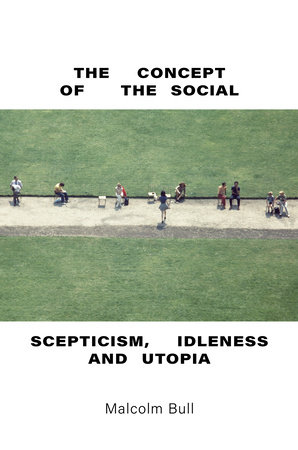
Vectors of the Biopolitical - (Chap. 2) c/o Bull

The Concept of the Social
'From one sentence in Aristotle derive two arresting theoret- ical discourses of the twenty-first century: Michel Foucault's biopolitics, provocatively reformulated by Giorgio Agamben in terms of the relationship between sovereignty and the body, and the capabilities approach developed by Amartya Sen and Martha Nussbaum as a means of evaluating and promoting development, justice and freedom. Both are characterized by deep reflection on the sources of Western political thought, and by urgent engagement with contemporary social and legal problems. Both are in some sense biopolitical in that they are shaped by the interplay of the same Aristotelian categories the human and the animal, politics and nature. But they are on opposite sides of the divide that has opened up in the human sciences since the 1960s, and there currently seems no optic through which they might simultaneously be viewed, no way of integrating or comparing their insights.
 
In part, this reflects a situation in which political debate appears to have fragmented into a multiplicity of single issues. The ancient 'Who will rule?' and the modern 'Who shall have what?' have been supplemented by an array of questions that deal with matters once exclusively cultural, personal or natural. For previous eras, the relative integrity and unmalleability of cultures, bodies and environments rendered such questions redundant. Now they frequently appear unanswerable from within established political traditions, and incommensurable in relation to each other. Within this expanded field, biopolitics and the capabilities approach have unusual salience and potential, for both bundle together issues otherwise assumed to be distinct. If they, in turn, could be coordinated, perhaps we could begin to map the new territory.' p.68.

individual
|
INTERPERSONAL : SCIENCES
humanistic ------------------------------- mechanistic
SOCIOLOGY : POLITICAL
|
group
'Who shall have what?'

nature

human - animal

bio-
culturepolitical

'Who will rule?'


Bull, M. (2021) The Concept of the Social, London: Verso.

Saturday, September 14, 2024

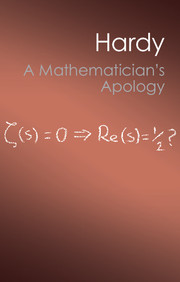
Hardy (1940) A Mathematician's Apology


In Liverpool I came across G.H. Hardy's short book A Mathematician's Apology. At £2.00 - a pristine bargain and a  marvellous read, especially the latter sections.

From being taught and applying Hodges' model in a case study in 1987 through to online work since 1998; I have to ask myself. Do I need to write:

'A Nurse's Apology'?

Aware of Hardy in the history of mathematics, and having read his apology, I'm no Hardy. My antics are a lesson in addition, but this is more 'Laurel and Hardy' - with apologies to comic genius of course. 


By their nature professions seek to maintain, and assure their continuity. A professional body can point to a definable body of theory, practice (curricula), that carries social and political status, if not patronage. There is national agreement that the NHS needs reform; radical reform no-less. The new Labour government is drawing lines to negotiate with the BMA, other professional bodies and unions. Specificity, specialisation is key. In healthcare people have suggested to me that Hodges' model invites genericism. Any suggestion of genericism is to be shunned. There seems an almost allergic reaction such is the threat to professional identity; unless, of course, you are a 'General Nurse', or General Practitioner - GP family doctor). Even Hardy warns:
"'GENERALITY' is an ambiguous and rather dangerous word, and we must be careful not to allow it to dominate our discussion too much." p.105.

This also applies to the quality and solidity of professional agencies and bodies whose role is to provide governance and set standards. The NMC has stumbled? Life and death is made up of details AND big pictures. How do you provide for - balance both? Curricula are another concern. Is the future of mental health nursing guaranteed as a profession? 

https://hodges-model.blogspot.com/2016/08/future-of-mental-health-nurse-training.html

The instrumental potential of Hodges' model is obvious. It invites a checkbox approach. One-to-one clinical encounters and interactions reduced to a tick-box exercise. This reduces any sense of specialist knowledge, training and education needed to assess, plan, deliver and evaluate high quality, effective, sustainable healthcare.

'THE second quality which I demanded in a significant idea was depth, and this is still more difficult to define. It has something to do with difficulty; the deeper? ideas are usually the harder to grasp: but it is not at all the same.' p.109.

Hardy's thoughts (and no doubt similarly expressed by other mathematicians and logicians) can be 'found' in Hodges' model; with an addition. Depth and difficulty rests on the uniqueness of  the 'one'. 

Here, Hardy is comparing between 'real mathematics' and chess:

'A chess problem also has unexpectedness, and a certain economy ; it is essential that the moves should be surprising, and that every piece on the board should play its part. But the aesthetic effect is cumulative. It is essential also (unless the problem is too simple to be really amusing) that the key-move should be followed by a good many variations, each requiring its own individual answer. 'If P-B5 then Kt-R6; if .... then if .... then ...., ....' - the effect would be spoilt if there were not a good many different replies. All this is quite genuine mathematics, and has its merits; but it is just that 'proof by enumeration of cases'  (and of cases which do not, at bottom, differ at all profoundly*) which a real mathematician tends to despise.' p.114.

*I believe it is now regarded as a merit in a problem that there should be many variations of the same type. (footnote)

While Kings, and Queens et al. undoubtedly have their own unique personalities, in healthcare effective clinicians make a concerted effort not to merely enumerate cases. The professional emphasis is (idealistically, professionally, purely and in application to) person-centredness; with the compassion, complexity, cussedness, and (sometimes literal) complications this brings. From 1-1 interaction, the clinical encounter, the therapeutic relationship, and alliance are the reason for practitioners achieving and sustaining intra- and interpersonal communication skills. Our attitudes towards knowledge, what is thoughts affects what we feel individually and collectively. Science should be neutral. It might be concluded that this question is for the philosophers and ethicists to wrestle with. In healthcare ethics are central: 'Do no harm'. Whether the practitioner, theorist, manager, policy maker is a nurse, scientist or mathematician such questions impact upon the person. As they are social, cultural and political. Revisiting Bronowski's Ascent of Man, this question arose in Archive on 4.

'It seems that mathematical ideas are arranged somehow in strata, the ideas in each stratum being linked by a complex of relations both among themselves and with those above and below. The lower the stratum, the deeper (and in general the more difficult) the idea.' p.110.

(my emphasis)

individual
|
INTERPERSONAL : SCIENCES
humanistic ------------------------------- mechanistic
SOCIOLOGY : POLITICAL
|
group

logical & mathematical reasoning
depth of reasoning (memory)
mathematical aptitude
intelligence(s)
pure maths
identity

vector
relations
mathematics
logic
depth of analysis, complexity
Cricket!
pure - applied maths
"1" problem per visit

patient - health practitioner 
relationship
Watching cricket - conversation

reports - outcomes
enumeration of cases


Back-tracking to page 104, Hardy:

'The relations revealed by the proof should be such as connect many different mathematical ideas.'

Our proof is person-centredness, placing the person at the center (in this case - of Hodges' model). The proof can be quantitative and qualitive. There are a great many ideas at work. Critically, the ideas that might be called upon (even improvised) are not all health-related, but can extend beyond to encompass the four care (knowledge) domains of Hodges' model. In healthcare as in Hardy's life the spiritual is encountered. So, the determinants of health are ALL available to us - as required. Well not available as a resource might be, they are available in the hope they will be seen as factors. Hardy would approve I think of the direction of travel, not just as a vector, but a model of multidimensional vectors - reaching for relations.

Hardy, G.H. (1940) A Mathematician's Apology, Cambridge: Canto.
https://www.cambridge.org/core/books/mathematicians-apology/B90D81A8E28674119781863988A3E11B
Saturday, August 24, 2024

"In HIFA - let's save a space to make sense of mountains of data"

Dear All, (HIFA mail list)

While rather expansive in scope not just reaching to the arts but also referencing nature and mountains, the following blog post may be of interest:

"Health & Care results in mountains of data: c/o Burke & Cao 2024"

https://hodges-model.blogspot.com/2024/08/nan-shepherd-.html

While the focus and purposes for HIFA are clear, in practice 'information' (data, facts, knowledge, wisdom) must always be contextualised, situated, and (potentially) justified.

In addition to relying on the sciences, medicine, nursing and healing practices are also characterised as arts.

See also, the digital humanities and more specifically - 'Intima: A Journal of Narrative Medicine' https://www.theintima.org/

There have been many posts about records recently, but of course it what goes into the record that is critical.

Salience, what we pay attention to is key.*

The record is critical if something goes wrong and a professional finds themselves in a Coroner's court, and/or disciplinary hearing. The previous posts also discuss the patient's access to their medical record.

I'm not sure if the point has been made but even before 'health literacy' is taken into account, given access a patient may identify many mistakes/errors within the record on many details including demographics and procedures, treatments, diagnoses applied. (There are studies confirming the same - a benefit of IT systems.)

In mental health service - England the care programme approach (CPA) has ended - been retired. Some argue this has been done 'quietly'.

While the emphasis on documentation since 1990s has been onerous for some practitioners in the need for a 'comprehensive' record, the principles of CPA are well-based in practice: Patients (families) are entitled to - 1. A care assessment 2. A care plan 3. A named care-coordinator - keyworker 4. A review 6 monthly; annually as a minimum

For more than a year 1995.., I worked full and p/t as CPA co-ordinator for Chorley and South Ribble Health Authority; and produced a report highlighting the potential benefits of information technology in data gathering and processing and information reporting. (A conference was also organised with 60+ delegates, and 10 software vendors demonstrating their wares.)

The news drove the development and introduction of CPA during the late 1980s, with often stigmatising headlines for many people affected with mental illness - including psychosis it must be added. Recent events are troubling for society and services now, and in terms of history repeating itself:

"On average over a hundred people in Britain a year are killed by someone with serious mental illness. On the day the NHS is Nottingham is found to have missed opportunities to stop Valdo Calocane killing 3 people we ask why lessons aren’t being learned." 'X' https://x.com/BeckyJohnsonSky/status/1823459379846271002

"Between May 2020 and February 2022, eight risk assessments were completed for Calocane by the trust, which the CQC said appear to have been carried out for each of his admissions to hospital and updated at other times during his care. The regulator said that while some risks were highlighted, other assessments “minimised or omitted key details”. https://careappointments.com/care-news/england/211213/cqc-review-of-nottingham-killers-care-finds-key-risk-details-minimised-or-omitted/

The state of mental health services in the UK is much debated and here too 'information' is critical, especially 'seeing' the person and the nuances of interpersonal communication skills. These are often encountered through non-verbal communication and 'clinical intuition' which must be related to professional experience.

So information must simultaneously be recognised as a mechanistic and humanistic melange of processes, purposes, practices and policies (4P's in Hodges' model).

As highlighted before we can also contrast HIFA's and practitioners efforts to combat the severe implications and risks of 'information disorder'. And yet, also recognise how the arts, innovation and creativity also contribute to interpersonal engagement, therapeutic goals, case formulation, health and other literacies using *metaphor* and *analogies* - as per Nan Shepherd's musings explored in the blog post by -

Burke, R., Cao, E. To Care for a Mountain - What medical practitioners can learn from Nan Shepherd. Oxford Review of Books, Summer 2024, Volume 8, Issue 2. p.14. In association with Stanford. (open access)

Patient, public and practitioner safety is always the aim & objective.

Further reading & notes: https://www.cqc.org.uk/publications/nottinghamshire-healthcare-nhsft-special-review-part2/risk-assessment

Whiting, D., Gulati, G., Geddes, J.R., Dean, K. and Fazel, S. (2024), Violence in schizophrenia: triangulating the evidence on perpetration risk. World Psychiatry, 23: 158-160. https://doi.org/10.1002/wps.21171

*I hope to contribute to a 'philosophy of attention' research project, my contribution will draw on clinical experience above and apply Hodges' model to explore and debate ... 'attention', starting in 2025 to c.2030.

Regards to all, Peter Jones

Wednesday, May 01, 2024

Hodges' model: A tool for Curation

CURATION
"Curation helps solve the problems of today and tomorrow. It's the mass sourcing of the expertise needed to navigate and comprehend the saturated, complex markets* of the twenty-first century." p.166.

Bhaskar also lists (and briefly introduces) the principles of curation:
  • Saving time
  • Freeing cognitive resources
  • Sparing us anxiety
  • Maximising utility
  • Cutting down complexity
  • Finding quality
  • Overcoming information overload
  • Creating contrast 
  • Redefining creativity
  • Channeling attention
  • Providing context
  • Beating overproduction (pp.167-168).

*To markets above, I would add disciplines and professions.

By definition an aide-mémoire should save us time. 

The structure of Hodges' model provides a conceptual scaffold, a substrate affording us cognitive economy.

Through selection (self guided discovery) we are assuring data, information gathering, properly supervised this should spare us anxiety.

We are trying to ensure the effective use of our time, and efficiently zero-in on the concepts that are salient.

By reducing complexity, we increase the relevance and value of what is noted, recorded, acted upon. Data, facts, observations that are not redundant can be dismissed.

Contrast is co-confirmed by using innate oppositions, polarities and dichotomies with attention on the other and the middle.

When needed, Hodges' model can explode subject headings, concepts assisting exploration and creativity, potentially assisting at a transdisciplinary level.

Context rationalisation by testing and filtering a situation, helps to focus attention.

Duplication and repetition do not foster sustainable services, but there should always be scope for verification and person-centredness.
"As the eighteenth-century English painter Joshua Reynolds put it, 'Simplicity is an exact medium between too little and too much.' Curation helps ensure that exact medium." p.159. 

Bhaskar. M. (2016) Curation: The power of selection in a world of excess. London: Piatkus.

Book image: Waterstones.

See also: Is Hodges' model a selection machine?

Wednesday, February 28, 2024

HIFA Discussion: Alcohol Use Disorders - Do people understand the harms of alcohol?

Dear All (with further editing since posting)

The discussion, points, angles, questions ... are coming thick and fast it is difficult to keep up.

Many thanks for the summaries; and of course the discussion which archived also acts as a resource - repository:

https://www.hifa.org/news/hifa-announces-deep-dive-discussion-alcohol-use-disorders-starts-5-february-2024

I wonder whether the question: 
"Do people understand the harms of alcohol?" must always be placed in context?
It is radically different when asked of the tee-total, dry, safe drinker; and someone (still) actually in their alcohol drinking?

It occurs to me that alcohol, even more so than 'other' substance misuse (heroin...) represents what must be *the* contradiction, paradox in healthcare - except the tragic loss that is suicide.

Contrast substance misuse inc. alcohol, with 'help-seeking' and 'The Sick role'

https://www.england.nhs.uk/blog/ed-mitchell-2/

Plus, the (medical) sociology of the decision to consult/refer, and how in mental health (UK), the mental capacity act is apparently being misapplied ('policy-drift'?**):

https://www.lawsociety.org.uk/topics/blogs/are-mental-health-and-capacity-laws-at-risk-of-being-toxic

https://www.communitycare.co.uk/2017/08/23/flawed-use-mental-capacity-act-key-theme-safeguarding-adults-reviews-report-finds/

Individual

   |
      INTERPERSONAL    :     SCIENCES               
HUMANISTIC  --------------------------------------  MECHANISTIC      
 SOCIOLOGY  :   POLITICAL 
|
Group

continental drift

policy drift?


Previously, I highlighted how as a Community Psychiatric Nurse 1985-1995 (adult) .. if a patient/client was not working to control/reduce their alcohol consumption they may be 'counselled' re a pending discharge and referral back to their GP - family physician. In supervision with the team's manager they would want to know what is 'happening'. It being important not to create (social) dependency, or worse support someone in their alcohol misuse.

There was a sense, still is(?) that in substance misuse (across forms) - the individual has to reach 'rock-bottom', literally the 'gutter' that is the point they decide (really?)** to live, or carry on to suffer irreversible brain damage, or premature death. Regards the 'brain damage' it was a struggle for 45-60 minutes given the impact upon short-term memory, what time, .... is it indeed? When the patient was not living alone, how did the relative, family cope?

Is having to reach the gutter, the bottom, a trope/myth? In psychosis rather than assume the patient is beyond being reached prior to being medicated there are psycho-social interventions that can be commenced: being available / with. Here though this is usually 'first episode'. There is no analogue here, unless first admission to an in-patient unit is taken as a golden opportunity? But this also depends on its nature (funding, staffing - expertise), a general adult mental health ward, or specialist unit.

https://www.imdb.com/title/tt0048347/

What is the current strategy?

In terms of 'HIFA' - and the person that counts**, not only do they not have the 'information'; they do not have the EXISTENTIAL INFORMATION as it relates to them: 'Health Information for YOU'!

Again in Hodges' model we can contrast the dichotomy/polarisation of INDIVIDUAL :: GROUP.

The model's being situated; and able to encompass data, information, knowledge (facts, for example, and their delivery) - wisdom (Multi-contextual / transdisciplinary..).

I admire people who work in these services (learning disability and palliative care); as they must be severely tested as they retain an ability - the humanity - to 'see' the person whatever the patient's situation with their lack of awareness (capacity..?) and its critical salience.

Peter Jones
Community Mental Health Nurse and Researcher
Blogging at "Welcome to the QUAD"
http://hodges-model.blogspot.com/
http://twitter.com/h2cm
h2cmng at yahoo.co.uk

Location: It was just a cappuccino.

**Which points to the relevance of the POLITICAL care/knowledge domain in Hodges' model.

Tuesday, February 06, 2024

'Other exhausted words' ... ?

"A writer I admire expresses in a few words his disdain for plausible but empty political language, beginning with one good example. "The word, Fascism," he writes, "has now no meaning insofar as it signifies 'something not desirable.'" He adds other exhausted words, including democracy, freedom and patriotic - convenient terms for establishing righteousness, easily melting into self-righteousness.

The writer is George Orwell, in his celebrated 1946 essay "Politics and the English Language." Orwell contended that language had become corrupt and debased in his time, but the survival of his examples into the present contradicts him, suggesting that not only the problem but the very examples may be timeless."

Plain, direct language remains rare, desirable - and risky in ways that authority, even more than the rest of us, tries to avoid." ...

... "Dilution of meaning is familiar in a way that can make us feel comfortable, or even worse, comfortably righteous."

Individual
   |
      INTERPERSONAL    :     SCIENCES               
HUMANISTIC  --------------------------------------  MECHANISTIC      
 SOCIOLOGY  :   POLITICAL 
|
Group
concept

critical thinking

parity


framework

evidence-based

transformation


holistic care

integrated care

person-centred


outcomes

prevention

sustainable health care


n.b. With some words more exhausted than others; while some have not, as yet, been fully exercised.

Pinsky, R. When language fails us and the moment. The New York Times International Edition. January 30, 2024, p.12.

Previously: 

Monday, November 16, 2020

Alzheimer’s spotted early using AI cookie theft test

self - individual - person
|
INTERPERSONAL : SCIENCES
humanistic ----------------------------------------------- mechanistic
SOCIOLOGY : POLITICAL
|
dyad ... family - group 
 
Changes in how people describe this simple drawing can be analysed using AI


Cummings, Louise. (2019). Describing the Cookie Theft picture: Sources of breakdown in Alzheimer's dementia. Pragmatics and Society. 10. 151-174. DOI: 10.1075/ps.17011.cum  https://www.researchgate.net/publication/332061806_Describing_the_Cookie_Theft_picture_Sources_of_breakdown_in_Alzheimer%27s_dementia


My source (and image):

Knowles, T. (2020) Alzheimer’s spotted early using AI cookie theft test, The Times, 24 October, p.47.

Saturday, November 02, 2019

Healthcare & Nursing: A select sport

Ed Smith: ‘We can’t risk stars’ mental health by playing too much’

Gruelling summer proved to England selector that player welfare is critical

Apparently, cricket is a late arrival to team building around a strong core and leader and then using a selection strategy. According to Wilde (below*), cricket is playing catch up with baseball (1880) football (1990) and rugby in 2010s. Even with a squad and substitution some players can play too much with physical and mental impacts. Delivery of healthcare is no 'game' even though certain aspects are open to gamification. Everyone understands the need to stay 'fresh' and avoid injury (burnout too). Nurses are not the only professionals and team players to experience the paradox of a break. On the one hand it's like you've never been away; on the other it is great to pick up the threads of cases, caseloads, referrals old and new. Key here too is the cover provided by colleagues while you were temporarily 'off the field'.
"Eddie Jones was asked after England's quarter-final
win over Australia if he felt vindicated in his decision
 to drop George Ford. He said, we didn't drop him, we
changed his role - welcome to modern rugby."
In health, the appliance of sport's 'win ratio' is not in dispute. We can test this! What is the satisfaction rating of the patient and family? But, let's broaden things to include the tax-payer and the patient's recovering, staying that way and becoming self-caring as far as possible. What has to be considered is the context, for example, palliative, end-of-life care and the aims of care.

Nurses have no choice but to 'play'. Sometimes an astute manager will recognise that a specific staff member is best suited to deal with a specific referral, or re-referral even.

As you guessed it, 'selection' does not end there. 

If Hodges' model is the compound field of play, then the selection of care concepts is the vital strategy to assure -
  • person-centredness;
  • integrated care;
  • parity of esteem;
  • reflective practice;
  • critical thinking;
  • a learning encounter;
    • preventive approaches
    • addressing health and other literacies ?
  • teamwork ...

Yes, care assessment, evaluation can be a team effort. The significant care concepts (social determinants ... ), associations and priorities, risks and opportunities can be identified by an individual practitioner and also as a collective effort (group case discussion) and always with the patient / carer - guardian.

So, let Play commence  - and congratulations South Africa!


INDIVIDUAL
|
INTRA- INTER-PERSONAL : SCIENCES
HUMANISTIC -------------------------------------------------- MECHANISTIC
SOCIOLOGY : POLITICAL
|
GROUP


Simon Wilde, Cricket correspondent, The Big Interview. ‘We can’t risk stars’ mental health by playing too much’. The Sunday Times. October 27 2019. p.9.

Sunday, November 27, 2016

Hodges' meta-model...?

In combination the empty foreground and background brings us simultaneously to what is 'now': the situation, the context. The personal, social, political and physical are constantly re-presented in the health:ill-health duality. Our focus remains: ill-health. We still lack the depth of vision to resolve this duality. Focus needs structure: only from simplicity may we travel to complexity. 
The need for simplicity, structure, meaning and recording can be found, accomplished and apprehended through the conceptual framework known as Hodges' model. Its cruciform span is coincidental, and yet can be interpreted as four ways. Four ways of looking - seeing, learning and knowing. Five ways and even. As the model and the user reflects the innumerable perspectives that can be found as these conceptual spaces breathe: waxing and waning. Always from that initial state. Emptiness with structure.

Sunday, November 13, 2016

Too much Information...

individual
|
INTERPERSONAL : SCIENCES
humanistic -------------------------------------------  mechanistic
SOCIOLOGY : POLITICAL
|
group-population
Perception
Stimuli
Concentration - 'Noise' - Attention
Safety - Salience - Space
Anxiety - Disposition - Mood
Sense-making
Models of Communication

TOO MUCH - information - TOO LITTLE
"How much do you have?"
Activism
Policy
Employment
Awareness
Employer Engagement
Equality
Inclusion


My source: Post and image c/o BBC Radio 4 - Digital Human

Monday, May 16, 2016

Information? Let me introduce you to Empathy! (New Scientist #3073)

This week's New Scientist asks the question: "What is Information?". Its neighbouring article is on empathy. I've bought a copy to add to my small library on 'information' (and its analogue?).

individual
|
INTERPERSONAL : SCIENCES
humanistic ---------------------------------------  mechanistic
SOCIOLOGY : POLITICAL
|
group
"I feel your pain." 
pp.32-35.

New Scientist: What Is Information? pp.28-31.


Battersby, S. (2016) The unseen agent. New Scientist, 230: 3073, 14 May, pp.28-31.

Young, E. (2016) I feel your pain. New Scientist, 230: 3073, 14 May, pp.32-35.

Tuesday, November 03, 2015

Papers - reading: Metalearning, Case-Based Learning, Reflection and Threshold Concepts

Working on the latest paper for module 4...

Jones, P. R. (1995) Hindsight bias in reflective practice: An empirical investigation. Journal of Advanced Nursing, 21(4), 783-788.

Within any web tool-resource based on Hodges' model can I try to ensure that reflection is a more 'contemporaneous' activity?

Ward, Sophie C., & Meyer, Jan H. F. (2010) Metalearning Capacity and Threshold Concept Engagement. Innovations in Education and Teaching International, 47(4), 369-378.

Metacognition, metalearning, reflection, reflective practice?

Kinchin, I., & Miller, N. (2012) ‘Structural transformation’ as a threshold concept in university teaching. Innovations in Education and Teaching International, 49(2), 207-222.

McDonald, K. (2013) Is reflective practice a qualitative methodology? Nurse Education Today, 33, 13–14. doi:10.1016/j.nedt.2012.07.011

Reflective practice as a single case study?

Kantar, L.D. & Massouh, A. (2015) Case-based learning: What traditional curricula fail to teach. Nurse Education Today, 35(8), E8-E14.

Three learning practices that were developed by the case study approach: (a) recognizing the particulars of a clinical situation, (b) making sense of patient data and informing decisions, and (c) reflection. Indepth analysis of these practices helped unravel four professional attributes that form the tenets of case-based learning: (1) a salience of clinical knowledge, (2) multiple ways of thinking, (3) professional self-concept, and (4) professional caring.

Several forms of situatedness are also described.

I am wondering about the possible role of 'worked examples', but am also aware through Kantar  & Massouh and others of the labour intensive nature of producing case studies (as worked examples). Is there another way to present them? One that is also student produced?

Situated Noticing
Drawing on students’ experiences in CBL, three categories emerged from the data to describe the sequence of noticing activities: (1) grasp of patient data, (2) holistic grasp of every aspect of the patient, and (3) clinical imagination (e10).

Assumpta, A. (2015) Transdisciplinary technology education: a characterisation and some ideas for implementation in the university, Studies in Higher Education, 40:9, 1715-1728, DOI: 10.1080/03075079.2014.899341

No mention of 'holis*' interesting for that?
Figure 1. Conceptual framework to understand complexity theory (Jackson and Ward 2004).

Figure 2. Traits of transdisciplinarity as a process group (Wenger 2000, 233) - includes 'A set of maps'.

(btw - the first paper is not mine.)

Friday, March 13, 2015

"The Five Phases of Psychosis" - a 2:38 minute film by Jim van Os

Jim van Os is a consultant psychiatrist and Professor of Psychiatric Epidemiology at Maastricht University, in The Netherlands.


I wonder, is it possible to conceive of an approach (model of madness) and response system sophisticated enough to allow us to jump straight from Phase 2 to Phase 5 in the model the film describes?

This would mean a jump straight from the 1:00 second mark to the 2:00 second mark in this film and miss as much as possible of the messy, often horrific and, arguably, mostly iatrogenic, two stages in between?

For a more detailed discussion of one possible model of madness that could support the development of a response system, here is a 15 minute film by Jim van Os - Connecting to Madness, TEDxMaastricht

Jim is a psychiatric epidemiologist and has co-authored 198 journal articles since 2013 according to Google Scholar.

He most recent work is published in a leading Dutch newspaper this week, co-authored by other leaders of Dutch psychiatric organisations. In this Click hear, outlining the case that schizophrenia does not exist at http://www.nrc.nl/handelsblad/van/2015/maart/07/laten-we-de-diagnose-schizofrenie-vergeten-1472619 (download and use Google Chrome for instant translation).

Part of this opinion has translated for us by Margreet de Pater, who wrote:

Their declaration includes 12 points
  1. There is no clear difference between psychotic and other human experiences.
  2. 15 % of adolescents have psychotic experiences and 80% of these disappears during development.
  3. 3.5 % of people have psychotic experiences that need help, their diagnosis is psychosis susceptibility syndrome, which is different for every person.
  4. 20 % of these people have an unfavorable prognosis.[with the right help people with psychosis do bounce back]
  5. A psychotic experience is often a reaction on trauma, a life event, disappointment, discrimination or humiliation. The thesis that it is a symptom of an underlying brain disease is scientifically not correct, and leads to a negative view [expectation] of recovery.
  6. Everyone has his own special mix of psychotic symptoms, the classifications which psychiatry makes in schizo- family of diagnoses etc. is incorrect. [But everyone has a different mix of symptoms, and does not fit well in a diagnostic box.
  7. People with psychotic experiences need hope and a perspective. Recovery is a mental process. People need to cope with their psychosis susceptibility with help of a schooled person with lived experience and if necessary of a doctor and a therapist
  8. (These services should be there) From the very first moment
  9. Going back to own environment, work and school is most important also when there are still some symptoms, waiting for complete cure is counterproductive.
  10. Everyone with psychotic symptoms must be invited to talk about it, the theme of the psychosis is the key to underlying problems
  11. Everybody with psychotic experience must be offered psychotherapy
  12. Sometimes anti-psychotic medicines can be useful when experiences are too overwhelming, but they don´t cure.
They conclude that: Schizophrenia fortunately does not exist, psychosis does and is treatable

Best Wishes
Philip Benjamin
MHN BEd MMind&Soc
Chair, ISPS Australia

...

My source:
NURSE-PHILOSOPHY & PSYCHIATRIC-NURSING at JISCMAIL.AC.UK

Monday, July 01, 2013

Hodges' model - DSM V: the Politics of (Well-being (Health [Mental Health])) salience, books and domains

INTERPERSONAL : SCIENCES
SOCIOLOGY : POLITICAL

individual
Diagnostic and Statistical Manual of Mental Disorders (DSM-5)
'salience' 
‘Salience syndrome’ replaces ‘schizophrenia’ in DSM-V and ICD-11: psychiatry’s evidence-based entry into the 21st century? J. Van Os

bereavement
medical, bio-psycho-social, recovery model
self-efficacy
self-stigma

DSM5 and Ethical Relativism

Ultimate terminology: 
self, person, patient, service user, client, 
Mr, Miss .....
Diagnostic process
'Evidence', objectivity, 
repeatability, validity, treatment, drugs
Credit Heidi Cartwright, Wellcome Images
The history of DSM: APA : Wikipedia
stigma
social services
social network (size, quality)
anti-psychiatry
social norms?

Media: Books review - essay;
Stevenson, T. (2013) Mind field, FT Weekend, May 25-26. p.8.
American Psychiatric Association APA

Opinion - commentary:

DSM-5: Caught between Mental Illness Stigma and Anti-Psychiatry Prejudice
(was on Scientific American)

Is Criticism of DSM-5 'Anti-psychiatry'?

Goldacre: Bad Pharma
.... and much more...

group - population

See also:
WHO History of the development of the International Classification of Diseases

Image: http://wellcomeimages.org/

Thursday, July 01, 2010

earth, wind, fire, water AND the birth of physics

To begin - the health career model is concerned with space, structures and knowledge (care domains) built around two axes, plus the 'subjects' and 'activities' of health.

How we define and (so) divide space and accord that space salience amid changing contexts is critical to theory, practice and management and the models we subsequently derive:

... The dichotomy does not cut, it defines, it surrounds the closure of a limit, it delineates a boundary. Within the space thus enclosed like meets like. Or rather, conversely, the specific convergance [convenance] or identity, the assembly of the analogous, delimits zones in the disorder which are distinguished from each other. The earth is separated from the waters, air divides from fire. ... p.28.

Michel Serres, (2000) The Birth of Physics, Return of the Model, Turba, Turbo. Clinamen Press.

waterearth
airfire

Friday, February 26, 2010

Notes (IV) for a 2010 introduction to the Health Career Model

... Influences past, present and future

The above [development, definitions] can be explained more coherently by reflecting on events and influences at the time when Brian Hodges first created the model commuting between Manchester and his home in Sheffield in the NW England. We can compare and contrast the situation from 1983-84 and so highlight:

• models of nursing
• the nursing process
• individualised care (through the nursing process)
• mind mapping

grow structureModels of nursing and nursing theory are still there on nursing curricula. Students still write the essays in their first year (as I learned this week), but their importance on many nursing courses - be that foundation, the adult, paediatric, learning disability or mental health branches; or post-graduate is diminished. This does not mean to the extent that they are no longer worthy of Masters dissertations and Doctorates, but the academic agenda and theoretical emphasi*, found in the curricula, practice and management have however moved on. The nursing process is now transparent, it is embedded into theory and practice in the form of paper (the nursing Kardex) and electronic record formats. What is interesting is that individualised, or personalised care remains a challenge to achieve and measure. The final item listed above - mind mapping - is in many respects coincidental, but was concurrent and of great importance for Hodges' model, informatics and the social sciences. For decades before Hodges' model was created the potential of diagrammatic forms and representation as an educational and learning tool was recognised and championed in several quarters notably in the 1970s by Buzan and others.

So, in 2010 we can identify needs - both old and new - to account for #:

  • person-centred care
  • public engagement
  • preventive health programs (NHS = 'ill NHS')
  • public health and public mental health (in which mental health is still 'lost')
  • global health and nursing's role in achieving the aspirations of health for all (bridging other divides - local - global: glocal)
  • information technology - various schools of informatics
  • self-care
  • demographic trends
  • economics and care delivery / commissioning models
  • information and visual literacy
In addition to knowledge, in light of the above, we can also add information as a key concept to help explain Hodges' model. The website in updates after 1998 attempted to introduce information as a concept that can conjoin Hodges' model, health and social care (nursing) and informatics (in particular the socio-technical). Of the original purposes the statement concerning bridging the theory - practice gap is too general to inform this introduction. ...

* emphasi = neologism: it just sounds right?
# At the same time - is that possible?

(Notes V to follow)

[These are notes. If you have any thoughts, views on a new introduction to the model please get in touch:
h2cmng @ yahoo.co.uk
What do you feel needs to be explained? Which audience should be addressed in the first instance? What assumptions can be made? ....? Many thanks PJ ]

Notes I intro for 2010


Notes II intro for 2010

Notes III intro for 2010

Tuesday, September 01, 2009

Conceptual heavy lifting ...

Whether you are teacher, lecturer or a student we are all lifelong learners.

scrap grabAs the new academic year starts in the Northern hemisphere, students will have new concepts to learn. They must also integrate these concepts with previous learning and experiences. Remember that while concepts are:

floaty, airy, light, abstract

collect enough of them and they become weighty and a confused delight of several degrees of significance.

Then health and safety dictates three things:

1. No heavy lifting
2. Do not omit vital concepts
3. Those concepts you do have - weigh them - carefully.

So, how do you manage your conceptual loads?


Original image source:
Scrap grab http://www.lifting-world.co.uk/equipment.htm
