Hodges' Model: Welcome to the QUAD: reflexive

Hodges' model is a conceptual framework to support reflection and critical thinking. Situated, the model can help integrate all disciplines (academic and professional). Amid news items, are posts that illustrate the scope and application of the model. A bibliography and A4 template are provided in the sidebar. Welcome to the QUAD ...

Showing posts with label reflexive. Show all posts

Thursday, February 05, 2026

c/o Jayne Wilton: Reflex-ive :: Reflection - Breathe : DO - REPEAT - WHILE

INDIVIDUAL
|
    INTERPERSONAL    :     SCIENCES               
HUMANISTIC --------------------------------------  MECHANISTIC      
SOCIOLOGY  :   POLITICAL 
|
GROUP

'Many of us will have experienced playing with the interaction of our breath on shiny surfaces such as windows and mirrors, allowing us temporary fields of condensation in which to doodle thoughts or messages. In emergency situations a mirror or shiny surface is held in front of the mouth of a subject to confirm whether or not they are breathing. The Breathe series makes use of these dynamics.

The breath of a series of  individuals was captured on a shiny copper surface and then etched to create a negative of the breath where it sat on the copper plate. The result is a series of evocative landscapes. This work employs and yet subverts traditional printing processes. The inscription of spent breath onto precious metal immortalises a discharge and presents an alternative to portraiture.'

Jayne
Reflection - Reflexive
 
Resuscitation 

 
mirror
Wilton

- is a visual artist who explores the breath as a unit of exchange between people and their environments. Her practice uses darkroom processes with drawing, photography, video and sound to capture the usually invisible trace of breath as it moves across a surface. www.jaynewilton.com


My source and thanks to Jayne Wilton: 

Jayne Wilton. Breathe, Artist's Statement. Resurgence & Ecologist, July/August2023: 339: p.47 & (p.49 image).

Previously: 'breathing' : 'reflex' : 'reflection' : 'art'
Saturday, December 14, 2024

The Science of Conceptual Systems - and Hodges' model

Wallis, S.E. The Science of Conceptual Systems: A Progress Report. Found Sci 21, 579–602 (2016). https://doi.org/10.1007/s10699-015-9425-z

From the conclusion:
'The approaches presented here do not provide a ‘‘map’’ for advancing the sciences. Indeed, none is available because we are advancing across that new terrain. What it does provide is a compass suggesting a new and potentially exciting direction to travel. Historically/traditionally, scholars have travelled about the countryside of the social/behavioral land making useful observations and gathering interesting data. They have often staked claims regarding the importance of their terrain. They could not advance more purposefully because they were guided only by intuition. So, they did not know what direction was ‘‘forward’’ although it seemed to have something to do with empirical analysis. Today, with the creation of a new science, we have a new direction.

When we do have a choice between theoretical maps, generally, and metaphorically, this paper suggests that we should choose to create and use roadmaps with many dots connected by many lines; not maps with few disconnected dots.' p.594.

There is also a glossary [pp.594-599] that includes:
'Integral thinking

Understanding (or attempting to understand) the world from a transdisciplinary perspective where those many perspectives are interrelated'
'Integrative propositional analysis (IPA)

Combined processes of qualitative and quantitative analysis involving rigorous hermeneutic deconstruction of propositions found in formal texts including the rigorous reintegration of propositions from those texts following a structured methodology. Also a process of meta-analysis for investigating conceptual systems to determine the Complexity of conceptual systems (diversity of concepts) and the Systemicity of the conceptual system (connectedness between concepts)'

'Mental model 

A representation within one’s mind about how the world works. Useful for understanding and engaging the world and for making predictions'

'Parsimony 

Generally, the understanding that a theory is better when it is smaller. Or, as small as possible while including ideas that are necessary or useful. Ockham’s Razor is a common example'

INDIVIDUAL
|
INTERPERSONAL : SCIENCES              
humanistic ---------------------------- mechanistic
SOCIOLOGY : POLITICAL   
|
GROUP

more SUBJECTIVE

more OBJECTIVE
QUALITY

QUANTITY


'Reflexive dimensional analysis (RDA) 

A process for creating a unified conceptual system from multiple conceptual systems through a process of categorization, abstraction, dimensionalization, and the identification of causal connections'
'Theory 

An ordered set of assertions. Weick (1989, p. 517. Drawing on Southerland)'
Cited above: 
Weick, K. E. (1989). Theory construction as disciplined imagination. Academy of Management Review, 14(4), 516–531.

Previously:
terrain : landscape : line-of-sight (with overlap; of interest in itself)

Monday, November 18, 2024

The mask ...

'I will speak from my experience with Balinese masks, but I have to go back one step before that. One of the first, knockout exercises that you can do with actors, which is used in lots of theatre schools where they use masks, is putting a plain, blank, white mask on someone. The moment you take someone's face away in that way, it's the most electrifying impression: suddenly to find oneself knowing that that thing one lives with, and which one knows is transmitting something all the time, is no longer there. It's the most extraordinary sense of liberation.

This is one of those great exercises that whoever does it for the first time counts as a great moment: suddenly to find oneself immediately for a certain time liberated from one's own subjectivity. And the awakening of a body awareness is immediately there with it, irresistibly; so that if you want to make an actor aware of his body, instead of explaining it to him and saying, "You have a body and you need to be aware of it," just put bit of white paper on his face and say, "Now look around." He can't fail to be instantly aware of everything he normally forgets, because all the attention has been released from this great magnet up top.' p.219
self
|
INTERPERSONAL : SCIENCES              
humanistic ------------------------------- mechanistic
SOCIOLOGY : POLITICAL   
|
other


Brook, P. (1989). The Shifting Point. London, UK: Methuen. pb.

Secondhand from Reid's, Mount Pleasant, Liverpool, this book was already 'musty'. On October 18th it got 'wet' in a downpour from Sorrento to Capri and back. It smelt even more historic afterwards. It still provided great reading though! I noticed in a new pb edition the images were not included.  https://reidofliverpool.co.uk/

Wednesday, October 02, 2024

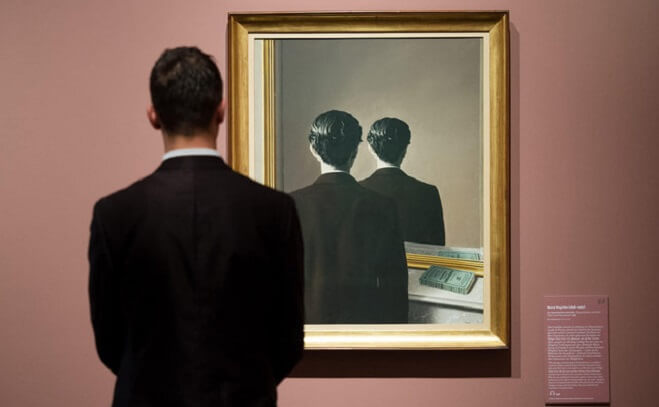
It's not that I want a copy ...

... I just want to know what it means to you?

individual
|
INTERPERSONAL : SCIENCES
humanistic ------------------------------- mechanistic
SOCIOLOGY : POLITICAL
|
group
Not to Be Reproduced, 1937 by Rene Magritte


Image: https://www.renemagritte.org/not-to-be-reproduced.jsp

Tuesday, May 21, 2024

'Holistic pluralism'

Individual
|
      INTERPERSONAL    :     SCIENCES               
HUMANISTIC  --------------------------------------  MECHANISTIC      
 SOCIOLOGY  :    POLITICAL 
|
Group
Rational choice theory

Natural sciences

theoretical & methodological pluralism

functionalism


Social sciences - Humanities


policy


from Abstract:

"The theoretical and methodological pluralism that we suggest here, holistic pluralism, is one way to overcome incommensurability between the natural and the social sciences while avoiding functionalism, technological and environmental determinism, and over-reliance on rational choice theory." 

from Introduction:

"The fact that sustainability science is “dealing with interconnected problems” (Kauffman and Arico 2014:413) requires that researchers in the field take a comprehensive, integrated, and participatory approach to science and reality (Sala et al. 2013). This explicit ambition to integrate knowledge—across scales, sectors, and substance domains, and across the nature-society, science-society, and knowledge-action divides—implies that sustainability science must inherently live up to (at least) three things. It must build on several foundational disciplines and have the capacity for interdisciplinarity; it must embrace theoretical and methodological pluralism and have the capacity for reflexivity (Isgren et al. 2017); and it must integrate knowledge generated from engaging with different disciplines, theories, methods, and contexts, and thus aspire to transdisciplinarity. Rather than merging or unifying the actual disciplines or their theories and methods into integrated frameworks, we argue that pluralism is the best way forward for dealing with sustainability challenges, such as biodiversity loss, climate change, land use change, water scarcity, and ill health. In this article, we use ontological, epistemological, and theoretical reasoning to support our argument. The critical ambition is to provide the rationale for a new approach that has the potential to capture the best available knowledge on social and natural dimensions of sustainability; we call it social fields and natural systems. The problem-solving ambition is to describe the approach and illustrate it in two empirical examples. If successful, this will show how holistic pluralism is one possible way of integrating knowledge across the social and natural science divide."
Figure 2 Olsson, L., & Jerneck, A. (2018).

It may be useful to consider figure 2, using the domains of Hodges' model?

Note how in Hodges' model, as 'political ecology' seeks to interrogate the relationship between society and nature (the environment, the sciences): we see a diametric relation. Inevitably then, the political ecologist must also negotiate, interpret, seek the policy evidence from within; perhaps an output, a creation of citizens?

Olsson, L., & Jerneck, A. (2018). Social fields and natural systems: integrating knowledge about society and nature. Ecology and Society, 23(3). https://www.jstor.org/stable/26799148

Sunday, October 15, 2023

Constructivism in Hodges' model: Situated, cognitive, pragmatic

INDIVIDUAL
|

 INTERPERSONAL    :     SCIENCES               
HUMANISTIC --------------------------------------  MECHANISTIC      
SOCIOLOGY  :   POLITICAL 
|
GROUP

"From the constructivist perspective, every field has its unique ways of knowing and the overarching goal is to move the learner into thinking within the knowledge domain as an expert of that domain might think. In geography, for example, the goal would not be to teach geography facts or principles but to teach learners to use the domain of geographic information as a cartographer, geographer or navigator might do. Just as the cartographer or geographer must bring new perspectives to bear and construct a particular understanding or interpretation of a situation, so too must the learner. And just as different geographers identify different relevant information and come to different conclusions, we must also leave identification of relevant information and 'correct' solutions open in the teaching situation. The process of constructing a perspective or understanding and developing reflexive awareness of that process are essential to the constructive view of learning." pp.96-97.


Zwozdiak-Myers, Paula. (2012). The Teacher's Reflective Practice Handbook: Becoming an Extended Professional through Capturing Evidence-Informed Practice. Abingdon, Oxon: Routledge. 


https://www.routledge.com/The-Teachers-Reflective-Practice-Handbook-Becoming-an-Extended/Zwozdiak-Myers/p/book/9780415597586

See also: 


Cognitive apprenticeship . . .

Sunday, July 16, 2023

Reflexivity - c/o Rose G. (2012)


Visual Methodologies
"In the social sciences, reflexivity is claimed to be unnecessary for work that defines itself as scientific. Thus the practitioners of content analysis and semiology - discussed in Chapter 5 and 6 here - do not engage in reflexivity, since both, for different reasons, claim their work is scientific. However, reflexivity is a crucial aspect of work that participates in the so-called cultural turn. There, reflexivity is an attempt to resist the universalising claims of academic knowledge and to insist that academic knowledge, like all others knowledges, is situated and partial. Reflexivity is thus about the position of the critic, about the effects that position has on the knowledge that the critic produces, about the relation between the critic and the people or materials they deal with, and about the social effects of the critic's work." p.183. 


Rose, Gillian (2012). Visual Methodologies: An Introduction to Researching with Visual Materials (3rd ed.). London: Sage. PB.  [Now in 5th edition.] Image - Amazon.

I wonder if the fifth edition has revised content on photography and other content, such is the pace of change?

Saturday, June 24, 2023

Being Reflective and Reflexive


INDIVIDUAL
|
     INTERPERSONAL    :     SCIENCES               
HUMANISTIC --------------------------------------  MECHANISTIC      
SOCIOLOGY  :   POLITICAL 
|
GROUP

"Benner suggested five levels of practice, from the rule-bound novice or beginner who nurses literally 'by the book', following non-contextualised rule-governed procedures, to the expert who:

'with an enormous background of experience, now has an intuitive grasp of each situation and zeroes in on the accurate region of the problem without wasteful consideration of a large range of unfruitful, alternative diagnoses and solutions.'" (Benner 1984) p.22.

"A moral agent is any being who is capable of thinking, deciding, and acting in accordance with moral standards and rules. A moral agent may not always fulfill the requirements of a moral standard or rule; that is, he need not be morally perfect. But he must have the capacity to judge himself on the basis of such criterion and to use it as a guide to his choice and conduct." (Taylor 1975, p.6).

"When the practitioner reflects in action in  a case he perceives as unique, paying attention to the phenomena and surfacing his intuitive understanding of them, his experience is at once exploratory, move testing, and hypothesis testing. The three functions are fulfilled by the very same actions. And from this fact follows the distinctive character of experimenting in practice." (Schon 1987). p.27.

"When someone reflects-in-action, he becomes a researcher in the practice context. He is not dependent on the categories of established theory and technique, but constructs a new theory of the unique case . . . because his experimenting is a kind of action, implementation is built into his inquiry."  (Schon 1983) p.28.

Transforming Nursing Through
Reflective Practice


"This approach approach represents a new call for the:
'.. integration of reason and emotion, the personal and the political, the public and the private. In moral theory ... this is part of a general effort to reverse the segregation of intellectual inquiry from personal experience in moral deliberation.'" (Lauritzen 1996,p.6) p.37.

"Greene (1998) noted:
'To become [different] is not simply to will oneself to change. There is the question of being able to accomplish what one chooses to do. It is not only a matter of the capacity to choose; it is a matter of the power to act to attain one's purposes. We shall be concerned with intelligent choosing and, yes, humane choosing, as we shall be with the kinds of conditions necessary for empowering persons to act on what they choose." (p.3) p.52.


Johns, C. and Freshwater, D. (eds). (1998). Transforming Nursing Through Reflective Practice. London: Blackwell Science. [1st edition.]

Chapter 2 Rolfe. Reflective and Reflexive Nursing Practice. pp.21-31.
Chapter 3 Ferrell. Customary vs Reflective Morality. pp.32-42.
Chapter 5 Johns and Hardy. Voice as a Metaphor for Transformation. pp.51-61.

Tuesday, February 14, 2023

Mathemacy and Mathematical archaeology c/o Ole Skovsmose

(Ack. quoted at length and hopefully justified?)

"Mathemacy

The notion of “literacy” has been developed by Paulo
Freire to mean much more than just being able to read
and write. Literacy also includes competence in interpreting
social life. The notion of mathemacy can be developed
in a similar way to mean more that an ability to
calculate.

In order to do this, it is important to pay attention to
the notion of reflection. When a calculation, based on a
mathematical task, is carried out, it is possible to reflect
on the actual result. Such a reflection has mathematical
concepts and algorithms as its objects. A question guiding
such a mathematics-oriented reflection can be: Are the
calculations made correctly?

When setting up a mathematical model, in order to
solve a non-mathematical problem, we face many difficulties.
Thus, any modelling process presupposes that
certain simplifications are established. This means paying
attention to certain aspects of “reality” and neglecting
others. This is, for instance, what takes place when a
population model is used for the purpose of forecasting.
Reflections referring to a modelling process are of a different
kind than mathematics-oriented reflections. While
this kind of reflection has mathematics calculations as its
object, a model-oriented reflection has the relationship between
mathematics and an extra-mathematical reality as
its object. A question guiding a model-oriented reflection
can be: Is the output of the modelling process reliable?
Model-oriented reflections are carried out with an interest
in improving the model, i.e. with a technological interest.
Such reflections concern the validity of the model." p.199.


 INDIVIDUAL
|
 INTERPERSONAL    :     SCIENCES               
HUMANISTIC --------------------------------------  MECHANISTIC   
SOCIOLOGY  :   POLITICAL 
|
GROUP

reflection

"Be the difference!" ...

Said, one number to another - hopefully!

reflection

"Mathematical archaeology
Social structuration, at macro or at micro level, often takes place with reference to mathematics. Such an interplay
between knowledge and power is referred to by the thesis of the formatting power of mathematics. As mathematics is basically an “invisible” part of social structuration, we need strong analytical tools to capture the role of mathematics.
This leads to the notion of mathematical archaeology." p.199.

"A reflection guided by such questions can be called a context-oriented reflection. “Context” is here understood as a political, social or cultural context." p.199.


Hodges' Health Career - Care Domains - Model

'health career' - 'life chances'

"lifeworld-oriented reflection"p.200.


Skovsmose, O. Linking mathematics education and democracy: Citizenship, mathematical archaeology, mathemacy and deliberative interaction. Zentralblatt füur Didaktik der Mathematik 30, 195–203 (1998). https://doi.org/10.1007/s11858-998-0010-6

 #HealthTheory

Sunday, April 01, 2018

Paper: How social workers reflect in action and when and why they don’t [Mapped to h2cm]

individual
|
INTERPERSONAL : SCIENCES
humanistic ---------------------------- mechanistic
SOCIOLOGY : POLITICAL
|
group

The self - personhood

Reflection (as core concept)
has value and limitations

Non-reflection to protect the self

Unbearable anxiety

psychoanalysis - findings

defended nature of the self

thinking & non-thinking
'suspended self-preservation'
Self - Two perspectives - Service User

emotional intelligence
internal supervision
intuition - improvisation
Reflexive

Helicoptering - metacognition

Sexuality (form of bracketing-off of oneself)*
lived experience of the senses
RATIONALE

Theories of reflection

Frameworks for reflection (reflective practice)

physical / somatic effects of anxiety

ethnographic study

audio recordings


Reflective practice demands that
you learn from experience.
It requires you to be self-critical.
It expects you to analyse
what you think, feel, and do...

#When is it better NOT to reflect?

'Containment'

'splitting'

risks (being completely non-reflective)

experiences and the (mobile) body
TECHNICAL
*limits capacity of some aspects of relational work

 Social Work Practice

Home visits

Family home children and parents
'tacit knowing-in-action'
Reflection in Practise

Fieldwork - home, car

SW composed when service users in distress, absorb their sadness, shame, fears,
and at times their joy #

Face-to-Face interviews

Relationships: sexuality, gender

offloading informally - office

Social Work / Clinical Case Supervision

 offloading formally

Two Local Authorities

Management Supervision and Governance

Child protection

Power

Organisational risk management

Policies, Procedures

Lone working...

Influence in 'advocacy'
[comment on twitter - see below]
(as a Professional or 'Independent'?)


Harry Ferguson (2018): How social workers reflect in action and when and why they don’t: the possibilities and limits to reflective practice in social work, Social Work Education, DOI: 10.1080/02615479.2017.1413083

My source: Twitter
 

Tuesday, July 18, 2017

Relativistic - Thinking checks and balances [V]

Effective nurses aspire to be time travellers.

Why should flash traders have all the adventure?

They also need to think relatively and be relativistic thinkers, the latter as described by Johnson (1994). If this sounds like faster than light travel in a sense it is, or at least it should seem like. Meeting the patient as they or someone reaches for the phone to seek help: is obviously taking the anticipation of care needs to the relativistic extreme - so what is this about?

This page at JHU "Perry’s Scheme – Understanding the Intellectual Development of College-Age Students" lists how Perry's formulation is reduced from nine to four levels of development:
  1. Dualism – knowledge is received, not questioned; students feel there is a correct answer to be learned.
  2. Multiplicity – there may be more than one solution to a problem, or there may be no solution; students recognize that their opinions matter.
  3. Relativism – knowledge is seen as contextual; students evaluate viewpoints based on source and evidence, and even experts are subject to scrutiny.
  4. Commitment within relativism – integration of knowledge from other sources with personal experience and reflection; students make commitment to values that matter to them and learn to take responsibility for committed beliefs. There is recognition that the acquisition of knowledge is ongoing activity.
Previous posts from January 2016 - with links supplied below - have reflected on dualistic and multiplistic thinking. I'm still exploring how work in educational psychology might inform my own. Picking up this thread again how does Hodges' model engender and contribute to relativistic thinking? Relativistic thinking as relates to Hodges' model is about a journey and not just one as item #3 above suggests. The student's journey may fly-by in time, but it is long and quite dense. Learners must negotiate lectures, self-study, simulation, patient, carers and public encounters, learning journals, clinical placements, assessed work and assessments, student-mentor sessions and all that the curriculum entails. Within the student's career there are innumerable situations and contexts if we cared to count them.

Responding to #3 Hodges' model can encourage immersion in a given context that presents a learning opportunity. They can also evaluate the situation as the care domains provide an epistemological platform from which to take in viewpoints and in the care domains scrutinize the knowledge that is shared and found through study. This includes the knowledge of experts. Whatever the care domain as a platform and viewport the student finds themselves in they should find a tendency to anticipate the other vistas nearby. Not only that but cognitively if not literally the patient and family when relevant can be with them. For person-centred care isn't just a matter of what is relativistic, but quantum too. 'Where' the patient is: so we are too.

Johnson, D.D. (1994). Dualistic, Multiplistic, and Relativistic Thinking as it Relates to a Psychology Major. Honors Theses. Paper 202.
http://opensiuc.lib.siu.edu/uhp_theses/202/

See also:
William Perry's Scheme of Intellectual and Ethical Development
A journey along the 9 "Perry" positions (as modified by Belenky et al. 1986) by William J. Rapaport

Thinking checks and balances [I]

Dualistic- thinking checks and balances [II]

Dualistic- thinking checks and balances [III] (or: The-hyphen)

Multiplistic - Thinking checks and balances [IV]

Sunday, April 02, 2017

Keith Arnatt Reflected Shadows

individual
|
INTERPERSONAL : SCIENCES
humanistic --------------------------------------- mechanistic
SOCIOLOGY : POLITICAL
|
group
Self-Burial with Mirror, 1969
Invisible Hole, Revealed by the Shadow of the Artist, 1968


Keith Arnatt Estate
http://www.keitharnatt.com/

Images:  Keith Arnatt: the conceptual photographer who influenced a generation, British Journal of Photography.

My source: Knight, J. SNAPSHOT, Life&Arts, FT Weekend, 29-30 August 2015, p.16.

Thursday, October 20, 2016

Reflection is holistic...

individual
|
INTERPERSONAL : SCIENCES
humanistic -------------------------------------------  mechanistic
SOCIOLOGY : POLITICAL
|
group-population
"Reflection is holistic - it considers the whole, 

where aspects within the experience 
can only be viewed 
within the context of the whole, 


 they exist in dialectical tension, 

and cannot be reduced into parts or stages."

Johns, C. (1997). Becoming an effective practitioner through guided reflection (PhD Thesis). Open University, p.47.

Tuesday, April 19, 2016

Pigeonholes and a Matrix 4 Care


The structure of Hodges' model is 
not an invitation to pigeonhole. 
It is an equation: a matrix for care. 
What is done in one quadrant, 
needs to be counter-balanced 
in the other care domains. 
The operations here are not mathematical,
 but reflective, reflexive and ideally communicative.

Tuesday, November 10, 2015

Security of Tools for Community Care and Elsewhere: Take this 'one' with you...?

individual
|
INTERPERSONAL : SCIENCES
humanistic --------------------------------------- mechanistic
SOCIOLOGY : POLITICAL
|
group


Image sources:

http://picphotos.net
http://www.ebay.co.uk
https://www.signkits.co.uk
https://i.pinimg.com

My source: Following some van, some where...

Wednesday, June 24, 2015

GRADE CERQual, Reflection, Mixed Methods and Threshold Concepts

On leave this week and as per a previous post I attended the GRADE CERQual workshop last  afternoon. It was a very helpful exercise, a presentation and some group work. ...

I've now 5000 exploratory words on Threshold Concepts with Hodges' model and bringing in prospective research methodologies. The final module of Part 1 beckons (reading, reading...) and this work will help and might be worthy of publication. I'm just adding some other points from the following sources:

Knight, S. (2015) Realising the benefits of reflective practice. Nursing Times; 111: 23/24, 17-19.

I can cite the above as reflection is never far away in theory, practice and students on placement. Is there is a role for Hodges' model? I believe there is and Collins et al further demonstrate the need as nurses evidence reflection on their professional reading for revalidation from April 2016. Collins writes (my emphasis):

Reflection should be undertaken using a recognised model as this adds structure and provides direction. The model used should be chosen by the individual and influenced by a number of factors such as ease of use, understanding and ease of flow when writing. Models without these elements will give the writer a negative experience of the reflection process (p.14).
Collins, G. et al (2015) Using reflection on reading for revalidation. Nursing Times; 111: 23/24, 14-16.

The final paper for now:

Evans, B., Coon, D., & Ume, E. (2011) Use of Theoretical Frameworks as a Pragmatic Guide for Mixed Methods Studies. Journal of Mixed Methods Research, 5(4), 276-292.
DOI: 10.1177/1558689811412972

- begins with a quotation:
A mixed methods way of thinking is an orientation toward social inquiry that actively invites us to participate in dialogue about multiple ways of seeing and hearing, multiple ways of making sense of the social world, and multiple standpoints on what is important and to be valued and cherished.
—Greene (2008, p. 20)

The paper refers to maps, conceptual and theoretical frameworks. H2cm is a map and a conceptual framework, but not a theoretical framework; unless theory is implied (instantiated) in its structure?

Evans, Coon, and Ume (2011) write:
Clearly, such frameworks could assist with navigation in mixed methods studies consisting of concurrent or sequential investigations, facilitate integration of methods in at least one phase of the inquiry, and provide a map for combining the what with the why to gain a multidimensional understanding of causal mechanisms. Utilization of such frameworks could, then, fit snugly into Tashakkori and Creswell’s (2007) recent definition of mixed methods: “Research in which the investigator collects and analyses the data, integrates the findings, and draws inferences using both qualitative and quantitative approaches or methods in a single study or program of inquiry” (p. 4). (Evans et al. p.278)

Researcher's are by definition forced to adopt a methodological position and argue it; defend it too! I'm not advocating for something else, but for Hodges' model this is akin to being pressed to hear the Song of the Sirens and suffer the consequences. This model does not want to be tied to the mast.

It is the mast and sail.

Hodges' is mixed methods incarnate - out of the box, in and between them:

Demand-Supply
Service Centered-Person Centered
Self-Other
Health-Well Being-Disease
Individual-Population
Qualitative-Quantitative
Objective-Subjective
Socio-Technical
Mind-Body
....
...
..
.
     Past-NOW-Future

Tuesday, December 16, 2014

Axis of rotation: reflected images & imagination

individual
INTERPERSONAL : SCIENCES
humanistic ------------------------------------------- mechanistic
SOCIOLOGY : POLITICAL
group

imagine a mirror here →
self image: REFLECTION

← place a mirror here
REFLECTION: body image

what about here ...


and here?


Tuesday, June 17, 2014

Book: The Empathy Exams & Michel Serres Institute

individual
INTERPERSONAL : SCIENCES
humanistic ------------------------------------------- mechanistic
SOCIOLOGY : POLITICAL
group
The Empathy Exams
Interpersonal Skills

The Natural Sciences
Local, Society & Socio-

-Economics
Law


As recent posts reveal I'm overwhelmed with reading at present. Material that is essential for the TEL course and reading more tangential and yet potentially enjoyable titles. It will be a busy summer as all this is brought together(!?). Especially as I've a literature search in mind as a module submission - progress permitting.

The publication of Jamison's book this (N) spring sits well after the findings last year about the benefits of reading fiction in increasing empathy.

Since 2008-2009 I've lost touch with the work of Michel Serres:

Jones, Peter, Exploring Serres’ Atlas, Hodges’ Knowledge Domains and the Fusion of Informatics and Cultural Horizons (Aug 15, 2007). SOCIAL INFORMATION TECHNOLOGY CONNECTING SOCIETY AND CULTURAL ISSUES. Available at SSRN: http://ssrn.com/abstract=1842504 or http://dx.doi.org/10.2139/ssrn.1842504

I only scratched the surface of Serres' oeuvre in the above paper and when time permits will revisit this work having just learnt of the Institute:

The resource-systems approach

"Reframing the conceptual and operational field of natural resources requires deep interdisciplinarity across fields encompassing legal and socio-economic studies, and life-sciences. And, it goes without saying, philosophy. The priorities at present are the aid to decision-making and a participative, pro-active civil society acting to (1) manage human activities while meeting the specific territorial potential and resource capacities and (2) ensure a fair re-allocation of such resources according to vital human needs and coherent public goods policies. Who are the members, what are the missions and the activities of the (...)."

Book cover image: c/o Author.

My source: The Empathy Exams
FT Weekend, June 7-8, 2014.

Tuesday, March 18, 2014

Speaker's corner

INTERPERSONAL : SCIENCES
humanistic ------------------------------------------- mechanistic
SOCIOLOGY : POLITICAL
individual

canto do orador


Le coin de l'auditeur, Rincón del oyente
الزاوية المستمع 听者的角落,
Canto do ouvinte, Listener's corner
音箱的边角


Le coin des haut-parleurs
       الزاوية المتكلم


esquina del orador
Speaker's corner
group - population


Image source: http://rebbls.dk/rebblog/speakers-corner/
