Hodges' Model: Welcome to the QUAD: creativity

Hodges' model is a conceptual framework to support reflection and critical thinking. Situated, the model can help integrate all disciplines (academic and professional). Amid news items, are posts that illustrate the scope and application of the model. A bibliography and A4 template are provided in the sidebar. Welcome to the QUAD ...

Showing posts with label creativity. Show all posts

Friday, September 04, 2026

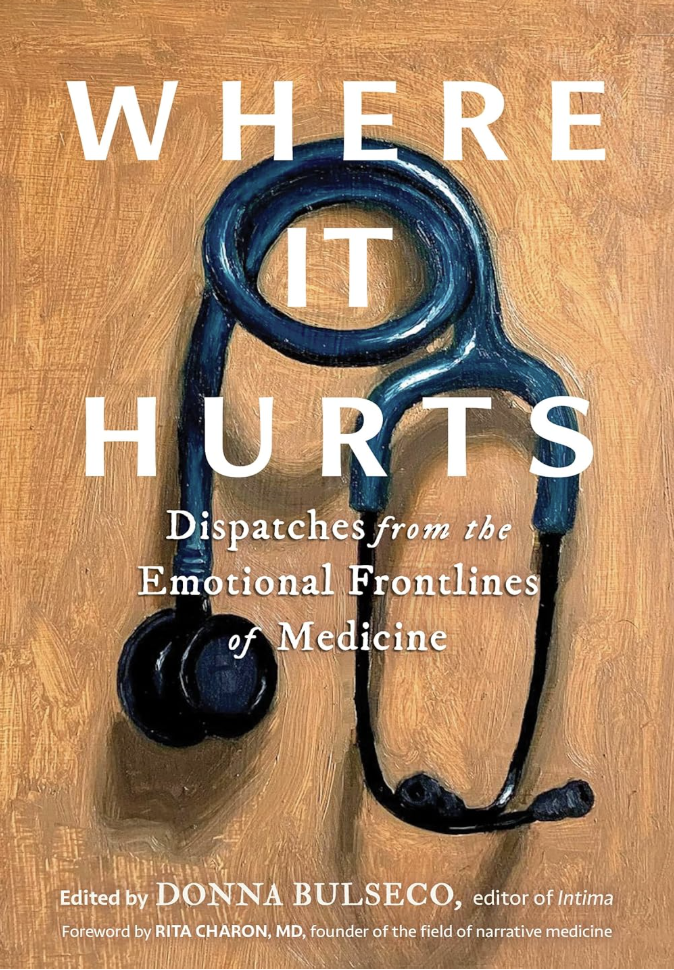
Call for Submissions: Fall-Winter 2026 Intima Journal of Narrative Medicine


OUR CALL FOR SUBMISSIONS  FOR OUR FALL-WINTER 2026
JOURNAL IS OPEN. SUBMIT YOUR WORK TODAY.


Intima: A Journal of Narrative Medicine
is a literary journal dedicated to promoting the theory and practice of narrative medicine, an interdisciplinary field that enhances healthcare through the effective communication, empathy and understanding between clinicians, caregivers and patients. Our name Intima has a specific resonance in the field: For us, narrative involves the intimate interface between people, who yield and gain from the experience of stories involving the clinical encounter.

 The word itself has an anatomical reality: intima is  the thin layer lining a blood vessel, speeding blood to the heart and brain, an apt analogy for the kind of narratives we publish that speak to the emotions and the intellect, the feelings and facts that engage the senses in stories with meaning and impact..


individual
|
INTERPERSONAL
: SCIENCES             
humanistic ------------------------------- mechanistic
SOCIOLOGY : POLITICAL   
|
group


©The Art of Anatomy by Khalil Harbie.
Intima, Fall 2013


Art - https://www.theintima.org/missionandvison also reminded of Escher and Byte Magazine.

My source: Intima list

Previously: 'creativity' : 'crossroads' : 'narrative'

Friday, August 14, 2026

Sometimes it can take an old model ...


'Sometimes it can take an old model, 
to build a new one, 
that makes the existing model obsolete.'

To borrow from Buckminster Fuller.                         

 
Resurgence & Ecologist, Sept/Oct 2020, Issue 322, p.33.

Saturday, August 01, 2026

Koln 75

The film Koln 75 was very enjoyable ...
'Brandes quit the music business a few years ago, after a very successful career. Why? "Digital formats were taking over the record industry, which was giving away entire repertoires to companies like Apple with a completely idiotic accounting system in the background, which would never, ever allow for the artists to get properly remunerated for their rights. The whole industry thought that digital would be the biggest portion of whipped cream on top of the cake that they would continue to be eating until the end of all time.'"

Instead, inspired by a 1993 study that found that listening to classical music-specifically Mozart-enhances spatial-temporal reasoning, and by Don Campbell's bestselling 1997 book The Mozart Effect: Tapping the Power of Music to Heal the Body, Strengthen the Mind, and Unlock the Creative Spirit. Brandes studied psychology at university and then, funded by the Austrian Ministry of Culture, established the Research Program for Music-Medicine at the Paracelsus Medical University in Salzburg. "Being a music producer, I dreamt about doing scientific research on the effect of music and trying to figure out what effects music has on us - cognitive, emotional, whatever," she says. "Since then I have developed a method to use music to help people with chronic depression."
individual
|
INTERPERSONAL
: SCIENCES             
humanistic ------------------------------- mechanistic
SOCIOLOGY : POLITICAL   
|
group


cognitive
emotional
chronic depression


Jazz


Stuart Jeffries, How a teenager helped to make jazz history, Life&Arts, FTWeekend, 30/31 May 2026. p.15.

See also: https://www.youtube.com/watch?v=3CrFdGMj4cM

Saturday, June 06, 2026

"step inside" TO "think outside"

  
individual
|
INTERPERSONAL
: SCIENCES             
humanistic ------------------------------- mechanistic
SOCIOLOGY : POLITICAL   
|
group


             c/o Somerset House, 6th June 2016.

Saturday, May 09, 2026

v WCCS26: World Conference on Complex Systems 20-22nd April

Day 2 Tuesday 21st April (Revisiting) Keynote Speaker: Abderrazak El Albani - 
Emergence of Intercellular Cooperation: At the Origins of Eukaryotic Complexity
Session Chair: Khawla Tadist

This keynote was fasacinating. As I begin this post on the 100th birthday of Sir David Attenborough, who would have us all see life in the broadest terms, value life and diverse habits, and Earth as our collective and shared home.

Abderrazak El Albani explained the search for LUCA the last universal common ancestor - 3.8 billion years ago. Many dates in the emergence story of humanity, have been progressively pushed back. The first fire, art, languages, our co-habitation and intimate relationships with Neanderthals.

In healthcare, as a practitioner you have to be aware of your scope of practice. At WCCS, scale (as in iv) was ever present across research in complexity, and complex systems. Not just physical size nano-to-mega but temporal too, as we journeyed billions of years. Several of the slides are presented here:

https://www.synchrotron-soleil.fr/en/news/discovery-oldest-macroscopic-planktonic-eukaryotes-contribution-nanoscopium-beamline (with a reference).

There is a video (French): https://www.youtube.com/watch?v=bh3t26cU7xc

I asked a question, which may have been psychological preparation for own presentation to follow. Listening, I could see how the work Abderrazak El Albani and his team are doing, could be readily translated to the search for life on Mars. There has been a 'routine' interchange of planetary material between Earth and Mars over the aeons. Fitting surely that the sedimentary rocks sought lie in  A key lesson, is that light helps us see, but not all lights are equal. Light sources brighter than the sun become incredible scientific instruments. The longevity of the dinosaurs was highlighted, at least 140 million years. There is no comparison with homo sapiens then, even as those dates have been pushed further back in time. Time defeated me as I tried to make the observation that even the dinosaurs did not make it to their first galactic birthday (c.250 million years - and what a carousel). I like the thought (slide) of 'Earth as Memory'. 

What really counted was the expressed concern about what is happening now: in the Anthropocene.

The second keynote:
Nigel Gilbert - Policy in a Complex World: Towards Complexity-Aware Policymaking
Session Chair: Ali Idri 

Was helpful to me, as the dated conundrum of benefits realisation from our technologies, and evidence-based policy still leaves a gap (for me) within the POLITICAL care/knowledge domain of Hodges' model. The illustration/graphic elements of Prof. Gilbert's slides were a brilliant complement to the content:

Prof. Nigel Gilbert - WCCS26 21st April

I wonder if within policy the constant in the equation is continuity and as a quantity it is an unknown? This seems to the case in health policy, across successive governments. You may (also) find this chart informative: https://www.cecan.ac.uk/news/the-visual-representation-of-complexity/

Perhaps, a key factor in complexity is the fact that nothing stays the same, so continuity is nuanced? Michael Quinn Patton's book Developmental Evaluation was noted re. learning while doing. Now I wish I'd held on to Qualitative Research & Evaluation Methods (4th ed.). The discussion of 'obesity system map' and 'whole systems analysis' was appreciated here.*

Since Marrakech and WCCS, I've noticed acknowledgement in the literature that 'research' is currently flooded with AI tools. I'm sure PRSM - Participatory System Mapper is a welcome addition, (as noted in iv) tools to facilitate participation are much needed:

Collaborative Creativity

The Participatory System Mapper (PRSM) is an app that makes it easy to draw networks (or 'maps') of systems, working together collaboratively.'

I will definitely check this resource out; and CECAN. After Prof. Gilbert, the next Track included my contribution, which I will return to. Rather distracted, I have a somewhat blurred slide, with: 'The global tensor of educational research is' then headed 'Learning poverty. Being unable to read and understsand a simple text; with points 1-4.'. I'm not sure which presentation this was, but zeroed in on the literacy theme, and the word tensor. Another slide refers to '6. Topological substitution for Success'. I think it is (writing this is helping recall!):

Harvey Spencer Sánchez-Restrepo, Jorge Louçã, Martha Belén Carmona-Soto and Sofialeticia Morales-Garza
Topological Patterns of Academic Success: Insights from Complex Network Analysis

'Always Label Your Axes' - Zazzle.

Before that there was another model, as the next keynote speaker: Chris Bauch demonstrated during the conference wearing a t-shirt:

Critical Transitions in Coupled Human-and-Natural Systems and their Early Warning Signals
Session Chair: Mohamed Essaaidi  

Previously: 'nexus'


*Jones P, Wirnitzer K. Hodges’ model: the Sustainable Development Goals and public health – universal health coverage demands a universal framework. BMJ Nutrition, Prevention & Health 2022;5: doi:10.1136/bmjnph-2021-000254

Wirnitzer, KC. et al. (2025) Toward a roadmap for addressing today's health dilemma – The 101-statement consensus report. Frontiers in Nutrition. Volume 12.
https://frontiersin.org/journals/nutrition/articles/10.3389/fnut.2025.1676080 DOI:10.3389/fnut.2025.1676080

S. Bettiol, P. Jones, H. A. Onyedikachi, and W. G. Kernohan, (2026) Bridging Gaps in Oral Health Frameworks: Mapping With Hodges' Health Career - Care Domains - Model, Journal of Public Health Dentistry. 1–14, https://doi.org/10.1111/jphd.70034

Thursday, March 12, 2026

John Gerrard's "Western Flag" 2017

INDIVIDUAL
|
    INTERPERSONAL    :     SCIENCES               
HUMANISTIC --------------------------------------  MECHANISTIC      
SOCIOLOGY  :   POLITICAL 
|
GROUP


http://westernflag.johngerrard.net

John Gerrard - Western Flag (Spindletop, Texas), 2017

My source: Twitter

Sunday, February 08, 2026

Intelligence - mechanistically speaking^

INDIVIDUAL
|
    INTERPERSONAL    :     SCIENCES               
HUMANISTIC --------------------------------------  MECHANISTIC      
SOCIOLOGY  :   POLITICAL 
|
GROUP
Mental
Intelligence


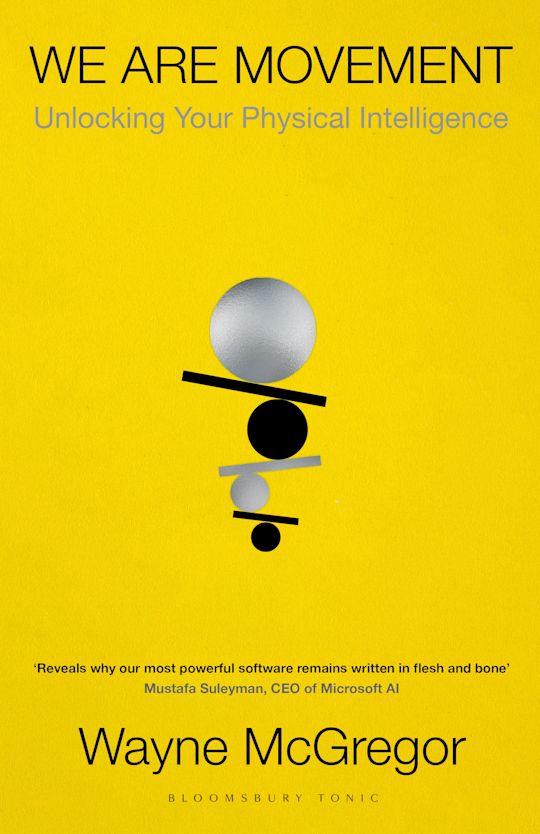
We Are Movement - Unlocking Your
Physical Intelligence

... ever increasing

'artificial' intelligence
 
here . . .?

"We?

 Yes... We! 

   We are  
a                       MOVEMENT!"


Wayne McGregor (2026) We are Movement: Unlocking Your Physical Intelligence. London: Bloomsbury. (Book cover) https://www.bloomsbury.com/uk/we-are-movement-9781526629531/

My source: Nadia Beard, Our bodies, ourselves. Life&Arts, FTWeekend, 17-18 January, 2026. p.9. 

Previously: 'movement' : 'dance' : 'intelligence' : 'art' : 'body' : 'AI'

^. . . help me find (a) the notation? 

Saturday, February 07, 2026

National Centre for Creative Health

Creative health is increasingly recognised as a driver of better care and better value in health and care systems. Integrating creative health into prevention, public and population health strategies, management of long-term conditions, treatment and recovery pathways contributes to:

  • Reduced incidence of preventable illness
  • Improved wellbeing of patients and service users
  • Reduced demand on services

Many Integrated Care Systems and providers already incorporate creative health in physical and mental healthcare, social care, and public health, delivering measurable social and economic value.

Find out more about implementing creative health in your service, organisation or system from [our resources the resources ... 

NCCH has worked in partnership with NHS England to develop a Creative Health Toolkit. The Toolkit support systems to work with the assets in their communities and to develop their own approach.

NCCH publishes a monthly creative health newsletter created for professionals working across health and care.

Source: Email and National Centre for Creative Health 

Tuesday, January 27, 2026

c/o Intima 'Reflect on the World' . . .

CARE/of Intima:

REFLECT ON THE WORLD WITH US EVERY FRIDAY AT NOON.

No pressure, but we want to remind you that every Friday, around noon EST, we post a Crossroads blog—a short reflection that contributors from our current issue do on something from our archives.

Think of “Friday at noon” as a blip in your busy life where you take time to yourself to reflect on our small part of the universe. Pause and spend 5 minutes reading one each Friday — it’s the equivalent of a deep-breathing exercise, a short yoga stretch, a tiny palate cleanser of lemon sorbet between the complex courses served up to us every day, or a moment stolen between patients or in a waiting room when you step out of your routine. Read the titles of recent ones below, then go and read a few. If you like what you read, set up a reminder alert.

◇

INDIVIDUAL
|
    INTERPERSONAL    :     SCIENCES               
HUMANISTIC --------------------------------------  MECHANISTIC      
SOCIOLOGY  :   POLITICAL 
|
GROUP


My source: Intima (and image) - mail list.

See also: 'reflect' : 'crossroads'

Monday, January 12, 2026

Improving University Teaching - July 2026 Glasgow

Dear Colleagues

A reminder that you are cordially invited to participate in the 52nd International Conference on Improving University Teaching, to be held this year in Glasgow, Scotland. Our conference theme is “Connecting Across Cultures: Collaboration, Compassion, and Creativity,” with a focus on the links that sustain teaching and learning. IUT welcomes proposals in a variety of formats — papers, posters, workshops, and roundtables. More information about theme, subthemes, and presentation formats is available on our website, https://iutconference.com, where you will also find a link for proposal submissions.

This year’s proposal submission deadline is Monday, January 26th.

The dates for IUT 2026 are July 15-17, 2026. Our in-person host is the University of Glasgow in Scotland — the fourth oldest university in the English-speaking world, with a student enrollment of almost 40,000 and a strong tradition of both research and teaching excellence. Once again, this year’s conference will be a hybrid event. We hope many participants will attend the conference in person in Glasgow, but also warmly welcome those who choose to participate remotely.

Whether you prefer to join us online or in person, we hope you will consider a submission. Please contact us at iutconference AT gmail.com with any questions.

With best wishes,

Anne Tierney
President, IUT

Jim Wilkinson
Treasurer, IUT, and President emeritus

Friday, January 02, 2026

Nothing new under the Sun ...

 ... unless you're a 'health' service, or gathering dust on a shelf

January. Is the time of Janus: we look forward and back.

In April, this blog 'Hodges' model: Welcome to the QUAD - W2tQ' will be twenty years young. A blog post will follow with some metrics and statistics, although the 'analytics' that accompany many websites is not the main objective here. Preceding W2tQ and that first post, was the now archived website:

https://web.archive.org/web/20150316193042/http://www.p-jones.demon.co.uk/index.htm

Running from 1998-2015, the site's emergence ran as per:

Taught and applied Hodges' model on
 Community Psychiatric Nursing Certificate course 1987-1988.
Using the model in my practice and sharing with colleagues.
Gaining online access 1997.

Finding the Nursing Theory Development Site - NTDS 
(no longer available)
which was at https://www.ualberta.ca/en/index.html 
Meeting Brian Hodges at Manchester Met. University in May 1997.
Publishing the website in 1998.

Listed at the NTDS was a broad range of models of nursing and nursing theories. Brian's model, as anticipated was missing. I asked about Brian Hodges's model being added as a resource. Back then I thought, and still do, that Brian's work deserves recognition and more importantly, actually being used by practitioners and learners. It was a shame I thought, that such a person-centered and integrative model should be sat on a shelf (like other great ideas) gathering dust?

Still limping along in theme, functionality and accessibility, at least W2tQ has outlived the original website.

Academia and professional bodies across healthcare disciplines stress the need for research in practice. As a consequence, I've wondered about the pool of research questions that a healthcare, nursing, community nurse might have in mind? Ready and waiting, for those instances when specific funding materialises for a project. How many of these questions might feature as recurring characters? Once articulated, there for a new team member, are several starter-questions, a primer, to encourage exploration and critical thought. (Of course, a researcher needs to frame the question themselves; even if they do not 'own' them - public, patient engagement in research?).

With sustainability still on the political agenda (whatever the media suggests), is there a plan gathering dust, for the redesign, no less, of the National Health Service? Having squandered the demographic dividend of the 1950-1980s, how do we create concurrent health caring and preventive/educational services and systems?

Now, there is a project that Hodges' model could assist with! Better check the shelves (floppy disks!) and blow the dust-off real quick!

Tuesday, October 21, 2025

The Sveriges Riksbank Prize in Economic Sciences in Memory of Alfred Nobel 2025

individual
|
INTERPERSONAL : SCIENCES
humanistic -------------------------------------------  mechanistic
SOCIOLOGY : POLITICAL
|
group-population


'This year’s prize relates to the explanations for sustained growth based on technological innovation. Economic historian Joel Mokyr is rewarded with one half of the prize for his description of the mecha­nisms that enable scientific breakthroughs and practical applications to enhance each other and create a self-generating process, leading to sustained economic growth. Because this is a process that challenges prevailing interests, he also demonstrates the importance of a society that is open to new ideas and permits change.'

'The other half of the prize is awarded to the economists Philippe Aghion and Peter Howitt. In a joint publica­tion from 1992, they constructed a mathematical model of how companies invest in improved pro­duction processes and new, better-quality prod­ucts, while the companies that previously had the best products are outcompeted. Growth arises through creative destruction. This process is creative because it builds upon innovation, but it is also destructive because older products become obsolete and lose their commercial value.'


'It is apparent that, in the long run, sustained growth does not only have positive consequences for human wellbeing. First, sustained growth is not synonymous with sustainable growth. Innovations can have significant negative side effects. Mokyr argues that such negative effects sometimes initiate processes that uncover solutions to problems, making technological development a self-correcting pro­cess. Clearly, however, this often requires well-designed policies, such as in the areas of climate change, pollution, antibiotic resistance, increasing inequality and the unsustainable use of natural resources.'


Previously on W2tQ: 'Nobel prize' : 'socio-economics'

Thursday, October 16, 2025

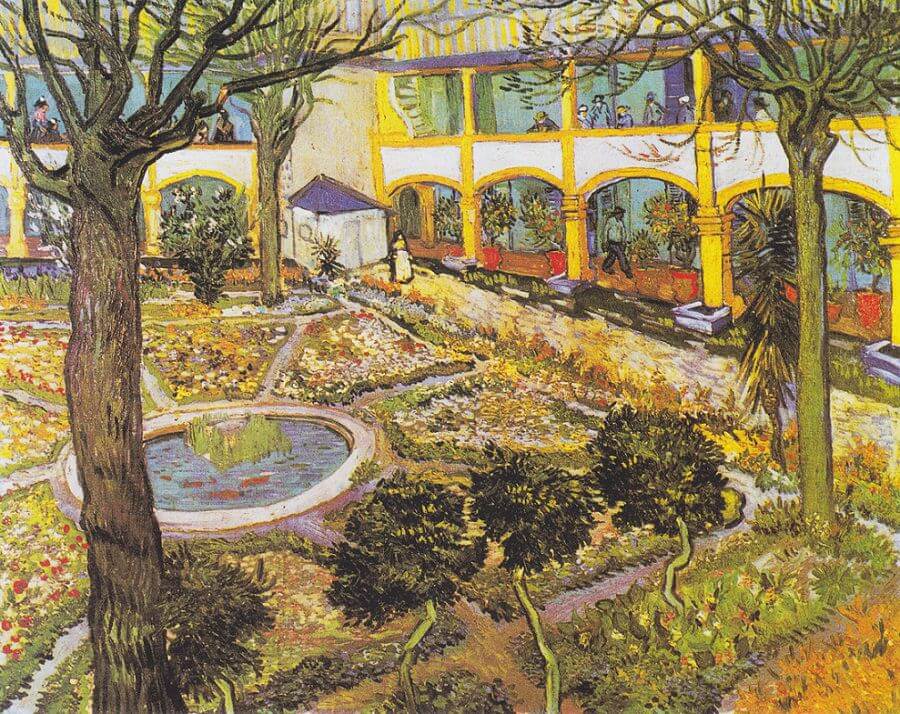
Recovery, Rehabilitation, Reablement by Van Gogh

Individual
|
      INTERPERSONAL    :     SCIENCES               
HUMANISTIC =========================  MECHANISTIC      
 SOCIOLOGY  :    POLITICAL 
|


My source: Van Gogh exhibitions (at least two); and Robin Lane Fox. Two years in Provence, House&Home, FTWeekend, 11/12 January 2025. p.10. 

Image source: https://www.vincentvangogh.org/the-asylum-garden-at-arles.jsp

Thursday, October 09, 2025

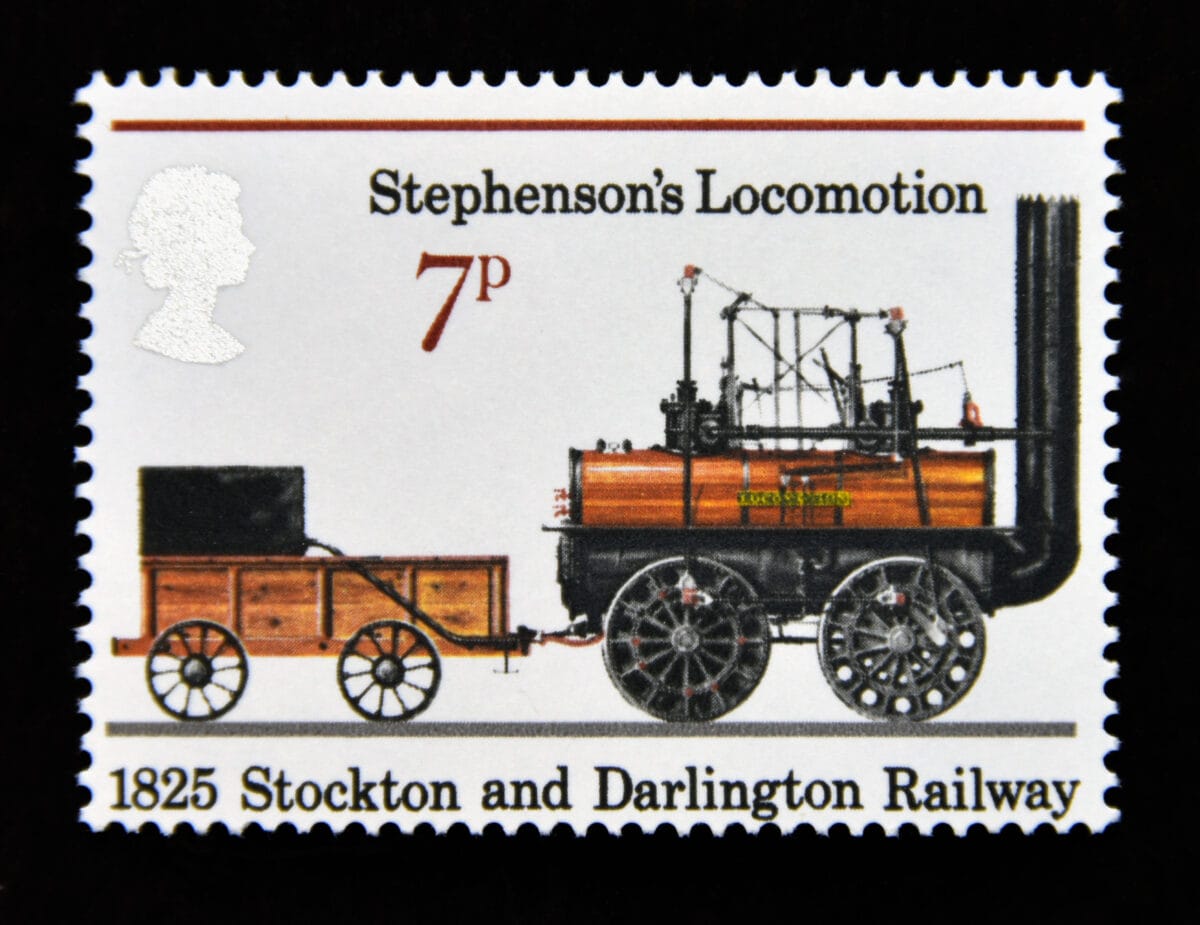
The creation of Hodges' model: "All aboard!" 200 years

28th May 1997
When I interviewed (Mr.) Brian Hodges in Manchester on 28th May 1997, I learned he had created the model in 1983, mainly while commuting to Manchester Polytechnical College by train from (Totley) Sheffield, and back. 

I wish I could have been sat by him, to strike up a conversation. Although (among other points) I'm not sure how much he relied upon, or was chasing down the visual side of the model, with some skethces and drawings. So would I have noticed him thinking, drawing, crossing-out, and labelling? This I would have noticed, not that I have a habit of 'spying' and being nosey. Although nowadays, with the repeated announcements on the trains: ‘See it. Say it. Sorted’; perhaps I should?

In 1983 I was a general student nurse (SRN), and still over a decade away from becoming a community psychiatric nurse in 1985, and being (well) taught by Brian and colleagues in 1987.

I also enjoy a (reliable!) train journey, and used to read a lot travelling from the NW England through the London underground (Euston-Waterloo) to Plymoth, and later to Portsmouth in the 1970s. Happy days, then and today; with the railways reasserting their relevance. A quality shared with a certain little-big model I know.

Individual
|
      INTERPERSONAL    :     SCIENCES               
HUMANISTIC =========================  MECHANISTIC      
 SOCIOLOGY  :    POLITICAL 
|
Group

Rail 200

Nationalised - Private
Private - Nationalised
Charity - CIC


Friday, September 05, 2025

Submit your pitch for Black History Month 2025

London Arts and Health
and The Culture Health and Wellbeing Alliance


To celebrate Black History Month this year, London Arts and Health and The Culture Health and Wellbeing Alliance will commission six artists to explore and showcase their creative practices. This initiative is rooted in the belief that the arts can be a powerful force for health, climate justice, and cultural empowerment.

More details ...

Sunday, August 31, 2025

Play - “The Ballad of Crooked Lane” 6th & 7th Oct.

Media Release - 

Blind Poet’s Life to be Celebrated in New Play. 

The life of Edward Rushton, Blind Poet and key figure in the Campaign against Slavery, will be spotlighted in a new production by Valley Theatre Drama Group in Liverpool. The play – entitled “The Ballad of Crooked Lane” – is set on the day Rushton, now well into middle age, awaits eye surgery to regain his sight. While waiting, he goes over his eventful life with his friend and biographer, William Shepherd, the Minister of Gateacre Chapel.

“Rushton was a larger-than-life character,” says writer and director Tom Mclennan. “The story is that he lost his sight going below deck to help sick African captives on their way to the plantations. I first read about him in Bill Hunter’s biography “Unsung Hero” and have always felt his life deserves more recognition.”

Apart from campaigning against the slave trade – not always a popular thing to do in those days, since a large amount of Liverpool’s wealth was based on the evil triangular trade – Rushton was also instrumental in establishing the Liverpool School for the Blind, one of the first in the country, as well as being at the forefront of efforts to end the notorious pressgangs that terrorised coastal neighbourhoods, intent on kidnapping sailors for the British Navy.

“The Ballad of Crooked Lane” will be performed as part of a double bill along with Day Sheehan’s “Wake” for the Liverpool Fringe on Monday October 6th, 7.30pm, at Valley Theatre n Netherley, and on Tuesday 7th October, 7.30pm, at The Studio Beyond, 63 Wood Street, Liverpool L1 4AL

Entrance for the Valley Theatre event is free (pay a donation if you like it). Tickets for the Studio Beyond are £8/£6 and can be bought from:

https://store.makeitwrite.org/product/balladandwake/

I read a part for this at Valley Theatre, very interesting and will look to see a performance.

See also: Edward Rushton: Who was this blind revolutionary?
https://www.bbc.co.uk/news/blogs-ouch-29957645

My source: https://www.philosophyinpubs.co.uk/

Currently reading, Arnold Wesker's 'The Friends'.
https://www.arnoldwesker.com/plays/the-friends/index.html

Friday, August 15, 2025

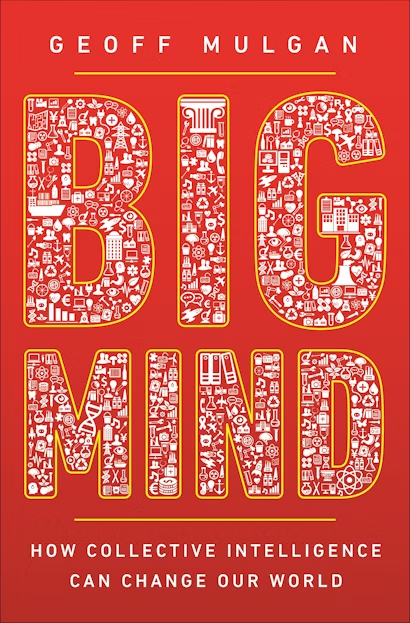
Big Mind: How Collective Intelligence Can Change Our World


It was COVID-19 that brought home to me the true significance of the 'collective' in the synonyms for group, population, polis, citizenry et al.. An integral part of Hodges' model, an individual, a person is clearly not an island.

Speech, gesture, behaviors, drawing, writing and other media all  provide a way of recording and representing information, and knowledge. Digital technologies are the latest tools to extend our memories, and ability to analyse, synthesise and abstract from and to our experiences.

How we see the individual and collective (society) is a subject of much debate across many disciplinary fields, spanning the sciences and humanities; economics, healthcare, sociology, ethics, and philosophy. Mulgan considers as infrastructure, the measures that have emerged to support collective intelligence:


'They have evolved from physical objects (such as steel production) through aggregate concepts (like GDP and GNP) to intangibles (such as innovation indexes or measures of the value of creative industries). They have evolved from single measures of things like population to indexes (like the UN Human Development Index), and from activities to outputs and then outcomes (such as QALYs - quality adjustied life years - and DALYs - disability adjusted life years in relation to health). In all these ways, both states and societies watch themselves and recognize well-calibrated observation as the precondition for thought.' (p.52)
Using Hodges' model the focus is primarily upon individuals and teams application. Mulgan's chapter 12 (pp.145-160) on 'Problem Solving' is subtitled 'How Cities and Governments Think'. An excellent question, that was asked of me in February. How can a national government be informed of Hodges' model and its potential utility? Cities have repeatedly had to solve problems created by changes in transport, work, housing, population density, the movement of people, goods, materials, and links to rural and agricultural centers. The logistics of access to routes, ports, airports, and where to place industries efficiently (and safely)? 'City planning' is a key example of our cities thinking?

Perhaps, we need to think of mobility in a cognitive sense, and not just AI-mediated. So as we walk, run, seek access - we should take care we don't get stuck!

Individual
|
      INTERPERSONAL    :     SCIENCES               
HUMANISTIC  --------------------------------------  MECHANISTIC      
 SOCIOLOGY  :    POLITICAL 
|
Group
subjectivity

models we use can be a trap (p.120)

emotional intelligence
quality
objectivity

SYSTEMS energy, food, transport..

physical media & 'memory'
quantity

'Society Thinking as a System?' Chap. 16.

Group - Collective

collective intelligence

Patient Reported Outcome Measures (PROMs)?

See also: 'literacy' : 'prevention' : 'service' : 'severe' : 'change'

Geoff Mulgan (2017) Big Mind: How Collective Intelligence Can Change Our World, Princeton University Press.

Image: Princeton University Press.

Friday, June 20, 2025

Theatre in TI:ME

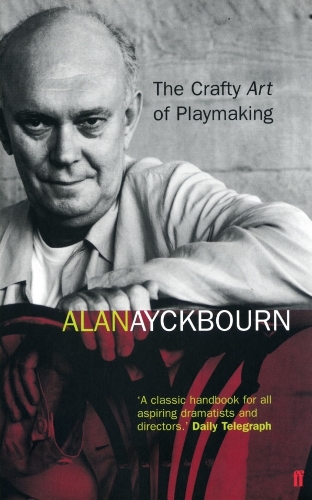
The Crafty Art of Playmaking
In health we're dealing with time in all its forms: cardinal; birth and death and all that happens in-between. Aka, 'life', illness, and palliative care. And, even if not recognised, chronological and pathological time, which policymakers should pay more attention to. The art of theatre, has its time (p.20): stage time, and real (theatre foyer) time. 

'At its most successful, theatre views things from a human standabout.' (p.9). 

I'd second that, especially allied with the notions (ideas!) of health career, and life chances. 

Since the publication of TCAoP in 2004 people seem to quite ready to dispense, disregard, downplay, demote the humanistic with the rise of AI and assisted dying for the terminally ill (of course).

Time recurs - as a frame. (p.25) with a touch of elective surgery. 'Think of your story as a piece of thread. Where you cut in is the point at which the lights come on in Act One. Where you cut out will be your final curtain. (There may be a knot or two in the middle to denote the intervals, too.)' p.25.

In the first post re. TCAoP I stressed the complexity, plethora of ideas that Hodges' model can create. Sir Alan provides a potential 'get of jail free card' (or as near as?) in his original rule no. 9. 

'If a play can be too simple, it can also be too complicated. If one element is particularly complicated, keep the rest of it simple.' (p.25).

Very useful advice! But achieving it when having and applying an idea is another matter.

What's this though? Step back to original rule no. 6:

'There is no hard and fast rule as to which constructional element comes first.' (p.20).

Butrint National Park Albania   

In the guided discovery exercise in students (audiences..) creating the model, there are two constructional elements, that also contribute to the one big idea.

It gets better! Original rule no. 14:

At least fifty per cent of your play is going to be visual. (p.33).

I must make sure I don't confuse concept/ual with visual/imagery.

More to follow.

The Crafty Art of Playmaking by Alan Ayckbourn. Faber, 2004, softcover, ISBN 0571215106.

https://www.concordtheatricals.co.uk/s/45898/the-crafty-art-of-playmaking

Tuesday, June 17, 2025

Theatre - which one?

Summer reading includes Ayckbourne's The Crafty Art of Playmaking published in 2004. Already half way through, writing has been covered, directing follows.

Looking at what I can learn in contrasting health and theatre, there is more than both laying claim to having a 'theatre'. Perhaps health got there first in a very primitive, existential, and fundamental sense. The 'theatre of war' covering battle, and the fight for food and survival. Even as civilisation emerged, on the battle field, triage was practised in a more deliberate way with skills that were built on emerging knowledge handed down orally - to become art.

So, no doubt there was a concurrency going on. Heroics in so many guises, shared around the fire. Plus, our individual dreams and nightmares that are framed collectively.

Ayckbourn offer pithy lessons learned over his career that began in 1959. There's an acting maxim:

'When playing a miser, stress his generosity.'

So can we restate the acting maxim as:

'When playing a patient, stress their strengths'?

Or. 'When playing a patient, stress their personhood'? . . .

If that is a challenge to the healthcare sector (even if unintended), then it is one that is actually long-standing. There are the three R's: rehabilitation, reablement and recovery.

Ayckbourn explains how the darker the subject the more a writer needs to find the light. And vice-versa. This suits me fine, and medicine is recognised as a great source of humour across several cultures.

The book lists a series of  'Obvious Rules' all numbered. 

Of No. 1: Born in Liverpool, I never would look down on comedy; and never as a poor cousin of drama.

After reading his obvious Rule No. 2, 'Never start a play without an idea'; I put my pants back on.

Do I have an idea? Oh my! Well Brian's at least.

In a way it's the other way around. The shout goes up - "Eratosthenes! Please pass me a sieve."

On having an idea, Ayckbourn writes: 'They assume, I think, that if they start the journey, maybe an idea will occur on the way. Perhaps a map of where they're going will blow in through the car window. In my experience this never happens.' p.6.

This is good advice, with the additional complication of having many maps, and yes, none: c/o Hodges' model. I need a theme, a situation and a thread. I'm writing a few ideas down. And helpfully Sir Alan advises not to throw ideas away. He describes, from experience how disparate things can come together.

Today (19th), I finished TCAoP here in Corfu. A great help for me, that is, the writing section pp.3-96; as I will try to explain in further posts. Sooner than expcted, I've started a book that will be a 'review'. 

A visit to Albania tomorrow - early start pick-up 0710.

The Crafty Art of Playmaking by Alan Ayckbourn. Faber, 2004, softcover, ISBN 0571215106.
https://www.concordtheatricals.co.uk/s/45898/the-crafty-art-of-playmaking

Thursday, June 12, 2025

Rain, Library, and a Poem on a Neon Line

'It is raining in the library,
and leaking between theory and practice.'

Rain by Faroese poet and novelist Carl Jóhan Jensen


My source: BBC Radio 4 The Verb. Poetry and performance with Ian McMillan.

8th June 2025. 1710-1750. https://www.bbc.co.uk/sounds/play/m002d88g

Previously: 'theory' : 'practice' : 'library' : 'poetry'