Hodges' Model: Welcome to the QUAD: Search results for cities

Hodges' model is a conceptual framework to support reflection and critical thinking. Situated, the model can help integrate all disciplines (academic and professional). Amid news items, are posts that illustrate the scope and application of the model. A bibliography and A4 template are provided in the sidebar. Welcome to the QUAD ...

Showing posts sorted by relevance for query cities. Sort by date Show all posts

Thursday, November 10, 2022

New York – Livable Cities: A Conference on Issues Affecting Life in Cities

NEW YORK Conference: Abstract Deadline

New York / Virtual
14-16, June 2023
Abstracts: Nov 20th, 2022 (Round One)


A cross-departmental conference held at City Tech (CUNY) with the Departments of Architectural Technology, Construction Management, Civil Engineering and Environmental Technology

LIVABLE CITIES - NEW YORK is a conference covering architecture, design, planning, health, technology, urban economics and social policy. It is calling for contributions to specific strands of sustainability, resilience, design, planning and construction.

These strands seek to explore issues related to net-zero energy buildings, sea defenses and strategic retreat, life cycle analysis in the construction industry, Building Environmental Assessment methods, EcoHomes, BREEAM, alternative energy generation in cities, material science and much more. 

The conference is organized across departments at City Tech (City University of New York) with Amps and publication support from Routledge and UCL Press.

CALL SUMMARY

What makes a city livable? Transport, housing, health and environment. Matters of culture, entrepreneurship, crime and safety. Affordability and education. Depending on whose ‘livability index’ you look at, it may include design quality, sustainability and the digital infrastructures of the smart city. Other criteria applied may encompass food access, job opportunities or walkability. Inclusivity and the politics of participation also come into play.

The past two decades have seen an exponential rise of livability measures. Reflecting increased urbanity globally, they risk making the notion of the city ever more contested. The two cities that host this event are cases in point. The Mercer Livability Ranking takes New York as the datum by which all other cities globally are graded – as better or worse. London, by contrast, measures itself: the London Assembly scoring everything from air quality to indices of deprivation. When we consider the livability of cities then, it is clear we are dealing with a plethora of issues – both isolated and, inevitably, interconnected.

Within this broad livability framework, we seek to develop strands and publications around themes of the design and construction sectors – particularly as they relate to sustainability and resilience.

https://amps-research.com/conference/livable-cities-new-york/

My source: http://www.cosmobilities.net/ list

n.b. A suggestion: consider the conference themes and the structure and domains of Hodges' model; what relationships, dichotomies, synergies, and opportunities can you glean?

Thursday, February 26, 2026

New Journal Alert - Philosophy and Urban Affairs

Dear Philosophers,

I'm pleased to announce that Philosophy and Urban Affairs is now operational. Below is a description.

Philosophy and Urban Affairs is a peer-reviewed journal that explores the ethical, political, epistemological, metaphysical, and social dimensions of cities. Articles may be theoretical, applied, or both, provided they illustrate how philosophical investigation can elucidate, critique, or inform city living.
Unsolicited manuscripts are not accepted. Instead, the journal solicits submissions through public calls on emerging topics or through invitations to scholars working on specific themes. On occasion, a focus article will be published to prompt response papers and foster sustained scholarly dialogue.
Philosophy and Urban Affairs is fully open access and charges no fees of any kind.
Check out the first CFPPhilosophical Perspectives on Coastal and Island Cities

All the best - Shane

Associate Professor of Philosophy
Missouri University of Science and Technology

Shane Epting, in Creating Future Cities, insightfully analyzes complex normative challenges in urban planning and design—from organizing urban residents' political power to building for resilience—and passionately argues that citizens of cities must fight for their cities and their futures. - Ronald R. Sundstrom, University of San FranciscoUSA

My source:

Philos-L "The Liverpool List" is run by the Department of Philosophy, University of Liverpool https://www.liverpool.ac.uk/philosophy/philos-l/ Messages to the list are archived at http://listserv.liv.ac.uk/archives/philos-l.html. Recent posts can also be read in a Facebook group: https://www.facebook.com/PhilosL/ Follow the list on Twitter @PhilosL. Follow the Department of Philosophy @LiverpoolPhilos 

Wednesday, July 09, 2014

ERCIM News No. 98 Special theme: "Smart Cities"

http://ercim-news.ercim.eu/en98
ERCIM NEWS #98
Dear ERCIM News Reader,

ERCIM News No. 98 has just been published at:
http://ercim-news.ercim.eu/en98

Special Theme: "Smart Cities"
http://ercim-news.ercim.eu/en98/special/

featuring a keynote by Eberhard van der Laan, Mayor of Amsterdam
http://ercim-news.ercim.eu/en98/keynote-smart-cities

Guest editors:
- Ioannis Askoxylakis, ICS-FORTH, Greece
- Theo Tryfonas, Faculty of Engineering, University of Bristol, UK

This issue is also available for download as:
pdf:  http://ercim-news.ercim.eu/images/stories/EN98/EN98-web.pdf
epub: http://ercim-news.ercim.eu/images/stories/EN98/EN98.epub

Next issue: No. 99, October 2014 - Special Theme: "Quality Software"
(see Call at http://ercim-news.ercim.eu/call)

Thank you for your interest in ERCIM News.
Feel free to forward this message to others who might be interested.

Best regards,
Peter Kunz
ERCIM News central editor

Includes:
Urban Civics - Democratizing Urban Data for Healthy Smart Cities
CityLab@Inria - A Lab on Smart Cities fostering Environmental and Social Sustainability
‘U-Sense’, A Cooperative Sensing System for Monitoring Air Quality in Urban Areas 
---------------------------------
ERCIM News
is published quarterly by ERCIM, the European Research Consortium for Informatics and Mathematics.
The printed edition will reach about 6000 readers.
This email alert reaches over 7500 subscribers.
-------------------------------------------------------
About ERCIM
ERCIM - the European Research Consortium for Informatics and Mathematics - aims to foster collaborative work within the European research community and to increase co-operation with European industry. Leading European research institutes are members of ERCIM. ERCIM is the European host of W3C.
http://www.ercim.eu/

Follow us on twitter http://twitter.com/#!/ercim_news
and join the open ERCIM LinkedIn Group
http://www.linkedin.com/groups/ERCIM-81390

Thursday, September 30, 2021

ERCIM News No. 127 Special Theme: "Smart and Circular Cities"

Dear ERCIM News reader,

 "Smart and Circular Cities"

ERCIM News No. 127 has just been published at https://ercim-news.ercim.eu/

The Special Theme of this issue reports on research on smart and circular cities in Europe, using innovative technologies and approaches, reaching out to novel application domains. This special theme has been coordinated by our guest editors Erwin Schoitsch (AIT) and Georgios Mylonas (ISI, Athena Research and Innovation Center).

Thank you for your interest in ERCIM News. Feel free to forward this message to anyone who might be interested.We are also happy if you follow us and talk about us on social media @ercim_news

Next issue:
No. 128,  October 2021  January 2022*
Special Theme: "Quantum Computing" (submissions welcome!) 

About ERCIM

ERCIM - the European Research Consortium for Informatics and Mathematics - aims to foster collaborative work within the European research community and to increase co-operation with European industry. Leading European research institutes are members of ERCIM. ERCIM is the European host of W3C.
Peter Kunz                      	
ERCIM Office

2004, Route des Lucioles
BP93
F-06902 Sophia Antipolis Cedex 
Includes:


*A special form of uncertainty crept in and out again ...
 
See also:

Symposium on Solutions for Smart Cities Challenges (SSCC 2021)

Gandia, Spain. December 6-9, 2021 (Hybrid)

https://www.sscc.fr/sscc2021


Friday, July 12, 2019

Ekistics - Special Issue: Indonesia and the New Habitat: Urban and Environmental Challenges

Ekistics, one of the world's oldest scholarly journals for human habitat research and practice, was developed by C.A Doxiadis with the goal of creating liveable cities and thriving urban environments. The journal has provided an interdisciplinary forum for the scientific study of human settlements since the 1950s. It has recently been revived into an online version as Ekistics and the New Habitat. The journal is planning a series of special issues for various regions of human habitation around the world. In this call, we seek papers on the topic of Indonesia and the New Habitat: Urban and Environmental Challenges.

Cities in developing countries have become more urbanized and create complex urban problems and challenges. UN-Habitat introduces sustainable urbanization as concentration for future human settlements which is in line with the changes of the world scale. As a developing country as well as most populous nations in the world, Indonesia also experienced human settlements challenges particularly in the area of urban planning, basic infrastructure, housing and slums as well as the urban policies. However, the government of the Republic of Indonesia has shown its commitment to be part of the Habitat Agenda by actively involved and implementing the six themes of the Agenda.

This Special Issue seeks papers from academics, researchers, practitioners as well as observers which posit and analyses the problems of the cities and the new habitats in Indonesia in relation to planning and implementation of the six topics of UN-Habitat:

  1. Urban Demographics
  2. Land and Urban planning
  3. Environment and Urbanization
  4. Governance and Institutional
  5. Urban Economics
  6. Housing and Basic Services
Particular attention will be given to perspective that explores future agendas regarding sustainable urbanization and environmental challenges.

In this regard, the following topics are recommended to take into consideration:
  • Any aspect of the United Nations New Urban Agenda, in Habitat III, including reference to the Sustainable Development Goals.
  • Critiques on the local, regional and global policy of habitat development, design and planning, and urban transformation
  • Issues of architecture, urban design, spatial planning, housing, conservation, sustainability, livability, environmental planning and regeneration through a cross-disciplinary and/or global perspective.
We invite proposals engaged in the mentioned framework of topics above in the form of firstly, a short 250-word proposal/abstract by 1st Oct 2019. On-topic proposals integrating the above themes will receive an invitation to submit a full de-identified paper in Word.doc(x) file format for double-blind peer review.

Scholarly articles/reviews (full papers, double-blind review): typically, with title, authors, institutional affiliations, abstract, keywords, body text (5000-7000 words), and APA 6th References at the end of the article. Body text typically includes:
  • an introduction to a problem or topic outlining the need for the research,
  • relevant prior papers from Ekistics and other sources
  • the methodological or conceptual framework and methods
  • the summary of key results, findings, or reflective insights
  • a critical concluding discussion.
Scholarly extended Abstracts/Essays (1000-1500 words), Critical reflections of Practice (500-1000 words or so) and Book reviews (300-500 words) are also welcome: review priority will be given to full research papers with the criteria mentioned above. Please submit via the orange [SUBMIT PAPER HERE] button in this email.

Please note: there is a further concurrent call:

Saudi Vision 2030 - Habitats for Sustainable Development


Contact: Assist. Prof. Dr Yenny Rahmayati
Email: yrahmayati AT psu.edu.sa

individual - self
|
INTERPERSONAL : SCIENCES
humanistic ----------------------------------------------- mechanistic
SOCIOLOGY : POLITICAL
|
group- population

EKISTICS


[ Smart 

Urban Demographics
Land and Urban planning
Environment and Urbanization


 Cities]

Housing and Basic Services

history ...
Ekistics 1957
Governance and Institutional
Urban Economics


'City'? Reflect on the city and cities as a structure and as content.


c/o Associate Prof. Kurt Seeman, Editor in Chief & Assist. Prof. Dr Yenny Rahmayati
(and my source)

See also:

Habitat 3

Ekistic Journal: Health and Mental Health

'ekistics' defined. 

[ an addition ] 

Friday, February 05, 2021

Book review: iv "Leave No One Behind" #LNOB

Chapter 6 on Leapfrogging is significant, addressing not just education but access to a 21st Century education. I'm also conscious that as per the reviews I tend to leapfrog all over the (cognitive) space. There's quite a choice of words in the opening sentence: in education having a crucial role in dealing with the burning problems the world faces. Winthrop and Ziegler provide music for my ears as "we need to embrace new mental models for rapidly accelerating .. leapfrogging - education progress (p.109). More than half of all school-age children (884 million) will not be on track to achieve secondary-level skills, that include critical thinking and problem solving (pp.109-110). A process often deployed in providing education is explained:

The context remains global. The USA and the contrast between rich and poor students at 40 points (PISA) is the largest in the world. Five countries could, by 2030, account for half of all children who do not complete primary schooling. As before, notes and links flow thick and fast:  

https://www.education-inequalities.org/

We know the robots are advancing but there is hope in education, with 69 million new teachers being needed to achieve SDG 4. Healthcare, medicine and nursing especially provides its own workforce opportunities. COVID is showing us that you can have rapid provision of 'Nightingale Hospitals' but without staff ...? In intensive care, person-centred, or at least very-focused [Sciences-Physical] care, relies on 1:1 nurse patient ratio or better; without this staff multitasking, you are burning a candle at both ends. In education many nations, as we read, need extra teachers to reduce class sizes. The leapfrog is needed due to a hundred-year gap in 21st century education (p.113). Again, again: the need for new ways to advance education, "characterised by new mental models..." (p.114) and "... without harnessing new models we will never succeed." 

Reading, I scream* "Hey, the model's over here!" as there is more:

"Fourth, [ :-) ] and perhaps most important, while many actors in the global education community might argue that the idea of embracing new models so all young people can get a twenty-first century education is simply too difficult or unrealistic, there is s strong demand from national governments to do just that." p.115.

I realise there are many models implied here, but Hodges' model can I am sure play a role.

Late in the chapter there is a definition of leapfrogging, which put this on a more serious footing (really). I often wonder if those who speak about holistic, person-centred, integrated care or whatever that they can recognise x,y,z at the end of the day. Here there are directions on recognition of leapfrogging and its elements.

Essentially, leapfrogging has the above steps running in parallel.

INDIVIDUAL
|
INTERPERSONAL : SCIENCES
HUMANISTIC----------------------------------------------- MECHANISTIC
SOCIOLOGY : POLITICAL
|
GROUP - COMMUNITY - POPULATION
cognitive ACCESS
student-centred, QUALITY
individualised learning
RELEVANCE
scaling up [conceptual framework!]
virtual leapfrog lab
physical ACCESS
places, QUALITY
technology and data

the ELEPHANT in the domain:
GEOGRAPHY

people & 'places' diverse
QUALITY
RELEVANCE
social access - gender equality

policy design
funding, RELEVANCE
QUALITY
ACCESS governance/assurance
'reading' the data - evaluation
political 'mind-set' shift

There are examples, describing the situation in several countries. 

Another scream rings forth*, as I read that most efforts "have focused on identifying and highlighting innovations," and for the authors, "putting forward a conceptual framework that identifies which innovations have the potential to leapfrog."p.124. 

I'm skipping chapter 7 not because of some problem, it is another pearl and concerning 'universal health coverage' it ties to a paper my co-author and I have just re-submitted. The challenge is time, posts i-iii to date and two further books, plus two other well advanced drafts.

Following community informatics for many years and other sources, a pivotal aspect of gender equality is finance: enter chapter 8 - No women excluded from financial services. Social and economic history, community mental health work in the UK demonstrates the need to target certain welfare (e.g. child) benefits - to women to ensure it is spent as intended. Also apparent are the changes c/o technology. This book does refer to the leapfrog phenomenon in telephony. Many African nations moving to mobile communications skipping a whole generation (or two ...) of telecom infrastructure. Similarly though there is the demise of cash. If people do not have a bank account they miss out and so does the national respective, whether a citizen, or not (recognised). 

For students, the lay reader ... again I can recommend the copious sources:

https://globalfindex.worldbank.org/ 

If the elephant in the SCIENCES - Physical - empirical knowledge domain is geography, in the POLITICAL domain since at least Stiglitz's 'Roaring 90s' it is not just poverty, but the quantitative comparisons that have been made for several decades between the ultrapoor and the ultrawealthy. I remember reading of how certain 'wealth managers' have moved further 'upmarket'. Along the lines of - £10 million? Don't bother us! The repercussions of the 2008 financial crisis are still unresolved, the damage ongoing on so many measures. A crisis not just exacerbated by COVID, but lacerated across all communities and nations; but where is ground zero in terms of the real impact (sorry!)? This chapter considers all the SDGs and gender-equitable financial inclusion (Table 8-1, p.151). There are studies, results, rationale for why having an account matters and a global perspective. As mentioned COVID has helped my regards the individual <-> group axis. Chapter 8 explains intranational and intra-community variations in terms of the gender gap in having an account with a financial institution or mobile service (p.158).

Chapter 9 gave me 'income floors' and the effectiveness of tax-funded transfers in Sub-Saharan Africa. The insights into research explained here by Lustig, Jellema and Pabon that 'D'evelopment is another future employment avenue with something of a 'humanistic moat' to protect it from algorithmic incursions. Although the book via the Brookings Institute points to the opportunities that AI can provide in this field. Again resources abound:

http://iresearch.worldbank.org/PovcalNet/povOnDemand.aspx

https://commitmentoequity.org/

Learning of  'income floors' I wonder about the (disciplinary) extent of these floors, especially as Lustig et al. bring in 'perfectly-targeted' with 'spending-neutral', 'poverty gap' and 'poverty line'. Tables and graphs support explanation of  methodology, with the results from specific countries. Contrast and comparison is a great way to learn, no less here with poverty, tax burden and alternative policy strategies (p.180). This might sound dry, but the book engages, provokes thought, if anything it makes you thirsty for more. 'Forthcoming' work is sign-posted, so this work, the figures, stats are very much dynamic and alive as befits Agenda2030. It has to be given identification of 'fiscal impoverishment' and VAT leaks.

PART III Places: Following informatics since  the 80s I have, from the  periphery, followed the development and deployment of geographic information systems. The opening of Chapter 10 on spatial targeting of poverty hotspots, returned to the concrete reality of geography with my note of children -  'life chances' and the 'health career' (p.209). There is reliance on the history (back to Roman times) and evidence of socio-economic development, the change from rural to urbanization. Unfortunately, if you are a lover of 'dark skies' a measure used is nightlights (p.213) with agriculture as a driver. Limitations in terms of conclusions is stated, data lacking for a subnational picture. The authors investigate the characteristics of poverty hotspots and why some places develop and others do not. Policy issues leads to discussion of human capital, the critical contribution of education and health. I've followed HIFA.org for many years - health information for all. The aim here is to ensure that geography does not dictate the destiny of large numbers of people in developing nations.

[There is a further astrophysical point when satellite imaging can determine the viability of crops, the type of shelters/housing in areas, picking out tin roofs for example. Contrast this with the increased population in low and high Earth orbit and need to 'tidy-up'.]

Chapter 11 provided another lesson the INDIVIDUAL-GROUP axis. The role of cities within the state and ongoing trauma experienced within fragile states, with their vulnerable populations. The difference between social and personal justice. I contrasted 'fragility' with 'frailty' in healthcare. The quality does not wane in the final chapters and there is a logical progression here as we'll see. 

Table 11.1 is a gift for Hodges' model: Drivers of Fragility.

"This overview and analysis of the numerous indicators of fragility brings nuance to the discussion on why defining fragility has been thus far inconclusive and inadequate in inspiring solutions to fragility in all contexts." (p.242).
'All contexts' - I wonder?

There are quite a few indices in the book; State Fragility Index here and the role of Foreign Direct Investment. There are phrases, no doubt common-place in the development lexicon, but they beg deeper understanding - large-scale conflict and low-level violence (empathy and solutions!). Interdisciplinary research is needed to understand the causal linkages at various levels. Table 11.2 'Current Approaches to Fragility', I would think is a great resource for students. 'Military-urbanism' is another characteristic of fragile states. If you think of hearing about global unrest in the world, where is it most likely located? There are several pages (with a table) explaining Matland's conflict-ambiguity model (p.269). The chapter also points to formal international declarations and agendas around which the global response can be coordinated and progress assessed. I'm really encouraged about the 'big picture' credentials of Hodges' model as although they may often be unfortunately concurrent, targeting of poverty hotspots has a companion in targeting fragile states.

All the contributors achieve quite a feat. Although the SDGs are on the book's cover, they are not the cacophony they could be. The history from the Millennium Development Goals does emerge, and from this how the SDGs stand out, in this instance SDG 11 (cities). I've maps of Calgary from 1979 and 1989, an education comparing. We nurses are motivated by being able (if enabled) to make a difference. I do envy those with career pathways to find / tread. What a difference city planners must make too. An impact that is also transdisciplinary. There is still some uncertainty, a need for agreement on the definition of 'urban'. I've approached a community informatics list for any thoughts.

Logical progression and organisation of the book is obvious, as chapter 12 deals with the importance of city leadership. References to events on 'Smart Cities' have been legion for many years, so hopefully technical solutions will not distract for the hybrid leadership skills that are now needed. The need for a ''holistic' picture of urban environments (p.284) is made, perhaps a piece  of the jig-saw, I saw comparing those maps 1979-1989. 

In so many cities there are vulnerable populations. The issue of financial and bank account access and having an address has already been made. Once again, here Pipa and Conroy raise the problem of lack of data. A solution is needed to leapfrog the usual  'household surveys' to provide data and information informing VNR Vulnerable Nation Reviews (p.285) presented to the UN. Allied with transdisciplinary is 'multisolving' (p.289) and perhaps 'humanics' also posted recently? Summing up "cities frame the global frontier in the fight for fairness" (p.292). Following the (real) news and media you inevitably read of cities on the coast and vulnerable to rising oceans. Some nations of seeking to move cities / capitals and build capitals anew. Clearly a space to watch in so any ways.

Finally, chapter 13 has a section all its own: 'On Politics' and as per post #1 underscored my need to read critically on feminism and intersectionality. The focus is feminist leadership. This is excellent material by Paul O'Brien, that begins with a quote:

 It's the combination of feminist leadership and typology of power that is liberating and potentially community affirming that I enjoyed. This is educational as it opens up the level of sophistication, depth of involvement and expertise of NGOs and charities, in this case Oxfam (with acknowledgement of recent history and the need for governance and accountability). So, how are your 'zero sum realities'? Just as the book addresses the SDGs continuously, but in an understated manner, there's a very important point made in the fact that the purpose of the SDGs is not redistributing power, but improving "well-being" or human "development" (p.304). The discussion on power, reminded me of the term 'non-rivalrous' from another (lengthy) book review:

http://hodges-model.blogspot.com/2009/01/book-review-gary-halls-digitize-this.html

Perhaps I missed it, but tax (p.312) does not appear in the otherwise comprehensive index. The preceding listing of the book's contributors is helpful. The closing critique of what LNOB represents is a key take-away, one of several, but significant as the calendar moves closer to 2030.

Many thanks to the publisher for my copy and to all involved in this book The world needs ER now. Agenda 2030 must not be derailed. This book is Essential Reading ... especially to help me achieve a holistic overview of development, the scope and specifics of the SDGs. (paper pending)

INDIVIDUAL
|
INTERPERSONAL : SCIENCES
HUMANISTIC----------------------------------------------- MECHANISTIC
SOCIOLOGY : POLITICAL
|
GROUP - COMMUNITY - POPULATION


Homi Kharas, John W. McArthur and Izumi Ohno, (Eds.) 2020. Leave No One Behind: Time for Specifics on the Sustainable Development Goals, Washington D.C.: Brookings Institution Press. 

*(mentally of course)

Wednesday, July 10, 2024

ERCIM News No. 138 Special theme: "Sustainable Cities"

Dear ERCIM News reader,

A new ERCIM News issue (Number 138) is online with a special theme on sustainable cities. This ERCIM News special theme reports on research addressing technologies, systems, applications, and services for sustainable smart cities, showcasing Europe's research ecosystem.
You can access the issue at https://ercim-news.ercim.eu/

This special theme was coordinated by our guest editors German Castignani (Luxembourg Institute of Science and Technology) and Georgios Mylonas (Industrial Systems Institute, Athena Research Center).

Thank you for reading ERCIM News!

Please share this issue with anyone who might find it interesting. You can also support us on Twitter (@ercim_news) and LinkedIn (https://www.linkedin.com/company/ercim). Let's keep the conversation going and share the latest updates together!

Next issue:
No. 139, October 2024
Special Theme: "Software Security". Submissions are welcome! See call for contributions.

Announcements in this issue:

  • Call for Proposals: Dagstuhl Seminars and Perspectives Workshops - Schloss Dagstuhl – Leibniz-Zentrum für Informatik is accepting proposals for scientific seminars/workshops in all areas of computer science.
  • ERCIM "Alain Bensoussan" Fellowship Programme - Postdoctoral fellowships available at leading European research institutions. Simple application procedure. Next application deadline: 30 September 2024.
  • Call for Participation: Forum Beyond Compliance 2024: Research Ethics in the Digital Age
  • Call for Participation: Edge AI Meets Swarm Intelligence - Dubrovnik, Croatia, 18 September 2024
  • SmartEdge & AIoTwin Summer School and Workshop, 16-20 September 2024, Dubrovnik, Croatia
  • Call for Participation: FMICS 2024 - 29th International Conference on Formal Methods for Industrial Critical Systems, co-located with Formal Methods (FM) 2024 in Milan, 9-11 September 2024

ERCIM News is published quarterly by ERCIM, the European Research Consortium for Informatics and Mathematics. With the printed and online edition, ERCIM News reaches more than 10000 readers.
All issues published to date are available online.


About ERCIM

ERCIM - the European Research Consortium for Informatics and Mathematics - aims to foster collaborative work within the European research community and to increase cooperation with European industry. Leading European research institutes are members of ERCIM. ERCIM is the European host of W3C.

Subscribe to the ERCIM News quarterly alert

Peter Kunz*                      	
ERCIM Office
2004, Route des Lucioles
BP93
F-06902 Sophia Antipolis Cedex

https://www.ercim.eu
https://ercim-news.ercim.eu 

*My source via email - many thanks.

n.b. A search did not find 'health', 'well-', 'care', or 'pollution' in this issue.
 
Contrast with (and other previous issues):

ERCIM News No. 98 Special theme: "Smart Cities"

Wednesday, February 11, 2015

Amid the "Internet of Things" where is CARE?


individual
INTERPERSONAL : SCIENCES
humanistic ------------------------------------------- mechanistic
SOCIOLOGY : POLITICAL
group

I n C t e r A n e t   o f   T R h i n E g s


Additional links:

On the Internet of Things, smart cities and the WHO Healthy Cities

Kamel Boulos MN, Al-Shorbaji NM: On the Internet of Things, smart cities and the WHO Healthy Cities. Int J Health Geogr 2014, 13:10. doi:10.1186/1476-072X-13-10


ERCIM News: Next issue No. 101, April 2015 - Special Theme: "The Internet of Things & the Web of Things" (I will post this on W2tQ)

Monday, February 05, 2007

Think Tank Invitation [2]: Environment, Citizenry, Ecosystem & Health

My response? No major surprises...

In order to integrate - we first need to dis-integrate. Within these four 'issues of the Century' - Environment, Citizenry, Ecosystem & Health there is IMHO a distinct 1 x 4 hierarchy with which to grapple. As ever everything depends on the foundations.

So, a first step is to separate out and protect the flora and fauna. That is, differentiate all that is wild from the spaces that humankind inhabits. The extent of our influence makes this distinction a case of trying to put the genie back in the bottle. We pose an ongoing threat to the wild, ecologically pristine places, such is the invasive nature of human habitation across the planet. For example, lead pollution from Roman times and the more recent industrial age covered the planet as captured within Arctic and Antarctic ice cores. So the FIRST starting point is the natural environment or general biosphere.

This is followed by the artificial environments created as we peopled the world over some 160,000 years. Our modern concrete footprints alter the climate and conditions that would normally prevail. Our cities, farming and use of the soil, sky, oceans and seas all have a wider impact. In 2006 a key phrase was 'climate canary', so of course this natural-artificial distinction already exists. The state of the natural environment speaks volumes, as per one of the first warnings Silent Spring and more recent concerns regards increasing hormone and chemical levels in the oceans. We use light to show the way and lights certainly chart our accelerated progress in the past century.

The THIRD level must - in order to effect change - be not about place but agency. Commentators have highlighted that from now on it is the day-to-day decisions that citizens make that will ultimately make a difference.

So to recap: we have the wilderness as a FIRST level, then SECONDLY our constructed 'biospheres' - cities, towns, networks of various sorts - transport, power - what is often described as infrastructure and finally waste. (I suppose definition of biosphere must entail sustainability. Clearly, this is not yet an appropriate descriptor for our cities.) And THIRDLY citizens; the agency that once politically activated can (must) help bring about change.

Health (and social care) is the FOURTH and key point, crucial in that health links citizens, our environment and the environment with quality of life.

Contemporary (Western) health and social care systems focus on the health of individuals and groups, the latter also at the family and population level. Now we realise the health of the planet has a direct bearing on our health. How hot and dry will it be next summer? How wet and windy will it be next winter? Why is the sun not as bright? When is the next solar maximum?

We tie ourselves in knots, the individual before us. Save some of those sutures (and staples), another casualty demands our attention and needs our care. It is also time to remember our roots, feel the sand beneath our feet and witness once more the stars in the night sky.

Health - Quality of Life
Citizenry - Individual & Group Politic
Artificial or Human 'Biosphere' Footprint [eco-City?]
Global Biosphere - 'Natural' Fauna & Flora Environment

And yes, Hodges' model can help map and represent these four essential ingredients for lively debate.

Wednesday, November 21, 2012

Spaces that Speak*: Theatrum Mundi / The Global Street

Even as I search for extraterrestrials we are creatures of space.

The Agora in
400 BCE
Womb, swaddling clothes, crib, play pen, 'home', garden, neighbourhood, community, village, town, city...

Here on W2tQ cognitive and conceptual space is the focus. Hodges' model provides a space for individual or group reflection. In addition to providing a conceptual space the model can represent our physical spaces, our social spaces - incorporating the various means of denoting relationships be that social network, family - genogram, or community group.

As a unit of 'civilization' there should be civic spaces in villages, towns and cities.  This is frequently not a 'civil' space as might be envisaged in the political sense. In contemplating the health of the individual we must also see the group, the citizens and ultimately the global community. If in future individual's must assume greater responsibility for their health, through which space will that responsibility be communicated? Will the channel of choice be the 2nd, or 3rd household TV, the PC-laptop screen; smart phone or merely the Parliamentary debate?

Where is 'public space', where can women and children meet in safety, where can free speech be voiced, be heard? If the presence and stability of public space is not an indicator of 'public health' what is it? What is the impact of policy? When cars are removed from an inner town and the area pedestrianised does a public space follow - the people as they walk by(e)? Can philosophy break out of the public houses and into other public spaces?

The following initiative is centered upon only three cities Frankfurt, London and New York, but will hopefully provide some insights:

Theatrum Mundi / The Global Street 
- is a new urban forum. It seeks to understand what brings life to a city, particularly in its public places and asks how these might be better designed. It brings architects and town planners together with performing and visual artists to reimagine the public spaces of twenty-first century cities.
 
*and listen.

My source: Heathcote, E., Design. A breath of fresh air for public spaces. FT Weekend 27-28 October 2012. 4-5.

Former link image source: http://mkatz.web.wesleyan.edu/grk201/GRK201.Agora.400.html

Friday, August 15, 2025

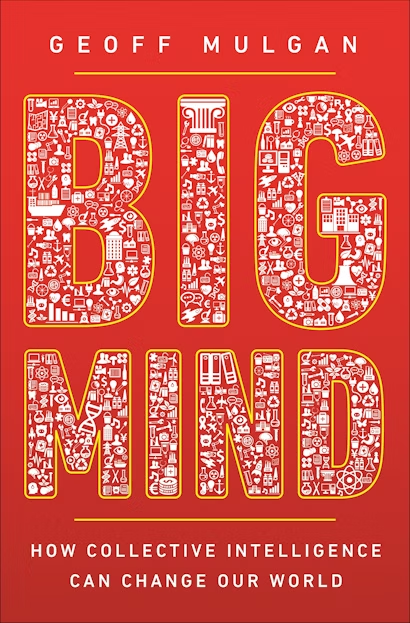
Big Mind: How Collective Intelligence Can Change Our World


It was COVID-19 that brought home to me the true significance of the 'collective' in the synonyms for group, population, polis, citizenry et al.. An integral part of Hodges' model, an individual, a person is clearly not an island.

Speech, gesture, behaviors, drawing, writing and other media all  provide a way of recording and representing information, and knowledge. Digital technologies are the latest tools to extend our memories, and ability to analyse, synthesise and abstract from and to our experiences.

How we see the individual and collective (society) is a subject of much debate across many disciplinary fields, spanning the sciences and humanities; economics, healthcare, sociology, ethics, and philosophy. Mulgan considers as infrastructure, the measures that have emerged to support collective intelligence:


'They have evolved from physical objects (such as steel production) through aggregate concepts (like GDP and GNP) to intangibles (such as innovation indexes or measures of the value of creative industries). They have evolved from single measures of things like population to indexes (like the UN Human Development Index), and from activities to outputs and then outcomes (such as QALYs - quality adjustied life years - and DALYs - disability adjusted life years in relation to health). In all these ways, both states and societies watch themselves and recognize well-calibrated observation as the precondition for thought.' (p.52)
Using Hodges' model the focus is primarily upon individuals and teams application. Mulgan's chapter 12 (pp.145-160) on 'Problem Solving' is subtitled 'How Cities and Governments Think'. An excellent question, that was asked of me in February. How can a national government be informed of Hodges' model and its potential utility? Cities have repeatedly had to solve problems created by changes in transport, work, housing, population density, the movement of people, goods, materials, and links to rural and agricultural centers. The logistics of access to routes, ports, airports, and where to place industries efficiently (and safely)? 'City planning' is a key example of our cities thinking?

Perhaps, we need to think of mobility in a cognitive sense, and not just AI-mediated. So as we walk, run, seek access - we should take care we don't get stuck!

Individual
|
      INTERPERSONAL    :     SCIENCES               
HUMANISTIC  --------------------------------------  MECHANISTIC      
 SOCIOLOGY  :    POLITICAL 
|
Group
subjectivity

models we use can be a trap (p.120)

emotional intelligence
quality
objectivity

SYSTEMS energy, food, transport..

physical media & 'memory'
quantity

'Society Thinking as a System?' Chap. 16.

Group - Collective

collective intelligence

Patient Reported Outcome Measures (PROMs)?

See also: 'literacy' : 'prevention' : 'service' : 'severe' : 'change'

Geoff Mulgan (2017) Big Mind: How Collective Intelligence Can Change Our World, Princeton University Press.

Image: Princeton University Press.

Wednesday, November 28, 2018

WHO Housing and health guidelines

"Recommendations to promote healthy housing for a sustainable and equitable future"

The quality of housing has major implications for people’s health. Housing in cities is of particular concern, with the world’s urban population predicted to double by 2050 and, with it, the demand for housing. In both developed and developing countries, improving housing conditions and reducing health risks in the home is thus critically important.

Improved housing conditions can save lives, reduce disease, increase quality of life, reduce poverty, help mitigate climate change and contribute to the achievement of a number of Sustainable Development Goals, including those addressing health (SDG 3) and sustainable cities (SDG 11). Housing is therefore a major entry point for intersectoral public health programmes and primary prevention. [Foreward, p.xii]


individual
|
INTERPERSONAL : SCIENCES
humanistic ------------ SDG 3 HEALTH----------- mechanistic
SOCIOLOGY : POLITICAL
|
group
Mental Health
Peace of Mind
Sense of Well-Being
Confidence
Identity


"Functional impairments are often operationalized in terms of whether a person can accomplish activities of daily living (ADL) or instrumental activities of daily living (IADL). IADL refers to basic tasks of everyday life such as bathing, dressing, transferring, toileting, continence and feeding. -

SDG 11 Sustainable cities
Housing - Dwellings
Indoors - Pollution - Outdoors
benzo[a]pyrene
carbon monoxide, particulate matter, ...
Indoor heat :: Indoor cold
Injury hazards, structure
Research
Weatherization
Heat - Temperature - Cold
Insulation
Space, Noise, Fuel, Energy, Light
Accessible home environments for people with functional impairments

ADL refers to a range of activities that are required for independent living in the community, such as preparing meals, housekeeping, taking medication, shopping, managing one’s own finances, travelling and using the telephone." p.69.

HOME -
 belonging, security and privacy

Household Crowding - health
Community
Water access
WASH water, sanitation and hygiene
Social interactions


local, regional, national government
Ministries of Health
Housing regulations
Standards
Policy
Funding - Cost Effectiveness
Reduce poverty
Impact of housing on:
morbidity
staying well, relapse risk
hospital admissions
recidivism  ...


Friday, October 18, 2019

Review: iv "Climate Change and the People's Health"

Climate Change and the People's Health
Whatever your educational philosophy when a book offers new concepts that is welcome learning. Learning enhanced when the concept, as is often the case, is a hybrid of terms.

Chapter 2 It's a Consumptagenic World looks at the veritable production of climate change. Our dependence on fossil fuels not just for our transport, but the transport of food and agricultural products is explored. Perhaps there is a political irony in the former slogan of education, education, education amid relentless growth, growth, growth. At least now there is a constant message regards there being "No Planet 'B'".

If chapter 1 considered food security, this chapter attends to the industrial food system. Once again the themes are first introduced and related back. Very interesting here is the rise of urbanisation and the drivers for this. In chapter 1 I noticed the word shift. Nurses are one occupational group that recognise this word only too well. Here though it is the shifts in population that is very worrying. Especially so when many people may be putting themselves in harm's way as chapter 1 described. It is encouraging to see references going back to the 1940s. There is an evidence trail.

Current economic systems seems to reward monopolies and creates externalities (p.60). Unfortunately there is a lack of evidence in the production of pollution if remediation is to be sought. The emission of greenhouse gases where products are produced may be remote from where they are consumed. Friel argues for accountability at the origin of products not where they are consumed. Such externalities are 'out of the box' and need to be put back in the box and properly accounted for - (ecological governance). Often industrial concerns also follow the cheapest ('best value?') labour markets, relocating when needed.

Friel really annoyed me. Yes, in a positive way. Figure 2.2 compares a range of consumer goods and how their cost has changed over time; food, housing, health care, versus technology, media goods for example (p.68). The need for sustainable health care services is a constant topic it seems (Centres of research, journal special issues, conferences, twitter chats...), but when the essentials of living are so expensive does this not undermine and load - displace the disparity - the inequity no-less on to the health sector, its workforce and funding? It is as if the scientific-economic-industrial complex is saying to the health care (and social care) sector "Carry This!". There is no choice. It is a consequence of the society in which the bulk of us live. As Friel writes, processed foods lend themselves to concentrated control of supply chains which can introduce pricing volatility (p.78). The price of good quality nutritional food is a health inequality (p.76); figure 2.3  (p.77) illustrates the system.

While reading I thought of how amid the emotional, social and economic ravages of dementia we talk (well some of us ...) of organisational memory, while having forgotten what 'local' means. The rise of glocalism and the pursuit of growth - at any price it seems - in some quarters even prompts a re-evaluation of philanthropy in the 21st relative to the 19th and 20th? I found myself wondering how we would recognise a shift (the shift) in the market's thinking when watching the business TV channels CNBC, Bloomberg and similar ilk? The consumptagenic system has an effect on organisational memory, it is a behaviour known as perseveration; repetition of the word: profit. For all the thoughts provoked in me, this book is not a capitalism bashing exercise. Far from it, it deals objectively with what remains a sad and dangerous reality.

If it were not for the realist and critical perspectives that must also be present, the efforts of technologists, policy makers and researchers (urban informatics) and others to create Smart cities would seem to guarantee success. The discussion on cities (pp. 93-112), their sustainability, projected populations and the health inequities arising from them is very illuminating. In a teaching situation there is a lot to engage students, not just in the 'city' but in the text overall.


Chapter 1. Climate Change, Global Justice, and Health Inequities

Chapter 3. Challenges and Future Prospects


Friel, S. (2019) Climate Change and the People's Health, Oxford University Press, New York

Monday, August 27, 2007

INTERPERSONAL links: Holistic Bliss or Tristram Shandy ... III

The INTERPERSONAL domain links are to my mind (no pun intended) fairly obvious, at least that first row complements the SCIENCES top row opposite.

Basically, who needs a talking therapy and who needs a drug therapy?

The two uppermost care domains are intended to represent the INDIVIDUAL axis, so just as the SCIENCES [ANATOMY & PHYS] domain covers physical care; so the INTERPERSONAL domain encompasses emotional and mental health care.

Hodges' model is comprised of four care domains, but it is these two [INTERPERSONAL : SCIENCES] applied to the individual that even today we struggle to balance in theory and practice.

A key factor in Brian Hodges' early nursing career (and mine) has been the role of institutions, organisations and the formal policies and structures they represent. This can be depicted as:

EMOTIONAL HEALTH : PHYSICAL HEALTH (both 'individual')
OTHERS family, society : INSTITUTIONS (both 'group')

As to the INTERPERSONAL links themselves - I arrived at mental health through reading a psychology text on Wundt and introspection, then James..... PSYCHOLOGY being of central importance in this domain has two listings, with MENTAL HEALTH and closely related THERAPIES also sharing the top row. I may swap these around: PSYCH-OLOGY as a cognitive science should be placed rightmost, while MENTAL HEALTH and THERAPIES should be further to the left being more 'humanistic'. What do you think?

Do the sciences have to be corralled in the SCIENCES domain? I think I remember Bryan Magee and John Searle in conversation noting that many disciplines with science in their title are probably not sciences - in that upper right hand quadrant sense. Maybe it is just that -

cognitive science : "SCIENCE" (physics, biology, chemistry)
social science : political science

- are still running wild out there, untamed and as yet unbroken? Cognitive science has however, clearly come of age and the 21st century will undoubtedly be the century of the brain when anatomy, physiology and genetics are linked to thought and individual (and even social) behaviour.

Already the content here highlights cognition (thought). The inclusion of other link categories in this upper-left set can be explained with recourse to cogitation. After PSYCHOLOGY, PHILOSOPHY (with ETHICS) is the rather obvious 'ology'.

For better or for worse our culture is driven more by IDEAS and ideology than philosophy. Call it the informal philosophical engine that drives CREATIVITY.

COMMUNICATION lies at the heart of all things human-e. Given the millennia that the patient-physician relationship has been around, you might expect it to be perfected by now. Well health and social care workers and the public they serve are still trying to reach empathic nirvana (although that may be to take communication a bit too far).

Hodges' model has a role to play supporting reflection for all.

IDEAS, COMMUNICATION lead us to belief and a central component in psychological therapies. Belief is also a thread can be used by one individual to lead others positively or to subvert other individual's capacity to think critically. It is in this INTERPERSONAL domain that good and evil are so proximal they create heat, fanned by a culturally driven winds of history and media from the South. Be-life indeed. Here then - THEOLOGY is purposefully placed with TRANSDISCIPLINARITY. If it is to serve humanity Religion must be bound and integrated into the corpus of knowledge and that includes reconciliation with the SCIENCES. We cannot deny myth and yet myth cannot deny evidence - a debate that will go on......

The economic emphasis placed
currently on creativity is quite remarkable, not just at a national level (cue ramble...). Cities recognise that their future development, sustainability and very survival depends on the generation and flow of ideas. Some things do not change. In myth a special place has been reserved for the isolated thinker, the one individual who takes themselves away for weeks-months, to be touched by the spiritual realm, to return to the community delivering insight, creative sustenance. Now creative individuals are needed more than ever. The isolation is virtual, the community potentially global. The energies of individuals are directed at solving problems concerning more mundane matters of cost, risk, flexibility and growth. Those creative outputs are distilled through team work and although they are then diluted they remain invaluable - such is the scale of the problems to be solved. Just as the great rivers that feed our cities have their sources - often remote and isolated in the high mountains, so ideas and creativity begin with one individual. That flow of personal knowledge now finally enters the ocean of KNOWLEDGE MANAGEMENT - EXPERT SYSTEMS (decision support systems).

I have a little mantra that I share with students. It's not perfect as there is much overlap; but I figure that what
aptitude is to engineering so attitude is to caring.

HEALTH PROTECTION and PROMOTION, SELF CARE are all about attitude.
Of course, money in the form of departmental budgets (those institutions do matter) and family income can make a huge difference, but if the right attitudes are not present then you may as well - "go fish!".

In light of the above STUDY SKILLS and EDUCATION and TRAINING speak for themselves - on this occasion at least. One of the original purposes of Hodges' model was to facilitate reflective practice
(more to follow). We are familiar with the mechanical tools in use everyday to the extent they are taken for granted. Now the focus of training is more likely on the software tools that translate IDEAS into art, artefacts and conceptual frameworks.... ;-) These graphical and design tools must be learnt and the HUMAN-COMPUTER INTERFACE and its ACCESSIBILITY 'quotient' can prove to be either a brick wall or a leg-up for the individual user (even if networked or a collaborative tool - see SOCIOLOGY links).

If the SOCIAL domain reflects the worlds of the others, then the last INTERPERSONAL row REST & RECREATION reflects something of me and my family.

"Next!" - the SOCIOLOGY domain links....

Friday, September 13, 2024

ROBOTPOLITICS

26 – 27 September, 2024 
UNIVERSIDADE ABERTA LISBON, PORTUGAL


The program includes:
  • The house is on fire, but this is fine: the incoming tsunami of disinformation 
  • Encrypted subjectivity in digital space 
  • You are (not) your avatar: personhood, personal identity and legal issues in mind uploading 
  • On Techno Dharma: Neurofeedback-assisted meditation as an enhanced technology of the self 
  • Mapped in real time: Affective technologies and the post-human subjectivity 
  • Does social bots rely on beliefs to communicate the science: An implication for misinformation. 
  • The Paradox of Information Abundance: Homogenization of Political Thought in the World of Social Media 
  • The main problems of Robotpolitics. Hints for their resolutions 
  • « Smart city » / Intelligent Citizen 
  • Smart Cities and Sustainability: Malthusian Sexual Robots 
  • Sex-Bots: Friend or Foe to Human Relationships? 
  • Towards Digital Platonism 
  • Autonomous weapons systems in armed conflicts: ethical and legal implications 

See also - The Jena Declaration: https://thejenadeclaration.org 

Previously on W2tQ robots

Sunday, May 14, 2023

Share your thoughts: Health Research & Community/Public Engagement

Dear HIFA Community,

As part of a multi-country scoping study commissioned by Wellcome Trust 

https://www.linkedin.com/company/wellcome-trust/

Pivot Collective: https://www.linkedin.com/company/pivotcollective/

- is conducting a rapid survey to better understand community/public engagement and knowledge exchange in health research.

*The Ask:* Provide your insights, thoughts and perspectives - click the survey here: 

https://lnkd.in/dgR6Wak3

This should take 15-30 minutes to complete, and data will be anonymised.

Please complete the survey by Wednesday 17 May 2023.

Thank you!

As background, this survey is part of a larger project that aims to identify more effective routes for communities to be involved in research, with *an ultimate goal of understanding how communities can play a genuinely meaningful, inclusive, and reciprocal role in the research ecosystem.

The project is led by Pivot Collective: https://www.linkedin.com/company/pivotcollective/ in partnership with - 

Eh!woza: https://www.linkedin.com/company/eh-woza
citiesRISE: https://www.linkedin.com/company/cities-rise
Restless Development: https://www.linkedin.com/company/restless-development
Vocal, Praxis, and Fiocruz.

If you'd like to learn more, please don't hesitate to reach out.
We are grateful for your time and insights, and would love to talk.

Best wishes,
Claire B. Cole

Co Director Pivot Collective Consulting +1 917.523.6523
claire AT pivotcollective.org
pivotcollective.org
27 Palmer Road, Muizenberg, 7945 

https://www.facebook.com/PivotCollective/
https://www.linkedin.com/company/30643635
https://www.instagram.com/pivot_collective/

HIFA profile: Claire Cole is Co-Director and Senior Technical Advisor at Pivot Collective USA. Research interests: Participatory and applied research; Sexual and reproductive health and rights; Adolescent health and development; HIV and AIDS; Marginalized and underserved populations; Adaptive management and adaptive implementation; Responsive health systems; Resilience; Implementation science.


My source:
You are receiving this message because you are a member of the community -
HIFA - Healthcare Information For All.

Saturday, April 18, 2026

'Our broken sticks' c/o Roger Lewin "Complexity: life at the edge of chaos"

Chapter 4 Explosions and Extinctions

  'Is Stu being led astray? I asked. "There's something called the broken stick model in statistics," said Dave. In this trick, a random number generator "breaks'' a stick a hundred inches long at twenty-five points, and produces twenty-six short sticks. Measure them, count the number that are one inch long, the number two inches long, and so on, and draw a histogram. You get a skewed distribution, toward the short end, just like many natural phenomena, including the distribution of sizes of U.S. cities, for instance. "One thing you have to remember about extinctions is that some species are more likely than others to die out, just because they exist as small, isolated populations,'' explained Dave. "This sort of statistical quirk can skew your results, easily." So, you would be suspicious of anything that looks like a power law? "I would, because it's common, just in the nature of statistics. It may tell you that a system is poised at a critical point, whatever that means, but it may not. In any case, when Stu says that the curve he gets from my data is close to a power law, he knows that there are many other mathematical models that could fit equally well."
  Clearly, there were many reasons to be cautious about drawing the conclusion that global ecosystems are poised at the edge of chaos, using just the extinction data.' p.80.
 
Hodges' model: Axes (structure) and Domains (content)

If we take the axes of Hodges' model, and break them at twenty-five points, I wonder what we end-up (or start) with?
 
Lewin, Roger. (1993) Complexity: life at the edge of chaos. London : Phoenix [Dent, 1993] ISBN: 1857990285.

Previously: 'complexity' : 'system'