Hodges' Model: Welcome to the QUAD: Search results for severe

Hodges' model is a conceptual framework to support reflection and critical thinking. Situated, the model can help integrate all disciplines (academic and professional). Amid news items, are posts that illustrate the scope and application of the model. A bibliography and A4 template are provided in the sidebar. Welcome to the QUAD ...

Showing posts sorted by relevance for query severe. Sort by date Show all posts

Tuesday, November 04, 2025

Descartes - alive and well ...

... within the Incident Reporting System

'Policy guidance on recording patient safety events and levels of harm 
This guidance is for users of the new Learn from Patient Safety Events (LFPSE) service, to provide context and guidance on selection of appropriate categories when recording incidents. It focuses on which Event Type is appropriate for different circumstances, and how to select the most appropriate options for the Levels of Harm categorisation required within Patient Safety Incidents.'

Previous harm grades

No harm
Low harm
Moderate harm
Severe harm
Death


individual
|
INTERPERSONAL : SCIENCES
humanistic -------------------------------------------  mechanistic
SOCIOLOGY : POLITICAL
|
group-population
New psychological harm grades

No psychological harm
Low psychological harm
 Moderate psychological harm
Severe psychological harm
n/a

New physical harm grades

No physical harm
Low physical harm
Moderate physical harm
Severe physical harm
Fatal


Q. 'n/a'. Discuss.

CPD reading.                      

Monday, December 30, 2024

Consultation: Community Mental Health Services [ UK Parliament ]

Source: Health and Social Care Committee, House of Commons, London, SW1A 0AA

'Community Mental Health Services

Inquiry

The Committee is undertaking an inquiry into community mental health services. The inquiry will examine what good looks like from the perspective of service users and their families/carers. The Committee would like the inquiry to shine a light on case studies of innovative practice and high-quality care across the country, and to undertake meaningful and impactful engagement with people accessing these services. 

The inquiry will consider how service users’ wider health and social needs can be addressed, including in employment and housing, and to understand what policy interventions are required to improve how these needs are met. As part of this inquiry, the Committee also wants to assess to what extent the Community Mental Health Framework is driving improvements in the delivery of more integrated, person-centred care. 

This inquiry is focussing on adults with severe mental health needs in particular, which includes but is not limited to people with bipolar disorder, schizophrenia and severe depression. The Committee recognises the scale of the challenge in children and young people’s mental health, and plans to do further work in this area in due course, building on its predecessor Committee’s 2021 inquiry. 

In line with the general practice of select committees, the Health and Social Care Committee is not able to take up individual cases or complaints. If you would like political support or advice you may wish to contact your local Member of Parliament.

This inquiry is currently accepting evidence

The committee wants to hear your views. We welcome submissions from anyone with answers to the questions in the call for evidence. You can submit evidence until Tuesday 4 February 2025.' 


Read the call for evidence before submitting:

https://committees.parliament.uk/work/8755/community-mental-health-services/

Sunday, January 05, 2025

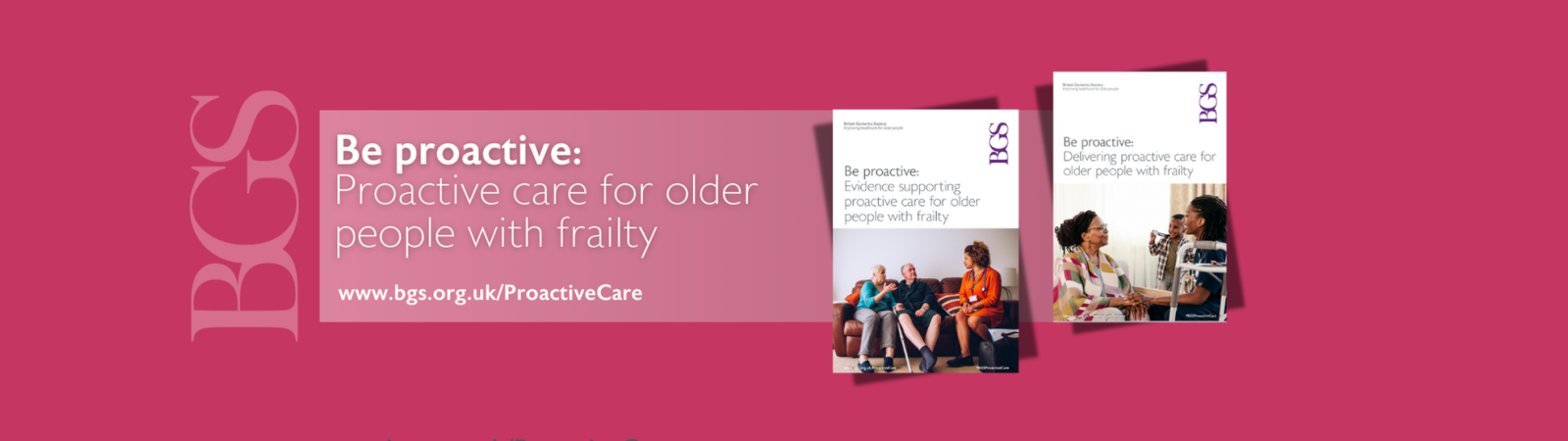
Be proactive: Evidence supporting proactive care for older people with frailty


'These BGS publications outline evidence and delivery recommendations for proactive care and support for older adults with moderate to severe frailty. 

We set out how to deliver proactive care against core components and key enablers, with recommendations for success of a proactive care service. Building on NHS England's proactive care guidance, Proactive care: providing care and support for people living at home with moderate or severe frailty, we also outline key recommendations for the successful implementation of proactive care services across the UK. 

We hope that users will be able to use all three documents when designing proactive care services, with the NHS England guidance document acting as key framework and starting point, BGS’s Be proactive: Evidence supporting proactive care for older people with frailty as a business case, and Be proactive: Delivering proactive care for older people with frailty  as a roadmap for implementing the NHS England framework and delivering services. ...'

https://www.bgs.org.uk/ProactiveCare


[All best Charlie (on your Christening Day), Casper and Jamie]. #hope #love #future #action #HealthCareer #LifeChances

Friday, March 13, 2026

'GlobalMinds' - NHS study severe mental health problems

Together we can change lives

Depression, bipolar, schizophrenia and related conditions affect millions of people around the world.

Yet mental health receives less than 1% of global research funding. 

This has left healthcare for these conditions stuck in the past:

Cross icon

Diagnosis can take years

Cross icon

Treatments target symptoms, not underlying causes

Cross icon

Half of the prescribed drugs cause severe side effects

GlobalMinds is a major research programme seeking to advance the understanding of mental health conditions and improve lives.


My source: 
News, NHS study to transform mental health treatment, The Times, 14 February, 2026, p.6

Sunday, March 15, 2026

ii 'GlobalMinds' - NHS study severe mental health problems

GlobalMinds has clearly stated goals and objectives. Three challenges that are highlighted:

  1. Diagnosis can take years
  2. Treatments target symptoms, not underlying causes
  3. Half of the prescribed drugs cause severe side effects

These are, to put it mildly, highly contested issues. Diagnosis in mental health/illness is problematic in several respects, for example:

INDIVIDUAL
|
    INTERPERSONAL    :     SCIENCES               
HUMANISTIC --------------------------------------  MECHANISTIC      
SOCIOLOGY  :   POLITICAL 
|
GROUP
a) Lack of Theoretical, Practical and Philosophical(?) agreement between: 
  • Psychology
  • Psychiatry
b) Individuals are self diagnosing
c) Access to mental health services can be highly structure - single-point entry
d) The evidence-base for treatment of mental illness is growing,but remains contested.
e) Perhaps there is a phenomena of people getting stuck, with not just a label, but a mindset?

a) Loss of trust in classification/coding schemes:
  • DSM
b) Proposed alternatives in -
c) Data defined scientifically:
  • existing diagnosis
  • biomarker

a) Increased awareness of mental illness, ADHD..
b) Behavioural explanations for mental illness
c) The determinants of mental illness (unlike, health?) are poorly researched (hence understood)
d) The vocabulary of mental illness (psychiatry) is more widely disseminated, hence used; not necessarily with full contextual understanding
e) Stigma associated with mental illness is nevertheless ongoing.


a) Reduced economic productivity
b) The socio-economic phenomena of NEETs
c) Increased demand on welfare benefits
d) The role of primary care - GPs
     - fit / sick notes
     - 'functional assessors' (Who is best placed?)
e) Loss of mental health beds, community compensations incomplete.


This will be a space to watch: and related (global) initiatives? 

Viewed from Hodges' health career - care domains - model, it appears an individual's life chances and expectations (family, and educational experience?) can result in their life chances being frozen?

Thursday, January 31, 2019

6th Health and Justice Summit: safety with continuity - Manchester i

Organised by Convenzis -

My exposure to forensic - prison nursing is trivial in contrast to the emotions, policy, issues, contention and hence importance that just the word 'prison' provokes. This statement can can be summarised in one point that was made this afternoon. That is, how any duty of care to prisoners must be balanced with the public's perception* of what should and should not be done. The word important is a moot one when the the aim is to stress the risk of being forgotten. Prison health is surely in danger of being lost within the Russian doll of mental health. Mental health that was (still is?) also the Cinderella service of health care? I refer to history in celebration since while there was mention of pressure of staff, long shifts, not feeling valued, heightened risk there was no shroud waving. Attending today was refreshing in the expressed passion, pride and enthusiasm that I heard; even while some of slides showing older and newer prison interiors and rooms - cells - were sobering (as they are supposed to be*).

My forensic experience is limited to time as a student nurse, making numbers up, on Ward 17 at Winwick. Visiting a medium secure unit to liaise and 'communicate' about the National Programme for IT and co-writing a paper on the Hodges' model in forensic settings. I have long wondered about the model being used educationally with groups in primary care, looking at stress and vulnerability, resilience, staying well ... and perhaps more selectively with this population. A strength here is the model's use: explicit - explained and shared or used implicitly guiding the 'teacher' or (more properly?) facilitator. We invest in 'life story' interventions for people with dementia. What about the 'life stories' of prisoners? It not the matter of their life story, but their lack of understanding of that story? What tools are there to help make sense of their 'health career' the life chances encountered and experienced in their lives?

https://equallywell.co.uk/
The keynotes this morning emphasised the facts and figures of the physical health of prisoners with severe mental illnesses [SMI] and the work of Equally Well. Amid many health problems the focus is upon obesity and smoking cessation.

Dr Alan Cohen from Equally Well, reported on surveys and analysis of national QOF data comparing the prevalence of people with SMI in ten long-term conditions. As per the summit website: “The physical health of those with a severe mental illness is held up as one of the last significant health inequalities. This presentation will explore some of the data that underpins that inequality. This will describe how it can be used to enhance services, through the development of a national learning network. Equally Well.”

There are plans for an evaluation phase of the work and other audits. Dr Cohen almost had me ask a question, with regards to some people having three health problems across least and most deprived populations. How can this be explained?

The second keynote c/o Stephen Watkins confirmed (for me) the history of mental health beds (below) and how ongoing studies and graphs can illustrate processes across prisons. How long do prisoners have to wait for mental health transfer and remission? Diagnoses, across gender, ethnicity and outcomes were also presented.
I will post soon on the workshops I attended. As is often found with satellite sessions the choice is difficult at times.

Tomorrow I must ask someone about 'social care' input. I have had cause to liaise with palliative care and local hospices recently, dementia and cancers. A question concerning a very literal form of 'in-reach' was asked for me. With four people to follow up with tomorrow, great organisation and day 2 to follow it will be a 'breeze' getting out of bed - even if that breeze is chilly...

individual
|
INTERPERSONAL : SCIENCES
humanistic ----------------------------------------------- mechanistic
SOCIOLOGY : POLITICAL
|
group


primary care
:::
Society: SOCIAL (care): Family interface ::::::
:::

Prison Health
--------------  INTERFACE -------------
Prison Service


individual
|
INTERPERSONAL : SCIENCES
humanistic ----------------------------------------------- mechanistic
SOCIOLOGY : POLITICAL
|
group

personal autonomy


OPEN door
CLOSED door
Mechanistic: 'Lock' 'Up'
Ability to step on the grass


Family involement
(What do they know?)


prison experience
in-validates the 'person'
narrows - restrains - autonomy


Reflective exercises: define 'continuity' as per Hodges' model?

What is the bandwidth of autonomy across the domains of Hodges' model?

Contrast the return to society of prisoners and service veterans?

Thursday, April 01, 2010

Launch of the National Care Service in England

Source: Department of Health, 30/03/2010

In the biggest change to the welfare state since the creation of the NHS, everyone who needs care when they are old or disabled will get it for free, Health Secretary Andy Burnham announced today as he launched the National Care Service in England.

The National Care Service will be based on a principle of shared social insurance and will be funded by contributions from everyone in a fair way. The National Care Service will ensure people get high quality care when they need it and it will give peace of mind that savings and homes will be protected from the expensive care costs that arise from serious long term conditions, such as Alzheimer’s or recovering from a stroke.

Andy Burnham said:

“Today we are launching a National Care Service that is fair for all, ending the cruel care lottery we have today. Like the NHS, everyone will contribute and everyone will get their care for free when they need it. This is the biggest change to the welfare state since 1948 and, like the NHS, it’s going to take time to build.

“The National Care Service will mean that people will be treated with dignity and respect, people will have control and choice over their care and they will be helped to stay in their homes for as long as possible. People who have to live in residential care will, from 2014, get their care for free after two years and there will be more help to pay the residential costs.

“We’re not replacing the millions of carers or families who look after each other. They are the underlying principle of the National Care Service and we will better support them.

“We’ve already laid strong foundations through reforms over the past few years. But, with an ever growing older population – there will be 1.7 million more people needing care in the next 20 years – we must radically overhaul the way care is paid for and provided.

“I feel very strongly that this is a responsibility we must all help to shoulder. And it’s clear from what we have heard from the thousands of people who have given us their opinions on this over the past twelve months, that people agree. That’s why we know that the fairest way to help everyone who is affected by a serious disease, illness or disability is for us all to pay into a system so we get free care when we need it.”
The cost of care is currently a cruel lottery. No one has any way of knowing how much care and support they may need in the future. A 65-year-old can expect to need care costing on average £30,000 during retirement. However, some people, for example people with severe dementia, could end up needing care costing as much as £200,000.

The National Care Service will put an end to this unfair system. It will be built on strong foundations of recent reforms and will overhaul the way care and support is paid for and provided. It cannot be built overnight and will be phased in three stages:

Stage One
• Build on the best of the current system through reforms that are already underway and deliver the Personal Care at Home Bill.

Stage Two
• From 2014 extend the coverage of free care so that people will receive free care if they need to stay in residential care for more than two years.
• Set up a commission to support consensus and advise the Government on the fairest and most sustainable way that people can make their contribution to a care system which is free when they need it.
• Set up a National Care Service Leadership Group of expert stakeholders who will advise Government on the implementation of the National Care Service, focussing on the systems and business processes that need to be put in place to make the National Care Service a reality.
• Introduce a National Care Service Bill to set the legal foundations of the National Care Service.
• Enshrine in law for the first time nationally consistent eligibility criteria for social care helping to remove the postcode lottery of care that exists now
• Push forward with the prevention agenda and continue the drive towards personal budgets so that by 2012 everyone who would benefit from a personal budget will have one.
• Ensure accurate, relevant and accessible information about what people are entitled to, how the assessment process works and how to access care services is provided to everyone.
• We want to improve the gateway for accessing social care and disability benefits to make simpler and easier for people.
• Introduce a quality framework including a body to drive up quality in social care.

Stage Three
• The introduction of a comprehensive National Care Service that is free when they need it for all adults with an eligible care need, funded by contributions.
Following the biggest ever consultation on care and support that saw over 68,000 members of the public, carers and representative organisations have their say, it is clear that people believe it is right that everyone should contribute to a care system that is free when people need it– similar to the NHS. However, the necessary consensus on how people should pay into such a system has not yet been reached. A National Care Service Commission, will therefore be established to advise Ministers on the fairest and most sustainable way for people to do so.

Care Services Minister Phil Hope said:
“We must find a fair way of funding the National Care Service. The stakes are very high. That’s why we must have a clear consensus. We are setting up a commission to tell us what would be a fair way for everyone to pay into this new system.

“Everyone will pay into it in a fair way and in return everyone will then have peace of mind that their savings and homes will be protected from high care costs. The whole of society will benefit and the National Care Service will support individuals and families for generations to come.”
The National Care Service will have six founding principles. It will:
  1. Be universal – supporting all adults with care and support needs within a framework of national entitlements.
  2. Be free at the point of use – based on need, rather than the ability to pay.
  3. Work in partnership – with all the different organisations and people who support individuals with care and support needs day-to-day.
  4. Ensure choice and control – treating everyone with respect and dignity, ,putting people in charge of their lives.
  5. Support family, carers and community life – recognising the vital contribution families, carers and communities play in enabling people to realise their potential.
  6. Be accessible – easy to understand, helping people make the right choices.

Contacts: Department for Health Email: NDS.DH at coi.gsi.gov.uk

Additional links:

DoH: 30 March 2010, The White Paper, Building a National Care Service

The Big Care Debate

Wednesday, February 25, 2009

Oh dear! I forgot to ask the nurse (doctor)....

Hodges' model introduction II:

The view from the other side of the fence


Have you ever been to see the doctor or nurse and shortly after leaving the surgery, or clinic you've remembered something? These days - very sadly - many people go to the doctor to seek help for their memory, but for others this is a fact of that frustrating mix of vital questions and issues to raise amid recognition that the time of nurses and doctors is very precious.

This post introduces a framework that can help people to prepare for a consultation and maintain a record of just where their care situation is up to. The framework in question is called Hodges' model. It is named after a retired Senior Lecturer - Mr Brian E. Hodges who lives in Sheffield, England. Brian Hodges created the model to help nurses and community staff ensure the care they deliver is holistic. Holistic in this sense means covering all the essential aspects that contribute to health and well-being, so that includes physical, emotional and mental and even spiritual health.

If you need to go into hospital you do not want to be treated like a faulty machine. Of course, in an emergency those machine-like things we do like heart beat, respiration, temperature regulation are of central importance. Should you ever need emotional care for a severe mental health problem then you would also expect that your physical needs are taken fully into account. Amidst these aspects of care the health care team must also pay attention to culture, equality, diversity and access to services.

Although the model was developed in the 1980s its relevance and potential increases in all the time. This is because of the following:

* health care and medicine is increasingly complex;
* people may have long term and multiple chronic problems;
* education is essential to 21st century care management - as people are expected to 'self-care';
- people may also be managing their own care budget and so need information and 360 vision;
* policy makers stress the need for 'patient choice';
* high quality health and social care is very expensive;
* as people live longer and may have several relationships spanning cultures and belief systems the notion of a health career is the career.

Hodges' model builds on two basic facts of life (and death):

From your point of view and that of any health or social care professional your health is about you - an INDIVIDUAL.

Your health affects other people - most significantly your family. Rather than you being ill, you may of course be a carer having to look after a relative. Also affected are work colleagues, the wider community through to whole GROUPS of people.

We now talk about medicine, well-being, and health in terms of global health since the population of Earth is so tightly linked and interdependent.

In order to maintain health there is a need to diagnose and intervene - or assess, plan, intervene and evaluate. Here the model can also take into account ethnic and transcultural aspects of health. Diagnosis and intervention in Western medicine is frequently MECHANISTIC and this is balanced (remember that HOLISTIC part of the model) by the need for HUMANISTIC interventions. This is what we mean by 'bedside manner' and people being 'caring'. The ability to empathise with others and develop a therapeutic rapport after physical and emotional trauma is a great gift - that while often innate can also be learned and honed.

Once Brian Hodges had identified the following dimensions of care:

INDIVIDUAL - GROUP and HUMANISTIC - MECHANISTIC

he considered the types of knowledge that health and social care workers need to not only do their job safely, effeciently and effectively, but also help people to help themselves. This led to the FOUR CARE or KNOWLEDGE DOMAINS, each covers a key aspect of care:

SCIENCES: e.g. anatomy, physiology,healing process, drugs, risk, diagnosis...

INTRAPERSONAL: e.g. mood, thinking, beliefs, communication, education, learning, coping...

SOCIOLOGY: e.g. relationships, roles, meaning, groups, resources

POLITICAL: e.g. choice, consent, autonomy, policy, legislation, finances

Students - young and mature - who decide to study health and social care can use the model to help them reflect on critical events in their training and learning. The model can help them gain some insights in completing essays and case studies integrating knowledge and experience. When you think about it: if it essential that care professionals are able to have an effective dialogue with patients and the public then they should also be capable of having an effective 'dialogue' with themselves.

Members of the public can also be taught the model to help them appreciate the factors involved in their care programs, solutions and ongoing management if required. Hopefully this brief explanation sheds some light on the model's mantra:

Hodges' Health Career (Care Domains) Model: h2cm
h2cm: help 2C more - help 2 listen - help 2 care

Hodges' model is no universal panacea it is just a tool; but while services stress the need for person-centered, integrated, value-for-money, high quality services ... built on respect, dignity, trust and choice - YOUR health career matters.

h2cm can help pull the many threads together....

<>

On the website's homepage there are four introductions based upon the care domains. Each one addresses a particular audience: learners (SCIENCES); patient (INTRAPERSONAL); carer (SOCIOLOGY) and policy maker / manager (POLITICAL). They all need updating (re-writing?!).

If you would like to contribute to this exercise please contact me through twitter or at h2cmng at yahoo.co.uk

Sunday, November 27, 2022

"No safety without emotional safety" by Veale, et al. (2022)

 INDIVIDUAL
|

 INTERPERSONAL    :     SCIENCES               
HUMANISTIC --------------------------------------  MECHANISTIC      
SOCIOLOGY  :   POLITICAL 
|
GROUP
psychological needs (risk)
inc. threat processing - treatment of interpersonal violence
'therapeutic
emotional safety (re-traumatisation)
control behaviour
severe panic with flashbacks, dissociation, and visual hallucinations
physical needs (RISK)
'low intensity touch'

environment' ... tepee - in room my safe space
physical safety (safe room)
to increase physical safety
privacy, lighting, doors, window

lived experience
family - relationship experience (touch)
'atmosphere'?
change in culture, positive risk-taking
person-centredness, family orientation in 'team'
Leadership
'therapeutic community'
Open Dialogue
CONTROL:
'take away' - autonomy, responsibility
policies - abuse risk, 'protect' patients and staff
regulatory reform
in-patient care, pets - policy
parity of esteem
Access (still) to therapies, CBT
Institutional risk
Alternative protocols


David Veale, Eleanor Robins, Alex B Thomson, Paul Gilbert, No safety without emotional safety, The Lancet Psychiatry, 2022, ISSN 2215-0366, https://doi.org/10.1016/S2215-0366(22)00373-X. (https://www.sciencedirect.com/science/article/pii/S221503662200373X)

My source:
https://twitter.com/tadhg50/status/1596901626765529091?s=20&t=FJe9qpYUrxHN2yxWEWLUdQ
The purposes of Hodges' model is to identify the concepts that have salience clinically, to the person, be they - patient, carer, student ... and then to integrate care, to draw the care domains together into a 'whole'.

Four original purposes of Hodges' model: 

1. Reflection, reflective practice, critical thinking
2. Person-centred care
3. Holistic - integrated care
4. Bridge the Theory - Practice gap

Thursday, September 04, 2025

Parity of Esteem: It's all smoke and mirrors ...

Having just visited the National Gallery and an exhibition on Millet:

https://www.nationalgallery.org.uk/exhibitions/millet-life-on-the-land

Dr Sanil Rege on twitter provided:


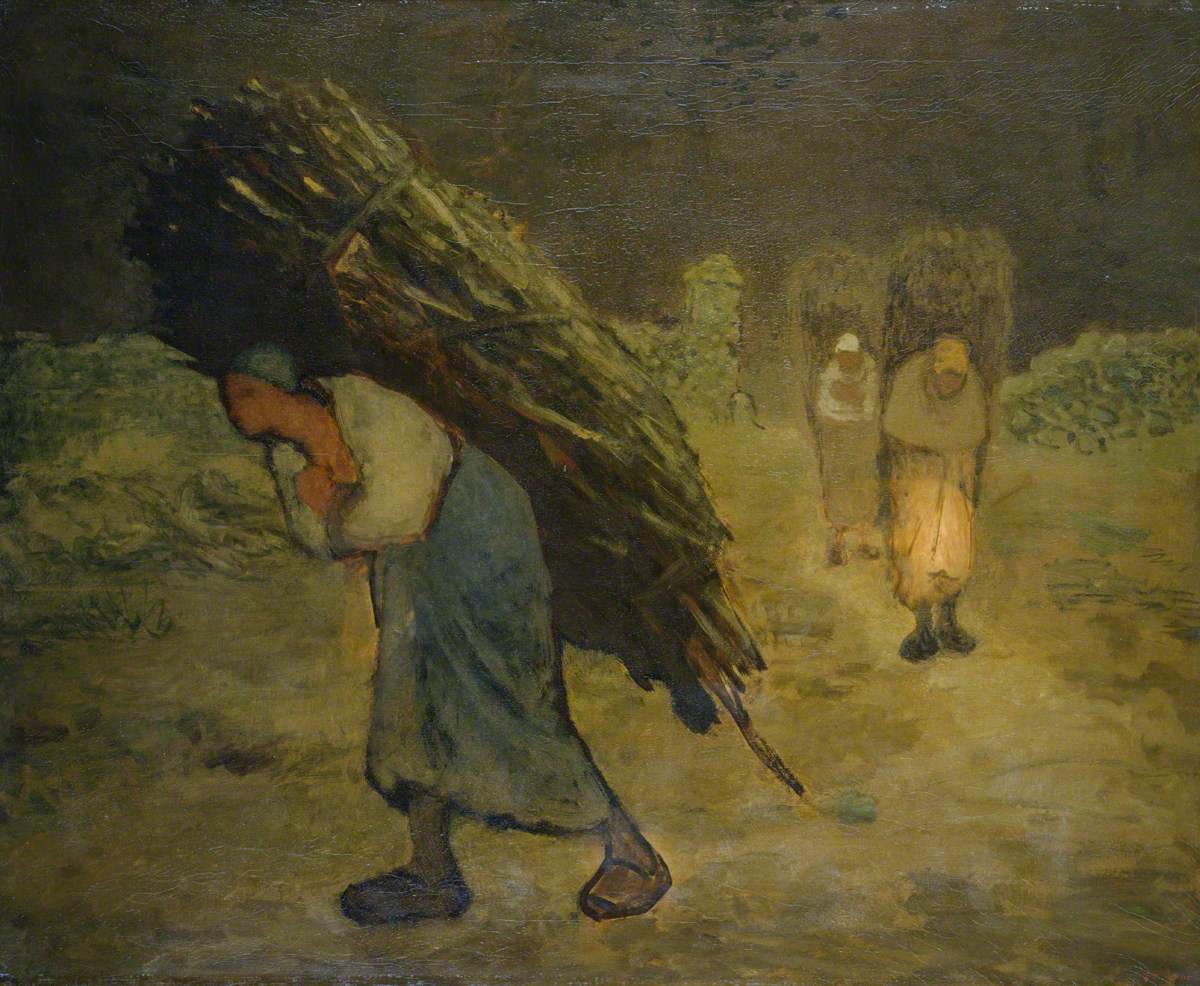
Seeing, and reading (again?) about 'The Faggot Gatherers' I couldn't help but see socio-economic history enacted:

'Two women are taking a short rest from gathering tree branches for sale as firewood. The older woman’s hunched back and clawed hands betray a lifetime of physical toil. The setting is the forest of Fontainebleau, south of Paris, close to the village of Barbizon. Millet was an exponent of Realism, a movement that rejected historical art and idealisation in favour of a truthful view of contemporary reality.'

Text: https://www.nationalgalleries.org/art-and-artists/232271
Winter, The Faggot Gatherers Jean-François Millet (1814–1875) National Museum Cardiff

The National Gallery's accompanying text reads:

'Three women are on their way home trom the forest of Fontainebleau. One of its entrances, the Porte aux Vaches, is visible at the back right. The staggering scale of their loads threatens to overwhelm them in their stumble homewards. The scene evokes Millet's 1851 letter to his biographer Alfred Sensier, in which he described how seeing 'a poor figure laden with a faggot reminded him of the constant fatigue of people's lives.
While the painting is unfinished, the elemental figures are typical of Millet's vork. The extreme simplification of their forms results in austere silhouettes.'

Mental illness has always been a facet of humanity, evidence of trephination from prehistoric times and across cultures and geographies bears testimony to the mind - body divide. Life was brutish physically too. What chance did the weakest stand? If, that is a broken bone: you could be left behind? But perhaps we underestimate the knowledge and experience of our ancient ancestors. Knowledge gained and passed orally, culturally, even before written history. Perhaps too, we struggle to understand how early humanity expressed itself beyond the big-stick of nature and the struggle for survival as the hominids that led to 'us' were winnowed down?

Even as recent as the 19th century life was hard. As the notes above attest, Millet's work seeks to record the sheer physicality of labour, even as the industrial age emerged. The advent of the industrial revolution brought its own pressures and privations, as pastoral life is replaced with change work at home (spinning cotton) to urban and factory growth. 

Severe mental illness would have been institutionalised in poor houses, religious and charitable organisations. Parity of esteem is grounded, to some extent in the questions: "What happened to you?", or "How are you feeling today?" In Millet's work the physical cost and strain stands out. While in the L'Angelus there is debate about prayer, or grief. What is visible usually speaks first, and stands for itself. This is why self-awareness, reflection, critical thinking, observational and interpersonal skills are important; and why mental health nursing calls for specific knowledge and skills. And, in psychiatry too, even when the same is contested.

Image source: Oil on carvas Lent by Amgueddfa Cymry - Museum Wales. Bequeathed by Gwendoline Davies in 1952.

Sunday, September 20, 2026

'Shattered' by Hanif Kureishi

Cathleen Schine, Ungovernable, Capricious Life, The New York Review of Books, April 10, 2025, Volume LXXII, Number 6, pp.15-16.

Shattered by Hanif Kureishi. Ecco, 328 pp., $28.00

'Shattered' c/o Penguin  

'Hanif Kureishi, the English playwright, screenwriter, and novelist, posted these words on his Substack in January 2023: 

  On Boxing Day, in Rome, after taking a comfortable walk to the Piazza del Popolo, followed by a stroll through the Villa Borghese, and then back to the apartment, I had a fall.

I had been following Kureishi's Substack for a while out of admiration, curiosity, and loyalty-though Id met him only once, briefly. His dispatches were warm and entertaining, often about the writer's life. But this one was shocking: 

   I cannot move my arms and legs. I cannot scratch my nose, make a phone call or feed myself. As you can imagine, this is both humiliating, degrading and a burden for others. 

According to his hospital report, his fall resulted in neck hyperextension and immediate tetraplegia. An MRI scan showed a severe stenosis of the vertebral canal with signs of spinal cord injury from c3 to C5. It was unclear, he said, whether he would be able to walk again "or whether I'll ever be able to hold a pen." He was speaking these words through Isabella, who was slowly typing them into her iPad.' p.15.

individual
|
INTERPERSONAL
: SCIENCES             
humanistic ------------------------------- mechanistic
SOCIOLOGY : POLITICAL   
|
group
shattered

SHATTERED

SHATTERED

shattered


'A hospital is the place from which modesty and dignity disappear, desert you, seemingly forever, as soon as you cross the threshold. Kureishi, a reliably sexy, unrestricted writer, presents the physical deterioration and indignities he undergoes with his usual wit. The sense of vulnerability is crushing, but it is also one of the characteristics Kureishi reveals about himself that makes him so likable here, and the writing so intimate. The tone is remarkable: even the self-pity has no self-pity. One way he achieves this is by sprinkling punch lines throughout:

I woke up and started to cry. When you cry you must wipe away your tears, which is something I'm unable to do. So my eyes filled with bitter salty water and I got into a panic and thought I might lose my eyesight along with everything else. Finally, a kind nurse came into my room and downed me with a good dose of Lorazepam, then she touched me on my cheek and said, "It's not so bad, at least you're not in a coma."' pp.15-16.

Saturday, August 24, 2024

"In HIFA - let's save a space to make sense of mountains of data"

Dear All, (HIFA mail list)

While rather expansive in scope not just reaching to the arts but also referencing nature and mountains, the following blog post may be of interest:

"Health & Care results in mountains of data: c/o Burke & Cao 2024"

https://hodges-model.blogspot.com/2024/08/nan-shepherd-.html

While the focus and purposes for HIFA are clear, in practice 'information' (data, facts, knowledge, wisdom) must always be contextualised, situated, and (potentially) justified.

In addition to relying on the sciences, medicine, nursing and healing practices are also characterised as arts.

See also, the digital humanities and more specifically - 'Intima: A Journal of Narrative Medicine' https://www.theintima.org/

There have been many posts about records recently, but of course it what goes into the record that is critical.

Salience, what we pay attention to is key.*

The record is critical if something goes wrong and a professional finds themselves in a Coroner's court, and/or disciplinary hearing. The previous posts also discuss the patient's access to their medical record.

I'm not sure if the point has been made but even before 'health literacy' is taken into account, given access a patient may identify many mistakes/errors within the record on many details including demographics and procedures, treatments, diagnoses applied. (There are studies confirming the same - a benefit of IT systems.)

In mental health service - England the care programme approach (CPA) has ended - been retired. Some argue this has been done 'quietly'.

While the emphasis on documentation since 1990s has been onerous for some practitioners in the need for a 'comprehensive' record, the principles of CPA are well-based in practice: Patients (families) are entitled to - 1. A care assessment 2. A care plan 3. A named care-coordinator - keyworker 4. A review 6 monthly; annually as a minimum

For more than a year 1995.., I worked full and p/t as CPA co-ordinator for Chorley and South Ribble Health Authority; and produced a report highlighting the potential benefits of information technology in data gathering and processing and information reporting. (A conference was also organised with 60+ delegates, and 10 software vendors demonstrating their wares.)

The news drove the development and introduction of CPA during the late 1980s, with often stigmatising headlines for many people affected with mental illness - including psychosis it must be added. Recent events are troubling for society and services now, and in terms of history repeating itself:

"On average over a hundred people in Britain a year are killed by someone with serious mental illness. On the day the NHS is Nottingham is found to have missed opportunities to stop Valdo Calocane killing 3 people we ask why lessons aren’t being learned." 'X' https://x.com/BeckyJohnsonSky/status/1823459379846271002

"Between May 2020 and February 2022, eight risk assessments were completed for Calocane by the trust, which the CQC said appear to have been carried out for each of his admissions to hospital and updated at other times during his care. The regulator said that while some risks were highlighted, other assessments “minimised or omitted key details”. https://careappointments.com/care-news/england/211213/cqc-review-of-nottingham-killers-care-finds-key-risk-details-minimised-or-omitted/

The state of mental health services in the UK is much debated and here too 'information' is critical, especially 'seeing' the person and the nuances of interpersonal communication skills. These are often encountered through non-verbal communication and 'clinical intuition' which must be related to professional experience.

So information must simultaneously be recognised as a mechanistic and humanistic melange of processes, purposes, practices and policies (4P's in Hodges' model).

As highlighted before we can also contrast HIFA's and practitioners efforts to combat the severe implications and risks of 'information disorder'. And yet, also recognise how the arts, innovation and creativity also contribute to interpersonal engagement, therapeutic goals, case formulation, health and other literacies using *metaphor* and *analogies* - as per Nan Shepherd's musings explored in the blog post by -

Burke, R., Cao, E. To Care for a Mountain - What medical practitioners can learn from Nan Shepherd. Oxford Review of Books, Summer 2024, Volume 8, Issue 2. p.14. In association with Stanford. (open access)

Patient, public and practitioner safety is always the aim & objective.

Further reading & notes: https://www.cqc.org.uk/publications/nottinghamshire-healthcare-nhsft-special-review-part2/risk-assessment

Whiting, D., Gulati, G., Geddes, J.R., Dean, K. and Fazel, S. (2024), Violence in schizophrenia: triangulating the evidence on perpetration risk. World Psychiatry, 23: 158-160. https://doi.org/10.1002/wps.21171

*I hope to contribute to a 'philosophy of attention' research project, my contribution will draw on clinical experience above and apply Hodges' model to explore and debate ... 'attention', starting in 2025 to c.2030.

Regards to all, Peter Jones

Friday, August 21, 2020

Allport's Scale of Prejudice - 1 to 5

individual
|
INTERPERSONAL : SCIENCES
humanistic ----------------------------------------------- mechanistic
SOCIOLOGY : POLITICAL
|
group - population
? ?
?
  1. Antilocution: Antilocution occurs when an in-group freely purports negative images of an out-group. Hate speech is included in this stage. Although antilocution itself may not be harmful, it could set the stage for more severe outlets for prejudice (see also ethnic joke).
  2. Avoidance: Members of the in-group actively avoid people in the out-group. No direct harm may be intended, but psychological harm often results through isolation (see also social exclusion).
  3. Discrimination: The out-group is discriminated against by denying them opportunities and services, putting prejudice into action. Behaviors have the intention of disadvantaging the out-group by preventing them from achieving goals, getting education or jobs, etc. Examples include Jim Crow laws in the US, the Statute of Kilkenny in British Ireland, Apartheid in South Africa, the Nuremberg Laws in 1930's Germany and antisemitic laws in the Middle East.
  4. Physical Attack: The in-group vandalizes, burns, or otherwise destroys out-group property and carries out violent attacks on individuals or groups. Physical harm is done to members of the out-group. Examples include pogroms against Jews in Europe, the lynchings of blacks and Italians in the US, ongoing violence against Hindus in Pakistan and Muslims in India.
  5. Extermination: The in-group seeks extermination or removal of the out-group. They attempt to eliminate either the entirety or a large fraction of the undesired group of people. Examples include the Cambodian genocide, the Final Solution in Nazi Germany, the Rwandan genocide, the Armenian Genocide, the Genocide of the Hellenes and ethnic cleansing in the Bosnian War. 
Source: https://en.wikipedia.org/wiki/Allport%27s_Scale


Gravells, A., Simpson, S. (2009) Equality and Diversity in the Lifelong Learning Sector, Exeter: Learning Matters Ltd. pp.65-66.

See also: 

IMPACT: Prejudice and Discrimination i

Allport, Gordon (1954). The Nature of Prejudice. Cambridge, Mass. Addison-Wesley.


Saturday, November 10, 2018

South Sudan Medical Journal - November 2018

 http://www.southsudanmedicaljournal.com/

Dear SSMJ Reader,

The November 2018 issue of the South Sudan Medical Journal is now on online and includes articles on Ebola, Caesarean Section and Obstetric fistula. You can download the complete issue as a pdf here or the individual articles listed below.

Please share this notice with your colleagues.

EDITORIAL
Keeping an eye on Ebola Virus Disease Edward Eremugo Kenyi
Between June and November 1976, the medical world was baffled by an outbreak of a ferocious haemorrhagic disease in Nzara, South Sudan (then part of Sudan). This became known as Ebola Virus Disease (EVD). The West African outbreak in Guinea, Liberia and Sierra Leone in 2014 was devastating.  A new outbreak in DR Congo in 2018 is a warning to South Sudan to be on high alert.

ORIGINAL RESEARCH
Knowledge of type 2 diabetes mellitus and adherence to management guidelines: a cross-sectional study in Juba, South Sudan Alexandre Ali M. Bili and Longying Zha
Inadequate education and the lack of efficient diabetes care centres compounded by high costs are common barriers for diabetes care. This study assesses the level of knowledge and adherence to guidelines for management of type 2 diabetes in South Sudan.

Knowledge, attitude and willingness to accept Caesarean Section among women in Ogbomoso, southwest Nigeria Olumuyiwa A Ogunlaja, Idowu P Ogunlaja, Samuel E Akinola, Olufemi O Aworinde
Caesarean Section (CS) is a common procedure in obstetrics and has contributed immensely to improving maternal and foetal outcome. The study which seeks to assess the level of knowledge, attitude and acceptance of women about CS in Ogbomoso, Nigeria, concludes that mothers should be educated on the process involved in Caesarean delivery.

Obstetric fistulae, birth outcomes, and surgical repair outcomes: a retrospective analysis of hospital-based data in Dodoma, Tanzania Athanase Lilungulua, Balthazar Gumodokab, Mzee Nassoroc, Patrice Sokac and Kibusi Stephen
Obstetric Fistula (OF) among pregnant women remains a widespread condition with devastating consequences and poses a significant challenge in a community as well as globally. The study concludes that timely fistula repair by experienced fistula surgeons will improve outcomes and limit the clinical insult and distress that OF invariably causes.

CLINICAL GUIDANCE
How to repair a vesico-vaginal fistula Brian Hancock
Most fistulae are caused by ischaemic necrosis of the genital tract and adjacent organs through prolonged obstructed labour. This article provides a brief overview and refers the reader to resources that cover the practical aspects of the surgery and holistic care of the patient.

MAIN ARTICLES
Ebola Virus Disease: epidemiology, management, prevention and control Gasim Abd-Elfarag
Ebola Virus Disease (EVD) is part of the group of illnesses known as viral haemorrhagic fevers, and was previously known as Ebola haemorrhagic fever. Infection with EVD is acute, severe and often fatal in humans. The paper provides an outline of what is known about EVD.

Ebola on our doorstep: Ebola Virus Disease preparedness in South Sudan Richard Lako and Otim Patrick Cossy Ramadan
South Sudan has previously experienced three EVD outbreaks in 1976, 1979 and 2004. With recent outbreaks in DR Congo, it is possible that a sporadic outbreak can happen in South Sudan, and so the country is always at risk. Preparedness is key.

COMMENTARIES
Internship training in South Sudan: the challenges and way forward Jessry Pasquali Oboya
The House Officer is the professional whom the patient meets most often when entering hospital and will remember for a long time. The extraordinary commitment and work load of the House Officers at Juba Teaching Hospital has received little recognition by the authorities despite the challenges they face in the course of their training.

The current crisis of human resource for health in Africa Brian Madison
Brain drain has been a source of despair for developing countries, and the healthcare sector arguably bears the biggest brunt imposed by this growing problem. The author argues that if Africa is to counter the healthcare human resources crisis, member states may need to adopt radical reforms in the healthcare sector.

SHORT ITEMS
Caesarean Section acceptability and rate in South Sudan
Call for submissions
Obituaries

BACK COVER
Neonatal resuscitation chart
This chart is designed with the ‘Helping Babies Breath’ training in mind. However, it incorporates external cardiac massage, which can be effective in some cases.

All previous issues of the journal are in the Archive section, and you can ‘search’ for particular articles.

Please support the journal by submitting items for future issues. We are interested in articles on your research, case reports, and clinical guidance, as well as news of projects, and relevant photographs. We can help you prepare these for publication (see our ‘Authors’ Guidelines’). We welcome letters to the editor and questions. Send your contributions to the Editor-in-Chief, Dr Edward Luka admin@southernsudanmedicaljournal.com. 

If you are not already a member, join our Facebook Group and share your news and experiences and ideas.

You can follow us on twitter: @SSMedJournal. Other people can be added to our mailing list by clicking here.

SSMJ is a member of African Journals Online – see who is downloading SSMJ abstracts and articles here. We are listed in the Directory of Open Access Journals (DOAJ), you can find and search DOAJ for SSMJ articles here.

Kind regards
The SSMJ team