Hodges' Model: Welcome to the QUAD: fatigue

Hodges' model is a conceptual framework to support reflection and critical thinking. Situated, the model can help integrate all disciplines (academic and professional). Amid news items, are posts that illustrate the scope and application of the model. A bibliography and A4 template are provided in the sidebar. Welcome to the QUAD ...

Showing posts with label fatigue. Show all posts

Sunday, September 13, 2026

Book Announcement | The Examined Illness: A Philosopher's Confrontation with Deadly Disease

The Examined Illness
Intellect is pleased to share that The Examined Illness: A Philosopher's Confrontation with Deadly Disease, by Darrel Moellendorf, is out in paperback and hardback.

A visceral personal memoir of being seriously unwell – and the consolations of philosophy during sickness. Being a patient is part of being alive. Disease and serious illness often strike randomly, and when they do, we quickly become subject to the impersonal forces of biochemistry and pharmacology. We rarely think about sickness beforehand and are often totally unprepared for it when it happens. Suddenly, there we are, subject to a standard treatment protocol. Darrel Moellendorf learned this by experience during a month confined to a solitary and sterile hospital room where he received a life-saving stem cell transplant. His room was somebody’s workspace, his schedule was somebody’s work routine, his immune system was systematically crushed, and his prognosis was out of his hands. There was no assurance that it would all work out.

Having spent thirty years teaching philosophy to college students, He was facing the biggest test of all—perhaps the final exam. These are his reflections before, during, and after his cancer treatment, written in real time. He writes, “My brain was sometimes addled by the chemotherapy that sapped my energy and destroyed my immune system, but I wrote out of the conviction that living well includes living well with disease, and eventually living well facing death.” This memoir expresses the conviction that the virtues of patience, courage, trust, and hope serve us well. A measure of good humor also can’t hurt.

Part of the Global Health Humanities series.

Table of Contents

Acknowledgements
Introductory Note

Part I: Diagnosis

1. First Thoughts and Second Opinions
2. Healthcare for All Pt. 1
3. Patients and Patience
4. Father to Son and Back
5. Give It Up for Lent!

Part II: Inside
6. Day 7: The Countdown Begins
7. Day 6: Carpe Diem
8. Day 5: Vegetarianism Is Not an Option
9. Day 4: Sweatin’ and Shakin’
10. Day 3: Making Decisions When You Can’t Think
11. Day 2: Nausea and Fatigue
12. Day 1: Courage
13. Day 0: Communion
14. Day +1: Confinement
15. Day +2: Waiting and Anxiety
16. Day +3: Relaxed
17. Day +4: Toiling and Spinning
18. Day +5: Healthcare for All Pt. 2
19. Day +6: Patience and Hope?
20. Day +7: A Letter Arrives
21. Day +8: Anaemia
22. Day +9: Why I Write
23. Day +10: Why I Dyed My Hair Blue
24. Day +11: Shorn
25. Day +12: Tired, Itchy, and Hiccupping
26. Day +13: Waiting
27. Day +14: Signs of Progress
28. Day +15: Turn Me Lose, Set Me Free
29. Day +16: Fresh Air
30. Day +17: Postponement

Part III: Recovery
31. Home Sweet Home
32. Home Update
33. The Social Determinants of My Survival
34. Letting the Days Go By
35. A Thread of Good Fortune
36. Magical Thinking
37. Hope Kept Me Eating
38. Sunshine, Suffering, Rebirth, and Freedom
39. Food Aversions
40. Inching Towards Normalcy
41. Human Fatigue and Canine Anxiety
42. Healthcare for All Pt. 3
43. Still Wearing My Helmet
44. Same as It Ever Was
45. Who Is That Masked Man?
46. Inspiration in the Oncology/Haematology Waiting Room
47. With a Little Help from My Friends
48. Springtime on My Face
49. Feeling the Love … and the Likes
50. Disease, Bodily Alienation, and Transhumanism
51. Dem Fingernails
52. Traversing the Rim of the Valley of the Shadow of Death
53. The Examined Illness

Epilogue: Living with Mortality
References


Please visit our website for more information:
www.intellectbooks.com/the-examined-illness

--
My source: Georgia Glasspole
Marketing Executive (she/her)
Intellect  | 0117 9589910 | georgia AT intellectbooks.com
Thursday, September 04, 2025

Parity of Esteem: It's all smoke and mirrors ...

Having just visited the National Gallery and an exhibition on Millet:

https://www.nationalgallery.org.uk/exhibitions/millet-life-on-the-land

Dr Sanil Rege on twitter provided:


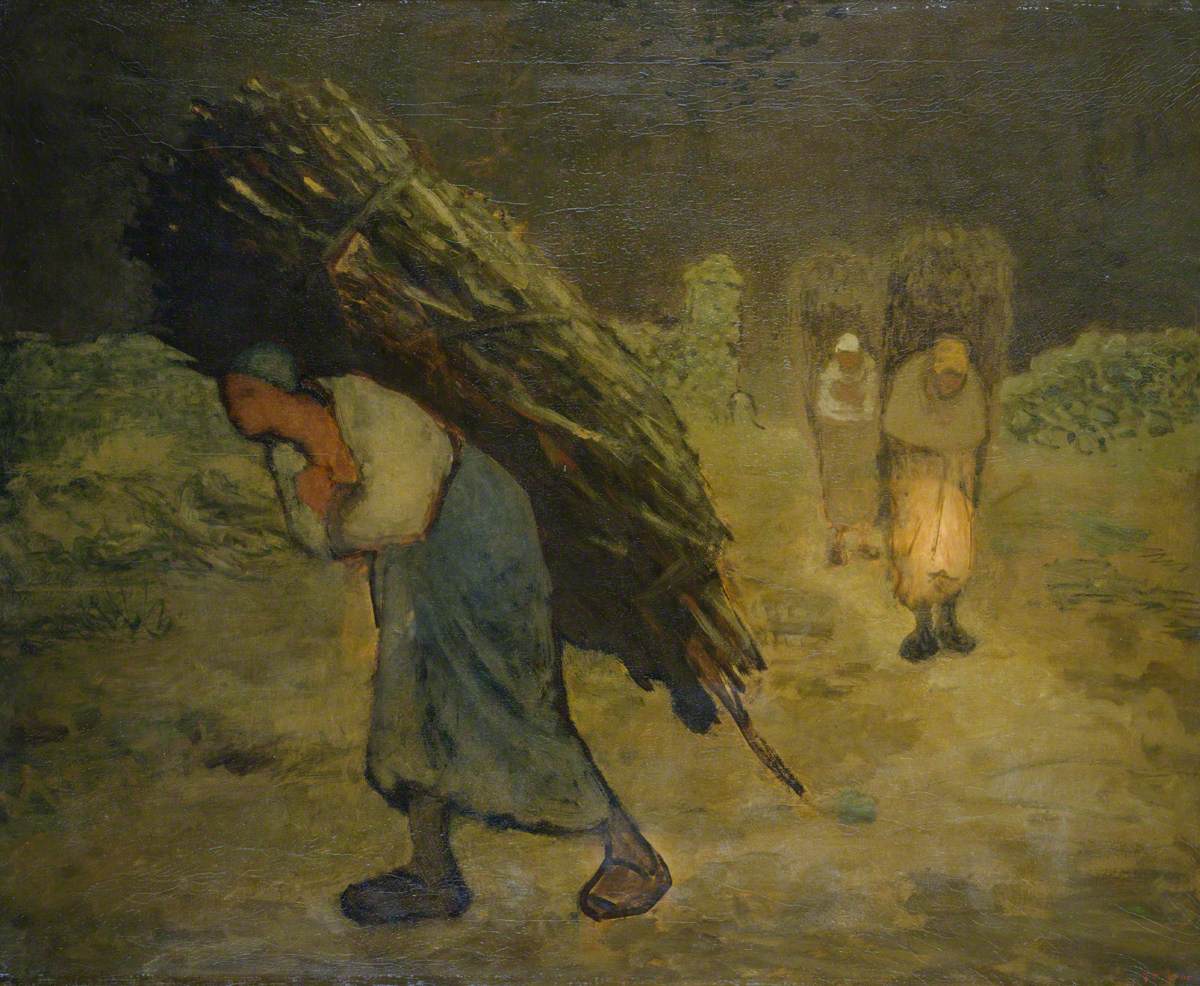
Seeing, and reading (again?) about 'The Faggot Gatherers' I couldn't help but see socio-economic history enacted:

'Two women are taking a short rest from gathering tree branches for sale as firewood. The older woman’s hunched back and clawed hands betray a lifetime of physical toil. The setting is the forest of Fontainebleau, south of Paris, close to the village of Barbizon. Millet was an exponent of Realism, a movement that rejected historical art and idealisation in favour of a truthful view of contemporary reality.'

Text: https://www.nationalgalleries.org/art-and-artists/232271
Winter, The Faggot Gatherers Jean-François Millet (1814–1875) National Museum Cardiff

The National Gallery's accompanying text reads:

'Three women are on their way home trom the forest of Fontainebleau. One of its entrances, the Porte aux Vaches, is visible at the back right. The staggering scale of their loads threatens to overwhelm them in their stumble homewards. The scene evokes Millet's 1851 letter to his biographer Alfred Sensier, in which he described how seeing 'a poor figure laden with a faggot reminded him of the constant fatigue of people's lives.
While the painting is unfinished, the elemental figures are typical of Millet's vork. The extreme simplification of their forms results in austere silhouettes.'

Mental illness has always been a facet of humanity, evidence of trephination from prehistoric times and across cultures and geographies bears testimony to the mind - body divide. Life was brutish physically too. What chance did the weakest stand? If, that is a broken bone: you could be left behind? But perhaps we underestimate the knowledge and experience of our ancient ancestors. Knowledge gained and passed orally, culturally, even before written history. Perhaps too, we struggle to understand how early humanity expressed itself beyond the big-stick of nature and the struggle for survival as the hominids that led to 'us' were winnowed down?

Even as recent as the 19th century life was hard. As the notes above attest, Millet's work seeks to record the sheer physicality of labour, even as the industrial age emerged. The advent of the industrial revolution brought its own pressures and privations, as pastoral life is replaced with change work at home (spinning cotton) to urban and factory growth. 

Severe mental illness would have been institutionalised in poor houses, religious and charitable organisations. Parity of esteem is grounded, to some extent in the questions: "What happened to you?", or "How are you feeling today?" In Millet's work the physical cost and strain stands out. While in the L'Angelus there is debate about prayer, or grief. What is visible usually speaks first, and stands for itself. This is why self-awareness, reflection, critical thinking, observational and interpersonal skills are important; and why mental health nursing calls for specific knowledge and skills. And, in psychiatry too, even when the same is contested.

Image source: Oil on carvas Lent by Amgueddfa Cymry - Museum Wales. Bequeathed by Gwendoline Davies in 1952.
