Hodges' Model: Welcome to the QUAD: physical health

Hodges' model is a conceptual framework to support reflection and critical thinking. Situated, the model can help integrate all disciplines (academic and professional). Amid news items, are posts that illustrate the scope and application of the model. A bibliography and A4 template are provided in the sidebar. Welcome to the QUAD ...

Showing posts with label physical health. Show all posts

Friday, October 16, 2026

Mental Health and Physical Activity

You know you're on the right (running) track when there is a journal that seeks to address the fundamentals of parity of esteem that is mental and physical health:

Robertson, R., Robertson, A., Jepson, R., and Maxwell, M. (2012) Walking for depression or depressive symptoms: A systematic review and meta-analysis, Mental Health and Physical Activity, 5, 1, 66-75. ISSN 1755-2966 https://doi.org/10.1016/j.mhpa.2012.03.002.

Sometimes, geography matters too in terms of intervention choices and the population of a study:

Moran, R., Sperandei, S., Peel, N., Gray, T., and Reis, A. (2024) The long-term effect of surf therapy on posttraumatic stress, depression, and anxiety symptomology among current and former Australian defence force members - A nonrandomised controlled longitudinal study in a community setting. Mental Health and Physical Activity, 27, 100629, ISSN 1755-2966. https://doi.org/10.1016/j.mhpa.2024.100629.

While researchers seek an holistic view -

Ciaccioni, S. et al. (2026) Modifiable determinants of adolescents’ physical activity and sedentary behaviour in school, home and mixed settings: A DE-PASS systematic review and meta-analysis of self-reported data with a holistic analysis. Mental Health and Physical Activity, 31. 100803,
ISSN 1755-2966, https://doi.org/10.1016/j.mhpa.2026.100803.

- and the above journal 'Supports open access', I do not believe my individual circumstances would qualify for differential treatment of fees:
'Article Publishing Charge (APC): USD 3,190 (excluding taxes). Actual APCs may differ based on individual author circumstances.'

This is a pity, as surprisingly thus far, the journal does not appear to have explicitly referred to 'parity of esteem'? Clearly a soapbox for me, there is plenty of room for others to join in the debate. To acknowledge, however, severe mental illness is well represented.

Given the holistic scope of Hodges' model the lack of inclusion in such literature is a shame. 

Acutely so, as Hodges' model begs (demands!?) consideration of holistic bandwidth. The matter of exercise and activity as a therapeutic option in mental health care quickly gets intense and heated (even if the interlocutors are recumbent). Social prescribing seems well established. On social media ['X' still for me] voicing the benefits of exercise does not always go down well. 

Fabiano N, Puder D, Stubbs B. Could not prescribing exercise for depression be psychiatric malpractice?

Ironically given the limitations of the bio-psycho-social model, the 'barricades' don't go up they are a permanent feature. As soon as we need to consider the political dimensions of health care, legal and professional accountability, policy, funding, accessibility, the minutiae of human rights (individual instances). Plus, in the UK the welfare benefits bill, the struggles of young adults not in employment, education or training; then division and oppositions are all that is. And, what can be individual and collective opportunities are missed.

My source:  https://x.com/NTFabiano/status/2103876655366521278?s=20

Monday, May 25, 2026

ii Book: 'Complexity in Health Care - A Paradigm Shift for Clinical Practice'

I didn't have time to finish reading Frankel et al. before WCCS26. This book has an index which was very useful, to efficiently check certain points. It is amazing the number of books without an index.

Chapter 1 is 'Guiding Principles' and links really well with the index. At two pages it is brief and yet also constitutes Part 1. 

Part II The Clinical Situation, continues an introductory thread. Chapter 2 The “Clinical Situation”: An Introduction to Its Structure and Complexity is what attracted me to the book. At five pages, there was more in this vein. I looked ahead and found that the chapters all seemed short. Checking the book's web page, 50 chapters in 270 pages, so just over 5 pages and well referenced too.

Initially, you might feel short-changed, of course, I didn't with a review copy. But don't worry. You are in patient- person-centred hands here. Sometimes content matters. The three authors work and are researchers in psychiatry. For me, the guiding principles and part II provide a handshake with the index. The person here then, is given a literary hug. Immediately, there is a link between the variables of care and the structure of a case (or caseness). 

'But importantly that "structure" is dynamic changing over time. We classify variables as "clinical" as they are brought into play for the purpose of treatment, i.e., the goal of healing.

The clinician is not just challenged to unravel this complicated situation but also to represent the patient accurately, including his or her "human" elements as represented by temperament and personal attitudes. What are the patient's essential needs. tolerances, preferences? Yet, there is even more to know about each patient. Does she have children? What is her financial status, her ethnicity? What are her attitudes about medical professionals. Does she believe in medicine, or even in science?

Beware! None of these factors are dispensable when trying to understand a patient. Just try to leave out a few and you are left with a gutted rendering of that person, not a living human being.' p.7. 

(and continued in fragmented form below ...)

individual
|
INTERPERSONAL : SCIENCES
humanistic ------------------------------- mechanistic
SOCIOLOGY : POLITICAL
|
group
'The result even when this level of detail, is available may still be an anemic version of the patient. 
 
Traditionally a medical patient is subjected to an extensive workup that includes a mental status examination, in addition to a detailed past and present history, ... 

... and an extensive "review of (organ) systems.

Now add the multiplicity of problems, psychiatric and systemic medical, from which the patient suffers. ...

Multiplicity may include systemic medical, psychiatric, social, financial, and lack of access to health providers.' p.7.


'From this description it seems logical that complex patients presenting with mixed medical-psychiatric disorders be managed with an ongoing collaborative approach delivered by a multispecialty team. Included may be a primary care physician, psychiatrist, and/or psychotherapists. One or more of the collaborating professionals may be a nurse practitioner and/or a physician's assistant.' p.7
I will return to the 'logical' in the final quoted paragraph above. The author's declare their intent from the outset, and by the literature-to-date they achieve this (may I please add? 'in spades!').
 
Over the years and as raised on W2tQ, several colleagues and contacts have asked "Where is the book on Hodges' model?" Not to sound weird, but this book asks that same question through some challenges to the usual 'medical' text. There are several lessons to take away here, even if only to keep a dream alive. While the physical size of a textbook, its practical appeal and stance makes it appear as something to pop in your top shirt/jacket pocket. A pocket guide: quite an impression just 10-20 pages in, and in this digital age.
 
As you would expect from mental health practitioners - psychiatrists - psychotherapists, interpersonal, subjective-objective and intersubjective factors are integral to how complexity is defined and measured. In Chapter 2, pp.11-12 there is mention and reference to the Value-Based Integrated Case Management Complexity Assessment Grid:
Specker, S., Andrew, R., Drexler, E., Koithan, E., Thurber, S., & Frankel, S. (2026). Development of the Self-Administered Health Complexity Screening Instrument. Professional case management, 31(2), 81–89. https://doi.org/10.1097/NCM.0000000000000845
I will check this instrument as I complete this review. As noted on April 9th this book was published in 2023, so I remain grateful to Daniela and colleagues at SpringerNature for the review copy (which also enjoyed WCCS!).

More to follow ...

Steven A. Frankel, Steven D. Thurber, James A. Bourgeois (2023) Complexity in Health Care: A Paradigm Shift for Clinical Practice. Cham. Switzerland: Springer. ISBN: 978303114948.

Wednesday, November 19, 2025

Diagnostic Overshadowing

Diagnostic overshadowing

People with mental health problems experience diagnostic overshadowing. This is reports of physical ill health being viewed as part of the mental health problem or learning disability and therefore not investigated or treated.  Undertaking a full physical health check for patients with SMI helps identify opportunities for evidence-based interventions which can reduce people’s risk of death, avoidable ill health and reduce health inequalities.

Source: https://primarycare.lancashireandsouthcumbria.nhs.uk/wp-content/uploads/2025/05/20250527-A-practical-guide-to-delivering-physical-health-checks-for-people-with-SMI.pdf?x23654

individual
|
INTERPERSONAL : SCIENCES
humanistic -------------------------------------------  mechanistic
SOCIOLOGY : POLITICAL
|
group-population

MIND
Surely, it's the mind -
 

not the body?


Tuesday, October 28, 2025

Careif report: The Health Needs of the Indo-Caribbean Community in the United Kingdom

'The Indo-Caribbean community has played a key part in the life of the United Kingdom, but this has not often been recognised. Little is known about this populations’ physical and mental health needs and its experience of health and social services in the UK.


This report, The Health Needs of the Indo-Caribbean Community in the United Kingdom, examines the history of the Indo-Caribbean community in the UK, the prevalence of mental health conditions among the community, barriers to accessing mental health services, and the existing services available.'


Includes:
"The absence of a unique category designating ‘Indo-Caribbean’ as a unique category in the UK Census was identified as a major barrier to obtaining vital epidemiological data on the UK’s Indo-Caribbean population."

Above text:
https://www.careif.org/news-and-events/2025-10-9-careif-report-the-health-needs-of-the-indo-caribbean-community-in-the-united-kingdom


n.b. 
In my community mental health nursing career in Chorley, Preston, and West Lancashire as services were established, the diversity of the local populations was evident, but there was an assumption that many communities were essentially 'closed': one explanation for lack of referrals from specific racialised communities - was that some communities 'looked-after their own'.

Of course this can be racism (acute or subtle), an excuse for inaction, delayed response, lack of action - outreach and translation services. There were marked examples of intervention. I have seen first-hnad interpreting and translation services in action since full-time retirement and the services offered are amazing for the insights and care delivery they can facilitate. Is this why we also need mental health nurses and the team? To translate in challenging circumstances, even by being there, seeking avenues, giving time - especially in instances of psychoses and doing so safely (for all)?

In addition to the main body of Careif's report and its recommendations, it may be helpful to consider the report's key terms relating them to the domains of Hodges' model? I also note reference to the bio-medical model as an explanatory framework. A conference abstract has been submitted today for April 2026, highlighting the need for bio-psycho-socio-political model / framework (Hodges' model - of course?).

See also:
RCN North West Multicultural Group

Thursday, September 04, 2025

Parity of Esteem: It's all smoke and mirrors ...

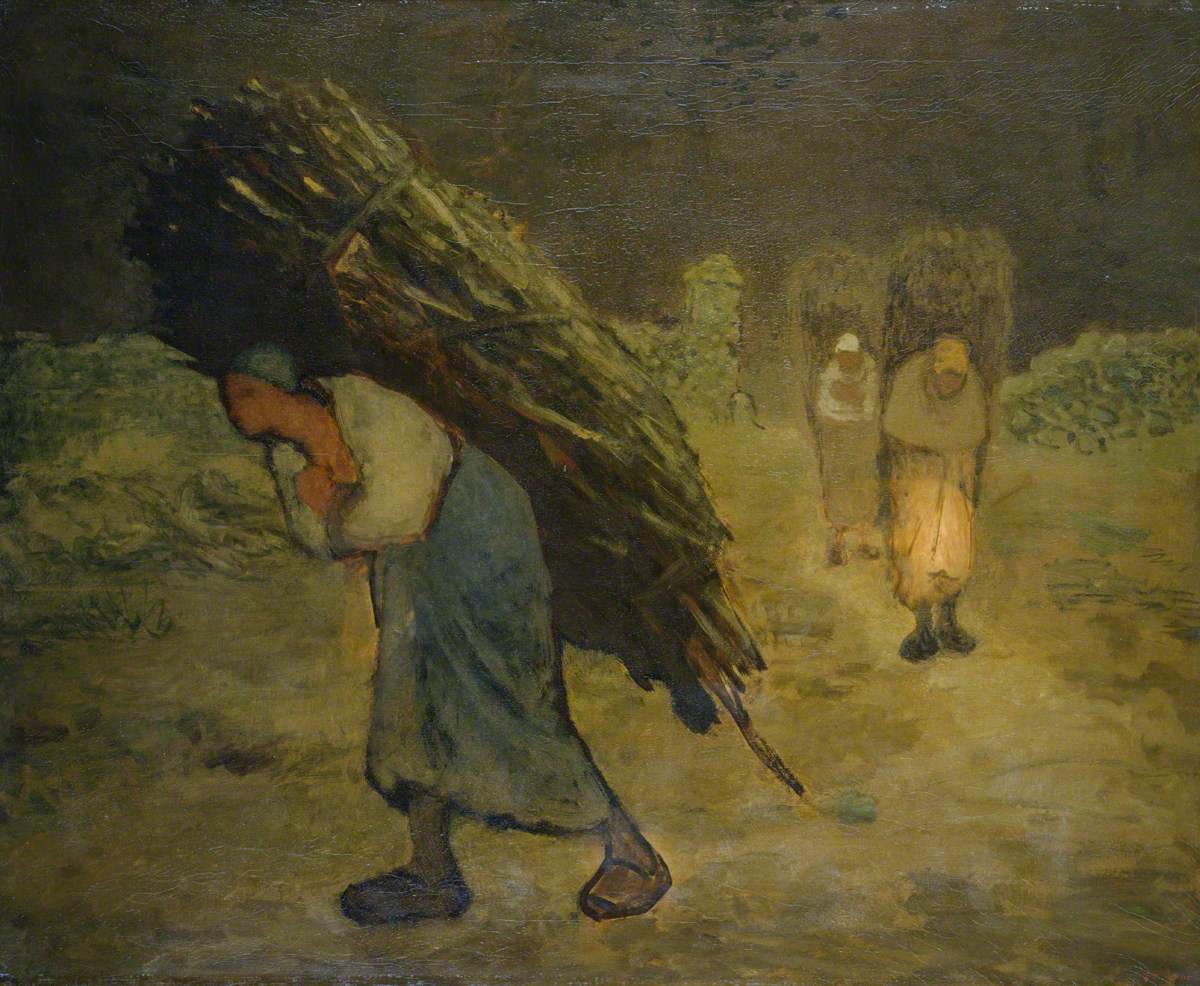
Having just visited the National Gallery and an exhibition on Millet:

https://www.nationalgallery.org.uk/exhibitions/millet-life-on-the-land

Dr Sanil Rege on twitter provided:


Seeing, and reading (again?) about 'The Faggot Gatherers' I couldn't help but see socio-economic history enacted:

'Two women are taking a short rest from gathering tree branches for sale as firewood. The older woman’s hunched back and clawed hands betray a lifetime of physical toil. The setting is the forest of Fontainebleau, south of Paris, close to the village of Barbizon. Millet was an exponent of Realism, a movement that rejected historical art and idealisation in favour of a truthful view of contemporary reality.'

Text: https://www.nationalgalleries.org/art-and-artists/232271
Winter, The Faggot Gatherers Jean-François Millet (1814–1875) National Museum Cardiff

The National Gallery's accompanying text reads:

'Three women are on their way home trom the forest of Fontainebleau. One of its entrances, the Porte aux Vaches, is visible at the back right. The staggering scale of their loads threatens to overwhelm them in their stumble homewards. The scene evokes Millet's 1851 letter to his biographer Alfred Sensier, in which he described how seeing 'a poor figure laden with a faggot reminded him of the constant fatigue of people's lives.
While the painting is unfinished, the elemental figures are typical of Millet's vork. The extreme simplification of their forms results in austere silhouettes.'

Mental illness has always been a facet of humanity, evidence of trephination from prehistoric times and across cultures and geographies bears testimony to the mind - body divide. Life was brutish physically too. What chance did the weakest stand? If, that is a broken bone: you could be left behind? But perhaps we underestimate the knowledge and experience of our ancient ancestors. Knowledge gained and passed orally, culturally, even before written history. Perhaps too, we struggle to understand how early humanity expressed itself beyond the big-stick of nature and the struggle for survival as the hominids that led to 'us' were winnowed down?

Even as recent as the 19th century life was hard. As the notes above attest, Millet's work seeks to record the sheer physicality of labour, even as the industrial age emerged. The advent of the industrial revolution brought its own pressures and privations, as pastoral life is replaced with change work at home (spinning cotton) to urban and factory growth. 

Severe mental illness would have been institutionalised in poor houses, religious and charitable organisations. Parity of esteem is grounded, to some extent in the questions: "What happened to you?", or "How are you feeling today?" In Millet's work the physical cost and strain stands out. While in the L'Angelus there is debate about prayer, or grief. What is visible usually speaks first, and stands for itself. This is why self-awareness, reflection, critical thinking, observational and interpersonal skills are important; and why mental health nursing calls for specific knowledge and skills. And, in psychiatry too, even when the same is contested.

Image source: Oil on carvas Lent by Amgueddfa Cymry - Museum Wales. Bequeathed by Gwendoline Davies in 1952.

Sunday, August 17, 2025

TDS - 'Tariff Derangement Syndrome' ...

... is that all you have to worry about?


Individual
|
      INTERPERSONAL    :     SCIENCES               
HUMANISTIC  --------------------------------------  MECHANISTIC      
 SOCIOLOGY  :    POLITICAL 
|


Vasan S, Padhy RK. Tardive Dyskinesia. [Updated 2023 Apr 24]. In: StatPearls [Internet]. Treasure Island (FL): StatPearls Publishing; 2025 Jan-. Available from: https://www.ncbi.nlm.nih.gov/books/NBK448207/

Morrison PD, Jauhar S, Young AH. The mechanism of action of clozapine. Journal of Psychopharmacology. 2025;39(4):297-300. doi:10.1177/02698811251319458

Taylor D, Watanabe K. Tardive dyskinesia: understanding current challenges in diagnosis and treatment. Therapeutic Advances in Psychopharmacology. 2023;13. doi:10.1177/20451253221144347

'syndrome'?

Jablonski S,  Syndrome--a changing concept. Bulletin of the Medical Library Association. 1992;80(4), 323–327.

Calvo F, Karras BT, Phillips R, Kimball AM, Wolf F. Diagnoses, syndromes, and diseases: a knowledge representation problem. AMIA Annu Symp Proc. 2003;2003:802. PMID: 14728307; PMCID: PMC1480257.

Previously: 'psychosis' : 'mental illness'

My prompt: Claire Jones. Trump picks Powell critic and rates ally for Fed board. FTWeekend. 9-10 August 2025, p.6.

Sunday, December 29, 2024

btw: A game in 4 moves*

INDIVIDUAL
|
INTERPERSONAL : SCIENCES              
humanistic ------------------------------- mechanistic
SOCIOLOGY : POLITICAL   
|
GROUP

btw - by the way:
"Are you working?"
'THE WORK ETHIC'
MENTAL STATE
MENTAL ILLNESS
MOTIVATION
MINDSET-ATTITUDE
LIFELONG LEARNING


Economic activity
Demographics
Productivity
PHYSICAL HEALTH
PHYSICAL ILLNESS
dis-ABILITY
'Plumbus oscillans?'
EDUCATION - re-TRAINING


Social trends
Social attitudes
Social capital
'Living wage'
'Cost of Living'
Social contract
Social justice


Welfare spending, inc.
Sickness-Incapacity
Political:
angst,bias,debate ..
Policy^:
incentives, action
BACK TO WORK - btw


*Or 5 - [ ( sciences, intra- interpersonal, sociology, political ) spiritual ]?

^Fitness for purpose?

Monday, April 01, 2024

"Reforming oral health policy to contain noma"

"In a landmark decision in December 2023, the World Health Organisation designated noma as a neglected tropical disease, shedding light on a condition that often lurks in the shadows of poverty-stricken communities across sub-Saharan Africa, Latin America, and Asia. Noma is a severe rapidly progressing disease of the mouth and face mostly affecting children between the ages of two and six years suffering from malnutrition, infectious diseases, or living in extreme poverty with poor oral health or weakened immune systems like HIV and other diseases, which can lead to death due to complications such as sepsis. In 2012, the UN Human Rights Council acknowledged that neglecting noma is affected may amount to a violation of basic child rights."

Oluwaseyi Atoyebi. Reforming oral health policy to contain noma, 15th March 2024
https://punchng.com/reforming-oral-health-policy-to-contain-noma/ 


Individual
|
      INTERPERSONAL    :     SCIENCES               
HUMANISTIC  --------------------------------------  MECHANISTIC      
 SOCIOLOGY  :    POLITICAL 
|
Group

Psychological impacts

Social impacts - life chances

(neglected) neglected tropical disease


Previously:
From - https://hodges-model.blogspot.com/search?q=noma

Ioana Cismas (York) - What's in a Frame? A Human Rights Approach to Neglected Tropical Diseases - https://www.york.ac.uk/cahr/events/2022/justice-in-global-health-workshop/

Concept Note in Support of the Inclusion of Noma (Cancrum Oris) on the World Health Organization List of Neglected Tropical Diseases (Commissioned by the Government of Namibia, 2016), 6 pp. (with Marie-Solène Adamou Moussa-Pham).

Srour, M. L., & Baratti-Mayer, D. (2020). Why is noma a neglected-neglected tropical disease?. PLoS neglected tropical diseases, 14(8), e0008435. https://doi.org/10.1371/journal.pntd.0008435

Friday, March 01, 2024

'Writing Samer'

Molly Fairhurst
 

... across the domains

"Diagnosed with a terminal cancer, Samer Iskandar couldn't find the words to describe what he was living through. Instead, he proposed an unusual collaboration." p.33.


Individual
   |
      INTERPERSONAL    :     SCIENCES               
HUMANISTIC  --------------------------------------  MECHANISTIC      
 SOCIOLOGY  :   POLITICAL 
|
Group

"Samer's cancer^ is like all cancers in that it pitches the self into a battle against the non-self, - *


"Memory, language, attention and cognition all erode to ultimately leave you somewhere east of your prior self and west of someone new." p.34.


- atavistic alien cells invading their host from within. But it is unlike most cancers in how directly this cellular plunder correlates to the personal one." 

It is like all cancers in that its lexical field is that of topography, malignancies spreading, diffusing and gaining ground. It is unlike them in that these movements are finally technical, gears cramped within the clock of a terminal diagnosis." p.34.


^glioblastoma
*discuss

Youmna Melham Chamieh, Writing Samer, FT Weekend Magazine, 24/25 February, 2024, Issue 1,062, pp.32-37.

Illustrations by Molly Fairhurst
https://mollyfairhurst.com/Financial-Times (above source).

Sunday, June 25, 2023

Design with People in Mind Books - The Seclusion Issue

Design with People in Mind
The Seclusion Issue


Design with People in Mind is the Design in Mental Health Network’s annual round up of the latest research evidence on therapeutic outcomes and the evidence for them relating to the built environment in mental health. In partnership with London Southbank University and Nottingham Trent, so far we’ve looked at a variety of issues, from nature to sound design to boundaries and borders. The latest issue is Seclusion, launched at this years conference and focusing on the evidence for and impact of the practice of seclusion units, how to use them if at all, and best practice in the field to maintain psychological as well as physical safety for service users and staff.


The link to the publication is: 

https://dimhn.org/wp-content/uploads/2023/06/1DWPIM_I8_250x210_24PP_AW_V02_HI_RES.pdf

It’s a member only resource, so you will need to register (free for individuals) before viewing.

Very best,

Hannah

Hannah Chamberlain
CEO
Design in Mental Health Network
m: 07811169609
www.dimhn.org


My source: https://twitter.com/DIMHN

See also:
ii Design with People in Mind

Wednesday, March 01, 2023

Metamorphosis [squared]

  INDIVIDUAL
|

INTERPERSONAL
   :     SCIENCES              

HUMANISTIC --------------------------------------  MECHANISTIC  

SOCIOLOGY
  :   POLITICAL

|

GROUP


Metamorphosis:
A Life in Pieces
...
Metamorphosis


Images: Penguin.

Kafka - https://www.wob.com/en-gb/books/franz-kafka/metamorphosis/9780140015720

... Novice to Expert, or Poetry anyone?

Sunday, November 27, 2022

"No safety without emotional safety" by Veale, et al. (2022)

 INDIVIDUAL
|

 INTERPERSONAL    :     SCIENCES               
HUMANISTIC --------------------------------------  MECHANISTIC      
SOCIOLOGY  :   POLITICAL 
|
GROUP
psychological needs (risk)
inc. threat processing - treatment of interpersonal violence
'therapeutic
emotional safety (re-traumatisation)
control behaviour
severe panic with flashbacks, dissociation, and visual hallucinations
physical needs (RISK)
'low intensity touch'

environment' ... tepee - in room my safe space
physical safety (safe room)
to increase physical safety
privacy, lighting, doors, window

lived experience
family - relationship experience (touch)
'atmosphere'?
change in culture, positive risk-taking
person-centredness, family orientation in 'team'
Leadership
'therapeutic community'
Open Dialogue
CONTROL:
'take away' - autonomy, responsibility
policies - abuse risk, 'protect' patients and staff
regulatory reform
in-patient care, pets - policy
parity of esteem
Access (still) to therapies, CBT
Institutional risk
Alternative protocols


David Veale, Eleanor Robins, Alex B Thomson, Paul Gilbert, No safety without emotional safety, The Lancet Psychiatry, 2022, ISSN 2215-0366, https://doi.org/10.1016/S2215-0366(22)00373-X. (https://www.sciencedirect.com/science/article/pii/S221503662200373X)

My source:
https://twitter.com/tadhg50/status/1596901626765529091?s=20&t=FJe9qpYUrxHN2yxWEWLUdQ
The purposes of Hodges' model is to identify the concepts that have salience clinically, to the person, be they - patient, carer, student ... and then to integrate care, to draw the care domains together into a 'whole'.

Four original purposes of Hodges' model: 

1. Reflection, reflective practice, critical thinking
2. Person-centred care
3. Holistic - integrated care
4. Bridge the Theory - Practice gap

Wednesday, September 14, 2022

Yes, size matters

 INDIVIDUAL
|
 INTERPERSONAL    :     SCIENCES               
HUMANISTIC --------------------------------------  MECHANISTIC      
SOCIOLOGY  :   POLITICAL 
|
GROUP


Hammond, G. 'The mini market'. House&Home, City Living Special, FTWeekend, 4-5 May 2019, pp.8-9.
https://www.ft.com/content/03a9343e-6b35-11e9-80c7-60ee53e6681d


This morning I shared three slides with the PAMHOP research team and greatly appreciate the opportunity to present and join their meeting:

Physical and Mental Health of Older Prisoners (PAMHOP)

As I spoke of considering the environment and the carceral context across the domains of the model, I recalled another piece of paper.

The image above is from FTWeekend in 2019.

In prison of course, while the physical environment is the intended constraint, the model also invites consideration of the psychological, social, political environments and added here - the spiritual.

Since 2019 and post-COVID, the change in how we regard and value the spaces we inhabit - voluntarily or otherwise.

Hammond, G. 'The mini market'. House&Home, City Living Special, FTWeekend, 4-5 May 2019, pp.8-9. https://www.ft.com/content/03a9343e-6b35-11e9-80c7-60ee53e6681d

The image above was copied from FTWeekend and pasted into a new image and saved from avif format to .jpg.


Tuesday, June 21, 2022

'Pad culture' ...

INDIVIDUAL
|
 INTERPERSONAL    :     SCIENCES               
HUMANISTIC --------------------------------------  MECHANISTIC      
SOCIOLOGY  :   POLITICAL 
|
GROUP
DEMENTIA

SELF
ORIENTATION - INSIGHT
Listened to .. 'Hear me'?
dignity and respect
Mental capacity (awareness?)
emotional distress

Appears confused -
Physical cause: dehydration, delirium..?


[A shared convenience?:
How many persons are assumed
to be diagnosed with a dementia?]


in-CONTINENCE

Place:
[Home,
Community Hospital,
Residential care, Nursing Home]
IT/Record systems

'Parity of Esteem' i
Mental Health and Physical health

'Parity of Esteem' ii
[Mental Health and Physical Health] AND Social Care

Time:
ASSESSMENT, Care Plan, Evaluation ...

'Pad Culture'


'My Pad' Culture -
buy/sell
£££ $$$


Standards of Care
Nursing - Social Care
policy - funding


File on 4 BBC Radio 4 21 June 2022 - 20:00hrs

Dementia: The Final Indignity

"Around 800,000 people have dementia in the UK. For those suffering from the illness, incontinence can often be seen an inevitable consequence - but that’s not always the case. Deemed as too embarrassing or taboo, it’s a topic that rarely hits the spotlight. Experts say preserving someone’s ability to go to the toilet is crucial to maintaining their dignity and quality of life and should be a priority in care settings. But is that always happening? A new report shown exclusively to File on 4 has looked at how continence care is being managed in hospitals – and how, in some cases, those who are continent are actively encouraged to soil themselves. Datshiane Navanayagam speaks to families who say their loved ones were ignored when it came to their continence needs in hospital and that the consequences have left them with health issues and requiring additional support. Nurses and medical staff say that continence training is often seen as a ‘Cinderella subject’. We also hear from dementia patients themselves about why maintaining your own dignity and independence is so crucial with this disease. With the government set to reveal a new dementia strategy this year, will continence care be placed higher up the agenda?"


Featherstone K, Northcott A, Boddington P, Edwards D, Vougioukalou S, Bale S, et al.
Understanding approaches to continence care for people living with dementia in acute hospital settings: an ethnographic study. Health Soc Care Deliv Res 2022;10(14). https://doi.org/10.3310/
QUVV2680
 
Source: Today BBC Radio 4, 21st June, 2022.

Tuesday, June 14, 2022

"Address Pollution" - not just a P.O. Box ...


... and not just in the proper U-L quadrant ...


INDIVIDUAL

|
 INTERPERSONAL    :     SCIENCES               
HUMANISTIC --------------------------------------  MECHANISTIC      
SOCIOLOGY  :   POLITICAL 
|
GROUP

Homeless?

No address?

Identity?


mental health*

self-report*

Address Pollution

Global issue of
street names,
having an address.

"LEAVE NO ONE BEHIND"

'POLITICAL FOG?'
TRANSPARENCY
OPACITY
reporting
ACTION


*Hautekiet, P., Saenen, N.D., Demarest, S. et al. Air pollution in association with mental and self-rated health and the mediating effect of physical activity. Environ Health 21, 29 (2022).
https://doi.org/10.1186/s12940-022-00839-x

See also:

https://hodges-model.blogspot.com/search?q=address

My source: @AddresPollutionhttps://twitter.com/imathematicians/status/1530724466073952261?s=20&t=eF1XRD9HbkSJ2XWWbIk2qQ

Friday, February 11, 2022

c/o GPonline: "Social prescribing patients curate art exhibition at leading Cornish gallery"

"The ‘What Lies Behind’ exhibition, a recent display in Newlyn Art Gallery, saw 10 patients from Morrab Surgery in Penzance select works of art from Arts Council national collection of more than 8,000 pieces.

The group were asked to choose pieces that reflected their personal response to the pandemic. The works on display included textiles, sculpture, prints and paintings by artists including Pablo Picasso, Henry Moore and Chila Burman.

The project came about during lockdown after Morrab Surgery’s social prescribing link worker Ellie Moseley realised that many of the patients in the practice that she was working with had an interest in the arts." [ On GPonline ].


  Self - Individual - Person
|

 INTERPERSONAL    :     SCIENCES               
HUMANITIES - ARTS ----------------------------------  SCIENCES
SOCIOLOGY  :   POLITICAL 
|
Community - Group - Population
Personal expectations (care, medicine...)

Emotional wellbeing

Person-centred care

Social prescribing as a care intervention
'What lies behind' exhibition, Newlyn Art Gallery
Social prescribing
as a care policy needs
community resources
(to match).

Amid health policy calls
for innovation and
 sustainable healthcare systems and services; the community remains the sustainable resource (if not neglected).

Funding -
... ££ $$ €€ ¥¥ ฿฿ ₫₫
₴₴ ₪₪ ₽₽ ₹₹ ₩₩ ...
local :: global health.


My source: @ActivateEurope

https://twitter.com/ActivateEurope/status/1491751271539351562?s=20&t=ZQHyHs2a9--xJpmJDzrdHQ

@GPonlinenews

Sunday, August 01, 2021

... or Organ

individual - PERSON - patient
|
INTERPERSONAL : SCIENCES
humanistic ------------------------------------- mechanistic  
SOCIOLOGY : POLITICAL
|
family - group - population
BBC Radio 3
The Listening Service
"What makes the organ so mighty?"

To play: memory and
use four limbs -
unique organs,
how to play ...

"The brain controls thoughts, memory and other organs.
The heart pumps blood around the body.
The lungs separate oxygen from the air and remove carbon dioxide from the blood.
The stomach helps to digest food.
The intestines absorb nutrients from food.
The liver removes poisons from the blood.
The kidneys filter blood and produce urine.
The bladder stores urine.
The skin protects and contains the other organs."
BBC Bitesize:
https://www.bbc.co.uk/bitesize/topics/znyycdm/articles/zbpdqhv


"Tom Service takes on the largest instrument created by human hands: the organ. With the help of organist Anna Lapwood, Tom asks: what makes the organ so mighty? Why has it fascinated musicians from Bach to Procol Harum? Along the way, Tom will delve into the Delphian roots of the organ and we’ll hear what its ancestor the Hydraulis sounded like, created in ancient Egypt. And we’ll drop in on Madison Square Garden where Gladys Gooding entertained huge audiences at sports events for over thirty years, starting in the 1930s. Finally, we’ll hear what makes the organ timeless and immortal in music by John Cage and Olivier Messiaen. All hail: the organ!"
BBC 3 The Listening Service

Tuesday, May 18, 2021

Gatekeeping: Across the care domains

individual
|

INTERPERSONAL : SCIENCES
humanistic ----------------------------------------------- mechanistic
SOCIOLOGY : POLITICAL
|
group
Cognitive gate (access):
Mental state: Risk to Self/Others?
Literacy: My articulation of my needs
Understanding of Consultation/plan
Service name: acronyms

My understanding hence awareness of services, referral
Opt-in
Self-neglect

Physical gate (access):
Physical state 'emergency'?
Telephone call, reception

Obtain appointment
Phone/Video, Face-to-Face
Surgery, Clinic, Hospital, Home

Letter: 'x' days?
[ Triage
Assessment, Planning
Intervention
Evaluation ]

Individual: Collective: WAIT data?

Social-Cultural gate:
Cultural diversity/Accessibility
Service - Semiotics/Semantics/Signage

Family/Social commitments (access)
Sociology of Illness/Sick role
Carer role
Community/Local Understanding & Involvement?
Reporting, Info sharing

Political gate:

Service Provision/Use [by postcode?]
Referrer's knowledge ...
"Policy says..." ...
URGENT, routine, 1,5 days...
Service Pathways/Signage/Appearances

Work commitments (access)
Previously known?
[ MAIN GATE: Therapeutic Modality? ]
 
Open to suggestions... 

Tuesday, February 23, 2021

Button Batteries: Power ... in its place

INDIVIDUAL
|
INTERPERSONAL : SCIENCES
HUMANISTIC----------------------------------------------- MECHANISTIC
SOCIOLOGY : POLITICAL
|
  COMMUNITY
INFANTS - TODDLERS
BUTTON BATTERIES

“It turns out this is one of the most damaging and dangerous things that my beautiful boy could have ever swallowed. It does not get much worse than this.” - Mother of an 8 month-old baby boy

Credit: Child Accident Prevention Trust