Hodges' Model: Welcome to the QUAD: infants

Hodges' model is a conceptual framework to support reflection and critical thinking. Situated, the model can help integrate all disciplines (academic and professional). Amid news items, are posts that illustrate the scope and application of the model. A bibliography and A4 template are provided in the sidebar. Welcome to the QUAD ...

Showing posts with label infants. Show all posts

Saturday, August 22, 2026

Re. 'Population mental health in England, 2003–2022: Teasing apart psychological distress, mental illness and activity limitation'

Last month I was struck reading John Burn-Murdoch's regular opinion piece 'Data Points' in the FTWeekend.

This one 'What's really going on with mental health around the world?' concerned a report:

Henking, C. and Baumberg Geiger, B. (2026), 'Population mental health in England, 2003–2022: Teasing apart psychological distress, mental illness and activity limitations'. ESRC Centre for Society and Mental Health, King's College London.
https://osf.io/preprints/socarxiv/8ygrz_v2

Below I have mapped some points to Hodges' model and added others. 

By accident or not, Mr Burn-Murdoch continued this theme last weekend, discussing pandemic lockdowns and how they never ended for some people (citations below):

individual
|
INTERPERSONAL
: SCIENCES             
humanistic ------------------------------- mechanistic
SOCIOLOGY : POLITICAL   
|
group


Getting stuck in a psychological minima. Becoming fixed in mindset, lack of self-development through others - empathy, rapport. 

Subtle self-harm becoming more serious.

What is character in the 21st C?

Lack of measures.
^Lack of coherence - parity in health policy.

Lack of assertiveness, self-advocacy, prone to self-stigma (non-help seeking!)

Qualitative lived experience becomes self-reinforcing (and other - family?)

Getting fixed with a physique, posture - shaped by technology.
Physical equivalent-complement 
of 'mindset'.

Getting stuck in a physical minima 'long-term'. Subtle self-harm becoming more serious.


'Systems medicalisation'
PROCESSES

Convenience (POLITICAL) of binary responses, e.g. 
DISABLED -------- NOT DISABLED

Search for 'answers' - diagnosis

Search for 'solutions' interventions

Early effect of lack of external play, risk-taking with others, friends - testing - trust.
Lack of social skills.
Impact of social and other media - reduction of stigma.
Social roles models - father-
figure

Lack of 'real' socialisation - meeting peers.

Socio-Political Power, hence resort to 'sick role'.

Social media - contribution to self-diagnosis. 

Support inc. Social prescribing: "You're not listening! How dare you suggest walking, gardening, volunteering, discussion group .. as a way to deal with this!"

'It's life - get on with it!' 

The compound effect of 'World News' on young people: cost of living; housing; cost of/access to education; employment options - related to AI; geopolitical events; climate change, state of economics since birth; COVID; housing; and isolation.
'Jobs' for teenagers?
(I had a 7-day paper-round)

 ^Parity of esteem (see above)

Welfare traps - 
especially by age xx

Realisation of the importance of outdoors play. Streets being protected for children.

Early Start Nursery


Imagine four characters called Harlequin meet for dinner. Halfway through another Harlequin gatecrashes the party, called spirit, then add psychiatry, anti-psychiatry, psychology, service users, policy-makers, the pharma-industry and education to the guest list and you are set for a marvellous time.

My source: John Burn-Murdoch, What's really going on with mental health around the world? FTWeekend, 11-12 July 2026, p.10.

John Burn-Murdoch, Pandemic lockdowns never ended for some people. FTWeekend, 15-16 August 2026, p.8.

Previously: 'young people' : 'mental illness' : 'behaviour' : 'Serres'

Friday, February 27, 2026

Rare Disease Day 2026 Official Video

28 February is 
Rare Disease Day


'Raising awareness and generating change for the 300 million people worldwide living with a rare disease, their families and carers.'

Manchester, UK https://www.rarediseaseday.org/event/light-up-for-rare-2/

Continued ... https://www.rarediseaseday.org/

Friday, February 13, 2026

{ Humanise } ARChITECTURE

INDIVIDUAL
|
    INTERPERSONAL    :     SCIENCES               
HUMANISTIC --------------------------------------  MECHANISTIC      
SOCIOLOGY  :   POLITICAL 
|
GROUP


ARChITECTURE


Humanise.org


My source: Francesca Specter, Which is the fairest of them all? House&Home, FTWeekend, 11-12 October, 2025. pp.1-2.  

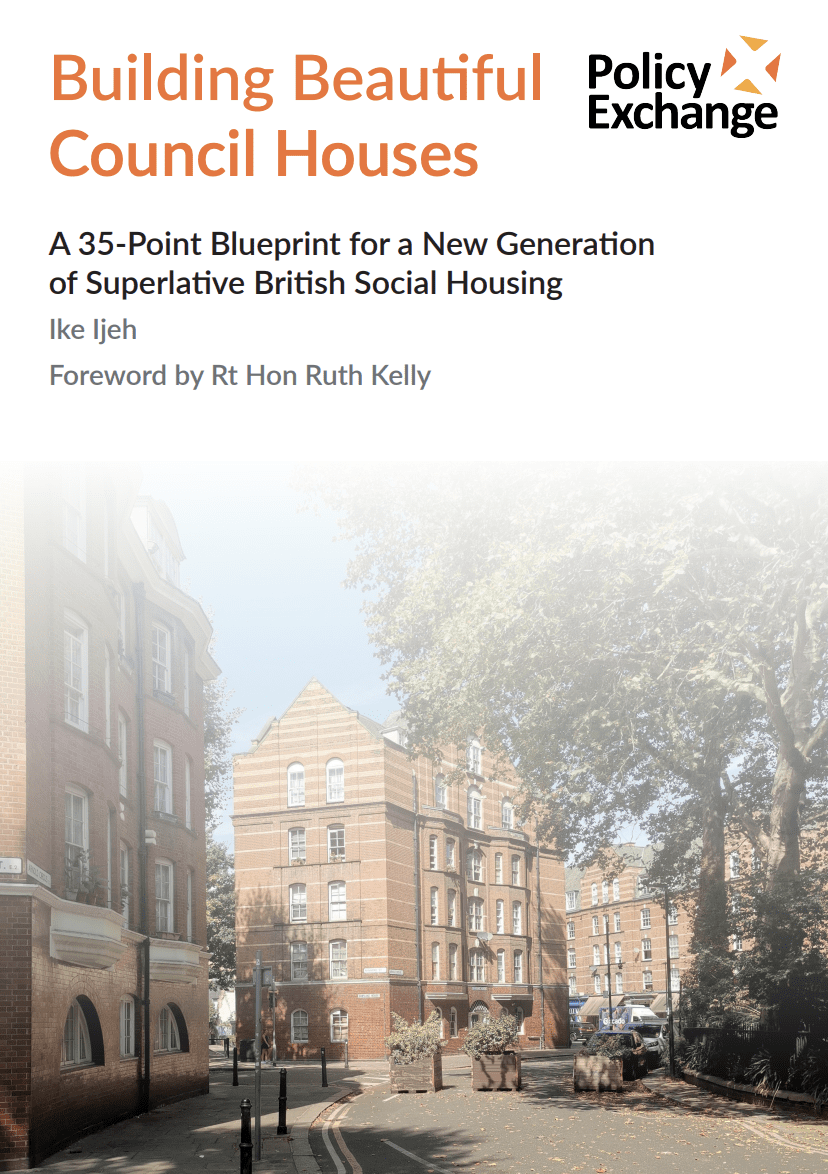
Spector refers to the Policy Exchange publication above, and other works:

McAdams P, Svobodova S, Newman T-J, Terry K, Mather G, Skelton AE, et al. (2025) The edge orientation entropy of natural scenes is associated with infant visual preferences and adult aesthetic judgements. PLoS ONE 20(2): e0316555. https://doi.org/10.1371/journal.pone.0316555

Valentine, C.; Wilkins, A.J.; Mitcheltree, H.; Penacchio, O.; Beckles, B.; Hosking, I. Visual Discomfort in the Built Environment: Leveraging Generative AI and Computational Analysis to Evaluate Predicted Visual Stress in Architectural Façades. Buildings 2025, 15, 2208.
https://doi.org/10.3390/buildings15132208

Calder, B. (2016). Raw Concrete: The Beauty of Brutalism. London: William Heinemann. 

Previously: 'housing' : 'homeless' : 'architecture'

Sunday, March 16, 2025

Caring for babies and young children - what can older children do?

Dear All

I'm delighted to tell you that we have successfully raised funding for the completion of the Children for Health ten poster series.

On completion we will have many more posters than ten as we have other posters linked to projects on Diabetes and Eye Health, Oral Health and Life Skills.

All our posters feature 10 messages for young adolescents to learn and share (on the front) and lots of ideas on how to use the posters and additional activities to get children mobilised on the back. If you haven't seen our posters PLEASE take a look here. They are being used in so many ways!

www.childrenforhealth.org/resources

...and any feedback is always welcome.
Please also share with your networks.

I am looking for specialists in early years to help us revise our existing set of 10 messages on the topic of 'Caring for Babies and Young Children' for the new poster. It is a voluntary role. The process lasts about 3 months as we involve practitioners too and work with schools to get children reviewing the messages. It's usually about 3 rounds of review and then an art work review. I'd be very pleased to hear from those who feel they have the time and expertise to help.

Meanwhile take a look at our posters. We have three new ones!

WASH: https://www.childrenforhealth.org/WASHposter

Coughs and Pneumonia: https://www.childrenforhealth.org/CoughsPoster

Intestinal Worms: https://www.childrenforhealth.org/WormsPoster

HIFA profile: Clare Hanbury is director of Children for Health. She qualified as a teacher in the UK and then worked in schools in Kenya and Hong Kong. After an MA in Education in Developing Countries and for many years, Clare worked for The Child-to-Child Trust based at the University of London's Institute of Education where, alongside Hugh Hawes and Professor David Morley she worked to help embed the Child-to-Child ideas of children's participation in health – into government and non-government cchild health and education programmes in numerous countries. Clare has worked with these ideas alongside vulnerable groups of children such as refugees and street children. Since her MSc in International Maternal and Child Health, Clare focused on helping government and non-government programmes to design and deliver child-centered health and education programmes where children are active participants. Clare has worked in many countries in East and Southern Africa and in Pakistan, Cambodia and the Yemen. In July 2013, Clare founded the NGO, Children for Health and develops health education materials and and works on health education programmes alongside partners all over the world.

https://www.hifa.org/support/members/clare clare AT childrenforhealth.org

Wednesday, February 05, 2025

HC@AIxIA: AI&Health Seminar - FEBRUARY 13 3:30 CET ... the model of Bronchopulmonary Dysplasia and Post-prematurity Respiratory Disease

The context around artificial intelligence in medicine:
the model of Bronchopulmonary Dysplasia and Post-prematurity Respiratory Disease

Dear Madam/Sir,

This is to officially announce the SECOND seminar of the "AI & Health: Seminars 2025" series as hosted by HC@AIxIA, i.e., the "Artificial Intelligence for Healthcare" working group of the Italian Association for Artificial Intelligence.

  *** Save the date: 13 FEBRUARY 2025. 3:30 CET ***

We hope you will attend and participate in the discussion on the relevant topics that will be presented and by our speakers.
Feel free to share this with those potentially interested.

Link for participatinghttps://bit.ly/hc-2025-02 (PLEASE CHECK the site https://aixia.it/en/gruppi/hc/ for any changes or updates) - Please find some details below, and a poster attached (link). 

Anna Lavizzari, MD, MSc, Attending Physician - S.C. di Neonatologia e Terapia Intensiva Neonatale, Fondazione IRCCS Cà Granda Ospedale Maggiore Policlinico, Milano, Italy

TitleThe context around artificial intelligence in medicine: the model of Bronchopulmonary Dysplasia and Post-prematurity Respiratory Disease
AbstractPreterm infant survival has dramatically increased in the last decades, including those infants born at very low gestational age/at the limit of viability. However, the rate of Bronchopulmonary dysplasia (BPD) has increased. BPD is one of the most worrisome complications of prematurity and the most common chronic respiratory disorder of early childhood. Infants with BPD present respiratory sequelae in early childhood, including wheezing, recurrent respiratory infections, re-hospitalization, need for home- oxygen and inhaled therapy. During adolescence, they still present with airway obstruction symptoms, exercise fatigue, and an early decline in lung function toward Chronic Obstructive Respiratory disease has been described in early adulthood. The BPD pathogenesis is complex and multifactorial. It includes 1) the premature arrest of lung development, 2) the antenatal exposure to infection/inflammation, growth restriction and smocking; 3) post-natal exposure to invasive/non-invasive respiratory support and supplemental oxygen, post-natal infections/inflammation and poor nutrition; 4) genetic predisposition. The formal diagnosis of BPD is assessed at 36 weeks post-menstrual age, and it is currently based on the degree of respiratory support required at that time point. However, the window for intervention (preventive strategies and pharmacological interventions) occurs in the first days of life. Diagnostic tools for early identification of infants at risk are currently lacking, due to both the vulnerability of this population and the lack of suitable lung function testing. Artificial intelligence has the potential for early identification and stratification of the population at risk, offering the opportunity for targeted therapy and more accurate prognostic prediction.

Short BioAnna Lavizzari is a consultant neonatologist at the Neonatal Intensive Care Unit of Fondazione IRCCS Cà Granda Ospedale Maggiore Policlinico – Milan, Italy. Her clinical research has focused on lung recruitment strategies at birth, neonatal non-invasive respiratory support, Forced Oscillation Technique for assessing respiratory mechanics, individualized surfactant therapy, respiratory support optimization and lung function follow-up of former preterm infants. She did a research fellowship at the Murdoch Children’s Research Institute, Melbourne (2013-2014) with Dr D Tingay and Dr P Dargaville. She has participated in experimental research on the long-term respiratory complications in former preterm lambs (Dr J Pillow, University of Western Australia, and Dr K Albertine, University of Utah). She served as secretary (2019-2021) and chair (2022-2024) of the Pediatric and Neonatal Intensive Care group of the European Respiratory Society. She is a member of the Pulmonology Board of the Italian Society of Neonatology (SIN) and a member of the Pulmonology section of the European Society for Paediatric Research (ESPR).

Flyerhttps://drive.google.com/open?id=1-S7_FHkpFtm1mdBZK9fZpY9WBiFJ3htm&usp=drive_fs

Link to participatehttps://bit.ly/hc-2025-02
(PLEASE CHECK the site https://aixia.it/en/gruppi/hc/ for any changes or updates)

====

== Are you interested in Joining the group? ==
Please head to https://aixia.it/en/gruppi/hc/ fo find out how. Do not hesitate to contact us at hc-aixia@googlegroups.com for any information or clarification.

Thank you for your interest in the AI & Health seminar series and the HC@AIxIA working group, and see you soon!

Sincerely,
Francesco Calimeri, Mauro Dragoni, Fabio Stella
(coordinators of the HC@AIxIA working group)

Saturday, August 03, 2024

'Science' - Air Pollution

Science

  • Volume 385|
  • Issue 6707|
  • 26 Jul 2024

COVER
"Smoke from wildfires burning in Canada enveloped New York City, New York, in June of 2023, shown here in a photo of the Chrysler Building on 7 June. Wildfire smoke events in the past decade have halted or reversed positive air quality trends in the United States. This special issue considers recent developments in monitoring, health effects, and policy dealing with air pollution. See the section beginning on page 378."

individual
|
INTERPERSONAL : SCIENCES
humanistic ------------------------------- mechanistic
SOCIOLOGY : POLITICAL
|
group

Lyons, S., Nolan, A., Carthy, P. et al. Long-term exposure to PM2.5 air pollution and mental health: a retrospective cohort study in Ireland. Environ Health 23, 54 (2024). https://doi.org/10.1186/s12940-024-01093-z

Ferreira, et al. (2024). Impact of Air Quality on Mental Health of Higher Education Students. In: Galvão, et al. (eds) Proceedings of the 3rd International Conference on Water Energy Food and Sustainability (ICoWEFS 2023). ICoWEFS 2023. Springer Proceedings in Earth and Environmental Sciences. Springer, Cham. https://doi.org/10.1007/978-3-031-48532-9_37

Shaw, S., Kundu, S., Chattopadhyay, A. et al. Indoor air pollution and cognitive function among older adults in India: a multiple mediation approach through depression and sleep disorders. BMC Geriatr 24, 81 (2024). https://doi.org/10.1186/s12877-024-04662-6


Shine, S., Tamirie, M., Kumie, A. et al. Pregnant women’s perception on the health effects of household air pollution in Rural Butajira, Ethiopia: a phenomenological qualitative study. BMC Public Health 23, 1636 (2023). https://doi.org/10.1186/s12889-023-16578-8

Phillip, E., Conroy, R.M., Walsh, A. et al. Using mixed methods and community participation to explore household and ambient air pollution practices in a rural community in Malawi. J Public Health (Berl.) (2023). https://doi.org/10.1007/s10389-023-02008-x


Nakaishi, T., Yoo, S., Kagawa, S. et al. Impact of air pollution on human morality: A multinational perspective. Humanit Soc Sci Commun 11, 991 (2024). https://doi.org/10.1057/s41599-024-03186-z

Wang, K. Is air pollution politics or economics? Evidence from industrial heterogeneity. Environ Sci Pollut Res 30, 24454–24469 (2023). https://doi.org/10.1007/s11356-022-23955-0

Wang, X., Tan, H. & Liu, J. The impact of air pollution on commercial health insurance demand amidst China's green transition. Econ Change Restruct 57, 39 (2024). https://doi.org/10.1007/s10644-024-09623-y


Price, H.D., Bowyer, C.J., Büker, P. et al. From reflection diaries to practical guidance for transdisciplinary research: learnings from a Kenyan air pollution project. Sustain Sci 18, 1429–1444 (2023). https://doi.org/10.1007/s11625-023-01317-0

My source:  https://x.com/DrMariaNeira

https://x.com/DrMariaNeira/status/1819399316735144414

Previously 'pollution'

Wednesday, July 31, 2024

WHO online survey on maternal well-being framework - ENG, FR and SPA translations available

 ------- ENGLISH ------

Dear colleague,

You are invited to participate in the development of the World Health Organization (WHO) maternal well-being framework through an online survey. 

This consultation is one step in a broader process led by the WHO Department of Maternal, Newborn, Child and Adolescent Health and Ageing (MCA) towards creating a comprehensive framework that supports maternal well-being across diverse environments and cultures. Based on the results of a scoping review of the literature and an expert consultation held in May 2023, a preliminary framework has been developed including a definition, domains and subdomains. WHO/MCA is now organizing multiple consultations which objectives are listed below. 

What is the purpose of the survey?

  • Ensure comprehensive coverage of all critical elements of the framework and identify potential gaps in the definition, domains and framework of maternal well-being.
  • Evaluate the framework’s applicability across various settings and cultures.
  • Foster collective agreement and consensus among key stakeholders.

Who can take part to this survey?

Any individual or organization who has interest in maternal health and well-being. This includes, but is not limited to:

  • Representatives of women's groups
  • Health workers (midwives, OBGYN, nurses, neonatal nurses, paediatricians, psychiatrists, psychologists, community health workers...)
  • Experts in human and sexual and reproductive rights, public health, health promotion, gender, mental health, economics, humanitarian, etc.
  • Academics and researchers 
  • Government organizations
  • National civil society organizations / NGOs
  • International agencies / UN agencies
  • Private sector

How to participate in this survey?

Please click on the following link: Survey Link

We expect this survey will not take longer than 15 minutes to complete. It is available in English. 

The survey will be open until 17 August 2024. 

We would be grateful for your response to this survey and your kind help in circulating to your colleagues and networks.

Please reach out to Justine Le Lez - lejus AT who.int with any further questions. 

Best regards,

On the behalf of the Department of Maternal, Newborn, Child and Adolescent Health and Ageing (WHO/MCA)


------- FRENCH / FRANCAIS ------


Bonjour,

Vous êtes invité·e à participer à l'élaboration du cadre conceptuel du bien-être maternel de l'Organisation mondiale de la santé (OMS). 

Cette enquête est une étape d'un processus plus large dirigé par le Département de la santé maternelle, néonatale, infantile et de l'adolescent et du vieillissement (MCA) de l'OMS, visant à créer un cadre conceptuel exhaustif soutenant le bien-être maternel dans divers environnements et cultures.

Sur la base des résultats d’une revue de la littérature et d’une consultation d’experts tenue en mai 2023, un cadre conceptuel préliminaire a été élaboré, comprenant une définition, des domaines et sous-domaines. L’OMS/MCA organise actuellement plusieurs consultations, dont les objectifs sont énumérés ci-dessous.

Quel est l’objectif de l’enquête ? 

  • Assurer une couverture exhaustive et identifier d'éventuelles lacunes dans le cadre actuellement proposé.
  • Évaluer l'applicabilité universelle et l'adaptation du cadre conceptuel à divers contextes et cultures.
  • Favoriser un consensus collectif afin que le cadre conceptuel reflète reflètent une large gamme de perspectives et d'idées

Qui peut participer à cette enquête ? 

Toute personne ou organisation intéressée par la santé maternelle et le bien-être. Cela inclut, sans s’y limiter :

  • Des représentants de groupes de femmes
  • Des professionnels de santé (sages-femmes, gynécologues-obstétriciens, infirmières, infirmières puéricultrices, pédiatres, psychiatres, psychologues, agents de santé communautaires…)
  • Des experts en droits humains, droits sexuels et reproductifs, santé publique, promotion de la santé, genre, santé mentale, économie, santé humanitaire, etc.
  • Des universitaires et chercheurs
  • Des organismes gouvernementaux
  • Des organisations nationales de la société civile / des ONG
  • Des agences internationales / agences des Nations unies
  • Le secteur privé

Comment participer à cette enquête ? 

Veuillez cliquer sur le lien suivant : Lien vers l’enquête

Nous estimons que cette enquête ne prendra pas plus de 15 minutes à compléter.  

L’enquête sera ouverte jusqu’au 25 août 2024.

Nous vous serions reconnaissants de bien vouloir y répondre et de la diffuser auprès de vos collègues et réseaux.

Pour toute question, n'hésitez pas à contacter Justine Le Lez.


Cordialement,

Au nom du Département de la santé maternelle, néonatale, infantile et des adolescents et du vieillissement (OMS/MCA)


------- SPANISH / ESPANOL -----

Está invitado a participar en la elaboración del marco conceptual del bienestar materno de la Organización Mundial de la Salud (OMS). 


Se le invita a participar en el desarrollo del marco de bienestar materno de la Organización Mundial de la Salud (OMS). Esta encuesta es un paso en un proceso más amplio liderado por el Departamento de Salud Materna, del Recién Nacido, del Niño, del Adolescente y del Envejecimiento (MCA) de la OMS hacia la creación de un marco integral que apoye el bienestar materno en diversos entornos y culturas.

Con base en los resultados de una revisión de la literatura y una consulta de expertos realizada en 2023, se ha desarrollado un marco preliminar que incluye una definición, dominios y subdominios del bienestar materno.  La OMS/MCA está organizando actualmente varias consultas, cuyos objetivos se enumeran a continuación. 


¿Cuál es el objetivo de la encuesta? 

· Garantizar una cobertura exhaustiva e identificar posibles brechas en el marco propuesto actualmente. 

· Evaluar la aplicabilidad universal y la adaptación del marco conceptual a diversos contextos y culturas. 

· Fomentar un acuerdo colectivo para que el marco conceptual refleje una amplia gama de perspectivas e conocimientos. 

¿Quién puede participar en esta encuesta? 


Cualquier persona u organización interesada en la salud materna y el bienestar. Esto incluye, sin limitarse a: 

·  Representantes de grupos de mujeres

· Profesionales de la salud: matronas (parteras profesionales/obstetras/obstetricias/comadronas), ginecólogos-obstetras, enfermeras, enfermeras pediátricas, pediatras, psiquiatras, psicólogos, agentes de salud comunitarios…

· Expertos en derechos humanos, derechos sexuales y reproductivos, salud pública, promoción de la salud, género, salud mental, economía, salud humanitaria, etc.

· Académicos e investigadores

· Organismos gubernamentales

· Organizaciones nacionales de la sociedad civil / ONGs

· Agencias internacionales / agencias de las Naciones Unidas

·  El sector privado

¿Cómo participar en esta encuesta?

 Por favor, haga clic en el siguiente enlace: enlace a la encuesta

Estimamos que esta encuesta no tomará más de 15 minutos para completar. 

La encuesta estará abierta hasta el 25 de agosto de 2024.


Le agradeceríamos que respondiera y difundiera la encuesta entre sus colegas y redes.

Para cualquier pregunta, no dude en ponerse en contacto con Justine Le Lez.


Atentamente, 

En nombre del Departamento de Salud Materna, Neonatal, Infantil y del Adolescente y del Envejecimiento (OMS/MCA)
Sunday, May 19, 2024

health - Human - LIFE: Career

As highlighted previously, the full title of Hodges' model was originally The Health Career Model.


Reference to 'career' in there, caused many visitors to the first website, and presumably readers of Brian's book chapter:

Hodges, B.E. (1989) The Health Career Model, IN, Hinchcliffe, S.M. (et al.) 1989 Nursing Practice and Health Care, 1st Edition only, London, Edward Arnold.

- to assume the model concerned professional careers, jobs, and employment.

For this reason after some discussion 'care domains' was added:

Hodges' Health Career - Care Domains - Model

A bit ungainly, but it is important that 'health career' was retained. After 5-10 years since first encountering and applying the model in a case study (1987-88), a key appeal of the model for me was its seeming increase in relevance. This may be a function of familiarity, preoccupation, (growing) obsession but the book below by Goldschmidt is confirmation for me.

Goldschmidt describes the 'Career and the Life Cycle' identifying several stages:
  • Infantile preadaptation
  • Training
  • Career launching
  • Career establishment
  • Career maintenance (pp.113-114).
The first, infantile preadaptation appears associate strongly with the idea of life chances. 

Goldschmidt begins: 
"Career is a lifetime process. The word process here is important. If the English language did not render it too awkward, it would be preferable to make a verb out of it: careering. The major phases in the process relate to the physiological changes as the individual moves from infancy toward his ultimate death." p.113.
"The pursuit of career is not merely a social phenomenon in the sense that the values and purposes are socially derived and hence attainment is reflexive of community attitudes, but because career performance always involves two highly social orientations: collaboration and identification. It is a social performance. No person achieves satisfaction going it alone; he must collaborate with diverse others, usually socially structured groups - family or household, clan, age-mates, work associates, or whatever." p.117.
We need to understand that life chances are often determined before life.


   Individual - Self         
|
      INTERPERSONAL    :     SCIENCES                   
HUMANISTIC  --------------------------------------  MECHANISTIC      
 SOCIOLOGY  :    POLITICAL 
|
   Dyad - Group - Culture - Population 
Identity

Work, roles, activity
 for all.

"The activities of the motivated individual can be conceptualized as his or her career. By career I mean that trajectory through life which each person undergoes, the activities he or she engages in to satisfy physical needs and wants and the even more important social needs and wants. The career, then, is activated in the service of both the physical being and the symbolic self."p.107.


The HUMAN CAREER

Policy
Politics

The health career and human career
of future generations
and all life.

Artificial Intelligence -
Future 'careers'?


Today, the health career entails consideration of the life cycle of all life as we not only contemplate planetary health, but seek to assure the biosphere.


Goldschmidt, W. (1990). The human career: The self in the symbolic world. Oxford: Basil Blackwell.

Book cover: https://biblio.co.nz/walter-goldschmidt/author/99497


Saturday, April 08, 2023

Book: "Of Human Potential"

 INDIVIDUAL
|

 INTERPERSONAL    :     SCIENCES               
HUMANISTIC --------------------------------------  MECHANISTIC      
SOCIOLOGY  :   POLITICAL 
|
GROUP

"1. The picture we have painted of human nature is centered on the notion of action as purposive, symbolic, and social - actions both reflective of prior norms and creative of new ones through the instrumentality of choice. ...

3. Their courses are modified by belief and interpretation, fear and hope, recollection and anticipation, symbolism and value.

2. Human lives thus do not ride on fixed rails; they do not follow trajectories already laid down by physics supplemented by biology. ...

4. The newborn child, considered simply as a biological unit, is indeterminate as a human being -

- the texture of its life is still to be filled out largely by human effort, that is to say, by culture, history, education and decision." p.41.

It is politicians' and policy makers' role to help realise human potential and societal progress: human AND now biospheric flourishing.

THINK about how YOU vote!*

Of Human Potential
Cover: AbeBooks


*Political freedom permitting.

Scheffler, I. (1985) Of Human Potential. Chapter II POTENTIAL: A CONCEPTUAL FRAMEWORK. London: Routledge & Kegan Paul.


Another book gone to the charity shop...

Friday, November 11, 2022

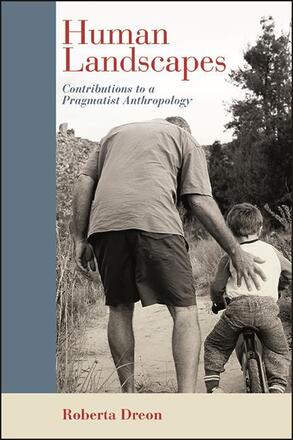
Book review iv "Human Landscapes: Contributions to a pragmatist anthropology"

Human landscapes

I am rueing the day (whichever it was) I lost my hard copy. Despite best intentions, I'm taking it slowly with the pdf, also much appreciated c/o the author Prof. Roberta Dreon.

The cover resonates at present as it was my mother's funeral on Wednesday. This provoked memories of my father too - happy times. Whatever emotional intelligence I can lay claim to I realise it is a gift from mum: a pragmatist anthropology indeed, as grief flies around.

 I can't help 'read' this as I apply a pragmatic tool:

"By following or even radicalizing Mead, it could be argued that it is at least partly through the use of verbal communication that the sense of one’s own self has been made possible—where self-reflection is considered to be a primarily affectively based form of awareness. While avoiding any hypostatization of interiority as a primary condition—which would give rise to the well known philosophical problems of the internal/external, private/public dichotomies—we should consider why humans are often capable of having a rich interior experience." p.68.

Dreon's (necessary) focus upon sensibility, habits and the insights obtained are rewarding:

In Chapter 3 Pragmatist Contributions to a Theory of Emotions -

"In spite of the abundance of theories, I think that developing a pragmatist approach can still be fruitful, because it helps to get rid of many of the noxious dichotomies that have shaped the philosophical as well as psychological conception of emotions—mind-body dualisms, nature-culture gaps, and private-public oppositions.." p.71.
The book isn't dizzying but the traversals from the sciences to the affective sciences, as an understanding of the emotions is sought highlights the elephant that follows us on the journey across Cartesian and other divides. Salience is here - in qualitative form, epigenetic threads are highlighted (p.73). As noted key to the project is dealing with a pragmatist theory of emotion. The legacy of issue in health and other disciplines is evident here, even if not explicitly stated. Conjoining experience, the environment and emotion is to grapple with parity of esteem - even if apolitically.

Clearly not a nursing or psychotherapy text - there are many connections: emotional intelligence, introspection (and its limits?).

"Emotions often arise out of a break in habitual behavior and provide the organism with a kind of affective proto-evaluation of environmental conditions that can later become an object of reflection and judgment." p.74.

I've reading to follow on enactivism, embodiment ever since at least: 

Paley J. Clinical cognition and embodiment. Int J Nurs Stud. 2004 Jan;41(1):1-13. doi: 10.1016/s0020-7489(03)00081-6. PMID: 14670389.

Plus some books (yes two in :: two out mum...).

When aged 16-17 I read and wrote about Wundt's recognition of the limits of introspection:

".. from the perspective of the methodological hypothesis that introspective analysis should be avoided because it is scientifically unreliable." p.76.
(If I find that notebook I'll do another post. Reading about the history of psychology, I was drawn to mental health/illness.)

Anyone familiar with h2cm and posts here will appreciate the trigger of association produced by:

"... 'interactive' is different from 'intentional'..." AND ".. a mechanical process; on the contrary, by emphasizing its plasticity." p.76.

We can even link book reviews!

"... recent ideas that the brain is at least partially configured after birth ..." p.77
(Brainscapes)

Clearly in the slow lane with this - but enjoying the learning and a further post - when I'll point to the review as a series.

Dreon R. (2022) Human landscapes. Contributions to a pragmatist anthropology. Suny Press, Albany.


Tuesday, September 06, 2022

Book review iii "Human Landscapes: Contributions to a pragmatist anthropology"

 
Human Landscapes

As per previous 'reviews', this reader can get lost in the Introduction.

Discussing - "interactions, and loop effects within the organic-environmental system" - there is emergentism, causality, teleology, and supervenience with argument about definitions and word-use through the historical development of pragmatism and understanding of human behaviour individually, collectively and as a culture.

 A close reading can help, is called for here ...


What is of interest to me at present is the non-surprising mention of logic, Dreon points to the many problems that Dewey and pragmatic and other philosophers encountered from the introduction of subjective-objective dichotomies. 

For a mental health nurse the intra- interpersonal is your 'bread and butter' so to speak. Dreon has you reflecting on your professional field, by raising the dichotomy of feelings and cognition, the psychical and the physical aspects of emotions, language and experience. (Interesting, does a pragmatic approach foster identification of dichotomy or continuity?)

For a moment on page 66 I thought we were still on the introduction: 

"The final chapter of this volume will be devoted to the development of a qualitatively richer conception of human linguistic experience conceived as continuous, rather than as opposed to sensibility."
But this is fine and is a statement of Dreon's argument, its depth in dealing with the thought of Dewey, James and others (e.g. Mead). This is dense, and yet detailed, when it is not your field, but you can - begin, at least - to see how the historical development of pragmatism (schools of philosophy), psychology and sociology create so many dilemmas and debates:

"In my opinion, some of the Classical Pragmatists’ insights should
be brought to a coherent conclusion by basically working on two sides,
in order to avoid a foundational conception of language, while at the
same time gaining a more rounded view on sensibility, as it unfolds in
our ordinary lives. As already hinted at in response to Dreyfus, I endorse
a more complex conception of language as primarily consisting in fully
embodied and socially shared linguistic practices that have a variety
of different ends in view and are largely regulated by an affectively or
qualitatively oriented mutual sensibility." p.66.

The book is also 'developmental' too:

"Those practices—from so-called motherese to lullabies, nursery rhymes, and storytelling—are often specifically directed at eliciting responses from the baby and catching attention. The baby’s behaviors—shaking the arms, keeping the eyes wide open,
squealing—are strongly embodied, even when they are vocal; but they are also affectively based and oriented responses to cultural-linguistic stimulations on the part of its caregivers." p.67.
All this shouted emergence to me (and as above), and Dreon rewards this reading. 

Thinking about the 'logic' (if any) in Hodges' model, this stood out:

"The point is to change our approach and to adopt the point of view of the
shared social context in which an individual’s first perceptions occur,
rather than the still monological perspective of an isolated individual
as the primary starting point of experience." p.67.
With more to follow ... I know now why I saved this:

embodied nature

an interactive installation to nurture
our sensibility to the living world


Dreon R. (2022) Human landscapes. Contributions to a pragmatist anthropology. Suny Press, Albany.

https://sunypress.edu/Books/H/Human-Landscapes

Video: Roux, Caroline, Design Miami: Tangled up in the natural world. FT Weekend, Collecting, 27-28 November 2021, p.3.

https://mischertraxler.com/projects/embodied-nature/