Hodges' Model: Welcome to the QUAD: Search results for homeless

Hodges' model is a conceptual framework to support reflection and critical thinking. Situated, the model can help integrate all disciplines (academic and professional). Amid news items, are posts that illustrate the scope and application of the model. A bibliography and A4 template are provided in the sidebar. Welcome to the QUAD ...

Showing posts sorted by relevance for query homeless. Sort by date Show all posts

Wednesday, November 20, 2024

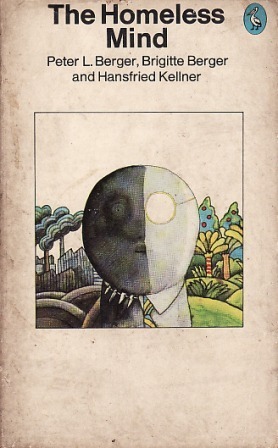
Hello? Is anyone there? 'The Homeless Mind'

individuality
|
INTERPERSONAL : SCIENCES              
humanistic ------------------------------- mechanistic
SOCIOLOGY : POLITICAL   
|
group

'Put differently, the componentiality of the cognitive style pertaining to technological production extends to identity. Again, a specific kind of double consciousness develops. In this case the dichotomy is between concrete identity and anonymous identity. The individual now becomes capable of experiencing himself in a double way: as a unique individual rich in concrete qualities and as an anonymous functionary. This dichotomization in the subjective experience of identity makes it possible for the individual to establish subjective distance vis-à-vis certain features of this identity.9 

For example, the individual will now experience that portion of his identity that contains his anonymization as a 'worker' as being 'less real' than his identity as a private person or family man. Since each portion of identity relates to specific roles, it now becomes possible for the individual to perform some of these roles 'tongue in cheek'. The componentiality of identity, as the componentiality of social relations, makes possible an 'engineering' practice. This time what is involved is the 'engineering' of one's own self. Those aspects of identity that a defined as 'more real' must be protected against threats coming from the 'less real' components of identity.' p.37-38.


Helpful reference to ideas of multi-relational synchronization and institutional vectors and how our mind's became homeless.

Also encouraging, even though 'historic', discussion on life plans and life planning.

'A basic presupposition is that life careers are not firmly fixed but are at least relatively open. Put simply the individual is faced with a number of alternative careers, especially in his " younger years, and therefore must make decisions about these available options. It is possible for the individual to imagine, himself as having different biographies. This possibility has both positive and negative consequences for the emotional economy of the individual. Positively, it may give him a feeling of frees dom to shape at least certain parts of his life. Negatively, it increases the likelihood of frustration regarding specific careers One is, after all, less likely to resign oneself to a particular situation if one believes that other situations are, in principle, possible.' p.67.
'Implicit in this scale of probabilities is a general 'sociology', on whatever level of theoretical sophistication. The individual has a `map of society' within which he can locate and project himself in terms of both past biographical recollection and future projects. The individual's life is perceived as a trajectory across this 'map'. There is also a large body of factual knowledge, most of which is 'weighted' in terms of the individual's life plans. Thus if a particular career appears to the individual as a realistically plausible project, he will have more factual knowledge about it than about a career in which he can participate only in pragmatically irrelevant fantasy. In other words, a good deal of background knowledge is related to 'anticipatory socialization'. p.68.
'However vaguely this may be defined, there is the underlying concept of life plan, both for the individuals and for the a family unit. This life plan is the totalization of all the relevant timetables, their grand sum and their integrative meaning In modern society, such life planning has become a value in itself. Its absence is commonly an occasion for reproach. The family unit thus operates as a life-planning workshop.' p.69.

'There is a general expectation of justice. It is expected that everyone in the relevant category - as, for example, those en-titled by law to a passport - will receive equal treatment. It is, of course, understood that certain persons may be excluded from this relevant category - for example, resident aliens or convicted criminals. It is also understood that the bureaucratic procedures may codify certain preferences, for example, in favour of diplomats or other people travelling on urgent government business. Once the categorial system has been established, however, the presumption of equality holds within each category. In the most general way, bureaucracy is expected to conform to the Roman principle suum cuique. An implication of this is that there will be no favouritism or any other intrusion of personal bias in the bureaucrat's handling of each client's case. The bureaucrat is expected to handle every case sine ira et studio. In other words, there is the general expectation that bureaucracy will operate impersonally and with 'affective neutrality'.2 These considerations bring us to an important point: unlike anything discussed in the preceding chapter, the cognitive style of bureaucracy contains a moral quality, not just as a limiting factor (after all, there are also moral assumptions about technological production - for example, that no one will be killed in the course of it), but as an intrinsic part of its own structure of consciousness. The source for this moral element is probably to be sought in the primary social location of bureaucracy in the political sphere.' pp.52-53.


Berger, P. L., Berger, B., & Kellner, H. (1973). The homeless mind: Modernization and consciousness. Penguin. 

Cover image: https://www.goodreads.com/book/show/3368465-the-homeless-mind

9 This is an amplification, by way of phenomenological description, of what Erving Goffman has called 'role distance'.

2 This term was coined by Talcott Parsons.

See also: 'homeless'

Thursday, January 13, 2022

One person's castle...

Individual
|

INTERPERSONAL : SCIENCES
humanistic ------------------------------------------ mechanistic
SOCIOLOGY : POLITICAL
|
Group
Michael Allen, a former soldier, spent three years building a mountain fort after developing PTSD
TOM WREN/SWNS @TomWrenPhoto
doing
activity
place
reablement

sense making
relationships
roles
belonging


The former homeless veteran who built a castle on a Welsh hill and welcomes thousands of visitors

https://www.walesonline.co.uk/news/wales-news/former-homeless-veteran-who-built-22551325

My source:

Parker, C. One man’s castle helps in the fight for mental health. The Times, 6 January 2022, p.13.

Photos: https://www.thetimes.co.uk/article/one-mans-castle-helps-in-the-fight-for-mental-health-pj7jmhs97

@TomWrenPhoto https://www.tomwrenphoto.com/


Sunday, October 02, 2022

Patient navigation model - Paper: mapped to h2cm


On twitter I learned of an EU project @CANCERLESS_EU and an initial paper:

 Exploring the application of the navigation model with people experiencing homelessness: a scoping review, Journal of Social Distress and Homelessness, DOI: 10.1080/10530789.2021.2021363

Phrases like 'navigation', 'architecture', 'maps' are a trigger so after some tweets, I was kindly directed to the above paper.

Here, I'm mapping patient navigation and related concepts I have added, to Hodges' model.


"Patient navigation is a community-based and person-centered intervention, whereby a named worker – the navigator – supports and guides individuals to overcome the barriers they face in accessing healthcare services and works to facilitate timely and appropriate access to care for the individual as well as their relatives, and caregivers, when needed (Freeman, 2012; Wang et al., 2015)."

 INDIVIDUAL
|
 INTERPERSONAL    :     SCIENCES               
HUMANISTIC --------------------------------------  MECHANISTIC      
SOCIOLOGY  :   POLITICAL 
|
GROUP
psycho-
depression, anxiety,
distress, trauma (psyche)
serious mental health
substance misuse
dual diagnosis

vulnerability
isolated

difficult to engage, missing appointments, no designated point of access - Address

Personally reliant on welfare/benefits for finance - phone contact sporadic.

providing emotional support, phone, transport
Hit by energy costs/rent (pre-payment)
if finding a place.
hopelessness, lack of trust - let down many times? Stigmatized attitudes towards treatment?
tailored health education

asocial (due to lived experience, trauma..?)

-geography
low-income areas, or areas with a high proportion of ethnic minorities or migrants
USA - other nations - terminology?

method: scoping review, literature search,
inc. exc criteria
interventions tailored to age and gender

respiratory conditions,
trauma (physical)
excess winter mortality

"homeless population having an average age at death of just 47, 30 years lower than that for the general population"

exposure to activities known to
increase risk of cancer
HIV patients
data - inc. no-show rates
in-person / phone

Timeliness of screening, intervention

Navigators - lay persons,
or clinical professionals

Lived experience, "near peer" family

Training for Navigators

organizing and attending appointments and facilitating self-care/self-management

clinical and community settings, parks, pavements, and homeless encampments,
home visits, walking and support groups

*
risk of stigmatization and
experienced discrimination

navigation less successful with certain groups?


Underserved, marginalized people
Homelessness
High-risk of poor health-related outcomes
reported barriers

access to appropriate healthcare for this population are also often compounded by lack of insurance, legal problems*...

...the PN model has been associated with a reduction in hospital costs, and even in some cases, increased revenue

histories of offending and/or care
women in rural areas
non-specific vulnerable populations

reduce incarceration, vocational and volunteering activities, access to housing


Christina Carmichael, Lee Smith, Edelweiss Aldasoro, Alejandro Gil Salmerón, Tamara Alhambra-Borrás, Ascensión Doñate-Martínez, Radhika Seiler-Ramadas & Igor Grabovac (2022) Exploring the application of the navigation model with people experiencing homelessness: a scoping review, Journal of Social Distress and Homelessness, DOI: 10.1080/10530789.2021.2021363

Monday, May 18, 2020

"Care Package" 4 the C.21st ?

"The CARE Package was the original unit
of aid distributed by the humanitarian organization
CARE (Cooperative for Assistance and Relief Everywhere)."
individual
|
INTERPERSONAL : SCIENCES
humanistic ----------------------------------------------- mechanistic
SOCIOLOGY : POLITICAL
|
group - population

Disaster Conflict Refugee context?
Individual choices - 
facilitating autonomy 
whenever possible - Sign Language?
Mental health Care Plan
includes relapse prevention /
 Staying well / Self care
Mental capacity / Decision making
Physical health check
Patient Reported Outcomes*
Specific management of medication - lithium, psychotropics and safety completed and health literacy demonstrated with support if needed.
Making Every Contact Count -
in every care context
Psychological therapies 
One narrative: told recorded once
Cognitive access:
Health Information
Access to my health record
My Care - Why?
Understanding, Awareness
C[P]-Suite "I Consent" - My data,
Genetic Profile, Reimbursement?

INTEGRATED -
Disaster Conflict Refugee context?
Avoid admission, over-treatment
Quaternary Prevention
Preparation for Admission?
Physical Care Plan
includes relapse prevention /
 Staying well / Self care
If in-patient THEN is medication ordered and ready for discharge? e-Prescription?
Electronic Health Record
Mobility - aids, Transport
Advice / instructions
Wound / 
Dressing management
Making Every Contact Count -
in every care context
Clinic location: urban / rural
 transport 
Virtual - Telemedicine, e-Health
m-Health
Patient Reported Outcome Measures
Patient involvement in Research
Trials
Physical therapies - access
Physical access services/devices?

- CARE ?
Care IN the Community?
Housing :: Homeless?
Pre-discharge home visit -
e.g. Occupational Therapy?
Living alone?
Safety
Carers involved with due 
consent in care planning. 
Engaged in recognition and role of warning signs and actions to follow.
Recovery, Rehabilitation, Reablement
Awareness and shared competency in medication, in event of physical illness.
Patient/Family audit of clinical record: accuracy if/when appropriate BUT check completed.
Plan of care - activities, groups, information, arts, studies, 
volunteering.
Carers assessment
Social care.
Advance (anticipatory) care planning
Progress (this time) PRO*
Introduce respite care, day care, volunteering
Avoidance of admission:
this time :: next time?
[Finance of Health Service Delivery]
Care Package for specific groups / populations / circumstances: 
Forensic, Prison, Homeless, 
Substance Misuse, Veterans
Need for interpreter, advocacy?
Feedback on care experience:
patient and carer(s)
Management of Belongings, Cash
Community care - follow up instigated - introductions made with continuity of care (personnel) were possible.
Communication with (family) GP/Doctor
Out-of-hours services 
and contact details.
Patient & Carer invited to phone
purely as a trial-run.
Law - Policy? 72 hour, 7 Day -
follow-up at home.
Incidents - Complaints? Apologies?
Organisational Learning 
Welfare - Employment
Data capture and reporting of care spell/episode.
De-identified.
Reports submitted stats.
Reporting plans to Public re. Health Services
Public involvement in Services


The above is not comprehensive and in itself begs questions of scope and what is a 'comprehensive' care package?

The mapping above to Hodges' model includes many assumptions - existing health service provision, governance, finance, housing, social infrastructure - social determinants of health and how these are mitigated (if at all).

Tuesday, December 03, 2024

'Our Housing Disaster'

Our Housing Disaster

I must finish the spring and summer's reading as pictured, with another two books in the wings. While the smallest text Our Housing Disaster is cheap to buy, an important read and insightful.

Politically, in the UK and many other nations, housing and its opposite -  homelessness, and the supply and cost of housing are ongoing issues.

Julian Richer's book is low cost £4.99 post free with a promo-code; even as I obtained a free copy, learning of the book in Business section of The Sunday Times. 


Our Housing Disaster gets off to a flying start:

'Falling or stagnant house prices are seen as national 'ill' that we must recover from but, in fact, fast-rising house prices and interest rates have proved to be the real ill, destroying the dream of a property-owning democracy that was supposed to benefit all.

Britain's housing policy, such as it is, has failed on its own terms.' p.9.

I remember when Grand Designs appeared on our TVs. Especially the episode with the wood-frame eco-house by Ben Law. This seemed sustainable and time-limited too. Julian Richer really nails the housing problem without delay. Unfortunately, the audience appeal of TV programmes like Grand Designs, Location, ... seem to me symptomatic of the issue Richer raises above. I used to think that the 'middle class' were shooting themselves in the foot; as house prices rose and rose. There was a collapse at one point with the trap of negative equity that my family almost got caught in (had we bought a new home). Richer corrects this view, with a national perspective across ten chapters and 180 pages.

 If the link between health and housing needs to amplified Richer ably achieves this, and quickly:

'Poor housing is harming the nation's health. The housing ombudsman, Richard Blakeway, whose office deals with complaints from social housing tenants about disrepair and mould and damp in their homes, problems recognised now to be a threat to health, has found the situation to be so bad that he has called for a Royal Commission to look at the links between housing, health, and welfare. Too often, the various agencies in housing, health and social care tend not to link up, or even know what the others are doing. which can end up making people's housing situation worse. Someone who has been homeless or who has mental health needs, for example, can require a lot of support once they are housed so that they can pay the rent and maintain the tenancy. If they just get housed and then left to cope on their own, they can struggle, lose the tenancy, become homeless and whole cycle starts again, with all that waste of money and damage to lives.' p.16.
'In addition to the 8m, there must be millions more who are not in crisis, but who have a blight on their future: typically, young, working people, perhaps with children, who are living in private rented accommodation, with a roof over their heads but always worrying they might be evicted. The insecurity and uncertainty that they experience is not good for them or their children. Just as job insecurity makes it hard for people to build a career, housing insecurity makes it hard for people to establish a life.' p.19.
The statistics flow thick and fast but as readable as they are focussed they weave an effective narrative referring to the history of just how we got to this point. The text make stark the dire crisis and need for action and an urgent government response. 

More to follow.

Friday, July 30, 2021

Review: iv Fundamentals of Person-Centred Healthcare Practice

Chapter 15 on 'Being sympathetically present' is a timely review of empathy, sympathy and compassion. As students learn and are exposed to experiences in practice and socialised (or not) in how these are practised this is very useful allied with exposure to the 6Cs. Mentioned in post iii: chapter 19 on Person-Centred Rehabilitation would benefit from the addition of reablement and resettlement. Given resort to a single chapter [22] on mental health it is understandable that the extreme form of trauma - physical and psychological experienced (but not necessarily wholly remembered) for people sexually assaulted points to forensic and Criminal Justice Liaison and Diversion Services. The authors here are to be congratulated on a feat of explanatory gymnastics. This just hints at the PSYCHO-dynamic* world that is mental illness, health and well-being (*physical and political).

Perusal of W2tQ reveals how readily Hodges' model can encompass the sciences and the arts (humanities). This is by design (the model's structure). The book stresses art with some (very well-balanced and executed) illustrations and prose. Once again (sorry) though, I thought of veterans, homeless, veterans, prisoners and newly released offenders and their circumstances. Being person-centred is very much attitudinal but this is physical not just cognitive and how we apply knowledge. Where this person is in space that is the centre of gravity. How best to approach, a person living with dementia and impaired senses, a homeless person lying under a bridge - even before we speak. 


I'm sure I read 'touch' in here, but it is not indexed. Post-COVID and in nursing as part of person-centredness this is an important part of communications skills, safeguarding and being safe. 

For the newly released prisoner, how prepared are they to be the person they can be, even before we are 'person-centred'?

"For the first time in 25 years the one-off payment given to adult prison leavers in England and Wales is to be raised. The Prison Discharge Grant will increase from £46 to £76, but what difference will that make?"

https://www.bbc.co.uk/sounds/play/m000y5sq


The book identifies different interventions and models relevant to the respective practice area, i.e. rehabilitation. Chapter 33 presents a personal challenge in (being a lifelong learner) whether you have a fixed or growth mindset, which of four archetypes of self-awareness applies to you (pp.322-323)? It's worth reading for heutagogy (p.327). I was prompted to consider the ongoing journey here. If anyone would like to test the reflexive credentials of Hodges' model (p.328) please get in touch. Salience is a key concept in Hodges' model. What is important to the patient - person? What is now? Are we only person-centred dealing with conscious persons? Again, perhaps a missed opportunity - care of the unconscious patient? I enjoyed chapter 30 on critical thinking. I was reminded of (verbal) accounts of people applying the Tidal model in forensic care. This proved not exactly straight forward, whereas, once learned Hodges' model can function as an aide-mémoire. If shared then collaboration may be enhanced since as the latter sections of this book show specific concepts need to be identified, articulated, agreed and applied.

The final chapter's title made me laugh a little: A call to action. Sometimes you can't win on the periphery of academia (a privileged position nonetheless?). KISS (Keep it simple stupid) applies to Hodges' model, but whether simple, or deemed complex the model fails to be recognised as a vital tool for all health and social care practitioners. Especially learners taking their seats (in-situ or online) on course 101. I take heart in believing that Hodges' model has a very long tail in relevance and global potential.

Once again model/framework envy creeps in, as I have no evidence (yet). 

Paradoxically (or not) this book will have me try to take note of instances when an interaction calls for a suspension of person-centredness: for me, the patient, client, carer - for us simultaneously.

This is the 'take-away' for me from this book which I also heartily recommend.

I will refer to 'healthful' in another book review.

SPIRITUAL
 
individual - PERSON - patient
|
INTERPERSONAL : SCIENCES
SPIRITUAL  humanistic ---------------------------- mechanistic  SPIRITUAL
SOCIOLOGY : POLITICAL
|
family - group - population
 
SPIRITUAL
Mindset :: Parity -
attitude aptitude
(My choices*)


Hodges' model - disassembly for care
- of esteem :: Touch
aptitude attitude


Hodges' model assembly of care
Culture
Child - Parent - Guardian
FAMILY- Social network

Be the 'person' the
Social Determinants of Health
predict/dictate?


prisoner release


grants and welfare

*(Are you joking - without attending to the politics of health and social care? Diet, green spaces, identity, community (facilities), housing ...)

Many thanks to the publisher Wiley-Blackwell for the review copy.

Review i

Review ii 

Review iii

Fundamentals of Person-Centred Healthcare Practice,  McCormack, B., McCance, T., Bulley, C., Brown, D., McMillan, A, Martin,S. (Eds.). ISBN: 978-1-119-53308-5 February 2021 Wiley-Blackwell.


Wednesday, September 20, 2023

The Architecture of Care: Emergency shelters


INDIVIDUAL
|
     INTERPERSONAL    :     SCIENCES               
HUMANISTIC --------------------------------------  MECHANISTIC      
SOCIOLOGY  :   POLITICAL 
|
GROUP

mental health / illness
psychic trauma

sense of security
sense of (new?) place

meaning:
temporary - permanent?

earthquakes, natural disasters
emergencies
sustainable shelter
Refugee shelter - design
(to last 20 years,
not disposable, 'C'-footprint)

2.5 million homeless Turkey 

Enforced displacement

Refugees

Shelter - Hope - HOME

Dignity


Forced displacement

war, conflict

meaning:
temporary - permanent?

UN statistics 17 years = temporary?


Essential Homes Research Project
Giardini Marineressa, Venice, Italy. 2022 - ongoing
"An increasing number of communities are suffering the consequences of natural disasters, wars or other humanitarian crisis, forcing them to leave their homes and countries to stay in refugee camps."


My source: Heathcote, E. (2023) Norman Foster tackles the emergency shelter. FT Weekend, Venice Biennale. 20-21 May. p.5

 See also: https://www.euronews.com/culture/2023/05/24/norman-foster-designs-forward-thinking-emergency-shelter-at-venice-biennale

Tuesday, December 02, 2025

Auction: Twenty-two photographs of psychiatric patients at the Surrey County Lunatic Asylum [1850s]

DIAMOND, Dr Hugh Welch (1808–1886)

Twenty-two photographs of psychiatric patients at the Surrey County Lunatic Asylum [1850s]

Estimate - GBP 100,000 – GBP 200,000

Christie's London - December 10th 2025

https://www.christies.com/en/lot/lot-6564110?ldp_breadcrumb=back

Asylum patient by Hugh Welch Diamond, c1850-58
Hugh Welch Diamond (English, 1808-1886)
Public domain, via Wikimedia Commons

'The women Iook out at us across 170 years of history with a variety of expressions - bold and shy, serene and distressed. Yet all of them were regarded at the time as "lunatics". These faces were the  subjects of a pioneering project by the 19th-century psychiatrist Hugh Welch Diamond, superintendent of the female division of an asylum in London and the world's first photographer to take pictures of patients for the purpose of diagnosis and therapy.

Twenty-two of Diamond's asylum portraits - the largest surviving group - will be put up for auction on December 10 at Christie's in London, as part of a sale of books, manuscripts and photographs from the library of The Royal Society of Medicine. If they achieve their estimated prices, RSM, a membership charity, will raise more than £2mn to invest in physical and digital infrastructure.' ...

'Diamond was working at a time when society's views of people suffering from mental illness were changing. The earlier practice of shutting patients away in secure "madhouses" was giving way to more humane treatment. Diamond seems to have believed that photography would help doctors both to diagnose and to treat patients. His diagnoses were based partly on the idea, popular in Victorian medical circles, that an individual's physiognomy - their physical features, particularly the face - could reveal their mental state.

"He wanted to make people better and put them back into the world," says Sharrona Pearl, a medical historian at Texas Christian University who has studied Diamond's work. "He also enjoyed experimenting and liked the idea of bridging his expertise in medicine and photography.' p.32.
individual
|
INTERPERSONAL : SCIENCES
humanistic -------------------------------------------  mechanistic
SOCIOLOGY : POLITICAL
|
group-population

Mental Illness
PERSON - SUBJECT
Patient's names not recorded
Portrait - Consent?

Diagnosis and Treatment
person - DATA - SUBJECT
Photography as records
Eagerness to classify - label
Social history
Change in social attitudes
Stigma and fear of mental illness
Current relatives?

Confidentiality
Institutional change
Power imbalance
Shift from 'custodial' to health care 


My source:
Clive Cookson, Mind Hunter, FT Magazine, November 15, 2025, 1151, pp.30-34.

I have noticed Prof. Brendan Kelly is a regular FT respondent, as with this article:

'These photographs were likely to have been taken without meaningful consent and in the context of power imbalance. Yet publication can reclaim their individuality, address historical injustice and underscore our common humanity. Compassion, respect and humility should guide decisions. 
 Proceeds should support medical, educational, or justice-oriented programmes. Most importantly honouring forgotten patients of the past demands better care for people with mental illness today, who often languish, neglected, in homeless hostels or prisons. We can do better.'

Brendan Kelly Professor of Psychiatry, Trinity College, Dublin, Ireland.
Letters, FT Weekend. 22-23 November 2025, p.10.

See also: 'asylum' : 'photos'

Friday, February 13, 2026

{ Humanise } ARChITECTURE

INDIVIDUAL
|
    INTERPERSONAL    :     SCIENCES               
HUMANISTIC --------------------------------------  MECHANISTIC      
SOCIOLOGY  :   POLITICAL 
|
GROUP


ARChITECTURE


Humanise.org


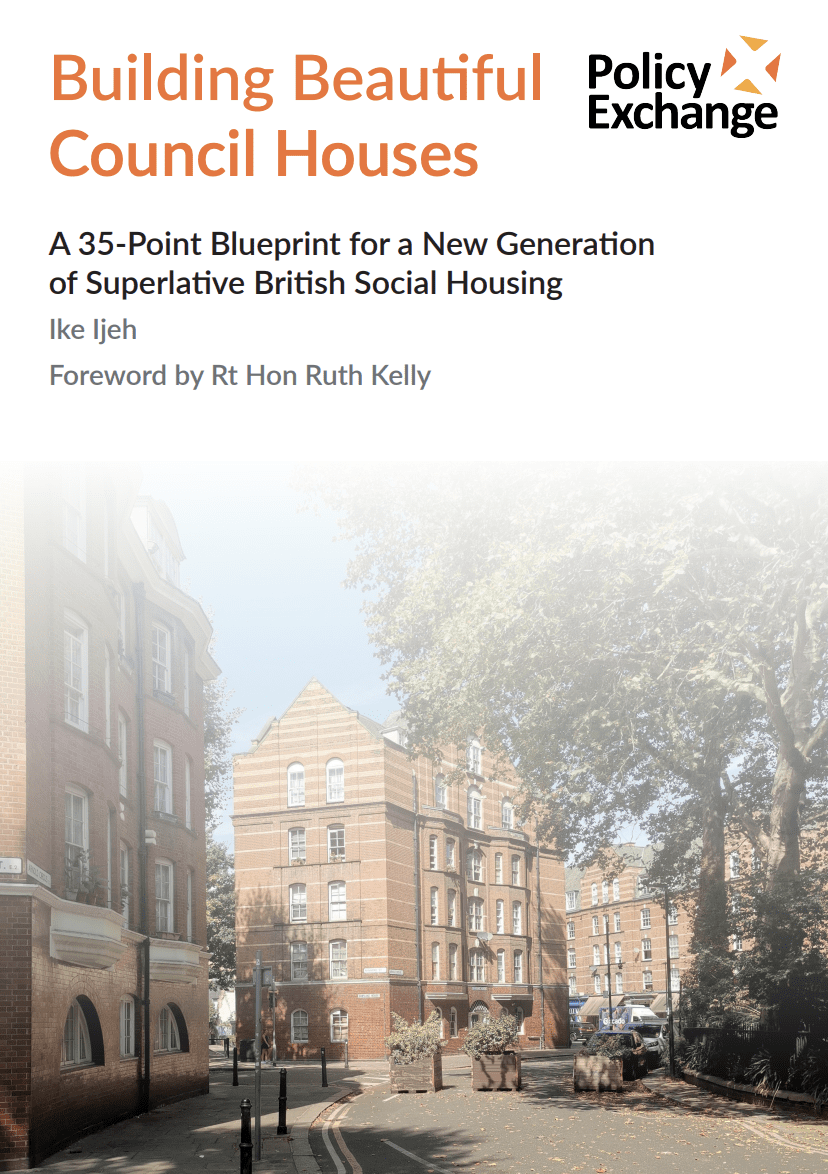
My source: Francesca Specter, Which is the fairest of them all? House&Home, FTWeekend, 11-12 October, 2025. pp.1-2.  

Spector refers to the Policy Exchange publication above, and other works:

McAdams P, Svobodova S, Newman T-J, Terry K, Mather G, Skelton AE, et al. (2025) The edge orientation entropy of natural scenes is associated with infant visual preferences and adult aesthetic judgements. PLoS ONE 20(2): e0316555. https://doi.org/10.1371/journal.pone.0316555

Valentine, C.; Wilkins, A.J.; Mitcheltree, H.; Penacchio, O.; Beckles, B.; Hosking, I. Visual Discomfort in the Built Environment: Leveraging Generative AI and Computational Analysis to Evaluate Predicted Visual Stress in Architectural Façades. Buildings 2025, 15, 2208.
https://doi.org/10.3390/buildings15132208

Calder, B. (2016). Raw Concrete: The Beauty of Brutalism. London: William Heinemann. 

Previously: 'housing' : 'homeless' : 'architecture'

Thursday, May 25, 2023

c/o HSE.ie - Model of Care for People with Mental Disorder and Co-existing Substance Use Disorder (Dual Diagnosis)

"The definition of Dual Diagnosis for this Model of Care is: ‘the co-morbid disorders due to substance use and/or addictive behaviours along with the presence of mental disorder(s)’. The disorders of substance use include disorders of alcohol use." p.10.

Model of Care for People with Mental Disorder and
Co-existing Substance Use Disorder (Dual Diagnosis)

INDIVIDUAL
|
INTERPERSONAL    :     SCIENCES              
HUMANISTIC --------------------------------------  MECHANISTIC
SOCIOLOGY :   POLITICAL
|
GROUP


mental disorder

addictive behaviour -
inc. gambling and gaming disorder

lived experience
recovery (here?)
[cognitive access: orientation, insight, literacy, communication ..]
training

patient and
Demographics:
Adult Dual Diagnosis team
cover population of 300,000

Adolescent Dual Diagnosis teams
10 to 17 years


lived experience
data gathering

p a th w  a ys
[ physical access: place, time]
e-health, therapeutic modules

reablement, recovery (here?)
public involvement


Carers

Social Inclusion
Social capital

lived experience

Vulnerable women, communities, homeless, ethnic minorities, refugees,
recovery (here?)

rehabilitation


Dual Diagnosis Service
funding
[ planned - in-patient beds ]

TRAINING

Service users
lived experience
interdepartmental discussion re. service provision for
prison population
probation services

asylum seekers,
immigrants
Key Performance Indicators

recovery (here?)


FOR: Economic, Educational, Environmental, Social, Political DETERMINANTS . .

READ: Cognitive, Physical, Social and Political ACCESS

My source: https://twitter.com/h2cm/status/1661299925391384576?s=20

Wednesday, March 25, 2020

Coronavirus: Under a conceptual Macroscope

individual
|
INTERPERSONAL : SCIENCES
humanistic ----------------------------------------------- mechanistic
SOCIOLOGY : POLITICAL
|
group - population
Cognitive access info

clarity in communications

Motivation

Anxiety

Isolation
Impact upon mental health
Psychological Trauma
Staff Wellbeing during COVID19
Information

Mis-Information

Stay HOME
[unless: homeLESS?]*

Self-isolation

Self-exile 

Long COVID (My education?)
Long COVID (My mental health?)
My health literacy:
touching my own face
'distance'
hand washing  +++
watch the road as a pedestrian too

SELF-CARE

Coronavirus transmission
Epidemiological Modelling
Statistics

Triage
Duration of Self-Isolation
ICU beds
Ventilators - INNOVATION

Industrial production
Excel & NEC [UK] extra beds
Recovery - Rehabilitation
Physical access info
Logistics (transmission)
Testing kits
Anti-body test
PPE
Evidence: Face coverings
Personal Protection Equipment
Vaccine Research Development
PHYSICAL DISTANCING
2 metres
Long COVID (My physical health?)
SOCIAL DISTANCING

DISTANT SOCIALISING^
Staying connected
family, friends, community
- using social media to reduce -
Social Isolation

Social Media -
Public Protection Role?

Community
Response

Social Care - 'Enforced' PJParalysis?

Volunteers
Protect Our NHS

'Social' rehearsal?

Future preparedness?

Public understanding of Science

WHO: Pandemic

REPORTING
National :: International
Consistency - Standards

Lockdown

Reversing Lockdown:
Government Communications:
(Mis-)use of media

National reporting

Emphasis upon economic impact?

Response of Businesses
Transparency of contracts, 'deals'

Definition of 'Key workers'

NHS England

Law - Policing

Policy (distancing#)


*General Population Health Status, Health systems, Healthcare systems, Politics of Health, Socio-Economics - austerity, Inequality, Inequity, Preparedness .. the Collective ...

#Political lack of coherence in policy: Poor integration.

^Thank you @SelfCareWeekEU

21 Aug update: See also -

Sheridan Rains, L., Johnson, S., Barnett, P. et al. Early impacts of the COVID-19 pandemic on mental health care and on people with mental health conditions: framework synthesis of international experiences and responses. Soc Psychiatry Psychiatr Epidemiol (2020). https://doi.org/10.1007/s00127-020-01924-7


Image source:
By CDC/ Alissa Eckert, MS; Dan Higgins, MAM - This media comes from the Centers for Disease Control and Prevention's Public Health Image Library (PHIL), with identification number #23312.Note: Not all PHIL images are public domain; be sure to check copyright status and credit authors and content providers., Public Domain,
https://commons.wikimedia.org/w/index.php?curid=86444014

To revisit post pandemic? 

There is scope to improve the placement of concepts as per Hodges' model.

Sunday, June 01, 2025

RCN Congress 2025 iv - AI & quality improvement

Discussion: Artificial intelligence in nurse education &
Discussion: The role of nursing staff in quality improvement


We'll cover two agenda items in this post. First, resistance is futile in the apparent rise and ubiquity of artificial intelligence.

Discussion: Artificial intelligence in nurse education

Here is, another thing 'we need to get right'. Without checking, I'm sure I posted/tweeted about 'essay factories'. Now Generative AI has put the automated generation of academic essays on steroids. If a student is not motivated to learn, enthusiastic about their seemingly chosen course of study and the professional reward to be earned, then we are in trouble. Public and patient safety are at risk. AI, is however is here to stay - change and help us prosper(?). AI and GenAI are tools, just another step forward, an advance on finger tips, palms, stick, chalk, pencil, and pen. The brief for the discussion includes, with specific points emboldened:

'... Additionally, AI-driven simulations and virtual reality scenarios can provide hands-on experience in a controlled environment, enabling students to practice and refine their skills with greater confidence. 

Creating an engaging and supportive learning environment is key to helping nursing students embrace AI. HEIs can introduce AI concepts early in the curriculum and provide ongoing training and resources. Encouraging collaboration and open discussions about the benefits and challenges of AI can further enhance students' confidence in using these tools.

By taking these steps, nursing education can seamlessly integrate AI, ensuring future nurses are equipped to excel in an evolving health care landscape.

To effectively integrate AI into nursing education, RCN Wales, for example, advocates for higher education institutions (HEIs) to equip students with the skills to continually enhance their digital and biotechnological literacy, ensuring they meet their programme outcomes.

HEIs can incorporate regular assessments and feedback mechanisms to monitor a student’s progress and determine where AI tools add the most value.' . . .

Computer-aided learning has matured greatly since the 1980s and 1990s. AI and GenAI mark the seeming leap in progress over the past two years, with governments, professional bodies and society having to adjust and quickly. We need to watch how simulation, and virtual reality and other approaches to learning are applied, to assure the quality, safety and learning experience provided to students. There appears to be a risk in mental health nursing curricula being 'diminished'. Interpersonal skills are critical in psychiatric and psychological care. This might afford the advocates of technically-laden solutions to side-step the nuances of face-to-face human interaction. Amid the pursuit of what is mechanistic, let us value the humanistic also.

The biotechnical, is one a several literacies to keep sight of. AI, is of course bound up in bio-political concerns, that are still emerging. The 'health care landscape' is plural too: consider the patient's home, a ward, out-patient department, e-consultation, e-learning intervention, brief psychotherapy, occupational health, carceral care, and field hospital, veterans, migrant - refugee health and the homeless.

There's more, and references and a reading list are also provided on the above link.

'Quality improvement is about making a difference to patients by improving safety, effectiveness, and experience of care.

All nursing staff should have the abilities and support to become involved in addressing health care pressures, utilising their expertise in the profession as leaders, not only in care delivery, but also within the system. However, the work of nursing staff to deliver quality improvement is often limited to opportunities that are dependent on staffing, seniority and availability. 

Nurses’ willingness to attend training is often superseded by patient demand making attendance impossible. Other health care colleagues undertake work on research and service improvement alongside their role and as a requirement for their revalidation, this is not the case for nursing staff who don’t get these opportunities.

Consider the benefits of the nursing workforce undertaking quality improvement, conducting local research, reorganising working environments, translating or updating patient materials, trialling novel approaches to care or addressing health inequalities. These skills would not only improve the quality of care we provide but also prepare the nurse to influence and change systems throughout their career.

This is relevant UK-wide. Scotland's 2030 vision for nurses, states an intention to equip nurses with quality improvement tools and support, but only nurses in non-hands-on roles. NHS Wales offers quality improvement training through e-learning  via the ESR to health care professionals, in Wales. In Northern Ireland training is available, but only for Band 7 and above.'

What is the role of all nurses to get involved in quality improvement?'


There is a point with IT security that if it was 100% assured with all the prospective log-ins of an average user, would we ever get any 'real' work done? Does the same apply to research? I have heard this as an argument in practice; and a response to a drive for quality improvement too. Data takes time to collect, especially to answer new questions. Such arguments were also fielded when models of nursing were spoke of with eye-rolls and sighs of experience. Quality improvement is a fight, opportunities and resources can be found, especially if a culture of research is nurtured and sustained. What questions does a ward, unit, team have currently? What queries might new starters, newly qualified, students, and placement candidates provoke? If my reference to fighting seems strong; the fight is for time. The raw truth is in the NHS that quality improvement, research and supervision (in its various forms) are in competition, in the absence of coherent integration.

In bold above, the discussion includes:

'trialling novel approaches to care or addressing health inequalities'.

I wonder what that springs to mind? More seriously, we need be aware of what happens to 'quality'; in whatever educational form it is encountered and experienced. 

individual
|
INTERPERSONAL : SCIENCES
humanistic ------------------------------- mechanistic
SOCIOLOGY : POLITICAL
|
group

interpersonal skills

informal / formal education
QUALITY
lifelong learning

biotechnical

landscape

quality improvement - clinical supervision?
inequity

social preparedness for AI/GenAI


management supervision?