Hodges' Model: Welcome to the QUAD: epidemiology

Hodges' model is a conceptual framework to support reflection and critical thinking. Situated, the model can help integrate all disciplines (academic and professional). Amid news items, are posts that illustrate the scope and application of the model. A bibliography and A4 template are provided in the sidebar. Welcome to the QUAD ...

Showing posts with label epidemiology. Show all posts

Friday, January 24, 2025

ERCIM News No. 140 Special theme: "Large-Scale Data Analytics"

Dear ERCIM News reader,

ERCIM NEWS #140
The January 2025 issue of ERCIM News (Number 140) is online with a special theme on Large-Scale Data Analytics. This issue features a Special Theme that highlights the diverse applications of large-scale data analytics across Europe. The advancements are achieved through close collaboration with European data spaces and open science platforms.

You can access the issue at https://ercim-news.ercim.eu/

This special theme was coordinated by our guest editors Andras Benczur (HUN-REN SZTAKI) and Dominik Ślęzak (University of Warsaw).

===
Note PJ: Includes: 
Breaking the Silence: Brain-to-Speech Innovations. p.36
Data Visualisation for Big Data: Digital Epidemiology. p.39.

CWI Research Semester Programme. Truth is in the Eyes of the Machines Amsterdam, 8-9 May 2025.
https://kwz.me/hF1
===

Thank you for reading ERCIM News! Please share this issue with anyone who might find it interesting. You can also support us on LinkedIn. Let's keep the conversation going and share the latest updates together!

Next issue: No. 141, April 2025
Special Theme: "Cultural AI". Submissions are welcome! See preliminary call for contributions.


ERCIM News is published quarterly by ERCIM, the European Research Consortium for Informatics and Mathematics. With the printed and online edition, ERCIM News reaches more than 10000 readers.
All issues published to date are available online.


About ERCIM

ERCIM - the European Research Consortium for Informatics and Mathematics - aims to foster collaborative work within the European research community and to increase cooperation with European industry. Leading European research institutes are members of ERCIM. ERCIM is the European host of W3C.

https://x.com/ercim_news
ERCIM LinkedIn Group
ERCIM LinkedIn Page

Peter Kunz                      	
ERCIM Office
2004, Route des Lucioles
BP93
F-06902 Sophia Antipolis Cedex

Thursday, August 01, 2024

Hodges' model? Simple: it's a rich, complicated, complex picture

In wider reading (relations, maths... and) drafting a post concerned with 'universal construction' I came across:

Rasanathan, K., Montesinos, E. V., Matheson, D., Etienne, C., & Evans, T. (2011). Primary health care and the social determinants of health: essential and complementary approaches for reducing inequities in health. Journal of Epidemiology and Community Health (1979-), 65(8), 656–660. http://www.jstor.org/stable/23050931


Figure 2 stood out for rather obvious reasons:

individual
|
INTERPERSONAL : SCIENCES
humanistic ------------------------------- mechanistic
SOCIOLOGY : POLITICAL
|
group


Figure 2 'works' and not merely because it is clearly 'all political', but I would have swapped 'leadership reforms' with 'service delivery forms'. Trying to emphasize leadership at the individual level empowered to actually effect change. This could quickly change as per the situation. I also appreciate the jigsaw graphic.

You soon appreciate the complex nature of health care:

Primary, Secondary, Tertiary, Quaternary care and prevention. Add social care, welfare, all the fields of medicine, surgery, nursing, education, policy, information, literacies, human rights, consent, mental capacity, mental health law, forensic psychiatry, self-care, local, national and global health, urban, rural, remote, virtual environments, ethics, developed and developing nations, ecosystems and funding.

And this just scratches the surface ...

Tuesday, January 16, 2024

Architectural Epidemiology: Rethinking architecture for community and planetary health

Dear colleagues,

I am pleased to invite you to the first Policy Dialogues session of 2024, from the JHU-UPF Public Policy Center:

Architectural Epidemiology: Rethinking architecture for community and planetary health
Thursday 25th January at 6pm CET
Location: Online :: Language: English


Buildings account for nearly 40% of global greenhouse gas emissions (GHGs) and up to 1/5 of chronic disease. In an era of climate emergency, rising global levels of chronic disease and increasing social inequalities, there is an urgent need to reassess and transform buildings and their social and environmental impacts. The new, transdisciplinary field of Architectural Epidemiology offers a roadmap for overcoming these challenges: it aims to transform the building sector from being a major contributor to climate change and chronic disease to becoming one of the primary forces behind their decline.

The JHU-UPF Public Policy Center is delighted to invite Dr. Adele Houghton (Harvard University) to present her cutting-edge work on Architectural Epidemiology in this Policy Dialogue. She will be joined by Dr. Carme Borrell (Barcelona Public Health Agency), who will respond to and discuss the presentation, offering a European perspective on the possibilities and challenges that this field presents for community and planetary health. The session will be moderated by Dr. Mary Sheehan (Johns Hopkins Bloomberg School of Public Health).

We hope you can join us to learn about and discuss this exciting new field of research and action!

Register here, and please feel free to share within your networks.

Best regards,
Aeve Ribbons
Coordinator of Policy Dialogues

My source: Politics of Health Group Mail List Messages

Visit the PoHG website for lots of interesting links and publications: http://www.pohg.org.uk/

Wednesday, March 08, 2023

Invitation to participate in research: Supporting midwives to provide emergency maternal & neonatal care in rural communities with limited resources

The challenges of providing quality midwifery care in rural and remote communities are significant, particularly in low and lower-middle-income countries. I am excited to invite midwives, midwifery educators, health service managers and Ministry of Health personnel from the focus countries listed below to participate in a PhD research study. Our research team aims to identify ways to better support midwives providing emergency maternal & neonatal care in rural communities with limited resources. Insights gained from these different perspectives will help us provide evidence for policy, education and practice.

Please consider participating in the study and/or sharing the link with your colleagues.

To participate in our online surveys, please use the following links:

Midwife/nurse-midwife survey: https://lnkd.in/eD4YSQnn

Educator/Manager/Ministry of Health survey: https://lnkd.in/gphj-i4D

If you would like more information, or if you are interested in participating in an online in-depth interview to discuss these issues, please email: Kristen.Graham AT anu.edu.au

Further information is also available at https://nceph.anu.edu.au/research/projects/strengthening-primary-care-midwives-preparedness-readiness-emergency-maternal

Focus countries: Sub-Sahara Africa: Burundi, Eswatini, Eritrea, Ethiopia, Gambia, Ghana, Kenya, Lesotho, Liberia, Malawi, Nigeria, Rwanda, Sierra Leone, South Sudan, Sudan, Tanzania, Uganda, Zambia, Zimbabwe, South & SE Asia: India, Pakistan, Philippines, Pacific: Kiribati, Papua New Guinea, Samoa, Solomon Islands, Tuvalu and Vanuatu

This study has ANU ethics approval (Protocol 2022/492)

Thank you Kristen

Kristen Graham PhD candidate

National Centre for Epidemiology & Population Health ANU College of Health and Medicine The Australian National University Canberra ACT 2600

HIFA profile (and my source): Kristen Graham is a PhD Candidate at the Australian National University, Australia. Professional interests: Sexual, reproductive, maternal, newborn, child and adolescent health; Midwifery; Workforce capacity building in rural and remote low resource settings. kristen.graham AT anu.edu.au

#iwd2023 #internationalwomensday
Ack. All midwives. PJ

Tuesday, March 23, 2021

TEDxNHS #1 – Why teaching a man how to fish won’t solve food poverty

individual
|
INTERPERSONAL : SCIENCES
humanistic ----------------------------------------------- mechanistic
SOCIOLOGY : POLITICAL
|
group


Friedrich
1845
Engels

 “social murder ...


... meeting too early a death."

My source:

https://www.tedxnhs.com/tedxnhs-unlocked/

Saturday, March 06, 2021

The Great Green Wall

individual
|
INTERPERSONAL : SCIENCES
humanistic ----------------------------------------------- mechanistic
SOCIOLOGY : POLITICAL
|
group


The Great Green Wall


"Africa's history with the west is littered with examples of plunder masquerading as benevolence, and science is no exception. Doctors and researchers who came to help during Ebola flew out with more than 269,000 blood samples from patients in Guinea, Sierra Leone and Liberia. That has meant that researchers in those countries cannot access samples that in many cases they had collected.    'All those superpowers, all those parachute researchers ... they pretended as if they want to help, but the real agenda was to control samples, so they can do all kinds of research on them'".


https://www.greatgreenwall.org/

Munshi, N. (2021) Lunch with the FT Christian Happi: With pathogens, we need to play offence. FT Weekend, Life&Arts, 20-21 February, p.3. (A rewarding read.)

Image source: https://africaresearchonline.wordpress.com/2013/05/21/the-great-green-wall/


Wednesday, December 23, 2020

ERCIM News No. 124 Special Theme: "PANDEMIC - Modelling & Simulation"

Dear ERCIM News reader,

ERCIM NEWS

ERCIM News No. 124 has just been published at https://ercim-news.ercim.eu/ The Special Theme of this issue focuses on research surrounding the current epidemic emergency. The contributions address actions to understand and counteract the spread of the virus. This special theme has been coordinated by our guest editors Salvatore Rinzivillo (ISTI-CNR), Joakim Sundnes (SIMULA) and Karin Rainer (AGES).

In the section "Research and Society" some of our institutes describe how they are meeting the challenges of COVID-19.

Thank you for your interest in ERCIM News. Feel free to forward this message to anyone who might be interested.

Next issue:
No. 125,  April 2021
Special Theme: "Brain-Inspired Computing"

Announcements in this issue:


Call for Proposals: Dagstuhl Seminars and Perspectives Workshops
Schloss Dagstuhl – Leibniz-Zentrum für Informatik is accepting proposals for scientific seminars/workshops in all areas of computer science, in particular also in connection with other fields. https://www.dagstuhl.de/dsproposal

SAFECOMP 2021
York, UK, 7-10 September 2021
Call for Papers and Workshop Proposals

The GATEKEEPER 1st Open Call
600,000€ available for AI and Big Data Applications, tools or components


-- 
Peter Kunz                      	
ERCIM Office

Thursday, September 10, 2020

World Suicide Prevention Day #WorldSuicidePreventionDay #WSPD2020

'Suicide' https://hodges-model.blogspot.com/search/label/suicide 

'Activism' https://hodges-model.blogspot.com/search/label/activism

Wednesday, March 25, 2020

Coronavirus: Under a conceptual Macroscope

individual
|
INTERPERSONAL : SCIENCES
humanistic ----------------------------------------------- mechanistic
SOCIOLOGY : POLITICAL
|
group - population
Cognitive access info

clarity in communications

Motivation

Anxiety

Isolation
Impact upon mental health
Psychological Trauma
Staff Wellbeing during COVID19
Information

Mis-Information

Stay HOME
[unless: homeLESS?]*

Self-isolation

Self-exile 

Long COVID (My education?)
Long COVID (My mental health?)
My health literacy:
touching my own face
'distance'
hand washing  +++
watch the road as a pedestrian too

SELF-CARE

Coronavirus transmission
Epidemiological Modelling
Statistics

Triage
Duration of Self-Isolation
ICU beds
Ventilators - INNOVATION

Industrial production
Excel & NEC [UK] extra beds
Recovery - Rehabilitation
Physical access info
Logistics (transmission)
Testing kits
Anti-body test
PPE
Evidence: Face coverings
Personal Protection Equipment
Vaccine Research Development
PHYSICAL DISTANCING
2 metres
Long COVID (My physical health?)
SOCIAL DISTANCING

DISTANT SOCIALISING^
Staying connected
family, friends, community
- using social media to reduce -
Social Isolation

Social Media -
Public Protection Role?

Community
Response

Social Care - 'Enforced' PJParalysis?

Volunteers
Protect Our NHS

'Social' rehearsal?

Future preparedness?

Public understanding of Science

WHO: Pandemic

REPORTING
National :: International
Consistency - Standards

Lockdown

Reversing Lockdown:
Government Communications:
(Mis-)use of media

National reporting

Emphasis upon economic impact?

Response of Businesses
Transparency of contracts, 'deals'

Definition of 'Key workers'

NHS England

Law - Policing

Policy (distancing#)


*General Population Health Status, Health systems, Healthcare systems, Politics of Health, Socio-Economics - austerity, Inequality, Inequity, Preparedness .. the Collective ...

#Political lack of coherence in policy: Poor integration.

^Thank you @SelfCareWeekEU

21 Aug update: See also -

Sheridan Rains, L., Johnson, S., Barnett, P. et al. Early impacts of the COVID-19 pandemic on mental health care and on people with mental health conditions: framework synthesis of international experiences and responses. Soc Psychiatry Psychiatr Epidemiol (2020). https://doi.org/10.1007/s00127-020-01924-7


Image source:
By CDC/ Alissa Eckert, MS; Dan Higgins, MAM - This media comes from the Centers for Disease Control and Prevention's Public Health Image Library (PHIL), with identification number #23312.Note: Not all PHIL images are public domain; be sure to check copyright status and credit authors and content providers., Public Domain,
https://commons.wikimedia.org/w/index.php?curid=86444014

To revisit post pandemic? 

There is scope to improve the placement of concepts as per Hodges' model.

Friday, November 01, 2019

Here is the News: another "Brilliant Map"

Or, to be more precise -

"Brilliant Maps"

An Atlas for Curious Minds – 100 New Ways to See the World

A new book released 5 November 2019:
Brilliant Maps - Book
"Which nations have North Korean embassies? How many countries have bigger economies than California? Who drives on the “wrong” side of the road? And where can you find lions in the wild?
In Brilliant Maps for Curious Minds, you’ll learn all this and much more. One hundred visually arresting maps strike a balance between sobering analysis (number of executions by state) and whimsical insight (the countries of the world where there aren’t any McDonald’s).
Thought-provoking and flat-out fun, this one-of-a-kind atlas—compiled by the editor of the popular Brilliant Maps website—makes surprising connections that illuminate the contours of culture, history, and politics. Brilliant Maps for Curious Minds will change the way you see the world—and your place in it".

See also:

https://www.infographic.ly/


My source:
Wright, I. The World as you've Never Seen It, The Sunday Times Magazine, 27 October 2019, pp.26-31.
 

Friday, January 01, 2016

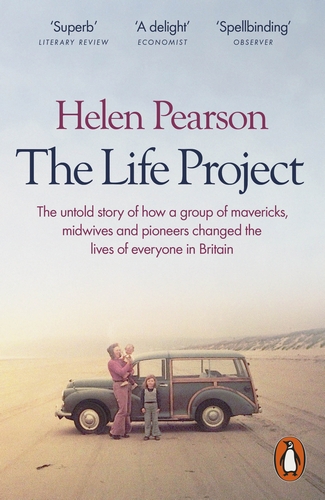
Book: "The Life Project"

The Life Project Helen Pearson


"The remarkable story of a unique series of studies that have touched the lives of almost everyone in Britain today.

On 5th March 1946 a survey began that is, today, the longest-running study of human development in the world, and has grown to encompass six generations of children and over 70,000 people. They have become some of the best-studied people on the planet. The simple act of observing human life has changed the way we are born, schooled, parent and die, and irrevocably altered our understanding of inequality and health. This is the tale of these studies, the scientists who created and sustain them, the discoveries that have come from them. The envy of scientists around the world, they are one of Britain's best-kept secrets."

[Published: 3 March 2016]

(The Life Project? "What's yours?")

Monday, August 12, 2013

'Monitor Me' BBC 2 Horizon

This is an excellent TV program:

Dr Kevin Fong explores a medical revolution that promises to help us live longer, healthier lives. Inspired by the boom in health-related apps and gadgets, it's all about novel ways we can monitor ourselves around the clock. How we exercise, how we sleep, even how we sit.
Some doctors are now prescribing apps the way they once prescribed pills. Kevin meets the pioneers of this revolution. From the England Rugby 7s team, whose coach knows more about his players' health than a doctor would, to the most monitored man in the world who diagnosed a life threatening disease from his own data, without going to the doctor. (BBC 2 website)

Wednesday, November 28, 2012

RFID Tags Track Possible Outbreak Pathways in the Hospital

There is no substitute for providing evidence that confirms many common-sense assumptions about what happens in the clinical environment that is the ward - in this case paediatrics.

See the links below for details and explanation.


My source: John Matson. Graphic Science. Scientific American, November 2012, page 76.
See also the original PLoS ONE paper.

Tuesday, August 02, 2011

The Longitude and Latitude of health c/o BBC [ and h2cm? ]

The axes of Hodges' model, the bisection of HUMANISTIC ----- MECHANISTIC by INDIVIDUAL----GROUP provides a location in the sense of 'x' marks the spot. The axes form a reticle a cross hair scale from which things might be identified and located.

You could say that the axes lay out conceptual and contextual lines of longitude and latitude. Just to recap the full title of the model is:

Hodges' health career 
- care domains - model

The operative word here is 'career' referring to life chances. Like the global map with its universal application, h2cm can be used from birth, teens, adulthood and seniority.  H2CM can capture snapshots of an individual's life - (w)rite up to end of life: whatever the conceptual resolution. Think of a stacked series of H2CM frames.

A lifetime view of health is what researchers pursue in longitudinal research studies. There was a programme on Radio 4 this a.m. which I've just enjoyed Science: From Cradle to Grave with Ben Goldacre and there's the prospect of more to follow (Generations Apart).


Since the still ongoing 1946 cohort study there have been several others with the recruitment of parents and children for a 2012 cohort to be commenced. What I found particularly interesting is the way the emphasis of the cohorts in-between has emphasized medicine then shifted towards the needs of the social scientists. The programme highlights how given the increasing complexity of cause and effect, rapid developments in genetics, and the environment ... striking a balance is very important.

It certainly is - across the spectrum of individual health, community, population and ultimately global health.

Addendum (c/o Catherine Coleman LinkedIn):
Harvard researchers recruiting 100,000 nurses!

RNs and LPNs (US and Canada only) age 22-45 join Harvard researchers in the largest, longest study of women's health.

The Nurses Health Study (no longer) invites you to become part of its newest group. Participation only requires one online survey a year.

Since 1976, more than 200,000 US women in Nurses Health Study 1&2 have influenced what we know about cancer, diet, heart disease, and hormones.

In only an hour a year, you will be able to make a difference for your colleagues and for future generations!

Additional links:

UK Longitudinal Studies Centre (ULSC)

Understanding Society: Early findings from the first wave of the UK’s household longitudinal study

ESRC: The future of longitudinal studies
Lifelong Health & Ageing: LHA

National Survey of Health and Development: NSHD

Globe image source: http://www.worldatlas.com/aatlas/imageg.htm