Hodges' Model: Welcome to the QUAD: services

Hodges' model is a conceptual framework to support reflection and critical thinking. Situated, the model can help integrate all disciplines (academic and professional). Amid news items, are posts that illustrate the scope and application of the model. A bibliography and A4 template are provided in the sidebar. Welcome to the QUAD ...

Showing posts with label services. Show all posts

Monday, July 13, 2026

2nd International Conference on Health Medical Systems and Services (HMSS 2026)

Dear Colleague,

🚨 Last Chance to Submit – Deadline: August 05, 2026

Are you shaping the future of smart, secure healthcare? Join global pioneers at the

The 2nd International Conference on

Health Medical Systems and Services (HMSS 2026)

📍 When & Where? 17–20 November 2026 | Barcelona, Spain

🌐 Explore More: https://hmss-conference.org

📝 Submission Portal: https://hmss-conference.org/authors.php

💡 From AI to cybersecurity, health and medical informatics, and digital health breakthroughs—HMSS 2026 is where innovation meets real-world impact.

🎓 IEEE-indexed (https://conferences.ieee.org/conferences_events/conferences/conferencedetails/71742)

🚀 Submit your paper today and take part in redefining healthcare technology!
📧 Questions? Reach us at: info AT hmss-conference.org

Warm regards,
HMSS 2026 Organizing Committee


My source: SOCIOTECH List at JISCMAIL.AC.UK

Friday, June 19, 2026

'Curiosity': child safety and safeguarding c/o BBC News

'Teacher who killed his adopted son given whole life prison sentence

14:30 18 June

That concludes our live coverage of the sentencing hearing.

To recap what happened at Preston Crown Court earlier: A teacher who sexually abused and murdered the 13-month-old baby boy he adopted with his partner has been told he will spend the rest of his life in prison.

Preston Davey died in July 2023 at the hands of Jamie Varley, 37, who subjected the child to physical, sexual and emotional abuse during the final four months of his life.

Varley, from Blackpool, told police Preston had accidentally drowned in a bath, but a post-mortem examination discovered the child had suffered 40 injuries.'

Continued ...

individual
|
INTERPERSONAL
: SCIENCES             
humanistic ------------------------------- mechanistic
SOCIOLOGY : POLITICAL   
|
group
 
curiosity


PROFESSIONAL
CURIOSITY


Source (Various): BBC Live News https://www.bbc.co.uk/news/live/c4gyrewq8xkt

 Previously: 'curiosity' : 'risk'

Wednesday, March 25, 2026

Call for Submissions: Reimagining the Frontline - The Evolving Roles of Community Health Workers (CHWs) in a Changing World

Dear HIFA Colleagues,

Are you a researcher operating in the community health space?

Sage Health Service Insight Journal, a JCR-ranked, peer-reviewed, fully Open Access journal with an Impact Factor of 2.5. launched a Special Collection focused titled:

Reimagining the Frontline:

The Evolving Roles of Community Health Workers (CHWs) in a Changing World
 https://journals.sagepub.com/topic/collections-his/002164/hisa

Your perspective would be invaluable to this collection, especially at a time when CHWs are at a pivotal crossroad. From navigating funding pressures and the health impacts of climate change to harnessing AI and digital tools, their roles are evolving faster than ever. This collection seeks to capture that transformation through rigorous, forward-looking research.

We welcome research articles and review articles on these topics: 
  • Sustainable financing and economic models in a constrained landscape 
  • Digital transformation: AI, mHealth, and data equity
  • Adapting to emerging health threats and new health conditions 
  • CHW resilience and wellbeing
Submission deadline: 13 July 2026

Additionally, authors may be eligible for APC discount through: Please note that only the highest applicable discount would apply to the standard publication fee, as authors would be unable to stack the discounts.

We deeply appreciate your consideration and would be delighted to feature your work in this Special Collection. Please feel free to reach out if you have any further questions.

Should you have any questions about the Special Collection, please do not hesitate to reach out to the Guest Editors directly: Abimbola.Olaniran AT outlook.com and Roosa.Sofia.Tikkanen AT fhi.no. For journal-related queries, please contact: Katalin.Orosz AT sagepub.co.uk

Thank you so much for considering this invitation. I truly look forward to the possibility of featuring your work.

Best regards,

Drs Abimbola Olaniran & Roosa Sofia Tikkanen Guest Editors, Health Services Insights Special Collection

HIFA profile: Abimbola A. Olaniran (MB;BS, PhD, EMBA) is a physician, researcher, and digital health entrepreneur with over twenty years of experience at the intersection of clinical care, health systems research, and policy in Africa. He continues to collaborate with local and international partners as well as national governments across Africa on health policy, workforce planning, and implementation research. His mission is to ensure that the AI revolution serves the most underserved, building from the continent, for the continent. Abimbola.Olaniran AT outlook.com
 
🔷 

Just to add: In addition, if I can support any CHW's and team colleagues and managers in a contribution using Hodges' model, I would be pleased to do so.

My source: HIFA list

Friday, July 11, 2025

'Thinking outside the box ...' iii by Amber Javis

Third response to a blog post by Amber Jarvis on The Mental Elf:

Thinking outside the box: alternatives to standard inpatient mental health care

Amber's post considers a study by:

Griffiths, J. L., Baldwin, H., Vasikaran, J., Jarvis, R., Pillutla, R., Saunders, K. R., … & Johnson, S. (2025). Alternative approaches to standard inpatient mental health care: development of a typology of service models. International Journal of Mental Health Systems, 19(1), 1-13: https://pubmed.ncbi.nlm.nih.gov/40247283/

A Community Psychiatric Nurse since 1985, on first contact patients were often upset initially at the prospect of a visit. Not the fact it was a nurse, but a psychiatric, 'mental' nurse. If the patient was OK about it, their family may have had qualms. Discretion was always exercised, essential in terms of maintaining confidentialty. Not infrequently, as a team we had a conflict of interest. A colleague already had a client a few doors down; or they lived around the corner. Socio-politically, there was never an issue back then with shop fronts, but homelessness has a long history of course. I've worked in intermediate support, visiting someone 2-3 times in a day. That continuity helps, in contrast to the experience of older adults in social care. It could be that the potential stigma elicited by intensive home care is now attenuated by:
  • The public's increased awareness mental health & illness;
  • The fragmentation of neighbourliness means people really aren't interested?
In the conclusion on Griffith's et al's study Amber notes:

'The authors’ classification of alternative service models could help planners and commissioners understand ‘the whole range of options’ when deciding which improvements to prioritise and invest in.

However, future studies should investigate the implementation challenges surrounding these alternative models – that is, what might make certain models easier or more difficult to introduce? Research investigating their effectiveness in practice is also required – are there particular models that are better suited to certain individuals, at particular times? As the authors put it: “what works best for whom, when and how”!'

The government in England has launched a trial regards people who are sick, and their work status:

'GP surgeries in England can offer advice to patients on getting back to work, including career coaching or exercise classes, as part of a pilot project to reduce the number of people who are signed off work sick.

The aim is to help people return to the workplace more quickly to reduce the length of time they need fit notes - better known as sick notes.

These are issued by health professionals if a patient is unwell or cannot work for more than seven days.

A total of £1.5m is being made available to 15 regions in England, and will be shared between GP practices in these areas to hire coaches or occupational therapists to support patients in their return to work.'

Hugh Pym, Health editor: https://www.bbc.co.uk/news/articles/cwyx880d1w8o 

Individual
|
      INTERPERSONAL    :     SCIENCES               
HUMANISTIC  --------------------------------------  MECHANISTIC      
 SOCIOLOGY  :    POLITICAL 
|
Group
Career coaching
Exercise classes
Counselling
Reduce time spent 'ill - sick - off-work'
Motivation - Mindset

FIT - SICK:
physically only of course!
Seven days
What can't I do?
What can I do?


Social Prescribing
Occupational Therapists
Physiotherapist
Support workers
Horticultural groups
Local history


FIT NOTES - SICK NOTES
£1.5m across 15 regions
Policy
Welfare budget
Behavioural Economics
Integrated Care & Social Policy


Given the rise of mental health related provblems in the population, some might argue that increased awareness of, and education about mental illnesses is part of the problem. But this isn't literacy then?

With the standing of the mental health nursing curriculum called into question, policymakers have some serious decisions to make. Social prescribers and care navigators are not the only people preoccupied with signposting. Griffith et al. write:

'Inpatient care is also costly; even though only 3% of people in England accessing mental health care in 2018/19 received inpatient mental health care, National Health Service (NHS) trusts in England still invest more in inpatient than community services [].'
Hodges' model: Axes & Domains

You can appreciate just how far away prevention and a health literate population truly are. Budgets will have to be re-directed. Now that is 'care-ordination'.

Griffith et al. and Amber's response, calls care that is simultaneous person-centred and service-centred. 

In Hodges' model it is as if the vertical axis, is turned and the 'individual' aligned with the humanistic (person-centred) and group - the mechanistic (service-centred) axis. This gives us self-care, individualised healthcare, personalised medicine through to population health.


Griffith does not venture into literacy and education (not their study's purpose, of course); but using Hodges' model, we can see two critical related issues. In addition to reducing the time a person is physically, and mentally indisposed, unwell, ill, sick ...
  1. We need to improve the lot of children excluded from school;
  2. Seriously address the determinants of health socio-politically.


Thursday, July 10, 2025

ii 'Thinking outside the box ...' by Amber Javis

Second reply to a blog post by Amber Jarvis on The Mental Elf:

Thinking outside the box: alternatives to standard inpatient mental health care

Amber's post considers a study by:

Griffiths, J. L., Baldwin, H., Vasikaran, J., Jarvis, R., Pillutla, R., Saunders, K. R., … & Johnson, S. (2025). Alternative approaches to standard inpatient mental health care: development of a typology of service models. International Journal of Mental Health Systems, 19(1), 1-13: https://pubmed.ncbi.nlm.nih.gov/40247283/

Jarvis highlights concern within inpatient services of:
'use of coercive practices ... (Nyttingnes et al., 2018; Belayneh et al., 2024). These include physical restraint (physically holding a person), seclusion (holding a person in a locked room) and chemical restraint (the use of sedating medication to manage distress or behaviour, sometimes administered “as needed” rather than as part of any planned treatment). Poor relationships between staff and service users have also been noted, ...'
Reflecting since the previous post, I realise that I encountered efforts to prevent admission and treat in the community prior to going part-time. A short stay unit at a general hospital. Being a member of Intermediate Support for older adults; shifts ran 0800-2000 - early or late. Then working part-time, there were short-stay placements in the community that the recovery team would visit providing support.

Mental distress is distressing (a truism of course), both as lived experience (with or without self-awareness in-situ/crisis) and for others in the vicinity. Family, friends - who see a person they thought they knew, perhaps even thought they were a friend, a person who loved them; but now!? They present as distant, aggressive, subdued, agitated, unpredictable, inconsolable and possibly expressing thoughts of self-harm, threats to harm others, or totally bizarre, 'psychotic' ideas. This is not the person they thought they knew. For the person affected, familiars are strangers. A relational breakdown. We forget the severely mentally ill at our peril. A pervasive sense of helplessness is readily transferred: the reflex conclusion that help is needed - and fast.

To say we are creatures of habit, is to also acknowledge that change our environment results in a change in our behaviour. When relatives did arrive on the psychogeriatric ward I mentioned previously, they cried. Apologising for the environment, yes; efforts to reassure ensued and eventually family, friends were won over. They shouldn't have been. Unless we're in a game, play, or movie, who wants to find themselves in a Victorian era institution?

I've posted previously (or is it in draft?) on the importance of design in the design of care environments. It was a relative's visit to a care home, that resulted in a nursing home design business (Sunday Times). 
A person who is severely mentally ill needs service-centred care, not purely person-centred care. Person-centredness is key, but safety of self, and the public soon makes itself known. We also forget this at our peril. The problem is that control, and law literally take over. Plus, it's our place not yours. Loss of power the person struggling, ill, in crisis then follows. Amber continues:
'The concerns described above chime uncomfortably with modern mental health agendas of prioritising autonomy, compassion, trauma-informed and person-centred care. In light of these tensions, and the growing number of crisis alternatives – ranging from crisis cafes to intensive home treatment services – researchers  at the NIHR Policy Research Unit in Mental Health set out to map current alternatives to traditional inpatient care, both nationally and internationally. Griffiths and Baldwin’s findings raise important questions about how mental health services could evolve to better suit people’s needs, providing a valuable starting point for service planners considering developments in care.'
Hodges' model is ideal to help reflect and critique the relation-ship between 'a person' and 'the service'. I passed two gentlemen in London over the weekend. Clearly unkempt, standing but gesticulating, freely verbalising, incoherent on passing. Neither appeared intoxicated ( but I wasn't that close) or 'stoned'. That's the other question; passing-by what was I going to do? Does the 'community' care? On 'X' you encounter the extremes of debate. Anti-psychiatry, resort to and risks of dependence on medication - anti-depressants, anxiolytics; the damage from anti-psychotic drugs and atypical antipsychotics. The continuous debate about ECT. A dizzying stream of texts about mental health, over-diagnosis and wellbeing:


Medical prescribing has a partner. Social prescribing is well established, with organisations, events, publications and research emerging. People, have scoffed at the suggestion that gardening can help; or going for a run. Especially when you can't get out of bed. Chronic fatigue syndrome, long-COVID are seemingly monolithic in their resistance to change. A real challenge and so counter to the person's 'pre-morbid' personality and lifestyle.

For several years the state of mental health nursing as a specialty has been questioned. Is the mental health nursing curriculum being genericised? Enrollment of students nurses in learning disability has also dropped.

Medical prescribing has a partner. Social prescribing is well established, with organisations, events, publications and research emerging. People, have scoffed at the suggestion that gardening can help; or going for a run. Especially when they can't get out of bed. Chronic fatigue syndrome, long-COVID are seemingly monolithic in their resistance to change. A real challenge and so counter to the person's 'pre-morbid' personality and lifestyle. As a conceptual framework Hodges' model is ideal as a semantic net, to reflect and critique concepts that stretch and so disrupt (for a time) out norms. Concepts with a dual character. If social prescribing is one example, take crisis cafe mentioned by Jarvis above. If you think in physical - environmental terms where do you envisage a crisis occuring or playing out? What about a cafe? What is the ambience of these places?

I noticed a little visual game, an animation of characters running, jumping, climbing over an obstacle course. You focus on one figure and follow them for a time. This makes a difference, called distraction. In psychosocial intervention and managment of psychosis and anxiety audio - music, poetry, repetition has also bee used. The essence here must be when the intervention begins. Recognising relapse triggers, requires preparatory work. The Griffith reference is provided, but Jarvis begins to describe the results:
'Researchers identified 65 alternative service models to standard inpatient care. These were organised broadly organised according to the setting (e.g., community-based, hospital-based, or cross-setting) and the target population (e.g., adults versus children). Across these categories, ‘community-based alternatives’ were the most common category of alternative service models, followed by hospital-based and cross-setting approaches. We’ll explore each of these in more detail below.'
In post (i) and here I suppose I am advocating for mental health nursing as a distinct programme of study, practice and proven competence. For several years the state of mental health nursing as a specialty has been questioned. Is the mental health nursing curriculum being genericised? Enrollment of students nurses in learning disability has also dropped. 


There is a saying: 'You get what you pay for'. There is a sense that there are people who would like to ignore, deny, erase 'mental health'. After all, the truth really is that you can 'see' a broken leg. This isn't an issue if you can afford a private psychotherapist, or a psychoanalyst.

The elephant here (well, there always is one) is education and the literacies. For prevention: the ultimate change - this is where we must focus. But of course for the problem at hand - and mind it is too late.

(Post iii likely to follow.)

Individual
|
      INTERPERSONAL    :     SCIENCES               
HUMANISTIC  --------------------------------------  MECHANISTIC      
 SOCIOLOGY  :    POLITICAL 
|
Group
subjectivity         
mental state - crisis - mind
quality
objectivity
hand - physical state - crisis
quantity
Social prescribing
Cafe

Housing - crisis
Cost of living - crisis

See also: 'literacy' : 'prevention' : 'service' : 'severe' : 'change'


Wednesday, May 07, 2025

Conference: Safety and Quality in Mental Health: Improvement - Led Care c/o RSM

'This event will explore successful strategies for enhancing patient safety and driving quality improvement in mental health services.

This timely event addresses the critical issues highlighted by recent high-profile incidents in mental health care. Keynote speakers, including Adrian James, the National Clinical Director of Mental Health, and Shubulade Smith, President of the Royal College of Psychiatrists, will share their experiences of leading organisations through challenging situations. Jonathan Warren, co-author of the Edenfield report, will also provide unique insights.

Key Themes:

  • Supporting staff through traumatic incidents
  • Amplifying patient and family voices
  • Service redesign for safer care
  • Innovative use of data for improved outcomes
  • Learning from significant events to prevent recurrence
  • Balancing human rights with public protection ...'
at: Royal Society of Medicine, 
1 Wimpole St, 
Marylebone, 
London, 
W1G 0AE, United Kingdom

Sunday, January 05, 2025

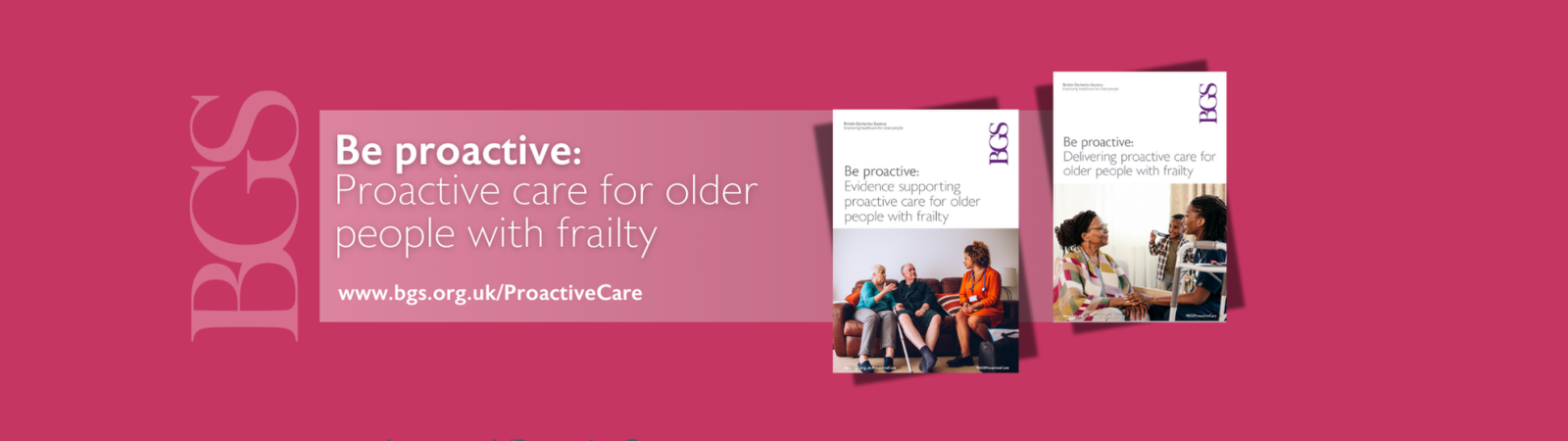
Be proactive: Evidence supporting proactive care for older people with frailty


'These BGS publications outline evidence and delivery recommendations for proactive care and support for older adults with moderate to severe frailty. 

We set out how to deliver proactive care against core components and key enablers, with recommendations for success of a proactive care service. Building on NHS England's proactive care guidance, Proactive care: providing care and support for people living at home with moderate or severe frailty, we also outline key recommendations for the successful implementation of proactive care services across the UK. 

We hope that users will be able to use all three documents when designing proactive care services, with the NHS England guidance document acting as key framework and starting point, BGS’s Be proactive: Evidence supporting proactive care for older people with frailty as a business case, and Be proactive: Delivering proactive care for older people with frailty  as a roadmap for implementing the NHS England framework and delivering services. ...'

https://www.bgs.org.uk/ProactiveCare


[All best Charlie (on your Christening Day), Casper and Jamie]. #hope #love #future #action #HealthCareer #LifeChances

Tuesday, November 05, 2024

'What Kingdom' by Fine Gråbøl

client - person - individual - self - patient
|
INTERPERSONAL : SCIENCES
humanistic ------------------------------- mechanistic
SOCIOLOGY : POLITICAL
|
group
What Kingdom

'Gråbøl was lucky. Eventually she started seeing a new psychiatrist, who looked at that record "and was like, "Wow, you receive So much more medicine than all the other people who live there. Why is that?'" She didn't know. Gradually, though, she was able to come off the drugs; and two doctors decided that
she didn't, in fact, have borderline personality and bipolar disorders, removing the diagnoses that had shaped her sense of her self. In time, she left the unit and rebuilt her life.

She's no longer on medication today, but the ghosts of her past diagnoses haunt her. She wonders whether the conditions are merely in hibernation and she'll wake up one day and enter another depressive episode. She doesn't wish she'd never been diagnosed, but does feel that her doctors underestimated the effect those labels would have on her development.

At 17, she points out - the age she was diagnosed as bipolar - most teenagers don't yet know who they are. "You want to find a box or language to define yourself, so that you can close yourself in. And one way of getting that sense is getting into the psychiatric system." Since returning to "normal" life, she has also struggled with survivor's guilt: the feeling that while she made it out of the system, others did not.


'Above all, she wishes that the emphasis would shift away from the suffering individual and onto their broader context. We need to become better, as a society, at making room for people who aren't fully functional citizens. Gråbøl's narrator phrases it as a question: "Could we not imagine treatments that are instead externally directed involving the outside world gearing itself towards a wider and more comprehensive emotional spectrum?" Gråbøl's answer, though, is the same as my own: "I don't know."'

the system

citizens?


My source:
Leaf Arbuthnot, Interview. We need to make room for the mentally ill. Review, The Daily Telegraph, 21 September 2024, pp.8-9.

Image:
https://images3.penguinrandomhouse.com/cover/9781953861849

Sunday, May 26, 2024

Reablement, Rehabilitation, Recovery: Everyone’s business c/o BGS


In March 2023, we published Joining the dots: A blueprint for preventing and managing frailty in older people. This set out seven touchpoints of care that should be available to older people, as and when they need them and 12 recommendations to systems. One of the recommendations is specifically around the provision of rehabilitation and one of the touchpoints is ‘Integrated urgent community response, reablement, rehabilitation and intermediate care.’  

In this new document, we take a deep dive into this Blueprint recommendation, looking at the evidence behind the provision of rehabilitation for older people and highlighting examples of best practice from across the UK and internationally. We argue that rehabilitation should be a component of virtually all care for older people, across all care settings, and that there is no such thing as ‘no rehabilitation potential.’ 

This document has been led by Professor Anne Hendry, Honorary Professor at the University of the West of Scotland and Senior Associate at the International Foundation for Integrated Care and a group of BGS members from across the UK and across disciplines have contributed to drafting the document. We hope that BGS members, commissioners and system leaders will find it useful in planning rehabilitation services for older people in their communities. 

More information - full report.

Wednesday, February 28, 2024

HIFA Discussion: Alcohol Use Disorders - Do people understand the harms of alcohol?

Dear All (with further editing since posting)

The discussion, points, angles, questions ... are coming thick and fast it is difficult to keep up.

Many thanks for the summaries; and of course the discussion which archived also acts as a resource - repository:

https://www.hifa.org/news/hifa-announces-deep-dive-discussion-alcohol-use-disorders-starts-5-february-2024

I wonder whether the question: 
"Do people understand the harms of alcohol?" must always be placed in context?
It is radically different when asked of the tee-total, dry, safe drinker; and someone (still) actually in their alcohol drinking?

It occurs to me that alcohol, even more so than 'other' substance misuse (heroin...) represents what must be *the* contradiction, paradox in healthcare - except the tragic loss that is suicide.

Contrast substance misuse inc. alcohol, with 'help-seeking' and 'The Sick role'

https://www.england.nhs.uk/blog/ed-mitchell-2/

Plus, the (medical) sociology of the decision to consult/refer, and how in mental health (UK), the mental capacity act is apparently being misapplied ('policy-drift'?**):

https://www.lawsociety.org.uk/topics/blogs/are-mental-health-and-capacity-laws-at-risk-of-being-toxic

https://www.communitycare.co.uk/2017/08/23/flawed-use-mental-capacity-act-key-theme-safeguarding-adults-reviews-report-finds/

Individual

   |
      INTERPERSONAL    :     SCIENCES               
HUMANISTIC  --------------------------------------  MECHANISTIC      
 SOCIOLOGY  :   POLITICAL 
|
Group

continental drift

policy drift?


Previously, I highlighted how as a Community Psychiatric Nurse 1985-1995 (adult) .. if a patient/client was not working to control/reduce their alcohol consumption they may be 'counselled' re a pending discharge and referral back to their GP - family physician. In supervision with the team's manager they would want to know what is 'happening'. It being important not to create (social) dependency, or worse support someone in their alcohol misuse.

There was a sense, still is(?) that in substance misuse (across forms) - the individual has to reach 'rock-bottom', literally the 'gutter' that is the point they decide (really?)** to live, or carry on to suffer irreversible brain damage, or premature death. Regards the 'brain damage' it was a struggle for 45-60 minutes given the impact upon short-term memory, what time, .... is it indeed? When the patient was not living alone, how did the relative, family cope?

Is having to reach the gutter, the bottom, a trope/myth? In psychosis rather than assume the patient is beyond being reached prior to being medicated there are psycho-social interventions that can be commenced: being available / with. Here though this is usually 'first episode'. There is no analogue here, unless first admission to an in-patient unit is taken as a golden opportunity? But this also depends on its nature (funding, staffing - expertise), a general adult mental health ward, or specialist unit.

https://www.imdb.com/title/tt0048347/

What is the current strategy?

In terms of 'HIFA' - and the person that counts**, not only do they not have the 'information'; they do not have the EXISTENTIAL INFORMATION as it relates to them: 'Health Information for YOU'!

Again in Hodges' model we can contrast the dichotomy/polarisation of INDIVIDUAL :: GROUP.

The model's being situated; and able to encompass data, information, knowledge (facts, for example, and their delivery) - wisdom (Multi-contextual / transdisciplinary..).

I admire people who work in these services (learning disability and palliative care); as they must be severely tested as they retain an ability - the humanity - to 'see' the person whatever the patient's situation with their lack of awareness (capacity..?) and its critical salience.

Peter Jones
Community Mental Health Nurse and Researcher
Blogging at "Welcome to the QUAD"
http://hodges-model.blogspot.com/
http://twitter.com/h2cm
h2cmng at yahoo.co.uk

Location: It was just a cappuccino.

**Which points to the relevance of the POLITICAL care/knowledge domain in Hodges' model.

Friday, February 23, 2024

Do we need to / can we 'cancel' Mental Health Nursing / Psychiatric Nursing?

Ever since August 15th 1977 (and prior to starting in the NHS), I've been acutely aware of the politics of my chosen career choice. Once again this explains my focus here since April 2006 and prior...

Make no mistake, starting as a Nursing Assistant at Winwick hospital, a Victorian asylum then two months later entering Warrington School of Nursing was a test. Quickly, you were preoccupied with trying to innovate and move beyond task oriented care, ritualised practice, trying to escape (the irony) from custodial care - despite the clink of keys (even on non-secure wards/clinical areas).

The quality of debate on Twi/X regards psychiatry is saddening.

The structure and domains of Hodges' model have been applied to the following editorial:

Wand, T. (2024), We have to cancel psychiatric nursing and forge a new way forward. Int J Mental Health Nurs. https://doi.org/10.1111/inm.13301


Individual
   |
      INTERPERSONAL    :     SCIENCES               
HUMANISTIC  --------------------------------------  MECHANISTIC      
 SOCIOLOGY  :   POLITICAL 
|
Group
MIND
Evidence-base?           neuro-

Person - identity

Yes, how do we conceptualise ...

"Mental health nurse" (Long-term)
"Psychiatric Nurse" (Crisis)

What's in a Title:
REGISTERED Nurse
Mental illness nurse

ENOUGH!
Let's Fully integrate MIND-BODY!

You/We must manage legacy

Recognition of emotional intelligence, rapport-empathy; people who want to 'help' others

Lived experience:
Care in Community

Contrast with 'pastoral care'? Counselling - pre-'therapist'?

RMN, RNMH ..
1. Subservient to Medicine?* Use of power, pharmacology, beds - 'controlled' environment, place of safety, restraint, loss of freedoms ..
2. Therapeutic agents - therapist? (Never truly realised: Psychology - scope of practice, Banding, Career pathways).
Conscientious objection. 

VALUE - VALUES
Diagnosis here?
 Respond to distress ? - OR 
BODY
-biogenic         Evidence-base?

Iatrogenesis

DEFINE^: 'sustainable' in terms of:
individual - population
NHS
Professions
Demographics (time-scales)
Environment
Economic
Ethics - Human Rights
Curricula
medical model
bio-psycho-social model
...
[ ^Research ]

Modalities of care - student experience/placement has changed

Nurse education - curricula

What would a properly funded NHS/Mental health services 'look' like?
 
Models  of care

DEBATE ongoing:
Anti-psychiatry

PSYCHIATRIC DIAGNOSIS
biomarkers, genetics, neurological explanations - pathologising,
safety of anti-psychotics,
long-term use ...

Demographics - workforce scope
Diagnosis here?
Where - psycho-SOCIALLY has policy been thus far?

Wither humanism?
Therapeutic relationship -
human connection

Social history:
Creation of asylums to standardise care for the insane

Anti-psychiatry:
Psychiatry as MECHANISTIC social control

Role of language, history, expections, social justice, law-public safety ...
 (can you 'cancel' here?)

Lived experience, family, carers, peer support workers

"Lifestyle Medicine"
(Map the 6 pillars to Hodges' model)

Social prescribing (research?)

Attitudes, Stigma, Social media

Sense-making, 'Faith' 1:Pop.

Social care, community resources

Integrated & Person-centred care

Other models of MH care/services

 - mechanistically assess risk? 

Formal distinction (break):
MH Nursing <-> Trad. Psychiatric family?

POLICY:
Community care set in aspic,
NHS also: funding £££££?
Innovation in POLICY?

No slack resource - HOW to shift to prevention/education

Sustainable health care

What crises are you (health professions) responding to?

Determinants of health: 
social, commercial, economic, social, political, education ...

Mental Health Law: inc. Consent, MH Capacity
(now also a 'football'?)

UNHCHR - Mental Health: ‘Mental health, human rights and legislation’ (World Health Organization and the United Nations, 2023)

Former: RCP Reports on CPNs*
National Reports:
Suicides, Homicides, Forensic, Prisons

Change [Progress!]: predicated upon research & evidence,
not 'rebellion' as befits
a profession - Duty of care?

Once you start to apply Hodges' model then additional content often presents itself. For example, (12th March) apart from people employed in tax and undertakers how many professions, would admit to a value system that aims for, seeks making the collective enterprise redundant? A utopic appeal no doubt, and this would for a population demand that the socio-political foundation (ills!) for our individual lives are finally addressed. What are referred to as the determinants of health. It is a sign of the times that trying to do a search on this, 'redundancy' / redundant is taken as related to the state of being employed, not an ideal.

If this sounds like pie-in-the-sky, consider the birth of social medicine - the NHS. Consider too the future of the NHS and we arrive at sustainable health care systems?

National Confidential Inquiry into Suicide and Safety in Mental Health
The University of Manchester - https://sites.manchester.ac.uk/ncish/

Homicide in England and Wales: year ending March 2023 -
https://www.ons.gov.uk/peoplepopulationandcommunity/crimeandjustice/articles/homicideinenglandandwales/yearendingmarch2023

Tuesday, October 25, 2022

Invitation: Int. Congress on Evidence-based Parenting Support 2023

Hello HIFA Forums and CHIFA,

Neil Pakenham-Walsh (based in the UK neil.pakenham-walsh AT ghi-net.org) suggested I contact you about a call for abstracts for the inaugural International Congress on Evidence-based Parenting Support 2023

https://www.i-ceps.pafra.org/

The online event will be held on 6-8 June 2023 and will address the theme: Promoting wellbeing and health globally through effective parenting support. We would very much welcome your organisations’ insights on child health and how parenting support can benefit families and children. We are calling for abstracts from members of your organisations.

CALL FOR ABSTRACTS

The Congress will connect academics, policymakers, practitioners, consumers and service providers with international leaders in parenting. Keynote speakers have already been announced. It aims to bring the evidence-based parenting support community together. An innovative program of online events will reach for global impact that will benefit parents and families around the world now and in the next generation.

Abstract submissions are open. We welcome your contribution by 18 November 2022.

This is a fantastic opportunity to share your research, policy and practice expertise in parenting, family intervention and parenting support with a global audience. Participants will be part of a global collective action to improve access for all parents to high-quality evidence-based parenting support.

We invite you to submit an abstract that addresses any of the sub-themes that reflect your expertise of the research, practice areas or public policy focus of your organisation:

Read more https://i-ceps.pafra.org/submission

Please feel free to share with your colleagues. And if appropriate, perhaps you can also share the invitation in your organisational newsletter or group email.

And we also welcome you to follow us on our social pages to keep up to date with the latest announcements:

Twitter: https://twitter.com/PAFRA_Official Facebook: https://www.facebook.com/ICEPS2023 LinkedIn: ICEPS2023

We sincerely hope to hear from you, and do feel free to get in touch if you have any questions.

Regards, Maria Battaglia

Communications Officer Institute of Child Protection Studies Australian Catholic University 

P: + 61 3 9230 8732 E: Maria.Battaglia AT acu.edu.au Website: https://www.i-ceps.pafra.org/ Twitter: https://twitter.com/PAFRA_Official #ICEPS2023 Facebook: https://www.facebook.com/ICEPS2023 LinkedIn: ICEPS2023

I acknowledge the Traditional Owners of the lands on which I live and work in Australia, and their continuing connection to land, sea and community. I pay my respects to Elders past, present and emerging.

My source: https://hifa.org/

Friday, July 29, 2022

The Cass Review Interim Report ... reflections ...

 ... that may stand for themselves?

[ with my emphasis ]


Independent review of gender identity services for children and young people: 

Interim report

February 2022

Introduction from the Chair

"... the aim of the Review is to ensure that children and young people who are experiencing gender incongruence or gender-related distress receive a high standard of NHS care that meets their needs and is safe, holistic and effective." p.11.


"As with autism, the framework for assessment needs to become formalised so there are clearer criteria for diagnosis and treatment pathways which are shared more widely. These should incorporate not just whether the child or young person meets DSM-5 criteria for gender dysphoria, but how a broader psychosocial assessment should be conducted and evaluated, and what other factors need to be considered to gain a holistic understanding of the child or young person’s experience. Professional judgement and experience will still be important, but if the frameworks and criteria for assessment and diagnosis were more consistent and reproducible, there would be a greater likelihood that two different people seeing the same child or young person would come to the same conclusion." p.60.

"Assessment and management: All children and young people who are referred to specialist services should have a competent local multi-disciplinary assessment and should remain under active holistic local management until they are seen at a specialist centre." p.92.

[ and from: https://www.england.nhs.uk/commissioning/spec-services/npc-crg/gender-dysphoria-clinical-programme/implementing-advice-from-the-cass-review/ ]

"Dr Cass has now sent further advice on the core components of this model. You can read the advice in full here.

In summary, she has said:

  ...

  • ‘The services should have an appropriate multi-professional workforce to enable them to provide an integrated model of care that manages the holistic needs of this population’.
  • ‘Staff should maintain a broad clinical perspective to embed the care of children and young people with gender uncertainty within a broader child and adolescent health context’."


Saturday, January 15, 2022

£62.5k Funding opportunity for researchers interested in healthy ageing

£62.5k Funding opportunity for researchers interested in healthy ageing
UKRI and Zinc have announced the 3rd funding round for the Healthy Ageing Catalyst Awards. Researchers are encouraged to apply for this £62,500 (fEC) grant from UKRI and 9-month structured programme of support from Zinc, to translate their research into impactful and scalable products, services, and interventions that add quality to later life.

The call for expressions of interest opens on 1st February and closes on 22nd February 2022. You can access the expression of interest guidance, plus further resources here. If you have any questions, please visit zinc.vc/catalyst or email the team at catalyst AT zinc.vc

My source:

Wendy Zhou, CHAIN Manager

CHAIN - Contact, Help, Advice and Information Network – is an online international network for people working in health and social care. For more information on CHAIN and joining the network please visit website: www.chain-network.org.uk