Hodges' Model: Welcome to the QUAD: staff

Hodges' model is a conceptual framework to support reflection and critical thinking. Situated, the model can help integrate all disciplines (academic and professional). Amid news items, are posts that illustrate the scope and application of the model. A bibliography and A4 template are provided in the sidebar. Welcome to the QUAD ...

Showing posts with label staff. Show all posts

Saturday, May 02, 2026

Martha's Rule revisited ...

Last year in May, I posted about Martha's Rule. A year on, there is an update:

Evidence suggests Martha’s Rule is saving lives

'To support learning and assess the impact the programme is having, we regularly collect data from sites where Martha’s Rule is in place.

Early evidence suggests Martha’s Rule is saving lives and helping thousands of patients benefit from changes to their care.

Data from September 2024 to February 2026 shows 12,301 Martha’s Rule calls were made, with the highest proportion of calls (72%) made via the family/carer escalation process. 4,047 Martha’s Rule escalation calls (33%) related to acute deterioration.

Of those, 2,310 calls required changes in treatment. This includes 524 calls which resulted in transfers of care to high dependency or intensive care units, enhanced levels of care, tertiary centres or referral/transfer to specialists or a specialist ward. Other changes in treatment (1,786) did not require transfer of a patient from a ward in-patient setting. This includes the introduction of a new medication such as an antibiotic to treat infection, investigations including scans and procedural interventions including going to theatre.'

Source:
https://www.england.nhs.uk/patient-safety/marthas-rule/#implementingmarthasrule


individual
|
INTERPERSONAL : SCIENCES
humanistic ------------------------------- mechanistic
SOCIOLOGY : POLITICAL
|
group

"Not herself ..."
 
Listening 

Martha

1,700 NHS staff

Taking action


escalation
Mills

parents, guardians, friends & family
 
Familly input -
Multidisciplinary Team
 
Teamwork


Martha's Rule


My prompt:
Koronka, P. '1,700 NHS staff use Martha's Rule to raise the alarm'. The Times, 1 May, 2026, p.6.

Previously: 'intuition' : 'observation' : 'listen' : 'communication' (Never as an afterthought.)

Wednesday, May 07, 2025

Conference: Safety and Quality in Mental Health: Improvement - Led Care c/o RSM

'This event will explore successful strategies for enhancing patient safety and driving quality improvement in mental health services.

This timely event addresses the critical issues highlighted by recent high-profile incidents in mental health care. Keynote speakers, including Adrian James, the National Clinical Director of Mental Health, and Shubulade Smith, President of the Royal College of Psychiatrists, will share their experiences of leading organisations through challenging situations. Jonathan Warren, co-author of the Edenfield report, will also provide unique insights.

Key Themes:

  • Supporting staff through traumatic incidents
  • Amplifying patient and family voices
  • Service redesign for safer care
  • Innovative use of data for improved outcomes
  • Learning from significant events to prevent recurrence
  • Balancing human rights with public protection ...'
at: Royal Society of Medicine, 
1 Wimpole St, 
Marylebone, 
London, 
W1G 0AE, United Kingdom

Sunday, September 15, 2024

Interview study: Exploring psychological safety in inpatient mental health settings


Tuesday, April 23, 2024

Call for participation in a Doctoral Research Study

ARE YOU WORKING IN THE NHS? IF SO, HELP NEEDED URGENTLY

Please read this email. 

Glasgow Caledonian University is inviting NHS Staff across the UK to participate in this doctoral research survey to analyse the impact of responsible leadership on improving well-being and organisational trust among NHS Staff members. 


To be eligible, you must be an NHS staff member from any area of the UK in any job role. The survey collects no recognisable information and is wholly anonymised to protect participant privacy and confidentiality. It has received full ethical approval, will take around 10 minutes and will help provide an improved understanding of the area of well-being in the profession.


Please forward this survey link to everyone in your contacts working for NHS. This will help gain more responses, increasing the study's reach and validity. Your help is highly appreciated, and we thank you in advance.


Here's the link for the participant information sheet and survey: 

https://app.onlinesurveys.jisc.ac.uk/s/caledonian/impact-of-responsible-leadership-on-employee-well-being-and-org


Warm wishes

Ummey Tariq (Chief Investigator)


Umm E Habiba Tariq (she/her) | PhD Candidate, MSc, BBA (Hons)

Occasional Lecturer | Department of HRM | Glasgow School for Business and Society (GSBS)

Glasgow Caledonian University is a registered Scottish charity, number SC021474


My source: NURSE-PHILOSOPHY list
https://www.jiscmail.ac.uk/cgi-bin/webadmin?A0=NURSE-PHILOSOPHY

Wednesday, June 28, 2023

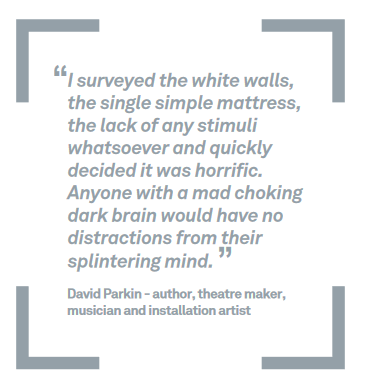
ii Design with People in Mind: Seclusion Issue related to Hodges' model

The Seclusion Issue


INDIVIDUAL
|
     INTERPERSONAL    :     SCIENCES               
HUMANISTIC --------------------------------------  MECHANISTIC      
SOCIOLOGY  :   POLITICAL 
|
GROUP

psychological harm / safety / seclusion

privacy, dignity and respect

Sensory stimuli, calm, distraction

Parity of Esteem

psychological restraint/control

Reaching for the person amid complexity

Staff / Service User attitudes to x,y,z

Lived/Patient experience
sensory -

NATURE - outdoors 'Green'

Design: (sterile?) space, colour, temperature, walls, light, warmth, cold, fresh air, homely/clinical, doors - locks, alarms, noise, violence resistant spaces ...

physical agression / harm / safety / seclusion

'built' environment / 'sensory room'

physical restraint/control, clothing, toilet, access to outdoors

Ecological and Integrative Physiology

- modulation

Social spaces

supportive spaces

scope for therapy

social autonomy

community

music / arts

experience in isolation - stigma in-situ?

trauma-informed services

in-patient services, funding

risk reduction; policies

use of technology/observation

length of stay, reporting

impact of restraint on staff


Hodges' model is situated and can be used in all health, educational and policy contexts.

Hodges' model can assist to initially scope, plan and evaluate research studies not only across all the care (knowledge) domains above (including the spiritual) but the model's structure incorporates such dichotomies as subjective-objective; qualitative-quantitative; person-services; patient-staff; therapy-control/restraint; person-centred--service-centred; private/personal-public; care-custodial; psycho-political; socio-technical and others.


There is of course much more that could be added above, and relationships considered between concepts and perspectives: the patient's, nurse's, doctor's, the multidisciplinary team, manager's, policy makers, architect,s anthropologists, public, professional and regulatory bodies and commissioners?


Please keep 'me' safe safely - yes, and the team!


Even though and especially because I may not currently know exactly who - how ...  I am?


My source: https://twitter.com/DIMHN

Related post i

Sunday, June 25, 2023

Design with People in Mind Books - The Seclusion Issue

Design with People in Mind
The Seclusion Issue


Design with People in Mind is the Design in Mental Health Network’s annual round up of the latest research evidence on therapeutic outcomes and the evidence for them relating to the built environment in mental health. In partnership with London Southbank University and Nottingham Trent, so far we’ve looked at a variety of issues, from nature to sound design to boundaries and borders. The latest issue is Seclusion, launched at this years conference and focusing on the evidence for and impact of the practice of seclusion units, how to use them if at all, and best practice in the field to maintain psychological as well as physical safety for service users and staff.


The link to the publication is: 

https://dimhn.org/wp-content/uploads/2023/06/1DWPIM_I8_250x210_24PP_AW_V02_HI_RES.pdf

It’s a member only resource, so you will need to register (free for individuals) before viewing.

Very best,

Hannah

Hannah Chamberlain
CEO
Design in Mental Health Network
m: 07811169609
www.dimhn.org


My source: https://twitter.com/DIMHN

See also:
ii Design with People in Mind

Thursday, June 16, 2022

Review: A systematic review and mixed- methods synthesis of the experiences, perceptions and attitudes of prison staff regarding adult prisoners who self-harm

The systematic review featured here was tweeted:

https://twitter.com/t_hewson/status/1533800510343499779

- and being mixed-methods caught my eye. 

Below, I have mapped some of the concepts, themes and findings of the review to Hodges' model, adding some italicised points of my own.

The relevance of Hodges' model, in carceral, forensic, health and justice contexts is marked. The vertical axis's distinction of individual and group and the need to protect the public from dangerous individuals stands out. As does an individual's physical and mental state to the State - in the political domain. This extends to the Sociological as to the public's expectations over 'law and order' and what - should, must - happen to wrong-doers.

Where the model can help reflection, scoping, critical thinking and problem solving is in the disciplinary bridges it provides between knowledge, or what can be 'silos'; and, the many interfaces that are found within our activities, health, educational or generally. There are several interfaces in this systematic review: Prison staff - prisoner; prisoner - prisoner; prisoner - family; and where the custody function, butts up against that of the health - and how physical and mental health needs are met - or in this environment (literally) negotiated. There is a related finding (page 6):

"In contrast, in one establishment with low rates of self-harm, staff felt that their roles of ‘carer’ and ‘security officer’ were well integrated."

INDIVIDUAL
|
 INTERPERSONAL    :     SCIENCES               
HUMANISTIC --------------------------------------  MECHANISTIC      
SOCIOLOGY  :   POLITICAL 
|
GROUP
SELF:
Prisoner / Prison Officer (and Other roles)

Prison staff - perceptions & attitudes
self harm (thoughts, motivation)
suicide (thoughts, motivation)

Staff confidence, skills:
Awareness - Prevention
Caring - empathy
'manipulative', 'attention seeking'
Insufficient training
expressed emotion
Staff member's wellbeing
Capacity to care
'deep acting'
emotional intelligence
'hope'


QUALITATIVE
SELF:
Adult Prisoner, Prison Staff

[repetitive] self harm (means, action)
suicide (means, action)

Carceral environment (PRISON)
self-harm - factors
Research: Methodology, [Mixed] methods
Systematic Review
self-report - non-validated questionairres
TIME [shift]: 'all the time', 'every time'
location, time
Staff member's wellbeing
Capacity to care
'surface acting'
Effect of COVID on self-harm: men/women
Assessment tools
ACCT - Assessment, Care in Custody and Teamwork processes
QUANTITATIVE
Prison - Staff Culture

male::female staff -> prisoner -> relatedness

Staff - Prisoner interactions
in self-harm management
Behavioural - learning/copying
role - models clarity

'shared/pervasive sense of hope'
'Life skills - literacies'
Social determinants of Health (Crime?)


Self-harm:
Policy
NICE guidelines
'Correction', Young Offender Inst.
control–support model
demands - resources model
Occupational stress

Staff Support
Training

Prison officer training 'Intro 101'?


The comments gleaned from staff are very informative. Also of interest here are ongoing developments in trauma-informed care and this can cover emotional trauma, as in abuse, plus head injury which is a key screening initiative. Achieving parity of esteem across physical and mental health, demands a more delicate balance in health and justice.

'Hope' is a concept subject to much analysis, for example, in the healthcare, sociological and philosophical literature. Incarceration, must bring its own 'trauma', which will vary in its signature across individual, age, first-offence, recidivism, offence, legal processes ... and its impact upon hope. From the challenge of the individual prisoner and their hope, there is the challenge for prison management and policy to instill, facilitate a shared, sense of hope. Amid the news on the state of prisons, there are no doubt examples where this can and is delivered.

Hewson, T., Gutridge, K., Bernard, Z., Kay, K., & Robinson, L. (2022). A systematic review and mixed-methods synthesis of the experiences, perceptions and attitudes of prison staff regarding adult prisoners who self-harm. BJPsych Open, 8(4), E102. doi:10.1192/bjo.2022.70
 

Wednesday, September 23, 2020

National Day of Arts in Care Homes


Not long to go now until the second National Day of Arts in Care Homes, which takes place on Thursday 24 September.

During lockdown, we have seen a wealth of amazing activities and projects take place in care homes across the UK, including corridor choirs, garden concerts, socially distanced art sessions, online ceramics tutorials, live streamed concerts and dance, pen pal projects and postal art initiatives. Care settings have used the arts to raise morale, keep residents and staff stimulated, keep in touch with friends and loved ones, express worries and fears and also to celebrate birthdays and other occasions. 

Please show your support for the provision of arts activities in care homes on 24 September by organising an event, sharing stories and spreading the word.


Continued...

Saturday, May 09, 2020

The meaning of "Care Package"

individual
|
INTERPERSONAL : SCIENCES
humanistic ----------------------------------------------- mechanistic
SOCIOLOGY : POLITICAL
|
group - population

"I return to my hotel room in central Wuhan to find a package from the local government waiting for me. They have sent foreign journalists two large bottles of hand sanitiser, 20 masks and a 55-page comic book dedicated to sanitation. In one cartoon, a grinning bottle of ethyl alcohol reminds readers to wipe down their phones up to four times a day.

But the main item in the care package is a hastily bound white booklet with a cover that reads simply: The Chinese Way. ...

But the omissions in the document are often more telling than the official timeline itself. The Chinese Way makes no mention of Dr Li Wenliang, the national hero of the epidemic. On December 30, Li raised an early alarm when his hospital in Wuhan began seeing patients with a Sars-like strain of pneumonia."


Art in Wuhan depicting Dr Li Wenliang, who raised an early alarm about the coronavirus outbreak and later died of the disease © Don Weinland


https://www.ft.com/content/61ec68d8-8432-11ea-b872-8db45d5f6714

Image source: ft.com

Wednesday, January 21, 2009

First NHS Constitution Launched

FIRST NHS CONSTITUTION LAUNCHED
An historic signing ceremony to mark the launch of the NHS Constitution for England took place at Downing Street today. The Constitution, the first of its kind in the world, was signed by Prime Minister Gordon Brown, Health Secretary Alan Johnson and NHS Chief Executive David Nicholson.
The Constitution will give power to patients and the public by bringing their existing rights together in one place so they know what they are legally entitled to – and how they can exercise their rights as well as understanding their responsibilities. It also contains a range of pledges to patients, public and staff, which the NHS is committed to achieving. For NHS staff, the Constitution will mean an NHS-wide commitment to equipping them with the tools, training and support they need to deliver high quality care for patients.
Lord Darzi’s review of the NHS, High Quality Care for All concluded last summer that there was a case for an NHS Constitution to enshrine the principles and values of the NHS in England. The landmark document will put in one place what patients, staff and the public can expect of the health service. It is designed to safeguard the future of the NHS and renew its core values, making sure it continues to be relevant to the needs of patients, the public and staff in the 21st century.
Health Secretary, Alan Johnson said:
“This is a momentous point in the history of the NHS. Following on from Lord Darzi’s Next Stage Review, the launch of the NHS Constitution shows how its founding principles still endure today and have resonance for staff, patients and public alike. It will ensure that we protect the NHS for generations to come.

“The content of the Constitution is based on discussions with thousands of NHS staff and patients across the country and will form the basis of a new relationship between staff and patients – a relationship based on partnership, respect and shared commitment where everyone knows what they can expect from the NHS and what is expected from them.”
The Constitution is the result of extensive consultation with staff and patients, which was led by strategic health authorities and overseen by independent experts on the Constitutional Advisory Forum (CAF). In response to the consultation and report published by the CAF, the final Constitution includes:
  • A right to makes choices about your care and to information to help exercise that choice;
  • A new legal right to receive the vaccinations that the Joint Committee on Vaccination and Immunisation recommends that you should receive under an NHS-provided national immunisation programme;
  • A right making explicit your entitlement to drugs and treatments that have been recommended by NICE for use in the NHS, if your doctor says they are clinically appropriate for you;
  • A right to expect local decisions on funding of other drugs and treatments to be made rationally following a proper consideration of the evidence;
  • Clear and comprehensive rights to complaint and redress.
David Nicholson, NHS Chief Executive said:
“Ara Darzi asked me in his interim report to lead a work programme exploring the merits of a Constitution for the NHS. This has been a fantastic opportunity to listen to what matters most to our patients, public and staff and to use this to set out clearly the values and purpose of the NHS system.
“It also pulls together in one place what the patients who use the NHS, the public who fund it and the staff who provide it, can expect to receive from the NHS, and the contribution they can make themselves.
“I’m proud to sign off the Constitution today and am sure that it will be a powerful driver of change in the system, and help us to deliver care fit for the 21st century.”
Professor Steve Field, Chairman of the Royal College of [General] Practitioners, said:
"By stating that patients have a responsibility to register with a GP practice, the NHS Constitution reinforces the central role of the GP and the importance of continuity of care in the NHS today and in the future.
"We become GPs because we want to help people improve the quality of their lives through better healthcare. GPs want to provide the solutions and lead improvements and innovations. Having the Constitution in place will help us improve standards and care for all our patients, whoever and wherever they are.
"The new NHS Constitution is something which all GPs, their practice teams and NHS staff can commit to and have confidence in. I'm convinced that it will be an important, defining point in the development of our NHS."
Sally Brearley, Chair of the Patients Forum said:
“The NHS Constitution is a very valuable re-affirmation of the principles and values of the NHS. I was delighted to be involved in the process of drawing it up. It demonstrates the commitment of Government to the NHS, and of the NHS to its patients. We know that the public supports the NHS. The Constitution provides an important opportunity for patients, public and NHS staff to focus on giving our best to the NHS, and getting the best out of it.”
Also published today are the Handbook to the NHS Constitution; a Statement of NHS Accountability; regulations, directions and guidance to support the new rights around choice, vaccines and the funding of drugs and treatments; and our response to the consultation and the CAF’s recommendations.
The Health Bill, published last week, will underpin the new Constitution by creating new legislation to ensure that the Constitution will be reviewed every 10 years and a duty on NHS bodies, as well as independent sector and third sector providers of NHS services, to have regard to the Constitution.
ENDS
My source: COI’s News Distribution Service is the public sector leader in the electronic delivery of news releases and information direct from Whitehall departments, and more than 100 agencies and non-departmental public bodies, to the national, regional and specialist media. COI’s News Distribution Service is the public sector leader in the electronic delivery of news releases and information direct from Whitehall departments, and more than 100 agencies and non-departmental public bodies, to the national, regional and specialist media.